14th-century plague skeletons unearthed at London station

68218_Farringon-Charterhouse-Square-archaeology_-March-2013-thumb-600x460-174532

If you find yourself walking in central London, think about this: not far beneath your feet there may well be human remains. On the edge of Charterhouse Square in the district of Farringdon, engineers were digging an access tunnel for the new Crossrail underground railway when they uncovered 12 skeletons.

“We suspected there might be bodies there,” says Crossrail’s chief archaeologist, Jay Carver. “When the excavation machine uncovered the first bones, we went in and excavated by hand.”

Historical documents suggest the then-lord mayor of London ordered an emergency burial ground to be prepared in Farringdon, in response to the Black Death sweeping Europe in the 14th century.

Relatively few people died in the early stages of the plague and so they were buried in an orderly, east-west orientation. In later years there were more dead, and in their graves bodies are essentially heaped on top of one another. The newly discovered Farringdon bodies, just 2.5 metres below the surface, are neatly oriented and were probably wrapped in shrouds and interred: the Crossrail team have found shroud pins but no fabric remains and no sign of coffins. Pottery found at the same depth as the bodies has been dated to before 1350.

The skeletons will now be removed to the Museum of London Archaeology, where radiocarbon dating will determine the approximate age of the bodies. Skeletons discovered in a plague pit in nearby Smithfield yielded DNA markers identifying the plague bacterium Yersinia pestis.

“Our evidence suggests these are burials associated with that period and therefore that these are people buried during the emergency black death period,” says Carver. “If we can find a signature of that bacterium it will provide some interesting new data about this important historical event.”

The Crossrail team have a licence from the Ministry of Justice allowing them to exhume the remains, and at some point the archaeologists will make a decision about curation. Will the skeletons be reburied?

“They may be placed in a charnel store in a crypt, in case future generations want to study them,” says Carver. “It’s an academic and legal decision.”

http://www.newscientist.com/blogs/shortsharpscience/2013/03/crossrail-plague-skeleton.html?cmpid=RSS|NSNS|2012-GLOBAL|online-news

Flip of a single molecular switch makes an old brain young

green-image

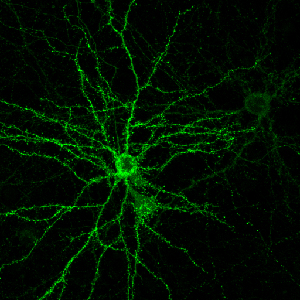
The flip of a single molecular switch helps create the mature neuronal connections that allow the brain to bridge the gap between adolescent impressionability and adult stability. Now Yale School of Medicine researchers have reversed the process, recreating a youthful brain that facilitated both learning and healing in the adult mouse.

Scientists have long known that the young and old brains are very different. Adolescent brains are more malleable or plastic, which allows them to learn languages more quickly than adults and speeds recovery from brain injuries. The comparative rigidity of the adult brain results in part from the function of a single gene that slows the rapid change in synaptic connections between neurons.

By monitoring the synapses in living mice over weeks and months, Yale researchers have identified the key genetic switch for brain maturation a study released March 6 in the journal Neuron. The Nogo Receptor 1 gene is required to suppress high levels of plasticity in the adolescent brain and create the relatively quiescent levels of plasticity in adulthood. In mice without this gene, juvenile levels of brain plasticity persist throughout adulthood. When researchers blocked the function of this gene in old mice, they reset the old brain to adolescent levels of plasticity.

“These are the molecules the brain needs for the transition from adolescence to adulthood,” said Dr. Stephen Strittmatter. Vincent Coates Professor of Neurology, Professor of Neurobiology and senior author of the paper. “It suggests we can turn back the clock in the adult brain and recover from trauma the way kids recover.”

Rehabilitation after brain injuries like strokes requires that patients re-learn tasks such as moving a hand. Researchers found that adult mice lacking Nogo Receptor recovered from injury as quickly as adolescent mice and mastered new, complex motor tasks more quickly than adults with the receptor.

“This raises the potential that manipulating Nogo Receptor in humans might accelerate and magnify rehabilitation after brain injuries like strokes,” said Feras Akbik, Yale doctoral student who is first author of the study.

Researchers also showed that Nogo Receptor slows loss of memories. Mice without Nogo receptor lost stressful memories more quickly, suggesting that manipulating the receptor could help treat post-traumatic stress disorder.

“We know a lot about the early development of the brain,” Strittmatter said, “But we know amazingly little about what happens in the brain during late adolescence.”

Other Yale authors are: Sarah M. Bhagat, Pujan R. Patel and William B.J. Cafferty

The study was funded by the National Institutes of Health. Strittmatter is scientific founder of Axerion Therapeutics, which is investigating applications of Nogo research to repair spinal cord damage.

http://news.yale.edu/2013/03/06/flip-single-molecular-switch-makes-old-brain-young

Largest psychiatric genetic study in history shows a common genetic basis that underlies 5 types of mental disorders

Protein_CACNA1C_PDB_2be6
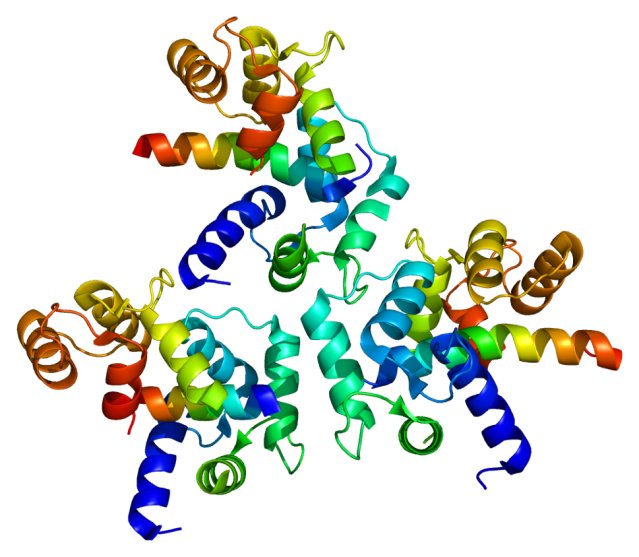
Structure of the CACNA1C gene product, a calcium channel named Cav1.2, which is one of 4 genes that has now been found to be genetically held in common amongst schizophrenia, bipolar disorder, autism, major depression and attention deficit hyperactivity disoder. Groundbreaking work on the role of this protein on anxiety and other forms of behavior related to mental illness has previously been established in the Rajadhyaksha laboratory at Weill Cornell Medical Center.
http://weill.cornell.edu/research/arajadhyaksha/

http://www.ncbi.nlm.nih.gov/pmc/articles/PMC3481072/
http://www.ncbi.nlm.nih.gov/pmc/articles/PMC3192195/
http://www.ncbi.nlm.nih.gov/pmc/articles/PMC3077109/

From the New York Times:
The psychiatric illnesses seem very different — schizophrenia, bipolar disorder, autism, major depression and attention deficit hyperactivity disorder. Yet they share several genetic glitches that can nudge the brain along a path to mental illness, researchers report. Which disease, if any, develops is thought to depend on other genetic or environmental factors.

Their study, published online Wednesday in the Lancet, was based on an examination of genetic data from more than 60,000 people worldwide. Its authors say it is the largest genetic study yet of psychiatric disorders. The findings strengthen an emerging view of mental illness that aims to make diagnoses based on the genetic aberrations underlying diseases instead of on the disease symptoms.

Two of the aberrations discovered in the new study were in genes used in a major signaling system in the brain, giving clues to processes that might go awry and suggestions of how to treat the diseases.

“What we identified here is probably just the tip of an iceberg,” said Dr. Jordan Smoller, lead author of the paper and a professor of psychiatry at Harvard Medical School and Massachusetts General Hospital. “As these studies grow we expect to find additional genes that might overlap.”

The new study does not mean that the genetics of psychiatric disorders are simple. Researchers say there seem to be hundreds of genes involved and the gene variations discovered in the new study confer only a small risk of psychiatric disease.

Steven McCarroll, director of genetics for the Stanley Center for Psychiatric Research at the Broad Institute of Harvard and M.I.T., said it was significant that the researchers had found common genetic factors that pointed to a specific signaling system.

“It is very important that these were not just random hits on the dartboard of the genome,” said Dr. McCarroll, who was not involved in the new study.

The work began in 2007 when a large group of researchers began investigating genetic data generated by studies in 19 countries and including 33,332 people with psychiatric illnesses and 27,888 people free of the illnesses for comparison. The researchers studied scans of people’s DNA, looking for variations in any of several million places along the long stretch of genetic material containing three billion DNA letters. The question: Did people with psychiatric illnesses tend to have a distinctive DNA pattern in any of those locations?

Researchers had already seen some clues of overlapping genetic effects in identical twins. One twin might have schizophrenia while the other had bipolar disorder. About six years ago, around the time the new study began, researchers had examined the genes of a few rare families in which psychiatric disorders seemed especially prevalent. They found a few unusual disruptions of chromosomes that were linked to psychiatric illnesses. But what surprised them was that while one person with the aberration might get one disorder, a relative with the same mutation got a different one.

Jonathan Sebat, chief of the Beyster Center for Molecular Genomics of Neuropsychiatric Diseases at the University of California, San Diego, and one of the discoverers of this effect, said that work on these rare genetic aberrations had opened his eyes. “Two different diagnoses can have the same genetic risk factor,” he said.

In fact, the new paper reports, distinguishing psychiatric diseases by their symptoms has long been difficult. Autism, for example, was once called childhood schizophrenia. It was not until the 1970s that autism was distinguished as a separate disorder.

But Dr. Sebat, who did not work on the new study, said that until now it was not clear whether the rare families he and others had studied were an exception or whether they were pointing to a rule about multiple disorders arising from a single genetic glitch.

“No one had systematically looked at the common variations,” in DNA, he said. “We didn’t know if this was particularly true for rare mutations or if it would be true for all genetic risk.” The new study, he said, “shows all genetic risk is of this nature.”

The new study found four DNA regions that conferred a small risk of psychiatric disorders. For two of them, it is not clear what genes are involved or what they do, Dr. Smoller said. The other two, though, involve genes that are part of calcium channels, which are used when neurons send signals in the brain.

“The calcium channel findings suggest that perhaps — and this is a big if — treatments to affect calcium channel functioning might have effects across a range of disorders,” Dr. Smoller said.

There are drugs on the market that block calcium channels — they are used to treat high blood pressure — and researchers had already postulated that they might be useful for bipolar disorder even before the current findings.

One investigator, Dr. Roy Perlis of Massachusetts General Hospital, just completed a small study of a calcium channel blocker in 10 people with bipolar disorder and is about to expand it to a large randomized clinical trial. He also wants to study the drug in people with schizophrenia, in light of the new findings. He cautions, though, that people should not rush out to take a calcium channel blocker on their own.

“We need to be sure it is safe and we need to be sure it works,” Dr. Perlis said.

Fruit flies force their young to drink alcohol for protection

130222102958-large
The fruit fly study adds to the evidence “that using toxins in the environment to medicate offspring may be common across the animal kingdom,” says biologist Todd Schlenke.

When fruit flies sense parasitic wasps in their environment, they lay their eggs in an alcohol-soaked environment, essentially forcing their larvae to consume booze as a drug to combat the deadly wasps.

The discovery by biologists at Emory University was published in the journal Science on February 22.

“The adult flies actually anticipate an infection risk to their children, and then they medicate them by depositing them in alcohol,” says Todd Schlenke, the evolutionary geneticist whose lab did the research. “We found that this medicating behavior was shared by diverse fly species, adding to the evidence that using toxins in the environment to medicate offspring may be common across the animal kingdom.”

Adult fruit flies detect the wasps by sight, and appear to have much better vision than previously realized, he adds. “Our data indicate that the flies can visually distinguish the relatively small morphological differences between male and female wasps, and between different species of wasps.”

The experiments were led by Balint Zacsoh, who recently graduated from Emory with a degree in biology and still works in the Schlenke lab. The team also included Emory graduate student Zachary Lynch and postdoc Nathan Mortimer.

The larvae of the common fruit fly, Drosophila melanogaster, eat the rot, or fungi and bacteria, that grows on overripe, fermenting fruit. They have evolved a certain amount of resistance to the toxic effects of the alcohol levels in their natural habitat, which can range up to 15 percent.

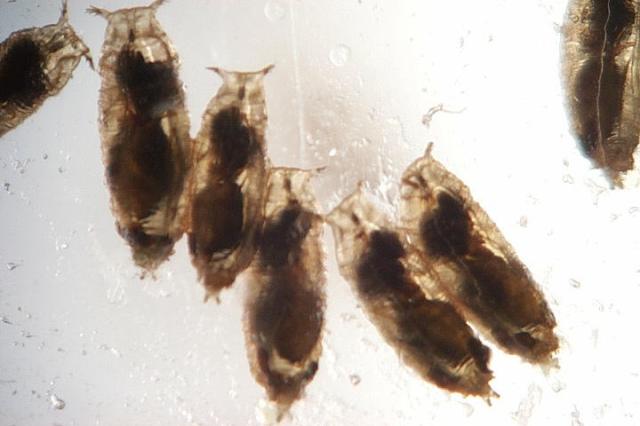
Tiny, endoparasitoid wasps are major killers of fruit flies. The wasps inject their eggs inside the fruit fly larvae, along with venom that aims to suppress their hosts’ cellular immune response. If the flies fail to kill the wasp egg, a wasp larva hatches inside the fruit fly larva and begins to eat its host from the inside out.

Last year, the Schlenke lab published a study showing how fruit fly larvae infected with wasps prefer to eat food high in alcohol. This behavior greatly improves the survival rate of the fruit flies because they have evolved high tolerance of the toxic effects of the alcohol, but the wasps have not.

“The fruit fly larvae raise their blood alcohol levels, so that the wasps living in their blood will suffer,” Schlenke says. “When you think of an immune system, you usually think of blood cells and immune proteins, but behavior can also be a big part of an organism’s immune defense.”

For the latest study, the researchers asked whether the fruit fly parents could sense when their children were at risk for infection, and whether they then sought out alcohol to prophylactically medicate them.

Adult female fruit flies were released in one mesh cage with parasitic wasps and another mesh cage with no wasps. Both cages had two petri dishes containing yeast, the nourishment for lab-raised fruit flies and their larvae. The yeast in one of the petri dishes was mixed with 6 percent alcohol, while the yeast in the other dish was alcohol free. After 24 hours, the petri dishes were removed and the researchers counted the eggs that the fruit flies had laid.

The results were dramatic. In the mesh cage with parasitic wasps, 90 percent of the eggs laid were in the dish containing alcohol. In the cage with no wasps, only 40 percent of the eggs were in the alcohol dish.

“The fruit flies clearly change their reproductive behavior when the wasps are present,” Schlenke says. “The alcohol is slightly toxic to the fruit flies as well, but the wasps are a bigger danger than the alcohol.”

The fly strains used in the experiments have been bred in the lab for decades. “The flies that we work with have not seen wasps in their lives before, and neither have their ancestors going back hundreds of generations,” Schlenke says. “And yet, the flies still recognize these wasps as a danger when they are put in a cage with them.”

Further experiments showed that the flies are extremely discerning about differences in the wasps. They preferred to lay their eggs in alcohol when female wasps were present, but not if only male wasps were in the cage.

Theorizing that the flies were reacting to pheromones, the researchers conducted experiments using two groups of mutated fruit flies. One group lacked the ability to smell, and another group lacked sight. The flies unable to smell, however, still preferred to lay their eggs in alcohol when female wasps were present. The blind flies did not make the distinction, choosing the non-alcohol food for their offspring, even in the presence of female wasps.

“This result was a surprise to me,” Schlenke says. “I thought the flies were probably using olfaction to sense the female wasps. The small, compound eyes of flies are believed to be more geared to detecting motion than high-resolution images.”

The only obvious visual differences between the female and male wasps, he adds, is that the males have longer antennae, slightly smaller bodies, and lack an ovipositor.

Further experimentation showed that the fruit flies can distinguish different species of wasps, and will only choose the alcohol food in response to wasp species that infect larvae, not fly pupae. “Fly larvae usually leave the food before they pupate,” Schlenke explains, “so there is likely little benefit to laying eggs at alcoholic sites when pupal parasites are present.”

The researchers also connected the exposure to female parasitic wasps to changes in a fruit fly neuropeptide.

Stress, and the resulting reduced level of neuropeptide F, or NPF, has previously been associated with alcohol-seeking behavior in fruit flies. Similarly, levels of a homologous neuropeptide in humans, NPY, is associated with alcoholism.

We found that when a fruit fly is exposed to female parasitic wasps, this exposure reduces the level of NPF in the fly brain, causing the fly to seek out alcoholic sites for oviposition,” Schlenke says. “Furthermore, the alcohol-seeking behavior appears to remain for the duration of the fly’s life, even when the parasitic wasps are no longer present, an example of long-term memory.”

Finally, Drosophila melanogaster is not unique in using this offspring medication behavior. “We tested a number of fly species,” Schlenke says, “and found that each fly species that uses rotting fruit for food mounts this immune behavior against parasitic wasps. Medication may be far more common in nature than we previously thought.”

http://www.sciencedaily.com/releases/2013/02/130222102958.htm

Intoxicated man tried to have sex with ambulance

ambulance_2481255b

Callum Ward, 25, was seen “pressing” himself against the emergency vehicle before “simulating a sex act” on the hood.

Official police logs show an officer who saw him stated: “It looks as though he is attempting to make love to the front of the ambulance”.

Ward was drunk and had taken cannabis and amphetamine and was “in relatively high spirits” before the incident in November in Barnstaple, Devon.

He was first spotted setting fire to a packet of peanuts inside a phone box before mounting the ambulance, Barnstaple Magistrates Court was told.

He was found guilty of being drunk and disorderly and in possession of Class B drugs.

He was sentenced to a community order with a supervision requirement for six months and ordered to pay £60.

Ward, of Barnstaple, told the court: “I did start using drugs and drinking. I have seen the error of my ways with that.”

In 2007, Robert Stewart, of Ayr, Scotland, was placed on the sex offenders’ register after being caught trying to have sex with a bicycle.

http://www.telegraph.co.uk/news/newstopics/howaboutthat/9870635/Drunk-man-tried-to-have-sex-with-an-ambulance.html

$300 dollar glasses sold on Amazon will correct colorblindness

OxyAmp_b

tohruMurakami_students1
Mark Changizi and Tim Barber turned research on human vision and blood flow into colorblindness-correcting glasses you can buy on Amazon. Here’s how they did it.

About 10 years ago, Mark Changizi started to develop research on human vision and how it could see changes in skin color. Like many academics, Changizi, an accomplished neurobiologist, went on to pen a book. The Vision Revolution challenged prevailing theories–no, we don’t see red only to spot berries and fruits amid the vegetation–and detailed the amazing capabilities of why we see the way we do.

If it were up to academia, Changizi’s story might have ended there. “I started out in math and physics, trying to understand the beauty in these fields,” he says, “You are taught, or come to believe, that applying something useful is inherently not interesting.”

Not only did Changizi manage to beat that impulse out of himself, but he and Tim Barber, a friend from middle school, teamed up several years ago to form a joint research institute. 2AI Labs allows the pair to focus on research into cognition and perception in humans and machines, and then to commercialize it. The most recent project? A pair of glasses with filters that just happen to cure colorblindness.

Changizi and Barber didn’t set out to cure colorblindness. Changizi just put forth the idea that humans’ ability to see colors evolved to detect oxygenation and hemoglobin changes in the skin so they could tell if someone was scared, uncomfortable or unhealthy. “We as humans blush and blanche, regardless of overall skin tone,” Barber explains, “We associate color with emotion. People turn purple with anger in every culture.” Once Changizi fully understood the connection between color vision and blood physiology, Changizi determined it would be possible to build filters that aimed to enhance the ability to see those subtle changes by making veins more or less distinct–by sharpening the ability to see the red-green or blue-yellow parts of the spectrum. He and Barber then began the process of patenting their invention.

When they started thinking about commercial applications, Changizi and Barber both admit their minds went straight to television cameras. Changizi was fascinated by the possibilities of infusing an already-enhanced HDTV experience with the capacity to see colors even more clearly.

“We looked into cameras photo receptors and decided that producing a filter for a camera would be too difficult and expensive,” Barber says. The easiest possible approach was not electronic at all, he says. Instead, they worked to develop a lens that adjusts the color signal that hits the human eye and the O2Amp was born.

The patented lens technology simply perfects what the eye does naturally: it read the changes in skin tone brought on by a flush, bruise, or blanch. The filters can be used in a range of products from indoor lighting (especially for hospital trauma centers) to windows, to perhaps eventually face cream. For now, one of the most promising applications is in glasses that correct colorblindness.

As a veteran entrepreneur, founding Clickbank and Keynetics among other ventures, Barber wasn’t interested in chasing the perfect color filter for a demo pair of glasses. “If you look for perfection you could spend a million dollars. And it is just a waste of time,” he says. A bunch of prototypes were created, and rejected. Some were too shiny, others too iridescent. “We finally found something that worked to get the tone spectrum we wanted and to produce a more interesting view of the world.”

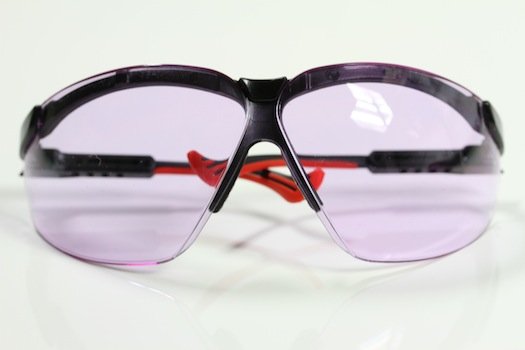
What they got was about 90 percent of the way to total color enhancement across three different types of lenses: Oxy-Iso, Hemo-Iso, and Oxy-Amp. While the Amp, which boosts the wearer’s general perception of blood oxygenation under the skin (your own vision, but better), is the centerpiece of the technology, it was the Oxy-Iso, the lens that isolates and enhances the red-green part of the spectrum, that generated some unexpected feedback from users. Changizi says the testers told them that the Oxy-Iso lens appeared to “cure” their colorblindness.

Changizi knew this was a possibility, as the filter concentrates enhancement exactly where red-green colorblind people have a block. Professor Daniel Bor, a red-green colorblind neuroscientist at the University of Sussex tried them and was practically giddy with the results. Changizi published Bor’s testimony on his blog: “When I first put one of them on [the Oxy-Iso,], I got a shiver of excitement at how vibrant and red lips, clothes and other objects around me seemed. I’ve just done a quick 8 plate Ishihara colour blindness test. I scored 0/8 without the specs (so obviously colour blind), but 8/8 with them on (normal colour vision)!”

Despite these early testimonials, the pair thought that the O2Amp glasses would be primarily picked up by hospitals. The Hemo-Iso filter enhances variations along the yellow-blue dimension, which makes it easier for healthcare providers to see veins. “It’s a little scary to think about people drawing blood who can’t see see the veins,” Barber says. EMT workers were enthusiastic users thanks to the Hemo-Iso’s capability of making bruising more visible.

From there, Barber and Changizi embarked on a two-year odyssey to find a manufacturer to make the eyewear that would enable them to sell commercially. Through 2AI Labs, they were able push their discoveries into mainstream applications without having to rely on grants; any funding they earn from their inventions is reinvested. They also forewent some of the traditional development steps. “We bootstrapped the bench testing and we didn’t do any market research,” Barber says.

Plenty of cold calling to potential manufacturers ensued. “As scientists talking to manufacturers, it seemed like we were speaking a different language,” Barber says. Not to mention looking strange as they walked around wearing the purple and green-tinted glasses at trade shows. Changizi says they finally got lucky last year and found a few manufacturers able to produce the specialized specs. All are available on Amazon for just under $300.

Changizi and Barber aren’t done yet. In addition to overseeing sales reps who are trying to get the glasses into the hands of more buyers, the two are in talks with companies such as Oakley and Ray-Ban to put the technology into sunglasses. Imagine, says Changizi, if you could more easily see if you are getting a sunburn at the beach despite the glare. They’re testing a mirrored O2Amp lens specially for poker players (think: all the better to see the flush of a bluffer). Changizi says they are also working with cosmetics companies to embed the technology in creams that would enhance the skin’s vasculature. Move over Hope in a Jar. Barber says it’s not clear how profitable any of this will be yet: “We just want the technology to be used.”

http://www.popsci.com/science/article/2013-02/amazing-story-300-glasses-can-cure-colorblindness?page=2

Saudi Researchers Want Clinical Trials For Camel Urine Cancer Cure

Camel

A research team from Saudi Arabia’s King Abdulaziz University has been making claims about discovering anti-cancer properties in camel urine for the last several years, and are now claiming they’ve shown good results in tests on healthy humans, though those results have yet to see publication. The researchers are seeking support from the Saudi Food and Drug authority, which oversees the nation’s clinical trials, to let them keep moving forward and testing the substance — which is extracted from camel urine — on patients suffering from cancer.

The team plan to release more data on their work at a conference later this month.

http://www.geekosystem.com/camel-urine-cancer-cure/

Intoxicating ability of alcohol varies by whether it’s mized with diet or regular soda

soda-glass-120207

The simple choice of whether or not to mix liquor with a diet or regular soda may affect how intoxicated you get, a new study suggests.

In the study, men and women ages 21 to 33 who drank vodka mixed with diet soda had breath alcohol concentrations that were 18 percent higher after 40 minutes compared with people who drank the same dose of vodka mixed with regular soda.

In fact, after three to four drinks, people who used diet soda as a mixer had a breath alcohol level that exceeded the legal limit for an adult operating a motor vehicle. People who used regular soda in their drink did not.

What’s more, people who used diet mixers scored more poorly on a test of reaction time that people who used regular mixers, although both groups reported feeling similar levels of intoxication.

The study was small — just eight men and eight women participated — so more research is needed to confirm the findings. And although results from breath alcohol tests are usually consistent with those from tests of blood alcohol, there can sometimes be a discrepancy between the two methods, so the study should be replicated using blood alcohol tests, the researchers said.

But the findings suggest that diet mixers, although lower in calories, may have insidious effects, said study researcher Cecile Marczinski, an assistant professor of psychology at Northern Kentucky University.

People “think they’re saving some calories by drinking their alcohol with a diet drink, [but] it’s much more harmful to the body to have a high blood alcohol concentration,” Marczinski said.

During the study, the 16 participants came into the laboratory three times, and received either vodka mixed with Squirt, vodka mixed with diet Squirt, or a placebo (Squirt containing a very small dose of alcohol to mimic the appearance and smell of an alcoholic beverage.) Besides the placebo, each drink contained equal amounts of alcohol and mixer. The dose of alcohol in each individual drink was based on the participant’s body weight.

Regular mixers may slow down the time it takes a person to become intoxicated from drinking, the researchers said. Alcohol is absorbed by the body when it reaches the small intestine. But the stomach may treat the sugar in regular mixers as if it were food. As a result, the alcohol doesn’t reach the small intestine as quickly, Marczinski said. The artificial sweeteners in diet soda, on the other hand, may not delay stomach emptying, so the alcohol travels straight through to the small intestine, Marczinski added. An earlier study found that men who drank vodka mixed with a diet beverage had higher blood alcohol levels than men who drank vodka mixed with a regular beverage. Using an ultrasound, the researchers showed that the regular drink delayed stomach emptying, but the diet drink did not.

The new finding “helps people to make an informed decision” about the mixer they chose for their alcohol, said Emma Childs, an assistant professor in the University of Chicago’s Department of Psychiatry, who has researched the effects of alcohol on physiology and behavior, and was not involved in the study.

http://www.livescience.com/26885-diet-soda-alcohol-mixers-intoxication.html

Abnormal gut bacteria linked to severe malnutrition

starve

There’s more to malnutrition than poor diet. Two complementary studies suggest that microbes have an important role to play in both the onset and treatment of a poorly understood form of malnutrition called kwashiorkor.

Malnutrition, the leading cause of death among children worldwide, remains something of a puzzle. It is unclear, for instance, why some children are especially prone to becoming malnourished when siblings they live with appear to fare better.

Now Jeffrey Gordon at Washington University in St Louis, Missouri, and his colleagues have found that a child’s risk of malnutrition may come down to the microbes in his or her guts.

Working in southern Malawi, the team identified sets of identical and non-identical twins in which one child had kwashiorkor – thought to be caused by a lack of protein – and the other did not, despite the shared genetics and diet. Gordon’s team took faecal samples from three sets of twins and transplanted the samples into the guts of mice, which were then fed a typical nutrient-poor Malawian diet.

Mouse weight lossAll of the mice lost some weight. However, some lost significantly more weight, and more quickly, than others. Further investigation showed that these mice had all received a faecal sample from children with kwashiorkor.

The finding strongly hinted that the mice had picked up a kwashiorkor-like condition from the microbes within the faecal implant, so the researchers studied the rodents’ gut flora. They found higher than normal levels of bacteria associated with illnesses such as inflammatory bowel disease.

The results suggest pathogenic microbes may heighten the problems of malnutrition in some children, says Jeremy Nicholson at Imperial College London, a member of the study team. “There’s a lot of work revolving around obesogenesis – how given a standard diet one set of bugs might make more calories available than another set,” he says. “But the other side of that coin is that maybe particular bugs can restrict calorie availability and exacerbate a poor diet.”

Indi Trehan at Washington University, another member of the research team, agrees. “I think it is correct that there are more factors than simple food insecurity at play in terms of malnutrition,” he says.

Antibiotic aidTrehan is lead author on a second new study, which examines how children with kwashiorkor respond when given nutrient-rich therapeutic diets. Trehan’s team found that the children were significantly less likely to become malnourished once the dietary treatment had ended if they were given a course of antibiotics along with the diet.

Together, the studies help us understand the role that infections might play in malnutrition, says Trehan. This might point towards a future in which microbial concoctions can be tailored to guard against such infections and treat specific conditions, suggests Nicholson.

Alexander Khoruts at the University of Minnesota in Minneapolis has been using faecal transplants to treat resistant Clostridium difficile disease in humans. “It is likely that microbiota are involved in pathogenesis of many other diseases, and it is possible that faecal transplants may be an approach to treat those as well,” he says. But because gut bacteria are so complex, he thinks more research will be needed to develop appropriate microbe-based therapies.

http://www.newscientist.com/article/dn23127-abnormal-gut-bacteria-linked-to-severe-malnutrition.html

Miami 4th grader wins science fair with drug sniffing dogs and ounce of cocaine

dog

When fourth-grader Emma Bartelt wanted to wow the judges at her elementary school’s science fair, she knew she had to do something unexpected.

All she needed was a box, a jar, three dogs … and an ounce of cocaine.

These days, vinegar and baking soda is so passé.

In what Miami-Dade school district officials are calling a first, Emma tapped her connections with Miami-Dade police to show how a dog’s sense of smell helps it find narcotics.

“The student’s science project involved a very unusual set of circumstances, including having a parent who is a well-respected police detective with experience in training dogs that sniff for illegal substances,” school district spokesman John Schuster said in statement.

Earlier this month, Miami-Dade police Det. Douglas Bartelt and his colleagues let Emma sit in while they put three drug sniffing canines through a search exercise at their narcotics training facility. There was Roger, a springer spaniel; Levi, a golden retriever; and Franky, a retired chocolate Labrador.

The dogs were individually timed as they searched for 28 grams of cocaine — worth an estimated $1,300 on the street — locked in a metal canister, hidden in a box somewhere in a single room. The exercise was then repeated in a second room.

In the end, Franky came out first, sniffing out the cocaine in 43 seconds. At no time did Emma handle the drugs or the dogs, a Police Department spokeswoman said.

Cocaine is not specifically banned from use in district science fair rules, the Miami Herald reported.

The project earned Emma first prize at her school, Coral Gables Preparatory Academy, and a chance to participate in the county science fair at Miami Dade College on Jan. 26. She received an honorable mention there, district officials said.

Emma explained “the purpose of this scientific investigation was to find which dog would find the cocaine fastest using its sense of smell,” according to the Herald.

http://www.latimes.com/health/boostershots/la-sci-sn-student-cocaine-science-fair-20130131,0,1052960.story