Interesting origins of popular board games

monopoly

Quaker extortionists and Monopoly? The Civil War and The Game of Life? We usually associate board gaming with family time, but several of the most popular games out there have some not-so-family-friendly origins.

So if you’re looking to spark some interesting conversations next time you gather ’round the table for an evening of dice and fake money, here are a few of the lesser known tales of history’s biggest board games.

Monopoly and the Quakers

You may have heard the legend that an unemployed salesman named Charles Darrow invented the game of Monopoly during the depression, somewhere around 1935. That’s not entirely true.

A Quaker named Lizzie Magie, in fact, first created the game in 1904 to showcase the evils of property ownership (the original title was “The Landlord’s Game”.) Magie was a supporter of the Quaker tax reformer Henry George, and the game focused on players extorting one another.

It was a hit in the Quaker community — a big one. One enthusiastic fan was a hotelier named Charles Todd, who would sometimes play with his guests. One regular visitor was (you guessed it) Charles Darrow, who asked Todd to write up the rules for him.

Once the game took off, Parker Bros. learned its true origins and had to do some damage control. It bought the rights for $500 from Magie, who believed her original game — and its anti-property philosophies — would finally be distributed to the masses. And it was, though only for a couple hundred copies, at least, before it was discontinued. Turns out people had more fun with Darrow’s tweaks to the game.

The Hard Life

On the surface, Life seems like a pretty happy-go-lucky game. You get a job, have kids and can’t wait for payday. Even if things go south, you’ll still find plenty of good events as you inch towards retirement.

The original game was a lot darker, though. Created by Milton Bradley himself, the game was originally sold under the name of “The Checkered Game of Life” during the Civil War. Less a whimsical journey and more a moralistic lesson, it was meant to teach virtue and principles to children.

Before there was payday, there were squares that included poverty, disgrace, and gambling to ruin. The game even came with a “Suicide” square — which, if landed on, marked your last turn. Way to bum us all out, Milton.

The darker side of Clue

Anthony E. Pratt was a fire warden during World War II. While walking his beat one day, he thought back to a favorite pre-war game he and his friends used to play called “Murder!”

“Between the wars,” he once said, “all the bright young things would congregate in each other’s homes for parties at weekends. We’d play a stupid game called Murder, where guests crept up on each other in corridors and the victim would shriek and fall on the floor.”

He transformed that somewhat morbid real-world distraction into a board game. The original version, though, was a bit harsher than what we play today. In addition to the gun, rope and other murder weapons, it included an axe, syringe, shillelagh, poison, and even a bomb. Not sure that’s the most inconspicuous weapon, but it’s probably effective.

Scrabble

If it weren’t from his love of master of the macabre Edgar Allen Poe, Alfred Butts might never have developed Scrabble.

The game, which has been a valuable resource in teaching spelling and vocabulary to kids, was born when creator Butts was reading Poe’s “The Gold Bug,” a story that involves figuring out a code based on how frequently letters are used. Butts decided to tweak that a bit and sat down to count out how frequently letters appeared in an issue The New York Times, which was quite the undertaking.

He called the game Lexico and spent more than 16 years waiting for it to take off. It wasn’t until 1952, when Jack Strauss, manager of Macy’s, played the game on vacation that things exploded. Strauss loved it so much that he demanded to know why it wasn’t on Macy’s store shelves. An order was placed and a classic finally found its audience.

Chutes and Ladders (and Murder and Lust)

If it seems like this immensely popular children’s game has been around forever, there’s a reason: it has. The concept has been traced back to an Hindu game called Leela — a game of self-knowledge — as well as an Indian game called Daspada.

Leela was created by Hindu scholars with the intention of teaching moral values. Daspada came about in the second century with a similar purpose, but using ladders to represent virtues and snakes to represent vices (hence the title ‘Snakes and Ladders’ in the U.K.).

Those vices were serious business, too. Included among them in Daspada were Vulgarity, Drunkenness, Murder and Lust. Yikes.

One thing’s for certain, though. The game’s a lot easier than it used to be. As society has become more focused on accentuating the positives for children, the number of ladders (which you use to progress in the game) has increased, while the number of chutes/snakes (which send you back several spaces) has gone down.

http://games.yahoo.com/blogs/plugged-in/shady-origins-five-popular-board-games-202719027.html
Modern day witchcraft in Romania

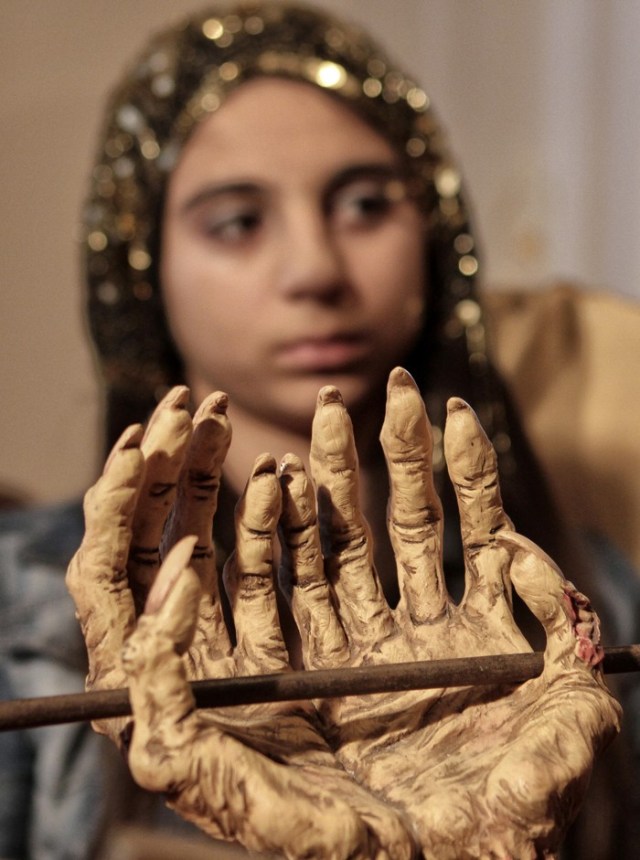
story-romania-witchcraft2-65144

Potions, spells and broomsticks: Witchcraft is often seen in Hollywood films and Halloween parties – and not usually as a form of alternative health care.

Yet in Romania, belief in magic is not regarded as hocus pocus. Many choose to entrust their problems to the supernatural rather that bear the stigma of seeking a psychologist.

Two years ago, Romanian photojournalist Mugur Varzariu set out to capture all facets of today’s Romania, from its active witch culture to the ugly Roma ethnic conflict. Raising awareness through the cross hairs of his camera, he has dedicated himself to projecting a country that transcends its Transylvanian image, and to documenting the different challenges of the Roma.

Call it fate that at a festival in Costesti, Varzariu’s camera lens was drawn to a vibrantly dressed woman – a witch of Roma origin, with a personality and energy to match her colorful attire. A prominent sorceress, Bratara not only performs rituals; she’s also a Roma rights activist.

Witches, or vrajitoares as they are called in their native tongue, are commonly of Roma heritage. Roma, or Gypsies, are a marginalized ethnicity in Romania seen by many as the cause of the country’s problems. Vexed also by witches, many government officials view them as frauds and an embarrassment to the nation.

“I wanted to tell a different story,” Varzariu said. “People in Romania say ‘we hate the Roma’ or ‘we hate the witches and want this practice to be put to an end.’ So I wanted to present the injustice but also to show the good things about the Roma.”

And with that, he set out to do a story on witchcraft. But in the end, he discovered her story, which was more complex and intricate than magic.

With an open mind, Varzariu stood at the entrance of her Bucharest home, he said, recalling the first time she opened the door through to “the universe of magic.”

Bratara allowed Varzariu to capture the mystique of her practices over the course of four months. From hex spells for enemies, to blending tonics that heal ailments, Varzariu explained, she has gained widespread influence.

At first he thought he would only witness sorcery, but she exposed more than just her magic. He saw her community’s pulse – everything from birthdays to exhumations to weddings and wakes – that seemed to transcend the physical plane.

“She is magic. She’s a soul of a large, large family,” he said.

Many people come to Bratara seeking help with everyday problems. A heartbroken girl wishing her ex-boyfriend would take her back received a chant and a stake-pierced-onion, symbolic of love hitting the heart, almost as if mimicking the action of Cupid’s arrow.

“Regardless if it’s true or not, she’s there for them day and night, and I don’t really see any harm in that,” Varzariu said. Especially in a culture where he says people are still afraid to see a shrink because “people will label them as crazy.”

Her activism has landed her a friend in one of the biggest Roma mafiosi in Bucharest. The mafia member accepted Varzariu into his home with a camera only because of her, he says. Despite their sensitive conversation regarding the Roma Justice Court, Bratara’s trust in him allowed for the documentation to take place.

In addition to catering to the needs of her community at the Roma at large, she still manages to make time, and scarves, for her family, such as garments for her nephew’s wedding.

Varzariu set out to do a story on witchcraft, he says, but at the end “it’s her – she is the story.”

“In a way, we live in a matriarchal society. You can sense it in the way women perform today,” he said. “I’m telling you, she would be the leading woman in any society. She’s amazing.”

– Michelle Cohan, CNN

Witch reveals heart of Roma

Surprising Diet For Weightlifting Record Setter

Next time you need motivation at the gym, think of Ray Williams.

The 6-foot, 361-pound Williams is a junior college football coach from Demopolis, Alabama. Over the weekend at the Alabama State Powerlifting Championship, he broke the U.S. record in the men’s raw 275-pounds-plus division by squatting 860 pounds. That’s right, 860 pounds.

And it gets better. Williams also put up 905 pounds, but that attempt was disallowed because he took a small jab step during the lift. Williams was pretty disappointed with himself because he wanted to see if he could squat 1,000 pounds.

For those wondering how to build bulk and muscle like Williams, the answer is simple: Cornbread and buttermilk.

“I’ve always been a big dude,” Williams told the website 70sbig. “And one thing my grandma brought us up on was cornbread, collard greens, good down-home southern food — it’s always been a staple of my diet.”

Making Williams’ feat all the more impressive was the fact that this was just his second powerlifting meet.

“I like it,” Williams told AL.com of powerlifting. “Just the fact that no one can say I’m big for no reason. Now, I can put my bigness to use. Plus I’ve always been just naturally strong, and I can refine that through powerlifting.”

http://www.thepostgame.com/blog/training-day/201302/man-produced-crazy-record-breaking-squat

Largest psychiatric genetic study in history shows a common genetic basis that underlies 5 types of mental disorders

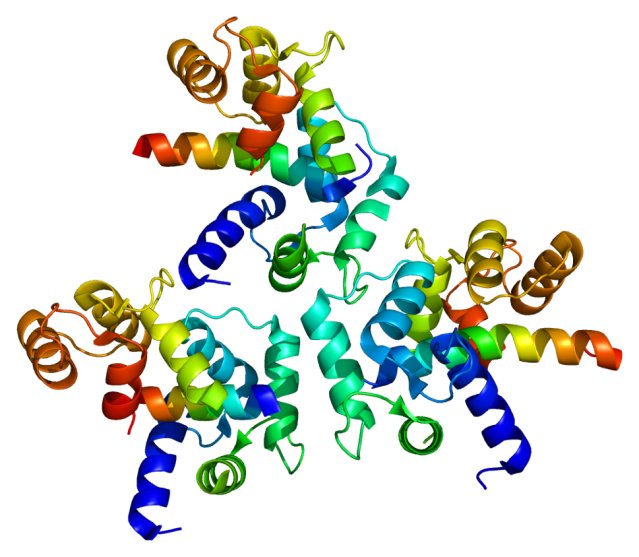
Protein_CACNA1C_PDB_2be6
Structure of the CACNA1C gene product, a calcium channel named Cav1.2, which is one of 4 genes that has now been found to be genetically held in common amongst schizophrenia, bipolar disorder, autism, major depression and attention deficit hyperactivity disoder. Groundbreaking work on the role of this protein on anxiety and other forms of behavior related to mental illness has previously been established in the Rajadhyaksha laboratory at Weill Cornell Medical Center.
http://weill.cornell.edu/research/arajadhyaksha/

http://www.ncbi.nlm.nih.gov/pmc/articles/PMC3481072/
http://www.ncbi.nlm.nih.gov/pmc/articles/PMC3192195/
http://www.ncbi.nlm.nih.gov/pmc/articles/PMC3077109/

From the New York Times:
The psychiatric illnesses seem very different — schizophrenia, bipolar disorder, autism, major depression and attention deficit hyperactivity disorder. Yet they share several genetic glitches that can nudge the brain along a path to mental illness, researchers report. Which disease, if any, develops is thought to depend on other genetic or environmental factors.

Their study, published online Wednesday in the Lancet, was based on an examination of genetic data from more than 60,000 people worldwide. Its authors say it is the largest genetic study yet of psychiatric disorders. The findings strengthen an emerging view of mental illness that aims to make diagnoses based on the genetic aberrations underlying diseases instead of on the disease symptoms.

Two of the aberrations discovered in the new study were in genes used in a major signaling system in the brain, giving clues to processes that might go awry and suggestions of how to treat the diseases.

“What we identified here is probably just the tip of an iceberg,” said Dr. Jordan Smoller, lead author of the paper and a professor of psychiatry at Harvard Medical School and Massachusetts General Hospital. “As these studies grow we expect to find additional genes that might overlap.”

The new study does not mean that the genetics of psychiatric disorders are simple. Researchers say there seem to be hundreds of genes involved and the gene variations discovered in the new study confer only a small risk of psychiatric disease.

Steven McCarroll, director of genetics for the Stanley Center for Psychiatric Research at the Broad Institute of Harvard and M.I.T., said it was significant that the researchers had found common genetic factors that pointed to a specific signaling system.

“It is very important that these were not just random hits on the dartboard of the genome,” said Dr. McCarroll, who was not involved in the new study.

The work began in 2007 when a large group of researchers began investigating genetic data generated by studies in 19 countries and including 33,332 people with psychiatric illnesses and 27,888 people free of the illnesses for comparison. The researchers studied scans of people’s DNA, looking for variations in any of several million places along the long stretch of genetic material containing three billion DNA letters. The question: Did people with psychiatric illnesses tend to have a distinctive DNA pattern in any of those locations?

Researchers had already seen some clues of overlapping genetic effects in identical twins. One twin might have schizophrenia while the other had bipolar disorder. About six years ago, around the time the new study began, researchers had examined the genes of a few rare families in which psychiatric disorders seemed especially prevalent. They found a few unusual disruptions of chromosomes that were linked to psychiatric illnesses. But what surprised them was that while one person with the aberration might get one disorder, a relative with the same mutation got a different one.

Jonathan Sebat, chief of the Beyster Center for Molecular Genomics of Neuropsychiatric Diseases at the University of California, San Diego, and one of the discoverers of this effect, said that work on these rare genetic aberrations had opened his eyes. “Two different diagnoses can have the same genetic risk factor,” he said.

In fact, the new paper reports, distinguishing psychiatric diseases by their symptoms has long been difficult. Autism, for example, was once called childhood schizophrenia. It was not until the 1970s that autism was distinguished as a separate disorder.

But Dr. Sebat, who did not work on the new study, said that until now it was not clear whether the rare families he and others had studied were an exception or whether they were pointing to a rule about multiple disorders arising from a single genetic glitch.

“No one had systematically looked at the common variations,” in DNA, he said. “We didn’t know if this was particularly true for rare mutations or if it would be true for all genetic risk.” The new study, he said, “shows all genetic risk is of this nature.”

The new study found four DNA regions that conferred a small risk of psychiatric disorders. For two of them, it is not clear what genes are involved or what they do, Dr. Smoller said. The other two, though, involve genes that are part of calcium channels, which are used when neurons send signals in the brain.

“The calcium channel findings suggest that perhaps — and this is a big if — treatments to affect calcium channel functioning might have effects across a range of disorders,” Dr. Smoller said.

There are drugs on the market that block calcium channels — they are used to treat high blood pressure — and researchers had already postulated that they might be useful for bipolar disorder even before the current findings.

One investigator, Dr. Roy Perlis of Massachusetts General Hospital, just completed a small study of a calcium channel blocker in 10 people with bipolar disorder and is about to expand it to a large randomized clinical trial. He also wants to study the drug in people with schizophrenia, in light of the new findings. He cautions, though, that people should not rush out to take a calcium channel blocker on their own.

“We need to be sure it is safe and we need to be sure it works,” Dr. Perlis said.

Communication of thoughts between rats on different continents, connected via brain-to-brain interface

The world’s first brain-to-brain connection has given rats the power to communicate by thought alone.

“Many people thought it could never happen,” says Miguel Nicolelis at Duke University in Durham, North Carolina. Although monkeys have been able to control robots with their mind using brain-to-machine interfaces, work by Nicolelis’s team has, for the first time, demonstrated a direct interface between two brains – with the rats able to share both motor and sensory information.

The feat was achieved by first training rats to press one of two levers when an LED above that lever was lit. A correct action opened a hatch containing a drink of water. The rats were then split into two groups, designated as “encoders” and “decoders”.

An array of microelectrodes – each about one-hundredth the width of a human hair – was then implanted in the encoder rats’ primary motor cortex, an area of the brain that processes movement. The team used the implant to record the neuronal activity that occurs just before the rat made a decision in the lever task. They found that pressing the left lever produced a different pattern of activity from pressing the right lever, regardless of which was the correct action.

Next, the team recreated these patterns in decoder rats, using an implant in the same brain area that stimulates neurons rather than recording from them. The decoders received a few training sessions to prime them to pick the correct lever in response to the different patterns of stimulation.

The researchers then wired up the implants of an encoder and a decoder rat. The pair were given the same lever-press task again, but this time only the encoder rats saw the LEDs come on. Brain signals from the encoder rat were recorded just before they pressed the lever and transmitted to the decoder rat. The team found that the decoders, despite having no visual cue, pressed the correct lever between 60 and 72 per cent of the time.

The rats’ ability to cooperate was reinforced by rewarding both rats if the communication resulted in a correct outcome. Such reinforcement led to the transmission of clearer signals, improving the rats’ success rate compared with cases where decoders were given a pre-recorded signal. This was a big surprise, says Nicolelis. “The encoder’s brain activity became more precise. This could have happened because the animal enhanced its attention during the performance of the next trial after a decoder error.”

If the decoders had not been primed to relate specific activity with the left or right lever prior to the being linked with an encoder, the only consequence would be that it would have taken a bit more time for them to learn the task while interacting with the encoder, says Nicolelis. “We simply primed the decoder so that it would get the gist of the task it had to perform.” In unpublished monkey experiments doing a similar task, the team did not need to prime the animals at all.

In a second experiment, rats were trained to explore a hole with their whiskers and indicate if it was narrow or wide by turning to the left or right. Pairs of rats were then connected as before, but this time the implants were placed in their primary somatosensory cortex, an area that processes touch. Decoder rats were able to indicate over 60 per cent of the time the width of a gap that only the encoder rats were exploring.

Finally, encoder rats were held still while their whiskers were stroked with metal bars. The researchers observed patterns of activity in the somatosensory cortex of the decoder rats that matched that of the encoder rats, even though the whiskers of the decoder rats had not been touched.

Pairs of rats were even able to cooperate across continents using cyberspace. Brain signals from an encoder rat at the Edmond and Lily Safra International Institute of Neuroscience of Natal in Brazil were sent to a decoder in Nicolelis’s lab in North Carolina via the internet. Though there was a slight transmission delay, the decoder rat still performed with an accuracy similar to those of rats in closer proximity with encoders.

Christopher James at the University of Warwick, UK, who works on brain-to-machine interfaces for prostheses, says the work is a “wake-up call” for people who haven’t caught up with recent advances in brain research.

We have the technology to create implants for long-term use, he says. What is missing, though, is a full understanding of the brain processes involved. In this case, Nicolelis’s team is “blasting a relatively large area of the brain with a signal they’re not sure is 100 per cent correct,” he says.

That’s because the exact information being communicated between the rats’ brains is not clear. The brain activity of the encoders cannot be transferred precisely to the decoders because that would require matching the patterns neuron for neuron, which is not currently possible. Instead, the two patterns are closely related in terms of their frequency and spatial representation.

“We are still using a sledgehammer to crack a walnut,” says James. “They’re not hearing the voice of God.” But the rats are certainly sending and receiving more than a binary signal that simply points to one or other lever, he says. “I think it will be possible one day to transfer an abstract thought.”

The decoders have to interpret relatively complex brain patterns, says Marshall Shuler at Johns Hopkins University in Baltimore, Maryland. The animals learn the relevance of these new patterns and their brains adapt to the signals. “But the decoders are probably not having the same quality of experience as the encoders,” he says.

Patrick Degenaar at Newcastle University in the UK says that the military might one day be able to deploy genetically modified insects or small mammals that are controlled by the brain signals of a remote human operator. These would be drones that could feed themselves, he says, and could be used for surveillance or even assassination missions. “You’d probably need a flying bug to get near the head [of someone to be targeted],” he says.

Nicolelis is most excited about the future of multiple networked brains. He is currently trialling the implants in monkeys, getting them to work together telepathically to complete a task. For example, each monkey might only have access to part of the information needed to make the right decision in a game. Several monkeys would then need to communicate with each other in order to successfully complete the task.

“In the distant future we may be able to communicate via a brain-net,” says Nicolelis. “I would be very glad if the brain-net my great grandchildren used was due to their great grandfather’s work.”

Journal reference: Nature Scientific Reports, DOI: 10.1038/srep01319

Robbie Wilde – Deaf DJ

Robbie Wilde thumbs through his iPhone as the sounds of voices and clinking glasses bounce all around him. His eyes never leave the phone’s screen. During New York Fashion Week, Wilde, 27, passes the time with friends and management at an exclusive party in Hell’s Kitchen before taking over the turntables.

Wilde lives in a world of rhythm and bass. He just can’t hear it. Ear infections at age 7 left Wilde completely deaf in his right ear and took away 80% of his hearing in his left one. It would be another four years before doctors would confirm what his mother, Maria Sapeta, dreaded: Her son was deaf.

“It was heartbreaking as a mother,” she recalled. “It was probably one of the hardest days of my life. But Robbie was the one who gave me a hug and said, ‘Don’t cry.'”

Originally from Portugal, Sapeta and her husband, Emidio, then a cruise ship chef, had moved to the United States when Wilde was 5. From childhood, he always had a “persistent personality,” Sapeta said, laughing. Unlike many other kids his age, he always finished what he started — from puzzles to cabins made from Lincoln Logs.

After losing his hearing, his grades slipped because he had difficulty understanding his teachers. Bullied in school, Wilde usually kept his deafness a secret. When his parents suggested he attend a specialty school, he insisted on staying in public school. He worked with a speech therapist and began reading lips.

“I grew up in a way that I don’t want any sympathy. I don’t want to be treated differently,” he said. “I just tried to maneuver around, reading lips and trying to hear my own way.”

When her son announced he wanted to be a professional DJ instead of joining the family restaurant business, Sapeta was cautiously supportive. “We could see his talent and his passion, but I kept worrying about that left ear,” she said. “Anything to stop his dreams, he didn’t want it.”

Hearing is the most important sense for a DJ, who manipulates music, scratches records and uses mixers. But Wilde was determined to succeed without his. Always drawn to music, he discovered turntables in high school through a friend’s brother who was a DJ.

Wilde got his first shot at performing as a DJ at his father’s restaurant outside Newark, New Jersey, nearly a decade ago, and he hasn’t looked back since. “I still consider it as a hobby. I really do love it,” Wilde said. “I don’t see it as a job, and that’s the best part.”

Wilde started out playing CDs before pushing himself to scratch records, something he knew he needed help with. “It’s a hard business alone for the hearing community,” he said, “And I was like, ‘I’m hearing impaired and how’s that going to work?'”

So he paired up with two-time DMC world champion DJ and Harvard math grad Sam Zornow, aka DJ Shiftee, who was teaching at Dubspot, a DJ school and production studio in New York. Mastering turntables is a skill that takes hours of practice to learn and can be a lifelong pursuit, Zornow said. “It takes two years just to get bad,” he said. “And I mean ‘bad’ meaning bad.”

Still, Zornow was up to the challenge of working with Wilde. At first he didn’t know what to expect, but he said Wilde’s success has surprised him. “On paper it should be impossible. You’re dealing with manipulating sound. Then combine that with a discipline that’s hard in general, it’s a really impressive task he’s taken on,” Zornow said. “From the beginning he believed in himself and continues to believe in himself.”

Computer giant Hewlett-Packard noticed Wilde’s skills and put him in a commercial this fall for its new touch-enabled PC, thrusting him onto the world stage. “It’s a true story of inspiration,” said HP marketing executive Danielle Jones. “His is a profound story of someone being able to do the things that matter to them and the things that they love through technology.”

Unable to hear lyrics or complete compositions, Wilde relies on technology to see the music by using his laptop and DJ software that helps him differentiate between vocals, bass and kicks. He also feels the vibration whether physically from a club’s speakers or through a SubPac, which resembles a seat cushion and allows him to feel the music by directly transferring low frequencies to the body.

Clubgoers and promoters dubbed him “That Deaf DJ” after he first came onto the scene in New Jersey — a moniker even he uses. But Wilde said he wants to be more than just “a deaf kid trying to DJ.”

“I want you to see me as a great DJ who happens to be deaf,” he said. Besides, he said, some things are better left unheard. There’s a lot of sounds out in the world you don’t want to hear. I like it muffled,” he said. “I like who I am; I’m proud of who I am.”

Wilde has gone from working small clubs to rocking this year’s Consumer Electronics Show and Sundance Film Festival. When he’s not behind the turntables, Wilde is in the studio producing music. Often questioned about the severity of his deafness, Wilde used to carry around a doctor’s note and would show the back of his driver’s license indicating his hearing impairment.

When people question his abilities, he said he has only one answer: “I didn’t hear you.”

http://www.cnn.com/2013/02/23/showbiz/deaf-dj/index.html?hpt=hp_c3

The Super Supercapacitor: Graphene super capacitor could make batteries obsolete

A Feb. 21, 2013 article in Rewire reports on a breakthrough in power storage that hold the promise to change the world. Researchers at UCLA have found a way to create what is in effect a super capacitor that can be charged quickly and will hold more electricity than standard batteries. What’s more, it is made with Graphene, a simply carbon polymer that, unlike batteries that have toxic metals in them, is environmentally benign and is not only biodegradable but compostable.

The researchers expect that the manufacturing process for the Graphene super capacitor can be refined for mass production.

The real world applications of an energy storage device that can be charged quickly and can hold as much if not more electricity as batteries is mind blowing.

For instance, electronic devices such as cell phones and tablet computers can be charged in seconds and not for hours and would hold a charge for longer than devices with standard batteries. This will diminish those annoying instances when one’s device suddenly goes dead for lack of energy.

Eventually the technology can be scaled up for electric cars or storage devices for wind turbines and solar collectors. Currently it takes hours to charge up an electric car. Such vehicles would become more viable if one can “refuel” them as quickly as one can a gasoline powered car.

This is all predicated on the notion that the technology lives up to its promise and doesn’t have a flaw, as yet uncovered, that will undermine it. In the meantime the UCLA researchers are looking for an industrial partner to build their super capacitor units on an industrial scale.

http://www.examiner.com/article/graphene-super-capacitor-could-make-batteries-obsolete

Act of sportsmanship gives Texas high schooler shot at glory

EL PASO, Texas — Coach Peter Morales of the Coronado High School Thunderbirds in El Paso, Texas, makes no qualms about it: he has a favorite on this team. Team manager Mitchell Marcus has a developmental disability, but he far surpasses everyone here when it comes to love of the game. “He’s just an amazing person that our basketball team loves being around,” Morales says.

Mitchell’s mom, Amy, says he’s always been that way. “Mitchell always had a basketball, that was always what he wanted for his birthday,” she says.

And because basketball is that important to him, on the last game of the regular season, the coach told Mitchell to suit up.

“I was very happy,” Mitchell says of what it was like to put on the team’s uniform.

Just wearing a jersey was enough for Mitchell, but what he didn’t know — what no one knew at the time — was that the coach planned to play him at the end, no matter what the score. Morales says he was prepared to lose the game. “For his moment in time, yes,” he says.

With a minute-and-a-half left — Coronado leading, but only by 10 — Coach Morales put in his manager. “And I just started hearing, ‘Mitchell, Mitchell,'” Morales says.

But here’s where the fairytale fell apart. Although his teammates did everything they could to get Mitchell a basket, each time they passed him the ball, he either missed the shot, or, like on their last possession, booted it out of bounds, turning the ball over to the other team with just seconds left. “He wasn’t going to be able to score, but I was hoping that he was happy that he was just put in the game,” Morales says. He couldn’t have imagined what happened next.

What happened occurred on the inbound. The guy with the ball was a senior at Franklin High School, Number 22, Jonathon Montanez. “I was raised to treat others how you want to be treated,” Jonathon says. “I just though Mitchell deserved his chance, deserved his opportunity.”

“I think I’ll cry about it for the rest of my life,” Amy says.

What Jonathon did was yell out Mitchell’s name, then threw the ball right to him — one of the most memorable turnovers of all time. It wasn’t the game-winning shot. When the buzzer sounded, Coronado had 15 more points than Franklin. But Jonathon’s assist and Mitchell’s basket did change the outcome decidedly. Play any game with this much sportsmanship and both teams win.

Thanks, to the future Dr. Goldman, for bringing this to the attention of the It’s Interesting community.

And congratulations to the future Dr. Goldman on induction into Alpha Omega Alpha Honor Medical Society!
Way to go!

Women’s legs used as advertising space in Japan

Japanese-Womens-Legs-Bought-For-Advertising-Space-In-Japan

We’re all familiar with Japan’s creative and often strange advertising methods, but this may be a first. Absolute Territory PR, a Japanese advertising agency, has begun paying young Japanese women to apply stick-on tattoos to their legs.

The guerrilla advertising technique has proven very successful in Japan.

Japanese women employed by the advertising agency are instructed to stamp their legs with an ad and go on with their normal daily activities; they are, however, also required to wear a short skirt or shorts and show off their “pins” as much as possible.

As long as the stick-on tattoo is visible on their legs for eight hours a day, their job is done, and they are paid a portion of the advertising fee.

According to the Daily Mail, it’s also mandatory for the girls to post pictures of themselves “wearing” the ad on their own Facebook, Twitter, and other social media networks.

Not only are regular companies using the advertising service, but the rock band Green Day recently used the service while promoting the Japan release of their newest CD.

Eichi Atsumi, a spokesperson for Absolute Territory PR, Japanese women must be at least 18 years old and be connected to a minimum of 20 people on any social network.

Based on a report from the International Business Times, women are paid between $13 and as much as $128 for wearing mini-skirts and advertising for the agency.

“We hope registered members will have fun taking part in this,” Atsumi said.

As of November 2012, almost 1,300 Japanese women have already registered their legs as advertising space, and that number just keeps growing.

Read more at http://www.inquisitr.com/536604/japanese-womens-legs-used-as-advertising-space-in-japan/#UfAEqiOovz4R8dwO.99

Fruit flies force their young to drink alcohol for protection

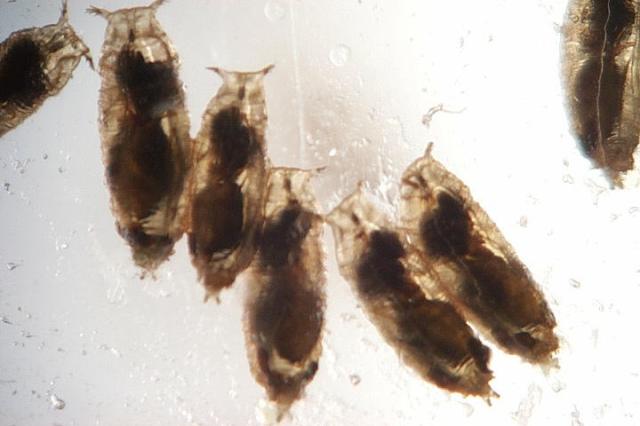
130222102958-large
The fruit fly study adds to the evidence “that using toxins in the environment to medicate offspring may be common across the animal kingdom,” says biologist Todd Schlenke.

When fruit flies sense parasitic wasps in their environment, they lay their eggs in an alcohol-soaked environment, essentially forcing their larvae to consume booze as a drug to combat the deadly wasps.

The discovery by biologists at Emory University was published in the journal Science on February 22.

“The adult flies actually anticipate an infection risk to their children, and then they medicate them by depositing them in alcohol,” says Todd Schlenke, the evolutionary geneticist whose lab did the research. “We found that this medicating behavior was shared by diverse fly species, adding to the evidence that using toxins in the environment to medicate offspring may be common across the animal kingdom.”

Adult fruit flies detect the wasps by sight, and appear to have much better vision than previously realized, he adds. “Our data indicate that the flies can visually distinguish the relatively small morphological differences between male and female wasps, and between different species of wasps.”

The experiments were led by Balint Zacsoh, who recently graduated from Emory with a degree in biology and still works in the Schlenke lab. The team also included Emory graduate student Zachary Lynch and postdoc Nathan Mortimer.

The larvae of the common fruit fly, Drosophila melanogaster, eat the rot, or fungi and bacteria, that grows on overripe, fermenting fruit. They have evolved a certain amount of resistance to the toxic effects of the alcohol levels in their natural habitat, which can range up to 15 percent.

Tiny, endoparasitoid wasps are major killers of fruit flies. The wasps inject their eggs inside the fruit fly larvae, along with venom that aims to suppress their hosts’ cellular immune response. If the flies fail to kill the wasp egg, a wasp larva hatches inside the fruit fly larva and begins to eat its host from the inside out.

Last year, the Schlenke lab published a study showing how fruit fly larvae infected with wasps prefer to eat food high in alcohol. This behavior greatly improves the survival rate of the fruit flies because they have evolved high tolerance of the toxic effects of the alcohol, but the wasps have not.

“The fruit fly larvae raise their blood alcohol levels, so that the wasps living in their blood will suffer,” Schlenke says. “When you think of an immune system, you usually think of blood cells and immune proteins, but behavior can also be a big part of an organism’s immune defense.”

For the latest study, the researchers asked whether the fruit fly parents could sense when their children were at risk for infection, and whether they then sought out alcohol to prophylactically medicate them.

Adult female fruit flies were released in one mesh cage with parasitic wasps and another mesh cage with no wasps. Both cages had two petri dishes containing yeast, the nourishment for lab-raised fruit flies and their larvae. The yeast in one of the petri dishes was mixed with 6 percent alcohol, while the yeast in the other dish was alcohol free. After 24 hours, the petri dishes were removed and the researchers counted the eggs that the fruit flies had laid.

The results were dramatic. In the mesh cage with parasitic wasps, 90 percent of the eggs laid were in the dish containing alcohol. In the cage with no wasps, only 40 percent of the eggs were in the alcohol dish.

“The fruit flies clearly change their reproductive behavior when the wasps are present,” Schlenke says. “The alcohol is slightly toxic to the fruit flies as well, but the wasps are a bigger danger than the alcohol.”

The fly strains used in the experiments have been bred in the lab for decades. “The flies that we work with have not seen wasps in their lives before, and neither have their ancestors going back hundreds of generations,” Schlenke says. “And yet, the flies still recognize these wasps as a danger when they are put in a cage with them.”

Further experiments showed that the flies are extremely discerning about differences in the wasps. They preferred to lay their eggs in alcohol when female wasps were present, but not if only male wasps were in the cage.

Theorizing that the flies were reacting to pheromones, the researchers conducted experiments using two groups of mutated fruit flies. One group lacked the ability to smell, and another group lacked sight. The flies unable to smell, however, still preferred to lay their eggs in alcohol when female wasps were present. The blind flies did not make the distinction, choosing the non-alcohol food for their offspring, even in the presence of female wasps.

“This result was a surprise to me,” Schlenke says. “I thought the flies were probably using olfaction to sense the female wasps. The small, compound eyes of flies are believed to be more geared to detecting motion than high-resolution images.”

The only obvious visual differences between the female and male wasps, he adds, is that the males have longer antennae, slightly smaller bodies, and lack an ovipositor.

Further experimentation showed that the fruit flies can distinguish different species of wasps, and will only choose the alcohol food in response to wasp species that infect larvae, not fly pupae. “Fly larvae usually leave the food before they pupate,” Schlenke explains, “so there is likely little benefit to laying eggs at alcoholic sites when pupal parasites are present.”

The researchers also connected the exposure to female parasitic wasps to changes in a fruit fly neuropeptide.

Stress, and the resulting reduced level of neuropeptide F, or NPF, has previously been associated with alcohol-seeking behavior in fruit flies. Similarly, levels of a homologous neuropeptide in humans, NPY, is associated with alcoholism.

We found that when a fruit fly is exposed to female parasitic wasps, this exposure reduces the level of NPF in the fly brain, causing the fly to seek out alcoholic sites for oviposition,” Schlenke says. “Furthermore, the alcohol-seeking behavior appears to remain for the duration of the fly’s life, even when the parasitic wasps are no longer present, an example of long-term memory.”

Finally, Drosophila melanogaster is not unique in using this offspring medication behavior. “We tested a number of fly species,” Schlenke says, “and found that each fly species that uses rotting fruit for food mounts this immune behavior against parasitic wasps. Medication may be far more common in nature than we previously thought.”

http://www.sciencedaily.com/releases/2013/02/130222102958.htm