Rare brain condition makes woman see everything upside down

bojana2_150313_blic_630bojana_150313_blic_630

Bojana Danilovic has what you might call a unique worldview. Due to a rare condition, she sees everything upside down, all the time.

The 28-year-old Serbian council employee uses an upside down monitor at work and relaxes at home in front of an upside down television stacked on top of the normal one that the rest of her family watches.

“It may look incredible to other people but to me it’s completely normal,” Danilovic told local newspaper Blic.

“I was born that way. It’s just the way I see the world.”

Experts from Harvard University and the Massachusetts Institute of Technology have been consulted after local doctors were flummoxed by the extremely unusual condition.

They say she is suffering from a neurological syndrome called “spatial orientation phenomenon,” Blic reports.

“They say my eyes see the images the right way up but my brain changes them,” Danilovic said.

“But they don’t really seem to know exactly how it happens, just that it does and where it happens in my brain.

“They told me they’ve seen the case histories of some people who write the way I see, but never someone quite like me.”

http://au.news.yahoo.com/thewest/a/-/world/16375095/rare-brain-condition-leaves-woman-seeing-world-upside-down/

Doubts about Johns Hopkins research have gone unanswered, scientist says

JN2_2846a1360362374

Daniel Yuan, pictured at his home in Laurel, raised doubts for years about the work of his colleagues in a Johns Hopkins medical research lab. “The denial that I am hearing from almost everyone in the group as a consensus is troubling to me,” he wrote in one e-mail. In December 2011, after 10 years at the lab, he was fired.

By Peter Whoriskey
The Washington Post Published: March 11
The numbers didn’t add up.

Over and over, Daniel Yuan, a medical doctor and statistician, couldn’t understand the results coming out of the lab, a prestigious facility at Johns Hopkins Medical School funded by millions from the National Institutes of Health.

He raised questions with the lab’s director. He reran the calculations on his own. He looked askance at the articles arising from the research, which were published in distinguished journals. He told his colleagues: This doesn’t make sense.

“At first, it was like, ‘Okay — but I don’t really see it,’ ” Yuan recalled. “Then it started to smell bad.”

His suspicions arose as reports of scientific misconduct have become more frequent and critics have questioned the willingness of universities, academic journals and the federal government, which pays for much of the work, to confront the problem.

Eventually, the Hopkins research, which focused on detecting interactions between genes, would win wide acclaim and, in a coup for the researchers, space in the pages of Nature, arguably the field’s most prestigious journal. The medical school even issued a news release when the article appeared last year: “Studies Linked To Better Understanding of Cancer Drugs.”

What very few readers of the Nature paper could know, however, was that behind the scenes, Yuan’s doubts seemed to be having profound effects.

In August, Yu-yi Lin, the lead author of the paper, was found dead in his new lab in Taiwan, a puncture mark in his left arm and empty vials of sedatives and muscle relaxants around him, according to local news accounts — an apparent suicide.

And within hours of this discovery, a note was sent from Lin’s e-mail account to Yuan. The e-mail, which Yuan saved, essentially blamed him for driving Lin to suicide. Yuan had written to Nature’s editors, saying that the paper’s results were overstated and that he found no evidence that the analyses described had actually been conducted. On the day of his death, Lin, 38, the father of three young daughters, was supposed to have finished writing a response to Yuan’s criticisms.

The subject line of the e-mail to Yuan, sent by an unknown person, said “your happy ending.”

“Yu-yi passed away this morning. Now you must be very satisfied with your success,” the e-mail said.

Yuan said he was shocked by the note, so much so that he began to shake.

But in the seven months since, he has wondered why no one — not the other investigators on the project, not the esteemed journal, not the federal government — has responded publicly to the problems he raised about the research.

The passions of scientific debate are probably not much different from those that drive achievement in other fields, so a tragic, even deadly dispute might not be surprising.

But science, creeping ahead experiment by experiment, paper by paper, depends also on institutions investigating errors and correcting them if need be, especially if they are made in its most respected journals.

If the apparent suicide and Yuan’s detailed complaints provoked second thoughts about the Nature paper, though, there were scant signs of it.

The journal initially showed interest in publishing Yuan’s criticism and told him that a correction was “probably” going to be written, according to e-mail rec­ords. That was almost six months ago. The paper has not been corrected.

The university had already fired Yuan in December 2011, after 10 years at the lab. He had been raising questions about the research for years. He was escorted from his desk by two security guards.

More recently, a few weeks after a Washington Post reporter began asking questions, a university spokeswoman said that a correction had been submitted to Nature and that it was under review.

“Your questions will be addressed with that publication,” a spokeswoman for the Hopkins medical school, Kim Hoppe, wrote in an e-mail.

Neither the journal nor the university would disclose the nature of the correction.

Hoppe declined an opportunity to have university personnel sit for interviews.

In the meantime, the paper has been cited 11 times by other published papers building on the findings.

It may be impossible for anyone from outside to know the extent of the problems in the Nature paper. But the incident comes amid a phenomenon that some call a “retraction epidemic.”

Last year, research published in the Proceedings of the National Academy of Sciences found that the percentage of scientific articles retracted because of fraud had increased tenfold since 1975.

The same analysis reviewed more than 2,000 retracted biomedical papers and found that 67 percent of the retractions were attributable to misconduct, mainly fraud or suspected fraud.

“You have a lot of people who want to do the right thing, but they get in a position where their job is on the line or their funding will get cut, and they need to get a paper published,” said Ferric C. Fang, one of the authors of the analysis and a medical professor at the University of Washington. “Then they have this tempting thought: If only the data points would line up . . . ”

Fang said retractions may be rising because it is simply easier to cheat in an era of digital images, which can be easily manipulated. But he said the increase is caused at least in part by the growing competition for publication and for NIH grant money.

He noted that in the 1960s, about two out of three NIH grant requests were funded; today, the success rate for applicants for research funding is about one in five. At the same time, getting work published in the most esteemed journals, such as Nature, has become a “fetish” for some scientists, Fang said.

In one sense, the rise in retractions may mean that the scientific enterprise is working — bad work is being discovered and tossed out. But many observers note that universities and journals, while sometimes agreeable to admitting small mistakes, are at times loath to reveal that the essence of published work was simply wrong.

“The reader of scientific information is at the mercy of the scientific institution to investigate or not,” said Adam Marcus, who with Ivan Oransky founded the blog Retraction Watch in 2010. In this case, Marcus said, “if Hopkins doesn’t want to move, we may not find out what is happening for two or three years.”

The trouble is that a delayed response — or none at all — leaves other scientists to build upon shaky work. Fang said he has talked to researchers who have lost months by relying on results that proved impossible to reproduce.

Moreover, as Marcus and Oransky have noted, much of the research is funded by taxpayers. Yet when retractions are done, they are done quietly and “live in obscurity,” meaning taxpayers are unlikely to find out that their money may have been wasted.

Johns Hopkins University typically receives more than $600 million a year from NIH, according to NIH figures.

For someone who has taken on a battle with Johns Hopkins and Nature, Yuan is strikingly soft-spoken.

He grew up in Gainesville, Fla., and attended MIT and then medical school at Johns Hopkins. He worked briefly as a pediatrician and an assistant professor of pediatrics before deciding that he preferred pure research. He has a wife and two kids and is an accomplished violinist.

In 2001, he joined the lab of Jef Boeke, a Hopkins professor of molecular biology and genetics. Boeke’s work on the yeast genome is, as academics put it, “highly cited” — that is, other papers have used some of his articles numerous times for support. Last year, he was named a member of the prestigious American Academy of Arts and Sci­ences.

The lab’s research focused on developing a methodology for finding evidence of genes interacting, primarily in the yeast genome and then in the human genome. Genetic interactions are prized because they yield insights into the traits of the genes involved.

During Yuan’s time there, the lab received millions in NIH funding, and according to internal e-mails, the people in the lab were under pressure to show results. Yuan felt the pressure, too, he says, but as the point person for analyzing the statistical data emerging from the experiments, he felt compelled to raise his concerns.

As far back as 2007, as the group was developing the methodology that would eventually form the basis of the Nature paper, Yuan wrote an anguished e-mail to another senior member of the lab, Pamela Meluh.

“I continue to be in a state of chronic alarm,” he wrote in August 2007. “The denial that I am hearing from almost everyone in the group as a consensus is troubling to me.”

Meluh quickly wrote back: “I have the same level of concern as you in terms of data quality, but I have less basis to think it can be better. . . . I’m always torn between addressing your and my own concerns and being ‘productive.’ ”

Then Boeke weighed in, telling Yuan that if he could improve the data analysis, he should, but that “the clock is ticking.”

“NIH has already given us way more time than we thought we needed and at some point we’ve got to suck it up and run with what we have,” Boeke wrote to Meluh and Yuan.

A few years later, another deadline was looming, and Elise Feingold, an NIH administrator, wanted to know what the lab had accomplished.

“I do need some kind of progress report on what you have been doing the past two years . . . and what you think you can accomplish with these funds,” she wrote to Boeke.

Citing Feingold’s message, ­Meluh wrote to Yuan, asking for help in explaining what the lab had produced. Its members had worked diligently, Yuan says, but hadn’t arrived at the kind of significant findings that generally produce scientific papers.

“I want to make it look like we’ve been busy despite lack of publications,” Meluh wrote.

Meluh did not respond to a request for an interview. Boeke referred questions to the university’s public relations team, which declined to comment further. An NIH official declined to comment.

While Yuan was growing increasingly skeptical of the lab’s methodology, Yu-yi Lin, who was also working at the lab, was trying to extend it. In the past, it had been applied to the yeast genome; Lin would extend it to the human genome — and this would become the basis of the Nature paper.

Lin, who was from Taiwan, was an up-and-comer. As a graduate student at Johns Hopkins just a few years before, he’d won an award for his work in cell metabolism and aging. He was also arranging for a prestigious spot at National Taiwan University.

At one point, when he was still at the Boeke lab at Hopkins, Lin asked Yuan to help analyze the data that would become the basis for the Nature paper, Yuan says. Yuan said he declined to get involved because he thought the methodology still had deep flaws.

Interactions between Lin and Yuan at the lab were few, Yuan said, and at any rate, Yuan had other things to worry about. He was slowly being forced out. He was demoted in 2011 from research associate to an entry-level position. A disagreement over whether Yuan should have asked Boeke if he wanted a byline on a paper erupted into further trouble, e-mail and other records show.

The Johns Hopkins spokeswoman, Hoppe, declined to discuss Yuan’s job termination.

On Dec. 15, 2011, Yuan was forced to leave the lab. He wasn’t allowed to make copies of his cell collection. He spent the next month trying to keep his mind busy. He read books about JavaScript and Photoshop, which he thought would enrich his research abilities. As he looked for other research jobs, he sensed that he had been blackballed.

Then, in February 2012, the Nature paper was published.

The research was a “profound achievement” that would “definitely be a great help to solve and to treat many severe diseases,” according to a news release from National Taiwan University, where Lin was now working.

Upon reading it, Yuan said, he was astonished that Lin had used what he considered a flawed method for finding genetic interactions. It had proved troublesome in the yeast genome, he thought. Could it have possibly been more reliable as it was extended to the human genome?

Lin, Boeke and their co-authors reported discovering 878 genetic interactions, or “hits.”

But Yuan, who was familiar with the data and the statistics, reanalyzed the data in the paper and concluded that there was essentially no evidence for any more than a handful of the 878 genetic interactions.

One of the key problems, Yuan wrote to the Nature editors, was that the numerical threshold the investigators used for determining when a hit had arisen was too low. This meant they would report far more hits than there actually were.

Yuan also calculated that, given the wide variability in the data and the relative precision required to find a true hit, it would have been impossible to arrive at any conclusions at all. By analogy, it would be like a pollster declaring a winner in an election when the margin of error was larger than the difference in the polling results.

“The overwhelming noise in the . . . data and the overstated strength of the genetic interactions together make it difficult to reconstruct any scientific process by which the authors could have inferred valid results from these data,” Yuan wrote to the editors of Nature in July.

His analysis attacks only the first portion of the paper; even if he is correct, the second part of the paper could be true.

Nevertheless, Yuan wanted Nature to publish his criticism, and following instructions from the journal, he forwarded his letter to Boeke and Lin, giving them two weeks to respond.

Just as the two weeks were to elapse, Boeke wrote to Nature asking for an extension of time — “a couple weeks or more” — to address Yuan’s criticism. Boeke explained that end-of-summer schedules and the multiple co-authors made it difficult to respond on time.

A day later, Lin was discovered dead in his office at National Taiwan University.

“Renowned scientist found dead, next to drug bottles,” the headline in the Taipei Times said.

Even in his death, the Nature paper was a kind of shorthand for Lin’s scientific success.

“A research team [Lin] led was featured in the scientific journal Nature in February for their discovery of the key mechanism for maintaining cell energy balance — believed to be linked to cellular aging and cancer,” the newspaper said.

If there was a suicide note, it has not been made public, and it is difficult to know what went through Lin’s mind at the end of his life. The apparent suicide and the e-mail to Yuan suggest only that Lin may have been distraught over the dispute; they do not prove that he acted improperly.

Shortly after the Nature paper appeared, Yuan hired lawyer Lynne Bernabei to challenge the way he was terminated at Hopkins.

In late August, Yuan asked the Nature editors again whether they would publish his criticism. Lin was dead, but Boeke and the others had had a month to respond, and Yuan hadn’t heard a thing.

On Sept. 28, a Nature editor informed Yuan by e-mail that the journal was still waiting on a fuller response from Boeke and that “experiments are being done and probably a Correction written.”

Such a correction has not appeared.

So as a last attempt, he figured he’d try the federal government, which paid for much of the research. But the government suggested that the threat to the federal research, if there was any, ended with Lin’s death.

“It is our understanding that these allegations are being investigated by Johns Hopkins University,” said the letter from the Office of Research Integrity.

Besides, it noted, the person responsible for the paper was Lin.

“Deceased respondents no longer pose a risk,” the letter said.

http://www.washingtonpost.com/business/economy/doubts-about-johns-hopkins-research-have-gone-unanswered-scientist-says/2013/03/11/52822cba-7c84-11e2-82e8-61a46c2cde3d_story_4.html

Thanks to Kebmodee for bringing this to the attention of the It’s Interesting community.

Flip of a single molecular switch makes an old brain young

green-image

The flip of a single molecular switch helps create the mature neuronal connections that allow the brain to bridge the gap between adolescent impressionability and adult stability. Now Yale School of Medicine researchers have reversed the process, recreating a youthful brain that facilitated both learning and healing in the adult mouse.

Scientists have long known that the young and old brains are very different. Adolescent brains are more malleable or plastic, which allows them to learn languages more quickly than adults and speeds recovery from brain injuries. The comparative rigidity of the adult brain results in part from the function of a single gene that slows the rapid change in synaptic connections between neurons.

By monitoring the synapses in living mice over weeks and months, Yale researchers have identified the key genetic switch for brain maturation a study released March 6 in the journal Neuron. The Nogo Receptor 1 gene is required to suppress high levels of plasticity in the adolescent brain and create the relatively quiescent levels of plasticity in adulthood. In mice without this gene, juvenile levels of brain plasticity persist throughout adulthood. When researchers blocked the function of this gene in old mice, they reset the old brain to adolescent levels of plasticity.

“These are the molecules the brain needs for the transition from adolescence to adulthood,” said Dr. Stephen Strittmatter. Vincent Coates Professor of Neurology, Professor of Neurobiology and senior author of the paper. “It suggests we can turn back the clock in the adult brain and recover from trauma the way kids recover.”

Rehabilitation after brain injuries like strokes requires that patients re-learn tasks such as moving a hand. Researchers found that adult mice lacking Nogo Receptor recovered from injury as quickly as adolescent mice and mastered new, complex motor tasks more quickly than adults with the receptor.

“This raises the potential that manipulating Nogo Receptor in humans might accelerate and magnify rehabilitation after brain injuries like strokes,” said Feras Akbik, Yale doctoral student who is first author of the study.

Researchers also showed that Nogo Receptor slows loss of memories. Mice without Nogo receptor lost stressful memories more quickly, suggesting that manipulating the receptor could help treat post-traumatic stress disorder.

“We know a lot about the early development of the brain,” Strittmatter said, “But we know amazingly little about what happens in the brain during late adolescence.”

Other Yale authors are: Sarah M. Bhagat, Pujan R. Patel and William B.J. Cafferty

The study was funded by the National Institutes of Health. Strittmatter is scientific founder of Axerion Therapeutics, which is investigating applications of Nogo research to repair spinal cord damage.

http://news.yale.edu/2013/03/06/flip-single-molecular-switch-makes-old-brain-young

Largest psychiatric genetic study in history shows a common genetic basis that underlies 5 types of mental disorders

Protein_CACNA1C_PDB_2be6
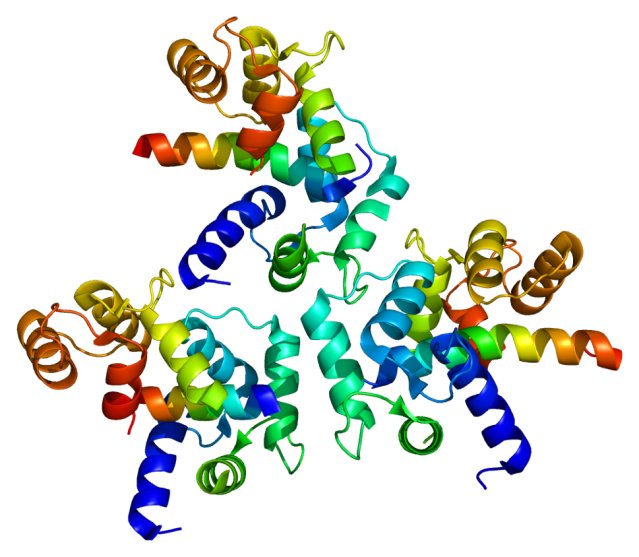
Structure of the CACNA1C gene product, a calcium channel named Cav1.2, which is one of 4 genes that has now been found to be genetically held in common amongst schizophrenia, bipolar disorder, autism, major depression and attention deficit hyperactivity disoder. Groundbreaking work on the role of this protein on anxiety and other forms of behavior related to mental illness has previously been established in the Rajadhyaksha laboratory at Weill Cornell Medical Center.
http://weill.cornell.edu/research/arajadhyaksha/

http://www.ncbi.nlm.nih.gov/pmc/articles/PMC3481072/
http://www.ncbi.nlm.nih.gov/pmc/articles/PMC3192195/
http://www.ncbi.nlm.nih.gov/pmc/articles/PMC3077109/

From the New York Times:
The psychiatric illnesses seem very different — schizophrenia, bipolar disorder, autism, major depression and attention deficit hyperactivity disorder. Yet they share several genetic glitches that can nudge the brain along a path to mental illness, researchers report. Which disease, if any, develops is thought to depend on other genetic or environmental factors.

Their study, published online Wednesday in the Lancet, was based on an examination of genetic data from more than 60,000 people worldwide. Its authors say it is the largest genetic study yet of psychiatric disorders. The findings strengthen an emerging view of mental illness that aims to make diagnoses based on the genetic aberrations underlying diseases instead of on the disease symptoms.

Two of the aberrations discovered in the new study were in genes used in a major signaling system in the brain, giving clues to processes that might go awry and suggestions of how to treat the diseases.

“What we identified here is probably just the tip of an iceberg,” said Dr. Jordan Smoller, lead author of the paper and a professor of psychiatry at Harvard Medical School and Massachusetts General Hospital. “As these studies grow we expect to find additional genes that might overlap.”

The new study does not mean that the genetics of psychiatric disorders are simple. Researchers say there seem to be hundreds of genes involved and the gene variations discovered in the new study confer only a small risk of psychiatric disease.

Steven McCarroll, director of genetics for the Stanley Center for Psychiatric Research at the Broad Institute of Harvard and M.I.T., said it was significant that the researchers had found common genetic factors that pointed to a specific signaling system.

“It is very important that these were not just random hits on the dartboard of the genome,” said Dr. McCarroll, who was not involved in the new study.

The work began in 2007 when a large group of researchers began investigating genetic data generated by studies in 19 countries and including 33,332 people with psychiatric illnesses and 27,888 people free of the illnesses for comparison. The researchers studied scans of people’s DNA, looking for variations in any of several million places along the long stretch of genetic material containing three billion DNA letters. The question: Did people with psychiatric illnesses tend to have a distinctive DNA pattern in any of those locations?

Researchers had already seen some clues of overlapping genetic effects in identical twins. One twin might have schizophrenia while the other had bipolar disorder. About six years ago, around the time the new study began, researchers had examined the genes of a few rare families in which psychiatric disorders seemed especially prevalent. They found a few unusual disruptions of chromosomes that were linked to psychiatric illnesses. But what surprised them was that while one person with the aberration might get one disorder, a relative with the same mutation got a different one.

Jonathan Sebat, chief of the Beyster Center for Molecular Genomics of Neuropsychiatric Diseases at the University of California, San Diego, and one of the discoverers of this effect, said that work on these rare genetic aberrations had opened his eyes. “Two different diagnoses can have the same genetic risk factor,” he said.

In fact, the new paper reports, distinguishing psychiatric diseases by their symptoms has long been difficult. Autism, for example, was once called childhood schizophrenia. It was not until the 1970s that autism was distinguished as a separate disorder.

But Dr. Sebat, who did not work on the new study, said that until now it was not clear whether the rare families he and others had studied were an exception or whether they were pointing to a rule about multiple disorders arising from a single genetic glitch.

“No one had systematically looked at the common variations,” in DNA, he said. “We didn’t know if this was particularly true for rare mutations or if it would be true for all genetic risk.” The new study, he said, “shows all genetic risk is of this nature.”

The new study found four DNA regions that conferred a small risk of psychiatric disorders. For two of them, it is not clear what genes are involved or what they do, Dr. Smoller said. The other two, though, involve genes that are part of calcium channels, which are used when neurons send signals in the brain.

“The calcium channel findings suggest that perhaps — and this is a big if — treatments to affect calcium channel functioning might have effects across a range of disorders,” Dr. Smoller said.

There are drugs on the market that block calcium channels — they are used to treat high blood pressure — and researchers had already postulated that they might be useful for bipolar disorder even before the current findings.

One investigator, Dr. Roy Perlis of Massachusetts General Hospital, just completed a small study of a calcium channel blocker in 10 people with bipolar disorder and is about to expand it to a large randomized clinical trial. He also wants to study the drug in people with schizophrenia, in light of the new findings. He cautions, though, that people should not rush out to take a calcium channel blocker on their own.

“We need to be sure it is safe and we need to be sure it works,” Dr. Perlis said.

Fruit flies force their young to drink alcohol for protection

130222102958-large
The fruit fly study adds to the evidence “that using toxins in the environment to medicate offspring may be common across the animal kingdom,” says biologist Todd Schlenke.

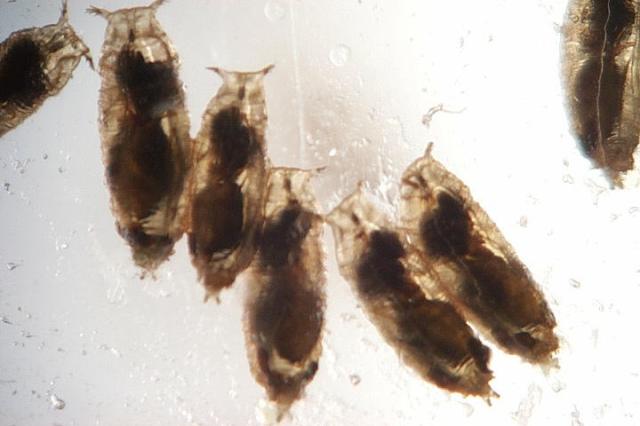
When fruit flies sense parasitic wasps in their environment, they lay their eggs in an alcohol-soaked environment, essentially forcing their larvae to consume booze as a drug to combat the deadly wasps.

The discovery by biologists at Emory University was published in the journal Science on February 22.

“The adult flies actually anticipate an infection risk to their children, and then they medicate them by depositing them in alcohol,” says Todd Schlenke, the evolutionary geneticist whose lab did the research. “We found that this medicating behavior was shared by diverse fly species, adding to the evidence that using toxins in the environment to medicate offspring may be common across the animal kingdom.”

Adult fruit flies detect the wasps by sight, and appear to have much better vision than previously realized, he adds. “Our data indicate that the flies can visually distinguish the relatively small morphological differences between male and female wasps, and between different species of wasps.”

The experiments were led by Balint Zacsoh, who recently graduated from Emory with a degree in biology and still works in the Schlenke lab. The team also included Emory graduate student Zachary Lynch and postdoc Nathan Mortimer.

The larvae of the common fruit fly, Drosophila melanogaster, eat the rot, or fungi and bacteria, that grows on overripe, fermenting fruit. They have evolved a certain amount of resistance to the toxic effects of the alcohol levels in their natural habitat, which can range up to 15 percent.

Tiny, endoparasitoid wasps are major killers of fruit flies. The wasps inject their eggs inside the fruit fly larvae, along with venom that aims to suppress their hosts’ cellular immune response. If the flies fail to kill the wasp egg, a wasp larva hatches inside the fruit fly larva and begins to eat its host from the inside out.

Last year, the Schlenke lab published a study showing how fruit fly larvae infected with wasps prefer to eat food high in alcohol. This behavior greatly improves the survival rate of the fruit flies because they have evolved high tolerance of the toxic effects of the alcohol, but the wasps have not.

“The fruit fly larvae raise their blood alcohol levels, so that the wasps living in their blood will suffer,” Schlenke says. “When you think of an immune system, you usually think of blood cells and immune proteins, but behavior can also be a big part of an organism’s immune defense.”

For the latest study, the researchers asked whether the fruit fly parents could sense when their children were at risk for infection, and whether they then sought out alcohol to prophylactically medicate them.

Adult female fruit flies were released in one mesh cage with parasitic wasps and another mesh cage with no wasps. Both cages had two petri dishes containing yeast, the nourishment for lab-raised fruit flies and their larvae. The yeast in one of the petri dishes was mixed with 6 percent alcohol, while the yeast in the other dish was alcohol free. After 24 hours, the petri dishes were removed and the researchers counted the eggs that the fruit flies had laid.

The results were dramatic. In the mesh cage with parasitic wasps, 90 percent of the eggs laid were in the dish containing alcohol. In the cage with no wasps, only 40 percent of the eggs were in the alcohol dish.

“The fruit flies clearly change their reproductive behavior when the wasps are present,” Schlenke says. “The alcohol is slightly toxic to the fruit flies as well, but the wasps are a bigger danger than the alcohol.”

The fly strains used in the experiments have been bred in the lab for decades. “The flies that we work with have not seen wasps in their lives before, and neither have their ancestors going back hundreds of generations,” Schlenke says. “And yet, the flies still recognize these wasps as a danger when they are put in a cage with them.”

Further experiments showed that the flies are extremely discerning about differences in the wasps. They preferred to lay their eggs in alcohol when female wasps were present, but not if only male wasps were in the cage.

Theorizing that the flies were reacting to pheromones, the researchers conducted experiments using two groups of mutated fruit flies. One group lacked the ability to smell, and another group lacked sight. The flies unable to smell, however, still preferred to lay their eggs in alcohol when female wasps were present. The blind flies did not make the distinction, choosing the non-alcohol food for their offspring, even in the presence of female wasps.

“This result was a surprise to me,” Schlenke says. “I thought the flies were probably using olfaction to sense the female wasps. The small, compound eyes of flies are believed to be more geared to detecting motion than high-resolution images.”

The only obvious visual differences between the female and male wasps, he adds, is that the males have longer antennae, slightly smaller bodies, and lack an ovipositor.

Further experimentation showed that the fruit flies can distinguish different species of wasps, and will only choose the alcohol food in response to wasp species that infect larvae, not fly pupae. “Fly larvae usually leave the food before they pupate,” Schlenke explains, “so there is likely little benefit to laying eggs at alcoholic sites when pupal parasites are present.”

The researchers also connected the exposure to female parasitic wasps to changes in a fruit fly neuropeptide.

Stress, and the resulting reduced level of neuropeptide F, or NPF, has previously been associated with alcohol-seeking behavior in fruit flies. Similarly, levels of a homologous neuropeptide in humans, NPY, is associated with alcoholism.

We found that when a fruit fly is exposed to female parasitic wasps, this exposure reduces the level of NPF in the fly brain, causing the fly to seek out alcoholic sites for oviposition,” Schlenke says. “Furthermore, the alcohol-seeking behavior appears to remain for the duration of the fly’s life, even when the parasitic wasps are no longer present, an example of long-term memory.”

Finally, Drosophila melanogaster is not unique in using this offspring medication behavior. “We tested a number of fly species,” Schlenke says, “and found that each fly species that uses rotting fruit for food mounts this immune behavior against parasitic wasps. Medication may be far more common in nature than we previously thought.”

http://www.sciencedaily.com/releases/2013/02/130222102958.htm

$300 dollar glasses sold on Amazon will correct colorblindness

OxyAmp_b

tohruMurakami_students1
Mark Changizi and Tim Barber turned research on human vision and blood flow into colorblindness-correcting glasses you can buy on Amazon. Here’s how they did it.

About 10 years ago, Mark Changizi started to develop research on human vision and how it could see changes in skin color. Like many academics, Changizi, an accomplished neurobiologist, went on to pen a book. The Vision Revolution challenged prevailing theories–no, we don’t see red only to spot berries and fruits amid the vegetation–and detailed the amazing capabilities of why we see the way we do.

If it were up to academia, Changizi’s story might have ended there. “I started out in math and physics, trying to understand the beauty in these fields,” he says, “You are taught, or come to believe, that applying something useful is inherently not interesting.”

Not only did Changizi manage to beat that impulse out of himself, but he and Tim Barber, a friend from middle school, teamed up several years ago to form a joint research institute. 2AI Labs allows the pair to focus on research into cognition and perception in humans and machines, and then to commercialize it. The most recent project? A pair of glasses with filters that just happen to cure colorblindness.

Changizi and Barber didn’t set out to cure colorblindness. Changizi just put forth the idea that humans’ ability to see colors evolved to detect oxygenation and hemoglobin changes in the skin so they could tell if someone was scared, uncomfortable or unhealthy. “We as humans blush and blanche, regardless of overall skin tone,” Barber explains, “We associate color with emotion. People turn purple with anger in every culture.” Once Changizi fully understood the connection between color vision and blood physiology, Changizi determined it would be possible to build filters that aimed to enhance the ability to see those subtle changes by making veins more or less distinct–by sharpening the ability to see the red-green or blue-yellow parts of the spectrum. He and Barber then began the process of patenting their invention.

When they started thinking about commercial applications, Changizi and Barber both admit their minds went straight to television cameras. Changizi was fascinated by the possibilities of infusing an already-enhanced HDTV experience with the capacity to see colors even more clearly.

“We looked into cameras photo receptors and decided that producing a filter for a camera would be too difficult and expensive,” Barber says. The easiest possible approach was not electronic at all, he says. Instead, they worked to develop a lens that adjusts the color signal that hits the human eye and the O2Amp was born.

The patented lens technology simply perfects what the eye does naturally: it read the changes in skin tone brought on by a flush, bruise, or blanch. The filters can be used in a range of products from indoor lighting (especially for hospital trauma centers) to windows, to perhaps eventually face cream. For now, one of the most promising applications is in glasses that correct colorblindness.

As a veteran entrepreneur, founding Clickbank and Keynetics among other ventures, Barber wasn’t interested in chasing the perfect color filter for a demo pair of glasses. “If you look for perfection you could spend a million dollars. And it is just a waste of time,” he says. A bunch of prototypes were created, and rejected. Some were too shiny, others too iridescent. “We finally found something that worked to get the tone spectrum we wanted and to produce a more interesting view of the world.”

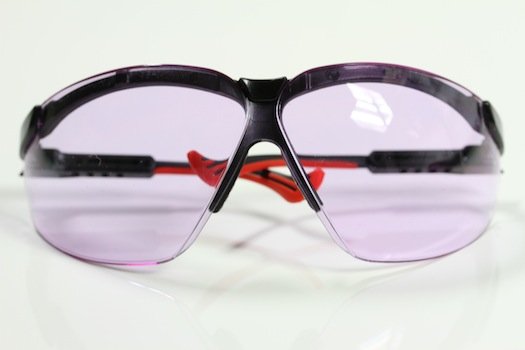
What they got was about 90 percent of the way to total color enhancement across three different types of lenses: Oxy-Iso, Hemo-Iso, and Oxy-Amp. While the Amp, which boosts the wearer’s general perception of blood oxygenation under the skin (your own vision, but better), is the centerpiece of the technology, it was the Oxy-Iso, the lens that isolates and enhances the red-green part of the spectrum, that generated some unexpected feedback from users. Changizi says the testers told them that the Oxy-Iso lens appeared to “cure” their colorblindness.

Changizi knew this was a possibility, as the filter concentrates enhancement exactly where red-green colorblind people have a block. Professor Daniel Bor, a red-green colorblind neuroscientist at the University of Sussex tried them and was practically giddy with the results. Changizi published Bor’s testimony on his blog: “When I first put one of them on [the Oxy-Iso,], I got a shiver of excitement at how vibrant and red lips, clothes and other objects around me seemed. I’ve just done a quick 8 plate Ishihara colour blindness test. I scored 0/8 without the specs (so obviously colour blind), but 8/8 with them on (normal colour vision)!”

Despite these early testimonials, the pair thought that the O2Amp glasses would be primarily picked up by hospitals. The Hemo-Iso filter enhances variations along the yellow-blue dimension, which makes it easier for healthcare providers to see veins. “It’s a little scary to think about people drawing blood who can’t see see the veins,” Barber says. EMT workers were enthusiastic users thanks to the Hemo-Iso’s capability of making bruising more visible.

From there, Barber and Changizi embarked on a two-year odyssey to find a manufacturer to make the eyewear that would enable them to sell commercially. Through 2AI Labs, they were able push their discoveries into mainstream applications without having to rely on grants; any funding they earn from their inventions is reinvested. They also forewent some of the traditional development steps. “We bootstrapped the bench testing and we didn’t do any market research,” Barber says.

Plenty of cold calling to potential manufacturers ensued. “As scientists talking to manufacturers, it seemed like we were speaking a different language,” Barber says. Not to mention looking strange as they walked around wearing the purple and green-tinted glasses at trade shows. Changizi says they finally got lucky last year and found a few manufacturers able to produce the specialized specs. All are available on Amazon for just under $300.

Changizi and Barber aren’t done yet. In addition to overseeing sales reps who are trying to get the glasses into the hands of more buyers, the two are in talks with companies such as Oakley and Ray-Ban to put the technology into sunglasses. Imagine, says Changizi, if you could more easily see if you are getting a sunburn at the beach despite the glare. They’re testing a mirrored O2Amp lens specially for poker players (think: all the better to see the flush of a bluffer). Changizi says they are also working with cosmetics companies to embed the technology in creams that would enhance the skin’s vasculature. Move over Hope in a Jar. Barber says it’s not clear how profitable any of this will be yet: “We just want the technology to be used.”

http://www.popsci.com/science/article/2013-02/amazing-story-300-glasses-can-cure-colorblindness?page=2

Origin of the myth that we only use 10% of our brains

ten-percent-brain

The human brain is complex. Along with performing millions of mundane acts, it composes concertos, issues manifestos and comes up with elegant solutions to equations. It’s the wellspring of all human feelings, behaviors, experiences as well as the repository of memory and self-awareness. So it’s no surprise that the brain remains a mystery unto itself.

Adding to that mystery is the contention that humans “only” employ 10 percent of their brain. If only regular folk could tap that other 90 percent, they too could become savants who remember π to the twenty-thousandth decimal place or perhaps even have telekinetic powers.

Though an alluring idea, the “10 percent myth” is so wrong it is almost laughable, says neurologist Barry Gordon at Johns Hopkins School of Medicine in Baltimore. Although there’s no definitive culprit to pin the blame on for starting this legend, the notion has been linked to the American psychologist and author William James, who argued in The Energies of Men that “We are making use of only a small part of our possible mental and physical resources.” It’s also been associated with to Albert Einstein, who supposedly used it to explain his cosmic towering intellect.

The myth’s durability, Gordon says, stems from people’s conceptions about their own brains: they see their own shortcomings as evidence of the existence of untapped gray matter. This is a false assumption. What is correct, however, is that at certain moments in anyone’s life, such as when we are simply at rest and thinking, we may be using only 10 percent of our brains.

“It turns out though, that we use virtually every part of the brain, and that [most of] the brain is active almost all the time,” Gordon adds. “Let’s put it this way: the brain represents three percent of the body’s weight and uses 20 percent of the body’s energy.”

The average human brain weighs about three pounds and comprises the hefty cerebrum, which is the largest portion and performs all higher cognitive functions; the cerebellum, responsible for motor functions, such as the coordination of movement and balance; and the brain stem, dedicated to involuntary functions like breathing. The majority of the energy consumed by the brain powers the rapid firing of millions of neurons communicating with each other. Scientists think it is such neuronal firing and connecting that gives rise to all of the brain’s higher functions. The rest of its energy is used for controlling other activities—both unconscious activities, such as heart rate, and conscious ones, such as driving a car.

Although it’s true that at any given moment all of the brain’s regions are not concurrently firing, brain researchers using imaging technology have shown that, like the body’s muscles, most are continually active over a 24-hour period. “Evidence would show over a day you use 100 percent of the brain,” says John Henley, a neurologist at the Mayo Clinic in Rochester, Minn. Even in sleep, areas such as the frontal cortex, which controls things like higher level thinking and self-awareness, or the somatosensory areas, which help people sense their surroundings, are active, Henley explains.

Take the simple act of pouring coffee in the morning: In walking toward the coffeepot, reaching for it, pouring the brew into the mug, even leaving extra room for cream, the occipital and parietal lobes, motor sensory and sensory motor cortices, basal ganglia, cerebellum and frontal lobes all activate. A lightning storm of neuronal activity occurs almost across the entire brain in the time span of a few seconds.

“This isn’t to say that if the brain were damaged that you wouldn’t be able to perform daily duties,” Henley continues. “There are people who have injured their brains or had parts of it removed who still live fairly normal lives, but that is because the brain has a way of compensating and making sure that what’s left takes over the activity.”

Being able to map the brain’s various regions and functions is part and parcel of understanding the possible side effects should a given region begin to fail. Experts know that neurons that perform similar functions tend to cluster together. For example, neurons that control the thumb’s movement are arranged next to those that control the forefinger. Thus, when undertaking brain surgery, neurosurgeons carefully avoid neural clusters related to vision, hearing and movement, enabling the brain to retain as many of its functions as possible.

What’s not understood is how clusters of neurons from the diverse regions of the brain collaborate to form consciousness. So far, there’s no evidence that there is one site for consciousness, which leads experts to believe that it is truly a collective neural effort. Another mystery hidden within our crinkled cortices is that out of all the brain’s cells, only 10 percent are neurons; the other 90 percent are glial cells, which encapsulate and support neurons, but whose function remains largely unknown. Ultimately, it’s not that we use 10 percent of our brains, merely that we only understand about 10 percent of how it functions.

http://www.scientificamerican.com/article.cfm?id=people-only-use-10-percent-of-brain&page=2

Thanks to SRW for bringing this to the attention of the It’s Interesting community.

Researchers look down a different path for new antidepressants

hippneuron-640x447

As a teenager growing up in New Mexico, Zach Weinberg had the same thing for breakfast every day of high school. Next to his tortilla and cream cheese, which he insists is delicious, was a small, round, yellow pill – an antidepressant called Lexapro. By his senior year, the only thing different was the color of his pill, now a shiny white. This one was Wellbutrin. He’d traded one antidepressant for another. If the pills work, they certainly don’t work for long. Now, at age 23, he’s frustrated at still having to play around with different drug combinations and doses.

The odds are that you know someone in the same situation. According to the National Institutes of Health, approximately one in 10 men and one in four women in the U.S. will suffer from depression at some point in their lives. Clinical depression can come at any time, lasting anywhere from months to years, and is characterized by low self-esteem and a loss of interest in things that were once enjoyable.

Along with various forms of therapy, antidepressant drugs are the most effective treatment. But even when they work, they come with side effects – such as weight gain and trouble sleeping – that can make the symptoms of depression worse. So for people like Weinberg, choosing between one kind of antidepressant and another isn’t really much of a choice.

But that may be changing. New insights into how traditional antidepressants – including the wildly popular SSRIs, or selective serotonin reuptake inhibitor, drugs like Prozac, Paxil and Lexapro – work inside the brain are stimulating the development of a new generation of medications that may work faster and more effectively.

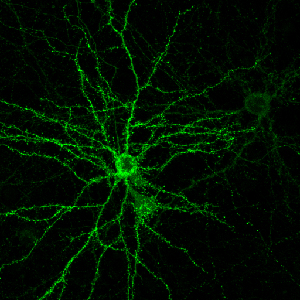
Contrary to what their developers originally thought, many antidepressants have a surprising, indirect way of altering brain chemistry: by stimulating the growth of new neurons and protecting those neurons from dying. “The SSRI hypothesis is really falling apart,” says Paul Currie, a neuroscientist at Reed College in Portland, Ore. He explains that these new ideas have researchers trying something a little different to treat depression.

SSRIs work by manipulating serotonin, one of the most important chemical messengers in the brain. Serotonin is at least partly responsible for everything from eating disorders to the pretty colors and patterns people see while on psychedelic drugs.

When serotonin is released from one neuron and picked up by another in the course of transmitting a message between them, some is taken back up into the original neuron. By blocking this mechanism, SSRIs force more serotonin to circulate in the system, supposedly reducing feelings of depression.

Similar drugs use the same reuptake-blocking technique with other neurotransmitters, usually dopamine and norepinephrine. The success of drugs that target this system provides the basis of the monoamine hypothesis of depression – the idea that depression is a result of a chemical imbalance. That’s why decades of research have been aimed at balancing out our monoamine neurotransmitters, including serotonin.

But it takes a week or two for antidepressants to have any noticeable effect, suggesting that it’s not that immediate boost in serotonin that’s making people feel better. Recently, studies have suggested a different explanation: using antidepressants seems to correlate with having more new neurons in the hippocampus, an area of the brain responsible for many memory processes. Those suffering from depression tend to lose neurons in their hippocampi, so researchers have started to think that the effectiveness of monoamine drugs actually comes from their repairing of damaged brain areas.

Rene Hen is one of those curious researchers. A neuroscientist at Columbia University, Hen used radiation to block neurogenesis – the process of growing, repairing, and protecting new neurons – in mice. Later, when given antidepressants, these mice still showed signs of anxiety and depression, unlike the mice that were generating new neurons. This suggested that neurogenesis is actually essential for antidepressants to have any effect. Instead of waiting for the slower, indirect effect on neurogenesis patients get from SSRIs, researchers are now experimenting with drugs that take more direct routes to stimulate neuron growth.

“If you don’t have to do it through the back door, then absolutely that’s the way to go,” says Reed’s Currie. The aim now is to nail down the indirect effect that Hen identified and make it as direct as possible.

And the first drugs specifically targeting neurogenesis for all sorts of disorders, including depression, are starting to appear. In 2010, Andrew Pieper, a psychiatrist at the University of Iowa, ran a massive screening test on 1,000 small molecules. He discovered eight that had positive effects on neurogenesis in the hippocampus. He picked one, called P7C3, and ran with it. When given to mice that lacked a gene necessary for neurogenesis, P7C3 helped them create new neurons and keep them alive.

“There’s a huge unmet need for treatments that block cell death,” Pieper says. And the hope is that treatments for depression derived from P7C3 will work faster, better, and with fewer side effects than SSRIs. Although Peiper and his team have only tested P7C3 on mice, he’s optimistic about its effects in humans and is on the hunt for a commercial partner to develop it.

Neuralstem Inc., a Maryland-based pharmaceutical company, has just announced that their first round of human clinical testing on a similar drug was successful. Their drug, NSI-189, targets neurogenesis in the hippocampus by actually creating new neurons and has been successful in animal models, but these are the first tests in humans.

Despite the early success of these treatments, other scientists are concerned that a drug targeting neurogenesis might be meddling with that system prematurely. “I’m a little worried that, again, we have an oversimplified model,” Currie says. It’s like stirring up a bowl of soup, he continues, “without any thought as to what makes it taste good.”

Brian Luikart at Dartmouth College’s Geisel School of Medicine agrees. “One possibility,” he says, “is that there are global changes in the brain that enhance neurogenesis in the hippocampus.” If that’s true, then more neurogenesis could just be one of many effects of SSRIs without being the key to their success. Although the links between neurogenesis and antidepressants are well established, there is still no evidence to suggest that solely enhancing neurogenesis can help fight depression in humans. “Increasing neurogenesis does not increase happiness,” he says.

Luikart also worries that, while a neurogenesis drug may have fewer side effects, the ones it does have could be even more damaging – especially for cancer patients. A drug that keeps neurons alive could potentially do the same to tumor cells.

But Pieper says he hasn’t seen any negative effects. Neuralstem also says there haven’t been any health concerns in their trials. And even if there are side effects like those Luikart is worried about, it might be worth the risk for those with severe depression.

Neurogenesis drugs are still years from being commercially available, however. Pieper’s is still in pre-clinical testing, and Neuralstem’s, while farther along, is still years away from patients. Until then, Zach Weinberg and the rest of us are just going to have to stick with our reuptake inhibitors and cream cheese tortillas.

Shiny happy neurons

Many researchers taking a different view of pedophilia

13xmIBc_1_www_large_thumb

Despite a stable home life in suburban Chicago, Paul Christiano was tortured by urges he knew could land him in prison. In 1999, he was caught buying child pornography. Now 36, he said he has never molested a child, but after five years of state-ordered therapy, the attraction remains. (Alex Garcia, Chicago Tribune / December 14, 2012)

As a young boy, Paul Christiano loved the world of girls — the way they danced, how their spindly bodies tumbled in gymnastics.

In adolescence, as other boys ogled classmates, he was troubled to find himself fantasizing about 7- to 11-year-olds.

His desires remained stuck in time as he neared adulthood. Despite a stable home life in suburban Chicago, he was tortured by urges he knew could land him in prison.

“For having these feelings, I was destined to become a monster,” he said. “I was terrified.”

In 1999, Christiano was caught buying child pornography. Now 36, he said he has never molested a child, but after five years of state-ordered therapy, the attraction remains.

“These people felt they could snuff out the desire, or shame me into denying it existed,” he said. “But it’s as intrinsic as the next person’s heterosexuality.”

In the laboratory, researchers are coming to the same conclusion.

Like many forms of sexual deviance, pedophilia once was thought to stem from psychological influences early in life. Now, many experts view it as a sexual orientation as immutable as heterosexuality or homosexuality. It is a deep-rooted predisposition — limited almost entirely to men — that becomes clear during puberty and does not change.

The best estimates are that between 1% and 5% of men are pedophiles, meaning that they have a dominant attraction to prepubescent children.

Not all pedophiles molest children. Nor are all child molesters pedophiles. Studies show that about half of all molesters are not sexually attracted to their victims. They often have personality disorders or violent streaks, and their victims are typically family members.

By contrast, pedophiles tend to think of children as romantic partners and look beyond immediate relatives. They include chronic abusers familiar from the headlines — Catholic priests, coaches and generations of Boy Scout leaders.

Other pedophiles are “good people who are struggling,” said Dr. Fred Berlin, a psychiatrist who heads the Johns Hopkins Sexual Behaviors Consultation Unit. “They’re tortured souls fighting like heck not to do this. We do virtually nothing in terms of reaching out to these folks. We drive it underground.”

Some of the new understanding of pedophilia comes from studies done on convicted sex criminals at the Center for Mental Health and Addiction in Toronto, where researchers use a procedure known as phallometry to identify men whose peak attraction is to children.

A man sits alone in a room viewing a series of images and listening to descriptions of various sexual acts with adults and children, male and female, while wearing a device that monitors blood flow to his penis.

Like men attracted to adults, nearly all pedophiles respond most strongly to one gender or the other — females far more often than males.

In searching for causes of pedophilia, researchers have largely dismissed the popular belief that abuse in childhood plays an important role. Studies show that few victims grow up to be abusers, and only about a third of offenders say they were molested.

Scientists at the Toronto center have uncovered a series of associations that suggest pedophilia has biological roots.

Among the most compelling findings is that 30% of pedophiles are left-handed or ambidextrous, triple the general rate. Because hand dominance is established through some combination of genetics and the environment of the womb, scientists see that association as a powerful indicator that something is different about pedophiles at birth.

“The only explanation is a physiological one,” said James Cantor, a leader of the research.

Researchers have also determined that pedophiles are nearly an inch shorter on average than non-pedophiles and lag behind the average IQ by 10 points — discoveries that are consistent with developmental problems, whether before birth or in childhood.

In a 2008 study, Cantor’s team conducted MRI brain scans on 65 pedophiles. Compared with men with criminal histories but no sex offenses, they had less white matter, the connective circuitry of the brain.

The evidence also points to what Cantor explained as “cross wiring”: Seeing a child sets off the same neural response that men typically experience around an attractive woman.

More evidence of brain involvement comes from scattered examples of men with brain tumors or neurological diseases affecting inhibition.

In one case, a 40-year-old teacher in Virginia with no history of sexual deviance suddenly became interested in child pornography and was arrested for molesting his prepubescent stepdaughter.

The night before his sentencing, he showed up at an emergency room with a bad headache. An MRI revealed a tumor compressing his brain’s right frontal lobe.

When the tumor was removed, his obsession faded, according to Dr. Russell Swerdlow, a neurologist on the case. A year later he again became sexually fixated on children. The tumor was growing back.

Swerdlow and others said the case suggests that the man’s attraction to children may have always been present — the tumor simply took away the man’s ability to control it.

Strong impulse control may help explain why some pedophiles never break the law.

Most clinicians have given up on changing the sexual orientation of pedophiles in favor of teaching the how to resist their unacceptable desires.

Experts believe that pedophiles who also have a significant attraction to adults stand the best chance of staying out of trouble, because of their capacity for some sexual fulfillment that is legal. For others, injections of hormones to reduce sex drive are often recommended.

Most pedophiles, however, don’t receive any attention until they’ve been arrested.

In an attempt to change that, sex researchers in Germany launched an unusual media campaign in 2005.

“You are not guilty because of your sexual desire, but you are responsible for your sexual behavior,” said billboards urging them to contact the Institute of Sexology and Sexual Medicine in Berlin. “There is help! Don’t become an offender!”

More than 1,700 men have responded to the print, television and online ads for Project Dunkelfeld — literally “dark field.” As of August, 80 had completed a one-year program aimed at teaching them to control their impulses. Some received hormone shots. Compared to men still on the waiting list, those who received treatment were deemed less likely to molest children, according to an analysis of risk factors.

The German researchers promise patients confidentiality. About half of those assessed admitted to having already molested a child.

Though extolled by many researchers, the same program could not be conducted in the United States or many other countries, where clinicians and others are required by law to notify authorities if they suspect a child has been or could be harmed.

There have been some grass-roots efforts to bring pedophilia out of the shadows. Anton Schweighofer, a psychologist in British Columbia, said he recently referred one of his patients to Virtuous Pedophiles, an online support group for men who have never acted on their desires and want to keep it that way.

“I just don’t want to get myself in trouble,” said the man, a factory worker who spoke on the condition that he not be identified. “I really don’t want to harm anybody.”

For many pedophiles, a fundamental part of life will always be a shameful secret.

In his late teens, Christiano taught gymnastics and supervised hundreds of young girls. He fasted at work to distract himself from his erotic feelings.

“My hand never slipped,” he said. “There were students I loved and adored. In a perfect world, I could sweep them off their feet and live happily ever after.”

In this world, however, he has tried to commit suicide three times, he said.

In 1999, he stepped into a federal sting operation when he ordered pornography. He avoided prison but was permanently added to the Illinois sex offender registry.

Once lauded in the Chicago press for his promise as a dance choreographer, Christiano now lives off unemployment, help from his parents and low-paying jobs. He has lost apartments and jobs because of his felony.

“PEDO PIECE OF GARBAGE,” read one of many emails he received after an activist group posted a notice about his case online.

His mother, Jennifer Christiano, said that as far back as she could remember, he had always been different from other boys — an odd and creative soul who loved to perform and seemed to worship his female classmates.

“I can’t tell you how hard it is,” she said. “He’s my only child. He’ll never truly be happy. He’ll never have someone he can truly love and who can love him back.”

http://www.latimes.com/news/local/la-me-pedophiles-20130115,0,197689.story?page=1&track=lat-pick

Thanks to Dr. Lutter for bringing this to the attention of the It’s Interesting community.