Trouble With Math? Maybe You Should Get Your Brain Zapped

sn-math

by Emily Underwood
ScienceNOW

If you are one of the 20% of healthy adults who struggle with basic arithmetic, simple tasks like splitting the dinner bill can be excruciating. Now, a new study suggests that a gentle, painless electrical current applied to the brain can boost math performance for up to 6 months. Researchers don’t fully understand how it works, however, and there could be side effects.

The idea of using electrical current to alter brain activity is nothing new—electroshock therapy, which induces seizures for therapeutic effect, is probably the best known and most dramatic example. In recent years, however, a slew of studies has shown that much milder electrical stimulation applied to targeted regions of the brain can dramatically accelerate learning in a wide range of tasks, from marksmanship to speech rehabilitation after stroke.

In 2010, cognitive neuroscientist Roi Cohen Kadosh of the University of Oxford in the United Kingdom showed that, when combined with training, electrical brain stimulation can make people better at very basic numerical tasks, such as judging which of two quantities is larger. However, it wasn’t clear how those basic numerical skills would translate to real-world math ability.

To answer that question, Cohen Kadosh recruited 25 volunteers to practice math while receiving either real or “sham” brain stimulation. Two sponge-covered electrodes, fixed to either side of the forehead with a stretchy athletic band, targeted an area of the prefrontal cortex considered key to arithmetic processing, says Jacqueline Thompson, a Ph.D. student in Cohen Kadosh’s lab and a co-author on the study. The electrical current slowly ramped up to about 1 milliamp—a tiny fraction of the voltage of an AA battery—then randomly fluctuated between high and low values. For the sham group, the researchers simulated the initial sensation of the increase by releasing a small amount of current, then turned it off.

For roughly 20 minutes per day over 5 days, the participants memorized arbitrary mathematical “facts,” such as 4#10 = 23, then performed a more sophisticated task requiring multiple steps of arithmetic, also based on memorized symbols. A squiggle, for example, might mean “add 2,” or “subtract 1.” This is the first time that brain stimulation has been applied to improving such complex math skills, says neuroethicist Peter Reiner of the University of British Columbia, Vancouver, in Canada, who wasn’t involved in the research.

The researchers also used a brain imaging technique called near-infrared spectroscopy to measure how efficiently the participants’ brains were working as they performed the tasks.

Although the two groups performed at the same level on the first day, over the next 4 days people receiving brain stimulation along with training learned to do the tasks two to five times faster than people receiving a sham treatment, the authors reported in Current Biology. Six months later, the researchers called the participants back and found that people who had received brain stimulation were still roughly 30% faster at the same types of mathematical challenges. The targeted brain region also showed more efficient activity, Thompson says.

The fact that only participants who received electrical stimulation and practiced math showed lasting physiological changes in their brains suggests that experience is required to seal in the effects of stimulation, says Michael Weisend, a neuroscientist at the Mind Research Network in Albuquerque, New Mexico, who wasn’t involved with the study. That’s valuable information for people who hope to get benefits from stimulation alone, he says. “It’s not going to be a magic bullet.”

Although it’s not clear how the technique works, Thompson says, one hypothesis is that the current helps synchronize neuron firing, enabling the brain to work more efficiently. Scientists also don’t know if negative or unintended effects might result. Although no side effects of brain stimulation have yet been reported, “it’s impossible to say with any certainty” that there aren’t any, Thompson says.

“Math is only one of dozens of skills in which this could be used,” Reiner says, adding that it’s “not unreasonable” to imagine that this and similar stimulation techniques could replace the use of pills for cognitive enhancement.

In the future, the researchers hope to include groups that often struggle with math, such as people with neurodegenerative disorders and a condition called developmental dyscalculia. As long as further testing shows that the technique is safe and effective, children in schools could also receive brain stimulation along with their lessons, Thompson says. But there’s “a long way to go,” before the method is ready for schools, she says. In the meantime, she adds, “We strongly caution you not to try this at home, no matter how tempted you may be to slap a battery on your kid’s head.”

http://news.sciencemag.org/sciencenow/2013/05/trouble-with-math-maybe-you-shou.html?ref=hp

18 year old Eesha Khare awarded 2nd place in Intel International Science and Engineering Fair for inventing an improved supercapacitor that could provide super-fast charging of portable electronic devices in the future

intelscience_610x427
Top winner Ionut Budisteanu, 19, of Romania (center) with second-place winners Eesha Khare, 18, of Saratoga, Calif., (left) and Henry Lin, 17, of Shreveport, La., celebrate their awards at the Intel International Science and Engineering Fair.

Khare, an 18-year-old from California, won the Intel Foundation Young Scientist Award and $50,000 for her participation in the Intel International Science and Engineering Fair run by the Society for Science & the Public. Think of it as the world’s largest science fair. Khare took home one of the top prizes for “a tiny device that fits inside cell phone batteries, allowing them to fully charge within 20-30 seconds.”

The official title of Khare’s project is “Design and Synthesis of Hydrogenated TiO2-Polyaniline Nanorods for Flexible High-Performance Supercapacitors.” Her objective reads:

With the rapid growth of portable electronics, it has become necessary to develop efficient energy-storage technology to match this development. While batteries are currently used for energy-storage, they suffer from long charging times and short cycle life. Electrochemical supercapacitors have attracted attention as energy-storage devices because they bridge the gap between current alternatives of conventional capacitors and batteries, offering higher energy density than conventional capacitors and higher power density than batteries. Despite these advantages, supercapacitor energy density is much lower than batteries and increasing energy density remains a key challenge in supercapacitor research. The goal of this work was to design and synthesize a supercapacitor with increased energy density while maintaining power density and long cycle life.

Khare’s supercapacitor can last for 10,000 charge and recharge cycles. She has used it to power an LED as a proof of concept, but envisions its future use in phones, portable electronic devices, and even car batteries.

Curious about how she did it? Put your science hat on. “To improve supercapacitor energy density, I designed, synthesized, and characterized a novel core-shell nanorod electrode with hydrogenated TiO2 (H-TiO2) core and polyaniline shell,” she writes. Essentially, that translates to a much improved supercapacitor.

The 1,600 participants were whittled down to 3 top winners. Besides Khare, Romanian student Ionut Budisteanu came in first by using artificial intelligence to create a model for a low-cost, self-driving car. Henry Lin, a 17-year-old from Louisiana, received the same award as Khare for his project that simulated thousands of clusters of galaxies.

http://news.cnet.com/8301-17938_105-57585337-1/teens-science-project-could-charge-phones-in-20-seconds/

Litterbugs Beware: Turning Found DNA Into Portraits

_sample2_face_web

sample4-4

_sample4_face_web

sample6-0

Heather Dewey-Hagborg was sitting in a therapy session a while ago and noticed a painting on the wall. The glass on the frame was cracked, and lodged in the crack was a single hair. She couldn’t take her eyes off it. “I just became obsessed with thinking about whose hair that was, and what they might look like, and what they might be like,” she says.

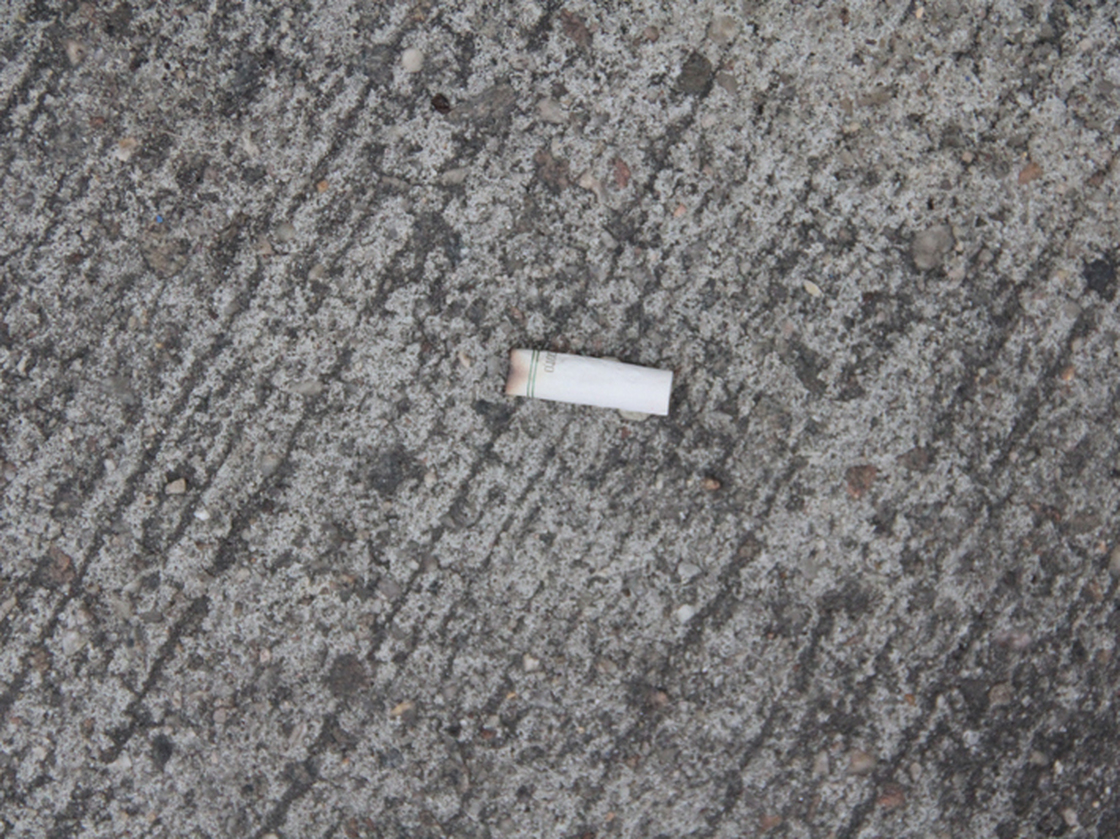
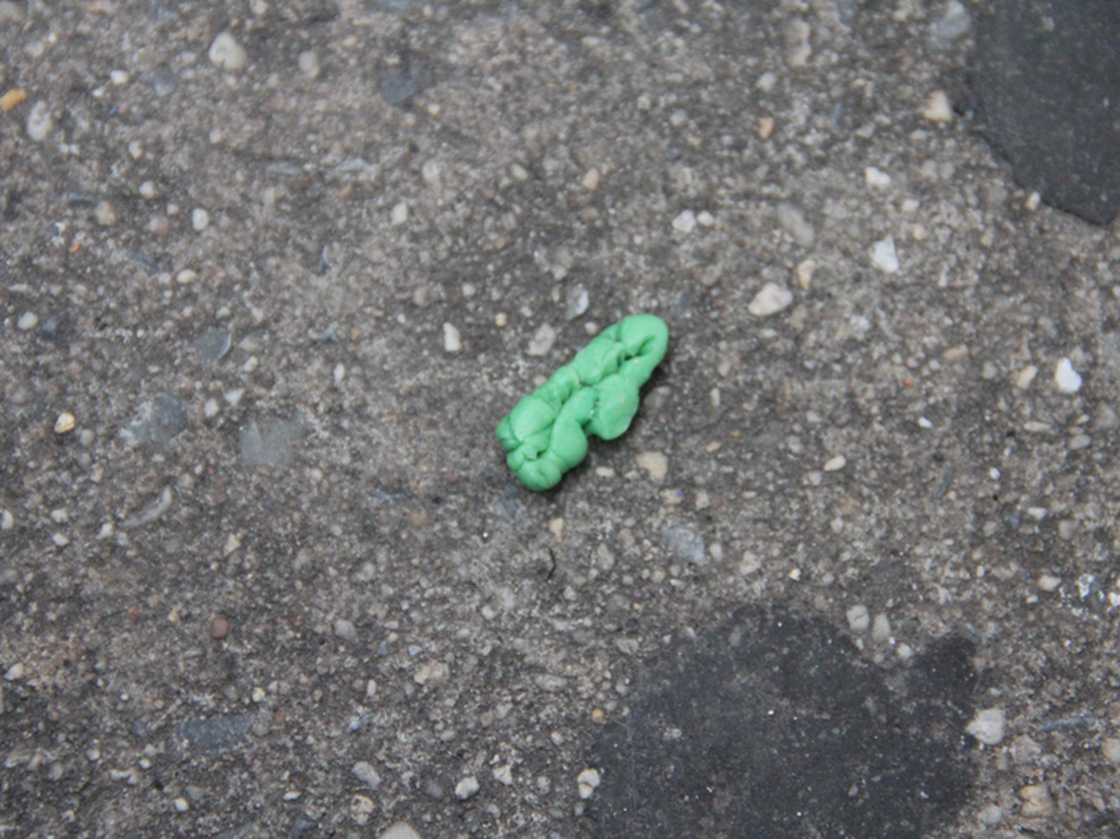
On the subway ride home, she noticed all of the insignificant things people left behind — a dropped cigarette butt, a chewed-up piece of gum. Like the hair stuck in the frame, she wondered how much genetic material might have been tossed away with the trash. So Dewey-Hagborg started collecting these forgotten “artifacts,” as she calls them, and bringing them back to a lab to analyze their embedded genetic material.

Yet it might seem Dewey-Hagborg would be more comfortable in a studio than a laboratory. She’s an artist; a doctoral student in Information Art at Rensselaer Polytechnic Institute in Troy, N.Y. For her most recent project, though, much of the creative process takes place in front of a centrifuge, wearing latex gloves, deep in the map of the human genome.

In short, Dewey-Hagborg extracts DNA from these samples of trash and turns that information from code into life-sized 3-D facial portraits resembling the person who left the sample behind. She can code for eye color, eye and nose width, skin tone, hair color and more. She starts by cutting up her sample, sometimes the end of a cigarette, thin slices of a chewed wad of gum, sometimes hair, and incubates the sample with chemicals to distill it into pure DNA. She then takes that DNA, and matches the code with different traits on the genome related to the way human faces look.

“That’s a very tiny subset of all of the things that we know about the entire mapping of the human genome, ” she says.

Next, she sends the DNA to a sequencing company that sends her back a text file full of A, C, Ts and Gs — the four nucleic acid bases that DNA is made out of. She then reads that information in a program she designed herself, translating the code into traits, then using those traits to build a 3-D model of a face. Dewey-Hagborg can determine ethnicity, gender, even a tendency to be overweight.

But even all of that can’t give her the whole picture. Much of the information is still missing, and Dewey-Hagborg has to fill in the gaps. She compares that part of the work to a sketch artist. “This person is more likely to be overweight, to have pale skin, to have freckles, blue eyes, how do I interpret this?”

People often ask her how accurate the portraits are. Of course, she has no way of knowing. After all, she collects these items from anonymous sources. But she did start off with her own portrait based on her own DNA. She exhibited that at an art and technology space in Chelsea.

“Half of the people would say, ‘Wow! It looks just like you!'” she says. “The other half would say, ‘Wow! It looks nothing like you!” The portraits are subjective in a big way, she acknowledges, but says much of the information is solidly based in data.

Though she started this project in part to “open up the conversation about genetic surveillance,” she says, it’s taken on another purpose. Right now she’s working with the Delaware medical examiner’s office to try to identify a woman in a 20-year-old unsolved case by using some of the victim’s remains to build a 3-D portrait of her. She’s six weeks away from finishing the process, when investigators will, for the first time, have some idea of what the victim looked like before her death.

http://www.npr.org/2013/05/12/183363361/litterbugs-beware-turning-found-dna-into-portraits

Thanks to Dr. Lutter for bringing this to the attention of the It’s Interesting community.

Carnivorous Plant Ejects Junk DNA

sn-carnivorous

The carnivorous humped bladderwort (Utricularia gibba), found on all continents except Antarctica, is a model of ruthless genetic efficiency. Only 3% of this aquatic plant’s DNA is not part of a known gene, new research shows. In contrast, only 2% of human DNA is part of a gene. The bladderwort, named for its water-filled bladders (shown left) that suck in unsuspecting prey, is a relative of the tomato. Since their evolutionary split 87,000 years ago, both plants have experienced episodes of genetic duplication where the plants’ DNA doubled in size. But while the tomato has held onto a lot of those duplicates, the bladderwort has thrown out anything it doesn’t need, and now has a genome only a tenth as long as the tomato’s. The finding, published recently in Nature, overturns the notion that this repetitive, non-coding DNA, popularly called “junk” DNA, is necessary for life.

http://news.sciencemag.org/sciencenow/2013/05/scienceshot-carnivorous-plant-ej.html

Brain implants: Restoring memory with a microchip

130507101540-brain-implants-human-horizontal-gallery

William Gibson’s popular science fiction tale “Johnny Mnemonic” foresaw sensitive information being carried by microchips in the brain by 2021. A team of American neuroscientists could be making this fantasy world a reality. Their motivation is different but the outcome would be somewhat similar. Hailed as one of 2013’s top ten technological breakthroughs by MIT, the work by the University of Southern California, North Carolina’s Wake Forest University and other partners has actually spanned a decade.

But the U.S.-wide team now thinks that it will see a memory device being implanted in a small number of human volunteers within two years and available to patients in five to 10 years. They can’t quite contain their excitement. “I never thought I’d see this in my lifetime,” said Ted Berger, professor of biomedical engineering at the University of Southern California in Los Angeles. “I might not benefit from it myself but my kids will.”

Rob Hampson, associate professor of physiology and pharmacology at Wake Forest University, agrees. “We keep pushing forward, every time I put an estimate on it, it gets shorter and shorter.”

The scientists — who bring varied skills to the table, including mathematical modeling and psychiatry — believe they have cracked how long-term memories are made, stored and retrieved and how to replicate this process in brains that are damaged, particularly by stroke or localized injury.

Berger said they record a memory being made, in an undamaged area of the brain, then use that data to predict what a damaged area “downstream” should be doing. Electrodes are then used to stimulate the damaged area to replicate the action of the undamaged cells.

They concentrate on the hippocampus — part of the cerebral cortex which sits deep in the brain — where short-term memories become long-term ones. Berger has looked at how electrical signals travel through neurons there to form those long-term memories and has used his expertise in mathematical modeling to mimic these movements using electronics.

Hampson, whose university has done much of the animal studies, adds: “We support and reinforce the signal in the hippocampus but we are moving forward with the idea that if you can study enough of the inputs and outputs to replace the function of the hippocampus, you can bypass the hippocampus.”

The team’s experiments on rats and monkeys have shown that certain brain functions can be replaced with signals via electrodes. You would think that the work of then creating an implant for people and getting such a thing approved would be a Herculean task, but think again.

For 15 years, people have been having brain implants to provide deep brain stimulation to treat epilepsy and Parkinson’s disease — a reported 80,000 people have now had such devices placed in their brains. So many of the hurdles have already been overcome — particularly the “yuck factor” and the fear factor.

“It’s now commonly accepted that humans will have electrodes put in them — it’s done for epilepsy, deep brain stimulation, (that has made it) easier for investigative research, it’s much more acceptable now than five to 10 years ago,” Hampson says.

Much of the work that remains now is in shrinking down the electronics.

“Right now it’s not a device, it’s a fair amount of equipment,”Hampson says. “We’re probably looking at devices in the five to 10 year range for human patients.”

The ultimate goal in memory research would be to treat Alzheimer’s Disease but unlike in stroke or localized brain injury, Alzheimer’s tends to affect many parts of the brain, especially in its later stages, making these implants a less likely option any time soon.

Berger foresees a future, however, where drugs and implants could be used together to treat early dementia. Drugs could be used to enhance the action of cells that surround the most damaged areas, and the team’s memory implant could be used to replace a lot of the lost cells in the center of the damaged area. “I think the best strategy is going to involve both drugs and devices,” he says.

Unfortunately, the team found that its method can’t help patients with advanced dementia.

“When looking at a patient with mild memory loss, there’s probably enough residual signal to work with, but not when there’s significant memory loss,” Hampson said.

Constantine Lyketsos, professor of psychiatry and behavioral sciences at John Hopkins Medicine in Baltimore which is trialing a deep brain stimulator implant for Alzheimer’s patients was a little skeptical of the other team’s claims.

“The brain has a lot of redundancy, it can function pretty well if loses one or two parts. But memory involves circuits diffusely dispersed throughout the brain so it’s hard to envision.” However, he added that it was more likely to be successful in helping victims of stroke or localized brain injury as indeed its makers are aiming to do.

The UK’s Alzheimer’s Society is cautiously optimistic.

“Finding ways to combat symptoms caused by changes in the brain is an ongoing battle for researchers. An implant like this one is an interesting avenue to explore,” said Doug Brown, director of research and development.

Hampson says the team’s breakthrough is “like the difference between a cane, to help you walk, and a prosthetic limb — it’s two different approaches.”

It will still take time for many people to accept their findings and their claims, he says, but they don’t expect to have a shortage of volunteers stepping forward to try their implant — the project is partly funded by the U.S. military which is looking for help with battlefield injuries.

There are U.S. soldiers coming back from operations with brain trauma and a neurologist at DARPA (the Defense Advanced Research Projects Agency) is asking “what can you do for my boys?” Hampson says.

“That’s what it’s all about.”

http://www.cnn.com/2013/05/07/tech/brain-memory-implants-humans/index.html?iref=allsearch

US suicide rate has risen sharply among middle-aged white men and women

suicide

The suicide rate among middle-aged Americans climbed a startling 28 percent in a decade, a period that included the recession and the mortgage crisis, the government reported Thursday. The trend was most pronounced among white men and women in that age group. Their suicide rate jumped 40 percent between 1999 and 2010. But the rates in younger and older people held steady. And there was little change among middle-aged blacks, Hispanics and most other racial and ethnic groups, the report from the Centers for Disease Control and Prevention found.

Why did so many middle-aged whites — that is, those who are 35 to 64 years old — take their own lives?

One theory suggests the recession caused more emotional trauma in whites, who tend not to have the same kind of church support and extended families that blacks and Hispanics do.

The economy was in recession from the end of 2007 until mid-2009. Even well afterward, polls showed most Americans remained worried about weak hiring, a depressed housing market and other problems.

Pat Smith, violence-prevention program coordinator for the Michigan Department of Community Health, said the recession — which hit manufacturing-heavy states particularly hard — may have pushed already-troubled people over the brink. Being unable to find a job or settling for one with lower pay or prestige could add “that final weight to a whole chain of events,” she said.

Another theory notes that white baby boomers have always had higher rates of depression and suicide, and that has held true as they’ve hit middle age. During the 11-year period studied, suicide went from the eighth leading cause of death among middle-aged Americans to the fourth, behind cancer, heart disease and accidents.

“Some of us think we’re facing an upsurge as this generation moves into later life,” said Dr. Eric Caine, a suicide researcher at the University of Rochester.

One more possible contributor is the growing sale and abuse of prescription painkillers over the past decade. Some people commit suicide by overdose. In other cases, abuse of the drugs helps put people in a frame of mind to attempt suicide by other means, said Thomas Simon, one of the authors of the CDC report, which was based on death certificates.

People ages 35 to 64 account for about 57 percent of suicides in the U.S.

The report contained surprising information about how middle-aged people kill themselves: During the period studied, hangings overtook drug overdoses in that age group, becoming the No. 2 manner of suicide. But guns remained far in the lead and were the instrument of death in nearly half of all suicides among the middle-aged in 2010.

The CDC does not collect gun ownership statistics and did not look at the relationship between suicide rates and the prevalence of firearms.

For the entire U.S. population, there were 38,350 suicides in 2010, making it the nation’s 10th leading cause of death, the CDC said. The overall national suicide rate climbed from 12 suicides per 100,000 people in 1999 to 14 per 100,000 in 2010. That was a 15 percent increase.

For the middle-aged, the rate jumped from about 14 per 100,000 to nearly 18 — a 28 percent increase. Among whites in that age group, it spiked from about 16 to 22.

Suicide prevention efforts have tended to concentrate on teenagers and the elderly, but research over the past several years has begun to focus on the middle-aged. The new CDC report is being called the first to show how the trend is playing out nationally and to look in depth at the racial and geographic breakdown.

Thirty-nine out of 50 states registered a statistically significant increase in suicide rates among the middle-aged. The West and the South had the highest rates. It’s not clear why, but one factor may be cultural differences in willingness to seek help during tough times, Simon said.

Also, it may be more difficult to find counseling and mental health services in certain places, he added.

Suicides among middle-aged Native Americans and Alaska Natives climbed 65 percent, to 18.5 per 100,000. However, the overall numbers remain very small — 171 such deaths in 2010. And changes in small numbers can look unusually dramatic.

The CDC did not break out suicides of current and former military service members, a tragedy that has been getting increased attention. But a recent Department of Veterans Affairs report concluded that suicides among veterans have been relatively stable in the past decade and that veterans have been a shrinking percentage of suicides nationally.

Thanks to Kebmodee for bringing this to the attention of the It’s Interesting community.

http://bigstory.ap.org/article/us-suicide-rate-rose-sharply-among-middle-aged

Life quite possibly existed before Earth, claim scientists

origins+of+life

Life existed long before Earth came into being, and may have originated outside our solar system, scientists claim.

Researchers say life first appeared about 10 billion years ago – long before Earth, which is believed to be 4.5 billion years old. Geneticists have applied Moore’s Law – observation that computers increase exponentially in complexity, at a rate of about double the transistors per integrated circuit every two years – to the rate at which life on Earth grows in complexity.

Alexei Sharov of the National Institute on Ageing in Baltimore, and Richard Gordon of the Gulf Specimen Marine Laboratory in Florida, replaced the transistors with nucleotides – the building blocks of DNA and RNA – and the circuits with genetic material. Their findings suggest life first appeared about 10 billion years ago, far older than the Earth’s projected age of 4.5 billion years. Like in the 2012 sci-fi movie Prometheus, as our solar system was forming, pre-existing bacteria-like organisms, or even simple nucleotides from an older part of the galaxy, could have reached Earth by hitching an interstellar ride on comets, asteroids or other inorganic space debris.

However, the calculations are not a scientific proof that life predates Earth – there’s no way of knowing for sure that organic complexity increased at a steady rate at any point in the universe’s history.

“There are lots of hypothetical elements to (our argument) … But to make a wider view, you need some hypothetical elements,” Sharov said.

Sharov said that if he had to bet on it, he’d say “it’s 99 per cent true that life started before Earth – but we should leave one per cent for some wild chance that we haven’t accounted for.”

The theory of “life before Earth,” if found true, challenges the long-held science-fiction trope of the scientifically advanced alien species. If genetic complexity progresses at a steady rate, then the social and scientific development of any other alien life form in the Milky Way galaxy would be roughly equivalent to those of humans, the report said.

“Contamination with bacterial spores from space appears the most plausible hypothesis that explains the early appearance of life on Earth,” researchers said.

http://www.phenomenica.com/2013/04/life-did-exist-before-earth-claim-scientists.html

Shark behaviour affected by full moon

grey-reef-shark-moon

Grey reef sharks behave differently depending on the point in the lunar cycle, new research suggests.

THE DIVING BEHAVIOUR OF sharks appears to be influenced by the moon, water temperature and time of day, researchers have revealed.

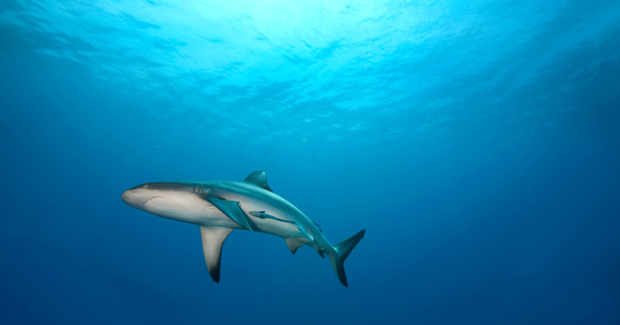
A study of about 40 grey reef sharks, commonly found on coral reefs in northern Australia and the Indo-Pacific, found they stayed in deep water during a full moon and moved to shallow water with the new moon.

“To our knowledge, this is the first time such patterns have been observed in detail for reef sharks,” says lead researcher Gabriel Vianna, from the University of Western Australia (UWA) in Perth.

The sharks were tagged near Palau, east of the Philippines, and followed for two years. During this time, scientists from UWA and the Australian Institute of Marine Science recorded their movement and diving patterns.

The findings, published this week in the journal PLOS ONE, reveal that sharks descended to greater depths, and used a wider range of depths, around the time of the full moon.

Diving was also affected by seasonal changes, as the group, which mostly consisted of adult females, was recorded diving to an average depth of 35m in winter and 60m in spring.

In winter, the sharks remained closer to the surface, where the water was warmer. During summer, however, the sharks moved to a range of depths.

The researchers suggest that because sharks are cold blooded, they may prefer warmer water to conserve their energy. Warm water may also provide optimal conditions for foraging for food, the study says.

The findings also suggest that the time of day could affect how deeply sharks dive.

“We were surprised to see sharks going progressively deeper during the morning and the exact inverse pattern in the afternoon, gradually rising towards the surface,” says Gabriel, adding that the behaviour may relate to how much light is reflected on the reef at different times during the day.

Better knowledge of shark behaviour could help reduce the risk of sharks coming into contact with locals and tourists fishing, particularly if their diving behaviour can be predicted at certain times of the day.

“In places such as Palau, which relies heavily on marine tourism and where sharks are a major tourist attraction, the fishing of a few dozen sharks from popular dive sites could have a very negative impact on the national economy,” Gabriel says.

http://www.australiangeographic.com.au/journal/sharks-affected-by-full-moon.htm

New Study Ties Autism Risk to Creases in Placenta

placenta

After most pregnancies, the placenta is thrown out, having done its job of nourishing and supporting the developing baby.

But a new study raises the possibility that analyzing the placenta after birth may provide clues to a child’s risk for developing autism. The study, which analyzed placentas from 217 births, found that in families at high genetic risk for having an autistic child, placentas were significantly more likely to have abnormal folds and creases.

“It’s quite stark,” said Dr. Cheryl K. Walker, an obstetrician-gynecologist at the Mind Institute at the University of California, Davis, and a co-author of the study, published in the journal Biological Psychiatry. “Placentas from babies at risk for autism, clearly there’s something quite different about them.”

Researchers will not know until at least next year how many of the children, who are between 2 and 5, whose placentas were studied will be found to have autism. Experts said, however, that if researchers find that children with autism had more placental folds, called trophoblast inclusions, visible after birth, the condition could become an early indicator or biomarker for babies at high risk for the disorder.

“It would be really exciting to have a real biomarker and especially one that you can get at birth,” said Dr. Tara Wenger, a researcher at the Center for Autism Research at Children’s Hospital of Philadelphia, who was not involved in the study.

The research potentially marks a new frontier, not only for autism, but also for the significance of the placenta, long considered an after-birth afterthought. Now, only 10 percent to 15 percent of placentas are analyzed, usually after pregnancy complications or a newborn’s death.

Dr. Harvey J. Kliman, a research scientist at the Yale School of Medicine and lead author of the study, said the placenta had typically been given such little respect in the medical community that wanting to study it was considered equivalent to someone in the Navy wanting to scrub ships’ toilets with a toothbrush. But he became fascinated with placentas and noticed that inclusions often occurred with births involving problematic outcomes, usually genetic disorders.

He also noticed that “the more trophoblast inclusions you have, the more severe the abnormality.” In 2006, Dr. Kliman and colleagues published research involving 13 children with autism, finding that their placentas were three times as likely to have inclusions. The new study began when Dr. Kliman, looking for more placentas, contacted the Mind Institute, which is conducting an extensive study, called Marbles, examining potential causes of autism.

“This person came out of the woodwork and said, ‘I want to study trophoblastic inclusions,’ ” Dr. Walker recalled. “Now I’m fairly intelligent and have been an obstetrician for years and I had never heard of them.”

Dr. Walker said she concluded that while “this sounds like a very smart person with a very intriguing hypothesis, I don’t know him and I don’t know how much I trust him.” So she sent him Milky Way bar-size sections of 217 placentas and let him think they all came from babies considered at high risk for autism because an older sibling had the disorder. Only after Dr. Kliman had counted each placenta’s inclusions did she tell him that only 117 placentas came from at-risk babies; the other 100 came from babies with low autism risk.

She reasoned that if Dr. Kliman found that “they all show a lot of inclusions, then maybe he’s a bit overzealous” in trying to link inclusions to autism. But the results, she said, were “astonishing.” More than two-thirds of the low-risk placentas had no inclusions, and none had more than two. But 77 high-risk placentas had inclusions, 48 of them had two or more, including 16 with between 5 and 15 inclusions.

Dr. Walker said that typically between 2 percent and 7 percent of at-risk babies develop autism, and 20 percent to 25 percent have either autism or another developmental delay. She said she is seeing some autism and non-autism diagnoses among the 117 at-risk children in the study, but does not yet know how those cases match with placental inclusions.

Dr. Jonathan L. Hecht, associate professor of pathology at Harvard Medical School, said the study was intriguing and “probably true if it finds an association between these trophoblast inclusions and autism.” But he said that inclusions were the placenta’s way of responding to many kinds of stress, so they might turn out not to be specific enough to predict autism.

Dr. Kliman calls inclusions a “check-engine light, a marker of: something’s wrong, but I don’t know what it is.”

That’s how Chris Mann Sullivan sees it, too. Dr. Sullivan, a behavioral analyst in Morrisville, N.C., was not in the study, but sent her placenta to Dr. Kliman after her daughter Dania, now 3, was born. He found five inclusions. Dr. Sullivan began intensive one-on-one therapy with Dania, who has not been given a diagnosis of autism, but has some relatively mild difficulties.

“What would have happened if I did absolutely nothing, I’m not sure,” Dr. Sullivan said. “I think it’s a great way for parents to say, ‘O.K., we have some risk factors; we’re not going to ignore it.’ ”

Thanks to Dr. Rajadhyaksha for bringing this to the attention of the It’s Interesting community.

Children with older fathers and grandfathers live longer

_60819372_fatherandbabyspl

Delaying fatherhood may offer survival advantages, say US scientists who have found children with older fathers and grandfathers appear to be “genetically programmed” to live longer.

The genetic make-up of sperm changes as a man ages and develops DNA code that favours a longer life – a trait he then passes to his children. The team found the link after analysing the DNA of 1,779 young adults. Their work appears in Proceedings of the National Academy of Sciences.

Experts have known for some time that lifespan is linked to the length of structures known as telomeres that sit at the end of the chromosomes that house our genetic code, DNA. Generally, a shorter telomere length means a shorter life expectancy. Like the plastic tips on shoelaces, telomeres protect chromosomal ends from damage. But in most cells, they shorten with age until the cells are no longer able to replicate.

However, scientists have discovered that in sperm, telomeres lengthen with age. And since men pass on their DNA to their children via sperm, these long telomeres can be inherited by the next generation. Dr Dan Eisenberg and colleagues from the Department of Anthropology at Northwestern University studied telomere inheritance in a group of young people living in the Philippines.

Telomeres, measured in blood samples, were longer in individuals whose fathers were older when they were born. The telomere lengthening seen with each year that the men delayed fatherhood was equal to the yearly shortening of telomere length that occurs in middle-aged adults. Telomere lengthening was even greater if the child’s paternal grandfather had also been older when he became a father. Although delaying fatherhood increases the risk of miscarriage, the researchers believe there may be long-term health benefits.

Inheriting longer telomeres will be particularly beneficial for tissues and biological functions that involve rapid cell growth and turnover – such as the immune system, gut and skin – the scientists believe. And it could have significant implications for general population health. “As paternal ancestors delay reproduction, longer telomere length will be passed to offspring, which could allow lifespan to be extended as populations survive to reproduce at older ages.”

Prof Thomas von Zglinicki, an expert in cellular ageing at Newcastle University, said more research was needed.

“Very few of the studies that linked telomere length to health in late life have studied the impact, if any, of paternal age. It is still completely unclear whether telomere length at conception (or birth) or rate of telomere loss with age is more important for age-related morbidity and mortality risk in humans. “The authors did not examine health status in the first generation offspring. It might be possible that the advantage of receiving long telomeres from an old father is more than offset by the disadvantage of higher levels of general DNA damage and mutations in sperm,” he said.

http://www.bbc.co.uk/news/health-18392873

Thanks to Kebmodee for bringing this to the attention of the It’s Interesting community.