Possible link between cynicism and risk of dementia

Cynics are three times more likely to develop dementia than those who have faith in humanity, a study has shown.

Believing that others are motivated by selfishness, or that they lie to get what they want, appears to radically increase the risk of cognitive decline in later life.

It could mean that grumpy old men and women should be screened more closely for diseases such as Alzheimer’s. Cynicism has previously been linked to health problems such as heart disease, but this is the first time it has been associated with dementia.

“These results add to the evidence that people’s view on life and personality may have an impact on their health,” said Dr. Anna-Maija Tolppanen, the lead researcher at the University of Eastern Finland, whose study is published online in the journal Neurology.

Academics asked nearly 1,500 people with an average age of 71 to fill out a questionnaire to measure their levels of cynicism.

They were asked how much they agreed with statements such as “I think most people would lie to get ahead”, “it is safer to trust nobody” and “most people will use somewhat unfair reasons to gain profit or an advantage rather than lose it.”

Those taking part were monitored for eight years, during which time 46 of them were diagnosed with dementia. The academics discovered that those who had scored highly for cynicism were three times more likely to have developed dementia than those with low scores.

Researchers adjusted the results for other factors that could affect the risk of dementia, such as high blood pressure, high cholesterol and smoking.

Of the 164 people with high levels of cynicism, 14 people developed dementia, compared with nine of the 212 people with low levels of cynicism.

One in three people over 65 will develop a form of dementia. Of the 800,000 people in the U.K. who have the condition, more than half have Alzheimer’s disease. It is estimated that 1.7 million Britons will suffer from dementia by 2051.

Responding to the study findings, charities cautioned that the early symptoms of Alzheimer’s and dementia could make people more cynical about life.

Dr. Doug Brown, of the Alzheimer’s Society, said: “While this research attempts to make a link between higher levels of cynical distrust and risk of dementia, there were far too few people in this study that actually developed dementia to be able to draw any firm conclusions.

http://news.nationalpost.com/2014/05/28/being-a-cynic-linked-to-tripled-risk-of-developing-dementia-finland-study-suggests/

Thanks to Kebmodee for bringing this to the attention of the It’s Interesting community.

How dark beer can make grilled meat less carcinogenic

If you’re grilling meat this Memorial Day, you should seriously consider stocking up on Guinness.

Grilling meat is a warm-weather tradition in America, especially on Memorial Day weekend. It’s also an ancient human tradition, uniting friends and family around food and fire as long as our species has existed. Unfortunately, it also unites us around chemicals that can cause cancer.

Warnings like that can make it seem like scientists ruin everything — they already took sitting, late-night snacks and fireworks from us. But science works both ways, and now it has found at least a partial solution for this carnivore’s conundrum. According to a recent study, published in the Journal of Agricultural and Food Chemistry, the secret to safer grilling has been under our noses all along.

Beer is a common ingredient at backyard cookouts, usually as a beverage. But research suggests marinating meat with beer, particularly dark beer, can curb the creation of polycyclic aromatic hydrocarbons (PAHs). These carcinogenic chemicals form as fat and juices drip from meat onto flames or embers, which then send smoky PAHs wafting up to coat the surface of our food.

PAHs can exist in more than 100 different combinations, some of which are found in known toxic cocktails like cigarette smoke and car exhaust. These chemicals have caused tumors, birth defects and reproductive problems in lab animals, according to the U.S. EPA, but the same effects have not been seen in humans. The National Cancer Institute says PAHs “become capable of damaging DNA only after they are metabolized by specific enzymes in the body.” Nonetheless, health concerns raised in a 2002 report have led the European Union to set safety standards for PAHs in food.

Previous studies have shown that beer, wine, tea and rosemary marinades can reduce carcinogens in cooked meat, but until now little was known about how various beer styles affect this phenomenon. And according to the recent study, the kind of beer seems to make a pretty significant difference.

To reach that conclusion, the researchers marinated pork for four hours in one of three beer types: regular pilsner, non-alcoholic pilsner or black beer. They then grilled the pork to well-done on a charcoal grill and tested its PAH levels. Black beer had the most dramatic effect, reducing eight major PAHs to less than half the amount found in unmarinated grilled pork. (The researchers chose eight PAHs that are identified by the EU as “suitable indicators for carcinogenic potency of PAHs in food.”)

The two pilsners also showed an “inhibitory effect” on PAHs, but not as much. The regular pilsner suppressed PAHs by 13 percent, and the non-alcoholic variety went slightly further with 25 percent.

“Thus, the intake of beer-marinated meat can be a suitable mitigation strategy,” the researchers say.

The study’s authors aren’t sure why beer marinade has this effect, or why dark beer fights PAHs better than pilsner does. It isn’t the alcohol, since non-alcoholic pilsner nearly doubled the PAH suppression of its boozier relative. They suspect it might be antioxidant compounds in beer, especially darker beers, since antioxidants could restrict the movement of free radicals that are required for PAH formation. More research will be needed to know for sure, but this theory could help explain why antioxidant-rich red wine, green tea and rosemary extracts also keep carcinogens in check.

Whatever you use, the American Institute for Cancer Research already recommends marinating meat for at least 30 minutes to limit both PAHs and heterocyclic amines (HCAs), another type of chemical compound that can damage DNA. It also suggests grilling fish and poultry more often than red meat or processed meats like hot dogs, which can increase the risk for certain cancers. Reducing temperature, time on the grill and smoke exposure are other options for limiting cancer risk.

And while it can’t take the place of a juicy, beer-marinated pork chop, there’s also another, even more surefire way to cut back your risk: Save some room on the grill for fruits, vegetables and mushrooms.

http://www.mnn.com/food/healthy-eating/blogs/how-dark-beer-can-make-grilled-meat-less-carcinogenic

Study Finds Pedophiles’ Brains Wired to Find Children Attractive

Pedophiles’ brains are “abnormally tuned” to find young children attractive, according to a new study published this week. The research, led by Jorge Ponseti at Germany’s University of Kiel, means that it may be possible to diagnose pedophiles in the future before they are able to offend.

The findings, published in scientific journal Biology Letters, discovered that pedophiles have the same neurological reaction to images of those they find attractive as those of people with ordinary sexual predilections, but that all the relevant cerebral areas become engaged when they see children, as opposed to fellow adults. The occipital areas, prefrontal cortex, putamen, and nucleus caudatus become engaged whenever a person finds another attractive, but the subject of this desire is inverted for pedophiles.

While studies into the cognitive wiring of sex offenders have long been a source of debate, this latest research offers some fairly conclusive proof that there is a neural pattern behind their behavior.

The paper explains: “The human brain contains networks that are tuned to face processing, and these networks appear to activate different processing streams of the reproductive domain selectively: nurturing processing in the case of child faces and sexual processing in the case of sexually preferred adult faces. This implies that the brain extracts age-related face cues of the preferred sex that inform appropriate response selection in the reproductive domains: nurturing in the case of child faces and mating in the case of adult faces.”

Usually children’s faces elicit feelings of caregiving from both sexes, whereas those of adults provide stimuli in choosing a mate. But among pedophiles, this trend is skewed, with sexual, as opposed to nurturing, emotions burgeoning.

The study analyzed the MRI scans of 56 male participants, a group that included 13 homosexual pedophiles and 11 heterosexual pedophiles, exposing them to “high arousing” images of men, women, boys, and girls. Participants then ranked each photo for attractiveness, leading researchers to their conclusion that the brain network of pedophiles is activated by sexual immaturity.

The critical new finding is that face processing is also tuned to face cues revealing the developmental stage that is sexually preferred,” the paper reads.

Dr. James Cantor, associate professor at the University of Toronto’s Faculty of Medicine, said he was “delighted” by the study’s results. “I have previously described pedophilia as a ‘cross-wiring’ of sexual and nurturing instincts, and this data neatly verifies that interpretation.”

Cantor has undertaken extensive research into the area, previously finding that pedophiles are more likely to be left-handed, 2.3 cm shorter than the average male, and 10 to 15 IQ points lower than the norm.

He continued: “This [new] study is definitely a step in the right direction, and I hope other researchers repeat this kind of work. There still exist many contradictions among scientists’ observations, especially in identifying exactly which areas of the brain are the most central to pedophilia. Because financial support for these kinds of studies is quite small, these studies have been quite small, permitting them to achieve only incremental progress. Truly definitive studies about what in the brain causes pedophilia, what might detect it, and what might prevent it require much more significant support.”

Ponseti said that he hoped to investigate this area further by examining whether findings could be emulated when images of children’s faces are the sole ones used. This could lead to gauging a person’s predisposition to pedophilia far more simply than any means currently in place. “We could start to look at the onset of pedophilia, which is probably in puberty at about 12 or 14 years [old],” he told The Independent.

While Cantor is correct in citing the less than abundant size of the study, the research is certainly significant in providing scope for future practicable testing that could reduce the number of pedophilic crimes committed. By being able to run these tests and examine a person’s tendency toward being sexually attracted to underage children, rehabilitative care and necessary precautions could be taken to safeguard children and ensure that those at risk of committing a crime of this ilk would not be able to do so.

http://www.thedailybeast.com/articles/2014/05/23/study-finds-pedophiles-brains-wired-to-find-children-attractive.html#

Beneath this Metal Cap is the World’s Deepest Hole

May 24 is the 44th anniversary of when drilling of the world’s deepest hole began.

Until 1970, geologists could only theorize about the composition of the earth’s crust. That year, Soviet scientists engaged in a subterranean version of the Space Race, and went all-out to beat the USA in a journey to the center of the earth.

While American researchers faltered with Project Mohole, a dig off the coast of Mexico that ran out of funding in 1966, their Russian counterparts took a more determined approach. From 1970 to 1994 their drill on the Kola Peninsula burrowed through layers of rock, reaching an ultimate depth of 7.5 miles. (The distance to the center of the earth is around 3,950 miles, but the continental crust is a mere 22 miles thick.)

The most intriguing discovery made by the Kola Superdeep Borehole researchers was the detection of microscopic plankton fossils four miles beneath the surface of the earth. Usually fossils can be found in limestone and silica deposits, but these “microfossils” were encased in organic compounds that remained surprisingly intact despite the extreme pressures and temperatures of the surrounding rock.

Drilling at Kola stopped in the early 1990s when scientists encountered prohibitively high temperatures. The Superdeep Borehole is still the superdeepest human-made hole on the planet. You can visit the now-abandoned site, but unfortunately you won’t be able to peer into the fathomless abyss — there’s a hefty metal cap covering the hole. The Kola Core Repository in the nearby town of Zapolyarny displays rock samples obtained during the drilling operation.

http://www.slate.com/blogs/atlas_obscura/2014/05/08/kola_superdeep_borehole_is_the_world_s_deepest_hole.html

Thanks to Kebmodee for bringing this to the attention of the It’s Interesting community.
Mars Curiosity rover may have transported Earth bacteria to Mars

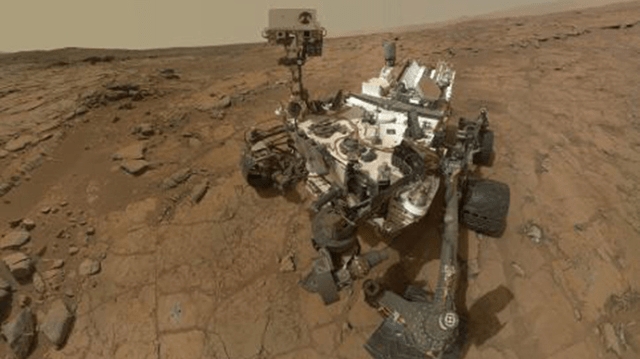
The NASA Curiosity rover that was thought to bring only cameras, sensors, and scientific equipment when it traveled to Mars in August 2012 may have brought along dozens of species of bacteria that originated on Earth, according to a new study.

A study conducted by the American Society for Microbiology and published in the Nature science journal revealed that 377 strains of bacteria may have survived the sterilization process that the Curiosity rover endured before it was launched in an attempt to avoid contaminating the red planet.

It was less of a surprise for scientists that the bacteria survived the cleaning process than the revelation about the conditions they went through. The microbes in question endured near-freezing temperatures and intense damage caused by ultra-C radiation, thought to be the most harmful type of radiation.

“Although studies are constantly expanding our knowledge about life in extreme environments, it is still unclear whether organisms from Earth can survive and grow in a Martian environment where there is intense radiation, high oxidation potential, extreme desiccation, and limited nutrients,” microbiologist Stephanie Smith of the University of Idaho in Moscow and lead author of the study wrote in the study’s abstract.

“Knowing if microorganisms survive in conditions simulating those on the Martian surface is paramount to addressing whether these microorganisms could pose a risk to future challenging planetary protection missions.”

Whether the bacteria spread to the Mars surface is unknown, although the very possibility has already made scientists concerned about unnaturally spreading life from earth to Mars.

There is already a United Nations Outer Space Treaty that aims to regulate how the increasingly advanced space programs from the international community explore the unknown. The parameters were first agreed upon in 1966 and they include, among others, the stipulation that “States shall be liable for damage caused by their space objects; and shall avoid harmful contamination of space and celestial bodies.”

The limits vary depending on where the spacecraft lands. Mars, Europa, and other bodies that could potentially nurture life have a relatively strict standard of 300 bacterial spores per square meter. The goal is to keep the odds of contamination Mars (and others) at less than 1 in 10,000.

“Up to 300,000 spores are allowed on the exposed surfaces of the landed spacecraft. That many spores would fit on the head of a large pin,” said Laura Newlin, an engineer at NASA’s Jet Propulsion Laboratory in California. “Currently our total spore count on the surface…is comfortably under 200,000, so we’re below the allowable level.”

The announcement comes at a time when another team of researchers published an unrelated study revealing that methanogens, the oldest organisms on earth, could be the perfect candidate to foster Martian life. The University of Arkansas Fayetteville study determined that, because methanogens are non-photosynthetic and capable of living without oxygen, they are capable of living underground on Mars.

“The surface temperature of Mars varies widely, often ranging between minus 90 degrees Celsius and 27 degrees Celsius over one Martian day,” Rebecca Mickol, a doctoral student of space and planetary sciences, told Science Daily. “If any life were to exist on Mars right now, it would have to at least survive that temperature range. The survival of these two methanogen species, exposed to long-term freeze thaw cycles, suggests methanogens could potentially inhabit the future of Mars.”

http://rt.com/usa/160636-mars-curiosity-rover-bacteria/

Termite Genome Reveals Details of “Caste System”

The genome of the termite has just been sequenced, and it is revealing several clues about how the pests create their rigid social order.

For instance, the new genome, detailed today (May 20) in the journal Nature Communications, uncovers some of the underpinnings of termites’ caste system, as well as the roots of the males’ sexual staying power.

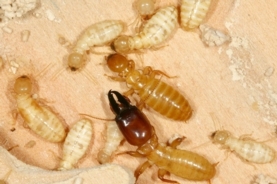
Like other social insects— such as ants, honeybees and some wasps — termites live in highly structured “caste systems,” with each creature programmed to perform a rigidly defined job. A select few termite kings and queens reproduce, while drones and soldiers work, defend the colony or care for young.

Yet termites evolved their social structure independently from ants and bees, which belong to an order known as Hymenoptera.

To understand how this happened, Jürgen Liebig, a behavioral biologist at Arizona State University, and his colleagues collected dampwood termites(Zootermopsis nevadensis nuttingi) that lived in Monterey, California. The researchers then sequenced the genome of the insects and measured how those genes were expressed, or turned on and off.

The research revealed several insights about termite sexual and social behavior.

Termite society is roughly half males and half females. Termites have sexually active kings as well as queens, and kings make sperm throughout their lifetimes. Dampwood termite males also have testes that shrivel and grow seasonally.

Ants and honeybees, in contrast, live in predominantly female societies, and ant sex is a one-time affair.

“Their societies generally consist of females — the males are only there to fly out, mate and die,” Liebig told Live Science.

Sure enough, the termites had more gene variants associated with sperm production and degradation, and those genes were expressed to a greater extent than in ants, Liebig said. That finding suggested those genetic differences contributed to male termites’ sexual longevity.

The termite genome also contains a high fraction of genes that are turned off by chemical tags, or methyl groups, the researchers found. In honeybees, this process of methylation sets the fate of individual animals, determining their place in the caste system. The new findings suggest a similar process may be at play in termites.

In addition, both ants and termites communicate via chemical smell signals sensed by receptors on their antennas.

But while ants venture out for food, these particular termites spend their whole lives dining on one piece of wood.

The new analysis revealed that the termites have far fewer cell types for recognizing individual chemicals, probably because they rarely face off against foreign termites or search for food. They simply don’t need to recognize as many smells, Liebig said.

However, some termite species, such as Australian mound-building termites, do forage and encounter foreigners along the way, so as a follow-up, the team would like to see if those termites can detect a greater array of chemicals, Liebig said.

http://www.scientificamerican.com/article/termite-genome-reveals-details-of-caste-system/

New research shows that orangutans formulate and share future plans with others in their troop.

Very few animals have revealed an ability to consciously think about the future—behaviors such as storing food for the winter are often viewed as a function of instinct. Now a team of anthropologists at the University of Zurich has evidence that wild orangutans have the capacity to perceive the future, prepare for it and communicate those future plans to other orangutans.

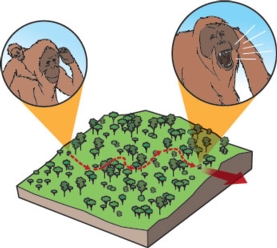
The researchers observed 15 dominant male orangutans in Sumatra for several years. These males roam through immense swaths of dense jungle, emitting loud yells every couple of hours so that the females they mate with and protect can locate and follow them. The shouts also warn away any lesser males that might be in the vicinity. These vocalizations had been observed by primatologists before, but the new data reveal that the apes’ last daily call, an especially long howl, is aimed in the direction they will travel in the morning—and the other apes take note. The females stop moving when they hear this special 80-second call, bed down for the night, and in the morning begin traveling in the direction indicated the evening before.

The scientists believe that the dominant apes are planning their route in advance and communicating it to other orangutans in the area. They acknowledge, however, that the dominant males might not intend their long calls to have such an effect on their followers. Karin Isler, a Zurich anthropologist who co-authored the study in PLOS ONE last fall, explains, “We don’t know whether the apes are conscious. This planning does not have to be conscious. But it is also more and more difficult to argue that they [do not have] some sort of mind of their own.”
BRAINY BEASTS
1 Capuchin monkeys appear to have a sense of fairness, insisting on receiving as good a food reward as their peers for performing the same job.

2 Scrub jays can relocate food that has been hidden for months and may even remember how long it has been stored. The jays also anticipate potential thefts and will relocate their food if they think another jay has spotted it.

3 Rhesus macaques will not pull a chain that brings them food if they think it will harm a fellow monkey.

4 Male voles may be able to predict when a female will be most fertile and, at the opportune time, revisit the location where she was last seen.

5 Bonobos and orangutans can use tools to retrieve food and then save their tools for later use.

http://www.scientificamerican.com/article/orangutans-share-their-future-plans-with-others/

Physicists discover a surprisingly straightforward way to turn light into matter

By Jonathan Webb

The design, published in Nature Photonics, adapts technology used in fusion research.

Several locations could now enter a race to convert photons into positrons and electrons for the very first time.

This would prove an 80-year-old theory by Breit and Wheeler, who themselves thought physical proof was impossible.

Now, according to researchers from Imperial College London, that proof is within reach.

Prof Steven Rose and his PhD student, Oliver Pike, told the BBC it could happen within a year.

“With a good experimental team, it should be quite doable,” said Mr Pike.

If the experiment comes to fruition, it will be the final piece in a puzzle that began in 1905, when Einstein accounted for the photoelectric effect with his model of light as a particle.

Several other basic interactions between matter and light have been described and subsequently proved by experiment, including Dirac’s 1930 proposal that an electron and its antimatter counterpart, a positron, could be annihilated upon collision to produce two photons.

Breit and Wheeler’s theoretical prediction of the reverse – that two photons could crash together and produce matter (a positron and an electron) – has been difficult to observe.

“The reason this is very hard to see in the lab is that you need to throw an awful lot of photons together – because the probability of any two of them interconverting is very low,” Prof Rose explained.

His team proposes gathering that vast number of very high-energy photons by firing an intense beam of gamma-rays into a further cloud of photons, created within a tiny, gold-lined cylinder.

That cylinder is called a “hohlraum”, German for “hollow space”, because it contains a vacuum, and it is usually used in nuclear fusion research. The cloud of photons inside it is made from extraordinarily intense X-rays and is about as hot as the Sun.

Hitting this very dense cloud of photons with the powerful gamma-ray beam raises the probability of collisions that will make matter – and history.

“It’s pretty amazing really,” said Mr Pike. He says it took some time to realise the value of the scheme, which he and two colleagues initially jotted down on scrap paper over several cups of coffee.

“For the first 12 hours or so, we didn’t quite appreciate its magnitude.”

But their subsequent calculations showed that the design, theoretically at least, has more than enough power to crack the challenge set by Breit and Wheeler in the 1930s.

“All the ingredients are there,” agrees Sir Peter Knight, an emeritus professor at Imperial College who was not involved in the research but describes it as a “really clever idea”.

“I think people will seriously start to have a crack at this,” Prof Knight told BBC News, though he cautioned that there were a lot of things to get right when putting the design into practice.

“If it’s done in a year, then they’ve done bloody well! I think it might take a bit longer.”

Some healthy scientific competition may speed up the process.

There are at least three facilities with the necessary equipment to test out the new proposal, including the Atomic Weapons Establishment in Oldham.

“The race to carry out and complete the experiment is on,” said Mr Pike.

http://www.bbc.com/news/science-environment-27470034

Thanks to Da Brayn for bringing this to the attention of the It’s Interesting community.
Fossil Whale Offers Clues to Origins of ‘Seeing With Sound’

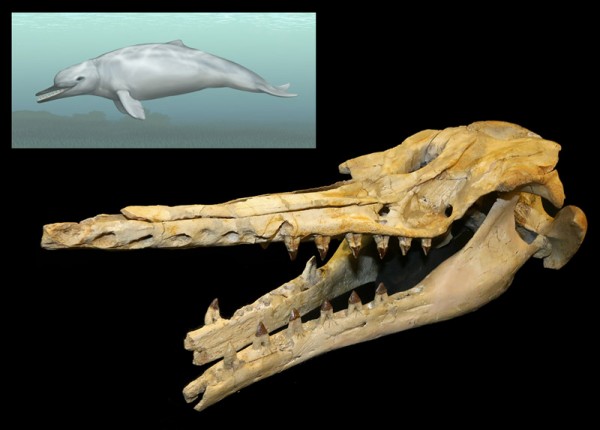
When you’re trying to track a fish in the murky ocean, forget about using your eyes—use your ears. Dolphins, orcas, and other toothed whales—known as odontocetes—pinpoint their prey by producing high-frequency sounds that bounce around their marine environment and reveal exactly where tricky fish are trying to hide. But when did whales evolve this sonarlike ability, known as echolocation? A newly named, 28-million-year-old whale may hold the answer.

Found in South Carolina among rocks dating back to the Oligocene epoch and christened Cotylocara macei, the fossil whale is named after Mace Brown, a curator at the College of Charleston’s Mace Brown Natural History Museum in South Carolina who acquired the specimen for his private collection about a decade ago. It was in that private accumulation of fossils that Jonathan Geisler, a paleontologist at the New York Institute of Technology College of Osteopathic Medicine in Old Westbury, first saw the skull. “I knew it was special then,” he says.

The only known specimen of the early odontocete includes a nearly complete skull and jaw, three neck vertebrae, and fragments of seven ribs. It’s the skull that makes Cotylocara so remarkable. While the whale’s soft tissue rotted away long ago, the skull bones show several features—such as a downturned snout and a slight asymmetry of the skull—that suggest Cotylocara was one of the earliest whales to use echolocation, Geisler’s team reports online today in Nature.

The strongest pieces of evidence for this hypothesis, Geisler explains, are cavities at the base of the snout and on top of the skull that probably held air sinuses. “These air sinuses are thought to have important roles in the production of high-frequency vocalizations that living odontocetes use for echolocation,” Geisler says, possibly helping direct returning sound waves or store air that can be used to make continuous sound.

“I think the authors have a good case for inferring that Cotylocara had some ability to produce some sound from its forehead, just as living toothed whales do today,” says Nicholas Pyenson, a marine mammal paleontologist at the Smithsonian Institution’s National Museum of Natural History in Washington, D.C. But even if Cotylocara made those sounds, could it have heard them? Living whales have specialized ear bones that let them hear the high-frequency sounds bouncing off their prey. The only known skull of Cotylocara doesn’t have well-preserved ear bones, and, therefore, knowing whether the whale could have actually used echolocation for hunting is unclear. “Overall, the description of Cotylocara underscores the need to investigate the inner ear of fossil Oligocene cetaceans in much more detail, because that’s where the answer will be,” Pyenson says.

Nevertheless, the whale’s probable sound-producing abilities give Cotylocara an important place in whale evolution. Whale’s biological sonar is thought to have evolved only once along the ancestral line leading to today’s toothed whales, Geisler notes. Cotylocara lies along that evolutionary stem, as do other Oligocene fossil whales that have already been found. The skull features that allowed Cotylocara to create sound, Geisler says, “can now be investigated in other fossil whales to more fully understand the evolution of echolocation.” For now, the evolutionary epic of whale echolocation is only just beginning to be heard.

http://news.sciencemag.org/paleontology/2014/03/fossil-whale-offers-clues-origins-seeing-sound

Thanks to Dr. Rajadhyaksha for bringing this to the attention of the It’s Interesting community.

New research shows that whales and dolphins can’t taste anything except salt

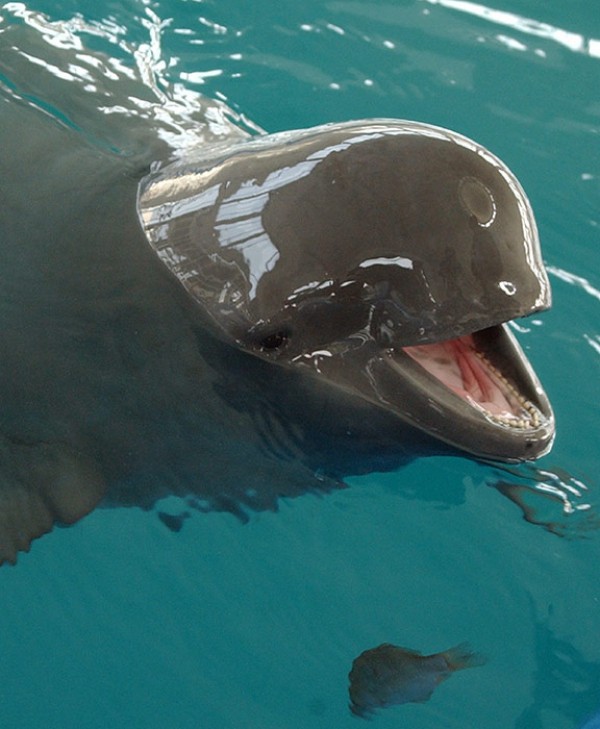
Tastes are a privilege. The oral sensations not only satisfy foodies, but also on a primal level, protect animals from toxic substances. Yet cetaceans—whales and dolphins—may lack this crucial ability, according to a new study. Mutations in a cetacean ancestor obliterated their basic machinery for four of the five primary tastes, making them the first group of mammals to have lost the majority of this sensory system.

The five primary tastes are sweet, bitter, umami (savory), sour, and salty. These flavors are recognized by taste receptors—proteins that coat neurons embedded in the tongue. For the most part, taste receptor genes present across all vertebrates.

Except, it seems, cetaceans. Researchers uncovered a massive loss of taste receptors in these animals by screening the genomes of 15 species. The investigation spanned the two major lineages of cetaceans: Krill-loving baleen whales—such as bowheads and minkes—were surveyed along with those with teeth, like bottlenose dolphins and sperm whales.

The taste genes weren’t gone per se, but were irreparably damaged by mutations, the team reports online this month in Genome Biology and Evolution. Genes encode proteins, which in turn execute certain functions in cells. Certain errors in the code can derail protein production—at which point the gene becomes a “pseudogene” or a lingering shell of a trait forgotten. Identical pseudogene corpses were discovered across the different cetacean species for sweet, bitter, umami, and sour taste receptors. Salty tastes were the only exception.

“The loss of bitter taste is a complete surprise, because natural toxins typically taste bitter,” says zoologist Huabin Zhao of Wuhan University in China who led the study. All whales likely descend from raccoon-esque raoellids, a group of herbivorous land mammals that transitioned to the sea where they became fish eaters. Plants range in flavors—from sugary apples to tart, poisonous rhubarb leaves—and to survive, primitive animals learned the taste cues that signal whether food is delicious or dangerous. Based on the findings, taste dissipated after this common ancestor became fully aquatic—53 million years ago—but before the group split 36 million years ago into toothed and baleen whales.

“Pseudogenes arise when a trait is no longer needed,” says evolutionary biologist Jianzhi Zhang of the University of Michigan, Ann Arbor, who was not involved in the study. “So it still raises the question as to why whales could afford to lose four of the five primary tastes.” The retention of salty taste receptors suggests that they have other vital roles, such as maintaining sodium levels and blood pressure.

But dulled taste perception might be dangerous if noxious substances spill into the water. Orcas have unwittingly migrated into oil spills, while algal toxins created by fertilizer runoff consistently seep into the fish prey of dolphins living off the Florida coast.

“When you have a sense of taste, it dictates whether you swallow or not,” says Danielle Reed, a geneticist at the Monell Chemical Senses Center in Philadelphia, Pennsylvania. She was not involved with the current work, but co-authored a 2012 paper that found the first genetic inklings that umami and sweet taste receptors were missing in cetaceans, albeit in only one species—bottlenose dolphins.

Flavors are typically released by chewing, but cetaceans tend to swallow their food whole. “The message seems clear. If you don’t chew your food and prefer swallowing food whole, then taste really becomes irrelevant,” Reed says.

http://news.sciencemag.org/biology/2014/05/whales-cant-taste-anything-salt

Thanks to Dr. Rajadhyaksha for bringing this to the attention of the It’s Interesting community.