Ancient Lost Continent Discovered in Indian Ocean

new-micro-continent-found-near-mauritius_64654_600x450

Evidence of a drowned “microcontinent” has been found in sand grains from the beaches of a small Indian Ocean island, scientists say.

A well-known tourist destination, Mauritius (map) is located about 1,200 miles (2,000 kilometers) off the coast of Africa, east of Madagascar. Scientists think the tiny island formed some nine million years ago from cooling lava spewed by undersea volcanoes.

But recently, researchers have found sand grains on Mauritius that contain fragments of the mineral zircon that are far older than the island, between 660 million and about 2 billion years old.

In a new study, detailed in the current issue of the journal Nature Geoscience, scientists concluded that the older minerals once belonged to a now vanished landmass, tiny bits of which were dragged up to the surface during the formation of Mauritius.

“When lavas moved through continental material on the way towards the surface, they picked up a few rocks containing zircon,” study co-author Bjørn Jamtveit, a geologist at the University of Oslo in Norway, explained in an email.

Most of these rocks probably disintegrated and melted due to the high temperatures of the lavas, but some grains of zircons survived and were frozen into the lavas [during the eruption] and rolled down to form rocks on the Mauritian surface.”

Jamtveit and his colleagues estimate that the lost microcontinent, which they have dubbed Mauritia, was about a quarter of the size of Madagascar.

Furthermore, based on a recalculation of how the ancient continents drifted apart, the scientists concluded that Mauritia was once a tiny part of a much larger “supercontinent” that included India and Madagascar, called Rodinia.

The three landmasses “were tucked together in one big continent prior to the formation of the Indian Ocean,” Jamtveit said.

But like a prehistoric Atlantis, Mauritia was eventually drowned beneath the waves when India broke apart from Madagascar about 85 million years ago.

Scientists have long suspected that volcanic islands might contain evidence of lost continents, and Jamtveit and his team decided to test this hypothesis during a layover in Mauritius as part of a longer research trip in 1999.
The stop in tropical Mauritius “was a very tempting thing to do for a Norwegian in the cold month of January,” Jamtveit said.

Mauritius was a good test site because it was a relatively young island and, being formed from ocean lava, would not naturally contain zircon, a tough mineral that doesn’t weather easily.

If zircon older than nine million years was found on Mauritius, it would be good evidence of the presence of buried continental material, Jamtveit explained.

At first, the scientists crushed rocks from Mauritius to extract the zircon crystals, but this proved difficult because the crushing equipment contained zircon from other sites, raising the issue of contamination.

“That was a show stopper for a while,” Jamtveit said.

A few years later, however, some members of the team returned to Mauritius and this time brought back sand from two different beaches for sampling.

The scientists extracted 20 zircon samples and successfully dated 8 of them by calculating the rate that the elements uranium and thorium inside of the samples slowly break down into lead.

“They all provided much older ages than the age of the Mauritius lavas,” Jamtveit said. “In fact they gave ages consistent with the ages of known continental rocks in Madagascar, Seychelles, and India.”

Jérôme Dyment, a geologist at the Paris Institute of Earth Physics in France, said he’s unconvinced by the work because it’s possible that the ancient zircons found their way to the island by other means, for example as part of ship ballast or modern construction material.

“Extraordinary claims require extraordinary evidence, which are not given by the authors so far,” said Dyment, who did not participate in the research.

“Finding zircons in sand is one thing, finding them within a rock is another one … Finding the enclave of deep rocks that, according to the author’s inference, bring them to the surface during an eruption would be much more convincing evidence.”

Dyment added that if Mauritia was real, evidence for its existence should be found as part of a joint French and German experiment that installed deep-sea seismometers to investigate Earth’s mantle around Réunion Island, which is situated about 120 miles (200 kilometers) from Mauritius.

“If a microcontinent lies under Réunion, it should be depicted by this experiment,” said Dyment, who is part of the project, dubbed RHUM-RUM.

But Conall Mac Niocaill, a geologist at the University of Oxford in the U.K. who was also not involved in the study, said “the lines of evidence are, individually, only suggestive, but collectively they add up to a compelling story.”
The zircons “produce a range of ages, but all yield ages older than 660 million years, and one is almost 2 billion years old,” he added.

“There is no obvious source for them in Mauritius, and they are unlikely to have been blown in by the wind, or carried in by human activity, so the obvious conclusion is that the young volcanic lava sampled some older material on their way through the crust.”

Based on the new findings, Mac Niocaill and others think other vanished microcontinents could be lurking beneath the Indian Ocean.

In fact, analyses of Earth’s gravitational field have revealed other areas in the world’s oceans where the rock appears to be thicker than normal and could be a sign of continental crusts.

“We know more about the topography of Mars than we do about the [topography] of the world’s ocean floor, so there may well be other dismembered continents out there waiting to be discovered.”

http://news.nationalgeographic.com/news/2013/02/130225-microcontinent-earth-mauritius-geology-science/

TED 2013: SpaceTop 3D see-through computer revealed

A transparent computer that allows users to reach inside and touch digital content has been unveiled at the TED conference in Los Angeles.

TED fellow Jinha Lee has been working on the SpaceTop 3D desktop in collaboration with Microsoft.

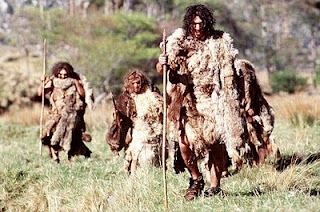
Did Neanderthals go extinct because they couldn’t learn to catch rabbits?

snow-rabbitNeanderthals1

Neanderthals became extinct as they were unable to adapt their hunting skills to catch small animals like rabbits, a new study has claimed.

For the study, John Fa of Durrell Wildlife Conservation Trust in Trinity, Jersey, and his colleagues counted skeletons of animals that were found in three excavation sites in Spain and southern France.

The team found that up until 30,000 years ago, the skeletons of larger animals like deer were plentiful in caves.

But around the same time, coinciding with Neanderthals’ disappearance, rabbit skeletons became more abundant.

The team postulated that humans succeeded far more at switching to capturing and eating rabbits than Neanderthals, New Scientist reported.

Fa said that it is still not clear as to why Neanderthals had trouble changing their prey.

He said that maybe the Neanderthals may have been less able to cooperate and rather than using spears, early humans probably surrounded a warren and flushed out rabbits with fire, smoke or dogs.

http://www.phenomenica.com/2013/03/inability-to-catch-rabbits-may-have-led-to-demise-of-neanderthals.html

Largest psychiatric genetic study in history shows a common genetic basis that underlies 5 types of mental disorders

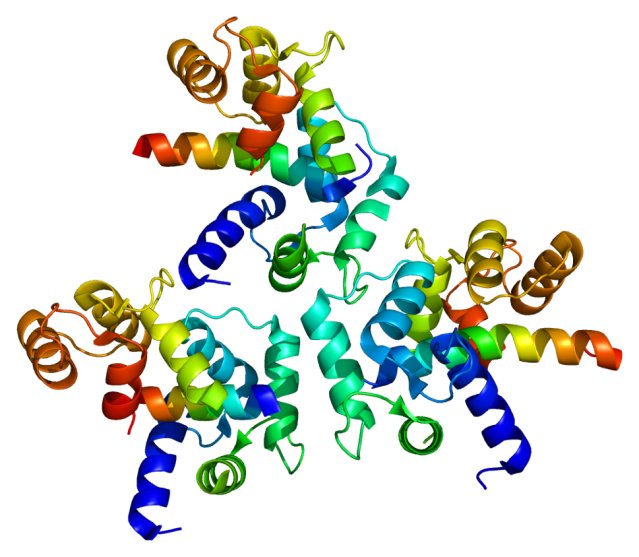
Protein_CACNA1C_PDB_2be6
Structure of the CACNA1C gene product, a calcium channel named Cav1.2, which is one of 4 genes that has now been found to be genetically held in common amongst schizophrenia, bipolar disorder, autism, major depression and attention deficit hyperactivity disoder. Groundbreaking work on the role of this protein on anxiety and other forms of behavior related to mental illness has previously been established in the Rajadhyaksha laboratory at Weill Cornell Medical Center.
http://weill.cornell.edu/research/arajadhyaksha/

http://www.ncbi.nlm.nih.gov/pmc/articles/PMC3481072/
http://www.ncbi.nlm.nih.gov/pmc/articles/PMC3192195/
http://www.ncbi.nlm.nih.gov/pmc/articles/PMC3077109/

From the New York Times:
The psychiatric illnesses seem very different — schizophrenia, bipolar disorder, autism, major depression and attention deficit hyperactivity disorder. Yet they share several genetic glitches that can nudge the brain along a path to mental illness, researchers report. Which disease, if any, develops is thought to depend on other genetic or environmental factors.

Their study, published online Wednesday in the Lancet, was based on an examination of genetic data from more than 60,000 people worldwide. Its authors say it is the largest genetic study yet of psychiatric disorders. The findings strengthen an emerging view of mental illness that aims to make diagnoses based on the genetic aberrations underlying diseases instead of on the disease symptoms.

Two of the aberrations discovered in the new study were in genes used in a major signaling system in the brain, giving clues to processes that might go awry and suggestions of how to treat the diseases.

“What we identified here is probably just the tip of an iceberg,” said Dr. Jordan Smoller, lead author of the paper and a professor of psychiatry at Harvard Medical School and Massachusetts General Hospital. “As these studies grow we expect to find additional genes that might overlap.”

The new study does not mean that the genetics of psychiatric disorders are simple. Researchers say there seem to be hundreds of genes involved and the gene variations discovered in the new study confer only a small risk of psychiatric disease.

Steven McCarroll, director of genetics for the Stanley Center for Psychiatric Research at the Broad Institute of Harvard and M.I.T., said it was significant that the researchers had found common genetic factors that pointed to a specific signaling system.

“It is very important that these were not just random hits on the dartboard of the genome,” said Dr. McCarroll, who was not involved in the new study.

The work began in 2007 when a large group of researchers began investigating genetic data generated by studies in 19 countries and including 33,332 people with psychiatric illnesses and 27,888 people free of the illnesses for comparison. The researchers studied scans of people’s DNA, looking for variations in any of several million places along the long stretch of genetic material containing three billion DNA letters. The question: Did people with psychiatric illnesses tend to have a distinctive DNA pattern in any of those locations?

Researchers had already seen some clues of overlapping genetic effects in identical twins. One twin might have schizophrenia while the other had bipolar disorder. About six years ago, around the time the new study began, researchers had examined the genes of a few rare families in which psychiatric disorders seemed especially prevalent. They found a few unusual disruptions of chromosomes that were linked to psychiatric illnesses. But what surprised them was that while one person with the aberration might get one disorder, a relative with the same mutation got a different one.

Jonathan Sebat, chief of the Beyster Center for Molecular Genomics of Neuropsychiatric Diseases at the University of California, San Diego, and one of the discoverers of this effect, said that work on these rare genetic aberrations had opened his eyes. “Two different diagnoses can have the same genetic risk factor,” he said.

In fact, the new paper reports, distinguishing psychiatric diseases by their symptoms has long been difficult. Autism, for example, was once called childhood schizophrenia. It was not until the 1970s that autism was distinguished as a separate disorder.

But Dr. Sebat, who did not work on the new study, said that until now it was not clear whether the rare families he and others had studied were an exception or whether they were pointing to a rule about multiple disorders arising from a single genetic glitch.

“No one had systematically looked at the common variations,” in DNA, he said. “We didn’t know if this was particularly true for rare mutations or if it would be true for all genetic risk.” The new study, he said, “shows all genetic risk is of this nature.”

The new study found four DNA regions that conferred a small risk of psychiatric disorders. For two of them, it is not clear what genes are involved or what they do, Dr. Smoller said. The other two, though, involve genes that are part of calcium channels, which are used when neurons send signals in the brain.

“The calcium channel findings suggest that perhaps — and this is a big if — treatments to affect calcium channel functioning might have effects across a range of disorders,” Dr. Smoller said.

There are drugs on the market that block calcium channels — they are used to treat high blood pressure — and researchers had already postulated that they might be useful for bipolar disorder even before the current findings.

One investigator, Dr. Roy Perlis of Massachusetts General Hospital, just completed a small study of a calcium channel blocker in 10 people with bipolar disorder and is about to expand it to a large randomized clinical trial. He also wants to study the drug in people with schizophrenia, in light of the new findings. He cautions, though, that people should not rush out to take a calcium channel blocker on their own.

“We need to be sure it is safe and we need to be sure it works,” Dr. Perlis said.

The Super Supercapacitor: Graphene super capacitor could make batteries obsolete

A Feb. 21, 2013 article in Rewire reports on a breakthrough in power storage that hold the promise to change the world. Researchers at UCLA have found a way to create what is in effect a super capacitor that can be charged quickly and will hold more electricity than standard batteries. What’s more, it is made with Graphene, a simply carbon polymer that, unlike batteries that have toxic metals in them, is environmentally benign and is not only biodegradable but compostable.

The researchers expect that the manufacturing process for the Graphene super capacitor can be refined for mass production.

The real world applications of an energy storage device that can be charged quickly and can hold as much if not more electricity as batteries is mind blowing.

For instance, electronic devices such as cell phones and tablet computers can be charged in seconds and not for hours and would hold a charge for longer than devices with standard batteries. This will diminish those annoying instances when one’s device suddenly goes dead for lack of energy.

Eventually the technology can be scaled up for electric cars or storage devices for wind turbines and solar collectors. Currently it takes hours to charge up an electric car. Such vehicles would become more viable if one can “refuel” them as quickly as one can a gasoline powered car.

This is all predicated on the notion that the technology lives up to its promise and doesn’t have a flaw, as yet uncovered, that will undermine it. In the meantime the UCLA researchers are looking for an industrial partner to build their super capacitor units on an industrial scale.

http://www.examiner.com/article/graphene-super-capacitor-could-make-batteries-obsolete

Fruit flies force their young to drink alcohol for protection

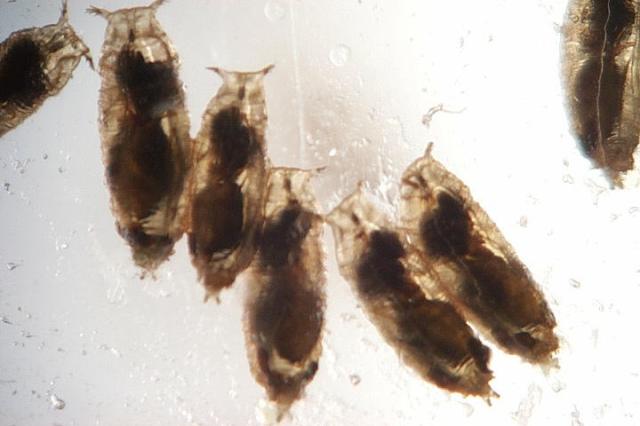
130222102958-large
The fruit fly study adds to the evidence “that using toxins in the environment to medicate offspring may be common across the animal kingdom,” says biologist Todd Schlenke.

When fruit flies sense parasitic wasps in their environment, they lay their eggs in an alcohol-soaked environment, essentially forcing their larvae to consume booze as a drug to combat the deadly wasps.

The discovery by biologists at Emory University was published in the journal Science on February 22.

“The adult flies actually anticipate an infection risk to their children, and then they medicate them by depositing them in alcohol,” says Todd Schlenke, the evolutionary geneticist whose lab did the research. “We found that this medicating behavior was shared by diverse fly species, adding to the evidence that using toxins in the environment to medicate offspring may be common across the animal kingdom.”

Adult fruit flies detect the wasps by sight, and appear to have much better vision than previously realized, he adds. “Our data indicate that the flies can visually distinguish the relatively small morphological differences between male and female wasps, and between different species of wasps.”

The experiments were led by Balint Zacsoh, who recently graduated from Emory with a degree in biology and still works in the Schlenke lab. The team also included Emory graduate student Zachary Lynch and postdoc Nathan Mortimer.

The larvae of the common fruit fly, Drosophila melanogaster, eat the rot, or fungi and bacteria, that grows on overripe, fermenting fruit. They have evolved a certain amount of resistance to the toxic effects of the alcohol levels in their natural habitat, which can range up to 15 percent.

Tiny, endoparasitoid wasps are major killers of fruit flies. The wasps inject their eggs inside the fruit fly larvae, along with venom that aims to suppress their hosts’ cellular immune response. If the flies fail to kill the wasp egg, a wasp larva hatches inside the fruit fly larva and begins to eat its host from the inside out.

Last year, the Schlenke lab published a study showing how fruit fly larvae infected with wasps prefer to eat food high in alcohol. This behavior greatly improves the survival rate of the fruit flies because they have evolved high tolerance of the toxic effects of the alcohol, but the wasps have not.

“The fruit fly larvae raise their blood alcohol levels, so that the wasps living in their blood will suffer,” Schlenke says. “When you think of an immune system, you usually think of blood cells and immune proteins, but behavior can also be a big part of an organism’s immune defense.”

For the latest study, the researchers asked whether the fruit fly parents could sense when their children were at risk for infection, and whether they then sought out alcohol to prophylactically medicate them.

Adult female fruit flies were released in one mesh cage with parasitic wasps and another mesh cage with no wasps. Both cages had two petri dishes containing yeast, the nourishment for lab-raised fruit flies and their larvae. The yeast in one of the petri dishes was mixed with 6 percent alcohol, while the yeast in the other dish was alcohol free. After 24 hours, the petri dishes were removed and the researchers counted the eggs that the fruit flies had laid.

The results were dramatic. In the mesh cage with parasitic wasps, 90 percent of the eggs laid were in the dish containing alcohol. In the cage with no wasps, only 40 percent of the eggs were in the alcohol dish.

“The fruit flies clearly change their reproductive behavior when the wasps are present,” Schlenke says. “The alcohol is slightly toxic to the fruit flies as well, but the wasps are a bigger danger than the alcohol.”

The fly strains used in the experiments have been bred in the lab for decades. “The flies that we work with have not seen wasps in their lives before, and neither have their ancestors going back hundreds of generations,” Schlenke says. “And yet, the flies still recognize these wasps as a danger when they are put in a cage with them.”

Further experiments showed that the flies are extremely discerning about differences in the wasps. They preferred to lay their eggs in alcohol when female wasps were present, but not if only male wasps were in the cage.

Theorizing that the flies were reacting to pheromones, the researchers conducted experiments using two groups of mutated fruit flies. One group lacked the ability to smell, and another group lacked sight. The flies unable to smell, however, still preferred to lay their eggs in alcohol when female wasps were present. The blind flies did not make the distinction, choosing the non-alcohol food for their offspring, even in the presence of female wasps.

“This result was a surprise to me,” Schlenke says. “I thought the flies were probably using olfaction to sense the female wasps. The small, compound eyes of flies are believed to be more geared to detecting motion than high-resolution images.”

The only obvious visual differences between the female and male wasps, he adds, is that the males have longer antennae, slightly smaller bodies, and lack an ovipositor.

Further experimentation showed that the fruit flies can distinguish different species of wasps, and will only choose the alcohol food in response to wasp species that infect larvae, not fly pupae. “Fly larvae usually leave the food before they pupate,” Schlenke explains, “so there is likely little benefit to laying eggs at alcoholic sites when pupal parasites are present.”

The researchers also connected the exposure to female parasitic wasps to changes in a fruit fly neuropeptide.

Stress, and the resulting reduced level of neuropeptide F, or NPF, has previously been associated with alcohol-seeking behavior in fruit flies. Similarly, levels of a homologous neuropeptide in humans, NPY, is associated with alcoholism.

We found that when a fruit fly is exposed to female parasitic wasps, this exposure reduces the level of NPF in the fly brain, causing the fly to seek out alcoholic sites for oviposition,” Schlenke says. “Furthermore, the alcohol-seeking behavior appears to remain for the duration of the fly’s life, even when the parasitic wasps are no longer present, an example of long-term memory.”

Finally, Drosophila melanogaster is not unique in using this offspring medication behavior. “We tested a number of fly species,” Schlenke says, “and found that each fly species that uses rotting fruit for food mounts this immune behavior against parasitic wasps. Medication may be far more common in nature than we previously thought.”

http://www.sciencedaily.com/releases/2013/02/130222102958.htm

$300 dollar glasses sold on Amazon will correct colorblindness

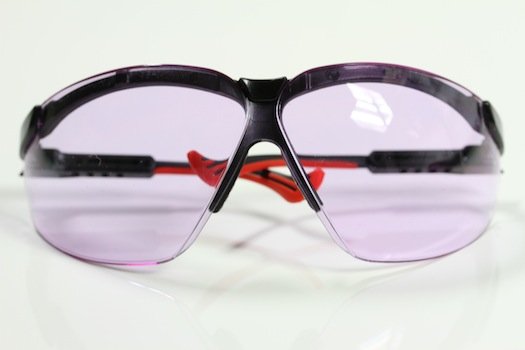
OxyAmp_b

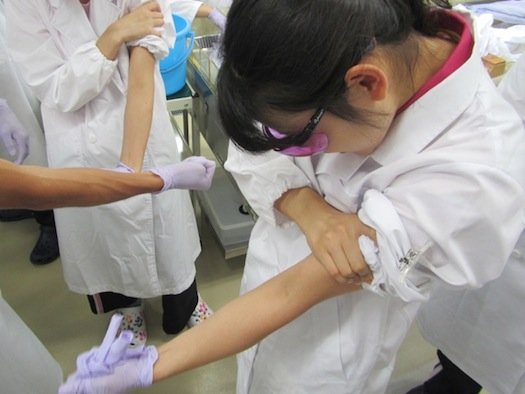
tohruMurakami_students1
Mark Changizi and Tim Barber turned research on human vision and blood flow into colorblindness-correcting glasses you can buy on Amazon. Here’s how they did it.

About 10 years ago, Mark Changizi started to develop research on human vision and how it could see changes in skin color. Like many academics, Changizi, an accomplished neurobiologist, went on to pen a book. The Vision Revolution challenged prevailing theories–no, we don’t see red only to spot berries and fruits amid the vegetation–and detailed the amazing capabilities of why we see the way we do.

If it were up to academia, Changizi’s story might have ended there. “I started out in math and physics, trying to understand the beauty in these fields,” he says, “You are taught, or come to believe, that applying something useful is inherently not interesting.”

Not only did Changizi manage to beat that impulse out of himself, but he and Tim Barber, a friend from middle school, teamed up several years ago to form a joint research institute. 2AI Labs allows the pair to focus on research into cognition and perception in humans and machines, and then to commercialize it. The most recent project? A pair of glasses with filters that just happen to cure colorblindness.

Changizi and Barber didn’t set out to cure colorblindness. Changizi just put forth the idea that humans’ ability to see colors evolved to detect oxygenation and hemoglobin changes in the skin so they could tell if someone was scared, uncomfortable or unhealthy. “We as humans blush and blanche, regardless of overall skin tone,” Barber explains, “We associate color with emotion. People turn purple with anger in every culture.” Once Changizi fully understood the connection between color vision and blood physiology, Changizi determined it would be possible to build filters that aimed to enhance the ability to see those subtle changes by making veins more or less distinct–by sharpening the ability to see the red-green or blue-yellow parts of the spectrum. He and Barber then began the process of patenting their invention.

When they started thinking about commercial applications, Changizi and Barber both admit their minds went straight to television cameras. Changizi was fascinated by the possibilities of infusing an already-enhanced HDTV experience with the capacity to see colors even more clearly.

“We looked into cameras photo receptors and decided that producing a filter for a camera would be too difficult and expensive,” Barber says. The easiest possible approach was not electronic at all, he says. Instead, they worked to develop a lens that adjusts the color signal that hits the human eye and the O2Amp was born.

The patented lens technology simply perfects what the eye does naturally: it read the changes in skin tone brought on by a flush, bruise, or blanch. The filters can be used in a range of products from indoor lighting (especially for hospital trauma centers) to windows, to perhaps eventually face cream. For now, one of the most promising applications is in glasses that correct colorblindness.

As a veteran entrepreneur, founding Clickbank and Keynetics among other ventures, Barber wasn’t interested in chasing the perfect color filter for a demo pair of glasses. “If you look for perfection you could spend a million dollars. And it is just a waste of time,” he says. A bunch of prototypes were created, and rejected. Some were too shiny, others too iridescent. “We finally found something that worked to get the tone spectrum we wanted and to produce a more interesting view of the world.”

What they got was about 90 percent of the way to total color enhancement across three different types of lenses: Oxy-Iso, Hemo-Iso, and Oxy-Amp. While the Amp, which boosts the wearer’s general perception of blood oxygenation under the skin (your own vision, but better), is the centerpiece of the technology, it was the Oxy-Iso, the lens that isolates and enhances the red-green part of the spectrum, that generated some unexpected feedback from users. Changizi says the testers told them that the Oxy-Iso lens appeared to “cure” their colorblindness.

Changizi knew this was a possibility, as the filter concentrates enhancement exactly where red-green colorblind people have a block. Professor Daniel Bor, a red-green colorblind neuroscientist at the University of Sussex tried them and was practically giddy with the results. Changizi published Bor’s testimony on his blog: “When I first put one of them on [the Oxy-Iso,], I got a shiver of excitement at how vibrant and red lips, clothes and other objects around me seemed. I’ve just done a quick 8 plate Ishihara colour blindness test. I scored 0/8 without the specs (so obviously colour blind), but 8/8 with them on (normal colour vision)!”

Despite these early testimonials, the pair thought that the O2Amp glasses would be primarily picked up by hospitals. The Hemo-Iso filter enhances variations along the yellow-blue dimension, which makes it easier for healthcare providers to see veins. “It’s a little scary to think about people drawing blood who can’t see see the veins,” Barber says. EMT workers were enthusiastic users thanks to the Hemo-Iso’s capability of making bruising more visible.

From there, Barber and Changizi embarked on a two-year odyssey to find a manufacturer to make the eyewear that would enable them to sell commercially. Through 2AI Labs, they were able push their discoveries into mainstream applications without having to rely on grants; any funding they earn from their inventions is reinvested. They also forewent some of the traditional development steps. “We bootstrapped the bench testing and we didn’t do any market research,” Barber says.

Plenty of cold calling to potential manufacturers ensued. “As scientists talking to manufacturers, it seemed like we were speaking a different language,” Barber says. Not to mention looking strange as they walked around wearing the purple and green-tinted glasses at trade shows. Changizi says they finally got lucky last year and found a few manufacturers able to produce the specialized specs. All are available on Amazon for just under $300.

Changizi and Barber aren’t done yet. In addition to overseeing sales reps who are trying to get the glasses into the hands of more buyers, the two are in talks with companies such as Oakley and Ray-Ban to put the technology into sunglasses. Imagine, says Changizi, if you could more easily see if you are getting a sunburn at the beach despite the glare. They’re testing a mirrored O2Amp lens specially for poker players (think: all the better to see the flush of a bluffer). Changizi says they are also working with cosmetics companies to embed the technology in creams that would enhance the skin’s vasculature. Move over Hope in a Jar. Barber says it’s not clear how profitable any of this will be yet: “We just want the technology to be used.”

http://www.popsci.com/science/article/2013-02/amazing-story-300-glasses-can-cure-colorblindness?page=2

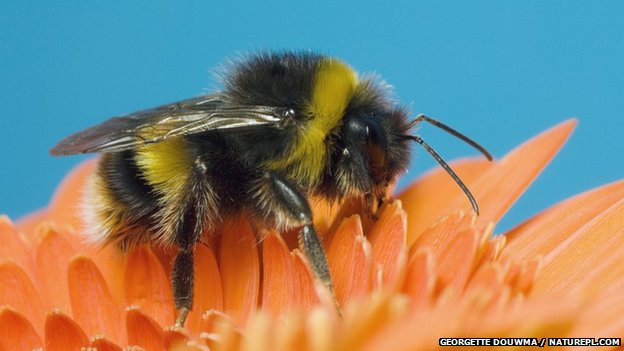
Bumblebees sense flowers’ electric fields

_65983396_bombus_terrestris_1

Bumblebees (Bombus terrestris) can detect flowers’ electric fields, scientists have discovered. Results indicate floral electric fields improve the bees’ ability to discriminate between different flowers. When used with visual signals, electrical cues can enhance the bee’s memory of floral rewards. Researchers suggest this method of signalling provides rapid and dynamic communication between plants and pollinators.

The findings are published in the online journal Science Express.

Flowering plants reward pollinators with nectar and pollen in return for their assistance in the flowers’ sexual reproduction. Flowers attract pollinators using cues such as bright colours, patterns and enticing fragrances but this study suggests the importance of electrostatic information as an additional cue for the first time.

“Of course it has existed for a long time but this is a new way we can look at the interactions between bees and flowers,” said Prof Daniel Robert of the University of Bristol. “This doesn’t throw away any of the previous work on cues that flowers are using, it adds another layer on top of that.” Prof Robert and his team were studying the mechanism of pollen transfer between flowers via an insect pollinator.

“What the pollen needs to ‘know’ is when to ‘jump’ onto the ‘vehicle’ – the bee – and when to get off it. So it’s a selective adhesion type of question,” Prof Robert told BBC Nature.

The team’s investigation highlighted the possible importance of electrostatic forces. “We looked at [existing] literature and realised that the bees were being positively charged when they fly around, and that flowers have a negative potential. “There’s always this electrical bias around. As a sensory biologist, suddenly I thought: can the bees sense that?” Prof Robert said.

Dominic Clarke, one of the lead authors, designed “fake” electric flowers in a laboratory “flying arena” to prove that electric fields are important floral cues. Electric flowers with a positive charge offered a sucrose reward while those without offered a bitter quinine solution. Bumblebees were allowed 50 visits in the flying arena and the last 10 visits showed the bees had learnt to tell the difference between the flowers.

When the electric field was turned off, “the bee goes back to selecting at random because it hasn’t got a way to tell the difference between them any more,” commented Mr Clarke. “That’s how we know it was the electric field that they were learning.”

“Animals are just constantly surprising us as to how good their senses are. More and more we’re starting to see that nature’s senses are almost as good as they could possibly be,” Mr Clarke told BBC Nature. Prof Robert summed up: “We know they can detect these electrostatic fields… this is the tip of the iceberg, there’s so much more that we haven’t seen yet.”

http://www.bbc.co.uk/nature/21508035

Thanks to Kebmodee for bringing this to the attention of the It’s Interesting community.

Lab rats given a 6th sense through a brain-machine interface

_65888650_65886269

Duke University researchers have effectively given laboratory rats a “sixth sense” using an implant in their brains.

An experimental device allowed the rats to “touch” infrared light – which is normally invisible to them.

The team at Duke University fitted the rats with an infrared detector wired up to microscopic electrodes that were implanted in the part of their brains that processes tactile information.

The results of the study were published in Nature Communications journal.

The researchers say that, in theory at least, a human with a damaged visual cortex might be able to regain sight through a device implanted in another part of the brain.

Lead author Miguel Nicolelis said this was the first time a brain-machine interface has augmented a sense in adult animals.

The experiment also shows that a new sensory input can be interpreted by a region of the brain that normally does something else (without having to “hijack” the function of that brain region).

“We could create devices sensitive to any physical energy,” said Prof Nicolelis, from the Duke University Medical Center in Durham, North Carolina.

“It could be magnetic fields, radio waves, or ultrasound. We chose infrared initially because it didn’t interfere with our electrophysiological recordings.”

His colleague Eric Thomson commented: “The philosophy of the field of brain-machine interfaces has until now been to attempt to restore a motor function lost to lesion or damage of the central nervous system.

“This is the first paper in which a neuroprosthetic device was used to augment function – literally enabling a normal animal to acquire a sixth sense.”
In their experiments, the researchers used a test chamber with three light sources that could be switched on randomly.

They taught the rats to choose the active light source by poking their noses into a port to receive a sip of water as a reward. They then implanted the microelectrodes, each about a tenth the diameter of a human hair, into the animals’ brains. These electrodes were attached to the infrared detectors.

The scientists then returned the animals to the test chamber. At first, the rats scratched at their faces, indicating that they were interpreting the lights as touch. But after a month the animals learned to associate the signal in their brains with the infrared source.

They began to search actively for the signal, eventually achieving perfect scores in tracking and identifying the correct location of the invisible light source.

One key finding was that enlisting the touch cortex to detect infrared light did not reduce its ability to process touch signals.

http://www.bbc.co.uk/news/science-environment-21459745

Thanks to Kebmodee for bringing this to the attention of the It’s Interesting community.

Microbes discovered to be thriving high in the atmosphere

sn-atmosphere

Each year, hundreds of millions of metric tons of dust, water, and humanmade pollutants make their way into the atmosphere, often traveling between continents on jet streams. Now a new study confirms that some microbes make the trip with them, seeding the skies with billions of bacteria and other organisms—and potentially affecting the weather. What’s more, some of these high-flying organisms may actually be able to feed while traveling through the clouds, forming an active ecosystem high above the surface of the Earth.

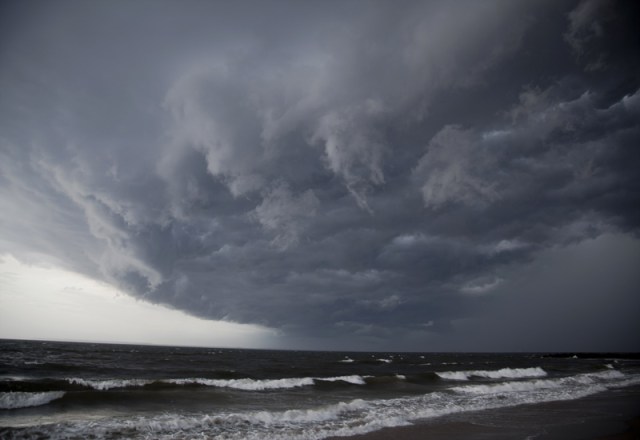
The discovery came about when a team of scientists based at the Georgia Institute of Technology in Atlanta hitched a ride on nine NASA airplane flights aimed at studying hurricanes. Previous studies carried out at the tops of mountains hinted that researchers were likely to find microorganisms at high altitudes, but no one had ever attempted to catalog the microscopic life floating above the oceans—let alone during raging tropical storms. After all, it isn’t easy to take air samples while your plane is flying through a hurricane.

Despite the technical challenges, the researchers managed to collect thousands upon thousands of airborne microorganisms floating in the troposphere about 10 kilometers over the Caribbean, as well as the continental United States and the coast of California. Studying their genes back on Earth, the scientists counted an average of 5100 bacterial cells per cubic meter of air, they report in the Proceedings of the National Academy of Sciences. Although the researchers also captured various types of fungal cells, the bacteria were over two orders of magnitude more abundant in their samples. Well over 60% of all the microbes collected were still alive.

The researchers cataloged a total of 314 different families of bacteria in their samples. Because the type of genetic analysis they used didn’t allow them to identify precise species, it’s not clear if any of the bugs they found are pathogens. Still, the scientists offer the somewhat reassuring news that bacteria associated with human and animal feces only showed up in the air samples taken after Hurricanes Karl and Earl. In fact, these storms seemed to kick up a wide variety of microbes, especially from populated areas, that don’t normally make it to the troposphere.

This uptick in aerial microbial diversity after hurricanes supports the idea that the storms “serve as an atmospheric escalator,” plucking dirt, dust, seawater, and, now, microbes off Earth’s surface and carrying them high into the sky, says Dale Griffin, an environmental and public health microbiologist with the U.S. Geological Survey in St. Petersburg, Florida, who was not involved in the study.

Although many of the organisms borne aloft are likely occasional visitors to the upper troposphere, 17 types of bacteria turned up in every sample. Researchers like environmental microbiologist and co-author Kostas Konstantinidis suspect that these microbes may have evolved to survive for weeks in the sky, perhaps as a way to travel from place to place and spread their genes across the globe. “Not everybody makes it up there,” he says. “It’s only a few that have something unique about their cells” that allows them survive the trip.

The scientists point out that two of the 17 most common families of bacteria in the upper troposphere feed on oxalic acid, one of the most abundant chemical compounds in the sky. This observation raises the question of whether the traveling bacteria might be eating, growing, and perhaps even reproducing 10 kilometers above the surface of Earth. “That’s a big question in the field right now,” Griffin says. “Can you view [the atmosphere] as an ecosystem?”

David Smith, a microbiologist at NASA’s Kennedy Space Center in Florida, warns against jumping to such dramatic conclusions. He also observed a wide variety of microbes in the air above Oregon’s Mount Bachelor in a separate study, but he believes they must hibernate for the duration of their long, cold trips between far-flung terrestrial ecosystems. “While it’s really exciting to think about microorganisms in the atmosphere that are potentially making a living, there’s no evidence of that so far.”

Even if microbes spend their atmospheric travels in dormancy, that doesn’t mean they don’t have a job to do up there. Many microbial cells are the perfect size and texture to cause water vapor to condense or even form ice around them, meaning that they may be able to seed clouds. If these microorganisms are causing clouds to form, they could be having a substantial impact on the weather. By continuing to study the sky’s microbiome, Konstantinidis and his team hope to soon be able to incorporate its effects into atmospheric models.

http://news.sciencemag.org/sciencenow/2013/01/microbes-survive-and-maybe-thriv.html