Retinal device restores sight to blind mice


Researchers report they have developed in mice what they believe might one day become a breakthrough for humans: a retinal prosthesis that could restore near-normal sight to those who have lost their vision.

That would be a welcome development for the roughly 25 million people worldwide who are blind because of retinal disease, most notably macular degeneration.

The notion of using prosthetics to combat blindness is not new, with prior efforts involving retinal electrode implantation and/or gene therapy restoring a limited ability to pick out spots and rough edges of light.

The current effort takes matters to a new level. The scientists fashioned a prosthetic system packed with computer chips that replicate the “neural impulse codes” the eye uses to transmit light signals to the brain.

“This is a unique approach that hasn’t really been explored before, and we’re really very excited about it,” said study author Sheila Nirenberg, a professor and computational neuroscientist in the department of physiology and biophysics at Weill Medical College of Cornell University in New York City. “I’ve actually been working on this for 10 years. And suddenly, after a lot of work, I knew immediately that I could make a prosthetic that would work, by making one that could take in images and process them into a code that the brain can understand.”

Nirenberg and her co-author Chethan Pandarinath (a former Cornell graduate student now conducting postdoctoral research at Stanford University School of Medicine) report their work in the Aug. 14 issue of Proceedings of the National Academy of Sciences. Their efforts were funded by the U.S. National Institutes of Health and Cornell University’s Institute for Computational Biomedicine.

The study authors explained that retinal diseases destroy the light-catching photoreceptor cells on the retina’s surface. Without those, the eye cannot convert light into neural signals that can be sent to the brain.

However, most of these patients retain the use of their retina’s “output cells” — called ganglion cells — whose job it is to actually send these impulses to the brain. The goal, therefore, would be to jumpstart these ganglion cells by using a light-catching device that could produce critical neural signaling.

But past efforts to implant electrodes directly into the eye have only achieved a small degree of ganglion stimulation, and alternate strategies using gene therapy to insert light-sensitive proteins directly into the retina have also fallen short, the researchers said.

Nirenberg theorized that stimulation alone wasn’t enough if the neural signals weren’t exact replicas of those the brain receives from a healthy retina.

“So, what we did is figure out this code, the right set of mathematical equations,” Nirenberg explained. And by incorporating the code right into their prosthetic device’s chip, she and Pandarinath generated the kind of electrical and light impulses that the brain understood.

The team also used gene therapy to hypersensitize the ganglion output cells and get them to deliver the visual message up the chain of command.

Behavioral tests were then conducted among blind mice given a code-outfitted retinal prosthetic and among those given a prosthetic that lacked the code in question.

The result: The code group fared dramatically better on visual tracking than the non-code group, with the former able to distinguish images nearly as well as mice with healthy retinas.

“Now we hope to move on to human trials as soon as possible,” said Nirenberg. “Of course, we have to conduct standard safety studies before we get there. And I would say that we’re looking at five to seven years before this is something that might be ready to go, in the best possible case. But we do hope to start clinical trials in the next one to two years.”

Results achieved in animal studies don’t necessarily translate to humans.

Dr. Alfred Sommer, a professor of ophthalmology at Johns Hopkins University in Baltimore and dean emeritus of Hopkins’  Bloomberg School of Public Health, urged caution about the findings.

“This could be revolutionary,” he said. “But I doubt it. It’s a very, very complicated business. And people have been working on it intensively and incrementally for the last 30 years.”

“The fact that they have done something that sounds a little bit better than the last set of results is great,” Sommer added.  “It’s terrific. But this approach is really in its infancy. And I guarantee that it will be a long time before they get to the point where they can really restore vision to people using prosthetics.”

Other advances may offer benefits in the meantime, he said. “We now have new therapies that we didn’t have even five years ago,” Sommer said. “So we may be reaching a state where the amount of people losing their sight will decline even as these new techniques for providing artificial vision improve. It may not be as sci-fi. But I think it’s infinitely more important at this stage.”

http://health.usnews.com/health-news/news/articles/2012/08/13/retinal-device-restores-sight-to-blind-mice

Thanks to Kebmodee for bringing this to the attention of the It’s Interesting community.

Digital pills enter the marketplace


Digestible microchips embedded in drugs may soon tell doctors whether a patient is taking their medications as prescribed. These sensors are the first ingestible devices approved by the US Food and Drug Administration (FDA). To some, they signify the beginning of an era in digital medicine.

“About half of all people don’t take medications like they’re supposed to,” says Eric Topol, director of the Scripps Translational Science Institute in La Jolla,California. “This device could be a solution to that problem, so that doctors can know when to rev up a patient’s medication adherence.” Topol is not affiliated with the company that manufactures the device, Proteus Digital Health in Redwood City,California, but he embraces the sensor’s futuristic appeal, saying, “It’s like big brother watching you take your medicine.”

The sand-particle sized sensor consists of a minute silicon chip containing trace amounts of magnesium and copper. When swallowed, it generates a slight voltage in response to digestive juices, which conveys a signal to the surface of a person’s skin where a patch then relays the information to a mobile phone belonging to a healthcare-provider.

Currently, the FDA, and the analogous regulatory agency in Europe have only approved the device based on studies showing its safety and efficacy when implanted in placebo pills. But Proteus hopes to have the device approved within other drugs in the near future. Medicines that must be taken for years, such as those for drug resistant tuberculosis, diabetes, and for the elderly with chronic diseases, are top candidates, says George Savage, co-founder and chief medical officer at the company.

“The point is not for doctors to castigate people, but to understand how people are responding to their treatments,” Savage says. “This way doctors can prescribe a different dose or a different medicine if they learn that it’s not being taken appropriately.”

Proponents of digital medical devices predict that they will provide alternatives to doctor visits, blood tests, MRIs and CAT scans. Other gadgets in the pipeline include implantable devices that wirelessly inject drugs at pre-specified times, and sensors that deliver a person’s electrocardiogram to their smartphone.

In his book published in January, The Creative Destruction of Medicine, Topol says that the 2010s will be known as the era of digital medical devices. “There are so many of these new technologies coming along,” Topol says, “it’s going to be a new frontier for rendering care.”

Thanks to Kedmobee for bringing this to the attention of the It’s Interesting community.

http://blogs.nature.com/news/2012/07/digital-pills-make-their-way-to-market.html

Parasite in cat litter may increase risk of suicide


Women infected with the common cat parasite Toxoplasma gondii, which lurks in litter boxes, may suffer undetected brain changes that lead to personality changes and even mental illness. That’s according to a new study of more than 45,000 women in Denmark published Monday in the Archives of General Psychiatry. The parasite, excreted in cat feces, also spreads through undercooked meat and unwashed vegetables. Pregnant women have long been warned to avoid the parasite, because they can pass it onto their fetus, causing brain damage or stillbirth. In the new study, researchers found that women infected by T. gondii were one and a half times more likely to try to take their own lives than those who were not affected. They were also more likely to try to commit suicide violently—with a gun, sharp object, or by jumping, Time reports. Suicide risk increased with the levels of T. gondii antibodies found. “We can’t say with certainty that T. gondii caused the women to try to kill themselves, but we did find a predictive association between the infection and suicide attempts later in life that warrants additional studies,” study author Teodor Postolache, an associate professor of psychiatry and director of the Mood and Anxiety Program at the University of Maryland School of Medicine, said in a press statement.


Freezer malfunction at Harvard destroys crucial supply of brains being used to study autism

A freezer malfunctioned at a Harvard-affiliated hospital that oversees the world’s largest collection of autistic brain samples, damaging a third of the scientifically precious specimens and casting doubt on whether they can be used in research.

The director of the Harvard Brain Tissue Resource Center said the loss was “devastating,” particularly in light of the increasing demand for brain samples among scientists searching for the cause of autism and potential treatments.

“Over the last 10 years, the autism tissue program has been working very hard to get the autism community to understand the importance of brain donation,” Dr. Francine Benes said. Now many of those samples have been compromised.

The freezer failed sometime late last month at the center, which is housed at McLean Hospital in the Boston suburb of Belmont. At least 54 samples earmarked for autism research were harmed. Many of them turned dark with decay.

However, an initial review indicates that the DNA in the samples is intact and can still be used for genetic research. It’s unclear, however, whether the samples could be used for the full range of neuroscience needs.

Thirty-two of the brains had been cut in half, with one side placed in a formaldehyde solution and the other placed in the freezer. The samples in the solution remain available for all research projects, the hospital said.

The frozen tissue samples are normally maintained at about minus 80 degrees Celsius, but the temperature had reached about 7 degrees — the temperature of a common refrigerator — when the failure was discovered, Benes said.

That means an important chemical cousin of DNA called RNA was destroyed, she said.

Center officials say they’ve already completed an inspection of the equipment to ensure the safety of the collection.

Dr. Fred Volkmar, an autism researcher and director of the Child Study Center at Yale University, said the damage is even more disheartening given recent advances in autism research.

Some of that research, including autism studies involving stem cells, wasn’t even possible at the time when some of the brains were donated.

“We can’t always know where the science is going to take us,” Volkmar said. “In that respect, it’s a horrible loss. The hope is that at least it’s not a total disaster.”

The hospital launched an investigation to determine why the freezer malfunctioned and why two alarm systems failed to go off as the temperature rose.

Benes said her biggest fear is that the loss of samples could make it harder in the future to encourage brain donation from autistic children and young adults.

“There has been a lot of resistance of brain donations for religious and cultural reasons,” she said.

The collection is owned by the advocacy and research organization Autism Speaks.

The Harvard Brain Tissue Resource Center is the largest and oldest federally funded “brain bank” in the United States. It provides thousands of postmortem brain tissue samples annually to researchers across the nation.

Read more: http://www.nydailynews.com/life-style/health/freezer-malfunction-thaws-brains-harvard-research-hospital-article-1.1094094#ixzz1xnz81QSj

New study offers evidence of ‘old person smell’

The Smell of Age: Perception and Discrimination of Body Odors of Different Ages

“Our natural body odor goes through several stages of age-dependent changes in chemical composition as we grow older. Similar changes have been reported for several animal species and are thought to facilitate age discrimination of an individual based on body odors, alone. We sought to determine whether humans are able to discriminate between body odor of humans of different ages. Body odors were sampled from three distinct age groups: Young (20–30 years old), Middle-age (45–55), and Old-age (75–95) individuals. Perceptual ratings and age discrimination performance were assessed in 41 young participants. There were significant differences in ratings of both intensity and pleasantness, where body odors from the Old-age group were rated as less intense and less unpleasant than body odors originating from Young and Middle-age donors. Participants were able to discriminate between age categories, with body odor from Old-age donors mediating the effect also after removing variance explained by intensity differences. Similarly, participants were able to correctly assign age labels to body odors originating from Old-age donors but not to body odors originating from other age groups. This experiment suggests that, akin to other animals, humans are able to discriminate age based on body odor alone and that this effect is mediated mainly by body odors emitted by individuals of old age.”

http://blogs.discovermagazine.com/discoblog/2012/06/06/ncbi-rofl-study-proves-old-person-smell-is-real/

Stoned mom arrested after driving with 5 month old baby on roof


The following is a break down of some seriously bad parenting at the hands of 19-year-old teen mom Catalina Clouser from Phoenix, Arizona.

On Friday night Clouser and her boyfriend had been smoking a little weed at a public park. After this they decided to head to a store and buy some beer with Catalina’s baby in the car. Hey boyfriend was pulled over and popped for DUI. Being upset over that whole situation, Clouser decided to take herself and her child to a friend’s house where she, “admittedly smoked one or two additional bowls of marijuana.”

After getting stoned Clouser thought it would be a good idea to head on home with her infant son asleep in the car seat. It wasn’t until she got home that she became aware that her son was missing. According to Phoenix Police officer James Holmes:

“It appears the suspect put the baby on the roof of the car and drove off, forgetting he was still on the roof.”

Freaked out, Clouser started dialing up friends frantically attempting to retrace her steps trying to figure out the location of her son. Once she pieced together what had happened officers were already on the scene. Holmes added:

“The officers did find that the car seat was damaged. There were scrapes on the car seat, obviously from a fall. We’re thinking that based on her possible impairment, she just didn’t realize that she had placed that baby at one o’clock in the morning on top of the car when she took off.”

Both Holmes and local station KTVK have reported that the 5-week-old infant is, “perfectly OK,” and that he has been placed in the care of Arizona Child Protective Services.

Catalina Clouser was arrested and has been charged with aggravated DUI and child abuse.

http://starcasm.net/archives/158865

Swiss woman starves to death on sunlight-only diet


Swiss newspaper Tages-Anzeiger reports that a woman starved to death after embarking on a spiritual diet that required her to stop eating or drinking and live off sunlight alone.

The Zurich newspaper reported Wednesday that the unnamed Swiss woman in her fifties decided to follow the radical fast in 2010 after viewing an Austrian documentary about an Indian guru who claims to have lived this way for 70 years.

Tages-Anzeiger says there have been similar cases of self-starvation in Germany, Britain and Australia.

The prosecutors’ office in the Swiss canton (state) of Aargau confirmed Wednesday that the woman died in January 2011 in the town of Wolfhalden in eastern Switzerland.

Read more: http://www.nydailynews.com/life-style/health/swiss-women-dies-giving-water-food-thought-live-sunlight-article-1.1067359#ixzz1tFY0yuar

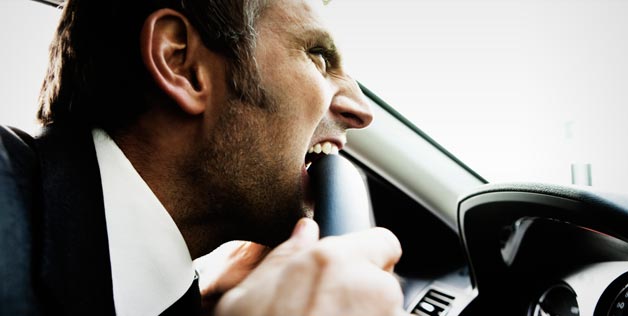
Having to urinate badly while driving is like driving drunk


Having to urinate really bad while driving is equivalent in terms of impairment to about a 0.05 blood alcohol level, according to research done by Dr. Peter Snyder, a VP of research at Rhode Island Hospital. “With urination, it’s a very active process, as you know. It takes lots of concentration,” Snyder tells Jalopnik. “If you’re on the highway at 70 mph, and you really have to go, you really are impaired. You can’t let it get to that point.” So don’t let friends drive with full bladders.

Economists determine that US would save billions of dollars by legalizing marijuana


Where there’s pot, there’s gold. So conclude more than 300 economists who say that the government — if it got out of the business of enforcing marijuana laws — could save a whopping $7.7 billion annually. Harvard economist Jeffrey Miron also figures there’s another $6 billion to be mined each year by taxing the drug at rates similar to booze and tobacco. The economists, who have signed a petition, don’t exactly go as far as Miron in suggesting pot be legalized but maintain that it’s high time, so to speak, for an “open and honest debate.”

http://now.msn.com/money/0417-billions-saved-by-legalizing-weed.aspx


Bacteria isolated for millions of years in Lechuguilla Cave are resistant to modern antibiotics

The caverns of Lechuguilla Cave are some of the strangest on the planet. Its acid-carved passages extend for over 120 miles. Parts of Lechuguilla have been cut off from the surface for four to seven million years, and the life-forms there – mainly bacteria and other microbes – have charted their own evolutionary courses. But Gerry Wright from McMaster University in Canada has found that many of these cave bacteria can resist our antibiotics. They have been living underground for as long as modern humans have existed, but they can fend off our most potent weapons.

read more here:  http://blogs.discovermagazine.com/notrocketscience/2012/04/13/isolated-for-millions-of-years-cave-bacteria-resist-modern-antibiotics/