Psychiatry’s Guide Is Out of Touch With Science, Experts Say

dsm-5

Just weeks before the long-awaited publication of a new edition of the so-called bible of mental disorders, the federal government’s most prominent psychiatric expert has said the book suffers from a scientific “lack of validity.”

The expert, Dr. Thomas R. Insel, director of the National Institute of Mental Health, said in an interview Monday that his goal was to reshape the direction of psychiatric research to focus on biology, genetics and neuroscience so that scientists can define disorders by their causes, rather than their symptoms.

While the Diagnostic and Statistical Manual of Mental Disorders, or D.S.M., is the best tool now available for clinicians treating patients and should not be tossed out, he said, it does not reflect the complexity of many disorders, and its way of categorizing mental illnesses should not guide research.

“As long as the research community takes the D.S.M. to be a bible, we’ll never make progress,” Dr. Insel said, adding, “People think that everything has to match D.S.M. criteria, but you know what? Biology never read that book.”

The revision, known as the D.S.M.-5 and the first since 1994, has stirred unprecedented questioning from the public, patient groups and, most fundamentally, senior figures in psychiatry who have challenged not only decisions about specific diagnoses but the scientific basis of the entire enterprise. Basic research into the biology of mental disorders and treatment has stalled, they say, confounded by the labyrinth of the brain.


Decades of spending on neuroscience have taught scientists mostly what they do not know, undermining some of their most elemental assumptions. Genetic glitches that appear to increase the risk of schizophrenia in one person may predispose others to autism-like symptoms, or bipolar disorder. The mechanisms of the field’s most commonly used drugs — antidepressants like Prozac, and antipsychosis medications like Zyprexa — have revealed nothing about the causes of those disorders. And major drugmakers have scaled back psychiatric drug development, having virtually no new biological “targets” to shoot for.

Dr. Insel is one of a growing number of scientists who think that the field needs an entirely new paradigm for understanding mental disorders, though neither he nor anyone else knows exactly what it will look like.

Even the chairman of the task force making revisions to the D.S.M., Dr. David J. Kupfer, a professor of psychiatry at the University of Pittsburgh, said the new manual was faced with doing the best it could with the scientific evidence available.

“The problem that we’ve had in dealing with the data that we’ve had over the five to 10 years since we began the revision process of D.S.M.-5 is a failure of our neuroscience and biology to give us the level of diagnostic criteria, a level of sensitivity and specificity that we would be able to introduce into the diagnostic manual,” Dr. Kupfer said.

The creators of the D.S.M. in the 1960s and ’70s “were real heroes at the time,” said Dr. Steven E. Hyman, a psychiatrist and neuroscientist at the Broad Institute and a former director at the National Institute of Mental Health. “They chose a model in which all psychiatric illnesses were represented as categories discontinuous with ‘normal.’ But this is totally wrong in a way they couldn’t have imagined. So in fact what they produced was an absolute scientific nightmare. Many people who get one diagnosis get five diagnoses, but they don’t have five diseases — they have one underlying condition.”

Dr. Hyman, Dr. Insel and other experts said they hoped that the science of psychiatry would follow the direction of cancer research, which is moving from classifying tumors by where they occur in the body to characterizing them by their genetic and molecular signatures.

About two years ago, to spur a move in that direction, Dr. Insel started a federal project called Research Domain Criteria, or RDoC, which he highlighted in a blog post last week. Dr. Insel said in the blog that the National Institute of Mental Health would be “reorienting its research away from D.S.M. categories” because “patients with mental disorders deserve better.” His commentary has created ripples throughout the mental health community.

Dr. Insel said in the interview that his motivation was not to disparage the D.S.M. as a clinical tool, but to encourage researchers and especially outside reviewers who screen proposals for financing from his agency to disregard its categories and investigate the biological underpinnings of disorders instead. He said he had heard from scientists whose proposals to study processes common to depression, schizophrenia and psychosis were rejected by grant reviewers because they cut across D.S.M. disease categories.

“They didn’t get it,” Dr. Insel said of the reviewers. “What we’re trying to do with RDoC is say actually this is a fresh way to think about it.” He added that he hoped researchers would also participate in projects funded through the Obama administration’s new brain initiative.

Dr. Michael First, a psychiatry professor at Columbia who edited the last edition of the manual, said, “RDoC is clearly the way of the future,” although it would take years to get results that could apply to patients. In the meantime, he said, “RDoC can’t do what the D.S.M. does. The D.S.M. is what clinicians use. Patients will always come into offices with symptoms.”

For at least a decade, Dr. First and others said, patients will continue to be diagnosed with D.S.M. categories as a guide, and insurance companies will reimburse with such diagnoses in mind.

Dr. Jeffrey Lieberman, the chairman of the psychiatry department at Columbia and president-elect of the American Psychiatric Association, which publishes the D.S.M., said that the new edition’s refinements were “based on research in the last 20 years that will improve the utility of this guide for practitioners, and improve, however incrementally, the care patients receive.”

He added: “The last thing we want to do is be defensive or apologetic about the state of our field. But at the same time, we’re not satisfied with it either. There’s nothing we’d like better than to have more scientific progress.”

New Study Ties Autism Risk to Creases in Placenta

placenta

After most pregnancies, the placenta is thrown out, having done its job of nourishing and supporting the developing baby.

But a new study raises the possibility that analyzing the placenta after birth may provide clues to a child’s risk for developing autism. The study, which analyzed placentas from 217 births, found that in families at high genetic risk for having an autistic child, placentas were significantly more likely to have abnormal folds and creases.

“It’s quite stark,” said Dr. Cheryl K. Walker, an obstetrician-gynecologist at the Mind Institute at the University of California, Davis, and a co-author of the study, published in the journal Biological Psychiatry. “Placentas from babies at risk for autism, clearly there’s something quite different about them.”

Researchers will not know until at least next year how many of the children, who are between 2 and 5, whose placentas were studied will be found to have autism. Experts said, however, that if researchers find that children with autism had more placental folds, called trophoblast inclusions, visible after birth, the condition could become an early indicator or biomarker for babies at high risk for the disorder.

“It would be really exciting to have a real biomarker and especially one that you can get at birth,” said Dr. Tara Wenger, a researcher at the Center for Autism Research at Children’s Hospital of Philadelphia, who was not involved in the study.

The research potentially marks a new frontier, not only for autism, but also for the significance of the placenta, long considered an after-birth afterthought. Now, only 10 percent to 15 percent of placentas are analyzed, usually after pregnancy complications or a newborn’s death.

Dr. Harvey J. Kliman, a research scientist at the Yale School of Medicine and lead author of the study, said the placenta had typically been given such little respect in the medical community that wanting to study it was considered equivalent to someone in the Navy wanting to scrub ships’ toilets with a toothbrush. But he became fascinated with placentas and noticed that inclusions often occurred with births involving problematic outcomes, usually genetic disorders.

He also noticed that “the more trophoblast inclusions you have, the more severe the abnormality.” In 2006, Dr. Kliman and colleagues published research involving 13 children with autism, finding that their placentas were three times as likely to have inclusions. The new study began when Dr. Kliman, looking for more placentas, contacted the Mind Institute, which is conducting an extensive study, called Marbles, examining potential causes of autism.

“This person came out of the woodwork and said, ‘I want to study trophoblastic inclusions,’ ” Dr. Walker recalled. “Now I’m fairly intelligent and have been an obstetrician for years and I had never heard of them.”

Dr. Walker said she concluded that while “this sounds like a very smart person with a very intriguing hypothesis, I don’t know him and I don’t know how much I trust him.” So she sent him Milky Way bar-size sections of 217 placentas and let him think they all came from babies considered at high risk for autism because an older sibling had the disorder. Only after Dr. Kliman had counted each placenta’s inclusions did she tell him that only 117 placentas came from at-risk babies; the other 100 came from babies with low autism risk.

She reasoned that if Dr. Kliman found that “they all show a lot of inclusions, then maybe he’s a bit overzealous” in trying to link inclusions to autism. But the results, she said, were “astonishing.” More than two-thirds of the low-risk placentas had no inclusions, and none had more than two. But 77 high-risk placentas had inclusions, 48 of them had two or more, including 16 with between 5 and 15 inclusions.

Dr. Walker said that typically between 2 percent and 7 percent of at-risk babies develop autism, and 20 percent to 25 percent have either autism or another developmental delay. She said she is seeing some autism and non-autism diagnoses among the 117 at-risk children in the study, but does not yet know how those cases match with placental inclusions.

Dr. Jonathan L. Hecht, associate professor of pathology at Harvard Medical School, said the study was intriguing and “probably true if it finds an association between these trophoblast inclusions and autism.” But he said that inclusions were the placenta’s way of responding to many kinds of stress, so they might turn out not to be specific enough to predict autism.

Dr. Kliman calls inclusions a “check-engine light, a marker of: something’s wrong, but I don’t know what it is.”

That’s how Chris Mann Sullivan sees it, too. Dr. Sullivan, a behavioral analyst in Morrisville, N.C., was not in the study, but sent her placenta to Dr. Kliman after her daughter Dania, now 3, was born. He found five inclusions. Dr. Sullivan began intensive one-on-one therapy with Dania, who has not been given a diagnosis of autism, but has some relatively mild difficulties.

“What would have happened if I did absolutely nothing, I’m not sure,” Dr. Sullivan said. “I think it’s a great way for parents to say, ‘O.K., we have some risk factors; we’re not going to ignore it.’ ”

Thanks to Dr. Rajadhyaksha for bringing this to the attention of the It’s Interesting community.

New bird flu well-adapted to infect people

130412032821-3-bird-flu-0412-horizontal-gallery

A new variation of bird flu that the WHO says has caused at least 11 deaths in China has genetic characteristics that make it well-adapted to infect people. In a report published late Thursday in the New England Journal of Medicine, samples from three patients — all of whom died — had mutations that have previously been shown to increase transmissibility, and to help the virus grow in a mammal’s respiratory tract. The analysis comes amid a modest but steady stream of human cases since the end of March. Saturday, China reported a 7-year-old Beijing girl is the latest person to become infected with the H7N9 flu strain, bringing the total to 44.

The strain is normally found in birds, and until last month was never known to infect people. “The H7N9 situation is evolving very quickly,” said Nancy Cox, director of the Influenza Division at the U.S. Centers for Disease Control and Prevention. “One thing of concern is the pace at which we are seeing the identification of cases.”

On a more reassuring note, investigators have found no evidence that the virus has passed directly from person to person. More than a thousand “close contacts” of the patients are being monitored by Chinese health officials, according to the World Health Organization. One concerning mutation, known as “Substitution Q226L,” was found in two of the first three victims. Past experiments have shown it to make viruses — including the H5N1 bird flu virus — more likely to infect ferrets, which are commonly used in flu research. The same mutation was also found in the viruses that caused the 1957 and 1968 flu pandemics. A second mutation, known as “PB2 E627K,” was found in all three virus samples. According to Dr. Ron Fouchier, a Dutch virologist, this mutation allows the virus to reproduce at much lower temperatures than a standard avian influenza virus. The change lets it grow in a human respiratory tract, which is cooler than the virus’ natural home: a bird’s gastrointestinal tract. In mice, Fouchier said, the mutation makes the infection as much as 1,000 times more virulent. A number of other mutations were found as well, including changes that are characteristic of viruses found in mammals.

“Known normal bird viruses have to adapt substantially to infect people, but not these,” said Fouchier, who said the changes are enough that he would no longer call the H7N9 strain “bird flu.” The first three patients to be identified are an 87-year-old man and a 27-year-old man from Shanghai, and a 35-year-old housewife from Anhui. The woman had visited a chicken market about a week before falling ill. The younger man was a butcher who worked in a market where live birds were sold, although he did not butcher any birds. The 87-year-old had no known exposure to live birds. All three died after suffering severe respiratory symptoms, including acute respiratory distress syndrome and eventually septic shock and multiple organ failure.

In a commentary that ran with the article, Cox and Dr. Tim Uyeki, a physician with the CDC, noted that patients were not given antiviral medication until their illness became severe. Oseltamivir (Tamiflu) or zanamivir (Relenza) should be administered as soon as possible to patients with a suspected or confirmed H7N9 infection, the two wrote. Cox said it remains unclear whether the severe illnesses are typical of H7N9 infection or simply the tip of a large iceberg in which a large number of mild cases are going unnoticed.

“As surveillance has expanded, we’re also seeing individuals with milder cases,” said Cox. “We’re still seeing very severe disease in some cases, but overall I think it’s somewhat reassuring.” The CDC is in the final steps of refining a diagnostic test to identify H7N9 in patients, and Cox said it should be available for distribution in a matter of days. A widely available diagnostic test would allow faster identification of patients who actually have the infection, and would also help disease detectives zero in on how people are being exposed.

Work has begun on a vaccine, although Cox and others said that even if it is eventually needed, a vaccine likely won’t be available for several months. While the overall picture is concerning, flu experts urged calm. “I wouldn’t say a pandemic is more likely than it was a year ago,” Fouchier said. “The only thing we can do as virologists right now is to point out the interesting characteristics of the virus, try to get to the bottom of this story and try to stop further infections.”

http://www.cnn.com/2013/04/12/health/bird-flu/index.html?hpt=hp_t2

Documentary on Sleep Paralysis this May

sleep-paralysis-still-130329

Stephanie Pappas, LiveScience Senior Writer

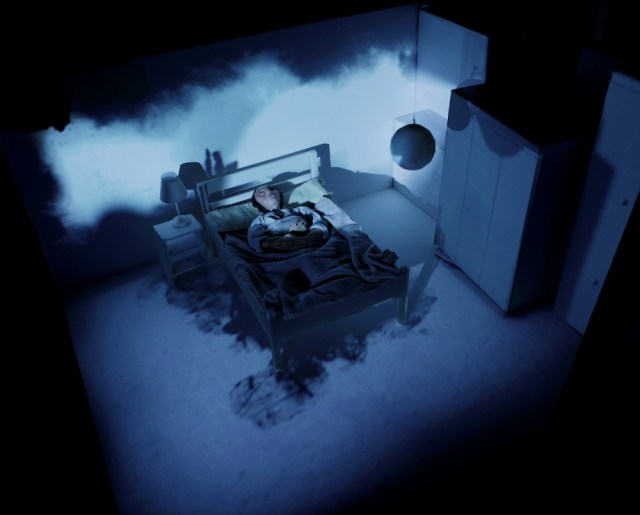
When filmmaker Carla MacKinnon started waking up several times a week unable to move, with the sense that a disturbing presence was in the room with her, she didn’t call up her local ghost hunter. She got researching. Now, that research is becoming a short film and multiplatform art project exploring the strange and spooky phenomenon of sleep paralysis. The film, supported by the Wellcome Trust and set to screen at the Royal College of Arts in London, will debut in May.

Sleep paralysis happens when people become conscious while their muscles remain in the ultra-relaxed state that prevents them from acting out their dreams. The experience can be quite terrifying, with many people hallucinating a malevolent presence nearby, or even an attacker suffocating them. Surveys put the number of sleep paralysis sufferers between about 5 percent and 60 percent of the population. “I was getting quite a lot of sleep paralysis over the summer, quite frequently, and I became quite interested in what was happening, what medically or scientifically, it was all about,” MacKinnon said.

Her questions led her to talk with psychologists and scientists, as well as to people who experience the phenomenon. Myths and legends about sleep paralysis persist all over the globe, from the incubus and succubus (male and female demons, respectively) of European tales to a pink dolphin-turned-nighttime seducer in Brazil. Some of the stories MacKinnon uncovered reveal why these myths are so chilling.

One man told her about his frequent sleep paralysis episodes, during which he’d experience extremely realistic hallucinations of a young child, skipping around the bed and singing nursery rhymes. Sometimes, the child would sit on his pillow and talk to him. One night, the tot asked the man a personal question. When he refused to answer, the child transformed into a “horrendous demon,” MacKinnon said.

For another man, who had the sleep disorder narcolepsy (which can make sleep paralysis more common), his dream world clashed with the real world in a horrifying way. His sleep paralysis episodes typically included hallucinations that someone else was in his house or his room — he’d hear voices or banging around. One night, he awoke in a paralyzed state and saw a figure in his room as usual. “He suddenly realizes something is different,” MacKinnon said. “He suddenly realizes that he is in sleep paralysis, and his eyes are open, but the person who is in the room is in his room in real life.” The figure was no dream demon, but an actual burglar.

Sleep paralysis experiences are almost certainly behind the myths of the incubus and succubus, demons thought to have sex with unsuspecting humans in their sleep. In many cases, MacKinnon said, the science of sleep paralysis explains these myths. The feeling of suffocating or someone pushing down on the chest that often occurs during sleep paralysis may be a result of the automatic breathing pattern people fall into during sleep. When they become conscious while still in this breathing pattern, people may try to bring their breathing under voluntary control, leading to the feeling of suffocating. Add to that the hallucinations that seem to seep in from the dream world, and it’s no surprise that interpretations lend themselves to demons, ghosts or even alien abduction, MacKinnon said.

What’s more, MacKinnon said, sleep paralysis is more likely when your sleep is disrupted in some way — perhaps because you’ve been traveling, you’re too hot or too cold, or you’re sleeping in an unfamiliar or spooky place. Those tendencies may make it more likely that a person will experience sleep paralysis when already vulnerable to thoughts of ghosts and ghouls. “It’s interesting seeing how these scientific narratives and the more psychoanalytical or psychological narratives can support each other rather than conflict,” MacKinnon said.

Since working on the project, MacKinnon has been able to bring her own sleep paralysis episodes under control — or at least learned to calm herself during them. The trick, she said, is to use episodes like a form of research, by paying attention to details like how her hands feel and what position she’s in. This sort of mindfulness tends to make scary hallucinations blink away, she said. “Rationalizing it is incredibly counterintuitive,” she said. “It took me a really long time to stop believing that it was real, because it feels so incredibly real.”

http://www.livescience.com/28325-spooky-film-explores-sleep-paralysis.html

Samoa airline introduces pay-by-weight pricing

Fat-Guy-300x260

A tiny Samoa airline is giving passengers a big reason to lose weight: Tickets sold not by the seat, but by the kilogram. Samoa Air is pricing its first international flights based on the weight of its passengers and their bags. Depending on the flight, each kilogram (2.2 pounds) costs 93 cents to $1.06. That means the average American man weighing 195 pounds with a 35-pound bag would pay $97 to go one-way between Apia, Samoa, and Pago Pago, American Samoa. Competitors typically charge $130 to $140 roundtrip for similar routes.

The weight-based pricing is not new to the airline, which launched in June. It has been using the pricing model since November, but in January the U.S. Department of Transportation approved its international route between American Samoa and Samoa. The airline’s chief executive, Chris Langton, said that “planes are run by weight and not by seat, and travelers should be educated on this important issue. The plane can only carry a certain amount of weight and that weight needs to be paid. There is no other way.”

Langton, a pilot himself, said when he flew for other airlines, he brought up the idea to his bosses to charge by weight, but they considered weight as too sensitive an issue to address. “It’s always been the fairest way, but the industry has been trying to pack square pegs into round holes for many years,” he said.

Travelers in the region already are weighed before they fly because the planes used between the islands are small, said David Vaeafe, executive director of the American Samoa Visitors Bureau. Samoa Air’s fleet includes two nine-passenger planes for commercial routes and a three-passenger plane for an air taxi service. Langton said passengers who need more room will be given one row on the plane to ensure comfort.

The new pricing system would make Samoa Air the first to charge strictly by weight, a change that Vaeafe said is, “in many ways… a fair concept for passengers. For example, a 12- or 13-year-old passenger, who is small in size and weight, won’t have to pay an adult fare, based on airline fares that anyone 12 years and older does pay the adult fare,” he said.

Vaeafe said the pricing system has worked in Samoa but it’s not clear whether it will be embraced by travelers in the U.S. territory. Langton said the airline has received mixed responses since it began promoting the pricing on its website and Facebook. Langton said some passengers have been surprised, but no one has refused to be weighed yet. He said he’s given away a few free flights to some regular customers who lost weight, and that health officials in American Samoa were among the first to contact the airline when the pricing structure was announced.

“They want to ride on the awareness this is raising and use it as a medium to address obesity issues,” he said.

Islands in the Pacific have the highest rates of obesity in the world. According to a 2011 report by the World Health Organization, 86 percent of Samoans are overweight, the fourth worst among all nations. Only Samoa’s Pacific neighbors Nauru, the Cook Islands and Tonga rank worse. In comparison, the same study found that 69 percent of Americans are overweight, 61 percent of Australians, and 22 percent of Japanese. Samoa ranked just as poorly in statistics measuring those who are obese, or severely overweight.

Samoa’s Director General of Health, Palanitina Toelupe, said the airline’s plans could be a good way to promote weight loss and healthy eating. “It’s a very brave idea on their part,” she said. She added that flying on the airline may become too expensive for some large people and that the charging system could only ever be a small part of a larger strategy on weight issues. She said she’d be interested in meeting with the airline to discuss working together.

Ana Faapouli, an American Samoa resident who frequently travels to Samoa, said the pricing scheme will likely be profitable for Samoa Air. “Samoa Air is smart enough to find ways to benefit from this service as they will be competing against two other airlines,” Faapouli said.

http://www.cbsnews.com/8301-505145_162-57577683/samoa-airline-introduces-pay-by-weight-pricing/

Researchers explore connecting the brain to machines

brain

Behind a locked door in a white-walled basement in a research building in Tempe, Ariz., a monkey sits stone-still in a chair, eyes locked on a computer screen. From his head protrudes a bundle of wires; from his mouth, a plastic tube. As he stares, a picture of a green cursor on the black screen floats toward the corner of a cube. The monkey is moving it with his mind.

The monkey, a rhesus macaque named Oscar, has electrodes implanted in his motor cortex, detecting electrical impulses that indicate mental activity and translating them to the movement of the ball on the screen. The computer isn’t reading his mind, exactly — Oscar’s own brain is doing a lot of the lifting, adapting itself by trial and error to the delicate task of accurately communicating its intentions to the machine. (When Oscar succeeds in controlling the ball as instructed, the tube in his mouth rewards him with a sip of his favorite beverage, Crystal Light.) It’s not technically telekinesis, either, since that would imply that there’s something paranormal about the process. It’s called a “brain-computer interface” (BCI). And it just might represent the future of the relationship between human and machine.

Stephen Helms Tillery’s laboratory at Arizona State University is one of a growing number where researchers are racing to explore the breathtaking potential of BCIs and a related technology, neuroprosthetics. The promise is irresistible: from restoring sight to the blind, to helping the paralyzed walk again, to allowing people suffering from locked-in syndrome to communicate with the outside world. In the past few years, the pace of progress has been accelerating, delivering dazzling headlines seemingly by the week.

At Duke University in 2008, a monkey named Idoya walked on a treadmill, causing a robot in Japan to do the same. Then Miguel Nicolelis stopped the monkey’s treadmill — and the robotic legs kept walking, controlled by Idoya’s brain. At Andrew Schwartz’s lab at the University of Pittsburgh in December 2012, a quadriplegic woman named Jan Scheuermann learned to feed herself chocolate by mentally manipulating a robotic arm. Just last month, Nicolelis’ lab set up what it billed as the first brain-to-brain interface, allowing a rat in North Carolina to make a decision based on sensory data beamed via Internet from the brain of a rat in Brazil.

So far the focus has been on medical applications — restoring standard-issue human functions to people with disabilities. But it’s not hard to imagine the same technologies someday augmenting capacities. If you can make robotic legs walk with your mind, there’s no reason you can’t also make them run faster than any sprinter. If you can control a robotic arm, you can control a robotic crane. If you can play a computer game with your mind, you can, theoretically at least, fly a drone with your mind.

It’s tempting and a bit frightening to imagine that all of this is right around the corner, given how far the field has already come in a short time. Indeed, Nicolelis — the media-savvy scientist behind the “rat telepathy” experiment — is aiming to build a robotic bodysuit that would allow a paralyzed teen to take the first kick of the 2014 World Cup. Yet the same factor that has made the explosion of progress in neuroprosthetics possible could also make future advances harder to come by: the almost unfathomable complexity of the human brain.

From I, Robot to Skynet, we’ve tended to assume that the machines of the future would be guided by artificial intelligence — that our robots would have minds of their own. Over the decades, researchers have made enormous leaps in artificial intelligence (AI), and we may be entering an age of “smart objects” that can learn, adapt to, and even shape our habits and preferences. We have planes that fly themselves, and we’ll soon have cars that do the same. Google has some of the world’s top AI minds working on making our smartphones even smarter, to the point that they can anticipate our needs. But “smart” is not the same as “sentient.” We can train devices to learn specific behaviors, and even out-think humans in certain constrained settings, like a game of Jeopardy. But we’re still nowhere close to building a machine that can pass the Turing test, the benchmark for human-like intelligence. Some experts doubt we ever will.

Philosophy aside, for the time being the smartest machines of all are those that humans can control. The challenge lies in how best to control them. From vacuum tubes to the DOS command line to the Mac to the iPhone, the history of computing has been a progression from lower to higher levels of abstraction. In other words, we’ve been moving from machines that require us to understand and directly manipulate their inner workings to machines that understand how we work and respond readily to our commands. The next step after smartphones may be voice-controlled smart glasses, which can intuit our intentions all the more readily because they see what we see and hear what we hear.

The logical endpoint of this progression would be computers that read our minds, computers we can control without any physical action on our part at all. That sounds impossible. After all, if the human brain is so hard to compute, how can a computer understand what’s going on inside it?

It can’t. But as it turns out, it doesn’t have to — not fully, anyway. What makes brain-computer interfaces possible is an amazing property of the brain called neuroplasticity: the ability of neurons to form new connections in response to fresh stimuli. Our brains are constantly rewiring themselves to allow us to adapt to our environment. So when researchers implant electrodes in a part of the brain that they expect to be active in moving, say, the right arm, it’s not essential that they know in advance exactly which neurons will fire at what rate. When the subject attempts to move the robotic arm and sees that it isn’t quite working as expected, the person — or rat or monkey — will try different configurations of brain activity. Eventually, with time and feedback and training, the brain will hit on a solution that makes use of the electrodes to move the arm.

That’s the principle behind such rapid progress in brain-computer interface and neuroprosthetics. Researchers began looking into the possibility of reading signals directly from the brain in the 1970s, and testing on rats began in the early 1990s. The first big breakthrough for humans came in Georgia in 1997, when a scientist named Philip Kennedy used brain implants to allow a “locked in” stroke victim named Johnny Ray to spell out words by moving a cursor with his thoughts. (It took him six exhausting months of training to master the process.) In 2008, when Nicolelis got his monkey at Duke to make robotic legs run a treadmill in Japan, it might have seemed like mind-controlled exoskeletons for humans were just another step or two away. If he succeeds in his plan to have a paralyzed youngster kick a soccer ball at next year’s World Cup, some will pronounce the cyborg revolution in full swing.

Schwartz, the Pittsburgh researcher who helped Jan Scheuermann feed herself chocolate in December, is optimistic that neuroprosthetics will eventually allow paralyzed people to regain some mobility. But he says that full control over an exoskeleton would require a more sophisticated way to extract nuanced information from the brain. Getting a pair of robotic legs to walk is one thing. Getting robotic limbs to do everything human limbs can do may be exponentially more complicated. “The challenge of maintaining balance and staying upright on two feet is a difficult problem, but it can be handled by robotics without a brain. But if you need to move gracefully and with skill, turn and step over obstacles, decide if it’s slippery outside — that does require a brain. If you see someone go up and kick a soccer ball, the essential thing to ask is, ‘OK, what would happen if I moved the soccer ball two inches to the right?'” The idea that simple electrodes could detect things as complex as memory or cognition, which involve the firing of billions of neurons in patterns that scientists can’t yet comprehend, is far-fetched, Schwartz adds.

That’s not the only reason that companies like Apple and Google aren’t yet working on devices that read our minds (as far as we know). Another one is that the devices aren’t portable. And then there’s the little fact that they require brain surgery.

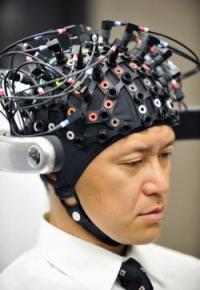
A different class of brain-scanning technology is being touted on the consumer market and in the media as a way for computers to read people’s minds without drilling into their skulls. It’s called electroencephalography, or EEG, and it involves headsets that press electrodes against the scalp. In an impressive 2010 TED Talk, Tan Le of the consumer EEG-headset company Emotiv Lifescience showed how someone can use her company’s EPOC headset to move objects on a computer screen.

Skeptics point out that these devices can detect only the crudest electrical signals from the brain itself, which is well-insulated by the skull and scalp. In many cases, consumer devices that claim to read people’s thoughts are in fact relying largely on physical signals like skin conductivity and tension of the scalp or eyebrow muscles.

Robert Oschler, a robotics enthusiast who develops apps for EEG headsets, believes the more sophisticated consumer headsets like the Emotiv EPOC may be the real deal in terms of filtering out the noise to detect brain waves. Still, he says, there are limits to what even the most advanced, medical-grade EEG devices can divine about our cognition. He’s fond of an analogy that he attributes to Gerwin Schalk, a pioneer in the field of invasive brain implants. The best EEG devices, he says, are “like going to a stadium with a bunch of microphones: You can’t hear what any individual is saying, but maybe you can tell if they’re doing the wave.” With some of the more basic consumer headsets, at this point, “it’s like being in a party in the parking lot outside the same game.”

It’s fairly safe to say that EEG headsets won’t be turning us into cyborgs anytime soon. But it would be a mistake to assume that we can predict today how brain-computer interface technology will evolve. Just last month, a team at Brown University unveiled a prototype of a low-power, wireless neural implant that can transmit signals to a computer over broadband. That could be a major step forward in someday making BCIs practical for everyday use. Meanwhile, researchers at Cornell last week revealed that they were able to use fMRI, a measure of brain activity, to detect which of four people a research subject was thinking about at a given time. Machines today can read our minds in only the most rudimentary ways. But such advances hint that they may be able to detect and respond to more abstract types of mental activity in the always-changing future.

http://www.ydr.com/living/ci_22800493/researchers-explore-connecting-brain-machines

Thailand to Remove Squat Toilets To Reduce Arthritis Cases

The Thai government has decided to discard the squat toilets prevalent in the country to mitigate the number of people suffering from squat-related arthritis.

The move comes after the government realised that people were suffering from arthritis due to squat toilets, which are present in 85 per cent of households and public facilities in the country.

The Public Health Ministry revealed that around six million natives, including expats, were suffering from osteoarthritis of the knee due to the bog-standard toilets. The ministry plans to replace them these with sit-downs, which are far easier on the knees.

The Deputy Minister of the concerned department, Cholanan Srikaew, suggested that the scrapping of the squat toilets will not merely help control arthritis cases in the country but will also generate more money via the tourism industry. The tourism industry accounts for seven percent of the country’s gross domestic product (GDP).

An unnamed source said, “Prolonged periods of squatting have been found to cause arthritis. It is hoped the new toilets will save a few more knees and boost tourism.”

With regards to Thailand’s tourism, the Tourism Authority of Thailand (TAT) expects tourism revenue from the European segment to increase by five to six percent this year.

Thailand receives 22 million tourists last year, according to a Ministry of Sports and Tourism report- a substantial hike of 16 percent over 2011. The European market saw an increase of 10 per cent in the same time period.

Squat loos are common in Asia and made headlines during Beijing 2008 when 500,000 foreign Olympic visitors and athletes complained that venues only had squat toilets.

http://www.ibtimes.co.uk/articles/447234/20130318/squat-loo-thailand-arthritis-tourism-toilet-remove.htm

Rare brain condition makes woman see everything upside down

bojana2_150313_blic_630bojana_150313_blic_630

Bojana Danilovic has what you might call a unique worldview. Due to a rare condition, she sees everything upside down, all the time.

The 28-year-old Serbian council employee uses an upside down monitor at work and relaxes at home in front of an upside down television stacked on top of the normal one that the rest of her family watches.

“It may look incredible to other people but to me it’s completely normal,” Danilovic told local newspaper Blic.

“I was born that way. It’s just the way I see the world.”

Experts from Harvard University and the Massachusetts Institute of Technology have been consulted after local doctors were flummoxed by the extremely unusual condition.

They say she is suffering from a neurological syndrome called “spatial orientation phenomenon,” Blic reports.

“They say my eyes see the images the right way up but my brain changes them,” Danilovic said.

“But they don’t really seem to know exactly how it happens, just that it does and where it happens in my brain.

“They told me they’ve seen the case histories of some people who write the way I see, but never someone quite like me.”

http://au.news.yahoo.com/thewest/a/-/world/16375095/rare-brain-condition-leaves-woman-seeing-world-upside-down/

Placebos Work Better for Nice People

placebo_pill

Having an agreeable personality might make you popular at work and lucky in love. It may also enhance your brain’s built-in painkilling powers, boosting the placebo effect.

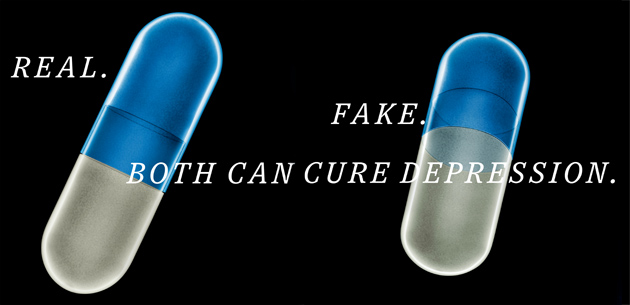
Researchers at the University of Michigan, the University of North Carolina and the University of Maryland administered standard personality tests to 50 healthy volunteers, identifying general traits such as resiliency, straightforwardness, altruism and hostility. Each volunteer then received a painful injection, followed by a placebo—a sham painkiller. The volunteers who were resilient, straightforward or altruistic experienced a greater reduction in pain from the placebo compared with volunteers who had a so-called angry hostility personality trait.

http://www.scientificamerican.com/article.cfm?id=placebos-work-better-for-nice-peopl

More HIV ‘cured’: first a baby, now 14 adults

dn23276-1_300
A drug-free life beckons for some people with HIV

Two weeks after the revelation that a baby has been “cured” of HIV, reports suggest that a similar treatment can cure some adults too. Early treatment seems crucial, but does not guarantee success.

Asier Sáez-Cirión of the Pasteur Institute’s unit for regulation of retroviral infections in Paris analysed 70 people with HIV who had been treated with antiretroviral drugs (ARVs) between 35 days and 10 weeks after infection – much sooner than people are normally treated.

All of the participants’ drug regimes had been interrupted for one reason or another. For example, some people had made a personal choice to stop taking the drugs, others had been part of a trial of different drug protocols.

Most of the 70 people relapsed when their treatment was interrupted, with the virus rebounding rapidly to pre-treatment levels. But 14 of them – four women and 10 men – were able to stay off of ARVs without relapsing, having taken the drugs for an average of three years.

The 14 adults still have traces of HIV in their blood, but at such low levels that their body can naturally keep it in check without drugs.

On average, the 14 adults have been off medication for seven years. One has gone 10-and-a-half years without drugs. “It’s not eradication, but they can clearly live without pills for a very long period of time,” says Sáez-Cirión.

Last week, a baby was reported to have been “functionally cured” of HIV after receiving a three-drug regime of ARVs almost immediately after birth. Sáez-Cirión warns that rapid treatment doesn’t work for everyone, but the new study reinforces the conclusion that early intervention is important.

“There are three benefits to early treatment,” says Sáez-Cirión. “It limits the reservoir of HIV that can persist, limits the diversity of the virus and preserves the immune response to the virus that keeps it in check.”

Further analysis confirmed that the 14 adults were not “super-controllers” – the 1 per cent of the population that are naturally resistant to HIV – since they lack the necessary protective genes. Also, natural controllers rapidly suppress their infections, whereas these 14 mostly had severe symptoms which led to their early treatment. “Paradoxically, doing badly helped them do better later,” says Sáez-Cirión.

The researchers are trying to identify additional factors that could explain why early intervention only works on some people, hopefully extending the scope for more functional cures.

“This whole area is fascinating, and we’ve been looking very closely at issues of early initiation of treatment, and the potential for functional cures,” says Andrew Ball, senior adviser on HIV/AIDS strategy at the World Health Organization in Geneva.

“The big challenge is identifying people very early in their infection,” says Ball, adding that many people resist testing because of the stigma and potential discrimination. “There’s a good rationale for being tested early, and the latest results may give some encouragement to do that,” he says.

Journal reference: PLoS Pathogens, DOI: 10.1371/journal.ppat.1003211

http://www.newscientist.com/article/dn23276-more-hiv-cured-first-a-baby-now-14-adults.html