Pee marks the spot

sn-mice

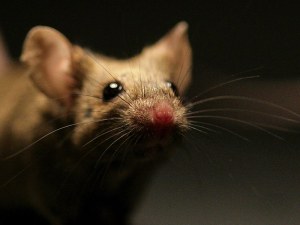
Human beings tend to avoid places that smell of urine. But to mice, there is something positively addictive about the scent; they like to go back to a spot where they found the excretions again and again. Now, researchers have discovered that this behavior is triggered by a single protein in the urine of male mice.

Mice use scent to mark their territory, advertise their social dominance, and convey information about their health and reproductive status. But these are usually volatile pheromones that disperse quickly, and it has remained unclear what exactly stimulates a female to be attracted to a specific male.

Previous research had shown that female laboratory mice often return to a place where they have come across cage bedding soiled by males. Now, researchers at the University of Liverpool in the United Kingdom have confirmed this. Female mice spent five times as much time in a place where they had encountered a dish with male urine than at a place where they encountered water. Just 10 minutes of exposure to the urine was enough for the mice to show this place preference even after 14 days.

However, if the mice were prevented from by a mesh screen touching the urine with their nose, the place seemed to lose its attractiveness. “That suggested that the story was not as simple as everybody assumed and volatile pheromones were not responsible,” says behavioral ecologist Jane Hurst, one of the authors of the study. By separating the urine into different fractions, the scientists showed that a protein called darcin that they had identified in 2005—and which mice can only detect if their noses touch the urine—is responsible for the frequent visits. Pure darcin, produced in cell culture in the lab, elicited the same reaction, the authors report online today in Science.

“This is a really compelling story,” says Lisa Stowers, a neuroscientist at the Scripps Research Institute in San Diego, California. “Mammals were thought to be much more complex, but this study shows that a single chemical can lead [them to act] in a certain way.” The study is “very simple and elegant,” she adds. But it also raises new questions. For instance: There are many other ways a mouse could learn to return to a certain place. “So what is the benefit of evolving this [special] mechanism?”

Hurst says that what fascinates her is that the pheromones induce learning in the mice. And the animals do not only learn to be attracted to the place where they encountered the darcin. “They learn the odor cues of that specific male and are then attracted to it,” Hurst says. “Being familiar with a scent really seems to be important for whether a female is interested in a male.” The reason, Hurst suggests, is that dominant males, who make attractive mates, tend to leave the most marks in a certain territory.

The researchers showed that male mice, too, are attracted to a place if they have encountered darcin there, probably to foster a behavior called countermarking. “If males come across another male’s scent mark, they put their own, fresher urine there,” Hurst explains. This could also be the reason why some laboratory strains seem to have lost the ability to produce darcin: Because laboratory mice are usually group-housed, they have been selected to be less aggressive, and not producing darcin could help reduce tensions.

http://news.sciencemag.org/sciencenow/2012/12/pee-marks-the-spot.html?ref=em

Thanks to Dr. Rajadhyaksha for bringing this to the attention of the It’s Interesting community.

The Sexxxtons, Mother-Daughter Porn Duo, Provoke Controversy

r-THE-SEXXXTON-large570

The erotic activities of a mother and daughter in Tampa, Fla., who have become an on-screen pornography duo, are pushing the boundaries of propriety and sparking a debate among some experts, even in an industry known for its taboos.

For the last year, Jessica, 56, and her 22-year-old daughter, Monica — known as the Sexxxtons — have been filming sex scenes with each other and non-related partners for their self-titled website. The duo, who like many in pornography do not use their last names, say that even though they will have sex with another person at the same time, they are not interacting with each other.

Their definition of sex may be strictly semantics to the average person, but it also may have legal merit, according to Randy Reep, a Florida-based criminal defense attorney who said that Florida law defines incest, in part, as penetration by one family member to another.

In addition, the right to make pornography is, for the most part, covered by the First Amendment, but the Sexxxtons still might face risks.  “Being involved in pornography in the South carries certain risks,” Reep told HuffPost.  “It’s not as liberal as in California.”

But the letter of the law and the spirir of the law can be two different things, and expert psychiatrist Dr. Carole Lieberman believes the Sexxxtons are guilty of “emotional incest.”

 “Even if they’re not having sex with each other, it has to be titillating to one or both of them, so it crosses the line since sexual arousal comes into the mix.”

Monica defends their work and says it was her idea to start the website.  “I enjoy the sex and I enjoy being with my mom,” she told The Huffington Post.  “During the scenes, I think about how we’re going to be filthy rich.”

Donna Mae Depola, a child sex abuse activist, however, believes that the Sexxxtons’ activities are potentially damaging even if they are consensual.

Depola’s book “The Twelve Tins” documents her reaction to discovering films that her dad made while having sex with her between ages 5 and 12.

“This might be even worse than my situation,” she told HuffPost. “I had no choice, but this mother is an adult and she is a mother and a mother is suppose to protect her daughter. Whether it was the daughter’s idea or not, someday this mother will regret this decision and the daughter will have such resentment that her mother agreed to her daughter’s request, that this appears to have long lasting damage.”

Depola insisted she is not judging them.

“I have no right to do that,” she said. “All I am saying is you can’t justify this behavior to anyone with half a brain. The mom has to stand up and face the truth: A mother does not have sex in the same bed that the daughter is in. Just plain and simple.”

Even though the Sexxxtons claim this is just business, New York-based therapist Silvia M. Dutchevici also believes there could be lasting damage.

“Psychologically, there will be scars for both women,” Dutchevici said. “One cannot perform sexual acts in front of one’s parent (or caretaker) without shame or guilt surfacing. Also, if there is a history of sexual abuse, these “scenes” will trigger some of the trauma.”

Porn actress and Huffington Post blogger Amber Peach has done her share of kinky sex scenes, but the Sexxxtons’ work is too much for her.

“I don’t care if they don’t touch each other or not, it’s got to be hurting something mentally. Some things are secret and most [adult] industry people understand that I think. This really has just left me speechless,” she told HuffPost by email. “I have a great relationship with my parents, and am very open with them, but shooting with them has and will never cross my mind.”

Incest has been called the universal taboo, but there are some sex experts who don’t believe the Sexxxtons are guilty of it — or that it is potentially damaging. 

Veronica Monet, a certified sexologist and anger management specialist, believes the Sexxxtons have handled their situation about as well as it can be.

“At first blush, it sounds like an incestuous enterprise but upon closer examination, I have to admit that both Monica and Jessica appear to enjoy a congenial, egalitarian and respectful relationship,” she told HuffPost. “I find their refusal to be shamed for their adult consensual choice, courageous and admirable. To their credit, they have maintained the sexual boundaries which would preclude this as being an overtly incestuous endeavor.”

Cora Emens, a Netherlands-based sex coach, said that their Jessica and Monica’s personal decisions are no one’s business, but that a mother and daughter sex scene is better in some ways than the typical girl-girl interaction.

“I’d rather see a mother and daughter interact in a sex scene than two women who are strangers and fighting for the attention of the camera,” she told HuffPost. “Whatever gets you off. Porn is all fantasy and let us all at least be free in our fantasy world. Whatever that world may be.”

Although the Sexxxtons’ story sparked controversy, research suggests that long-term porn success may not be in the cards, according to Nicole Prause, an assistant researcher at UCLA in the Department of Psychiatry who studies sexual arousal in response to porn.

“Research shows sexual acts between any parent and child leads most people to report feeling high levels of disgust, especially women, so the strong reaction to their films is unlikely to be seen as more acceptable over time,” she said. “Some researchers have suggested that erotic images online are so sexually compelling because of the novelty they provide. Since these type of interactions are so rare, and even rarely portrayed, I would expect many people who use erotic images on the internet to find them sexually arousing.”

For her part, Monica sees porn as an easy, fun way to make money, but she does have some fantasies she’d like to fulfill with her mom.

“We’ve never come across a father-son porn duo in real life,” she told HuffPost. “We tried to film a scene that was like that, but the guy they cast as the ‘Dad’ looked too much like the ‘Cockroach’ guy from that movie, ‘Men In Black’.”

http://www.huffingtonpost.com/2012/12/07/the-sexxxtons-mother-daughter-porn-duo_n_2258245.html?utm_hp_ref=weird-news

Diuretic Drug Offers Latest Hope for Autism Treatment

sn-autism


A drug used for decades to treat high blood pressure and other conditions has shown promise in a small clinical trial for autism. The drug, bumetanide, reduced the overall severity of behavioral symptoms after 3 months of daily treatment. The researchers say that many parents of children who received the drug reported that their children were more “present” and engaged in social interactions after taking it. The new findings are among several recent signs that treatments to address the social deficits at the core of autism may be on the horizon.

Several lines of evidence suggest that autism interferes with the neurotransmitter GABA, which typically puts a damper on neural activity. Bumetanide may enhance the inhibitory effects of GABA, and the drug has been used safely as a diuretic to treat a wide range of heart, lung, and kidney conditions. In the new study, researchers led by Yehezkel Ben-Ari at the Mediterranean Institute of Neurobiology in Marseille, France, recruited 60 autistic children between the ages of 3 and 11 and randomly assigned them to receive either a daily pill of bumetanide or a placebo. (Neither the children’s parents nor the researchers who assessed the children knew who received the actual drug.)

As a group, those who got bumetanide improved by 5.6 points on a 60-point scale that’s often used to assess behaviors related to autism, the researchers report today in Translational Psychiatry. That was enough to nudge the group average just under the cutoff for severe autism and into the mild to medium category. The study did not look directly at whether the drug improved all symptoms equally or some more than others. “We have some indications that the symptoms particularly ameliorated with bumetanide are the genuine core symptoms of autism, namely communication and social interactions,” Ben-Ari says. More work will be needed to verify that impression. Ben-Ari says his team is now preparing for a larger, multicenter trial in Europe.

The current study already looks interesting to some. “It’s enough to make me think about trying it in a few of my autism patients who haven’t responded to other interventions,” says Randi Hagerman, a pediatrician who studies neurodevelopmental disorders at the University of California, Davis. Social interactions tend to be reinforcing, Hagerman adds, so getting an autistic child to start interacting more can have a positive effect on subsequent brain development.

Other drugs have recently shown promise for autism. In September, Hagerman and colleagues reported that arbaclofen, a drug that stimulates a type of GABA receptor, reduced social avoidance in people with fragile X syndrome, a genetic disorder that shares many features with autism. Many researchers are also hopeful about clinical trials under way with drugs that block certain receptors for glutamate, the main neurotransmitter in the brain that excites neural activity. Results from those trials should come out next year.

All of this work, including the new study, suggests that drugs that reduce neural excitation by blocking glutamate or enhance inhibition by boosting GABA may be helpful for treating autism, says Elizabeth Berry-Kravis, a pediatric neurologist at Rush University in Chicago, Illinois, and a collaborator on the recent arbaclofen study. “There seems to be this imbalance between excitation and inhibition in people with autism.”

That’s a potentially game-changing insight. Now doctors can only prescribe drugs that treat individual symptoms of autism rather than the underlying cause of the disorder, Berry-Kravis says. Doctors often prescribe antipsychotic drugs to reduce irritability, for example, but those drugs don’t address the social and communication problems at the heart of the disorder. “It’s exciting that now we’re thinking about the underlying mechanisms and treating those.”

http://news.sciencemag.org/sciencenow/2012/12/diuretic-drug-offers-latest-hope.html

Stanford scientists advance thought-control computer cursor movement


Stanford researchers have designed the fastest, most accurate mathematical algorithm yet for brain-implantable prosthetic systems that can help disabled people maneuver computer cursors with their thoughts. The algorithm’s speed, accuracy and natural movement approach those of a real arm.


On each side of the screen, a monkey moves a cursor with its thoughts, using the cursor to make contact with the colored ball. On the left, the monkey’s thoughts are decoded with the use of a mathematical algorithm known as Velocity. On the right, the monkey’s thoughts are decoded with a new algorithm known as ReFITT, with better results. The ReFIT system helps the monkey to click on 21 targets in 21 seconds, as opposed to just 10 clicks with the older system.


When a paralyzed person imagines moving a limb, cells in the part of the brain that controls movement activate, as if trying to make the immobile limb work again.

Despite a neurological injury or disease that has severed the pathway between brain and muscle, the region where the signals originate remains intact and functional.

In recent years, neuroscientists and neuroengineers working in prosthetics have begun to develop brain-implantable sensors that can measure signals from individual neurons.

After those signals have been decoded through a mathematical algorithm, they can be used to control the movement of a cursor on a computer screen – in essence, the cursor is controlled by thoughts.

The work is part of a field known as neural prosthetics.

A team of Stanford researchers have now developed a new algorithm, known as ReFIT, that vastly improves the speed and accuracy of neural prosthetics that control computer cursors. The results were published Nov. 18 in the journal Nature Neuroscience in a paper by Krishna Shenoy, a professor of electrical engineering, bioengineering and neurobiology at Stanford, and a team led by research associate Dr. Vikash Gilja and bioengineering doctoral candidate Paul Nuyujukian.

In side-by-side demonstrations with rhesus monkeys, cursors controlled by the new algorithm doubled the performance of existing systems and approached performance of the monkey’s actual arm in controlling the cursor. Better yet, more than four years after implantation, the new system is still going strong, while previous systems have seen a steady decline in performance over time.

“These findings could lead to greatly improved prosthetic system performance and robustness in paralyzed people, which we are actively pursuing as part of the FDA Phase-I BrainGate2 clinical trial here at Stanford,” said Shenoy.

The system relies on a sensor implanted into the brain, which records “action potentials” in neural activity from an array of electrode sensors and sends data to a computer. The frequency with which action potentials are generated provides the computer important information about the direction and speed of the user’s intended movement.

The ReFIT algorithm that decodes these signals represents a departure from earlier models. In most neural prosthetics research, scientists have recorded brain activity while the subject moves or imagines moving an arm, analyzing the data after the fact. “Quite a bit of the work in neural prosthetics has focused on this sort of offline reconstruction,” said Gilja, the first author of the paper.

The Stanford team wanted to understand how the system worked “online,” under closed-loop control conditions in which the computer analyzes and implements visual feedback gathered in real time as the monkey neurally controls the cursor toward an onscreen target.

The system is able to make adjustments on the fly when guiding the cursor to a target, just as a hand and eye would work in tandem to move a mouse-cursor onto an icon on a computer desktop.

If the cursor were straying too far to the left, for instance, the user likely adjusts the imagined movements to redirect the cursor to the right. The team designed the system to learn from the user’s corrective movements, allowing the cursor to move more precisely than it could in earlier prosthetics.

To test the new system, the team gave monkeys the task of mentally directing a cursor to a target – an onscreen dot – and holding the cursor there for half a second. ReFIT performed vastly better than previous technology in terms of both speed and accuracy.

The path of the cursor from the starting point to the target was straighter and it reached the target twice as quickly as earlier systems, achieving 75 to 85 percent of the speed of the monkey’s arm.

“This paper reports very exciting innovations in closed-loop decoding for brain-machine interfaces. These innovations should lead to a significant boost in the control of neuroprosthetic devices and increase the clinical viability of this technology,” said Jose Carmena, an associate professor of electrical engineering and neuroscience at the University of California-Berkeley.

Critical to ReFIT’s time-to-target improvement was its superior ability to stop the cursor. While the old model’s cursor reached the target almost as fast as ReFIT, it often overshot the destination, requiring additional time and multiple passes to hold the target.

The key to this efficiency was in the step-by-step calculation that transforms electrical signals from the brain into movements of the cursor onscreen. The team had a unique way of “training” the algorithm about movement. When the monkey used his arm to move the cursor, the computer used signals from the implant to match the arm movements with neural activity.

Next, the monkey simply thought about moving the cursor, and the computer translated that neural activity into onscreen movement of the cursor. The team then used the monkey’s brain activity to refine their algorithm, increasing its accuracy.

The team introduced a second innovation in the way ReFIT encodes information about the position and velocity of the cursor. Gilja said that previous algorithms could interpret neural signals about either the cursor’s position or its velocity, but not both at once. ReFIT can do both, resulting in faster, cleaner movements of the cursor.

Early research in neural prosthetics had the goal of understanding the brain and its systems more thoroughly, Gilja said, but he and his team wanted to build on this approach by taking a more pragmatic engineering perspective. “The core engineering goal is to achieve highest possible performance and robustness for a potential clinical device,” he said.

To create such a responsive system, the team decided to abandon one of the traditional methods in neural prosthetics.

Much of the existing research in this field has focused on differentiating among individual neurons in the brain. Importantly, such a detailed approach has allowed neuroscientists to create a detailed understanding of the individual neurons that control arm movement.

But the individual neuron approach has its drawbacks, Gilja said. “From an engineering perspective, the process of isolating single neurons is difficult, due to minute physical movements between the electrode and nearby neurons, making it error prone,” he said. ReFIT focuses on small groups of neurons instead of single neurons.

By abandoning the single-neuron approach, the team also reaped a surprising benefit: performance longevity. Neural implant systems that are fine-tuned to specific neurons degrade over time. It is a common belief in the field that after six months to a year they can no longer accurately interpret the brain’s intended movement. Gilja said the Stanford system is working very well more than four years later.

“Despite great progress in brain-computer interfaces to control the movement of devices such as prosthetic limbs, we’ve been left so far with halting, jerky, Etch-a-Sketch-like movements. Dr. Shenoy’s study is a big step toward clinically useful brain-machine technology that has faster, smoother, more natural movements,” said James Gnadt, a program director in Systems and Cognitive Neuroscience at the National Institute of Neurological Disorders and Stroke, part of the National Institutes of Health.

For the time being, the team has been focused on improving cursor movement rather than the creation of robotic limbs, but that is not out of the question, Gilja said. Near term, precise, accurate control of a cursor is a simplified task with enormous value for people with paralysis.

“We think we have a good chance of giving them something very useful,” he said. The team is now translating these innovations to people with paralysis as part of a clinical trial.

This research was funded by the Christopher and Dana Reeve Paralysis Foundation, the National Science Foundation, National Defense Science and Engineering Graduate Fellowships, Stanford Graduate Fellowships, Defense Advanced Research Projects Agency (“Revolutionizing Prosthetics” and “REPAIR”) and the National Institutes of Health (NINDS-CRCNS and Director’s Pioneer Award).

Other contributing researchers include Cynthia Chestek, John Cunningham, Byron Yu, Joline Fan, Mark Churchland, Matthew Kaufman, Jonathan Kao and Stephen Ryu.

http://news.stanford.edu/news/2012/november/thought-control-cursor-111812.html

Thanks to Kebmodee for bringing this to the attention of the It’s Interesting community

Early therapy can change brains of kids with autism


As the number of children with autism has risen dramatically over the past couple of decades, experts have learned that the earlier a child gets diagnosed, the earlier specialized therapy can be initiated, which can significantly improve outcomes.

Now researchers have been able to show that a particular type of behavioral therapy called the Early Start Denver Model (ESDM) not only improves autism symptoms, but actually normalizes brain activity and improves social behavior.

Autism is a neurodevelopmental disorder that starts to become very apparent around age 3. The main signs and symptoms of autism involve communication, social interactions and repetitive behaviors. According to the latest statistics from the U.S. Centers for Disease Control and Prevention, one in 88 children currently is diagnosed with autism, including one in 54 boys.

“Early intervention alters the trajectory of the brain and social development in children with autism,” says Geraldine Dawson, the lead study author who developed the ESDM therapy along with study co-author Sally Rogers.

Dawson was a researcher at the University of Washington when she helped devise ESDM; she’s now the chief science officer for the advocacy and research group Autism Speaks and a professor at the University of North Carolina. Rogers is a professor and researcher at the University of California Davis MIND Institute.

ESDM therapy uses teaching methods from ABA ,or applied behavioral analysis, the traditional one-on-one interaction between a child and the therapist.

But rather than sitting at a desk next to the child — where a teacher or therapist breaks down complex tasks into small components and gives tangible reinforcements — children receiving ESDM are sitting on the floor, playing with their therapist or parents.

It can be done just about anywhere, and Dawson says the play-based method of engaging a child helps him or her develop a social relationship.

The study began with 48 children in Seattle and Sacramento, California, who were between who were between 1 1/2 and 2 1/2 years old. Half of the children received a total of 20 hours of ESDM therapy over five days a week.

But since parents can be taught the methods in just a few hours, they could engage their children using the ESDM method as well. The other half of the toddlers received community-based interventions, which included in some individual therapist sessions and some day care-based sessions. The number of hours spent with therapists was the same in both groups.

Three years ago, Rogers and Dawson published their first findings from this study and found that children receiving ESDM therapy increased their IQ and language skills three times more than children in the community-intervention group.

That in itself was “very significant,” says Dr. Thomas Insel, director of the National Institute of Mental Health, because it proved that early detection and intervention leads to improved outcomes.

In their latest study, published Friday in the Journal of the American Academy of Child & Adolescent Psychiatry, Rogers and Dawson show what parts of a child’s brain are active after two years of therapy, compared to typically developing children, using an EEG (electroencephalogram). In an EEG, electrical activity in different parts of the brain is measured using electrodes that attached to the child’s head.

“If the child wiggles too much, the data is not interpretable,” says Dawson.

In the end, researchers could only get 60% of the children to sit still enough to get usable EEG results, she says, but that was true in both the group of children with autism and those without.

Fifteen children in the EDSM group, 14 in the community intervention group and 17 typically developing children underwent EEGs while looking at pictures of faces (social stimuli) vs. pictures of toys (nonsocial stimuli).

Technicians measuring the brain activity had no idea which children had autism and which did not.

“Children who received ESDM now showed a normal (brain) response, identical to typical 4-year-olds,” Dawson tells CNN. That wasn’t the case with most children who didn’t have ESDM therapy.

Babies are naturally drawn to people and faces, and their brains show greater responses when they look at a face, compared to an object or a toy, Dawson says.

But in young and even older children with autism, the opposite happens. The part of the brain that should be responding to a face or social activity doesn’t light up, but the part of the brain that responds to objects is more active.

Insel says this study shows that the ESDM form of therapy “not only changes behavior, it changes the brain.”

The exact cause, or more precisely causes, of autism are unknown and there is no cure.

Parents and pediatricians are urged to look for early signs of autism including: little or no eye contact, lack of or delay of spoken language, repetitive use of language and behaviors and persistent fixation on parts of objects.

Since 2007, the American Academy of Pediatrics recommends that pediatricians screen 18- and 24-month-old toddlers for signs of autism.

When something is wrong in the brain — not just in autism, but also in diseases like Alzheimer’s and Parkinson’s — what’s causing the disease is occurring much earlier than when symptoms appear, Insel explains.

Based on the new findings, perhaps using EEGs to measure this type of brain activity could be a biomarker for autism, he says. A biomarker is a distinct characteristic that indicates a particular condition.

Measuring a baby’s brain activity as early as 3 and 6 months could identify changes in the brain before changes in behavior are noticed, he says, and therapy could begin even earlier.

The ESDM model could be applied as early as 12 months, say Dawson and Rogers.

More research will probably have to be done to confirm the biomarker. So until there is a definitive test for diagnosing autism, Dawson says this it’s even more important that pediatricians screen children for autism as early as possible.

“The average age of diagnosis is still 4 and 5 and even older in minority groups,” she says. “We really need to close the gap.”

Autism Speaks has many tools on its website to help parents see what a child with autism looks like compared to a typically developing child. There are also many tool kits to help families of children with autism.

http://www.cnn.com/2012/10/31/health/autism-therapy-brain/index.html?hpt=hp_t3

Live shark mysteriously found on California golf course 4 miles from the coast

It wasn’t raining cats and dogs at a California golf course on Monday – it was raining sharks.

A live leopard shark was discovered thrashing about on the grass at around 4pm at the San Juan Hills golf club in San Juan Capistrano, which is four miles from the coast.

The sea creature was spotted by a startled golf club marshall near the 12th tee box, where a group of golfers had just been playing.

‘Shark falling from the sky, kind of odd,’ said Melissa McCormack, director of club operations at San Juan Hills.

Ms McCormack believes the two-foot-long shark may have been scooped out of the ocean by a predatory bird and dropped onto the golf course.

The creature had two puncture wounds near its dorsal fin and was covered in blood when it was found.

The staffer who came upon the shark picked it up, put it in the back of his golf cart and drove it to the clubhouse.

‘It was just wriggling around. He needed to get to the ocean right away,’ Ms McCormack told The Capistrano Dispatch. ‘Honestly, this is the weirdest thing that’s happened here.’

Golf club: A group of golfers had been playing the tee just before the mysterious shark was discovered at the club, pictured 
Map: The creature had two puncture wounds near its dorsal fin and was covered in blood when it was found at the 12th tee


She and the marshall, Bryan Stizer, gave the shark a quick dip in a bucket of fresh water and salt, as they weren’t sure if the fish would survive if placed in a tank of fresh water.

They then drove the shark out to the nearby ocean.

Still alive, the shark was dropped back into the sea at Baby Beach near Dana Point.

‘I thought he was dead,’ Mr Stizer told The Dispatch.

‘When I dropped him into the water, he just lied (sic) there for a few seconds, but then he did a twist and shot off into the water.’

Leopard sharks, which are light bright in colour with black spots, are a common species in ocean waters around San Juan Capistrano.

Read more: http://www.dailymail.co.uk/news/article-2222473/Live-SHARK-mysteriously-drops-California-golf-course.html#ixzz2AJoHhhh0

California woman breastfeeds her dog

A California mom who couldn’t breastfeed her children says she gets maternal satisfaction by breastfeeding her pet dog.

In an interview with the U.K. edition of Closer magazine, Terri Graham, 44, said nursing her pug, Spider, makes her feel like a better mom.

She told the magazine she was devastated when she couldn’t breastfeed daughter Leesa, now 9, and son Lucas, now 2.

She said Spider developed a taste for her breast milk in 2010, after he licked the nipple of a bottle she had pumped to feed baby Lucas.

“People might say I’m a freak, but having Spider suckle on my boob means I finally feel complete and a better mother,” Lucas is quoted as saying in the article, which appears in the Oct. 20 issue of the magazine, under the heading “Outrageous Mum.”

And Spider gets something out of it, too, she said — nutrition and love.

http://cnews.canoe.ca/CNEWS/WeirdNews/2012/10/19/20294376.html

Scientists discover gene that controls striping pattern on cats

Scientists say they’ve found the gene that sets the common tabby pattern – stripes or blotches.

It’s one of several genes that collaborate to create the distinctive design of a cat’s coat, and it’s the first of the pattern genes to be identified.

Cats with narrow stripes, the so-called “mackerel” pattern, have a working copy of the gene. But if a mutation turns the gene off, the cat ends up with the blotchy “classic” pattern, researchers reported online last week in the journal Science.

It’s called “classic” because “cat lovers really like the blotched pattern,” said one of the authors, Greg Barsh. He works at both Stanford University and the HudsonAlpha Institute of Biotechnology in Huntsville, Ala.

The research team, which included scientists from the National Cancer Institute, examined DNA from wild cats in California to identify the gene.

They also found that a mutation in the same gene produces the blotches and stripes of the rare “king” cheetah, rather than the spots most cheetahs have.

Leslie Lyons, a cat geneticist who studies coat color traits at the University of California, Davis, but didn’t participate in the new work, agreed that the research has identified the tabby’s stripes-versus-blotches gene. She noted that mysteries remain, such as just what genetic machinery gives a tabby spots.

Seagull steals camera and captures sunset over San Francisco Bay


French tourist Nathalie Rollandin was filming the sunset from the beach when the bird snatched her GoPro video camera and flew out over the water.

Luckily for Ms Rollandin, the gull chose to land twenty seconds later on a walkway before dropping the camera. After a few pecks at it, the bird appears to lose interest in its plunder and flies off into the sunset.

After managing to track down her camera – intact and still recording outside a yacht club – Ms Rollardin posted the bird’s footage on YouTube, describing it as “a San Francisco sunset I will hardly forget”.

http://www.telegraph.co.uk/earth/wildlife/9550107/Seagull-steals-camera-and-captures-sunset-over-San-Francisco-Bay.html

Birds hold funerals for the dead


When western scrub jays encounter a dead bird, they call out to one another and stop foraging.

The jays then often fly down to the dead body and gather around it, scientists have discovered.

The behaviour may have evolved to warn other birds of nearby danger, report researchers in California, who have published the findings in the journal Animal Behaviour.

The revelation comes from a study by Teresa Iglesias and colleagues at the University of California, Davis, US.

They conducted experiments, placing a series of objects into residential back yards and observing how western scrub jays in the area reacted.

The objects included different coloured pieces of wood, dead jays, as well as mounted, stuffed jays and great horned owls, simulating the presence of live jays and predators.

The jays reacted indifferently to the wooden objects.

But when they spied a dead bird, they started making alarm calls, warning others long distances away.

The jays then gathered around the dead body, forming large cacophonous aggregations. The calls they made, known as “zeeps”, “scolds” and “zeep-scolds”, encouraged new jays to attend to the dead.

The jays also stopped foraging for food, a change in behaviour that lasted for over a day.

When the birds were fooled into thinking a predator had arrived, by being exposed to a mounted owl, they also gathered together and made a series of alarm calls.

They also swooped down at the supposed predator, to scare it off. But the jays never swooped at the body of a dead bird.

The birds also occasionally mobbed the stuffed jays; a behaviour they are known to do in the wild when they attack competitors or sick birds.

The fact that the jays didn’t react to the wooden objects shows that it is not the novelty of a dead bird appearing that triggers the reaction.

The results show that “without witnessing the struggle and manner of death”, the researchers write, the jays see the presence of a dead bird as information to be publicly shared, just as they do the presence of a predator.

Spreading the message that a dead bird is in the area helps safeguard other birds, alerting them to danger, and lowering their risk from whatever killed the original bird in the first place, the researchers say.

Other animals are known to take notice of their dead.

Giraffes and elephants, for example, have been recorded loitering around the body of a recently deceased close relative, raising the idea that animals have a mental concept of death, and may even mourn those that have passed.

http://www.bbc.co.uk/nature/19421217