The Virtual Therapist

_67807883_face_research

_67807877_virtualshrink

Ellie is a creation of ICT, and could serve as an important diagnostic and therapeutic tool for veterans with Post-Traumatic Stress Disorder.

By Alastair Leithead
BBC News, Los Angeles

The University of Southern California’s Institute for Creative Technologies is leading the way in creating virtual humans. The result may produce real help for those in need.

The virtual therapist sits in a big armchair, shuffling slightly and blinking naturally, apparently waiting for me to get comfortable in front of the screen.

“Hi, I’m Ellie,” she says. “Thanks for coming in today.”

She laughs when I say I find her a little bit creepy, and then goes straight into questions about where I’m from and where I studied.

“I’m not a therapist, but I’m here to learn about people and would love to learn about you,” she asks. “Is that OK?”

Ellie’s voice is soft and calming, and as her questions grow more and more personal I quickly slip into answering as if there were a real person in the room rather than a computer-generated image.

“How are you at controlling your temper?” she probes. “When did you last get into an argument?”

With every answer I’m being watched and studied in minute detail by a simple gaming sensor and a webcam.

How I smile, which direction I look, the tone of my voice, and my body language are all being precisely recorded and analysed by the computer system, which then tells Ellie how best to interact with me.

“Wizard of Oz mode” is how researcher Louis-Philippe Morency describes this experiment at the University of Southern California’s Institute for Creative Technologies (ICT).

In the next room his team of two are controlling what Ellie says, changing her voice and body language to get the most out of me.

Real people come in to answer Ellie’s questions every day as part of the research, and the computer is gradually learning how to react in every situation.

It is being taught how to be human, and to respond as a doctor would to the patients’ cues.

Soon Ellie will be able to go it alone. That opens up a huge opportunity for remote therapy sessions online using the knowledge of some of the world’s top psychologists.

But Dr Morency doesn’t like the expression “virtual shrink”, and doesn’t think this method will replace flesh-and-blood practitioners.

“We see it more as being an assistant for the clinician in the same way you take a blood sample which is analysed in a lab and the results sent back to the doctor,” he said.

The system is designed to assess signs of depression or post-traumatic stress, particularly useful among soldiers and veterans.

“We’re looking for an emotional response, or perhaps even any lack of emotional response,” he says.

“Now we have an objective way to measure people’s behaviour, so hopefully this can be used for a more precise diagnosis.”

The software allows a doctor to follow a patient’s progress over time. It objectively and scientifically compares sessions.

“The problem we have, particularly with the current crisis in mental health in the military, is that we don’t have enough well trained providers to handle the problem,” says Skip Rizzo, the associate director for medical virtual reality at the ICT.

“This is not a replacement for a live provider, but it might be a stop-gap that helps to direct a person towards the kind of care they might need.”

The centre does a lot of work with the US military, which after long wars in Iraq and Afghanistan has to deal with hundreds of thousands of troops and veterans suffering from various levels of post-traumatic stress disorder.

“We have an issue in the military with stigma and a lot of times people feel hesitant talking about their problems,” he says. A virtual counselling tool can alleviate some of this reluctance.

“We see this as a way for service members or veterans to talk openly and explore their issues.”

The whole lab is running experiments with virtual humans. To do so, it blends a range of technologies and disciplines such as movement sensing and facial recognition.

Dr Morency has won awards for his work into the relationship between psychology and minute physical movements in the face.

“People who are anxious fidget with their hands more, and people who are distressed often have a shorter smile with less intensity. People who are depressed are looking away a lot more,” he says.

Making computer-generated images appear human isn’t easy, but if believable they can be powerful tools for teaching and learning. To that end, the lab is involved in several different projects to test the limits and potential of virtual interactions.

In the lab’s demonstration space a virtual soldier sits behind a desk and responds to a disciplinary scenario as part of officer training.

The team have even built a Wild West style saloon, complete with swinging doors and bar.

Full-size characters appear on three projection screens and interact with a real person walking in, automatically responding to questions and asking their own to play out a fictional scenario.

Downstairs, experiments are creating 3D holograms of a human face.

Throughout the building, the work done is starting to blur the lines between the real world and the virtual world.

And the result just may be real help for humans who need it.

http://www.bbc.co.uk/news/magazine-22630812

Many thanks to Jody, for bringing this to the attention of the It’s Interesting community.
School baseball team lifts car to free girl pinned beneath vehicle after mom accidentally backs over her

valley-high-school-baseball-309x184

Sixteen members of a Northern California high school baseball team ran from a practice to save a 16-year-old girl who was pinned under a car, working together to lift it off her while their coach pulled her to safety.

The girl, a student visiting Valley High School in Elk Grove on Wednesday afternoon, was pinned under the car when her mother accidentally backed over her after dropping her off in the school parking lot, Sacramento police said told KCRA-TV.

The team, in the middle of their last practice of the season, heard her cries for help and ran to her.

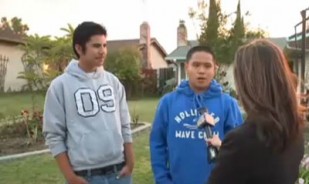
“We all just ran out there as a team,” varsity coach James Millholland told the TV station. “There was no one really saying much. The guys just got around the car and then everyone just lifted it up.”

Players said it wasn’t difficult to lift the four-door sedan off the girl while their coach pulled her out.

“With all the teamwork we had going on it didn’t feel heavy,” said player Sukhminder Gill. “It felt like we could pick anything up right now. The adrenalin was pumping up.”

The girl, whose name has not been released, was home from the hospital Thursday. Her exact injuries were not clear, but she’s expected to recover.

Players said it was a satisfying way to help finish their season.

“I felt like we were heroes,” Ysidro Castro said. “We did something that actually saved the day.”

http://www.thestar.com/news/world/2013/05/10/school_baseball_team_lifts_car_to_free_16yearold_girl.html

Blackbird hitches a ride atop a red-tailed hawk

Landing On A Raptor

Brave Little Balckbird

These images show a red-winged blackbird standing on the back of a red-tailed hawk, looking as if it’s catching a ride to another destination. The series of images were captured recently by photographer Eric Dugan at Napa-Sonoma Marshes Wildlife Area in Northern California. They first appeared in a San Francisco Chronicle story written by outdoors columnist Tom Stienstra.

Dugan described the event:

“I was exploring the wildlife refuge and heard the screech of a red-tailed hawk, loud and repeated. I scanned the sky but didn’t see anything at first. Then, in the distance, I saw a young red-tailed hawk sitting on a telephone pole and the red-winged blackbirds were jumping on and off its back and head, apparently to drive it away from a nesting area.

“I immediately stopped, changed to my long lens, and set up my camera in anticipation for the show. As I walked closer, I anticipated that the hawk would take flight and the blackbirds would pursue it, to drive it out of their territory. I raised the camera and the blackbird actually landed on the hawk multiple times.

“The small bird was so far more maneuverable in flight that all the hawk could do was tolerate it and fly away.”

Dugan stated via email that the photos “are 100 percent legit” and that his only edits were exposure- and shadow-related since lighting was harsh at certain points because of the bright sunshine.

“I went back to the same spot a few days later hoping lightning would strike twice,” Dugan said. “But the red-tailed hawks were hunting way off in the distance.”

His final remark: “Red-winged blackbirds are fearless.”

http://www.grindtv.com/outdoor/nature/post/blackbird-hitches-a-ride-atop-a-red-tailed-hawk/

Thanks to Ray Gaudette for bringing this to the attention of the It’s Interesting community.

New Study Ties Autism Risk to Creases in Placenta

placenta

After most pregnancies, the placenta is thrown out, having done its job of nourishing and supporting the developing baby.

But a new study raises the possibility that analyzing the placenta after birth may provide clues to a child’s risk for developing autism. The study, which analyzed placentas from 217 births, found that in families at high genetic risk for having an autistic child, placentas were significantly more likely to have abnormal folds and creases.

“It’s quite stark,” said Dr. Cheryl K. Walker, an obstetrician-gynecologist at the Mind Institute at the University of California, Davis, and a co-author of the study, published in the journal Biological Psychiatry. “Placentas from babies at risk for autism, clearly there’s something quite different about them.”

Researchers will not know until at least next year how many of the children, who are between 2 and 5, whose placentas were studied will be found to have autism. Experts said, however, that if researchers find that children with autism had more placental folds, called trophoblast inclusions, visible after birth, the condition could become an early indicator or biomarker for babies at high risk for the disorder.

“It would be really exciting to have a real biomarker and especially one that you can get at birth,” said Dr. Tara Wenger, a researcher at the Center for Autism Research at Children’s Hospital of Philadelphia, who was not involved in the study.

The research potentially marks a new frontier, not only for autism, but also for the significance of the placenta, long considered an after-birth afterthought. Now, only 10 percent to 15 percent of placentas are analyzed, usually after pregnancy complications or a newborn’s death.

Dr. Harvey J. Kliman, a research scientist at the Yale School of Medicine and lead author of the study, said the placenta had typically been given such little respect in the medical community that wanting to study it was considered equivalent to someone in the Navy wanting to scrub ships’ toilets with a toothbrush. But he became fascinated with placentas and noticed that inclusions often occurred with births involving problematic outcomes, usually genetic disorders.

He also noticed that “the more trophoblast inclusions you have, the more severe the abnormality.” In 2006, Dr. Kliman and colleagues published research involving 13 children with autism, finding that their placentas were three times as likely to have inclusions. The new study began when Dr. Kliman, looking for more placentas, contacted the Mind Institute, which is conducting an extensive study, called Marbles, examining potential causes of autism.

“This person came out of the woodwork and said, ‘I want to study trophoblastic inclusions,’ ” Dr. Walker recalled. “Now I’m fairly intelligent and have been an obstetrician for years and I had never heard of them.”

Dr. Walker said she concluded that while “this sounds like a very smart person with a very intriguing hypothesis, I don’t know him and I don’t know how much I trust him.” So she sent him Milky Way bar-size sections of 217 placentas and let him think they all came from babies considered at high risk for autism because an older sibling had the disorder. Only after Dr. Kliman had counted each placenta’s inclusions did she tell him that only 117 placentas came from at-risk babies; the other 100 came from babies with low autism risk.

She reasoned that if Dr. Kliman found that “they all show a lot of inclusions, then maybe he’s a bit overzealous” in trying to link inclusions to autism. But the results, she said, were “astonishing.” More than two-thirds of the low-risk placentas had no inclusions, and none had more than two. But 77 high-risk placentas had inclusions, 48 of them had two or more, including 16 with between 5 and 15 inclusions.

Dr. Walker said that typically between 2 percent and 7 percent of at-risk babies develop autism, and 20 percent to 25 percent have either autism or another developmental delay. She said she is seeing some autism and non-autism diagnoses among the 117 at-risk children in the study, but does not yet know how those cases match with placental inclusions.

Dr. Jonathan L. Hecht, associate professor of pathology at Harvard Medical School, said the study was intriguing and “probably true if it finds an association between these trophoblast inclusions and autism.” But he said that inclusions were the placenta’s way of responding to many kinds of stress, so they might turn out not to be specific enough to predict autism.

Dr. Kliman calls inclusions a “check-engine light, a marker of: something’s wrong, but I don’t know what it is.”

That’s how Chris Mann Sullivan sees it, too. Dr. Sullivan, a behavioral analyst in Morrisville, N.C., was not in the study, but sent her placenta to Dr. Kliman after her daughter Dania, now 3, was born. He found five inclusions. Dr. Sullivan began intensive one-on-one therapy with Dania, who has not been given a diagnosis of autism, but has some relatively mild difficulties.

“What would have happened if I did absolutely nothing, I’m not sure,” Dr. Sullivan said. “I think it’s a great way for parents to say, ‘O.K., we have some risk factors; we’re not going to ignore it.’ ”

Thanks to Dr. Rajadhyaksha for bringing this to the attention of the It’s Interesting community.

Largest psychiatric genetic study in history shows a common genetic basis that underlies 5 types of mental disorders

Protein_CACNA1C_PDB_2be6
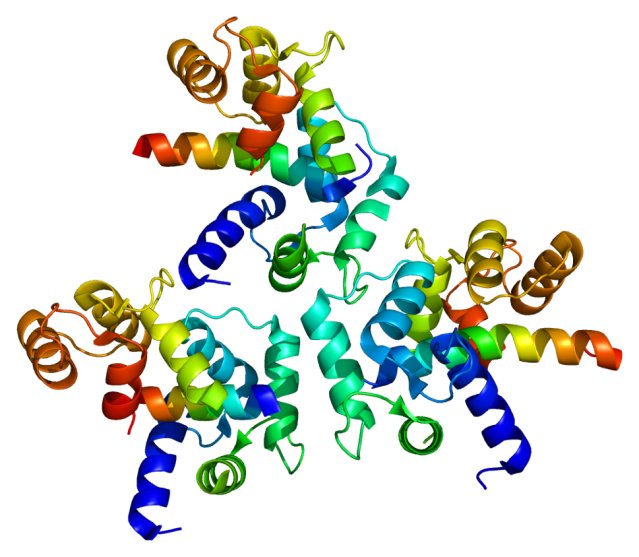
Structure of the CACNA1C gene product, a calcium channel named Cav1.2, which is one of 4 genes that has now been found to be genetically held in common amongst schizophrenia, bipolar disorder, autism, major depression and attention deficit hyperactivity disoder. Groundbreaking work on the role of this protein on anxiety and other forms of behavior related to mental illness has previously been established in the Rajadhyaksha laboratory at Weill Cornell Medical Center.
http://weill.cornell.edu/research/arajadhyaksha/

http://www.ncbi.nlm.nih.gov/pmc/articles/PMC3481072/
http://www.ncbi.nlm.nih.gov/pmc/articles/PMC3192195/
http://www.ncbi.nlm.nih.gov/pmc/articles/PMC3077109/

From the New York Times:
The psychiatric illnesses seem very different — schizophrenia, bipolar disorder, autism, major depression and attention deficit hyperactivity disorder. Yet they share several genetic glitches that can nudge the brain along a path to mental illness, researchers report. Which disease, if any, develops is thought to depend on other genetic or environmental factors.

Their study, published online Wednesday in the Lancet, was based on an examination of genetic data from more than 60,000 people worldwide. Its authors say it is the largest genetic study yet of psychiatric disorders. The findings strengthen an emerging view of mental illness that aims to make diagnoses based on the genetic aberrations underlying diseases instead of on the disease symptoms.

Two of the aberrations discovered in the new study were in genes used in a major signaling system in the brain, giving clues to processes that might go awry and suggestions of how to treat the diseases.

“What we identified here is probably just the tip of an iceberg,” said Dr. Jordan Smoller, lead author of the paper and a professor of psychiatry at Harvard Medical School and Massachusetts General Hospital. “As these studies grow we expect to find additional genes that might overlap.”

The new study does not mean that the genetics of psychiatric disorders are simple. Researchers say there seem to be hundreds of genes involved and the gene variations discovered in the new study confer only a small risk of psychiatric disease.

Steven McCarroll, director of genetics for the Stanley Center for Psychiatric Research at the Broad Institute of Harvard and M.I.T., said it was significant that the researchers had found common genetic factors that pointed to a specific signaling system.

“It is very important that these were not just random hits on the dartboard of the genome,” said Dr. McCarroll, who was not involved in the new study.

The work began in 2007 when a large group of researchers began investigating genetic data generated by studies in 19 countries and including 33,332 people with psychiatric illnesses and 27,888 people free of the illnesses for comparison. The researchers studied scans of people’s DNA, looking for variations in any of several million places along the long stretch of genetic material containing three billion DNA letters. The question: Did people with psychiatric illnesses tend to have a distinctive DNA pattern in any of those locations?

Researchers had already seen some clues of overlapping genetic effects in identical twins. One twin might have schizophrenia while the other had bipolar disorder. About six years ago, around the time the new study began, researchers had examined the genes of a few rare families in which psychiatric disorders seemed especially prevalent. They found a few unusual disruptions of chromosomes that were linked to psychiatric illnesses. But what surprised them was that while one person with the aberration might get one disorder, a relative with the same mutation got a different one.

Jonathan Sebat, chief of the Beyster Center for Molecular Genomics of Neuropsychiatric Diseases at the University of California, San Diego, and one of the discoverers of this effect, said that work on these rare genetic aberrations had opened his eyes. “Two different diagnoses can have the same genetic risk factor,” he said.

In fact, the new paper reports, distinguishing psychiatric diseases by their symptoms has long been difficult. Autism, for example, was once called childhood schizophrenia. It was not until the 1970s that autism was distinguished as a separate disorder.

But Dr. Sebat, who did not work on the new study, said that until now it was not clear whether the rare families he and others had studied were an exception or whether they were pointing to a rule about multiple disorders arising from a single genetic glitch.

“No one had systematically looked at the common variations,” in DNA, he said. “We didn’t know if this was particularly true for rare mutations or if it would be true for all genetic risk.” The new study, he said, “shows all genetic risk is of this nature.”

The new study found four DNA regions that conferred a small risk of psychiatric disorders. For two of them, it is not clear what genes are involved or what they do, Dr. Smoller said. The other two, though, involve genes that are part of calcium channels, which are used when neurons send signals in the brain.

“The calcium channel findings suggest that perhaps — and this is a big if — treatments to affect calcium channel functioning might have effects across a range of disorders,” Dr. Smoller said.

There are drugs on the market that block calcium channels — they are used to treat high blood pressure — and researchers had already postulated that they might be useful for bipolar disorder even before the current findings.

One investigator, Dr. Roy Perlis of Massachusetts General Hospital, just completed a small study of a calcium channel blocker in 10 people with bipolar disorder and is about to expand it to a large randomized clinical trial. He also wants to study the drug in people with schizophrenia, in light of the new findings. He cautions, though, that people should not rush out to take a calcium channel blocker on their own.

“We need to be sure it is safe and we need to be sure it works,” Dr. Perlis said.

The Super Supercapacitor: Graphene super capacitor could make batteries obsolete

A Feb. 21, 2013 article in Rewire reports on a breakthrough in power storage that hold the promise to change the world. Researchers at UCLA have found a way to create what is in effect a super capacitor that can be charged quickly and will hold more electricity than standard batteries. What’s more, it is made with Graphene, a simply carbon polymer that, unlike batteries that have toxic metals in them, is environmentally benign and is not only biodegradable but compostable.

The researchers expect that the manufacturing process for the Graphene super capacitor can be refined for mass production.

The real world applications of an energy storage device that can be charged quickly and can hold as much if not more electricity as batteries is mind blowing.

For instance, electronic devices such as cell phones and tablet computers can be charged in seconds and not for hours and would hold a charge for longer than devices with standard batteries. This will diminish those annoying instances when one’s device suddenly goes dead for lack of energy.

Eventually the technology can be scaled up for electric cars or storage devices for wind turbines and solar collectors. Currently it takes hours to charge up an electric car. Such vehicles would become more viable if one can “refuel” them as quickly as one can a gasoline powered car.

This is all predicated on the notion that the technology lives up to its promise and doesn’t have a flaw, as yet uncovered, that will undermine it. In the meantime the UCLA researchers are looking for an industrial partner to build their super capacitor units on an industrial scale.

http://www.examiner.com/article/graphene-super-capacitor-could-make-batteries-obsolete

Drunk Mice Sober Up Fast After Nanoparticle Injection

enzymes
Enzymes: Three enzymes are combined with a DNA scaffold along with their enzymatic inhibitors, leading to a triple-compound architecture. A thin polymer is grown around the enzymes, encapsulating them in a sort of nano-pill. Enzymes working in close proximity ensures they can clean up after each other’s toxic byproducts.

Multiple enzymes delivered in a nanocapsule could work as an alcohol antidote, reducing blood alcohol levels and preventing liver damage.

A new nanostructured enzyme complex can lower blood alcohol levels in intoxicated mice, according to a new study. The nano-pill, which assembles and encapsulates three types of enzymes, could work as a type of alcohol antidote. It also suggests that this unique protein-tailoring method could be used for lots of ailments.

Enzymes are proteins that spark a whole host of biological processes, but many can only work when they are in specific places in a cell, or when they are accompanied by other enzymes. Proper positioning speeds up chemical reactions, and it mitigates the potentially nasty byproducts of some of those reactions. Researchers have been trying to use enzymes as drugs for a long time, but it has been difficult to produce the right combinations, meaning they might not function properly or they might be rejected by the body.

After you drink alcohol, it loiters in your bloodstream until enzymes produced in the liver can break it down. But this takes the liver some time, and meanwhile, you’re intoxicated. This new enzyme injection does the same job much quicker, helping the liver break down alcohol and thus sobering up a tipsy mouse in a hurry. This also helps protect the hard-working liver from damage.

Researchers in California packed up complementary enzymes in a nano-capsule, producing what basically amounts to a tiny enzyme pill. The capsule coating, made of a superthin polymer, keeps the enzymes together and protects them from breaking down in the body.

Led by Yunfeng Lu, a chemical and biomolecular engineering professor at UCLA, researchers injected mice with three enzymes related to the breakdown of sugars, and after this worked, they tried it with two enzymes related to the breakdown of alcohol, alcohol oxidase (AOx) and catalase. They wanted to test the enzymes as both an intoxication preventive and a treatment.

When mice were fed a diet of alcohol and the nano-capsule at the same time, their blood alcohol concentrations were greatly reduced within 30-minute increments, compared to mice that were fed just alcohol or alcohol plus one of the enzymes. The team also tested it on drunk mice, and found the treatment greatly lowered yet another enzyme, alanine transaminase, which is a biomarker for liver damage.

“Nanocomplexes containing alcohol oxidase and catalase could reduce blood alcohol levels in intoxicated mice, offering an alternative antidote and [preventive treatment] for alcohol intoxication,” the authors write. The paper appears in Nature Nanotechnology.

http://www.popsci.com/science/article/2013-02/drunk-mice-sober-after-nanoparticle-injection

Drugs to enhance massage

massage

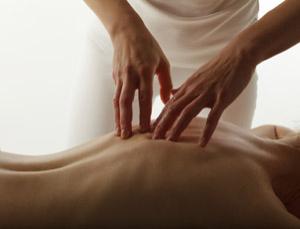
Nerves dedicated to creating these feelings have been identified and artificially stimulated in mice, leading to hope that the work could aid the development of drugs that relieve pain or stress.

Some nerves rapidly transmit sensations of touch or pain to the brain, but others work much more slowly. These C-tactile fibres, as they are known in humans, are found under hairy skin and respond to stroking.

David Anderson at the California Institute of Technology in Pasadena and colleagues used calcium imaging to identify similar bundles of nerves in mice.

When the mice were in a special chamber, the team injected them with a chemical that activated these nerves. Afterwards, the mice visited the chamber almost twice as often as they had before, suggesting that they enjoyed the experience and wanted more (Nature, DOI: 10.1038/nature11810).

A drug that evokes a similar response in humans could boost the beneficial effects of skin-to-skin contact such as massage in rehabilitation or for psychiatric conditions, says Johan Wessberg at the University of Gothenburg in Sweden.

Interactions involving stroking are common among many mammals, particularly in nurturing, and removing this contact can impair development. “For the first time we are getting a neurological basis for these phenomena,” says Francis McGlone at Liverpool John Moores University in the UK.

http://www.newscientist.com/article/mg21729025.200-think-that-massage-feels-good-try-adding-drugs.html

Economic crisis in Greece has lowered their air pollution

greece

EVEN the darkest cloud may have a silver lining. The sharp drop in air pollution that accompanied Greece’s economic crisis could be a boon to the nation’s health.

Mihalis Vrekoussis of the Cyprus Institute in Nicosia and colleagues used three satellites and a network of ground-based instruments to measure air pollution over Greece between 2007 and 2011. Levels of nitrogen dioxide fell over the whole country, with a particularly steep drop of 30 to 40 per cent over Athens. Nitrogen monoxide, carbon monoxide and sulphur dioxide also fell (Geophysical Research Letters, DOI: 10.1002/grl.50118).

Pollution levels have been falling since 2002, but the rate accelerated after 2008 by a factor of 3.5, says Vrekoussis. He found that the drop in pollution correlated with a decline in oil consumption, industrial activity and the size of the economy. “This suggests that the additional reported reduction in gas pollutant levels is due to the economic recession,” he says.

In Athens, a combination of heavy car use and lots of sunshine have created serious health problems, so city dwellers should see real benefits. Sunlight triggers chemical reactions that make the car exhaust pollution more harmful, for instance by forming small particulates that cause respiratory diseases. “Hospital admissions for asthma should decline,” says Dwayne Heard of the University of Leeds in the UK.

It’s not all good news: despite the drop in pollutants, levels of ground-level ozone – another cause of respiratory disease – have risen. Ozone would normally be suppressed by nitrogen oxides, but those have declined. That will take the edge off the benefit, says Heard.

Greece isn’t the only country where air pollution has dropped. Nitrogen oxide levels fell across Europe after the 2008 financial crisis (Scientific Reports, doi.org/j74). In the US, nitrogen dioxide levels fell between 2005 and 2011, with the sharpest fall at the height of the recession (Atmospheric Chemistry and Physics, doi.org/j75).

Such declines can be one-offs, or governments can help make them permanent, says Ronald Cohen of the University of California, Berkeley, who led the US study. “A time of crisis is a real opportunity to initiate change.” After the 2008 financial downturn, for instance, the US and Europe committed to pollution cuts. “In 10 years, there will be an end to air pollution in the US and Europe,” says Cohen. “It’s an incredible success story.”

Greece, however, is not seizing the current opportunity, says Vrekoussis. “Investments in clean technologies and low-carbon green strategies have been abandoned,” he says. “I’m afraid that in the long run the negative effects will override the positives.”

Global greenhouse gas emissions initially fell in the wake of the financial crisis, but not by much. Emerging economies like China and India continued their economic growth, so a small emissions drop in 2009 was followed by a huge rise in 2010 which continued in 2011.

http://www.newscientist.com/article/mg21729014.300-greek-economic-crisis-has-cleared-the-air.html?cmpid=RSS|NSNS|2012-GLOBAL|online-news