Bob Costas in Sunday Night Football halftime slot on the need for Redskins to change their name

bob-costas

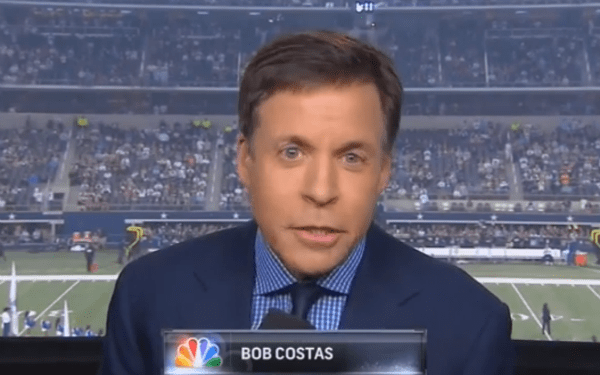
Bob Costas, in the powerful halftime slot of NBC’s “Sunday Night Football,” joined in the growing sentiment that the Washington Redskins’ nickname is offensive and the team should change it.

In an even-handed essay, Costas said that the name is demeaning, despite no ill will being intended by anyone involved with the Redskins, including owner Daniel Snyder, or their fans. President Barack Obama recently said he would consider changing the name if he was the owner of the team, and NFL commissioner Roger Goodell said the league needs to consider the issue.

During his halftime essay, Costas brought up complaints about other team names like Braves, Warriors or Chiefs, and how that seems like “political correctness run amok,” but said the Redskins nickname is different.

“These nicknames honor, rather than demean,” Costas said.

Costas said names like Blackhawks, Seminoles and Chippewas are trickier, but are OK if the “symbols are appropriately respectful,” something MLB’s Cleveland Indians and its Chief Wahoo mascot haven’t always lived up to.

Costas, whose halftime essays on end-zone celebrations in 2011 and gun control in 2012 became hot-button topics, closed his thoughts on the Redskins’ name by saying it can justifiably be seen as offensive.

Here’s the full transcript of Costas’ essay:

“With Washington playing Dallas here tonight, it seems like an appropriate time to acknowledge the ongoing controversy about the name “Redskins.”

“Let’s start here. There is no reason to believe that owner Daniel Snyder, or any official or player from his team, harbors animus toward Native Americans or wishes to disrespect them. This is undoubtedly also true of the vast majority of those who don’t think twice about the longstanding moniker. And in fact, as best can be determined, even a majority of Native Americans say they are not offended.

“But, having stipulated that, there’s still a distinction to be made. Objections to names like “Braves,” “Chiefs,” “Warriors,” and the like strike many of us as political correctness run amok. These nicknames honor, rather than demean. They are pretty much the same as “Vikings,” “Patriots,” or even “Cowboys.” And names like “Blackhawks,” “Seminoles,” and “Chippewas,” while potentially more problematic, can still be okay provided the symbols are appropriately respectful – which is where the Cleveland Indians with the combination of their name and “Chief Wahoo” logo have sometimes run into trouble.

“A number of teams, mostly in the college ranks, have changed their names in response to objections. The Stanford Cardinal and the Dartmouth Big Green were each once the Indians; the St. John’s Redmen have become the Red Storm, and the Miami of Ohio Redskins – that’s right, Redskins – are now the Red Hawks.

“Still, the NFL franchise that represents the nation’s capital has maintained its name. But think for a moment about the term “Redskins,” and how it truly differs from all the others. Ask yourself what the equivalent would be, if directed toward African-Americans, Hispanics, Asians, or members of any other ethnic group.

“When considered that way, “Redskins” can’t possibly honor a heritage, or noble character trait, nor can it possibly be considered a neutral term. It’s an insult, a slur, no matter how benign the present-day intent. It is fair to say that for a long time now, and certainly in 2013, no offense has been intended. But, if you take a step back, isn’t it clear to see how offense “might” legitimately be taken?”http://sports.yahoo.com/blogs/nfl-shutdown-corner/bob-costas-during-halftime-nbc-sunday-night-football-022727321–nfl.html?vp=1

Thanks to Ray Gaudette for bringing this to the attention of the It’s Interesting community.

New research shows that drug for Parkinson’s disease (benztropine) may also treat multiple sclerosis

benzotropine

A drug that treats Parkinson’s disease might also work against multiple sclerosis, or MS.

In MS patients, an aberrant immune onslaught degrades the fatty myelin sheaths that coat nerve fibers, causing blurred vision, weakness, loss of coordination and other symptoms.

Luke Lairson of the Scripps Research Institute in La Jolla, Calif., and colleagues tested a host of compounds to see which might boost regeneration of oligodendrocytes, the brain cells that make myelin and which are often lacking in MS. Using the cells’ forerunners, nascent brain cells called oligodendrocyte precursor cells, from rats and mice, the researchers found that benztropine proved adept at steering these cells to become myelin-making oligodendrocytes.

The researchers then induced in mice a disease that mimics MS and gave some of the animals benztropine, others a standard MS drug (fingolimod or interferon beta) and some no drug at all. Whether given before or after disease onset, benztropine reduced symptom severity and prevented relapses better than other MS drugs. Mice getting no drug fared the poorest, according to results appearing October 9 in Nature.

A cell count of brain tissue revealed that mice getting benztropine had substantially more mature oligodendrocytes than mice getting no drug. Further analyses suggested the animals’ symptom improvement with benztropine resulted from a rebuilding of the myelin sheaths, not from suppressing the animals’ immune systems. The researchers think the drug, if approved for use in MS, might work in concert with immune-suppressing drugs.

Old drug may have new trick

Sprite Shortens Duration Of Alcohol’s Damaging Metabolic Process

sprite_620x350

Chinese researchers have found that Sprite may actually be one of the best options for getting over a hangover.

Rather than focusing on a cure, researchers at Sun Yat-Sen University in Guangzhou looked at how a hangover could be prevented before it even started. To do this, they looked at the metabolic processes that the body goes through when drinking alcohol. First, the ethanol in alcoholic drinks gets metabolized by an enzyme known as alcohol dehydrogenase (ADH) into acetaldehyde. Acetaldehyde is believed to be the real cause of alcohol-related effects, including hangovers. It’s then metabolized into acetate by the enzyme aldehyde dehydrogenase (ALDH). Contrary to acetaldehyde’s effects, acetate could be responsible for some of alcohol’s health benefits, the researchers said.

Knowing these processes, the researchers tested 57 different drinks, including herbal infusions, teas, and carbonated beverages, and gauged their effects on ADH and ALDH. They found that every drink had a different effect. For example, an herbal infusion with huo ma ren seeds, also known as hemp seeds, increased the ADH process and inhibited the ALDH process, meaning that the adverse effects of drinking would linger for a longer time. Conversely, Sprite, known as Xue bi, was among the drinks that increased the ALDH process, causing acetaldehyde to break down at a faster pace, and reducing the duration of alcohol-related effects on the body.

“These results are a reminder that herbal and other supplements can have pharmacological activities that both harm and benefit our health,” Edzard Ernst, an expert in medicinal science at the University of Exeter in the U.K., told Chemistry World about the study. But he also noted that the tests should be done over, in living organisms, before the tests are regarded as conclusive. The researchers plan to do this next.

Sprite is also a more reasonable “cure” for the hangover. One recent fad had people drinking Pedialyte, the baby formula, in hopes of replacing lost vitamins and minerals from drinking. Still, going even further, some Vietnamese millionaires felt that the keratin in rhinoceros horns, which costs as much as gold per ounce, was the answer to their morning-after woes.

Source: Li S, Gan L, Li S, et al. Effects of Herbal Infusion, Tea and Carbonated Beverage on Alcohol Dehydrogenase and Aldehyde Dehydrogenase Activities. Food & Function. 2013.

http://www.medicaldaily.com/sprite-could-cure-your-hangover-beverage-shortens-duration-alcohols-damaging-metabolic-process

Built-up earwax taken from a blue whale carcass offers insights into the creature’s life

earqwax

Using built-up earwax taken from a blue whale carcass, researchers have been able to reconstruct a picture of its life by the chemicals and hormones in its ears.

The whale in question was a male blue whale that died after it was struck by a ship near Santa Barbara, Calif., in 2007. Researchers removed a 10-inch ear plug from the carcass during a necropsy. They did a careful chemical analysis of it to measure what the whale had been exposed to in its lifetime. The study appeared in a recent edition of the journal Proceedings of the National Academies of Science.

The scientific community has been excited about the possibilities raised by the new method “once they get past the ‘eew!’ factor of it being earwax,” says Stephen Trumble, lead author on the paper and a biology professor at Baylor University in Waco, Texas.

Baleen whales are known to accumulate layers of earwax in their ear canal. These create a waxy plug that can be over a foot long. The earwax is laid down in layers, a dark one when the animal is feeding and a light one when the animal is migrating and eats very little. The layers are routinely used to determine whale ages.

Now by analyzing the chemicals, pollutants and other matter that accumulated in that wax, researchers were able to build a very complete picture of the animal’s life and exposure to chemicals.

The whale was likely born around 1995. It was exposed to large concentrations of persistent organic pollutants such as DDT and other pesticides in the first six months of its life, most likely while it was still nursing. Many mammals are known to pass chemicals through milk and researchers believe that’s what happened to this whale.

DDT is one of a group of persistent organic pollutants that can take decades to break down in the environment. Although it was banned in the United States in 1972 it is still found in the world’s oceans, and was present at higher levels when this whale was born.
There were also two spikes in its exposure to mercury, around ages 5 and 10. The researchers think these might have occurred as the animal migrated past the coast of California, possibly exposing it to higher levels of pollution than it encountered in the open ocean and when passing less polluted land masses.

When it was about 10 years of age researchers believe it became sexually mature because of increases in testosterone. Its stress hormones spike right around that time, too, which the researchers believe might have been linked to breeding competition or social bonds it formed during this period.

The method offers researchers a much easier and more precise way of measuring what whales are exposed to than previous methods, which included examining whale blubber, blood, feces and blowhole spray, says Sascha Usenko, a professor of environmental chemistry and one of the Baylor researchers.

Since their paper was published they’ve been getting offers of whale earwax specimens, called plugs,from around the world. “We’re going to receive one hopefully this week that’s about three and a half feet long from a bowhead whale from Barrow, Alaska,” Trumble said.

http://www.usatoday.com/story/news/nation/2013/10/10/whale-earwax-gives-researchers-peek-whale-life/2861591/?utm_source=feedburner&utm_medium=feed&utm_campaign=Feed%3A+usatoday-NewsTopStories+(USATODAY+-+News+Top+Stories)

Ohio judge tells man he’s legally dead

judge

Consider northwest Ohio man Donald Eugene Miller Jr. the walking dead – as he has been since 1994.

Miller was ruled legally dead by a court in 1994, eight years after he disappeared from his home in Arcadia. His appeal Monday in Hancock County Probate Court to rescind his “death” didn’t earn a change of status in the view of the law.

Judge Allan Davis, the same judge who ruled him dead nearly 20 years ago, said Monday nothing will change for Miller, who was informed of his status by his parents upon his return in 2005.

Miller’s request for a reversal did not fall within the three-year legal limit for challenging a death ruling, Davis said, according to The Courier.

“We’ve got the obvious here. A man sitting in the courtroom, he appears to be in good health,” Davis said.

Miller fled the state to avoid paying child support, the judge said in court.

“I don’t know where that leaves you, but you’re still deceased as far as the law is concerned,” Davis said.

One can be legally declared dead in absentia despite the absence of solid proof of one’s death – for instance, the existence of remains that can be attributed to the person – often after a certain period of time determined by jurisdictional law.

Miller withheld most details of his past in court Monday, saying he was an alcoholic and unsure of what to do once he lost his job.

“My paycheck was being taken away from me and I had nothing left,” he said.

He worked in various places in Atlanta and Florida after leaving Hancock County in late 1989.

“It kind of went further than I ever expected it to,” Miller, 61, said. “I just kind of took off, ended up in different places,” he said.

He asked the court to reverse the death ruling so he can begin to receive Social Security benefits and apply for a driver’s license again. Both were canceled upon the 1994 ruling.

Miller, now of Fostoria, may have more luck with the Social Security Administration in federal court, though his lawyer said Miller does not have the resources to pursue such a challenge.

“My client’s here on a wing and a prayer today,” attorney Francis Marley said.

Miller never contacted his two children upon leaving Ohio, he told the court.

His ex-wife, Robin Miller, said she asked for the death ruling to get his Social Security benefits for the sake of his children. She refused to testify in the case.

He owed around $26,000 in overdue child support once the death ruling was made, she said.

Though she sympathized with him, she said she opposed his request for reversal given she does not have the money to pay his benefits back.

http://rt.com/usa/ohio-man-legally-dead-916/

New Solar Plant in Arizona Powers 70,000 Homes Day Or Night

solar power

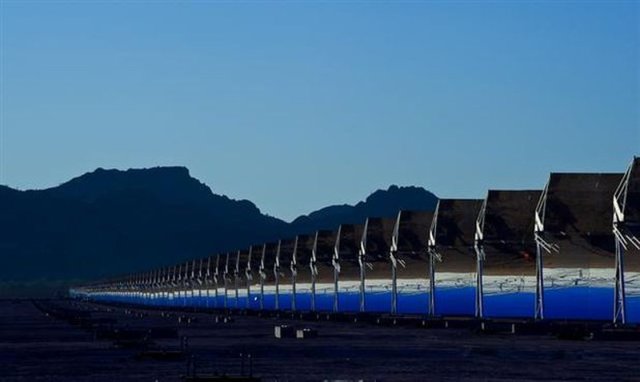
Outside Phoenix, Ariz., on Wednesday, a power company turned on one of the largest solar power plants of its kind in the world. But unlike other solar farms, this plant continues giving power to 70,000 Arizona households long after the sunset.

The Solana plant uses 3,200 mirrors that are tilted so they focus the sun’s rays to heat a specially-designed oil. That boils water, which drives turbines and generates electricity. Or, the oil can heat giant tanks of salt, which soak up the energy. When the sun goes down, or when households need more power, the hot salt tanks heat up the oil, which again boils water to drive the turbines.

Whereas conventional solar panels only give power when the sun is up, these giant salt batteries give renewable energy on demand. They can store six hours-worth of energy, which can meet the demands of Arizona customers, according to months of test data.

“That’s the sort of thing you can do with a conventional gas plant that no one had envisioned doing with renewables,” says Patrick Dinkel, vice president of resource management for Arizona Public Service, which is Arizona’s largest utility company.

The company has already bought the power from this plant for the next 30 years, to add to the state’s goal of generating 15 percent of its energy from renewable sources by 2025. The plant does mean higher energy bills for APS customers — an extra $1.28 per month for the first five years, $1.09 per month for the next five, and then 94 cents per month after that, according to the company. Dinkel says the state won’t see a lot more of these plants soon because that would cost too much.

“Right now natural gas wins that race (for cheap power,)” Dinkel says. “The challenge is no one knows what those economics look like in five years.”

The U.S. Department of Energy lent Abengoa Solar, the Spanish company that built that plant as well as Europe’s first solar thermal power plant, $1.4 billion, out of the $2 billion price tag. It’s the same program that financed Solyndra, a solar panel firm that went bankrupt in 2011. But this is a different kind of investment, says Armando Zuluaga, general manager of Abengoa Solar. He points out the company already has a public utility buying their output for the next 30 years, so the government will get its money back with interest.

“There’s no market risk here,” Zuluaga says. “It’s just about getting the plant built.”

This won’t be the last we hear of Abengoa Solar and this technology. The company is building a similar, though smaller plant in the Mojave desert in California, which will come online next year, as well as plants in South Africa.

http://www.npr.org/blogs/thetwo-way/2013/10/11/232348077/in-ariz-a-solar-plant-that-powers-70-000-homes-day-or-night

Thanks to Ray Gaudette for bringing this to the attention of the It’s Interesting community.

As Dallas hosts Washington on Columbus Day weekend for Sunday Night Football, Washington Redskins state their name is a term of honor and not a racial slur

R-wordredskins

It’s one of the NFL’s bigger rivalries, the Cowboys vs. the Redskins. And intentional or not, Sunday’s game occurs during Columbus Day weekend, deepening the meaning of a fresh conflict about whether “Redskins” slurs Indians, their leaders say.

More than 500 years after Christopher Columbus’ encounter with the natives of the Americas, any enduring uneasiness between Indians and mainstream society is exemplified by the controversy over the Washington Redskins name, which took a new turn last week when President Obama spoke of “legitimate concerns” that the mascot is racist, some Indian leaders say.

Team owners strongly dispute any racism behind the mascot and won’t change it, saying the Redskins name honors “where we came from, who we are.”

But many Native Americans contend it’s incredulous that a major sports team in the nation’s capital fails to see the word’s offensiveness, especially in a game Sunday whose rival mascots conjure up the bygone real bloodshed between cowboys and Indians. Some news outlets and sports writers agree and aren’t printing “Redskin” in their stories about the NFL team.

“After 500 years, it’s pretty unbelievable that this issue is at the forefront right now,” said Jason Begay, a Navajo who’s an assistant professor and director of the Native American Journalism Project at the University of Montana. “Even in the last 50 years (of the civil rights movement), we learned so much. It’s just ridiculous that this is an issue.”

The NFL team disagrees. In response, the Oneida Indian Nation of New York began airing this weekend a radio ad protesting the Redskins mascot in the Dallas Cowboys’ hometown. The ad, entitled “Bipartisan,” quotes how Obama, a Democrat, and Rep. Tom Cole, a Republican leader in the House, disapprove of the Redskins name.

Washington team owner Dan Snyder stepped up his defense of the moniker this month. Last spring, he told USA Today he will “never” change the name.

“Our fans sing ‘Hail to the Redskins’ in celebration at every Redskins game. They speak proudly of ‘Redskins Nation’ in honor of a sports team they love,” Snyder wrote in a letter to fans.

“After 81 years, the team name ‘Redskins’ continues to hold the memories and meaning of where we came from, who we are, and who we want to be in the years to come,” he continued.

“I respect the feelings of those who are offended by the team name. But I hope such individuals also try to respect what the name means, not only for all of us in the extended Washington Redskins family, but among Native Americans too,” Snyder said, citing several polls conducted in recent years that show that a majority of people do not want the name changed.

But American Indians like Begay worry about the normalization of an epithet. He’s also vice president of the Native American Journalists Association, which launched last month a media resource page on its website about offensive Native American mascots in U.S. sports.

“We’re on the verge of laying back and letting this name run rampant when we can actually make a difference, which is what we all should be striving for,” Begay said. “I’m glad to see there are so many organizations like NAJA and the (U.S.) President who are standing against it.”

Obama said last week that if he were the team’s owner, he would “think about changing it,” referring to the mascot.

Obama added that “I don’t know whether our attachment to a particular name should override the real, legitimate concerns that people have about these things.” The ad also airs a quote by Cole saying “the name is just simply inappropriate. It is offensive to a lot of people.”

The political leaders’ remarks are repeated in the radio ad advanced by the Oneida Indian Nation and its leader Ray Halbritter, who’s also CEO of Oneida Nation Enterprises, which operates a casino and other businesses.

Halbritter acknowledged his tribe’s “Change the Mascot” campaign faces an uphill struggle. He refers to the mascot as “the R-word,” without explicitly stating it.

“Well, history is littered with people who have vowed never to change something — slavery, immigration, women’s rights — so we think one thing that’s really great about this country is when many people speak out, change can happen,” Halbritter said.

When asked about other team mascots such as the Atlanta Braves, Cleveland Indians, Kansas City Chiefs and Chicago Blackhawks, Halbritter cited how “redskin” is defined in the Merriam-Webster Unabridged online dictionary as “usually offensive.”

“Let’s be clear. The name, the R word, is defined in the dictionary as an offensive term. It’s a racial epithet. It’s a racial slur. I think there is a broader discussion to be had about using mascots generally and the damage it does to people and their self-identity. But certainly there’s no gray area on this issue,” he said.

Halbritter asserted the word was born out of hatred — and referred to the long, ugly history between the native people of the Americas and the colonizers from Europe who followed Columbus.

“Its origin is hated, use is hated, it was the name our people — that was used against our people when we were forced off our lands at gunpoint. It was a name that was used when our children were forced out of our homes and into boarding schools,” he said. “So, it has a sordid history. And it’s time for a change, and we hope that — and what’s great is when enough people do recognize that, change will come.”

Fans are sharply divided about the issue.

A non-scientific online poll by the Washington Post shows 43% saying the team should change its name. But 57% say no, keep it. One respondent said the term is “a racist holdover from another day, a time when Indians were depicted as violent, ignorant, savages (by) whites (who largely were equally violent, ignorant and savage).”

But another respondent referred to political correctness and said: “The liberal PC society has gotten out of control, if you don’t like the teams name THEN DON’T WATCH THEM…!”

Redskins attorney Lanny Davis said the mascot is “not about race, not about disrespect.”

At games, he joins fans in singing “Hail to the Redskins” because “it’s a song of honor, it’s a song of tribute.”

http://www.cnn.com/2013/10/12/us/redskins-controversy/index.html?hpt=hp_c2

Iron Man suit being developed by U.S. Army

iron-man

Researchers at the Massachusetts Institute of Technology, the U.S. Army Research, Development and Engineering Command (RDECOM) and other groups from business and academia are joining forces to create a Tactical Assault Light Operator Suit, or TALOS, that “promises to provide superhuman strength with greater ballistic protection,” according to a statement released by the U.S. Army.

The most amazing features of the suit include integrated 360-degree cameras not unlike Google Glass (but with night vision capabilities), sensors that can detect injuries and apply a wound-sealing foam, and — get ready for this — a bulletproof exoskeleton made of magnetorheological fluids that can change from liquid to solid in milliseconds when a magnetic field or electrical current is applied.

If it all reminds you of the liquid-metal shapeshifter T-1000 from “Terminator” or some other sci-fi character, you’re not alone. “It sounds exactly like ‘Iron Man,'” Gareth McKinley, a professor at MIT, told NPR. “The other kind of things that you see in the movies I think that would be more realistic at the moment would be the kind of external suit that Sigourney Weaver wears in ‘Aliens,’ where it’s a large robot that amplifies the motions and lifting capability of a human.”

The developers from RDECOM, MIT and elsewhere are researching “every aspect making up this combat armor suit,” Lt. Col. Karl Borjes, a RDECOM science adviser, said in the U.S. Army statement. “It’s advanced armor. It’s communications, antennas. It’s cognitive performance. It’s sensors, miniature-type circuits. That’s all going to fit in here, too.”

Not everyone, however, is enamored with the super-advanced gizmos being proposed for the soldiers of tomorrow. “My sense is it is an up-armored Pinocchio,” Scott Neil, a retired special forces master sergeant and Silver Star recipient, told the Tampa Tribune. “Now the commander can shove a monkey in a suit and ask us to survive a machine gun, IED [improvised explosive device] and poor intelligence all on the same objective. And when you die in it, as it melds to your body, you can bury them in it.”

Even believers in the TALOS suit acknowledge its limitations. “The acronym TALOS was chosen deliberately,” McKinley said. “It’s the name of the bronze armored giant from ‘Jason and the Argonauts.’ Like all good superheroes, Talos has one weakness. For the Army’s TALOS, the weak spot is either the need to carry around a heavy pump for a hydraulic system, or lots of heavy batteries. We don’t have Iron Man’s power source yet.”

For would-be sci-fi superheroes who are ready for their very own TALOS, the wait may prove excruciating: Though various components of the suit are currently in development, the Army hopes to have a prototype ready next year, and an advanced model won’t be developed until at least two years after that.

http://www.livescience.com/40325-army-iron-man-suit-talos.html

How Exercise Beefs Up the Brain

exercise

New research explains how abstract benefits of exercise—from reversing depression to fighting cognitive decline—might arise from a group of key molecules.

While our muscles pump iron, our cells pump out something else: molecules that help maintain a healthy brain. But scientists have struggled to account for the well-known mental benefits of exercise, from counteracting depression and aging to fighting Alzheimer’s and Parkinson’s disease. Now, a research team may have finally found a molecular link between a workout and a healthy brain.

Much exercise research focuses on the parts of our body that do the heavy lifting. Muscle cells ramp up production of a protein called FNDC5 during a workout. A fragment of this protein, known as irisin, gets lopped off and released into the bloodstream, where it drives the formation of brown fat cells, thought to protect against diseases such as diabetes and obesity. (White fat cells are traditionally the villains.)

While studying the effects of FNDC5 in muscles, cellular biologist Bruce Spiegelman of Harvard Medical School in Boston happened upon some startling results: Mice that did not produce a so-called co-activator of FNDC5 production, known as PGC-1α, were hyperactive and had tiny holes in certain parts of their brains. Other studies showed that FNDC5 and PGC-1α are present in the brain, not just the muscles, and that both might play a role in the development of neurons.

Spiegelman and his colleagues suspected that FNDC5 (and the irisin created from it) was responsible for exercise-induced benefits to the brain—in particular, increased levels of a crucial protein called brain-derived neurotrophic factor (BDNF), which is essential for maintaining healthy neurons and creating new ones. These functions are crucial to staving off neurological diseases, including Alzheimer’s and Parkinson’s. And the link between exercise and BDNF is widely accepted. “The phenomenon has been established over the course of, easily, the last decade,” says neuroscientist Barbara Hempstead of Weill Cornell Medical College in New York City, who was not involved in the new work. “It’s just, we didn’t understand the mechanism.”

To sort out that mechanism, Spiegelman and his colleagues performed a series of experiments in living mice and cultured mouse brain cells. First, they put mice on a 30-day endurance training regimen. They didn’t have to coerce their subjects, because running is part of a mouse’s natural foraging behavior. “It’s harder to get them to lift weights,” Spiegelman notes. The mice with access to a running wheel ran the equivalent of a 5K every night.

Aside from physical differences between wheel-trained mice and sedentary ones—“they just look a little bit more like a couch potato,” says co-author Christiane Wrann, also of Harvard Medical School, of the latter’s plumper figures—the groups also showed neurological differences. The runners had more FNDC5 in their hippocampus, an area of the brain responsible for learning and memory.

Using mouse brain cells developing in a dish, the group next showed that increasing the levels of the co-activator PGC-1α boosts FNDC5 production, which in turn drives BDNF genes to produce more of the vital neuron-forming BDNF protein. They report these results online today in Cell Metabolism. Spiegelman says it was surprising to find that the molecular process in neurons mirrors what happens in muscles as we exercise. “What was weird is the same pathway is induced in the brain,” he says, “and as you know, with exercise, the brain does not move.”

So how is the brain getting the signal to make BDNF? Some have theorized that neural activity during exercise (as we coordinate our body movements, for example) accounts for changes in the brain. But it’s also possible that factors outside the brain, like those proteins secreted from muscle cells, are the driving force. To test whether irisin created elsewhere in the body can still drive BDNF production in the brain, the group injected a virus into the mouse’s bloodstream that causes the liver to produce and secrete elevated levels of irisin. They saw the same effect as in exercise: increased BDNF levels in the hippocampus. This suggests that irisin could be capable of passing the blood-brain barrier, or that it regulates some other (unknown) molecule that crosses into the brain, Spiegelman says.

Hempstead calls the findings “very exciting,” and believes this research finally begins to explain how exercise relates to BDNF and other so-called neurotrophins that keep the brain healthy. “I think it answers the question that most of us have posed in our own heads for many years.”

The effect of liver-produced irisin on the brain is a “pretty cool and somewhat surprising finding,” says Pontus Boström, a diabetes researcher at the Karolinska Institute in Sweden. But Boström, who was among the first scientists to identify irisin in muscle tissue, says the work doesn’t answer a fundamental question: How much of exercise’s BDNF-promoting effects come from irisin reaching the brain from muscle cells via the bloodstream, and how much are from irisin created in the brain?

Though the authors point out that other important regulator proteins likely play a role in driving BDNF and other brain-nourishing factors, they are focusing on the benefits of irisin and hope to develop an injectable form of FNDC5 as a potential treatment for neurological diseases and to improve brain health with aging.

http://news.sciencemag.org/biology/2013/10/how-exercise-beefs-brain

Thanks to Dr. Rajadhyaksha for bringing this to the attention of the It’s Interesting community.

Graduate student frozen out of research in Antarctica because of U.S. government shutdown

antarctica

Time on his hands. Sebastian Vivancos (inset) is part of the newly arrived team whose planned research activities at the U.S. Palmer Station in Antarctica are being thwarted by the government shutdown.

After 5 years as a lieutenant in the U.S. Coast Guard, Jamie Collins knows what it’s like to be at sea. But nothing in his military service prepared him for his current 30,000-km scientific round trip to nowhere, courtesy of the failure of the U.S. Congress to approve a budget. His predicament is one of the stranger—and sadder—tales of how the government-wide shutdown is affecting researchers.

Collins, a third-year graduate student in chemical oceanography, arrived Wednesday at the National Science Foundation’s (NSF’s) Palmer Station in Antarctica. He was eager to begin working on a long-running ecological research project funded by NSF and to start collecting data for his dissertation in a graduate program run jointly by the Massachusetts Institute of Technology and the Woods Hole Oceanographic Institution. But the rough seas he encountered during his 4-day crossing of the notorious Drake Passage in the south Atlantic—the final leg of a journey that began in Boston—paled in comparison to the storm he encountered once he stepped off the Laurence M. Gould, a U.S. icebreaking research vessel that ferries scientists and supplies between Puenta Arenas, Chile, and the west Antarctic Peninsula.

On Tuesday, NSF had announced that its contractor for Antarctic logistical support, Lockheed Martin, would begin putting the three U.S. stations on “caretaker” status unless Congress passed an appropriations bill to continue funding the government by 14 October. Although legislators will eventually adopt such a bill, nobody expects them to act in the next few days. Without an appropriation, NSF has no money to operate the stations.

For Collins, that announcement meant his plans for an intensive 5-month research regime had suddenly melted away. “The station manager told us not to unpack our stuff and to stay on the ship,” he says in a phone call to ScienceInsider from the ship. “She said we were to wait here for a week while they prepare to shut down the station. Then we’d sail back to Chile, and go home.”

Collins was stunned. “I had spent all summer preparing for this trip,” he says. He had filled three pallets with supplies for his experiments on how algae in the region detect and react to the presence of ultraviolet radiation, part of a larger effort to understand the role that bacteria play in sequestering carbon in the Southern Ocean. “Without the data from those experiments, I may have to reevaluate what to do for my Ph.D.,” he adds.

Collins was also part of the first wave of students arriving at Palmer this season to work on a research project, begun in 1990, that explores how the extent of annual sea ice affects the polar biota. The project is one of 26 so-called LTER (Long Term Ecological Research) sites around the world that NSF supports. He was scheduled to divide his time at Palmer between his own research and monitoring penguin colonies on several offshore islands as part of the LTER project. And he had signed up for a 6-week research cruise aboard the Gould that supplements the land-based LTER observations with oceanographic data collected up and down the peninsula.

Despite the jarring news, the 31-year-old Collins says that he is more worried about what it may mean to some of his younger colleagues with less worldly experience. “I spent 5 years in the military and I’m used to dealing with bureaucracy,” he explains. “And nothing that happens here is going to deter me from pursuing my goal of a career in science. But for some of the undergraduates on the trip, this is their first taste of what Congress thinks about the value of scientific research. And it’s sending them a pretty horrific message.”

http://news.sciencemag.org/people-events/2013/10/tales-shutdown-grad-student-frozen-out-research-antarctica

Thanks to Dr. Rajadhyaksha for bringing this to the attention of the It’s Interesting community.