New evidence of lifelong effects of childhood bullying

By Andrew M. Seaman

The negative physical and mental effects tied to bullying among children and teens may accumulate throughout the years, according to a new study.

Researchers found that teens who had been bullied in the past and those currently being bullied tended to have a lower quality of life, compared to those who were bullied less or not at all.

This finding and previous research on the effects of bullying suggest more rigorous work should be done on finding ways to intervene and stop bullying, said the study’s lead author.

“I think this is overwhelming support for early interventions and immediate interventions and really advancing the science about interventions,” Laura Bogart, from Boston Children’s Hospital, told Reuters Health.

In the past, when researchers have surveyed students at one point in time, children and teens who were being bullied tended to score lower on measures of physical and mental health.

But few studies have examined whether the possible effects of bullying accumulate over the years, the researchers write in the journal Pediatrics.

They analyzed data from the Healthy Passages study, which surveyed students in Alabama, California and Texas about how much bullying they experienced and evaluated their physical and mental health.

Overall, 4,297 students completed the surveys in fifth, seventh and 10th grades.

The researchers found that about a third of the students had been regularly bullied at some point during the course of the study.

Generally, those who had been bullied in the past scored better on measures of physical and mental health, compared to those who were currently being bullied. Teens who were bullied throughout their school career scored the worst.

For example, about seven percent of 10th grade students who had never been bullied scored low on mental health measures. That compared to 12 percent who had been bullied in the past, 31 percent who were currently being bullied and almost 45 percent of those who underwent persistent bullying.

About eight percent of 10th grade students who were never bullied had poor physical health, compared to 12 percent of those who were bullied in the past, 26 percent who were currently being bullied and 22 percent who were continuously bullied.

Poor mental health included traits such as being sad, afraid and angry, according to Bogart. Poor physical health included limitations like not being able to walk far and not being able to pick up heavy objects.

“I think one key thing to take from this is that any adult that has any contact with children . . . (should) know what the signs of bullying might be,” Bogart said. “This study tells us some of them, but not all of them.”

“There are physical signs, but they’re not always physical,” she said.

For example, one non-physical sign that a young person is being bullied is that the child doesn’t want to go to school.

Bogart also said it’s important for parents to know if their child falls into one of the groups at high risk for bullying. Those groups include children with physical disabilities, those who are overweight and obese and those who are lesbian, gay, bisexual or questioning.

“I think this says – especially for parents – to be really attuned to what’s going on in their kids’ lives by paying attention, knowing what’s going on during the school day and being aware so they’ll notice changes like these,” she said.

SOURCE: bit.ly/uFc4g2 Pediatrics, online February 17, 2014.

http://www.reuters.com/article/2014/02/17/us-effects-bullying-kids-idUSBREA1G0PU20140217

Nigerian restaurant closed down for cannibal cuisine

A tip-off led police to the macabre discovery in Anambra, Nigeria, with 11 people being arrested and AK-47 guns and other weapons being seized.

Human flesh was apparently being sold as an expensive treat at the restaurant, with authorities saying that roasted human head was even on the menu.

“I went to the hotel early this year, after eating, I was told that a lump of meat was being sold at N700, I was surprised,” a pastor who had visited the eatery said.

“So I did not know it was human meat that I ate at such expensive price.

“What is this country turning into? Can you imagine people selling human flesh as meat,” he added. “Seriously I’m beginning to fear people in this part of the world. ”

Another local added to the Osun Defender newspaper: “I always noticed funny movements in and out of the hotel; dirty people with dirty characters always come into the hotel.

“So, I was not surprised when the police made this discovery in the early hours of yesterday.”

The tabloid reported that two army caps, 40 rounds of live ammunition and ‘so many cell phones’ were also discovered by authorities.

http://www.independent.ie/world-news/africa/roasted-head-anyone-cannibal-restaurant-shut-down-by-police-30006469.html

As World’s Kids Get Fatter, Doctors Turn to the Knife

Daifailluh al-Bugami was just a year old when his parents noticed that his lips turned blue as he slept at night. It was his weight, doctors said, putting pressure on his delicate airways.

Now Daifailluh is 3, and at 61 pounds he is nearly double the typical weight of a child his age. So the Bugamis are planning the once unthinkable: To have their toddler undergo bariatric surgery to permanently remove part of his stomach in hopes of reducing his appetite and staving off a lifetime of health problems.

That such a young child would be considered for weight-loss surgery—something U.S. surgeons generally won’t do—underscores the growing health crisis here and elsewhere in the Middle East. Widespread access to unhealthy foods, coupled with sedentary behavior brought on by wealth and the absence of a dieting and exercise culture, have caused obesity levels in Saudi Arabia and many other Gulf states to approach or even exceed those in Western countries.

While solid national data are hard to come by, some experts say that obesity has turned into a serious health problem for Saudi children, with an estimated 9.3% of school-age youths meeting the World Health Organization’s body-mass-index criteria for obesity, according to research published in 2013 in the Saudi Journal of Obesity. About 18% of school-age children in the U.S. were considered obese in 2010, according to the Centers for Disease Control and Prevention.

Daifailluh’s doctor, Aayed Alqahtani, is a leading advocate of a radical approach to the problem. Patients travel to him from across the country and the Gulf region. Over the past seven years, he has performed bariatric surgery on nearly 100 children under the age of 14, which experts on the procedure believe is the largest number performed by one doctor on young children.

Dr. Alqahtani’s work is being watched amid a global debate about the appropriate age for bariatric surgery. In the U.S., the minimum is generally considered 14. The World Health Organization, in a 2012 report on pediatric bariatric surgery, concluded that there is a dearth of data available on the long-term outcomes of the procedure in children and that a “conservative approach” is necessary until long-term studies are conducted.

Bariatric surgery has been embraced as an effective and relatively safe procedure for morbidly obese adults. The concern with children revolves mostly around nonsurgical risks, such as how the abrupt change in nutrition could affect long-term brain development and sexual maturation.

Dr. Alqahtani says the decision to operate on Daifailluh is a difficult one because of his age. But after nearly two years of consultation with the clinic, Daifailluh’s obesity-related medical problems haven’t gotten any better. “We should not deprive our patients from bariatric surgery based on their age alone,” the surgeon says. “If they have [medical] conditions that threaten their lives, then we should not deny the bariatric surgery.”

The worsening obesity problem here also is manifesting itself in other ways. Some 20% of the Saudi adult population has Type 2 diabetes, a condition linked to obesity, according to the International Diabetes Federation, compared with 8.3% in the U.S., according to the CDC. The cost of diabetes treatment in Saudi Arabia is expected to rise to $2.4 billion in 2015, more than triple that spent in 2010, according to a recent study in the Journal of Family and Community Medicine.

Obesity, particularly among women, has become rampant across much of the Middle East, particularly in oil-rich Gulf nations. In Kuwait, almost half of adult women are considered obese, while 44% of Saudi women and 45% of Qatari women meet the criteria, according to the International Association of the Study of Obesity. Experts says Saudis, in particular, are more likely to carry certain genes linked to obesity.

Saudi lifestyle and parenting practices may exacerbate the problem, according to doctors at weight-loss clinics. Nannies or cooks are often employed, so parents may not know what their children are eating. Saudis often are coaxed to eat large quantities of food when visiting relatives and friends.

In Riyadh, physical activity is limited, particularly for girls, and high temperatures and few green spaces make walking difficult. School gym classes generally take place just once a week. Western-style fast food is abundant, particularly at the air-conditioned malls frequented by children and families.

Bariatric surgery has become an accepted treatment among obese Saudi adults and is paid for by the government. An estimated 11,000 bariatric surgeries were performed on Saudis in 2012, according to Dr. Alqahtani.

The surgery, of which there are several types, generally reduces the size of the stomach and, with some techniques, rearranges the digestive path to bypass much of the intestines. Some types are reversible but generally considered less effective. After the surgery, patients must eat very small meals—ideally for the rest of their lives. Many studies have shown that adults, on average, lose over 50% of their body weight after surgery.

Increasingly, youngsters are heading to the operating room here, where parents see no other options. These days, Dr. Alqahtani performs surgery on three to four youths a week.

“I have seen in my clinic patients who cannot sleep lying down—they sleep sitting—because of sleep apnea, and their age is 10 years, sometimes 5 years,” says Dr. Alqahtani, a professor in the college of medicine and an obesity specialist at King Saud University.

Pediatric surgeons in the U.S. say they also are facing demands from families to operate on younger patients. Thomas Inge, surgical director of the Surgical Weight Loss Program for Teens at Cincinnati Children’s Hospital, says he will be operating on a 12-year-old later this month. He says that as younger and younger children are referred for consideration of surgery, care teams will need to carefully weigh the pros and cons.

Evan Nadler, a pediatric surgeon at Children’s National Medical Center in Washington, D.C., is considering doing the operation on two young children. He and the family of a 7-year-old D.C. boy have agreed that surgery likely is the best option, he says. The family of an 8-year-old from the Middle East has decided to wait until their daughter is older and can better understand the surgery, he says.

Many doctors say they aren’t ready to follow Dr. Alqahtani yet. Kirk Reichard, chairman of the pediatric-surgery committee for the American Society for Metabolic and Bariatric Surgery, notes that there are no data to show that surgery doesn’t affect young children’s long-term sexual maturation or cognitive functioning. The brain, particularly in growing children, is sensitive to nutrition and needs enough energy to mature properly. Nutrition also has the potential to affect hormones linked to sexual maturation.

Dr. Alqahtani says he has seen evidence of normal growth following the procedure in his under-14 patients, many of whom are now four years postsurgery.

“We will certainly use his experience to inform us in some ways, but [Dr. Alqahtani’s work] won’t take the place of trials,” says Dr. Reichard.

One of the main criticisms from some weight-loss experts about performing the surgery on those under 14 is that changes in diet and exercise can prevent further weight gain. In addition, says Dr. Reichard, “there are a lot of other therapies short of surgery that can be helpful in managing” related medical conditions.

Saudi Arabia’s Dr. Alqahtani says he requires his child patients to enroll in a weight-loss program for at least six months because patients able to lose even a bit tend to have better outcomes after surgery. But he says that by the time families come to him, their children have such substantial health problems it is generally too late for diet and exercise alone.

Dr. Alqahtani was trained as a surgeon at McGill University in Montreal and at a minimally invasive surgery center in Denver. When he returned home to Riyadh in 2002, he says, he was inundated with pediatric patients so obese they were suffering from advanced stages fatty liver disease, diabetes and sleep apnea, a disorder in which patients repeatedly stop breathing for short periods during sleep—all diseases typically not seen until middle age.

Om Abdullah Asiri says she tried to help her 11-year-old son lose weight by restricting his eating at home. But he would eat fast food while out with his friends and plays videogames for hours on end, she says. “I can’t control him outside the home,” she says.

He grew to 250 pounds. His body-mass index—a calculation that uses weight and height to estimate percentage of body fat—was 61. A BMI of 40 or above is the most severe obesity category, according to the World Health Organization.

Ms. Asiri traveled with her son, Abdullah, from their home in Abha, more than 600 miles south of Riyadh, to see Dr. Alqahtani for the operation. Lying on a hospital bed the day before his surgery, Abdullah said he is “happy and ready” for the surgery.

His mother says surgery is the best solution for Abdullah, who has high blood pressure, fatty liver, hip pain and severe sleep apnea. Afterward, he won’t have a choice but to eat better, she says. “The surgery will make him change.” She says he dreams of playing soccer with his friends.

The procedure Dr. Alqahtani performs is called the gastric sleeve, which slices off a portion of the stomach but leaves the rest of the digestive tract intact. It is gaining in popularity because of its good weight-loss results and minimal side effects. The operation, conducted through tiny incisions in the abdomen, takes him just 30 minutes.

One recent morning, he operated on a 20-year-old, two 17-year-olds, a 12-year-old, then Abdullah, who was then 10.

Complications can include bleeding in about 10% of cases, and leaking and blood clots in 1% to 2%. Dr. Alqahtani says he has had only two leaks in 1,700 cases, neither in children.

Dr. Alqahtani says each of his pediatric patients has lost at least some weight, and nearly three-quarters have lost more than 50% of their initial body weight. Abdullah has lost close to 50 pounds since his surgery about two months ago, according to his 29-year-old brother, Ahmad.

Dr. Alqahtani says about 90% of his patients have seen medical conditions such as diabetes and hypertension clear up, according to a paper scheduled for publication in the journal Surgery for Obesity and Related Diseases. He published outcomes on 108 children in the peer-reviewed Annals of Surgery journal in 2012.

Recovery involves a six-week transition diet starting with clear liquids and puréed food. Patients eventually can resume solid foods at much-reduced quantities. At first, patients feel full after just 1 to 2 spoonfuls of food, though they gradually can eat more as their stomachs stretch.

Some bariatric-surgery experts have raised questions about whether children are capable of maintaining the restrictive lifetime diet after surgery or whether they will sabotage the procedure when they become teenagers and have a greater autonomy to eat what they want. Some experts question whether parents should make such a drastic and permanent decision for a child.

The decision has been excruciating for the family of Daifailluh, the toddler from Ta’if. Daifailluh was referred to Dr. Alqahtani’s clinic about two years ago after difficulty breathing sent him to the intensive-care unit at a hospital in his hometown. Doctors there determined the toddler was seriously overweight. His mother, Hessa Salem al-Bugami, says she tried to improve his diet but didn’t have good guidance until she came to Dr. Alqahtani’s clinic, a trip of nearly 500 miles from Ta’if. “I feel like I failed,” she says.

At first, the family wanted Daifailluh to lose weight without the operation. Ms. Bugami says her son has always had an “open appetite” and never refuses food. She says she feeds him brown bread and boiled chicken and rice, and limits his portions, hiding the rest of the food. But his obesity hasn’t improved, she says.

Daifailluh will cry and sometimes throw temper tantrums when he wants food, she says. She has tried distracting him with toys, locking the two of them in a room to play for so long she ended up missing her own meal.

“When he starts crying, it’s hard not to give him any of the food, to make the crying stop,” she says. “I feel like I work really hard, but it’s just too much on me.”

Daifailluh, who was hospitalized again for pulmonary problems, is waiting for a surgery date, which will come if he gets final medical clearance from Dr. Alqahtani.

The entire family is worried about the surgery, particularly the effects of anesthesia and whether the surgery will reduce his appetite too much. Ms. Bugami also worries that her son will regain the weight when he leaves the house eventually and is no longer under her watch.

But that is a concern for another day. “Right now is the most scary situation,” she says.

Write to Shirley S. Wang at shirley.wang@wsj.com

http://online.wsj.com/news/articles/SB10001424052702304851104579360992538215578?mg=reno64-wsj&url=http%3A%2F%2Fonline.wsj.com%2Farticle%2FSB10001424052702304851104579360992538215578.html

Thanks to Pete Cuomo for bringing this to the attention of the It’s Interesting community.

Vertical forest in Milan

The completion of the world’s first vertical forest is nearing. Located in Milan, Bosco Verticale is Boeri Studio’s effort to make cities greener along with supporting an overly dense urban population. The project kicked off in 2011, and is widely looked at by the rest of the world.

New photographs that have emerged show the appearance of the finished residential tower blocks with 100 different species of trees and shrubs covering the whole place in a vertical forest.

The sunlight filtering through the forest leaves, breathing the fresh air, and everything can just be nothing else than poor bliss. The project will mostly be complete by early 2014.

The project can accommodate in one building about forest that equals 10.000 sq m of forest. Also include 480 large and medium size trees, 250 small size trees, 11,000 groundcover plants and 5,000 shrubs. Greywater recycling is also being pursued, which will eventually water the vegetation and the photovoltaic panels will provide power.

Each tower supports the equivalent population of an area of single family dwellings of nearly 50,000. The smallest apartment of the lot is 65 sqm and has a small woodland terrace. The largest apartment, on the other hand, is 450 sqm with a terrace of around 80 sqm.

The architects say that they are kicked about the next phase when engineers, builders, masons, lawyers and electricians actually finish work and residents begin to live.

They say that every plant has been chosen by botanists to thrive in the present condition. A specialized maintenance company will keep in check of the vertical forest in the coming years.

Dolce Vita Homes worked in collaboration with Coima Image for the interior designing, Residenze Porta Nuova is marketing the project.

http://www.greenpacks.org/2014/01/20/bosco-verticale-vertical-forest-nearing-completion-in-milan/

Thanks to Kebmodee for bringing this to the attention of the It’s Interesting community.

Reality show snake-handling preacher dies — of snakebite

140216095220-jamie-coots-restricted-story-top

By Ashley Fantz, CNN

A Kentucky pastor who starred in a reality show about snake-handling in church has died — of a snakebite.

Jamie Coots died Saturday evening after refusing to be treated, Middleborough police said.

On “Snake Salvation,” the ardent Pentecostal believer said that he believed that a passage in the Bible suggests poisonous snakebites will not harm believers as long as they are anointed by God. The practice is illegal in most states, but still goes on, primarily in the rural South.

Coots was a third-generation “serpent handler” and aspired to one day pass the practice and his church, Full Gospel Tabernacle in Jesus Name, on to his adult son, Little Cody.

The National Geographic show featured Coots and cast handling all kinds of poisonous snakes — copperheads, rattlers, cottonmouths. The channel’s website shows a picture of Coots, goateed, wearing a fedora. “Even after losing half of his finger to a snake bite and seeing others die from bites during services,” Coots “still believes he must take up serpents and follow the Holiness faith,” the website says.

In February 2013, Coots was given one year of probation for having crossed into Tennessee with venomous snakes. He was previously arrested in 2008 for keeping 74 snakes in his home, according to National Geographic. Tennessee banned snake handling in 1947 after five people were bitten in churches over two years’ time, the channel says on the show site.

On one episode, Coots, who collected snakes, is shown trying to wrest a Western diamondback out of its nook under a rock deep in East Texas. He’s wearing a cowboy hat and a T-shirt that says “The answer to Y2K – JESUS.”

The pastor is helped by his son and a couple of church members.

“He’ll give up, just sooner or later,” one of the members says. “Just be careful. Ease him out.”

The group bags two snakes, which a disappointed Coots says hardly justifies the trip to Texas.

“Catching two snakes the first day, ‘course we’d hoped for more,” Coots says in the video. “We knew that the next day we was gonna have to try to hunt harder and hope for more snakes.”

http://www.cnn.com/2014/02/16/us/snake-salvation-pastor-bite/index.html?c=homepage-t

Thanks to Pete Cuomo for bringing this to the attention of the It’s Interesting community.

Meet Lady Bird, a massive machine digging out a solution to D.C. wastewater woes

w-LadyBird_graphic

ladybird2

ladybird1

By Ashley Halsey III

A massive machine — longer than a football field — is munching away beneath Washington like a giant earthworm. Before it’s done, it will devour about 2 million cubic yards of soil that has been sitting under the city since the days of the dinosaurs.

It is the most amazing and expensive construction project that no one ever will see.

It will come within a center fielder’s throw of Nationals Park, within a corner kick of RFK Stadium, nibble at the deepest roots from the National Arboretum, pass below the Love Nightclub and the United House of Prayer for All, go under railroad tracks that carry 1 million-pound trains into Union Station and a six-lane roadway used by 60,000 cars a day, gnaw its way under Home Depot’s doorstep and then chomp more than a mile and a half down Rhode Island Avenue toward Logan Circle.

Like the creature from a sci-fi thriller, the machine will tunnel along — six feet at a time — beneath a city largely oblivious to its existence.

“That’s the way we like it,” said James Wonneberg, DC Water’s resident engineer.

Cars race from Italy to France through a famous tunnel under the Alps. Bullet trains rocket through a tunnel under the English Channel. One day, raw sewage will roar through Washington’s tunnel.

Not so romantic, perhaps, but vital to a city that now pumps 2 billion gallons a year from its sewers and toilets directly into the Potomac, the Anacostia and Rock Creek.

With a little help from upstream neighbors, those three tributaries may one day run closer to pure. But for now, there is only that dream and a hungry machine.

The machine itself is a marvel of technology, an underground factory 443 feet long and almost six times the weight of the Statue of Liberty. It does about a dozen things at once, and it moves.

Consider just one aspect of that movement: More than 100 feet below ground, how does it know where it’s going?

With a circular face three times the width of a Metrobus, what keeps the machine always within a few millimeters of its intended path?

Separating the streams

Washington needs this new, gargantuan 13-mile long, $2.6 billion sewer tunnel because of what might be called, in hindsight, a dumb decision. Were they still alive to defend it, the city’s forefathers might respond much like the people who were wearing bell-bottoms in the 1970s or who dye their hair electric green today: It was the fashion of the day.

The “it,” in this case, was something called a combined sewage system. They were all the rage in 19th-century America. The District has one, as do more than 770 other places where a total of 40 million people live.

That is a lot of flushes, and on a rainy day, that matters.

Here’s why: In a combined sewer system, your bath water, your laundry water and whatever you flush goes into a network of sewers that also handles all the rainwater that flows down sewer grates from the street.

On a dry day, or one with a slow but steady rain, all of that combined wastewater heads obediently to the sewage-treatment plant. In the case of the District, that is the sprawling facility called Blue Plains that sits beside the Potomac River in the southeast quadrant of the city.

But in a gully-washing downpour, a serious thunderstorm or when 10 inches of rapidly melting snow gushes down the sewer grate, the system gets unruly. The path to the treatment plant becomes overwhelmed, and a filthy mix spews from 53 different outlets into the three tributaries.

Not by accident, but by design.

It’s not an occasional thing. It happens hundreds of times a year, contributing 2 billion gallons of untreated waste to Rock Creek, the Potomac and the Anacostia, which gets the worst of it. All that unhealthy mess, of course, flows down into Chesapeake Bay on its way to the Atlantic Ocean.

“By 2032, our stated goal is to have water in the Anacostia that’s swimmable and fishable,” said George Hawkins, DC Water’s general manager.

Having the Potomac turned into an open sewer appealed to no one, and perhaps least of all to Lady Bird Johnson, who is said to have berated Lyndon about it when they flew into National Airport in daylight. That factoid has relevance even today.

Though Lyndon B. Johnson had a war and civil rights on his plate in those days, the rumblings about pollution that began on his watch led his successor, Richard M. Nixon, to create the Environmental Protection Agency in 1970.

Fast-forward 35 years. Everybody agreed that something had to be done about combined sewer systems, and the EPA and U.S. Justice Department ordered Washington and several other cities — including New York, Philadelphia and Seattle — to stop dumping combined sewer overflow into rivers.

That gave birth to the District’s tunnel plan, and last year, the massive machine began to dig.

They named it “Lady Bird.”

Underground action

Lady Bird keeps busy, at once softening the soil in its path, lurching forward to gnaw at it, sliding the stones that will be the tunnel’s wall into place, blasting fresh surface air to the work crew, laying railroad track for the cars that carry the stone, turning the dirt into muck and dumping it on a conveyor belt headed for the tunnel mouth.

The muck will fill 205,820 huge dump trucks before the project is completed in 2025.

Though all of that is going on pretty much at once — 24 hours a day, six days a week — here’s how each facet takes place.

The round face of the machine is 26 feet across and studded with tungsten carbide scraper bits and cutting wheels. Before the device shoulders forward, a barrage of chemical mix shoots from nozzles to loosen up the earth ahead.

Then the machine heaves forward by six feet, its circular face rotating as the bits and wheels slash into the soil. What they dislodge is sucked into the machine, mixed with a compound that turns it to the consistency of toothpaste and is plopped blob by blob onto a conveyor belt that runs along the ceiling to the tunnel end.

While this is underway, massive curved slabs of concrete — they call them “stones” — have arrived on a small rail car that trundles back and forth from the tunnel mouth. They are stacked in the order in which they will be put in place. When they arrive, an electric device that looks like something you might see in an automatic carwash swoops down from above, presses its big rubber gasket against the stone’s face and literally sucks it up.

Stone in hand, the machine then rumbles to the leading edge of the tunnel, where a crew of five in hard hats uses levels and laser guidance to ease each piece into place. The slabs are connected in front and back by big plastic dowels and on top and bottom by arms that are driven into place by a worker with a compressor-fired rivet gun.

Once the precise placement is achieved, the suction machine scoots back to get the next slab until the six-foot, 80,000-pound ring is complete.

But there’s more.

The machine’s boring face is 26 feet across. The interior tunnel walls are 23 feet in diameter. The stones are 14 inches thick. There is, by design, a gap between the new tunnel exterior and the hole that Lady Bird has created.

Into the gap oozes an epoxy-like substance that will harden into a six-inch-thick casing to become the tunnel’s outer defense.

As Lady Bird rides forward through the tunnel on wheels, it lays track in its wake for the rail car that feeds stones to the growing tunnel.

Now it is time for the next push. Eighteen four-ton jacks powered by the 13.8 kilovolts of electricity nudge up against the edges of the tunnel ring that has just been set in place.

Before they fire, the operator who sits in a narrow booth watching six computer monitors studies one that shows crosshairs. Using a target fixed just behind the face of the machine, and a second target behind the machine that provides global coordinates, the operator uses a laser to line up Lady Bird’s next chomp.

“Right now, he’s within an inch of being right on the mark,” said Brett R. Zernich, construction manager, pointing to the crosshairs earlier this month.

At the push of a button, the operator sends Lady Bird surging six feet farther into the soggy soil.

Chewing down the Potomac

Lady Bird said goodbye to daylight several months ago and was lowered into a deep hole on the grounds of the Blue Plains treatment plant. Right now, the machine has chewed its way more than a quarter of a mile and is about 70 feet beneath the floor of the Potomac, skirting around the Naval Research Laboratory because the Navy wasn’t keen on having a tunnel under its testing facility.

In a few months, it will curve to the right, penetrate some rocky soil and pass under Anacostia to connect with a sewage pumping station at Poplar Point. Then it will dip under the river by the same name and make its way to another pumping station near Nationals Park.

A new tunnel will begin at the Poplar Point pumping station, cross under the river just north of the 11th Street Bridge and head toward RFK Stadium. It will pass the arboretum and make a sharp left 120 feet under Rhode Island Avenue.

Just as a river has its tributaries, so does the tunnel, with the largest going up First Street from Rhode Island. And it will have diversion chambers where waste can be stored temporarily so the system isn’t overwhelmed.

All that, for $2.6 billion. Where does the money come from?

Customers. Finding a way to pay to restore other decrepit infrastructure — notably roads and bridges — has become a knotty issue, but water utilities send out monthly bills. Although DC Water services wholesale customers in Maryland and Virginia, most of the burden will fall on their customers in the District.

The average water and sewer bill has gone up by more than 50 percent in recent years, to more than $65 a month for a single-family home.

“Our ratepayers are paying for all this,” Hawkins said. “We estimate [there will be] rate increases for the next 10 years, and maybe for 20, and most of that’s for the tunnel.”

Parts of it will begin opening in 2016, with big sections to follow in 2018 and 2022. With steel filaments embedded in its concrete walls, the tunnel should last for 100 years, they say.

“I want our ratepayers to understand that we have to do this, but it’s more important that they recognize the benefits of it,” Hawkins said. “No one will ever see this tunnel, but they’ll see that the river’s cleaner, and down stream in the Chesapeake, it will be a significant difference.”

http://www.washingtonpost.com/local/trafficandcommuting/meet-lady-bird-a-massive-machine-digging-out-a-solution-to-dc-wastewater-woes/2014/02/15/e20b1c60-8dc3-11e3-98ab-fe5228217bd1_story.html

Thanks to Da Brayn for bringing this to the attention of the It’s Interesting community.

High resolution satellites revolutionize whale spotting from outer space and give hope for imperiled right whale

CNSPhoto-WHALES
New high resolution satellite image processing technology allows researchers to identify and count right whales at the ocean surface or to depths of up to 15 metres — described as a boon to tracking the health of whale populations.

The very trait that pushed southern right whales close to extinction — lolling near the surface of warm waters — is helping to revolutionize the way whales are counted.

New satellite technology has allowed the use of high-resolution photographs and image processing software to detect the crustaceans at the surface or to a depth of 15 metres in shallow waters off Argentina.

High-res satellites are a cost-effective improvement over the way whale populations are currently calculated — narrowly limited counts from shore, a ship or a plane.

Scientists used the most powerful commercial observation platforms available can see surface features as small as 50 centimetres in black and white.

A test of the satellite’s image-recognition capacity, reported in the journal Plos One, detected about 90% of southern right whales swimming in the Golfo Nuevo on the coast of Argentina compared to a manual search of the imagery.

The accuracy surpasses previous attempts at space-borne assessment and could revolutionize the way whale populations are estimated.

“Our study is a proof of principle,” Peter Fretwell of the British Antarctic Survey told the BBC.

“But as the resolution of the satellites increases and our image analysis improves, we should be able to monitor many more species and in other types of location.

“It should be possible to do total population counts and in the future track the trajectory of those populations.”

For this study, Fretwell and his colleagues purchased a single, massive image taken in September 2012 by the WorldView2 satellite. The image covers 113 square kilometres including Golfo Nuevo, a circular gulf off the Argentine coast and an area where southern right whales are known to breed and raise their young from July through November.

By looking at the same image in different wavelengths, including one able to penetrate 15 metres beneath the ocean, the researchers were able to spot 55 probable whales and 22 possible whales in the gulf as well as 13 whale-shapes underwater.

“Satellite imagery provides much more accurate and wider coverage,” Fretwell told the Los Angeles Times. “If this works, we can take it out to many other species as well.”

These animals were driven to near-extinction in the early 20th century. Recognized as slow, shallow swimmers, they were the “right” whales to hunt.

For this reason, their numbers dropped from a pre-whaling population of 55,000-70,000 to just 300 by the 1920s.

“The same reason they are the right whales to catch makes them the right whales to look for by satellite,” said Fretwell.

Their numbers have seen something of a recovery, but without the means to carry out an accurate census, it is hard to know their precise status.

Scientists already have used satellite imagery to count populations of penguins in Antarctica, and Fretwell said similar work was being done with seals. The key to using satellites to track animals is not the size of the animal but how much it stands out from its environment, he said.

http://news.nationalpost.com/2014/02/14/high-resolution-satellites-revolutionize-whale-spotting-and-give-hope-for-imperiled-right-whale/?utm_source=feedburner&utm_medium=feed&utm_campaign=Feed%3A+NPWorld+%28National+Post+-+World%29

Crazy ants from South America use a secret weapon against fire ant venom to aid their invasion of the southern U.S

CrazyAnts_m_0214

By Tanya Lewis, LiveScience

All over the southern United States, miniature foes are engaging in fierce battle. Invasive “crazy ants” have been displacing fire ants, and a curious defensive strategy may be behind the crazy ants’ bold takeover.

Fire ants pack potent venom that kills most ants that come into contact with it. But when crazy ants get stung, they secrete a substance and rub it all over themselves to neutralize the venom, new research finds.

This detoxifying behavior — the first example of an insect capable of detoxifying another’s venom — may be the reason crazy ants have been able to compete with the venomous fire ants, according to the study detailed online on Feb. 13 in the journal Science.

“As this plays out, unless something new and different happens, crazy ants are going to displace fire ants from much of the southeastern U.S. and become the new ecologically dominant invasive ant species,” study leader Ed LeBrun, a researcher at the University of Texas at Austin, said in a statement.

Fire ants (Solenopsis invicta) invaded the U.S. South in the 1930s, hailing from their native South America home. Another South American species, tawny (or raspberry) crazy ants (Nylanderia fulva) — named for their color and their quick, erratic movements — invaded Texas and Florida in the early 2000s, and have been steamrolling fire ant populations in the South ever since.

When fire ants attack, they dab their enemies with powerful venom that usually kills other insects. But LeBrun’s team noticed that after crazy ants were dabbed with the venom, they would stand on their hind and middle legs, curl their abdomens — which are covered in glands that secrete formic acid — and smear the acid all over their bodies.

To study how the detoxing substance worked, the researchers sealed off the crazy ants’ glands with nail polish and then placed the ants in a container with red fire ants. Only about half of these crazy ants survived after being dabbed with venom by the fire ants, compared with 98 percent of unpainted crazy ants.

The researchers aren’t sure exactly how the formic acid protects crazy ants from the fire ant venom. The acid may protect the crazy ant by destroying venom proteins and preventing them from penetrating the ant’s exoskeleton.
Crazy ants and fire ants are both native to northern Argentina, Paraguay and southern Brazil, where their territories overlap. The crazy ants likely evolved their detoxifying behavior alongside their venomous neighbors, the researchers said.

In contrast to fire ants, crazy ants don’t confine themselves to mounds in the garden. They crawl inside homes and even swarm inside electronic appliances — shorting out phones, air conditioners and other devices.

“When you talk to folks who live in the invaded areas, they tell you they want their fire ants back,” LeBrun told Live Science previously.

Crazy ants don’t have as painful a sting as fire ants, but they multiply more quickly and don’t eat the same ant poison bait, scientists say. Fortunately, the crazy ant invasion moves slowly, advancing only about 600 feet (180 meters) per year, except if transported in potted plants or vehicles. LeBrun recommends that people check plants for ant nests before buying them, and check their cars before traveling if they live in crazy ant-infested areas.

Other than human activities, geology and climate are the only factors standing in the way of these determined insects, which continue their relentless takeover of the South.

http://www.mnn.com/earth-matters/animals/stories/crazy-ants-use-a-secret-weapon-to-aid-their-invasion-of-the-southern

New Imaging Technique Speeds Removal of Non-melanoma Skin Cancers

lab to lcinic
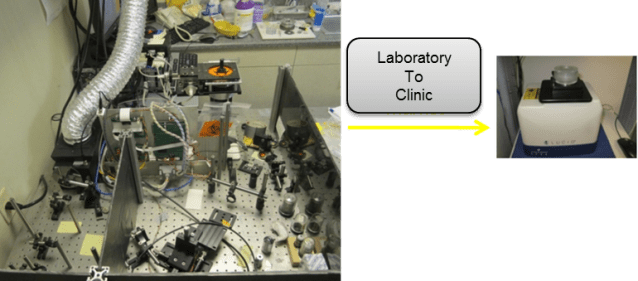
The research team is building a smaller portable version of the laboratory’s cancer detection system. Source: Milind Rajadhyaksha, Ph. D., Memorial Sloan-Kettering Cancer Center, New York, NY.

Residual%20Cancer%20Margins

A common surgery for non-melanoma skin cancer, known as Mohs surgery, typically achieves excellent results but can be a long process, as the surgeon successively removes the area of concern until the surrounding tissue is free of cancer. To determine whether further tissue removal is necessary, the borders of the lesion must be processed in a laboratory to check for residual cancer tissue — a process that takes 20 – 45 minutes and is often repeated numerous times. Now, National Insititute of Biomedical Imaging and Bioengineering (NIBIB)-funded researchers have developed a microscopic technique to analyze removed tissue rapidly right in the clinic — dramatically reducing the length, inefficiency, and expense of this procedure.

With approximately 3.5 million new cases per year in the U.S., Mohs surgery is a fairly common procedure that many people undergo repeatedly as new skin cancers appear. It can take one to three hours, or even longer depending on the size and location of the lesion. The process is lengthy because after a section of tissue is removed, it must be frozen and stained so it can be examined to ensure the borders are clear of residual tumor. Although highly effective, the current practice is labor intensive for surgeons and assisting staff, as well as lengthy and stressful for patients. The time spent by surgical personnel and those analyzing the tissue in the lab increases the expense of the procedure, which has been estimated to cost $ 2-3 billion per year in the U.S.

NIBIB-supported researchers led by Milind Rajadhyaksha, Ph.D. at Memorial Sloan Kettering are using their expertise in optical imaging to improve this common procedure. Optical imaging is a technique that uses visible or near-infrared light to obtain detailed images of organs, tissues, and cells. The investigators developed a new pathological assessment technique called strip mosaicing confocal microscopy — a type of optical imaging — that can provide high resolution images during removal of basal cell and squamous cell carcinomas (non-melanoma skin cancers) and perhaps other tumors of the skin. The new technique uses a focused laser line that performs multiple scans of the tissue to obtain image “strips” that are then combined, like a mosaic, into a complete image of the excised tissue. The process takes only 90 seconds and eliminates the need to freeze and stain the tissue samples for analysis — a process that takes 20 to 45 minutes.

The new imaging technique was tested on 17 patients with 34 tissue samples. The overall image quality was excellent, with high resolution and contrast, providing for good visibility of the epidermis and dermis. Researchers compared the new technique against the Mohs approach with its frozen section processing. The new technique achieved a promising 94% in preliminary measures of sensitivity and specificity for detecting skin cancer margins, which is comparable to the “gold standard” Mohs procedure. These preliminary results demonstrated that the optical technique could potentially detect skin cancer margins with the same accuracy as the conventional frozen section technique.

The results of this study were obtained under laboratory conditions; a clinical trial is now being conducted to demonstrate the feasibility of using this technique in the clinical setting, the ultimate goal of the research group.

Steve Krosnick, M.D., NIBIB director for the Program for Image-Guided Interventions, explains the utility of the optical system: “The technology is particularly well-suited for Mohs-trained surgeons, who are experts at performing excisions and interpreting images of tissue samples removed during the Mohs procedure. Image quality, ability to make accurate interpretations, and time savings will be key parameters for adoption of the system in the clinical setting, and the current results are very encouraging.”

The research was conducted by a team consisting of two laboratories at Memorial Sloan-Kettering Cancer Center, New York, NY, as well as students from Bronx High School of Science, New York and Livingston High School, Livingston New Jersey. The work is published in the October 2013 issue of the British Journal of Dermatology.

http://www.nibib.nih.gov/news-events/newsroom/new-imaging-technique-speeds-removal-non-melanoma-skin-cancers

Thanks to Dr. Rajadhyaksha for bringing this to the attention of the It’s Interesting community.

Rare image shows great white shark losing tooth during airborne attack on seal

Shark Loses a Tooth

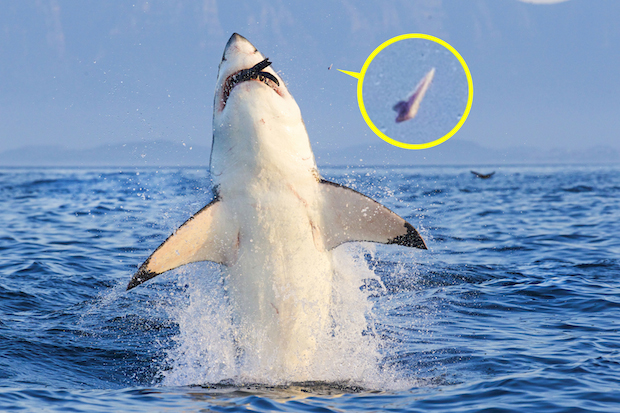
A photographer off South Africa recently captured the moment a large great white shark breached the surface during an ambush attack on an unsuspecting seal.

What he soon found out was that in one of his images was a large triangular-shaped tooth, flying through the air.

Not a big deal for the shark. Great whites possess the ability to replace lost teeth rather quickly, and may lose more than 35,000 teeth in a lifetime.

But it was a huge deal for the photographer, David Jenkins, because his rare image reveals more about the dynamics of a white shark’s ambush attack.

“It all happened incredibly quickly,” he told the Daily Mail. “I didn’t know the shark had lost its tooth until I zoomed in on the image in the back of my camera to check if the photo was sharp and in focus.

“I have never seen this happen or even seen a photo of this happening on a real seal hunt before. It’s definitely a unique shot.”

The waters near Cape Town boast a large population of great white sharks, which sometimes launch airborne during their attacks.

http://www.grindtv.com/outdoor/nature/post/rare-image-shows-great-white-shark-losing-tooth-during-airborne-attack-on-seal/

Thanks to Pete Cuomo to bringing this to the attention of the It’s Interesting community.