Russian Daredevil Takes Insane Selfies Dangling From The Top Of High-Rise Buildings

Armed with nothing but a camera and an abundance of bravery, Russian photographer Kirill Oreshkin takes photographs of himself dangling from the top of high-rise buildings.

“I started doing it because I like the views,” Oreshkin said. “I like photographing the city and the people I get to spend time with.”

http://www.huffingtonpost.com/2014/03/21/kirill-oreshkin-photographer-russia_n_5003465.html

Thanks to Jody Troupe for bringing this to the attention of the It’s Interesting community.

DNA mugshot: Computer sketch program can reconstruct faces from DNA


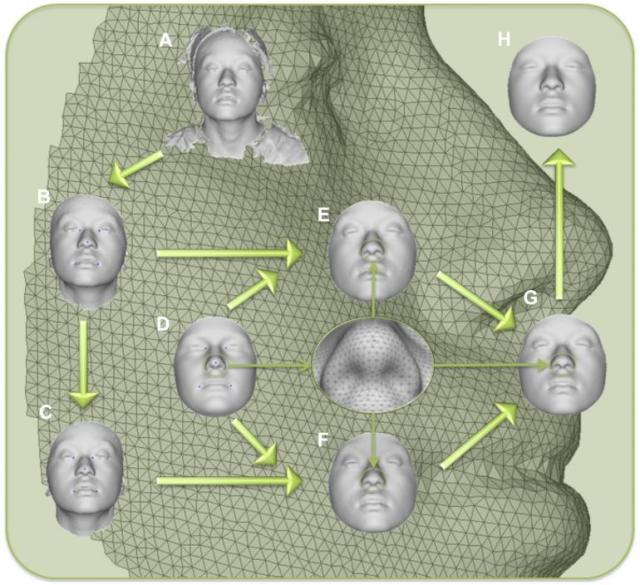
Workflow for 3D face scan processing, including the A) original surface, B) trimmed to exclude non-face parts, C) reflected to make mirror image, D) anthropometric mask of quasi-landmarks, E) remapped, F) reflected remapped, G) symmetrized and H) reconstructed.

By Philip Ross

Could a single hair be used to make an accurate 3D model of a criminal suspect’s face? Researchers from the U.S. and Belgium have developed a computer program that renders a crude genetic “mugshot” from a small sample of DNA.

Forensics can already predict eye and hair color relatively easily. Io9 notes that criminal investigators can even use maggots to extract a victim’s DNA from their unidentifiable body or find hidden faces by zooming into hi-res photos of eyes. But the face is a complex structure that’s more difficult to map from just one DNA sample.

According to New Scientist, researchers used a stereoscopic camera to make 3D images of roughly 600 volunteers with mixed European and West African ancestry. They identified more than 7,000 distinct points on the face to see how sex and racial ancestry affect the position of these points. The variations were used to develop a statistical model that reconstructs the overall shape of a person’s face.

The team also isolated 24 genetic variants, called single nucleotide polymorphisms, which play a role in shaping a face, such as those that shape the head during embryonic development. Lastly, researchers had volunteers rate the 600 faces on perceived ethnicity as well as on a scale of masculinity and femininity.

The new study, published in the journal PLOS Genetics, says this process could allow investigators to make computer-generated mugshots from genetic material left at a crime scene.

“We show that facial variation with regard to sex, ancestry, and genes can be systematically studied with our methods, allowing us to lay the foundation for predictive modeling of faces,” the authors note. “Such predictive modeling could be forensically useful; for example, DNA left at crime scenes could be tested and faces predicted in order to help to narrow the pool of potential suspects. Further, our methods could be used to predict the facial features of descendants, deceased ancestors, and even extinct human species. In addition, these methods could prove to be useful diagnostic tools.”

Any 3D renderings created using the new technology wouldn’t be used in a court of law – any person identified via the DNA mugshots would still have his DNA compared to the crime scene sample – but it could at least narrow the search for a suspected criminal. And there are still a few kinks to work out in the process before the technology is ever used in the field.

“I believe that in five to 10 years’ time, we will be able to computationally predict a face,” Peter Claes of the Catholic University of Leuven in Belgium told New Scientist.

http://www.ibtimes.com/dna-mugshot-how-crime-fighting-computer-sketch-program-can-predict-face-your-genes-1563049

Thanks to Da Brayn for bringing this to the attention of the It’s Interesting community.

Mysterious fever virus reported in Guinea

By Susanna Capelouto, CNN
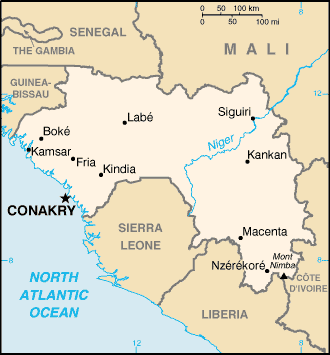
Since February 49 people have gotten sick and 29 have died from an unidentified illness characterized by fever, diarrhea and vomiting in Guinea, according to the West African nation’s minister of health, Remy Lamah.

Lamah said initial test results confirm the presence of a viral hemorrhagic fever, which according to the U.S. Centers for Disease Control and Prevention refers to a group of viruses that affect multiple organ systems in the body.

The Guinean health ministry warned in a statement that the disease is mainly spread from infected people, objects belonging to ill or dead people and by the consumption of meat from animals in the bush.

So far, most of the cases have been in the forest area of southern Guinea, and health officials say they are offering free treatment for all patients.

They’ve urged people to stay calm, wash their hands and report all cases to authorities.

http://www.cnn.com/2014/03/22/world/africa/fever-epidemic-guinea

Thanks to Da Brayn for bringing this to the attention of the It’s Interesting community.

This drone can steal what’s on your phone

The next threat to your privacy could be hovering over head while you walk down the street.

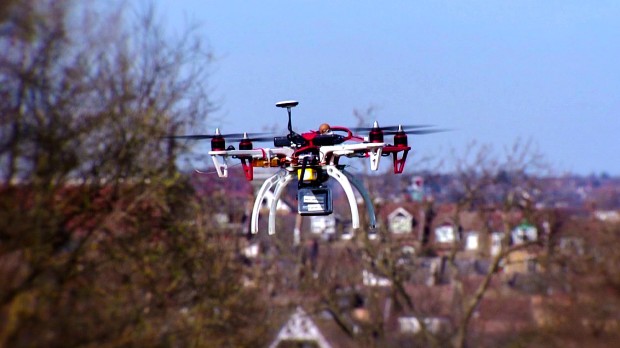
Hackers have developed a drone that can steal the contents of your smartphone — from your location data to your Amazon password — and they’ve been testing it out in the skies of London. The research will be presented next week at the Black Hat Asia cybersecurity conference in Singapore.

The technology equipped on the drone, known as Snoopy, looks for mobile devices with Wi-Fi settings turned on.

Snoopy takes advantage of a feature built into all smartphones and tablets: When mobile devices try to connect to the Internet, they look for networks they’ve accessed in the past.

“Their phone will very noisily be shouting out the name of every network its ever connected to,” Sensepost security researcher Glenn Wilkinson said. “They’ll be shouting out, ‘Starbucks, are you there?…McDonald’s Free Wi-Fi, are you there?”

That’s when Snoopy can swoop into action (and be its most devious, even more than the cartoon dog): the drone can send back a signal pretending to be networks you’ve connected to in the past. Devices two feet apart could both make connections with the quadcopter, each thinking it is a different, trusted Wi-Fi network. When the phones connect to the drone, Snoopy will intercept everything they send and receive.

“Your phone connects to me and then I can see all of your traffic,” Wilkinson said.

That includes the sites you visit, credit card information entered or saved on different sites, location data, usernames and passwords. Each phone has a unique identification number, or MAC address, which the drone uses to tie the traffic to the device.

The names of the networks the phones visit can also be telling.

“I’ve seen somebody looking for ‘Bank X’ corporate Wi-Fi,” Wilkinson said. “Now we know that that person works at that bank.”

CNNMoney took Snoopy out for a spin in London on a Saturday afternoon in March and Wilkinson was able to show us what he believed to be the homes of several people who had walked underneath the drone. In less than an hour of flying, he obtained network names and GPS coordinates for about 150 mobile devices.

He was also able to obtain usernames and passwords for Amazon, PayPal and Yahoo accounts created for the purposes of our reporting so that we could verify the claims without stealing from passersby.

Collecting metadata, or the device IDs and network names, is probably not illegal, according to the Electronic Frontier Foundation. Intercepting usernames, passwords and credit card information with the intent of using them would likely violate wiretapping and identity theft laws.

Wilkinson, who developed the technology with Daniel Cuthbert at Sensepost Research Labs, says he is an ethical hacker. The purpose of this research is to raise awareness of the vulnerabilities of smart devices.

Installing the technology on drones creates a powerful threat because drones are mobile and often out of sight for pedestrians, enabling them to follow people undetected.

While most of the applications of this hack are creepy, it could also be used for law enforcement and public safety. During a riot, a drone could fly overhead and identify looters, for example.

Users can protect themselves by shutting off Wi-Fi connections and forcing their devices to ask before they join networks.

http://money.cnn.com/2014/03/20/technology/security/drone-phone/?google_editors_picks=true

Thanks to Da Brayn for bringing this to the attention of the It’s Interesting community.

Woolly Mammoth DNA To Be Cloned, Then Joined With Elephant DNA To Create New Creature

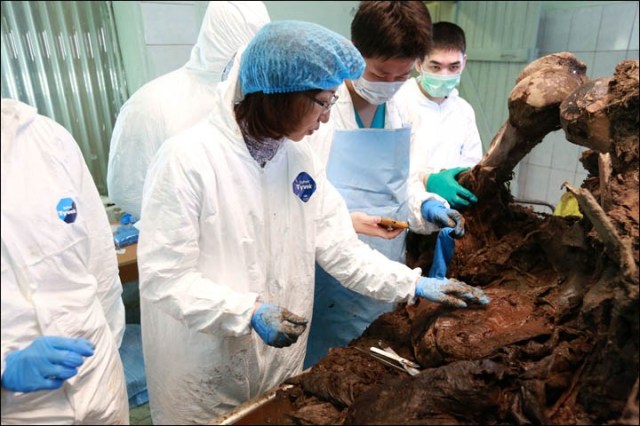
A team of international scientists are extracting high quality DNA from the remains of a woolly mammoth that lived 43,000 years ago, with the aim of joining it with the DNA of an elephant, they told The Siberian Times Thursday. Results from the necropsy of the woolly mammoth in Yakutsk, Sakha Republic — due to wind up Saturday after more than 10 months of analysis — has caused “palpable excitement” within the team of scientists, hailing from Russia, the UK, the United States, Denmark, South Korea, and Moldova.

“The data we are about to receive will give us a high chance to clone the mammoth,” Radik Khayrullin, vice president of the Russian Association of Medical Anthropologists, told The Siberian Times in Yakutsk. He urged responsibility in any attempts to clone the woolly mammoth. “It is one thing to clone it for scientific purpose, and another to clone for the sake of curiosity,” he said. Geneticists are reportedly searching for an Asian elephant whose egg could be injected with cloned material from the woolly mammoth. That same or another female elephant would be the surrogate mother of the resulting fertilzed egg. Any resulting wooly mammoth/elephant hybrid baby would have to be female, since there is no y-chromosome material from the wooly mammoth, who was a female. At any rate, such a procedure would take decades to perfect, experts said.

Semyon Grigoriev, head of the Museum of Mammoths of the Institute of Applied Ecology of the North at the North Eastern Federal University, told The Siberian Times that because the evolutionary paths of the mammoth and the elephant diverged so long ago, cloning will be challenging. However, the samples will allow geneticists to completely decode the DNA of the mammoth.

The Russian woolly mammoth was between 50 and 60 years old when she died. Though the upper part of her carcass has been devoured by animals, the lower part (the legs and a detached trunk) was “astonishingly, very well preserved,” Viktoria Egorova, chief of the research and clinical diagnostic laboratory of the medical clinic of North-Eastern Federal University told The Siberian Times. The mammoth, which may have met her demise by falling through a hole in the ice, lay in the permafrost of Maly Lyakhovskiy Island until it was found last May.
The mammoth as a species disappeared from Siberia at the end of the Pleistocene era about 10,000 years ago, with warming climate and hunting by humans thought to be contributing factors. An isolated population of woolly mammoths persisted on Wrangel Island in the Arctic Ocean, between the Chukchi and East Siberian Seas, until around 4,000 years ago.

‘We have dissected the soft tissues of the mammoth, and I must say that we didn’t expect such results,” Dr. Egorova told The Siberian Times. The necropsy revealed well-preserved muscle and adipose tissues (loose connective tissues which store fat), and “blood vessels with strong walls,” and within intact blood vessels themselves, for the first time ever in an ancient carcass of an extinct animal, erythrocytes, or red blood cells that contain the oxygen-carrying molecule hemoglobin, Egorova told The Siberian Times.

Biologists have been able to discern cells within the woolly mammoth’s blood that had been in the process of migration (involved in growth and healing) within the lymphoid tissue when the woolly mammoth died, a finding Egorova termed “another great discovery.” The intestines contained remains of the vegetation eaten by the mammoth; its multi-chambered stomach was preserved, as was a kidney, which contained fragments Egorova suspects are kidney stones.

One of the Canadian scientists looking foward to anayzing blood samples from the woolly mammoth is Kevin Campbell, a University of Manitoba professor of environmental and evolutionary physiology who has rearched and written on the subject of hemoglobin in woolly mammoths. In 2010, Campbell wrote a letter in the journal Nature Genetics describing how he had genetically resurrected and analyzed woolly mammoth hemoglobin “to reveal for the first time…the structural underpinnings of a key adaptive physiochemical trait in an extinct species.” He discovered that whereas the efficiency of hemoglobin in elephants to offload oxygen to respiring cells is hampered at low temperatures, mammoth hemoglobin has amino acid substitutions that “provide a unique solution to this problem and thereby minimize energetically costly heat loss.” Since then, Campbell has recreated the hemoglobin of woolly mammoths.

Campbell, who described himself as “bitterly disappointed” that he couldn’t make the necropsy of the woolly mammoth in Russia, said he would be doing the next best thing next week; joining one of his collaborators, Roy E. Weber at Aarhus University, Denmark who will be returning from Russia with some muscle and blood samples extracted from the woolly mammoth. If nothing else, the blood samples may allow Campbell to verify the presence of cold-tolerant hemoglobin in woolly mammoths. “It’s one thing to synthesize mammoth hemoglobin in bacteria: It’s quite another story to study the real thing from a 43,000 year-old specimen,” Campbell told the International Science Times. “No other specimen has ever been so well preserved that we could potentially obtain hemoglobin oxygen-binding data from it. This specimen offers the unique opportunity to collect precisely the same kind of physiologically relevant information from an extinct species as I could from those that are still alive.”

Climate change (as destructive a force as it is for the planet) has proven to be a boon for evolutionary physiologists interested in examining extinct animals. “One of the dirty little secrets of this field is that the increased melting of the North affords the finding of many, many more specimens,” Campbell said. “I don’t want to encourage further global warming, but it is a benefit from permafrost melting and so much being exposed, that they are finding woolly rhinos, bison, a crazy number of ancient horses and specimens in the Canadian and Russian Arctic.” Gold mining and industrial development has also unearthed more prehistoric animals than ever before in human history.

The researchers who peformed the autopsy on the woolly mammoth will hold a conference in Greece in May to announce the results.

http://www.isciencetimes.com/articles/6946/20140313/woolly-mammoth-dna-cloning-elephant-clone.htm


More than 10 percent of emergency room visits involving energy drinks result in hospitalization

More than 10 percent of emergency room visits by people age 12 or older for problems involving energy drinks are serious enough to result in hospitalization, the federal government warned this week.

The Substance Abuse and Mental Health Services Administration said that 20,783 people visited emergency rooms in 2011 for difficulties involving the high-caffeine drinks, which are heavily marketed to youths and young adults. Eleven percent of them were hospitalized.

The data showed that 12 percent of people who had consumed only the energy drinks were hospitalized, while eight percent of those who had consumed an energy drink in combination with alcohol or drugs needed in-patient care. The total number of emergency room visits involving the beverages doubled between 2007 and 2011.

The flavored drinks — which include the brands Red Bull, Monster Energy and the smaller 5-Hour Energy shots — can contain as much as 500 milligrams of caffeine, which is five times as much as a typical cup of coffee and 10 times as much as a 12-ounce cola, according to SAMHSA. Ingesting that amount can cause health problems such as insomnia, racing heartbeat and increased blood pressure, the agency said in a bulletin issued March 13.

Even as their sales have soared, the drinks have been linked to “marijuana use, sexual risk taking, fighting, smoking, drinking and prescription drug misuse” among college students, the agency reported in 2013.

In 2012, the New York Times reported that the Food and Drug Administration had received 13 reports of deaths over the previous four years that cited the possible involvement of 5-Hour Energy and five fatalities that mentioned the possibility of Monster Energy being involved. A year ago, a group of physicians, researchers and public health experts urged the Food and Drug Administration to protect children and teens by restricting the amount of caffeine in energy drinks.

Energy drink companies have said that their products contain about the same amount of caffeine as strongly brewed coffee. Energy drinks and shots are usually sold as dietary supplements or food products, which don’t have caffeine limits. Other ingredients in energy drinks, such as taurine and ginseng, aren’t regulated by the FDA.

Studies have set different limits for the amount of caffeine an adult can safely consume, ranging from 2oo to 400 milligrams a day. More than 200 milligrams can be dangerous for children and adolescents, and the American Academy of Pediatrics advises against giving energy drinks to children.

http://www.washingtonpost.com/news/to-your-health/wp/2014/03/19/more-than-10-percent-of-emergency-room-visits-involving-energy-drinks-result-in-hospitalization/

Thanks to Pete Cuomo for bringing this to the attention of the It’s Interesting community.

New sweetener from the tequila plant may treat diabetes and weight loss

Could a new sugar substitute actually lower blood sugar and help you lose weight? That’s the tantalizing – but distant – promise of new research presented at the American Chemical Society (ACS) this week.

Agavins, derived from the agave plant that’s used to make tequila, were found in mouse studies to trigger insulin production and lower blood sugar, as well as help obese mice lose weight.

Unlike sucrose, glucose, and fructose, agavins aren’t absorbed by the body, so they can’t elevate blood glucose, according to research by Mercedes G. López, a researcher at the Centro de Investigación y de Estudios Avanzados, Biotechnology and Biochemistry Irapuato, in Guanajuato, Mexico.

And by boosting the level of a peptide called GLP-1 (short for glucagon-like peptide-1), which triggers the body’s production of insulin, agavins aid the body’s natural blood sugar control. Also, because agavins are type of fiber, they can make people feel fuller and reduce appetite, López’s research shows.

“We believe that agavins have a great potential as light sweeteners since they are sugars, highly soluble, have a low glycemic index, and a neutral taste, but most important, they are not metabolized by humans,” read the study abstract. “This puts agavins in a tremendous position for their consumption by obese and diabetic people.”

The caveat: The research was conducted in mice, and more study is necessary before we’ll know whether agavins are effective and safe in humans. In other words, we’re a long way from agavins appearing on grocery store shelves.

That said, with almost 26 millions of Americans living with diabetes and another 2 million diagnosed each year, a sweetener that lowered blood sugar levels rather than raised them would be quite a useful discovery. Not to mention the potential for a sugar substitute with the potential to help people lose weight.

In the study, titled “Agavins as Potential Novel Sweeteners for Obese and Diabetic People”, López added agavins to the water of mice who were fed a standard diet, weighing them and monitoring blood sugar levels every week. The majority of the mice given the agavin-supplemented water had lower blood glucose levels, ate less, and lost weight compared with other mice whose water was supplemented with glucose, sucrose, fructose, agave syrup, and aspartame.

Unlike other types of fructose, Agavins are fructans, which are long-chain fructoses that the body can’t use, so they are not absorbed into the bloodstream to raise blood sugar. And despite the similarity in the name, agavins are not to be confused with agave nectar or agave syrup, natural sweeteners that are increasingly popular sugar substitutes. In these products the fructans are broken down into fructose, which does raise blood sugar – and add calories.

López has been studying fructans for some time, and has published previous studies showing that they have protective prebiotic effects in the digestive tract and contribute to weight loss in obese mice.

A 2012 study by another team of researchers published in Plant Foods for Human Nutrition found that fructans boosted levels of the beneficial probiotics lactobacillus and bifidus. And like many types of fiber, agavins also lower levels of cholesterol and triglycerides in the blood.

But the news isn’t all good; a 2011 literature review of human studies of the relationship between fructans (not agavins specifically) and blood sugar found that of 13 randomized studies of fructans, only three documented positive results. It remains to be seen whether – as López argues – agavins are distinct from other fructans in their action.

The downside: Agavins are don’t taste as sweet as other forms of sugar such as sucrose, fructose and glucose. And not everyone can tolerate them; like other types of fiber they have the potential to cause digestive problems.

http://www.forbes.com/sites/melaniehaiken/2014/03/17/new-sweetener-from-the-tequila-plant-may-aid-diabetes-weight-loss/

Thanks to Dr. Rajadhyaksha for bringing this to the attention of the It’s Interesting community.

Artificial Intelligence Poses Extinction Risk To Humanity Says Oxford University’s Stuart Armstrong

Artificial intelligence poses an “extinction risk” to human civilisation, an Oxford University professor has said.

Almost everything about the development of genuine AI is uncertain, Stuart Armstrong at the Future of Humanity Institute said in an interview with The Next Web.

That includes when we might develop it, how such a thing could come about and what it means for human society.

But without more research and careful study, it’s possible that we could be opening a Pandora’s box. Which is exactly the sort of thing that the Future of Humanity Institute, a multidisciplinary research hub tasked with asking the “big questions” about the future, is concerned with.

“One of the things that makes AI risk scary is that it’s one of the few that is genuinely an extinction risk if it were to go bad. With a lot of other risks, it’s actually surprisingly hard to get to an extinction risk,” Armstrong told The Next Web.

“If AI went bad, and 95% of humans were killed then the remaining 5% would be extinguished soon after. So despite its uncertainty, it has certain features of very bad risks.”

The thing for humanity to fear is not quite the robots of Terminator (“basically just armoured bears”) but a more incorporeal intelligence capable of dominating humanity from within.

The threat of such a powerful computer brain would include near-term (and near total) unemployment, as replacements for virtually all human workers are quickly developed and replicated, but extends beyond that to genuine threats of widespread anti-human violence.

“Take an anti-virus program that’s dedicated to filtering out viruses from incoming emails and wants to achieve the highest success, and is cunning and you make that super-intelligent,” Armstong said.

“Well it will realise that, say, killing everybody is a solution to its problems, because if it kills everyone and shuts down every computer, no more emails will be sent and and as a side effect no viruses will be sent.”

The caveat to all this is that creating AI is difficult, and we’re nowhere near it. The caveat to that is that it could happen far more quickly than anyone would expect, if just one developer came up with a “neat algorithm” that no one else had thought to construct.

Armstrong’s conclusion is simple: let’s think about this now, particularly in relation to employment, and try to adjust society ourselves before the AI adjusts it for us.

http://www.huffingtonpost.co.uk/2014/03/12/extinction-artificial-intelligence-oxford-stuart-armstrong_n_4947082.html

Mathematician Safa Moteshari determines collapse of civilization in NASA-funded study

end

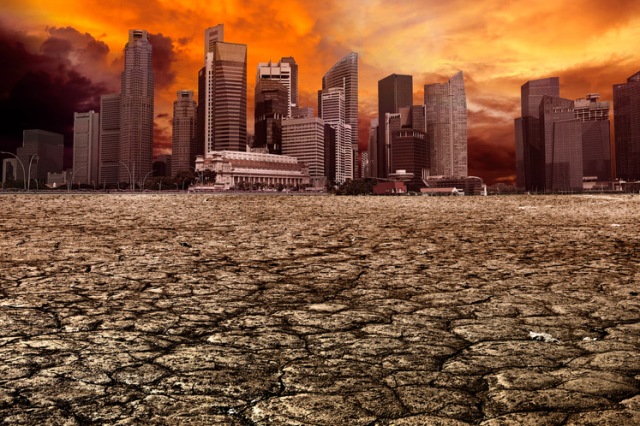
Civilisation is almost inevitably doomed, a Nasa-funded study has found.

Human society is founded on a level of economic and environmental stability which almost certainly cannot be sustained, it said.

The study used simplified models of civilisation designed to experiment with the balance of resources and climate that creates stability – or not – in our world.

These theoretical models – designed to extrapolate from simple principles the future of our industrialised world – ran into almost intractable problems.

Almost any model “closely reflecting the reality of the world today… we find that collapse is difficult to avoid”, the report said.

Mathematician Safa Motesharri begins his report by stating that “the process of rise-and-collapse is actually a recurrent cycle found throughout history” and that this is borne out by maths, as well as historiography.

“The fall of the Roman Empire, and the equally (if not more) advanced Han, Mauryan, and Gupta Empires, as well as so many advanced Mesopotamian Empires, are all testimony to the fact that advanced, sophisticated, complex, and creative civilizations can be both fragile and impermanent.”
His research – funded by Nasa’s Goddard Space Flight Center and published int he Ecological Economics journal – explored the pressures that can lead to a collapse in civilisation.

These criteria include changes in population, climate change and natural disasters. Access to water, agriculture, and energy are also factors.

Motesharri found that problems with each of these is far more damaging when experienced in combination with another. When this occurs the result is often an “economic stratification” and “stretching of resources” which drags at society’s foundations.

Under this highly simplified model, our society appears to be doomed.

In one of his simulations:

“[Ours] appears to be on a sustainable path for quite a long time, but even using an optimal depletion rate and starting with a very small number of Elites, the Elites eventually consume too much, resulting in a famine among Commoners that eventually causes the collapse of society. It is important to note that this Type-L collapse is due to an inequality-induced famine that causes a loss of workers, rather than a collapse of Nature”

He added that elites tend to have a vested interest in sustaining the current model – however doomed – for as long as possible, regardless of the eventual negative outcome:

“While some members of society might raise the alarm that the system is moving towards an impending collapse and therefore advocate structural changes to society in order to avoid it, Elites and their supporters, who opposed making these changes, could point to the long sustainable trajectory ‘so far’ in support of doing nothing.”

There are caveats, of course. The study is a simplified model of society, not a perfect simulation, and it isn’t able to make solid predictions of the future. It’s also worth noting that Motesharri does allow for the possibility that “collapse can be avoided” – though he thinks it will be exceptionally difficult.

Indeed, as the Guardian reports, other studies by the UK Government and KPMG have also warned of a “perfect storm” of energy scarcity and economy fragility coming within a few decades, which lends weight to his conclusion.

http://www.huffingtonpost.co.uk/2014/03/17/civilisation-doomed_n_4977387.html

The history of green on St. Patrick’s day

Green food may mean party time in America, where St. Patrick’s Day has long been an excuse to break out the food dye. But in Ireland, where the Irish celebrate their patron saint on March 17, green food has bitter connotations that recall the nation’s darkest chapter, says historian Christine Kinealy.

The reason, Kinealy explains, is the Irish potato famine of the 1840s, which forced so many Irish to flee mass starvation in their homeland in search of better times in America and elsewhere. Those who stayed behind turned to desperate measures.

“People were so deprived of food that they resorted to eating grass,” Kinealy tells The Salt. “In Irish folk memory, they talk about people’s mouths being green as they died.”

At least 1 million Irish died in the span of six years, says Kinealy, the founding director of Ireland’s Great Hunger Institute at Quinnipiac University in Connecticut. Which is why, for an Irishwoman like Kinealy, who hails from Dublin and County Mayo, the sight of green-tinged edibles intended as a joyous nod to Irish history can be jolting, she says.

“Before I came to America, I’d never seen a green bagel,” she says. “For Irish-Americans, they think of dyeing food green, they think everything is happy. But really, in terms of the famine, this is very sad imagery.”

Of course, Americans have long embraced St. Patrick’s Day traditions that might bemuse the folks back in Ireland, where festivities are a lot more subdued, Kinealy notes.

For instance, St. Paddy’s Day Parades? Those originated here in the late 1700s. (George Washington was known to give his Irish soldiers the day off so they could join the celebrations, she says.)

And that quintessential dish of the holiday, corned beef — it may be delicious, but it’s most definitely not Irish.

As Smithsonian.com noted last year, in Gaelic Ireland, cows were a symbol of wealth and a sacred animal, kept more for their milk than their meat — which was only consumed once an animal’s milking days were over. In the Irish diet, meat meant pork. It wasn’t until Britain conquered most of Ireland that Irish “corned beef” came into existence — to satisfy the beef-loving English.

“Ironically, the ones producing the corned beef, the Irish people, could not afford beef or corned beef for themselves,” Smithsonian notes.

Funny enough, the Irish didn’t learn to love corned beef until coming to America, where they picked up the taste from their Jewish neighbors in the urban melting pot of New York City.

But these days, even the Irish back in the homeland have come to accept this Irish-American dietary quirk, Kinealy says. As tourist season revs up and Americans head to the Emerald Isle to celebrate St. Paddy’s Day, “a lot of pubs in Ireland will offer corned beef because they know the tourists like it. It’s come full circle.”

http://www.npr.org/blogs/thesalt/2014/03/17/290259538/the-dark-history-of-green-food-on-st-patricks-day?ft=1&f=1001