Ray Kurzweil joins Google

Ray-Kurzweil-singularity

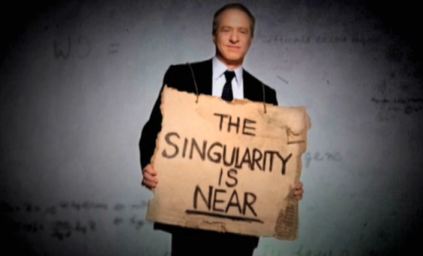
The most well known advocate of the Singularity is Ray Kurzweil, who Bill Gates has called one of the best thinkers of the future of technology.

Ray Kurzweil confirmed today that he will be joining Google to work on new projects involving machine learning and language processing.

“I’m excited to share that I’ll be joining Google as Director of Engineering this Monday, December 17,” said Kurzweil.

“I’ve been interested in technology, and machine learning in particular, for a long time: when I was 14, I designed software that wrote original music, and later went on to invent the first print-to-speech reading machine for the blind, among other inventions. I’ve always worked to create practical systems that will make a difference in people’s lives, which is what excites me as an inventor.

“In 1999, I said that in about a decade we would see technologies such as self-driving cars and mobile phones that could answer your questions, and people criticized these predictions as unrealistic. Fast forward a decade — Google has demonstrated self-driving cars, and people are indeed asking questions of their Android phones. It’s easy to shrug our collective shoulders as if these technologies have always been around, but we’re really on a remarkable trajectory of quickening innovation, and Google is at the forefront of much of this development.

“I’m thrilled to be teaming up with Google to work on some of the hardest problems in computer science so we can turn the next decade’s ‘unrealistic’ visions into reality.”

http://www.kurzweilai.net/kurzweil-joins-google-to-work-on-new-projects-involving-machine-learning-and-language-processing

Thanks to Kebmodee for bringing this to the attention of the It’s Interesting community.

National Intelligence Council’s Possible World Scenarios for 2030

2030


By 2030, for the first time in human history, a majority of the world’s population will not be impoverished and a politically powerful global middle class could total 3 billion people, up from 1 billion today.

These people, many from what are now developing countries, will be healthier, better educated and connected to the Internet. They will be the critical social and economic sector in most countries.

And they will be urbanites; 60 percent of the world’s population of 8.3 billion in 2030 will live in metropolitan regions, some of which will sprawl across three national borders.

These are among the findings of a quadrennial report, “Global Trends 2030: Alternative Worlds,” by the National Intelligence Council, which reports to the U.S. director of national intelligence. The report advises incoming or returning presidential administrations on multiple — sometimes contradictory — prospective scenarios so policymakers can attempt to shape the future.

“We do not seek to predict,” said Christopher A. Kojm, the chairman of the National Intelligence Council. “Instead we provide a framework to think about possible futures.”

The world the council foresees is one in which the United States is no longer a uniquely dominant global power but remains preeminent because of its legacy strengths, its ability to form coalitions and the reluctance of China to assume a global role.

“No other power would be likely to achieve the same panoply of power in this time frame under any plausible scenario,” the report concluded, despite the fact that China is expected to surpass the United States as the largest economic power in the 2020s.

The report noted that the way in which the United States evolves, and whether it can exploit potential energy independence and solve its fiscal problems, is “a big uncertainty.”

“An economically restored U.S. would be a ‘plus’ in terms of the capability of the international system to deal with major global crises during this long transitional period,” the report said, comparing the current period to seminal moments such as the end of the Napoleonic wars and the fall of the Berlin Wall.

The world envisioned by the report is one in which Islamist terrorism, following the trajectory of earlier waves of violence from 19th-century anarchists to the New Left in the 1970s, will exhaust itself and ebb. But the tactics of terrorism will persist. And new actors, whatever their motivation, could shift their focus from mass casualties to massive economic disruptions through cyberattacks.

Moreover, the overall risk of conflict is rising because the most sophisticated weapons of war — including precision-strike capabilities and biological weaponry — are spreading to more and more governments and even non-state actors.

The world of 2030 will be one in which the greatest strain within and between countries could be the struggle for resources — food, water and energy — and climate change could severely affect the ability to produce sufficient quantities of each.

“Demand for food, water and energy will grow by approximately 35, 40 and 50 percent respectively owing to an increase in the global population and the consumption patterns of an expanding middle class,” the report said.

For these levels of growth to be sustainable, new technologies will have to be married to the careful shepherding of resources. “Water management will become critical to long-term food security,” the report concluded.

Food security has already been affected by climate change, particularly in poorer regions of the world, because droughts and other severe weather events have degraded agricultural productivity. Accelerating global warming could deepen shortages.

“We are not necessarily headed into a world of scarcities but policymakers and their private sector partners will need to be proactive to avoid such a future,” the report said. “Many countries probably won’t have the wherewithal to avoid food and water shortages without massive help from outside.”

Among the countries at high risk of failure by 2030 are some familiar names — Somalia, Burundi, Rwanda, Yemen, Uganda and Afghanistan.

If overall trend lines prove benign, and internal governance improves, countries that have the potential to become significant regional economic powers include Turkey, Vietnam, Egypt, Colombia and Nigeria.

Overall, the report said the rise of Asia, and particularly China, will continue, and there will be “a shift in the technological center of gravity from West to East and South” as “companies, ideas, entrepreneurs and capital” flow from the developed to the developing world.

The ability of the United States and China to manage their relationship will be critical to the stability of the global system.

Under its most optimistic scenario of a strong international partnership, the report finds that “the global economy nearly doubles by 2030 to $132 trillion annually,” benefiting the United States and Europe as well as China and the developing world.

But any number of game-changers could undermine that rosy scenario — economic crises, pandemics, regional conflicts and more rapid climate change. The intelligence analysts, however, said they do not see a “full-scale conflagration” along the lines of world war.

http://www.washingtonpost.com/world/national-security/report-sees-middle-class-growing-islamist-terrorism-subsiding-by-2030/2012/12/10/a4f7137c-42d5-11e2-8061-253bccfc7532_story.html

Thanks to Dr. Lutter for bringing this to the attention of the It’s Interesting community.

Do we live in a computer simulation? UW researchers say idea can be tested

universesimulation

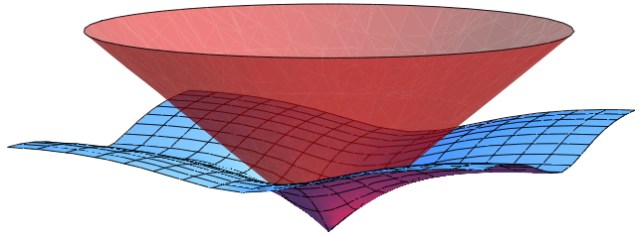
The conical (red) surface shows the relationship between energy and momentum in special relativity, a fundamental theory concerning space and time developed by Albert Einstein, and is the expected result if our universe is not a simulation. The flat (blue) surface illustrates the relationship between energy and momentum that would be expected if the universe is a simulation with an underlying cubic lattice.

A decade ago, a British philosopher put forth the notion that the universe we live in might in fact be a computer simulation run by our descendants. While that seems far-fetched, perhaps even incomprehensible, a team of physicists at the University of Washington has come up with a potential test to see if the idea holds water.

The concept that current humanity could possibly be living in a computer simulation comes from a 2003 paper published in Philosophical Quarterly by Nick Bostrom, a philosophy professor at the University of Oxford. In the paper, he argued that at least one of three possibilities is true:

  • The human species is likely to go extinct before reaching a “posthuman” stage.
  • Any posthuman civilization is very unlikely to run a significant number of simulations of its evolutionary history.
  • We are almost certainly living in a computer simulation.

He also held that “the belief that there is a significant chance that we will one day become posthumans who run ancestor simulations is false, unless we are currently living in a simulation.”

With current limitations and trends in computing, it will be decades before researchers will be able to run even primitive simulations of the universe. But the UW team has suggested tests that can be performed now, or in the near future, that are sensitive to constraints imposed on future simulations by limited resources.

Currently, supercomputers using a technique called lattice quantum chromodynamics and starting from the fundamental physical laws that govern the universe can simulate only a very small portion of the universe, on the scale of one 100-trillionth of a meter, a little larger than the nucleus of an atom, said Martin Savage, a UW physics professor.

Eventually, more powerful simulations will be able to model on the scale of a molecule, then a cell and even a human being. But it will take many generations of growth in computing power to be able to simulate a large enough chunk of the universe to understand the constraints on physical processes that would indicate we are living in a computer model.

However, Savage said, there are signatures of resource constraints in present-day simulations that are likely to exist as well in simulations in the distant future, including the imprint of an underlying lattice if one is used to model the space-time continuum.

The supercomputers performing lattice quantum chromodynamics calculations essentially divide space-time into a four-dimensional grid. That allows researchers to examine what is called the strong force, one of the four fundamental forces of nature and the one that binds subatomic particles called quarks and gluons together into neutrons and protons at the core of atoms.

“If you make the simulations big enough, something like our universe should emerge,” Savage said. Then it would be a matter of looking for a “signature” in our universe that has an analog in the current small-scale simulations.

Savage and colleagues Silas Beane of the University of New Hampshire, who collaborated while at the UW’s Institute for Nuclear Theory, and Zohreh Davoudi, a UW physics graduate student, suggest that the signature could show up as a limitation in the energy of cosmic rays.

In a paper they have posted on arXiv, an online archive for preprints of scientific papers in a number of fields, including physics, they say that the highest-energy cosmic rays would not travel along the edges of the lattice in the model but would travel diagonally, and they would not interact equally in all directions as they otherwise would be expected to do.

“This is the first testable signature of such an idea,” Savage said.

If such a concept turned out to be reality, it would raise other possibilities as well. For example, Davoudi suggests that if our universe is a simulation, then those running it could be running other simulations as well, essentially creating other universes parallel to our own.

“Then the question is, ‘Can you communicate with those other universes if they are running on the same platform?’” she said.

http://www.washington.edu/news/2012/12/10/do-we-live-in-a-computer-simulation-uw-researchers-say-idea-can-be-tested/


Breakthrough in Augmented Reality Contact Lens

121205090931-large


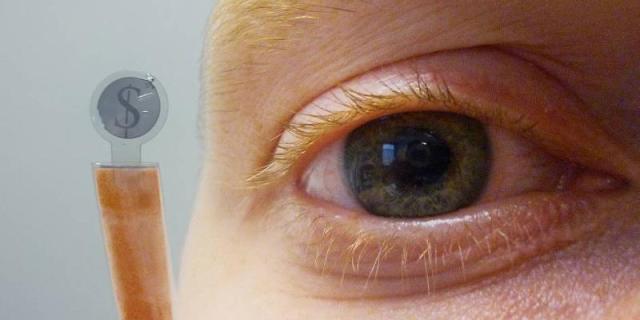
The Centre of Microsystems Technology (CMST), imec’s associated laboratory at Ghent University (Belgium), has developed an innovative spherical curved LCD display, which can be embedded in contact lenses. The first step toward fully pixilated contact lens displays, this achievement has potential wide-spread applications in medical and cosmetic domains.

Unlike LED-based contact lens displays, which are limited to a few small pixels, imec’s innovative LCD-based technology permits the use of the entire display surface. By adapting the patterning process of the conductive layer, this technology enables applications with a broad range of pixel number and sizes, such as a one pixel, fully covered contact lens acting as adaptable sunglasses, or a highly pixilated contact lens display.

The first prototype presented December 5 contains a patterned dollar sign, depicting the many cartoons that feature people or figures with dollars in their eyes. It can only display rudimentary patterns, similar to an electronic pocket calculator. In the future, the researchers envision fully autonomous electronic contact lenses embedded with this display. These next-generation solutions could be used for medical purposes, for example to control the light transmission toward the retina in case of a damaged iris, or for cosmetic purposes such as an iris with a tunable color. In the future, the display could also function as a head-up display, superimposing an image onto the user’s normal view. However, there are still hurdles to overcome for broader consumer and civilian implementation.

“Normally, flexible displays using liquid crystal cells are not designed to be formed into a new shape, especially not a spherical one. Thus, the main challenge was to create a very thin, spherically curved substrate with active layers that could withstand the extreme molding processes,” said Jelle De Smet, the main researcher on the project. “Moreover, since we had to use very thin polymer films, their influence on the smoothness of the display had to be studied in detail. By using new kinds of conductive polymers and integrating them into a smooth spherical cell, we were able to fabricate a new LCD-based contact lens display.”

Video: http://www.youtube.com/watch?v=-btRUzoKYEA

http://www.sciencedaily.com/releases/2012/12/121205090931.htm

Scientists at Cornell create Terminator-like organic metamaterial that flows like liquid and remembers its shape


DNAletters


birdsnests

A bit reminiscent of the Terminator T-1000, a new material created by Cornell researchers is so soft that it can flow like a liquid and then, strangely, return to its original shape.

Rather than liquid metal, it is a hydrogel, a mesh of organic molecules with many small empty spaces that can absorb water like a sponge. It qualifies as a “metamaterial” with properties not found in nature and may be the first organic metamaterial with mechanical meta-properties.

Hydrogels have already been considered for use in drug delivery — the spaces can be filled with drugs that release slowly as the gel biodegrades — and as frameworks for tissue rebuilding. The ability to form a gel into a desired shape further expands the possibilities. For example, a drug-infused gel could be formed to exactly fit the space inside a wound.

Dan Luo, professor of biological and environmental engineering, and colleagues describe their creation in the Dec. 2 issue of the journal Nature Nanotechnology.

The new hydrogel is made of synthetic DNA. In addition to being the stuff genes are made of, DNA can serve as a building block for self-assembling materials. Single strands of DNA will lock onto other single stands that have complementary coding, like tiny organic Legos. By synthesizing DNA with carefully arranged complementary sections Luo’s research team previously created short stands that link into shapes such as crosses or Y’s, which in turn join at the ends to form meshlike structures to form the first successful all-DNA hydrogel. Trying a new approach, they mixed synthetic DNA with enzymes that cause DNA to self-replicate and to extend itself into long chains, to make a hydrogel without DNA linkages.

“During this process they entangle, and the entanglement produces a 3-D network,” Luo explained. But the result was not what they expected: The hydrogel they made flows like a liquid, but when placed in water returns to the shape of the container in which it was formed.

“This was not by design,” Luo said.

Examination under an electron microscope shows that the material is made up of a mass of tiny spherical “bird’s nests” of tangled DNA, about 1 micron (millionth of a meter) in diameter, further entangled to one another by longer DNA chains. It behaves something like a mass of rubber bands glued together: It has an inherent shape, but can be stretched and deformed.

Exactly how this works is “still being investigated,” the researchers said, but they theorize that the elastic forces holding the shape are so weak that a combination of surface tension and gravity overcomes them; the gel just sags into a loose blob. But when it is immersed in water, surface tension is nearly zero — there’s water inside and out — and buoyancy cancels gravity.

To demonstrate the effect, the researchers created hydrogels in molds shaped like the letters D, N and A. Poured out of the molds, the gels became amorphous liquids, but in water they morphed back into the letters. As a possible application, the team created a water-actuated switch. They made a short cylindrical gel infused with metal particles placed in an insulated tube between two electrical contacts. In liquid form the gel reaches both ends of the tube and forms a circuit. When water is added, the gel reverts to its shorter form that will not reach both ends. (The experiment is done with distilled water that does not conduct electricity.)

The DNA used in this work has a random sequence, and only occasional cross-linking was observed, Luo said. By designing the DNA to link in particular ways he hopes to be able to tune the properties of the new hydrogel.

The research has been partially supported by the U.S. Department of Agriculture and the Department of Defense.

http://www.news.cornell.edu/stories/Dec12/ShapeGel.html

Thanks to Dr. Rajadhyaksha for bringing this to the attention of the It’s Interesting community.
Peak Phosphorus and Food Production

phosphorus


Investor Jeremy Grantham of GMO recently published a startlingly depressing outlook for the future of humanity. 

Grantham thinks the number of people on Earth has finally and permanently outstripped the planet’s ability to support us.

Grantham believes that the planet can only sustainably support about 1.5 billion humans, versus the 7 billion on Earth right now (heading to 10-12 billion).

Basically, Grantham thinks most of us are going to starve to death.

Why?

In part because we’re churning through a finite supply of something that is critical to our ability to produce food: Phosphorus.

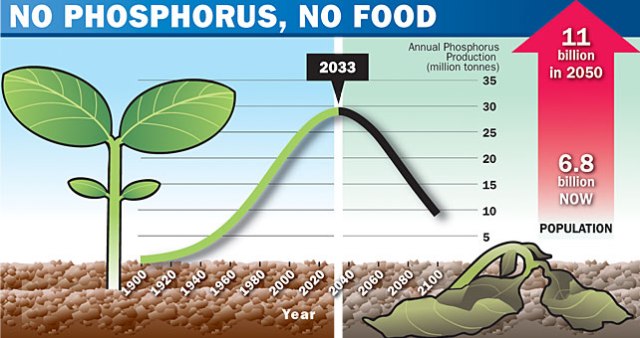
Phosphorus is a critical ingredient of fertilizer, and there is a finite supply of it. The consensus is that we will hit “peak phosphorus” production within a few decades, after which point our phosphorus supply will inexorably decline. As it declines, we will be unable to feed ourselves. And you know the rest.

Of course, ever since Malthus, a steady stream of doomsayers have predicted a ghastly end to the human population explosion–and, so far, they’ve all been wrong.

So why is a man of Grantham’s intelligence adding his voice to this chorus?

And how real is this threat? Are we all going to starve?

Humans have been around for a while. But for most of our existence, our population was small and stable. Then it exploded.

Most of this explosion has come in the past 200 years–just as Malthus predicted. What Malthus did not foresee was the discovery of oil, commercial fertilizer, and other resources, which have (temporarily) supported this population explosion.

Most of this explosion has come in the past 200 years--just as Malthus predicted. What Malthus did not foresee was the discovery of oil, commercial fertilizer, and other resources, which have (temporarily) supported this population explosion.

GMO

For the past 100 years, technology has made these resources cheaper to extract and produce, which has made them ever cheaper. Grantham thinks that trend has now permanently ended.

For the past 100 years, technology has made these resources cheaper to extract and produce, which has made them ever cheaper. Grantham thinks that trend has now permanently ended.

GMO

Take oil, for example. Oil traded at about $16 a barrel for a century. Then, as demand outstripped supply, the “normal” price increased to ~$35 a barrel. Now, Grantham thinks “normal” is about ~$75 a barrel

Take oil, for example. Oil traded at about $16 a barrel for a century. Then, as demand outstripped supply, the "normal" price increased to ~$35 a barrel. Now, Grantham thinks "normal" is about ~$75 a barrel

GMO

Why are oil prices rising? Because oil demand is now growing far faster than oil supply. The world’s oil production has barely increased since the 1970s, while oil usage has exploded.

Why are oil prices rising? Because oil demand is now growing far faster than oil supply. The world's oil production has barely increased since the 1970s, while oil usage has exploded.

GMO

Demand is exceeding supply for other commodities, too. Like metals. Here’s a hundred-year look at the prices of Iron ore.

Demand is exceeding supply for other commodities, too. Like metals. Here's a hundred-year look at the prices of Iron ore.

GMO

But the real problem is food.

Over the past century, the world has produced ever more food from the same (relatively) finite supply of arable land. For example, this chart shows global wheat production in the past 50 years. The blue line is farmland. The yellow line is total wheat production. The pink line is “yield per hectare.” Production is rising because yield is increasing.

Why are crop yields increasing? Fertilizer.

Why are crop yields increasing? Fertilizer.

chuckoutrearseats via Flickr

In the past half-century, we have used an ever-increasing amount of fertilizer. Not just in total, but per acre. This chart, for example, shows the number of tons of fertilizer used per square kilometer of farmland.

In the past half-century, we have used an ever-increasing amount of fertilizer. Not just in total, but per acre. This chart, for example, shows the number of tons of fertilizer used per square kilometer of farmland.

GMO

And this leads us to the first problem. 40 years ago, the average growth rate of crop yields per acre was an impressive 3.5% per year. This was comfortably ahead of the growth rate of global population. In recent years, however, the growth in crop yields per acre has dropped to about 1.5%. That’s dangerously close to the growth of population.

And this leads us to the first problem. 40 years ago, the average growth rate of crop yields per acre was an impressive 3.5% per year. This was comfortably ahead of the growth rate of global population. In recent years, however, the growth in crop yields per acre has dropped to about 1.5%. That's dangerously close to the growth of population.

GMO

That brings us to the second problem. We don’t have an infinite supply of fertilizer.

For most of human history, we used “natural fertilizer” (poop). But then we started making more powerful stuff.

Commercial fertilizer requires, among other ingredients, potassium and phosphorus. There are finite quantities of both. Phosphorus, especially, is in short supply.

Phosphorus (P) is essential for life. Plants absorb it from fertilized soil, and then animals absorb it when they eat plants (and each other). When the plants and animals excrete waste or die, the phosphorus returns to the environment. Eventually, given enough time, it gets compressed into rock at the bottom of the ocean.

Phosphate is a critical ingredient of fertilizer, and there is no substitute for it (because plants are partially made from it). This photo shows the difference between corn fertilized with phosphorus (background) and corn without.

Most of the phosphate we use in commercial fertilizer comes from phosphate rock, which was once sediment at the bottom of the ocean. This mine is located in Togo.

In the past ~120 years, we have become completely dependent on phosphate rock for phosphorus used in commercial fertilizer. Before that, our phosphate came from manure.

As the human population grows, and emerging markets get richer and need more food and animal feed, we’re consuming more and more phosphorus (red line).

The amount of phosphate rock we use, therefore, continues to climb.

The trouble is that there isn’t an infinite amount of phosphate rock. Estimates differ on the amount of reserves available in the world, but they’re not unlimited. Some scientists think we have enough to last hundreds of years. Others, however, are far less optimistic.

The consensus of many scientists is that we will hit “peak phosphorus” production in about 2030. After that, phosphorus production is expected to decline.

As phosphorus production drops, crop yields will drop. And then, the concern is, we won’t be able to grow enough food to feed ourselves.

As phosphorus production drops, crop yields will drop. And then, the concern is, we won't be able to grow enough food to feed ourselves.

So is that it? Are we screwed?

Not necessarily. It turns out that our urine and feces contain a lot of phosphorus–which is why they make good fertilizer. If we got serious about recycling our bio-waste, we could reduce our need for phosphate rock.

But although conservation and recycling will help, they won’t fix the problem. Because a huge amount of phosphorus will still be lost to runoff. Phosphate that isn’t consumed by plants leaches out of the soil into rivers and then to the ocean.

So, eventually, the finite supply of usable phosphorus could be a big problem.

Jeremy Grantham, by the way, thinks the finite supply of fertilizer and limits of crop yields are starting to affect food prices. Soybean prices, for example, have jumped in the last 10 years.

So have corn prices.

And wheat prices.

So, why is all this happening now, when the global population has been exploding for two centuries? The answer, in part, is the spectacular growth of China, India, and other massive countries. The resource-usage of these countries is mind-boggling. Here, for example, are Grantham’s estimates of the percentage of world consumption of various resources that are consumed by China alone.

So, why is all this happening now, when the global population has been exploding for two centuries? The answer, in part, is the spectacular growth of China, India, and other massive countries. The resource-usage of these countries is mind-boggling. Here, for example, are Grantham's estimates of the percentage of world consumption of various resources that are consumed by China alone.

GMO

Common sense will tell you that finite resources can’t support infinite growth. And another look at the “growth curve” of human population shows why it might be silly to dismiss Malthus, et al, as “obviously wrong.” (Maybe they were just early).

Common sense will tell you that finite resources can't support infinite growth. And another look at the "growth curve" of human population shows why it might be silly to dismiss Malthus, et al, as "obviously wrong." (Maybe they were just early).

Human population.

Wikipedia

But here’s hoping science and ingenuity help us find a way to fix the problem.

But here's hoping science and ingenuity help us find a way to fix the problem.

Read more: http://www.businessinsider.com/peak-phosphorus-and-food-production-2012-12?op=1#ixzz2E7yHKqnu

 
Thanks to SRW for bringing this to the attention of the It’s Interesting community.
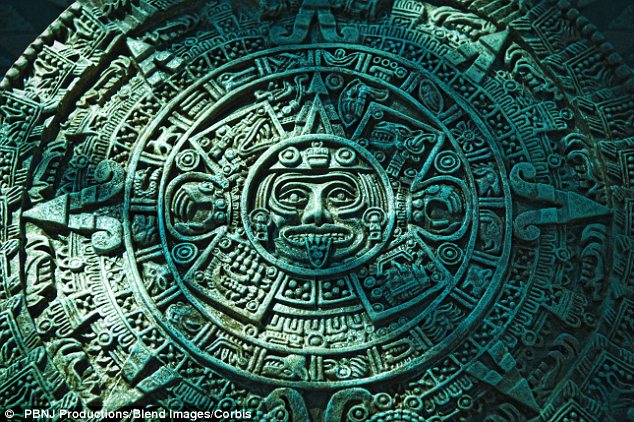
Bugarach – the only place that will survive the 12-21-12 Mayan apocalypse

b2The village of Bugarach attracts many  who believe that it will survive the  end of the World 21 December 2012article-2242176-161D29A6000005DC-874_634x424

article-2242176-161E81D7000005DC-4_306x263article-2242176-16473AC8000005DC-803_634x422

  • Bugarach – population: 176 – has been earmarked by doomsday cults as the only place in the world which is going to survive Armageddon
  • It is based on an interpretation of the Mayan calendar which claims a planet is on a crash course with Earth and will impact on December 21 2012
  • According to prophecy aliens will emerge from their ‘spaceship garage’ in the town’s Pic de Bugarach mountain and pluck believers to safety
  • ‘Authentic Bugarach stones’ are on sale for €1.50 a gram while a bottle of water from the local spring will cost an eye-watering €15
  • One landowner is offering up his four-bedroom home for £1,200 a night and can offer a camping space in his field for £324
  • ‘Apocalypse pizza’ and ‘End of the World vintage’ wine also available

Nestled in the rolling foothills of the French Pyrenees, market day in the tiny farming community of Bugarach has never been busier.

But shoppers aren’t there to sample the fresh meat, wine and dairy for which the town is locally famed, they are there to pick up their own piece of end-of-the-world memorabilia.

It is because Bugarach – population 176 – has been earmarked by doomsday cults as the only place in the world which is going to survive Armageddon, scheduled for December 21 this year by an ancient Mayan prophecy.

Modern interpretations of the forecast, heavily stoked by internet rumour, predict that aliens will emerge from their ‘spaceship garage’ hidden deep within the town’s imposing Pic de Bugarach mountain and pluck anyone in the vicinity to safety.

Now, Armageddon tourists and UFO spotters hoping for salvation are swarming to the two-street hamlet to collect a slice of Last Day history.

And it is an opportunity the village’s shrewd inhabitants are eager not to pass up.

Souvenirs include ‘authentic Bugarach stones’ from Pic de Bugarach’s rock-face itself, on sale for €1.50 (£1.20) a gram, and ‘natural pyramids of pyrite iron’ from underground.

Meanwhile, a bottle of water from the local spring, which can apparently cure a range of ailments, costs an eye-watering €15 (£12).

One landowner is even offering up his four-bedroom home with close up views of the mysterious peak for £1,200 a night.

But for those on a budget, he can offer camping space in his field (tent not included) for 400 euros a night.

‘I possess a rare asset, the land of immortality,’ he told La Depeche du Midi, the area’s local daily.

On the evening in question, tourists can pop to the local Italian restaurant for an ‘Apocalypse pizza’, washed down with a local vintner’s ‘End Of The World’ vintage.

If the predictions turn out to be wrong, they can celebrate with the same wine-seller’s ‘Survival Vintage’, on sale a day later.

But Bugarach’s mayor, Jean Pierre Delord, is worried about the numbers of New Agers arriving in the town.

Police and troops have been drafted in to deal with the sudden influx and stop believers from scaling the mountain. Although many believe this is merely a cover for the investigation of dozens of recent UFO sightings.

David, who quit his telecoms job in Tours to move to Bugarach, told The Sun: ‘There are serious things going on here – I want to know what these objects are.

‘Things exist and people have a right to know.’

While David, who would not reveal his surname, said he wasn’t sure the world would actually end in three weeks, added: ‘I do think the capitalist system is going to collapse then.’

But others have expressed anger at the town, blaming it for taking advantage of ‘gullible’ New Agers.

Eric Freysselinard, the prefect of the Aude county which includes Bugarach, said this week: ‘I find it really outrageous to abuse the naivety of people and rush into commerce that defies common sense.’

The prophesy is based on an interpretation of the ancient Mayan calendar which claims an intergalactic planet is on a crash course with Earth and will impact on December 21 2012.

The French government has even warned of the risk of mass suicides in the country by people who believe the world will self-destruct next year.

Recent disasters – including the earthquake in Japan – as well as anxiety over pandemics and economic concerns – are creating a global climate of fear, which for some are omens of impending doom.

A report published yesterday by watchdog Miviludes said the picturesque village near Carcassonne should be monitored in the lead-up to the end of 2012.

Miviludes president Georges Fenech said: ‘I think we need to be careful. We shouldn’t get paranoid, but when you see what happened at Waco in the United States, we know this kind of thinking can influence vulnerable people.’

The internet is awash with myths about the hamlet.

These include beliefs that the mountain is surrounded by a magnetic force, that it is the site of a concealed alien base, or even that it contains an underground access to another world.

Patrice Etienne, who runs an organic cafe in the village, said there have been an increased number of reports by walkers in the area of cameras jamming when they tried to take pictures and strange noises rumbling underground.

‘We have seen military aircraft, police and soldiers,’ he added. ‘It’s like a Spielberg movie. They are looking for something. There is something in this mountain, definitely.’

Meanwhile, panic is spreading throughout Russia at such a rate over the Earth’s pending doom, that Moscow’s minister of emergency situations has told its citizens that the world will not end on December 21.

Ancient Mayans claimed that is the day a 5,125-year cycle known as the Long Count in the Mayan calendar supposedly comes to a close. Many in Russia, where mystical thinking is popular, have taken notice.

Some are hoarding everyday items such as sugar, matches and candles, while inmates in a jail are said to have experienced a ‘collective mass psychosis’.

The ministry said it had access to ‘methods of monitoring what is occurring on Earth’, and could say with confidence all will be well.

However Russians were warned they still face the threats of ‘blizzards, ice storms, breakdowns in heat, electricity and water supply’.

An official from the Russian State Church has also spoken out to reassure frightened people.

http://www.dailymail.co.uk/news/article-2242176/Bugarach-Town-set-survive-Mayan-Apocalypse-cracks-open-End-World-wine.html?ICO=most_read_module

Gardening On The Moon


Gardening in space! Chinese astronauts may grow fresh vegetables in extraterrestrial bases on Moon or Mars in the future to provide food and oxygen supplies to astronauts, an official said after a successful lab experiment.

Deng Yibing, deputy director of the Beijing-based Chinese Astronaut Research and Training Center, said that the recent experiment focused on a dynamic balanced mechanism of oxygen, carbon dioxide, and water between people and plants in a closed system.

According to Deng, a cabin of 300 cubic metres was established to provide sustainable supplies of air, water and food for two participants during the experiment, the official Xinhua news agency reported.

Four kinds of vegetables were grown, taking in carbon dioxide and providing oxygen for the two people living in the cabin. They could also harvest fresh vegetables for meals, Deng said.

The experiment, the first of its kind in China, is extremely important for the long-term development of the country’s manned space programme, Deng added.

The cabin, a controlled ecological life support system (CELSS) built in 2011, is a model of China’s third generation of astronauts’ life support systems, which is expected to be used in extraterrestrial bases on the Moon or Mars.

The introduction of a CELSS seeks to provide sustainable supplies of air, water and food for astronauts with the help of plants and algae, instead of relying on stocks of such basics deposited on board at the outset of the mission.

Advance forms of CELSS also involve the breeding of animals for meat and using microbes to recycle wastes.

Scientists from Germany also participated in the experiments.

http://www.phenomenica.com/2012/12/chinese-astronauts-plan-to-grow-vegetables-on-moon.html

Future technology from Apple

applecomputer062906vig1


All the way back in February of this year, Apple’s iPhone business alone surpassed the size of Microsoft’s entire business, reaching nearly $25 billion in annual revenue versus Microsoft’s ~$20 billion.

Since February, Apple’s iPhone business has only grown, widening this gap.

Here’s the outdated chart from February:

iPhone vs Microsoft

Remarkable isn’t it?

Here’s what’s more remarkable yet: At this very moment, Apple is working on technology that, if successfully developed, will cannibalize and ultimately destroy that iPhone business.

We have two pieces of evidence.

The first is that Apple has established a pattern.

Unlike most companies, Apple has a remarkable ability to predict the kinds of gadgets that will undercut the gadgets it sells, and then build these new gadgets better than anyone else could.

The best example of this is the iPad, which is actively disrupting Apple’s own Mac business.

During Business Insider’s Ignition Conference last week, top Apple analyst Gene Munster of Piper Jaffray talked about Apple’s tendency to cannibalize its own businesses and predicted that it would continue to do so.

He speculated that Apple is working on consumer robotics, wearable computers, 3D printing, consumable computers, and automated technology.

He showed everyone this chart, which visualizes Apple’s pattern:

Munster on Apple

Here’s the other reason it’s safe to assume Apple is quietly working on the destruction of its most massive business, the iPhone.

Just like Google and Microsoft, Apple is working on computerized glasses. 

Computerized glasses, are, at the moment, the technology that is most likely to bring the smartphone era to an end.

They fit into an obvious pattern, where computers have been getting smaller and closer to our faces since their very beginning. 

First they were in big rooms, then they sat on desktops, then they sat on our laps, and now they’re in our palms. Next they’ll be on our faces. 

We have the rough schematics of Apple’s project.

They’ve been  publicly available on the US Patent Office’s website since this summer, when they were noticed by several Apple-watching websites.

In the patent filing, Apple calls the gadget  a “head-mounted display” or “HMD.”  

The filing is authored by Tony Fadell, designer of the iPod, and John Tang. Fadell is no longer at Apple, but Tang is.

Some highlights from the description:

  • An HMD is “a display device that a person wears on the head in order to have video information directly displayed in front of the eyes.”
  • “The optics are typically embedded in a helmet, glasses, or a visor, which a user can wear.”
  • “HMDs can be used to view a see-through image imposed upon a real world view, thereby creating what is typically referred to as an augmented reality.”
Apple says HMDs can be used…
  • To “display relevant tactical information, such as maps or thermal imaging data.”
  • To “provide stereoscopic views of CAD schematics, simulations or remote sensing applications.”
  • For “gaming and entertainment applications.”
A gadget that features applications for maps, games, and a million other uses? Sounds familiar.

Here’s an illustration from the patent filing:

Apple Patent

Read more: http://www.businessinsider.com/apple-is-quietly-working-to-destroy-the-iphone-2012-12#ixzz2E7XVXabt

DARPA project suggests a mix of man and machine may be the most efficient way to spot danger: the Cognitive Technology Threat Warning System

smart_sentryx519


Sentry duty is a tough assignment. Most of the time there’s nothing to see, and when a threat does pop up, it can be hard to spot. In some military studies, humans are shown to detect only 47 percent of visible dangers.

A project run by the Defense Advanced Research Projects Agency (DARPA) suggests that combining the abilities of human sentries with those of machine-vision systems could be a better way to identify danger. It also uses electroencephalography to identify spikes in brain activity that can correspond to subconscious recognition of an object.

An experimental system developed by DARPA sandwiches a human observer between layers of computer vision and has been shown to outperform either machines or humans used in isolation.

The so-called Cognitive Technology Threat Warning System consists of a wide-angle camera and radar, which collects imagery for humans to review on a screen, and a wearable electroencephalogram device that measures the reviewer’s brain activity. This allows the system to detect unconscious recognition of changes in a scene—called a P300 event.

In experiments, a participant was asked to review test footage shot at military test sites in the desert and rain forest. The system caught 91 percent of incidents (such as humans on foot or approaching vehicles) in the simulation. It also widened the field of view that could effectively be monitored. False alarms were raised only 0.2 percent of the time, down from 35 percent when a computer vision system was used on its own. When combined with radar, which detects things invisible to the naked eye, the accuracy of the system was close to 100 percent, DARPA says.

“The DARPA project is different from other ‘human-in-the-loop’ projects because it takes advantage of the human visual system without having the humans do any ‘work,’ ” says computer scientist Devi Parikh of the Toyota Technological Institute at Chicago. Parikh researches vision systems that combine human and machine expertise.

While electroencephalogram-measuring caps are commercially available for a few hundred dollars, Parikh warns that the technology is still in its infancy. Furthermore, she notes, the P300 signals may vary enough to require training or personalized processing, which could make it harder to scale up such a system for widespread use.

Thanks to Kebmodee for bringing this to the attention of the It’s Interesting community.
http://www.technologyreview.com/news/507826/sentry-system-combines-a-human-brain-with-computer-vision/