What’s the universe made of? Math

UniverseMath_m_0131

By Tanya Lewis, LiveScience

Scientists have long used mathematics to describe the physical properties of the universe. But what if the universe itself is math? That’s what cosmologist Max Tegmark believes.

In Tegmark’s view, everything in the universe — humans included — is part of a mathematical structure. All matter is made up of particles, which have properties such as charge and spin, but these properties are purely mathematical, he says. And space itself has properties such as dimensions, but is still ultimately a mathematical structure.

“If you accept the idea that both space itself, and all the stuff in space, have no properties at all except mathematical properties,” then the idea that everything is mathematical “starts to sound a little bit less insane,” Tegmark said in a talk given Jan. 15 here at The Bell House. The talk was based on his book “Our Mathematical Universe: My Quest for the Ultimate Nature of Reality” (Knopf, 2014).

“If my idea is wrong, physics is ultimately doomed,” Tegmark said. But if the universe really is mathematics, he added, “There’s nothing we can’t, in principle, understand.”

The idea follows the observation that nature is full of patterns, such as the Fibonacci sequence, a series of numbers in which each number is the sum of the previous two numbers. The flowering of an artichoke follows this sequence, for example, with the distance between each petal and the next matching the ratio of the numbers in the sequence.

The nonliving world also behaves in a mathematical way. If you throw a baseball in the air, it follows a roughly parabolic trajectory. Planets and other astrophysical bodies follow elliptical orbits.

“There’s an elegant simplicity and beauty in nature revealed by mathematical patterns and shapes, which our minds have been able to figure out,” said Tegmark, who loves math so much he has framed pictures of famous equations in his living room.

One consequence of the mathematical nature of the universe is that scientists could in theory predict every observation or measurement in physics. Tegmark pointed out that mathematics predicted the existence of the planet Neptune, radio waves and the Higgs boson particle thought to explain how other particles get their mass.

Some people argue that math is just a tool invented by scientists to explain the natural world. But Tegmark contends the mathematical structure found in the natural world shows that math exists in reality, not just in the human mind.

And speaking of the human mind, could we use math to explain the brain?

Some have described the human brain as the most complex structure in the universe. Indeed, the human mind has made possible all of the great leaps in understanding our world.

Someday, Tegmark said, scientists will probably be able to describe even consciousness using math. (Carl Sagan is quoted as having said, “the brain is a very big place, in a very small space.”)

“Consciousness is probably the way information feels when it’s being processed in certain, very complicated ways,” Tegmark said. He pointed out that many great breakthroughs in physics have involved unifying two things once thought to be separate: energy and matter, space and time, electricity and magnetism. He said he suspects the mind, which is the feeling of a conscious self, will ultimately be unified with the body, which is a collection of moving particles.

But if the brain is just math, does that mean free will doesn’t exist, because the movements of particles could be calculated using equations? Not necessarily, he said.

One way to think of it is, if a computer tried to simulate what a person will do, the computation would take at least the same amount of time as performing the action. So some people have suggested defining free will as an inability to predict what one is going to do before the event occurs.

But that doesn’t mean humans are powerless. Tegmark concluded his talk with a call to action: “Humans have the power not only to understand our world, but to shape and improve it.”

http://www.mnn.com/earth-matters/space/stories/whats-the-universe-made-of-math

Online Video Game Plugs Players Into Real Biochemistry Lab

sn-crowdsourcing

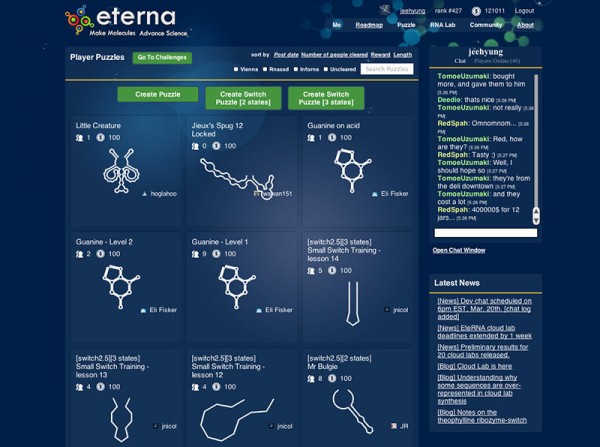
Crowdsourcing is the latest research rage—Kickstarter to raise funding, screen savers that number-crunch, and games to find patterns in data—but most efforts have been confined to the virtual lab of the Internet. In a new twist, researchers have now crowdsourced their experiments by connecting players of a video game to an actual biochemistry lab. The game, called EteRNA, allows players to remotely carry out real experiments to verify their predictions of how RNA molecules fold. The first big result: a study published this week in the Proceedings of the National Academy of Sciences, bearing the names of more than 37,000 authors—only 10 of them professional scientists. “It’s pretty amazing stuff,” says Erik Winfree, a biophysicist at the California Institute of Technology in Pasadena.

Some see EteRNA as a sign of the future for science, not only for crowdsourcing citizen scientists but also for giving them remote access to a real lab. “Cloud biochemistry,” as some call it, isn’t just inevitable, Winfree says: It’s already here. DNA sequencing, gene expression testing, and many biochemical assays are already outsourced to remote companies, and any “wet lab” experiment that can be automated will be automated, he says. “Then the scientists can focus on the non-boring part of their work.”

EteRNA grew out of an online video game called Foldit. Created in 2008 by a team led by David Baker and Zoran Popović, a molecular biologist and computer scientist, respectively, at the University of Washington, Seattle, Foldit focuses on predicting the shape into which a string of amino acids will fold. By tweaking virtual strings, Foldit players can surpass the accuracy of the fastest computers in the world at predicting the structure of certain proteins. Two members of the Foldit team, Adrien Treuille and Rhiju Das, conceived of EteRNA back in 2009. “The idea was to make a version of Foldit for RNA,” says Treuille, who is now based at Carnegie Mellon University in Pittsburgh, Pennsylvania. Treuille’s doctoral student Jeehyung Lee developed the needed software, but then Das persuaded them to take it a giant step further: hooking players up directly to a real-world, robot-controlled biochemistry lab. After all, RNA can be synthesized and its folded-up structure determined far more cheaply and rapidly than protein can.

Lee went back to the drawing board, redesigning the game so that it had not only a molecular design interface like Foldit, but also a laboratory interface for designing RNA sequences for synthesis, keeping track of hypotheses for RNA folding rules, and analyzing data to revise those hypotheses. By 2010, Lee had a prototype game ready for testing. Das had the RNA wet lab ready to go at Stanford University in Palo Alto, California, where he is now a professor. All they lacked were players.

A message to the Foldit community attracted a few hundred players. Then in early 2011, The New York Times wrote about EteRNA and tens of thousands of players flooded in.

The game comes with a detailed tutorial and a series of puzzles involving known RNA structures. Only after winning 10,000 points do you unlock the ability to join EteRNA’s research team. There the goal is to design RNA sequences that will fold into a target structure. Each week, eight sequences are chosen by vote and sent to Stanford for synthesis and structure determination. The data that come back reveal how well the sequences’ true structures matched their targets. That way, Treuille says, “reality keeps score.” The players use that feedback to tweak a set of hypotheses: design rules for determining how an RNA sequence will fold.

Two years and hundreds of RNA structures later, the players of EteRNA have proven themselves to be a potent research team. Of the 37,000 who played, about 1000 graduated to participating in the lab for the study published today. (EteRNA now has 133,000 players, 4000 of them doing research.) They generated 40 new rules for RNA folding. For example, at the junctions between different parts of the RNA structure—such as between a loop and an arm—the players discovered that it is far more stable if enriched with guanines and cytosines, the strongest bonding of the RNA base pairs. To see how well those rules describe reality, the humans then competed toe to toe against computers in a new series of RNA structure challenges. The researchers distilled the humans’ 40 rules into an algorithm called EteRNA Bot.

The human players still came out on top, solving structures more accurately than the standard software 99% of the time. The algorithmic version of their rules also outperformed the standard software, but only 95% of the time, showing that the crowdsourced human RNA-folding know-how has not been completely captured yet. The next step, Lee says, is to make the wet lab completely robotic. It still requires humans to operate some of the steps between the input of player RNA sequences and the data output.

EteRNA won’t work for every kind of science, says Shawn Douglas, a biomolecular engineer at the University of California, San Francisco, because a problem has to be “amenable to game-ification.” But he’s optimistic that there will be many more to come. “Many areas of biological research have reached a level of complexity that the mental bandwidth of the individual researcher has become a bottleneck,” Douglas says. EteRNA proves that “there are tens of thousands of people around the world with surplus mental bandwidth and the desire to participate in scientific problem solving.” The trick is to design a good game.

http://news.sciencemag.org/biology/2014/01/online-video-game-plugs-players-real-biochemistry-lab

Thanks to Dr. Rajadhyaksha for bringing this to the It’s Interesting community.

U.S. WWII Minnesota Starvation Experiment

Towards the end of World War II, word got through that certain people in occupied territories were eating a near-starvation diet. American researchers wanted to study the effects of starvation, so they recruited volunteers – and starved them some more.

The Minnesota Starvation Experiment pretty much lived up to its name. It was an early experiment in nutrition prompted by news about the conditions in Europe during World War II. The full horror of concentration camps was still to come, but word came in that people in war-torn territories were living on severely restricted diets. Everyone knew that things were going to get worse before they got better, and concerned researched wanted to find out the effects of starvation and how to rehabilitate a severely starved person. In November of 1944, at The University of Minnesota, a study began on the effects of starvation.

When contacted years later, many of the men said the experiment was the toughest thing they had ever done, but were happy to have participated and said they would do it again.

http://io9.com/the-us-wartime-experiment-that-starved-men-more-than-1507200589

Thanks to Kebmodee for bringing this to the attention of the It’s Interesting community.

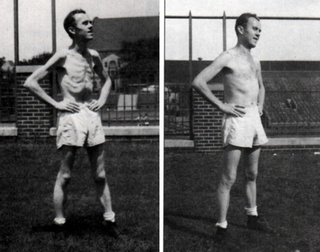
From a pool of 400 volunteers, 36 men were chosen. All were between 22 and 33, and all were in good health. They were told that the experiment would go through four phases. For three months, they would eat a specific number of calories, so that researchers could get them to a healthy weight and get a baseline for their diet. (They were kept active, and the diet they were given was 3,200 calories.) Once they’d gotten up to their “fighting weight,” their caloric intake was to be halved. They’d take in 1,560 calories a day, every day, and no more. They’d have a diet comparable to the food people in Europe would have available – root vegetables and starches with the occasional meat or jell-o. The goal of the diet was to make the men lose a little over two pounds a week, and twenty-five percent of their body weight in six months.

After six months, they’d go through a three-month rehabilitative phase, where they would be allowed more food. They’d be divided into many groups, with different groups given different amounts of calories, and different amounts of protein, fat, and vitamins. Finally, they’d be allowed eight weeks of eating whatever they wanted.

this time, they were kept in dormitories on campus, given regular blood tests, endurance tests, mental tests, and many other kind of tests. They were given administrative work in the lab, and allowed to attend classes at the university. Most of all, they were watched. For the tests to be successful, the researchers had to be sure that the participants weren’t cheating.

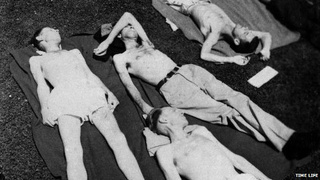
The rehabilitative diet did not remain of general interest to subsequent generations – although it did help scientists understand that people who had been starved needed to be overfed, rather than just fed, to help them rebuild their bodies. It is the effects that retain lasting fascination for scientists and for the public. At first, the participants merely complained of hunger, of an inability to concentrate, and of poor judgment. If the men didn’t lose enough weight, their rations were reduced – meaning some got more food than others. They all ate together, watching who got what. Unsurprisingly, resentment sprang up and there were a lot of fights in the dorms. Then came extreme depression. Several members were hospitalized for psychiatric problems. Some mutilated themselves. One man amputated three fingers with a hatchet, although he said later he didn’t know whether he’d done it on purpose or was just not thinking clearly. Considering he had injured his fingers once before, letting a car fall on them, the researchers thought the new injury was at least semi-deliberate, released him from the experiment and put him in psychiatric care.

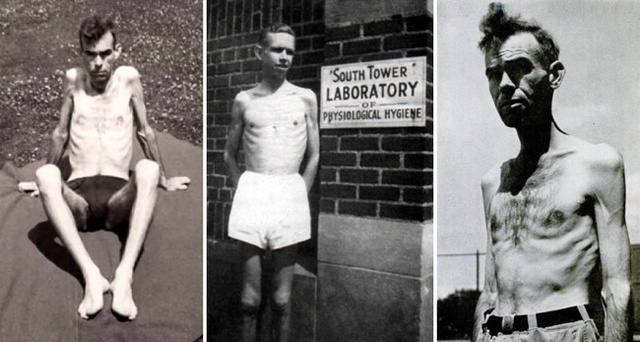
Then came weakness. When one man cheated on the diet, the researchers demanded the rest of the men go everywhere with a buddy. Years later one of the participants said he was grateful for the buddy system, since he could no longer open heavy doors by himself. The men lost their hair, became dizzy, felt cold all the time, and their muscles ached. Many dropped out of classes. Scientists noted that their resting heart rate and breath rate also fell. The starving body was trying to use up as few calories as possible. For a while, they were allowed gum. They chewed up to forty packs every day until the researchers disallowed gum chewing.

They became obsessed with what food they did have, holding it in their mouths and trying to stretch out mealtimes. On man said that what bothered him more than anything was the fact that food became the central point in his life. He no longer cared about anything but food. He watched movies for the eating scenes, and read magazines for the food ads. Another man said he had begun hating people who were able to go home and have a good dinner. Food became their curse and obsession. This was unsurprising, as a good portion of the men overshot the projected goal of a twenty-five percent loss of body weight. Many men were down to 99 or 100 pounds.

During the three-month rehabilitation period, different groups of men were supposed to receive different amounts of food. Researchers quickly scrapped that idea after the lower-calorie-diet men didn’t show signs of recovery. Some even lost weight after their calorie intake was increased. The lack of calories had caused some of the men’s legs to swell with water, and a calorie infusion allowed them to shed the excess liquid. Despite the sincere efforts of the researchers, almost no men felt recovered after just three months. On the day they were allowed to eat again, quite a few overate and got sick. One had his stomach pumped. Even getting back to their earlier weight didn’t help. They packed on the pounds well beyond that. Some said they couldn’t stop obsessively eating for a year. There was never “enough” food for them.

Today, the results of the Minnesota Starvation Study are mostly of note to people who study eating disorders. Many of the behaviors the starving men displayed, such as diluting food with water to make it look more filling, or overchewing their food to stretch out mealtimes, are also displayed by people suffering from anorexia. The men’s subsequent relentless feeding is similar to binge-eating. Although they made themselves sick physically, they couldn’t get enough food to make them feel satisfied.

Western Scientists Look To Chinese Medicine For Fresh Leads

chinese medicine

by Alan Yu

In the quest for new treatments, U.S. researchers are looking to traditional Chinese medicines, some of the oldest remedies in the world.

A recent discovery resulted in a better treatment for a type of leukemia that strikes about 1 in 250,000 people in the U.S. Another study found a potential new painkiller in China’s medicine chest. Other researchers are studying a traditional medicinal plant called “thunder god vine” for its anti-cancer properties.

The approach has already had some success. The Chinese herbal medicine artemisinin, for instance, has gone on to become the most potent anti-malarial drug available.

Not all the leads have panned out, of course. But the old field has shown enough potential to keep interest high.
A better leukemia treatment drawn from an ancient medicine should give us hope for developing anti-cancer drugs, says Dr. Samuel Waxman, a co-author of the report and professor of medicine and cancer specialist at Mount Sinai Hospital. “It gives a lot of optimism of seeking other types of cancer medicines in the Chinese pharmacopedia, which many people are looking into,” Waxman says.

The treatment uses arsenic trioxide, which has traditionally been used in Chinese medicine. The U.S. Food and Drug Administration approved arsenic trioxide (sold as Trisenox here) as a treatment in 2000, and later research showed that patients who received standard chemotherapy followed by arsenic trioxide did better than patients who just received standard chemotherapy.

But a big clinical test recently found that the drug, in combination with all-trans retinoic acid — another drug commonly used to treat acute promyelocytic leukemia (APL) — turned out to be more effective than the usual chemotherapy.
That results means arsenic trioxide should become the new standard for patients that can use it, says Dr. Richard Stone, director of the adult acute leukemia program at the Dana-Farber Cancer Institute.

“So this was a cure for leukemia without chemotherapy, really for the first time in a large randomized trial,” says Stone. “We’ve got a patient in the hospital right now who’s receiving that very therapy.”

He says there are still side effects from the new regimen affecting the skin and heart, but for most people they’re less of a problem than the hair loss, vomiting and diarrhea that can come with chemotherapy.

The arsenic trioxide treatment was developed by a Chinese doctor working in northern China during the Cultural Revolution, according to Mount Sinai’s Waxman. This doctor couldn’t use much Western medicine, so to treat his APL patients, he started giving them arsenic trioxide intravenously. He kept a journal for 10 years and noticed that it worked remarkably well. He eventually published his findings in 2001 with other collaborators.

“That was one of the first examples of a targeted treatment in all of cancer,” Waxman says.

Other researchers are also studying triptolide, a natural product of a traditional Chinese medicinal plant called lei gong teng or “thunder god vine” as a possible anti-cancer drug. The product was effective against cancer in animal models and scientists in the West are now studying exactly how it works, says Jun Liu, one of the researchers and a professor of pharmacology and molecular sciences at Johns Hopkins University.

“Traditional medicine will always remain a useful source of new drugs. The question is, to what extent?” Liu says. “Drug discovery and development is a very lengthy and costly process and there are always failures.”

Research into Chinese medicine is no different. Cancer reseachers at the University of Minnesota recently started an early clinical trial to study a drug that was developed from triptolide for treating pancreatic cancer, says Edward Greeno, associate professor of medicine at the University of Minnesota. He points out it took millions of dollars just to get to this point.

“It’s easy to think, and normal to think, that if people are using it already then it shouldn’t require a lot to develop it into a useful product. The problem is that our standard for what is safe and effective is very high, appropriately,” Greeno says. “It looks like a pretty straight path but what you don’t see are all the false starts and wrong turns that we make along the way.”

Studying Chinese medicine for new treatments has had its share of wrong turns. Western scientists previously looked into treatments for the prevention of dementia, eczema, and bacteria that cause most types of stomach ulcers, but concluded they weren’t particularly effective.

But the failures don’t mean we should give up, says Brian Berman, a professor of medicine at the University of Maryland who served as the principal investigator of two Chinese medicine research initiatives funded by the National Institutes of Health.

Chinese medicine is one lead to consider, especially for chronic diseases that have yet to be cured. “The advantage you have when you look at some of the Chinese medicine therapies is that by and large, they are safe, as long as what you’re getting doesn’t have added ingredients,” Berman says. “We need to look at what other cultures have to offer and then we need to put them through a scientifically rigorous test.”

Read more: http://www.npr.org/blogs/health/2014/01/18/261055778/western-scientists-look-to-chinese-medicine-for-fresh-leads

China is cloning on an industrial scale

pig3

pig2

pig1

By David Shukman

You hear the squeals of the pigs long before reaching a set of long buildings set in rolling hills in southern China.

Feeding time produces a frenzy as the animals strain against the railings around their pens. But this is no ordinary farm.

Run by a fast-growing company called BGI, this facility has become the world’s largest centre for the cloning of pigs.

The technology involved is not particularly novel – but what is new is the application of mass production.

The first shed contains 90 animals in two long rows. They look perfectly normal, as one would expect, but each of them is carrying cloned embryos. Many are clones themselves.

This place produces an astonishing 500 cloned pigs a year: China is exploiting science on an industrial scale.

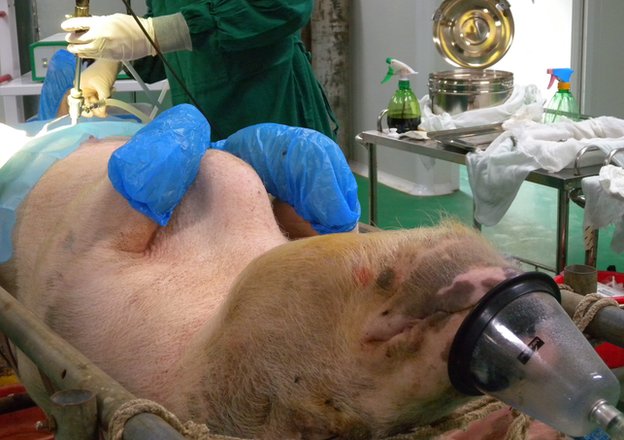
To my surprise, we’re taken to see how the work is done. A room next to the pens serves as a surgery and a sow is under anaesthetic, lying on her back on an operating table. An oxygen mask is fitted over her snout and she’s breathing steadily. Blue plastic bags cover her trotters.

Two technicians have inserted a fibre-optic probe to locate the sow’s uterus. A third retrieves a small test-tube from a fridge: these are the blastocysts, early stage embryos prepared in a lab. In a moment, they will be implanted.

The room is not air-conditioned; nor is it particularly clean. Flies buzz around the pig’s head.

My first thought is that the operation is being conducted with an air of total routine. Even the presence of a foreign television crew seems to make little difference. The animal is comfortable but there’s no sensitivity about how we might react, let alone what animal rights campaigners might make of it all.

I check the figures: the team can do two implantations a day. The success rate is about 70-80%.

Dusk is falling as we’re shown into another shed where new-born piglets are lying close to their mothers to suckle. Heat lamps keep the room warm. Some of the animals are clones of clones. Most have been genetically modified.

The point of the work is to use pigs to test out new medicines. Because they are so similar genetically to humans, pigs can serve as useful “models”. So modifying their genes to give them traits can aid that process.

One batch of particularly small pigs has had a growth gene removed – they stopped growing at the age of one. Others have had their DNA tinkered with to try to make them more susceptible to Alzheimer’s.

Back at the company headquarters, a line of technicians is hunched over microscopes. This is a BGI innovation: replacing expensive machines with people. It’s called “handmade cloning” and is designed to make everything quicker and easier.

The scientist in charge, Dr Yutao Du, explains the technique in a way that leaves me reeling.

“We can do cloning on a very large scale,” she tells me, “30-50 people together doing cloning so that we can make a cloning factory here.”

A cloning factory – an incredible notion borrowed straight from science fiction. But here in Shenzhen, in what was an old shoe factory, this rising power is creating a new industry.

The scale of ambition is staggering. BGI is not only the world’s largest centre for cloning pigs – it’s also the world’s largest centre for gene sequencing.

In neighbouring buildings, there are rows of gene sequencers – machines the size of fridges operating 24 hours a day crunching through the codes for life.

To illustrate the scale of this operation, Europe’s largest gene sequencing centre is the Wellcome Trust Sanger Institute near Cambridge. It has 30 machines. BGI has 156 and has even bought an American company that makes them.

BGI’s chief executive, Wang Jun, tells me how they need the technology to develop ever faster and cheaper ways of reading genes.

Again, a comparison for scale: a recently-launched UK project seeks to sequence 10,000 human genomes. BGI has ambitions to sequence the genomes of a million people, a million animals and a million plants.

Wang Jun is keen to stress that all this work must be relevant to ordinary people through better healthcare or tastier food. The BGI canteen is used as a testbed for some of the products from the labs: everything from grouper twice the normal size, to pigs, to yoghurt.

I ask Wang Jun how he chooses what to sequence. After the shock of hearing the phrase “cloning factory”, out comes another bombshell:

“If it tastes good you should sequence it,” he tells me. “You should know what’s in the genes of that species.”

Species that taste good is one criterion. Another he cites is that of industrial use – raising yields, for example, or benefits for healthcare.

“A third category is if it looks cute – anything that looks cute: panda, polar bear, penguin, you should really sequence it – it’s like digitalising all the wonderful species,” he explains.

I wonder how he feels about acquiring such power to take control of nature but he immediately contradicts me.

“No, we’re following Nature – there are lots of people dying from hunger and protein supply so we have to think about ways of dealing with that, for example exploring the potential of rice as a species,” the BGI chief counters.

China is on a trajectory that will see it emerging as a giant of science: it has a robotic rover on the Moon, it holds the honour of having the world’s fastest supercomputer and BGI offers a glimpse of what industrial scale could bring to the future of biology.

Read more: http://www.bbc.co.uk/news/science-environment-25576718

Thanks to Kebmodee for bringing this to the attenion of the It’s Interesting community.

Scientists have identified the age at which most childhood memories fade and are lost forever

child_2787607b

Most adults struggle to recall events from their first few years of life and now scientists have identified exactly when these childhood memories fade and are lost forever.

A new study into childhood amnesia – the phenomenon where early memories are forgotten – has found that it tends to take affect around the age of seven.

The researchers found that while most three year olds can recall a lot of what happened to them over a year earlier, these memories can persist while they are five and six, but by the time they are over seven these memories decline rapidly.

Most children by the age of eight or nine can only recall 35% of their experiences from under the age of three, according to the new findings.

The psychologists behind the research say this is because at around this age the way we form memories begins to change.

They say that before the age of seven children tend to have an immature form of recall where they do not have a sense of time or place in their memories.

In older children, however, the early events they can recall tend to be more adult like in their content and the way they are formed.

Children also have a far faster rate of forgetting than adults and so the turnover of memories tends to be higher, meaning early memories are less likely to survive.

The findings also help to explain why children can often have vivid memories of events but then have forgotten them just a couple of years later.

Professor Patricia Bauer, a psychologist and associate dean for research at Emory college of Arts and Science who led the study, said: “The paradox of children’s memory competence and adults’ seeming “incompetence” at remembering early childhood events is striking.

“Though forgetting is more rapid in the early childhood years, eventually it slows to adult levels.

“Thus memories that “survived” early childhood have some likelihood of being remembered later in life.”

Professor Bauer and her colleagues studied 83 children over several years for the research, which is published in the scientific journal Memory.

The youngsters first visited the laboratory at the age of three years old and discussed six unique events from their past, such as family outings, camping holidays, trips to the zoo, first day of school and birthdays.

The children then returned for a second session at the ages between five years old and nine years old to discuss the same events and were asked to recall details they had previously remembered.

The researchers found that between the ages of five and seven, the amount of the memories the children could recall remained between 63-72 per cent.

However, the amount of information the children who were 8 and nine years old dropped dramatically to 35 and 36 per cent.

When the researchers looked closely at the kind of details the children were and were not able to remember, they found marked age differences.

The memories of the younger children tended to lack autobiographical narrative such as place and time. Their memories also had less narrative, which the researchers believe may lead to a process known as “retrieval induced forgetting” – where the action of remembering causes other information to be forgotten.

As they children got older, however, the memories they recalled from early childhood tended to have these features.

Professor Bauer said: “The fact that the younger children had less-complete narratives relative to the older children, likely has consequences for the continued accessibility of early memories beyond the first decade of life.

“We may anticipate that memories that survive into the ninth or tenth year of life, when narrative skills are more developed, would continue to be accessible over time.”

http://www.telegraph.co.uk/science/science-news/10564312/Scientists-pinpoint-age-when-childhood-memories-fade.html

When doctors prescribe books to heal the mind

bibliotherapy_WEB

By Leah Price

More than 350 million people worldwide suffer from depression. Fewer than half receive any treatment; even fewer have access to psychotherapy. Around the turn of the millennium, antidepressants became the most prescribed kind of drug in the United States. In the United Kingdom, 1 in 6 adults has taken one.

But what if a scientist were to discover a treatment that required minimal time and training to administer, and didn’t have the side effects of drugs? In 2003, a psychiatrist in Wales became convinced that he had. Dr. Neil Frude noticed that some patients, frustrated by year-long waits for treatment, were reading up on depression in the meantime. And of the more than 100,000 self-help books in print, a handful often seemed to work.

This June, a program was launched that’s allowing National Health Service doctors across England to act upon Frude’s insight. The twist is that the books are not just being recommended, they’re being “prescribed.” If your primary care physician diagnoses you with “mild to moderate” depression, one of her options is now to scribble a title on a prescription pad. You take the torn-off sheet not to the pharmacy but to your local library, where it can be exchanged for a copy of “Overcoming Depression,” “Mind Over Mood,” or “The Feeling Good Handbook.” And depression is only one of over a dozen conditions treated. Other titles endorsed by the program include “Break Free from OCD,” “Feel the Fear and Do it Anyway,” “Getting Better Bit(e) by Bit(e),” and “How to Stop Worrying.”

The NHS’s Books on Prescription program is only the highest-profile example of a broader boom in “bibliotherapy.” The word is everywhere in Britain this year, although—or because—it means different things to different people. In London, a painter, a poet, and a former bookstore manager have teamed up to offer over-the-counter “bibliotherapy consultations”: after being quizzed about their literary tastes and personal problems, the worried well-heeled pay 80 pounds for a customized reading list. At the Reading Agency, a charity that developed and administers Books on Prescription, a second program called Mood-Boosting Books recommends fiction and poetry. The NHS’s public health and mental health budgets also fund nonprofits such as The Reader Organization, which gathers people who are unemployed, imprisoned, old, or just lonely to read poems and fiction aloud to one another.

At best, Books on Prescription looks like a win-win for both patients and book lovers. It boosts mental health while also bringing new library users in the door. Libraries loaned out NHS-approved self-help books 100,000 times in the first three months of the program; no doubt some of their borrowers must have picked up a novel or a memoir en route to the circulation desk. At worst, it’s hard to see what harm the program can do. Unlike drugs, books carry no risk of side effects like weight gain, dampened libido, or nausea (unless you read in the car).

For book lovers, an organization with as much clout as the NHS would seem to be a welcome ally. Yet its initiatives raise troubling questions about why exactly a society should value reading. What’s lost when a bookshelf is repurposed as a medicine cabinet—and when a therapist’s job gets outsourced to the page?

In 1916, the clergyman Samuel Crothers coined the term “bibliotherapy,” positing tongue-in-cheek that “a book may be a stimulant or a sedative or an irritant or a soporific.” In the intervening century, doctors, nurses, librarians, and social workers have more seriously championed “bibliopathy,” “bibliocounseling,” “biblioguidance,” and “literatherapy”—all variations on the notion that reading can heal.

Only recently, however, have the mental health effects of one genre—self-help books—been rigorously studied. As early as 1997, a randomized trial found bibliotherapy supervised by therapists no less effective in treating unipolar depression than individual or group therapy. More surprisingly, a 2007 literature review by the same researcher found that books treated anxiety just as effectively without a therapist’s guidance as with it. A 2004 meta-analysis comparing bibliotherapy for anxiety and depression to short-term talk therapy found books “as effective as professional treatment of relatively short duration.”

None of this means a book can outperform a therapist, even if it can underbid him. A 2012 meta-analysis of anxiety disorders concluding that “comparing self-help with waiting list gave a significant effect size of 0.84 in favour of self-help” nevertheless cautioned that “comparison of self-help with therapist-administered treatments revealed a significant difference in favour of the latter.” Translation: A book does worse than a therapist, but it’s better than nothing. And in the short term, at least, nothing is what many patients get.

Books on Prescription can be understood as an extension of larger changes in psychiatry over the past few decades. For most of the 20th century, psychodynamic therapy placed more emphasis on the therapist-patient relationship than on the content of the therapist’s words. More recently, insurers’ interest in cutting costs and researchers’ interest in protocols that can be measured and replicated have combined to nudge treatment toward short-term, standardized methods such as cognitive-behavioral therapy. Books take this trajectory to its logical conclusion. If your aim is less to help patients explore the underlying causes of their condition than to offer step-by-step instructions for managing it, then who cares whether the exercises emanate from a mouth, a manual, or even a smartphone app?

But even therapies like cognitive-behavioral therapy require the patient to feel recognized and understood by another human being. Asked how a printed page can mimic that face-to-face encounter, Frude comes up with an unexpected word: “magic.” The best books give the illusion of listening and caring, he explains, because authors who are also clinicians can draw on years of experience interacting with patients to leave each reader saying “that book was about me.” He does acknowledge that not every case fits books “off the peg” (or off the rack, as we say in the United States). But it’s a striking metaphor to choose—one that makes psychodynamic therapy sound like a luxury good as unattainable as Savile Row tailoring.

Where Frude sees magic, a cynic might smell pragmatism. Even short-term cognitive-behavioral therapy costs more than a $24.95 hardcover. But in any case, many patients read whether or not they have the NHS’s blessing. If recommended titles crowd out the misinformation that patients might otherwise stumble upon, whether in print or online, Books on Prescription will already have helped.

It’s hard not to notice that Books on Prescription was developed in the same years when American universities began to offer MOOCs, or massive open online courses. Even if an online course lacks the give-and-take of a seminar, it’s better than nothing. Like Books on Prescription, MOOCs scale up an activity whose face-to-face version was traditionally out of reach of the masses. Also like Books on Prescription, MOOCs create a cost-effective alternative that may eventually squeeze out personal contact even at the high end of the market.

That concern aside, it’s no surprise that self-help books can help the self. That literature might help, however, is a more controversial proposition. The other half of the Reading Agency’s two-pronged Reading Well initiative, Mood-Boosting Books, promotes fiction, poetry, and memoirs. Its annual list of “good reads for people who are anxious or depressed” mixes titles that represent characters experiencing anxiety or depression (Mark Haddon’s “A Spot of Bother”) with others calculated to combat those conditions. Some go for laughs (Sue Townsend’s “The Secret Diary of Adrian Mole Aged 13¾”); others, such as “A Street Cat Named Bob” and “The Bad Dog’s Diary,” read like printouts of PetTube.com. Others are darker and more demanding: Reading Well anointed Alice Munro’s short stories as a selection before the Nobel Prize Committee did.

The Reading Agency’s endorsement of imaginative reading stops short of recommending specific titles. Its website bristles with disclaimers that the works of literature are nominated by reading groups rather than tested by scientists. Yet the charity has given Mood-Boosting Books prestige—and the NHS has put hard cash behind them as well, providing some libraries with grants to purchase the recommended works of literature along with the “prescribed” self-help titles.

I ask Judith Shipman, who runs the Mood-Boosting Books program, whether recommending books “for people who are anxious or depressed” implies that poems or novels can treat those conditions. “I don’t think we could claim that they are therapy or a substitute for therapy,” she hazards after a long pause. “But for those who don’t quite need therapy, Mood-Boosting Books could be a nice little lift.”

Today it might seem commonplace to suggest that books are good for you. In the longer view, though, the hope that both literature and practical nonfiction can cure reverses an older belief by doctors that reading could cause physical and mental illness. In 1867, one expert cautioned that taking a book to bed could “injure your eyes, your brain, your nervous system.” Some social reformers proposed regulating books as if they were drugs. In 1883, the New York State Legislature debated whether to fine “any person who shall sell, loan, or give to any minor under sixteen years of age any dime novel or book of fiction, without first obtaining the written consent of the parent or guardian of such a minor.” As late as 1889, one politician called fiction “moral poison.”

As radio, TV, gaming, and eventually the Internet began to compete with books, though, fiction-reading came to look wholesome by comparison. Today, with only half of Americans reading any book for pleasure in a given year, reading is finding new champions from an unlikely quarter: science. This year, Science published a study concluding that reading about fictional characters increases empathy; in his 2011 book “The Better Angels of Our Nature,” the psychologist Steven Pinker correlated the rise of imaginative literature with a centuries-long decline in violence. And while correlation doesn’t imply causation, randomized trials have also attempted to link fiction-reading to physical health. In a 2008 study of 81 preteens, girls assigned fiction in which characters eat balanced breakfasts ended up with a lower body mass index than the control group. The Reading Well website itself cites a 2009 study that compared heart rates and muscle tension before and after various activities and found that reading is “68% better at reducing stress levels than listening to music; 100% more effective than drinking a cup of tea.” The numbers may be less telling than the fact that someone would think to compare books to tea in the first place.

It’s too early to predict the long-term effects of bibliotherapy programs. There’s little precedent for a government to make neuroscientists and psychiatrists the arbiters of what books should be read and why. And literary critics like me recoil from reducing the value of reading to a set of health metrics. But as library budgets shrink and any text longer than 140 characters gets crowded out by audio and video, white-coated experts may be the only ones prospective readers can hear. Racing to find out what happens next, seeing the world through a character’s eyes, wallowing in the play of language—all are becoming means to medical ends. Today, for an increasing number of people, the pleasures of reading require a doctor’s note.

http://www.bostonglobe.com/ideas/2013/12/22/when-doctors-prescribe-books-heal-mind/H2mbhLnTJ3Gy96BS8TUgiL/story.html


More evidence that mindfullness meditation can help with anxiety, depression and pain

mindfulness-meditation

By Andrew M. Seaman

Mindfulness meditation may be useful in battles against anxiety, depression and pain, according to a fresh look at past research.

Using data from 47 earlier studies, researchers found moderate evidence to support the use of mindfulness meditation to treat those conditions. Meditation didn’t seem to affect mood, sleep or substance use.

“Many people have the idea that meditation means just sitting quietly and doing nothing,” wrote Dr. Madhav Goyal in an email to Reuters Health. “That is not true. It is an active training of the mind to increase awareness, and different meditation programs approach this in different ways.”

Goyal led the study at The Johns Hopkins University in Baltimore.

He and his colleagues write in JAMA Internal Medicine that meditation techniques emphasize mindfulness and concentration.

So-called mindfulness meditation is aimed at allowing the mind to pay attention to whatever thoughts enter it, such as sounds in the environment, without becoming too focused. Mantra meditation, on the other hand, involves focusing concentration on a particular word or sound.

Approximately 9 percent of people in the U.S. reported meditating in 2007, according to the National Institutes of Health. About 1 percent said they use meditation as some sort of treatment or medicine.

For the new report, the researchers searched several electronic databases that catalog medical research for trials that randomly assigned people with a certain condition – such as anxiety, pain or depression – to do meditation or another activity. These randomized controlled trials are considered the gold standard of medical research.

The researchers found 47 studies with over 3,500 participants that met their criteria.

After combining the data, Goyal said his team found between a 5 and 10 percent improvement in anxiety symptoms among people who took part in mindfulness meditation, compared to those who did another activity.

There was also about a 10 to 20 percent improvement in symptoms of depression among those who practiced mindfulness meditation, compared to the other group.

“This is similar to the effects that other studies have found for the use of antidepressants in similar populations,” Goyal said.

Mindfulness meditation was also tied to reduced pain. But Goyal said it’s hard to know what kind of pain may be most affected by meditation.

The benefits of meditation didn’t surpass what is typically associated with other treatments, such as drugs and exercise, for those conditions.

“As with many therapies, we try to get a moderate level of confidence that the therapy works before we prescribe it,” Goyal said. “If we have a high level of confidence, it is much better.”

But he noted that the researchers didn’t find anything more than moderate evidence of benefit from meditation for anxiety, depression and pain.

There was some suggestion that meditation may help improve stress and overall mental health, but the evidence supporting those findings was of low quality.

There was no clear evidence that meditation could influence positive mood, attention, substance use, eating habits, sleep or weight.

“Clinicians should be prepared to talk with their patients about the role that meditation programs could have in addressing psychological stress, particularly when symptoms are mild,” Goyal said.

Dr. Allan Goroll, who wrote an editorial accompanying the new study, told Reuters Health the analysis is an example of an area of much-needed scientific study, because many people make treatment decisions based on beliefs – not data.

“That is particularly the case with alternative and complimentary approaches to treating medical problems,” he said. “It ranges from taking vitamins to undergoing particular procedures for which the scientific evidence is very slim but people’s beliefs are very great.”

Goroll is professor at Harvard Medical School and Massachusetts General Hospital in Boston.

Goyal said people should remember that meditation was not conceived to treat any particular health problem.

“Rather, it is a path we travel on to increase our awareness and gain insight into our lives,” he wrote. “The best reason to meditate is to gain this insight. Improvements in health conditions are really a side benefit, and it’s best to think of them that way.”

SOURCE: bit.ly/WiwDtv JAMA Internal Medicine, online January 6, 2014.

Japanese turnip may stop the flu

Suguki-640x426

Scientists have discovered that bacteria found in a traditional Japanese pickle can prevent flu. Could this be the next superfood?

The research, which assesses the immune-boosting powers of Lactobacillus brevis from Suguki – a pickled turnip, popular in Japan – in mice that have been exposed to a flu virus, is published today (06 November) in the SfAM journal, Letters in Applied Microbiology.

Lead researcher, Ms Naoko Waki of KAGOME CO., LTD. in Japan said: “Our results show that when a particular strain of Lactobacillus brevis is eaten by mice, it has protective effects against influenza virus infection.”

Suguki enthusiasts have often cited its protective powers but it is not known yet whether the same effects will be seen in humans. Human clinical trials using a probiotic drink containing Lactobacillus brevis KB290 bacteria are underway and scientists are hopeful that, given a suitable quantity of bacteria, foods containing them may turn out to be the next superfood.

What it is about the bacteria that gives them this amazing property is not known, but it is remarkably tolerant to stomach juices, which are too acidic for many bacteria. This is largely due to a protective layer of sugars called exopolysaccharides.

“We know that exopolysaccharides have immune boosting effects in other similar bacteria, so we wonder if the exopolysaccharides of KB290 are responsible for the effects we see,” said Ms Waki. Further studies will be undertaken to investigate this.

The effect of the bacteria is to increase the production of immune system molecules in the body – IFN-α and flu-specific antibodies – and to enhance activity to eradicate virus infected cells. In this study these effects were sufficient to prevent infection by the H1N1 flu and the scientists think that there could also be protection against other viral infections, including the deadly H7N9 flu, which has recently emerged in China.

http://www.eurekalert.org/pub_releases/2013-11/w-jsp110413.php

More Than 300 Sharks In Australia Are Now On Twitter

sharks_custom-dc7b6fa386286385524b95e25225e6065aa192b7-s40-c85

By Alan Yu

Sharks in Western Australia are now tweeting out where they are.

Government researchers have tagged 338 sharks with acoustic transmitters that monitor where the animals are. When a tagged shark is about half a mile away from a beach, it triggers a computer alert, which tweets out a message on the Surf Life Saving Western Australia Twitter feed. The tweet notes the shark’s size, breed and approximate location.

Since 2011, Australia has had more fatal shark attacks than any other country; there have been six over the past two years — the most recent in November.

The tagging system alerts beachgoers far quicker than traditional warnings, says Chris Peck, operations manager of Surf Life Saving Western Australia. “Now it’s instant information,” he tells Sky News, “and really people don’t have an excuse to say we’re not getting the information. It’s about whether you are searching for it and finding it.”

The tags will also be monitored by scientists studying the sharks. Researchers have tagged great whites, whaler sharks and tiger sharks.

“This kind of innovative thinking is exactly what we need more of when it comes to finding solutions to human-wildlife conflict,” says Alison Kock, research manager of the Shark Spotters program in South Africa. Kock tells NPR that the project is a good idea — but that people should know that not all sharks are tagged.

Her program does the same work, but humans do the spotting and tweeting.

Kock and Kim Holland, a marine biologist who leads shark research at the University of Hawaii, agree that the tweets won’t be enough to protect swimmers.

“It can, in fact, provide a false sense of security — that is, if there is no tweet, then there is no danger — and that simply is not a reasonable interpretation,” Holland says, pointing out that the reverse is also true. “Just because there’s a shark nearby doesn’t mean to say that there’s any danger. In Hawaii, tiger sharks are all around our coastlines all the time, and yet we have very, very few attacks.”

In Western Australia, the local government recently proposed a plan to bait and kill sharks that swim near beaches.

Holland says most shark biologists would agree that’s not a good plan, partly because of what researchers have learned using acoustic transmitters. Scientists tracking white sharks, for example, found that the species can travel great distances, going from Western Australia to South Africa in some cases.

“Because we know that they are so mobile, we’re not sure that killing any of them will have any effect on safety,” Holland says, pointing out that great white sharks don’t set up shop along the same coastlines for long. He says the number of these sharks is on the rise — but there aren’t that many to begin with.

“The other side of the coin is that it’s a horrible thing to see when people get killed, so there’s often public outcry for government agencies to do something.”

http://www.npr.org/blogs/alltechconsidered/2013/12/31/258670211/more-than-300-sharks-in-australia-are-now-on-twitter?ft=1&f=1001