Sleep therapy becoming increasingly important in depression treatment

Insomnia-Electronic-Cigarettes

An insomnia therapy that scientists just reported could double the effectiveness of depression treatment is not widely available nor particularly well understood by psychiatrists or the public. The American Board of Sleep Medicine has certified just 400 practitioners in the United States to administer it, and they are sparse, even in big cities.

That may change soon, however. Four rigorous studies of the treatment are nearing completion and due to be reported in coming months. In the past year, the American Psychological Association recognized sleep psychology as a specialty, and the Department of Veterans Affairs began a program to train about 600 sleep specialists. So-called insomnia disorder is defined as at least three months of poor sleep that causes problems at work, at home or in relationships.

The need is great: Depression is the most common mood disorder, affecting some 18 million Americans in any given year, and most have insomnia.

“I think it’s increasingly likely that this kind of sleep therapy will be used as a possible complement to standard care,” said Dr. John M. Oldham, chief of staff at the Menninger Clinic in Houston. “We are the court of last resort for the most difficult-to-treat patients, and I think sleep problems have been extremely underrecognized as a critical factor.”

The treatment, known as cognitive behavioral therapy for insomnia, or CBT-I, is not widely available. Most insurers cover it, and the rates for private practitioners are roughly the same as for any psychotherapy, ranging from $100 to $250 an hour, depending on the therapist.

“There aren’t many of us doing this therapy,” said Shelby Harris, the director of the behavioral sleep medicine program at Montefiore Medical Center in the Bronx, who also has a private practice in Tarrytown, N.Y. “I feel like we all know each other.”

According to preliminary results, one of the four studies has found that when CBT-I cures insomnia — it does so 40 percent to 50 percent of the time, previous work suggests — it powerfully complements the effect of antidepressant drugs.

“There’s been a huge recognition that insomnia cuts across a wide variety of medical disorders, and there’s a need to address it,” said Michael T. Smith, a professor at the Johns Hopkins School of Medicine and president of the Society of Behavioral Sleep Medicine.

The therapy is easy to teach, said Colleen Carney, director of the sleep and depression lab at Ryerson University in Toronto, whose presentation at a conference of the Association for Behavioral and Cognitive Therapies in Nashville on Saturday raised hopes for depression treatment. “In the study we did, I trained students to administer the therapy,” she said in an interview, “and the patients in the study got just four sessions.”

CBT-I is not a single technique but a collection of complementary ideas. Some date to the 1970s, others are more recent. One is called stimulus control, which involves breaking the association between being in bed and activities like watching television or eating. Another is sleep restriction: setting a regular “sleep window” and working to stick to it. The therapist typically has patients track their efforts on a standardized form called a sleep diary. Patients record bedtimes and when they wake up each day, as well as their perceptions about quality of sleep and number of awakenings. To this the therapist might add common-sense advice like reducing caffeine and alcohol intake, and making sure the bedroom is dark and quiet.

Those three elements — stimulus control, restriction and common sense — can do the trick for many patients. For those who need more, the therapist applies cognitive therapy — a means of challenging self-defeating assumptions. Patients fill out a standard questionnaire that asks how strongly they agree with statements like: “Without an adequate night’s sleep, I can hardly function the next day”; “I believe insomnia is the result of a chemical imbalance”; and “Medication is probably the only solution to sleeplessness.” In sessions, people learn to challenge those beliefs, using evidence from their own experiences.

“If someone has the belief that if they don’t sleep, they’ll somehow fail the next day, I’ll ask, ‘What does failure mean? You’ll be slower at work, not get everything done, not make dinner?’ ” Dr. Harris said. “Then we’ll look at the 300 nights they didn’t sleep well over the past few years and find out they managed; it might not have been as pleasant as they liked, but they did not fail. That’s how we challenge those kinds of thoughts.”

Dr. Aaron T. Beck, an emeritus professor of psychiatry at the University of Pennsylvania who is recognized as the father of cognitive therapy for mental disorders, said the techniques were just as applicable to sleep problems. “In fact, I have used it myself when I occasionally have insomnia,” he said by email.

In short-term studies of a month or two, CBT-I has been about as effective as prescription sleeping pills. But it appears to have more staying power. “There’s no data to show that if you take a sleeping pill — and then stop taking it — that you’ll still be good six months later,” said Jack Edinger, a professor at National Jewish Health in Denver and an author, with Dr. Carney, of “Overcoming Insomnia: A Cognitive-Behavioral Therapy Approach.”

“It might happen, but those certainly aren’t the people who come through my door,” he said.

Dr. Edinger and others say that those who respond well to CBT-I usually do so quickly — in an average of four sessions, and rarely more than eight. “You’re not going to break the bank doing this stuff; it’s not a marriage,” he said. “You do it for a fixed amount of time, and then you’re done. Once you’ve got the skills, they don’t go away.”

The Virtual Therapist

_67807883_face_research

_67807877_virtualshrink

Ellie is a creation of ICT, and could serve as an important diagnostic and therapeutic tool for veterans with Post-Traumatic Stress Disorder.

By Alastair Leithead
BBC News, Los Angeles

The University of Southern California’s Institute for Creative Technologies is leading the way in creating virtual humans. The result may produce real help for those in need.

The virtual therapist sits in a big armchair, shuffling slightly and blinking naturally, apparently waiting for me to get comfortable in front of the screen.

“Hi, I’m Ellie,” she says. “Thanks for coming in today.”

She laughs when I say I find her a little bit creepy, and then goes straight into questions about where I’m from and where I studied.

“I’m not a therapist, but I’m here to learn about people and would love to learn about you,” she asks. “Is that OK?”

Ellie’s voice is soft and calming, and as her questions grow more and more personal I quickly slip into answering as if there were a real person in the room rather than a computer-generated image.

“How are you at controlling your temper?” she probes. “When did you last get into an argument?”

With every answer I’m being watched and studied in minute detail by a simple gaming sensor and a webcam.

How I smile, which direction I look, the tone of my voice, and my body language are all being precisely recorded and analysed by the computer system, which then tells Ellie how best to interact with me.

“Wizard of Oz mode” is how researcher Louis-Philippe Morency describes this experiment at the University of Southern California’s Institute for Creative Technologies (ICT).

In the next room his team of two are controlling what Ellie says, changing her voice and body language to get the most out of me.

Real people come in to answer Ellie’s questions every day as part of the research, and the computer is gradually learning how to react in every situation.

It is being taught how to be human, and to respond as a doctor would to the patients’ cues.

Soon Ellie will be able to go it alone. That opens up a huge opportunity for remote therapy sessions online using the knowledge of some of the world’s top psychologists.

But Dr Morency doesn’t like the expression “virtual shrink”, and doesn’t think this method will replace flesh-and-blood practitioners.

“We see it more as being an assistant for the clinician in the same way you take a blood sample which is analysed in a lab and the results sent back to the doctor,” he said.

The system is designed to assess signs of depression or post-traumatic stress, particularly useful among soldiers and veterans.

“We’re looking for an emotional response, or perhaps even any lack of emotional response,” he says.

“Now we have an objective way to measure people’s behaviour, so hopefully this can be used for a more precise diagnosis.”

The software allows a doctor to follow a patient’s progress over time. It objectively and scientifically compares sessions.

“The problem we have, particularly with the current crisis in mental health in the military, is that we don’t have enough well trained providers to handle the problem,” says Skip Rizzo, the associate director for medical virtual reality at the ICT.

“This is not a replacement for a live provider, but it might be a stop-gap that helps to direct a person towards the kind of care they might need.”

The centre does a lot of work with the US military, which after long wars in Iraq and Afghanistan has to deal with hundreds of thousands of troops and veterans suffering from various levels of post-traumatic stress disorder.

“We have an issue in the military with stigma and a lot of times people feel hesitant talking about their problems,” he says. A virtual counselling tool can alleviate some of this reluctance.

“We see this as a way for service members or veterans to talk openly and explore their issues.”

The whole lab is running experiments with virtual humans. To do so, it blends a range of technologies and disciplines such as movement sensing and facial recognition.

Dr Morency has won awards for his work into the relationship between psychology and minute physical movements in the face.

“People who are anxious fidget with their hands more, and people who are distressed often have a shorter smile with less intensity. People who are depressed are looking away a lot more,” he says.

Making computer-generated images appear human isn’t easy, but if believable they can be powerful tools for teaching and learning. To that end, the lab is involved in several different projects to test the limits and potential of virtual interactions.

In the lab’s demonstration space a virtual soldier sits behind a desk and responds to a disciplinary scenario as part of officer training.

The team have even built a Wild West style saloon, complete with swinging doors and bar.

Full-size characters appear on three projection screens and interact with a real person walking in, automatically responding to questions and asking their own to play out a fictional scenario.

Downstairs, experiments are creating 3D holograms of a human face.

Throughout the building, the work done is starting to blur the lines between the real world and the virtual world.

And the result just may be real help for humans who need it.

http://www.bbc.co.uk/news/magazine-22630812

Many thanks to Jody, for bringing this to the attention of the It’s Interesting community.

Psychiatry’s Guide Is Out of Touch With Science, Experts Say

dsm-5

Just weeks before the long-awaited publication of a new edition of the so-called bible of mental disorders, the federal government’s most prominent psychiatric expert has said the book suffers from a scientific “lack of validity.”

The expert, Dr. Thomas R. Insel, director of the National Institute of Mental Health, said in an interview Monday that his goal was to reshape the direction of psychiatric research to focus on biology, genetics and neuroscience so that scientists can define disorders by their causes, rather than their symptoms.

While the Diagnostic and Statistical Manual of Mental Disorders, or D.S.M., is the best tool now available for clinicians treating patients and should not be tossed out, he said, it does not reflect the complexity of many disorders, and its way of categorizing mental illnesses should not guide research.

“As long as the research community takes the D.S.M. to be a bible, we’ll never make progress,” Dr. Insel said, adding, “People think that everything has to match D.S.M. criteria, but you know what? Biology never read that book.”

The revision, known as the D.S.M.-5 and the first since 1994, has stirred unprecedented questioning from the public, patient groups and, most fundamentally, senior figures in psychiatry who have challenged not only decisions about specific diagnoses but the scientific basis of the entire enterprise. Basic research into the biology of mental disorders and treatment has stalled, they say, confounded by the labyrinth of the brain.


Decades of spending on neuroscience have taught scientists mostly what they do not know, undermining some of their most elemental assumptions. Genetic glitches that appear to increase the risk of schizophrenia in one person may predispose others to autism-like symptoms, or bipolar disorder. The mechanisms of the field’s most commonly used drugs — antidepressants like Prozac, and antipsychosis medications like Zyprexa — have revealed nothing about the causes of those disorders. And major drugmakers have scaled back psychiatric drug development, having virtually no new biological “targets” to shoot for.

Dr. Insel is one of a growing number of scientists who think that the field needs an entirely new paradigm for understanding mental disorders, though neither he nor anyone else knows exactly what it will look like.

Even the chairman of the task force making revisions to the D.S.M., Dr. David J. Kupfer, a professor of psychiatry at the University of Pittsburgh, said the new manual was faced with doing the best it could with the scientific evidence available.

“The problem that we’ve had in dealing with the data that we’ve had over the five to 10 years since we began the revision process of D.S.M.-5 is a failure of our neuroscience and biology to give us the level of diagnostic criteria, a level of sensitivity and specificity that we would be able to introduce into the diagnostic manual,” Dr. Kupfer said.

The creators of the D.S.M. in the 1960s and ’70s “were real heroes at the time,” said Dr. Steven E. Hyman, a psychiatrist and neuroscientist at the Broad Institute and a former director at the National Institute of Mental Health. “They chose a model in which all psychiatric illnesses were represented as categories discontinuous with ‘normal.’ But this is totally wrong in a way they couldn’t have imagined. So in fact what they produced was an absolute scientific nightmare. Many people who get one diagnosis get five diagnoses, but they don’t have five diseases — they have one underlying condition.”

Dr. Hyman, Dr. Insel and other experts said they hoped that the science of psychiatry would follow the direction of cancer research, which is moving from classifying tumors by where they occur in the body to characterizing them by their genetic and molecular signatures.

About two years ago, to spur a move in that direction, Dr. Insel started a federal project called Research Domain Criteria, or RDoC, which he highlighted in a blog post last week. Dr. Insel said in the blog that the National Institute of Mental Health would be “reorienting its research away from D.S.M. categories” because “patients with mental disorders deserve better.” His commentary has created ripples throughout the mental health community.

Dr. Insel said in the interview that his motivation was not to disparage the D.S.M. as a clinical tool, but to encourage researchers and especially outside reviewers who screen proposals for financing from his agency to disregard its categories and investigate the biological underpinnings of disorders instead. He said he had heard from scientists whose proposals to study processes common to depression, schizophrenia and psychosis were rejected by grant reviewers because they cut across D.S.M. disease categories.

“They didn’t get it,” Dr. Insel said of the reviewers. “What we’re trying to do with RDoC is say actually this is a fresh way to think about it.” He added that he hoped researchers would also participate in projects funded through the Obama administration’s new brain initiative.

Dr. Michael First, a psychiatry professor at Columbia who edited the last edition of the manual, said, “RDoC is clearly the way of the future,” although it would take years to get results that could apply to patients. In the meantime, he said, “RDoC can’t do what the D.S.M. does. The D.S.M. is what clinicians use. Patients will always come into offices with symptoms.”

For at least a decade, Dr. First and others said, patients will continue to be diagnosed with D.S.M. categories as a guide, and insurance companies will reimburse with such diagnoses in mind.

Dr. Jeffrey Lieberman, the chairman of the psychiatry department at Columbia and president-elect of the American Psychiatric Association, which publishes the D.S.M., said that the new edition’s refinements were “based on research in the last 20 years that will improve the utility of this guide for practitioners, and improve, however incrementally, the care patients receive.”

He added: “The last thing we want to do is be defensive or apologetic about the state of our field. But at the same time, we’re not satisfied with it either. There’s nothing we’d like better than to have more scientific progress.”

Ernest Hartmann on ‘Why do we dream?’

Ernest Hartmann
Ernest Hartmann, a professor of psychiatry at Tufts University School of Medicine and the director of the Sleep Disorders Center at Newton Wellesley Hospital in Boston, Mass., explains.

The questions, “Why do we dream?” or “What is the function of dreaming?” are easy to ask but very difficult to answer. The most honest answer is that we do not yet know the function or functions of dreaming. This ignorance should not be surprising because despite many theories we still do not fully understand the purpose of sleep, nor do we know the functions of REM (rapid eye movement) sleep, which is when most dreaming occurs. And these two biological states are much easier to study scientifically than the somewhat elusive phenomenon of dreaming.

Some scientists take the position that dreaming probably has no function. They feel that sleep, and within it REM sleep, have biological functions (though these are not totally established) and that dreaming is simply an epiphenomenon that is the mental activity that occurs during REM sleep. I do not believe this is the most fruitful approach to the study of dreaming. Would we be satisfied with the view that thinking has no function and is simply an epiphenomenon–the kind of mental activity that occurs when the brain is in the waking state?

Therefore I will try to explain a current view of dreaming and its possible functions, developed by myself and many collaborators, which we call the Contemporary Theory of Dreaming. The basic idea is as follows: activation patterns are shifting and connections are being made and unmade constantly in our brains, forming the physical basis for our minds. There is a whole continuum in the making of connections that we subsequently experience as mental functioning. At one end of the continuum is focused waking activity, such as when we are doing an arithmetic problem or chasing down a fly ball in the outfield. Here our mental functioning is focused, linear and well-bounded. When we move from focused waking to looser waking thought–reverie, daydreaming and finally dreaming–mental activity becomes less focused, looser, more global and more imagistic. Dreaming is the far end of this continuum: the state in which we make connections most loosely.

Some consider this loose making of connections to be a random process, in which case dreams would be basically meaningless. The Contemporary Theory of Dreaming holds that the process is not random, however, and that it is instead guided by the emotions of the dreamer. When one clear-cut emotion is present, dreams are often very simple. Thus people who experience trauma–such as an escape from a burning building, an attack or a rape–often have a dream something like, “I was on the beach and was swept away by a tidal wave.” This case is paradigmatic. It is obvious that the dreamer is not dreaming about the actual traumatic event, but is instead picturing the emotion, “I am terrified. I am overwhelmed.” When the emotional state is less clear, or when there are several emotions or concerns at once, the dream becomes more complicated. We have statistics showing that such intense dreams are indeed more frequent and more intense after trauma. In fact, the intensity of the central dream imagery, which can be rated reliably, appears to be a measure of the emotional arousal of the dreamer.

Therefore, overall the contemporary theory considers dreaming to be a broad making of connections guided by emotion. But is this simply something that occurs in the brain or does it have a purpose as well? Function is always very hard to prove, but the contemporary theory suggests a function based on studies of a great many people after traumatic or stressful new events. Someone who has just escaped from a fire may dream about the actual fire a few times, then may dream about being swept away by a tidal wave. Then over the next weeks the dreams gradually connect the fire and tidal wave image with other traumatic or difficult experiences the person may have had in the past. The dreams then gradually return to their more ordinary state. The dream appears to be somehow “connecting up” or “weaving in” the new material in the mind, which suggests a possible function. In the immediate sense, making these connections and tying things down diminishes the emotional disturbance or arousal. In the longer term, the traumatic material is connected with other parts of the memory systems so that it is no longer so unique or extreme–the idea being that the next time something similar or vaguely similar occurs, the connections will already be present and the event will not be quite so traumatic. This sort of function may have been more important to our ancestors, who probably experienced trauma more frequently and constantly than we (at least those of us living in the industrialized world) do at present.

Thus we consider a possible (though certainly not proven) function of a dream to be weaving new material into the memory system in a way that both reduces emotional arousal and is adaptive in helping us cope with further trauma or stressful events.

http://ernesthartmann.org/ERNEST_HARTMANN_MD/HOME.html

Largest psychiatric genetic study in history shows a common genetic basis that underlies 5 types of mental disorders

Protein_CACNA1C_PDB_2be6
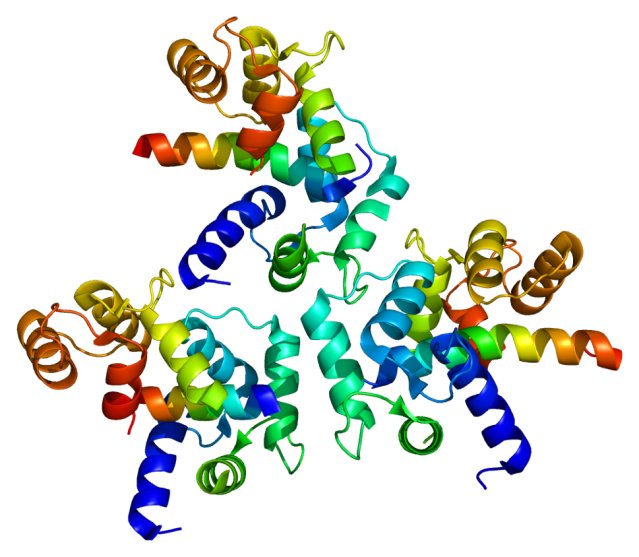
Structure of the CACNA1C gene product, a calcium channel named Cav1.2, which is one of 4 genes that has now been found to be genetically held in common amongst schizophrenia, bipolar disorder, autism, major depression and attention deficit hyperactivity disoder. Groundbreaking work on the role of this protein on anxiety and other forms of behavior related to mental illness has previously been established in the Rajadhyaksha laboratory at Weill Cornell Medical Center.
http://weill.cornell.edu/research/arajadhyaksha/

http://www.ncbi.nlm.nih.gov/pmc/articles/PMC3481072/
http://www.ncbi.nlm.nih.gov/pmc/articles/PMC3192195/
http://www.ncbi.nlm.nih.gov/pmc/articles/PMC3077109/

From the New York Times:
The psychiatric illnesses seem very different — schizophrenia, bipolar disorder, autism, major depression and attention deficit hyperactivity disorder. Yet they share several genetic glitches that can nudge the brain along a path to mental illness, researchers report. Which disease, if any, develops is thought to depend on other genetic or environmental factors.

Their study, published online Wednesday in the Lancet, was based on an examination of genetic data from more than 60,000 people worldwide. Its authors say it is the largest genetic study yet of psychiatric disorders. The findings strengthen an emerging view of mental illness that aims to make diagnoses based on the genetic aberrations underlying diseases instead of on the disease symptoms.

Two of the aberrations discovered in the new study were in genes used in a major signaling system in the brain, giving clues to processes that might go awry and suggestions of how to treat the diseases.

“What we identified here is probably just the tip of an iceberg,” said Dr. Jordan Smoller, lead author of the paper and a professor of psychiatry at Harvard Medical School and Massachusetts General Hospital. “As these studies grow we expect to find additional genes that might overlap.”

The new study does not mean that the genetics of psychiatric disorders are simple. Researchers say there seem to be hundreds of genes involved and the gene variations discovered in the new study confer only a small risk of psychiatric disease.

Steven McCarroll, director of genetics for the Stanley Center for Psychiatric Research at the Broad Institute of Harvard and M.I.T., said it was significant that the researchers had found common genetic factors that pointed to a specific signaling system.

“It is very important that these were not just random hits on the dartboard of the genome,” said Dr. McCarroll, who was not involved in the new study.

The work began in 2007 when a large group of researchers began investigating genetic data generated by studies in 19 countries and including 33,332 people with psychiatric illnesses and 27,888 people free of the illnesses for comparison. The researchers studied scans of people’s DNA, looking for variations in any of several million places along the long stretch of genetic material containing three billion DNA letters. The question: Did people with psychiatric illnesses tend to have a distinctive DNA pattern in any of those locations?

Researchers had already seen some clues of overlapping genetic effects in identical twins. One twin might have schizophrenia while the other had bipolar disorder. About six years ago, around the time the new study began, researchers had examined the genes of a few rare families in which psychiatric disorders seemed especially prevalent. They found a few unusual disruptions of chromosomes that were linked to psychiatric illnesses. But what surprised them was that while one person with the aberration might get one disorder, a relative with the same mutation got a different one.

Jonathan Sebat, chief of the Beyster Center for Molecular Genomics of Neuropsychiatric Diseases at the University of California, San Diego, and one of the discoverers of this effect, said that work on these rare genetic aberrations had opened his eyes. “Two different diagnoses can have the same genetic risk factor,” he said.

In fact, the new paper reports, distinguishing psychiatric diseases by their symptoms has long been difficult. Autism, for example, was once called childhood schizophrenia. It was not until the 1970s that autism was distinguished as a separate disorder.

But Dr. Sebat, who did not work on the new study, said that until now it was not clear whether the rare families he and others had studied were an exception or whether they were pointing to a rule about multiple disorders arising from a single genetic glitch.

“No one had systematically looked at the common variations,” in DNA, he said. “We didn’t know if this was particularly true for rare mutations or if it would be true for all genetic risk.” The new study, he said, “shows all genetic risk is of this nature.”

The new study found four DNA regions that conferred a small risk of psychiatric disorders. For two of them, it is not clear what genes are involved or what they do, Dr. Smoller said. The other two, though, involve genes that are part of calcium channels, which are used when neurons send signals in the brain.

“The calcium channel findings suggest that perhaps — and this is a big if — treatments to affect calcium channel functioning might have effects across a range of disorders,” Dr. Smoller said.

There are drugs on the market that block calcium channels — they are used to treat high blood pressure — and researchers had already postulated that they might be useful for bipolar disorder even before the current findings.

One investigator, Dr. Roy Perlis of Massachusetts General Hospital, just completed a small study of a calcium channel blocker in 10 people with bipolar disorder and is about to expand it to a large randomized clinical trial. He also wants to study the drug in people with schizophrenia, in light of the new findings. He cautions, though, that people should not rush out to take a calcium channel blocker on their own.

“We need to be sure it is safe and we need to be sure it works,” Dr. Perlis said.

Wisdom from psychopaths?

wisdom-from-psychopaths_1_jpg_pagespeed_ce_Oc_jJVtPyw

Adapted from The Wisdom of Psychopaths: What Saints, Spies, and Serial Killers Can Teach Us about Success, by Kevin Dutton, by arrangement with Scientific American/Farrar, Straus and Giroux, LLC (US), Doubleday Canada (Canada), Heinemann (UK), Record (Brazil), DTV (Germany), De Bezige Bij (Netherlands), NHK (Japan), Miraebook (Korea) and Lua de Papel (Portugal). Copyright © 2012 Kevin Dutton

“Got anything sharp?” the woman at reception barks, as I deposit the entire contents of my briefcase—laptop, phone, pens—into a clear, shatter-resistant locker in the entrance hall. “Now place the index finger of your right hand here and look up at the camera.”

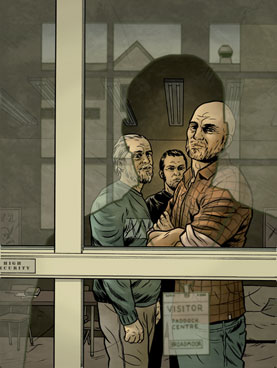
Once you pass through border control at Broadmoor, the best-known high-security psychiatric hospital in England, you are immediately ushered into a tiny air lock, a glass-walled temporary holding cell between reception and the hospital building proper, while the person you are visiting—in my case, a psychologist assigned to escort me to my destination—gets buzzed by reception and makes his way over to meet you.

It’s a nervy, claustrophobic wait. As I sit flicking through magazines, I remind myself why I’m here—an e-mail I had received a couple of weeks after launching the Great British Psychopath Survey, in which I tested people in different professions for psychopathic traits. One of the survey’s respondents, a barrister by trade, had written to me. He had posted a score that certainly got my attention.

“I realized from quite early on in my childhood that I saw things differently than other people,” he wrote. “But more often than not, it’s helped me in my life. Psychopathy (if that’s what you want to call it) is like a medicine for modern times. If you take it in moderation, it can prove extremely beneficial. It can alleviate a lot of existential ailments that we would otherwise fall victim to because our fragile psychological immune systems just aren’t up to the job of protecting us. But if you take too much of it, if you overdose on it, then there can, as is the case with all medicines, be some rather unpleasant side effects.”

The e-mail had got me thinking. Might this eminent criminal defense lawyer have a point? Was psychopathy a “medicine for modern times”? The typical traits of a psychopath are ruthlessness, charm, focus, mental toughness, fearlessness, mindfulness and action. Who wouldn’t at certain points in their lives benefit from kicking one or two of these up a notch?

I decided to put the theory to the test. As well as meeting the doctors in Broadmoor, I would talk with some of the patients. I would present them with problems from normal, everyday life, the usual stuff we moan about at happy hour, and see what their take on it was. Up until now it had seemed like a good idea.

“Professor Dutton?” I look up to see a blond guy in his mid-30s peering around the door at me. “Hi, I’m one of the clinical leads at the Paddock Center. Welcome to Broadmoor! Shall I take you over?”

The Paddock Center is an enclosed, highly specialized personality disorder directorate comprising six 12-bedded wards. Around 20 percent of the patients housed there at any one time are what you might call “pure” psychopaths. These are confined to the two Dangerous and Severe Personality Disorder (DSPD) wards. The rest present with so-called cluster disorders: clinically significant psychopathic traits, accompanied by traits typically associated with other personality disorders—borderline, paranoid and narcissistic, for example. Or they may have symptoms such as delusions and hallucinations indicative of psychosis.

Suddenly, reality dawns. This is no drop-in center for the mocha-sipping worried well. This is the conscienceless inner sanctum of the Chianti-swilling unworried unwell—the preserve of some of the most sinister neurochemistry in the business. The Yorkshire Ripper is in here. So is the Stockwell Strangler. It’s one of the most dangerous buildings on earth.

We emerge from the mazy, medicinal bowels of the hospital to the right of a large, open-air enclosure, topped off with some distinctly uncooperative razor wire. “Er … I am going to be all right, aren’t I?” I squeak.

My guide grins. “You’ll be fine,” he says. “Actually trouble on the DSPD wards is relatively rare. Psychopathic violence is predominantly instrumental, a direct means to a specific end. Which means, in an environment like this, that it’s largely preventable. And in the event that something does kick off, easily contained.

“Besides,” he adds, “it’s a bit late to turn back now, isn’t it?”

Getting to Know the Locals

We enter one of Broadmoor’s ultrasequestered DSPD wards. My first impression is of an extremely well appointed student residence hall. All blond, clean-shaven wood. Voluminous, freshly squeezed light. There’s even a pool table, I notice. A man named Danny shoots me a glance from behind his Nintendo Wii. Chelsea are 2–0 up against Manchester United. “We are the evil elite,” Danny says. “Don’t glamorize us. But at the same time, don’t go the other way and start dehumanizing us, either.”

Larry, a gray, bewhiskered, roly-poly kind of guy, takes a shine to me. Dressed in a Fair Isle sweater and beige, elasticized slacks, he looks like everyone’s favorite uncle. “You know,” he says, as he shakes my hand, “they say I’m one of the most dangerous men in Broadmoor. Can you believe that? But I promise you, I won’t kill you. Here, let me show you around.”
Larry escorts me to the far end of the ward, where we stop to take a peek inside his room. It looks like a typical single-occupancy hospital room, though with a few more creature comforts such as a computer, desk space, and a raft of books and papers on the bed. Next is the garden: a sunken, gray-bricked patio affair, about the size of a tennis court, interspersed with benches and conifers. We then drop in on Jamie.

“This guy’s from Cambridge University,” announces Larry, “and he’s in the middle of writing a book on us.”

Jamie stands up and heads us off at the door. A monster of a man at around 6′2″, with char-grilled stubble and a piercing cobalt stare, he has the brooding, subsatanic presence of the lone, ultraviolent killer. The lumberjack shirt and shaven, wrecking-ball head don’t exactly help matters.

“So what’s this book about, then?” he growls, in a gangsterish Cockney whisper, arms folded in front of him, left fist jammed under his chin. “Same old bollocks, I suppose? Lock ’em up and throw away the key? You know, you’ve got no idea how vindictive that can sound at times. And, might I add, downright hurtful. Has he, Larry?”

Larry guffaws theatrically and clasps his hands to his heart in a Shakespearean display of angst. Jamie, meanwhile, dabs at imaginary tears.

“I happen to think that you guys have got something to teach us,” I say. “A certain personality style that the rest of us can learn from. In moderation, of course. That’s important. Like the way, just now, you shrugged off what people might think of you. In everyday life, there’s a level on which that’s actually quite healthy.”

Jamie seems quite amused by the idea that I might be soliciting his advice. “Are you saying that me and Larry here have just got too much of a good thing?”

Back at other end of the ward, Danny has just been named Man of the Match. “I see he hasn’t killed you, then,” he says casually. “You going soft in your old age, Larry?”

I laugh. More than a little nervously, I realize. But Larry is deadly serious.

“Hey,” he says insistently. “You don’t get it, do you, boy?” He looks at me. “I said I wouldn’t kill you. And I didn’t, right?”

And it hits me that Larry may not have been bluffing. The curtain comes down on the football game. Danny zaps it off. He leans back in his chair.

“So a book, eh?” he says.

“Yes,” I say. “I’m interested in the way you guys solve problems.”

Danny eyes me quizzically. “What kind of problems?” he asks.

“Everyday problems,” I say, and I tell him about some friends of mine who were trying to sell their house.

Ruthless People

How to get rid of an unwanted tenant? That was the question for Don and his wife, Fran, whose elderly mother, Flo, had just moved in with them. Flo had lived in her previous house for 47 years, and now that she no longer needed it, Don and Fran had put it on the market. Being in an up-and-coming area of London, the house had drawn quite a bit of interest. But there was also a problem. The tenant. Who wasn’t exactly ecstatic at the prospect of hitting the road.

Don and Fran had already lost out on one potential sale because he couldn’t, or wouldn’t, pack his bags. But how to get him out?

“I’m presuming we’re not talking violence here,” inquires Danny. “Right?”

“Right,” I say. “We wouldn’t want to end up inside now, would we?”

Danny gives me the finger. But the very fact that he asks such a question at all debunks the myth that violence, for psychopaths, is the only club in the bag.

“How about this, then?” rumbles Jamie. “With the old girl up at her in-laws, chances are the geezer’s going to be alone in the house, yeah? So you pose as some bloke from the council, turn up at the door and ask to speak to the owner. He answers and tells you the old dear ain’t in. Okay, you say. Not a problem. But have you got a forwarding contact number for her, cuz you need to speak to her urgently?

“By this stage he’s getting kind of curious. What’s up? he asks, a bit wary, like. Actually, you say, quite a lot. You’ve just been out front and taken a routine asbestos reading. And guess what? The level’s so high it makes Chernobyl look like a health spa. The owner of the property needs to be contacted immediately. A structural survey has to be carried out. And anyone currently living at the address needs to vacate the premises until the council can give the all clear.

“That should do the trick. With a bit of luck, before you can say ‘slow, tortuous death from lung cancer,’ the wanker will be straight out the door.”

Jamie’s elegant, if rather unorthodox, solution to Don and Fran’s stay-at-home tenant conundrum certainly had me beat. The idea of getting the guy out so sharpish as to render him homeless and on the streets just simply hadn’t occurred to me. And yet, as Jamie quite rightly pointed out, there are times in life when it’s a case of the “least worst option.” Interestingly, he argues that it’s actually the right thing to do.

“Why not turf the bastard out?” he asks. “I mean, think about it. You talk about ‘doing the right thing.’ But what’s worse, from a moral perspective? Beating someone up who deserves it? Or beating yourself up who doesn’t? If you’re a boxer, you do everything in your power to put the other guy away as soon as possible, right? So why are people prepared to tolerate ruthlessness in sport but not in everyday life? What’s the difference?”
Winning Smiles

Jamie’s solution to Don and Fran’s tenant problem carries undertones of ruthlessness. Yet as Danny’s initial qualification of the dilemma quite clearly demonstrates—“I’m presuming we’re not talking violence here, right?”—such ruthlessness need not be conspicuous. The dagger of hard-nosed self-interest may be concealed, rather deftly, under a benevolent cloak of opaque, obfuscatory charm.

Psychopaths’ capacity for charm is, needless to say, well documented. As is their ability to focus and “get the job done.” It’s a powerful, and smart, combination.

Leslie, another inmate, has joined us and has a rather nice take on charm: “The ability to roll out a red carpet for those you cannot stand in order to fast-track them, as smoothly and efficiently as possible, in the direction you want them to go.”
With his coiffured blond locks and his impeccable cut-glass accent, he looks, and sounds, like a dab hand. He also has a good take on focus, especially when it comes to getting what you want. Leslie realized from a rather young age that what went on in his head obeyed a different set of operating principles than most.

“When I was a kid at school, I tended to avoid fisticuffs,” he tells me. “You see, I figured out pretty early on that, actually, the reason why people don’t get their own way is because they often don’t know themselves where that way leads. They get too caught up in the heat of the moment and temporarily go off track.

“Jamie was talking about boxing there a minute ago. Well, I once heard a great quote from one of the top trainers. He said that if you climb into the ring hell-bent on knocking the other chap into the middle of next week, chances are you’re going to come unstuck. But if, on the other hand, you concentrate on winning the fight, simply focus on doing your job, well, you might just knock him into the middle of next week anyway.”

The triumvirate of charm, focus and ruthlessness can predispose someone for long-term life success. Take Steve Jobs. Jobs, commented journalist John Arlidge shortly after the Apple chief’s death in 2011, achieved his cult leader status “not just by being single-minded, driven, focused … perfectionistic, uncompromising, and a total ball-breaker.” In addition, Arlidge noted, he had charisma. He would, as technology writer Walt Mossberg revealed, drape a cloth over a product—some pristine creation on a shiny boardroom table—and uncover it with a flourish.

Apple isn’t the world’s greatest techno innovator. Far from it. It wasn’t the first outfit to introduce a personal computer (IBM), nor the first to introduce a smartphone (Nokia). What Jobs brought to the table was style. Sophistication. And timeless, technological charm.

Apple’s setbacks along the road to world domination serve as a cogent reminder of the pitfalls and stumbling blocks that await all of us in life. Everyone, at some point or other, leaves someone on the floor, so to speak, and there’s a pretty good chance that that someone, today, tomorrow or at some other auspicious juncture down the line, is going to turn out to be you.

Neural Steel

Psychopaths, lest Jamie and the boys have yet to disabuse you, have no problem whatsoever facilitating others’ relationships with the floor. But they’re also pretty handy when they find themselves on the receiving end. And such inner neural steel, such inestimable indifference in the face of life’s misfortunes, is something that all of us, perhaps, could do with a little bit more of.

Studies of psychopaths have even revealed a brain signature for this relative indifference to setbacks. Anthropologist James Rilling of Emory University and his co-workers scanned the brains of those scoring high in psychopathy after these individuals experienced having their own attempts to cooperate unreciprocated. The scientists discovered that, compared with “nicer,” more equitable participants, the psychopaths exhibited significantly reduced activity in the brain’s emotion hub, the amygdala. This diminished activity, suggestive of a muted emotional reaction, could be considered a neural trademark of “turning the other cheek,” a response that can sometimes manifest itself in rather unusual ways.

“When we were kids,” Jamie chimes in, “we’d have a competition. See who could get the most elbows (rejections) on a night out. You know, from girls, like. The bloke who’d got the most by the time the lights came on would get the next night out for free.

“Course, it was in your interest to rack up as many as possible, right? A night on the piss with everything taken care of by your mates? Sorted! But the funny thing was, soon as you started to get a few under your belt, it actually got f— harder. Soon as you realize that it actually means jack, you start getting cocky. You start mouthing off. And some of the birds start to buy it!”

The Feel-Good Emergency

Mental toughness and fearlessness often go hand in hand. Of course, to many of us lesser mortals, fearlessness may seem quite foreign. But Leslie explains the rationale behind this state—and how he maintains it. “The thing about fear, or the way I understand fear, I suppose—because, to be honest, I don’t think I’ve ever really felt it—is that most of the time it’s completely unwarranted anyway. What is it they say? Ninety-nine percent of the things people worry about never happen. So what’s the point?

“I think the problem is that people spend so much time worrying about what might happen, what might go wrong, that they completely lose sight of the present. They completely overlook the fact that, actually, right now, everything’s perfectly fine.

“So the trick, whenever possible, I propose, is to stop your brain from running on ahead of you.”

Leslie’s pragmatic endorsement of the principles and practices of what might otherwise be described as mindfulness is typical of the psychopath. A psychopath’s rapacious proclivity to live in the moment, to “give tomorrow the slip and take today on a joyride” (as Larry, rather whimsically, puts it), is well documented—and at times can be stupendously beneficial. In fact, anchoring your thoughts unswervingly in the present is a discipline that psychopathy and spiritual enlightenment have in common. Clinical psychologist Mark Williams of the University of Oxford, for example, incorporates this principle of centering in his mindfulness-based cognitive-behavior therapy program for sufferers of anxiety and depression.
“Feeling good is an emergency for me,” Danny had commented as he’d slammed in his fourth goal for Chelsea on the Wii. Living in the moment, for him and many psychopaths, takes on a kind of urgency. “I like to ride the roller coaster of life, spin the roulette wheel of fortune, to terminal possibility.”

A desire to feel good in the here and now, shrugging off the future, can be taken to an extreme, of course. But it’s a goal we could all perhaps do with taking onboard just a little bit more in our lives.

“Settle in okay?” my guide inquires as we jangle back to clinical psychology suburbia. I smile.

ABOUT THE AUTHOR(S)

KEVIN DUTTON is a research psychologist at the Calleva Research Center for Evolution and Human Sciences at Magdalen College, University of Oxford. He is author of Split-Second Persuasion: The Ancient Art and New Science of Changing Minds (Houghton Mifflin Harcourt, 2011).

(Further Reading)

The Mask of Sanity: An Attempt to Reinterpret the So-Called Psychopathic Personality. Hervey M. Cleckley. C. V. Mosby, 1941.

Without Conscience: The Disturbing World of the Psychopaths among Us. Robert D. Hare. Guilford Press, 1999.

Snakes in Suits: When Psychopaths Go to Work. Paul Babiak and Robert D. Hare. Regan Books, 2006.

Psychopathic Personality: Bridging the Gap between Scientific Evidence and Public Policy. Jennifer L. Skeem, Devon L. L. Polaschek, Christopher Patrick and Scott O. Lilienfeld in Psychological Science in the Public Interest, Vol. 12, No. 3, pages 95–162; December 2011.

Take part in the Great American Psychopath Survey and learn much more about psychopaths at Dutton’s Web site: http://www.wisdomofpsychopaths.com

http://www.scientificamerican.com/article.cfm?id=wisdom-from-psychopaths

Our failed approach to treating schizophrenia

1226OPEDdorfman-popup

By PAUL STEINBERG
Published: December 25, 2012
New York Times

TOO many pendulums have swung in the wrong directions in the United States. I am not referring only to the bizarre all-or-nothing rhetoric around gun control, but to the swing in mental health care over the past 50 years: too little institutionalizing of teenagers and young adults (particularly men, generally more prone to violence) who have had a recent onset of schizophrenia; too little education about the public health impact of untreated mental illness; too few psychiatrists to talk about and treat severe mental disorders — even though the medications available in the past 15 to 20 years can be remarkably effective.

Instead we have too much concern about privacy, labeling and stereotyping, about the civil liberties of people who have horrifically distorted thinking. In our concern for the rights of people with mental illness, we have come to neglect the rights of ordinary Americans to be safe from the fear of being shot — at home and at schools, in movie theaters, houses of worship and shopping malls.
“Psychosis” — a loss of touch with reality — is an umbrella term, not unlike “fever.” As with fevers, there are many causes, from drugs and alcohol to head injuries and dementias. The most common source of severe psychosis in young adults is schizophrenia, a badly named disorder that, in the original Greek, means “split mind.” In fact, schizophrenia has nothing to do with multiple personality, a disorder that is usually caused by major repeated traumas in childhood. Schizophrenia is a physiological disorder caused by changes in the prefrontal cortex, an area of the brain that is essential for language, abstract thinking and appropriate social behavior. This highly evolved brain area is weakened by stress, as often occurs in adolescence.

Psychiatrists and neurobiologists have observed biochemical changes and alterations in brain connections in patients with schizophrenia. For example, miscommunications between the prefrontal cortex and the language area in the temporal cortex may result in auditory hallucinations, as well as disorganized thoughts. When the voices become commands, all bets are off. The commands might insist, for example, that a person jump out of a window, even if he has no intention of dying, or grab a set of guns and kill people, without any sense that he is wreaking havoc. Additional symptoms include other distorted thinking, like the notion that something — even a spaceship, or a comic book character — is controlling one’s thoughts and actions.

Schizophrenia generally rears its head between the ages of 15 and 24, with a slightly later age for females. Early signs may include being a quirky loner — often mistaken for Asperger’s syndrome — but acute signs and symptoms do not appear until adolescence or young adulthood.

People with schizophrenia are unaware of how strange their thinking is and do not seek out treatment. At Virginia Tech, where Seung-Hui Cho killed 32 people in a rampage shooting in 2007, professors knew something was terribly wrong, but he was not hospitalized for long enough to get well. The parents and community-college classmates of Jared L. Loughner, who killed 6 people and shot and injured 13 others (including a member of Congress) in 2011, did not know where to turn. We may never know with certainty what demons tormented Adam Lanza, who slaughtered 26 people at an elementary school in Newtown, Conn., on Dec. 14, though his acts strongly suggest undiagnosed schizophrenia.

I write this despite the so-called Goldwater Rule, an ethical standard the American Psychiatric Association adopted in the 1970s that directs psychiatrists not to comment on someone’s mental state if they have not examined him and gotten permission to discuss his case. It has had a chilling effect. After mass murders, our airwaves are filled with unfounded speculations about video games, our culture of hedonism and our loss of religious faith, while psychiatrists, the ones who know the most about severe mental illness, are largely marginalized.

Severely ill people like Mr. Lanza fall through the cracks, in part because school counselors are more familiar with anxiety and depression than with psychosis. Hospitalizations for acute onset of schizophrenia have been shortened to the point of absurdity. Insurance companies and families try to get patients out of hospitals as quickly as possible because of the prohibitively high cost of care.

As documented by writers like the law professor Elyn R. Saks, author of the memoir “The Center Cannot Hold: My Journey Through Madness,” medication and treatment work. The vast majority of people with schizophrenia, treated or untreated, are not violent, though they are more likely than others to commit violent crimes. When treated with medication after a rampage, many perpetrators who have shown signs of schizophrenia — including John Lennon’s killer and Ronald Reagan’s would-be assassin — have recognized the heinousness of their actions and expressed deep remorse.

It takes a village to stop a rampage. We need reasonable controls on semiautomatic weapons; criminal penalties for those who sell weapons to people with clear signs of psychosis; greater insurance coverage and capacity at private and public hospitals for lengthier care for patients with schizophrenia; intense public education about how to deal with schizophrenia; greater willingness to seek involuntary commitment of those who pose a threat to themselves or others; and greater incentives for psychiatrists (and other mental health professionals) to treat the disorder, rather than less dangerous conditions.

Too many people with acute schizophrenia have gone untreated. There have been too many Glocks, too many kids and adults cut down in their prime. Enough already.

Paul Steinberg is a psychiatrist in private practice.

Thanks to David Frey for bringing this to the attention of the It’s Interesting community.

Research from Asia is overturning long-held notions about the factors that drive people to commit suicide


SHANGHAI, CHINA—Mrs. Y’s death would have stumped many experts. A young mother and loyal wife, the rural Chinese woman showed none of the standard risk factors for suicide. She was not apparently depressed or mentally ill. Villagers said she exuded happiness and voiced few complaints. But when a neighbor publicly accused Mrs. Y of stealing eggs from her henhouse, the shame was unbearable. Mrs. Y rushed home and downed a bottle of pesticide. “A person cannot live without face,” she cried before she died. “I will die to prove that I did not steal her eggs.”

Decades of research in Western countries have positioned mental illness as an overwhelming predictor of suicide, figuring in more than 90% of such deaths. Another big risk factor is gender: Men commit suicide at much higher rates than women, by a ratio of nearly 4 to 1 in the United States, according to the U.S. Centers for Disease Control and Prevention. Other common correlates include city life and divorce. But in China, says Jie Zhang, a sociologist at the State University of New York, Buffalo State, the case of Mrs. Y is “a very typical scenario.”

Zhang oversaw interviews with Mrs. Y’s family and acquaintances while researching the prevalence of mental illness among suicide victims aged 15 to 34 in rural China. Through psychological autopsies—detailed assessments after death—Zhang and coauthors found that only 48% of 392 victims had a mental illness, they reported in the July 2010 issue of the American Journal of Psychiatry. An earlier study of Chinese suicide victims put the prevalence of mental disorders at 63%—still nowhere near as high as accepted models of suicide prevention would predict. Meanwhile, other standard risk factors simply don’t hold true, or are even reversed, in China. Chinese women commit suicide at unusually high rates; rural residents kill themselves more frequently than city dwellers do; and marriage may make a person more, rather than less, volatile.

Such differences matter because China accounts for an estimated 22% of global suicides, or roughly 200,000 deaths every year. In India, meanwhile, some 187,000 people took their own lives in 2010—twice as many as died from HIV/AIDS. By comparison, the World Health Organization (WHO) estimates that suicides in high-income countries total only 140,000 a year. Suicide rates in Japan and South Korea, however, are similar to China’s (see p. 1026), suggesting that this is a regional public health issue. And yet suicide in Asia is poorly understood. “Suicide has not gotten the attention it deserves vis-à-vis its disease burden,” says Prabhat Jha, director of the Centre for Global Health Research in Toronto, Canada.

Emerging research from developing countries like China and India is now filling that gap—and overturning prevailing notions. “The focus of the study of suicide in the West is psychiatry,” Zhang says. While mental illness remains an important correlate in Asia, he says, researchers may learn more from a victim’s family, religion, education, and personality. New findings, Zhang says, suggest that some researchers may have misread correlation as causation: In both the East and the West, “mental illness might not be the real cause of suicide.”

Distressing data

Reliable data on suicide across Asia were once maddeningly scarce. In Thailand until 2003, there was no requirement that the reported cause of death be medically validated—a flaw that rendered the country’s suicide data inaccurate. In India, suicide is a crime, which means it often goes unreported. But the Thai government now has a more accurate reporting system for mortality figures, while Indian researchers are benefiting from the Million Death Study, an effort to catalog causes of death for 1 million Indians in a 16-year survey relying on interviews with family members (Science, 15 June, p. 1372). The study has already produced a disturbing revelation about reported suicide rates. “When we compare our data with police reports, you find undercounts of at least 25% in men and 36% in women,” says Jha, the study’s lead investigator.

New insights from China are particularly instructive. Because suicide carries a stigma, the Chinese government withheld data on the topic until the late 1980s. When information finally came out, it quickly became clear that the country had a serious problem. In 1990, for example, the World Bank’s Global Burden of Disease Study estimated there were 343,000 suicides in China—or 30 per 100,000 people. The U.S. rate for the same year was 12 per 100,000.

But other reports gave different figures, prompting a debate on sources. WHO’s extrapolated total was based on data that China had reported from stations covering only 10% of the population, skewed toward urban residents. As researchers focused on the problem, they arrived at more reliable figures—but also unearthed more mysteries. In an analysis in The Lancet in 2002, a group led by Michael Phillips of Shanghai Mental Health Center and Emory University School of Medicine in Atlanta estimated that from 1995 to 1999, Chinese women killed themselves more frequently than men—by a ratio of 5 to 4. “There was originally disbelief about the very different gender ratio in China,” Phillips says, although later it was accepted.

Today, the suicide sex ratio in China is roughly 1 to 1, still a significant departure from the overall U.S. male-to-female ratio of 4 to 1. In India, the male-to-female suicide ratio is 1.5 to 1, although in the 15 to 29 age group it is close to equal. And yet, WHO estimates the global sex ratio at three men to one woman. (With colleague Cheng Hui, Phillips recently used Chinese and Indian figures to lower that estimate to 1.67 to 1.) Among young adults in India, suicide is second only to maternal mortality as a cause of death for women, according to the Million Death Survey.

In both China and India, cases like Mrs. Y’s involving no apparent mental illness are common. In India, suicide is most prevalent among teenagers and young adults—the cohort that is entering the workforce, marrying, and facing new life stresses. This contrasts with the Western pattern of high suicide rates among the middle-aged, suggesting that although “there might well be some underlying psychiatric conditions, the main drivers of [suicide in India] are probably chiefly social conditions,” Jha says. While cautioning that detailed psychological autopsies are still needed in India, he says, “it’s a reasonable assumption that many of these young folks are not mentally ill.”

Convincing researchers outside Asia may prove an uphill battle. Matthew Miller, a suicide researcher at the Harvard Injury Control Research Center in Boston, says that mental illness may be underdiagnosed in Asia for reasons that aren’t fully understood. That could throw off correlation studies. Phillips, who has worked in China for over 20 years, agrees that underdiagnosis is a problem, and that “many Western researchers still believe that we are just missing cases.” But he rejects that explanation. Even accounting for underdiagnosis, he says, the finding of a lower rate of mental illness among suicide victims has held up in multiple studies. Many Chinese suicide victims, he adds, are “most certainly severely distressed, but they don’t meet the criteria of a formal mental illness.”

Lethal weapons

Assuming that suicide risk is shaped by different factors in Asia, researchers are striving to uncover the roots. One clue may lie in the high proportion of unplanned Chinese suicides. In a 2002 survey of 306 Chinese patients who had been hospitalized for at least 6 hours following a suicide attempt, Phillips and colleagues found that 35% had contemplated suicide for less than 10 minutes—and 54% for less than 2 hours. Impulsiveness among suicide victims in Asia “tends to be higher than in the West,” says Paul Yip, director of the Hong Kong Jockey Club Centre for Suicide Research and Prevention at the University of Hong Kong and one of the authors of a recent WHO report on suicide in Asia. Although impulsive personality traits are sometimes linked to illnesses like bipolar disorder, studies in China have not uncovered full-fledged personality disorders in impulsive suicide victims.

In a tragic twist, impulsive victims in Asia tend to favor highly fatal methods. After interviewing family members and friends of 505 Chinese suicide victims, Kenneth Conner, a psychiatric researcher at the University of Rochester Medical Center in New York, and colleagues reported in 2005 that those who had ingested pesticides were more likely to have acted rashly than were those who used other methods such as hanging or drowning. Pesticides are a leading cause of suicide death in China and India, and the cause of roughly half of suicides worldwide. Pesticides may also explain Asia’s unusual suicide sex ratio, Jha says. In the West, women attempt suicide just as frequently as men do, but they tend to down sleeping pills—and often survive.

The trends in Asia point to a need for innovative prevention strategies. Zhang believes efforts should focus less on mental illness and more on “educating people to have realistic goals in life and teaching them to cope with crisis.” Front and center should be universities and rural women’s organizations, both of which already have active suicide prevention programs in China, he says. Such community-based approaches appear to have been effective in Hong Kong, Yip says. Over the past decade, the territory has rolled out programs for schoolchildren on dealing with stress and outreach groups for older adults. Its suicide rate has fallen 27% since 2003.

But resources in many Asian countries are limited. The vast majority of cities in China and India still do not have 24-hour suicide prevention hotlines. That may make what scholars call means restriction—reducing access to tools commonly used in suicide—a better goal. In Sri Lanka, pesticides once accounted for two-thirds of suicide deaths. Then in 1995, the government took steps to ban the most toxic pesticides. The suicide rate plummeted by 50% in the following decade.

The varying degrees to which mental illness and suicide correlate in East and West may ultimately be beside the point, argues Zhang, who believes a third factor may be the trigger in both regions. Strain theory, which posits that societal pressures, rather than inborn traits, contribute to crime, can help explain suicide, he believes. “Psychological strains usually precede a suicidal behavior, and they also happen before an individual becomes mentally ill.”

When a person is pulled by two or more conflicting pressures, Zhang says, as with “a girl who receives Confucian values at home and then goes to school and learns about modern values and gender equality,” she may be more prone to suicide. Other situational stresses may include a sudden crisis faced by a rural woman lacking coping mechanisms—such as the case of Mrs. Y—or an incident that forces a young man to confront a gap between his aspirations and reality. Zhang found that strain theory held up for his study subjects in rural China. He plans to probe whether it also applies to older Chinese.

Ultimately, Zhang hopes to test strain theory on Americans. The U.S. National Institutes of Health “spends millions and millions of dollars every year on treating mental illness to prevent suicide,” he says. “But no matter how much money we spend, how many psychiatrists we train, or how much work we do in psychiatric clinics, the U.S. suicide rate doesn’t decrease.” It has hovered around 10 to 12 suicides per 100,000 people since 1960.

Such research may be the tip of the iceberg when it comes to debunking long-held ideas about behavior disorders. Alcoholism is another area ripe for exploration, Cheng says: The profile of alcoholics in China contrasts sharply with that in the West. Because of social pressure to drink, Chinese alcoholics are far more likely to be working and married than American counterparts, who are often unemployed and divorced, she says. Suicide, Cheng muses, “is just another example of how environment can change behavior.”

http://www.sciencemag.org/content/338/6110/1025.full