Rare brain condition makes woman see everything upside down

bojana2_150313_blic_630bojana_150313_blic_630

Bojana Danilovic has what you might call a unique worldview. Due to a rare condition, she sees everything upside down, all the time.

The 28-year-old Serbian council employee uses an upside down monitor at work and relaxes at home in front of an upside down television stacked on top of the normal one that the rest of her family watches.

“It may look incredible to other people but to me it’s completely normal,” Danilovic told local newspaper Blic.

“I was born that way. It’s just the way I see the world.”

Experts from Harvard University and the Massachusetts Institute of Technology have been consulted after local doctors were flummoxed by the extremely unusual condition.

They say she is suffering from a neurological syndrome called “spatial orientation phenomenon,” Blic reports.

“They say my eyes see the images the right way up but my brain changes them,” Danilovic said.

“But they don’t really seem to know exactly how it happens, just that it does and where it happens in my brain.

“They told me they’ve seen the case histories of some people who write the way I see, but never someone quite like me.”

http://au.news.yahoo.com/thewest/a/-/world/16375095/rare-brain-condition-leaves-woman-seeing-world-upside-down/

Doubts about Johns Hopkins research have gone unanswered, scientist says

JN2_2846a1360362374

Daniel Yuan, pictured at his home in Laurel, raised doubts for years about the work of his colleagues in a Johns Hopkins medical research lab. “The denial that I am hearing from almost everyone in the group as a consensus is troubling to me,” he wrote in one e-mail. In December 2011, after 10 years at the lab, he was fired.

By Peter Whoriskey
The Washington Post Published: March 11
The numbers didn’t add up.

Over and over, Daniel Yuan, a medical doctor and statistician, couldn’t understand the results coming out of the lab, a prestigious facility at Johns Hopkins Medical School funded by millions from the National Institutes of Health.

He raised questions with the lab’s director. He reran the calculations on his own. He looked askance at the articles arising from the research, which were published in distinguished journals. He told his colleagues: This doesn’t make sense.

“At first, it was like, ‘Okay — but I don’t really see it,’ ” Yuan recalled. “Then it started to smell bad.”

His suspicions arose as reports of scientific misconduct have become more frequent and critics have questioned the willingness of universities, academic journals and the federal government, which pays for much of the work, to confront the problem.

Eventually, the Hopkins research, which focused on detecting interactions between genes, would win wide acclaim and, in a coup for the researchers, space in the pages of Nature, arguably the field’s most prestigious journal. The medical school even issued a news release when the article appeared last year: “Studies Linked To Better Understanding of Cancer Drugs.”

What very few readers of the Nature paper could know, however, was that behind the scenes, Yuan’s doubts seemed to be having profound effects.

In August, Yu-yi Lin, the lead author of the paper, was found dead in his new lab in Taiwan, a puncture mark in his left arm and empty vials of sedatives and muscle relaxants around him, according to local news accounts — an apparent suicide.

And within hours of this discovery, a note was sent from Lin’s e-mail account to Yuan. The e-mail, which Yuan saved, essentially blamed him for driving Lin to suicide. Yuan had written to Nature’s editors, saying that the paper’s results were overstated and that he found no evidence that the analyses described had actually been conducted. On the day of his death, Lin, 38, the father of three young daughters, was supposed to have finished writing a response to Yuan’s criticisms.

The subject line of the e-mail to Yuan, sent by an unknown person, said “your happy ending.”

“Yu-yi passed away this morning. Now you must be very satisfied with your success,” the e-mail said.

Yuan said he was shocked by the note, so much so that he began to shake.

But in the seven months since, he has wondered why no one — not the other investigators on the project, not the esteemed journal, not the federal government — has responded publicly to the problems he raised about the research.

The passions of scientific debate are probably not much different from those that drive achievement in other fields, so a tragic, even deadly dispute might not be surprising.

But science, creeping ahead experiment by experiment, paper by paper, depends also on institutions investigating errors and correcting them if need be, especially if they are made in its most respected journals.

If the apparent suicide and Yuan’s detailed complaints provoked second thoughts about the Nature paper, though, there were scant signs of it.

The journal initially showed interest in publishing Yuan’s criticism and told him that a correction was “probably” going to be written, according to e-mail rec­ords. That was almost six months ago. The paper has not been corrected.

The university had already fired Yuan in December 2011, after 10 years at the lab. He had been raising questions about the research for years. He was escorted from his desk by two security guards.

More recently, a few weeks after a Washington Post reporter began asking questions, a university spokeswoman said that a correction had been submitted to Nature and that it was under review.

“Your questions will be addressed with that publication,” a spokeswoman for the Hopkins medical school, Kim Hoppe, wrote in an e-mail.

Neither the journal nor the university would disclose the nature of the correction.

Hoppe declined an opportunity to have university personnel sit for interviews.

In the meantime, the paper has been cited 11 times by other published papers building on the findings.

It may be impossible for anyone from outside to know the extent of the problems in the Nature paper. But the incident comes amid a phenomenon that some call a “retraction epidemic.”

Last year, research published in the Proceedings of the National Academy of Sciences found that the percentage of scientific articles retracted because of fraud had increased tenfold since 1975.

The same analysis reviewed more than 2,000 retracted biomedical papers and found that 67 percent of the retractions were attributable to misconduct, mainly fraud or suspected fraud.

“You have a lot of people who want to do the right thing, but they get in a position where their job is on the line or their funding will get cut, and they need to get a paper published,” said Ferric C. Fang, one of the authors of the analysis and a medical professor at the University of Washington. “Then they have this tempting thought: If only the data points would line up . . . ”

Fang said retractions may be rising because it is simply easier to cheat in an era of digital images, which can be easily manipulated. But he said the increase is caused at least in part by the growing competition for publication and for NIH grant money.

He noted that in the 1960s, about two out of three NIH grant requests were funded; today, the success rate for applicants for research funding is about one in five. At the same time, getting work published in the most esteemed journals, such as Nature, has become a “fetish” for some scientists, Fang said.

In one sense, the rise in retractions may mean that the scientific enterprise is working — bad work is being discovered and tossed out. But many observers note that universities and journals, while sometimes agreeable to admitting small mistakes, are at times loath to reveal that the essence of published work was simply wrong.

“The reader of scientific information is at the mercy of the scientific institution to investigate or not,” said Adam Marcus, who with Ivan Oransky founded the blog Retraction Watch in 2010. In this case, Marcus said, “if Hopkins doesn’t want to move, we may not find out what is happening for two or three years.”

The trouble is that a delayed response — or none at all — leaves other scientists to build upon shaky work. Fang said he has talked to researchers who have lost months by relying on results that proved impossible to reproduce.

Moreover, as Marcus and Oransky have noted, much of the research is funded by taxpayers. Yet when retractions are done, they are done quietly and “live in obscurity,” meaning taxpayers are unlikely to find out that their money may have been wasted.

Johns Hopkins University typically receives more than $600 million a year from NIH, according to NIH figures.

For someone who has taken on a battle with Johns Hopkins and Nature, Yuan is strikingly soft-spoken.

He grew up in Gainesville, Fla., and attended MIT and then medical school at Johns Hopkins. He worked briefly as a pediatrician and an assistant professor of pediatrics before deciding that he preferred pure research. He has a wife and two kids and is an accomplished violinist.

In 2001, he joined the lab of Jef Boeke, a Hopkins professor of molecular biology and genetics. Boeke’s work on the yeast genome is, as academics put it, “highly cited” — that is, other papers have used some of his articles numerous times for support. Last year, he was named a member of the prestigious American Academy of Arts and Sci­ences.

The lab’s research focused on developing a methodology for finding evidence of genes interacting, primarily in the yeast genome and then in the human genome. Genetic interactions are prized because they yield insights into the traits of the genes involved.

During Yuan’s time there, the lab received millions in NIH funding, and according to internal e-mails, the people in the lab were under pressure to show results. Yuan felt the pressure, too, he says, but as the point person for analyzing the statistical data emerging from the experiments, he felt compelled to raise his concerns.

As far back as 2007, as the group was developing the methodology that would eventually form the basis of the Nature paper, Yuan wrote an anguished e-mail to another senior member of the lab, Pamela Meluh.

“I continue to be in a state of chronic alarm,” he wrote in August 2007. “The denial that I am hearing from almost everyone in the group as a consensus is troubling to me.”

Meluh quickly wrote back: “I have the same level of concern as you in terms of data quality, but I have less basis to think it can be better. . . . I’m always torn between addressing your and my own concerns and being ‘productive.’ ”

Then Boeke weighed in, telling Yuan that if he could improve the data analysis, he should, but that “the clock is ticking.”

“NIH has already given us way more time than we thought we needed and at some point we’ve got to suck it up and run with what we have,” Boeke wrote to Meluh and Yuan.

A few years later, another deadline was looming, and Elise Feingold, an NIH administrator, wanted to know what the lab had accomplished.

“I do need some kind of progress report on what you have been doing the past two years . . . and what you think you can accomplish with these funds,” she wrote to Boeke.

Citing Feingold’s message, ­Meluh wrote to Yuan, asking for help in explaining what the lab had produced. Its members had worked diligently, Yuan says, but hadn’t arrived at the kind of significant findings that generally produce scientific papers.

“I want to make it look like we’ve been busy despite lack of publications,” Meluh wrote.

Meluh did not respond to a request for an interview. Boeke referred questions to the university’s public relations team, which declined to comment further. An NIH official declined to comment.

While Yuan was growing increasingly skeptical of the lab’s methodology, Yu-yi Lin, who was also working at the lab, was trying to extend it. In the past, it had been applied to the yeast genome; Lin would extend it to the human genome — and this would become the basis of the Nature paper.

Lin, who was from Taiwan, was an up-and-comer. As a graduate student at Johns Hopkins just a few years before, he’d won an award for his work in cell metabolism and aging. He was also arranging for a prestigious spot at National Taiwan University.

At one point, when he was still at the Boeke lab at Hopkins, Lin asked Yuan to help analyze the data that would become the basis for the Nature paper, Yuan says. Yuan said he declined to get involved because he thought the methodology still had deep flaws.

Interactions between Lin and Yuan at the lab were few, Yuan said, and at any rate, Yuan had other things to worry about. He was slowly being forced out. He was demoted in 2011 from research associate to an entry-level position. A disagreement over whether Yuan should have asked Boeke if he wanted a byline on a paper erupted into further trouble, e-mail and other records show.

The Johns Hopkins spokeswoman, Hoppe, declined to discuss Yuan’s job termination.

On Dec. 15, 2011, Yuan was forced to leave the lab. He wasn’t allowed to make copies of his cell collection. He spent the next month trying to keep his mind busy. He read books about JavaScript and Photoshop, which he thought would enrich his research abilities. As he looked for other research jobs, he sensed that he had been blackballed.

Then, in February 2012, the Nature paper was published.

The research was a “profound achievement” that would “definitely be a great help to solve and to treat many severe diseases,” according to a news release from National Taiwan University, where Lin was now working.

Upon reading it, Yuan said, he was astonished that Lin had used what he considered a flawed method for finding genetic interactions. It had proved troublesome in the yeast genome, he thought. Could it have possibly been more reliable as it was extended to the human genome?

Lin, Boeke and their co-authors reported discovering 878 genetic interactions, or “hits.”

But Yuan, who was familiar with the data and the statistics, reanalyzed the data in the paper and concluded that there was essentially no evidence for any more than a handful of the 878 genetic interactions.

One of the key problems, Yuan wrote to the Nature editors, was that the numerical threshold the investigators used for determining when a hit had arisen was too low. This meant they would report far more hits than there actually were.

Yuan also calculated that, given the wide variability in the data and the relative precision required to find a true hit, it would have been impossible to arrive at any conclusions at all. By analogy, it would be like a pollster declaring a winner in an election when the margin of error was larger than the difference in the polling results.

“The overwhelming noise in the . . . data and the overstated strength of the genetic interactions together make it difficult to reconstruct any scientific process by which the authors could have inferred valid results from these data,” Yuan wrote to the editors of Nature in July.

His analysis attacks only the first portion of the paper; even if he is correct, the second part of the paper could be true.

Nevertheless, Yuan wanted Nature to publish his criticism, and following instructions from the journal, he forwarded his letter to Boeke and Lin, giving them two weeks to respond.

Just as the two weeks were to elapse, Boeke wrote to Nature asking for an extension of time — “a couple weeks or more” — to address Yuan’s criticism. Boeke explained that end-of-summer schedules and the multiple co-authors made it difficult to respond on time.

A day later, Lin was discovered dead in his office at National Taiwan University.

“Renowned scientist found dead, next to drug bottles,” the headline in the Taipei Times said.

Even in his death, the Nature paper was a kind of shorthand for Lin’s scientific success.

“A research team [Lin] led was featured in the scientific journal Nature in February for their discovery of the key mechanism for maintaining cell energy balance — believed to be linked to cellular aging and cancer,” the newspaper said.

If there was a suicide note, it has not been made public, and it is difficult to know what went through Lin’s mind at the end of his life. The apparent suicide and the e-mail to Yuan suggest only that Lin may have been distraught over the dispute; they do not prove that he acted improperly.

Shortly after the Nature paper appeared, Yuan hired lawyer Lynne Bernabei to challenge the way he was terminated at Hopkins.

In late August, Yuan asked the Nature editors again whether they would publish his criticism. Lin was dead, but Boeke and the others had had a month to respond, and Yuan hadn’t heard a thing.

On Sept. 28, a Nature editor informed Yuan by e-mail that the journal was still waiting on a fuller response from Boeke and that “experiments are being done and probably a Correction written.”

Such a correction has not appeared.

So as a last attempt, he figured he’d try the federal government, which paid for much of the research. But the government suggested that the threat to the federal research, if there was any, ended with Lin’s death.

“It is our understanding that these allegations are being investigated by Johns Hopkins University,” said the letter from the Office of Research Integrity.

Besides, it noted, the person responsible for the paper was Lin.

“Deceased respondents no longer pose a risk,” the letter said.

http://www.washingtonpost.com/business/economy/doubts-about-johns-hopkins-research-have-gone-unanswered-scientist-says/2013/03/11/52822cba-7c84-11e2-82e8-61a46c2cde3d_story_4.html

Thanks to Kebmodee for bringing this to the attention of the It’s Interesting community.

Flip of a single molecular switch makes an old brain young

green-image

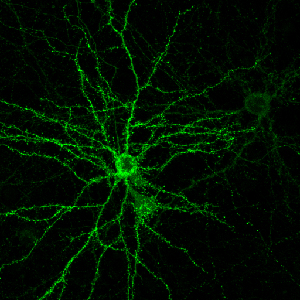
The flip of a single molecular switch helps create the mature neuronal connections that allow the brain to bridge the gap between adolescent impressionability and adult stability. Now Yale School of Medicine researchers have reversed the process, recreating a youthful brain that facilitated both learning and healing in the adult mouse.

Scientists have long known that the young and old brains are very different. Adolescent brains are more malleable or plastic, which allows them to learn languages more quickly than adults and speeds recovery from brain injuries. The comparative rigidity of the adult brain results in part from the function of a single gene that slows the rapid change in synaptic connections between neurons.

By monitoring the synapses in living mice over weeks and months, Yale researchers have identified the key genetic switch for brain maturation a study released March 6 in the journal Neuron. The Nogo Receptor 1 gene is required to suppress high levels of plasticity in the adolescent brain and create the relatively quiescent levels of plasticity in adulthood. In mice without this gene, juvenile levels of brain plasticity persist throughout adulthood. When researchers blocked the function of this gene in old mice, they reset the old brain to adolescent levels of plasticity.

“These are the molecules the brain needs for the transition from adolescence to adulthood,” said Dr. Stephen Strittmatter. Vincent Coates Professor of Neurology, Professor of Neurobiology and senior author of the paper. “It suggests we can turn back the clock in the adult brain and recover from trauma the way kids recover.”

Rehabilitation after brain injuries like strokes requires that patients re-learn tasks such as moving a hand. Researchers found that adult mice lacking Nogo Receptor recovered from injury as quickly as adolescent mice and mastered new, complex motor tasks more quickly than adults with the receptor.

“This raises the potential that manipulating Nogo Receptor in humans might accelerate and magnify rehabilitation after brain injuries like strokes,” said Feras Akbik, Yale doctoral student who is first author of the study.

Researchers also showed that Nogo Receptor slows loss of memories. Mice without Nogo receptor lost stressful memories more quickly, suggesting that manipulating the receptor could help treat post-traumatic stress disorder.

“We know a lot about the early development of the brain,” Strittmatter said, “But we know amazingly little about what happens in the brain during late adolescence.”

Other Yale authors are: Sarah M. Bhagat, Pujan R. Patel and William B.J. Cafferty

The study was funded by the National Institutes of Health. Strittmatter is scientific founder of Axerion Therapeutics, which is investigating applications of Nogo research to repair spinal cord damage.

http://news.yale.edu/2013/03/06/flip-single-molecular-switch-makes-old-brain-young

Communication of thoughts between rats on different continents, connected via brain-to-brain interface

The world’s first brain-to-brain connection has given rats the power to communicate by thought alone.

“Many people thought it could never happen,” says Miguel Nicolelis at Duke University in Durham, North Carolina. Although monkeys have been able to control robots with their mind using brain-to-machine interfaces, work by Nicolelis’s team has, for the first time, demonstrated a direct interface between two brains – with the rats able to share both motor and sensory information.

The feat was achieved by first training rats to press one of two levers when an LED above that lever was lit. A correct action opened a hatch containing a drink of water. The rats were then split into two groups, designated as “encoders” and “decoders”.

An array of microelectrodes – each about one-hundredth the width of a human hair – was then implanted in the encoder rats’ primary motor cortex, an area of the brain that processes movement. The team used the implant to record the neuronal activity that occurs just before the rat made a decision in the lever task. They found that pressing the left lever produced a different pattern of activity from pressing the right lever, regardless of which was the correct action.

Next, the team recreated these patterns in decoder rats, using an implant in the same brain area that stimulates neurons rather than recording from them. The decoders received a few training sessions to prime them to pick the correct lever in response to the different patterns of stimulation.

The researchers then wired up the implants of an encoder and a decoder rat. The pair were given the same lever-press task again, but this time only the encoder rats saw the LEDs come on. Brain signals from the encoder rat were recorded just before they pressed the lever and transmitted to the decoder rat. The team found that the decoders, despite having no visual cue, pressed the correct lever between 60 and 72 per cent of the time.

The rats’ ability to cooperate was reinforced by rewarding both rats if the communication resulted in a correct outcome. Such reinforcement led to the transmission of clearer signals, improving the rats’ success rate compared with cases where decoders were given a pre-recorded signal. This was a big surprise, says Nicolelis. “The encoder’s brain activity became more precise. This could have happened because the animal enhanced its attention during the performance of the next trial after a decoder error.”

If the decoders had not been primed to relate specific activity with the left or right lever prior to the being linked with an encoder, the only consequence would be that it would have taken a bit more time for them to learn the task while interacting with the encoder, says Nicolelis. “We simply primed the decoder so that it would get the gist of the task it had to perform.” In unpublished monkey experiments doing a similar task, the team did not need to prime the animals at all.

In a second experiment, rats were trained to explore a hole with their whiskers and indicate if it was narrow or wide by turning to the left or right. Pairs of rats were then connected as before, but this time the implants were placed in their primary somatosensory cortex, an area that processes touch. Decoder rats were able to indicate over 60 per cent of the time the width of a gap that only the encoder rats were exploring.

Finally, encoder rats were held still while their whiskers were stroked with metal bars. The researchers observed patterns of activity in the somatosensory cortex of the decoder rats that matched that of the encoder rats, even though the whiskers of the decoder rats had not been touched.

Pairs of rats were even able to cooperate across continents using cyberspace. Brain signals from an encoder rat at the Edmond and Lily Safra International Institute of Neuroscience of Natal in Brazil were sent to a decoder in Nicolelis’s lab in North Carolina via the internet. Though there was a slight transmission delay, the decoder rat still performed with an accuracy similar to those of rats in closer proximity with encoders.

Christopher James at the University of Warwick, UK, who works on brain-to-machine interfaces for prostheses, says the work is a “wake-up call” for people who haven’t caught up with recent advances in brain research.

We have the technology to create implants for long-term use, he says. What is missing, though, is a full understanding of the brain processes involved. In this case, Nicolelis’s team is “blasting a relatively large area of the brain with a signal they’re not sure is 100 per cent correct,” he says.

That’s because the exact information being communicated between the rats’ brains is not clear. The brain activity of the encoders cannot be transferred precisely to the decoders because that would require matching the patterns neuron for neuron, which is not currently possible. Instead, the two patterns are closely related in terms of their frequency and spatial representation.

“We are still using a sledgehammer to crack a walnut,” says James. “They’re not hearing the voice of God.” But the rats are certainly sending and receiving more than a binary signal that simply points to one or other lever, he says. “I think it will be possible one day to transfer an abstract thought.”

The decoders have to interpret relatively complex brain patterns, says Marshall Shuler at Johns Hopkins University in Baltimore, Maryland. The animals learn the relevance of these new patterns and their brains adapt to the signals. “But the decoders are probably not having the same quality of experience as the encoders,” he says.

Patrick Degenaar at Newcastle University in the UK says that the military might one day be able to deploy genetically modified insects or small mammals that are controlled by the brain signals of a remote human operator. These would be drones that could feed themselves, he says, and could be used for surveillance or even assassination missions. “You’d probably need a flying bug to get near the head [of someone to be targeted],” he says.

Nicolelis is most excited about the future of multiple networked brains. He is currently trialling the implants in monkeys, getting them to work together telepathically to complete a task. For example, each monkey might only have access to part of the information needed to make the right decision in a game. Several monkeys would then need to communicate with each other in order to successfully complete the task.

“In the distant future we may be able to communicate via a brain-net,” says Nicolelis. “I would be very glad if the brain-net my great grandchildren used was due to their great grandfather’s work.”

Journal reference: Nature Scientific Reports, DOI: 10.1038/srep01319

Fruit flies force their young to drink alcohol for protection

130222102958-large
The fruit fly study adds to the evidence “that using toxins in the environment to medicate offspring may be common across the animal kingdom,” says biologist Todd Schlenke.

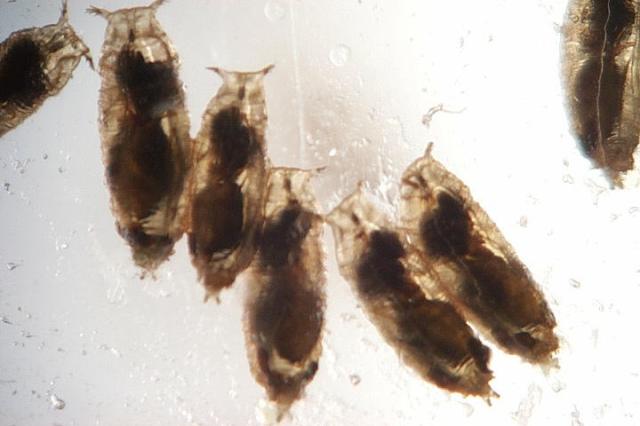
When fruit flies sense parasitic wasps in their environment, they lay their eggs in an alcohol-soaked environment, essentially forcing their larvae to consume booze as a drug to combat the deadly wasps.

The discovery by biologists at Emory University was published in the journal Science on February 22.

“The adult flies actually anticipate an infection risk to their children, and then they medicate them by depositing them in alcohol,” says Todd Schlenke, the evolutionary geneticist whose lab did the research. “We found that this medicating behavior was shared by diverse fly species, adding to the evidence that using toxins in the environment to medicate offspring may be common across the animal kingdom.”

Adult fruit flies detect the wasps by sight, and appear to have much better vision than previously realized, he adds. “Our data indicate that the flies can visually distinguish the relatively small morphological differences between male and female wasps, and between different species of wasps.”

The experiments were led by Balint Zacsoh, who recently graduated from Emory with a degree in biology and still works in the Schlenke lab. The team also included Emory graduate student Zachary Lynch and postdoc Nathan Mortimer.

The larvae of the common fruit fly, Drosophila melanogaster, eat the rot, or fungi and bacteria, that grows on overripe, fermenting fruit. They have evolved a certain amount of resistance to the toxic effects of the alcohol levels in their natural habitat, which can range up to 15 percent.

Tiny, endoparasitoid wasps are major killers of fruit flies. The wasps inject their eggs inside the fruit fly larvae, along with venom that aims to suppress their hosts’ cellular immune response. If the flies fail to kill the wasp egg, a wasp larva hatches inside the fruit fly larva and begins to eat its host from the inside out.

Last year, the Schlenke lab published a study showing how fruit fly larvae infected with wasps prefer to eat food high in alcohol. This behavior greatly improves the survival rate of the fruit flies because they have evolved high tolerance of the toxic effects of the alcohol, but the wasps have not.

“The fruit fly larvae raise their blood alcohol levels, so that the wasps living in their blood will suffer,” Schlenke says. “When you think of an immune system, you usually think of blood cells and immune proteins, but behavior can also be a big part of an organism’s immune defense.”

For the latest study, the researchers asked whether the fruit fly parents could sense when their children were at risk for infection, and whether they then sought out alcohol to prophylactically medicate them.

Adult female fruit flies were released in one mesh cage with parasitic wasps and another mesh cage with no wasps. Both cages had two petri dishes containing yeast, the nourishment for lab-raised fruit flies and their larvae. The yeast in one of the petri dishes was mixed with 6 percent alcohol, while the yeast in the other dish was alcohol free. After 24 hours, the petri dishes were removed and the researchers counted the eggs that the fruit flies had laid.

The results were dramatic. In the mesh cage with parasitic wasps, 90 percent of the eggs laid were in the dish containing alcohol. In the cage with no wasps, only 40 percent of the eggs were in the alcohol dish.

“The fruit flies clearly change their reproductive behavior when the wasps are present,” Schlenke says. “The alcohol is slightly toxic to the fruit flies as well, but the wasps are a bigger danger than the alcohol.”

The fly strains used in the experiments have been bred in the lab for decades. “The flies that we work with have not seen wasps in their lives before, and neither have their ancestors going back hundreds of generations,” Schlenke says. “And yet, the flies still recognize these wasps as a danger when they are put in a cage with them.”

Further experiments showed that the flies are extremely discerning about differences in the wasps. They preferred to lay their eggs in alcohol when female wasps were present, but not if only male wasps were in the cage.

Theorizing that the flies were reacting to pheromones, the researchers conducted experiments using two groups of mutated fruit flies. One group lacked the ability to smell, and another group lacked sight. The flies unable to smell, however, still preferred to lay their eggs in alcohol when female wasps were present. The blind flies did not make the distinction, choosing the non-alcohol food for their offspring, even in the presence of female wasps.

“This result was a surprise to me,” Schlenke says. “I thought the flies were probably using olfaction to sense the female wasps. The small, compound eyes of flies are believed to be more geared to detecting motion than high-resolution images.”

The only obvious visual differences between the female and male wasps, he adds, is that the males have longer antennae, slightly smaller bodies, and lack an ovipositor.

Further experimentation showed that the fruit flies can distinguish different species of wasps, and will only choose the alcohol food in response to wasp species that infect larvae, not fly pupae. “Fly larvae usually leave the food before they pupate,” Schlenke explains, “so there is likely little benefit to laying eggs at alcoholic sites when pupal parasites are present.”

The researchers also connected the exposure to female parasitic wasps to changes in a fruit fly neuropeptide.

Stress, and the resulting reduced level of neuropeptide F, or NPF, has previously been associated with alcohol-seeking behavior in fruit flies. Similarly, levels of a homologous neuropeptide in humans, NPY, is associated with alcoholism.

We found that when a fruit fly is exposed to female parasitic wasps, this exposure reduces the level of NPF in the fly brain, causing the fly to seek out alcoholic sites for oviposition,” Schlenke says. “Furthermore, the alcohol-seeking behavior appears to remain for the duration of the fly’s life, even when the parasitic wasps are no longer present, an example of long-term memory.”

Finally, Drosophila melanogaster is not unique in using this offspring medication behavior. “We tested a number of fly species,” Schlenke says, “and found that each fly species that uses rotting fruit for food mounts this immune behavior against parasitic wasps. Medication may be far more common in nature than we previously thought.”

http://www.sciencedaily.com/releases/2013/02/130222102958.htm

$300 dollar glasses sold on Amazon will correct colorblindness

OxyAmp_b

tohruMurakami_students1
Mark Changizi and Tim Barber turned research on human vision and blood flow into colorblindness-correcting glasses you can buy on Amazon. Here’s how they did it.

About 10 years ago, Mark Changizi started to develop research on human vision and how it could see changes in skin color. Like many academics, Changizi, an accomplished neurobiologist, went on to pen a book. The Vision Revolution challenged prevailing theories–no, we don’t see red only to spot berries and fruits amid the vegetation–and detailed the amazing capabilities of why we see the way we do.

If it were up to academia, Changizi’s story might have ended there. “I started out in math and physics, trying to understand the beauty in these fields,” he says, “You are taught, or come to believe, that applying something useful is inherently not interesting.”

Not only did Changizi manage to beat that impulse out of himself, but he and Tim Barber, a friend from middle school, teamed up several years ago to form a joint research institute. 2AI Labs allows the pair to focus on research into cognition and perception in humans and machines, and then to commercialize it. The most recent project? A pair of glasses with filters that just happen to cure colorblindness.

Changizi and Barber didn’t set out to cure colorblindness. Changizi just put forth the idea that humans’ ability to see colors evolved to detect oxygenation and hemoglobin changes in the skin so they could tell if someone was scared, uncomfortable or unhealthy. “We as humans blush and blanche, regardless of overall skin tone,” Barber explains, “We associate color with emotion. People turn purple with anger in every culture.” Once Changizi fully understood the connection between color vision and blood physiology, Changizi determined it would be possible to build filters that aimed to enhance the ability to see those subtle changes by making veins more or less distinct–by sharpening the ability to see the red-green or blue-yellow parts of the spectrum. He and Barber then began the process of patenting their invention.

When they started thinking about commercial applications, Changizi and Barber both admit their minds went straight to television cameras. Changizi was fascinated by the possibilities of infusing an already-enhanced HDTV experience with the capacity to see colors even more clearly.

“We looked into cameras photo receptors and decided that producing a filter for a camera would be too difficult and expensive,” Barber says. The easiest possible approach was not electronic at all, he says. Instead, they worked to develop a lens that adjusts the color signal that hits the human eye and the O2Amp was born.

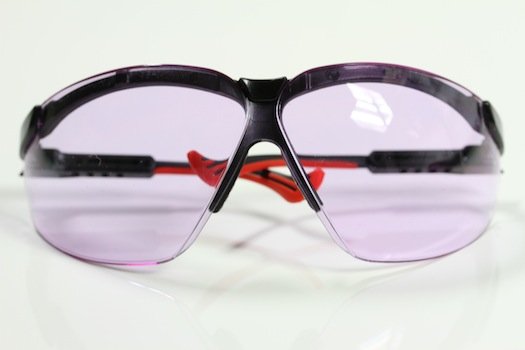
The patented lens technology simply perfects what the eye does naturally: it read the changes in skin tone brought on by a flush, bruise, or blanch. The filters can be used in a range of products from indoor lighting (especially for hospital trauma centers) to windows, to perhaps eventually face cream. For now, one of the most promising applications is in glasses that correct colorblindness.

As a veteran entrepreneur, founding Clickbank and Keynetics among other ventures, Barber wasn’t interested in chasing the perfect color filter for a demo pair of glasses. “If you look for perfection you could spend a million dollars. And it is just a waste of time,” he says. A bunch of prototypes were created, and rejected. Some were too shiny, others too iridescent. “We finally found something that worked to get the tone spectrum we wanted and to produce a more interesting view of the world.”

What they got was about 90 percent of the way to total color enhancement across three different types of lenses: Oxy-Iso, Hemo-Iso, and Oxy-Amp. While the Amp, which boosts the wearer’s general perception of blood oxygenation under the skin (your own vision, but better), is the centerpiece of the technology, it was the Oxy-Iso, the lens that isolates and enhances the red-green part of the spectrum, that generated some unexpected feedback from users. Changizi says the testers told them that the Oxy-Iso lens appeared to “cure” their colorblindness.

Changizi knew this was a possibility, as the filter concentrates enhancement exactly where red-green colorblind people have a block. Professor Daniel Bor, a red-green colorblind neuroscientist at the University of Sussex tried them and was practically giddy with the results. Changizi published Bor’s testimony on his blog: “When I first put one of them on [the Oxy-Iso,], I got a shiver of excitement at how vibrant and red lips, clothes and other objects around me seemed. I’ve just done a quick 8 plate Ishihara colour blindness test. I scored 0/8 without the specs (so obviously colour blind), but 8/8 with them on (normal colour vision)!”

Despite these early testimonials, the pair thought that the O2Amp glasses would be primarily picked up by hospitals. The Hemo-Iso filter enhances variations along the yellow-blue dimension, which makes it easier for healthcare providers to see veins. “It’s a little scary to think about people drawing blood who can’t see see the veins,” Barber says. EMT workers were enthusiastic users thanks to the Hemo-Iso’s capability of making bruising more visible.

From there, Barber and Changizi embarked on a two-year odyssey to find a manufacturer to make the eyewear that would enable them to sell commercially. Through 2AI Labs, they were able push their discoveries into mainstream applications without having to rely on grants; any funding they earn from their inventions is reinvested. They also forewent some of the traditional development steps. “We bootstrapped the bench testing and we didn’t do any market research,” Barber says.

Plenty of cold calling to potential manufacturers ensued. “As scientists talking to manufacturers, it seemed like we were speaking a different language,” Barber says. Not to mention looking strange as they walked around wearing the purple and green-tinted glasses at trade shows. Changizi says they finally got lucky last year and found a few manufacturers able to produce the specialized specs. All are available on Amazon for just under $300.

Changizi and Barber aren’t done yet. In addition to overseeing sales reps who are trying to get the glasses into the hands of more buyers, the two are in talks with companies such as Oakley and Ray-Ban to put the technology into sunglasses. Imagine, says Changizi, if you could more easily see if you are getting a sunburn at the beach despite the glare. They’re testing a mirrored O2Amp lens specially for poker players (think: all the better to see the flush of a bluffer). Changizi says they are also working with cosmetics companies to embed the technology in creams that would enhance the skin’s vasculature. Move over Hope in a Jar. Barber says it’s not clear how profitable any of this will be yet: “We just want the technology to be used.”

http://www.popsci.com/science/article/2013-02/amazing-story-300-glasses-can-cure-colorblindness?page=2

Lab rats given a 6th sense through a brain-machine interface

_65888650_65886269

Duke University researchers have effectively given laboratory rats a “sixth sense” using an implant in their brains.

An experimental device allowed the rats to “touch” infrared light – which is normally invisible to them.

The team at Duke University fitted the rats with an infrared detector wired up to microscopic electrodes that were implanted in the part of their brains that processes tactile information.

The results of the study were published in Nature Communications journal.

The researchers say that, in theory at least, a human with a damaged visual cortex might be able to regain sight through a device implanted in another part of the brain.

Lead author Miguel Nicolelis said this was the first time a brain-machine interface has augmented a sense in adult animals.

The experiment also shows that a new sensory input can be interpreted by a region of the brain that normally does something else (without having to “hijack” the function of that brain region).

“We could create devices sensitive to any physical energy,” said Prof Nicolelis, from the Duke University Medical Center in Durham, North Carolina.

“It could be magnetic fields, radio waves, or ultrasound. We chose infrared initially because it didn’t interfere with our electrophysiological recordings.”

His colleague Eric Thomson commented: “The philosophy of the field of brain-machine interfaces has until now been to attempt to restore a motor function lost to lesion or damage of the central nervous system.

“This is the first paper in which a neuroprosthetic device was used to augment function – literally enabling a normal animal to acquire a sixth sense.”
In their experiments, the researchers used a test chamber with three light sources that could be switched on randomly.

They taught the rats to choose the active light source by poking their noses into a port to receive a sip of water as a reward. They then implanted the microelectrodes, each about a tenth the diameter of a human hair, into the animals’ brains. These electrodes were attached to the infrared detectors.

The scientists then returned the animals to the test chamber. At first, the rats scratched at their faces, indicating that they were interpreting the lights as touch. But after a month the animals learned to associate the signal in their brains with the infrared source.

They began to search actively for the signal, eventually achieving perfect scores in tracking and identifying the correct location of the invisible light source.

One key finding was that enlisting the touch cortex to detect infrared light did not reduce its ability to process touch signals.

http://www.bbc.co.uk/news/science-environment-21459745

Thanks to Kebmodee for bringing this to the attention of the It’s Interesting community.

Researchers at the University of Iowa Discover Internal Trigger for Panic Attack in the Previously Fearless

panic-attack

By JAMES GORMAN
Published: February 3, 2013
New York Times

In the past few years, scientists have learned a lot about fear from a woman who could not experience it. A rare illness had damaged a part of her brain known as the amygdala and left her eerily unafraid.

Both in experiments and in life, the woman, known as SM, showed no fear of scary movies, snakes, spiders or very real domestic assaults, death threats, and robberies at knife- and gunpoint.

Although she lived in an area “replete with crime, drugs and danger,” according to an earlier study, because she lacked a functioning amygdala, an evolutionarily ancient part of the brain long known to process fear, nothing scared her.

But recently SM had a panic attack. And the simple fact that she was able to feel afraid without a working amygdala, experts say, illuminates some of the brain’s most fundamental processes and may have practical value in the study of panic attacks.

SM’s moments of fear occurred during an experiment that involved inhaling carbon dioxide through a mask in amounts that are not harmful but create a momentary feeling of suffocation. Not only SM, but two other women, identified as AM and BG, identical twins with amygdala damage similar to SM’s, showed all the physical symptoms of panic, and reported that, to their surprise, they felt intense fear.

The researchers, who report on the experiment in the current issue of Nature Neuroscience, had hypothesized that SM would not panic. John A. Wemmie, a neuroscientist at the University of Iowa and the senior author of the paper, said, “We saw the exact opposite.”

Antonio Damasio, of the University of Southern California, who had worked with SM and some of the researchers involved in this study on previous papers but did not participate in this research, said he was delighted with the results. It confirmed his own thinking, he said, that while the amygdala was central to fear generated by external threats, there was a different brain path that produced the feeling of fear generated by internal bodily experiences like a heart attack. This idea was put forth in a 2011 paper about SM on which he was a co-author.

“I think it’s a very interesting and important result,” he said.

Dr. Joseph E. LeDoux, of New York University, who has extensively studied the amygdala but was not involved in the research, said in an e-mail, “This is a novel and important paper” in an area where there is much left to learn. He said scientists still did not understand “how the brain creates a conscious experience of fear,” whether the amygdala or other systems are involved.

SM scores in the normal range on I.Q. and other tests, and she voluntarily participated in this and earlier studies, all of which showed her lacking in any sort of fear response until now. In one, for example, she walked through a Halloween haunted house and never gasped, recoiled or screamed, as others did, when a person in a costume leapt out of the dark. She also did not seem to learn fear from life experiences.

So what was so unusual about carbon dioxide?

The answer seems to lie in the way the brain monitors disturbances in the world outside the body — snakes and robbers — compared with the way it monitors trouble inside the body — hunger, heart attacks, the feeling of not being able to breathe. External threats clearly are processed by the amygdala. But she had never been tested for internal signals of trouble.

In the experiment that SM and others participated in, they took one deep breath with plenty of oxygen but much more carbon dioxide than air usually contains. Humans are actually not sensitive to how much oxygen they are breathing, but they are sensitive to how much carbon dioxide is accumulating in the body, since it builds up quickly when a person cannot breathe. The sensation is familiar to people who have tried to hold their breath.

The researchers suggest that excess carbon dioxide produces signals that may be picked up in the brainstem and elsewhere, activating a fear-generating system in the brain that a venomous snake or a mugger with a gun would not set off.

One puzzling aspect of the results is that SM and the two other women all reacted so strongly. Among people with normal brains, only those with panic disorder are reliably terrified in carbon dioxide experiments. Most people are not so susceptible, said Colin Buzza, a co-author of the study and a medical student at the University of Iowa Carver College of Medicine, suggesting that perhaps the amygdala is not functioning properly in people with panic disorder.

Origin of the myth that we only use 10% of our brains

ten-percent-brain

The human brain is complex. Along with performing millions of mundane acts, it composes concertos, issues manifestos and comes up with elegant solutions to equations. It’s the wellspring of all human feelings, behaviors, experiences as well as the repository of memory and self-awareness. So it’s no surprise that the brain remains a mystery unto itself.

Adding to that mystery is the contention that humans “only” employ 10 percent of their brain. If only regular folk could tap that other 90 percent, they too could become savants who remember π to the twenty-thousandth decimal place or perhaps even have telekinetic powers.

Though an alluring idea, the “10 percent myth” is so wrong it is almost laughable, says neurologist Barry Gordon at Johns Hopkins School of Medicine in Baltimore. Although there’s no definitive culprit to pin the blame on for starting this legend, the notion has been linked to the American psychologist and author William James, who argued in The Energies of Men that “We are making use of only a small part of our possible mental and physical resources.” It’s also been associated with to Albert Einstein, who supposedly used it to explain his cosmic towering intellect.

The myth’s durability, Gordon says, stems from people’s conceptions about their own brains: they see their own shortcomings as evidence of the existence of untapped gray matter. This is a false assumption. What is correct, however, is that at certain moments in anyone’s life, such as when we are simply at rest and thinking, we may be using only 10 percent of our brains.

“It turns out though, that we use virtually every part of the brain, and that [most of] the brain is active almost all the time,” Gordon adds. “Let’s put it this way: the brain represents three percent of the body’s weight and uses 20 percent of the body’s energy.”

The average human brain weighs about three pounds and comprises the hefty cerebrum, which is the largest portion and performs all higher cognitive functions; the cerebellum, responsible for motor functions, such as the coordination of movement and balance; and the brain stem, dedicated to involuntary functions like breathing. The majority of the energy consumed by the brain powers the rapid firing of millions of neurons communicating with each other. Scientists think it is such neuronal firing and connecting that gives rise to all of the brain’s higher functions. The rest of its energy is used for controlling other activities—both unconscious activities, such as heart rate, and conscious ones, such as driving a car.

Although it’s true that at any given moment all of the brain’s regions are not concurrently firing, brain researchers using imaging technology have shown that, like the body’s muscles, most are continually active over a 24-hour period. “Evidence would show over a day you use 100 percent of the brain,” says John Henley, a neurologist at the Mayo Clinic in Rochester, Minn. Even in sleep, areas such as the frontal cortex, which controls things like higher level thinking and self-awareness, or the somatosensory areas, which help people sense their surroundings, are active, Henley explains.

Take the simple act of pouring coffee in the morning: In walking toward the coffeepot, reaching for it, pouring the brew into the mug, even leaving extra room for cream, the occipital and parietal lobes, motor sensory and sensory motor cortices, basal ganglia, cerebellum and frontal lobes all activate. A lightning storm of neuronal activity occurs almost across the entire brain in the time span of a few seconds.

“This isn’t to say that if the brain were damaged that you wouldn’t be able to perform daily duties,” Henley continues. “There are people who have injured their brains or had parts of it removed who still live fairly normal lives, but that is because the brain has a way of compensating and making sure that what’s left takes over the activity.”

Being able to map the brain’s various regions and functions is part and parcel of understanding the possible side effects should a given region begin to fail. Experts know that neurons that perform similar functions tend to cluster together. For example, neurons that control the thumb’s movement are arranged next to those that control the forefinger. Thus, when undertaking brain surgery, neurosurgeons carefully avoid neural clusters related to vision, hearing and movement, enabling the brain to retain as many of its functions as possible.

What’s not understood is how clusters of neurons from the diverse regions of the brain collaborate to form consciousness. So far, there’s no evidence that there is one site for consciousness, which leads experts to believe that it is truly a collective neural effort. Another mystery hidden within our crinkled cortices is that out of all the brain’s cells, only 10 percent are neurons; the other 90 percent are glial cells, which encapsulate and support neurons, but whose function remains largely unknown. Ultimately, it’s not that we use 10 percent of our brains, merely that we only understand about 10 percent of how it functions.

http://www.scientificamerican.com/article.cfm?id=people-only-use-10-percent-of-brain&page=2

Thanks to SRW for bringing this to the attention of the It’s Interesting community.

Drugs to enhance massage

massage

Nerves dedicated to creating these feelings have been identified and artificially stimulated in mice, leading to hope that the work could aid the development of drugs that relieve pain or stress.

Some nerves rapidly transmit sensations of touch or pain to the brain, but others work much more slowly. These C-tactile fibres, as they are known in humans, are found under hairy skin and respond to stroking.

David Anderson at the California Institute of Technology in Pasadena and colleagues used calcium imaging to identify similar bundles of nerves in mice.

When the mice were in a special chamber, the team injected them with a chemical that activated these nerves. Afterwards, the mice visited the chamber almost twice as often as they had before, suggesting that they enjoyed the experience and wanted more (Nature, DOI: 10.1038/nature11810).

A drug that evokes a similar response in humans could boost the beneficial effects of skin-to-skin contact such as massage in rehabilitation or for psychiatric conditions, says Johan Wessberg at the University of Gothenburg in Sweden.

Interactions involving stroking are common among many mammals, particularly in nurturing, and removing this contact can impair development. “For the first time we are getting a neurological basis for these phenomena,” says Francis McGlone at Liverpool John Moores University in the UK.

http://www.newscientist.com/article/mg21729025.200-think-that-massage-feels-good-try-adding-drugs.html