Scientists create coconut-flavoured pineapple

pineapple_2418507b

Researchers in Australia have created a new “piña colada” pineapple that tastes like a coconut.

The scientists, from a government agency in Queensland, have spent ten years trying to develop a new variety of sweeter, juicier pineapple but did not actually intend to create the coconut flavour.

“It’s sweet, low acid, very juicy,” said Garth Sanewski, a senior horticulturalist at Queensland’s department of agriculture.

“It has this lovely coconut flavour, which you won’t find in any other pineapple in Australia.”

The new pineapple, called AusFestival, has been dubbed the “piña colada pineapple” and will potentially – as local media noted – preclude people from having to mix fruits in the famous cocktail. It is likely to be commercially available in two years.

“When we are doing the breeding, we are not actually looking for a coconut-flavoured pineapple or any other particular flavour,” Dr Sanewski told ABC.

“We are looking for a nice flavoured pineapple. We are looking for a variety that is sweet, low acid and aromatic.”

Two years ago, scientists in Queensland, which has a warm climate and produces various tropical fruits, developed Australia’s first home-grown pineapple, called the Australian Jubilee. Most Australian pineapples are Hawaiian-bred varieties.

Queensland produces more than 80,000 tons of pineapples a year but the government has been looking to create less costly and tastier varieties to compete with cheaper imports.

http://www.telegraph.co.uk/earth/agriculture/geneticmodification/9723258/Scientists-create-coconut-flavoured-pineapple.html

London bar raided after selling whale skin cocktail

101212-whale

Cops swooped on the Nightjar bar in Hoxton, East London, where barmen were  serving the Moby Dick drink.

It contained Laphroaig whisky, Drambuie, ale, bitters and a “whale skin  infusion”.

The raid last week comes amid a Europe-wide ban on whale meat and products,  except under strict restrictions in Greenland and Denmark.

The Metropolitan Police were tipped-off in October that the bar was serving  whale skin illegally. The Met’s Wildlife Crime Unit and a UK Border Force  officer raided the premises on December 3.

A police spokesman said: “One item from the premises was seized. This has  been  sent for analysis.”

No arrests have been made at the Nightjar, which describes itself on its  website as “a hidden slice of old-school glamour”. Its drinks range from £9  to £17 a glass.

Bar bosses said it had been unaware the drink contained an illegal ingredient  until the raid and has removed the drink from sale.

Nightjar director Edmund Weil said: “We did have a drink on this year’s menu  which included a small amount of scotch whisky infused with a single 2 x 5cm  strip of dried whale skin.

“The strip was purchased in a shop by an employee while on a trip to Japan in  autumn 2011.

“Until the police visit, neither ourselves nor our employees were aware of  the  legislation under which the bottle was seized.

“In hindsight we realise that regardless of the legal framework around such  products, it was an error of judgement on our part to include this on our  menu, and we would like to offer our apologies to anyone who may have been  offended by it.

“We have removed the drink entirely from our menu, which will be reprinted  before Monday to reflect this.”

Native Greenlanders who use whales as subsistence food are the only Europeans  allowed to kill or to eat them in strictly limited amounts.

Read more: http://www.thesun.co.uk/sol/homepage/news/4689220/Bar-raided-for-whale-meat-cocktail.html#ixzz2EhWDnief

Ugandan teenager Phiona Mutesi: Chess Prodigy

Phiona-Mutesi-Uganda-ches-007

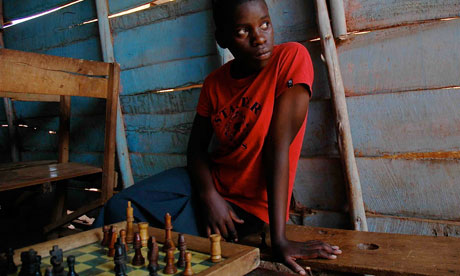
She grew up in one of the poorest spots on earth. She couldn’t read or write. As a child, she scrounged for food each day for herself, her mother, and her brother.

But a chance encounter with a chess coach turned her into a rising international chess star, the subject of a book — and the protagonist in a future Disney movie.

Ugandan teenager Phiona Mutesi is “the ultimate underdog,” her biographer says.

Those who work with her believe she’s 16. But since her birthday is unclear, she might still only be 15, they say.

Her father died from AIDS when Mutesi was around 3.

“I thought the life I was living, that everyone was living that life,” the teenager told CNN, describing her childhood in Katwe, a slum in the Ugandan capital of Kampala.

“I was living a hard life, where I was sleeping on the streets, and you couldn’t have anything to eat at the streets. So that’s when I decided for my brother to get a cup of porridge.”

Robert Katende, a missionary and refugee of Uganda’s civil war, had started a chess program in Katwe. He offered a bowl of porridge to any child who would show up and learn.

“It teaches you how to assess, how to make decisions, obstructive thinking, forecasts, endurance, problem solving, and looking at challenges as an opportunity in all cases — and possibly not giving up,” he told CNN. “The discipline, the patience … anything to do with life, you can get it in that game.”

Mutesi did not become a top player overnight. But from the time she first showed up in 2005, her aptitude was clear.

Her talent is “extraordinary,” said Katende.

Mutesi liked chess, and started training and practicing regularly. “It took me like a year” to get very good, she said.

She walked about four miles a day to practice — and to get that precious food.

Soon she found herself beating the older girls and boys in the program.

Mutesi and her family faced pressure from some people in Uganda who insisted chess was a white man’s game, or at least not something girls should be playing, according to her biographer, Tim Crothers.

But in her slum, so few people even knew what chess was that they didn’t give her a hard time, Mutesi told CNN.

Eventually, she became her country’s champion — and represented Uganda at international tournaments. In 2009, she traveled to Sudan. Then, in 2010, she boarded an airplane to Siberia.

When the flight took off, “I thought that I was maybe in heaven,” she wrote in a letter to her mother quoted in Crothers’ book. “I asked God to protect me because who am I to fly to the europlane.”

Mutesi had also never seen ice before.

This year, she played in Istanbul.

Mutesi is not one of the world’s top chess players. But she is the first titled female Ugandan player. She has a fighter’s instinct to reach the top level — and to achieve much more.

“Chess gave me hope, whereby now I’m having a hope of becoming a doctor and … a grand master,” she said.

A grant from a program called Sports Outreach has allowed her to go back to school. She’s learning to read and write.

Meanwhile, Mutesi is becoming an inspiration to people all over the world.

Some learned about her through Crothers’ article for ESPN, which went viral. Others have seen a brief documentary about her on YouTube.

Crothers’ book about her, “The Queen of Katwe,” was published this fall.

“That she’s from Africa makes her an underdog in the world. The fact that she’s from Uganda makes her sort of an underdog in Africa, because it’s one of the poorer countries in Africa. The fact that she’s in Katwe makes her an underdog in Uganda because it’s the most impoverished slum in the entire country. And then to be a girl in Katwe — girls are not treated as equals to the boys,” said Crothers.

“Every hurdle that the world can place in front of her it has placed in front of her.”

The extreme poverty and deprivation in Katwe is hard for many around the world to imagine. Crothers wrote that “human waste from downtown Kampala is dumped directly into the slum. There is no sanitation.”

Mutesi wakes at 5 a.m. every morning to “begin a two-hour trek through Katwe to fill a jug with drinkable water, walking through lowland that is often so severely flooded by Uganda’s torrential rains that many residents sleep in hammocks near their ceilings to avoid drowning,” he wrote.

In the country of 34 million people, about one-fourth live below the poverty line, according to the CIA World Factbook. About three-quarters of the men in Uganda are literate; only 58% of women are.

Mutesi told CNN she’s never heard of Idi Amin, the so-called butcher of Uganda, who helped plunge his country into economic chaos throughout the 1970s.

She does know the name Joseph Kony, a brutal Ugandan warlord who was the subject of a viral video earlier this year. Kids talk about him, Mutesi said.

“He was in northern Uganda torturing people and could kidnap children. That’s what I know.”

Chess could prove to be Mutesi’s ticket out of a hard life — particularly through a project that lies ahead.

Disney has optioned the rights to “The Queen of Katwe,” and is starting work on a movie, Crothers said.

It’s all too much for Mutesi to fathom.

“I feel happy,” she said when asked about the growing attention. “I’m excited. I didn’t have hope that one time, one day, I would be like someone who can encourage people, and they start playing chess,” she told CNN.

As her world travels take off, she’s in for more and more culture shock.

“I don’t like New York because there’s too much noise in it,” the teenager said with a big smile.

But while it may be somewhat overwhelming for her, Mutesi’s success at the game she loves is bringing joy to her family.

“Some of them cried. Years back we didn’t have hope that … one day it can happen,” she said. “So they are very excited.”

http://www.cnn.com/2012/12/10/world/africa/uganda-chess-teen/index.html?hpt=hp_c1

Octomom Nadya Suleman nominated for porn awards

dynamic_resize

The Octomom is nominated for four porn awards.

Nadya Suleman, who rose to fame in 2009 when she gave birth to octuplets via in-vitro fertilization (IVF), has netted herself four AVN Awards for her adult film, Octomom Home Alone.

The movie’s premise is that Suleman, enjoying some time away from her brood of 14 youngsters, engages in some X-rated, lingerie-clad “me” time.

She’ll head to Las Vegas for the Adult Entertainment Expo, Jan. 17-19, where she hopes to do her huge family proud by coming home with awards for Best Celebrity Sex Tape, Best Solo Release, Best DVD Extras and Best Marketing Campaign.

“Our nominees should be congratulated and recognized for a job well done,” AVN managing editor Steve Javors said.

The doctor who helped single-mom Suleman conceive her octuplets was later sacked from the American Society for Reproductive Medicine.

The group recommends no more than two embryos for women under 35.

http://cnews.canoe.ca/CNEWS/WeirdNews/2012/12/03/20402911.html

South African whale driven through streets

beachedwhale1 beachedwhale2 beachedwhale3


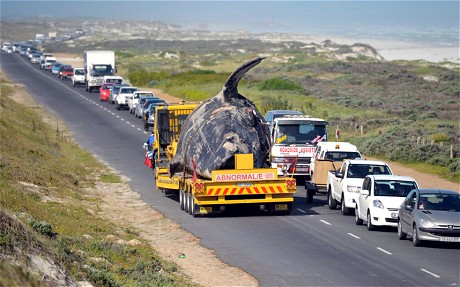
South African council cleaners have used a lorry to move a stranded whale from a beach near Cape Town.  Officials pulled the huge mammal through heavy traffic down a busy road along the city’s False Bay coastline.  Salvage staff needed an industrial digger to move the 30 metre southern Right Whale, which became stranded on Sunday at Cape Town’s Capricorn beach.

City emergency services spokesman Wilfred Solomons-Johannes confirmed the beach had been closed amid fears deadly Great White sharks had entered shallow waters to feed on the carcase.  He said: “The whale was spotted on the beach on Sunday afternoon. “It had become beached and was dead by the time officials could get to it.  The animal had several bits of flesh taken out of it, and it appears it had been bitten by sharks.”  He added: “We called in the city’s specialist marine rescue team, who used diggers and a lorry to remove the whale.

“It was heaved onto the back of a truck and taken to a landfill site for disposal.”

Mr Solomons-Johannes said experts would examine the dead animal to try to establish how it died.  He added: “Samples were taken from the whale and these will be analysed to try to work out what happened to it.  We hope to get the results within the next couple of days, which may help to explain why it died.”

City officials closed several beaches around Cape Town on Sunday after sharks were spotted in waters close to the beached whale.

Mr Solomons-Johannes on Tuesday confirmed some had reopened following the removal of the carcase but said Capricorn beach itself would remain closed until further notice.  He said: “Capricorn beach remains closed for the next few days until the whale blood and oil has dispersed sufficiently.

“The city is appealing to all water users to be vigilant at this time, obey the shark siren, and to take note of the Shark Spotters’ flags and signage for regular updates on shark sightings.  Beach users are advised that the general caution will remain in place until further notice.”

Specialist teams of Shark Spotters were working on several of Cape Town’s beaches to watch for any signs of the deadly animals.  The killer beasts are frequent visitors to the waters around the city and have been responsible for a string of attacks on humans.

British man Michael Cohen, 47, narrowly escaped with his life in September 2011 after he was bitten by a shark on a beach near Cape Town.  The keen swimmer lost his right leg and part of his left foot after being savaged in the False Bay water.

Zimbabwean tourist Lloyd Skinner was eaten alive by sharks in January 2010 as he swam near the town of Fish Hoek.  Shocked holiday-makers watched from the shore as he was pulled underwater, and rescuers later recovered only his goggles.

Southern Right whales are also regularly seen in the sea around Cape Town.

The massive mammals spend most of their time in the deep ocean but move towards the Cape peninsula during winter and spring to mate.

http://www.telegraph.co.uk/earth/wildlife/9596404/South-African-whale-driven-through-streets.html

Only 79 Pygmy Sloths Remain on Earth

pygmy-three-toed-sloth


In May 2011, after months of preparation, Jakob Shockey and two fellow biology students from Evergreen State College in Washington State found themselves on a tiny Panamanian island staring at one of the rarest mammals in the world: the pygmy three-toed sloth (Bradypus pygmaeus). “I felt humbled to finally stand knee-deep in the mud of a mangrove thicket on Isla Escudo de Veraguas and watch this sloth move so comfortably through its world, entirely unconcerned by my presence or anticipation,” he says.

Shockey had originally planned to travel to Panama to study the local manatee population, but contacts with a local nongovernmental organization told him they were hearing reports of “imminent risk” to the pygmy sloths. “Little was known by the scientific community about the actual conditions on the island, and it was hard to separate fact and rumor, but the pygmy sloth seemed to be in trouble,” Shockey says. They decided to study the sloths instead.

Unfortunately the situation, as the students would soon learn, was much worse than anyone had feared.

A little-understood species
Isla Escudo de Veraguas sits in the Caribbean Sea seventeen kilometers off the coast of the Republic of Panama. The tiny island—less than five square kilometers—is home to the critically endangered solitary fruit-eating bat (Artibeus incomitatus), a few hundred fishermen and their families, dozens of coral species, and the rare pygmy sloths.

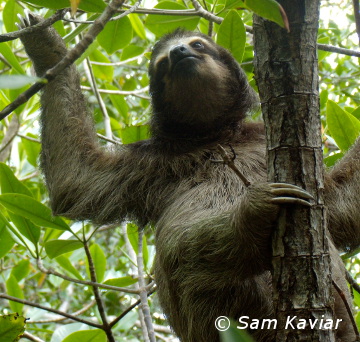
A typical case of island dwarfism, the pygmy sloths are about 40 percent smaller than brown-throated sloths (B. variegatus), which can be found across the water on the Panama Isthmus as well as throughout the southern half of Central America and the northern half of South America. Other than size, pygmy sloths look almost exactly like their mainland cousins—so much so, in fact, that the pygmies were only identified as a separate species in 2001. At that time scientists estimated the pygmy sloth population at about 300 to 500 animals, enough to consider them critically endangered, the only sloth species with that designation.

The ensuing decade has not been kind to the sloths. Families of indigenous fishermen from the Ngöbe–Buglé comarca (a semiautonomous region roughly equivalent to a Native American reservation) began moving to the island around 1995 and quickly started cutting down mangrove trees for firewood and lumber. Unfortunately, pygmy sloths depend on those mangroves for their food and habitat. As the trees disappeared, so did the sloths. Shockey and his fellow students spent three days counting the animals and found that just 79 remained. “We were all surprised to find such a low population,” he says. A paper detailing their census of the sloth population was published November 21 in PLoS One.

The young researchers also learned how little of the island constituted suitable habitat for the animals. “We had expected to find pygmy sloths using the interior forests of the Isla Escudo, but it seems they are completely reliant on mangroves for food and primary habitat,” Shockey says. “We found the intertidal mangrove thickets on only 0.024 percent of the already small island, and these were fragmented by upland forest and logging. This is a sobering reality for the pygmy sloth.”

pygmy sloth habitat
Known but unknown
The people living on the mainland and the island “were unaware that the sloths of Escudo were a unique species and endemic to Escudo or that they relied on the mangroves,” Shockey says.

In addition to their work counting the animals, the students also spent time communicating with locals about their rarity and importance. “We had many conversations with leaders in the mainland village of Kusapin, and we gave presentations in the local grade school,” Shockey says. “Our classmate, Miranda Ciotti, had illustrated coloring books of the endemic species on Escudo, and we gave these and crayons to the village children. All of this outreach was met with surprise and pride, and we began hearing the words ‘Kú dekú narobé’ around Kusapin, meaning ‘the sloths of Escudo are special’ in the local dialect. A local member of the indigenous congress pledged to put forward a bid for local protection of Escudo’s mangroves and the sloths, and we have shared a Spanish translation of our work and letter of recommendations for that effort.”

Shockey, who says he hopes to be a part of any future research to help protect the pygmy sloth, notes that the most important step to conserving the animals is preservation of their mangrove habitat. “Mangrove wood is favored for the cooking fires of a small transient fishing community on Escudo,” he says. “It is important that the Ngöbe act in protecting the mangroves from further cutting and that we do all we can to support that.” He suggests that economic incentives might help conservation efforts. “The Ngöbe community—especially those people who fish on Escudo—are relatively impoverished. But they are a proud people, and I believe they could be great allies in protecting the island if it was made economically viable.”

Shockey, who has now graduated, considers himself lucky to have seen and studied the rare pygmy three-toed sloths. “During my time on Escudo, I witnessed their daily routine of long afternoon naps, casual eating and climbing into the sunny branches to dry off after a downpour. Ultimately, I hope our work will help maintain that reality for the pygmy sloth.”

http://blogs.scientificamerican.com/extinction-countdown/2012/12/06/critically-endangered-pygmy-sloths-79-remain/

Oregon’s ‘The Faces of Meth’ Add Campaign

Eight years ago, the Multnomah County Sheriff’s Office launched a campaign called “the Faces of Meth” to address Oregon’s methamphetamine problem. The images showed the jarring effects of meth on addicts’ faces through before-and-after pictures from their arrest records.

Rehabs.com recently followed suit with this infographic. Warning: these images are disturbing.


meth before after rehab.com

Rehabs.com


Recommended For You

Read more: http://www.businessinsider.com/new-faces-of-meth-ads-are-utterly-harrowing-2012-12#ixzz2E7zSezR1

Breakthrough in Augmented Reality Contact Lens

121205090931-large


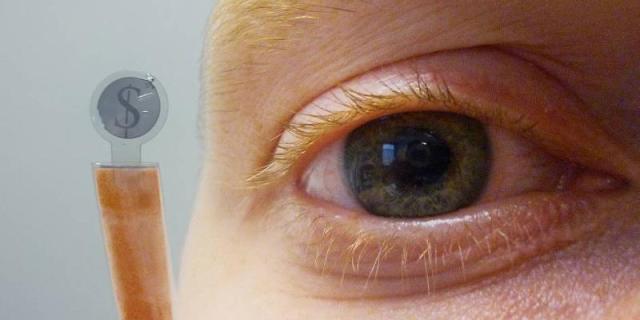
The Centre of Microsystems Technology (CMST), imec’s associated laboratory at Ghent University (Belgium), has developed an innovative spherical curved LCD display, which can be embedded in contact lenses. The first step toward fully pixilated contact lens displays, this achievement has potential wide-spread applications in medical and cosmetic domains.

Unlike LED-based contact lens displays, which are limited to a few small pixels, imec’s innovative LCD-based technology permits the use of the entire display surface. By adapting the patterning process of the conductive layer, this technology enables applications with a broad range of pixel number and sizes, such as a one pixel, fully covered contact lens acting as adaptable sunglasses, or a highly pixilated contact lens display.

The first prototype presented December 5 contains a patterned dollar sign, depicting the many cartoons that feature people or figures with dollars in their eyes. It can only display rudimentary patterns, similar to an electronic pocket calculator. In the future, the researchers envision fully autonomous electronic contact lenses embedded with this display. These next-generation solutions could be used for medical purposes, for example to control the light transmission toward the retina in case of a damaged iris, or for cosmetic purposes such as an iris with a tunable color. In the future, the display could also function as a head-up display, superimposing an image onto the user’s normal view. However, there are still hurdles to overcome for broader consumer and civilian implementation.

“Normally, flexible displays using liquid crystal cells are not designed to be formed into a new shape, especially not a spherical one. Thus, the main challenge was to create a very thin, spherically curved substrate with active layers that could withstand the extreme molding processes,” said Jelle De Smet, the main researcher on the project. “Moreover, since we had to use very thin polymer films, their influence on the smoothness of the display had to be studied in detail. By using new kinds of conductive polymers and integrating them into a smooth spherical cell, we were able to fabricate a new LCD-based contact lens display.”

Video: http://www.youtube.com/watch?v=-btRUzoKYEA

http://www.sciencedaily.com/releases/2012/12/121205090931.htm

First Evidence of Fish Sensing Geomagnetic Fields from a Czech Christmas Market

121205200057


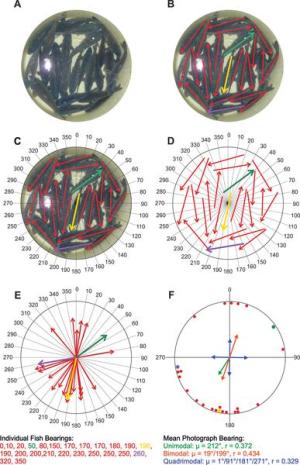
Carp stored in large tubs at Czech Christmas markets align themselves in the north-south direction, suggesting they possess a previously unknown capacity to perceive geomagnetic fields, according to a new study published December 5 in the open access journal PLOS ONE, led Hynek Burda from the University of Life Sciences (Prague), Czech Republic and colleagues from other institutions.

Their study included over 14,000 fish in 25 markets, and the majority of these fish were found to align themselves along the north-south axis. The fish were accustomed to human onlookers, and street lights and other potential disturbances seemed to have no effect on the orientation of the fish.

In the absence of other common stimuli for orientation like light, sound or the flow of water, the authors suggest that the fish most likely align themselves to geomagnetic cues.

http://www.sciencedaily.com/releases/2012/12/121205200057.htm

Scientists at Cornell create Terminator-like organic metamaterial that flows like liquid and remembers its shape


DNAletters


birdsnests

A bit reminiscent of the Terminator T-1000, a new material created by Cornell researchers is so soft that it can flow like a liquid and then, strangely, return to its original shape.

Rather than liquid metal, it is a hydrogel, a mesh of organic molecules with many small empty spaces that can absorb water like a sponge. It qualifies as a “metamaterial” with properties not found in nature and may be the first organic metamaterial with mechanical meta-properties.

Hydrogels have already been considered for use in drug delivery — the spaces can be filled with drugs that release slowly as the gel biodegrades — and as frameworks for tissue rebuilding. The ability to form a gel into a desired shape further expands the possibilities. For example, a drug-infused gel could be formed to exactly fit the space inside a wound.

Dan Luo, professor of biological and environmental engineering, and colleagues describe their creation in the Dec. 2 issue of the journal Nature Nanotechnology.

The new hydrogel is made of synthetic DNA. In addition to being the stuff genes are made of, DNA can serve as a building block for self-assembling materials. Single strands of DNA will lock onto other single stands that have complementary coding, like tiny organic Legos. By synthesizing DNA with carefully arranged complementary sections Luo’s research team previously created short stands that link into shapes such as crosses or Y’s, which in turn join at the ends to form meshlike structures to form the first successful all-DNA hydrogel. Trying a new approach, they mixed synthetic DNA with enzymes that cause DNA to self-replicate and to extend itself into long chains, to make a hydrogel without DNA linkages.

“During this process they entangle, and the entanglement produces a 3-D network,” Luo explained. But the result was not what they expected: The hydrogel they made flows like a liquid, but when placed in water returns to the shape of the container in which it was formed.

“This was not by design,” Luo said.

Examination under an electron microscope shows that the material is made up of a mass of tiny spherical “bird’s nests” of tangled DNA, about 1 micron (millionth of a meter) in diameter, further entangled to one another by longer DNA chains. It behaves something like a mass of rubber bands glued together: It has an inherent shape, but can be stretched and deformed.

Exactly how this works is “still being investigated,” the researchers said, but they theorize that the elastic forces holding the shape are so weak that a combination of surface tension and gravity overcomes them; the gel just sags into a loose blob. But when it is immersed in water, surface tension is nearly zero — there’s water inside and out — and buoyancy cancels gravity.

To demonstrate the effect, the researchers created hydrogels in molds shaped like the letters D, N and A. Poured out of the molds, the gels became amorphous liquids, but in water they morphed back into the letters. As a possible application, the team created a water-actuated switch. They made a short cylindrical gel infused with metal particles placed in an insulated tube between two electrical contacts. In liquid form the gel reaches both ends of the tube and forms a circuit. When water is added, the gel reverts to its shorter form that will not reach both ends. (The experiment is done with distilled water that does not conduct electricity.)

The DNA used in this work has a random sequence, and only occasional cross-linking was observed, Luo said. By designing the DNA to link in particular ways he hopes to be able to tune the properties of the new hydrogel.

The research has been partially supported by the U.S. Department of Agriculture and the Department of Defense.

http://www.news.cornell.edu/stories/Dec12/ShapeGel.html

Thanks to Dr. Rajadhyaksha for bringing this to the attention of the It’s Interesting community.