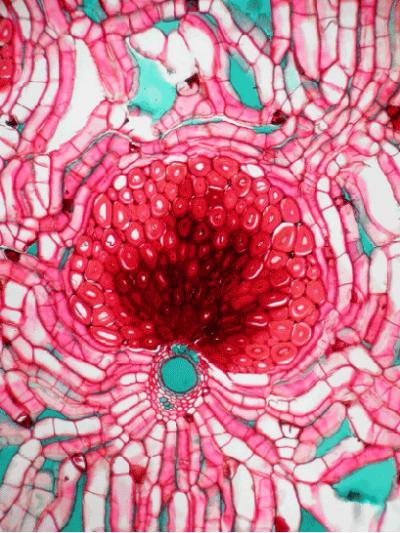
Do Palm Trees Hold the Key to Immortality?

palm

For centuries, humans have been exploring, researching, and, in some cases, discovering how to stave off life-threatening diseases, increase life spans, and obtain immortality. Biologists, doctors, spiritual gurus, and even explorers have pursued these quests — one of the most well-known examples being the legendary search by Ponce de León for the “Fountain of Youth.” Yet the key to longevity may not lie in a miraculous essence of water, but rather in the structure and function of cells within a plant — and not a special, mysterious, rare plant, but one that we may think of as being quite commonplace, even ordinary: the palm.

As an honors botany student at the University of Leeds, P. Barry Tomlinson wrote a prize-winning essay during his final year titled, “The Span of Life.” Fifty years later, Tomlinson (now a Distinguished Professor at The Kampong Garden of the National Tropical Botanical Garden, Miami, FL) teamed up with graduate student Brett Huggett (Harvard University, MA) to write a review paper exploring the idea that palms may be the longest-lived tree, and whether this might be due to genetic underpinnings. Having retained his essay in his personal files, Tomlinson found that it provided an excellent literature background for working on the question of cell longevity in relation to palms. Together, Tomlinson and Huggett published their review in the December issue of the American Journal of Botany.

A component of an organism’s life span that biologists have been particularly interested in is whether longevity is genetically determined and adaptive. For botanists, discovering genetic links to increasing crop production and the reproductive lifespan of plants, especially long-lived ones such as trees, would be invaluable.

In their paper, Tomlinson and Huggett emphasize that in many respects, an organisms’ life span, or longevity, is determined by the period of time in which its cells remain functionally metabolically active. In this respect, plants and animals differ drastically, and it has to do with how they are organized — plants are able to continually develop new organs and tissues, whereas animals have a fixed body plan and are not able to regenerate senescing organs. Thus, plants can potentially live longer than animals.

“The difference in potential cell longevity in plants versus animals is a significant point,” states Tomlinson. “It is important to recognize that plants, which are so often neglected in modern biological research, can be informative of basic cell biological features in a way that impacts human concern at a fundamental level.”

The authors focused their review on palm trees because palms have living cells that may be sustained throughout an individual palm’s lifetime, and thus, they argue, may have some of the longest living cells in an organism. As a comparison, in most long-lived trees, or lignophytes, the main part, or trunk, of the tree is almost entirely composed of dead, woody, xylem tissues, and in a sense is essentially a supportive skeleton of the tree with only an inner ring of actively dividing cells. For example, the skeleton of Pinus longaeva may be up to 3000 years old, but the active living tissues can only live less than a century.

In contrast, the trunks of palms consist of cells that individually live for a long time, indeed for the entire life of an individual.

Which brings up the question of just how long can a palm tree live? The authors point out that palm age is difficult to determine, primarily because palms do not have secondary growth and therefore do not put down annual or seasonal growth rings that can easily be measured. However, age can be quite accurately assessed based on rate of leaf production and/or visible scars on the trunk from fallen leaves. Accordingly, the authors found that several species of palm have been estimated to live as long as 100 and even up to 740 years. The important connection here is that while the “skeleton” of the palm may not be as old as a pine, the individual cells in its trunk lived, or were metabolically active, as long as, or longer than those of the pine’s.

Most plants, in addition to increasing in height as they age, also increase in girth, putting down secondary vascular tissue in layers both on the inner and outer sides of the cambium as they grow. However, palms do not have secondary growth, and there is no addition of secondary vascular tissue. Instead, stem tissues are laid down in a series of interconnected vascular bundles — thus, not only is the base of the palm the oldest and the top the youngest, but these tissues from old to young, from base to top, must also remain active in order to provide support and transport water and nutrients throughout the tree.

Indeed, the authors illustrate this by reviewing evidence of sustained primary growth in two types of palms, the coconut and the sago palm. These species represent the spectrum in tissue organization from one where cells are relatively uniform and provide both hydraulic and mechanical functions (the coconut) to one where these functions are sharply divided with the inner cells functioning mainly for transporting water and nutrients and the outer ones for mechanical support (the sago palm). This represents a progression in specialization of the vascular tissues.

Moreover, there is evidence of continued metabolic activity in several types of tissues present in the stems of palms, including vascular tissue, fibers, ground tissue, and starch storage. Since the vascular tissues in palms are nonrenewable, they must function indefinitely, and Tomlinson and Huggett point out that sieve tubes and their companion cells are remarkable examples of cell longevity as they maintain a long-distance transport function without replacement throughout the life of the stem, which could be for centuries.

Despite several unique characteristics of palms, including the ability to sustain metabolically active cells in the absence of secondary tissues, seemingly indefinitely, unlike conventional trees, in which metabolically active cells are relatively short-lived, the authors do not conclude that the extended life span of palms is genetically determined.

“We are not saying that palms have the secret of eternal youth, and indeed claim no special chemical features which allows cells in certain organisms to retain fully differentiated cells with an indefinite lifespan,” states Tomlinson. “Rather, we emphasize the distinctive developmental features of palm stems compared with those in conventional trees.”

Tomlinson indicates that this reflects the neglect of the teaching of palm structure in modern biology courses. “This paper raises incompletely understood aspects of the structure and development of palms, emphasizing great diversity in these features,” he concludes. “This approach needs elaborating in much greater detail, difficult though the subject is in terms of conventional approaches to plant anatomy.”

Journal Reference:

1.P. B. Tomlinson, B. A. Huggett. Cell longevity and sustained primary growth in palm stems. American Journal of Botany, 2012; 99 (12): 1891 DOI: 10.3732/ajb.1200089

http://www.sciencedaily.com/releases/2012/12/121219092842.htm
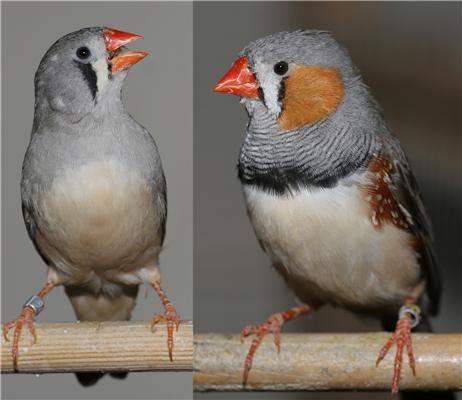
Hatching Order Influences Birds’ Behavior

121207094343-large

The hatching order of birds influences how they behave in adult life according to research from the Lancaster Environment Centre. Dr Ian Hartley and Dr Mark Mainwaring (LEC) are the authors of the study in Animal Behaviour, which looked at how the birds’ behaviour was affected by the way their parents cared for them as hatchlings.

They found that the youngest members of zebra finch broods are more adventurous than their older siblings in adult life.

Dr Hartley said that the study showed for the first time that hatching order influences birds’ “behavioural repertoires” in adulthood.

Hatching eggs over a period of time, rather than all at once, is known as “hatching asynchrony” and occurs when eggs are incubated as soon as they are laid. For a zebra finch, this means that birds born up to four days apart can share the same nest and must compete for food.

The researchers experimentally controlled hatching synchrony within clutches, so that some clutches hatched simultaneously, while others hatched over a period of days. They then tested the behaviour of over one hundred offspring as adults. They found the youngest birds from asynchronously hatched clutches explored their environment more widely.

They measured how explorative the zebra finches were by recording how many times they visited bird feeders within an unfamiliar test aviary. They found that the youngest offspring in a brood approached the feeders significantly more often than their peers within a 30 minute period.

Researchers wanted to know how the method of rearing affected the behaviour of offspring beyond the nest, once they were living as independent adult birds. The results have implications for understanding how environmental stability might influence behaviours, and how flexible animals might be at coping with environmental change.

Journal Reference:

1.Mark C. Mainwaring, Ian R. Hartley. Hatching asynchrony and offspring sex influence the subsequent exploratory behaviour of zebra finches. Animal Behaviour, 2012; DOI: 10.1016/j.anbehav.2012.10.009

http://www.sciencedaily.com/releases/2012/12/121207094343.htm

Potato the Dog claimed to be math genius

Proud dog owner Lu Zesheng says he has been able to train his two-year-old canine companion Potato to do arithmetic. Lu poses the questions, and Potato barks the answers.

For example, when asked: “How much is 3.44 plus 3.56?” Potato barks seven times which, according to Lu, means he knows the answer is seven.

As well as being able to solve mathematical puzzles, Lu also says Potato has an excellent memory and, when asked for the number on the side of China’s first aircraft carrier, the dog barks the correct answer of “sixteen”.

According to Chinese state television, Potato can also memorise mobile phone numbers and even people’s ages.

http://www.telegraph.co.uk/news/newsvideo/weirdnewsvideo/9731570/Chinese-dog-is-maths-genius-according-to-owner.html

The brain’s natural valium

sn-sleep

Hitting the wall in the middle of a busy work day is nothing unusual, and a caffeine jolt is all it takes to snap most of us back into action. But people with certain sleep disorders battle a powerful urge to doze throughout the day, even after sleeping 10 hours or more at night. For them, caffeine doesn’t touch the problem, and more potent prescription stimulants aren’t much better. Now, a study with a small group of patients suggests that their condition may have a surprising source: a naturally occurring compound that works on the brain much like the key ingredients in chill pills such as Valium and Xanax.

The condition is known as primary hypersomnia, and it differs from the better known sleep disorder narcolepsy in that patients tend to have more persistent daytime sleepiness instead of sudden “sleep attacks.” The unknown cause and lack of treatment for primary hypersomnia has long frustrated David Rye, a neurologist at Emory University in Atlanta. “A third of our patients are on disability,” he says, “and these are 20- and 30-year-old people.”

Rye and colleagues began the new study with a hunch about what was going on. Several drugs used to treat insomnia promote sleep by targeting receptors for GABA, a neurotransmitter that dampens neural activity. Rye hypothesized that his hypersomnia patients might have some unknown compound in their brains that does something similar, enhancing the activity of so-called GABAA receptors. To try to find this mystery compound, he and his colleagues performed spinal taps on 32 hypersomnia patients and collected cerebrospinal fluid (CSF), the liquid that bathes and insulates the brain and spinal cord. Then they added the patients’ CSF to cells genetically engineered to produce GABAA receptors, and looked for tiny electric currents that would indicate that the receptors had been activated.

In that first pass, nothing happened. However, when the researchers added the CSF and a bit of GABA to the cells, they saw an electrical response that was nearly twice as big as that caused by GABA alone. All of this suggests that the patients’ CSF doesn’t activate GABAA receptors directly, but it does make the receptors almost twice as sensitive to GABA, the researchers report today in Science Translational Medicine. This effect is similar to that of drugs called benzodiazepines, the active ingredients in antianxiety drugs such as Valium. It did not occur when the researchers treated the cells with CSF from people with normal sleep patterns.

Follow-up experiments suggested that the soporific compound in the patients’ CSF is a peptide or small protein, presumably made by the brain, but otherwise its identity remains a mystery.

The idea that endogenous benzodiazepinelike compounds could cause hypersomnia was proposed in the early 1990s by Elio Lugaresi, a pioneering Italian sleep clinician, says Clifford Saper, a neuroscientist at Harvard Medical School in Boston. But several of Lugaresi’s patients later turned out to be taking benzodiazepines, which undermined his argument, and the idea fell out of favor. Saper says the new work makes a “pretty strong case.”

Based on these results, Rye and his colleagues designed a pilot study with seven patients using a drug called flumazenil, which counteracts benzodiazepines and is often used to treat people who overdose on those drugs. After an injection of flumazenil, the patients improved to near-normal levels on several measures of alertness and vigilance, the researchers report. Rye says these effects lasted up to a couple hours.

In hopes of longer-lasting benefits, the researchers persuaded the pharmaceutical company Hoffmann-La Roche, which makes the drug, to donate a powdered form that can be incorporated into dissolvable tablets taken under the tongue and a cream applied to the skin. One 30-something patient has been taking these formulations for 4 years and has improved dramatically, the researchers report in the paper. She has resumed her career as an attorney, from which her hypersomnia had forced her to take a leave of absence.

The findings are “certainly provocative,” Saper says, although they’ll have to be replicated in a larger, double-blind trial to be truly convincing.

Even so, says Phyllis Zee, a neurologist at Northwestern University in Evanston, Illinois: “This gives us a new window into thinking about treatments” for primary hypersomnia. “These patients don’t respond well to stimulants,” Zee says, so a better strategy may be to inhibit the sleep-promoting effects of GABA—or as Rye puts it, releasing the parking brake instead of pressing the accelerator.

The next steps are clear, Rye says: Identify the mystery compound, figure out a faster way to detect it, and conduct a larger clinical trial to test the benefits of flumazenil. However, the researchers first need someone to fund such a study. So far, Rye says, they’ve gotten no takers.

http://news.sciencemag.org/sciencenow/2012/11/putting-themselves-to-sleep.html

Changes in the anterior insula of hte brain may make us more trusting as we age

sn-trustworthiness

Despite long experience with the ways of the world, older people are especially vulnerable to fraud. According to the Federal Trade Commission (FTC), up to 80% of scam victims are over 65. One explanation may lie in a brain region that serves as a built-in crook detector. Called the anterior insula, this structure—which fires up in response to the face of an unsavory character—is less active in older people, possibly making them less cagey than younger folks, a new study finds.

Both FTC and the Federal Bureau of Investigation have found that older people are easy marks due in part to their tendency to accentuate the positive. According to social neuroscientist Shelley Taylor of the University of California, Los Angeles, research backs up the idea that older people can put a positive spin on things—emotionally charged pictures, for example, and playing virtual games in which they risk the loss of money. “Older people are good at regulating their emotions, seeing things in a positive light, and not overreacting to everyday problems,” she says. But this trait may make them less wary.

To see if older people really are less able to spot a shyster, Taylor and colleagues showed photos of faces considered trustworthy, neutral, or untrustworthy to a group of 119 older adults (ages 55 to 84) and 24 younger adults (ages 20 to 42). Signs of untrustworthiness include averted eyes; an insincere smile that doesn’t reach the eyes; a smug, smirky mouth; and a backward tilt to the head. The participants were asked to rate each face on a scale from -3 (very untrustworthy) to 3 (very trustworthy).

In the study, appearing in the Proceedings of the National Academy of Sciences, the “untrustworthy” faces were perceived as significantly more trustworthy by the older subjects than by the younger ones. The researchers then performed the same test on a different set of volunteers, this time imaging their brains during the process, to look for differences in brain activity between the age groups. In the younger subjects, when asked to judge whether the faces were trustworthy, the anterior insula became active; the activity increased at the sight of an untrustworthy face. The older people, however, showed little or no activation.

Taylor explains that the insula’s job is to collect information not about others but about one’s own body—sensing feelings, including “gut instincts”—and present that information to the rest of the brain. “It’s a warning bell that doesn’t seem to work as well in older people.” By habitually seeing the world in a positive light, older people may be overriding this warning signal, she says. “It looks like the brain is conspiring with what older people do naturally.”

Whether the insula activates in response to non-facial cues, such as telephone scams (a particular problem for older people), remains unclear, says Taylor, since the study was limited to faces.

The new study is the first to show a characteristic pattern of brain activation in a “social” situation involving the assessment of another person’s trustworthiness, says psychologist Lisbeth Nielsen of the National Institute on Aging (NIA) in Bethesda, Maryland. (Though NIA funded the project, Nielsen was not involved in the study.)

A question to be addressed in future research, she says, is whether decreased activity in the insula is the cause or the effect of older peoples’ more positive outlook. “It may be that older people engage with the world in a certain way and this is reflected in the brain activity.”

If so, she adds, older people could work on becoming more cautious. For example, they could be taught to look out for the facial signs of untrustworthiness. “Just because the insula isn’t being activated doesn’t mean it can’t be.”

http://news.sciencemag.org/sciencenow/2012/12/why-old-people-get-scammed.html?ref=hp

Post-Sandy beach erosion reveals skeleton of rare beaked whale

Whalebones-jpg

When Hurricane Sandy blew by Florida last month it blew sand away that led to erosion.

That erosion exposed the remains of a beaked whale on Sunday.

An Orlando-area couple was looking for sand dollars when they noticed something far more interesting in the sand at the oceanfront dog park in New Smyrna Beach.

When they started digging, they found the remains of an 8- to 9-foot whale that may have been there for decades.

“It speaks to the amazing amount of post-Sandy erosion that’s happened on this beach,” said Ed Dettman, who walks the beach every day.

There is only one record of a beaked whale washed up on the beach, and this isn’t it.

The skull, vertebrae and ribs were recovered and laid out as if the whale were in a museum.

The couple turned their find over to the county.

The remains were a foot below the surface but were likely much deeper before the storm blew through.

Read more: http://www.wesh.com/news/central-florida/volusia-county/Beach-erosion-reveals-remains-of-whale/-/12983450/17799578/-/7lkvaqz/-/index.html#ixzz2FSYDmWfx

New clues about who killed Ramses III in 1155 BC

sn-ramses2

For more than a century, Egyptologists have puzzled over the mysterious demise of Ramses III in 1155 B.C. According to trial records preserved on the Judicial Papyrus of Turin, an assassin murdered the pharaoh during a bloody palace coup. But was this truly the case, and if so, who led the plot? A new study published today in BMJ shows that Ramesses III died violently after conspirators slashed his throat and reveals that one of the alleged ringleaders, Ramesses’s son Pentawere, may have later been strangled. The research team arrived at these findings after analyzing both DNA samples and CT scans from two mummies: Ramesses III (with linen bandage, above right) and a previously unidentified young man found with him in a cache in Deir el Bahari. The unidentified 20-year-old (shown with arrows pointing to unusual compressed skin folds) proved to be one of Ramesses’s sons: He appeared to have been strangled (also evidenced in the scan by overinflated thorax) and buried with a goat skin, a pelt that ancient Egyptians deemed ritually impure and therefore a mark of dishonor befitting an assassin.

http://news.sciencemag.org/sciencenow/2012/12/scienceshotwho-killed-ramesses-i.html

Scientists create artifical brain with 2.3 million simulated neurons

aritificial brain

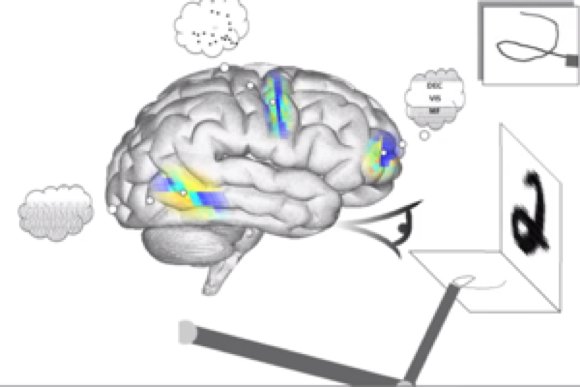
Another computer is setting its wits to perform human tasks. But this computer is different. Instead of the tour de force processing of Deep Blue or Watson’s four terabytes of facts of questionable utility, Spaun attempts to play by the same rules as the human brain to figure things out. Instead of the logical elegance of a CPU, Spaun’s computations are performed by 2.3 million simulated neurons configured in networks that resemble some of the brain’s own networks. It was given a series of tasks and performed pretty well, taking a significant step toward the creation of a simulated brain.

Spaun stands for Semantic Pointer Architecture: Unified Network. It was given 6 different tasks that tested its ability to recognize digits, recall from memory, add numbers and complete patterns. Its cognitive network simulated the prefrontal cortex to handle working memory and the basal ganglia and thalamus to control movements. Like a human, Spaun can view an image and then give a motor response; that is, it is presented images that it sees through a camera and then gives a response by drawing with a robotic arm.

And its performance was similar to that of a human brain. For example, the simplest task, image recognition, Spaun was shown various numbers and asked to draw what it sees. It got 94 percent of the numbers correct. In a working memory task, however, it didn’t do as well. It was shown a series of random numbers and then asked to draw them in order. Like us with human brains, Spaun found the pattern recognition task easy, the working memory task not quite as easy.

The important thing here is not how well Spaun performed on the tasks – your average computer could find ways to perform much better than Spaun. But what’s important is that, in Spaun’s case, the task computations were carried out solely by the 2.3 million artificial neurons spiking in the way real neurons spike to carry information from one neuron to another. The visual image, for example, was processed hierarchically, with multiple levels of neurons successively extracting more complex information, just as the brain’s visual system does. Similarly, the motor response mimicked the brain’s strategy of combining many simple movements to produce an optimal, single movement while drawing.

Chris Eliasmith, from the University of Waterlook in Ontario, Canada and lead author of the study is happy with his cognitive creation. “It’s not as smart as monkeys when it comes to categorization,” he told CNN, “but it’s actually smarter than monkeys when it comes to recognizing syntactic patterns, structured patterns in the input, that monkeys won’t recognize.”

Watch Spaun work through its tasks in the following video.

One thing Spaun can’t do is perform tasks in realtime. Every second you saw Spaun performing tasks in the video actually requires 2.5 hours of numbers crunching by its artificial brain. The researchers hope to one day have it perform in realtime.

It’s important to note that Spaun isn’t actually learning anything by performing these tasks. Its neural nets are hardwired and are incapable of the modifications that real neurons undergo when we learn. But producing complex behavior from a simulated neuronal network still represents an important initial step toward building an artificial brain. Christian Machens, a neuroscientist at the Champalimaud Neuroscience Programme in Lisbon and was not involved in the study, writes in Science that the strategy for building a simulated brain is “to not simply incorporate the largest number of neurons or the greatest amount of detail, but to reproduce the largest amount of functionality and behavior.”

We’re still a long way from artificial intelligence that is sentient and self-aware. And there’s no telling if the robots of the future will have brains that look like ours or if entirely different solutions will be used to produce complex behavior. Whatever it looks like, Spaun is a noble step in the right direction.

Scientists Create Artificial Brain With 2.3 Million Simulated Neurons