‘No More Woof’ claims to translate dog thoughts into English language

Just because you can pre-order something doesn’t mean it’ll be awesome when it’s finally ready. The folks behind the No More Woof dog translator seem to be looking to tamper everyone’s expectations as such, with phrases like “to be completely honest, the first version will be quite rudimentary” and “the more money we raise, the better the chances of creating something truly amazing!”

The No More Woof Indiegogo campaign is looking to raise $10,000; at the time of this writing, the project’s at just over $7,000 with almost two months left to go, so it looks like this is happening.

The technology itself involves a dog-worn headset that senses EEG activity in the dog’s brain, runs the data through a tiny computer, and renders the thought out as words through a speaker. We’re talking simple stuff here like “I’m hungry, I’m tired, I want to go out, SQUIRREL!”

From the looks of it, it’s probably not too much more advanced than what you’re able to glean from your dog already – the dog barks at the door when he wants to go out, barks at his bowl when he wants food, and goes to sleep when he’s tired.

You’ll need to pony up at least $65 to get the lowest-level hardware – “one sensor equipped NMW able to distinguish 2-3 thought patterns, most likely Tiredness, Hunger and Curiosity,” according to the Indiegogo listing. Pay more and you can get versions with better and better features. Fork over a cool $5,000 and you can get the first No More Woof to ship.

Read more: BEHOLD THE FUTURE: Dog Translator Available for Pre-order | TIME.com http://techland.time.com/2013/12/19/behold-the-future-dog-translator-available-for-pre-order/#ixzz2pGGJwmc6

Tikker: the wristwatch that focuses you on the ultimate deadline

Tikker

Tick Tock. Tick Tock. Tick Tock.

The seconds left in 2013 are slipping away. And you know what else is slipping away? The seconds left in your life.

Luckily for you, there’s a new product called Tikker, a wristwatch that counts down your life, so you can watch on a large, dot-matrix display as the seconds you have left on earth disappear down a black hole.

Your estimated time of death is, of course, just that, an estimate. Tikker uses an algorithm like the one used by the federal government to figure a person’s life expectancy. But the effect is chilling, a sort of incessant grim reaper reminding you that time is running out.

Tikker’s inventor is a 37-year-old Swede named Fredrik Colting. He says he invented the gadget not as a morbid novelty item, but in an earnest attempt to change his own thinking.

He wanted some sort of reminder to not sweat the small stuff and reach for what matters. He figured imminent death was the best motivator there is. That’s why he calls Tikker, “the happiness watch.” It’s his belief that watching your life slip away will remind you to savor life while you have it.

And, it turns out, there is some evidence for his point of view. A 2009 study showed that thinking about death makes you savor life more. And a 2011 study has shown thinking about death makes you more generous, more likely to donate your blood.

But that’s not the whole story. A whole dark underbelly of research suggests that thinking about our own mortality can bring out the worst in us. The work of Jeff Greenberg, Sheldon Solomon and Tom Pyszczynski — grandfathers of an idea in social psychology called terror management theory — has shown that thinking about death makes us, well, pretty xenophobic. When confronted with our mortality, we cling to those like us and disparage those who are different.

Now, why do you get both positive and negative effects? Well, that’s an open question in science right now. Do both always occur? Does it depend on the person? Does it depend on the way in which you are made to think about death, specifically picturing your own death or thinking about death in a more abstract or subliminal way? No one knows yet.

So whether Tikker will make you happy or, as Solomon quipped to me, “a xenophobic serial killer,” is still unknown. What is known is that the watch will be available in April 2014, and thousands of preorders have already rolled in.

http://kosu.org/2013/12/nothing-focuses-the-mind-like-the-ultimate-deadline-death/

Remembrance diamond from human ashes

humandiamond

An Treviso, Italian man’s 20-year-old son died in a car accident a few months ago and had already been buried. However, his father had his son’s remains exhumed, then cremated and finally had his remains turned into a remembrance diamond.

Corriere del Veneto reports that the owner of a Treviso funeral parlor said the 55-year-old father had visited his parlor to make funeral arrangements for his mother.

At that time, the man found some marketing material for a Swiss company called Algordanza, who offer the bizarre service of transforming human remains into artificial diamonds. From their website, it can be seen that they offer this service in quite a few countries in the world.

Silvia Zanardo, one of the partners of the funeral company, said that they explained the idea to the father and he asked them to help him, which they then did.

The funeral company then exhumed the son’s remains and cremated them, as the first step in the transformation process. After an eight-month waiting period, the father has finally received the diamond.

Apparently Algordanza has been operating in Italy since 2009, creating the “remembrance diamonds.”

Christina Sponza, a marketing representative for the company, explained how it works.

“The human body is formed in part by carbon, the same molecule that makes up the diamond.”

“With the cremation process, you get the carbon graphite. In Switzerland, the graphite is then pressed and held in very high temperatures, which simulate the pressure under which real diamonds are formed.”

“Finally, we deliver to relatives the diamond in a box, a sort of eternal funeral urn.”

The video below gives more detail of the process:

Read more: http://www.digitaljournal.com/news/odd%20news/italian-man-has-son-s-remains-turned-into-a-remembrance-diamond/article/364546#ixzz2oy8oOL89

Alexandra Wolff: 1 of 55 people in the U.S. with highly superior autobiographical memory.

alexandra_custom-dd75c71966d9515cea210d91d68ce7aff737e3a5-s6-c85

On Feb. 21, Alexandra Wolff ate steak, mashed potatoes and broccoli for dinner. Later that night, sitting in her room, she spent 20 minutes scanning pictures in InStyle magazine.

She remembers those things, just as she remembers that on Aug. 2 she stopped at Target and bought Raisin Bran; and on April 17 she wore a white button-down shirt; and on Oct. 2 she went to TGI Fridays and spoke to the hostess, who was wearing black leather flats with small bows on them.

Alexandra Wolff has what’s known as highly superior autobiographical memory. She is one of only 55 people in the U.S. who have been identified with this ability. All of these people can remember details about their lives that the rest of us couldn’t hope to remember: the strangers they pass on the street, the first thing they saw when they woke up seven months ago.

And though it’s not clear why the brains of people with HSAM can do what they do, what is clear is that this ability gives them an access to the past that’s profoundly different from you and me.

If you think of 2013, probably only a handful of memories stand out. The day-by-day is a blur.

We forget most of our lives.

But Alexandra says that remembering even an inconsequential trip to Target is an almost physical experience for her. She says she sees what she saw that day, hears what she heard, and emotionally feels what she felt at the time.

“Right down to getting sick to my stomach or getting a headache,” she says. “It’s almost like time travel.”

But being unable to forget can affect your relationship to the present, people with this form of memory say.

Alexandra is 22 and lives with her mother in a long brick ranch house in southern Maryland. She has dark hair and beautifully balanced features, but hasn’t really dated and seems to have few of the preoccupations of most 22-year-olds. She blames her memory for this, saying it separates her from other people her age because they can’t understand why she’s so focused on things that have already happened.

Alexandra often feels frustrated with her preoccupation with the past. “It seems like you hold onto everything, and it seems like you’re just stuck in the past all the time,” she says.

It really bothers her. For one, Alexandra says, in her life there are no fresh days, no clean slates without association. Every morning when she wakes up, details of that date from years before are scrolling through her mind, details that can profoundly affect the new day she’s in.

For example, the day before we spoke was a day when years ago in middle school a boy bullied her in one of her classes.

“I didn’t mention it to anyone,” she says, “but I mean, still in the back of my mind I kept thinking and thinking about it. It knocked some of my confidence down.”

Because the past is so viscerally right there, so available, she finds that when the present gets overwhelming, it’s hard not to retreat to the past.

Even though she’s only 22, she says she spends huge amounts of time in her room with her eyes closed, reliving the past in her mind, particularly this one day a decade ago.

It was July 8, 2004. She spent that day in a bathing suit by a pool laughing and playing with her 10-year-old cousin. They ate macaroni and cheese, and swam. It was an easy, innocent time.

She says she probably takes herself through that day in her mind four times a week. Over the past couple of years, she estimates, she’s probably spent close to 2,000 hours reliving that one day.

“I mean, I definitely say it’s a huge temptation. I could, if I didn’t have stuff to do all day, I could probably live in the past 24/7.”
Scientists think there’s a reason why we forget.

“It has long been believed by research scientists that forgetting is adaptive,” says James McGaugh, the University of California, Irvine neurobiologist who first documented highly superior autobiographical memory.

McGaugh discovered HSAM by accident. He got an email out of the blue from a woman named Jill Price who said she had a serious memory problem: She couldn’t seem to forget anything, and like Alexandra, this bothered her.

“The emotions evoked by remembering bad things troubled her,” McGaugh says.

And so McGaugh started studying first Price and then other people with this kind of memory. He found ultimately that there are differences in the brains of people with HSAM, though it’s not clear whether the differences are the cause or the consequence of this ability.

But it is clear that it’s specifically this issue of forgetting that’s different. If you were asked to recall what happened to you earlier this morning, you’d remember roughly the same amount as someone like Alexandra. But if asked about this morning three months from now, for you it would probably be gone, while for her it’s as fresh as it is for you today.

“So it’s not that they’re superior learners,” McGaugh says, “it’s that they are very poor at forgetting.”
The emotional effects of not being able to forget aren’t clear, says McGaugh. No one, including McGaugh, has studied it. His sense is that there is variation in the group of 55.

“The effects of having this ability depends on the kind of experiences people have had in the past as well as their present circumstances,” he says.

But Bill Brown, another person with HSAM, says that he’s been in touch with most of the people in the group, and that everyone he has spoken to has struggled with depression. He says that very few of them have been able to maintain a long-term marriage — the rumor is only 2 out of the 55.
Brown himself, though a pretty jolly guy, recently separated from his wife.

And talking to him, you do get the sense that the difference in his memory has led to misunderstandings in his relationships.

“Just because I remember something that you did wrong doesn’t mean that I still hold it against you,” he says. “But it’s taken me a long while to realize that folks without my ability probably don’t understand that distinction. Because after all, if you’re bringing it up, the logic from the other side would be: You must still hold it against me.”

This is not, in fact, the case, he says. “It has more to do with wanting you to be honest in your dealings.”

What he eventually realized was that most of the people he talks to are being as honest as they know how to be. “They just don’t necessarily remember.”
Brown says it’s easier for him now, because over time he’s learned how to manage the memories, not to focus on the bad stuff, and instead use his memory to entertain himself.

“But you know,” he says, “life’s rough, and there’s so much bad that’s kinda there.”

Sometimes, he says, he thinks it might be nice to forget.

http://www.npr.org/blogs/health/2013/12/18/255285479/when-memories-never-fade-the-past-can-poison-the-present

New research shows that moderate alcohol consumption boosts the immune system

Artisanal Beer Brewers Find Growing Niche In Berlin

According to a new study, alcohol can boost your immune system. Researchers vaccinated animals and then gave them access to alcohol. Researchers found that the animals that had consumed alcohol also had faster responses to the vaccines. The researchers hope this study leads to a better understanding of how the immune system works, and how to improve its ability to respond to vaccines and infections. Moderate alcohol consumption has long been associated with a lower mortality rate.

Moderate alcohol consumption boosts your immune system while chronic alcohol consumption leads to a suppressed vaccine response. The difference between moderate and chronic is defined by the National Institute on Alcohol Abuse and Alcoholism. They define moderate as no more than four drinks on a single day and no more than 14 in a week for men. For women, it is defined as no more than three drinks on a single day and no more than seven in a week.

The study was published in the journal Vaccine.

http://www.sciencedirect.com/science/article/pii/S0264410X13014734

Could Pot Help Veterans With PTSD? Brain Scientists Say Maybe

pot

by Jon Hamilton

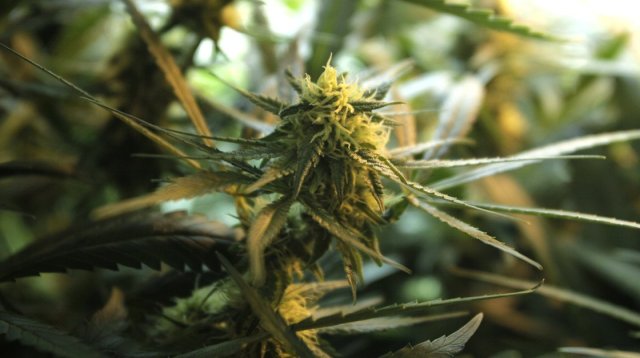
Veterans who smoke marijuana to cope with post-traumatic stress disorder may be onto something. There’s growing evidence that pot can affect brain circuits involved in PTSD.

Experiments in animals show that tetrahydrocannabinol, the chemical that gives marijuana its feel-good qualities, acts on a system in the brain that is “critical for fear and anxiety modulation,” says Andrew Holmes, a researcher at the National Institute on Alcohol Abuse and Alcoholism. But he and other brain scientists caution that marijuana has serious drawbacks as a potential treatment for PTSD.

The use of marijuana for PTSD has gained national attention in the past few years as thousands of traumatized veterans who fought in Iraq and Afghanistan have asked the federal government to give them access to the drug. Also, Maine and a handful of other states have passed laws giving people with PTSD access to medical marijuana.

But there’s never been a rigorous scientific study to find out whether marijuana actually helps people with PTSD. So lawmakers and veterans groups have relied on anecdotes from people with the disorder and new research on how both pot and PTSD works in the brain.

An Overactive Fear System

When a typical person encounters something scary, the brain’s fear system goes into overdrive, says Dr. Kerry Ressler of Emory University. The heart pounds, muscles tighten. Then, once the danger is past, everything goes back to normal, he says.

But Ressler says that’s not what happens in the brain of someone with PTSD. “One way of thinking about PTSD is an overactivation of the fear system that can’t be inhibited, can’t be normally modulated,” he says.

For decades, researchers have suspected that marijuana might help people with PTSD by quieting an overactive fear system. But they didn’t understand how this might work until 2002, when scientists in Germany published a mouse study showing that the brain uses chemicals called cannabinoids to modulate the fear system, Ressler says.

There are two common sources of cannabinoids. One is the brain itself, which uses the chemicals to regulate a variety of brain cells. The other common source is Cannabis sativa, the marijuana plant.

So in recent years, researchers have done lots of experiments that involved treating traumatized mice with the active ingredient in pot, tetrahydrocannabinol (THC), Ressler says. And in general, he says, the mice who get THC look “less anxious, more calm, you know, many of the things that you might imagine.”

Problems with Pot

Unfortunately, THC’s effect on fear doesn’t seem to last, Ressler says, because prolonged exposure seems to make brain cells less sensitive to the chemical.

Another downside to using marijuana for PTSD is side effects, says Andrew Holmes at the National Institute on Alcohol Abuse and Alcoholism. “You may indeed get a reduction in anxiety,” Holmes says. “But you’re also going to get all of these unwanted effects,” including short-term memory loss, increased appetite and impaired motor skills.

So for several years now, Holmes and other scientists have been testing drugs that appear to work like marijuana, but with fewer drawbacks. Some of the most promising drugs amplify the effect of the brain’s own cannabinoids, which are called endocannabinoids, he says. “What’s encouraging about the effects of these endocannabinoid-acting drugs is that they may allow for long-term reductions in anxiety, in other words weeks if not months.”

The drugs work well in mice, Holmes says. But tests in people are just beginning and will take years to complete. In the meantime, researchers are learning more about how marijuana and THC affect the fear system in people.

At least one team has had success giving a single dose of THC to people during something called extinction therapy. The therapy is designed to teach the brain to stop reacting to something that previously triggered a fearful response.

The team’s study found that people who got THC during the therapy had “long-lasting reductions in anxiety, very similar to what we were seeing in our animal models,” Holmes says. So THC may be most useful when used for a short time in combination with other therapy, he says.

As studies continue to suggest that marijuana can help people with PTSD, it may be unrealistic to expect people with the disorder to wait for something better than marijuana and THC, Ressler says. “I’m a pragmatist,” he says. “I think if there are medications including drugs like marijuana that can be used in the right way, there’s an opportunity there, potentially.”

http://www.npr.org/blogs/health/2013/12/23/256610483/could-pot-help-veterans-with-ptsd-brain-scientists-say-maybe

Dalls Cowboys’ emergency quarterback Jon Kitna will donate his pay to the high school where he’s teaching math.

kitna262way_sq-5eb1f04a2e62d7fc2354acb3a3bbe5d178ebc7d1-s6-c85

by Mark Memmott

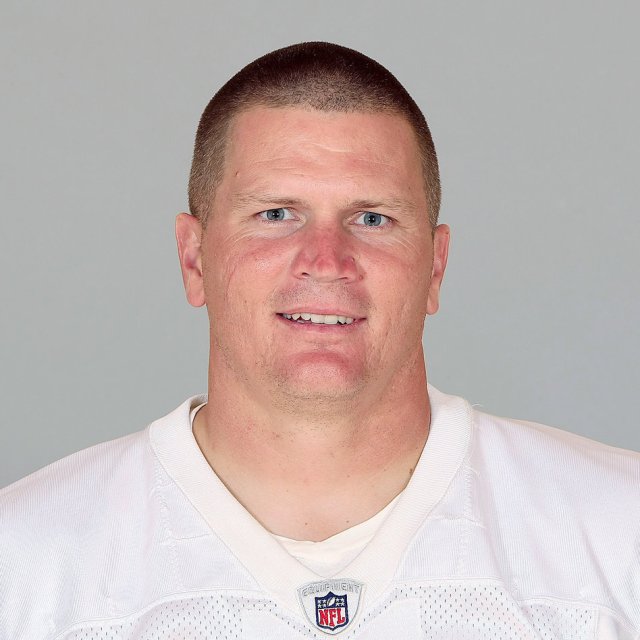
Whether or not you like the NFL’s Dallas Cowboys, this news may warm your heart: Jon Kitna, who is coming out of retirement to be the team’s emergency quarterback on Sunday, plans to donate his $53,000 paycheck from the game to the Tacoma, Wash., high school where he now teaches math and coaches football.

According to the Dallas Morning News:

“Much has been made of the Cowboys signing high school math teacher Jon Kitna out of retirement to figure into their quarterback puzzle against the Philadelphia Eagles on Sunday. Almost every reference has mentioned the quarterback, who retired from the Cowboys after the 2011 season, will earn about $53,000 for his Christmas week’s work.

“Only Kitna, 41, is not keeping the money. It didn’t come up in his Christmas Day media scrum in the locker room. But later, while relaxing on a locker room couch and reconnecting with radio play-by-play voice Brad Sham, Kitna said he would be donating his NFL check to his school [Lincoln High in Tacoma]. He also told several teammates.”

Kitna has been pressed into service by the team because a herniated disc may keep starting quarterback Tony Romo from playing. Romo’s backup, Kyle Orton, is expected to start instead. Kitna has been tapped to be Orton’s backup and he’s helping at practices this week while Romo rests.

Sunday night’s game against the Philadelphia Eagles is important: Whichever team wins will get into the playoffs. NBC-TV is the broadcaster.

Lincoln High, according to The Seattle Times, is where Kitna went to high school. He guided his team “to an 8-2 record this season, but the Abes lost to eventual state runner-up Eastside Catholic in the district playoffs. Kitna is 13-7 in two seasons as head coach.”

He retired after the 2011 season. Kitna’s last three years were with the Cowboys — mostly as Romo’s backup. Earlier in his career, he had been a starter with the Seattle Seahawks, Cincinnati Bengals and Detroit Lions.

http://www.npr.org/blogs/thetwo-way/2013/12/26/257372387/cowboys-emergency-qb-kitna-will-give-away-his-pay

Thanks to Dr. Lutter for bringing this to the attention of the It’s Interesting community.

Electric Man Ma Xiangang is impervious to electric shock

electric man

He can light a bulb with his hand. He can control electrical currents. He is a man who isn’t afraid of direct contact with electricity.

Ma Xiangang, an ordinary man living in Daqing, a city in northeastern China’s Heilongjiang province, has a strange gift of being able to touch electricity without being shocked. He can touch 220-volt electric wires without any protection and appear as if it is nothing.

On a recent TV program, Ma held two electric wires in his hands and easily lit a bulb.

Ma learned about his gift over 20 years ago. One day, while watching TV with his wife, the television suddenly went out. Ma checked it and found a wire outside had been broken by the wind. Ma picked up the broken wire. He first touched the ends tentatively. He felt no electricity, so he connected the two broken ends together.

After he fixed the broken line, Ma suddenly realized it was not normal. The wire carried electricity, but he fixed it with his bare hands.

“Why am I not affected by electricity?” Ma asked himself.

He decided to try again and finally learned direct contact with electricity does not harm him. Instead, it makes him energetic.

Gradually, Ma became addicted to touching electricity and learned to control the voltage passing through his body. Ma claims that he can use his specialty to conduct electrotherapy and massage for others.

Ma’s special powers have also drawn the attention of experts. After careful analysis, experts believe the secret lies in Ma’s hands. The skin of his hands is much rougher and drier than others, functioning like a pair of insulated gloves. His tough skin prevents most of the electricity from entering Ma’s body. The actual current passing through Ma’s body only contains six milliamperes, while the safety limits for ordinary people is 8-10 milliamperes.

http://english.cri.cn/2906/2007/01/08/65@182653.htm