New research shows that blood from young mice reverses aging in brain and muscle

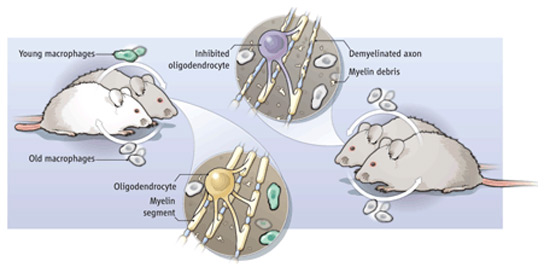
In a trio of studies published Sunday, scientists reported that they reversed aging in the muscles and brains of old mice — simply by running the blood of young mice through their veins.

The papers, from two independent groups in Cambridge and California, used different approaches to begin to unravel the rejuvenating effects of young animals’ blood, in the hopes of eventually developing a therapy that could be tested in people.

Researchers at Harvard University administered a protein found in young blood to older mice, and found that treated mice could run longer on a treadmill and had more branching blood vessels in their brains than untreated mice. A group led by a University of California, San Francisco researcher identified a molecular switch in a memory center of the brain that appears to be turned on by blood from young mice.

“These are the tissues that are really affected by advancing age. Changes in these tissues are responsible for the changes that people worry about the most — loss of cognition and loss of independent function,” said Amy Wagers, a professor of stem cell and regenerative biology at Harvard University involved in two of the studies.

Wagers said many questions remain about the mechanism of the protein and what the best therapeutic strategy might be, but she is already working to commercialize the protein discovery. The same substance is found in human blood.

Outside scientists cautioned that the findings are limited to one strain of mice and that it is not yet clear that something so simple would have dramatic anti-aging effects in people.

The new studies build on a decade of research that showed that young blood can have a rejuvenating effect on older mice. When scientists stitched together the circulatory systems of pairs of old and young mice, in a procedure called parabiosis, they found beneficial effects on the cells of the spinal cord, muscles, brain, and liver of the older animals. The next question was why — which of the many substances floating around in blood were responsible for the changes, and how did it work?

Last year, Wagers and another Harvard stem cell scientist, Dr. Richard T. Lee, found that a protein called GDF11 could cause a mouse heart thickened with age to revert to a youthful state. No one knew, however, whether the effect was specific to the heart, or would apply to aging in other tissues. Two of the new papers, published online by the journal Science, extend that work to the mouse brain and muscle.

In one study, Wagers and colleagues first connected the blood vessels of old and young mice. They measured profound changes to muscle stem cells in the older mice that made the cells appear more youthful. There were also changes to the structure of muscle. Next, they injected the protein that had been shown to rejuvenate hearts into the older mice. Although some individual mice did not change much, on average, the treated mice could run nearly twice as long on a treadmill as older mice not given the protein. The protein had no effect when injected into younger mice.

In a second study, Dr. Lee Rubin, director of translational medicine at the Harvard Stem Cell Institute, found that after parabiosis, the older mice had an increase in the branching network of blood vessels in the brain and in the rate of creation of new brain cells. Treated mice were more sensitive to changes in smell, suggesting the new neurons had an effect on their abilities. The GDF11 protein alone resulted in similar structural changes.

Wagers said that she has begun working with Atlas Venture, a venture capital firm based in Cambridge, to come up with a strategy to turn the insights about GDF11 into potential treatments that could be tested in people.

David Harrison, an aging researcher at Jackson Laboratory, a nonprofit research organization based in Bar Harbor, Maine, who was not involved in the research, said that an important caveat about the research is that it was done on a particular strain of mouse that is inbred. It will be important, he said, to test the protein’s effect in a more genetically diverse population of mice before thinking about extending the work to clinical trials.

Thomas Rando, a professor of neurology at Stanford University School of Medicine who pioneered using the parabiosis technique to study aging, said it is important to try and understand how young blood has its potent effects. But he said it seems very unlikely, given how complex aging is, that reversing it will depend on a single pathway.

“My answer always was and always will be there’s no way there’s a factor,” Rando said. “There are going to be hundreds of factors.”

In the third study published in the journal Nature Medicine, researchers from the University of California, San Francisco and Stanford used parabiosis to search for changes in gene activity in the brain that might help point to how young blood had its effects. They found changes in the activity of genes involved in the connectivity of brain cells in the hippocampus, a memory center.

Instead of using a specific protein, the researchers then gave older mice repeated transfusions of blood from young mice and found that the older animals improved on specific age-related memory tasks, such as locating an underwater platform and remembering an environment where they had experienced an unpleasant foot shock.

Saul Villeda, a UCSF faculty fellow who led the work, said that the results of the three studies reinforce one another, but they differ in their approach.

“I’m really interested to see whether GDF11 accounts for everything, or whether it’s going to be a combination of factors that together that has the full effect,” Villeda said.

All the researchers warned that people hoping to reverse aging shouldn’t get any wild ideas about infusing themselves with young blood, although they acknowledged making their share of vampire jokes.

“I am the oldest member of the team here, and I personally understand the sentiment for patients,” Rubin said. But he still wouldn’t try it.

Written by Carolyn Y. Johnson, who can be reached at cjohnson@globe.com. Follow her on Twitter @carolynyjohnson.

http://www.bostonglobe.com/news/science/2014/05/04/blood-from-young-mice-reverses-aging-brain-muscles/iepDMMf7wrLJy6WgXqpdIJ/story.html?rss_id=Top-GNP&google_editors_picks=true

Thanks to Da Brayn for bringing this to the attention of the It’s Interesting community

Food poisoning strikes 100 participants in Baltimore Food Safety Summit

More than 100 people have now reported they got sick with suspected food poisoning at a national Food Safety Summit held earlier this month in Baltimore.

Maryland state health officials say they still don’t know what caused the outbreak of gastroenteritis that left participants suffering symptoms that included diarrhea and nausea.

“We are working on evaluating possible exposures and doing testing at the Maryland state public health laboratory to attempt to identify an agent,” officials said in a letter to attendees.

The conference, held April 8 to 10 at the Baltimore Convention Center, attracted at least 1,300 of the top food safety officials in the nation, including staff from federal agencies such as the Food and Drug Administration and the Centers for Disease Control and Prevention as well as businesses such as McDonald’s, Tyson and ConAgra Foods.

Health officials have heard back from about 400 of those who attended, so the actual toll of illness might be higher.

City health officials inspected the convention center and its food service provider, Centerplate. The company was issued a violation notice for condensation dripping from one of the two ice machines in the kitchen, a spokesman said.

http://www.nbcnews.com/#/health/health-news/possible-food-poisoning-sickens-100-safety-summit-n91631

Thanks to Ray Gaudette for bringing this to the attention of the It’s Interesting community.

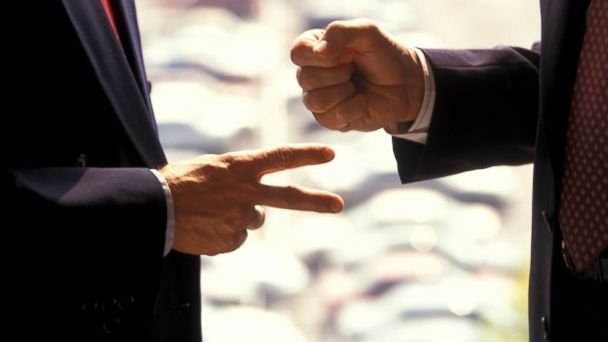
New study shows how to win Rock-Paper-Scissors

If you are about to engage in an intense – because when are they not intense – game of rock-paper-scissors with a friend or loved one, do not let them read this article.

You, however, will want to take notes.

A team of researchers from China have just released the results of the first large-scale study of the game and their conclusions on player behavior could help you win the next round.

The study, led by three researchers at China’s Zhejiang University, recruited 360 undergraduate and graduate students to play a total of 300 rounds of rock-paper-scissors while their actions were recorded.

When a student won a round, the researchers found, they tended to stick with the same action (i.e. rock, paper or scissor) instead of switching to another.

When a student lost a round, they most often switched to another action, rotating in a clockwise direction, from rock to paper to scissor.

So, if you can think fast enough during each round’s three-second countdown, you can anticipate your opponent’s next move by whether they won, and thus would stay with the same action, or lost, and thus would switch to the next action, which you’d be able to determine by going clockwise.

The findings upend the previously held notion that rock-paper-scissors followed classical game theory, or mixed-strategy Nash equilibrium (NE), “in which every player chooses the three actions with equal probability,” the study’s authors write.

Instead, according to this study, those who win at rock-paper-scissor appear exhibit “collective cyclic motions” and “conditioned response.”

“Our theoretical calculations reveal that this new strategy may offer higher payoffs to individual players in comparison with the NE mixed strategy, suggesting that high social efficiency is achievable through optimized conditional response,” the authors write.

Translation: You can beat the pants off your opponents if you think it through properly.

The researchers say the work they did on just rock-paper-scissors could be extended in future studies to human psychology.

“Whether conditional response is a basic decision-making mechanism of the human brain or just a consequence of more fundamental neural mechanisms is a challenging question for future studies,” they conclude.

http://gma.yahoo.com/blogs/abc-blogs/win-rock-paper-scissors-study-shows-really-175713622–abc-news-lifestyle.html

Thanks to Da Brayn for bringing this to the attention of the It’s Interesting community.

Baltimore Landslide

A dramatic video posted on YouTube shows several cars being swallowed by a Baltimore landslide on Wednesday.

YouTube user ToddTesla posted the 90-second clip, which consists mostly of residents reacting to cars that appear to be tipping into a crevice at the edge of 26th St. in the city’s Charles Village neighborhood. At the 1:12 mark, one of them notices that the road is splitting apart, and then the street’s entire retaining wall gives way in a deafening crash as the bystanders scream in disbelief. No one was injured.

The cars fell onto train tracks used by the freight railroad company CSX, suspending service indefinitely. In a statement, the company said it was working with authorities to respond to to the incident.

The Baltimore Sun reported that the collapsed wall was 120 years old, and that 19 homes near the site of the landslide were evacuated.

Heavy rains in the Baltimore area on Wednesday caused widespread flooding, which led to the collapse. CBS Baltimore reported that Charles Village residents had also made numerous complaints about the “crumbling” street over the past year.

http://www.huffingtonpost.com/2014/05/01/baltimore-landslide-video_n_5249782.html

Thanks to Ray Gaudette for bringing this to the attention of the It’s Interesting community.

Recycled Concrete Houses 3D-Printed in 24 Hours in China

A Chinese construction firm based in Shanghai has succeeded in building 10 houses each measuring 200 square metres in 24 hours by using an enormous 3D printer.

The houses are all eco-friendly and constructed from 3D-printed building blocks made from layers of recycled construction waste and glass fibre and mixed with cement.

Each home costs less than £3,000 to build.

WinSun Decoration Design Engineering spent 20 million Yuan (£1.9m) and 12 years to develop a 3D printer 6.6 metres tall, 10 metres wide and 150 metres long.

Large 3D printers have been in existence for several years and have been used to make plane parts and prototypes.

“We purchased parts for the printer overseas, and assembled the machine in a factory in Suzhou. Such a new type of 3D-printed structure is environment-friendly and cost-effective,” said the 3D-printer’s inventor, Winsun CEO Ma Yihe.

Winsun used architectural design software AutoCAD Architecture to not only plan the building but also to calculate tracing paths that took into account plumbing, electrical lining, insulation materials and windows, that would be added once the main structure was built.

The company holds 77 national patents for its construction materials.

Ma’s office building, which covers an area of 10,000 square metres, was also constructed with 3D-printed walls and took a month to build from an assembly line of four 3D printers.

“Industrial waste from demolished buildings is damaging our environment, but with 3D-printing, we are able to recycle construction waste and turn it into new building materials,” said Ma.

“This would create a much safer environment for construction workers and greatly reduce construction costs.”

http://www.ibtimes.co.uk/china-recycled-concrete-houses-3d-printed-24-hours-1445981

Thanks to Kebmodee for bringing this to the attention of the It’s Interesting community.

Desert dig uncovers huge Atari games dump

Video game archaeologists have found a cache of Atari games that were buried in the New Mexico desert 30 years ago.

Before now reports Atari had dumped millions of game cartridges were widely believed to be an urban myth.

But a three-hour dig at a landfill site turned up many Atari cartridges, including copies of the game ET: The Extra Terrestrial.

Atari made millions of copies of the ET game, but it sold poorly and helped to contribute to the demise of the firm.

“For a lot of people, it’s something that they’ve wondered about and it’s been rumoured and talked about for 30 years, and they just want an answer,” said Zak Penn, director of a documentary being made about the search for the site and its uncovering.

The documentary by Fuel Entertainment is being prepared for Microsoft’s Xbox TV channel.

Cash crunch

Atari was thought to have dumped truckloads of unsold games in the landfill site on the outskirts of Alamogordo in 1983 as the company was winding down.

The game maker’s descent from its position as the dominant force in home gaming in the late 1970s and early 1980s was swift and has been partly blamed on the gamble it took on making a game of Steven Spielberg’s 1982 hit film ET.

The game was made from scratch in five weeks for the Atari 2600 console. Even before the game was finished Atari, committed huge amounts of money and resources to it and produced millions of copies when it was done.

The ET game has been described as one of the worst ever created. Its challenging game play and poor graphics put people off buying it and left Atari with huge amounts of unsold inventory.

The search to see if the rumours about the dump were true was given new life by the efforts of one unnamed game enthusiast who did the detective work to narrow down its location.

Red tape surrounding the uncovering of the landfill site held up the start of the dig but once permission was granted excavations began on 26 April.

Three hours of digging with a backhoe uncovered significant amounts of Atari 2600 game cartridges – many of which were still in their original packaging.

Only a limited amount of material could be retrieved from the dump because the dig was only allowed access for one day. The local authority of Alamogordo ordered the dig site to be refilled on 27 April.

http://www.bbc.com/news/technology-27187609

Thanks to Kebmodee for bringing this to the attention of the It’s Interesting community.

Hawaii police stripped of legal right to have sex with prostitutes

Hawaii legislators in both chambers agreed that police should no longer have legal permission to have sex with prostitutes in the course of their duties.

Hawaii was the only US state that permitted officers to engage in such activity with sex workers during investigations.

House and Senate members are still thrashing out the details of House Bill 1926, which they will subsequently send to the governor. But they agree that the crime bill should revoke an unusual exemption that permits police in Hawaii to have sex with prostitutes in the course of their duties.

Originally, the bill cracking down on prostitution would have deleted the exemption, but last month, after lobbying efforts by Hawaii police officers, the exemption was made.

Honolulu police said vice officers needed the legal protection for their undercover work to prevent pimps and prostitutes from knowing the limits of police methods. They also added that the provision is needed to protect the integrity of investigations.

The bill was amended as it passed out of the chamber’s Judicial Committee. Rep. Karl Rhoads, the Democratic chairman of the Judicial Committee, clarified that he corrected the bill to allow the exclusion because of the police testimony. However, experts and sex worker advocates say that this permission is no help and, in fact, even makes things worse.

“It doesn’t help your case, and at worst you further traumatize someone. And do you think he or she is going to trust a cop again?” Derek Marsh, an expert on human trafficking who trains police officers how to handle extraordinary cases, earlier told AP.

Rhoads said now he wants to remove the prostitution exemption for police, and limit police from engaging in sex or sadomasochistic acts with prostitutes.

The House and Senate members are settling on a final version, but once they vote on it, Gov. Neil Abercrombie must sign it into official law.

http://rt.com/usa/hawaii-police-prostitutes-sex-412/

Thanks to Dr. Lutter for bringing this to the attention of the It’s Interesting community.

7.5% of American schoolchildren take prescription psychiatric medications

The National Center for Health Statistics has found that 7.5 percent of American schoolchildren between the ages of six and 17 had been prescribed and taking pills for emotional or behavioral difficulties.

That is one in every 13 kids.

The study also found that more than half (55 percent) of the parents of the participants said that the medications helped their children “a lot,” while another 26 percent said it helped “some.”

The researchers were unable to identify the specific medications prescribed to the children, however they did make some discoveries regarding race and gender of the children on these medications.

Significantly more boys than girls were given medication; about 9.7 percent of boys compared with 5.2 percent of girls.

Older girls were more likely than younger females to be put on medication.

White children were the most likely to be on psychiatric medications (9.2 percent), followed by Black children (7.4 percent) and Hispanic children (4.5 percent).

Children on Medicaid or a Children’s Health Insurance Program (CHIP) were more likely on medication for emotional and behavioral problems (9.9 percent), versus 6.7 percent of kids with private insurance and only 2.7 percent of uninsured children.

Parents of younger children (between ages 6 and 11) were slightly more likely to feel the medications helped “a lot” compared to those of older children.

Parents of males were also more likely to feel the medications helped “a lot” — about 58 percent of parents of males reported that they helped “a lot” compared to 50 percent of the parents of females.

Parents with incomes less than 100 percent of the federal poverty level were the least likely to feel the medications helped “a lot”. Just 43 percent of these parents said the medications helped “a lot”, while about 31 percent said they helped “some”.

More families living below 100 percent of the federal poverty level had children taking medications for emotional and behavioral problems than those above the federal poverty level.

http://atlantablackstar.com/2014/04/25/1-13-schoolkids-takes-psych-meds/

Thanks to Da Brayn for bringing this to the attention of the It’s Interesting community.

Psychopaths: how can you spot one?

There are a few things we take for granted in social interactions with people. We presume that we see the world in roughly the same way, that we all know certain basic facts, that words mean the same things to you as they do to me. And we assume that we have pretty similar ideas of right and wrong.

But for a small – but not that small – subset of the population, things are very different. These people lack remorse and empathy and feel emotion only shallowly. In extreme cases, they might not care whether you live or die. These people are called psychopaths. Some of them are violent criminals, murderers. But by no means all.

Professor Robert Hare is a criminal psychologist, and the creator of the PCL-R, a psychological assessment used to determine whether someone is a psychopath. For decades, he has studied people with psychopathy, and worked with them, in prisons and elsewhere. “It stuns me, as much as it did when I started 40 years ago, that it is possible to have people who are so emotionally disconnected that they can function as if other people are objects to be manipulated and destroyed without any concern,” he says.

Our understanding of the brain is still in its infancy, and it’s not so many decades since psychological disorders were seen as character failings. Slowly we are learning to think of mental illnesses as illnesses, like kidney disease or liver failure, and developmental disorders, such as autism, in a similar way. Psychopathy challenges this view. “A high-scoring psychopath views the world in a very different way,” says Hare. “It’s like colour-blind people trying to understand the colour red, but in this case ‘red’ is other people’s emotions.”

At heart, Hare’s test is simple: a list of 20 criteria, each given a score of 0 (if it doesn’t apply to the person), 1 (if it partially applies) or 2 (if it fully applies). The list in full is: glibness and superficial charm, grandiose sense of self-worth, pathological lying, cunning/manipulative, lack of remorse, emotional shallowness, callousness and lack of empathy, unwillingness to accept responsibility for actions, a tendency to boredom, a parasitic lifestyle, a lack of realistic long-term goals, impulsivity, irresponsibility, lack of behavioural control, behavioural problems in early life, juvenile delinquency, criminal versatility, a history of “revocation of conditional release” (ie broken parole), multiple marriages, and promiscuous sexual behaviour. A pure, prototypical psychopath would score 40. A score of 30 or more qualifies for a diagnosis of psychopathy. Hare says: “A friend of mine, a psychiatrist, once said: ‘Bob, when I meet someone who scores 35 or 36, I know these people really are different.’ The ones we consider to be alien are the ones at the upper end.”

But is psychopathy a disorder – or a different way of being? Anyone reading the list above will spot a few criteria familiar from people they know. On average, someone with no criminal convictions scores 5. “It’s dimensional,” says Hare. “There are people who are part-way up the scale, high enough to warrant an assessment for psychopathy, but not high enough up to cause problems. Often they’re our friends, they’re fun to be around. They might take advantage of us now and then, but usually it’s subtle and they’re able to talk their way around it.” Like autism, a condition which we think of as a spectrum, “psycho­pathy”, the diagnosis, bleeds into normalcy.

We think of psychopaths as killers, criminals, outside society. People such as Joanna Dennehy, a 31-year-old British woman who killed three men in 2013 and who the year before had been diagnosed with a psychopathic personality disorder, or Ted Bundy, the American serial killer who is believed to have murdered at least 30 people and who said of himself: “I’m the most cold-blooded son of a bitch you’ll ever meet. I just liked to kill.” But many psychopathic traits aren’t necessarily disadvantages – and might, in certain circumstances, be an advantage. For their co-authored book, “Snakes in suits: When Psychopaths go to work”, Hare and another researcher, Paul Babiak, looked at 203 corporate professionals and found about four per cent scored sufficiently highly on the PCL-R to be evaluated for psychopathy. Hare says that this wasn’t a proper random sample (claims that “10 per cent of financial executives” are psychopaths are certainly false) but it’s easy to see how a lack of moral scruples and indifference to other people’s suffering could be beneficial if you want to get ahead in business.

“There are two kinds of empathy,” says James Fallon, a neuroscientist at the University of California and author of The Psychopath Inside: A Neuroscientist’s Personal Journey into the Dark Side of the Brain. “Cognitive empathy is the ability to know what other people are feeling, and emotional empathy is the kind where you feel what they’re feeling.” Autistic people can be very empathetic – they feel other people’s pain – but are less able to recognise the cues we read easily, the smiles and frowns that tell us what someone is thinking. Psychopaths are often the opposite: they know what you’re feeling, but don’t feel it themselves. “This all gives certain psychopaths a great advantage, because they can understand what you’re thinking, it’s just that they don’t care, so they can use you against yourself.” (Chillingly, psychopaths are particularly adept at detecting vulnerability. A 2008 study that asked participants to remember virtual characters found that those who scored highly for psychopathy had a near perfect recognition for sad, unsuccessful females, but impaired memory for other characters.)

Fallon himself is a case in point. In 2005, he was looking at brain scans of psychopathic murderers, while on another study, of Alzheimer’s, he was using scans of his own family’s brains as controls. In the latter pile, he found something strange. “You can’t tell just from a brain scan whether someone’s a psychopath,” he says, “but you can make a good guess at the personality traits they’ll have.” He describes a great loop that starts in the front of the brain including the parahippocampal gyrus and the amygdala and other regions tied to emotion and impulse control and empathy. Under certain circumstances they would light up dramatically on a normal person’s MRI scan, but would be darker on a psychopath’s.

“I saw one that was extremely abnormal, and I thought this is someone who’s way off. It looked like the murderers I’d been looking at,” he says. He broke the anonymisation code in case it had been put into the wrong pile. When he did, he discovered it was his own brain. “I kind of blew it off,” he says. “But later, some psychiatrist friends of mine went through my behaviours, and they said, actually, you’re probably a borderline psychopath.”

Speaking to him is a strange experience; he barely draws breath in an hour, in which I ask perhaps three questions. He explains how he has frequently put his family in danger, exposing his brother to the deadly Marburg virus and taking his son trout-fishing in the African countryside knowing there were lions around. And in his youth, “if I was confronted by authority – if I stole a car, made pipe bombs, started fires – when we got caught by the police I showed no emotion, no anxiety”. Yet he is highly successful, driven to win. He tells me things most people would be uncomfortable saying: that his wife says she’s married to a “fun-loving, happy-go-lucky nice guy” on the one hand, and a “very dark character who she does not like” on the other. He’s pleasant, and funny, if self-absorbed, but I can’t help but think about the criteria in Hare’s PCL-R: superficial charm, lack of emotional depth, grandiose sense of self-worth. “I look like hell now, Tom,” he says – he’s 66 – “but growing up I was good-looking, six foot, 180lb, athletic, smart, funny, popular.” (Hare warns against non-professionals trying to diagnose people using his test, by the way.)

“Psychopaths do think they’re more rational than other people, that this isn’t a deficit,” says Hare. “I met one offender who was certainly a psychopath who said ‘My problem is that according to psychiatrists I think more with my head than my heart. What am I supposed to do about that? Am I supposed to get all teary-eyed?’ ” Another, asked if he had any regrets about stabbing a robbery victim, replied: “Get real! He spends a few months in hospital and I rot here. If I wanted to kill him I would have slit his throat. That’s the kind of guy I am; I gave him a break.”

And yet, as Hare points out, when you’re talking about people who aren’t criminals, who might be successful in life, it’s difficult to categorise it as a disorder. “It’d be pretty hard for me to go into high-level political or economic or academic context and pick out all the most successful people and say, ‘Look, I think you’ve got some brain deficit.’ One of my inmates said that his problem was that he’s a cat in a world of mice. If you compare the brainwave activity of a cat and a mouse, you’d find they were quite different.”

It would, says Hare, probably have been an evolutionarily successful strategy for many of our ancestors, and can be successful today; adept at manipulating people, a psychopath can enter a community, “like a church or a cultural organisation, saying, ‘I believe the same things you do’, but of course what we have is really a cat pretending to be a mouse, and suddenly all the money’s gone”. At this point he floats the name Bernie Madoff.

This brings up the issue of treatment. “Psychopathy is probably the most pleasant-feeling of all the mental disorders,” says the journalist Jon Ronson, whose book, The Psychopath Test, explored the concept of psychopathy and the mental health industry in general. “All of the things that keep you good, morally good, are painful things: guilt, remorse, empathy.” Fallon agrees: “Psychopaths can work very quickly, and can have an apparent IQ higher than it really is, because they’re not inhibited by moral concerns.”

So psychopaths often welcome their condition, and “treating” them becomes complicated. “How many psychopaths go to a psychiatrist for mental distress, unless they’re in prison? It doesn’t happen,” says Hare. The ones in prison, of course, are often required to go to “talk therapy, empathy training, or talk to the family of the victims” – but since psychopaths don’t have any empathy, it doesn’t work. “What you want to do is say, ‘Look, it’s in your own self-interest to change your behaviour, otherwise you’ll stay in prison for quite a while.’ ”

It seems Hare’s message has got through to the UK Department of Justice: in its guidelines for working with personality-disordered inmates, it advises that while “highly psychopathic individuals” are likely to be “highly treatment resistant”, the “interventions most likely to be effective are those which focus on ‘self-interest’ – what the offender wants out of life – and work with them to develop the skills to get those things in a pro-social rather than anti-social way.”

If someone’s brain lacks the moral niceties the rest of us take for granted, they obviously can’t do anything about that, any more than a colour-blind person can start seeing colour. So where does this leave the concept of moral responsibility? “The legal system traditionally asserts that all people standing in front of the judge’s bench are equal. That’s demonstrably false,” says the neuroscientist David Eagleman, author of Incognito: The Secret Lives of the Brain. He suggests that instead of thinking in terms of blameworthiness, the law should deal with the likelihood that someone will reoffend, and issue sentences accordingly, with rehabilitation for those likely to benefit and long sentences for those likely to be long-term dangers. The PCL-R is already used as part of algorithms which categorise people in terms of their recidivism risk. “Life insurance companies do exactly this sort of thing, in actuarial tables, where they ask: ‘What age do we think he’s going to die?’ No one’s pretending they know exactly when we’re going to die. But they can make rough guesses which make for an enormously more efficient system.”

What this doesn’t mean, he says, is a situation like the sci-fi film Minority Report, in which people who are likely to commit crimes are locked up before they actually do. “Here’s why,” he says. “It’s because many people in the population have high levels of psychopathy – about 1 per cent. But not all of them become criminals. In fact many of them, because of their glibness and charm and willingness to ride roughshod over the people in their way, become quite successful. They become CEOs, professional athletes, soldiers. These people are revered for their courage and their straight talk and their willingness to crush obstacles in their way. Merely having psychopathy doesn’t tell us that a person will go off and commit a crime.” It is central to the justice system, both in Britain and America, that you can’t pre-emptively punish someone. And that won’t ever change, says Eagleman, not just for moral, philosophical reasons, but for practical ones. The Minority Report scenario is a fantasy, because “it’s impossible to predict what somebody will do, even given their personality type and everything, because life is complicated and crime is conceptual. Once someone has committed a crime, once someone has stepped over a societal boundary, then there’s a lot more statistical power about what they’re likely to do in future. But until that’s happened, you can’t ever know.”

Speaking to all these experts, I notice they all talk about psychopaths as “them”, almost as a different species, although they make conscious efforts not to. There’s something uniquely troubling about a person who lacks emotion and empathy; it’s the stuff of changeling stories, the Midwich Cuckoos, Hannibal Lecter. “You know kids who use a magnifying glass to burn ants, thinking, this is interesting,” says Hare. “Translate that to an adult psychopath who treats a person that way. It is chilling.” At one stage Ronson suggests I speak to another well-known self-described psychopath, a woman, but I can’t bring myself to. I find the idea unsettling, as if he’d suggested I commune with the dead.

http://www.telegraph.co.uk/culture/books/10737827/Psychopaths-how-can-you-spot-one.html

Thanks to Steven Weihing for bringing this to the attention of the It’s Interesting community.

What I’ve Learned: Sol Snyder


Sol Snyder, Distinguished Service Professor of Neuroscience, Pharmacology and Psychiatry, School of Medicine

Growing up, I never had any strong interest in science. I did well in lots of things in high school. I liked reading philosophy and things like that, but being a philosopher is not a fit job for a nice Jewish boy.

This was in the mid-1950s, and many of my friends were going into engineering, preparatory to joining the then prominent military industrial complex. Others were going to be doctors, so I got the idea that maybe I’d be a psychiatrist. I didn’t have any special affinity for medicine or desire to cast out the lepers or heal mankind.

I was always reading things. My father valued education. He wasn’t a big advice giver, but he … had a lot of integrity. What was important to him was doing the right thing. And he had great respect for the intellectual life and science.

My father’s professional life commenced in 1935 as the 10th employee of what became the NSA. He led a team that broke one of the principal Japanese codes. At the end of World War II, computers were invented, and, if you think about it, what could be the best entity to take advantage of computers than NSA, with its mission of sorting gibberish and looking for patterns. So my father was assigned to look at these new machines and see if they would be helpful. He led the computer installations at NSA.

Summers in college I worked in the NSA. My father taught me to program computers in machine language. Computers were a big influence on me.

I learned at the NSA about keeping secrets. What is top secret, what is need-to-know—that is one of the things you learn in the business. You don’t talk to the guy at the next desk even if you’re working on the same project. If that person doesn’t need to know, you just shut up.

In medical school, I started working at the NIH in Bethesda during the summers and elective periods, largely because the only thing I really did well up to that time was play the classical guitar and one of my guitar students was an NIH researcher. In high school I thought I might go the conservatory route, but that’s even less fitting for a nice Jewish boy than being a philosopher.

It was through my contacts at NIH that I was able to get a position working with future Nobel Prize winner Julius Axelrod. Julie was a wonderful mentor who did research on drugs and neurotransmitters. Working with him was inspirational. I just adored it.

What was notable about Julie was his great creativity, always coming up with original ideas. Even though he was an eminent scientist, he didn’t have a regular office. He just had a desk in a lab. He did experiments with his own two hands every day.

Philosophically, Julie emphasized you go where the data takes you. Don’t worry that you’re an expert in enzyme X and so should focus on that. If the data point to enzyme Y, go for it. Do what’s exciting.

My very first project with Julie was studying the disposition of histamine. I thought I had found that histamine had been converted into a novel product that looked really interesting, and I was wrong. I missed the true product because we separated the chemicals on paper and discarded the radioactivity at the bottom, throwing away the real McCoy. Another lab at Yale found it, led, remarkably, by a close friend since kindergarten. My humiliation didn’t last very long. I learned not to be so sloppy, to take greater care, and, most important, to explore peculiar results.

How does one pick research directions? You can go where it’s “hot,” but there you’re competing with 300 other people, and everyone can make only incremental changes. But if you follow Julie Axelrod’s rules and you don’t worry about what’s hot, or what other people are doing—just go where your data are taking you—then you have a better chance of finding something that nobody else had found before.

With the discovery of the opiate receptor, I was fortunate to launch a new field: molecular identification of neurotransmitter receptors. Later we discovered that the gas nitrous oxide is a neurotransmitter.

I’m a klutz. I can’t hammer a nail. So for the technical side, like dissecting brains to look at different regions, I enlisted friends. I learned to collaborate, a key element in so many discoveries.

Johns Hopkins has always been a collegial place. People are just friendly and interact with each other. This tradition goes back to the founding of the medical school, permeating the school’s governance as well as research. We tend to be more productive than faculty at other schools, where one gets ahead by sticking an ice pick in the backs of colleagues.

One of my heroes was my guitar teacher, Sophocles Papas, Andrés Segovia’s best friend. Sophocles was an important influence in my life, and we stayed close until he died in his 90s. In a couple of years after commencing lessons, I was giving recitals, all thanks to him. Like Julie, Sophocles emphasized innovative short cuts to creativity.

I’ve remained involved with music. I’m the longest-serving trustee on the Baltimore Symphony Orchestra, chairing for many years its music committee. Trustees of arts organizations are typically businesspeople selected for their fundraising acumen. But the person who nominated me reportedly commented, I’d like to propose something radical: I’d like to propose a trustee who cares about music.

Most notable about psychiatry is that the major drugs—antipsychotics for schizophrenia, antidepressants, and anti-anxiety drugs—were all discovered in the mid-1950s. Subsequent tweaking has enhanced potency and diminished side effects, but there have been no major breakthroughs. No new class of drugs since 1958—rather frustrating.

As biomedical science advances, especially with the dawn of molecular biology, our power to innovate is just dazzling. Today’s students take all of this for granted, but those of us who have been doing research for several decades are daily amazed by our abilities to probe the mysteries of life.

The logic of nature is elegant and straightforward. The more we learn about how the body works, the more we are amazed by its beauty and inherent simplicity.

One of my pet peeves is that the very power of modern science leads journal and grant reviewers to expect every “i” dotted and every “t” crossed. Because of this, four years or more of work go into each scientific manuscript. Then, editors and reviewers of journals are so picayune that revising a paper consumes another year.

Now let’s consider the poor post­doctoral fellow or graduate student. To move forward in his or her career requires at least one major publication—a five-year enterprise. If you only have one shot on goal, one paper in five years, your chances of success shrivel. The duration of PhD training and postdoctoral training is getting so long that from the entry point at graduate school to the time you’re out looking for a job as an assistant professor is easily 12, 15 years. Well, that is ridiculous. If you got paid $10 million at the end of this road, that would be one thing, but scientists earn less than most other professionals. We’re deterring the young smart people from going into science.

Biomedical researchers don’t work in a vacuum. They work with grad students and postdoctoral fellows, so being a good mentor is key to being a good scientist. Keep your students well motivated and happy. Have them feel that they are good human beings, and they will do better science.

The most important thing is that you value the integrity of each person. I ask my students all the time, What do you think? And this discussion turns into minor league psychotherapy. Ah, you think that? Tell me more. Tell me more.

The “stupidest” of the students here are smarter than me. It’s a pleasure to watch them emerge.

I see my life as taking care of other people. Although I didn’t go to medical school with any intelligent motivation, once I did, I loved being a doctor and trying to help people. And I love being a psychiatrist and trying to understand people, and I try to carry that into everything I do.

In medical research, all of us want to find the causes and cures for diseases. I haven’t found the cause of any disease, although with Huntington’s disease, we are making inroads. And, of course, being a pharmacologist, my métier is discovering drugs and better treatments.

My secret? I come to work every day, and I keep my own calendar. That way I have free time to just wander around the lab and talk to the boys and girls and ask them how it’s going. That’s what makes me happy.

Sol Snyder joined Johns Hopkins in 1965 as an assistant resident in Psychiatry and would later become the youngest full professor in JHU history. In 1978, he received the Albert Lasker Basic Medical Research Award for his role in discovering the brain’s opiate receptors. In 1980, he founded the School of Medicine’s Department of Neuroscience, which in 2006 was renamed the Solomon H. Snyder Department of Neuroscience.

http://hub.jhu.edu/gazette/2014/january-february/what-ive-learned-sol-snyder

http://en.wikipedia.org/wiki/Solomon_H._Snyder