Possible link between cynicism and risk of dementia

Cynics are three times more likely to develop dementia than those who have faith in humanity, a study has shown.

Believing that others are motivated by selfishness, or that they lie to get what they want, appears to radically increase the risk of cognitive decline in later life.

It could mean that grumpy old men and women should be screened more closely for diseases such as Alzheimer’s. Cynicism has previously been linked to health problems such as heart disease, but this is the first time it has been associated with dementia.

“These results add to the evidence that people’s view on life and personality may have an impact on their health,” said Dr. Anna-Maija Tolppanen, the lead researcher at the University of Eastern Finland, whose study is published online in the journal Neurology.

Academics asked nearly 1,500 people with an average age of 71 to fill out a questionnaire to measure their levels of cynicism.

They were asked how much they agreed with statements such as “I think most people would lie to get ahead”, “it is safer to trust nobody” and “most people will use somewhat unfair reasons to gain profit or an advantage rather than lose it.”

Those taking part were monitored for eight years, during which time 46 of them were diagnosed with dementia. The academics discovered that those who had scored highly for cynicism were three times more likely to have developed dementia than those with low scores.

Researchers adjusted the results for other factors that could affect the risk of dementia, such as high blood pressure, high cholesterol and smoking.

Of the 164 people with high levels of cynicism, 14 people developed dementia, compared with nine of the 212 people with low levels of cynicism.

One in three people over 65 will develop a form of dementia. Of the 800,000 people in the U.K. who have the condition, more than half have Alzheimer’s disease. It is estimated that 1.7 million Britons will suffer from dementia by 2051.

Responding to the study findings, charities cautioned that the early symptoms of Alzheimer’s and dementia could make people more cynical about life.

Dr. Doug Brown, of the Alzheimer’s Society, said: “While this research attempts to make a link between higher levels of cynical distrust and risk of dementia, there were far too few people in this study that actually developed dementia to be able to draw any firm conclusions.

http://news.nationalpost.com/2014/05/28/being-a-cynic-linked-to-tripled-risk-of-developing-dementia-finland-study-suggests/

Thanks to Kebmodee for bringing this to the attention of the It’s Interesting community.

Suspended-animation trials to begin on humans

This month, the world’s first attempts at placing humans in suspended animation using a new technique will take place at the UPMC Presbyterian Hospital in Pittsburgh, Pennsylvania — not for space travel, but to save lives.

The technique will initially be used on 10 patients whose wounds would otherwise be lethal in an attempt to buy the surgeons some time. It works, as suggested by science fiction, by cooling the body — but not by applying an external temperature change.

Instead, a team of surgeons will remove all of the patient’s blood, replacing it with a cold saline solution. This will cool the body, slowing its functions to a halt and reducing the need for oxygen. Effects similar to this have been seen in accidents: Swedish Anna Bågenholm survived trapped under a layer of ice in freezing water for 80 minutes in a skiing accident; Japanese Mitsutaka Uchikoshi survived 24 days without food or water by entering a state of hypothermic hibernation.

“We are suspending life, but we don’t like to call it suspended animation because it sounds like science fiction,” Doctor Samuel Tisherman, the surgeon who will lead the trial, told New Scientist. “So we call it emergency preservation and resuscitation.”

The technique was developed by Doctor Peter Rhee, who successfully managed to test it on pigs in the year 2000. In 2006, Dr Rhee and his colleagues published the results of their subsequent research. After inducing fatal wounds in the pigs by cutting their arteries with scalpels, the team replaced the pigs’ blood with saline, which lowered their body temperature to 10 degrees Celsius.

All of the control pigs, whose body temperature was left alone, died. The pigs who were warmed back up at a medium speed demonstrated a 90 percent survival rate, although some of their hearts had to be given a jump start (the pigs that were warmed up slow and fast had a 50 and 30 per cent survival rate respectively). Afterwards, the pigs demonstrated no physical or cognitive impairment.

The technique, therefore, will only be used as an emergency measure on patients who have suffered cardiac arrest after severe traumatic injury, with their chest cavity open and having lost at least half their blood already — injuries that see only a seven percent survival rate. The survival rate of these patients will then be measured against a control group that has not received the treatment before further testing can begin.

It’s not science fiction quite yet — a human body can only be safely placed under these conditions for a maximum of a few hours — but even if it raises the survival rate just the little, it will be a massive step forward.

http://www.cnet.com/news/suspended-animation-trials-to-begin-on-humans/

Thanks to Kebmodee for bringing this to the attention of the It’s Interesting community.

How dark beer can make grilled meat less carcinogenic

If you’re grilling meat this Memorial Day, you should seriously consider stocking up on Guinness.

Grilling meat is a warm-weather tradition in America, especially on Memorial Day weekend. It’s also an ancient human tradition, uniting friends and family around food and fire as long as our species has existed. Unfortunately, it also unites us around chemicals that can cause cancer.

Warnings like that can make it seem like scientists ruin everything — they already took sitting, late-night snacks and fireworks from us. But science works both ways, and now it has found at least a partial solution for this carnivore’s conundrum. According to a recent study, published in the Journal of Agricultural and Food Chemistry, the secret to safer grilling has been under our noses all along.

Beer is a common ingredient at backyard cookouts, usually as a beverage. But research suggests marinating meat with beer, particularly dark beer, can curb the creation of polycyclic aromatic hydrocarbons (PAHs). These carcinogenic chemicals form as fat and juices drip from meat onto flames or embers, which then send smoky PAHs wafting up to coat the surface of our food.

PAHs can exist in more than 100 different combinations, some of which are found in known toxic cocktails like cigarette smoke and car exhaust. These chemicals have caused tumors, birth defects and reproductive problems in lab animals, according to the U.S. EPA, but the same effects have not been seen in humans. The National Cancer Institute says PAHs “become capable of damaging DNA only after they are metabolized by specific enzymes in the body.” Nonetheless, health concerns raised in a 2002 report have led the European Union to set safety standards for PAHs in food.

Previous studies have shown that beer, wine, tea and rosemary marinades can reduce carcinogens in cooked meat, but until now little was known about how various beer styles affect this phenomenon. And according to the recent study, the kind of beer seems to make a pretty significant difference.

To reach that conclusion, the researchers marinated pork for four hours in one of three beer types: regular pilsner, non-alcoholic pilsner or black beer. They then grilled the pork to well-done on a charcoal grill and tested its PAH levels. Black beer had the most dramatic effect, reducing eight major PAHs to less than half the amount found in unmarinated grilled pork. (The researchers chose eight PAHs that are identified by the EU as “suitable indicators for carcinogenic potency of PAHs in food.”)

The two pilsners also showed an “inhibitory effect” on PAHs, but not as much. The regular pilsner suppressed PAHs by 13 percent, and the non-alcoholic variety went slightly further with 25 percent.

“Thus, the intake of beer-marinated meat can be a suitable mitigation strategy,” the researchers say.

The study’s authors aren’t sure why beer marinade has this effect, or why dark beer fights PAHs better than pilsner does. It isn’t the alcohol, since non-alcoholic pilsner nearly doubled the PAH suppression of its boozier relative. They suspect it might be antioxidant compounds in beer, especially darker beers, since antioxidants could restrict the movement of free radicals that are required for PAH formation. More research will be needed to know for sure, but this theory could help explain why antioxidant-rich red wine, green tea and rosemary extracts also keep carcinogens in check.

Whatever you use, the American Institute for Cancer Research already recommends marinating meat for at least 30 minutes to limit both PAHs and heterocyclic amines (HCAs), another type of chemical compound that can damage DNA. It also suggests grilling fish and poultry more often than red meat or processed meats like hot dogs, which can increase the risk for certain cancers. Reducing temperature, time on the grill and smoke exposure are other options for limiting cancer risk.

And while it can’t take the place of a juicy, beer-marinated pork chop, there’s also another, even more surefire way to cut back your risk: Save some room on the grill for fruits, vegetables and mushrooms.

http://www.mnn.com/food/healthy-eating/blogs/how-dark-beer-can-make-grilled-meat-less-carcinogenic

Kinki University in Japan is changing its joke-inducing name in order to appeal to English-speaking overseas students.

From 2016 it is going to adopt the name of Kindai University.

Kinki is one of the biggest universities in western Japan with more than 32,000 students, but only 329 of them are from overseas.

The university is to change its name to avoid any misunderstanding.

The Kinki name is drawn from its surrounding local region – but the university has had to counter other interpretations.

The new name of Kindai University is a combination of “Kinki” and “Daigaku” for university.

The shift in name is part of its plans for a more international identity.

“The word ‘kinky’ also means perverted. We have no other choice than changing the English name because we are serious about pursuing a more international school culture,” the university’s dean, Hitoshi Shiozaki, told the AFP news agency.

“We aim to get more foreign students coming here, so we’ve decided to change our English name to ensure there is no misunderstanding,” the university told English language newspaper the Japan Times.

It is not clear whether the change in name will affect the university’s English language newspaper, the Kinki Times.

http://www.bbc.com/news/education-27519000

Thousands of Toddlers Are Inapprorpiately Medicated for A.D.H.D., Report Finds, Raising Worries

By ALAN SCHWARZ

More than 10,000 American toddlers 2 or 3 years old are being medicated for attention deficit hyperactivity disorder outside established pediatric guidelines, according to data presented on Friday by an official at the Center.

The report, which found that toddlers covered by Medicaid are particularly prone to be put on medication such as Ritalin and Adderall, is among the first efforts to gauge the diagnosis of A.D.H.D. in children below age 4. Doctors at the Georgia Mental Health Forum at the Carter Center in Atlanta, where the data was presented, as well as several outside experts strongly criticized the use of medication in so many children that young.

The American Academy of Pediatrics standard practice guidelines for A.D.H.D. do not even address the diagnosis in children 3 and younger — let alone the use of such stimulant medications, because their safety and effectiveness have barely been explored in that age group. “It’s absolutely shocking, and it shouldn’t be happening,” said Anita Zervigon-Hakes, a children’s mental health consultant to the Carter Center. “People are just feeling around in the dark. We obviously don’t have our act together for little children.”

Dr. Lawrence H. Diller, a behavioral pediatrician in Walnut Creek, Calif., said in a telephone interview: “People prescribing to 2-year-olds are just winging it. It is outside the standard of care, and they should be subject to malpractice if something goes wrong with a kid.”

Friday’s report was the latest to raise concerns about A.D.H.D. diagnoses and medications for American children beyond what many experts consider medically justified. Last year, a nationwide C.D.C. survey found that 11 percent of children ages 4 to 17 have received a diagnosis of the disorder, and that about one in five boys will get one during childhood.

A vast majority are put on medications such as methylphenidate (commonly known as Ritalin) or amphetamines like Adderall, which often calm a child’s hyperactivity and impulsivity but also carry risks for growth suppression, insomnia and hallucinations.

Only Adderall is approved by the Food and Drug Administration for children below age 6. However, because off-label use of methylphenidate in preschool children had produced some encouraging results, the most recent American Academy of Pediatrics guidelines authorized it in 4- and 5-year-olds — but only after formal training for parents and teachers to improve the child’s environment were unsuccessful.

Children below age 4 are not covered in those guidelines because hyperactivity and impulsivity are developmentally appropriate for toddlers, several experts said, and more time is needed to see if a disorder is truly present.

Susanna N. Visser, who oversees the C.D.C.’s research on the disorder, compiled Friday’s report through two sources: Medicaid claims in Georgia and claims by privately insured families nationwide kept by MarketScan, a research firm. Her report did not directly present a total number of toddlers 2 and 3 years old nationwide being medicated for the disorder, however her data suggested a number of at least 10,000 and perhaps many more.

Dr. Visser’s analysis of Georgia Medicaid claims found about one in 225 toddlers being medicated for A.D.H.D., or 760 cases in that state alone. Dr. Visser said that nationwide Medicaid data were not yet available, but Georgia’s rates of the disorder are very typical of the United States as a whole.

“If we applied Georgia’s rate to the number of toddlers on Medicaid nationwide, we would expect at least 10,000 of those to be on A.D.H.D. medication,” Dr. Visser said in an interview. She added that MarketScan data suggested that an additional 4,000 toddlers covered by private insurance were being medicated for the disorder.

Dr. Visser said that effective nonpharmacological treatments, such as teaching parents and day care workers to provide more structured environments for such children, were often ignored. “Families of toddlers with behavioral problems are coming to the doctor’s office for help, and the help they’re getting too often is a prescription for a Class II controlled substance, which has not been established as safe for that young of a child,” Dr. Visser said. “It puts these children and their developing minds at risk, and their health is at risk.”

Very few scientific studies have examined the use of stimulant medications in young children. A prominent 2006 study found that methylphenidate could mollify A.D.H.D.-like symptoms in preschoolers, but only about a dozen 3-year-olds were included in the study, and no 2-year-olds. Most researchers on that study, sponsored by the National Institute of Mental Health, had significant financial ties to pharmaceutical companies that made A.D.H.D. medications.

Some doctors said in interviews on Friday that they understood the use of stimulant medication in 2- and 3-year-olds under rare circumstances.

Keith Conners, a psychologist and professor emeritus at Duke University who since the 1960s has been one of A.D.H.D.’s most prominent figures, said that he had occasionally recommended it when nothing else would calm a toddler who was a harm to himself or others.

Dr. Doris Greenberg, a behavioral pediatrician in Savannah, Ga., who attended Dr. Visser’s presentation, said that methylphenidate can be a last resort for situations that have become so stressful that the family could be destroyed. She cautioned, however, that there should not be 10,000 such cases in the United States a year.

“Some of these kids are having really legitimate problems,” Dr. Greenberg said. “But you also have overwhelmed parents who can’t cope and the doctor prescribes as a knee-jerk reaction. You have children with depression or anxiety who can present the same way, and these medications can just make those problems worse.”

Dr. Visser said she could offer no firm explanation for why she found toddlers covered by Medicaid to be medicated for the disorder far more often than those covered by private insurance.

Dr. Nancy Rappaport, a child psychiatrist and director of school-based programs at Cambridge Health Alliance outside Boston who specializes in underprivileged youth, said that some home environments can lead to behavior often mistaken for A.D.H.D., particularly in the youngest children.

“In acting out and being hard to control, they’re signaling the chaos in their environment,” Dr. Rappaport said. “Of course only some homes are like this — but if you have a family with domestic violence, drug or alcohol abuse, or a parent neglecting a 2-year-old, the kid might look impulsive or aggressive. And the parent might just want a quick fix, and the easiest thing to do is medicate. It’s a travesty.”

Study Finds Pedophiles’ Brains Wired to Find Children Attractive

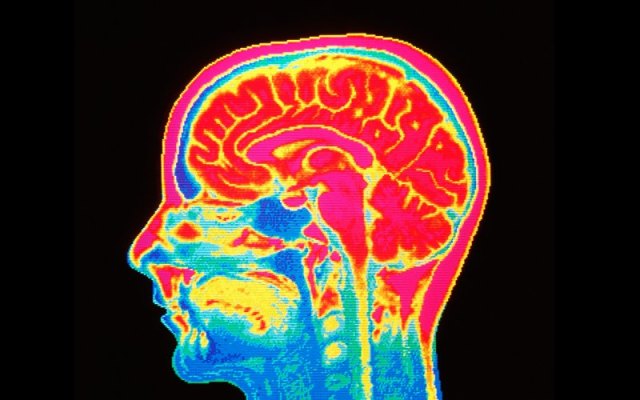
Pedophiles’ brains are “abnormally tuned” to find young children attractive, according to a new study published this week. The research, led by Jorge Ponseti at Germany’s University of Kiel, means that it may be possible to diagnose pedophiles in the future before they are able to offend.

The findings, published in scientific journal Biology Letters, discovered that pedophiles have the same neurological reaction to images of those they find attractive as those of people with ordinary sexual predilections, but that all the relevant cerebral areas become engaged when they see children, as opposed to fellow adults. The occipital areas, prefrontal cortex, putamen, and nucleus caudatus become engaged whenever a person finds another attractive, but the subject of this desire is inverted for pedophiles.

While studies into the cognitive wiring of sex offenders have long been a source of debate, this latest research offers some fairly conclusive proof that there is a neural pattern behind their behavior.

The paper explains: “The human brain contains networks that are tuned to face processing, and these networks appear to activate different processing streams of the reproductive domain selectively: nurturing processing in the case of child faces and sexual processing in the case of sexually preferred adult faces. This implies that the brain extracts age-related face cues of the preferred sex that inform appropriate response selection in the reproductive domains: nurturing in the case of child faces and mating in the case of adult faces.”

Usually children’s faces elicit feelings of caregiving from both sexes, whereas those of adults provide stimuli in choosing a mate. But among pedophiles, this trend is skewed, with sexual, as opposed to nurturing, emotions burgeoning.

The study analyzed the MRI scans of 56 male participants, a group that included 13 homosexual pedophiles and 11 heterosexual pedophiles, exposing them to “high arousing” images of men, women, boys, and girls. Participants then ranked each photo for attractiveness, leading researchers to their conclusion that the brain network of pedophiles is activated by sexual immaturity.

The critical new finding is that face processing is also tuned to face cues revealing the developmental stage that is sexually preferred,” the paper reads.

Dr. James Cantor, associate professor at the University of Toronto’s Faculty of Medicine, said he was “delighted” by the study’s results. “I have previously described pedophilia as a ‘cross-wiring’ of sexual and nurturing instincts, and this data neatly verifies that interpretation.”

Cantor has undertaken extensive research into the area, previously finding that pedophiles are more likely to be left-handed, 2.3 cm shorter than the average male, and 10 to 15 IQ points lower than the norm.

He continued: “This [new] study is definitely a step in the right direction, and I hope other researchers repeat this kind of work. There still exist many contradictions among scientists’ observations, especially in identifying exactly which areas of the brain are the most central to pedophilia. Because financial support for these kinds of studies is quite small, these studies have been quite small, permitting them to achieve only incremental progress. Truly definitive studies about what in the brain causes pedophilia, what might detect it, and what might prevent it require much more significant support.”

Ponseti said that he hoped to investigate this area further by examining whether findings could be emulated when images of children’s faces are the sole ones used. This could lead to gauging a person’s predisposition to pedophilia far more simply than any means currently in place. “We could start to look at the onset of pedophilia, which is probably in puberty at about 12 or 14 years [old],” he told The Independent.

While Cantor is correct in citing the less than abundant size of the study, the research is certainly significant in providing scope for future practicable testing that could reduce the number of pedophilic crimes committed. By being able to run these tests and examine a person’s tendency toward being sexually attracted to underage children, rehabilitative care and necessary precautions could be taken to safeguard children and ensure that those at risk of committing a crime of this ilk would not be able to do so.

http://www.thedailybeast.com/articles/2014/05/23/study-finds-pedophiles-brains-wired-to-find-children-attractive.html#

Beneath this Metal Cap is the World’s Deepest Hole

May 24 is the 44th anniversary of when drilling of the world’s deepest hole began.

Until 1970, geologists could only theorize about the composition of the earth’s crust. That year, Soviet scientists engaged in a subterranean version of the Space Race, and went all-out to beat the USA in a journey to the center of the earth.

While American researchers faltered with Project Mohole, a dig off the coast of Mexico that ran out of funding in 1966, their Russian counterparts took a more determined approach. From 1970 to 1994 their drill on the Kola Peninsula burrowed through layers of rock, reaching an ultimate depth of 7.5 miles. (The distance to the center of the earth is around 3,950 miles, but the continental crust is a mere 22 miles thick.)

The most intriguing discovery made by the Kola Superdeep Borehole researchers was the detection of microscopic plankton fossils four miles beneath the surface of the earth. Usually fossils can be found in limestone and silica deposits, but these “microfossils” were encased in organic compounds that remained surprisingly intact despite the extreme pressures and temperatures of the surrounding rock.

Drilling at Kola stopped in the early 1990s when scientists encountered prohibitively high temperatures. The Superdeep Borehole is still the superdeepest human-made hole on the planet. You can visit the now-abandoned site, but unfortunately you won’t be able to peer into the fathomless abyss — there’s a hefty metal cap covering the hole. The Kola Core Repository in the nearby town of Zapolyarny displays rock samples obtained during the drilling operation.

http://www.slate.com/blogs/atlas_obscura/2014/05/08/kola_superdeep_borehole_is_the_world_s_deepest_hole.html

Thanks to Kebmodee for bringing this to the attention of the It’s Interesting community.

Crocodile Injured by Falling Accountant

A dangerous reptile sustained injuries after being squashed by a portly circus accountant on a roadtrip in northern Russia on Tuesday.

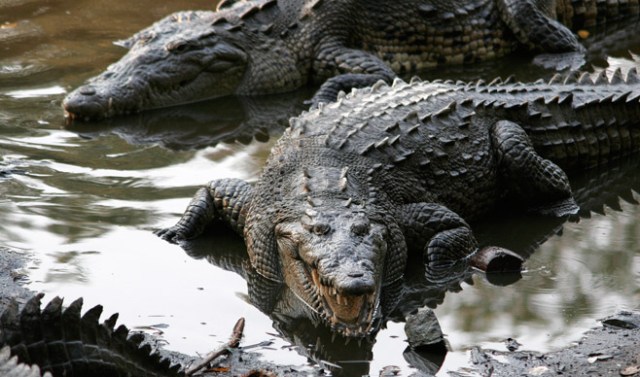
The two-meter-long crocodile was peacefully snoozing on the floor when the tour bus hit a bump in the road, triggering an unfortunate chain of events that caused a 120-kilogram female passenger to be thrown into the crocodile and said crocodile to vomit for several hours afterward, RIA Novosti reported.

Both reportedly sustained shock and minor injuries. But the crocodile, named Fedya, apparently fared worse than the accountant. He vomited for three hours after the accidental full body slam, though a medical examination found he was clear of any internal injuries, Komsomolskaya Pravda reported.

Fedya had to skip a performance that had been scheduled for later in the evening, however.

The accountant, whose name was withheld, was issued a formal reprimand for neglecting to wear a seat belt.

Mars Curiosity rover may have transported Earth bacteria to Mars

The NASA Curiosity rover that was thought to bring only cameras, sensors, and scientific equipment when it traveled to Mars in August 2012 may have brought along dozens of species of bacteria that originated on Earth, according to a new study.

A study conducted by the American Society for Microbiology and published in the Nature science journal revealed that 377 strains of bacteria may have survived the sterilization process that the Curiosity rover endured before it was launched in an attempt to avoid contaminating the red planet.

It was less of a surprise for scientists that the bacteria survived the cleaning process than the revelation about the conditions they went through. The microbes in question endured near-freezing temperatures and intense damage caused by ultra-C radiation, thought to be the most harmful type of radiation.

“Although studies are constantly expanding our knowledge about life in extreme environments, it is still unclear whether organisms from Earth can survive and grow in a Martian environment where there is intense radiation, high oxidation potential, extreme desiccation, and limited nutrients,” microbiologist Stephanie Smith of the University of Idaho in Moscow and lead author of the study wrote in the study’s abstract.

“Knowing if microorganisms survive in conditions simulating those on the Martian surface is paramount to addressing whether these microorganisms could pose a risk to future challenging planetary protection missions.”

Whether the bacteria spread to the Mars surface is unknown, although the very possibility has already made scientists concerned about unnaturally spreading life from earth to Mars.

There is already a United Nations Outer Space Treaty that aims to regulate how the increasingly advanced space programs from the international community explore the unknown. The parameters were first agreed upon in 1966 and they include, among others, the stipulation that “States shall be liable for damage caused by their space objects; and shall avoid harmful contamination of space and celestial bodies.”

The limits vary depending on where the spacecraft lands. Mars, Europa, and other bodies that could potentially nurture life have a relatively strict standard of 300 bacterial spores per square meter. The goal is to keep the odds of contamination Mars (and others) at less than 1 in 10,000.

“Up to 300,000 spores are allowed on the exposed surfaces of the landed spacecraft. That many spores would fit on the head of a large pin,” said Laura Newlin, an engineer at NASA’s Jet Propulsion Laboratory in California. “Currently our total spore count on the surface…is comfortably under 200,000, so we’re below the allowable level.”

The announcement comes at a time when another team of researchers published an unrelated study revealing that methanogens, the oldest organisms on earth, could be the perfect candidate to foster Martian life. The University of Arkansas Fayetteville study determined that, because methanogens are non-photosynthetic and capable of living without oxygen, they are capable of living underground on Mars.

“The surface temperature of Mars varies widely, often ranging between minus 90 degrees Celsius and 27 degrees Celsius over one Martian day,” Rebecca Mickol, a doctoral student of space and planetary sciences, told Science Daily. “If any life were to exist on Mars right now, it would have to at least survive that temperature range. The survival of these two methanogen species, exposed to long-term freeze thaw cycles, suggests methanogens could potentially inhabit the future of Mars.”

http://rt.com/usa/160636-mars-curiosity-rover-bacteria/

Bee Deaths May Have Reached A Crisis Point For Crops

by Dan Charles

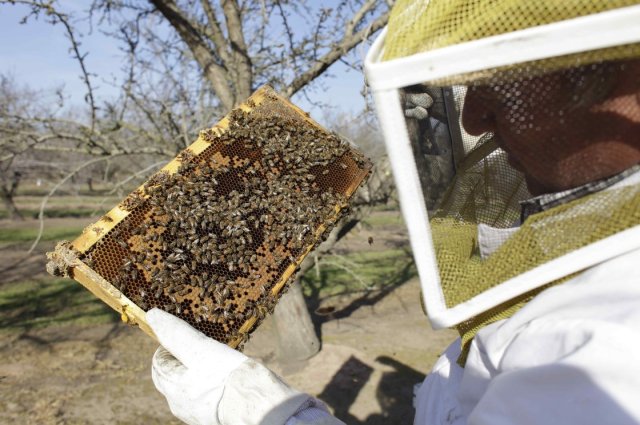
According to a new survey of America’s beekeepers, almost a third of the country’s honeybee colonies did not make it through the winter.

That’s been the case, in fact, almost every year since the U.S. Department of Agriculture began this annual survey, six years ago.

Over the past six years, on average, 30 percent of all the honeybee colonies in the U.S. died off over the winter. The worst year was five years ago. Last year was the best: Just 22 percent of the colonies died.

“Last year gave us some hope,” says Jeffrey Pettis, research leader of the Agriculture Department’s Bee Research Laboratory in Beltsville, Md.

But this year, the death rate was up again: 31 percent.

Six years ago, beekeepers were talking a lot about “colony collapse disorder” — colonies that seemed pretty healthy, but suddenly collapsed. The bees appeared to have flown away, abandoning their hives.

Beekeepers aren’t seeing that so much anymore, Pettis says. They’re mostly seeing colonies that just dwindle. As the crowd of bees gets smaller, it gets weaker.

“They can’t generate heat very well in the spring to rear brood. They can’t generate heat to fly,” he says.

Farmers who grow crops like almonds, blueberries and apples rely on commercial beekeepers to make sure their crops get pollinated.

But the number of honeybees has now dwindled to the point where there may not be enough to pollinate those crops.

Pettis says that this year, farmers came closer than ever to a true pollination crisis. The only thing that saved part of the almond crop in California was some lovely weather at pollination time.

“We got incredibly good flight weather,” Pettis says. “So even those small colonies that can’t fly very well in cool weather, they were able to fly because of good weather.”

Pettis says beekeepers can afford to lose only about 15 percent of their colonies each year. More than that, and the business won’t be viable for long. Some commercial beekeepers are still in business, he says, just because they love it.

“It’s just something that gets in your blood, so you don’t want to give up. [You say,] ‘OK, it’s 30 percent this year; I’ll do better next year.’ We’re very much optimists,” he says.

Beekeepers have a whole list of reasons for why so many colonies are dying. There’s a nasty parasite called the Varroa Mite, which they can’t get rid of. There are also bee-killing pesticides. And there are just fewer places in the country where a bee can find plenty of flowering plants that provide nectar and pollen.

That was especially true this past year. The same drought that left Midwestern corn fields parched and wilting also dried up wildflowers and starved the bees.

That was a natural disaster. But May Berenbaum, who chairs the Department of Entomology at the University of Illinois at Urbana-Champaign, says that most of the changes in the landscape are the result of people’s decisions about what to do with their land.

“I just wish there were more incentives for people — not just farmers — to plant a more diversified landscape that provides nutritional resources for all kinds of pollinators,” she says. “Plant more flowers! And be a little more tolerant of the weeds in the garden.”

More controversial is the role of pesticides. Some beekeepers and environmentalists are calling for tighter restrictions on the use of one particular class of pesticides called neonicotinoids. Europe is about to ban some uses of these pesticides. But U.S. farmers and pesticide companies are opposed to any such move here, and the Environmental Protection Agency says it’s not yet convinced that this would help bees very much.

http://www.npr.org/blogs/thesalt/2013/05/07/181990532/bee-deaths-may-have-reached-a-crisis-point-for-crops

Thanks to Pete Cuomo for bringing this to the attention of the It’s Interesting community.