Smoking Smothers Your Genes

sn-epigenetic

Cigarettes leave you with more than a smoky scent on your clothes and fingernails. A new study has found strong evidence that tobacco use can chemically modify and affect the activity of genes known to increase the risk of developing cancer. The finding may give researchers a new tool to assess cancer risk among people who smoke.

DNA isn’t destiny. Chemical compounds that affect the functioning of genes can bind to our genetic material, turning certain genes on or off. These so-called epigenetic modifications can influence a variety of traits, such as obesity and sexual preference. Scientists have even identified specific epigenetic patterns on the genes of people who smoke. None of the modified genes has a direct link to cancer, however, making it unclear whether these chemical alterations increase the risk of developing the disease.

In the new study, published in Human Molecular Genetics, researchers analyzed epigenetic signatures in blood cells from 374 individuals enrolled in the European Prospective Investigation into Cancer and Nutrition. EPIC, as it’s known, is a massive study aimed at linking diet, lifestyle, and environmental factors to the incidence of cancer and other chronic diseases. Half of the group consisted of people who went on to develop colon or breast cancer 5 to 7 years after first joining the study, whereas the other half remained healthy.

The team, led by James Flanagan, a human geneticist at Imperial College London, discovered a distinct “epigenetic footprint” in study subjects who were smokers. Compared with people who had never smoked, these individuals had fewer chemical tags known as methyl groups—a common type of epigenetic change—on 20 different regions of their DNA. When the researchers extended the analysis to a separate group of patients and mice that had been exposed to tobacco smoke, they narrowed down the epigenetic modifications to several sites located in four genes that have been weakly linked to cancer before. All of these changes should increase the activity of these genes, Flanagan says. It’s unclear why increasing the activity of the genes would cause cancer, he says, but individuals who don’t have cancer tend not to have these modifications.

The study is the first to establish a close link between epigenetic modifications on a cancer gene and the risk of developing the disease, says Robert Philibert, a behavioral geneticist at the University of Iowa in Iowa City. “To the best of my knowledge, no previous genome-wide epigenetics study has taken such efforts from initial discovery to replication to experimental validation,” adds Lutz Breitling, an epidemiologist at the German Cancer Research Center in Heidelberg, Germany.

The work may lead to new ways to asses cancer risks from smoking. “Previous research into smoking has often asked people to fill out questionnaires, … which have their obvious drawbacks and inaccuracies,” Flanagan says. The new study, he says, may make it possible for doctors to quantify a person’s cancer risk simply through an epigenetic analysis of their DNA.

http://news.sciencemag.org/sciencenow/2012/12/smoking-smothers-your-genes.html

Thanks to Dr. Rajadhyaksha for bringing this to the attention of the It’s Interesting community.

Scientists Debunk the IQ Myth: Notion of Measuring One’s Intelligence Quotient by Singular, Standardized Test Is Highly Misleading

iq

After conducting the largest online intelligence study on record, a Western University-led research team has concluded that the notion of measuring one’s intelligence quotient or IQ by a singular, standardized test is highly misleading.

The findings from the landmark study, which included more than 100,000 participants, were published Dec. 19 in the journal Neuron. The article, “Fractionating human intelligence,” was written by Adrian M. Owen and Adam Hampshire from Western’s Brain and Mind Institute (London, Canada) and Roger Highfield, Director of External Affairs, Science Museum Group (London, U.K).

Utilizing an online study open to anyone, anywhere in the world, the researchers asked respondents to complete 12 cognitive tests tapping memory, reasoning, attention and planning abilities, as well as a survey about their background and lifestyle habits.

“The uptake was astonishing,” says Owen, the Canada Excellence Research Chair in Cognitive Neuroscience and Imaging and senior investigator on the project. “We expected a few hundred responses, but thousands and thousands of people took part, including people of all ages, cultures and creeds from every corner of the world.”

The results showed that when a wide range of cognitive abilities are explored, the observed variations in performance can only be explained with at least three distinct components: short-term memory, reasoning and a verbal component.

No one component, or IQ, explained everything. Furthermore, the scientists used a brain scanning technique known as functional magnetic resonance imaging (fMRI), to show that these differences in cognitive ability map onto distinct circuits in the brain.

With so many respondents, the results also provided a wealth of new information about how factors such as age, gender and the tendency to play computer games influence our brain function.

“Regular brain training didn’t help people’s cognitive performance at all yet aging had a profound negative effect on both memory and reasoning abilities,” says Owen.

Hampshire adds, “Intriguingly, people who regularly played computer games did perform significantly better in terms of both reasoning and short-term memory. And smokers performed poorly on the short-term memory and the verbal factors, while people who frequently suffer from anxiety performed badly on the short-term memory factor in particular.”

1.Adam Hampshire, Roger R. Highfield, Beth L. Parkin, Adrian M. Owen. Fractionating Human Intelligence. Neuron, 2012; 76 (6): 1225 DOI: 10.1016/j.neuron.2012.06.022

http://www.sciencedaily.com/releases/2012/12/121219133334.htm

Are Bacteria Making You Hungry?

hunry

Over the last half decade, it has become increasingly clear that the normal gastrointestinal (GI) bacteria play a variety of very important roles in the biology of human and animals. Now Vic Norris of the University of Rouen, France, and coauthors propose yet another role for GI bacteria: that they exert some control over their hosts’ appetites. Their review was published online ahead of print in the Journal of Bacteriology.

This hypothesis is based in large part on observations of the number of roles bacteria are already known to play in host biology, as well as their relationship to the host system. “Bacteria both recognize and synthesize neuroendocrine hormones,” Norris et al. write. “This has led to the hypothesis that microbes within the gut comprise a community that forms a microbial organ interfacing with the mammalian nervous system that innervates the gastrointestinal tract.” (That nervous system innervating the GI tract is called the “enteric nervous system.” It contains roughly half a billion neurons, compared with 85 billion neurons in the central nervous system.)

“The gut microbiota respond both to both the nutrients consumed by their hosts and to the state of their hosts as signaled by various hormones,” write Norris et al. That communication presumably goes both ways: they also generate compounds that are used for signaling within the human system, “including neurotransmitters such as GABA, amino acids such as tyrosine and tryptophan — which can be converted into the mood-determining molecules, dopamine and serotonin” — and much else, says Norris.

Furthermore, it is becoming increasingly clear that gut bacteria may play a role in diseases such as cancer, metabolic syndrome, and thyroid disease, through their influence on host signaling pathways. They may even influence mood disorders, according to recent, pioneering studies, via actions on dopamine and peptides involved in appetite. The gut bacterium, Campilobacter jejuni, has been implicated in the induction of anxiety in mice, says Norris.

But do the gut flora in fact use their abilities to influence choice of food? The investigators propose a variety of experiments that could help answer this question, including epidemiological studies, and “experiments correlating the presence of particular bacterial metabolites with images of the activity of regions of the brain associated with appetite and pleasure.”

1.V. Norris, F. Molina, A. T. Gewirtz. Hypothesis: bacteria control host appetites. Journal of Bacteriology, 2012; DOI: 10.1128/JB.01384-12

http://www.sciencedaily.com/releases/2012/12/121219142301.htm

Scientists Construct First Detailed Map of How the Brain Organizes Everything We See

121219142257-large

Our eyes may be our window to the world, but how do we make sense of the thousands of images that flood our retinas each day? Scientists at the University of California, Berkeley, have found that the brain is wired to put in order all the categories of objects and actions that we see. They have created the first interactive map of how the brain organizes these groupings.

The result — achieved through computational models of brain imaging data collected while the subjects watched hours of movie clips — is what researchers call “a continuous semantic space.”

“Our methods open a door that will quickly lead to a more complete and detailed understanding of how the brain is organized. Already, our online brain viewer appears to provide the most detailed look ever at the visual function and organization of a single human brain,” said Alexander Huth, a doctoral student in neuroscience at UC Berkeley and lead author of the study published Dec. 19 in the journal Neuron.

A clearer understanding of how the brain organizes visual input can help with the medical diagnosis and treatment of brain disorders. These findings may also be used to create brain-machine interfaces, particularly for facial and other image recognition systems. Among other things, they could improve a grocery store self-checkout system’s ability to recognize different kinds of merchandise.

“Our discovery suggests that brain scans could soon be used to label an image that someone is seeing, and may also help teach computers how to better recognize images,” said Huth.

It has long been thought that each category of object or action humans see — people, animals, vehicles, household appliances and movements — is represented in a separate region of the visual cortex. In this latest study, UC Berkeley researchers found that these categories are actually represented in highly organized, overlapping maps that cover as much as 20 percent of the brain, including the somatosensory and frontal cortices.

To conduct the experiment, the brain activity of five researchers was recorded via functional Magnetic Resonance Imaging (fMRI) as they each watched two hours of movie clips. The brain scans simultaneously measured blood flow in thousands of locations across the brain.

Researchers then used regularized linear regression analysis, which finds correlations in data, to build a model showing how each of the roughly 30,000 locations in the cortex responded to each of the 1,700 categories of objects and actions seen in the movie clips. Next, they used principal components analysis, a statistical method that can summarize large data sets, to find the “semantic space” that was common to all the study subjects.

The results are presented in multicolored, multidimensional maps showing the more than 1,700 visual categories and their relationships to one another. Categories that activate the same brain areas have similar colors. For example, humans are green, animals are yellow, vehicles are pink and violet and buildings are blue.

“Using the semantic space as a visualization tool, we immediately saw that categories are represented in these incredibly intricate maps that cover much more of the brain than we expected,” Huth said.

Other co-authors of the study are UC Berkeley neuroscientists Shinji Nishimoto, An T. Vu and Jack Gallant.

Journal Reference:

1.Alexander G. Huth, Shinji Nishimoto, An T. Vu, Jack L. Gallant. A Continuous Semantic Space Describes the Representation of Thousands of Object and Action Categories across the Human Brain. Neuron, 2012; 76 (6): 1210 DOI: 10.1016/j.neuron.2012.10.014

http://www.sciencedaily.com/releases/2012/12/121219142257.htm

Bullying by Childhood Peers Leaves a Trace That Can Change the Expression of a Gene Linked to Mood

bull

A recent study by a researcher at the Centre for Studies on Human Stress (CSHS) at the Hôpital Louis-H. Lafontaine and professor at the Université de Montréal suggests that bullying by peers changes the structure surrounding a gene involved in regulating mood, making victims more vulnerable to mental health problems as they age.

The study published in the journal Psychological Medicine seeks to better understand the mechanisms that explain how difficult experiences disrupt our response to stressful situations. “Many people think that our genes are immutable; however this study suggests that environment, even the social environment, can affect their functioning. This is particularly the case for victimization experiences in childhood, which change not only our stress response but also the functioning of genes involved in mood regulation,” says Isabelle Ouellet-Morin, lead author of the study.

A previous study by Ouellet-Morin, conducted at the Institute of Psychiatry in London (UK), showed that bullied children secrete less cortisol — the stress hormone — but had more problems with social interaction and aggressive behaviour. The present study indicates that the reduction of cortisol, which occurs around the age of 12, is preceded two years earlier by a change in the structure surrounding a gene (SERT) that regulates serotonin, a neurotransmitter involved in mood regulation and depression.

To achieve these results, 28 pairs of identical twins with a mean age of 10 years were analyzed separately according to their experiences of bullying by peers: one twin had been bullied at school while the other had not. “Since they were identical twins living in the same conditions, changes in the chemical structure surrounding the gene cannot be explained by genetics or family environment. Our results suggest that victimization experiences are the source of these changes,” says Ouellet-Morin. According to the author, it would now be worthwhile to evaluate the possibility of reversing these psychological effects, in particular, through interventions at school and support for victims.

Journal Reference:

1.I. Ouellet-Morin, C. C. Y. Wong, A. Danese, C. M. Pariante, A. S. Papadopoulos, J. Mill, L. Arseneault. Increased serotonin transporter gene (SERT) DNA methylation is associated with bullying victimization and blunted cortisol response to stress in childhood: a longitudinal study of discordant monozygotic twins. Psychological Medicine, 2012; DOI: 10.1017/S0033291712002784

http://www.sciencedaily.com/releases/2012/12/121218081615.htm

Hatching Order Influences Birds’ Behavior

121207094343-large

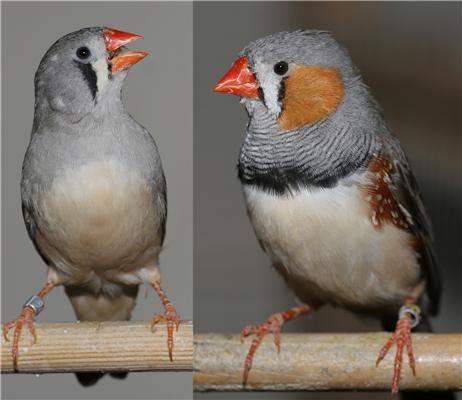
The hatching order of birds influences how they behave in adult life according to research from the Lancaster Environment Centre. Dr Ian Hartley and Dr Mark Mainwaring (LEC) are the authors of the study in Animal Behaviour, which looked at how the birds’ behaviour was affected by the way their parents cared for them as hatchlings.

They found that the youngest members of zebra finch broods are more adventurous than their older siblings in adult life.

Dr Hartley said that the study showed for the first time that hatching order influences birds’ “behavioural repertoires” in adulthood.

Hatching eggs over a period of time, rather than all at once, is known as “hatching asynchrony” and occurs when eggs are incubated as soon as they are laid. For a zebra finch, this means that birds born up to four days apart can share the same nest and must compete for food.

The researchers experimentally controlled hatching synchrony within clutches, so that some clutches hatched simultaneously, while others hatched over a period of days. They then tested the behaviour of over one hundred offspring as adults. They found the youngest birds from asynchronously hatched clutches explored their environment more widely.

They measured how explorative the zebra finches were by recording how many times they visited bird feeders within an unfamiliar test aviary. They found that the youngest offspring in a brood approached the feeders significantly more often than their peers within a 30 minute period.

Researchers wanted to know how the method of rearing affected the behaviour of offspring beyond the nest, once they were living as independent adult birds. The results have implications for understanding how environmental stability might influence behaviours, and how flexible animals might be at coping with environmental change.

Journal Reference:

1.Mark C. Mainwaring, Ian R. Hartley. Hatching asynchrony and offspring sex influence the subsequent exploratory behaviour of zebra finches. Animal Behaviour, 2012; DOI: 10.1016/j.anbehav.2012.10.009

http://www.sciencedaily.com/releases/2012/12/121207094343.htm

The brain’s natural valium

sn-sleep

Hitting the wall in the middle of a busy work day is nothing unusual, and a caffeine jolt is all it takes to snap most of us back into action. But people with certain sleep disorders battle a powerful urge to doze throughout the day, even after sleeping 10 hours or more at night. For them, caffeine doesn’t touch the problem, and more potent prescription stimulants aren’t much better. Now, a study with a small group of patients suggests that their condition may have a surprising source: a naturally occurring compound that works on the brain much like the key ingredients in chill pills such as Valium and Xanax.

The condition is known as primary hypersomnia, and it differs from the better known sleep disorder narcolepsy in that patients tend to have more persistent daytime sleepiness instead of sudden “sleep attacks.” The unknown cause and lack of treatment for primary hypersomnia has long frustrated David Rye, a neurologist at Emory University in Atlanta. “A third of our patients are on disability,” he says, “and these are 20- and 30-year-old people.”

Rye and colleagues began the new study with a hunch about what was going on. Several drugs used to treat insomnia promote sleep by targeting receptors for GABA, a neurotransmitter that dampens neural activity. Rye hypothesized that his hypersomnia patients might have some unknown compound in their brains that does something similar, enhancing the activity of so-called GABAA receptors. To try to find this mystery compound, he and his colleagues performed spinal taps on 32 hypersomnia patients and collected cerebrospinal fluid (CSF), the liquid that bathes and insulates the brain and spinal cord. Then they added the patients’ CSF to cells genetically engineered to produce GABAA receptors, and looked for tiny electric currents that would indicate that the receptors had been activated.

In that first pass, nothing happened. However, when the researchers added the CSF and a bit of GABA to the cells, they saw an electrical response that was nearly twice as big as that caused by GABA alone. All of this suggests that the patients’ CSF doesn’t activate GABAA receptors directly, but it does make the receptors almost twice as sensitive to GABA, the researchers report today in Science Translational Medicine. This effect is similar to that of drugs called benzodiazepines, the active ingredients in antianxiety drugs such as Valium. It did not occur when the researchers treated the cells with CSF from people with normal sleep patterns.

Follow-up experiments suggested that the soporific compound in the patients’ CSF is a peptide or small protein, presumably made by the brain, but otherwise its identity remains a mystery.

The idea that endogenous benzodiazepinelike compounds could cause hypersomnia was proposed in the early 1990s by Elio Lugaresi, a pioneering Italian sleep clinician, says Clifford Saper, a neuroscientist at Harvard Medical School in Boston. But several of Lugaresi’s patients later turned out to be taking benzodiazepines, which undermined his argument, and the idea fell out of favor. Saper says the new work makes a “pretty strong case.”

Based on these results, Rye and his colleagues designed a pilot study with seven patients using a drug called flumazenil, which counteracts benzodiazepines and is often used to treat people who overdose on those drugs. After an injection of flumazenil, the patients improved to near-normal levels on several measures of alertness and vigilance, the researchers report. Rye says these effects lasted up to a couple hours.

In hopes of longer-lasting benefits, the researchers persuaded the pharmaceutical company Hoffmann-La Roche, which makes the drug, to donate a powdered form that can be incorporated into dissolvable tablets taken under the tongue and a cream applied to the skin. One 30-something patient has been taking these formulations for 4 years and has improved dramatically, the researchers report in the paper. She has resumed her career as an attorney, from which her hypersomnia had forced her to take a leave of absence.

The findings are “certainly provocative,” Saper says, although they’ll have to be replicated in a larger, double-blind trial to be truly convincing.

Even so, says Phyllis Zee, a neurologist at Northwestern University in Evanston, Illinois: “This gives us a new window into thinking about treatments” for primary hypersomnia. “These patients don’t respond well to stimulants,” Zee says, so a better strategy may be to inhibit the sleep-promoting effects of GABA—or as Rye puts it, releasing the parking brake instead of pressing the accelerator.

The next steps are clear, Rye says: Identify the mystery compound, figure out a faster way to detect it, and conduct a larger clinical trial to test the benefits of flumazenil. However, the researchers first need someone to fund such a study. So far, Rye says, they’ve gotten no takers.

http://news.sciencemag.org/sciencenow/2012/11/putting-themselves-to-sleep.html

Changes in the anterior insula of hte brain may make us more trusting as we age

sn-trustworthiness

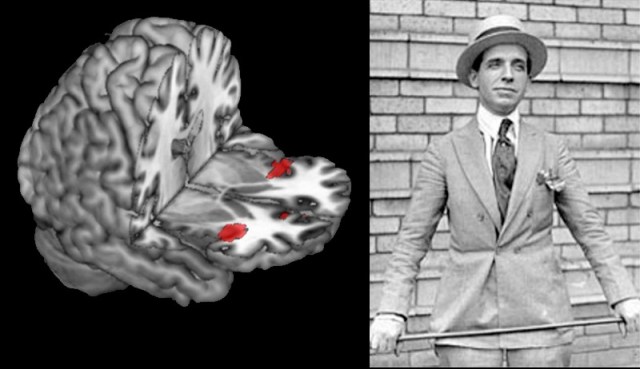
Despite long experience with the ways of the world, older people are especially vulnerable to fraud. According to the Federal Trade Commission (FTC), up to 80% of scam victims are over 65. One explanation may lie in a brain region that serves as a built-in crook detector. Called the anterior insula, this structure—which fires up in response to the face of an unsavory character—is less active in older people, possibly making them less cagey than younger folks, a new study finds.

Both FTC and the Federal Bureau of Investigation have found that older people are easy marks due in part to their tendency to accentuate the positive. According to social neuroscientist Shelley Taylor of the University of California, Los Angeles, research backs up the idea that older people can put a positive spin on things—emotionally charged pictures, for example, and playing virtual games in which they risk the loss of money. “Older people are good at regulating their emotions, seeing things in a positive light, and not overreacting to everyday problems,” she says. But this trait may make them less wary.

To see if older people really are less able to spot a shyster, Taylor and colleagues showed photos of faces considered trustworthy, neutral, or untrustworthy to a group of 119 older adults (ages 55 to 84) and 24 younger adults (ages 20 to 42). Signs of untrustworthiness include averted eyes; an insincere smile that doesn’t reach the eyes; a smug, smirky mouth; and a backward tilt to the head. The participants were asked to rate each face on a scale from -3 (very untrustworthy) to 3 (very trustworthy).

In the study, appearing in the Proceedings of the National Academy of Sciences, the “untrustworthy” faces were perceived as significantly more trustworthy by the older subjects than by the younger ones. The researchers then performed the same test on a different set of volunteers, this time imaging their brains during the process, to look for differences in brain activity between the age groups. In the younger subjects, when asked to judge whether the faces were trustworthy, the anterior insula became active; the activity increased at the sight of an untrustworthy face. The older people, however, showed little or no activation.

Taylor explains that the insula’s job is to collect information not about others but about one’s own body—sensing feelings, including “gut instincts”—and present that information to the rest of the brain. “It’s a warning bell that doesn’t seem to work as well in older people.” By habitually seeing the world in a positive light, older people may be overriding this warning signal, she says. “It looks like the brain is conspiring with what older people do naturally.”

Whether the insula activates in response to non-facial cues, such as telephone scams (a particular problem for older people), remains unclear, says Taylor, since the study was limited to faces.

The new study is the first to show a characteristic pattern of brain activation in a “social” situation involving the assessment of another person’s trustworthiness, says psychologist Lisbeth Nielsen of the National Institute on Aging (NIA) in Bethesda, Maryland. (Though NIA funded the project, Nielsen was not involved in the study.)

A question to be addressed in future research, she says, is whether decreased activity in the insula is the cause or the effect of older peoples’ more positive outlook. “It may be that older people engage with the world in a certain way and this is reflected in the brain activity.”

If so, she adds, older people could work on becoming more cautious. For example, they could be taught to look out for the facial signs of untrustworthiness. “Just because the insula isn’t being activated doesn’t mean it can’t be.”

http://news.sciencemag.org/sciencenow/2012/12/why-old-people-get-scammed.html?ref=hp