New research shows molecular mechanism by which neuronal projections can regenerate after injury

The mechanisms that drive axon regeneration after central nervous system (CNS) injury or disease are proposed to recapitulate, at least in part, the developmental axon growth pathways. This hypothesis is bolstered by a new study by O’Donovan et al. showing that activation of a B-RAF kinase signaling pathway is sufficient to promote robust axon growth not only during development but also after injury.

B-RAF was previously shown to be essential for developmental axon growth but it was not known if additional signaling pathways are required. In this study, the authors demonstrate that activation of B-RAF alone is sufficient to promote sensory axon growth during development. Using a conditional B-RAF gain-of-function mouse model, the authors elegantly prove that B-RAF has a cell-autonomous role in the developmental axon growth program. Notably, activated B-RAF promoted overgrowth of embryonic sensory axons projecting centrally in the spinal cord, suggesting that this pathway may normally be quiescent in central axons.

Could activated B-RAF also enhance axon regeneration in the adult central nervous system? The authors found that activated B-RAF not only enabled sensory axon growth into the spinal cord after spinal injury, but also promoted regrowth of axons projecting in the optic nerve. Regeneration in the injured CNS is prevented by both the poor intrinsic regrowth capacity of axons and by inhibitory factors in the tissue environment. Importantly, the B-RAF–activated signaling growth program was insensitive to this repulsive environment.

Interestingly, the authors find that B-RAF synergizes with the PI3-kinase–mTOR pathway, which also functions downstream of growth factors. This opens the possibility that combinatorial approaches that integrate these two pathways may heighten regenerative capacity.

This in vivo study significantly advances the understanding of the role of MAP kinases in axon growth and suggests that reactivation of the B-RAF pathway may be exploited to promote axon regeneration in the injured central nervous system. An exciting future avenue will be to determine the downstream mechanisms controlled by B-RAF.

O’Donovan, K.J., et al. 2014. J. Exp. Med. doi:10.1084/jem.20131780.

http://jem.rupress.org/content/211/5/746.1.long

New research shows that women who never sunbathe are twice as likely to die than those who do so regularly

Researchers at the Karolinska Institute, Sweden, say guidelines that advise people to stay out of the sun unless wearing sunscreen may be harmful, particularly in northern countries which have long, cold winters.

Exposure to ultraviolet radiation from sunlight is often cited as a cause of skin melanoma (malignant tumour of melanocytes) and avoiding overexposure to the sun to prevent all types of skin cancer is recommended by health authorities.

But the new study, which followed nearly 30000 women over 20 years, suggests that women who stay out of the sun are at increased risk of melanomas and are twice as likely to die from any cause, including cancer.

It is thought that a lack of vitamin D may be to blame. Vitamin D is created in the body through exposure to sunshine and a deficiency is known to increase the risk of diabetes, TB, multiple sclerosis and rickets.

Previous studies showed that vitamin D can increase survival rates for women with breast cancer while deficiencies can signal prostate cancer in men.

The study looked at 29518 Swedish women who were recruited from 1990 to 1992 and asked to monitor their sunbathing habits.

After 20 years there had been 2545 deaths and it was found that women who never sunbathed were twice as likely to have died from any cause.

Women who sunbathed in the mild Swedish summer were also 10% less likely to die from skin cancer, although those who sunbathed abroad in sunnier countries were twice as likely to die from melanoma.

Yinka Ebo, senior health information officer at Cancer Research UK, said striking a balance was important.

“The reasons behind higher death rates in women with lower sun exposure are unexplained . overexposure to UV radiation from the sun or sunbeds is the main cause of skin cancer.”

http://www.timeslive.co.za/thetimes/2014/05/09/avoiding-sunshine-could-kill-you-study-finds

Thanks to Kebmodee for bringing this to the attention of the It’s Interesting community.

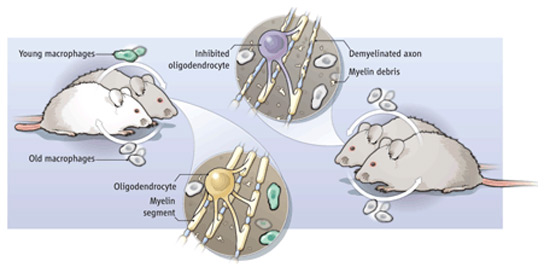
New research shows that blood from young mice reverses aging in brain and muscle

In a trio of studies published Sunday, scientists reported that they reversed aging in the muscles and brains of old mice — simply by running the blood of young mice through their veins.

The papers, from two independent groups in Cambridge and California, used different approaches to begin to unravel the rejuvenating effects of young animals’ blood, in the hopes of eventually developing a therapy that could be tested in people.

Researchers at Harvard University administered a protein found in young blood to older mice, and found that treated mice could run longer on a treadmill and had more branching blood vessels in their brains than untreated mice. A group led by a University of California, San Francisco researcher identified a molecular switch in a memory center of the brain that appears to be turned on by blood from young mice.

“These are the tissues that are really affected by advancing age. Changes in these tissues are responsible for the changes that people worry about the most — loss of cognition and loss of independent function,” said Amy Wagers, a professor of stem cell and regenerative biology at Harvard University involved in two of the studies.

Wagers said many questions remain about the mechanism of the protein and what the best therapeutic strategy might be, but she is already working to commercialize the protein discovery. The same substance is found in human blood.

Outside scientists cautioned that the findings are limited to one strain of mice and that it is not yet clear that something so simple would have dramatic anti-aging effects in people.

The new studies build on a decade of research that showed that young blood can have a rejuvenating effect on older mice. When scientists stitched together the circulatory systems of pairs of old and young mice, in a procedure called parabiosis, they found beneficial effects on the cells of the spinal cord, muscles, brain, and liver of the older animals. The next question was why — which of the many substances floating around in blood were responsible for the changes, and how did it work?

Last year, Wagers and another Harvard stem cell scientist, Dr. Richard T. Lee, found that a protein called GDF11 could cause a mouse heart thickened with age to revert to a youthful state. No one knew, however, whether the effect was specific to the heart, or would apply to aging in other tissues. Two of the new papers, published online by the journal Science, extend that work to the mouse brain and muscle.

In one study, Wagers and colleagues first connected the blood vessels of old and young mice. They measured profound changes to muscle stem cells in the older mice that made the cells appear more youthful. There were also changes to the structure of muscle. Next, they injected the protein that had been shown to rejuvenate hearts into the older mice. Although some individual mice did not change much, on average, the treated mice could run nearly twice as long on a treadmill as older mice not given the protein. The protein had no effect when injected into younger mice.

In a second study, Dr. Lee Rubin, director of translational medicine at the Harvard Stem Cell Institute, found that after parabiosis, the older mice had an increase in the branching network of blood vessels in the brain and in the rate of creation of new brain cells. Treated mice were more sensitive to changes in smell, suggesting the new neurons had an effect on their abilities. The GDF11 protein alone resulted in similar structural changes.

Wagers said that she has begun working with Atlas Venture, a venture capital firm based in Cambridge, to come up with a strategy to turn the insights about GDF11 into potential treatments that could be tested in people.

David Harrison, an aging researcher at Jackson Laboratory, a nonprofit research organization based in Bar Harbor, Maine, who was not involved in the research, said that an important caveat about the research is that it was done on a particular strain of mouse that is inbred. It will be important, he said, to test the protein’s effect in a more genetically diverse population of mice before thinking about extending the work to clinical trials.

Thomas Rando, a professor of neurology at Stanford University School of Medicine who pioneered using the parabiosis technique to study aging, said it is important to try and understand how young blood has its potent effects. But he said it seems very unlikely, given how complex aging is, that reversing it will depend on a single pathway.

“My answer always was and always will be there’s no way there’s a factor,” Rando said. “There are going to be hundreds of factors.”

In the third study published in the journal Nature Medicine, researchers from the University of California, San Francisco and Stanford used parabiosis to search for changes in gene activity in the brain that might help point to how young blood had its effects. They found changes in the activity of genes involved in the connectivity of brain cells in the hippocampus, a memory center.

Instead of using a specific protein, the researchers then gave older mice repeated transfusions of blood from young mice and found that the older animals improved on specific age-related memory tasks, such as locating an underwater platform and remembering an environment where they had experienced an unpleasant foot shock.

Saul Villeda, a UCSF faculty fellow who led the work, said that the results of the three studies reinforce one another, but they differ in their approach.

“I’m really interested to see whether GDF11 accounts for everything, or whether it’s going to be a combination of factors that together that has the full effect,” Villeda said.

All the researchers warned that people hoping to reverse aging shouldn’t get any wild ideas about infusing themselves with young blood, although they acknowledged making their share of vampire jokes.

“I am the oldest member of the team here, and I personally understand the sentiment for patients,” Rubin said. But he still wouldn’t try it.

Written by Carolyn Y. Johnson, who can be reached at cjohnson@globe.com. Follow her on Twitter @carolynyjohnson.

http://www.bostonglobe.com/news/science/2014/05/04/blood-from-young-mice-reverses-aging-brain-muscles/iepDMMf7wrLJy6WgXqpdIJ/story.html?rss_id=Top-GNP&google_editors_picks=true

Thanks to Da Brayn for bringing this to the attention of the It’s Interesting community

What I’ve Learned: Sol Snyder


Sol Snyder, Distinguished Service Professor of Neuroscience, Pharmacology and Psychiatry, School of Medicine

Growing up, I never had any strong interest in science. I did well in lots of things in high school. I liked reading philosophy and things like that, but being a philosopher is not a fit job for a nice Jewish boy.

This was in the mid-1950s, and many of my friends were going into engineering, preparatory to joining the then prominent military industrial complex. Others were going to be doctors, so I got the idea that maybe I’d be a psychiatrist. I didn’t have any special affinity for medicine or desire to cast out the lepers or heal mankind.

I was always reading things. My father valued education. He wasn’t a big advice giver, but he … had a lot of integrity. What was important to him was doing the right thing. And he had great respect for the intellectual life and science.

My father’s professional life commenced in 1935 as the 10th employee of what became the NSA. He led a team that broke one of the principal Japanese codes. At the end of World War II, computers were invented, and, if you think about it, what could be the best entity to take advantage of computers than NSA, with its mission of sorting gibberish and looking for patterns. So my father was assigned to look at these new machines and see if they would be helpful. He led the computer installations at NSA.

Summers in college I worked in the NSA. My father taught me to program computers in machine language. Computers were a big influence on me.

I learned at the NSA about keeping secrets. What is top secret, what is need-to-know—that is one of the things you learn in the business. You don’t talk to the guy at the next desk even if you’re working on the same project. If that person doesn’t need to know, you just shut up.

In medical school, I started working at the NIH in Bethesda during the summers and elective periods, largely because the only thing I really did well up to that time was play the classical guitar and one of my guitar students was an NIH researcher. In high school I thought I might go the conservatory route, but that’s even less fitting for a nice Jewish boy than being a philosopher.

It was through my contacts at NIH that I was able to get a position working with future Nobel Prize winner Julius Axelrod. Julie was a wonderful mentor who did research on drugs and neurotransmitters. Working with him was inspirational. I just adored it.

What was notable about Julie was his great creativity, always coming up with original ideas. Even though he was an eminent scientist, he didn’t have a regular office. He just had a desk in a lab. He did experiments with his own two hands every day.

Philosophically, Julie emphasized you go where the data takes you. Don’t worry that you’re an expert in enzyme X and so should focus on that. If the data point to enzyme Y, go for it. Do what’s exciting.

My very first project with Julie was studying the disposition of histamine. I thought I had found that histamine had been converted into a novel product that looked really interesting, and I was wrong. I missed the true product because we separated the chemicals on paper and discarded the radioactivity at the bottom, throwing away the real McCoy. Another lab at Yale found it, led, remarkably, by a close friend since kindergarten. My humiliation didn’t last very long. I learned not to be so sloppy, to take greater care, and, most important, to explore peculiar results.

How does one pick research directions? You can go where it’s “hot,” but there you’re competing with 300 other people, and everyone can make only incremental changes. But if you follow Julie Axelrod’s rules and you don’t worry about what’s hot, or what other people are doing—just go where your data are taking you—then you have a better chance of finding something that nobody else had found before.

With the discovery of the opiate receptor, I was fortunate to launch a new field: molecular identification of neurotransmitter receptors. Later we discovered that the gas nitrous oxide is a neurotransmitter.

I’m a klutz. I can’t hammer a nail. So for the technical side, like dissecting brains to look at different regions, I enlisted friends. I learned to collaborate, a key element in so many discoveries.

Johns Hopkins has always been a collegial place. People are just friendly and interact with each other. This tradition goes back to the founding of the medical school, permeating the school’s governance as well as research. We tend to be more productive than faculty at other schools, where one gets ahead by sticking an ice pick in the backs of colleagues.

One of my heroes was my guitar teacher, Sophocles Papas, Andrés Segovia’s best friend. Sophocles was an important influence in my life, and we stayed close until he died in his 90s. In a couple of years after commencing lessons, I was giving recitals, all thanks to him. Like Julie, Sophocles emphasized innovative short cuts to creativity.

I’ve remained involved with music. I’m the longest-serving trustee on the Baltimore Symphony Orchestra, chairing for many years its music committee. Trustees of arts organizations are typically businesspeople selected for their fundraising acumen. But the person who nominated me reportedly commented, I’d like to propose something radical: I’d like to propose a trustee who cares about music.

Most notable about psychiatry is that the major drugs—antipsychotics for schizophrenia, antidepressants, and anti-anxiety drugs—were all discovered in the mid-1950s. Subsequent tweaking has enhanced potency and diminished side effects, but there have been no major breakthroughs. No new class of drugs since 1958—rather frustrating.

As biomedical science advances, especially with the dawn of molecular biology, our power to innovate is just dazzling. Today’s students take all of this for granted, but those of us who have been doing research for several decades are daily amazed by our abilities to probe the mysteries of life.

The logic of nature is elegant and straightforward. The more we learn about how the body works, the more we are amazed by its beauty and inherent simplicity.

One of my pet peeves is that the very power of modern science leads journal and grant reviewers to expect every “i” dotted and every “t” crossed. Because of this, four years or more of work go into each scientific manuscript. Then, editors and reviewers of journals are so picayune that revising a paper consumes another year.

Now let’s consider the poor post­doctoral fellow or graduate student. To move forward in his or her career requires at least one major publication—a five-year enterprise. If you only have one shot on goal, one paper in five years, your chances of success shrivel. The duration of PhD training and postdoctoral training is getting so long that from the entry point at graduate school to the time you’re out looking for a job as an assistant professor is easily 12, 15 years. Well, that is ridiculous. If you got paid $10 million at the end of this road, that would be one thing, but scientists earn less than most other professionals. We’re deterring the young smart people from going into science.

Biomedical researchers don’t work in a vacuum. They work with grad students and postdoctoral fellows, so being a good mentor is key to being a good scientist. Keep your students well motivated and happy. Have them feel that they are good human beings, and they will do better science.

The most important thing is that you value the integrity of each person. I ask my students all the time, What do you think? And this discussion turns into minor league psychotherapy. Ah, you think that? Tell me more. Tell me more.

The “stupidest” of the students here are smarter than me. It’s a pleasure to watch them emerge.

I see my life as taking care of other people. Although I didn’t go to medical school with any intelligent motivation, once I did, I loved being a doctor and trying to help people. And I love being a psychiatrist and trying to understand people, and I try to carry that into everything I do.

In medical research, all of us want to find the causes and cures for diseases. I haven’t found the cause of any disease, although with Huntington’s disease, we are making inroads. And, of course, being a pharmacologist, my métier is discovering drugs and better treatments.

My secret? I come to work every day, and I keep my own calendar. That way I have free time to just wander around the lab and talk to the boys and girls and ask them how it’s going. That’s what makes me happy.

Sol Snyder joined Johns Hopkins in 1965 as an assistant resident in Psychiatry and would later become the youngest full professor in JHU history. In 1978, he received the Albert Lasker Basic Medical Research Award for his role in discovering the brain’s opiate receptors. In 1980, he founded the School of Medicine’s Department of Neuroscience, which in 2006 was renamed the Solomon H. Snyder Department of Neuroscience.

http://hub.jhu.edu/gazette/2014/january-february/what-ive-learned-sol-snyder

http://en.wikipedia.org/wiki/Solomon_H._Snyder

World’s longest-running science experiment finally ends.

The world’s longest-running laboratory experiment has finally delivered a result – eight months after the man who patiently watched over it unrewarded for five decades died.

Set up in the 1920s to demonstrate to students that objects that appear solid can flow like liquids, the pitch drop experiment at the University of Queensland has captivated many who had waited more than 13 years for the latest globule of the tar-like substance to form and fall.

Pitch is a material hard enough to shatter when hit by a hammer. However put a pile of it in a funnel and the pressure generated from being squeezed through the narrow mouth makes it flow like liquid. Albeit slowly.

To put things in perspective: Australia is moving north at six centimetres a year due to continental drift. The pitch in this experiment is moving 10 times slower than that.

On Thursday, the ninth dollop to fall in 83 years touched down. Until last week, no one had ever seen one land.
Similarly, in 1988, he knew a drop was close, but it happened in the five minutes when he left the room to get a cup of tea.

By 2000 there was a webcam pointed at the pitch. Although in England, Professor Mainstone knew he could watch it live or have it recorded. However, a tropical storm caused a 20 minute power outage right when the pitch landed.

Professor Mainstone died after suffering a stroke last August, aged 78, just months before the ninth blob of pitch fell.

Current custodian Andrew White said given the amount of pitch yet to land in the beaker, the experiment could run for at least another 80 years. He said if the pitch continued to drop at the current rate, the next dollop to land could coincide with the centenary of the experiment in 2027.

Physicist John Mainstone missed all three pitch drops that took place during his custodianship. Having retrieved the experiment from the back of a cupboard, he watched over it for 50 years.

Professor Mainstone once devoted an entire weekend to watching the pitch in 1977 – only to go home exhausted and miss the event by a day.

The experiment has been referenced in popular culture, getting a mention in Nick Earls’ book Perfect Skin. It is recognised by Guinness World Records as the longest-running laboratory experiment, and in 2005 it won an Ig Nobel Prize – “for research that makes you people laugh and think”.

Professor White, a quantum physicist who describes himself as just “four pitch drops old”, thinks the experiment’s appeal is in its touchstone qualities.

“It gives you a connection to deep time that you don’t get in your normal lifetime,” he said.

“In that beaker is the pitch drop from before you were born, from before your parents were born and for some younger people, the pitch drop from before their grandparents were born.”

The experiment was set up in 1927 by Thomas Parnell, the founding professor of physics at Queensland University.

Between 1930 and 1988 the pitch drops fell on average every eight years. Professor White said the drops took longer to form and fall after air-conditioning was installed in the university in the 1980s. They now land, slightly larger, in the beaker every 13 years or so.

A common household material a hundred years ago, pitch was used to waterproof containers including boats and coffins.

Pitch is a viscous elastic material, meaning it can behave either as a solid or a liquid depending on the conditions. A more familiar viscous material is toothpaste – it flows when under pressure. But on a toothbrush it can be held upside down and it won’t flow.

The experiment has delivered a published scientific result. After seven drops, scientists calculated the viscosity of pitch in a 1984 paper published in the Euro-pean Journal of Physics. They found it was 230 billion times that of water.

“It’s hardly a high-yield experiment and we could probably have got that data more quickly in other ways,” Professor White admitted. “But the real value of this is that it gets people to think about the world in a different way.”

http://www.smh.com.au/technology/sci-tech/pitch-err-this-worlds-longestrunning-experiment-finally-drops-20140423-zqy9g.html

Protecting new neurons reduces depression caused by stress, and may lead to a new class of molecules to treat depression.

Scientists probing the link between depression and a hormone that controls hunger have found that the hormone’s antidepressant activity is due to its ability to protect newborn neurons in a part of the brain that controls mood, memory, and complex eating behaviors. Moreover, the researchers also showed that a new class of neuroprotective molecules achieves the same effect by working in the same part of the brain, and may thus represent a powerful new approach for treating depression.

“Despite the availability of many antidepressant drugs and other therapeutic approaches, major depression remains very difficult to treat,” says Andrew Pieper, associate professor of psychiatry and neurology at the University of Iowa Carver College of Medicine and Department of Veterans Affairs, and co-senior author of the study.

In the new study, Pieper and colleagues from University of Texas Southwestern Medical Center led by Jeffrey Zigman, associate professor of internal medicine and psychiatry at UT Southwestern, focused on understanding the relationship between depression, the gut hormone ghrelin, and the survival of newborn neurons in the hippocampus, the brain region involved in mood, memory, and eating behaviors.

“Not only did we demonstrate that the P7C3 compounds were able to block the exaggerated stress-induced depression experienced by mice lacking ghrelin receptors, but we also showed that a more active P7C3 analog was able to complement the antidepressant effect of ghrelin in normal mice, increasing the protection against depression caused by chronic stress in these animals,” Zigman explains.

“The P7C3 compounds showed potent antidepressant activity that was based on their neurogenesis-promoting properties,” Pieper adds. “Another exciting finding was that our experiments showed that the highly active P7C3 analog acted more rapidly and was more effective [at enhancing neurogenesis] than a wide range of currently available antidepressant drugs.”

The findings suggest that P7C3-based compounds may represent a new approach for treating depression. Drugs based on P7C3 might be particularly helpful for treating depression associated with chronic stress and depression associated with a reduced response to ghrelin activity, which may occur in conditions such as obesity and anorexia nervosa.

Future studies, including clinical trials, will be needed to investigate whether the findings are applicable to other forms of depression, and determine whether the P7C3 class will have antidepressant effects in people with major depression.

The hippocampus is one of the few regions in the adult brain where new neurons are continually produced – a process known as neurogenesis. Certain neurological diseases, including depression, interfere with neurogenesis by causing death of these new neurons, leading to a net decrease in the number of new neurons produced in the hippocampus.

Ghrelin, which is produced mainly by the stomach and is best known for its ability to stimulate appetite, also acts as a natural antidepressant. During chronic stress, ghrelin levels rise and limit the severity of depression caused by long-term stress. When mice that are unable to respond to ghrelin experience chronic stress they have more severe depression than normal mice.

In the new study, Pieper and Zigman’s team showed that disrupted neurogenesis is a contributing cause of depression induced by chronic stress, and that ghrelin’s antidepressant effect works through the hormone’s ability to enhance neurogenesis in the hippocampus. Specifically, ghrelin helps block the death of these newborn neurons that otherwise occurs with depression-inducing stress. Importantly, the study also shows that the new “P7C3-class” of neuroprotective compounds, which bolster neurogenesis in the hippocampus, are powerful, fast-acting antidepressants in an animal model of stress-induced depression. The results were published online April 22 in the journal Molecular Psychiatry.

Potential for new antidepressant drugs

The neuroprotective compounds tested in the study were discovered about eight years ago by Pieper, then at UT Southwestern Medical Center, and colleagues there, including Steven McKnight and Joseph Ready. The root compound, known as P7C3, and its analogs protect newborn neurons from cell death, leading to an overall increase in neurogenesis. These compounds have already shown promising neuroprotective effects in models of neurodegenerative disease, including Parkinson’s disease, amyotrophic lateral sclerosis (ALS), and traumatic brain injury. In the new study, the team investigated whether the neuroprotective P7C3 compounds would reduce depression in mice exposed to chronic stress, by enhancing neurogenesis in the hippocampus.

http://now.uiowa.edu/2014/04/protecting-new-neurons-reduces-depression-caused-stress

Boosting Excess Neuron Activity Builds Resilience In Mice Vulnerable To Depression

A new study has found that activating natural resilience in the brain could reduce susceptibility for stress in mice, and potentially humans.

Depressive behaviors in mice are often linked to “out-of-balance” neuron activity in the brain’s reward circuit. Suppressing or stopping this hyperactive neuron activity was typically thought to treat this susceptibility to depression or anxiety — but the new study has found quite the opposite.

“To our surprise, neurons in this circuit harbor their own self-tuning, homeostatic mechanism of natural resilience,” Ming-Hu Han of the Icahn School of Medicine at Mount Sinai in New York City, explained in a press release. What this means is that instead of suppressing this excessive neuron activity, boosting it provided a self-stabilizing response, re-establishing balance and producing an antidepressant-like effect.

The mice that were once vulnerable to being anxious, listless, depressed or withdrawn after socially stressful experiences stopped exhibiting these behaviors after their neuron activity received a boost. “As we get to the bottom of a mystery that has perplexed the field for more than a decade, the story takes an unexpected twist that may hold clues to future antidepressants that would at through this counterintuitive resilience mechanism,” Dr. Thomas Insel, NIMH Director, said in the press release.

In susceptible mice, neurons that secrete dopamine — a feel-good hormone — from a reward circuit area called the ventral tegmental area (VTA) become unusually hyperactive. This hyperaction was much higher in mice that were resilient to stress, “even though they were spared the runaway dopamine activity and depression-related behaviors,” the press release reads. Using this logic, the susceptible mice just needed a boost in activation in these neurons to produce resilience.

What is interesting about this study is that it points to the power of the body and brain’s self-correcting prowess. “Homeostatic mechanisms finely regulate other critical components of physiology required for survival — blood glucose and oxygen, body temperature, blood pressure,” Lois Winsky, chief of the NIMH Molecular, Cellular, and Genomic Neuroscience Research Branch, said in the press release. “Similar mechanisms appear to also maintain excitatory balance in brain cells. This study shows how they may regulate circuits underlying behavior.”

http://www.medicaldaily.com/boosting-excess-neuron-activity-builds-resilience-mice-vulnerable-depression-277452

Cocaine Eats Up Brain Twice as Fast as Normal Aging

Chronic cocaine use may speed up brain aging, a new study suggests.

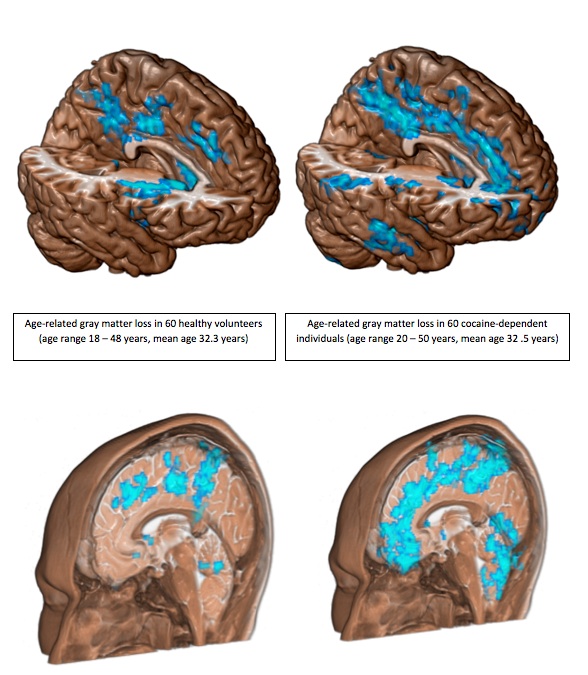
British researchers scanned the brains of 60 people with cocaine dependence and 60 people with no history of substance abuse, and found that those with cocaine dependence had greater levels of age-related loss of brain gray matter.

The cocaine users lost about 3.08 milliliters (ml) of brain volume a year, nearly twice the rate of about 1.69 ml per year seen in the healthy people, the University of Cambridge researchers said.

The increased decline in brain volume in the cocaine users was most noticeable in the prefrontal and temporal cortex, regions associated with attention, decision-making, self-regulation and memory, the investigators noted in a university news release.

“As we age, we all lose gray matter. However, what we have seen is that chronic cocaine users lose gray matter at a significantly faster rate, which could be a sign of premature aging. Our findings therefore provide new insight into why the [mental] deficits typically seen in old age have frequently been observed in middle-aged chronic users of cocaine,” Dr. Karen Ersche, of the Behavioral and Clinical Neuroscience Institute at University of Cambridge, said in the news release.

The study is published in the April 25 issue of the journal Molecular Psychiatry.

Cocaine is used by as many as 21 million people worldwide, and about 1 percent of these people become dependent on the drug, according to the United Nations Office on Drugs and Crime.

While the study doesn’t conclusively prove cocaine causes brain atrophy and other symptoms of aging, the association is cause for concern, the researchers said.

“Our findings clearly highlight the need for preventative strategies to address the risk of premature aging associated with cocaine abuse. Young people taking cocaine today need to be educated about the long-term risk of aging prematurely,” Ersche said.

However, accelerated aging also affects older adults who have abused cocaine and other drugs since early adulthood.

“Our findings shed light on the largely neglected problem of the growing number of older drug users, whose needs are not so well catered for in drug treatment services. It is timely for health care providers to understand and recognize the needs of older drug users in order to design and administer age-appropriate treatments,” Ersche said.

http://health.usnews.com/health-news/news/articles/2012/04/24/cocaine-habit-might-speed-brain-aging

University of Iowa scientists show that ingredient in green tomatoes (tomatidine) may build bigger muscles

A new study has found that a compound in green tomatoes, tomatidine, not only boosts muscle growth and strength, it protects against muscle wasting caused by illness, injury or aging. A research team at the University of Iowa found that healthy mice given supplements containing tomatidine grew bigger muscles, became stronger and could exercise longer. Even better, the mice did not gain any weight due to a corresponding loss of fat, suggesting that the compound may also have potential for treating obesity. Nice bonus.

The research team used a systems biology tool called the Connectivity Map to identify tomatidine and discovered it stimulated growth of cultured human muscle cells. (The same screening method previously identified a compound in apple peel as a muscle-boosting agent – but green tomatoes were found to be even more potent.) In fact, the team discovered that tomatidine generates changes in gene expression that are essentially opposite to the changes that occur in muscle cells when people are affected by muscle atrophy.

“Green tomatoes are safe to eat in moderation. But we don’t know how many green tomatoes a person would need to eat to get a dose of tomatidine similar to what we gave the mice,” study chief Dr. Christopher Adams said in a statement “We also don’t know if such a dose of tomatidine will be safe for people, or if it will have the same effect in people as it does in mice. We are working hard to answer these questions, hoping to find relatively simple ways that people can maintain muscle mass and function, or if necessary, regain it.”

The end goal is “science-based supplements,” or even simply incorporating tomatidine “into everyday foods to make them healthier.”

Muscle atrophy, or muscle-wasting, is a significant health issue. It can be caused by aging, injury, cancer or heart failure and makes people weak and fatigued, prohibits physical activity and predisposes them to falls and fractures. It affects more than 50 million Americans annually, including 30 million elderly.

Exercise can help but it’s not enough and is not an option for those who are ill or injured, Adams said.

The findings were published April 9 in the Journal of Biological Chemistry.

http://www.laweekly.com/squidink/2014/04/15/green-tomatoes-may-build-bigger-muscles

New research suggests that a third of patients diagnosed as vegetative may be conscious with a chance for recovery

Imagine being confined to a bed, diagnosed as “vegetative“—the doctors think you’re completely unresponsive and unaware, but they’re wrong. As many as one-third of vegetative patients are misdiagnosed, according to a new study in The Lancet. Using brain imaging techniques, researchers found signs of minimal consciousness in 13 of 42 patients who were considered vegetative. “The consequences are huge,” lead author Dr. Steven Laureys, of the Coma Science Group at the Université de Liège, tells Maclean’s. “These patients have emotions; they may feel pain; studies have shown they have a better outcome [than vegetative patients]. Distinguishing between unconscious, and a little bit conscious, is very important.”

Detecting human consciousness following brain injury remains exceedingly difficult. Vegetative patients are typically diagnosed by a bedside clinical exam, and remain “neglected” in the health care system, Laureys says. Once diagnosed, “they might not be [re-examined] for years. Nobody questions whether or not there could be something more going on.” That’s about to change.

Laureys has collaborated previously with British neuroscientist Adrian Owen, based at Western University in London, Ont., who holds the Canada Excellence Research Chair in Cognitive Neuroscience and Imaging. (Owen’s work was featured in Maclean’s in October 2013.) Together they co-authored a now-famous paper in the journal Science, in 2006, in which a 23-year-old vegetative patient was instructed to either imagine playing tennis, or moving around her house. Using functional magnetic resonance imaging, or fMRI, they saw that the patient was activating two different parts of her brain, just like healthy volunteers did. Laureys and Owen also worked together on a 2010 follow-up study, in the New England Journal of Medicine, where the same technique was used to ask a patient to answer “yes” or “no” to various questions, presenting the stunning possibility that some vegetative patients might be able to communicate.

In the new Lancet paper, Laureys used two functional brain imaging techniques, fMRI and positron emission tomography (PET), to examine 126 patients with severe brain injury: 41 of them vegetative, four locked-in (a rare condition in which patients are fully conscious and aware, yet completely paralyzed from head-to-toe), and another 81 who were minimally conscious. After finding that 13 of 42 vegetative patients showed brain activity indicating minimal consciousness, they re-examined them a year later. By then, nine of the 13 had improved, and progressed into a minimally conscious state or higher.

The mounting evidence that some vegetative patients are conscious, even minimally so, carries ethical and legal implications. Just last year, Canada’s Supreme Court ruled that doctors couldn’t unilaterally pull the plug on Hassan Rasouli, a man in a vegetative state. This work raises the possibility that one day, some patients may be able to communicate through some kind of brain-machine interface, and maybe even weigh in on their own medical treatment. For now, doctors could make better use of functional brain imaging tests to diagnose these patients, Laureys believes. Kate Bainbridge, who was one of the first vegetative patients examined by Owen, was given a scan that showed her brain lighting up in response to images of her family. Her health later improved. “I can’t say how lucky I was to have the scan,” she said in an email to Maclean’s last year. “[It] really scares me to think what would have happened if I hadn’t had it.”

https://ca.news.yahoo.com/one-third-of-vegetative-patients-may-be-conscious–study-195412300.html