Genetically Modified Mosquitos Could Eradicate Wild Populations By Only Producing Male Offspring

by Lisa Winter

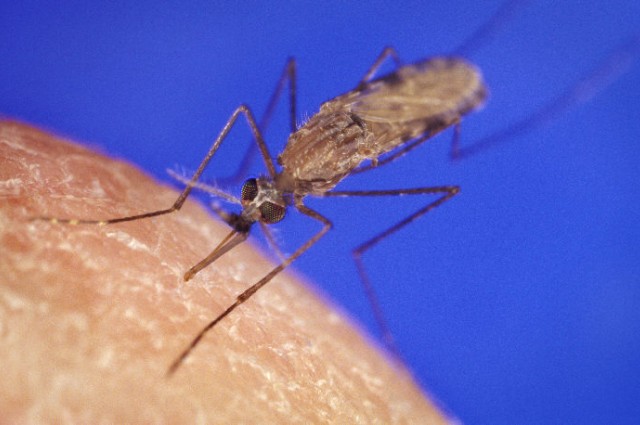
Over 200 million people are infected by malaria each year, and the majority of the 627,000 deaths per year are children younger than five. The disease is carried by mosquitos who act as vectors for the parasite. It’s only transmitted to humans by female mosquitoes, as they’re the only ones who bite. A team of researchers led by Andrea Crisanti of the Imperial College London managed to genetically modify mosquitos to produce 95% male offspring, eliminating mosquito populations along with the risk of malaria. The results of the study were published in Nature Communications.

In most species of mosquito, the females need a blood meal in order to acquire the nutrients to create viable eggs. When she does, she can lay about 200 eggs at a time in water, and up to 3,000 eggs over the course of her lifetime. About half of those offspring will be daughters, many of whom will live long enough to produce that amount of offspring also. For humans living near mosquitos carrying the parasite that causes malaria, those numbers of female mosquitos present a very real threat.

But what if the numbers could be skewed so that the sex ratio favors males, who are harmless to humans? This is exactly what Crisanti’s team set out to do with Anopheles gambiae, a species of mosquito endemic to sub-Saharan Africa, where 95% of malaria deaths occur. The researchers modified the males with the enzyme I-Ppol, which excises the X chromosome during spermatogenesis. This renders sperm that would produce daughters to be non-functional, while the sperm that will create male offspring are unaffected. As a result, about 95% of the resulting offspring are male.

Next, modified males were introduced to five caged wild-type populations. As the males mated with the females, they passed along the same mutation until it dominated the population. For four of the five populations, it took only six generations for the mosquitos to die out due to a lack of females.

“What is most promising about our results is that they are self-sustaining,” co-author Nikolai Windbichler said in a press release. “Once modified mosquitoes are introduced, males will start to produce mainly sons, and their sons will do the same, so essentially the mosquitoes carry out the work for us.”

This study was the first to successfully manipulate mosquito sex ratios, and it was done in a big way. The researchers hope that this information will be used to develop genetic mutations to be used in the wild, bringing large populations of mosquitos to their knees.

“The research is still in its early days, but I am really hopeful that this new approach could ultimately lead to a cheap and effective way to eliminate malaria from entire regions,” added lead author Roberto Galizi. “Our goal is to enable people to live freely without the threat of this deadly disease.”

Of course, while eradicating the mosquitos would be fantastic for eliminating the threat of malaria, what other affects would it have? Wouldn’t there be harsh consequences for the ecosystem? After all, mosquitos have been on the planet for about 100 million years and represent 3,500 species. As it turns out, mosquitos wouldn’t really be missed if they were to disappear (http://www.nature.com/news/2010/100721/pdf/466432a.pdf). While mosquitos can act as pollinators as well as a food source for other animals, their absence would be merely a temporary setback before another species filled the niche. Of course, there is a gamble in assuming the replacement organism would be harmless.

“Malaria is debilitating and often fatal and we need to find new ways of tackling it. We think our innovative approach is a huge step forward. For the very first time, we have been able to inhibit the production of female offspring in the laboratory and this provides a new means to eliminate the disease,” Crisanti explained.

Each year, sub-Saharan Africa loses about $12 billion in economic productivity due to malarial infections. Considering developed areas in these countries have per capita incomes of about US$1500, this would have very real implications for the quality of life for people in those areas. Eliminating that disease would also allow doctors and hospitals to address other health concerns, and the environment would likely benefit from not having to use insecticides.


http://www.iflscience.com/health-and-medicine/gm-mosquitos-could-eradicate-wild-populations-only-producing-male-offspring

Yeast from fossilized whale bones now used to make beer.

by Rebecca Cooper

Brewers have pulled yeast from pretty much everywhere to experiment with new strains — one West Coast brewery even brewed a beer using samples from the head brewer’s beard (http://www.huffingtonpost.com/2012/09/26/beard-beer-rogue-ales-yeast-john-maier_n_1917119.html) — but Lost Rhino in Ashburn may be breaking into new territory with its BoneDusters amber ale.

BoneDusters was brewed with a yeast that Lost Rhino’s Jasper Akerboom collected off a fossilized whale skeleton at the Calvert Marine Museum in Solomons, Maryland.

The collaboration came about because Akerboom, a bit of a yeast nut who handles quality assurance for Lost Rhino, is friends with Jason Osborne, a paleontologist who has donated fossilized whale skeletons to the museum.

Osborne asked Akerboom if there might be yeast present on those fossils that could be used to brew beer. Usually, yeast would not live on bone, given that it needs a sugary food source, but Akerboom decided to indulge his friend anyway.

They found a number of yeast strains on the bones, although Akerboom is pretty sure they’re more likely from the swamp where the bones were found rather than the bones themselves.

Several of the wild yeast strains flourished in Akerboom’s lab, but only one of the strains made any decent beer. The others didn’t ferment fully, making for “nasty-tasting” brews, he said.

The strain they ended up using, combined with some darker malts to create an amber ale, have yielded what Akerboom considers a tasty, well-balanced brew. The beer wasn’t made in the Belgian style, but it is “Belgian-esque,” he said, because the yeast has a slightly fruity flavor profile common in Belgian beers.

Lost Rhino plans to launch the beer June 18 at the brewery and begin distributing it to its networks after that, so it could be appearing at D.C. area bars in the next couple of weeks. A portion of the proceeds from the beer will go to Osborne’s nonprofit, Paleo Quest, which runs educational programs in the sciences.

For his part, Akerboom will keep experimenting with yeast in the lab he runs at Lost Rhino. It’s not necessarily common for a small microbrewery to have a quality assurance scientist with a Ph.D. in microbiology on staff. The Netherlands native previously isolated wild yeast from the air in Ashburn for Wild Farmwell Wheat, an “All-Virginia” beer Lost Rhino made in 2012. He now runs a yeast business on the side, and believes that focus on quality control is a big part of Lost Rhino’s consistently good beers.

“I think it adds a lot to the brewery. You have to make sure what you put in those cans is actually clean,” he said. “And you can do these kinds of projects, which keeps it fun.”

Thanks to Dr. Rajadhyaksha for bringing this to the attention of the It’s Interesting community.

http://www.bizjournals.com/washington/blog/top-shelf/2014/06/whats-the-key-ingredient-in-lost-rhino-s-newest.html?page=2

NIH Report Warns of Looming Physician-Scientist Shortage

Recently the mainstream has come to embrace the fact that the job market for Ph.D. biomedical researchers is overcrowded. According to a new report from a working group of the National Institutes of Health (NIH) Advisory Committee to the Director (ACD), the job market looks very different for physician-scientists. In fact, “[t]here may not be enough [physician-scientists] to replace those preparing to retire,” Jocelyn Kaiser reports in a ScienceInsider.

The working group analyzed data on “M.D.-Ph.D.s, M.D.s, nurses, and other researchers with clinical training” collected from an American Medical Association (AMA) survey, finding—in stark contrast to trends in the number of biomedical Ph.D. graduates—that “[t]he number of physicians conducting research has declined 5.5% since 2003 to about 13,700 in 2012.” The working group also analyzed data from NIH and AMA and found that many NIH-funded principal investigators (PIs) are in their 60s and 70s, and that the number of PIs under 60 is declining.

The data have fueled concern for the future of the physician-scientist population. The need for younger physician-scientists is getting more attention because “we’re worried that they’re [physician-scientists are] going to dry up and this is going to be a serious problem,” said working group co-chair David Ginsburg of the University of Michigan, Ann Arbor, in a call with reporters, as quoted by Kaiser.

Kaiser notes that some of the working group’s recommendations for fixing these problems echo those of the 2012 Biomedical Workforce Working Group of the ACD, led by Princeton University molecular biologist Shirley Tilghman: Enrich training programs, and give more weight to proposals from young researchers. “It also recommends creating a category for physician-scientists within the so-called kangaroo, or K99/R00, awards—two-stage awards that include a training grant and research support,” Kaiser writes.

Thanks to Dr. Lutter for bringing this to the attention of the It’s Interesting community.

http://sciencecareers.sciencemag.org/career_magazine/previous_issues/articles/2014_06_10/caredit.a1400145

New research confirms that looking angry gets people to do what you want.

by Amanda L. Chan

If you’ve ever gotten the death glare from your parent, child or S.O., you already know the results of this new study to be true.

New research in the journal Psychological Science shows that people are more likely to give in to an unfair demand when they are presented with a threatening facial expression.

For one of the experiments in the study, 870 people played a negotiation game, which involved deciding how to split $1 between two people. In each scenario, there was a “proposer,” who decided how the dollar would be split and a “responder.” However, before making the decision, the proposer was shown a video clip of the responder making either a neutral facial expression or an angry one. (Little did the study participants know, the responder was actually an actress who was instructed to portray a certain facial expression in each scenario).

In addition to viewing the facial expressions of the responder, the proposer received a written demand from the responder for either half of the amount (considered a “fair” request), or 70 percent of the amount (an “unfair” request). If the responder didn’t accept the proposer’s deal, neither party would get the money.

Researchers found an association between the offer made by the proposer and the facial expression of the responder. If the responder made an angry face and requested the 70 percent, the proposer was more likely to give the 70 percent.

Meanwhile, if the responder made an angry face and only requested the 50-50 split, this didn’t seem to affect how much the proposer offered, likely because the request was already deemed fair. (Something to consider: Because a woman actor was used for the experiment and female and male anger can be perceived differently, the results of the study apply only in the context of a woman’s angry facial expressions being able to influence giving into an unfair demand.)

http://www.huffingtonpost.com/2014/06/09/look-angry-facial-expression-demand_n_5473238.html

Fasting for three days can regenerate entire immune system, study finds

A person’s entire immune system can be rejuvenated by fasting for as little as three days as it triggers the body to start producing new white blood cells, a study suggests.

By Sarah Knapton

Fasting for as little as three days can regenerate the entire immune system, even in the elderly, scientists have found in a breakthrough described as “remarkable”.

Although fasting diets have been criticised by nutritionists for being unhealthy, new research suggests starving the body kick-starts stem cells into producing new white blood cells, which fight off infection.

Scientists at the University of Southern California say the discovery could be particularly beneficial for people suffering from damaged immune systems, such as cancer patients on chemotherapy.

It could also help the elderly whose immune system becomes less effective as they age, making it harder for them to fight off even common diseases.

The researchers say fasting “flips a regenerative switch” which prompts stem cells to create brand new white blood cells, essentially regenerating the entire immune system.

“It gives the ‘OK’ for stem cells to go ahead and begin proliferating and rebuild the entire system,” said Prof Valter Longo, Professor of Gerontology and the Biological Sciences at the University of California.

“And the good news is that the body got rid of the parts of the system that might be damaged or old, the inefficient parts, during the fasting.

“Now, if you start with a system heavily damaged by chemotherapy or ageing, fasting cycles can generate, literally, a new immune system.”

Prolonged fasting forces the body to use stores of glucose and fat but also breaks down a significant portion of white blood cells.

During each cycle of fasting, this depletion of white blood cells induces changes that trigger stem cell-based regeneration of new immune system cells.

In trials humans were asked to regularly fast for between two and four days over a six-month period.

Scientists found that prolonged fasting also reduced the enzyme PKA, which is linked to ageing and a hormone which increases cancer risk and tumour growth.

“We could not predict that prolonged fasting would have such a remarkable effect in promoting stem cell-based regeneration of the hematopoietic system,” added Prof Longo.

“When you starve, the system tries to save energy, and one of the things it can do to save energy is to recycle a lot of the immune cells that are not needed, especially those that may be damaged,” Dr Longo said.

“What we started noticing in both our human work and animal work is that the white blood cell count goes down with prolonged fasting. Then when you re-feed, the blood cells come back. So we started thinking, well, where does it come from?”

Fasting for 72 hours also protected cancer patients against the toxic impact of chemotherapy.

“While chemotherapy saves lives, it causes significant collateral damage to the immune system. The results of this study suggest that fasting may mitigate some of the harmful effects of chemotherapy,” said co-author Tanya Dorff, assistant professor of clinical medicine at the USC Norris Comprehensive Cancer Center and Hospital.

“More clinical studies are needed, and any such dietary intervention should be undertaken only under the guidance of a physician.”

“We are investigating the possibility that these effects are applicable to many different systems and organs, not just the immune system,” added Prof Longo.

However, some British experts were sceptical of the research.

Dr Graham Rook, emeritus professor of immunology at University College London, said the study sounded “improbable”.

Chris Mason, Professor of Regenerative Medicine at UCL, said: “There is some interesting data here. It sees that fasting reduces the number and size of cells and then re-feeding at 72 hours saw a rebound.

“That could be potentially useful because that is not such a long time that it would be terribly harmful to someone with cancer.

“But I think the most sensible way forward would be to synthesize this effect with drugs. I am not sure fasting is the best idea. People are better eating on a regular basis.”

Dr Longo added: “There is no evidence at all that fasting would be dangerous while there is strong evidence that it is beneficial.

“I have received emails from hundreds of cancer patients who have combined chemo with fasting, many with the assistance of the oncologists.

“Thus far the great majority have reported doing very well and only a few have reported some side effects including fainting and a temporary increase in liver markers. Clearly we need to finish the clinical trials, but it looks very promising.”

http://www.telegraph.co.uk/news/uknews/10878625/Fasting-for-three-days-can-regenerate-entire-immune-system-study-finds.html

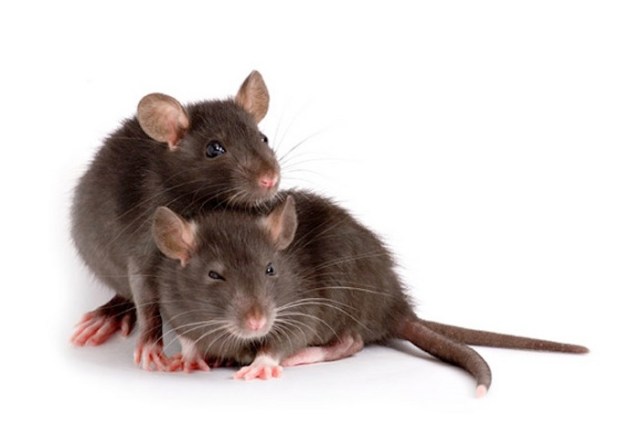
New research suggests that rats experience regret, like humans.

By Tanya Lewis

Just as humans lament not pursuing a lover or bemoan having eaten that extra slice of chocolate cake, rats may experience feelings of regret, too, new research suggests.

When rats were given the option of visiting rooms that contained different foods, and they skipped a good deal for a worse one, they glanced back at the former room, rushed through eating the snack and were more likely to tolerate longer wait times for what they considered the more desirable food , researchers found.

Furthermore, the rats’ brain activity represented the missed opportunity, suggesting the animals were, in fact, experiencing regret over their choice.

“The rat is representing the counterfactual — the ‘what might have been,'” David Redish, a neuroscientist at the University of Minnesota in Minneapolis, and senior author of the study detailed today (June 8) in the journal Nature Neuroscience.

No other studies have shown convincingly that any animal besides humans experience regret, though some studies hinted it was possible, the researchers said.

How do you define regret? You can’t exactly ask a rat if it feels regret, but even if you could, it wouldn’t be proof, just as it can be difficult to tell if a human feels regret just by asking them.

It’s important to distinguish between regret and disappointment, Redish told Live Science. Regret occurs when you make a mistake, but recognize there’s an alternate action you could have taken that would have resulted in a better outcome, he said. Disappointment happens when “the world’s just not as good as you hoped, but it’s not necessarily your fault,” he said.

To test whether rats could feel regret, Redish and his graduate student Adam Steiner designed a kind of “restaurant row” for the animals — a circular enclosure with pathways leading off it to “restaurants” with different kinds of food, which were dispensed after some delay.

As a rat passed each pathway, it heard a tone that told the animal how long it would have to wait for the food (like being told the wait time at a restaurant). Each rat had its own favorite food, such as banana or chocolate, and would wait longer to get it, Redish said. Each rat was given an hour to explore the enclosure, during which it could only move in one direction between restaurants.

If the rat passed up a good deal — for instance, bypassing a food it liked in favor of a shorter wait time — and encountered a worse deal at the next restaurant, it would glance backward at the one it passed up. Not only that, the rat rushed through eating its chosen food, much like a regretful human would, and was more likely to take a “worse deal” in the future, the researchers said.

But the rats’ behavior was only part of the story. The researchers also made electrical recordings of the rats’ brains during the task, from neurons in the orbitofrontal cortex, the part of the brain that is active in human brain scans when people feel regret. Decoding these signals allowed the researchers to “read the rat’s mind,” Redish said.

Surprisingly, when the rats were looking back at the restaurant they ultimately passed up, their brains showed a representation of entering that restaurant — not of the food they missed. The findings suggest the animals were expressing regret over their actions, rather than just disappointment, the researchers said.

If rats can feel regret, what about other animals? Redish speculates that any mammal might be capable of the feeling, because they have many of the same brain structures as rats and humans.

“Regret is something we think of as very human and very cognitive,” Redish said, but “we’re seeing that the rats are much more cognitive than we thought.”

http://www.livescience.com/46184-rats-experience-regret.html

Mice run for fun on wheels out in the wild.

By James Gorman

If an exercise wheel sits in a forest, will mice run on it?

Every once in a while, science asks a simple question and gets a straightforward answer.

In this case, yes, they will. And not only mice, but also rats, shrews, frogs and slugs.

True, the frogs did not exactly run, and the slugs probably ended up on the wheel by accident, but the mice clearly enjoyed it. That, scientists said, means that wheel-running is not a neurotic behavior found only in caged mice.

They like the wheel.

Two researchers in the Netherlands did an experiment that it seems nobody had tried before. They placed exercise wheels outdoors in a yard and in an area of dunes, and monitored the wheels with motion detectors and automatic cameras.

They were inspired by questions from animal welfare committees at universities about whether mice were really enjoying wheel-running, an activity used in all sorts of studies, or were instead like bears pacing in a cage, stressed and neurotic. Would they run on a wheel if they were free?

Now there is no doubt. Mice came to the wheels like human beings to a health club holding a spring membership sale. They made the wheels spin. They hopped on, hopped off and hopped back on.

“When I saw the first mice, I was extremely happy,” said Johanna H. Meijer at Leiden University Medical Center in the Netherlands. “I had to laugh about the results, but at the same time, I take it very seriously. It’s funny, and it’s important at the same time.”

Dr. Meijer’s day job is as a “brain electrophysiologist” studying biological rhythms in mice. She relished the chance to get out of the laboratory and study wild animals, and in a way that no one else had.

She said Konrad Lorenz, the great-grandfather of animal behavior studies, once mentioned in a letter that some of his caged rats had escaped and then returned to his garden to use running wheels placed there.

But, Dr. Meijer said, the Lorenz observation “was one sentence.”

For the experiment, the wheels were enclosed so that small animals could come and go but so that larger animals could not knock them over. Dr. Meijer set up motion sensors and automatic video cameras. Several years and 12,000 snippets of video later, she and Yuri Robbers, also a Leiden researcher, reported the results. They were released in the Proceedings of the Royal Society B.

Gene D. Block, chancellor of the University of California, Los Angeles, was not involved with the paper but knows Dr. Meijer and had seen the wheel set up in her garden. He said the study made it clear that wheel-running is “some type of rewarding behavior” and “probably not driven by stress or anxiety.”

Mice accounted for 88 percent of the wheel-running events, and spent one minute to 18 on the wheel. The other animals each accounted for less than 1 percent. Frogs, though there were very few, were seen to get on the wheel, get off and get back on.

Russell Foster, a circadian rhythm researcher at Oxford University, said he read the paper and sent it out to other scientists on behalf of the Proceedings and was delighted when peer reviews from other scientists were positive.

Marc Bekoff, a professor of ecology and evolutionary biology at the University of Colorado who is active in the animal welfare movement, said in an email that he thought the paper did show that wheel-running could be a “voluntary activity,” but that mice in labs may be doing more of it because of the stress of confinement.

“Wild bears will often pace back and forth,” he wrote, “but in captivity, the rate of doing it seems to be greatly heightened.”

As to why the mice, frogs or perhaps even slugs run, or move, on the wheel, Dr. Meijer said she thought that “there is an intrinsic motivation for animals, or should I say organisms, to be active.”

Huda Akil, co-director of the Molecular and Behavioral Neuroscience Institute at the University of Michigan, who has studied reward systems, said: “It’s not a surprise. All you have to do is watch a bunch of little kids in a playground or a park. They run and run and run.”

Dr. Akil said that in humans, running activates reward pathways in the brain, although she pointed out that there are innate differences in temperament in all sorts of animals, including humans. Rats that do not like to run can be bred. And plenty of people do all they can to avoid jogging, cycling and elliptical machines.

Presumably, the same is true of wild mice. While some were setting the wheel on fire with their exertions, others, out of camera range, may have been sprawled out on the mouse equivalent of a lounge chair, shaking their whiskers in dismay and disbelief.

Thanks to Dr. Nakamura for bringing this to the attention of the It’s Interesting community.

Scientists at Duke University say the world is on the brink of its sixth great extinction

Is the end near? Scientists at Duke University say the world is on the brink of its sixth great extinction, since certain species of plants and animals are now dying out at least 1,000 times faster than they did before humans came into existence.

The study, published Thursday in the journal Science, measured the the rate at which species are disappearing from Earth. In 1995, the researchers found that the pre-human rate of extinctions was roughly 1. Now, that rate is about 100 to 1,000.

Stuart Pimm, the study’s lead author, said habitat loss is mostly to blame for the increasing death rates. As humans continue to alter and destroy more land, animals and plants are increasingly being displaced from their natural habitats. Climate change is also a factor, he added.

“Whether we avoid it or not will depend on our actions,” Pimm warned.

Thanks to Da Brayn for bringing this to the attention of the It’s Interesting community.

http://theweek.com/article/index/262400/speedreads-earth-is-nearing-sixth-great-extinction-alarming-survey-says#axzz33DjJqxZg

Parenting Rewires the Male Brain

By Elizabeth Norton

Cultures around the world have long assumed that women are hardwired to be mothers. But a new study suggests that caring for children awakens a parenting network in the brain—even turning on some of the same circuits in men as it does in women. The research implies that the neural underpinnings of the so-called maternal instinct aren’t unique to women, or activated solely by hormones, but can be developed by anyone who chooses to be a parent.

“This is the first study to look at the way dads’ brains change with child care experience,” says Kevin Pelphrey, a neuroscientist at Yale University who was not involved with the study. “What we thought of as a purely maternal circuit can also be turned on just by being a parent—which is neat, given the way our culture is changing with respect to shared responsibility and marriage equality.”

The findings come from an investigation of two types of households in Israel: traditional families consisting of a biological mother and father, in which the mother assumed most of the caregiving duties, though the fathers were very involved; and homosexual male couples, one of whom was the biological father, who’d had the child with the help of surrogate mothers. The two-father couples had taken the babies home shortly after birth and shared caregiving responsibilities equally. All participants in the study were first-time parents.

Researchers led by Ruth Feldman, a psychologist and neuroscientist at Bar-Ilan University in Ramat Gan, Israel, visited with the families in their homes, videotaping each parent with the child and then the parents and children alone. The team, which included collaborators at the Tel Aviv Sourasky Medical Center in Israel, also took saliva samples from all parents before and after the videotaped sessions to measure oxytocin—a hormone that’s released at times of intimacy and affection and is widely considered the “trust hormone.” Within a week of the home visit, the participants underwent functional magnetic resonance imaging scanning to determine how their brains reacted to the videotapes of themselves with their infants.

The mothers, their husbands, and the homosexual father-father couples all showed the activation of what the researchers term a “parenting network” that incorporated two linked but separate pathways in the brain. One circuit encompasses evolutionarily ancient structures such as the amygdala, insula, and nucleus accumbens, which handle strong emotions, attention, vigilance, and reward. The other pathway turns up in response to learning and experience and includes parts of the prefrontal cortex and an area called the superior temporal sulcus.

In the mothers, activation was stronger in the amygdala-centered network, whereas the heterosexual fathers showed more activity in the network that’s more experience-dependent. At first glance, Feldman says, the finding would seem to suggest that mothers are more wired up to nurture, protect, and possibly worry about their children. The fathers, in contrast, might have to develop these traits through tending, communicating, and learning from their babies what various sounds mean and what the child needs.

“It’s as if the father’s amygdala can shut off when there’s a woman around,” Feldman observes. It could be assumed, she says, that this circuitry is activated only by the rush of hormones during conception, pregnancy, and childbirth.

But the brains of the homosexual couples, in which each partner was a primary caregiver, told a different story. All of these men showed activity that mirrored that of the mothers, with much higher activation in the amygdala-based network, the team reports online today in the Proceedings of the National Academy of Sciences.

This finding argues strongly that the experience of hands-on parenting, with no female mother anywhere in the picture, can configure a caregiver’s brain in the same way that pregnancy and childbirth do, Feldman says.

She adds that in the heterosexual fathers, the activation of the amygdala-based network was proportional to the amount of time they spent with the baby, though the activity wasn’t as high as in the mothers or in the two-father couples.

Feldman does not believe that the brain activity of the primary-caregiving fathers differed because they were gay. Previous imaging studies, she notes, show no difference in brain activation when homosexual and heterosexual participants viewed pictures of their loved ones.

Future studies, Pelphrey says, might focus more closely on this question. “But it’s clear that we’re all born with the circuitry to help us be sensitive caregivers, and the network can be turned up through parenting.”

http://news.sciencemag.org/brain-behavior/2014/05/parenting-rewires-male-brain

First pants worn by horse riders in Central Asia 3,000 years ago

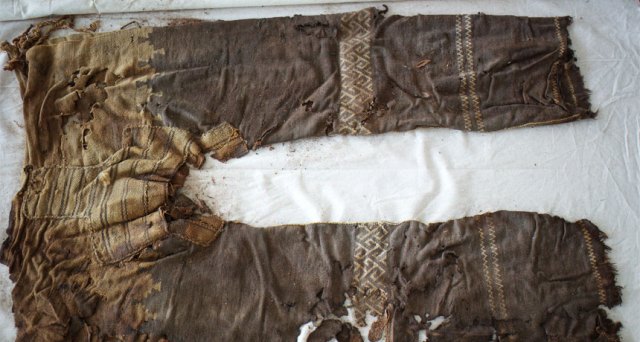
Two men whose remains were recently excavated from tombs in western China put their pants on one leg at a time, just like the rest of us. But these nomadic herders did so between 3,300 and 3,000 years ago, making their trousers the oldest known examples of this innovative apparel, a new study finds.

With straight-fitting legs and a wide crotch, the ancient wool trousers resemble modern riding pants, says a team led by archaeologists Ulrike Beck and Mayke Wagner of the German Archaeological Institute in Berlin. The discoveries, uncovered in the Yanghai graveyard in China’s Tarim Basin, support previous work suggesting that nomadic herders in Central Asia invented pants to provide bodily protection and freedom of movement for horseback journeys and mounted warfare, the scientists report May 22 in Quaternary International.

“This new paper definitely supports the idea that trousers were invented for horse riding by mobile pastoralists, and that trousers were brought to the Tarim Basin by horse-riding peoples,” remarks linguist and China authority Victor Mair of the University of Pennsylvania.

Previously, Europeans and Asians wore gowns, robes, tunics, togas or — as observed on the 5,300-year-old body of Ötzi the Iceman — a three-piece combination of loincloth and individual leggings.

A dry climate and hot summers helped preserve human corpses, clothing and other organic material in the Tarim Basin. More than 500 tombs have been excavated in a graveyard there since the early 1970s.

Earlier research on mummies from several Tarim Basin sites, led by Mair, identified a 2,600-year-old individual known as Cherchen Man who wore burgundy trousers probably made of wool. Trousers of Scythian nomads from West Asia date to roughly 2,500 years ago.

Mair suspects that horse riding began about 3,400 years ago and trouser-making came shortly thereafter in wetter regions to the north and west of the Tarim Basin. Ancient trousers from those areas are not likely to have been preserved, Mair says.

Horse riding’s origins are uncertain and could date to at least 4,000 years ago, comments archaeologist Margarita Gleba of University College London. If so, she says, “I would not be surprised if trousers appeared at least that far back.”

The two trouser-wearing men entombed at Yanghai were roughly 40 years old and had probably been warriors as well as herders, the investigators say. One man was buried with a decorated leather bridle, a wooden horse bit, a battle-ax and a leather bracer for arm protection. Among objects placed with the other body were a whip, a decorated horse tail, a bow sheath and a bow.

Beck and Wagner’s group obtained radiocarbon ages of fibers from both men’s trousers, and of three other items in one of the tombs.

Each pair of trousers was sewn together from three pieces of brown-colored wool cloth, one piece for each leg and an insert for the crotch. The tailoring involved no cutting: Pant sections were shaped on a loom in the final size. Finished pants included side slits, strings for fastening at the waist and woven designs on the legs.

Beck and Wagner’s team calls the ancient invention of trousers “a ground-breaking achievement in the history of cloth making.”

First pants worn by horse riders 3,000 years ago