Maori stones hold magnetic clues

_64421877_64421876

Scientists are studying the Earth’s magnetic field using the stones that line Maori steam ovens.

The cooking process generates so much heat that the magnetic minerals in these stones will realign themselves with the current field direction.

An archaeological search is under way in New Zealand to find sites containing old ovens, or hangi as they are known.

Abandoned stones at these locations could shed light on Earth’s magnetic behaviour going back hundreds of years.

“We have very good palaeomagnetic data from across the world recording field strength and direction – especially in the Northern Hemisphere,” said Gillian Turner from Victoria University, Wellington, New Zealand.

“The southwest Pacific is the gap, and in order to complete global models, we’re rather desperate for good, high-resolved data from our part of the world,” she told BBC News.

Dr Turner was speaking here at the American Geophysical Union (AGU) Fall meeting, the world’s largest annual gathering of Earth scientists.

The NZ researcher is working on a project to retrieve information about changes in the Earth’s magnetic field stretching back over the past 10,000 years.

For data on the last few centuries, she would ordinarily have turned to pottery.

When these objects are fired, the minerals in their clay are heated above the Curie temperature and are demagnetised.

Then, as the pots cool down, those minerals become magnetised again in the direction of the prevalent field. And the strength of the magnetisation is directly related to the strength of that field.

Unfortunately for Dr Turner, the first settlers on New Zealand 700-800 years ago – the Maori – did not use pottery. However, the researcher has hit upon a fascinating alternative.

She is now exploiting the Maori cooking tradition of the steam oven.

These were pits in the ground into which were placed very hot stones, covered with baskets of food and layers of fern fronds soaked in water.

The whole construction was then topped with soil and left to cook for several hours.

Dr Turner and colleagues experimented with a modern-day hangi to see if the stones at the base of the pit could achieve the necessary Curie temperatures to reset their magnetisation – to prove they could be used as an alternative data source for their study.

“The Maori legend is that the stones achieve white hot heat,” she explained.

“Well, red hot is about 700 degrees and so white hot would be a good deal more than that. But by putting some thermocouples in the stones we were able to show they got as high as 1,100C, which of itself is quite surprising. At that temperature, rock-forming minerals start to become plastic if not melt.”

By placing a compass on top of the cooled hangi stones Dr Turner’s team was able to establish that a re-magnetisation had indeed taken place.

It turns out that hangi stones were carefully chosen, and one of the most popular types was an andesite boulder found in Central North Island.

“The Maori prefer these volcanic boulders because they don’t crack and shatter in the fire, and from our point of view they’re the best because magnetically they behave better – they’re formed with a high concentration of magnetite,” the Wellington scientist said. “But there are some sedimentary rocks which we can use also.”

Dr Turner’s team is now scouring New Zealand for archaeological digs that have uncovered hangi ovens. It is crucial that a date is recovered with the stones. This can be provided by a radiocarbon analysis of the charcoal left from the firewood used to light the oven.

Hangi stones are only likely to take Dr Turner back to the 1200s. For magnetic data deeper in time, she needs to go to other sources.

“We’re also studying volcanic rocks because they’re erupted above the Curie temperature. And the other source of information is lake sediments. Long-core sediments can give us a continuous record at specific places.”

http://www.bbc.co.uk/news/science-environment-20520454

Thanks to Kebmodee for bringing this to the attention of the It’s Interesting community.

Diuretic Drug Offers Latest Hope for Autism Treatment

sn-autism


A drug used for decades to treat high blood pressure and other conditions has shown promise in a small clinical trial for autism. The drug, bumetanide, reduced the overall severity of behavioral symptoms after 3 months of daily treatment. The researchers say that many parents of children who received the drug reported that their children were more “present” and engaged in social interactions after taking it. The new findings are among several recent signs that treatments to address the social deficits at the core of autism may be on the horizon.

Several lines of evidence suggest that autism interferes with the neurotransmitter GABA, which typically puts a damper on neural activity. Bumetanide may enhance the inhibitory effects of GABA, and the drug has been used safely as a diuretic to treat a wide range of heart, lung, and kidney conditions. In the new study, researchers led by Yehezkel Ben-Ari at the Mediterranean Institute of Neurobiology in Marseille, France, recruited 60 autistic children between the ages of 3 and 11 and randomly assigned them to receive either a daily pill of bumetanide or a placebo. (Neither the children’s parents nor the researchers who assessed the children knew who received the actual drug.)

As a group, those who got bumetanide improved by 5.6 points on a 60-point scale that’s often used to assess behaviors related to autism, the researchers report today in Translational Psychiatry. That was enough to nudge the group average just under the cutoff for severe autism and into the mild to medium category. The study did not look directly at whether the drug improved all symptoms equally or some more than others. “We have some indications that the symptoms particularly ameliorated with bumetanide are the genuine core symptoms of autism, namely communication and social interactions,” Ben-Ari says. More work will be needed to verify that impression. Ben-Ari says his team is now preparing for a larger, multicenter trial in Europe.

The current study already looks interesting to some. “It’s enough to make me think about trying it in a few of my autism patients who haven’t responded to other interventions,” says Randi Hagerman, a pediatrician who studies neurodevelopmental disorders at the University of California, Davis. Social interactions tend to be reinforcing, Hagerman adds, so getting an autistic child to start interacting more can have a positive effect on subsequent brain development.

Other drugs have recently shown promise for autism. In September, Hagerman and colleagues reported that arbaclofen, a drug that stimulates a type of GABA receptor, reduced social avoidance in people with fragile X syndrome, a genetic disorder that shares many features with autism. Many researchers are also hopeful about clinical trials under way with drugs that block certain receptors for glutamate, the main neurotransmitter in the brain that excites neural activity. Results from those trials should come out next year.

All of this work, including the new study, suggests that drugs that reduce neural excitation by blocking glutamate or enhance inhibition by boosting GABA may be helpful for treating autism, says Elizabeth Berry-Kravis, a pediatric neurologist at Rush University in Chicago, Illinois, and a collaborator on the recent arbaclofen study. “There seems to be this imbalance between excitation and inhibition in people with autism.”

That’s a potentially game-changing insight. Now doctors can only prescribe drugs that treat individual symptoms of autism rather than the underlying cause of the disorder, Berry-Kravis says. Doctors often prescribe antipsychotic drugs to reduce irritability, for example, but those drugs don’t address the social and communication problems at the heart of the disorder. “It’s exciting that now we’re thinking about the underlying mechanisms and treating those.”

http://news.sciencemag.org/sciencenow/2012/12/diuretic-drug-offers-latest-hope.html

Researchers claim NIH grant process is ‘totally broken’

conform and be funded


John Ioannidis, a researcher at Stanford University has, along with graduate student Joshua Nicholson, published a commentary piece in the journal Nature, taking the National Institutes of Health (NIH) to task for maintaining a system that they say rewards conformity while ignoring innovation.

NIH is an agency within the US Department of Health and Human Services, and is the primary federal vehicle involved in offering money in the form of grants to researchers working to make in the biosciences. The agency reportedly has a budget of approximately $30 billion a year.

In their commentary piece, Ioannidis and Nicholson suggest that the process used by those in charge at NIH favors those who wish to work on incremental increases in current fields rather than rewarding those seeking funds for innovative, but more risky ventures. To back up their claims, they ran a search on research papers published in major journals over the past decade and found 700 papers that had been cited by authors in other papers at least 1,000 times. Of those papers, they say, just 40 percent of those listed as primary authors were working under an NIH grant.

To determine who to give grants to, NIH uses what are known as Study Sections. Their job is to read proposals sent to them by prospective researchers and then to decide whether to offer a grant to carry out the things discussed in the proposal. The Study Sections are in reality a group of people – a panel made up of scientists in the . And that’s part of a big problem at NIH, Ioannidis and Nicholson write, because people that serve on the panels tend to get more of the grant money. They note that just 0.8 percent of the 700 oft cited papers listed NIH panel members as a primary author. They contend that being highly cited is a credible measure of the degree of innovation of work.

The result the two say, is a system that systemically encourages incremental studies while discouraging those that are looking for big breakthroughs. And that they say, has led to both conformity and mediocrity. This they add goes against NIH’s mandate, which is to “fund the best science.” They recommend that NIH change its grant review process to encourage more innovation even if it means taking more risks.

More information: Research grants: Conform and be funded, Nature, 492, 34–36 (06 December 2012) doi:10.1038/492034a


First Evidence of Fish Sensing Geomagnetic Fields from a Czech Christmas Market

121205200057


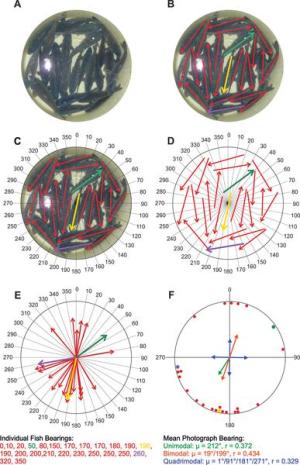
Carp stored in large tubs at Czech Christmas markets align themselves in the north-south direction, suggesting they possess a previously unknown capacity to perceive geomagnetic fields, according to a new study published December 5 in the open access journal PLOS ONE, led Hynek Burda from the University of Life Sciences (Prague), Czech Republic and colleagues from other institutions.

Their study included over 14,000 fish in 25 markets, and the majority of these fish were found to align themselves along the north-south axis. The fish were accustomed to human onlookers, and street lights and other potential disturbances seemed to have no effect on the orientation of the fish.

In the absence of other common stimuli for orientation like light, sound or the flow of water, the authors suggest that the fish most likely align themselves to geomagnetic cues.

http://www.sciencedaily.com/releases/2012/12/121205200057.htm

After 30 years, Supersymmetry Fails Test and is Forcing Physicists to Seek New Ideas

As a young theorist in Moscow in 1982, Mikhail Shifman became enthralled with an elegant new theory called supersymmetry that attempted to incorporate the known elementary particles into a more complete inventory of the universe.

“My papers from that time really radiate enthusiasm,” said Shifman, now a 63-year-old professor at the University of Minnesota. Over the decades, he and thousands of other physicists developed the supersymmetry hypothesis, confident that experiments would confirm it. “But nature apparently doesn’t want it,” he said. “At least not in its original simple form.”

With the world’s largest supercollider unable to find any of the particles the theory says must exist, Shifman is joining a growing chorus of researchers urging their peers to change course.

In an essay posted last month on the physics website arXiv.org, Shifman called on his colleagues to abandon the path of “developing contrived baroque-like aesthetically unappealing modifications” of supersymmetry to get around the fact that more straightforward versions of the theory have failed experimental tests. The time has come, he wrote, to “start thinking and developing new ideas.”

But there is little to build on. So far, no hints of “new physics” beyond the Standard Model — the accepted set of equations describing the known elementary particles — have shown up in experiments at the Large Hadron Collider, operated by the European research laboratory CERN outside Geneva, or anywhere else. (The recently discovered Higgs boson was predicted by the Standard Model.) The latest round of proton-smashing experiments, presented earlier this month at the Hadron Collider Physics conference in Kyoto, Japan, ruled out another broad class of supersymmetry models, as well as other theories of “new physics,” by finding nothing unexpected in the rates of several particle decays.

“Of course, it is disappointing,” Shifman said. “We’re not gods. We’re not prophets. In the absence of some guidance from experimental data, how do you guess something about nature?”

Younger particle physicists now face a tough choice: follow the decades-long trail their mentors blazed, adopting ever more contrived versions of supersymmetry, or strike out on their own, without guidance from any intriguing new data.

“It’s a difficult question that most of us are trying not to answer yet,” said Adam Falkowski, a theoretical particle physicist from the University of Paris-South in Orsay, France, who is currently working at CERN. In a blog post about the recent experimental results, Falkowski joked that it was time to start applying for jobs in neuroscience.

“There’s no way you can really call it encouraging,” said Stephen Martin, a high-energy particle physicist at Northern Illinois University who works on supersymmetry, or SUSY for short. “I’m certainly not someone who believes SUSY has to be right; I just can’t think of anything better.”

Supersymmetry has dominated the particle physics landscape for decades, to the exclusion of all but a few alternative theories of physics beyond the Standard Model.

“It’s hard to overstate just how much particle physicists of the past 20 to 30 years have invested in SUSY as a hypothesis, so the failure of the idea is going to have major implications for the field,” said Peter Woit, a particle theorist and mathematician at Columbia University.

The theory is alluring for three primary reasons: It predicts the existence of particles that could constitute “dark matter,” an invisible substance that permeates the outskirts of galaxies. It unifies three of the fundamental forces at high energies. And — by far the biggest motivation for studying supersymmetry — it solves a conundrum in physics known as the hierarchy problem.

The problem arises from the disparity between gravity and the weak nuclear force, which is about 100 million trillion trillion (10^32) times stronger and acts at much smaller scales to mediate interactions inside atomic nuclei. The particles that carry the weak force, called W and Z bosons, derive their masses from the Higgs field, a field of energy saturating all space. But it is unclear why the energy of the Higgs field, and therefore the masses of the W and Z bosons, isn’t far greater. Because other particles are intertwined with the Higgs field, their energies should spill into it during events known as quantum fluctuations. This should quickly drive up the energy of the Higgs field, making the W and Z bosons much more massive and rendering the weak nuclear force about as weak as gravity.

Supersymmetry solves the hierarchy problem by theorizing the existence of a “superpartner” twin for every elementary particle. According to the theory, fermions, which constitute matter, have superpartners that are bosons, which convey forces, and existing bosons have fermion superpartners. Because particles and their superpartners are of opposite types, their energy contributions to the Higgs field have opposite signs: One dials its energy up, the other dials it down. The pair’s contributions cancel out, resulting in no catastrophic effect on the Higgs field. As a bonus, one of the undiscovered superpartners could make up dark matter.

“Supersymmetry is such a beautiful structure, and in physics, we allow that kind of beauty and aesthetic quality to guide where we think the truth may be,” said Brian Greene, a theoretical physicist at Columbia University.

Over time, as the superpartners failed to materialize, supersymmetry has grown less beautiful. According to mainstream models, to evade detection, superpartner particles would have to be much heavier than their twins, replacing an exact symmetry with something like a carnival mirror. Physicists have put forward a vast range of ideas for how the symmetry might have broken, spawning myriad versions of supersymmetry.

But the breaking of supersymmetry can pose a new problem. “The heavier you have to make some of the superpartners compared to the existing particles, the more that cancellation of their effects doesn’t quite work,” Martin explained.

Most particle physicists in the 1980s thought they would detect superpartners that are only slightly heavier than the known particles. But the Tevatron, the now-retired particle accelerator at Fermilab in Batavia, Ill., found no such evidence. As the Large Hadron Collider probes increasingly higher energies without any sign of supersymmetry particles, some physicists are saying the theory is dead. “I think the LHC was a last gasp,” Woit said.

Today, most of the remaining viable versions of supersymmetry predict superpartners so heavy that they would overpower the effects of their much lighter twins if not for fine-tuned cancellations between the various superpartners. But introducing fine-tuning in order to scale back the damage and solve the hierarchy problem makes some physicists uncomfortable. “This, perhaps, shows that we should take a step back and start thinking anew on the problems for which SUSY-based phenomenology was introduced,” Shifman said.

But some theorists are forging ahead, arguing that, in contrast to the beauty of the original theory, nature could just be an ugly combination of superpartner particles with a soupçon of fine-tuning. “I think it is a mistake to focus on popular versions of supersymmetry,” said Matt Strassler, a particle physicist at Rutgers University. “Popularity contests are not reliable measures of truth.”

In some of the less popular supersymmetry models, the lightest superpartners are not the ones the Large Hadron Collider experiments have looked for. In others, the superpartners are not heavier than existing particles but merely less stable, making them more difficult to detect. These theories will continue to be tested at the Large Hadron Collider after it is upgraded to full operational power in about two years.

If nothing new turns up — an outcome casually referred to as the “nightmare scenario” — physicists will be left with the same holes that riddled their picture of the universe three decades ago, before supersymmetry neatly plugged them. And, without an even higher-energy collider to test alternative ideas, Falkowski says, the field will undergo a slow decay: “The number of jobs in particle physics will steadily decrease, and particle physicists will die out naturally.”

Greene offers a brighter outlook. “Science is this wonderfully self-correcting enterprise,” he said. “Ideas that are wrong get weeded out in time because they are not fruitful or because they are leading us to dead ends. That happens in a wonderfully internal way. People continue to work on what they find fascinating, and science meanders toward truth.”

From Simons Science News (find the original story here)

http://www.scientificamerican.com/article.cfm?id=supersymmetry-fails-test-forcing-physics-seek-new-idea

Mother-Child Connection: Scientists Discover Children’s Cells Living in Mothers’ Brains, Including Male Cells Living in the Female Brain for Decades

scientists-discover-childrens-cells-living-in-mothers-brain_1


The link between a mother and child is profound, and new research suggests a physical connection even deeper than anyone thought. The profound psychological and physical bonds shared by the mother and her child begin during gestation when the mother is everything for the developing fetus, supplying warmth and sustenance, while her heartbeat provides a soothing constant rhythm.

The physical connection between mother and fetus is provided by the placenta, an organ, built of cells from both the mother and fetus, which serves as a conduit for the exchange of nutrients, gasses, and wastes. Cells may migrate through the placenta between the mother and the fetus, taking up residence in many organs of the body including the lung, thyroid muscle, liver, heart, kidney and skin. These may have a broad range of impacts, from tissue repair and cancer prevention to sparking immune disorders.

It is remarkable that it is so common for cells from one individual to integrate into the tissues of another distinct person. We are accustomed to thinking of ourselves as singular autonomous individuals, and these foreign cells seem to belie that notion, and suggest that most people carry remnants of other individuals. As remarkable as this may be, stunning results from a new study show that cells from other individuals are also found in the brain. In this study, male cells were found in the brains of women and had been living there, in some cases, for several decades. What impact they may have had is now only a guess, but this study revealed that these cells were less common in the brains of women who had Alzheimer’s disease, suggesting they may be related to the health of the brain.

We all consider our bodies to be our own unique being, so the notion that we may harbor cells from other people in our bodies seems strange. Even stranger is the thought that, although we certainly consider our actions and decisions as originating in the activity of our own individual brains, cells from other individuals are living and functioning in that complex structure. However, the mixing of cells from genetically distinct individuals is not at all uncommon. This condition is called chimerism after the fire-breathing Chimera from Greek mythology, a creature that was part serpent part lion and part goat. Naturally occurring chimeras are far less ominous though, and include such creatures as the slime mold and corals.

 Microchimerism is the persistent presence of a few genetically distinct cells in an organism. This was first noticed in humans many years ago when cells containing the male “Y” chromosome were found circulating in the blood of women after pregnancy. Since these cells are genetically male, they could not have been the women’s own, but most likely came from their babies during gestation.

In this new study, scientists observed that microchimeric cells are not only found circulating in the blood, they are also embedded in the brain. They examined the brains of deceased women for the presence of cells containing the male “Y” chromosome. They found such cells in more than 60 percent of the brains and in multiple brain regions. Since Alzheimer’s disease is more common in women who have had multiple pregnancies, they suspected that the number of fetal cells would be greater in women with AD compared to those who had no evidence for neurological disease. The results were precisely the opposite: there were fewer fetal-derived cells in women with Alzheimer’s. The reasons are unclear.

Microchimerism most commonly results from the exchange of cells across the placenta during pregnancy, however there is also evidence that cells may be transferred from mother to infant through nursing. In addition to exchange between mother and fetus, there may be exchange of cells between twins in utero, and there is also the possibility that cells from an older sibling residing in the mother may find their way back across the placenta to a younger sibling during the latter’s gestation. Women may have microchimeric cells both from their mother as well as from their own pregnancies, and there is even evidence for competition between cells from grandmother and infant within the mother.

What it is that fetal microchimeric cells do in the mother’s body is unclear, although there are some intriguing possibilities. For example, fetal microchimeric cells are similar to stem cells in that they are able to become a variety of different tissues and may aid in tissue repair. One research group investigating this possibility followed the activity of fetal microchimeric cells in a mother rat after the maternal heart was injured: they discovered that the fetal cells migrated to the maternal heart and differentiated into heart cells helping to repair the damage. In animal studies, microchimeric cells were found in maternal brains where they became nerve cells, suggesting they might be functionally integrated in the brain. It is possible that the same may true of such cells in the human brain.

These microchimeric cells may also influence the immune system. A fetal microchimeric cell from a pregnancy is recognized by the mother’s immune system partly as belonging to the mother, since the fetus is genetically half identical to the mother, but partly foreign, due to the father’s genetic contribution. This may “prime” the immune system to be alert for cells that are similar to the self, but with some genetic differences. Cancer cells which arise due to genetic mutations are just such cells, and there are studies which suggest that microchimeric cells may stimulate the immune system to stem the growth of tumors. Many more microchimeric cells are found in the blood of healthy women compared to those with breast cancer, for example, suggesting that microchimeric cells can somehow prevent tumor formation. In other circumstances, the immune system turns against the self, causing significant damage. Microchimerism is more common in patients suffering from Multiple Sclerosis than in their healthy siblings, suggesting chimeric cells may have a detrimental role in this disease, perhaps by setting off an autoimmune attack.

This is a burgeoning new field of inquiry with tremendous potential for novel findings as well as for practical applications. But it is also a reminder of our interconnectedness.

http://www.scientificamerican.com/article.cfm?id=scientists-discover-childrens-cells-living-in-mothers-brain

The Death of “Near Death” Experiences ?

near-death-experience-1


You careen headlong into a blinding light. Around you, phantasms of people and pets lost. Clouds billow and sway, giving way to a gilded and golden entrance. You feel the air, thrusted downward by delicate wings. Everything is soothing, comforting, familiar. Heaven.

It’s a paradise that some experience during an apparent demise. The surprising consistency of heavenly visions during a “near death experience” (or NDE) indicates for many that an afterlife awaits us. Religious believers interpret these similar yet varying accounts like blind men exploring an elephant—they each feel something different (the tail is a snake and the legs are tree trunks, for example); yet all touch the same underlying reality. Skeptics point to the curious tendency for Heaven to conform to human desires, or for Heaven’s fleeting visage to be so dependent on culture or time period.

Heaven, in a theological view, has some kind of entrance. When you die, this entrance is supposed to appear—a Platform 9 ¾ for those running towards the grave. Of course, the purported way to see Heaven without having to take the final run at the platform wall is the NDE. Thrust back into popular consciousness by a surgeon claiming that “Heaven is Real,” the NDE has come under both theological and scientific scrutiny for its supposed ability to preview the great gig in the sky.

But getting to see Heaven is hell—you have to die. Or do you?

This past October, neurosurgeon Dr. Eben Alexander claimed that “Heaven is Real”, making the cover of the now defunct Newsweek magazine. His account of Heaven was based on a series of visions he had while in a coma, suffering the ravages of a particularly vicious case of bacterial meningitis. Alexander claimed that because his neocortex was “inactivated” by this malady, his near death visions indicated an intellect apart from the grey matter, and therefore a part of us survives brain-death.

Alexander’s resplendent descriptions of the afterlife were intriguing and beautiful, but were also promoted as scientific proof. Because Alexander was a brain “scientist” (more accurately, a brain surgeon), his account carried apparent weight.

Scientifically, Alexander’s claims have been roundly criticized. Academic clinical neurologist Steve Novella removes the foundation of Alexander’s whole claim by noting that his assumption of cortex “inactivation” is flawed:

Alexander claims there is no scientific explanation for his experiences, but I just gave one. They occurred while his brain function was either on the way down or on the way back up, or both, not while there was little to no brain activity.

In another takedown of the popular article, neuroscientist Sam Harris (with characteristic sharpness) also points out this faulty premise, and notes that Alexander’s evidence for such inactivation is lacking:

The problem, however, is that “CT scans and neurological examinations” can’t determine neuronal inactivity—in the cortex or anywhere else. And Alexander makes no reference to functional data that might have been acquired by fMRI, PET, or EEG—nor does he seem to realize that only this sort of evidence could support his case.

Without a scientific foundation for Alexander’s claims, skeptics suggest he had a NDE later fleshed out by confirmation bias and colored by culture. Harris concludes in a follow-up post on his blog, “I am quite sure that I’ve never seen a scientist speak in a manner more suggestive of wishful thinking. If self-deception were an Olympic sport, this is how our most gifted athletes would appear when they were in peak condition.”

And these takedowns have company. Paul Raeburn in the Huffington Post, speaking of Alexander’s deathbed vision being promoted as a scientific account, wrote, “We are all demeaned, and our national conversation is demeaned, by people who promote this kind of thing as science. This is religious belief; nothing else.” We might expect this tone from skeptics, but even the faithful chime in. Greg Stier writes in the Christian post that while he fully believes in the existence of Heaven, we should not take NDE accounts like Alexander’s as proof of it.

These criticisms of Alexander point out that what he saw was a classic NDE—the white light, the tunnel, the feelings of connectedness, etc. This is effective in dismantling his account of an “immaterial intellect” because, so far, most symptoms of a NDE are in fact scientifically explainable. [ another article on this site provides a thorough description of the evidence, as does this study.]

One might argue that the scientific description of NDE symptoms is merely the physical account of what happens as you cross over. A brain without oxygen may experience “tunnel vision,” but a brain without oxygen is also near death and approaching the afterlife, for example. This argument rests on the fact that you are indeed dying. But without the theological gymnastics, I think there is an overlooked yet critical aspect to the near death phenomenon, one that can render Platform 9 ¾ wholly solid. Studies have shown that you don’t have to be near death to have a near death experience.

“Dying”

In 1990, a study was published in the Lancet that looked at the medical records of people who experienced NDE-like symptoms as a result of some injury or illness. It showed that out of 58 patients who reported “unusual” experiences associated with NDEs (tunnels, light, being outside one’s own body, etc.), 30 of them were not actually in any danger of dying, although they believed they were [1]. The authors of the study concluded that this finding offered support to the physical basis of NDEs, as well as the “transcendental” basis.

Why would the brain react to death (or even imagined death) in such a way? Well, death is a scary thing. Scientific accounts of the NDE characterize it as the body’s psychological and physiological response mechanism to such fear, producing chemicals in the brain that calm the individual while inducing euphoric sensations to reduce trauma.

Imagine an alpine climber whose pick fails to catch the next icy outcropping as he or she plummets towards a craggy mountainside. If one truly believes the next experience he or she will have is an intimate acquainting with a boulder, similar NDE-like sensations may arise (i.e., “My life flashed before my eyes…”). We know this because these men and women have come back to us, emerging from a cushion of snow after their fall rather than becoming a mountain’s Jackson Pollock installation.

You do not have to be, in reality, dying to have a near-death experience. Even if you are dying (but survive), you probably won’t have one. What does this make of Heaven? It follows that if you aren’t even on your way to the afterlife, the scientifically explicable NDE symptoms point to neurology, not paradise.

This Must Be the Place

Explaining the near death experience in a purely physical way is not to say that people cannot have a transformative vision or intense mental journey. The experience is real and tells us quite a bit about the brain (while raising even more fascinating questions about consciousness). But emotional and experiential gravitas says nothing of Heaven, or the afterlife in general. A healthy imbibing of ketamine can induce the same feelings, but rarely do we consider this euphoric haze a glance of God’s paradise.

In this case, as in science, a theory can be shot through with experimentation. As Richard Feynman said, “It doesn’t matter how beautiful your theory is, it doesn’t matter how smart you are. If it doesn’t agree with experiment, it’s wrong.

The experiment is exploring an NDE under different conditions. Can the same sensations be produced when you are in fact not dying? If so, your rapping on the Pearly Gates is an illusion, even if Heaven were real. St. Peter surely can tell the difference between a dying man and a hallucinating one.

The near death experience as a foreshadowing of Heaven is a beautiful theory perhaps, but wrong.

Barring a capricious conception of “God’s plan,” one can experience a beautiful white light at the end of a tunnel while still having a firm grasp of their mortal coil. This is the death of near death. Combine explainable symptoms with a plausible, physical theory as to why we have them and you get a description of what it is like to die, not what it is like to glimpse God.

Sitting atop clouds fluffy and white, Heaven may be waiting. We can’t prove that it is not. But rather than helping to clarify, the near death experience, not dependent on death, may only point to an ever interesting and complex human brain, nothing more.

http://blogs.scientificamerican.com/guest-blog/2012/12/03/the-death-of-near-death-even-if-heaven-is-real-you-arent-seeing-it/


Sexually-deprived fruitflies drink more alcohol

drinking_drosophila

Rejection stinks. It literally hurts. But worse, it has an immediate and negative impact on our brains, producing withdrawal symptoms as if we’re quitting a serious addiction cold turkey. It’s no wonder, then, that we are tempted to turn to drugs to makeourselves feel better. But we’re not the only species that drowns our sorrows when we’re lonely – as a new study in Science reveals, rejected Drosophila do, too. Scientists have found not only will these sexually frustrated flies choose to consume more alcohol than their happily mated peers, sex and alcohol consumption activate the same neurological pathway in their brains.

Drosophila melanogaster males sure know how to woo a lady. When placed in the same container as a potential mate, a male fly will play her a delicate love song by vibrating one wing, caress her rear end, and gently nuzzle her most private of parts with his proboiscis to convince her that he is one heck of a lover. But even the most romantic fly can’t convince an already mated female Drosophila to give up the goods, so scientists were able to use the girls’ steely resolve to see how rejection affects fly drinking behavior.

“Alcohol is one of the most widely used and abused drugs in the world,” explains lead author Galit Shohat-Ophir. “The fruit fly Drosophila melanogaster is an ideal model organism to study how the social environment modulates behavior.” Previous studies have found that Drosophila melanogaster exhibit complex addiction-like behaviors. So in the controlled setting of Ulrike Heberlein’s lab at the University of California San Francisco, researchers paired male fruit flies with three types of females: 1) unmated females, which were willing and happy to mate; 2) mated females, which actively rejected the men; and 3) decapitated females, which didn’t actively reject the guys but, well, weren’t exactly willing partners either. After the flies were satisfied or frustrated, they were offered regular food and food spiked with ethanol, and the researchers measured which type they preferred to see if there was any connection between sex and drinking.

The flies that were rejected drank significantly more than their satisfied peers, but so did the ones paired with incapacitated girls, suggesting that it wasn’t the social aspect of rejection but sexual deprivation that drives male flies to increase their ethanol consumption (see the video at the end!). This alcoholic behavior was very directly related to the guy fly ever getting laid, for even after days of blue balls, if he was allowed to spend some time with a willing woman, he no longer preferred the spiked food.

What the scientists really wanted to understand, though, was why. What drives a frustrated fly to the flask? So to look at the underlying mechanism of this phenomenon, the scientists examined the flies’ brains. A body of scientific literature has connected one particular neurotransmitter, neuropeptide F (NPF), to ethanol-related behaviors in Drosophila, so it was a logical place to start. A very similar neurotransmitter in our brains, called neuropeptide Y (NPY), is linked to alcoholism.

Increased expression of NPF in mated male brains, as shown through immunochemistry.

The team found that sexual frustration caused an immediate decrease in the expression of NPF, while sex increased expression. Furthermore, when they used genetics to artificially knock down NPF levels in the satisfied flies, they drank as much as their not-so-satisfied friends. Similarly, when the researchers artificially increased NPF levels, flies stayed sober. This is the first time NPF levels have connected sexual activity to drinking. Clearly, NPF levels controlled the flies’ desire to drink, so the team further explored how NPF works in the fly’s brain.

Many animals, including ourselves, possess a neurological reward system which reinforces good behavior. Through this system, we ascribe pleasure or positive feelings to things we do that are necessary for species survival, including sex, eating, and social interaction. Drugs tap into this system, stimulating pleasure which can lead to addiction. Previous studies have shown that flies find intoxication rewarding, so the researchers hypothesized that NPF may play a role in the reward system.

Preference tests showed that artificially increasing NPF levels in the absence of sex or ethanol was rewarding to the flies, confirming the scientists’ hypothesis. This was further supported by the discovery that constantly activating NPF abolished the flies’ tendency to consider ethanol rewarding.

“NPF is a currency of reward” explains Shohat-Ophir. High NPF levels signal good behavior in Drosophila brains, thus reinforcing any activities which led to that state. This is a truly novel discovery, for while NPF and the mammal version, NPY, have been linked to alcohol consumption, no animal model has ever placed NPF/NPY in the reward system.

Understanding the role of NPF in reward-seeking behaviors may lead to better treatments for addicts. “In mammals, including humans, NPY may have a similar role [as NPF],” says Shohat-Ophir. “If so, one could argue that activating the NPY system in the proper brain regions might reverse the detrimental effects of traumatic and stressful experiences, which often lead to drug abuse.” Already, NPY and drugs that affect the function of its receptors are in clinical trials for anxiety, PTSD, mood disorders and obesity. This study suggests that perhaps they should be tested as treatment for alcoholism, too, as well as other reward-based addictions.

Research: Shohat-Ophir, G, KR Kaun & R Azanchi (2012). Sexual Deprivation Increases Ethanol Intake in Drosophila. Science 335: 1351-1355.

Click  http://blogs.scientificamerican.com/science-sushi/2012/03/15/flies-drink-upon-rejection/

to view a sequence of  three videos that show a male fly courting and successfully mating with a female fly, another male fly being rejected by a female, and a male choosing to consume an alcohol-infused solution over a non-alcohol solution. Video © Science/AAAS

British company claims biggest engine advance since the jet: the SABRE engine

A Skylon in flight with a cutaway of the SABRE engine


A small British company with a dream of building a re-usable space plane has won an important endorsement from the European Space Agency (ESA) after completing key tests on its novel engine technology.

Reaction Engines Ltd believes its Sabre engine, which would operate like a jet engine in the atmosphere and a rocket in space, could displace rockets for space access and transform air travel by bringing any destination on Earth to no more than four hours away.

That ambition was given a boost on Wednesday by ESA, which has acted as an independent auditor on the Sabre test programme.

“ESA are satisfied that the tests demonstrate the technology required for the Sabre engine development,” the agency’s head of propulsion engineering Mark Ford told a news conference.

“One of the major obstacles to a re-usable vehicle has been removed,” he said. “The gateway is now open to move beyond the jet age.”

The space plane, dubbed Skylon, only exists on paper. What the company has right now is a remarkable heat exchanger that is able to cool air sucked into the engine at high speed from 1,000 degrees Celsius to minus 150 degrees in one hundredth of a second.

This core piece of technology solves one of the constraints that limit jet engines to a top speed of about 2.5 times the speed of sound, which Reaction Engines believes it could double.

With the Sabre engine in jet mode, the air has to be compressed before being injected into the engine’s combustion chambers. Without pre-cooling, the heat generated by compression would make the air hot enough to melt the engine.

The challenge for the engineers was to find a way to cool the air quickly without frost forming on the heat exchanger, which would clog it up and stop it working.

Using a nest of fine pipes that resemble a large wire coil, the engineers have managed to get round this fatal problem that would normally follow from such rapid cooling of the moisture in atmospheric air.

They are tight-lipped on exactly how they managed to do it.

“We are not going to tell you how this works,” said the company’s chief designer Richard Varvill, who started his career at the military engine division of Rolls-Royce. “It is our most closely guarded secret.”

The company has deliberately avoided filing patents on its heat exchanger technology to avoid details of how it works – particularly the method for preventing the build-up of frost – becoming public.

The Sabre engine could take a plane to five times the speed of sound and an altitude of 25 km, about 20 percent of the speed and altitude needed to reach orbit. For space access, the engines would then switch to rocket mode to do the remaining 80 percent.

Reaction Engines believes Sabre is the only engine of its kind in development and the company now needs to raise about 250 million pounds ($400 million) to fund the next three-year development phase in which it plans to build a small-scale version of the complete engine.

Chief executive Tim Hayter believes the company could have an operational engine ready for sale within 10 years if it can raise the development funding.

The company reckons the engine technology could win a healthy chunk of four key markets together worth $112 billion (69 billion pounds) a year, including space access, hypersonic air travel, and modified jet engines that use the heat exchanger to save fuel.

The fourth market is unrelated to aerospace. Reaction Engines believes the technology could also be used to raise the efficiency of so-called multistage flash desalination plants by 15 percent. These plants, largely in the Middle East, use heat exchangers to distil water by flash heating sea water into steam in multiple stages.

The firm has so far received 90 percent of its funding from private sources, mainly rich individuals including chairman Nigel McNair Scott, the former mining industry executive who also chairs property developer Helical Bar.

Chief executive Tim Hayter told Reuters he would welcome government investment in the company, mainly because of the credibility that would add to the project.

But the focus will be on raising the majority of the 250 million pounds it needs now from a mix of institutional investors, high net worth individuals and possibly potential partners in the aerospace industry.

Sabre produces thrust by burning hydrogen and oxygen, but inside the atmosphere it would take that oxygen from the air, reducing the amount it would have to carry in fuel tanks for rocket mode, cutting weight and allowing Skylon to go into orbit in one stage.

Scramjets on test vehicles like the U.S. Air Force Waverider also use atmospheric air to create thrust but they have to be accelerated to their operating speed by normal jet engines or rockets before they kick in. The Sabre engine can operate from a standing start.

If the developers are successful, Sabre would be the first engine in history to send a vehicle into space without using disposable, multi-stage rockets.

Skylon is years away, but in the meantime the technology is attracting interest from the global aerospace industry and governments because it effectively doubles the technical limits of current jet engines and could cut the cost of space access.

The heat exchanger technology could also be incorporated into a new jet engine design that could cut 5 to 10 percent – or $10 (6.25 pounds)-20 billion – off airline fuel bills.

That would be significant in an industry where incremental efficiency gains of one percent or so, from improvements in wing design for instance, are big news.

Thanks to Kebmodee for bringing this to the attention of the It’s Interesting community.

http://uk.reuters.com/article/2012/11/28/uk-science-spaceplane-idUKBRE8AR0R520121128

Study of the Decade: Looking at Photos of Cute Animals Linked to Increased Work Performance

Stuck at work? Having trouble finishing out your Friday? Take a good, long look at this bunny. It’s adorable. And, according to newly published research, it could actually improve your performance at work*.

Researchers from Hiroshima University in Japan describe the results of their study in the latest issue of PLoS ONE. We’ve preserved the researchers’ description verbatim where possible, including explanations only when necessary, because there’s something unequivocally excellent about reading things like “cuteness-triggered positive emotion” in peer-reviewed scientific research:

In this study, three experiments were conducted to examine the effects of viewing cute images on subsequent task performance. In the first experiment, university students performed a fine motor dexterity task [participants played Bilibili Dr. Game, basically the Japanese version of Operation] before and after viewing images of baby [“cute images”] or adult [“less cute”] animals. Performance… increased after viewing cute images more than after viewing images that were less cute.

In the second experiment, this finding was replicated by using a non-motor visual search task. [This involved counting the number of times a specified number appeared in successive 40-digit groupings. For example, a subject presented with the numbers on the left would be asked to identify, as quickly as possible, how many times the number 8 appeared in the group. Test participants completed as many of these number groups as possible in a three minute period.] Performance improved more after viewing cute images than after viewing less cute images. Viewing images of pleasant foods was ineffective in improving performance. 

In the third experiment, participants performed a global–local letter task after viewing images of baby animals, adult animals, and neutral objects.

A quick explanation here: in a global-local letter task, participants are asked to indicate, as quickly as possible, whether a stimulus contains the letter “H” or letter “T” by pressing left or right on a response pad. Sounds easy, but the task actually requires a fair bit of concentration, as sometimes the letter the participant is looking for is actually composed of a series of other letters (an example is the big “H,” pictured at left, built out of smaller, closely spaced “F”s. This is an example of a global target stimulus); while other times, the letter they’re looking for is spelling out a larger letter (the big “L” on the left is built out of smaller, closely spaced “T”s. This is an example of a localtarget stimulus). Alright, back to the findings:

In general, global features were processed faster than local features. However, this global precedence effect was reduced after viewing cute images.

Results show that participants performed tasks requiring focused attention more carefully after viewing cute images. This is interpreted as the result of a narrowed attentional focus induced by the cuteness-triggered positive emotion… For future applications, cute objects may be used as an emotion elicitor to induce careful behavioral tendencies in specific situations, such as driving and office work.

http://io9.com/5947360/study-of-the-decade-looking-at-photos-of-cute-animals-linked-to-increased-work-performance