Norman Borlaug statue unveiled at U.S. Capitol on his 100th birthday

The leaders of both Iowa and the nation celebrated the legend of Norman Borlaug, Iowa’s native son, at a ceremony today intended to honor the man credited with saving a billion people from starvation.

At the unveiling of a statue of Borlaug in the U.S. Capitol’s National Statuary Hall, members of Iowa’s Congressional delegation praised Borlaug for the impression he and his work left on the world, which they said would inspire numerous others to seek the next breakthrough in agriculture.

“As Norman would remind us, ‘our reward for our labors is not what we take from this planet, but what we give back,’” Democratic U.S Rep. Bruce Braley said.

“Really the tribute the legacy of Norman Borlaug will be the thousands and thousands of people trying to replicate what he did, and that is the next breakthrough,” Republican U.S. Rep. Tom Latham said.

Republican U.S. Sen. Chuck Grassley issued a similar sentiment.

“As a farmer myself I’ve seen firsthand how Dr. Borlaug’s innovations have transformed agriculture,” Grassley said. “Dr. Borlaug will continue to inspire generations of scientists and frmers to innovate and lift up those mired by poverty.”

Iowa Gov. Terry Branstad called Borlaug a “fitting representative for the state of Iowa.”

“He was a son, a brother, a father, a grandfather, and a cousin whose legacy continues to make his family proud and we are glad to honor his family with this celebration,” Branstad said. “Dr. Borlaug was a farmer, a humanitarian, a scientist, and an educator, and his inspiration lives on in the many organizations, like the World Food Prize, that honor those who feed a growing world population.”

Norman Ernest Borlaug (March 25, 1914 – September 12, 2009) was an American biologist, humanitarian and Nobel laureate who has been called “the father of the Green Revolution”, “agriculture’s greatest spokesperson” and “The Man Who Saved A Billion Lives”. He is one of seven people to have won the Nobel Peace Prize, the Presidential Medal of Freedom and the Congressional Gold Medal and was also awarded the Padma Vibhushan, India’s second highest civilian honor.

Borlaug received his B.Sc. Biology 1937 and Ph.D. in plant pathology and genetics from the University of Minnesota in 1942. He took up an agricultural research position in Mexico, where he developed semi-dwarf, high-yield, disease-resistant wheat varieties.

During the mid-20th century, Borlaug led the introduction of these high-yielding varieties combined with modern agricultural production techniques to Mexico, Pakistan, and India. As a result, Mexico became a net exporter of wheat by 1963. Between 1965 and 1970, wheat yields nearly doubled in Pakistan and India, greatly improving the food security in those nations. These collective increases in yield have been labeled the Green Revolution, and Borlaug is often credited with saving over a billion people worldwide from starvation. He was awarded the Nobel Peace Prize in 1970 in recognition of his contributions to world peace through increasing food supply.

Later in his life, he helped apply these methods of increasing food production to Asia and Africa.

Borlaug continually advocated increasing crop yields as a means to curb deforestation. The large role he played in both increasing crop yields and promoting this view has led to this methodology being called by agricultural economists the “Borlaug hypothesis”, namely that increasing the productivity of agriculture on the best farmland can help control deforestation by reducing the demand for new farmland. According to this view, assuming that global food demand is on the rise, restricting crop usage to traditional low-yield methods would also require at least one of the following: the world population to decrease, either voluntarily or as a result of mass starvations; or the conversion of forest land into crop land. It is thus argued that high-yield techniques are ultimately saving ecosystems from destruction.

Borlaug’s name is nearly synonymous with the Green Revolution, against which many criticisms have been mounted over the decades by environmentalists and some nutritionalists. Throughout his years of research, Borlaug’s programs often faced opposition by people who consider genetic crossbreeding to be unnatural or to have negative effects. Borlaug’s work has been criticized for bringing large-scale monoculture, input-intensive farming techniques to countries that had previously relied on subsistence farming. These farming techniques reap large profits for U.S. agribusiness and agrochemical corporations such as Monsanto Company and have been criticized for widening social inequality in the countries owing to uneven food distribution while forcing a capitalist agenda of U.S. corporations onto countries that had undergone land reform.

Other concerns of his critics and critics of biotechnology in general include: that the construction of roads in populated third-world areas could lead to the destruction of wilderness; the crossing of genetic barriers; the inability of crops to fulfill all nutritional requirements; the decreased biodiversity from planting a small number of varieties; the environmental and economic effects of inorganic fertilizer and pesticides; the amount of herbicide sprayed on fields of herbicide-resistant crops.

Borlaug dismissed most claims of critics, but did take certain concerns seriously. He stated that his work has been “a change in the right direction, but it has not transformed the world into a Utopia”. Of environmental lobbyists he stated, “some of the environmental lobbyists of the Western nations are the salt of the earth, but many of them are elitists. They’ve never experienced the physical sensation of hunger. They do their lobbying from comfortable office suites in Washington or Brussels. If they lived just one month amid the misery of the developing world, as I have for fifty years, they’d be crying out for tractors and fertilizer and irrigation canals and be outraged that fashionable elitists back home were trying to deny them these things”.
DNA mugshot: Computer sketch program can reconstruct faces from DNA


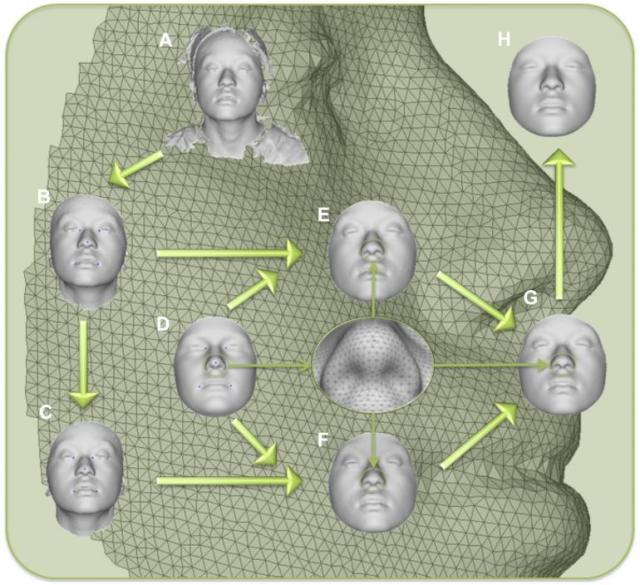
Workflow for 3D face scan processing, including the A) original surface, B) trimmed to exclude non-face parts, C) reflected to make mirror image, D) anthropometric mask of quasi-landmarks, E) remapped, F) reflected remapped, G) symmetrized and H) reconstructed.

By Philip Ross

Could a single hair be used to make an accurate 3D model of a criminal suspect’s face? Researchers from the U.S. and Belgium have developed a computer program that renders a crude genetic “mugshot” from a small sample of DNA.

Forensics can already predict eye and hair color relatively easily. Io9 notes that criminal investigators can even use maggots to extract a victim’s DNA from their unidentifiable body or find hidden faces by zooming into hi-res photos of eyes. But the face is a complex structure that’s more difficult to map from just one DNA sample.

According to New Scientist, researchers used a stereoscopic camera to make 3D images of roughly 600 volunteers with mixed European and West African ancestry. They identified more than 7,000 distinct points on the face to see how sex and racial ancestry affect the position of these points. The variations were used to develop a statistical model that reconstructs the overall shape of a person’s face.

The team also isolated 24 genetic variants, called single nucleotide polymorphisms, which play a role in shaping a face, such as those that shape the head during embryonic development. Lastly, researchers had volunteers rate the 600 faces on perceived ethnicity as well as on a scale of masculinity and femininity.

The new study, published in the journal PLOS Genetics, says this process could allow investigators to make computer-generated mugshots from genetic material left at a crime scene.

“We show that facial variation with regard to sex, ancestry, and genes can be systematically studied with our methods, allowing us to lay the foundation for predictive modeling of faces,” the authors note. “Such predictive modeling could be forensically useful; for example, DNA left at crime scenes could be tested and faces predicted in order to help to narrow the pool of potential suspects. Further, our methods could be used to predict the facial features of descendants, deceased ancestors, and even extinct human species. In addition, these methods could prove to be useful diagnostic tools.”

Any 3D renderings created using the new technology wouldn’t be used in a court of law – any person identified via the DNA mugshots would still have his DNA compared to the crime scene sample – but it could at least narrow the search for a suspected criminal. And there are still a few kinks to work out in the process before the technology is ever used in the field.

“I believe that in five to 10 years’ time, we will be able to computationally predict a face,” Peter Claes of the Catholic University of Leuven in Belgium told New Scientist.

http://www.ibtimes.com/dna-mugshot-how-crime-fighting-computer-sketch-program-can-predict-face-your-genes-1563049

Thanks to Da Brayn for bringing this to the attention of the It’s Interesting community.

Mysterious fever virus reported in Guinea

By Susanna Capelouto, CNN
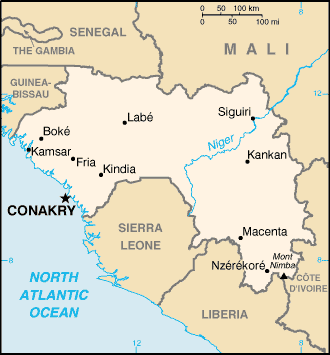
Since February 49 people have gotten sick and 29 have died from an unidentified illness characterized by fever, diarrhea and vomiting in Guinea, according to the West African nation’s minister of health, Remy Lamah.

Lamah said initial test results confirm the presence of a viral hemorrhagic fever, which according to the U.S. Centers for Disease Control and Prevention refers to a group of viruses that affect multiple organ systems in the body.

The Guinean health ministry warned in a statement that the disease is mainly spread from infected people, objects belonging to ill or dead people and by the consumption of meat from animals in the bush.

So far, most of the cases have been in the forest area of southern Guinea, and health officials say they are offering free treatment for all patients.

They’ve urged people to stay calm, wash their hands and report all cases to authorities.

http://www.cnn.com/2014/03/22/world/africa/fever-epidemic-guinea

Thanks to Da Brayn for bringing this to the attention of the It’s Interesting community.

Woolly Mammoth DNA To Be Cloned, Then Joined With Elephant DNA To Create New Creature

A team of international scientists are extracting high quality DNA from the remains of a woolly mammoth that lived 43,000 years ago, with the aim of joining it with the DNA of an elephant, they told The Siberian Times Thursday. Results from the necropsy of the woolly mammoth in Yakutsk, Sakha Republic — due to wind up Saturday after more than 10 months of analysis — has caused “palpable excitement” within the team of scientists, hailing from Russia, the UK, the United States, Denmark, South Korea, and Moldova.

“The data we are about to receive will give us a high chance to clone the mammoth,” Radik Khayrullin, vice president of the Russian Association of Medical Anthropologists, told The Siberian Times in Yakutsk. He urged responsibility in any attempts to clone the woolly mammoth. “It is one thing to clone it for scientific purpose, and another to clone for the sake of curiosity,” he said. Geneticists are reportedly searching for an Asian elephant whose egg could be injected with cloned material from the woolly mammoth. That same or another female elephant would be the surrogate mother of the resulting fertilzed egg. Any resulting wooly mammoth/elephant hybrid baby would have to be female, since there is no y-chromosome material from the wooly mammoth, who was a female. At any rate, such a procedure would take decades to perfect, experts said.

Semyon Grigoriev, head of the Museum of Mammoths of the Institute of Applied Ecology of the North at the North Eastern Federal University, told The Siberian Times that because the evolutionary paths of the mammoth and the elephant diverged so long ago, cloning will be challenging. However, the samples will allow geneticists to completely decode the DNA of the mammoth.

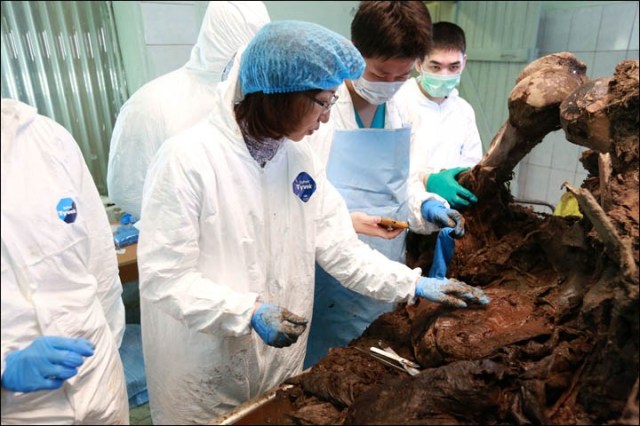
The Russian woolly mammoth was between 50 and 60 years old when she died. Though the upper part of her carcass has been devoured by animals, the lower part (the legs and a detached trunk) was “astonishingly, very well preserved,” Viktoria Egorova, chief of the research and clinical diagnostic laboratory of the medical clinic of North-Eastern Federal University told The Siberian Times. The mammoth, which may have met her demise by falling through a hole in the ice, lay in the permafrost of Maly Lyakhovskiy Island until it was found last May.
The mammoth as a species disappeared from Siberia at the end of the Pleistocene era about 10,000 years ago, with warming climate and hunting by humans thought to be contributing factors. An isolated population of woolly mammoths persisted on Wrangel Island in the Arctic Ocean, between the Chukchi and East Siberian Seas, until around 4,000 years ago.

‘We have dissected the soft tissues of the mammoth, and I must say that we didn’t expect such results,” Dr. Egorova told The Siberian Times. The necropsy revealed well-preserved muscle and adipose tissues (loose connective tissues which store fat), and “blood vessels with strong walls,” and within intact blood vessels themselves, for the first time ever in an ancient carcass of an extinct animal, erythrocytes, or red blood cells that contain the oxygen-carrying molecule hemoglobin, Egorova told The Siberian Times.

Biologists have been able to discern cells within the woolly mammoth’s blood that had been in the process of migration (involved in growth and healing) within the lymphoid tissue when the woolly mammoth died, a finding Egorova termed “another great discovery.” The intestines contained remains of the vegetation eaten by the mammoth; its multi-chambered stomach was preserved, as was a kidney, which contained fragments Egorova suspects are kidney stones.

One of the Canadian scientists looking foward to anayzing blood samples from the woolly mammoth is Kevin Campbell, a University of Manitoba professor of environmental and evolutionary physiology who has rearched and written on the subject of hemoglobin in woolly mammoths. In 2010, Campbell wrote a letter in the journal Nature Genetics describing how he had genetically resurrected and analyzed woolly mammoth hemoglobin “to reveal for the first time…the structural underpinnings of a key adaptive physiochemical trait in an extinct species.” He discovered that whereas the efficiency of hemoglobin in elephants to offload oxygen to respiring cells is hampered at low temperatures, mammoth hemoglobin has amino acid substitutions that “provide a unique solution to this problem and thereby minimize energetically costly heat loss.” Since then, Campbell has recreated the hemoglobin of woolly mammoths.

Campbell, who described himself as “bitterly disappointed” that he couldn’t make the necropsy of the woolly mammoth in Russia, said he would be doing the next best thing next week; joining one of his collaborators, Roy E. Weber at Aarhus University, Denmark who will be returning from Russia with some muscle and blood samples extracted from the woolly mammoth. If nothing else, the blood samples may allow Campbell to verify the presence of cold-tolerant hemoglobin in woolly mammoths. “It’s one thing to synthesize mammoth hemoglobin in bacteria: It’s quite another story to study the real thing from a 43,000 year-old specimen,” Campbell told the International Science Times. “No other specimen has ever been so well preserved that we could potentially obtain hemoglobin oxygen-binding data from it. This specimen offers the unique opportunity to collect precisely the same kind of physiologically relevant information from an extinct species as I could from those that are still alive.”

Climate change (as destructive a force as it is for the planet) has proven to be a boon for evolutionary physiologists interested in examining extinct animals. “One of the dirty little secrets of this field is that the increased melting of the North affords the finding of many, many more specimens,” Campbell said. “I don’t want to encourage further global warming, but it is a benefit from permafrost melting and so much being exposed, that they are finding woolly rhinos, bison, a crazy number of ancient horses and specimens in the Canadian and Russian Arctic.” Gold mining and industrial development has also unearthed more prehistoric animals than ever before in human history.

The researchers who peformed the autopsy on the woolly mammoth will hold a conference in Greece in May to announce the results.

http://www.isciencetimes.com/articles/6946/20140313/woolly-mammoth-dna-cloning-elephant-clone.htm

New sweetener from the tequila plant may treat diabetes and weight loss

Could a new sugar substitute actually lower blood sugar and help you lose weight? That’s the tantalizing – but distant – promise of new research presented at the American Chemical Society (ACS) this week.

Agavins, derived from the agave plant that’s used to make tequila, were found in mouse studies to trigger insulin production and lower blood sugar, as well as help obese mice lose weight.

Unlike sucrose, glucose, and fructose, agavins aren’t absorbed by the body, so they can’t elevate blood glucose, according to research by Mercedes G. López, a researcher at the Centro de Investigación y de Estudios Avanzados, Biotechnology and Biochemistry Irapuato, in Guanajuato, Mexico.

And by boosting the level of a peptide called GLP-1 (short for glucagon-like peptide-1), which triggers the body’s production of insulin, agavins aid the body’s natural blood sugar control. Also, because agavins are type of fiber, they can make people feel fuller and reduce appetite, López’s research shows.

“We believe that agavins have a great potential as light sweeteners since they are sugars, highly soluble, have a low glycemic index, and a neutral taste, but most important, they are not metabolized by humans,” read the study abstract. “This puts agavins in a tremendous position for their consumption by obese and diabetic people.”

The caveat: The research was conducted in mice, and more study is necessary before we’ll know whether agavins are effective and safe in humans. In other words, we’re a long way from agavins appearing on grocery store shelves.

That said, with almost 26 millions of Americans living with diabetes and another 2 million diagnosed each year, a sweetener that lowered blood sugar levels rather than raised them would be quite a useful discovery. Not to mention the potential for a sugar substitute with the potential to help people lose weight.

In the study, titled “Agavins as Potential Novel Sweeteners for Obese and Diabetic People”, López added agavins to the water of mice who were fed a standard diet, weighing them and monitoring blood sugar levels every week. The majority of the mice given the agavin-supplemented water had lower blood glucose levels, ate less, and lost weight compared with other mice whose water was supplemented with glucose, sucrose, fructose, agave syrup, and aspartame.

Unlike other types of fructose, Agavins are fructans, which are long-chain fructoses that the body can’t use, so they are not absorbed into the bloodstream to raise blood sugar. And despite the similarity in the name, agavins are not to be confused with agave nectar or agave syrup, natural sweeteners that are increasingly popular sugar substitutes. In these products the fructans are broken down into fructose, which does raise blood sugar – and add calories.

López has been studying fructans for some time, and has published previous studies showing that they have protective prebiotic effects in the digestive tract and contribute to weight loss in obese mice.

A 2012 study by another team of researchers published in Plant Foods for Human Nutrition found that fructans boosted levels of the beneficial probiotics lactobacillus and bifidus. And like many types of fiber, agavins also lower levels of cholesterol and triglycerides in the blood.

But the news isn’t all good; a 2011 literature review of human studies of the relationship between fructans (not agavins specifically) and blood sugar found that of 13 randomized studies of fructans, only three documented positive results. It remains to be seen whether – as López argues – agavins are distinct from other fructans in their action.

The downside: Agavins are don’t taste as sweet as other forms of sugar such as sucrose, fructose and glucose. And not everyone can tolerate them; like other types of fiber they have the potential to cause digestive problems.

http://www.forbes.com/sites/melaniehaiken/2014/03/17/new-sweetener-from-the-tequila-plant-may-aid-diabetes-weight-loss/

Thanks to Dr. Rajadhyaksha for bringing this to the attention of the It’s Interesting community.

Wake Up And Smell The Caffeine. It’s A Powerful Drug

Many of us can barely make it through the morning without first downing a cup of hot coffee. It’s become such a big part of our daily rituals that few actually give much thought to what it is that we’re putting in our bodies.

To help us break down the little-known things about caffeine, NPR’s David Greene spoke with Murray Carpenter, author of Caffeinated: How Our Daily Habit Helps, Hurts and Hooks Us. These are the things you probably aren’t thinking about as you wait in line at your local coffee shop.

Caffeine is a drug. Treat it as such.

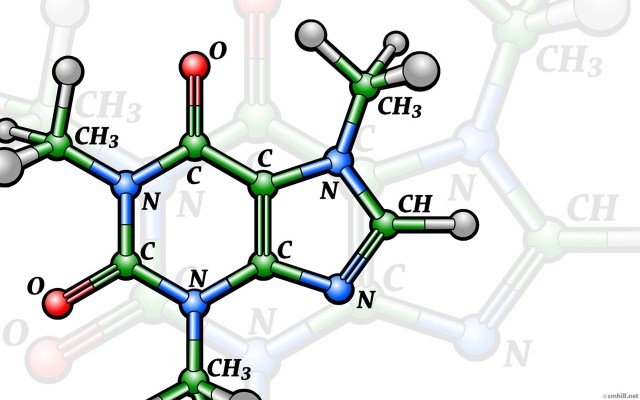
In its essential form, caffeine is a bitter white powder derived from a natural insecticide found in some plants. Over the years, it became acknowledged as a drug after people independently discovered its stimulating effect.

But, Carpenter says, people often underestimate just how powerful that drug is. “A tablespoon — about 10 grams — will kill you,” he says, recounting the unfortunate story of a college student who went into a seizure and died after chasing down spoonfuls of caffeine with an energy drink.

Most of the caffeine in soft drinks comes from factories in China.

Naturally extracted caffeine is burned out from heated-up coffee beans. But most of the caffeine used in soft drinks is actually synthetically produced in Chinese pharmaceutical plants. After visiting one of these plants — the world’s largest, in fact — Carpenter can only describe it as “sketchy.”

“It was not what I expected,” he says. “It was sort of a rundown industrial park.”

And our favorite caffeinated beverage? Not coffee, but soft drinks.

“Despite the Starbucks on every corner [and] this sort of conspicuous coffee culture that we have today, we’re not drinking as much coffee as our grandparents did,” Carpenter says.

As coffee consumption has declined, our love of soft drinks has taken over. Today, eight of the 10 top-selling soft drinks are caffeinated. “If you look at, say, Coke, Diet Coke, Pepsi, Mountain Dew, Dr. Pepper, the only common denominator, besides carbonated water, is caffeine,” he says.

Sometimes, he says, caffeine can lurk in unexpected places — like orange soda.

Which brings us to the case of the supercharged Sunkist soda.

In 2010, a batch of Sunkist orange soda was bottled with a botched caffeine content. “These were sodas that should’ve had 41 milligrams of caffeine per 12-ounce serving, but they were blended with six times the labeled amount of caffeine,” Carpenter says. “So [there were actually] 240 milligrams per bottle.” That’s as much as three Red Bulls or 16 ounces of strong coffee, Carpenter notes in the book.

After Sunkist started getting complaints from consumers, it finally agreed with the Food and Drug Administration to voluntarily recall the 40,000 cases of supercaffeinated orange soda it had sent out.

“But my impression is that a lot of the people who consumed this and had some funny experiences with caffeine probably didn’t know what was going on,” he adds.

So what’s the takeaway? Drink in moderation.

Carpenter says three to four cups of coffee a day isn’t dangerous over the long term. That’s in line with what we’ve previously reported. Of course, if you’re experiencing symptoms like jitters or sleeplessness related to too much caffeine, cut back.

“For people who are using caffeine moderately … it’s probably perfectly healthy,” he says. “And we know there are some indications that we may even get some benefit out of long-term caffeinated coffee drinking.”

http://www.npr.org/blogs/thesalt/2014/03/13/289750754/wake-up-and-smell-the-caffeine-its-a-powerful-drug

13 year old boy creates nuclear fusion in school science project

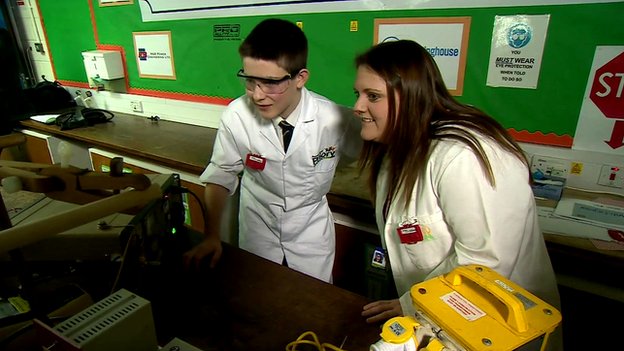
Jamie Edwards, a pupil at Penwortham Priory Academy, created the project from scratch with help from his school.

“I can’t quite believe it – even though all my friends think I am mad,” he said.

The last record holder was US student Taylor Wilson, who was 14 when he created nuclear fusion in 2008.

Jamie, who started work in October in an under-used school science laboratory, recreated a process known as ‘inertial electrostatic confinement’ which dates back to the 1960s.

‘Star in jar’

“One day, I was looking on the internet for radiation or other aspects of nuclear energy and I came across Taylor Wilson,” said the junior scientist who faced a race against time to complete the project before his 14th birthday on Sunday.

“I looked at it, thought ‘that looks cool’ and decided to have a go.”

“You see this purple ball of plasma – basically it’s like a star in a jar,” he added.

Jamie, along with friend George Barker, set about trying to create nuclear fusion by consulting an open source website for amateur physicists.

His application for funds was rejected by various nuclear laboratories and universities.

School funding

Jamie set about trying to create nuclear fusion by consulting an open source website
“They didn’t seem to take me seriously as it was hard to believe a 13-year-old would do something like that so I went to my head teacher Mr Hourigan in October,” he said.

“I was a bit stunned and I have to say a little nervous when Jamie suggested this but he reassured me he wouldn’t blow the school up,” said Priory head Jim Hourigan, who agreed to give £2,000 to the project.

Jamie ordered parts and equipment from Lithuania, the US and UK, working on the project every break and lunchtime as well as after school.

His nuclear fusion record attempt is yet to be verified by the Open Source Fusor Research Consortium.

http://www.bbc.com/news/uk-england-lancashire-26450512

California school children get surprise viewing of rare ‘false killer whales’ on field trip

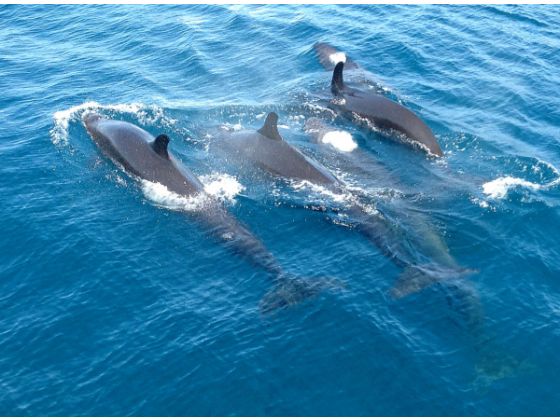
A pod of “false killer whales” made an unexpected visit to the Orange County coast Wednesday, delighting school children on whale-watching tours as the mammals romped through the waves and circled a boat.

The rarely seen whales, last reported off Orange County in 2005, were spotted by the crew of the Sea Explorer from the Ocean Institute in Dana Point late Wednesday morning off San Clemente. About 70 children from Brywood Elementary School in Irvine saw the whales in two separate trips on the vessel, 35 children each, and the whales put on a show.

“At one point when they stopped, they encircled the boat, some of them coming up against it and rubbing on the hull,” said the Sea Explorer’s captain, marine biologist Mike Bursk. “And of course the kids were going crazy.”

One of the whales also took a deep dive and returned with a large white sea bass clamped in its jaws, Bursk said.

The large, boisterous members of the dolphin family, usually found much farther out to sea, drew other vessels, including a boat from Capt. Dave’s Dolphin and Whale Watching Safari.

Capt. Dave himself – Dave Anderson – got close-ups of a curious false killer whale when he went out alone in an inflatable boat and thrust a GoPro camera into the water.

“All of a sudden, one just came right over, and he was right next to my hand,” Anderson said. “I was getting a little bit nervous, because these guys are carnivores.”

The creatures seemed to investigate everything about the boat, including the motor, he said.

“If you look at the video, you can see how long that animal stayed there, turning upside-down and checking out the camera,” he said.

A group of children from San Juan Elementary School aboard the Dana Pride from Dana Wharf Sportfishing and Whale Watching, also got a good view of the whales, passing up a gray whale in order to see them, said Todd Mansur, the boat’s captain.

http://www.ocregister.com/articles/whales-605430-boat-whale.html

6 year old boy author raises $750K for sick friend

ABC_dylan_jonah_kab_140227_16x9_608

by Sydney Lupkin

Every morning at 3 a.m. Lora Pournazarian is awake to feed her 8-year-old son Jonah a mixture of corn starch and water through a tube in his stomach.

If she doesn’t, Jonah could die because he has a rare form of glycogen storage disease, a hereditary disorder that means his liver can store sugar but can’t release it, causing him to have dangerously low blood sugar levels that can result in seizures or even death.

“That’s huge anxiety every night,” his mother Lora Pournazarian told ABC News. “We go to sleep going, ‘We hope we don’t miss an alarm clock because he could die.’”

But Jonah’s parents aren’t the only ones looking out for him. His best friend from preschool, Dylan Siegel has his back, too.

Dr. David Weinstein, who studies and treats patients with glycogen storage disease at the University of Florida, was almost out of funding when he heard that Dylan wanted to help raise money to find a cure for the disease. Dylan was only 6 years old at the time, so Weinstein mostly just thought he was cute.

But Dylan had other plans. He wrote a book called “Chocolate Bar,” and explained to his parents “chocolate bar” means “awesome” to him. “Disneyland is so chocolate bar,” the book starts out. The last page says, “I like to help my friends. That is the biggest chocolate bar.”

Dylan’s project raised more than $750,000 in a little more than a year by selling the books for $20 each in all 50 states and 42 countries. Every cent goes to Weinstein’s lab.

“Boy, have I been shocked,” Weinstein told ABC News in September, when the book had crossed the $400,000 mark. “He’s raised more money for this disease than all the medical foundations and all the grants combined. Ever.”

When this story aired on ABC World News Wednesday night, “Chocolate Bar” had raised more than $500,000. Fewer than 24 hours later, it had raised an additional $250,000.

When asked where the two boys will be in 10 or 15 years, Dylan said, “High school, and probably his disease would be cured ’cause it’s not going to take like 15 years to be cured.”

That would be so chocolate bar.

http://abcnews.go.com/blogs/health/2014/02/27/boy-author-raises-750k-for-sick-friend/

50-Cent Origami Microscope Could Help Fight Malaria

When Manu Prakash, PhD, wants to impress lab visitors with the durability of his Origami-based paper microscope, he throws it off a three-story balcony, stomps on it with his foot and dunks it into a water-filled beaker. Miraculously, it still works.

Even more amazing is that this microscope — a bookmark-sized piece of layered cardstock with a micro-lens — only costs about 50 cents in materials to make.

Prakash’s dream is that this ultra-low-cost microscope will someday be distributed widely to detect dangerous blood-borne diseases like malaria, African sleeping sickness, schistosomiasis and Chagas.

“I wanted to make the best possible disease-detection instrument that we could almost distribute for free,” said Prakash. “What came out of this project is what we call use-and-throw microscopy.”

The Foldscope can be assembled in minutes, includes no mechanical moving parts, packs in a flat configuration, is extremely rugged and can be incinerated after use to safely dispose of infectious biological samples. With minor design modifications, it can be used for bright-field, multi-fluorescence or projection microscopy.

One of the unique design features of the microscope is the use of inexpensive spherical lenses rather than the precision-ground curved glass lenses used in traditional microscopes. These poppy-seed-sized lenses were originally mass produced in various sizes as an abrasive grit that was thrown into industrial tumblers to knock the rough edges off metal parts. In the simplest configuration of the Foldscope, one 17-cent lens is press-fit into a small hole in the center of the slide-mounting platform. Some of his more sophisticated versions use multiple lenses and filters.

To use a Foldscope, a sample is mounted on a microscope slide and wedged between the paper layers of the microscope. With a thumb and forefinger grasping each end of the layered paper strip, a user holds the micro-lens close enough to one eye that eyebrows touch the paper. Focusing and locating a target object are achieved by flexing and sliding the paper platform with the thumb and fingers.

Because of the unique optical physics of a spherical lens held close to the eye, samples can be magnified up to 2,000 times. (To the right are two disease-causing microbes, Giardia lamblia and Leishmania donovani, photographed through a Foldscope.)

The Foldscope can be customized for the detection of specific organisms by adding various combinations of colored LED lights powered by a watch battery, sample stains and fluorescent filters. It can also be configured to project images on the wall of a dark room.

In addition, Prakash is passionate about mass-producing the Foldscope for educational purposes, to inspire children — our future scientists — to explore and learn from the microscopic world.

In a recent Stanford bioengineering course, Prakash used the Foldscope to teach students about the physics of microscopy. He had the entire class build their own Foldscope. Then teams wrote reports on microscopic observations or designed Foldscope accessories, such a smartphone camera attachment.

http://scopeblog.stanford.edu/2014/03/10/stanford-bioengineer-develops-a-50-cent-paper-microscope/
Thanks to Kebmodee for bringing this to the attention of the It’s Interesting community.