Baby Wasps Disinfect Cockroaches Before Eating Them

wasp-and-roach

If cockroaches had nightmares, the emerald cockroach wasp surely would deserve a prominent place therein.

These colorful, tiny parasitic wasps sting American cockroaches twice, once in the midsection to prevent them from running away, and a second time directly in the brain, to make the insects sluggish and zombielike. The wasps then drag the roaches by their antenna, akin to a human pulling a dog on a leash, into a protected nook and lay an egg on the roach. The egg ultimately hatches into larvae that devour the roach from the inside out.

About six weeks later, a young adult wasp emerges after spinning a cocoon inside the shell of the roach. But there’s a catch: What’s to prevent the cockroach “meat” from spoiling? Cockroaches are notoriously dirty animals, covered in bacteria that begin to spoil their flesh — and threaten to harm larval wasps — during this long incubation period.

A study published January 7 in the journal the Proceedings of the National Academy of Sciences found that these larval wasps secrete a surprising amount of potent antimicrobial compounds to prevent their cockroach bounty from spoiling.

“They virtually soak their cockroach host with the secretion to inhibit the growth of competitive microbes that would degrade their food and of pathogenic microbes that threaten their lives,” said study co-author Gudrun Herzner, a researcher at Germany’s University of Regensburg.

The study found that Ampulex compressa larvae secrete several types of antibiotics, specifically the chemicals mellein and micromolide, which inhibit the growth of bacteria, fungi and viruses, Herzner told LiveScience.

“On the one hand, the finding is surprising, because such a simple, little insect larva uses such a sophisticated strategy to ward off detrimental bacteria,” Herzner said. “The larvae are like little chemical plants that produce large amounts of different antimicrobial substances.”

However, she continued, it was not really a surprise to find that these parasitic wasps would have evolved to secrete some antimicrobial substances, given that the cockroach is the young wasp’s only food source, which would by itself spoil if not somehow preserved. The wasps live throughout the tropical regions of Africa, Asia and the Pacific.

Micromolide is considered a promising compound to treat Mycobacterium tuberculosis, the microbe that causes tuberculosis, Herzner said.

This is not the only example of insects producing antimicrobial compounds. The European beewolf wasp hunts honeybees, and coats their bodies in an oily substance that inhibits microbes from growing. Certain types of burying beetles also disinfect the carrion they use as larval food. But in both of these cases, the adult animal secretes the antimicrobial chemicals; the emerald cockroach wasp is a rare example of a larval insect making antibiotics, Herzner said.

http://www.livescience.com/26035-wasps-disinfect-cockroaches.html

Landscape of Dead Bodies May Have Inspired First Mummies

sn-mimmification

Trekking through Chile’s Atacama Desert 7000 years ago, hunter-gatherers known as the Chinchorro walked in the land of the dead. Thousands of shallowly buried human bodies littered the earth, their leathery corpses pockmarking the desolate surroundings. According to new research, the scene inspired the Chinchorro to begin mummifying their dead, a practice they adopted roughly 3000 years before the Egyptians embraced it.

Archaeologists have long studied how the Chinchorro made their mummies, the first in history, says ecologist Pablo Marquet of the Pontifical Catholic University of Chile in Santiago. After removing the skin to be dried, the hunter-gatherers scooped out the organs and stuffed the body with clay, dried plants, and sticks. Once they reattached the skin, embalmers painted the mummy shiny black or red and put a black wig on its head. Covering the corpses’ faces were clay masks, some molded into an open-mouthed expression that later inspired Edvard Munch’s famous painting The Scream.

Few scientists have tackled the mystery of why the Chinchorro started to mummify their dead in the first place. Complicated cultural practices such as mummification, Marquet says, tend to arise only in large, sedentary populations. The more people you have in one place, the more opportunity for innovation, development, and the spread of new ideas. The Chinchorro don’t fit that mold. As nomadic hunter-gatherers, they formed groups of about only 100 people.

To solve the mystery, Marquet and his colleagues needed to go back in time. Using data from ice cores in the Andes, the researchers reconstructed the climate of the region where the Chinchorro lived: the northern coast of Chile and the southern coast of Peru, along the western edge of the Atacama Desert. Before 7000 years ago, the area was extremely arid, the team found, but then it went through a wetter period that lasted until about 4000 years ago. Analyses of carbon-dated Chinchorro artifacts, such as shell piles (known as middens) and mummies, suggest that the rainier conditions supported a larger population, peaking about 6000 years ago.

The team calculated, based on the demographics of hunter-gatherers, that a single Chinchorro group of roughly 100 people would produce about 400 corpses every century. These corpses, shallowly buried and exposed to the arid Atacama climate, would not have decomposed, but lingered. Given that the Chinchorro settled the Atacama coast roughly 10,000 years ago, the researchers argue that by the time the practice of mummification started about 7000 years ago, a staggering number of bodies would have piled up. A single person was likely to see several thousand naturally mummified bodies during his or her lifetime, the team reports online today in the Proceedings of the National Academy of Sciences. The number increased over the years, until mummies “became part of the landscape,” Marquet says.

This constant exposure to natural mummies may have led to a cult of the dead involving artificial mummification. “The dead have a huge impact on the living,” Marquet says, citing work by psychologists and sociologists that shows that exposure to dead bodies produces tangible psychological and social effects, often leading to religious practices. “There’s a conflict between how you think of someone alive and dead,” he says. Religious practices and ideas—such as funerals, wakes, and the belief in ghosts—help resolve that conflict. “Imagine living in the barren desert with barely anything, just sand and stone,” he says. Barely anything, that is, except for hundreds, if not thousands, of dead bodies that never decay. One would feel “compelled somehow to relate” to the corpses, he says, speculating that the Chinchorro made mummies in order to come to terms with the continued presence of their dead. When the climate turned dry again and food supplies dwindled, Marquet says, the population dropped. The complex Chinchorro embalming practices also petered out around that time.

http://news.sciencemag.org/sciencenow/2012/08/landscape-of-dead-bodies-may-hav.html

Thanks to Dr. Rajadhyaksha for bringing this to the attention of the It’s Interesting community.

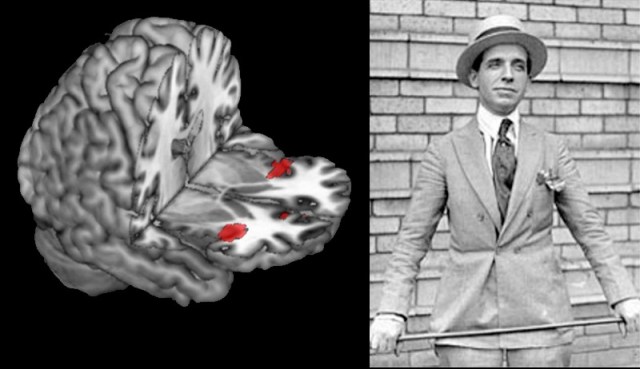
Changes in the anterior insula of hte brain may make us more trusting as we age

sn-trustworthiness

Despite long experience with the ways of the world, older people are especially vulnerable to fraud. According to the Federal Trade Commission (FTC), up to 80% of scam victims are over 65. One explanation may lie in a brain region that serves as a built-in crook detector. Called the anterior insula, this structure—which fires up in response to the face of an unsavory character—is less active in older people, possibly making them less cagey than younger folks, a new study finds.

Both FTC and the Federal Bureau of Investigation have found that older people are easy marks due in part to their tendency to accentuate the positive. According to social neuroscientist Shelley Taylor of the University of California, Los Angeles, research backs up the idea that older people can put a positive spin on things—emotionally charged pictures, for example, and playing virtual games in which they risk the loss of money. “Older people are good at regulating their emotions, seeing things in a positive light, and not overreacting to everyday problems,” she says. But this trait may make them less wary.

To see if older people really are less able to spot a shyster, Taylor and colleagues showed photos of faces considered trustworthy, neutral, or untrustworthy to a group of 119 older adults (ages 55 to 84) and 24 younger adults (ages 20 to 42). Signs of untrustworthiness include averted eyes; an insincere smile that doesn’t reach the eyes; a smug, smirky mouth; and a backward tilt to the head. The participants were asked to rate each face on a scale from -3 (very untrustworthy) to 3 (very trustworthy).

In the study, appearing in the Proceedings of the National Academy of Sciences, the “untrustworthy” faces were perceived as significantly more trustworthy by the older subjects than by the younger ones. The researchers then performed the same test on a different set of volunteers, this time imaging their brains during the process, to look for differences in brain activity between the age groups. In the younger subjects, when asked to judge whether the faces were trustworthy, the anterior insula became active; the activity increased at the sight of an untrustworthy face. The older people, however, showed little or no activation.

Taylor explains that the insula’s job is to collect information not about others but about one’s own body—sensing feelings, including “gut instincts”—and present that information to the rest of the brain. “It’s a warning bell that doesn’t seem to work as well in older people.” By habitually seeing the world in a positive light, older people may be overriding this warning signal, she says. “It looks like the brain is conspiring with what older people do naturally.”

Whether the insula activates in response to non-facial cues, such as telephone scams (a particular problem for older people), remains unclear, says Taylor, since the study was limited to faces.

The new study is the first to show a characteristic pattern of brain activation in a “social” situation involving the assessment of another person’s trustworthiness, says psychologist Lisbeth Nielsen of the National Institute on Aging (NIA) in Bethesda, Maryland. (Though NIA funded the project, Nielsen was not involved in the study.)

A question to be addressed in future research, she says, is whether decreased activity in the insula is the cause or the effect of older peoples’ more positive outlook. “It may be that older people engage with the world in a certain way and this is reflected in the brain activity.”

If so, she adds, older people could work on becoming more cautious. For example, they could be taught to look out for the facial signs of untrustworthiness. “Just because the insula isn’t being activated doesn’t mean it can’t be.”

http://news.sciencemag.org/sciencenow/2012/12/why-old-people-get-scammed.html?ref=hp

Toothy prehistoric lizard named Obamadon after smiling president

tumblr_md3o18ovd91r1z6a3o1_400

Researchers have named a newly discovered, prehistoric lizard “Obamadon gracilis” in honor of the 44th president’s toothy grin.

The small, insect-eating lizard was first discovered in eastern Montana in 1974, but a recent re-examination showed the fossil had been wrongly classified as a Leptochamops denticulatus and was in fact a new species, researchers told Reuters on Tuesday.

Obamadon gracilis was one of nine newly discovered species reported on Monday in the Proceedings of the National Academy of Sciences.

In naming the new species, scientists from Yale and Harvard universities combined the Latin “Obamadon” for “Obama’s teeth” and “gracilis,” which means slender.

“The lizard has these very tall, straight teeth and Obama has these tall, straight incisors and a great smile,” said Nick Longrich, a paleontologist at the school in New Haven, Connecticut.

It was believed to have lived during the Cretaceous period, which began 145.5 million years ago. Along with many dinosaurs from that era, the lizard died out about 65 million years ago when a giant asteroid struck earth, scientists say.

Longrich said he waited until after the recent U.S. election to name the lizard.

“It would look like we were kicking him when he’s down if he lost and we named this extinct lizard after him,” he said in an interview.

“Romneydon” was never under consideration and “Clintondon” didn’t sound good, said Longrich, who supported Hillary Clinton’s failed run against Obama in the 2008 Democratic primary.

Obama is not the first politician whose name has been used to help classify organisms. Megalonyxx jeffersonii, an extinct species of plant-eating ground sloth, was named in honor of President Thomas Jefferson, an amateur paleontologist who studied the mammal.

Earlier this year, researchers announced they had named five newly identified species of freshwater perch after Obama, Bill Clinton, Al Gore, Jimmy Carter and Theodore Roosevelt.

In 2005, entomologists named three species of North American slime-mold beetles agathidium bushi, agathidium cheneyi and agathidium rumsfeldi in honor of George W. Bush, Dick Cheney, and Donald Rumsfeld – the U.S. president, vice president and secretary of defense at the time.

Other celebrity names also have been used to name new species. A small Caribbean crustacean has been named after reggae icon Bob Marley, an Australian horsefly has been named in honor of hip-hop star Beyonce, and an endangered species of marsh rabbit has been named after Playboy magazine founder Hugh Hefner.

http://news.yahoo.com/yale-names-toothy-dinosaur-obamadon-smiling-president-200415370.html

Ancient Microbial Life Found Thriving in Permanent Darkness 60 Feet Beneath Antarctica Ice


Ancient microbes have been discovered in bitter-cold brine beneath 60 feet of Antarctic ice, in permanent darkness and subzero temperatures of Antarctica’s Lake Vida, located in the northernmost of the McMurdo Dry Valleys of East Antarctica.

In the current issue of the Proceedings of the National Academy of Sciences, Nathaniel Ostrom, Michigan State University zoologist, has co-authored “Microbial Life at -13ºC in the Brine of an Ice-Sealed Antarctic Lake.” Ostrom was part of a team that discovered an ancient thriving colony, which is estimated to have been isolated for more than 2,800 years living in a brine of more than 20 percent salinity that has high concentrations of ammonia, nitrogen, sulfur and supersaturated nitrous oxide—the highest ever measured in a natural aquatic environment.”It’s an extreme environment – the thickest lake ice on the planet, and the coldest, most stable cryo-environment on Earth,” Ostrom said. “The discovery of this ecosystem gives us insight into other isolated, frozen environments on Earth, but it also gives us a potential model for life on other icy planets that harbor saline deposits and subsurface oceans, such as Jupiter’s moon Europa.”Members of the 2010 Lake Vida expedition team, Dr. Peter Doran (professor, University of Illinois, Chicago), Dr. Chris Fritsen (research professor, Desert Research Institute, Reno, Nev.) and Jay Kyne (an ice driller) use a sidewinder drill inside a secure, sterile tent on the lake’s surface to collect an ice core and brine existing in a voluminous network of channels 16 meters and more below the lake surface. 

On the Earth’s surface, water fuels life. Plants use photosynthesis to derive energy. In contrast, at thermal vents at the ocean bottom, out of reach of the sun’s rays, chemical energy released by hydrothermal processes supports life. Life in Lake Vida lacks sunlight and oxygen. Its high concentrations of hydrogen gas, nitrate, nitrite and nitrous oxide likely provide the chemical energy used to support this novel and isolated microbial ecosystem. The high concentrations of hydrogen and nitrous oxide gases are likely derived from chemical reactions with the surrounding iron-rich rocks.

Consequently, it is likely that the chemical reactions between the anoxic brine and rock provide a source of energy to fuel microbial metabolism. These processes provide new insights into how life may have developed on Earth and function on other planetary bodies, Ostrom said. The research team comprised scientists from the Desert Research Institute (Reno, Nev.), the University of Illinois-Chicago, NASA, the University of Colorado, the Jet Propulsion Laboratory, Montana State University, the University of Georgia, the University of Tasmania and Indiana University.

For more information: “Microbial life at −13 °C in the brine of an ice-sealed Antarctic lake,” by Alison E. Murray et al. PNAS, 2012. http://www.pnas.org/content/early/2012/11/21/1208607109.abstract Journal reference: Proceedings of the National Academy of Sciences.

http://www.dailygalaxy.com/my_weblog/2012/11/ancient-microbial-life-found-thriving-in-permanent-darkness-60-feet-beneath-antarctica-ice.html

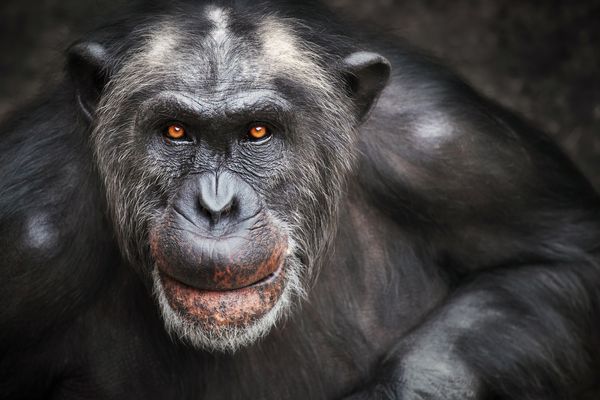
Apes have mid-life crises


Too bad chimpanzees can’t buy sports cars. New research says it’s not just humans who go through midlife crises: Chimps and orangutans also experience a dip in happiness around the middle of their lives.

“There may be different things going on at the surface, but underneath it all, there’s something common in all three species that’s leading to this,” said study leader Alexander Weiss, a primate psychologist at the University of Edinburgh in Scotland.

The study team asked longtime caretakers of more than 500 chimpanzees and orangutans at zoos in five countries to fill out a questionnaire about the well-being of each animal they work with, including overall mood, how much the animals seemed to enjoy social interactions, and how successful they were in achieving goals (such as obtaining a desired item or spot within their enclosure).

The survey even asked the humans to imagine themselves as the animal and rate how happy they’d be.

When Weiss’s team plotted the results on a graph, they saw a familiar curve, bottoming out in the middle of the animals’ lives and rising again in old age. It’s the same U-shape that has shown up in several studies about age and happiness in people.

“When you look at worldwide data, you see this U-shape,” said National Geographic Fellow Dan Buettner, author of Thrive: Finding Happiness the Blue Zones Way.

“It’s different for every country, but it’s usually somewhere between age 45 and 55 that you hit the bottom of the curve, and it continues to go up with age. You see centenarians in good health reporting higher well-being than teenagers.”

(Take Buettner’s True Happiness Test.)

Social and economic hypotheses may partly explain this happiness curve in human lifetimes: Maybe it’s tied to adjusting expectations, abandoning regret, or just getting more stuff as we grow older. But Weiss suspects there may be something more primal going on.

“We’re saying, take a step back and look at the big picture: Is there any evidence that there’s an evolutionary basis underlying this?” said Weiss, whose study was published today in the journal Proceedings of the National Academy of Sciences.

“Knowing that a similar phenomenon exists in human and nonhuman primates opens up the realm of possible explanations.”

Although the stereotype of a midlife crisis is generally negative—feelings of depression or discontentment with one’s life and where it’s headed—Weiss believes such ennui may have an evolutionary upside.

By the middle of one’s life, humans and apes often have access to more resources than when they were younger, which could make it easier to achieve goals. Feelings of discontentment may be nature’s way of motivating us to “strike while the iron is hot,” said Weiss.

“It may feel lousy, but your brain could be tricking you into improving your circumstances and situation, signaling you to get up and really start pushing while you’re absolutely at your prime,” he said. “And I think that’s a really powerful and positive message.”

Knowing that a midlife dip in happiness is a natural—and temporary—part of life could make it easier for humans to cope with the experience, Weiss said. It could also help caretakers improve captive apes’ quality of life, by identifying ages at which the animals might benefit from extra attention or enrichment.

(See pictures of places where people are happiest.)

“I don’t think this totally subsumes other explanations for age-related changes in happiness, but it adds another layer,” Weiss said.

Weiss has previously studied the correlation between personality and happiness in both chimpanzees and humans, and plans to look next at the impact of factors like sex and social groupings.

“I hope this raises awareness of all that we can learn by looking at our closest living animal relatives.”

http://news.nationalgeographic.com/news/2012/11/121119-apes-happiness-midlife-crises-science-animals/

New smell discovered


Scientists have discovered a new smell, but you may have to go to a laboratory to experience it yourself.

The smell is dubbed “olfactory white,” because it is the nasal equivalent of white noise, researchers reported Nov. 19 in the journal Proceedings of the National Academy of Sciences. Just as white noise is a mixture of many different sound frequencies and white light is a mixture of many different wavelengths, olfactory white is a mixture of many different smelly compounds.

In fact, the key to olfactory white is not the compounds themselves, researchers found, but the fact that there are a lot of them. 

“[T]he more components there were in each of two mixtures, the more similar the smell of those two mixtures became, even though the mixtures had no components in common,” they wrote.

Almost any given smell in the real world comes from a mixture of compounds. Humans are good at telling these mixtures apart (it’s hard to mix up the smell of coffee with the smell of roses, for example), but we’re bad at picking individual components out of those mixtures. (Quick, sniff your coffee mug and report back all the individual compounds that make that roasted smell. Not so easy, huh?)

Mixing multiple wavelegths that span the human visual range equally makes white light; mixing multiple frequencies that span the range of human hearing equally makes the whooshing hum of white noise. Neurobiologist Noam Sobel from the Weizmann Institute of Science in Israel and his colleagues wanted to find out whether a similar phenomenon happens with smelling. [7 New Flavors Your Tongue May Taste]

In a series of experiments, they exposed participants to hundreds of equally mixed smells, some containing as few as one compound and others containing up to 43 components. They first had 56 participants compare mixtures of the same number of compounds with one another. For example, a person might compare a 40-compound mixture with a 40-compound mixture, neither of which had any components in common.

This experiment revealed that the more components in a mixture, the worse participants were at telling them apart. A four-component mixture smells less similar to other four-component mixtures than a 43-component mixture smells to other 43-component mixtures.

The researchers seemed on track to finding the olfactory version of white noise. They set up a new experiment to confirm the find. In this experiment, they first created four 40-component mixtures. Twelve participants were then given one of the mixtures to sniff and told that it was called “Laurax,” a made-up word. Three of the participants were told compound 1 was Laurax, three were told it was compound 2, three were told it was compound 3, and the rest were told it was compound 4. 

After three days of sniffing their version of Laurax in the lab, the participants were given four new scents and four scent labels, one of which was Laurax. They were asked to label each scent with the most appropriate label.

The researchers found that the label “Laurax” was most popular for scents with more compounds. In fact, the more compounds in a mixture, the more likely participants were to call it Laurax. The label went to mixtures with more than 40 compounds 57.1 percent of the time.

Another experiment replicated the first, except that it allowed for participants to label one of the scents “other,” a way to ensure “Laurax” wasn’t just a catch-all. Again, scents with more compounds were more likely to get the Laurax label.

The meaning of these results, the researchers wrote, is that olfactory white is a distinct smell, caused not by specific compounds but by certain mixes of compounds. The key is that the compounds are all of equal intensity and that they span the full range of human smells. That’s why roses and coffee, both of which have many smell compounds, don’t smell anything alike: Their compounds are unequally mixed and don’t span a large range of smells.

In other words, our brains treat smells as a single unit, not as a mixture of compounds to break down, analyze and put back together again. If they didn’t, they’d never see mixtures of completely different compounds as smelling the same.

Perhaps the next burning question is: What does olfactory white smell like? Unfortunately, the scent is so bland as to defy description. Participants rated it right in the middle of the scale for both pleasantness and edibility.

“The best way to appreciate the qualities of olfactory white is to smell it,” the researchers wrote.

http://www.livescience.com/24890-new-white-smell-discovered.html

Retinal device restores sight to blind mice


Researchers report they have developed in mice what they believe might one day become a breakthrough for humans: a retinal prosthesis that could restore near-normal sight to those who have lost their vision.

That would be a welcome development for the roughly 25 million people worldwide who are blind because of retinal disease, most notably macular degeneration.

The notion of using prosthetics to combat blindness is not new, with prior efforts involving retinal electrode implantation and/or gene therapy restoring a limited ability to pick out spots and rough edges of light.

The current effort takes matters to a new level. The scientists fashioned a prosthetic system packed with computer chips that replicate the “neural impulse codes” the eye uses to transmit light signals to the brain.

“This is a unique approach that hasn’t really been explored before, and we’re really very excited about it,” said study author Sheila Nirenberg, a professor and computational neuroscientist in the department of physiology and biophysics at Weill Medical College of Cornell University in New York City. “I’ve actually been working on this for 10 years. And suddenly, after a lot of work, I knew immediately that I could make a prosthetic that would work, by making one that could take in images and process them into a code that the brain can understand.”

Nirenberg and her co-author Chethan Pandarinath (a former Cornell graduate student now conducting postdoctoral research at Stanford University School of Medicine) report their work in the Aug. 14 issue of Proceedings of the National Academy of Sciences. Their efforts were funded by the U.S. National Institutes of Health and Cornell University’s Institute for Computational Biomedicine.

The study authors explained that retinal diseases destroy the light-catching photoreceptor cells on the retina’s surface. Without those, the eye cannot convert light into neural signals that can be sent to the brain.

However, most of these patients retain the use of their retina’s “output cells” — called ganglion cells — whose job it is to actually send these impulses to the brain. The goal, therefore, would be to jumpstart these ganglion cells by using a light-catching device that could produce critical neural signaling.

But past efforts to implant electrodes directly into the eye have only achieved a small degree of ganglion stimulation, and alternate strategies using gene therapy to insert light-sensitive proteins directly into the retina have also fallen short, the researchers said.

Nirenberg theorized that stimulation alone wasn’t enough if the neural signals weren’t exact replicas of those the brain receives from a healthy retina.

“So, what we did is figure out this code, the right set of mathematical equations,” Nirenberg explained. And by incorporating the code right into their prosthetic device’s chip, she and Pandarinath generated the kind of electrical and light impulses that the brain understood.

The team also used gene therapy to hypersensitize the ganglion output cells and get them to deliver the visual message up the chain of command.

Behavioral tests were then conducted among blind mice given a code-outfitted retinal prosthetic and among those given a prosthetic that lacked the code in question.

The result: The code group fared dramatically better on visual tracking than the non-code group, with the former able to distinguish images nearly as well as mice with healthy retinas.

“Now we hope to move on to human trials as soon as possible,” said Nirenberg. “Of course, we have to conduct standard safety studies before we get there. And I would say that we’re looking at five to seven years before this is something that might be ready to go, in the best possible case. But we do hope to start clinical trials in the next one to two years.”

Results achieved in animal studies don’t necessarily translate to humans.

Dr. Alfred Sommer, a professor of ophthalmology at Johns Hopkins University in Baltimore and dean emeritus of Hopkins’  Bloomberg School of Public Health, urged caution about the findings.

“This could be revolutionary,” he said. “But I doubt it. It’s a very, very complicated business. And people have been working on it intensively and incrementally for the last 30 years.”

“The fact that they have done something that sounds a little bit better than the last set of results is great,” Sommer added.  “It’s terrific. But this approach is really in its infancy. And I guarantee that it will be a long time before they get to the point where they can really restore vision to people using prosthetics.”

Other advances may offer benefits in the meantime, he said. “We now have new therapies that we didn’t have even five years ago,” Sommer said. “So we may be reaching a state where the amount of people losing their sight will decline even as these new techniques for providing artificial vision improve. It may not be as sci-fi. But I think it’s infinitely more important at this stage.”

http://health.usnews.com/health-news/news/articles/2012/08/13/retinal-device-restores-sight-to-blind-mice

Thanks to Kebmodee for bringing this to the attention of the It’s Interesting community.