What I’ve Learned: Sol Snyder


Sol Snyder, Distinguished Service Professor of Neuroscience, Pharmacology and Psychiatry, School of Medicine

Growing up, I never had any strong interest in science. I did well in lots of things in high school. I liked reading philosophy and things like that, but being a philosopher is not a fit job for a nice Jewish boy.

This was in the mid-1950s, and many of my friends were going into engineering, preparatory to joining the then prominent military industrial complex. Others were going to be doctors, so I got the idea that maybe I’d be a psychiatrist. I didn’t have any special affinity for medicine or desire to cast out the lepers or heal mankind.

I was always reading things. My father valued education. He wasn’t a big advice giver, but he … had a lot of integrity. What was important to him was doing the right thing. And he had great respect for the intellectual life and science.

My father’s professional life commenced in 1935 as the 10th employee of what became the NSA. He led a team that broke one of the principal Japanese codes. At the end of World War II, computers were invented, and, if you think about it, what could be the best entity to take advantage of computers than NSA, with its mission of sorting gibberish and looking for patterns. So my father was assigned to look at these new machines and see if they would be helpful. He led the computer installations at NSA.

Summers in college I worked in the NSA. My father taught me to program computers in machine language. Computers were a big influence on me.

I learned at the NSA about keeping secrets. What is top secret, what is need-to-know—that is one of the things you learn in the business. You don’t talk to the guy at the next desk even if you’re working on the same project. If that person doesn’t need to know, you just shut up.

In medical school, I started working at the NIH in Bethesda during the summers and elective periods, largely because the only thing I really did well up to that time was play the classical guitar and one of my guitar students was an NIH researcher. In high school I thought I might go the conservatory route, but that’s even less fitting for a nice Jewish boy than being a philosopher.

It was through my contacts at NIH that I was able to get a position working with future Nobel Prize winner Julius Axelrod. Julie was a wonderful mentor who did research on drugs and neurotransmitters. Working with him was inspirational. I just adored it.

What was notable about Julie was his great creativity, always coming up with original ideas. Even though he was an eminent scientist, he didn’t have a regular office. He just had a desk in a lab. He did experiments with his own two hands every day.

Philosophically, Julie emphasized you go where the data takes you. Don’t worry that you’re an expert in enzyme X and so should focus on that. If the data point to enzyme Y, go for it. Do what’s exciting.

My very first project with Julie was studying the disposition of histamine. I thought I had found that histamine had been converted into a novel product that looked really interesting, and I was wrong. I missed the true product because we separated the chemicals on paper and discarded the radioactivity at the bottom, throwing away the real McCoy. Another lab at Yale found it, led, remarkably, by a close friend since kindergarten. My humiliation didn’t last very long. I learned not to be so sloppy, to take greater care, and, most important, to explore peculiar results.

How does one pick research directions? You can go where it’s “hot,” but there you’re competing with 300 other people, and everyone can make only incremental changes. But if you follow Julie Axelrod’s rules and you don’t worry about what’s hot, or what other people are doing—just go where your data are taking you—then you have a better chance of finding something that nobody else had found before.

With the discovery of the opiate receptor, I was fortunate to launch a new field: molecular identification of neurotransmitter receptors. Later we discovered that the gas nitrous oxide is a neurotransmitter.

I’m a klutz. I can’t hammer a nail. So for the technical side, like dissecting brains to look at different regions, I enlisted friends. I learned to collaborate, a key element in so many discoveries.

Johns Hopkins has always been a collegial place. People are just friendly and interact with each other. This tradition goes back to the founding of the medical school, permeating the school’s governance as well as research. We tend to be more productive than faculty at other schools, where one gets ahead by sticking an ice pick in the backs of colleagues.

One of my heroes was my guitar teacher, Sophocles Papas, Andrés Segovia’s best friend. Sophocles was an important influence in my life, and we stayed close until he died in his 90s. In a couple of years after commencing lessons, I was giving recitals, all thanks to him. Like Julie, Sophocles emphasized innovative short cuts to creativity.

I’ve remained involved with music. I’m the longest-serving trustee on the Baltimore Symphony Orchestra, chairing for many years its music committee. Trustees of arts organizations are typically businesspeople selected for their fundraising acumen. But the person who nominated me reportedly commented, I’d like to propose something radical: I’d like to propose a trustee who cares about music.

Most notable about psychiatry is that the major drugs—antipsychotics for schizophrenia, antidepressants, and anti-anxiety drugs—were all discovered in the mid-1950s. Subsequent tweaking has enhanced potency and diminished side effects, but there have been no major breakthroughs. No new class of drugs since 1958—rather frustrating.

As biomedical science advances, especially with the dawn of molecular biology, our power to innovate is just dazzling. Today’s students take all of this for granted, but those of us who have been doing research for several decades are daily amazed by our abilities to probe the mysteries of life.

The logic of nature is elegant and straightforward. The more we learn about how the body works, the more we are amazed by its beauty and inherent simplicity.

One of my pet peeves is that the very power of modern science leads journal and grant reviewers to expect every “i” dotted and every “t” crossed. Because of this, four years or more of work go into each scientific manuscript. Then, editors and reviewers of journals are so picayune that revising a paper consumes another year.

Now let’s consider the poor post­doctoral fellow or graduate student. To move forward in his or her career requires at least one major publication—a five-year enterprise. If you only have one shot on goal, one paper in five years, your chances of success shrivel. The duration of PhD training and postdoctoral training is getting so long that from the entry point at graduate school to the time you’re out looking for a job as an assistant professor is easily 12, 15 years. Well, that is ridiculous. If you got paid $10 million at the end of this road, that would be one thing, but scientists earn less than most other professionals. We’re deterring the young smart people from going into science.

Biomedical researchers don’t work in a vacuum. They work with grad students and postdoctoral fellows, so being a good mentor is key to being a good scientist. Keep your students well motivated and happy. Have them feel that they are good human beings, and they will do better science.

The most important thing is that you value the integrity of each person. I ask my students all the time, What do you think? And this discussion turns into minor league psychotherapy. Ah, you think that? Tell me more. Tell me more.

The “stupidest” of the students here are smarter than me. It’s a pleasure to watch them emerge.

I see my life as taking care of other people. Although I didn’t go to medical school with any intelligent motivation, once I did, I loved being a doctor and trying to help people. And I love being a psychiatrist and trying to understand people, and I try to carry that into everything I do.

In medical research, all of us want to find the causes and cures for diseases. I haven’t found the cause of any disease, although with Huntington’s disease, we are making inroads. And, of course, being a pharmacologist, my métier is discovering drugs and better treatments.

My secret? I come to work every day, and I keep my own calendar. That way I have free time to just wander around the lab and talk to the boys and girls and ask them how it’s going. That’s what makes me happy.

Sol Snyder joined Johns Hopkins in 1965 as an assistant resident in Psychiatry and would later become the youngest full professor in JHU history. In 1978, he received the Albert Lasker Basic Medical Research Award for his role in discovering the brain’s opiate receptors. In 1980, he founded the School of Medicine’s Department of Neuroscience, which in 2006 was renamed the Solomon H. Snyder Department of Neuroscience.

http://hub.jhu.edu/gazette/2014/january-february/what-ive-learned-sol-snyder

http://en.wikipedia.org/wiki/Solomon_H._Snyder

Protecting new neurons reduces depression caused by stress, and may lead to a new class of molecules to treat depression.

Scientists probing the link between depression and a hormone that controls hunger have found that the hormone’s antidepressant activity is due to its ability to protect newborn neurons in a part of the brain that controls mood, memory, and complex eating behaviors. Moreover, the researchers also showed that a new class of neuroprotective molecules achieves the same effect by working in the same part of the brain, and may thus represent a powerful new approach for treating depression.

“Despite the availability of many antidepressant drugs and other therapeutic approaches, major depression remains very difficult to treat,” says Andrew Pieper, associate professor of psychiatry and neurology at the University of Iowa Carver College of Medicine and Department of Veterans Affairs, and co-senior author of the study.

In the new study, Pieper and colleagues from University of Texas Southwestern Medical Center led by Jeffrey Zigman, associate professor of internal medicine and psychiatry at UT Southwestern, focused on understanding the relationship between depression, the gut hormone ghrelin, and the survival of newborn neurons in the hippocampus, the brain region involved in mood, memory, and eating behaviors.

“Not only did we demonstrate that the P7C3 compounds were able to block the exaggerated stress-induced depression experienced by mice lacking ghrelin receptors, but we also showed that a more active P7C3 analog was able to complement the antidepressant effect of ghrelin in normal mice, increasing the protection against depression caused by chronic stress in these animals,” Zigman explains.

“The P7C3 compounds showed potent antidepressant activity that was based on their neurogenesis-promoting properties,” Pieper adds. “Another exciting finding was that our experiments showed that the highly active P7C3 analog acted more rapidly and was more effective [at enhancing neurogenesis] than a wide range of currently available antidepressant drugs.”

The findings suggest that P7C3-based compounds may represent a new approach for treating depression. Drugs based on P7C3 might be particularly helpful for treating depression associated with chronic stress and depression associated with a reduced response to ghrelin activity, which may occur in conditions such as obesity and anorexia nervosa.

Future studies, including clinical trials, will be needed to investigate whether the findings are applicable to other forms of depression, and determine whether the P7C3 class will have antidepressant effects in people with major depression.

The hippocampus is one of the few regions in the adult brain where new neurons are continually produced – a process known as neurogenesis. Certain neurological diseases, including depression, interfere with neurogenesis by causing death of these new neurons, leading to a net decrease in the number of new neurons produced in the hippocampus.

Ghrelin, which is produced mainly by the stomach and is best known for its ability to stimulate appetite, also acts as a natural antidepressant. During chronic stress, ghrelin levels rise and limit the severity of depression caused by long-term stress. When mice that are unable to respond to ghrelin experience chronic stress they have more severe depression than normal mice.

In the new study, Pieper and Zigman’s team showed that disrupted neurogenesis is a contributing cause of depression induced by chronic stress, and that ghrelin’s antidepressant effect works through the hormone’s ability to enhance neurogenesis in the hippocampus. Specifically, ghrelin helps block the death of these newborn neurons that otherwise occurs with depression-inducing stress. Importantly, the study also shows that the new “P7C3-class” of neuroprotective compounds, which bolster neurogenesis in the hippocampus, are powerful, fast-acting antidepressants in an animal model of stress-induced depression. The results were published online April 22 in the journal Molecular Psychiatry.

Potential for new antidepressant drugs

The neuroprotective compounds tested in the study were discovered about eight years ago by Pieper, then at UT Southwestern Medical Center, and colleagues there, including Steven McKnight and Joseph Ready. The root compound, known as P7C3, and its analogs protect newborn neurons from cell death, leading to an overall increase in neurogenesis. These compounds have already shown promising neuroprotective effects in models of neurodegenerative disease, including Parkinson’s disease, amyotrophic lateral sclerosis (ALS), and traumatic brain injury. In the new study, the team investigated whether the neuroprotective P7C3 compounds would reduce depression in mice exposed to chronic stress, by enhancing neurogenesis in the hippocampus.

http://now.uiowa.edu/2014/04/protecting-new-neurons-reduces-depression-caused-stress

Boosting Excess Neuron Activity Builds Resilience In Mice Vulnerable To Depression

A new study has found that activating natural resilience in the brain could reduce susceptibility for stress in mice, and potentially humans.

Depressive behaviors in mice are often linked to “out-of-balance” neuron activity in the brain’s reward circuit. Suppressing or stopping this hyperactive neuron activity was typically thought to treat this susceptibility to depression or anxiety — but the new study has found quite the opposite.

“To our surprise, neurons in this circuit harbor their own self-tuning, homeostatic mechanism of natural resilience,” Ming-Hu Han of the Icahn School of Medicine at Mount Sinai in New York City, explained in a press release. What this means is that instead of suppressing this excessive neuron activity, boosting it provided a self-stabilizing response, re-establishing balance and producing an antidepressant-like effect.

The mice that were once vulnerable to being anxious, listless, depressed or withdrawn after socially stressful experiences stopped exhibiting these behaviors after their neuron activity received a boost. “As we get to the bottom of a mystery that has perplexed the field for more than a decade, the story takes an unexpected twist that may hold clues to future antidepressants that would at through this counterintuitive resilience mechanism,” Dr. Thomas Insel, NIMH Director, said in the press release.

In susceptible mice, neurons that secrete dopamine — a feel-good hormone — from a reward circuit area called the ventral tegmental area (VTA) become unusually hyperactive. This hyperaction was much higher in mice that were resilient to stress, “even though they were spared the runaway dopamine activity and depression-related behaviors,” the press release reads. Using this logic, the susceptible mice just needed a boost in activation in these neurons to produce resilience.

What is interesting about this study is that it points to the power of the body and brain’s self-correcting prowess. “Homeostatic mechanisms finely regulate other critical components of physiology required for survival — blood glucose and oxygen, body temperature, blood pressure,” Lois Winsky, chief of the NIMH Molecular, Cellular, and Genomic Neuroscience Research Branch, said in the press release. “Similar mechanisms appear to also maintain excitatory balance in brain cells. This study shows how they may regulate circuits underlying behavior.”

http://www.medicaldaily.com/boosting-excess-neuron-activity-builds-resilience-mice-vulnerable-depression-277452

New research suggests that a third of patients diagnosed as vegetative may be conscious with a chance for recovery

Imagine being confined to a bed, diagnosed as “vegetative“—the doctors think you’re completely unresponsive and unaware, but they’re wrong. As many as one-third of vegetative patients are misdiagnosed, according to a new study in The Lancet. Using brain imaging techniques, researchers found signs of minimal consciousness in 13 of 42 patients who were considered vegetative. “The consequences are huge,” lead author Dr. Steven Laureys, of the Coma Science Group at the Université de Liège, tells Maclean’s. “These patients have emotions; they may feel pain; studies have shown they have a better outcome [than vegetative patients]. Distinguishing between unconscious, and a little bit conscious, is very important.”

Detecting human consciousness following brain injury remains exceedingly difficult. Vegetative patients are typically diagnosed by a bedside clinical exam, and remain “neglected” in the health care system, Laureys says. Once diagnosed, “they might not be [re-examined] for years. Nobody questions whether or not there could be something more going on.” That’s about to change.

Laureys has collaborated previously with British neuroscientist Adrian Owen, based at Western University in London, Ont., who holds the Canada Excellence Research Chair in Cognitive Neuroscience and Imaging. (Owen’s work was featured in Maclean’s in October 2013.) Together they co-authored a now-famous paper in the journal Science, in 2006, in which a 23-year-old vegetative patient was instructed to either imagine playing tennis, or moving around her house. Using functional magnetic resonance imaging, or fMRI, they saw that the patient was activating two different parts of her brain, just like healthy volunteers did. Laureys and Owen also worked together on a 2010 follow-up study, in the New England Journal of Medicine, where the same technique was used to ask a patient to answer “yes” or “no” to various questions, presenting the stunning possibility that some vegetative patients might be able to communicate.

In the new Lancet paper, Laureys used two functional brain imaging techniques, fMRI and positron emission tomography (PET), to examine 126 patients with severe brain injury: 41 of them vegetative, four locked-in (a rare condition in which patients are fully conscious and aware, yet completely paralyzed from head-to-toe), and another 81 who were minimally conscious. After finding that 13 of 42 vegetative patients showed brain activity indicating minimal consciousness, they re-examined them a year later. By then, nine of the 13 had improved, and progressed into a minimally conscious state or higher.

The mounting evidence that some vegetative patients are conscious, even minimally so, carries ethical and legal implications. Just last year, Canada’s Supreme Court ruled that doctors couldn’t unilaterally pull the plug on Hassan Rasouli, a man in a vegetative state. This work raises the possibility that one day, some patients may be able to communicate through some kind of brain-machine interface, and maybe even weigh in on their own medical treatment. For now, doctors could make better use of functional brain imaging tests to diagnose these patients, Laureys believes. Kate Bainbridge, who was one of the first vegetative patients examined by Owen, was given a scan that showed her brain lighting up in response to images of her family. Her health later improved. “I can’t say how lucky I was to have the scan,” she said in an email to Maclean’s last year. “[It] really scares me to think what would have happened if I hadn’t had it.”

https://ca.news.yahoo.com/one-third-of-vegetative-patients-may-be-conscious–study-195412300.html

New research shows that elephants know how dangerous people are from how they speak

When an elephant killed a Maasai woman collecting firewood near Kenya’s Amboseli National Park in 2007, a group of young Maasai men retaliated by spearing one of the animals.

“It wasn’t the one that had killed the woman, says Graeme Shannon, a behavioral ecologist at Colorado State University, in Fort Collins. “It was just the first elephant they encountered—a young bull on the edge of a swamp.”

The Maasai spiked him with spears and, their anger spent, returned home. Later, the animal died from his wounds.

Elephants experience those kinds of killings sporadically. Yet the attacks happen often enough that the tuskers have learned that the Maasai—and Maasai men in particular—are dangerous.

The elephants in the Amboseli region are so aware of this that they can even distinguish between Ma, the language of the Maasai, and other languages, says a team of researchers, who report their findings today in the Proceedings of the National Academy of Sciences.

The results add to “our growing knowledge of the discriminatory abilities of the elephant mind, and how elephants make decisions and see their world,” says Joyce Poole, an elephant expert with ElephantVoices in Masai Mara, Kenya.

Indeed, previous studies have shown that the Amboseli elephants can tell the cattle-herding, red-robed Maasai apart from their agricultural and more blandly dressed neighbors, the Kamba people, simply by scent and the color of their dress.

The elephants know too that walking through villages on weekends is dangerous, as is crop raiding during the full moon.

They’re equally aware of their other key predator, lions, and from their roars, know how many lions are in a pride and if a male lion (the bigger threat because he can bring down an elephant calf) is present.

And they know exactly how to respond to lions roaring nearby: run them off with a charge.

Intriguingly, when the Amboseli elephants encounter a red cloth, such as those worn by the Maasai, they also react aggressively. But they employ a different tactic when they catch the scent of a Maasai man: They run away. Smelling the scent of a Kamba man, however, troubles them far less.

“They have very clear behavioral responses in all of these situations,” says Karen McComb, a behavioral ecologist at the University of Sussex, in the United Kingdom. “We wondered if they would react differently to different human voices.”

To find out, she and her colleagues played recordings to elephant families of Maasai and Kamba men, as well as Maasai women and boys, speaking a simple phrase in their language: “Look, look over there, a group of elephants is coming.”

Over a two-year period, they carried out 142 such playbacks with 47 elephant families, each time playing a different human voice through a concealed speaker placed 50 meters (164 feet) from the animals. They video-recorded the elephants’ reactions to the various human voices, including a Maasai man’s voice they altered to sound like a woman’s.

As soon as an elephant family heard an adult Maasai man speak, the matriarch didn’t hesitate, the researchers say. “She instantly retreats,” Shannon says. “But it’s a silent retreat. They sometimes make a low rumble, and may smell for him, too, but they’re already leaving, and bunching up into a defensive formation. It’s a very different response to when they hear lions.”

In contrast, the voices of Kamba men didn’t cause nearly as strong a defensive reaction: The elephants didn’t consider the Kamba a serious threat.

“That subtle discrimination is easy for us to do, but then we speak human language,” says Richard Byrne, a cognitive biologist at the University of St. Andrews, in Scotland. “It’s interesting that elephants can also detect the characteristic differences between the languages.”

The Amboseli elephants were also sufficiently tuned in to the Maasai language that they could tell women’s and boys’ voices from men’s, seldom turning tail in response. “Maasai women and boys don’t kill elephants,” Shannon points out. Nor were the elephants tricked by the man’s altered voice; when they heard it, they left at once.

“The elephants’ decision-making is very precise,” McComb says, “and it illustrates how they’ve adapted where they can to coexist with us. They’d rather run away than tangle with a human predator.”

Why, one wonders, don’t elephants retreat when poachers descend on them?

“Unfortunately, there are going to be things they cannot adapt to, things such as humans’ ability to come after them with automatic weapons or mass poisonings,” McComb says. “And in those situations, we have to protect them—or we will lose them, ultimately.”

http://news.nationalgeographic.com/news/2014/03/140310-elephants-amboseli-national-park-kenya-maasai-kamba-lions-science/?google_editors_picks=true

Thanks to Da Brayn for bringing this to the It’s Interesting community.

New blood test to predict who will develop Alzheimer’s disease

Alzheimers_elderly_1665136c

In a first-of-its-kind study, researchers have developed a blood test for Alzheimer’s disease that predicts with astonishing accuracy whether a healthy person will develop the disease.

Though much work still needs to be done, it is hoped the test will someday be available in doctors’ offices, since the only methods for predicting Alzheimer’s right now, such as PET scans and spinal taps, are expensive, impractical, often unreliable and sometimes risky.

“This is a potential game-changer,” said Dr. Howard Federoff, senior author of the report and a neurologist at Georgetown University Medical Center. “My level of enthusiasm is very high.”

The study was published in Nature Medicine.

In the beginning, the researchers knew they wanted to find a blood test to detect Alzheimer’s but didn’t know what specifically to look for. Should they examine patients’ DNA? Their RNA? Or should they look for the byproducts of DNA and RNA, such as fats and proteins?

They decided to start with fats, since it was the easiest and least expensive. They drew blood from hundreds of healthy people over age 70 living near Rochester, New York, and Irvine, California. Five years later, 28 of the seniors had developed Alzheimer’s disease or the mild cognitive problems that usually precede it.

Scouring more than 100 fats, or lipids, for what might set this group apart, they found that these 28 seniors had low levels of 10 particular lipids, compared with healthy seniors.

To confirm their findings, the researchers then looked at the blood of 54 other patients who had Alzheimer’s or mild cognitive impairment. This group also had low levels of the lipids.

Overall, the blood test predicted who would get Alzheimer’s or mild cognitive impairment with over 90% accuracy.

“We were surprised,” said Mark Mapstone, a neuropsychologist at the University of Rochester Medical Center and lead author of the study. “But it turns out that it appears we were looking in the right place.”

The beauty of this test, Mapstone says, is that it caught Alzheimer’s before the patient even had symptoms, suggesting that the disease process begins long before people’s memories start failing. He says that perhaps the lipid levels started decreasing at the same time as brain cells started dying.

He and his team plan to try out this test in people in their 40s and 50s. If that works, he says, that would be the “holy grail,” because then researchers could try experimental drugs and treatments in a group that’s almost sure to get the disease. That would speed research along immensely.

Plus, people could get a heads up that they were probably destined to get Alzheimer’s. Although some people might not want to know that they’re destined for a horrible disease, others might be grateful for the warning.

Federoff said he would want to know whether he was on his way to getting the disease, even though there’s nothing he could do about it. He might want to take a family trip he’d been thinking about or might want to appoint a successor at work.

“I would make sure that things that are important to me get done,” he said.

But, Federoff added, others might not want to know they were about to get a devastating disease they were powerless to stop.

“I think it’s a very personal decision,” Federoff said. “It would have to be thought through on multiple dimensions. Patients and their families would have to be counseled.”

Other research teams are looking at other possible tests for Alzheimer’s. The need for a screening test of some kind for Alzheimer’s has never been greater: A report released last week says the disease claims the lives of perhaps a half a million Americans, making it nearly as deadly as heart disease and cancer.

If any of these tests work out — and that’s still an if — it would take years to make it to doctors’ offices, since the test would need to be validated by other labs and with larger groups of people. Thee test developed by the Georgetown and Rochester researchers, for example, was used mainly in white people, and it might not work as well with other groups.

Heather Snyder, a spokeswoman for the Alzheimer’s Association, said the study was well done but much work is still needed.

“It’s an interesting paper. It’s an intriguing study. But it is very preliminary,” she said.http://www.cnn.com/2014/03/09/health/alzheimers-blood-test/index.html?hpt=hp_t2

LSD used as drug therapy for the first time in 40 years

Swiss scientists broke a four-decade-long informal ban on LSD research yesterday when they announced the results of a study in which cancer patients received the drug to curb their anxiety about death.

The study, which was published in the Journal of Nervous and Mental Disease, looked at the safety and efficacy of LSD when used in combination with talk therapy. The researchers used the semisynthetic psychedelic drug to facilitate discussions about the cancer patients’ fears of dying. The patients who took LSD, most of whom were terminally ill, experienced 10-hour-long supervised “trips.” One patient described the trips to The New York Times as a “mystical experience,” where “the major part was pure distress at all the memories I had successfully forgotten for decades.”

These periods of distress are regarded as therapeutically valuable because they allow patients to address their memories and the emotions they evoke. The patients underwent 30 such trips over the course of two months.

A year after the sessions ceased, the patients who had received a full dose of LSD — 200 micrograms — experienced a 20 percent improvement in their anxiety levels. That was not the case for the group who received a lower dose, however, as their anxiety symptoms actually increased. They were later allowed to try the full dose after the trial had ended.

Because of the small number of study participants, the researchers are reluctant to make any conclusive statements about the LSD treatment’s effectiveness. Indeed, the results were not statistically significant. But the fact that the study took place at all bodes well for psychedelic drug research, as the drug caused no serious side effects. Rick Doblin, executive director of the Multidisciplinary Association for Psychedelic Studies, a foundation that has funded many of these studies, thinks that revisiting LSD-based treatments is worthwhile. “We want to break these substances out of the mold of the counterculture,” Doblin told The New York Times, “and bring them back to the lab as part of a psychedelic renaissance.”

http://www.theverge.com/2014/3/5/5473828/lsd-drug-therapy-first-time-in-40-years

Thanks to Jody Troupe for bringing this to the attention of the It’s Interesting community.

18 Things Highly Creative People Do Differently

Creativity works in mysterious and often paradoxical ways. Creative thinking is a stable, defining characteristic in some personalities, but it may also change based on situation and context. Inspiration and ideas often arise seemingly out of nowhere and then fail to show up when we most need them, and creative thinking requires complex cognition yet is completely distinct from the thinking process.

Neuroscience paints a complicated picture of creativity. As scientists now understand it, creativity is far more complex than the right-left brain distinction would have us think (the theory being that left brain = rational and analytical, right brain = creative and emotional). In fact, creativity is thought to involve a number of cognitive processes, neural pathways and emotions, and we still don’t have the full picture of how the imaginative mind works.

And psychologically speaking, creative personality types are difficult to pin down, largely because they’re complex, paradoxical and tend to avoid habit or routine. And it’s not just a stereotype of the “tortured artist” — artists really may be more complicated people. Research has suggested that creativity involves the coming together of a multitude of traits, behaviors and social influences in a single person.

“It’s actually hard for creative people to know themselves because the creative self is more complex than the non-creative self,” Scott Barry Kaufman, a psychologist at New York University who has spent years researching creativity, told The Huffington Post. “The things that stand out the most are the paradoxes of the creative self … Imaginative people have messier minds.”

While there’s no “typical” creative type, there are some tell-tale characteristics and behaviors of highly creative people. Here are 18 things they do differently.

They daydream.

Creative types know, despite what their third-grade teachers may have said, that daydreaming is anything but a waste of time.

According to Kaufman and psychologist Rebecca L. McMillan, who co-authored a paper titled “Ode To Positive Constructive Daydreaming,” mind-wandering can aid in the process of “creative incubation.” And of course, many of us know from experience that our best ideas come seemingly out of the blue when our minds are elsewhere.

Although daydreaming may seem mindless, a 2012 study suggested it could actually involve a highly engaged brain state — daydreaming can lead to sudden connections and insights because it’s related to our ability to recall information in the face of distractions. Neuroscientists have also found that daydreaming involves the same brain processes associated with imagination and creativity.

They observe everything.

The world is a creative person’s oyster — they see possibilities everywhere and are constantly taking in information that becomes fodder for creative expression. As Henry James is widely quoted, a writer is someone on whom “nothing is lost.”

The writer Joan Didion kept a notebook with her at all times, and said that she wrote down observations about people and events as, ultimately, a way to better understand the complexities and contradictions of her own mind:

“However dutifully we record what we see around us, the common denominator of all we see is always, transparently, shamelessly, the implacable ‘I,'” Didion wrote in her essay On Keeping A Notebook. “We are talking about something private, about bits of the mind’s string too short to use, an indiscriminate and erratic assemblage with meaning only for its marker.”

They work the hours that work for them.

Many great artists have said that they do their best work either very early in the morning or late at night. Vladimir Nabokov started writing immediately after he woke up at 6 or 7 a.m., and Frank Lloyd Wright made a practice of waking up at 3 or 4 a.m. and working for several hours before heading back to bed. No matter when it is, individuals with high creative output will often figure out what time it is that their minds start firing up, and structure their days accordingly.

They take time for solitude.

In order to be open to creativity, one must have the capacity for constructive use of solitude. One must overcome the fear of being alone,” wrote the American existential psychologist Rollo May.

Artists and creatives are often stereotyped as being loners, and while this may not actually be the case, solitude can be the key to producing their best work. For Kaufman, this links back to daydreaming — we need to give ourselves the time alone to simply allow our minds to wander.

“You need to get in touch with that inner monologue to be able to express it,” he says. “It’s hard to find that inner creative voice if you’re … not getting in touch with yourself and reflecting on yourself.”

They turn life’s obstacles around.

Many of the most iconic stories and songs of all time have been inspired by gut-wrenching pain and heartbreak — and the silver lining of these challenges is that they may have been the catalyst to create great art. An emerging field of psychology called post-traumatic growth is suggesting that many people are able to use their hardships and early-life trauma for substantial creative growth. Specifically, researchers have found that trauma can help people to grow in the areas of interpersonal relationships, spirituality, appreciation of life, personal strength, and — most importantly for creativity — seeing new possibilities in life.

“A lot of people are able to use that as the fuel they need to come up with a different perspective on reality,” says Kaufman. “What’s happened is that their view of the world as a safe place, or as a certain type of place, has been shattered at some point in their life, causing them to go on the periphery and see things in a new, fresh light, and that’s very conducive to creativity.”

They seek out new experiences.

Creative people love to expose themselves to new experiences, sensations and states of mind — and this openness is a significant predictor of creative output.

“Openness to experience is consistently the strongest predictor of creative achievement,” says Kaufman. “This consists of lots of different facets, but they’re all related to each other: Intellectual curiosity, thrill seeking, openness to your emotions, openness to fantasy. The thing that brings them all together is a drive for cognitive and behavioral exploration of the world, your inner world and your outer world.”

They “fail up.”

Resilience is practically a prerequisite for creative success, says Kaufman. Doing creative work is often described as a process of failing repeatedly until you find something that sticks, and creatives — at least the successful ones — learn not to take failure so personally.

“Creatives fail and the really good ones fail often,” Forbes contributor Steven Kotler wrote in a piece on Einstein’s creative genius.

They ask the big questions.
Creative people are insatiably curious — they generally opt to live the examined life, and even as they get older, maintain a sense of curiosity about life. Whether through intense conversation or solitary mind-wandering, creatives look at the world around them and want to know why, and how, it is the way it is.

They people-watch.

Observant by nature and curious about the lives of others, creative types often love to people-watch — and they may generate some of their best ideas from it.

“[Marcel] Proust spent almost his whole life people-watching, and he wrote down his observations, and it eventually came out in his books,” says Kaufman. “For a lot of writers, people-watching is very important … They’re keen observers of human nature.”

They take risks.

Part of doing creative work is taking risks, and many creative types thrive off of taking risks in various aspects of their lives.

“There is a deep and meaningful connection between risk taking and creativity and it’s one that’s often overlooked,” contributor Steven Kotler wrote in Forbes. “Creativity is the act of making something from nothing. It requires making public those bets first placed by imagination. This is not a job for the timid. Time wasted, reputation tarnished, money not well spent — these are all by-products of creativity gone awry.”

They view all of life as an opportunity for self-expression.

Nietzsche believed that one’s life and the world should be viewed as a work of art. Creative types may be more likely to see the world this way, and to constantly seek opportunities for self-expression in everyday life.

“Creative expression is self-expression,” says Kaufman. “Creativity is nothing more than an individual expression of your needs, desires and uniqueness.”

They follow their true passions.

Creative people tend to be intrinsically motivated — meaning that they’re motivated to act from some internal desire, rather than a desire for external reward or recognition. Psychologists have shown that creative people are energized by challenging activities, a sign of intrinsic motivation, and the research suggests that simply thinking of intrinsic reasons to perform an activity may be enough to boost creativity.

“Eminent creators choose and become passionately involved in challenging, risky problems that provide a powerful sense of power from the ability to use their talents,” write M.A. Collins and T.M. Amabile in The Handbook of Creativity.

They get out of their own heads.

Kaufman argues that another purpose of daydreaming is to help us to get out of our own limited perspective and explore other ways of thinking, which can be an important asset to creative work.

“Daydreaming has evolved to allow us to let go of the present,” says Kaufman. “The same brain network associated with daydreaming is the brain network associated with theory of mind — I like calling it the ‘imagination brain network’ — it allows you to imagine your future self, but it also allows you to imagine what someone else is thinking.”

Research has also suggested that inducing “psychological distance” — that is, taking another person’s perspective or thinking about a question as if it was unreal or unfamiliar — can boost creative thinking.

They lose track of the time.
Creative types may find that when they’re writing, dancing, painting or expressing themselves in another way, they get “in the zone,” or what’s known as a flow state, which can help them to create at their highest level. Flow is a mental state when an individual transcends conscious thought to reach a heightened state of effortless concentration and calmness. When someone is in this state, they’re practically immune to any internal or external pressures and distractions that could hinder their performance.

You get into the flow state when you’re performing an activity you enjoy that you’re good at, but that also challenges you — as any good creative project does.

“[Creative people] have found the thing they love, but they’ve also built up the skill in it to be able to get into the flow state,” says Kaufman. “The flow state requires a match between your skill set and the task or activity you’re engaging in.”

They surround themselves with beauty.

Creatives tend to have excellent taste, and as a result, they enjoy being surrounded by beauty.

A study recently published in the journal Psychology of Aesthetics, Creativity, and the Arts showed that musicians — including orchestra musicians, music teachers, and soloists — exhibit a high sensitivity and responsiveness to artistic beauty.

They connect the dots.

If there’s one thing that distinguishes highly creative people from others, it’s the ability to see possibilities where other don’t — or, in other words, vision. Many great artists and writers have said that creativity is simply the ability to connect the dots that others might never think to connect.

In the words of Steve Jobs:

“Creativity is just connecting things. When you ask creative people how they did something, they feel a little guilty because they didn’t really do it, they just saw something. It seemed obvious to them after a while. That’s because they were able to connect experiences they’ve had and synthesize new things.”

They constantly shake things up.

Diversity of experience, more than anything else, is critical to creativity, says Kaufman. Creatives like to shake things up, experience new things, and avoid anything that makes life more monotonous or mundane.

“Creative people have more diversity of experiences, and habit is the killer of diversity of experience,” says Kaufman.

They make time for mindfulness.

Creative types understand the value of a clear and focused mind — because their work depends on it. Many artists, entrepreneurs, writers and other creative workers, such as David Lynch, have turned to meditation as a tool for tapping into their most creative state of mind.

And science backs up the idea that mindfulness really can boost your brain power in a number of ways. A 2012 Dutch study suggested that certain meditation techniques can promote creative thinking. And mindfulness practices have been linked with improved memory and focus, better emotional well-being, reduced stress and anxiety, and improved mental clarity — all of which can lead to better creative thought.

http://www.huffingtonpost.com/2014/03/04/creativity-habits_n_4859769.html

Mild electric current to the brain can improve math skills

MATH

In a lab in Oxford University’s experimental psychology department, researcher Roi Cohen Kadosh is testing an intriguing treatment: He is sending low-dose electric current through the brains of adults and children as young as 8 to make them better at math.

A relatively new brain-stimulation technique called transcranial electrical stimulation may help people learn and improve their understanding of math concepts.

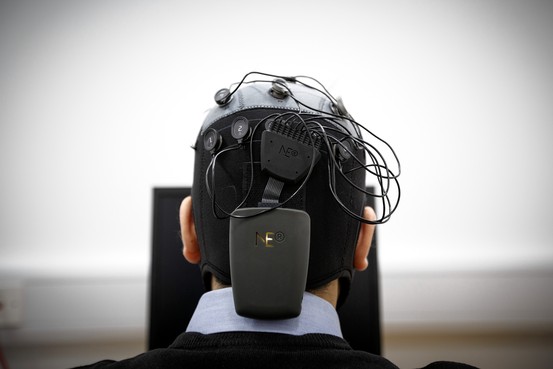
The electrodes are placed in a tightly fitted cap and worn around the head. The device, run off a 9-volt battery commonly used in smoke detectors, induces only a gentle current and can be targeted to specific areas of the brain or applied generally. The mild current reduces the risk of side effects, which has opened up possibilities about using it, even in individuals without a disorder, as a general cognitive enhancer. Scientists also are investigating its use to treat mood disorders and other conditions.

Dr. Cohen Kadosh’s pioneering work on learning enhancement and brain stimulation is one example of the long journey faced by scientists studying brain-stimulation and cognitive-stimulation techniques. Like other researchers in the community, he has dealt with public concerns about safety and side effects, plus skepticism from other scientists about whether these findings would hold in the wider population.

There are also ethical questions about the technique. If it truly works to enhance cognitive performance, should it be accessible to anyone who can afford to buy the device—which already is available for sale in the U.S.? Should parents be able to perform such stimulation on their kids without monitoring?

“It’s early days but that hasn’t stopped some companies from selling the device and marketing it as a learning tool,” Dr. Cohen Kadosh says. “Be very careful.”

The idea of using electric current to treat the brain of various diseases has a long and fraught history, perhaps most notably with what was called electroshock therapy, developed in 1938 to treat severe mental illness and often portrayed as a medieval treatment that rendered people zombielike in movies such as “One Flew over the Cuckoo’s Nest.”

Electroconvulsive therapy has improved dramatically over the years and is considered appropriate for use against types of major depression that don’t respond to other treatments, as well as other related, severe mood states.

A number of new brain-stimulation techniques have been developed, including deep brain stimulation, which acts like a pacemaker for the brain. With DBS, electrodes are implanted into the brain and, though a battery pack in the chest, stimulate neurons continuously. DBS devices have been approved by U.S. regulators to treat tremors in Parkinson’s disease and continue to be studied as possible treatments for chronic pain and obsessive-compulsive disorder.

Transcranial electrical stimulation, or tES, is one of the newest brain stimulation techniques. Unlike DBS, it is noninvasive.

If the technique continues to show promise, “this type of method may have a chance to be the new drug of the 21st century,” says Dr. Cohen Kadosh.

The 37-year-old father of two completed graduate school at Ben-Gurion University in Israel before coming to London to do postdoctoral work with Vincent Walsh at University College London. Now, sitting in a small, tidy office with a model brain on a shelf, the senior research fellow at Oxford speaks with cautious enthusiasm about brain stimulation and its potential to help children with math difficulties.

Up to 6% of the population is estimated to have a math-learning disability called developmental dyscalculia, similar to dyslexia but with numerals instead of letters. Many more people say they find math difficult. People with developmental dyscalculia also may have trouble with daily tasks, such as remembering phone numbers and understanding bills.

Whether transcranial electrical stimulation proves to be a useful cognitive enhancer remains to be seen. Dr. Cohen Kadosh first thought about the possibility as a university student in Israel, where he conducted an experiment using transcranial magnetic stimulation, a tool that employs magnetic coils to induce a more powerful electrical current.

He found that he could temporarily turn off regions of the brain known to be important for cognitive skills. When the parietal lobe of the brain was stimulated using that technique, he found that the basic arithmetic skills of doctoral students who were normally very good with numbers were reduced to a level similar to those with developmental dyscalculia.

That led to his next inquiry: If current could turn off regions of the brain making people temporarily math-challenged, could a different type of stimulation improve math performance? Cognitive training helps to some extent in some individuals with math difficulties. Dr. Cohen Kadosh wondered if such learning could be improved if the brain was stimulated at the same time.

But transcranial magnetic stimulation wasn’t the right tool because the current induced was too strong. Dr. Cohen Kadosh puzzled over what type of stimulation would be appropriate until a colleague who had worked with researchers in Germany returned and told him about tES, at the time a new technique. Dr. Cohen Kadosh decided tES was the way to go.

His group has since conducted a series of studies suggesting that tES appears helpful improving learning speed on various math tasks in adults who don’t have trouble in math. Now they’ve found preliminary evidence for those who struggle in math, too.

Participants typically come for 30-minute stimulation-and-training sessions daily for a week. His team is now starting to study children between 8 and 10 who receive twice-weekly training and stimulation for a month. Studies of tES, including the ones conducted by Dr. Cohen Kadosh, tend to have small sample sizes of up to several dozen participants; replication of the findings by other researchers is important.

In a small, toasty room, participants, often Oxford students, sit in front of a computer screen and complete hundreds of trials in which they learn to associate numerical values with abstract, nonnumerical symbols, figuring out which symbols are “greater” than others, in the way that people learn to know that three is greater than two.

When neurons fire, they transfer information, which could facilitate learning. The tES technique appears to work by lowering the threshold neurons need to reach before they fire, studies have shown. In addition, the stimulation appears to cause changes in neurochemicals involved in learning and memory.

However, the results so far in the field appear to differ significantly by individual. Stimulating the wrong brain region or at too high or long a current has been known to show an inhibiting effect on learning. The young and elderly, for instance, respond exactly the opposite way to the same current in the same location, Dr. Cohen Kadosh says.

He and a colleague published a paper in January in the journal Frontiers in Human Neuroscience, in which they found that one individual with developmental dyscalculia improved her performance significantly while the other study subject didn’t.

What is clear is that anyone trying the treatment would need to train as well as to stimulate the brain. Otherwise “it’s like taking steroids but sitting on a couch,” says Dr. Cohen Kadosh.

Dr. Cohen Kadosh and Beatrix Krause, a graduate student in the lab, have been examining individual differences in response. Whether a room is dark or well-lighted, if a person smokes and even where women are in their menstrual cycle can affect the brain’s response to electrical stimulation, studies have found.

Results from his lab and others have shown that even if stimulation is stopped, those who benefited are going to maintain a higher performance level than those who weren’t stimulated, up to a year afterward. If there isn’t any follow-up training, everyone’s performance declines over time, but the stimulated group still performs better than the non-stimulated group. It remains to be seen whether reintroducing stimulation would then improve learning again, Dr. Cohen Kadosh says.

http://online.wsj.com/news/articles/SB10001424052702303650204579374951187246122?mod=WSJ_article_EditorsPicks&mg=reno64-wsj&url=http%3A%2F%2Fonline.wsj.com%2Farticle%2FSB10001424052702303650204579374951187246122.html%3Fmod%3DWSJ_article_EditorsPicks

Scientists have identified the age at which most childhood memories fade and are lost forever

child_2787607b

Most adults struggle to recall events from their first few years of life and now scientists have identified exactly when these childhood memories fade and are lost forever.

A new study into childhood amnesia – the phenomenon where early memories are forgotten – has found that it tends to take affect around the age of seven.

The researchers found that while most three year olds can recall a lot of what happened to them over a year earlier, these memories can persist while they are five and six, but by the time they are over seven these memories decline rapidly.

Most children by the age of eight or nine can only recall 35% of their experiences from under the age of three, according to the new findings.

The psychologists behind the research say this is because at around this age the way we form memories begins to change.

They say that before the age of seven children tend to have an immature form of recall where they do not have a sense of time or place in their memories.

In older children, however, the early events they can recall tend to be more adult like in their content and the way they are formed.

Children also have a far faster rate of forgetting than adults and so the turnover of memories tends to be higher, meaning early memories are less likely to survive.

The findings also help to explain why children can often have vivid memories of events but then have forgotten them just a couple of years later.

Professor Patricia Bauer, a psychologist and associate dean for research at Emory college of Arts and Science who led the study, said: “The paradox of children’s memory competence and adults’ seeming “incompetence” at remembering early childhood events is striking.

“Though forgetting is more rapid in the early childhood years, eventually it slows to adult levels.

“Thus memories that “survived” early childhood have some likelihood of being remembered later in life.”

Professor Bauer and her colleagues studied 83 children over several years for the research, which is published in the scientific journal Memory.

The youngsters first visited the laboratory at the age of three years old and discussed six unique events from their past, such as family outings, camping holidays, trips to the zoo, first day of school and birthdays.

The children then returned for a second session at the ages between five years old and nine years old to discuss the same events and were asked to recall details they had previously remembered.

The researchers found that between the ages of five and seven, the amount of the memories the children could recall remained between 63-72 per cent.

However, the amount of information the children who were 8 and nine years old dropped dramatically to 35 and 36 per cent.

When the researchers looked closely at the kind of details the children were and were not able to remember, they found marked age differences.

The memories of the younger children tended to lack autobiographical narrative such as place and time. Their memories also had less narrative, which the researchers believe may lead to a process known as “retrieval induced forgetting” – where the action of remembering causes other information to be forgotten.

As they children got older, however, the memories they recalled from early childhood tended to have these features.

Professor Bauer said: “The fact that the younger children had less-complete narratives relative to the older children, likely has consequences for the continued accessibility of early memories beyond the first decade of life.

“We may anticipate that memories that survive into the ninth or tenth year of life, when narrative skills are more developed, would continue to be accessible over time.”

http://www.telegraph.co.uk/science/science-news/10564312/Scientists-pinpoint-age-when-childhood-memories-fade.html