New research suggests that rats experience regret, like humans.

By Tanya Lewis

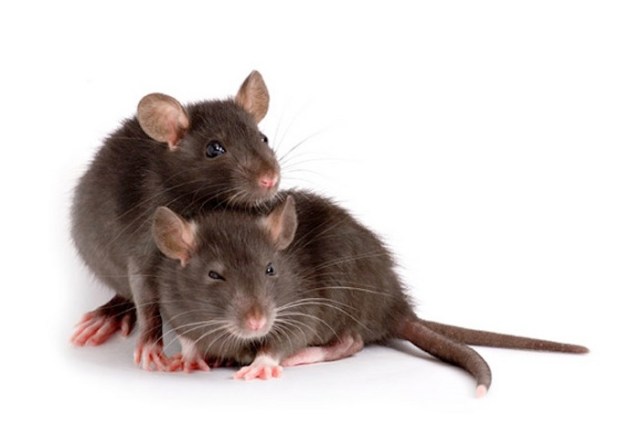
Just as humans lament not pursuing a lover or bemoan having eaten that extra slice of chocolate cake, rats may experience feelings of regret, too, new research suggests.

When rats were given the option of visiting rooms that contained different foods, and they skipped a good deal for a worse one, they glanced back at the former room, rushed through eating the snack and were more likely to tolerate longer wait times for what they considered the more desirable food , researchers found.

Furthermore, the rats’ brain activity represented the missed opportunity, suggesting the animals were, in fact, experiencing regret over their choice.

“The rat is representing the counterfactual — the ‘what might have been,'” David Redish, a neuroscientist at the University of Minnesota in Minneapolis, and senior author of the study detailed today (June 8) in the journal Nature Neuroscience.

No other studies have shown convincingly that any animal besides humans experience regret, though some studies hinted it was possible, the researchers said.

How do you define regret? You can’t exactly ask a rat if it feels regret, but even if you could, it wouldn’t be proof, just as it can be difficult to tell if a human feels regret just by asking them.

It’s important to distinguish between regret and disappointment, Redish told Live Science. Regret occurs when you make a mistake, but recognize there’s an alternate action you could have taken that would have resulted in a better outcome, he said. Disappointment happens when “the world’s just not as good as you hoped, but it’s not necessarily your fault,” he said.

To test whether rats could feel regret, Redish and his graduate student Adam Steiner designed a kind of “restaurant row” for the animals — a circular enclosure with pathways leading off it to “restaurants” with different kinds of food, which were dispensed after some delay.

As a rat passed each pathway, it heard a tone that told the animal how long it would have to wait for the food (like being told the wait time at a restaurant). Each rat had its own favorite food, such as banana or chocolate, and would wait longer to get it, Redish said. Each rat was given an hour to explore the enclosure, during which it could only move in one direction between restaurants.

If the rat passed up a good deal — for instance, bypassing a food it liked in favor of a shorter wait time — and encountered a worse deal at the next restaurant, it would glance backward at the one it passed up. Not only that, the rat rushed through eating its chosen food, much like a regretful human would, and was more likely to take a “worse deal” in the future, the researchers said.

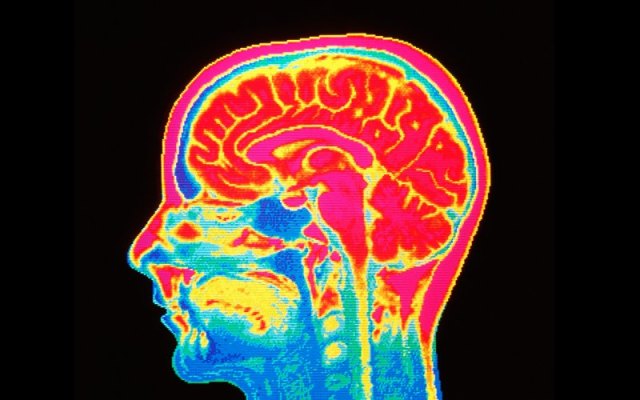
But the rats’ behavior was only part of the story. The researchers also made electrical recordings of the rats’ brains during the task, from neurons in the orbitofrontal cortex, the part of the brain that is active in human brain scans when people feel regret. Decoding these signals allowed the researchers to “read the rat’s mind,” Redish said.

Surprisingly, when the rats were looking back at the restaurant they ultimately passed up, their brains showed a representation of entering that restaurant — not of the food they missed. The findings suggest the animals were expressing regret over their actions, rather than just disappointment, the researchers said.

If rats can feel regret, what about other animals? Redish speculates that any mammal might be capable of the feeling, because they have many of the same brain structures as rats and humans.

“Regret is something we think of as very human and very cognitive,” Redish said, but “we’re seeing that the rats are much more cognitive than we thought.”

http://www.livescience.com/46184-rats-experience-regret.html

Brief History of 8 Hallucinogens

Humans have been ingesting mind-altering substances for a very long time. Hallucinogen-huffing bowls 2,500 years old (http://www.livescience.com/5240-ancient-family-heirlooms-snort-hallucinogens.html) have been found on islands in the Lesser Antilles, and traditional cultures from the Americas to Africa use hallucinogenic substances for spiritual purposes. Here are some notable substances that send the mind tripping.

LSD is commonly known as “acid,” but its scientific name is a mouthful: lysergic acid diethylamaide. The drug was first synthesized in 1938 from a chemical called ergotamine. Ergotamine, in turn, is produced by a grain fungus that grow on rye.

LSD was originally produced by a pharmaceutical company under the name Delysid, but it got a bad reputation in the 1950s when the CIA decided to research its effects on mind control. The test subjects of the CIA project MKULTRA proved very difficult to control indeed, and many, like counter-culture writer Ken Kesey, started taking the drug for fun (and for their own form of 1960s enlightenment).

ayahuasca-vine-110929

Ayahuasca is a hallucinatory mixture of Amazonian infusions centered around the Banisteriopsis caapi vine. The brew has long been used by native South American tribes for spiritual rituals and healing, and like other hallucinogens, ayahuasca often triggers very intense emotional experiences (vomiting is also common). In 2006, National Geographic writer Kira Salak described her experience with ayahuasca in Peru for the magazine.

” I will never forget what it was like. The overwhelming misery. The certainty of never-ending suffering. No one to help you, no way to escape. Everywhere I looked: darkness so thick that the idea of light seemed inconceivable,” Salak wrote. “Suddenly, I swirled down a tunnel of fire, wailing figures calling out to me in agony, begging me to save them. Others tried to terrorize me. ‘You will never leave here,’ they said. ‘Never. Never.'”

Nonetheless, Salak wrote, when she broke free of her hallucinations, her crippling depression was alleviated. It’s anecdotal experiences like this that have led researchers to investigate the uses of hallucinogens as therapy for mental disorders such as anxiety, depression and post-traumatic stress disorder.

Peyote is a cactus that gets its hallucinatory power from mescaline. Like most hallucinogens, mescaline binds to serotonin receptors in the brain, producing heightened sensations and kaleidoscopic visions.

Native groups in Mexico have used peyote in ceremonies for thousands of years, and other mescaline-producing cacti have long been used by South American tribes for their rituals. Peyote has been the subject of many a court battle because of its role in religious practice; currently, Arizona, Colorado, New Mexico, Nevada and Oregon allow some peyote possession, but only if linked to religious ceremonies, according to Arizona’s Peyote Way Church of God.

The “magic” ingredient in hallucinogenic mushrooms is psilocybin, a compound that breaks down into psilocin in the body. Psilocin bonds to serotonin receptors all over the brain, and can cause hallucinations as well as synesthesia, or the mixture of two senses. Under the influence, for example, a person might feel that they can smell colors.

In keeping with the human tradition of eating anything that might alter your mind, people have been ingesting psilocybin-continuing mushrooms for thousands of years. Synthetic psilocybin is now under study as a potential treatment for anxiety, depression and addiction.

Best known by its street name, “angel dust,” PCP stands for phencyclidine. The drug blocks receptors in the brain for the neurotransmitter glutamate. It’s more dangerous than other hallucinogens, with schizophrenia-like symptoms and nasty side effects.

Those side effects are why PCP has no medical uses. The drug was tested as an anesthetic in the 1950s and used briefly to knock out animals during veterinary surgeries. But by the 1960s, PCP had hit the streets and was being used as a recreation drug, famous for the feelings of euphoria and invincibility it bestowed on the user. Unfortunately, a side effect of all that euphoria is sometimes truly destructive behavior, including users trying to jump out of windows or otherwise self-mutilating. Not to mention that high enough doses can cause convulsions.

Derived from the African iboga plant, ibogaine is another hallucinogen with a long history of tribal use. More recently, the drug has shown promise in treating addiction, although mostly in Mexico and Europe where ibogaine treatment is not prohibited as it is in the U.S.

Using ibogaine as therapy is tricky, however. The drug can cause heart rhythm problems, and vomiting is a common side effect. The Massachusetts-based Multidisciplinary Association for Psychedelic Research (MAPS) reports that an estimated 1 in 300 ibogaine users die due to the drug. The group is studying the long-term effects of ibogaine on patients in drug treatment programs in New Zealand and Mexico.

Salvia divinorum, also known as seer’s or diviner’s sage, grows in the cloud forest of Oaxaca, Mexico. The native Mazatec people have long used tea made out of the leaves in spiritual ceremonies, but the plant can also be smoked or chewed for its hallucinogenic effects.

Salvia is not currently a controlled substance, according to the National Institute on Drug Abuse, but it is under consideration to be made illegal and placed in the same drug class as marijuana.

Ecstasy, “E” or “X” are the street names for MDMA, or (get ready for a long one) 3,4-methylenedioxymethamphetamine. The drug acts on serotonin in the brain, causing feelings of euphoria, energy and distortions of perception. It can also nudge body temperatures up, raising the risk of heat stroke. Animal studies suggest that MDMA causes long-term and potentially dangerous changes in the brain, according to the National Institute on Drug Abuse.

MDMA was first synthesized by a chemist looking for substances to stop bleeding in 1912. No one paid the compound much mind for the next half-decade, but by the 1970s, MDMA had hit the streets. It was popular at raves and nightclubs and among those who liked their music psychedelic. Today, ecstasy is still a common street drug, but researchers are investigating whether MDMA could be used to treat post-traumatic stress disorder and cancer-related anxiety.

http://www.livescience.com/16286-hallucinogens-lsd-mushrooms-ecstasy-history.html

Mice run for fun on wheels out in the wild.

By James Gorman

If an exercise wheel sits in a forest, will mice run on it?

Every once in a while, science asks a simple question and gets a straightforward answer.

In this case, yes, they will. And not only mice, but also rats, shrews, frogs and slugs.

True, the frogs did not exactly run, and the slugs probably ended up on the wheel by accident, but the mice clearly enjoyed it. That, scientists said, means that wheel-running is not a neurotic behavior found only in caged mice.

They like the wheel.

Two researchers in the Netherlands did an experiment that it seems nobody had tried before. They placed exercise wheels outdoors in a yard and in an area of dunes, and monitored the wheels with motion detectors and automatic cameras.

They were inspired by questions from animal welfare committees at universities about whether mice were really enjoying wheel-running, an activity used in all sorts of studies, or were instead like bears pacing in a cage, stressed and neurotic. Would they run on a wheel if they were free?

Now there is no doubt. Mice came to the wheels like human beings to a health club holding a spring membership sale. They made the wheels spin. They hopped on, hopped off and hopped back on.

“When I saw the first mice, I was extremely happy,” said Johanna H. Meijer at Leiden University Medical Center in the Netherlands. “I had to laugh about the results, but at the same time, I take it very seriously. It’s funny, and it’s important at the same time.”

Dr. Meijer’s day job is as a “brain electrophysiologist” studying biological rhythms in mice. She relished the chance to get out of the laboratory and study wild animals, and in a way that no one else had.

She said Konrad Lorenz, the great-grandfather of animal behavior studies, once mentioned in a letter that some of his caged rats had escaped and then returned to his garden to use running wheels placed there.

But, Dr. Meijer said, the Lorenz observation “was one sentence.”

For the experiment, the wheels were enclosed so that small animals could come and go but so that larger animals could not knock them over. Dr. Meijer set up motion sensors and automatic video cameras. Several years and 12,000 snippets of video later, she and Yuri Robbers, also a Leiden researcher, reported the results. They were released in the Proceedings of the Royal Society B.

Gene D. Block, chancellor of the University of California, Los Angeles, was not involved with the paper but knows Dr. Meijer and had seen the wheel set up in her garden. He said the study made it clear that wheel-running is “some type of rewarding behavior” and “probably not driven by stress or anxiety.”

Mice accounted for 88 percent of the wheel-running events, and spent one minute to 18 on the wheel. The other animals each accounted for less than 1 percent. Frogs, though there were very few, were seen to get on the wheel, get off and get back on.

Russell Foster, a circadian rhythm researcher at Oxford University, said he read the paper and sent it out to other scientists on behalf of the Proceedings and was delighted when peer reviews from other scientists were positive.

Marc Bekoff, a professor of ecology and evolutionary biology at the University of Colorado who is active in the animal welfare movement, said in an email that he thought the paper did show that wheel-running could be a “voluntary activity,” but that mice in labs may be doing more of it because of the stress of confinement.

“Wild bears will often pace back and forth,” he wrote, “but in captivity, the rate of doing it seems to be greatly heightened.”

As to why the mice, frogs or perhaps even slugs run, or move, on the wheel, Dr. Meijer said she thought that “there is an intrinsic motivation for animals, or should I say organisms, to be active.”

Huda Akil, co-director of the Molecular and Behavioral Neuroscience Institute at the University of Michigan, who has studied reward systems, said: “It’s not a surprise. All you have to do is watch a bunch of little kids in a playground or a park. They run and run and run.”

Dr. Akil said that in humans, running activates reward pathways in the brain, although she pointed out that there are innate differences in temperament in all sorts of animals, including humans. Rats that do not like to run can be bred. And plenty of people do all they can to avoid jogging, cycling and elliptical machines.

Presumably, the same is true of wild mice. While some were setting the wheel on fire with their exertions, others, out of camera range, may have been sprawled out on the mouse equivalent of a lounge chair, shaking their whiskers in dismay and disbelief.

Thanks to Dr. Nakamura for bringing this to the attention of the It’s Interesting community.

Parenting Rewires the Male Brain

By Elizabeth Norton

Cultures around the world have long assumed that women are hardwired to be mothers. But a new study suggests that caring for children awakens a parenting network in the brain—even turning on some of the same circuits in men as it does in women. The research implies that the neural underpinnings of the so-called maternal instinct aren’t unique to women, or activated solely by hormones, but can be developed by anyone who chooses to be a parent.

“This is the first study to look at the way dads’ brains change with child care experience,” says Kevin Pelphrey, a neuroscientist at Yale University who was not involved with the study. “What we thought of as a purely maternal circuit can also be turned on just by being a parent—which is neat, given the way our culture is changing with respect to shared responsibility and marriage equality.”

The findings come from an investigation of two types of households in Israel: traditional families consisting of a biological mother and father, in which the mother assumed most of the caregiving duties, though the fathers were very involved; and homosexual male couples, one of whom was the biological father, who’d had the child with the help of surrogate mothers. The two-father couples had taken the babies home shortly after birth and shared caregiving responsibilities equally. All participants in the study were first-time parents.

Researchers led by Ruth Feldman, a psychologist and neuroscientist at Bar-Ilan University in Ramat Gan, Israel, visited with the families in their homes, videotaping each parent with the child and then the parents and children alone. The team, which included collaborators at the Tel Aviv Sourasky Medical Center in Israel, also took saliva samples from all parents before and after the videotaped sessions to measure oxytocin—a hormone that’s released at times of intimacy and affection and is widely considered the “trust hormone.” Within a week of the home visit, the participants underwent functional magnetic resonance imaging scanning to determine how their brains reacted to the videotapes of themselves with their infants.

The mothers, their husbands, and the homosexual father-father couples all showed the activation of what the researchers term a “parenting network” that incorporated two linked but separate pathways in the brain. One circuit encompasses evolutionarily ancient structures such as the amygdala, insula, and nucleus accumbens, which handle strong emotions, attention, vigilance, and reward. The other pathway turns up in response to learning and experience and includes parts of the prefrontal cortex and an area called the superior temporal sulcus.

In the mothers, activation was stronger in the amygdala-centered network, whereas the heterosexual fathers showed more activity in the network that’s more experience-dependent. At first glance, Feldman says, the finding would seem to suggest that mothers are more wired up to nurture, protect, and possibly worry about their children. The fathers, in contrast, might have to develop these traits through tending, communicating, and learning from their babies what various sounds mean and what the child needs.

“It’s as if the father’s amygdala can shut off when there’s a woman around,” Feldman observes. It could be assumed, she says, that this circuitry is activated only by the rush of hormones during conception, pregnancy, and childbirth.

But the brains of the homosexual couples, in which each partner was a primary caregiver, told a different story. All of these men showed activity that mirrored that of the mothers, with much higher activation in the amygdala-based network, the team reports online today in the Proceedings of the National Academy of Sciences.

This finding argues strongly that the experience of hands-on parenting, with no female mother anywhere in the picture, can configure a caregiver’s brain in the same way that pregnancy and childbirth do, Feldman says.

She adds that in the heterosexual fathers, the activation of the amygdala-based network was proportional to the amount of time they spent with the baby, though the activity wasn’t as high as in the mothers or in the two-father couples.

Feldman does not believe that the brain activity of the primary-caregiving fathers differed because they were gay. Previous imaging studies, she notes, show no difference in brain activation when homosexual and heterosexual participants viewed pictures of their loved ones.

Future studies, Pelphrey says, might focus more closely on this question. “But it’s clear that we’re all born with the circuitry to help us be sensitive caregivers, and the network can be turned up through parenting.”

http://news.sciencemag.org/brain-behavior/2014/05/parenting-rewires-male-brain

Possible link between cynicism and risk of dementia

Cynics are three times more likely to develop dementia than those who have faith in humanity, a study has shown.

Believing that others are motivated by selfishness, or that they lie to get what they want, appears to radically increase the risk of cognitive decline in later life.

It could mean that grumpy old men and women should be screened more closely for diseases such as Alzheimer’s. Cynicism has previously been linked to health problems such as heart disease, but this is the first time it has been associated with dementia.

“These results add to the evidence that people’s view on life and personality may have an impact on their health,” said Dr. Anna-Maija Tolppanen, the lead researcher at the University of Eastern Finland, whose study is published online in the journal Neurology.

Academics asked nearly 1,500 people with an average age of 71 to fill out a questionnaire to measure their levels of cynicism.

They were asked how much they agreed with statements such as “I think most people would lie to get ahead”, “it is safer to trust nobody” and “most people will use somewhat unfair reasons to gain profit or an advantage rather than lose it.”

Those taking part were monitored for eight years, during which time 46 of them were diagnosed with dementia. The academics discovered that those who had scored highly for cynicism were three times more likely to have developed dementia than those with low scores.

Researchers adjusted the results for other factors that could affect the risk of dementia, such as high blood pressure, high cholesterol and smoking.

Of the 164 people with high levels of cynicism, 14 people developed dementia, compared with nine of the 212 people with low levels of cynicism.

One in three people over 65 will develop a form of dementia. Of the 800,000 people in the U.K. who have the condition, more than half have Alzheimer’s disease. It is estimated that 1.7 million Britons will suffer from dementia by 2051.

Responding to the study findings, charities cautioned that the early symptoms of Alzheimer’s and dementia could make people more cynical about life.

Dr. Doug Brown, of the Alzheimer’s Society, said: “While this research attempts to make a link between higher levels of cynical distrust and risk of dementia, there were far too few people in this study that actually developed dementia to be able to draw any firm conclusions.

http://news.nationalpost.com/2014/05/28/being-a-cynic-linked-to-tripled-risk-of-developing-dementia-finland-study-suggests/

Thanks to Kebmodee for bringing this to the attention of the It’s Interesting community.
Study Finds Pedophiles’ Brains Wired to Find Children Attractive

Pedophiles’ brains are “abnormally tuned” to find young children attractive, according to a new study published this week. The research, led by Jorge Ponseti at Germany’s University of Kiel, means that it may be possible to diagnose pedophiles in the future before they are able to offend.

The findings, published in scientific journal Biology Letters, discovered that pedophiles have the same neurological reaction to images of those they find attractive as those of people with ordinary sexual predilections, but that all the relevant cerebral areas become engaged when they see children, as opposed to fellow adults. The occipital areas, prefrontal cortex, putamen, and nucleus caudatus become engaged whenever a person finds another attractive, but the subject of this desire is inverted for pedophiles.

While studies into the cognitive wiring of sex offenders have long been a source of debate, this latest research offers some fairly conclusive proof that there is a neural pattern behind their behavior.

The paper explains: “The human brain contains networks that are tuned to face processing, and these networks appear to activate different processing streams of the reproductive domain selectively: nurturing processing in the case of child faces and sexual processing in the case of sexually preferred adult faces. This implies that the brain extracts age-related face cues of the preferred sex that inform appropriate response selection in the reproductive domains: nurturing in the case of child faces and mating in the case of adult faces.”

Usually children’s faces elicit feelings of caregiving from both sexes, whereas those of adults provide stimuli in choosing a mate. But among pedophiles, this trend is skewed, with sexual, as opposed to nurturing, emotions burgeoning.

The study analyzed the MRI scans of 56 male participants, a group that included 13 homosexual pedophiles and 11 heterosexual pedophiles, exposing them to “high arousing” images of men, women, boys, and girls. Participants then ranked each photo for attractiveness, leading researchers to their conclusion that the brain network of pedophiles is activated by sexual immaturity.

The critical new finding is that face processing is also tuned to face cues revealing the developmental stage that is sexually preferred,” the paper reads.

Dr. James Cantor, associate professor at the University of Toronto’s Faculty of Medicine, said he was “delighted” by the study’s results. “I have previously described pedophilia as a ‘cross-wiring’ of sexual and nurturing instincts, and this data neatly verifies that interpretation.”

Cantor has undertaken extensive research into the area, previously finding that pedophiles are more likely to be left-handed, 2.3 cm shorter than the average male, and 10 to 15 IQ points lower than the norm.

He continued: “This [new] study is definitely a step in the right direction, and I hope other researchers repeat this kind of work. There still exist many contradictions among scientists’ observations, especially in identifying exactly which areas of the brain are the most central to pedophilia. Because financial support for these kinds of studies is quite small, these studies have been quite small, permitting them to achieve only incremental progress. Truly definitive studies about what in the brain causes pedophilia, what might detect it, and what might prevent it require much more significant support.”

Ponseti said that he hoped to investigate this area further by examining whether findings could be emulated when images of children’s faces are the sole ones used. This could lead to gauging a person’s predisposition to pedophilia far more simply than any means currently in place. “We could start to look at the onset of pedophilia, which is probably in puberty at about 12 or 14 years [old],” he told The Independent.

While Cantor is correct in citing the less than abundant size of the study, the research is certainly significant in providing scope for future practicable testing that could reduce the number of pedophilic crimes committed. By being able to run these tests and examine a person’s tendency toward being sexually attracted to underage children, rehabilitative care and necessary precautions could be taken to safeguard children and ensure that those at risk of committing a crime of this ilk would not be able to do so.

http://www.thedailybeast.com/articles/2014/05/23/study-finds-pedophiles-brains-wired-to-find-children-attractive.html#

New research shows molecular mechanism by which neuronal projections can regenerate after injury

The mechanisms that drive axon regeneration after central nervous system (CNS) injury or disease are proposed to recapitulate, at least in part, the developmental axon growth pathways. This hypothesis is bolstered by a new study by O’Donovan et al. showing that activation of a B-RAF kinase signaling pathway is sufficient to promote robust axon growth not only during development but also after injury.

B-RAF was previously shown to be essential for developmental axon growth but it was not known if additional signaling pathways are required. In this study, the authors demonstrate that activation of B-RAF alone is sufficient to promote sensory axon growth during development. Using a conditional B-RAF gain-of-function mouse model, the authors elegantly prove that B-RAF has a cell-autonomous role in the developmental axon growth program. Notably, activated B-RAF promoted overgrowth of embryonic sensory axons projecting centrally in the spinal cord, suggesting that this pathway may normally be quiescent in central axons.

Could activated B-RAF also enhance axon regeneration in the adult central nervous system? The authors found that activated B-RAF not only enabled sensory axon growth into the spinal cord after spinal injury, but also promoted regrowth of axons projecting in the optic nerve. Regeneration in the injured CNS is prevented by both the poor intrinsic regrowth capacity of axons and by inhibitory factors in the tissue environment. Importantly, the B-RAF–activated signaling growth program was insensitive to this repulsive environment.

Interestingly, the authors find that B-RAF synergizes with the PI3-kinase–mTOR pathway, which also functions downstream of growth factors. This opens the possibility that combinatorial approaches that integrate these two pathways may heighten regenerative capacity.

This in vivo study significantly advances the understanding of the role of MAP kinases in axon growth and suggests that reactivation of the B-RAF pathway may be exploited to promote axon regeneration in the injured central nervous system. An exciting future avenue will be to determine the downstream mechanisms controlled by B-RAF.

O’Donovan, K.J., et al. 2014. J. Exp. Med. doi:10.1084/jem.20131780.

http://jem.rupress.org/content/211/5/746.1.long

Using botox to treat depression

Nearly 150 years ago, Charles Darwin recognized that facial expressions not only communicate the emotions we feel but intensify them, by sending cues back to the brain. In the ensuing decades, researchers proved again and again that we can influence the way we feel by the visage we project. Smiling can help us feel happier. Frowning can make us feel angrier.

But it was only in the past few years that a dermatologist from Chevy Chase, Md., noticed that some of the patients whose brows he temporarily paralyzed with Botox, to remove wrinkles, began to feel relief from depression. That physician, Eric Finzi, took his idea to psychiatrist, Norman Rosenthal, who teaches at Georgetown Medical School and had spent many years studying how light and odors, transmitted to the brain through the nerves that connect it with the eyes and nose, affect our moods.

Now there have been three small studies that show that Botox injections can help with depression. In the latest, published in the current issue of the Journal of Psychiatric Research, Finzi and Rosenthal showed that 17 of 33 patients experienced better than 50 percent reductions in their depression symptoms after a single Botox injection, and 27 percent of the group saw their depression go into remission. The study confirms a similar one reported in 2012 by German researchers Tillmann Kroger and Axel Wollmer, who spoke of their findings at a meeting of the American Psychiatric Association in New York this past weekend.

“There are several nerves, about 12 of them, that go straight into the brain through the skull,” Rosenthal told me Tuesday. “…We’re used to thinking of them in terms of their outbound messages or signals. We’re not used to thinking of them in terms of their inbound messages.”

The idea holds promise as a supplement or alternative to anti-depressants and psychotherapy for treating depression, according to Rosenthal. Minuscule amounts of Botox — which is made from the lethal botulinum toxin — are injected into the facial muscles and don’t even enter the bloodstream. The procedure has shown no side-effects.

If the whole idea seems almost too outlandish to believe — as it did for me — Rosenthal was quick to point out that he was laughed at 30 years ago, when he proposed the idea of “seasonal affective disorder” and the notion that exposing people to bright light in the depths of winter could help with that kind of depression. “Now, it’s ubiquitous,” he said. “Then, they thought it was ridiculous.”

The treatment isn’t perfect. Botox is expensive, at about $400 per dose, wears off in about three months and isn’t covered by insurance. And as the studies showed, it doesn’t work for everyone.

But the botulinum toxin already is used to treat a wide variety of medical conditions. Perhaps depression is next.

http://www.washingtonpost.com/news/to-your-health/wp/2014/05/07/using-botox-to-treat-depression-seriously/

Brain Injury Turns Man Into Math Genius

In 2002, two men savagely attacked Jason Padgett outside a karaoke bar, leaving him with a severe concussion and post-traumatic stress disorder. But the incident also turned Padgett into a mathematical genius who sees the world through the lens of geometry.

Padgett, a furniture salesman from Tacoma, Wash., who had very little interest in academics, developed the ability to visualize complex mathematical objects and physics concepts intuitively. The injury, while devastating, seems to have unlocked part of his brain that makes everything in his world appear to have a mathematical structure.

“I see shapes and angles everywhere in real life” — from the geometry of a rainbow, to the fractals in water spiraling down a drain, Padgett told Live Science. “It’s just really beautiful.”

Padgett, who just published a memoir with Maureen Seaberg called “Struck by Genius” (Houghton Mifflin Harcourt, 2014), is one of a rare set of individuals with acquired savant syndrome, in which a normal person develops prodigious abilities after a severe injury or disease. Other people have developed remarkable musical or artistic abilities, but few people have acquired mathematical faculties like Padgett’s.

Now, researchers have figured out which parts of the man’s brain were rejiggered to allow for such savant skills, and the findings suggest such skills may lie dormant in all human brains.

Before the injury, Padgett was a self-described jock and partyer. He hadn’t progressed beyond than pre-algebra in his math studies. “I cheated on everything, and I never cracked a book,” he said.

But all that would change the night of his attack. Padgett recalls being knocked out for a split second and seeing a bright flash of light. Two guys started beating him, kicking him in the head as he tried to fight back. Later that night, doctors diagnosed Padgett with a severe concussion and a bleeding kidney, and sent him home with pain medications, he said.

Soon after the attack, Padgett suffered from PTSD and debilitating social anxiety. But at the same time, he noticed that everything looked different. He describes his vision as “discrete picture frames with a line connecting them, but still at real speed.” If you think of vision as the brain taking pictures all the time and smoothing them into a video, it’s as though Padgett sees the frames without the smoothing. In addition, “everything has a pixilated look,” he said.

With Padgett’s new vision came an astounding mathematical drawing ability. He started sketching circles made of overlapping triangles, which helped him understand the concept of pi, the ratio of a circle’s circumference to its diameter. There’s no such thing as a perfect circle, he said, which he knows because he can always see the edges of a polygon that approximates the circle.

Padgett dislikes the concept of infinity, because he sees every shape as a finite construction of smaller and smaller units that approach what physicists refer to as the Planck length, thought to be the shortest measurable length.

After his injury, Padgett was drawing complex geometric shapes, but he didn’t have the formal training to understand the equations they represented. One day, a physicist spotted him making these drawings in a mall, and urged him to pursue mathematical training. Now Padgett is a sophomore in college and an aspiring number theorist.

Padgett’s remarkable abilities garnered the interest of neuroscientists who wanted to understand how he developed them.

Berit Brogaard, a philosophy professor now at the University of Miami, in Coral Gables, Fla., and her colleagues scanned Padgett’s brain with functional magnetic resonance imaging (fMRI) to understand how he acquired his savant skills and the synesthesia that allows him to perceive mathematical formulas as geometric figures. (Synesthesia is a phenomenon in which one sense bleeds into another.)

“Acquired savant syndrome is very rare,” Brogaard said, adding that only 15 to 25 cases have ever been described in medical studies.

Functional magnetic resonance imaging measures changes in blood flow and oxygen use throughout the brain. During scans of Padgett, the researchers showed the man real and nonsense mathematical formulas meant to conjure images in his mind.

The resulting scans showed significant activity in the left hemisphere of Padgett’s brain, where mathematical skills have been shown to reside. His brain lit up most strongly in the left parietal cortex, an area behind the crown of the head that is known to integrate information from different senses. There was also some activation in parts of his temporal lobe (involved in visual memory, sensory processing and emotion) and frontal lobe (involved in executive function, planning and attention).

But the fMRI only showed what areas were active in Padgett’s brain. In order to show these particular areas were causing the man’s synesthesia, Brogaard’s team used transcranial magnetic stimulation (TMS), which involves zapping the brain with a magnetic pulse that activates or inhibits a specific region. When they zapped the parts of Padgett’s parietal cortex that had shown the greatest activity in the fMRI scans, it made his synesthesia fade or disappear, according to a study published in August 2013 in the journal Neurocase.

Brogaard showed, in another study, that when neurons die, they release brain-signaling chemicals that can increase brain activity in surrounding areas. The increased activity usually fades over time, but sometimes it results in structural changes that can cause brain-activity modifications to persist, Brogaard told Live Science.

Scientists don’t know whether the changes in Padgett’s brain are permanent, but if he had structural changes, it’s more likely his abilities are here to stay, Brogaard said.

So do abilities like Padgett’s lie dormant in everyone, waiting to be uncovered? Or was there something unique about Padgett’s brain to begin with?

Most likely, there is something dormant in everyone that Padgett tapped into, Brogaard said. “It would be quite a coincidence if he were to have that particular special brain and then have an injury,” she said. “And he’s not the only [acquired savant].”

In addition to head injuries, mental disease has also been known to reveal latent abilities. And Brogaard and others have done studies that suggest zapping the brains of normal people using TMS can temporarily bring out unusual mathematical and artistic skills.

Yet Padgett wouldn’t change his new abilities if he could. “It’s so good, I can’t even describe it,” he said.

It’s always possible that having savant skills may come with trade-offs. In Padgett’s case, he developed fairly severe post-traumatic stress disorder and obsessive-compulsive disorder, and he still finds it difficult to appear in public.

http://news.discovery.com/human/life/brain-injury-turns-man-into-math-genius-1405061.htm

Psychopaths: how can you spot one?

There are a few things we take for granted in social interactions with people. We presume that we see the world in roughly the same way, that we all know certain basic facts, that words mean the same things to you as they do to me. And we assume that we have pretty similar ideas of right and wrong.

But for a small – but not that small – subset of the population, things are very different. These people lack remorse and empathy and feel emotion only shallowly. In extreme cases, they might not care whether you live or die. These people are called psychopaths. Some of them are violent criminals, murderers. But by no means all.

Professor Robert Hare is a criminal psychologist, and the creator of the PCL-R, a psychological assessment used to determine whether someone is a psychopath. For decades, he has studied people with psychopathy, and worked with them, in prisons and elsewhere. “It stuns me, as much as it did when I started 40 years ago, that it is possible to have people who are so emotionally disconnected that they can function as if other people are objects to be manipulated and destroyed without any concern,” he says.

Our understanding of the brain is still in its infancy, and it’s not so many decades since psychological disorders were seen as character failings. Slowly we are learning to think of mental illnesses as illnesses, like kidney disease or liver failure, and developmental disorders, such as autism, in a similar way. Psychopathy challenges this view. “A high-scoring psychopath views the world in a very different way,” says Hare. “It’s like colour-blind people trying to understand the colour red, but in this case ‘red’ is other people’s emotions.”

At heart, Hare’s test is simple: a list of 20 criteria, each given a score of 0 (if it doesn’t apply to the person), 1 (if it partially applies) or 2 (if it fully applies). The list in full is: glibness and superficial charm, grandiose sense of self-worth, pathological lying, cunning/manipulative, lack of remorse, emotional shallowness, callousness and lack of empathy, unwillingness to accept responsibility for actions, a tendency to boredom, a parasitic lifestyle, a lack of realistic long-term goals, impulsivity, irresponsibility, lack of behavioural control, behavioural problems in early life, juvenile delinquency, criminal versatility, a history of “revocation of conditional release” (ie broken parole), multiple marriages, and promiscuous sexual behaviour. A pure, prototypical psychopath would score 40. A score of 30 or more qualifies for a diagnosis of psychopathy. Hare says: “A friend of mine, a psychiatrist, once said: ‘Bob, when I meet someone who scores 35 or 36, I know these people really are different.’ The ones we consider to be alien are the ones at the upper end.”

But is psychopathy a disorder – or a different way of being? Anyone reading the list above will spot a few criteria familiar from people they know. On average, someone with no criminal convictions scores 5. “It’s dimensional,” says Hare. “There are people who are part-way up the scale, high enough to warrant an assessment for psychopathy, but not high enough up to cause problems. Often they’re our friends, they’re fun to be around. They might take advantage of us now and then, but usually it’s subtle and they’re able to talk their way around it.” Like autism, a condition which we think of as a spectrum, “psycho­pathy”, the diagnosis, bleeds into normalcy.

We think of psychopaths as killers, criminals, outside society. People such as Joanna Dennehy, a 31-year-old British woman who killed three men in 2013 and who the year before had been diagnosed with a psychopathic personality disorder, or Ted Bundy, the American serial killer who is believed to have murdered at least 30 people and who said of himself: “I’m the most cold-blooded son of a bitch you’ll ever meet. I just liked to kill.” But many psychopathic traits aren’t necessarily disadvantages – and might, in certain circumstances, be an advantage. For their co-authored book, “Snakes in suits: When Psychopaths go to work”, Hare and another researcher, Paul Babiak, looked at 203 corporate professionals and found about four per cent scored sufficiently highly on the PCL-R to be evaluated for psychopathy. Hare says that this wasn’t a proper random sample (claims that “10 per cent of financial executives” are psychopaths are certainly false) but it’s easy to see how a lack of moral scruples and indifference to other people’s suffering could be beneficial if you want to get ahead in business.

“There are two kinds of empathy,” says James Fallon, a neuroscientist at the University of California and author of The Psychopath Inside: A Neuroscientist’s Personal Journey into the Dark Side of the Brain. “Cognitive empathy is the ability to know what other people are feeling, and emotional empathy is the kind where you feel what they’re feeling.” Autistic people can be very empathetic – they feel other people’s pain – but are less able to recognise the cues we read easily, the smiles and frowns that tell us what someone is thinking. Psychopaths are often the opposite: they know what you’re feeling, but don’t feel it themselves. “This all gives certain psychopaths a great advantage, because they can understand what you’re thinking, it’s just that they don’t care, so they can use you against yourself.” (Chillingly, psychopaths are particularly adept at detecting vulnerability. A 2008 study that asked participants to remember virtual characters found that those who scored highly for psychopathy had a near perfect recognition for sad, unsuccessful females, but impaired memory for other characters.)

Fallon himself is a case in point. In 2005, he was looking at brain scans of psychopathic murderers, while on another study, of Alzheimer’s, he was using scans of his own family’s brains as controls. In the latter pile, he found something strange. “You can’t tell just from a brain scan whether someone’s a psychopath,” he says, “but you can make a good guess at the personality traits they’ll have.” He describes a great loop that starts in the front of the brain including the parahippocampal gyrus and the amygdala and other regions tied to emotion and impulse control and empathy. Under certain circumstances they would light up dramatically on a normal person’s MRI scan, but would be darker on a psychopath’s.

“I saw one that was extremely abnormal, and I thought this is someone who’s way off. It looked like the murderers I’d been looking at,” he says. He broke the anonymisation code in case it had been put into the wrong pile. When he did, he discovered it was his own brain. “I kind of blew it off,” he says. “But later, some psychiatrist friends of mine went through my behaviours, and they said, actually, you’re probably a borderline psychopath.”

Speaking to him is a strange experience; he barely draws breath in an hour, in which I ask perhaps three questions. He explains how he has frequently put his family in danger, exposing his brother to the deadly Marburg virus and taking his son trout-fishing in the African countryside knowing there were lions around. And in his youth, “if I was confronted by authority – if I stole a car, made pipe bombs, started fires – when we got caught by the police I showed no emotion, no anxiety”. Yet he is highly successful, driven to win. He tells me things most people would be uncomfortable saying: that his wife says she’s married to a “fun-loving, happy-go-lucky nice guy” on the one hand, and a “very dark character who she does not like” on the other. He’s pleasant, and funny, if self-absorbed, but I can’t help but think about the criteria in Hare’s PCL-R: superficial charm, lack of emotional depth, grandiose sense of self-worth. “I look like hell now, Tom,” he says – he’s 66 – “but growing up I was good-looking, six foot, 180lb, athletic, smart, funny, popular.” (Hare warns against non-professionals trying to diagnose people using his test, by the way.)

“Psychopaths do think they’re more rational than other people, that this isn’t a deficit,” says Hare. “I met one offender who was certainly a psychopath who said ‘My problem is that according to psychiatrists I think more with my head than my heart. What am I supposed to do about that? Am I supposed to get all teary-eyed?’ ” Another, asked if he had any regrets about stabbing a robbery victim, replied: “Get real! He spends a few months in hospital and I rot here. If I wanted to kill him I would have slit his throat. That’s the kind of guy I am; I gave him a break.”

And yet, as Hare points out, when you’re talking about people who aren’t criminals, who might be successful in life, it’s difficult to categorise it as a disorder. “It’d be pretty hard for me to go into high-level political or economic or academic context and pick out all the most successful people and say, ‘Look, I think you’ve got some brain deficit.’ One of my inmates said that his problem was that he’s a cat in a world of mice. If you compare the brainwave activity of a cat and a mouse, you’d find they were quite different.”

It would, says Hare, probably have been an evolutionarily successful strategy for many of our ancestors, and can be successful today; adept at manipulating people, a psychopath can enter a community, “like a church or a cultural organisation, saying, ‘I believe the same things you do’, but of course what we have is really a cat pretending to be a mouse, and suddenly all the money’s gone”. At this point he floats the name Bernie Madoff.

This brings up the issue of treatment. “Psychopathy is probably the most pleasant-feeling of all the mental disorders,” says the journalist Jon Ronson, whose book, The Psychopath Test, explored the concept of psychopathy and the mental health industry in general. “All of the things that keep you good, morally good, are painful things: guilt, remorse, empathy.” Fallon agrees: “Psychopaths can work very quickly, and can have an apparent IQ higher than it really is, because they’re not inhibited by moral concerns.”

So psychopaths often welcome their condition, and “treating” them becomes complicated. “How many psychopaths go to a psychiatrist for mental distress, unless they’re in prison? It doesn’t happen,” says Hare. The ones in prison, of course, are often required to go to “talk therapy, empathy training, or talk to the family of the victims” – but since psychopaths don’t have any empathy, it doesn’t work. “What you want to do is say, ‘Look, it’s in your own self-interest to change your behaviour, otherwise you’ll stay in prison for quite a while.’ ”

It seems Hare’s message has got through to the UK Department of Justice: in its guidelines for working with personality-disordered inmates, it advises that while “highly psychopathic individuals” are likely to be “highly treatment resistant”, the “interventions most likely to be effective are those which focus on ‘self-interest’ – what the offender wants out of life – and work with them to develop the skills to get those things in a pro-social rather than anti-social way.”

If someone’s brain lacks the moral niceties the rest of us take for granted, they obviously can’t do anything about that, any more than a colour-blind person can start seeing colour. So where does this leave the concept of moral responsibility? “The legal system traditionally asserts that all people standing in front of the judge’s bench are equal. That’s demonstrably false,” says the neuroscientist David Eagleman, author of Incognito: The Secret Lives of the Brain. He suggests that instead of thinking in terms of blameworthiness, the law should deal with the likelihood that someone will reoffend, and issue sentences accordingly, with rehabilitation for those likely to benefit and long sentences for those likely to be long-term dangers. The PCL-R is already used as part of algorithms which categorise people in terms of their recidivism risk. “Life insurance companies do exactly this sort of thing, in actuarial tables, where they ask: ‘What age do we think he’s going to die?’ No one’s pretending they know exactly when we’re going to die. But they can make rough guesses which make for an enormously more efficient system.”

What this doesn’t mean, he says, is a situation like the sci-fi film Minority Report, in which people who are likely to commit crimes are locked up before they actually do. “Here’s why,” he says. “It’s because many people in the population have high levels of psychopathy – about 1 per cent. But not all of them become criminals. In fact many of them, because of their glibness and charm and willingness to ride roughshod over the people in their way, become quite successful. They become CEOs, professional athletes, soldiers. These people are revered for their courage and their straight talk and their willingness to crush obstacles in their way. Merely having psychopathy doesn’t tell us that a person will go off and commit a crime.” It is central to the justice system, both in Britain and America, that you can’t pre-emptively punish someone. And that won’t ever change, says Eagleman, not just for moral, philosophical reasons, but for practical ones. The Minority Report scenario is a fantasy, because “it’s impossible to predict what somebody will do, even given their personality type and everything, because life is complicated and crime is conceptual. Once someone has committed a crime, once someone has stepped over a societal boundary, then there’s a lot more statistical power about what they’re likely to do in future. But until that’s happened, you can’t ever know.”

Speaking to all these experts, I notice they all talk about psychopaths as “them”, almost as a different species, although they make conscious efforts not to. There’s something uniquely troubling about a person who lacks emotion and empathy; it’s the stuff of changeling stories, the Midwich Cuckoos, Hannibal Lecter. “You know kids who use a magnifying glass to burn ants, thinking, this is interesting,” says Hare. “Translate that to an adult psychopath who treats a person that way. It is chilling.” At one stage Ronson suggests I speak to another well-known self-described psychopath, a woman, but I can’t bring myself to. I find the idea unsettling, as if he’d suggested I commune with the dead.

http://www.telegraph.co.uk/culture/books/10737827/Psychopaths-how-can-you-spot-one.html

Thanks to Steven Weihing for bringing this to the attention of the It’s Interesting community.