Genetically Modified Mosquitos Could Eradicate Wild Populations By Only Producing Male Offspring

by Lisa Winter

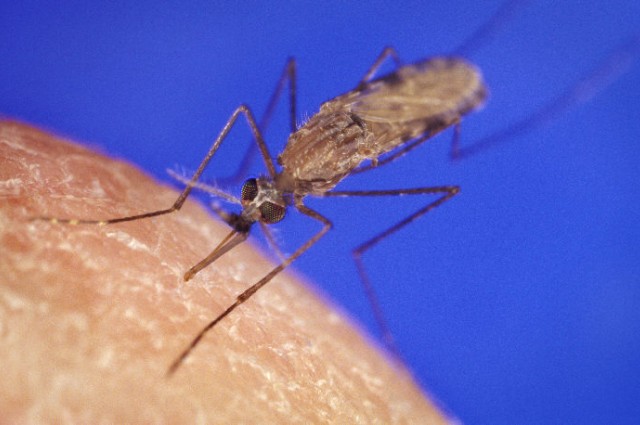
Over 200 million people are infected by malaria each year, and the majority of the 627,000 deaths per year are children younger than five. The disease is carried by mosquitos who act as vectors for the parasite. It’s only transmitted to humans by female mosquitoes, as they’re the only ones who bite. A team of researchers led by Andrea Crisanti of the Imperial College London managed to genetically modify mosquitos to produce 95% male offspring, eliminating mosquito populations along with the risk of malaria. The results of the study were published in Nature Communications.

In most species of mosquito, the females need a blood meal in order to acquire the nutrients to create viable eggs. When she does, she can lay about 200 eggs at a time in water, and up to 3,000 eggs over the course of her lifetime. About half of those offspring will be daughters, many of whom will live long enough to produce that amount of offspring also. For humans living near mosquitos carrying the parasite that causes malaria, those numbers of female mosquitos present a very real threat.

But what if the numbers could be skewed so that the sex ratio favors males, who are harmless to humans? This is exactly what Crisanti’s team set out to do with Anopheles gambiae, a species of mosquito endemic to sub-Saharan Africa, where 95% of malaria deaths occur. The researchers modified the males with the enzyme I-Ppol, which excises the X chromosome during spermatogenesis. This renders sperm that would produce daughters to be non-functional, while the sperm that will create male offspring are unaffected. As a result, about 95% of the resulting offspring are male.

Next, modified males were introduced to five caged wild-type populations. As the males mated with the females, they passed along the same mutation until it dominated the population. For four of the five populations, it took only six generations for the mosquitos to die out due to a lack of females.

“What is most promising about our results is that they are self-sustaining,” co-author Nikolai Windbichler said in a press release. “Once modified mosquitoes are introduced, males will start to produce mainly sons, and their sons will do the same, so essentially the mosquitoes carry out the work for us.”

This study was the first to successfully manipulate mosquito sex ratios, and it was done in a big way. The researchers hope that this information will be used to develop genetic mutations to be used in the wild, bringing large populations of mosquitos to their knees.

“The research is still in its early days, but I am really hopeful that this new approach could ultimately lead to a cheap and effective way to eliminate malaria from entire regions,” added lead author Roberto Galizi. “Our goal is to enable people to live freely without the threat of this deadly disease.”

Of course, while eradicating the mosquitos would be fantastic for eliminating the threat of malaria, what other affects would it have? Wouldn’t there be harsh consequences for the ecosystem? After all, mosquitos have been on the planet for about 100 million years and represent 3,500 species. As it turns out, mosquitos wouldn’t really be missed if they were to disappear (http://www.nature.com/news/2010/100721/pdf/466432a.pdf). While mosquitos can act as pollinators as well as a food source for other animals, their absence would be merely a temporary setback before another species filled the niche. Of course, there is a gamble in assuming the replacement organism would be harmless.

“Malaria is debilitating and often fatal and we need to find new ways of tackling it. We think our innovative approach is a huge step forward. For the very first time, we have been able to inhibit the production of female offspring in the laboratory and this provides a new means to eliminate the disease,” Crisanti explained.

Each year, sub-Saharan Africa loses about $12 billion in economic productivity due to malarial infections. Considering developed areas in these countries have per capita incomes of about US$1500, this would have very real implications for the quality of life for people in those areas. Eliminating that disease would also allow doctors and hospitals to address other health concerns, and the environment would likely benefit from not having to use insecticides.

http://www.iflscience.com/health-and-medicine/gm-mosquitos-could-eradicate-wild-populations-only-producing-male-offspring

Yeast from fossilized whale bones now used to make beer.

by Rebecca Cooper

Brewers have pulled yeast from pretty much everywhere to experiment with new strains — one West Coast brewery even brewed a beer using samples from the head brewer’s beard (http://www.huffingtonpost.com/2012/09/26/beard-beer-rogue-ales-yeast-john-maier_n_1917119.html) — but Lost Rhino in Ashburn may be breaking into new territory with its BoneDusters amber ale.

BoneDusters was brewed with a yeast that Lost Rhino’s Jasper Akerboom collected off a fossilized whale skeleton at the Calvert Marine Museum in Solomons, Maryland.

The collaboration came about because Akerboom, a bit of a yeast nut who handles quality assurance for Lost Rhino, is friends with Jason Osborne, a paleontologist who has donated fossilized whale skeletons to the museum.

Osborne asked Akerboom if there might be yeast present on those fossils that could be used to brew beer. Usually, yeast would not live on bone, given that it needs a sugary food source, but Akerboom decided to indulge his friend anyway.

They found a number of yeast strains on the bones, although Akerboom is pretty sure they’re more likely from the swamp where the bones were found rather than the bones themselves.

Several of the wild yeast strains flourished in Akerboom’s lab, but only one of the strains made any decent beer. The others didn’t ferment fully, making for “nasty-tasting” brews, he said.

The strain they ended up using, combined with some darker malts to create an amber ale, have yielded what Akerboom considers a tasty, well-balanced brew. The beer wasn’t made in the Belgian style, but it is “Belgian-esque,” he said, because the yeast has a slightly fruity flavor profile common in Belgian beers.

Lost Rhino plans to launch the beer June 18 at the brewery and begin distributing it to its networks after that, so it could be appearing at D.C. area bars in the next couple of weeks. A portion of the proceeds from the beer will go to Osborne’s nonprofit, Paleo Quest, which runs educational programs in the sciences.

For his part, Akerboom will keep experimenting with yeast in the lab he runs at Lost Rhino. It’s not necessarily common for a small microbrewery to have a quality assurance scientist with a Ph.D. in microbiology on staff. The Netherlands native previously isolated wild yeast from the air in Ashburn for Wild Farmwell Wheat, an “All-Virginia” beer Lost Rhino made in 2012. He now runs a yeast business on the side, and believes that focus on quality control is a big part of Lost Rhino’s consistently good beers.

“I think it adds a lot to the brewery. You have to make sure what you put in those cans is actually clean,” he said. “And you can do these kinds of projects, which keeps it fun.”

Thanks to Dr. Rajadhyaksha for bringing this to the attention of the It’s Interesting community.

http://www.bizjournals.com/washington/blog/top-shelf/2014/06/whats-the-key-ingredient-in-lost-rhino-s-newest.html?page=2

Secrets of Ant Rafts Revealed

To negotiate floods and cross streams, fire ants band together — literally — linking together to form rafts and bridges in a feat of social cooperation and biophysics. Now, engineers have made a close study of the ants’ architectural technique, pointing the way towards new approaches for robot designers and materials scientists.

To understand the properties of the ant structures, David Hu, a mechanical engineer at the Georgia Institute of Technology in Atlanta, sought to observe not just the surface of the ant clumps but the structure and joints underneath.

First, Hu and his team collected ant colonies — shovelling them, dirt and all, into buckets. After separating out the ants from the dirt, they then put 100 or so ants into a cup and swirled, causing the ants to form into a ball (no water necessary — they come together almost like dough). The researchers then froze the ball with liquid nitrogen so they could examine it in a micro-computed-tomography scanner to come up with a 3-D picture.

But the heat of the scanner melted the ball into a heap of dead ants. After months of experimenting with techniques to keep it together, lead author Paul Foster, now at the University of Michigan, found an unlikely source of inspiration in crack cocaine — specifically, in a method of vaporizing the drug to inhale it. “We did the same process — not with crack, but glue,” says Hu, adding that the authors decided against calling it the ‘crack-pipe method’ in their paper. The researchers heated the glue in an aluminium pot over a flame, with the frozen ant ball suspended on mesh above. The glue vapour rose and lightly coated the ants.

Social networking
Hu and his team found that the ants had grabbed hold of one another with adhesive pads on their legs, which they stretched out to create pockets of air. They also tended to orient themselves perpendicularly to one another, distributing their weight and creating a light, buoyant structure. The formation seems to take advantage of the ants’ different sizes, with smaller ants slotting neatly in between larger ones to add more connections. Each ant averaged 14 connections to fellow ants. The study is published today in the Journal of Experimental Biology.

Radhika Nagpal, who creates biologically inspired robots at Harvard University in Cambridge, Massachusetts, says that Hu’s ants could make great models for modular robots. “There’s lots of interesting outcomes of this work,” she says. “Imagine robots that need to construct a barrier or patch a hole during a disaster response.”

Rather than building one perfect robot, she notes, designers are increasingly exploring building a “colony of simple robots that use their bodies and the connections between them to build new structures.” Most projects in this vein have used geometric robots with precise connections. But ants do not create a perfect lattice, suggesting a sloppier, more organic approach in which robot shapes are varied and irregular and connections between them are inexact, Nagpal says. Hu thinks that the properties of ant structures might not only inform the design of robot swarms, but also the design of ‘smart’ materials that assemble themselves in response to temperature, light or other variables.

Hu is working on getting larger ant structures — recognizably distinct as bridges, rafts and other forms — into a bigger scanner to begin detailing the properties of the different functional shapes. And once they are frozen and coated in glue, they will last forever, Hu says. “One day,” he jokes, “we will have a miniature museum of ant structures.”

Thanks to Da Brayn for bringing this to the attention of the It’s Interesting community.

http://www.scientificamerican.com/article/secrets-of-ant-rafts-revealed/

Losing Weight May Require Some Serious Fun

If you are aiming to lose weight by revving up your exercise routine, it may be wise to think of your workouts not as exercise, but as playtime. An unconventional new study suggests that people’s attitudes toward physical activity can influence what they eat afterward and, ultimately, whether they drop pounds.

For some time, scientists have been puzzled — and exercisers frustrated — by the general ineffectiveness of exercise as a weight-loss strategy. According to multiple studies and anecdotes, most people who start exercising do not lose as much weight as would be expected, given their increased energy expenditure. Some people add pounds despite burning hundreds of calories during workouts.

Past studies of this phenomenon have found that exercise can increase the body’s production of appetite hormones, making some people feel ravenous after even a light workout and prone to consume more calories than they expended. But that finding, while intriguing, doesn’t fully explain the wide variability in people’s post-exercise eating habits.

So, for the new study, published in the journal Marketing Letters, French and American researchers turned to psychology and the possible effect that calling exercise by any other name might have on people’s subsequent diets.

In that pursuit, the researchers first recruited 56 healthy, adult women, the majority of them overweight. The women were given maps detailing the same one-mile outdoor course and told that they would spend the next half-hour walking there, with lunch to follow.

Half of the women were told that their walk was meant to be exercise, and they were encouraged to view it as such, monitoring their exertion throughout. The other women were told that their 30-minute outing would be a walk purely for pleasure; they would be listening to music through headphones and rating the sound quality, but mostly the researchers wanted them to enjoy themselves.

When the women returned from walking, the researchers asked each to estimate her mileage, mood and calorie expenditure.

Those women who’d been formally exercising reported feeling more fatigued and grumpy than the other women, although the two groups’ estimates of mileage and calories burned were almost identical. More telling, when the women sat down to a pasta lunch, with water or sugary soda to drink, and applesauce or chocolate pudding for dessert, the women in the exercise group loaded up on the soda and pudding, consuming significantly more calories from these sweets than the women who’d thought that they were walking for pleasure.

A follow-up experiment by the researchers, published as part of the same study, reinforces and broadens those findings. For it, the researchers directed a new set of volunteers, some of them men, to walk the same one-mile loop. Once again, half were told to consider this session as exercise. The others were told that they would be sightseeing and should have fun. The two groups covered the same average distance. But afterward, allowed to fill a plastic bag at will with M&M’s as a thank-you, the volunteers from the exercise group poured in twice as much candy as the other walkers.

Finally, to examine whether real-world exercisers behave similarly to those in the contrived experiments, the researchers visited the finish line of a marathon relay race, where 231 entrants aged 16 to 67 had just completed laps of five to 10 kilometers. They asked the runners whether they had enjoyed their race experience and offered them the choice of a gooey chocolate bar or healthier cereal bar in consideration of their time and help. In general, those runners who said that their race had been difficult or unsatisfying picked the chocolate; those who said that they had fun gravitated toward the healthier choice.

In aggregate, these three experiments underscore that how we frame physical activity affects how we eat afterward, said Carolina O.C. Werle, an associate professor of marketing at the Grenoble School of Management in France, who led the study. The same exertion, spun as “fun” instead of “exercise,” prompts less gorging on high-calorie foods, she said.

Just how, physiologically, our feelings about physical activity influence our food intake is not yet known, she said, and likely to be bogglingly complex, involving hormones, genetics, and the neurological circuitry of appetite and reward processing. But in the simplest terms, Dr. Werle said, this new data shows that most of us require recompense of some kind for working out. That reward can take the form of subjective enjoyment. If exercise is fun, no additional gratification is needed. If not, there’s chocolate pudding.

The good news is that our attitudes toward exercise are malleable. “We can frame our workouts in different ways,” Dr. Werle said, “by focusing on whatever we consider fun about it, such as listening to our favorite music or chatting with a friend” during a group walk.

“The more fun we have,” she concluded, “the less we’ll feel the need to compensate for the effort” with food.

Underground volcanoes spur Antarctic glacier melt

Glaciers in Antarctica are being melted not only by warmer ocean waters but also by underwater volcanoes, a change in our basic understanding of what’s happening underneath West Antarctica’s ice sheet, scientists say.

Geothermal heat from underneath is helping melt the region’s Thwaites Glacier, in the headlines recently for its rapid melt and retreat, researchers at the University of Texas at Austin say.

Scientists in the university’s Institute for Geophysics say they used ice-penetrating radar aboard aircraft to find significant geothermal heat sources — hotter and spread over a broader area than previously thought — underneath the glacier.

Caused by magma moving underground and volcanic activity associated with that movement, geothermal heat might represent a significant factor in changing the stability of the ice mass above, they researchers reported in the Proceedings of the National Academy of Sciences.

Rather than a uniform region of heat beneath, like a pancake griddle, geothermal sources under the Thwaites Glacier more resemble a stove top with a multitude of burners emitting heat in different locations and at different levels, research scientist Don Blankenship says.

“It’s the most complex thermal environment you might imagine,” he says. “And then you plop the most critical dynamically unstable ice sheet on planet Earth in the middle of this thing, and then you try to model it. It’s virtually impossible.”

The geothermal heat under the glacier averages around 100 milliwatts in each square meter, the researchers said, with some hotspots putting out 200 milliwatts per square meter.

Under the Earth’s other continents the average is less than 65 milliwatts per square meter, they said.

The Thwaites Glacer is an outflow glacier — pushing into the Amundsen Sea — that is the size of Florida and hold the key to trying to predict possible future rises in sea levels, they said.

Studying it could help yield clues to the future state of the entire West Antarctic Ice sheet, they added.

A complete collapse of Thwaites Glacier could push global sea levels up by three to six feet, and a melting of the entire ice sheet could double that, the researchers said.

The combination of warm ocean water and underlying geothermal heat makes the future of the glacier difficult to predict, lead study author Dusty Schroeder says.

“The combination of variable subglacial geothermal heat flow and the interacting subglacial water system could threaten the stability of Thwaites Glacier in ways that we never before imagined,” he says.

http://www.techtimes.com/articles/8268/20140610/underground-volcanoes-spur-antartic-glaciar-melt.htm

Gecko-inspired DARPA paddles lets you become Spider-man

DARPA, the Defense Advanced Research Projects Agency, has developed new paddles that allow users to climb vertical walls like Spider-man. For the first time in history, a fully-grown person climbed a glass wall more than two stories in the air.

The Z-man program aimed at designing a new tool for soldiers to use when climbing walls. Traditionally, fighters in wartime have had to rely on ladders and ropes to overcome vertical surfaces. These are both noisy and bulky, making it difficult for warriors to climb quietly when needed.

“The gecko is one of the champion climbers in the Animal Kingdom, so it was natural for DARPA to look to it for inspiration in overcoming some of the maneuver challenges that U.S. forces face in urban environments,” Goodman said.

This challenge was one many species had already faced in the wild. Geckos, able to climb vertical surfaces, were an inspiration to the inventors.

“[N]ature had long since evolved the means to efficiently achieve it. The challenge to our performer team was to understand the biology and physics in play when geckos climb and then reverse-engineer those dynamics into an artificial system for use by humans,” Matt Goodman, DARPA program manager for the Z-Man program, told the press.

The lizard uses microscopic tendrils, called setae, that end with flat spatulae. This dual structure provides the creature with an extremely large surface area coming into contact with whatever it touches. This allows van der Waals forces, a magnetic attraction between atoms, to hold the lizard in place. This same technique is used for the paddles.

Draper Laboratory, headquartered in Cambridge, Massachusetts assisted the military technology developers in creating the devices. The business developed the unique microstructure material needed to make the design work.

The demonstration climb involved a climber weighing 218 pounds, in addition to a 50-pound load in one trial. He ascended and descended the vertical glass surface, using nothing but a pair of the paddles.

Warfare constantly advances in technology and strategies, but ropes and ladders – still needed to scale walls – have not significantly changed in thousands of years.

“‘Geckskin’ is one output of the Z-Man program. It is a synthetically-fabricated reversible adhesive inspired by the gecko’s ability to climb surfaces of various materials and roughness, including smooth surfaces like glass,” DARPA officials wrote on the Z-man Web site.

Advances in this bio-inpspired technology could have benefits beyond the battlefield. Materials similar to the the structure in the pad could be used as temporary adhesives for bandages, industrial and commercial products.

http://www.techtimes.com/articles/8287/20140610/gecko-inspired-darpa-paddles-become-spider-man.htm

To beat a parasite, birds teach their young a password.

By Mary Bates

I’ve written before about the evolutionary arms race between brood parasites (who lay their eggs in the nests of other birds, leaving them to raise their chicks) and their hosts. In these systems, host birds benefit from recognizing and removing parasite eggs or chicks from their nests. Meanwhile, the brood parasites keep trying to trick the hosts into accepting and caring for their young.

Hosts must walk a precarious line in defending themselves against brood parasites. Too lax, and they end up spending valuable time and energy raising another bird’s chicks. Too strict, and they run the risk of rejecting one of their own eggs by mistake. For the best results, hosts should modify how defensive they are against parasites in relation to the risk they pose.

A few years ago, Diane Colombelli-Négrel, Sonia Kleindorfer, and colleagues from Flinders University in Australia discovered a remarkable way one bird fights back against brood parasites. Female superb fairy-wrens teach their embryos a “password” while they’re still in their eggs. Each female’s incubation call contains a unique acoustic element. After they hatch, fairy-wren chicks incorporate this unique element into their begging calls to ask for food. Colombelli-Négrel, Kleindorfer, and colleagues showed that chicks whose begging calls most resembled their mothers’ incubation calls received more food. But the brood parasites of the fairy-wren, Horsfield’s bronze-cuckoos, produced begging calls that did not so closely resemble the parental password.

In a new study, Colombelli-Négrel, Kleindorfer, and colleagues again looked at the relationship between superb fairy-wrens and Horsfield’s bronze-cuckoos to see if a greater threat of brood parasitism would cause the fairy-wren to up its teaching efforts.

First, the researchers recorded calls from 17 fairy-wren nests in South Australia. They found the similarity between the mother’s password and the chick’s begging call was predicted by the number of incubation calls produced by the mother: If females made many incubation calls, their chicks ended up producing more similar begging calls.Next, the researchers conducted a playback experiment at 29 nests. They broadcast either the song of Horsfield’s bronze-cuckoo or a neutral bird. After the cuckoo calls, but not after the neutral bird calls, female fairy-wrens made more incubation calls to their embryos. In other words, female fairy-wrens that heard a cuckoo near their nest increased their efforts to teach their password to their embryos.

Colombelli-Négrel and Kleindorfer say their results provide a mechanism for how fairy-wrens could get better at decision-making and lower the probability of committing an acceptance error for a cuckoo chick or a rejection error for one of their own chicks.“When there are cuckoos in the area, you should call more to your eggs so that they have a higher call similarity after hatching and you can decide if the offspring is yours,” Colombelli-Négrel and Kleindorfer wrote in an email. “We show a mechanism that starts in the nest and involves active teaching and sensorimotor learning in embryos.”Colombelli-Négrel, Kleindorfer, and their colleagues are continuing to study how fairy-wrens teach their passwords to their chicks. They’re currently looking at how the fairy-wren embryos learn using heart rate and magnetic resonance imaging (MRI) scans, and whether parents do anything special to help their offspring learn, such as investing in egg nutrients that promote learning.

To beat a tricky brood parasite, superb fairy-wrens have to start teaching their offspring early and often. And when they detect a threat, these dedicated parents double-down on their teaching efforts to make sure their chicks get the message.

References:

Kleindorfer, S., Evans, C. and Colombelli-Négrel, D. (2014). Females that experience threat are better teachers. Biology Letters 10: 20140046. doi: 10.1098/rsbl.2014.0046.

Colombelli-Négrel, D., Hauber, M. E., Robertson, J., Sulloway, F. J., Hoi, H., Griggio, M. and Kleindorfer, S. (2012). Embryonic learning of vocal passwords in superb fairy-wrens reveals intruder cuckoo nestlings. Current Biology 22: 2155-2160. doi: 10.1016/j.cub.2012.09.025.

http://www.wired.com/2014/06/to-beat-a-parasite-birds-teach-their-young-a-secret-password/

New research suggests that rats experience regret, like humans.

By Tanya Lewis

Just as humans lament not pursuing a lover or bemoan having eaten that extra slice of chocolate cake, rats may experience feelings of regret, too, new research suggests.

When rats were given the option of visiting rooms that contained different foods, and they skipped a good deal for a worse one, they glanced back at the former room, rushed through eating the snack and were more likely to tolerate longer wait times for what they considered the more desirable food , researchers found.

Furthermore, the rats’ brain activity represented the missed opportunity, suggesting the animals were, in fact, experiencing regret over their choice.

“The rat is representing the counterfactual — the ‘what might have been,'” David Redish, a neuroscientist at the University of Minnesota in Minneapolis, and senior author of the study detailed today (June 8) in the journal Nature Neuroscience.

No other studies have shown convincingly that any animal besides humans experience regret, though some studies hinted it was possible, the researchers said.

How do you define regret? You can’t exactly ask a rat if it feels regret, but even if you could, it wouldn’t be proof, just as it can be difficult to tell if a human feels regret just by asking them.

It’s important to distinguish between regret and disappointment, Redish told Live Science. Regret occurs when you make a mistake, but recognize there’s an alternate action you could have taken that would have resulted in a better outcome, he said. Disappointment happens when “the world’s just not as good as you hoped, but it’s not necessarily your fault,” he said.

To test whether rats could feel regret, Redish and his graduate student Adam Steiner designed a kind of “restaurant row” for the animals — a circular enclosure with pathways leading off it to “restaurants” with different kinds of food, which were dispensed after some delay.

As a rat passed each pathway, it heard a tone that told the animal how long it would have to wait for the food (like being told the wait time at a restaurant). Each rat had its own favorite food, such as banana or chocolate, and would wait longer to get it, Redish said. Each rat was given an hour to explore the enclosure, during which it could only move in one direction between restaurants.

If the rat passed up a good deal — for instance, bypassing a food it liked in favor of a shorter wait time — and encountered a worse deal at the next restaurant, it would glance backward at the one it passed up. Not only that, the rat rushed through eating its chosen food, much like a regretful human would, and was more likely to take a “worse deal” in the future, the researchers said.

But the rats’ behavior was only part of the story. The researchers also made electrical recordings of the rats’ brains during the task, from neurons in the orbitofrontal cortex, the part of the brain that is active in human brain scans when people feel regret. Decoding these signals allowed the researchers to “read the rat’s mind,” Redish said.

Surprisingly, when the rats were looking back at the restaurant they ultimately passed up, their brains showed a representation of entering that restaurant — not of the food they missed. The findings suggest the animals were expressing regret over their actions, rather than just disappointment, the researchers said.

If rats can feel regret, what about other animals? Redish speculates that any mammal might be capable of the feeling, because they have many of the same brain structures as rats and humans.

“Regret is something we think of as very human and very cognitive,” Redish said, but “we’re seeing that the rats are much more cognitive than we thought.”

http://www.livescience.com/46184-rats-experience-regret.html

Brief History of 8 Hallucinogens

Humans have been ingesting mind-altering substances for a very long time. Hallucinogen-huffing bowls 2,500 years old (http://www.livescience.com/5240-ancient-family-heirlooms-snort-hallucinogens.html) have been found on islands in the Lesser Antilles, and traditional cultures from the Americas to Africa use hallucinogenic substances for spiritual purposes. Here are some notable substances that send the mind tripping.

LSD is commonly known as “acid,” but its scientific name is a mouthful: lysergic acid diethylamaide. The drug was first synthesized in 1938 from a chemical called ergotamine. Ergotamine, in turn, is produced by a grain fungus that grow on rye.

LSD was originally produced by a pharmaceutical company under the name Delysid, but it got a bad reputation in the 1950s when the CIA decided to research its effects on mind control. The test subjects of the CIA project MKULTRA proved very difficult to control indeed, and many, like counter-culture writer Ken Kesey, started taking the drug for fun (and for their own form of 1960s enlightenment).

ayahuasca-vine-110929

Ayahuasca is a hallucinatory mixture of Amazonian infusions centered around the Banisteriopsis caapi vine. The brew has long been used by native South American tribes for spiritual rituals and healing, and like other hallucinogens, ayahuasca often triggers very intense emotional experiences (vomiting is also common). In 2006, National Geographic writer Kira Salak described her experience with ayahuasca in Peru for the magazine.

” I will never forget what it was like. The overwhelming misery. The certainty of never-ending suffering. No one to help you, no way to escape. Everywhere I looked: darkness so thick that the idea of light seemed inconceivable,” Salak wrote. “Suddenly, I swirled down a tunnel of fire, wailing figures calling out to me in agony, begging me to save them. Others tried to terrorize me. ‘You will never leave here,’ they said. ‘Never. Never.'”

Nonetheless, Salak wrote, when she broke free of her hallucinations, her crippling depression was alleviated. It’s anecdotal experiences like this that have led researchers to investigate the uses of hallucinogens as therapy for mental disorders such as anxiety, depression and post-traumatic stress disorder.

Peyote is a cactus that gets its hallucinatory power from mescaline. Like most hallucinogens, mescaline binds to serotonin receptors in the brain, producing heightened sensations and kaleidoscopic visions.

Native groups in Mexico have used peyote in ceremonies for thousands of years, and other mescaline-producing cacti have long been used by South American tribes for their rituals. Peyote has been the subject of many a court battle because of its role in religious practice; currently, Arizona, Colorado, New Mexico, Nevada and Oregon allow some peyote possession, but only if linked to religious ceremonies, according to Arizona’s Peyote Way Church of God.

The “magic” ingredient in hallucinogenic mushrooms is psilocybin, a compound that breaks down into psilocin in the body. Psilocin bonds to serotonin receptors all over the brain, and can cause hallucinations as well as synesthesia, or the mixture of two senses. Under the influence, for example, a person might feel that they can smell colors.

In keeping with the human tradition of eating anything that might alter your mind, people have been ingesting psilocybin-continuing mushrooms for thousands of years. Synthetic psilocybin is now under study as a potential treatment for anxiety, depression and addiction.

Best known by its street name, “angel dust,” PCP stands for phencyclidine. The drug blocks receptors in the brain for the neurotransmitter glutamate. It’s more dangerous than other hallucinogens, with schizophrenia-like symptoms and nasty side effects.

Those side effects are why PCP has no medical uses. The drug was tested as an anesthetic in the 1950s and used briefly to knock out animals during veterinary surgeries. But by the 1960s, PCP had hit the streets and was being used as a recreation drug, famous for the feelings of euphoria and invincibility it bestowed on the user. Unfortunately, a side effect of all that euphoria is sometimes truly destructive behavior, including users trying to jump out of windows or otherwise self-mutilating. Not to mention that high enough doses can cause convulsions.

Derived from the African iboga plant, ibogaine is another hallucinogen with a long history of tribal use. More recently, the drug has shown promise in treating addiction, although mostly in Mexico and Europe where ibogaine treatment is not prohibited as it is in the U.S.

Using ibogaine as therapy is tricky, however. The drug can cause heart rhythm problems, and vomiting is a common side effect. The Massachusetts-based Multidisciplinary Association for Psychedelic Research (MAPS) reports that an estimated 1 in 300 ibogaine users die due to the drug. The group is studying the long-term effects of ibogaine on patients in drug treatment programs in New Zealand and Mexico.

Salvia divinorum, also known as seer’s or diviner’s sage, grows in the cloud forest of Oaxaca, Mexico. The native Mazatec people have long used tea made out of the leaves in spiritual ceremonies, but the plant can also be smoked or chewed for its hallucinogenic effects.

Salvia is not currently a controlled substance, according to the National Institute on Drug Abuse, but it is under consideration to be made illegal and placed in the same drug class as marijuana.

Ecstasy, “E” or “X” are the street names for MDMA, or (get ready for a long one) 3,4-methylenedioxymethamphetamine. The drug acts on serotonin in the brain, causing feelings of euphoria, energy and distortions of perception. It can also nudge body temperatures up, raising the risk of heat stroke. Animal studies suggest that MDMA causes long-term and potentially dangerous changes in the brain, according to the National Institute on Drug Abuse.

MDMA was first synthesized by a chemist looking for substances to stop bleeding in 1912. No one paid the compound much mind for the next half-decade, but by the 1970s, MDMA had hit the streets. It was popular at raves and nightclubs and among those who liked their music psychedelic. Today, ecstasy is still a common street drug, but researchers are investigating whether MDMA could be used to treat post-traumatic stress disorder and cancer-related anxiety.

http://www.livescience.com/16286-hallucinogens-lsd-mushrooms-ecstasy-history.html

Mice run for fun on wheels out in the wild.

By James Gorman

If an exercise wheel sits in a forest, will mice run on it?

Every once in a while, science asks a simple question and gets a straightforward answer.

In this case, yes, they will. And not only mice, but also rats, shrews, frogs and slugs.

True, the frogs did not exactly run, and the slugs probably ended up on the wheel by accident, but the mice clearly enjoyed it. That, scientists said, means that wheel-running is not a neurotic behavior found only in caged mice.

They like the wheel.

Two researchers in the Netherlands did an experiment that it seems nobody had tried before. They placed exercise wheels outdoors in a yard and in an area of dunes, and monitored the wheels with motion detectors and automatic cameras.

They were inspired by questions from animal welfare committees at universities about whether mice were really enjoying wheel-running, an activity used in all sorts of studies, or were instead like bears pacing in a cage, stressed and neurotic. Would they run on a wheel if they were free?

Now there is no doubt. Mice came to the wheels like human beings to a health club holding a spring membership sale. They made the wheels spin. They hopped on, hopped off and hopped back on.

“When I saw the first mice, I was extremely happy,” said Johanna H. Meijer at Leiden University Medical Center in the Netherlands. “I had to laugh about the results, but at the same time, I take it very seriously. It’s funny, and it’s important at the same time.”

Dr. Meijer’s day job is as a “brain electrophysiologist” studying biological rhythms in mice. She relished the chance to get out of the laboratory and study wild animals, and in a way that no one else had.

She said Konrad Lorenz, the great-grandfather of animal behavior studies, once mentioned in a letter that some of his caged rats had escaped and then returned to his garden to use running wheels placed there.

But, Dr. Meijer said, the Lorenz observation “was one sentence.”

For the experiment, the wheels were enclosed so that small animals could come and go but so that larger animals could not knock them over. Dr. Meijer set up motion sensors and automatic video cameras. Several years and 12,000 snippets of video later, she and Yuri Robbers, also a Leiden researcher, reported the results. They were released in the Proceedings of the Royal Society B.

Gene D. Block, chancellor of the University of California, Los Angeles, was not involved with the paper but knows Dr. Meijer and had seen the wheel set up in her garden. He said the study made it clear that wheel-running is “some type of rewarding behavior” and “probably not driven by stress or anxiety.”

Mice accounted for 88 percent of the wheel-running events, and spent one minute to 18 on the wheel. The other animals each accounted for less than 1 percent. Frogs, though there were very few, were seen to get on the wheel, get off and get back on.

Russell Foster, a circadian rhythm researcher at Oxford University, said he read the paper and sent it out to other scientists on behalf of the Proceedings and was delighted when peer reviews from other scientists were positive.

Marc Bekoff, a professor of ecology and evolutionary biology at the University of Colorado who is active in the animal welfare movement, said in an email that he thought the paper did show that wheel-running could be a “voluntary activity,” but that mice in labs may be doing more of it because of the stress of confinement.

“Wild bears will often pace back and forth,” he wrote, “but in captivity, the rate of doing it seems to be greatly heightened.”

As to why the mice, frogs or perhaps even slugs run, or move, on the wheel, Dr. Meijer said she thought that “there is an intrinsic motivation for animals, or should I say organisms, to be active.”

Huda Akil, co-director of the Molecular and Behavioral Neuroscience Institute at the University of Michigan, who has studied reward systems, said: “It’s not a surprise. All you have to do is watch a bunch of little kids in a playground or a park. They run and run and run.”

Dr. Akil said that in humans, running activates reward pathways in the brain, although she pointed out that there are innate differences in temperament in all sorts of animals, including humans. Rats that do not like to run can be bred. And plenty of people do all they can to avoid jogging, cycling and elliptical machines.

Presumably, the same is true of wild mice. While some were setting the wheel on fire with their exertions, others, out of camera range, may have been sprawled out on the mouse equivalent of a lounge chair, shaking their whiskers in dismay and disbelief.

Thanks to Dr. Nakamura for bringing this to the attention of the It’s Interesting community.