New type of bacteria discovered in Indiana man’s gruesome wound


An Indiana man’s nasty injury led scientists to discover a new type of bacteria that sheds light on symbiotic microbes in insects.

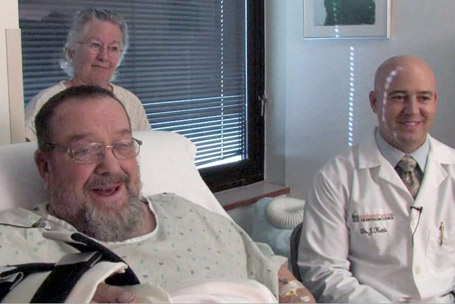
Two years ago, Thomas Fritz cut down a dead crab apple tree in his yard. He fell while hauling away the woody debris and a branch from the tree impaled his right hand between the thumb and index finger.

Fritz, a 71-year-old retired inventor, engineer and volunteer firefighter, bandaged the gash himself. He waited a few days to see a doctor and by the time of his appointment, the puncture wound became infected. The doctor took a sample of the cyst that formed at the site of the cut and sent it to a lab.

After an abscess, swelling and more pain, Fritz’s wound eventually healed. But the sample from his infection puzzled scientists at the lab who couldn’t identify what type of bacteria they were looking at. The sample was eventually sent to ARUP Laboratories, a national pathology reference library operated by the University of Utah, where scientists named the new strain human Sodalis or HS.

Colin Dale, a biologist at the University of Utah, said that genetic analyses of HS showed it is related to Sodalis, a genus of bacteria that he discovered in 1999 and has been found to live symbiotically in 17 insect species, including tsetse flies, weevils, stinkbugs and bird lice. In such symbiotic relationships, both the host and the bacteria gain — for example, while Sodalis bacteria get shelter and nutrition from their insect hosts, they also provide the insects vital B vitamins and amino acids.

Though symbiotic relationships between microorganisms and insects are common, their origins are often a mystery. The new evidence provides “a missing link in our understanding of how beneficial insect-bacteria relationships originate,” Dale said, adding that the findings show that these relationships arise independently in each insect.

As the strain of Sodalis in this case likely came from a tree, the discovery suggests that insects can get infected by pathogenic bacteria from plants or animals in their environment, and the bacteria can evolve to become less virulent and to provide symbiotic benefits to the insect. Then, instead of spreading the bacteria to other insects by infection, mother insects pass down the microbes to their offspring, the researchers said.

“The insect picks up a pathogen that is widespread in the environment and then domesticates it,” Dale explained in a statement from the National Science Foundation, which funded the research. “This happens independently in each insect.”

The research was detailed earlier this month online in the journal PLoS Genetics.

http://www.livescience.com/25035-wound-leads-to-bacteria-discovery.html

Ancient Microbial Life Found Thriving in Permanent Darkness 60 Feet Beneath Antarctica Ice


Ancient microbes have been discovered in bitter-cold brine beneath 60 feet of Antarctic ice, in permanent darkness and subzero temperatures of Antarctica’s Lake Vida, located in the northernmost of the McMurdo Dry Valleys of East Antarctica.

In the current issue of the Proceedings of the National Academy of Sciences, Nathaniel Ostrom, Michigan State University zoologist, has co-authored “Microbial Life at -13ºC in the Brine of an Ice-Sealed Antarctic Lake.” Ostrom was part of a team that discovered an ancient thriving colony, which is estimated to have been isolated for more than 2,800 years living in a brine of more than 20 percent salinity that has high concentrations of ammonia, nitrogen, sulfur and supersaturated nitrous oxide—the highest ever measured in a natural aquatic environment.”It’s an extreme environment – the thickest lake ice on the planet, and the coldest, most stable cryo-environment on Earth,” Ostrom said. “The discovery of this ecosystem gives us insight into other isolated, frozen environments on Earth, but it also gives us a potential model for life on other icy planets that harbor saline deposits and subsurface oceans, such as Jupiter’s moon Europa.”Members of the 2010 Lake Vida expedition team, Dr. Peter Doran (professor, University of Illinois, Chicago), Dr. Chris Fritsen (research professor, Desert Research Institute, Reno, Nev.) and Jay Kyne (an ice driller) use a sidewinder drill inside a secure, sterile tent on the lake’s surface to collect an ice core and brine existing in a voluminous network of channels 16 meters and more below the lake surface. 

On the Earth’s surface, water fuels life. Plants use photosynthesis to derive energy. In contrast, at thermal vents at the ocean bottom, out of reach of the sun’s rays, chemical energy released by hydrothermal processes supports life. Life in Lake Vida lacks sunlight and oxygen. Its high concentrations of hydrogen gas, nitrate, nitrite and nitrous oxide likely provide the chemical energy used to support this novel and isolated microbial ecosystem. The high concentrations of hydrogen and nitrous oxide gases are likely derived from chemical reactions with the surrounding iron-rich rocks.

Consequently, it is likely that the chemical reactions between the anoxic brine and rock provide a source of energy to fuel microbial metabolism. These processes provide new insights into how life may have developed on Earth and function on other planetary bodies, Ostrom said. The research team comprised scientists from the Desert Research Institute (Reno, Nev.), the University of Illinois-Chicago, NASA, the University of Colorado, the Jet Propulsion Laboratory, Montana State University, the University of Georgia, the University of Tasmania and Indiana University.

For more information: “Microbial life at −13 °C in the brine of an ice-sealed Antarctic lake,” by Alison E. Murray et al. PNAS, 2012. http://www.pnas.org/content/early/2012/11/21/1208607109.abstract Journal reference: Proceedings of the National Academy of Sciences.

http://www.dailygalaxy.com/my_weblog/2012/11/ancient-microbial-life-found-thriving-in-permanent-darkness-60-feet-beneath-antarctica-ice.html

Prehistoric penguins were taller than most people today


Paleontologists working at Argentina’s Natural Sciences Museum of La Plata province found the fossil remains of an ancient penguin taller than most men. The bird stood six and half feet tall, and lived roughly 34 million years ago. The team’s lead researcher, Marcelo Reguero said the newly discovered species will “allow for a more intensive and complex study of the ancestors of modern penguins.”

“This is the largest penguin known to date in terms of height and body mass,” said team member Carolina Acosta. She also noted that the modern emperor penguin, which grows to about 4 feet tall had been the previous record holder.

The fossil was located on the icy continent of Antarctica; the team plans to return during the region’s summer to attempt to uncover more fossils from the ancient bird as well as study how it would have moved. Notably, past studies of other prehistoric penguins suggested that they were not black and white like the bird of today, but instead sported reddish brown and gray plumage.

http://www.examiner.com/article/6-5-foot-tall-prehistoric-penguin-fossil-uncovered-antarctica

University of Iowa Carver College of Medicine Doctors Reattach Hand and Wrist After Tree Accident


Roger Batchelder knows what it means to be truly thankful.

The 74-year-old LaPorte City, Iowa, retired fire fighter has been a patient at University of Iowa Hospitals and Clinics since Halloween, when a tree-cutting accident resulted in the complete removal of his right hand and wrist.

Thanks to the quick action of paramedics on the scene, the air ambulance crew, UI Hospitals and Clinics plastic surgeons Jerrod Keith, MD and Brad Coots, MD, orthopedic surgeon Todd McKinley, MD, and a full complement of emergency department and surgical personnel, Batchelder’s hand was saved and reattached, and he may regain some use eventually.

“Words don’t even express how grateful I am,” says Batchelder. “The fact that the doctor assembled his surgical team so quickly sped the whole thing up and helped save my hand.”

Keith and Coots led a surgical team that worked for eight hours to reattach Batchelder’s hand, as well as reconnecting tissue, muscle, nerves and tendons.

“We quickly and efficiently talked to Roger in the emergency department to let him know what his options were,” Keith said.

He said they told Batchelder they could reattach the hand but there would be risks: it was a long surgery, there was no guarantee the hand would regain any function and because the surgery would cause a large loss of blood and need for transfusion, it could be potentially life-threatening.

“I didn’t even have to think about it,” Batchelder said. “For me, I thought it would be better than a hook.”

Accident in the field

Batchelder was helping a friend prepare a field to be cleared for farming in the early afternoon of Oct. 31. He said there were about eight trees that had to be cut before the bulldozer could come in to remove the stumps, and they had to be cleared that day.

“When I started there wasn’t much wind at all,” he says. “A bit later I noticed the wind started to pick up so I adjusted my work a little.”

Batchelder is experienced with a chain saw and has been clearing trees and brush from areas for years. When it’s time to remove a tree he cuts a wedge on the side of the tree that will bend and fall, and cuts a pair of slices in the other side to help it along.

He had already gotten five trees down, but the sixth tree was being a bit difficult. Usually when he cuts the wedge, he says, the tree starts to move toward the fall. This time, however, the tree didn’t budge. He went to the other side and cut the slits – but nothing happened.

“The wind was blowing the wrong direction, it was kind of holding the tree up,” Batchelder says.

That lasted just a few seconds before things suddenly turned dangerous. The tree started falling toward the slits rather than the wedge – and right toward where Batchelder was standing.

“I saw the tree starting to come at me so I started to back up,” he says.

He backed up to get away from the tree but stepped in a hole and got stuck. The tree, he said, fell on his arm, right above his wrist. He thought the tree crushed his arm against the stump.

“The tree hit me in the chest and I fell to the ground. I pitched the chain saw off to the side so I wouldn’t land on it,” he says.

Batchelder’s wife, Patty, was just a few yards away with the couple’s truck when she saw the tree begin to fall. She immediately drove over to where he husband was lying.

“There was the tree, the chainsaw, Roger and there, by the tree, was his hand,” she says.

Roger Batchelder never lost consciousness. His wife applied pressure and told him to hold it, and she drove to a neighbor’s house to call 911.

“We didn’t have cell phones with us,” she said.

At the hospital

Keith said Patty Batchelder’s quick thinking, the air ambulance crew salvaging the hand and keeping it on ice and the inclusive nature of UI Hospitals and Clinics, which allowed him to pull a surgical team together within minutes, combined to make reattachment possible.

“You typically have a five- to six-hour window from time of trauma to surgery to have a successful reattachment of the forearm,” he says. “The longer it is kept on ice, the better the chances.”

Though amputated fingers and even hands have a longer window of time before surgery, the fact that this included part of the forearm complicated the surgery, Keith said, and shortened that time availability. While Batchelder was still in the emergency department, Keith and Coots took the hand to the operating room to begin preparing it for surgery, which included identifying all of the nerves, tendons, and tissues.

“The team atmosphere makes this successful and possible,” Keith says. “That is the key to success, having everyone involved.”

Though Roger Batchelder’s age could have been detrimental to the procedure, his health and activity level aided in the successful surgery, as well.

“He’s out there cutting down trees and farming,” Keith says. “As soon as I saw him I knew he could handle it.”

Batchelder’s first surgery was immediate and lasted a little more than eight hours. He’s had two more surgeries to remove dead tissue.

Keith is optimistic that the reattachment was a success, but says he’s not sure how much use Batchelder will get from the hand even after physical therapy.

“We’ll start looking at rehabilitation and what kind of function he may get back,” Keith says.

Batchelder isn’t concerned with the level of use he will get from his hand, he’s just glad to have it reattached.

“Anything that nature gives you is better than something that’s made by man,” he says. “Even though I may not be able to use it as it used to be, I’ll be able to use it as it was meant to be.”

http://www.uihealthcare.org/Newsarticle.aspx?id=236423

Bali teenager forced to ‘marry’ a cow

A Balinese teenager caught in the act of intercourse with a cow passed out on Friday when he was forced to marry the animal in a ceremony witnessed by hundreds of curious onlookers.  As the Jakarta Globe reported earlier in the day, Ngurah Alit, 18, an unemployed youth from the seaside village of Yeh Embang in Jembrana, was caught stark naked positioned behind the cow in a rice paddy field. In his defense, Alit admitted to the act of bestiality but claimed the cow, which he believed was a young and beautiful woman, had wooed him with flattering compliments. As part of a Pecaruan ritual, a ceremony to cleanse the village of the unholy act of a man mating with a cow, Alit was forced to “marry” the animal.  Alit, however, according to Detik.com, passed out surrounded by locals and police, who were attempting to prevent a number of journalists from covering the spectacle.  Alit’s collapse prompted his mother to begin screaming hysterically, while other family members shouted at photographers not to take pictures.  “Poor kid. He’s actually a quiet kid,” one villager said.  As part of the ceremony, Alit’s victim and new bride was drowned in ocean.  Alit, on the other hand, was symbolically drowned and bathed on the beach.  “Only his clothes were thrown into the sea,” the villager said.  Village chief Ida Bagus Legawa declared that the village had been “cleansed” from the “defilement from the incident.”

http://www.thejakartaglobe.com/national/teenager-passes-out-marrying-cow-he-had-sex-with/380095

Only 22 Gobi Bears Remain on Earth


Even as the ice-dwelling polar bear is threatened by climate change, so, too, is another bear that lives in a completely different habitat. In this case it’s the critically endangered Gobi bear (Ursus arctos gobiensis), the only bear species that has adapted to desert life. The last 22 members of this brown bear subspecies (known in Mongolian as mazaalai) live near three oases in the Gobi Desert, where the golden-colored animals subsist on a mostly vegetarian diet of hardy desert roots and other plants. But rising temperatures appear to have already started reducing the available water in the Gobi, making those plants harder to find and threatening the future of the bear.

Access to food is essential for the bears, because they must build up high levels of fat reserves for winter hibernation and gestation. According to a 2010 report (pdf) from the Gobi Bear Project, winter temperatures in that desert can fall to –34 degrees Celsius as well as climb to 46 degrees C in summer. No other bears have adapted to living in such extreme and variable conditions. The animals dine on “roots, berries, other vegetation, insects and occasionally rodents,” all of which can be scarce when the bears emerge from hibernation.

Food has actually been scarcer than usual for at least the past decade. Average annual rainfall in the region fell from 100 to 50 millimeters during a 14-year drought between 1993 and 2007. The Gobi Bear Project says this extended drought “may have affected body condition and reproductive success of bears.” Supplemental feeding stations have been made available in the desert for decades and were expanded during the later years of the drought to help the bears get through the months of lean vegetation. Even though that dry spell ended a few years ago, a report last year from Eurasianet.org indicates that precipitation has again dropped to 50 millimeters per annum. The director of the Great Gobi Strictly Protected Area blames this rainfall decline on climate change.

Although the Gobi bears may never have been plentiful, their decline started in the 1960s when the Mongolian government, then dominated by the Soviet Union, encouraged an increase in livestock production in and around the desert. This policy took a toll on the already sparse vegetation and led to some poaching of bears, which were likely seen as a threat to the domesticated animals. In a sad irony scientists have found no evidence that the bears attack or eat any of the other large animals that live in the desert, such as ibex or camels.

Just a few years ago estimates put the number of Gobi Bears at as many as 50; the recent figure of 22 survivors comes from a population survey just completed by the Mongolian government and wildlife experts. Mongolia, which banned Gobi bear hunting in 1953, has now declared 2013 the “Year of Protecting the Gobi Bear.” The Chinese media agency Xinhua reports that the Ministry of Environment and Green Development of Mongolia has also formed a working group to explore ways of boosting the bears’ population, and will establish a new nature reserve to protect their habitat.

Meanwhile, scientists continue to study the shy and elusive bears whenever they can. Some have been briefly captured and fitted with GPS radio collars, which has helped to map the animals’ habitat use. The Gobi Bear Project has also used hair traps at feeder sites to collect samples, allowing DNA analysis, which has revealed that the bears have low genetic diversity but shows no evidence of inbreeding-based disorders. Future efforts, including both scientific studies and supplemental feeding stations, will rely on adequate funding, some of which may come from international organizations such as Vital Ground, which established its own Gobi Bear Initiative in 2011.

http://blogs.scientificamerican.com/extinction-countdown/2012/11/20/last-22-gobi-bears-endangered-climate-change-mongolia/

Apes have mid-life crises


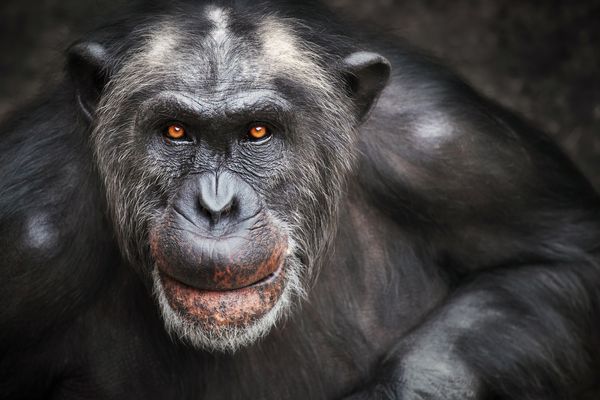
Too bad chimpanzees can’t buy sports cars. New research says it’s not just humans who go through midlife crises: Chimps and orangutans also experience a dip in happiness around the middle of their lives.

“There may be different things going on at the surface, but underneath it all, there’s something common in all three species that’s leading to this,” said study leader Alexander Weiss, a primate psychologist at the University of Edinburgh in Scotland.

The study team asked longtime caretakers of more than 500 chimpanzees and orangutans at zoos in five countries to fill out a questionnaire about the well-being of each animal they work with, including overall mood, how much the animals seemed to enjoy social interactions, and how successful they were in achieving goals (such as obtaining a desired item or spot within their enclosure).

The survey even asked the humans to imagine themselves as the animal and rate how happy they’d be.

When Weiss’s team plotted the results on a graph, they saw a familiar curve, bottoming out in the middle of the animals’ lives and rising again in old age. It’s the same U-shape that has shown up in several studies about age and happiness in people.

“When you look at worldwide data, you see this U-shape,” said National Geographic Fellow Dan Buettner, author of Thrive: Finding Happiness the Blue Zones Way.

“It’s different for every country, but it’s usually somewhere between age 45 and 55 that you hit the bottom of the curve, and it continues to go up with age. You see centenarians in good health reporting higher well-being than teenagers.”

(Take Buettner’s True Happiness Test.)

Social and economic hypotheses may partly explain this happiness curve in human lifetimes: Maybe it’s tied to adjusting expectations, abandoning regret, or just getting more stuff as we grow older. But Weiss suspects there may be something more primal going on.

“We’re saying, take a step back and look at the big picture: Is there any evidence that there’s an evolutionary basis underlying this?” said Weiss, whose study was published today in the journal Proceedings of the National Academy of Sciences.

“Knowing that a similar phenomenon exists in human and nonhuman primates opens up the realm of possible explanations.”

Although the stereotype of a midlife crisis is generally negative—feelings of depression or discontentment with one’s life and where it’s headed—Weiss believes such ennui may have an evolutionary upside.

By the middle of one’s life, humans and apes often have access to more resources than when they were younger, which could make it easier to achieve goals. Feelings of discontentment may be nature’s way of motivating us to “strike while the iron is hot,” said Weiss.

“It may feel lousy, but your brain could be tricking you into improving your circumstances and situation, signaling you to get up and really start pushing while you’re absolutely at your prime,” he said. “And I think that’s a really powerful and positive message.”

Knowing that a midlife dip in happiness is a natural—and temporary—part of life could make it easier for humans to cope with the experience, Weiss said. It could also help caretakers improve captive apes’ quality of life, by identifying ages at which the animals might benefit from extra attention or enrichment.

(See pictures of places where people are happiest.)

“I don’t think this totally subsumes other explanations for age-related changes in happiness, but it adds another layer,” Weiss said.

Weiss has previously studied the correlation between personality and happiness in both chimpanzees and humans, and plans to look next at the impact of factors like sex and social groupings.

“I hope this raises awareness of all that we can learn by looking at our closest living animal relatives.”

http://news.nationalgeographic.com/news/2012/11/121119-apes-happiness-midlife-crises-science-animals/

Stanford scientists advance thought-control computer cursor movement


Stanford researchers have designed the fastest, most accurate mathematical algorithm yet for brain-implantable prosthetic systems that can help disabled people maneuver computer cursors with their thoughts. The algorithm’s speed, accuracy and natural movement approach those of a real arm.


On each side of the screen, a monkey moves a cursor with its thoughts, using the cursor to make contact with the colored ball. On the left, the monkey’s thoughts are decoded with the use of a mathematical algorithm known as Velocity. On the right, the monkey’s thoughts are decoded with a new algorithm known as ReFITT, with better results. The ReFIT system helps the monkey to click on 21 targets in 21 seconds, as opposed to just 10 clicks with the older system.


When a paralyzed person imagines moving a limb, cells in the part of the brain that controls movement activate, as if trying to make the immobile limb work again.

Despite a neurological injury or disease that has severed the pathway between brain and muscle, the region where the signals originate remains intact and functional.

In recent years, neuroscientists and neuroengineers working in prosthetics have begun to develop brain-implantable sensors that can measure signals from individual neurons.

After those signals have been decoded through a mathematical algorithm, they can be used to control the movement of a cursor on a computer screen – in essence, the cursor is controlled by thoughts.

The work is part of a field known as neural prosthetics.

A team of Stanford researchers have now developed a new algorithm, known as ReFIT, that vastly improves the speed and accuracy of neural prosthetics that control computer cursors. The results were published Nov. 18 in the journal Nature Neuroscience in a paper by Krishna Shenoy, a professor of electrical engineering, bioengineering and neurobiology at Stanford, and a team led by research associate Dr. Vikash Gilja and bioengineering doctoral candidate Paul Nuyujukian.

In side-by-side demonstrations with rhesus monkeys, cursors controlled by the new algorithm doubled the performance of existing systems and approached performance of the monkey’s actual arm in controlling the cursor. Better yet, more than four years after implantation, the new system is still going strong, while previous systems have seen a steady decline in performance over time.

“These findings could lead to greatly improved prosthetic system performance and robustness in paralyzed people, which we are actively pursuing as part of the FDA Phase-I BrainGate2 clinical trial here at Stanford,” said Shenoy.

The system relies on a sensor implanted into the brain, which records “action potentials” in neural activity from an array of electrode sensors and sends data to a computer. The frequency with which action potentials are generated provides the computer important information about the direction and speed of the user’s intended movement.

The ReFIT algorithm that decodes these signals represents a departure from earlier models. In most neural prosthetics research, scientists have recorded brain activity while the subject moves or imagines moving an arm, analyzing the data after the fact. “Quite a bit of the work in neural prosthetics has focused on this sort of offline reconstruction,” said Gilja, the first author of the paper.

The Stanford team wanted to understand how the system worked “online,” under closed-loop control conditions in which the computer analyzes and implements visual feedback gathered in real time as the monkey neurally controls the cursor toward an onscreen target.

The system is able to make adjustments on the fly when guiding the cursor to a target, just as a hand and eye would work in tandem to move a mouse-cursor onto an icon on a computer desktop.

If the cursor were straying too far to the left, for instance, the user likely adjusts the imagined movements to redirect the cursor to the right. The team designed the system to learn from the user’s corrective movements, allowing the cursor to move more precisely than it could in earlier prosthetics.

To test the new system, the team gave monkeys the task of mentally directing a cursor to a target – an onscreen dot – and holding the cursor there for half a second. ReFIT performed vastly better than previous technology in terms of both speed and accuracy.

The path of the cursor from the starting point to the target was straighter and it reached the target twice as quickly as earlier systems, achieving 75 to 85 percent of the speed of the monkey’s arm.

“This paper reports very exciting innovations in closed-loop decoding for brain-machine interfaces. These innovations should lead to a significant boost in the control of neuroprosthetic devices and increase the clinical viability of this technology,” said Jose Carmena, an associate professor of electrical engineering and neuroscience at the University of California-Berkeley.

Critical to ReFIT’s time-to-target improvement was its superior ability to stop the cursor. While the old model’s cursor reached the target almost as fast as ReFIT, it often overshot the destination, requiring additional time and multiple passes to hold the target.

The key to this efficiency was in the step-by-step calculation that transforms electrical signals from the brain into movements of the cursor onscreen. The team had a unique way of “training” the algorithm about movement. When the monkey used his arm to move the cursor, the computer used signals from the implant to match the arm movements with neural activity.

Next, the monkey simply thought about moving the cursor, and the computer translated that neural activity into onscreen movement of the cursor. The team then used the monkey’s brain activity to refine their algorithm, increasing its accuracy.

The team introduced a second innovation in the way ReFIT encodes information about the position and velocity of the cursor. Gilja said that previous algorithms could interpret neural signals about either the cursor’s position or its velocity, but not both at once. ReFIT can do both, resulting in faster, cleaner movements of the cursor.

Early research in neural prosthetics had the goal of understanding the brain and its systems more thoroughly, Gilja said, but he and his team wanted to build on this approach by taking a more pragmatic engineering perspective. “The core engineering goal is to achieve highest possible performance and robustness for a potential clinical device,” he said.

To create such a responsive system, the team decided to abandon one of the traditional methods in neural prosthetics.

Much of the existing research in this field has focused on differentiating among individual neurons in the brain. Importantly, such a detailed approach has allowed neuroscientists to create a detailed understanding of the individual neurons that control arm movement.

But the individual neuron approach has its drawbacks, Gilja said. “From an engineering perspective, the process of isolating single neurons is difficult, due to minute physical movements between the electrode and nearby neurons, making it error prone,” he said. ReFIT focuses on small groups of neurons instead of single neurons.

By abandoning the single-neuron approach, the team also reaped a surprising benefit: performance longevity. Neural implant systems that are fine-tuned to specific neurons degrade over time. It is a common belief in the field that after six months to a year they can no longer accurately interpret the brain’s intended movement. Gilja said the Stanford system is working very well more than four years later.

“Despite great progress in brain-computer interfaces to control the movement of devices such as prosthetic limbs, we’ve been left so far with halting, jerky, Etch-a-Sketch-like movements. Dr. Shenoy’s study is a big step toward clinically useful brain-machine technology that has faster, smoother, more natural movements,” said James Gnadt, a program director in Systems and Cognitive Neuroscience at the National Institute of Neurological Disorders and Stroke, part of the National Institutes of Health.

For the time being, the team has been focused on improving cursor movement rather than the creation of robotic limbs, but that is not out of the question, Gilja said. Near term, precise, accurate control of a cursor is a simplified task with enormous value for people with paralysis.

“We think we have a good chance of giving them something very useful,” he said. The team is now translating these innovations to people with paralysis as part of a clinical trial.

This research was funded by the Christopher and Dana Reeve Paralysis Foundation, the National Science Foundation, National Defense Science and Engineering Graduate Fellowships, Stanford Graduate Fellowships, Defense Advanced Research Projects Agency (“Revolutionizing Prosthetics” and “REPAIR”) and the National Institutes of Health (NINDS-CRCNS and Director’s Pioneer Award).

Other contributing researchers include Cynthia Chestek, John Cunningham, Byron Yu, Joline Fan, Mark Churchland, Matthew Kaufman, Jonathan Kao and Stephen Ryu.

http://news.stanford.edu/news/2012/november/thought-control-cursor-111812.html

Thanks to Kebmodee for bringing this to the attention of the It’s Interesting community

Michael Newman – drunk Australian man tries to ride saltwater crocodile


A drunk man who climbed into a crocodile enclosure in Australia and attempted to ride a 5m (16ft) long crocodile has survived his encounter.

The crocodile, called Fatso, bit the 36-year-old man’s leg, tearing chunks of flesh from him as he straddled the reptile.

He received surgery to serious wounds to his leg and is recovering in hospital, police say.

He had been chucked out of a pub in the town of Broome for being too drunk.

The man, Michael Newman, climbed over a fence and tried to sit on the 800kg (1,800lb) saltwater crocodile.

“Fatso has taken offence to this and has spun around and bit this man on the right leg,” Sgt Roger Haynes of Broome police told journalists.

“The crocodile has let him go and he’s been able to scale the fence again and leave the wildlife park.”

Malcolm Douglas, the park’s owner, said that the crocodile was capable of crushing a man to death with a single bite.

“The man who climbed the fence was fortunate because Fatso was a bit more sluggish than normal, due to the cooler nights we have been experiencing in Broome,” said Mr Douglas.

“If it had been warmer and Fatso was more alert, we would have been dealing with a fatality.”

“No person in their right mind would try to sit on a 5m crocodile, Saltwater crocodiles, once they get hold of you, are not renowned for letting you go.”

The man staggered back to the pub bleeding heavily.

Pub manager Mark Phillips said staff told him that the man reappeared at about 11pm with bits of bark hanging off him and flesh gouged out of his limbs.

“They said he had chunks out of his legs and things like that,” Mr Phillips told The West Australian news website.

An average of two people are killed each year in Australia by aggressive saltwater crocodiles, which can grow up to 7m (23 ft) long and weigh more than a tonne.

http://www.bbc.co.uk/news/10611973


Diving Pigs


Diving helps pigs improve their immunity against disease and improves the quality of the pork — at least according to a farmer in Central China’s Hunan province, said a report from News.163.com—the NetEase website.

Huang Demin has built a 3-meter-tall wooden diving platform close to his pigsty in Ningxiang county so his livestock can dive on a daily basis.

Huang has to push his pigs hard to jump from the platform, as most do not seem to enjoy the airborne experience, he said. But he added that he believes diving can help the pigs eat more food and grow faster.

Huang also has an economic motivation — he sells the pork from his diving pigs at three times the price of normal pigs at market. His handmade platform is also now a tourist attraction.

http://europe.chinadaily.com.cn/china/2012-11/14/content_15929283.htm