Rare saber-tooth whale found dead on Venice Beach in Southern California

Stejneger's Beaked Whale, Heather Doyle

A rare whale that has a dolphin-shaped head and saber-like teeth has been found dead on Los Angeles’ Venice Beach, even though it prefers frigid subarctic waters.

The roughly 15-foot-long female Stejneger’s beaked whale washed ashore Tuesday night, the Los Angeles Times reported. A truck hauled away the mammal, which was being examined at the Los Angeles County Natural History Museum to determine how it died.

The Stejneger’s beaked whale is rarely seen in the wild. The species typically dives deep in subarctic waters to feed on squid and small fish. It is believed to migrate as far south as Northern California, and how the whale ended up so far south will probably remain a mystery.

“This is the best,” said Nick Fash, an education specialist for the Santa Monica-based environmental group Heal the Bay. “(Previous finds) aren’t anything like this. This is a treat.”

Males are known for their saber teeth that stick up midway from each side of the lower jaw. However, the teeth of females and their offspring remain hidden beneath the gum tissue.

The whale was alive when it washed ashore, said Peter Wallerstein of Marine Animal Rescue. Its body was covered in bites from so-called cookie-cutter sharks that feed by gouging round pieces of flesh from larger animals.

Because the species isn’t seen much anywhere, the autopsies of washed-up carcasses are the best source for scientists to gather information.

http://www.foxnews.com/us/2013/10/18/rare-saber-tooth-whale-found-dead-on-venice-beach-in-southern-california/

New research shows that drug for Parkinson’s disease (benztropine) may also treat multiple sclerosis

benzotropine

A drug that treats Parkinson’s disease might also work against multiple sclerosis, or MS.

In MS patients, an aberrant immune onslaught degrades the fatty myelin sheaths that coat nerve fibers, causing blurred vision, weakness, loss of coordination and other symptoms.

Luke Lairson of the Scripps Research Institute in La Jolla, Calif., and colleagues tested a host of compounds to see which might boost regeneration of oligodendrocytes, the brain cells that make myelin and which are often lacking in MS. Using the cells’ forerunners, nascent brain cells called oligodendrocyte precursor cells, from rats and mice, the researchers found that benztropine proved adept at steering these cells to become myelin-making oligodendrocytes.

The researchers then induced in mice a disease that mimics MS and gave some of the animals benztropine, others a standard MS drug (fingolimod or interferon beta) and some no drug at all. Whether given before or after disease onset, benztropine reduced symptom severity and prevented relapses better than other MS drugs. Mice getting no drug fared the poorest, according to results appearing October 9 in Nature.

A cell count of brain tissue revealed that mice getting benztropine had substantially more mature oligodendrocytes than mice getting no drug. Further analyses suggested the animals’ symptom improvement with benztropine resulted from a rebuilding of the myelin sheaths, not from suppressing the animals’ immune systems. The researchers think the drug, if approved for use in MS, might work in concert with immune-suppressing drugs.

Old drug may have new trick

Sprite Shortens Duration Of Alcohol’s Damaging Metabolic Process

sprite_620x350

Chinese researchers have found that Sprite may actually be one of the best options for getting over a hangover.

Rather than focusing on a cure, researchers at Sun Yat-Sen University in Guangzhou looked at how a hangover could be prevented before it even started. To do this, they looked at the metabolic processes that the body goes through when drinking alcohol. First, the ethanol in alcoholic drinks gets metabolized by an enzyme known as alcohol dehydrogenase (ADH) into acetaldehyde. Acetaldehyde is believed to be the real cause of alcohol-related effects, including hangovers. It’s then metabolized into acetate by the enzyme aldehyde dehydrogenase (ALDH). Contrary to acetaldehyde’s effects, acetate could be responsible for some of alcohol’s health benefits, the researchers said.

Knowing these processes, the researchers tested 57 different drinks, including herbal infusions, teas, and carbonated beverages, and gauged their effects on ADH and ALDH. They found that every drink had a different effect. For example, an herbal infusion with huo ma ren seeds, also known as hemp seeds, increased the ADH process and inhibited the ALDH process, meaning that the adverse effects of drinking would linger for a longer time. Conversely, Sprite, known as Xue bi, was among the drinks that increased the ALDH process, causing acetaldehyde to break down at a faster pace, and reducing the duration of alcohol-related effects on the body.

“These results are a reminder that herbal and other supplements can have pharmacological activities that both harm and benefit our health,” Edzard Ernst, an expert in medicinal science at the University of Exeter in the U.K., told Chemistry World about the study. But he also noted that the tests should be done over, in living organisms, before the tests are regarded as conclusive. The researchers plan to do this next.

Sprite is also a more reasonable “cure” for the hangover. One recent fad had people drinking Pedialyte, the baby formula, in hopes of replacing lost vitamins and minerals from drinking. Still, going even further, some Vietnamese millionaires felt that the keratin in rhinoceros horns, which costs as much as gold per ounce, was the answer to their morning-after woes.

Source: Li S, Gan L, Li S, et al. Effects of Herbal Infusion, Tea and Carbonated Beverage on Alcohol Dehydrogenase and Aldehyde Dehydrogenase Activities. Food & Function. 2013.

http://www.medicaldaily.com/sprite-could-cure-your-hangover-beverage-shortens-duration-alcohols-damaging-metabolic-process

Built-up earwax taken from a blue whale carcass offers insights into the creature’s life

earqwax

Using built-up earwax taken from a blue whale carcass, researchers have been able to reconstruct a picture of its life by the chemicals and hormones in its ears.

The whale in question was a male blue whale that died after it was struck by a ship near Santa Barbara, Calif., in 2007. Researchers removed a 10-inch ear plug from the carcass during a necropsy. They did a careful chemical analysis of it to measure what the whale had been exposed to in its lifetime. The study appeared in a recent edition of the journal Proceedings of the National Academies of Science.

The scientific community has been excited about the possibilities raised by the new method “once they get past the ‘eew!’ factor of it being earwax,” says Stephen Trumble, lead author on the paper and a biology professor at Baylor University in Waco, Texas.

Baleen whales are known to accumulate layers of earwax in their ear canal. These create a waxy plug that can be over a foot long. The earwax is laid down in layers, a dark one when the animal is feeding and a light one when the animal is migrating and eats very little. The layers are routinely used to determine whale ages.

Now by analyzing the chemicals, pollutants and other matter that accumulated in that wax, researchers were able to build a very complete picture of the animal’s life and exposure to chemicals.

The whale was likely born around 1995. It was exposed to large concentrations of persistent organic pollutants such as DDT and other pesticides in the first six months of its life, most likely while it was still nursing. Many mammals are known to pass chemicals through milk and researchers believe that’s what happened to this whale.

DDT is one of a group of persistent organic pollutants that can take decades to break down in the environment. Although it was banned in the United States in 1972 it is still found in the world’s oceans, and was present at higher levels when this whale was born.
There were also two spikes in its exposure to mercury, around ages 5 and 10. The researchers think these might have occurred as the animal migrated past the coast of California, possibly exposing it to higher levels of pollution than it encountered in the open ocean and when passing less polluted land masses.

When it was about 10 years of age researchers believe it became sexually mature because of increases in testosterone. Its stress hormones spike right around that time, too, which the researchers believe might have been linked to breeding competition or social bonds it formed during this period.

The method offers researchers a much easier and more precise way of measuring what whales are exposed to than previous methods, which included examining whale blubber, blood, feces and blowhole spray, says Sascha Usenko, a professor of environmental chemistry and one of the Baylor researchers.

Since their paper was published they’ve been getting offers of whale earwax specimens, called plugs,from around the world. “We’re going to receive one hopefully this week that’s about three and a half feet long from a bowhead whale from Barrow, Alaska,” Trumble said.

http://www.usatoday.com/story/news/nation/2013/10/10/whale-earwax-gives-researchers-peek-whale-life/2861591/?utm_source=feedburner&utm_medium=feed&utm_campaign=Feed%3A+usatoday-NewsTopStories+(USATODAY+-+News+Top+Stories)

How Exercise Beefs Up the Brain

exercise

New research explains how abstract benefits of exercise—from reversing depression to fighting cognitive decline—might arise from a group of key molecules.

While our muscles pump iron, our cells pump out something else: molecules that help maintain a healthy brain. But scientists have struggled to account for the well-known mental benefits of exercise, from counteracting depression and aging to fighting Alzheimer’s and Parkinson’s disease. Now, a research team may have finally found a molecular link between a workout and a healthy brain.

Much exercise research focuses on the parts of our body that do the heavy lifting. Muscle cells ramp up production of a protein called FNDC5 during a workout. A fragment of this protein, known as irisin, gets lopped off and released into the bloodstream, where it drives the formation of brown fat cells, thought to protect against diseases such as diabetes and obesity. (White fat cells are traditionally the villains.)

While studying the effects of FNDC5 in muscles, cellular biologist Bruce Spiegelman of Harvard Medical School in Boston happened upon some startling results: Mice that did not produce a so-called co-activator of FNDC5 production, known as PGC-1α, were hyperactive and had tiny holes in certain parts of their brains. Other studies showed that FNDC5 and PGC-1α are present in the brain, not just the muscles, and that both might play a role in the development of neurons.

Spiegelman and his colleagues suspected that FNDC5 (and the irisin created from it) was responsible for exercise-induced benefits to the brain—in particular, increased levels of a crucial protein called brain-derived neurotrophic factor (BDNF), which is essential for maintaining healthy neurons and creating new ones. These functions are crucial to staving off neurological diseases, including Alzheimer’s and Parkinson’s. And the link between exercise and BDNF is widely accepted. “The phenomenon has been established over the course of, easily, the last decade,” says neuroscientist Barbara Hempstead of Weill Cornell Medical College in New York City, who was not involved in the new work. “It’s just, we didn’t understand the mechanism.”

To sort out that mechanism, Spiegelman and his colleagues performed a series of experiments in living mice and cultured mouse brain cells. First, they put mice on a 30-day endurance training regimen. They didn’t have to coerce their subjects, because running is part of a mouse’s natural foraging behavior. “It’s harder to get them to lift weights,” Spiegelman notes. The mice with access to a running wheel ran the equivalent of a 5K every night.

Aside from physical differences between wheel-trained mice and sedentary ones—“they just look a little bit more like a couch potato,” says co-author Christiane Wrann, also of Harvard Medical School, of the latter’s plumper figures—the groups also showed neurological differences. The runners had more FNDC5 in their hippocampus, an area of the brain responsible for learning and memory.

Using mouse brain cells developing in a dish, the group next showed that increasing the levels of the co-activator PGC-1α boosts FNDC5 production, which in turn drives BDNF genes to produce more of the vital neuron-forming BDNF protein. They report these results online today in Cell Metabolism. Spiegelman says it was surprising to find that the molecular process in neurons mirrors what happens in muscles as we exercise. “What was weird is the same pathway is induced in the brain,” he says, “and as you know, with exercise, the brain does not move.”

So how is the brain getting the signal to make BDNF? Some have theorized that neural activity during exercise (as we coordinate our body movements, for example) accounts for changes in the brain. But it’s also possible that factors outside the brain, like those proteins secreted from muscle cells, are the driving force. To test whether irisin created elsewhere in the body can still drive BDNF production in the brain, the group injected a virus into the mouse’s bloodstream that causes the liver to produce and secrete elevated levels of irisin. They saw the same effect as in exercise: increased BDNF levels in the hippocampus. This suggests that irisin could be capable of passing the blood-brain barrier, or that it regulates some other (unknown) molecule that crosses into the brain, Spiegelman says.

Hempstead calls the findings “very exciting,” and believes this research finally begins to explain how exercise relates to BDNF and other so-called neurotrophins that keep the brain healthy. “I think it answers the question that most of us have posed in our own heads for many years.”

The effect of liver-produced irisin on the brain is a “pretty cool and somewhat surprising finding,” says Pontus Boström, a diabetes researcher at the Karolinska Institute in Sweden. But Boström, who was among the first scientists to identify irisin in muscle tissue, says the work doesn’t answer a fundamental question: How much of exercise’s BDNF-promoting effects come from irisin reaching the brain from muscle cells via the bloodstream, and how much are from irisin created in the brain?

Though the authors point out that other important regulator proteins likely play a role in driving BDNF and other brain-nourishing factors, they are focusing on the benefits of irisin and hope to develop an injectable form of FNDC5 as a potential treatment for neurological diseases and to improve brain health with aging.

http://news.sciencemag.org/biology/2013/10/how-exercise-beefs-brain

Thanks to Dr. Rajadhyaksha for bringing this to the attention of the It’s Interesting community.

New research shows that elephants naturally understand human pointing

elephant

The next time you need to show an elephant where something is, just point. Chances are he’ll understand what you mean.

New research shows elephants spontaneously understand the communicative intent of human pointing and can use it as a cue to find food.

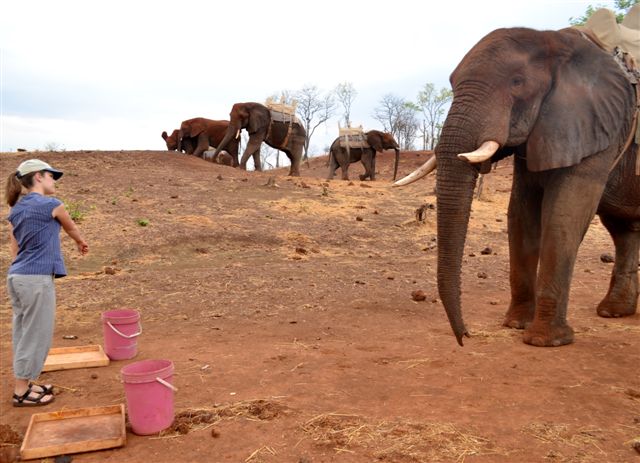
Richard Byrne and Anna Smet of the University of St. Andrews tested 11 African elephants on what’s known as the object-choice task. In this task, a food reward is hidden in one of several containers and the experimenter signals which one by pointing to it.

People understand pointing, even as young children. But the track record of other animals on the object-choice task is mixed. Domesticated animals, such as dogs, cats, and horses, tend to perform better than wild ones. Even our closest relative, the chimpanzee, typically struggles to understand pointing when it’s used by human caretakers.

What’s so remarkable about the elephants’ success on the object-choice task is that they did it spontaneously. Byrne says that in studies of other species, the animals have had the opportunity to learn the task. This is usually during the experiment itself, which consists of a prolonged series of tests over which the animals come to realize they will get rewarded with food if they follow the line of the human’s pointing.

But the elephants performed as well on the first trial as on later tests and showed no signs of learning over the course of the experiments. The elephants Byrne and Smet tested are used to take tourists on elephant-back rides in southern Africa. They were trained to follow vocal commands only, never gestures. Smet recorded the behavior of the elephants’ handlers over several months and found they never pointed their arms for the elephants. What’s more, the elephants’ ability to understand human pointing did not vary with how long they had lived with people, nor with whether they were captive-born or wild-born. “If they have learned to follow pointing from their past experiences, it’s mystery when and how,” Byrne says. “Rather, it seems they do it naturally.”

In the experiment, Byrne and Smet varied several parameters that often affect children’s and animals’ performance on the task: whether the pointing arm was nearest the correct choice or not; whether the pointer’s arm crossed the body or was always on the side of what was pointed at; and whether the arm broke the silhouette from the elephant’s viewpoint or not. None of these made any difference. Even when the experimenter stood closer to the wrong location than the correct location, the elephants performed a little worse but still mostly responded to where her arm was pointing.

The only condition that truly stymied the elephants was when the experimenter simply looked at the correct location without pointing. Byrne says that elephant eyesight is poor compared to our own, and researchers who work with elephants have commented on how bad they are at identifying things by sight. “It would perhaps have been surprising if they had spontaneously responded to the rather subtle movements of a small primate’s head!” Byrne says.

Elephants are only distantly related to humans, which means that the ability to understand pointing likely evolved separately in both species, and not in a shared ancestor. But why would elephants attend to and understand pointing? One thing elephants do share with humans is that they live in a complex and extensive social network in which cooperation and communication with others play a critical role. Byrne and Smet speculate that pointing relates to something elephants do naturally in their society. “The most likely possibility is that they regularly interpret trunk gestures as pointing to places in space,” Byrne says. Elephants do make many prominent trunk gestures, and Byrne and Smet are currently trying to determine if those motions act as “points” in elephant society.

Reference:
Smet, Anna F. and Byrne, Richard W. (2013). African Elephants Can Use Human Pointing Cues to Find Hidden Food. Current Biology http://dx.doi.org/10.1016/j.cub.2013.08.037

http://www.wired.com/wiredscience/2013/10/elephants-get-the-point/

Thanks to Kebmodee for bringing this to the attention of the It’s Interesting community.

“Extinct” Pinocchio Lizard Found in Ecuador

lizard

Scientists have spotted a lizard with a nose like Pinocchio in an Ecuadorian cloud forest. What’s more, the long-nosed reptile was thought extinct, having been seen only a few times in the past 15 years.

“It’s hard to describe the feelings of finding this lizard. Finding the Pinocchio anole was like discovering a secret, a deeply held secret. We conceived it for years to be a mythological creature,” Alejandro Arteaga, a photographer and one of the lizard’s spotters, said in a statement.

Not surprisingly, the defining feature of the Pinocchio lizard—properly named Anolis proboscis, or the horned anole—is the male’s long protrusion on the end of its nose. Far from being a sturdy, rigid structure, researchers have found that the horn is actually quite flexible.

Despite its peculiar appearance, the reptile wasn’t formally described by scientists until 1953. They managed to save only six specimens, all of which were male. It was spotted several times in the next few years, all near the town of Mindo, Ecuador, and then the species seemed to vanish.

“For 40 years, no one saw it. At that point, we thought the species had gone extinct,” said Jonathan Losos, an evolutionary biologist and herpetologist at Harvard University who has studied the animal.

Then, in 2005, a group of bird-watchers near Mindo spotted a strange-looking lizard crossing the road. One of them shared a picture when they got back home, and herpetologists realized that the Pinocchio lizard was still alive and well.

Several teams journeyed to this area of Ecuador to get a closer look. One team, led by Steve Poe, a researcher at the University of New Mexico and an expert at finding hard-to-spot lizards, found that the anoles were actually quite easy to find—if you knew where to look.

Because horned anoles sleep at the end of branches, turning a pale white color as they snooze, Poe’s team discovered that they were easily spotted at night with headlamps or flashlights. The researchers identified several females, none of which had a horn. What the anoles did during the day, however, remained a mystery.

Losos—also a member of the National Geographic Committee for Research and Exploration—arrived in Ecuador in 2010 to solve this mystery and study the natural history of the Pinocchio lizard. Unable to find the lizard by searching its known hideouts, Losos did what any good detective would: He set up a stakeout.

His team found the pale lizards at night and simply followed them into the day. This sleuthing revealed why the anoles were very rarely spotted during the day.

For one, Pinocchio lizards are extremely well camouflaged and live high in the canopy. They also move very, almost ridiculously, slowly—hardly faster than a crawl.

The latest team to discover the lizard also made some new discoveries about where the Pinocchio lizard lives.

“We discovered this lizard occurs in habitats very different to what has been suggested in the literature. No one had ever found the lizard in deep cloud forest away from open areas. The other sightings were in [the] forest border,” Arteaga said in a statement.

“It’s nice that this group spotted these anoles again,” Losos said. “What we really need are people to just go out into nature and study these creatures for a few months. It’s not that hard to do.”

Scientists have discovered similar horned anoles in Brazil, but a closer analysis revealed that these two species had evolved their horns independently.

And as for what the nose is used for, no one knows. Losos once suspected the males might use the horns in swordfighting-like duels, but the horns are far too flimsy and flexible to be used in such a way.

http://newswatch.nationalgeographic.com/2013/10/08/pinocchio-lizard-spotted/

Thanks to Kebmodee for bringing this to the It’s Interesting community.

Researcher decodes prairie dog language, discovers they’ve been talking about us

prairie_dog_language_jpg_662x0_q100_crop-scale

You might not think it to look at them, but prairie dogs and humans actually share an important commonality — and it’s not just their complex social structures, or their habit of standing up on two feet (aww, like people). As it turns out, prairie dogs actually have one of the most sophisticated forms of vocal communication in the natural world, really not so unlike our own.

After more than 25 years of studying the calls of prairie dog in the field, one researcher managed to decode just what these animals are saying. And the results show that praire dogs aren’t only extremely effective communicators, they also pay close attention to detail.

According to Dr. Con Slobodchikoff, who turned his vocalization analysis on the Gunnison’s prairie dog of Arizona and New Mexico, the chirps these animals use as ‘alert calls’ are actually word-like packages of information to share with the rest of the colony. Amazingly, these unique sounds were found to both identify specific threats by species, such as hawks and coyotes, and to point out descriptive information about their appearance.

And, when they’re talking about humans, that might not always be flattering.

“For example, a human alarm call not only contains information about the intruder being a human, but also contains information about the size, shape (thin or fat), and color of clothes the human is wearing,” says Dr. Slobodchikoff.

“When we do an experiment where the same person walks out into a prairie dog colony wearing different colored t-shirts at different times, the prairie dogs will have alarm calls that contain the same description of the person’s size and shape, but will vary in their description of the color.”

While there’s still much to learn about how other animals use organized vocalizations to communicate, Dr. Slobodchikoff has been a pioneer in the field — discovering complex language systems in a variety of other species as well. And with that, perhaps we humans will begin to change our perspective on our place in the world, knowing now that ours is not the only voice to be heard.

http://www.treehugger.com/natural-sciences/researcher-decodes-praire-dog-language-discovers-theyve-been-calling-people-fat.html

Extinct tree grows anew from ancient jar of seeds unearthed by archaeologists

extinct ttree

For thousands of years, Judean date palm trees were one of the most recognizable and welcome sights for people living in the Middle East — widely cultivated throughout the region for their sweet fruit, and for the cool shade they offered from the blazing desert sun.

From its founding some 3,000 years ago, to the dawn of the Common Era, the trees became a staple crop in the Kingdom of Judea, even garnering several shout-outs in the Old Testament. Judean palm trees would come to serve as one of the kingdom’s chief symbols of good fortune; King David even named his daughter, Tamar, after the plant’s name in Hebrew.

By the time the Roman Empire sought to usurp control of the kingdom in 70 AD, broad forests of these trees flourished as a staple crop to the Judean economy — a fact that made them a prime resource for the invading army to destroy. Sadly, around the year 500 AD, the once plentiful palm had been completely wiped out, driven to extinction for the sake of conquest.

In the centuries that followed, the first-hand knowledge of the tree slipped from memory to legend. Up until recently, that is.

During excavations at the site of Herod the Great’s palace in Israel in the early 1960’s, archeologists unearthed a small stockpile of seeds stowed in clay jar dating back 2,000 years. For the next four decades, the ancient seeds were kept in a drawer at Tel Aviv’s Bar-Ilan University. But then, in 2005, botanical researcher Elaine Solowey decided to plant one and see what, if anything, would sprout.

“I assumed the food in the seed would be no good after all that time. How could it be?” said Solowey. She was soon proven wrong.

Amazingly, the multi-millennial seed did indeed sprout — producing a sapling no one had seen in centuries, becoming the oldest known tree seed to germinate.

Today, the living archeological treasure continues to grow and thrive; In 2011, it even produced its first flower — a heartening sign that the ancient survivor was eager to reproduce. It has been proposed that the tree be cross-bred with closely related palm types, but it would likely take years for it to begin producing any of its famed fruits. Meanwhile, Solowey is working to revive other age-old trees from their long dormancy.

http://www.treehugger.com/natural-sciences/extinct-tree-grows-anew-after-archaeologists-dig-ancient-seed-stockpile.html