As World’s Kids Get Fatter, Doctors Turn to the Knife

Daifailluh al-Bugami was just a year old when his parents noticed that his lips turned blue as he slept at night. It was his weight, doctors said, putting pressure on his delicate airways.

Now Daifailluh is 3, and at 61 pounds he is nearly double the typical weight of a child his age. So the Bugamis are planning the once unthinkable: To have their toddler undergo bariatric surgery to permanently remove part of his stomach in hopes of reducing his appetite and staving off a lifetime of health problems.

That such a young child would be considered for weight-loss surgery—something U.S. surgeons generally won’t do—underscores the growing health crisis here and elsewhere in the Middle East. Widespread access to unhealthy foods, coupled with sedentary behavior brought on by wealth and the absence of a dieting and exercise culture, have caused obesity levels in Saudi Arabia and many other Gulf states to approach or even exceed those in Western countries.

While solid national data are hard to come by, some experts say that obesity has turned into a serious health problem for Saudi children, with an estimated 9.3% of school-age youths meeting the World Health Organization’s body-mass-index criteria for obesity, according to research published in 2013 in the Saudi Journal of Obesity. About 18% of school-age children in the U.S. were considered obese in 2010, according to the Centers for Disease Control and Prevention.

Daifailluh’s doctor, Aayed Alqahtani, is a leading advocate of a radical approach to the problem. Patients travel to him from across the country and the Gulf region. Over the past seven years, he has performed bariatric surgery on nearly 100 children under the age of 14, which experts on the procedure believe is the largest number performed by one doctor on young children.

Dr. Alqahtani’s work is being watched amid a global debate about the appropriate age for bariatric surgery. In the U.S., the minimum is generally considered 14. The World Health Organization, in a 2012 report on pediatric bariatric surgery, concluded that there is a dearth of data available on the long-term outcomes of the procedure in children and that a “conservative approach” is necessary until long-term studies are conducted.

Bariatric surgery has been embraced as an effective and relatively safe procedure for morbidly obese adults. The concern with children revolves mostly around nonsurgical risks, such as how the abrupt change in nutrition could affect long-term brain development and sexual maturation.

Dr. Alqahtani says the decision to operate on Daifailluh is a difficult one because of his age. But after nearly two years of consultation with the clinic, Daifailluh’s obesity-related medical problems haven’t gotten any better. “We should not deprive our patients from bariatric surgery based on their age alone,” the surgeon says. “If they have [medical] conditions that threaten their lives, then we should not deny the bariatric surgery.”

The worsening obesity problem here also is manifesting itself in other ways. Some 20% of the Saudi adult population has Type 2 diabetes, a condition linked to obesity, according to the International Diabetes Federation, compared with 8.3% in the U.S., according to the CDC. The cost of diabetes treatment in Saudi Arabia is expected to rise to $2.4 billion in 2015, more than triple that spent in 2010, according to a recent study in the Journal of Family and Community Medicine.

Obesity, particularly among women, has become rampant across much of the Middle East, particularly in oil-rich Gulf nations. In Kuwait, almost half of adult women are considered obese, while 44% of Saudi women and 45% of Qatari women meet the criteria, according to the International Association of the Study of Obesity. Experts says Saudis, in particular, are more likely to carry certain genes linked to obesity.

Saudi lifestyle and parenting practices may exacerbate the problem, according to doctors at weight-loss clinics. Nannies or cooks are often employed, so parents may not know what their children are eating. Saudis often are coaxed to eat large quantities of food when visiting relatives and friends.

In Riyadh, physical activity is limited, particularly for girls, and high temperatures and few green spaces make walking difficult. School gym classes generally take place just once a week. Western-style fast food is abundant, particularly at the air-conditioned malls frequented by children and families.

Bariatric surgery has become an accepted treatment among obese Saudi adults and is paid for by the government. An estimated 11,000 bariatric surgeries were performed on Saudis in 2012, according to Dr. Alqahtani.

The surgery, of which there are several types, generally reduces the size of the stomach and, with some techniques, rearranges the digestive path to bypass much of the intestines. Some types are reversible but generally considered less effective. After the surgery, patients must eat very small meals—ideally for the rest of their lives. Many studies have shown that adults, on average, lose over 50% of their body weight after surgery.

Increasingly, youngsters are heading to the operating room here, where parents see no other options. These days, Dr. Alqahtani performs surgery on three to four youths a week.

“I have seen in my clinic patients who cannot sleep lying down—they sleep sitting—because of sleep apnea, and their age is 10 years, sometimes 5 years,” says Dr. Alqahtani, a professor in the college of medicine and an obesity specialist at King Saud University.

Pediatric surgeons in the U.S. say they also are facing demands from families to operate on younger patients. Thomas Inge, surgical director of the Surgical Weight Loss Program for Teens at Cincinnati Children’s Hospital, says he will be operating on a 12-year-old later this month. He says that as younger and younger children are referred for consideration of surgery, care teams will need to carefully weigh the pros and cons.

Evan Nadler, a pediatric surgeon at Children’s National Medical Center in Washington, D.C., is considering doing the operation on two young children. He and the family of a 7-year-old D.C. boy have agreed that surgery likely is the best option, he says. The family of an 8-year-old from the Middle East has decided to wait until their daughter is older and can better understand the surgery, he says.

Many doctors say they aren’t ready to follow Dr. Alqahtani yet. Kirk Reichard, chairman of the pediatric-surgery committee for the American Society for Metabolic and Bariatric Surgery, notes that there are no data to show that surgery doesn’t affect young children’s long-term sexual maturation or cognitive functioning. The brain, particularly in growing children, is sensitive to nutrition and needs enough energy to mature properly. Nutrition also has the potential to affect hormones linked to sexual maturation.

Dr. Alqahtani says he has seen evidence of normal growth following the procedure in his under-14 patients, many of whom are now four years postsurgery.

“We will certainly use his experience to inform us in some ways, but [Dr. Alqahtani’s work] won’t take the place of trials,” says Dr. Reichard.

One of the main criticisms from some weight-loss experts about performing the surgery on those under 14 is that changes in diet and exercise can prevent further weight gain. In addition, says Dr. Reichard, “there are a lot of other therapies short of surgery that can be helpful in managing” related medical conditions.

Saudi Arabia’s Dr. Alqahtani says he requires his child patients to enroll in a weight-loss program for at least six months because patients able to lose even a bit tend to have better outcomes after surgery. But he says that by the time families come to him, their children have such substantial health problems it is generally too late for diet and exercise alone.

Dr. Alqahtani was trained as a surgeon at McGill University in Montreal and at a minimally invasive surgery center in Denver. When he returned home to Riyadh in 2002, he says, he was inundated with pediatric patients so obese they were suffering from advanced stages fatty liver disease, diabetes and sleep apnea, a disorder in which patients repeatedly stop breathing for short periods during sleep—all diseases typically not seen until middle age.

Om Abdullah Asiri says she tried to help her 11-year-old son lose weight by restricting his eating at home. But he would eat fast food while out with his friends and plays videogames for hours on end, she says. “I can’t control him outside the home,” she says.

He grew to 250 pounds. His body-mass index—a calculation that uses weight and height to estimate percentage of body fat—was 61. A BMI of 40 or above is the most severe obesity category, according to the World Health Organization.

Ms. Asiri traveled with her son, Abdullah, from their home in Abha, more than 600 miles south of Riyadh, to see Dr. Alqahtani for the operation. Lying on a hospital bed the day before his surgery, Abdullah said he is “happy and ready” for the surgery.

His mother says surgery is the best solution for Abdullah, who has high blood pressure, fatty liver, hip pain and severe sleep apnea. Afterward, he won’t have a choice but to eat better, she says. “The surgery will make him change.” She says he dreams of playing soccer with his friends.

The procedure Dr. Alqahtani performs is called the gastric sleeve, which slices off a portion of the stomach but leaves the rest of the digestive tract intact. It is gaining in popularity because of its good weight-loss results and minimal side effects. The operation, conducted through tiny incisions in the abdomen, takes him just 30 minutes.

One recent morning, he operated on a 20-year-old, two 17-year-olds, a 12-year-old, then Abdullah, who was then 10.

Complications can include bleeding in about 10% of cases, and leaking and blood clots in 1% to 2%. Dr. Alqahtani says he has had only two leaks in 1,700 cases, neither in children.

Dr. Alqahtani says each of his pediatric patients has lost at least some weight, and nearly three-quarters have lost more than 50% of their initial body weight. Abdullah has lost close to 50 pounds since his surgery about two months ago, according to his 29-year-old brother, Ahmad.

Dr. Alqahtani says about 90% of his patients have seen medical conditions such as diabetes and hypertension clear up, according to a paper scheduled for publication in the journal Surgery for Obesity and Related Diseases. He published outcomes on 108 children in the peer-reviewed Annals of Surgery journal in 2012.

Recovery involves a six-week transition diet starting with clear liquids and puréed food. Patients eventually can resume solid foods at much-reduced quantities. At first, patients feel full after just 1 to 2 spoonfuls of food, though they gradually can eat more as their stomachs stretch.

Some bariatric-surgery experts have raised questions about whether children are capable of maintaining the restrictive lifetime diet after surgery or whether they will sabotage the procedure when they become teenagers and have a greater autonomy to eat what they want. Some experts question whether parents should make such a drastic and permanent decision for a child.

The decision has been excruciating for the family of Daifailluh, the toddler from Ta’if. Daifailluh was referred to Dr. Alqahtani’s clinic about two years ago after difficulty breathing sent him to the intensive-care unit at a hospital in his hometown. Doctors there determined the toddler was seriously overweight. His mother, Hessa Salem al-Bugami, says she tried to improve his diet but didn’t have good guidance until she came to Dr. Alqahtani’s clinic, a trip of nearly 500 miles from Ta’if. “I feel like I failed,” she says.

At first, the family wanted Daifailluh to lose weight without the operation. Ms. Bugami says her son has always had an “open appetite” and never refuses food. She says she feeds him brown bread and boiled chicken and rice, and limits his portions, hiding the rest of the food. But his obesity hasn’t improved, she says.

Daifailluh will cry and sometimes throw temper tantrums when he wants food, she says. She has tried distracting him with toys, locking the two of them in a room to play for so long she ended up missing her own meal.

“When he starts crying, it’s hard not to give him any of the food, to make the crying stop,” she says. “I feel like I work really hard, but it’s just too much on me.”

Daifailluh, who was hospitalized again for pulmonary problems, is waiting for a surgery date, which will come if he gets final medical clearance from Dr. Alqahtani.

The entire family is worried about the surgery, particularly the effects of anesthesia and whether the surgery will reduce his appetite too much. Ms. Bugami also worries that her son will regain the weight when he leaves the house eventually and is no longer under her watch.

But that is a concern for another day. “Right now is the most scary situation,” she says.

Write to Shirley S. Wang at shirley.wang@wsj.com

http://online.wsj.com/news/articles/SB10001424052702304851104579360992538215578?mg=reno64-wsj&url=http%3A%2F%2Fonline.wsj.com%2Farticle%2FSB10001424052702304851104579360992538215578.html

Thanks to Pete Cuomo for bringing this to the attention of the It’s Interesting community.

New Imaging Technique Speeds Removal of Non-melanoma Skin Cancers

lab to lcinic
The research team is building a smaller portable version of the laboratory’s cancer detection system. Source: Milind Rajadhyaksha, Ph. D., Memorial Sloan-Kettering Cancer Center, New York, NY.

Residual%20Cancer%20Margins

A common surgery for non-melanoma skin cancer, known as Mohs surgery, typically achieves excellent results but can be a long process, as the surgeon successively removes the area of concern until the surrounding tissue is free of cancer. To determine whether further tissue removal is necessary, the borders of the lesion must be processed in a laboratory to check for residual cancer tissue — a process that takes 20 – 45 minutes and is often repeated numerous times. Now, National Insititute of Biomedical Imaging and Bioengineering (NIBIB)-funded researchers have developed a microscopic technique to analyze removed tissue rapidly right in the clinic — dramatically reducing the length, inefficiency, and expense of this procedure.

With approximately 3.5 million new cases per year in the U.S., Mohs surgery is a fairly common procedure that many people undergo repeatedly as new skin cancers appear. It can take one to three hours, or even longer depending on the size and location of the lesion. The process is lengthy because after a section of tissue is removed, it must be frozen and stained so it can be examined to ensure the borders are clear of residual tumor. Although highly effective, the current practice is labor intensive for surgeons and assisting staff, as well as lengthy and stressful for patients. The time spent by surgical personnel and those analyzing the tissue in the lab increases the expense of the procedure, which has been estimated to cost $ 2-3 billion per year in the U.S.

NIBIB-supported researchers led by Milind Rajadhyaksha, Ph.D. at Memorial Sloan Kettering are using their expertise in optical imaging to improve this common procedure. Optical imaging is a technique that uses visible or near-infrared light to obtain detailed images of organs, tissues, and cells. The investigators developed a new pathological assessment technique called strip mosaicing confocal microscopy — a type of optical imaging — that can provide high resolution images during removal of basal cell and squamous cell carcinomas (non-melanoma skin cancers) and perhaps other tumors of the skin. The new technique uses a focused laser line that performs multiple scans of the tissue to obtain image “strips” that are then combined, like a mosaic, into a complete image of the excised tissue. The process takes only 90 seconds and eliminates the need to freeze and stain the tissue samples for analysis — a process that takes 20 to 45 minutes.

The new imaging technique was tested on 17 patients with 34 tissue samples. The overall image quality was excellent, with high resolution and contrast, providing for good visibility of the epidermis and dermis. Researchers compared the new technique against the Mohs approach with its frozen section processing. The new technique achieved a promising 94% in preliminary measures of sensitivity and specificity for detecting skin cancer margins, which is comparable to the “gold standard” Mohs procedure. These preliminary results demonstrated that the optical technique could potentially detect skin cancer margins with the same accuracy as the conventional frozen section technique.

The results of this study were obtained under laboratory conditions; a clinical trial is now being conducted to demonstrate the feasibility of using this technique in the clinical setting, the ultimate goal of the research group.

Steve Krosnick, M.D., NIBIB director for the Program for Image-Guided Interventions, explains the utility of the optical system: “The technology is particularly well-suited for Mohs-trained surgeons, who are experts at performing excisions and interpreting images of tissue samples removed during the Mohs procedure. Image quality, ability to make accurate interpretations, and time savings will be key parameters for adoption of the system in the clinical setting, and the current results are very encouraging.”

The research was conducted by a team consisting of two laboratories at Memorial Sloan-Kettering Cancer Center, New York, NY, as well as students from Bronx High School of Science, New York and Livingston High School, Livingston New Jersey. The work is published in the October 2013 issue of the British Journal of Dermatology.

http://www.nibib.nih.gov/news-events/newsroom/new-imaging-technique-speeds-removal-non-melanoma-skin-cancers

Thanks to Dr. Rajadhyaksha for bringing this to the attention of the It’s Interesting community.

Mild electric current to the brain can improve math skills

MATH

In a lab in Oxford University’s experimental psychology department, researcher Roi Cohen Kadosh is testing an intriguing treatment: He is sending low-dose electric current through the brains of adults and children as young as 8 to make them better at math.

A relatively new brain-stimulation technique called transcranial electrical stimulation may help people learn and improve their understanding of math concepts.

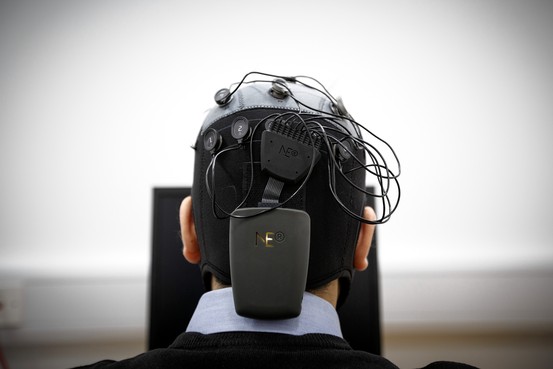
The electrodes are placed in a tightly fitted cap and worn around the head. The device, run off a 9-volt battery commonly used in smoke detectors, induces only a gentle current and can be targeted to specific areas of the brain or applied generally. The mild current reduces the risk of side effects, which has opened up possibilities about using it, even in individuals without a disorder, as a general cognitive enhancer. Scientists also are investigating its use to treat mood disorders and other conditions.

Dr. Cohen Kadosh’s pioneering work on learning enhancement and brain stimulation is one example of the long journey faced by scientists studying brain-stimulation and cognitive-stimulation techniques. Like other researchers in the community, he has dealt with public concerns about safety and side effects, plus skepticism from other scientists about whether these findings would hold in the wider population.

There are also ethical questions about the technique. If it truly works to enhance cognitive performance, should it be accessible to anyone who can afford to buy the device—which already is available for sale in the U.S.? Should parents be able to perform such stimulation on their kids without monitoring?

“It’s early days but that hasn’t stopped some companies from selling the device and marketing it as a learning tool,” Dr. Cohen Kadosh says. “Be very careful.”

The idea of using electric current to treat the brain of various diseases has a long and fraught history, perhaps most notably with what was called electroshock therapy, developed in 1938 to treat severe mental illness and often portrayed as a medieval treatment that rendered people zombielike in movies such as “One Flew over the Cuckoo’s Nest.”

Electroconvulsive therapy has improved dramatically over the years and is considered appropriate for use against types of major depression that don’t respond to other treatments, as well as other related, severe mood states.

A number of new brain-stimulation techniques have been developed, including deep brain stimulation, which acts like a pacemaker for the brain. With DBS, electrodes are implanted into the brain and, though a battery pack in the chest, stimulate neurons continuously. DBS devices have been approved by U.S. regulators to treat tremors in Parkinson’s disease and continue to be studied as possible treatments for chronic pain and obsessive-compulsive disorder.

Transcranial electrical stimulation, or tES, is one of the newest brain stimulation techniques. Unlike DBS, it is noninvasive.

If the technique continues to show promise, “this type of method may have a chance to be the new drug of the 21st century,” says Dr. Cohen Kadosh.

The 37-year-old father of two completed graduate school at Ben-Gurion University in Israel before coming to London to do postdoctoral work with Vincent Walsh at University College London. Now, sitting in a small, tidy office with a model brain on a shelf, the senior research fellow at Oxford speaks with cautious enthusiasm about brain stimulation and its potential to help children with math difficulties.

Up to 6% of the population is estimated to have a math-learning disability called developmental dyscalculia, similar to dyslexia but with numerals instead of letters. Many more people say they find math difficult. People with developmental dyscalculia also may have trouble with daily tasks, such as remembering phone numbers and understanding bills.

Whether transcranial electrical stimulation proves to be a useful cognitive enhancer remains to be seen. Dr. Cohen Kadosh first thought about the possibility as a university student in Israel, where he conducted an experiment using transcranial magnetic stimulation, a tool that employs magnetic coils to induce a more powerful electrical current.

He found that he could temporarily turn off regions of the brain known to be important for cognitive skills. When the parietal lobe of the brain was stimulated using that technique, he found that the basic arithmetic skills of doctoral students who were normally very good with numbers were reduced to a level similar to those with developmental dyscalculia.

That led to his next inquiry: If current could turn off regions of the brain making people temporarily math-challenged, could a different type of stimulation improve math performance? Cognitive training helps to some extent in some individuals with math difficulties. Dr. Cohen Kadosh wondered if such learning could be improved if the brain was stimulated at the same time.

But transcranial magnetic stimulation wasn’t the right tool because the current induced was too strong. Dr. Cohen Kadosh puzzled over what type of stimulation would be appropriate until a colleague who had worked with researchers in Germany returned and told him about tES, at the time a new technique. Dr. Cohen Kadosh decided tES was the way to go.

His group has since conducted a series of studies suggesting that tES appears helpful improving learning speed on various math tasks in adults who don’t have trouble in math. Now they’ve found preliminary evidence for those who struggle in math, too.

Participants typically come for 30-minute stimulation-and-training sessions daily for a week. His team is now starting to study children between 8 and 10 who receive twice-weekly training and stimulation for a month. Studies of tES, including the ones conducted by Dr. Cohen Kadosh, tend to have small sample sizes of up to several dozen participants; replication of the findings by other researchers is important.

In a small, toasty room, participants, often Oxford students, sit in front of a computer screen and complete hundreds of trials in which they learn to associate numerical values with abstract, nonnumerical symbols, figuring out which symbols are “greater” than others, in the way that people learn to know that three is greater than two.

When neurons fire, they transfer information, which could facilitate learning. The tES technique appears to work by lowering the threshold neurons need to reach before they fire, studies have shown. In addition, the stimulation appears to cause changes in neurochemicals involved in learning and memory.

However, the results so far in the field appear to differ significantly by individual. Stimulating the wrong brain region or at too high or long a current has been known to show an inhibiting effect on learning. The young and elderly, for instance, respond exactly the opposite way to the same current in the same location, Dr. Cohen Kadosh says.

He and a colleague published a paper in January in the journal Frontiers in Human Neuroscience, in which they found that one individual with developmental dyscalculia improved her performance significantly while the other study subject didn’t.

What is clear is that anyone trying the treatment would need to train as well as to stimulate the brain. Otherwise “it’s like taking steroids but sitting on a couch,” says Dr. Cohen Kadosh.

Dr. Cohen Kadosh and Beatrix Krause, a graduate student in the lab, have been examining individual differences in response. Whether a room is dark or well-lighted, if a person smokes and even where women are in their menstrual cycle can affect the brain’s response to electrical stimulation, studies have found.

Results from his lab and others have shown that even if stimulation is stopped, those who benefited are going to maintain a higher performance level than those who weren’t stimulated, up to a year afterward. If there isn’t any follow-up training, everyone’s performance declines over time, but the stimulated group still performs better than the non-stimulated group. It remains to be seen whether reintroducing stimulation would then improve learning again, Dr. Cohen Kadosh says.

http://online.wsj.com/news/articles/SB10001424052702303650204579374951187246122?mod=WSJ_article_EditorsPicks&mg=reno64-wsj&url=http%3A%2F%2Fonline.wsj.com%2Farticle%2FSB10001424052702303650204579374951187246122.html%3Fmod%3DWSJ_article_EditorsPicks

Dr. David Nutt trying to make drug policies science-based, and to provide a safe alternative to alcohol

drugs

dr nutt
Nutt says politicians often have a “primitive, childish” way of thinking about drugs.

David Nutt is trying to develop a new recreational drug that he hopes will be taken up by millions of people around the world. No, the 62-year-old scientist isn’t “breaking bad.” In fact, he hopes to do good. His drug would be a substitute for alcohol, to create drinks that are just as intoxicating as beer or whiskey but less toxic. And it would come with an antidote to reverse its effects, allowing people to sober up instantly and drive home safely.

Nutt, a neuropsychopharmacologist at Imperial College London and a former top adviser to the British government on drug policy, says he has already identified a couple of candidates, which he is eager to develop further. “We know people like alcohol, they like the relaxation, they like the sense of inebriation,” Nutt says. “Why don’t we just allow them to do it with a drug that isn’t going to rot their liver or their heart?”

But when he presented the idea on a BBC radio program late last year and made an appeal for funding, many were appalled. A charity working on alcohol issues criticized him for “swapping potentially one addictive substance for another”; a commentator called the broadcast “outrageous.” News-papers likened his synthetic drug to soma, the intoxicating compound in Aldous Huxley’s dystopian novel Brave New World. Some of his colleagues dismissed the idea as scientifically unfeasible.

Nutt wasn’t surprised. As a fierce advocate of what he says are more enlightened, rational drug policies, he has been a lightning rod for a long time. Politicians, in Nutt’s view, make irrational decisions about drugs that help them win votes but cost society dearly. Drug policy is often based on the moral judgment that people should not use drugs, he says. Instead, it should reflect what science knows about the harms of different drugs—notably that many are far less harmful than legal substances such as alcohol, he says. The plan for a synthetic alcohol alternative is his own attempt to reduce the damage that drug use can wreak; he believes it could save millions of lives and billions of dollars.

Such views—and the combative way in which he espouses them—frequently land Nutt in fierce disputes. Newspaper commentators have called him “Professor Nutty” or “the dangerous professor.” In 2009, he was sacked from his position as chair of the United Kingdom’s Advisory Council on the Misuse of Drugs, tasked with giving scientific advice to the home secretary, after he criticized a government decision on cannabis.

But in November 2013, he received the John Maddox Prize for standing up for science. “In circumstances that would have humiliated and silenced most people,” wrote neurobiologist Colin Blakemore, one of the judges, “David Nutt continued to affirm the importance of evidence in understanding the harms of drugs and in developing drug policy.”

Controversial comparisons
David Nutt does not look like a dangerous professor. Short and heavyset, he has a jovial, round face and an old-fashioned mustache; one could mistake him for a London taxi driver. He limps slightly, has a down-to-earth way of speaking, and laughs a lot when he talks. “He is a real personality,” says psychopharmacologist Rainer Spanagel of Heidelberg University in Germany. “You can be in a meeting and almost have a result, then he will come in an hour late, stir everything up, and in the end convince everyone of his position.”

Nutt says he realized at an early age that “understanding how the brain works is the most interesting and challenging question in the universe.” When he was a teenager, his father told him a story of how Albert Hofmann, the discoverer of LSD, took a dose of that drug and felt that the bike ride home took hours instead of minutes. “Isn’t that incredible, that a drug can change time?” he asks. On his first night as an undergraduate in Cambridge, he witnessed the powers of drugs again when he went drinking with fellow students. Two of them couldn’t stop. “I just watched them transform themselves. One of them started wailing and crying and the other became incredibly hostile.”

During his clinical training, Nutt says he treated many alcoholics but failed “to get anyone interested in how to reduce their addiction to the drug that was harming them.” He set out to answer that question, first in the United Kingdom, later as the chief of the Section of Clinical Science at the U.S. National Institute on Alcohol Abuse and Alcoholism, a job he held for 2 years. Today, he runs the department of neuropsychopharmacology at Imperial College, using modern imaging techniques to see what happens in the brain when people take drugs or develop an addiction.

But his biggest contribution to science, he says, was a discovery he made quite early in his career: that some molecules don’t just block receptors in the brain, but actually have the opposite effect of the molecules that normally stimulate them—and in doing so shut down a brain pathway. Nutt called these molecules contragonists, and he has made a second career out of being a bit of a contragonist himself, trying to calm society’s overexcited responses to the steady stream of alarming news about drugs.

Fictional affliction
In 2009, Nutt published an article in the Journal of Psychopharmacology comparing the harms from ecstasy with those caused by horse riding. Every 10,000th ecstasy pill is likely to hurt someone, he calculated, while an average horse enthusiast can expect a serious accident every 350 hours of riding. The sport, he concluded, was more dangerous than the notorious party drug. That “raises the critical question of why society tolerates—indeed encourages—certain forms of potentially harmful behaviour but not others such as drug use,” he added.

Politicians were not amused, and Nutt’s whimsical reference to a fictional affliction he called equine addiction syndrome, or “equasy,” did not help. In his book Drugs – Without the Hot Air, Nutt provided his account of a phone conversation he had with U.K. Home Secretary Jacqui Smith after the paper was published. (Smith calls it an “embroidered version” of their talk.)

Smith: “You can’t compare harms from a legal activity with an illegal one.”

Nutt: “Why not?”

“Because one’s illegal.”

“Why is it illegal?”

“Because it’s harmful.”

“Don’t we need to compare harms to determine if it should be illegal?”

“You can’t compare harms from a legal activity with an illegal one.”

Nutt says this kind of circular logic crops up again and again when he discusses recreational drugs with politicians. “It’s what we would call ‘splitting’ in psychiatric terms: this primitive, childish way of thinking things are either good or bad,” he says.

He’s often that outspoken. He likens the way drug laws are hampering legitimate scientific research, for instance into medical applications for psychedelic compounds, to the church’s actions against Galileo and Copernicus. When the United Kingdom recently banned khat, a plant containing a stimulant that’s popular among people from the Horn of Africa and the Arabian Peninsula, he compared the decision with banning cats. And he accuses the Russian government of deliberately using alcohol to weaken the opposition. “However miserable they are, however much they hate their government and their country, they will just drink until they kill themselves, so they won’t protest,” he says.

But it’s his stance on cannabis that got him sacked. In early 2009, ignoring advice from Nutt’s advisory council, Smith upgraded cannabis from class C to class B, increasing the maximum penalty for possession from 2 to 5 years in prison. A few months later, Nutt criticized the decision in a public lecture, arguing that “overall, cannabis use does not lead to major health problems” and that tobacco and alcohol were more harmful. When media reported the remarks, Alan Johnson, who succeeded Smith as home secretary in mid-2009, asked him to resign. “He was asked to go because he cannot be both a government adviser and a campaigner against government policy,” Johnson wrote in a letter in The Guardian.

Nutt did not go quietly. With financial help from a young hedge fund manager, Toby Jackson, he set up a rival body, the Independent Scientific Committee on Drugs, “to ensure that the public can access clear, evidence based information on drugs without interference from political or commercial interest.” Politics have skewed not just drug laws but research itself, he argues. “If you want to get money from the U.S. government to work on a drug, you have to prove it damages the brain,” he says.

One of his favorite examples is a paper that Science published in September 2002. The study, led by George Ricaurte at Johns Hopkins University, seemed to show that monkeys given just two or three doses of ecstasy, chemically known as MDMA, developed severe brain damage. The finding suggested that “even individuals who use MDMA on one occasion may be at risk for substantial brain injury,” the authors wrote. The paper received massive media attention, but it was retracted a year later after the authors discovered that they had accidentally injected the animals not with MDMA but with methamphetamine, also known as crystal meth, which was already known to have the effects seen in the monkeys. Nutt says the mistake should have been obvious from the start because the data were “clearly wrong” and “scientifically implausible.” “If that result was true, then kids would have been dropping dead from Parkinson’s,” he says.

Some resent this combative style. “He is a polarizing figure and the drug policy area is polarized enough,” says Jonathan Caulkins, a professor of public policy at Carnegie Mellon University in Pittsburgh, Pennsylvania. But Jürgen Rehm, an epidemiologist at the Centre for Addiction and Mental Health in Toronto, Canada, says Nutt has helped stimulate debates that were long overdue. “You don’t get to be on the front page of The Lancet and The New York Times unless you sharpen your arguments a little bit,” Rehm says. “I can live with that.”

Ranking the drugs
In 2010, Nutt sparked a new firestorm when he published another comparison: a Lancet paper ranking drugs according to the harm they cause. Nutt and other experts scored a long list of drugs on 16 criteria, nine related to the user, such as death from an overdose or wrecked relationships, and seven related to society, such as drug-fueled violence and economic costs. In the end, every drug was given a score between 0 and 100 to indicate its overall harm. Alcohol came out on top, ahead of heroin; mushrooms and ecstasy were at the low end.

Critics said the study’s methodology was flawed because it didn’t address drug interactions and the social context of drug use. “For instance, the number of fatalities caused by excessive alcohol use is going to depend in part on gun control laws,” says Caulkins, who calls the whole idea of expressing drug harm as a single number “embarrassing.”

Caulkins adds that even if a perfect ranking of drug harms were possible, it wouldn’t mean that politicians should put the tightest control measures on the most harmful drugs. Suppose drug A is more harmful to the individual and society than drug B, he says, but impurities in drug A, when illegally produced, can lead to potentially fatal organ failure while they just taste bad in drug B. If you were going to prohibit only one of the two drugs, it should be drug B, he says, even though it causes less harm per se, because criminalizing drug A would lead to a more dangerous product and more deaths. Nutt’s ranking of drugs, he says, is “a pseudoscientific exercise which is trying to take control of the policy process from a technocratic perspective in a way that isn’t even sound.”

Other scientists defended the paper. Using Nutt’s harm scales, “flawed and limited as they may be, would constitute a quantum leap of progress towards evidence-based and more rational drug policy in Canada and elsewhere,” two Canadian drug scientists wrote in Addiction. Regardless of its quality, the paper has been hugely influential, Rehm says. “Everyone in the E.U. knows that paper, whether they like it or not. There is a time before that paper and a time after it appeared.”

Nutt says his comparisons are an essential first step on the way to more evidence-based drug policies that seek to reduce harm rather than to moralize. The best option would be a regulated market for alcohol and all substances less harmful to the user than alcohol, he argues.

That scenario, under which only heroin, crack cocaine, and methamphetamine would remain illegal, seems unlikely to become a reality. But Nutt says he can already see more rational policies taking hold. Recently, Uruguay and the U.S. states of Colorado and Washington legalized the sale of recreational cannabis, going a step further than the Netherlands, which stopped enforcing laws on the sale and possession of small amounts of soft drugs decades ago. Nutt was also happy to read President Barack Obama’s recent comment that cannabis is less harmful than alcohol. “At last, a politician telling the truth,” he says. “I’ll warn him though—I was sacked for saying that.”

New Zealand, meanwhile, passed a law in 2013 that paves the way for newly invented recreational drugs to be sold legally if they have a “low risk” of harming the user. Nutt, who has advised the New Zealand government, is delighted by what he calls a “rational revolution in dealing with recreational drugs.” The main problem now, he says, is establishing new drugs’ risks—which is difficult because New Zealand does not allow them to be tested on animals—and deciding what “low risk” actually means. “I told them the threshold should be if it is safer than alcohol,” he says. “They said: ‘Oh my god, that is going to be far too dangerous.'”

Safer substitute
Nutt agrees that alcohol is now one of the most dangerous drugs on the market—which is why he’s trying to invent a safer substitute. The World Health Organization estimates that alcohol—whose harms range from liver cirrhosis, cancer, and fetal alcohol syndrome to drunk driving and domestic violence—kills about 2.5 million people annually. “When I scan the brains of people with chronic alcohol dependence, many have brains which are more damaged than those of people with Alzheimer’s,” Nutt says.

In a paper published this month in the Journal of Psychopharmacology, Nutt and Rehm summarize the top six interventions that governments should consider to reduce the harms of alcohol, such as minimum prices and restrictions on the places that can sell hard liquor. They also argue that governments should support the development of alternatives. Nutt points to e-cigarettes—devices that heat and vaporize a nicotine solution—as a model. “In theory, electronic cigarettes could save 5 million lives a year. That is more than [the death toll from] AIDS, malaria, tuberculosis, and meningitis put together,” he says. “I would argue that the e-cigarette is going to be the greatest health invention since vaccination.”

Can an alcohol alternative do the same? “I think that idea is utopian,” says Spanagel, the German psychopharmacologist. One reason is that researchers have recently developed a much more complex picture of what ethanol, as chemists call it, actually does. Twenty years ago, they thought that once it reached the brain, alcohol elicited its many effects by infiltrating the membranes of neurons there and changing their properties. “Now we know that’s nonsense. You would have to drink 5 liters of schnapps for that to happen,” Spanagel says.

In fact, scientists have learned that alcohol, like other drugs, interacts with the receptors for certain neurotransmitters. But unlike other drugs, it acts on a wide range of them, including receptors for GABA, NMDA, serotonin, and acetylcholine. That will make it hard to find a substance to emulate most of alcohol’s wanted effects while avoiding the unwanted ones, Spanagel predicts.

Nutt is concentrating on the GABA system—the most important inhibitory system in mammalian brains. Alcohol activates GABA receptors, effectively quieting the brain and leading to the state of relaxation many people seek. Nutt has sampled some compounds that target GABA receptors and was pleasantly surprised. “After exploring one possible compound I was quite relaxed and sleepily inebriated for an hour or so, then within minutes of taking the antidote I was up giving a lecture with no impairment whatsoever,” he wrote in a recent article.

But he wants to go one step further. “We know that different subtypes of GABA mimic different effects of alcohol,” he says. Nutt combed the scientific literature and patents for compounds targeting specific GABA receptors, and, in an as-yet unpublished report that he shared with Science, he identifies several molecules that he says fit the bill. Compounds targeting subtypes of the GABAA receptor called alpha2 and alpha3 are particularly promising, he says. Some of these molecules were dropped as therapeutic drug candidates precisely because they had side effects similar to alcohol intoxication.

Gregg Homanics, an alcohol researcher at the University of Pittsburgh, is skeptical that another substance could mimic all the positive effects of alcohol. “You could come up with a drug that might make you feel good. But is it going to be the same good feeling as alcohol? I doubt that.” Such a drug might have downsides of its own, warns Andreas Heinz, an addiction researcher at Charité University Medicine Berlin. It could still turn out to be addictive or to harm a small proportion of the population. “There is an advantage when you have known drugs for hundreds of years and you know exactly what they do,” he says.

Still, Nutt’s appearance on the BBC radio program attracted new investors, ranging “from Ukrainian brewers to American hedge funds,” he says, and Imperial Innovations, a company that provides technology transfer services, is working with him “to consider a range of options for taking the research forward,” a spokesperson says. “We think we have enough funding now to take a substance all the way to the market,” Nutt says—in fact, he hopes to be able to offer the first cocktails for sale in as little as a year from now.

Even a very good alcohol substitute would face obstacles. Many people won’t forsake drinks they have long known and loved—such as beer, wine, and whiskey—for a new chemical, Spanagel says. The idea will also trigger all kinds of political and regulatory debates, Rehm says. “How will such a new drug be seen? Will you be able to buy it in the supermarket? In the pharmacy? Will society accept it?”

Whatever the outcome, Nutt’s quest for a safer drink has already made people think about alcohol in a new way, Rehm adds. “It’s provocative in the best sense of the word.” Much the same could be said of the scientist who thought it up.

http://www.sciencemag.org/content/343/6170/478.full

U.S. WWII Minnesota Starvation Experiment

Towards the end of World War II, word got through that certain people in occupied territories were eating a near-starvation diet. American researchers wanted to study the effects of starvation, so they recruited volunteers – and starved them some more.

The Minnesota Starvation Experiment pretty much lived up to its name. It was an early experiment in nutrition prompted by news about the conditions in Europe during World War II. The full horror of concentration camps was still to come, but word came in that people in war-torn territories were living on severely restricted diets. Everyone knew that things were going to get worse before they got better, and concerned researched wanted to find out the effects of starvation and how to rehabilitate a severely starved person. In November of 1944, at The University of Minnesota, a study began on the effects of starvation.

When contacted years later, many of the men said the experiment was the toughest thing they had ever done, but were happy to have participated and said they would do it again.

http://io9.com/the-us-wartime-experiment-that-starved-men-more-than-1507200589

Thanks to Kebmodee for bringing this to the attention of the It’s Interesting community.
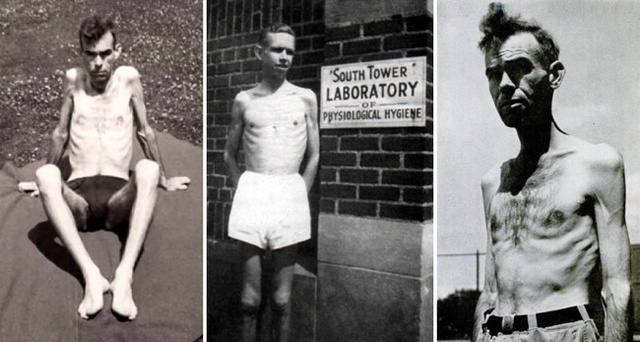
From a pool of 400 volunteers, 36 men were chosen. All were between 22 and 33, and all were in good health. They were told that the experiment would go through four phases. For three months, they would eat a specific number of calories, so that researchers could get them to a healthy weight and get a baseline for their diet. (They were kept active, and the diet they were given was 3,200 calories.) Once they’d gotten up to their “fighting weight,” their caloric intake was to be halved. They’d take in 1,560 calories a day, every day, and no more. They’d have a diet comparable to the food people in Europe would have available – root vegetables and starches with the occasional meat or jell-o. The goal of the diet was to make the men lose a little over two pounds a week, and twenty-five percent of their body weight in six months.

After six months, they’d go through a three-month rehabilitative phase, where they would be allowed more food. They’d be divided into many groups, with different groups given different amounts of calories, and different amounts of protein, fat, and vitamins. Finally, they’d be allowed eight weeks of eating whatever they wanted.

this time, they were kept in dormitories on campus, given regular blood tests, endurance tests, mental tests, and many other kind of tests. They were given administrative work in the lab, and allowed to attend classes at the university. Most of all, they were watched. For the tests to be successful, the researchers had to be sure that the participants weren’t cheating.

The rehabilitative diet did not remain of general interest to subsequent generations – although it did help scientists understand that people who had been starved needed to be overfed, rather than just fed, to help them rebuild their bodies. It is the effects that retain lasting fascination for scientists and for the public. At first, the participants merely complained of hunger, of an inability to concentrate, and of poor judgment. If the men didn’t lose enough weight, their rations were reduced – meaning some got more food than others. They all ate together, watching who got what. Unsurprisingly, resentment sprang up and there were a lot of fights in the dorms. Then came extreme depression. Several members were hospitalized for psychiatric problems. Some mutilated themselves. One man amputated three fingers with a hatchet, although he said later he didn’t know whether he’d done it on purpose or was just not thinking clearly. Considering he had injured his fingers once before, letting a car fall on them, the researchers thought the new injury was at least semi-deliberate, released him from the experiment and put him in psychiatric care.

Then came weakness. When one man cheated on the diet, the researchers demanded the rest of the men go everywhere with a buddy. Years later one of the participants said he was grateful for the buddy system, since he could no longer open heavy doors by himself. The men lost their hair, became dizzy, felt cold all the time, and their muscles ached. Many dropped out of classes. Scientists noted that their resting heart rate and breath rate also fell. The starving body was trying to use up as few calories as possible. For a while, they were allowed gum. They chewed up to forty packs every day until the researchers disallowed gum chewing.

They became obsessed with what food they did have, holding it in their mouths and trying to stretch out mealtimes. On man said that what bothered him more than anything was the fact that food became the central point in his life. He no longer cared about anything but food. He watched movies for the eating scenes, and read magazines for the food ads. Another man said he had begun hating people who were able to go home and have a good dinner. Food became their curse and obsession. This was unsurprising, as a good portion of the men overshot the projected goal of a twenty-five percent loss of body weight. Many men were down to 99 or 100 pounds.

During the three-month rehabilitation period, different groups of men were supposed to receive different amounts of food. Researchers quickly scrapped that idea after the lower-calorie-diet men didn’t show signs of recovery. Some even lost weight after their calorie intake was increased. The lack of calories had caused some of the men’s legs to swell with water, and a calorie infusion allowed them to shed the excess liquid. Despite the sincere efforts of the researchers, almost no men felt recovered after just three months. On the day they were allowed to eat again, quite a few overate and got sick. One had his stomach pumped. Even getting back to their earlier weight didn’t help. They packed on the pounds well beyond that. Some said they couldn’t stop obsessively eating for a year. There was never “enough” food for them.

Today, the results of the Minnesota Starvation Study are mostly of note to people who study eating disorders. Many of the behaviors the starving men displayed, such as diluting food with water to make it look more filling, or overchewing their food to stretch out mealtimes, are also displayed by people suffering from anorexia. The men’s subsequent relentless feeding is similar to binge-eating. Although they made themselves sick physically, they couldn’t get enough food to make them feel satisfied.

Mexican Vigilantes Battling A Drug Cartel For Control Of A City

MexDrug1

by Harrison Jacobs

Mexico has long suffered blistering violence and crime at the hands of its homegrown drug cartels.

Though the Mexican government has waged war on the cartels, the effort has struggled to go anywhere. More than 90,000 people have died in the ongoing conflict.

Fed up with a corrupt police force that is often in bed with the cartels and a military that has to this point been ineffective, some Mexicans have taken it upon themselves to fight the cartels and protect their families — with an incredible conflict happening this week in the city of Paracuaro.

Over the last year, vigilante groups, known as fuerzas autodefensas have sprung up all over Mexico, particularly in the southwestern state of Michoacan, an area plagued by the Knights Templar cartel.

MexDrug2

In neighbouring Guerrero, members of the Public Safety System (the name of the vigilante group) marched to commemorate the first anniversary of their founding.

MexDrug3

On Monday, hundreds of vigilantes stormed Paracuaro, Michoacan, where the Knights Templar had set up their headquarters, in order to seize the town back from the cartel. Below is the entrance, where vigilantes erected a checkpoint.

MexDrug4

The gunmen, “community police” from a number of nearby towns, rode in a convoy of pickup trucks and SUVs, before engaging in a gunfight with the Knights Templar.

MexDrug5

The battle was bloody. One vigilante, two members of the Knights Templar, and two federal police were reportedly killed in the shootout.

MexDrug6

Once they had taken control of the town, the vigilantes began disarming municipal police, whom they accuse of being corrupt and in league with the cartel.

MexDrug7

The vigilantes set up patrols and checkpoints on any highways going into and out of Paracuaro.

MexDrug8

Anybody suspected of being associated with the Knights Templar was detained. Currently, 11 police officers are being held on suspicion of colluding with the cartel.

MexDrug9

What happened in Paracuaro is becoming more common. Several months ago, another group in Guerrero detained more than 50 people for over six weeks for alleged crimes.

MexDrug10

While the vigilantes in Paracuaro went after the drug cartel, most other vigilante groups in Mexico are more concerned with punishing criminals who commit robberies, rape, and murder, than stopping the actual drug trade.

MexDrug11

In response to the vigilantes’ takeover of Paracauro, the Michaocan governor told press that the police will begin attempting to “eradicate” the vigilante groups.

MexDrug12

For a government and police force already overwhelmed by the drug cartels, trying to eliminate the vigilante groups likely won’t be easy.

MexDrug13

http://www.businessinsider.com.au/mexican-vigilantes-battle-drug-cartel-photos-2014-1

Thanks to Kebmodee for bringing this to the attention of the It’s Interesting community.

Western Scientists Look To Chinese Medicine For Fresh Leads

chinese medicine

by Alan Yu

In the quest for new treatments, U.S. researchers are looking to traditional Chinese medicines, some of the oldest remedies in the world.

A recent discovery resulted in a better treatment for a type of leukemia that strikes about 1 in 250,000 people in the U.S. Another study found a potential new painkiller in China’s medicine chest. Other researchers are studying a traditional medicinal plant called “thunder god vine” for its anti-cancer properties.

The approach has already had some success. The Chinese herbal medicine artemisinin, for instance, has gone on to become the most potent anti-malarial drug available.

Not all the leads have panned out, of course. But the old field has shown enough potential to keep interest high.
A better leukemia treatment drawn from an ancient medicine should give us hope for developing anti-cancer drugs, says Dr. Samuel Waxman, a co-author of the report and professor of medicine and cancer specialist at Mount Sinai Hospital. “It gives a lot of optimism of seeking other types of cancer medicines in the Chinese pharmacopedia, which many people are looking into,” Waxman says.

The treatment uses arsenic trioxide, which has traditionally been used in Chinese medicine. The U.S. Food and Drug Administration approved arsenic trioxide (sold as Trisenox here) as a treatment in 2000, and later research showed that patients who received standard chemotherapy followed by arsenic trioxide did better than patients who just received standard chemotherapy.

But a big clinical test recently found that the drug, in combination with all-trans retinoic acid — another drug commonly used to treat acute promyelocytic leukemia (APL) — turned out to be more effective than the usual chemotherapy.
That results means arsenic trioxide should become the new standard for patients that can use it, says Dr. Richard Stone, director of the adult acute leukemia program at the Dana-Farber Cancer Institute.

“So this was a cure for leukemia without chemotherapy, really for the first time in a large randomized trial,” says Stone. “We’ve got a patient in the hospital right now who’s receiving that very therapy.”

He says there are still side effects from the new regimen affecting the skin and heart, but for most people they’re less of a problem than the hair loss, vomiting and diarrhea that can come with chemotherapy.

The arsenic trioxide treatment was developed by a Chinese doctor working in northern China during the Cultural Revolution, according to Mount Sinai’s Waxman. This doctor couldn’t use much Western medicine, so to treat his APL patients, he started giving them arsenic trioxide intravenously. He kept a journal for 10 years and noticed that it worked remarkably well. He eventually published his findings in 2001 with other collaborators.

“That was one of the first examples of a targeted treatment in all of cancer,” Waxman says.

Other researchers are also studying triptolide, a natural product of a traditional Chinese medicinal plant called lei gong teng or “thunder god vine” as a possible anti-cancer drug. The product was effective against cancer in animal models and scientists in the West are now studying exactly how it works, says Jun Liu, one of the researchers and a professor of pharmacology and molecular sciences at Johns Hopkins University.

“Traditional medicine will always remain a useful source of new drugs. The question is, to what extent?” Liu says. “Drug discovery and development is a very lengthy and costly process and there are always failures.”

Research into Chinese medicine is no different. Cancer reseachers at the University of Minnesota recently started an early clinical trial to study a drug that was developed from triptolide for treating pancreatic cancer, says Edward Greeno, associate professor of medicine at the University of Minnesota. He points out it took millions of dollars just to get to this point.

“It’s easy to think, and normal to think, that if people are using it already then it shouldn’t require a lot to develop it into a useful product. The problem is that our standard for what is safe and effective is very high, appropriately,” Greeno says. “It looks like a pretty straight path but what you don’t see are all the false starts and wrong turns that we make along the way.”

Studying Chinese medicine for new treatments has had its share of wrong turns. Western scientists previously looked into treatments for the prevention of dementia, eczema, and bacteria that cause most types of stomach ulcers, but concluded they weren’t particularly effective.

But the failures don’t mean we should give up, says Brian Berman, a professor of medicine at the University of Maryland who served as the principal investigator of two Chinese medicine research initiatives funded by the National Institutes of Health.

Chinese medicine is one lead to consider, especially for chronic diseases that have yet to be cured. “The advantage you have when you look at some of the Chinese medicine therapies is that by and large, they are safe, as long as what you’re getting doesn’t have added ingredients,” Berman says. “We need to look at what other cultures have to offer and then we need to put them through a scientifically rigorous test.”

Read more: http://www.npr.org/blogs/health/2014/01/18/261055778/western-scientists-look-to-chinese-medicine-for-fresh-leads

China is cloning on an industrial scale

pig3

pig2

pig1

By David Shukman

You hear the squeals of the pigs long before reaching a set of long buildings set in rolling hills in southern China.

Feeding time produces a frenzy as the animals strain against the railings around their pens. But this is no ordinary farm.

Run by a fast-growing company called BGI, this facility has become the world’s largest centre for the cloning of pigs.

The technology involved is not particularly novel – but what is new is the application of mass production.

The first shed contains 90 animals in two long rows. They look perfectly normal, as one would expect, but each of them is carrying cloned embryos. Many are clones themselves.

This place produces an astonishing 500 cloned pigs a year: China is exploiting science on an industrial scale.

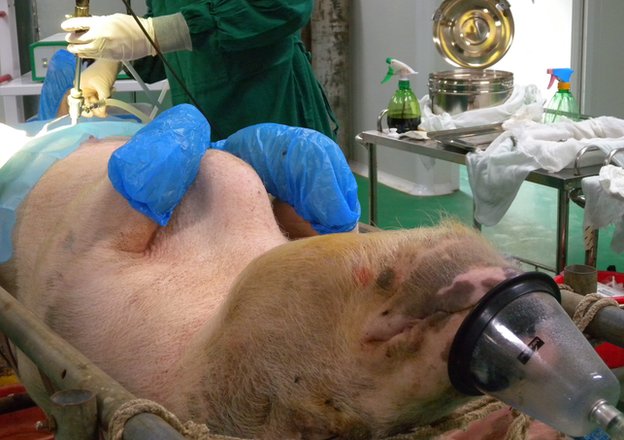
To my surprise, we’re taken to see how the work is done. A room next to the pens serves as a surgery and a sow is under anaesthetic, lying on her back on an operating table. An oxygen mask is fitted over her snout and she’s breathing steadily. Blue plastic bags cover her trotters.

Two technicians have inserted a fibre-optic probe to locate the sow’s uterus. A third retrieves a small test-tube from a fridge: these are the blastocysts, early stage embryos prepared in a lab. In a moment, they will be implanted.

The room is not air-conditioned; nor is it particularly clean. Flies buzz around the pig’s head.

My first thought is that the operation is being conducted with an air of total routine. Even the presence of a foreign television crew seems to make little difference. The animal is comfortable but there’s no sensitivity about how we might react, let alone what animal rights campaigners might make of it all.

I check the figures: the team can do two implantations a day. The success rate is about 70-80%.

Dusk is falling as we’re shown into another shed where new-born piglets are lying close to their mothers to suckle. Heat lamps keep the room warm. Some of the animals are clones of clones. Most have been genetically modified.

The point of the work is to use pigs to test out new medicines. Because they are so similar genetically to humans, pigs can serve as useful “models”. So modifying their genes to give them traits can aid that process.

One batch of particularly small pigs has had a growth gene removed – they stopped growing at the age of one. Others have had their DNA tinkered with to try to make them more susceptible to Alzheimer’s.

Back at the company headquarters, a line of technicians is hunched over microscopes. This is a BGI innovation: replacing expensive machines with people. It’s called “handmade cloning” and is designed to make everything quicker and easier.

The scientist in charge, Dr Yutao Du, explains the technique in a way that leaves me reeling.

“We can do cloning on a very large scale,” she tells me, “30-50 people together doing cloning so that we can make a cloning factory here.”

A cloning factory – an incredible notion borrowed straight from science fiction. But here in Shenzhen, in what was an old shoe factory, this rising power is creating a new industry.

The scale of ambition is staggering. BGI is not only the world’s largest centre for cloning pigs – it’s also the world’s largest centre for gene sequencing.

In neighbouring buildings, there are rows of gene sequencers – machines the size of fridges operating 24 hours a day crunching through the codes for life.

To illustrate the scale of this operation, Europe’s largest gene sequencing centre is the Wellcome Trust Sanger Institute near Cambridge. It has 30 machines. BGI has 156 and has even bought an American company that makes them.

BGI’s chief executive, Wang Jun, tells me how they need the technology to develop ever faster and cheaper ways of reading genes.

Again, a comparison for scale: a recently-launched UK project seeks to sequence 10,000 human genomes. BGI has ambitions to sequence the genomes of a million people, a million animals and a million plants.

Wang Jun is keen to stress that all this work must be relevant to ordinary people through better healthcare or tastier food. The BGI canteen is used as a testbed for some of the products from the labs: everything from grouper twice the normal size, to pigs, to yoghurt.

I ask Wang Jun how he chooses what to sequence. After the shock of hearing the phrase “cloning factory”, out comes another bombshell:

“If it tastes good you should sequence it,” he tells me. “You should know what’s in the genes of that species.”

Species that taste good is one criterion. Another he cites is that of industrial use – raising yields, for example, or benefits for healthcare.

“A third category is if it looks cute – anything that looks cute: panda, polar bear, penguin, you should really sequence it – it’s like digitalising all the wonderful species,” he explains.

I wonder how he feels about acquiring such power to take control of nature but he immediately contradicts me.

“No, we’re following Nature – there are lots of people dying from hunger and protein supply so we have to think about ways of dealing with that, for example exploring the potential of rice as a species,” the BGI chief counters.

China is on a trajectory that will see it emerging as a giant of science: it has a robotic rover on the Moon, it holds the honour of having the world’s fastest supercomputer and BGI offers a glimpse of what industrial scale could bring to the future of biology.

Read more: http://www.bbc.co.uk/news/science-environment-25576718

Thanks to Kebmodee for bringing this to the attenion of the It’s Interesting community.

Google to make smart contact lenses that will monitor blood sugar

google-contact-lens-620xa

If successful, Google’s newest venture could help to eliminate one of the most painful and intrusive daily routines of diabetics.

People with diabetes have difficulty controlling the level of sugar in their blood stream, so they need to monitor their glucose levels — typically by stabbing themselves with small pin pricks, swabbing their blood onto test strips and feeding them into an electronic reader.

Google’s smart contacts could potentially make blood sugar monitoring far less invasive.

The prototype contacts are outfitted with tiny wireless chips and glucose sensors, sandwiched between two lenses. They are able to measure blood sugar levels once per second, and Google is working on putting LED lights inside the lenses that would flash when those levels are too low or high.

The electronics in the lens are so small that they appear to be specks of glitter, Google said. The wireless antenna is thinner than a human hair.

They’re still in the testing phase and not yet ready for prime time. Google (GOOG, Fortune 500) has run clinical research studies, and the company is in discussions with the U.S. Food and Drug Administration.

Diabetes is a chronic problem, affecting about one in 19 people across the globe and one in 12 in the United States.

The smart contacts are being developed in Google’s famous Google X labs, a breeding ground for projects that could solve some of the world’s biggest problems. Google X labs is also working on driverless cars and balloons that transmit Wi-Fi signals to remote areas.

Google’s contact lens project isn’t the first attempt at building the technology. For many years, scientists have been investigating whether other body fluids, including tears, could be used to help people measure their glucose levels. In 2011, Microsoft (MSFT, Fortune 500) partnered with the University of Washington to build contact lenses with small radios and glucose sensors.

http://money.cnn.com/2014/01/17/technology/innovation/google-contacts/

Thanks to Jody Troupe for bringing this to the attention of the It’s Interesting community.

New research shows that psychedelic drugs may help decrease crime

lsd

Psychedelic drugs could help to keep ex-offenders out of prison, new research suggests.

U.S. scientists have found that drugs such as LSD and magic mushrooms could be used to help reform criminals under community correction supervision.

It has previously been thought that LSD could be used to treat alcohol addiction, but the new research is the first in 40 years to suggest it could be used to stop criminals from re-offending.

Researchers from the University of Alabama at Birmingham and Johns Hopkins University School of Medicine, Baltimore, collected data about 25,622 people under community supervision between 2002 and 2007.

All study participants were in the Treatment Accountability for Safer Communities (TASC) program, for people with a history of drug abuse, including alcohol addiction.

The researchers found that criminals diagnosed with a hallucinogen use disorder were less likely to fail the TASC programme, appear in court and be arrested and imprisoned, compared to those who did not have a history of taking the drugs.

Just one per cent of people on the programme were diagnosed with a hallucinogen disorder, while heavy users of cocaine, cannabis and alcohol were the most common.

‘Our results provide a notable exception to the robust positive link between substance use and criminal behaviour,’ the researchers wrote in their study, which was published in the Journal of Psychopharmacology.

‘They add to both the older and emerging body of data indicating beneficial effects of hallucinogen interventions and run counter to the legal classification as well as popular perception of hallucinogens as categorically harmful substances with no therapeutic potential,’ they added.

The scientists believe that offenders may be especially likely to benefit from LSD treatment as many people become criminals as a result of drug-seeking behaviour and impulsive conduct, often caused by compulsive drug use.

The study took factors such as race, employment, age, history of drug abuse and crimes, as well as gender and education into account.

However, the researchers warned that the findings of the study should not be seen to advocate recreational use of psychedelic drugs.

‘Nevertheless, they demonstrate that, in a real-world, substance-related intervention setting, hallucinogen use is associated with a lower probability of poor outcome,’ they wrote.

They believe the research should be the start of a continued investigation into the use of psychedelic drugs to treat criminals.

Read more: http://www.dailymail.co.uk/sciencetech/article-2537137/Could-LSD-cut-crime-Psychedelic-drug-help-prevent-criminals-offending.html#ixzz2qK1CX9Vz
Follow us: @MailOnline on Twitter | DailyMail on Facebook