Using botox to treat depression

Nearly 150 years ago, Charles Darwin recognized that facial expressions not only communicate the emotions we feel but intensify them, by sending cues back to the brain. In the ensuing decades, researchers proved again and again that we can influence the way we feel by the visage we project. Smiling can help us feel happier. Frowning can make us feel angrier.

But it was only in the past few years that a dermatologist from Chevy Chase, Md., noticed that some of the patients whose brows he temporarily paralyzed with Botox, to remove wrinkles, began to feel relief from depression. That physician, Eric Finzi, took his idea to psychiatrist, Norman Rosenthal, who teaches at Georgetown Medical School and had spent many years studying how light and odors, transmitted to the brain through the nerves that connect it with the eyes and nose, affect our moods.

Now there have been three small studies that show that Botox injections can help with depression. In the latest, published in the current issue of the Journal of Psychiatric Research, Finzi and Rosenthal showed that 17 of 33 patients experienced better than 50 percent reductions in their depression symptoms after a single Botox injection, and 27 percent of the group saw their depression go into remission. The study confirms a similar one reported in 2012 by German researchers Tillmann Kroger and Axel Wollmer, who spoke of their findings at a meeting of the American Psychiatric Association in New York this past weekend.

“There are several nerves, about 12 of them, that go straight into the brain through the skull,” Rosenthal told me Tuesday. “…We’re used to thinking of them in terms of their outbound messages or signals. We’re not used to thinking of them in terms of their inbound messages.”

The idea holds promise as a supplement or alternative to anti-depressants and psychotherapy for treating depression, according to Rosenthal. Minuscule amounts of Botox — which is made from the lethal botulinum toxin — are injected into the facial muscles and don’t even enter the bloodstream. The procedure has shown no side-effects.

If the whole idea seems almost too outlandish to believe — as it did for me — Rosenthal was quick to point out that he was laughed at 30 years ago, when he proposed the idea of “seasonal affective disorder” and the notion that exposing people to bright light in the depths of winter could help with that kind of depression. “Now, it’s ubiquitous,” he said. “Then, they thought it was ridiculous.”

The treatment isn’t perfect. Botox is expensive, at about $400 per dose, wears off in about three months and isn’t covered by insurance. And as the studies showed, it doesn’t work for everyone.

But the botulinum toxin already is used to treat a wide variety of medical conditions. Perhaps depression is next.

http://www.washingtonpost.com/news/to-your-health/wp/2014/05/07/using-botox-to-treat-depression-seriously/

End The War On Drugs, Say Nobel Prize-Winning Economists

war_on_drugs_thumb

The decades-long global war on drugs has failed and it’s time to shift the focus from mass incarceration to public health and human rights, according to a new report endorsed by five Nobel Prize-winning economists.

The report, titled “Ending the Drug Wars” and put together by the London School of Economics’ IDEAS center, looks at the high costs and unintended consequences of drug prohibitions on public health and safety, national security and law enforcement.

“The pursuit of a militarized and enforcement-led global ‘war on drugs’ strategy has produced enormous negative outcomes and collateral damage,” says the 82-page report. “These include mass incarceration in the US, highly repressive policies in Asia, vast corruption and political destabilization in Afghanistan and West Africa, immense violence in Latin America, an HIV epidemic in Russia, an acute global shortage of pain medication and the propagation of systematic human rights abuses around the world.”

The report urges the world’s governments to reframe their drug policies around treatment and harm reduction rather than prosecution and prison.

It is also aimed at the United Nations General Assembly, which is preparing to convene a special session on drug policy in 2016. The hope is to push the U.N. to encourage countries to develop their own policies, because the report declares the current one-size-fits-all approach has not proved to be effective.

“The UN must recognize its role is to assist states as they pursue best-practice policies based on scientific evidence, not undermine or counteract them,” said Danny Quah, a professor of economics at LSE and a contributor to the report. “If this alignment occurs, a new and effective international regime can emerge that effectively tackles the global drug problem.”

In addition to contributions from Quah and a dozen other foreign and drug policy experts, the report has been endorsed by five past winners of the Nobel Prize in Economics: Kenneth Arrow (1972), Sir Christopher Pissarides (2010), Thomas Schelling (2005), Vernon Smith (2002) and Oliver Williamson (2009). Also signing on to the report’s foreword are a number of current and former international leaders, including George Shultz, secretary of state under President Ronald Reagan; Nick Clegg, British deputy prime minister; and Javier Solana, the former EU high representative for common foreign and security policy.

Guatemalan President Otto Perez Molina, who has announced that his government may present a plan to legalize production of marijuana and opium poppies by the end of 2014, has also publicly backed the report. Molina plans to discuss the report at the U.N.

A recent Pew survey suggests that Americans may be ready to refocus the U.S. end of the drug war, with 67 percent favoring policies that would provide drug treatment.

“The drug war’s failure has been recognized by public health professionals, security experts, human rights authorities and now some of the world’s most respected economists,” said John Collins, the International Drug Policy Project coordinator at LSE IDEAS. “Leaders need to recognize that toeing the line on current drug control strategies comes with extraordinary human and financial costs to their citizens and economies.”

http://www.huffingtonpost.com/2014/05/06/end-drug-war_n_5275078.html?utm_hp_ref=politics

Thanks to Dr. Lutter for bringing this to the attention of the It’s Interesting community.

7.5% of American schoolchildren take prescription psychiatric medications

The National Center for Health Statistics has found that 7.5 percent of American schoolchildren between the ages of six and 17 had been prescribed and taking pills for emotional or behavioral difficulties.

That is one in every 13 kids.

The study also found that more than half (55 percent) of the parents of the participants said that the medications helped their children “a lot,” while another 26 percent said it helped “some.”

The researchers were unable to identify the specific medications prescribed to the children, however they did make some discoveries regarding race and gender of the children on these medications.

Significantly more boys than girls were given medication; about 9.7 percent of boys compared with 5.2 percent of girls.

Older girls were more likely than younger females to be put on medication.

White children were the most likely to be on psychiatric medications (9.2 percent), followed by Black children (7.4 percent) and Hispanic children (4.5 percent).

Children on Medicaid or a Children’s Health Insurance Program (CHIP) were more likely on medication for emotional and behavioral problems (9.9 percent), versus 6.7 percent of kids with private insurance and only 2.7 percent of uninsured children.

Parents of younger children (between ages 6 and 11) were slightly more likely to feel the medications helped “a lot” compared to those of older children.

Parents of males were also more likely to feel the medications helped “a lot” — about 58 percent of parents of males reported that they helped “a lot” compared to 50 percent of the parents of females.

Parents with incomes less than 100 percent of the federal poverty level were the least likely to feel the medications helped “a lot”. Just 43 percent of these parents said the medications helped “a lot”, while about 31 percent said they helped “some”.

More families living below 100 percent of the federal poverty level had children taking medications for emotional and behavioral problems than those above the federal poverty level.

http://atlantablackstar.com/2014/04/25/1-13-schoolkids-takes-psych-meds/

Thanks to Da Brayn for bringing this to the attention of the It’s Interesting community.

What I’ve Learned: Sol Snyder


Sol Snyder, Distinguished Service Professor of Neuroscience, Pharmacology and Psychiatry, School of Medicine

Growing up, I never had any strong interest in science. I did well in lots of things in high school. I liked reading philosophy and things like that, but being a philosopher is not a fit job for a nice Jewish boy.

This was in the mid-1950s, and many of my friends were going into engineering, preparatory to joining the then prominent military industrial complex. Others were going to be doctors, so I got the idea that maybe I’d be a psychiatrist. I didn’t have any special affinity for medicine or desire to cast out the lepers or heal mankind.

I was always reading things. My father valued education. He wasn’t a big advice giver, but he … had a lot of integrity. What was important to him was doing the right thing. And he had great respect for the intellectual life and science.

My father’s professional life commenced in 1935 as the 10th employee of what became the NSA. He led a team that broke one of the principal Japanese codes. At the end of World War II, computers were invented, and, if you think about it, what could be the best entity to take advantage of computers than NSA, with its mission of sorting gibberish and looking for patterns. So my father was assigned to look at these new machines and see if they would be helpful. He led the computer installations at NSA.

Summers in college I worked in the NSA. My father taught me to program computers in machine language. Computers were a big influence on me.

I learned at the NSA about keeping secrets. What is top secret, what is need-to-know—that is one of the things you learn in the business. You don’t talk to the guy at the next desk even if you’re working on the same project. If that person doesn’t need to know, you just shut up.

In medical school, I started working at the NIH in Bethesda during the summers and elective periods, largely because the only thing I really did well up to that time was play the classical guitar and one of my guitar students was an NIH researcher. In high school I thought I might go the conservatory route, but that’s even less fitting for a nice Jewish boy than being a philosopher.

It was through my contacts at NIH that I was able to get a position working with future Nobel Prize winner Julius Axelrod. Julie was a wonderful mentor who did research on drugs and neurotransmitters. Working with him was inspirational. I just adored it.

What was notable about Julie was his great creativity, always coming up with original ideas. Even though he was an eminent scientist, he didn’t have a regular office. He just had a desk in a lab. He did experiments with his own two hands every day.

Philosophically, Julie emphasized you go where the data takes you. Don’t worry that you’re an expert in enzyme X and so should focus on that. If the data point to enzyme Y, go for it. Do what’s exciting.

My very first project with Julie was studying the disposition of histamine. I thought I had found that histamine had been converted into a novel product that looked really interesting, and I was wrong. I missed the true product because we separated the chemicals on paper and discarded the radioactivity at the bottom, throwing away the real McCoy. Another lab at Yale found it, led, remarkably, by a close friend since kindergarten. My humiliation didn’t last very long. I learned not to be so sloppy, to take greater care, and, most important, to explore peculiar results.

How does one pick research directions? You can go where it’s “hot,” but there you’re competing with 300 other people, and everyone can make only incremental changes. But if you follow Julie Axelrod’s rules and you don’t worry about what’s hot, or what other people are doing—just go where your data are taking you—then you have a better chance of finding something that nobody else had found before.

With the discovery of the opiate receptor, I was fortunate to launch a new field: molecular identification of neurotransmitter receptors. Later we discovered that the gas nitrous oxide is a neurotransmitter.

I’m a klutz. I can’t hammer a nail. So for the technical side, like dissecting brains to look at different regions, I enlisted friends. I learned to collaborate, a key element in so many discoveries.

Johns Hopkins has always been a collegial place. People are just friendly and interact with each other. This tradition goes back to the founding of the medical school, permeating the school’s governance as well as research. We tend to be more productive than faculty at other schools, where one gets ahead by sticking an ice pick in the backs of colleagues.

One of my heroes was my guitar teacher, Sophocles Papas, Andrés Segovia’s best friend. Sophocles was an important influence in my life, and we stayed close until he died in his 90s. In a couple of years after commencing lessons, I was giving recitals, all thanks to him. Like Julie, Sophocles emphasized innovative short cuts to creativity.

I’ve remained involved with music. I’m the longest-serving trustee on the Baltimore Symphony Orchestra, chairing for many years its music committee. Trustees of arts organizations are typically businesspeople selected for their fundraising acumen. But the person who nominated me reportedly commented, I’d like to propose something radical: I’d like to propose a trustee who cares about music.

Most notable about psychiatry is that the major drugs—antipsychotics for schizophrenia, antidepressants, and anti-anxiety drugs—were all discovered in the mid-1950s. Subsequent tweaking has enhanced potency and diminished side effects, but there have been no major breakthroughs. No new class of drugs since 1958—rather frustrating.

As biomedical science advances, especially with the dawn of molecular biology, our power to innovate is just dazzling. Today’s students take all of this for granted, but those of us who have been doing research for several decades are daily amazed by our abilities to probe the mysteries of life.

The logic of nature is elegant and straightforward. The more we learn about how the body works, the more we are amazed by its beauty and inherent simplicity.

One of my pet peeves is that the very power of modern science leads journal and grant reviewers to expect every “i” dotted and every “t” crossed. Because of this, four years or more of work go into each scientific manuscript. Then, editors and reviewers of journals are so picayune that revising a paper consumes another year.

Now let’s consider the poor post­doctoral fellow or graduate student. To move forward in his or her career requires at least one major publication—a five-year enterprise. If you only have one shot on goal, one paper in five years, your chances of success shrivel. The duration of PhD training and postdoctoral training is getting so long that from the entry point at graduate school to the time you’re out looking for a job as an assistant professor is easily 12, 15 years. Well, that is ridiculous. If you got paid $10 million at the end of this road, that would be one thing, but scientists earn less than most other professionals. We’re deterring the young smart people from going into science.

Biomedical researchers don’t work in a vacuum. They work with grad students and postdoctoral fellows, so being a good mentor is key to being a good scientist. Keep your students well motivated and happy. Have them feel that they are good human beings, and they will do better science.

The most important thing is that you value the integrity of each person. I ask my students all the time, What do you think? And this discussion turns into minor league psychotherapy. Ah, you think that? Tell me more. Tell me more.

The “stupidest” of the students here are smarter than me. It’s a pleasure to watch them emerge.

I see my life as taking care of other people. Although I didn’t go to medical school with any intelligent motivation, once I did, I loved being a doctor and trying to help people. And I love being a psychiatrist and trying to understand people, and I try to carry that into everything I do.

In medical research, all of us want to find the causes and cures for diseases. I haven’t found the cause of any disease, although with Huntington’s disease, we are making inroads. And, of course, being a pharmacologist, my métier is discovering drugs and better treatments.

My secret? I come to work every day, and I keep my own calendar. That way I have free time to just wander around the lab and talk to the boys and girls and ask them how it’s going. That’s what makes me happy.

Sol Snyder joined Johns Hopkins in 1965 as an assistant resident in Psychiatry and would later become the youngest full professor in JHU history. In 1978, he received the Albert Lasker Basic Medical Research Award for his role in discovering the brain’s opiate receptors. In 1980, he founded the School of Medicine’s Department of Neuroscience, which in 2006 was renamed the Solomon H. Snyder Department of Neuroscience.

http://hub.jhu.edu/gazette/2014/january-february/what-ive-learned-sol-snyder

http://en.wikipedia.org/wiki/Solomon_H._Snyder

Protecting new neurons reduces depression caused by stress, and may lead to a new class of molecules to treat depression.

Scientists probing the link between depression and a hormone that controls hunger have found that the hormone’s antidepressant activity is due to its ability to protect newborn neurons in a part of the brain that controls mood, memory, and complex eating behaviors. Moreover, the researchers also showed that a new class of neuroprotective molecules achieves the same effect by working in the same part of the brain, and may thus represent a powerful new approach for treating depression.

“Despite the availability of many antidepressant drugs and other therapeutic approaches, major depression remains very difficult to treat,” says Andrew Pieper, associate professor of psychiatry and neurology at the University of Iowa Carver College of Medicine and Department of Veterans Affairs, and co-senior author of the study.

In the new study, Pieper and colleagues from University of Texas Southwestern Medical Center led by Jeffrey Zigman, associate professor of internal medicine and psychiatry at UT Southwestern, focused on understanding the relationship between depression, the gut hormone ghrelin, and the survival of newborn neurons in the hippocampus, the brain region involved in mood, memory, and eating behaviors.

“Not only did we demonstrate that the P7C3 compounds were able to block the exaggerated stress-induced depression experienced by mice lacking ghrelin receptors, but we also showed that a more active P7C3 analog was able to complement the antidepressant effect of ghrelin in normal mice, increasing the protection against depression caused by chronic stress in these animals,” Zigman explains.

“The P7C3 compounds showed potent antidepressant activity that was based on their neurogenesis-promoting properties,” Pieper adds. “Another exciting finding was that our experiments showed that the highly active P7C3 analog acted more rapidly and was more effective [at enhancing neurogenesis] than a wide range of currently available antidepressant drugs.”

The findings suggest that P7C3-based compounds may represent a new approach for treating depression. Drugs based on P7C3 might be particularly helpful for treating depression associated with chronic stress and depression associated with a reduced response to ghrelin activity, which may occur in conditions such as obesity and anorexia nervosa.

Future studies, including clinical trials, will be needed to investigate whether the findings are applicable to other forms of depression, and determine whether the P7C3 class will have antidepressant effects in people with major depression.

The hippocampus is one of the few regions in the adult brain where new neurons are continually produced – a process known as neurogenesis. Certain neurological diseases, including depression, interfere with neurogenesis by causing death of these new neurons, leading to a net decrease in the number of new neurons produced in the hippocampus.

Ghrelin, which is produced mainly by the stomach and is best known for its ability to stimulate appetite, also acts as a natural antidepressant. During chronic stress, ghrelin levels rise and limit the severity of depression caused by long-term stress. When mice that are unable to respond to ghrelin experience chronic stress they have more severe depression than normal mice.

In the new study, Pieper and Zigman’s team showed that disrupted neurogenesis is a contributing cause of depression induced by chronic stress, and that ghrelin’s antidepressant effect works through the hormone’s ability to enhance neurogenesis in the hippocampus. Specifically, ghrelin helps block the death of these newborn neurons that otherwise occurs with depression-inducing stress. Importantly, the study also shows that the new “P7C3-class” of neuroprotective compounds, which bolster neurogenesis in the hippocampus, are powerful, fast-acting antidepressants in an animal model of stress-induced depression. The results were published online April 22 in the journal Molecular Psychiatry.

Potential for new antidepressant drugs

The neuroprotective compounds tested in the study were discovered about eight years ago by Pieper, then at UT Southwestern Medical Center, and colleagues there, including Steven McKnight and Joseph Ready. The root compound, known as P7C3, and its analogs protect newborn neurons from cell death, leading to an overall increase in neurogenesis. These compounds have already shown promising neuroprotective effects in models of neurodegenerative disease, including Parkinson’s disease, amyotrophic lateral sclerosis (ALS), and traumatic brain injury. In the new study, the team investigated whether the neuroprotective P7C3 compounds would reduce depression in mice exposed to chronic stress, by enhancing neurogenesis in the hippocampus.

http://now.uiowa.edu/2014/04/protecting-new-neurons-reduces-depression-caused-stress

Boosting Excess Neuron Activity Builds Resilience In Mice Vulnerable To Depression

A new study has found that activating natural resilience in the brain could reduce susceptibility for stress in mice, and potentially humans.

Depressive behaviors in mice are often linked to “out-of-balance” neuron activity in the brain’s reward circuit. Suppressing or stopping this hyperactive neuron activity was typically thought to treat this susceptibility to depression or anxiety — but the new study has found quite the opposite.

“To our surprise, neurons in this circuit harbor their own self-tuning, homeostatic mechanism of natural resilience,” Ming-Hu Han of the Icahn School of Medicine at Mount Sinai in New York City, explained in a press release. What this means is that instead of suppressing this excessive neuron activity, boosting it provided a self-stabilizing response, re-establishing balance and producing an antidepressant-like effect.

The mice that were once vulnerable to being anxious, listless, depressed or withdrawn after socially stressful experiences stopped exhibiting these behaviors after their neuron activity received a boost. “As we get to the bottom of a mystery that has perplexed the field for more than a decade, the story takes an unexpected twist that may hold clues to future antidepressants that would at through this counterintuitive resilience mechanism,” Dr. Thomas Insel, NIMH Director, said in the press release.

In susceptible mice, neurons that secrete dopamine — a feel-good hormone — from a reward circuit area called the ventral tegmental area (VTA) become unusually hyperactive. This hyperaction was much higher in mice that were resilient to stress, “even though they were spared the runaway dopamine activity and depression-related behaviors,” the press release reads. Using this logic, the susceptible mice just needed a boost in activation in these neurons to produce resilience.

What is interesting about this study is that it points to the power of the body and brain’s self-correcting prowess. “Homeostatic mechanisms finely regulate other critical components of physiology required for survival — blood glucose and oxygen, body temperature, blood pressure,” Lois Winsky, chief of the NIMH Molecular, Cellular, and Genomic Neuroscience Research Branch, said in the press release. “Similar mechanisms appear to also maintain excitatory balance in brain cells. This study shows how they may regulate circuits underlying behavior.”

http://www.medicaldaily.com/boosting-excess-neuron-activity-builds-resilience-mice-vulnerable-depression-277452

Cocaine Eats Up Brain Twice as Fast as Normal Aging

Chronic cocaine use may speed up brain aging, a new study suggests.

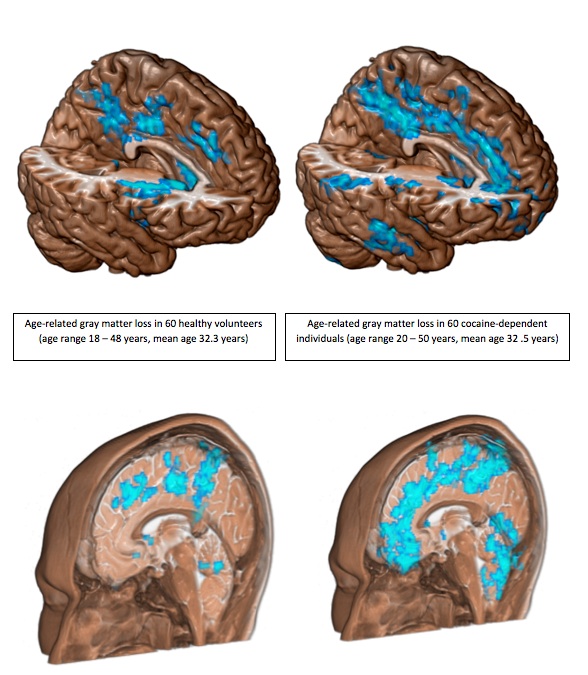
British researchers scanned the brains of 60 people with cocaine dependence and 60 people with no history of substance abuse, and found that those with cocaine dependence had greater levels of age-related loss of brain gray matter.

The cocaine users lost about 3.08 milliliters (ml) of brain volume a year, nearly twice the rate of about 1.69 ml per year seen in the healthy people, the University of Cambridge researchers said.

The increased decline in brain volume in the cocaine users was most noticeable in the prefrontal and temporal cortex, regions associated with attention, decision-making, self-regulation and memory, the investigators noted in a university news release.

“As we age, we all lose gray matter. However, what we have seen is that chronic cocaine users lose gray matter at a significantly faster rate, which could be a sign of premature aging. Our findings therefore provide new insight into why the [mental] deficits typically seen in old age have frequently been observed in middle-aged chronic users of cocaine,” Dr. Karen Ersche, of the Behavioral and Clinical Neuroscience Institute at University of Cambridge, said in the news release.

The study is published in the April 25 issue of the journal Molecular Psychiatry.

Cocaine is used by as many as 21 million people worldwide, and about 1 percent of these people become dependent on the drug, according to the United Nations Office on Drugs and Crime.

While the study doesn’t conclusively prove cocaine causes brain atrophy and other symptoms of aging, the association is cause for concern, the researchers said.

“Our findings clearly highlight the need for preventative strategies to address the risk of premature aging associated with cocaine abuse. Young people taking cocaine today need to be educated about the long-term risk of aging prematurely,” Ersche said.

However, accelerated aging also affects older adults who have abused cocaine and other drugs since early adulthood.

“Our findings shed light on the largely neglected problem of the growing number of older drug users, whose needs are not so well catered for in drug treatment services. It is timely for health care providers to understand and recognize the needs of older drug users in order to design and administer age-appropriate treatments,” Ersche said.

http://health.usnews.com/health-news/news/articles/2012/04/24/cocaine-habit-might-speed-brain-aging

New blood test to predict who will develop Alzheimer’s disease

Alzheimers_elderly_1665136c

In a first-of-its-kind study, researchers have developed a blood test for Alzheimer’s disease that predicts with astonishing accuracy whether a healthy person will develop the disease.

Though much work still needs to be done, it is hoped the test will someday be available in doctors’ offices, since the only methods for predicting Alzheimer’s right now, such as PET scans and spinal taps, are expensive, impractical, often unreliable and sometimes risky.

“This is a potential game-changer,” said Dr. Howard Federoff, senior author of the report and a neurologist at Georgetown University Medical Center. “My level of enthusiasm is very high.”

The study was published in Nature Medicine.

In the beginning, the researchers knew they wanted to find a blood test to detect Alzheimer’s but didn’t know what specifically to look for. Should they examine patients’ DNA? Their RNA? Or should they look for the byproducts of DNA and RNA, such as fats and proteins?

They decided to start with fats, since it was the easiest and least expensive. They drew blood from hundreds of healthy people over age 70 living near Rochester, New York, and Irvine, California. Five years later, 28 of the seniors had developed Alzheimer’s disease or the mild cognitive problems that usually precede it.

Scouring more than 100 fats, or lipids, for what might set this group apart, they found that these 28 seniors had low levels of 10 particular lipids, compared with healthy seniors.

To confirm their findings, the researchers then looked at the blood of 54 other patients who had Alzheimer’s or mild cognitive impairment. This group also had low levels of the lipids.

Overall, the blood test predicted who would get Alzheimer’s or mild cognitive impairment with over 90% accuracy.

“We were surprised,” said Mark Mapstone, a neuropsychologist at the University of Rochester Medical Center and lead author of the study. “But it turns out that it appears we were looking in the right place.”

The beauty of this test, Mapstone says, is that it caught Alzheimer’s before the patient even had symptoms, suggesting that the disease process begins long before people’s memories start failing. He says that perhaps the lipid levels started decreasing at the same time as brain cells started dying.

He and his team plan to try out this test in people in their 40s and 50s. If that works, he says, that would be the “holy grail,” because then researchers could try experimental drugs and treatments in a group that’s almost sure to get the disease. That would speed research along immensely.

Plus, people could get a heads up that they were probably destined to get Alzheimer’s. Although some people might not want to know that they’re destined for a horrible disease, others might be grateful for the warning.

Federoff said he would want to know whether he was on his way to getting the disease, even though there’s nothing he could do about it. He might want to take a family trip he’d been thinking about or might want to appoint a successor at work.

“I would make sure that things that are important to me get done,” he said.

But, Federoff added, others might not want to know they were about to get a devastating disease they were powerless to stop.

“I think it’s a very personal decision,” Federoff said. “It would have to be thought through on multiple dimensions. Patients and their families would have to be counseled.”

Other research teams are looking at other possible tests for Alzheimer’s. The need for a screening test of some kind for Alzheimer’s has never been greater: A report released last week says the disease claims the lives of perhaps a half a million Americans, making it nearly as deadly as heart disease and cancer.

If any of these tests work out — and that’s still an if — it would take years to make it to doctors’ offices, since the test would need to be validated by other labs and with larger groups of people. Thee test developed by the Georgetown and Rochester researchers, for example, was used mainly in white people, and it might not work as well with other groups.

Heather Snyder, a spokeswoman for the Alzheimer’s Association, said the study was well done but much work is still needed.

“It’s an interesting paper. It’s an intriguing study. But it is very preliminary,” she said.http://www.cnn.com/2014/03/09/health/alzheimers-blood-test/index.html?hpt=hp_t2

Mild electric current to the brain can improve math skills

MATH

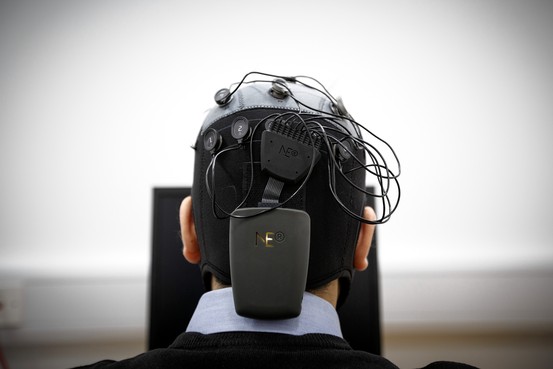
In a lab in Oxford University’s experimental psychology department, researcher Roi Cohen Kadosh is testing an intriguing treatment: He is sending low-dose electric current through the brains of adults and children as young as 8 to make them better at math.

A relatively new brain-stimulation technique called transcranial electrical stimulation may help people learn and improve their understanding of math concepts.

The electrodes are placed in a tightly fitted cap and worn around the head. The device, run off a 9-volt battery commonly used in smoke detectors, induces only a gentle current and can be targeted to specific areas of the brain or applied generally. The mild current reduces the risk of side effects, which has opened up possibilities about using it, even in individuals without a disorder, as a general cognitive enhancer. Scientists also are investigating its use to treat mood disorders and other conditions.

Dr. Cohen Kadosh’s pioneering work on learning enhancement and brain stimulation is one example of the long journey faced by scientists studying brain-stimulation and cognitive-stimulation techniques. Like other researchers in the community, he has dealt with public concerns about safety and side effects, plus skepticism from other scientists about whether these findings would hold in the wider population.

There are also ethical questions about the technique. If it truly works to enhance cognitive performance, should it be accessible to anyone who can afford to buy the device—which already is available for sale in the U.S.? Should parents be able to perform such stimulation on their kids without monitoring?

“It’s early days but that hasn’t stopped some companies from selling the device and marketing it as a learning tool,” Dr. Cohen Kadosh says. “Be very careful.”

The idea of using electric current to treat the brain of various diseases has a long and fraught history, perhaps most notably with what was called electroshock therapy, developed in 1938 to treat severe mental illness and often portrayed as a medieval treatment that rendered people zombielike in movies such as “One Flew over the Cuckoo’s Nest.”

Electroconvulsive therapy has improved dramatically over the years and is considered appropriate for use against types of major depression that don’t respond to other treatments, as well as other related, severe mood states.

A number of new brain-stimulation techniques have been developed, including deep brain stimulation, which acts like a pacemaker for the brain. With DBS, electrodes are implanted into the brain and, though a battery pack in the chest, stimulate neurons continuously. DBS devices have been approved by U.S. regulators to treat tremors in Parkinson’s disease and continue to be studied as possible treatments for chronic pain and obsessive-compulsive disorder.

Transcranial electrical stimulation, or tES, is one of the newest brain stimulation techniques. Unlike DBS, it is noninvasive.

If the technique continues to show promise, “this type of method may have a chance to be the new drug of the 21st century,” says Dr. Cohen Kadosh.

The 37-year-old father of two completed graduate school at Ben-Gurion University in Israel before coming to London to do postdoctoral work with Vincent Walsh at University College London. Now, sitting in a small, tidy office with a model brain on a shelf, the senior research fellow at Oxford speaks with cautious enthusiasm about brain stimulation and its potential to help children with math difficulties.

Up to 6% of the population is estimated to have a math-learning disability called developmental dyscalculia, similar to dyslexia but with numerals instead of letters. Many more people say they find math difficult. People with developmental dyscalculia also may have trouble with daily tasks, such as remembering phone numbers and understanding bills.

Whether transcranial electrical stimulation proves to be a useful cognitive enhancer remains to be seen. Dr. Cohen Kadosh first thought about the possibility as a university student in Israel, where he conducted an experiment using transcranial magnetic stimulation, a tool that employs magnetic coils to induce a more powerful electrical current.

He found that he could temporarily turn off regions of the brain known to be important for cognitive skills. When the parietal lobe of the brain was stimulated using that technique, he found that the basic arithmetic skills of doctoral students who were normally very good with numbers were reduced to a level similar to those with developmental dyscalculia.

That led to his next inquiry: If current could turn off regions of the brain making people temporarily math-challenged, could a different type of stimulation improve math performance? Cognitive training helps to some extent in some individuals with math difficulties. Dr. Cohen Kadosh wondered if such learning could be improved if the brain was stimulated at the same time.

But transcranial magnetic stimulation wasn’t the right tool because the current induced was too strong. Dr. Cohen Kadosh puzzled over what type of stimulation would be appropriate until a colleague who had worked with researchers in Germany returned and told him about tES, at the time a new technique. Dr. Cohen Kadosh decided tES was the way to go.

His group has since conducted a series of studies suggesting that tES appears helpful improving learning speed on various math tasks in adults who don’t have trouble in math. Now they’ve found preliminary evidence for those who struggle in math, too.

Participants typically come for 30-minute stimulation-and-training sessions daily for a week. His team is now starting to study children between 8 and 10 who receive twice-weekly training and stimulation for a month. Studies of tES, including the ones conducted by Dr. Cohen Kadosh, tend to have small sample sizes of up to several dozen participants; replication of the findings by other researchers is important.

In a small, toasty room, participants, often Oxford students, sit in front of a computer screen and complete hundreds of trials in which they learn to associate numerical values with abstract, nonnumerical symbols, figuring out which symbols are “greater” than others, in the way that people learn to know that three is greater than two.

When neurons fire, they transfer information, which could facilitate learning. The tES technique appears to work by lowering the threshold neurons need to reach before they fire, studies have shown. In addition, the stimulation appears to cause changes in neurochemicals involved in learning and memory.

However, the results so far in the field appear to differ significantly by individual. Stimulating the wrong brain region or at too high or long a current has been known to show an inhibiting effect on learning. The young and elderly, for instance, respond exactly the opposite way to the same current in the same location, Dr. Cohen Kadosh says.

He and a colleague published a paper in January in the journal Frontiers in Human Neuroscience, in which they found that one individual with developmental dyscalculia improved her performance significantly while the other study subject didn’t.

What is clear is that anyone trying the treatment would need to train as well as to stimulate the brain. Otherwise “it’s like taking steroids but sitting on a couch,” says Dr. Cohen Kadosh.

Dr. Cohen Kadosh and Beatrix Krause, a graduate student in the lab, have been examining individual differences in response. Whether a room is dark or well-lighted, if a person smokes and even where women are in their menstrual cycle can affect the brain’s response to electrical stimulation, studies have found.

Results from his lab and others have shown that even if stimulation is stopped, those who benefited are going to maintain a higher performance level than those who weren’t stimulated, up to a year afterward. If there isn’t any follow-up training, everyone’s performance declines over time, but the stimulated group still performs better than the non-stimulated group. It remains to be seen whether reintroducing stimulation would then improve learning again, Dr. Cohen Kadosh says.

http://online.wsj.com/news/articles/SB10001424052702303650204579374951187246122?mod=WSJ_article_EditorsPicks&mg=reno64-wsj&url=http%3A%2F%2Fonline.wsj.com%2Farticle%2FSB10001424052702303650204579374951187246122.html%3Fmod%3DWSJ_article_EditorsPicks

When doctors prescribe books to heal the mind

bibliotherapy_WEB

By Leah Price

More than 350 million people worldwide suffer from depression. Fewer than half receive any treatment; even fewer have access to psychotherapy. Around the turn of the millennium, antidepressants became the most prescribed kind of drug in the United States. In the United Kingdom, 1 in 6 adults has taken one.

But what if a scientist were to discover a treatment that required minimal time and training to administer, and didn’t have the side effects of drugs? In 2003, a psychiatrist in Wales became convinced that he had. Dr. Neil Frude noticed that some patients, frustrated by year-long waits for treatment, were reading up on depression in the meantime. And of the more than 100,000 self-help books in print, a handful often seemed to work.

This June, a program was launched that’s allowing National Health Service doctors across England to act upon Frude’s insight. The twist is that the books are not just being recommended, they’re being “prescribed.” If your primary care physician diagnoses you with “mild to moderate” depression, one of her options is now to scribble a title on a prescription pad. You take the torn-off sheet not to the pharmacy but to your local library, where it can be exchanged for a copy of “Overcoming Depression,” “Mind Over Mood,” or “The Feeling Good Handbook.” And depression is only one of over a dozen conditions treated. Other titles endorsed by the program include “Break Free from OCD,” “Feel the Fear and Do it Anyway,” “Getting Better Bit(e) by Bit(e),” and “How to Stop Worrying.”

The NHS’s Books on Prescription program is only the highest-profile example of a broader boom in “bibliotherapy.” The word is everywhere in Britain this year, although—or because—it means different things to different people. In London, a painter, a poet, and a former bookstore manager have teamed up to offer over-the-counter “bibliotherapy consultations”: after being quizzed about their literary tastes and personal problems, the worried well-heeled pay 80 pounds for a customized reading list. At the Reading Agency, a charity that developed and administers Books on Prescription, a second program called Mood-Boosting Books recommends fiction and poetry. The NHS’s public health and mental health budgets also fund nonprofits such as The Reader Organization, which gathers people who are unemployed, imprisoned, old, or just lonely to read poems and fiction aloud to one another.

At best, Books on Prescription looks like a win-win for both patients and book lovers. It boosts mental health while also bringing new library users in the door. Libraries loaned out NHS-approved self-help books 100,000 times in the first three months of the program; no doubt some of their borrowers must have picked up a novel or a memoir en route to the circulation desk. At worst, it’s hard to see what harm the program can do. Unlike drugs, books carry no risk of side effects like weight gain, dampened libido, or nausea (unless you read in the car).

For book lovers, an organization with as much clout as the NHS would seem to be a welcome ally. Yet its initiatives raise troubling questions about why exactly a society should value reading. What’s lost when a bookshelf is repurposed as a medicine cabinet—and when a therapist’s job gets outsourced to the page?

In 1916, the clergyman Samuel Crothers coined the term “bibliotherapy,” positing tongue-in-cheek that “a book may be a stimulant or a sedative or an irritant or a soporific.” In the intervening century, doctors, nurses, librarians, and social workers have more seriously championed “bibliopathy,” “bibliocounseling,” “biblioguidance,” and “literatherapy”—all variations on the notion that reading can heal.

Only recently, however, have the mental health effects of one genre—self-help books—been rigorously studied. As early as 1997, a randomized trial found bibliotherapy supervised by therapists no less effective in treating unipolar depression than individual or group therapy. More surprisingly, a 2007 literature review by the same researcher found that books treated anxiety just as effectively without a therapist’s guidance as with it. A 2004 meta-analysis comparing bibliotherapy for anxiety and depression to short-term talk therapy found books “as effective as professional treatment of relatively short duration.”

None of this means a book can outperform a therapist, even if it can underbid him. A 2012 meta-analysis of anxiety disorders concluding that “comparing self-help with waiting list gave a significant effect size of 0.84 in favour of self-help” nevertheless cautioned that “comparison of self-help with therapist-administered treatments revealed a significant difference in favour of the latter.” Translation: A book does worse than a therapist, but it’s better than nothing. And in the short term, at least, nothing is what many patients get.

Books on Prescription can be understood as an extension of larger changes in psychiatry over the past few decades. For most of the 20th century, psychodynamic therapy placed more emphasis on the therapist-patient relationship than on the content of the therapist’s words. More recently, insurers’ interest in cutting costs and researchers’ interest in protocols that can be measured and replicated have combined to nudge treatment toward short-term, standardized methods such as cognitive-behavioral therapy. Books take this trajectory to its logical conclusion. If your aim is less to help patients explore the underlying causes of their condition than to offer step-by-step instructions for managing it, then who cares whether the exercises emanate from a mouth, a manual, or even a smartphone app?

But even therapies like cognitive-behavioral therapy require the patient to feel recognized and understood by another human being. Asked how a printed page can mimic that face-to-face encounter, Frude comes up with an unexpected word: “magic.” The best books give the illusion of listening and caring, he explains, because authors who are also clinicians can draw on years of experience interacting with patients to leave each reader saying “that book was about me.” He does acknowledge that not every case fits books “off the peg” (or off the rack, as we say in the United States). But it’s a striking metaphor to choose—one that makes psychodynamic therapy sound like a luxury good as unattainable as Savile Row tailoring.

Where Frude sees magic, a cynic might smell pragmatism. Even short-term cognitive-behavioral therapy costs more than a $24.95 hardcover. But in any case, many patients read whether or not they have the NHS’s blessing. If recommended titles crowd out the misinformation that patients might otherwise stumble upon, whether in print or online, Books on Prescription will already have helped.

It’s hard not to notice that Books on Prescription was developed in the same years when American universities began to offer MOOCs, or massive open online courses. Even if an online course lacks the give-and-take of a seminar, it’s better than nothing. Like Books on Prescription, MOOCs scale up an activity whose face-to-face version was traditionally out of reach of the masses. Also like Books on Prescription, MOOCs create a cost-effective alternative that may eventually squeeze out personal contact even at the high end of the market.

That concern aside, it’s no surprise that self-help books can help the self. That literature might help, however, is a more controversial proposition. The other half of the Reading Agency’s two-pronged Reading Well initiative, Mood-Boosting Books, promotes fiction, poetry, and memoirs. Its annual list of “good reads for people who are anxious or depressed” mixes titles that represent characters experiencing anxiety or depression (Mark Haddon’s “A Spot of Bother”) with others calculated to combat those conditions. Some go for laughs (Sue Townsend’s “The Secret Diary of Adrian Mole Aged 13¾”); others, such as “A Street Cat Named Bob” and “The Bad Dog’s Diary,” read like printouts of PetTube.com. Others are darker and more demanding: Reading Well anointed Alice Munro’s short stories as a selection before the Nobel Prize Committee did.

The Reading Agency’s endorsement of imaginative reading stops short of recommending specific titles. Its website bristles with disclaimers that the works of literature are nominated by reading groups rather than tested by scientists. Yet the charity has given Mood-Boosting Books prestige—and the NHS has put hard cash behind them as well, providing some libraries with grants to purchase the recommended works of literature along with the “prescribed” self-help titles.

I ask Judith Shipman, who runs the Mood-Boosting Books program, whether recommending books “for people who are anxious or depressed” implies that poems or novels can treat those conditions. “I don’t think we could claim that they are therapy or a substitute for therapy,” she hazards after a long pause. “But for those who don’t quite need therapy, Mood-Boosting Books could be a nice little lift.”

Today it might seem commonplace to suggest that books are good for you. In the longer view, though, the hope that both literature and practical nonfiction can cure reverses an older belief by doctors that reading could cause physical and mental illness. In 1867, one expert cautioned that taking a book to bed could “injure your eyes, your brain, your nervous system.” Some social reformers proposed regulating books as if they were drugs. In 1883, the New York State Legislature debated whether to fine “any person who shall sell, loan, or give to any minor under sixteen years of age any dime novel or book of fiction, without first obtaining the written consent of the parent or guardian of such a minor.” As late as 1889, one politician called fiction “moral poison.”

As radio, TV, gaming, and eventually the Internet began to compete with books, though, fiction-reading came to look wholesome by comparison. Today, with only half of Americans reading any book for pleasure in a given year, reading is finding new champions from an unlikely quarter: science. This year, Science published a study concluding that reading about fictional characters increases empathy; in his 2011 book “The Better Angels of Our Nature,” the psychologist Steven Pinker correlated the rise of imaginative literature with a centuries-long decline in violence. And while correlation doesn’t imply causation, randomized trials have also attempted to link fiction-reading to physical health. In a 2008 study of 81 preteens, girls assigned fiction in which characters eat balanced breakfasts ended up with a lower body mass index than the control group. The Reading Well website itself cites a 2009 study that compared heart rates and muscle tension before and after various activities and found that reading is “68% better at reducing stress levels than listening to music; 100% more effective than drinking a cup of tea.” The numbers may be less telling than the fact that someone would think to compare books to tea in the first place.

It’s too early to predict the long-term effects of bibliotherapy programs. There’s little precedent for a government to make neuroscientists and psychiatrists the arbiters of what books should be read and why. And literary critics like me recoil from reducing the value of reading to a set of health metrics. But as library budgets shrink and any text longer than 140 characters gets crowded out by audio and video, white-coated experts may be the only ones prospective readers can hear. Racing to find out what happens next, seeing the world through a character’s eyes, wallowing in the play of language—all are becoming means to medical ends. Today, for an increasing number of people, the pleasures of reading require a doctor’s note.

http://www.bostonglobe.com/ideas/2013/12/22/when-doctors-prescribe-books-heal-mind/H2mbhLnTJ3Gy96BS8TUgiL/story.html