Flip of a single molecular switch makes an old brain young

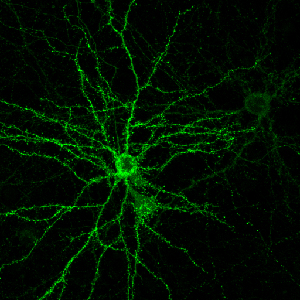
green-image

The flip of a single molecular switch helps create the mature neuronal connections that allow the brain to bridge the gap between adolescent impressionability and adult stability. Now Yale School of Medicine researchers have reversed the process, recreating a youthful brain that facilitated both learning and healing in the adult mouse.

Scientists have long known that the young and old brains are very different. Adolescent brains are more malleable or plastic, which allows them to learn languages more quickly than adults and speeds recovery from brain injuries. The comparative rigidity of the adult brain results in part from the function of a single gene that slows the rapid change in synaptic connections between neurons.

By monitoring the synapses in living mice over weeks and months, Yale researchers have identified the key genetic switch for brain maturation a study released March 6 in the journal Neuron. The Nogo Receptor 1 gene is required to suppress high levels of plasticity in the adolescent brain and create the relatively quiescent levels of plasticity in adulthood. In mice without this gene, juvenile levels of brain plasticity persist throughout adulthood. When researchers blocked the function of this gene in old mice, they reset the old brain to adolescent levels of plasticity.

“These are the molecules the brain needs for the transition from adolescence to adulthood,” said Dr. Stephen Strittmatter. Vincent Coates Professor of Neurology, Professor of Neurobiology and senior author of the paper. “It suggests we can turn back the clock in the adult brain and recover from trauma the way kids recover.”

Rehabilitation after brain injuries like strokes requires that patients re-learn tasks such as moving a hand. Researchers found that adult mice lacking Nogo Receptor recovered from injury as quickly as adolescent mice and mastered new, complex motor tasks more quickly than adults with the receptor.

“This raises the potential that manipulating Nogo Receptor in humans might accelerate and magnify rehabilitation after brain injuries like strokes,” said Feras Akbik, Yale doctoral student who is first author of the study.

Researchers also showed that Nogo Receptor slows loss of memories. Mice without Nogo receptor lost stressful memories more quickly, suggesting that manipulating the receptor could help treat post-traumatic stress disorder.

“We know a lot about the early development of the brain,” Strittmatter said, “But we know amazingly little about what happens in the brain during late adolescence.”

Other Yale authors are: Sarah M. Bhagat, Pujan R. Patel and William B.J. Cafferty

The study was funded by the National Institutes of Health. Strittmatter is scientific founder of Axerion Therapeutics, which is investigating applications of Nogo research to repair spinal cord damage.

http://news.yale.edu/2013/03/06/flip-single-molecular-switch-makes-old-brain-young

Largest psychiatric genetic study in history shows a common genetic basis that underlies 5 types of mental disorders

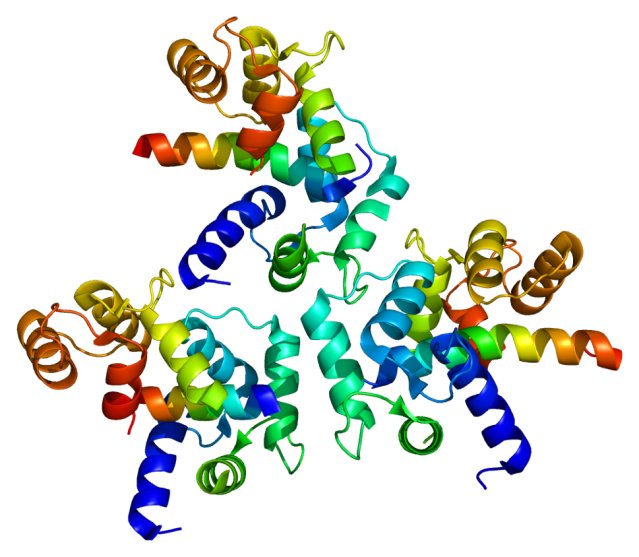
Protein_CACNA1C_PDB_2be6
Structure of the CACNA1C gene product, a calcium channel named Cav1.2, which is one of 4 genes that has now been found to be genetically held in common amongst schizophrenia, bipolar disorder, autism, major depression and attention deficit hyperactivity disoder. Groundbreaking work on the role of this protein on anxiety and other forms of behavior related to mental illness has previously been established in the Rajadhyaksha laboratory at Weill Cornell Medical Center.
http://weill.cornell.edu/research/arajadhyaksha/

http://www.ncbi.nlm.nih.gov/pmc/articles/PMC3481072/
http://www.ncbi.nlm.nih.gov/pmc/articles/PMC3192195/
http://www.ncbi.nlm.nih.gov/pmc/articles/PMC3077109/

From the New York Times:
The psychiatric illnesses seem very different — schizophrenia, bipolar disorder, autism, major depression and attention deficit hyperactivity disorder. Yet they share several genetic glitches that can nudge the brain along a path to mental illness, researchers report. Which disease, if any, develops is thought to depend on other genetic or environmental factors.

Their study, published online Wednesday in the Lancet, was based on an examination of genetic data from more than 60,000 people worldwide. Its authors say it is the largest genetic study yet of psychiatric disorders. The findings strengthen an emerging view of mental illness that aims to make diagnoses based on the genetic aberrations underlying diseases instead of on the disease symptoms.

Two of the aberrations discovered in the new study were in genes used in a major signaling system in the brain, giving clues to processes that might go awry and suggestions of how to treat the diseases.

“What we identified here is probably just the tip of an iceberg,” said Dr. Jordan Smoller, lead author of the paper and a professor of psychiatry at Harvard Medical School and Massachusetts General Hospital. “As these studies grow we expect to find additional genes that might overlap.”

The new study does not mean that the genetics of psychiatric disorders are simple. Researchers say there seem to be hundreds of genes involved and the gene variations discovered in the new study confer only a small risk of psychiatric disease.

Steven McCarroll, director of genetics for the Stanley Center for Psychiatric Research at the Broad Institute of Harvard and M.I.T., said it was significant that the researchers had found common genetic factors that pointed to a specific signaling system.

“It is very important that these were not just random hits on the dartboard of the genome,” said Dr. McCarroll, who was not involved in the new study.

The work began in 2007 when a large group of researchers began investigating genetic data generated by studies in 19 countries and including 33,332 people with psychiatric illnesses and 27,888 people free of the illnesses for comparison. The researchers studied scans of people’s DNA, looking for variations in any of several million places along the long stretch of genetic material containing three billion DNA letters. The question: Did people with psychiatric illnesses tend to have a distinctive DNA pattern in any of those locations?

Researchers had already seen some clues of overlapping genetic effects in identical twins. One twin might have schizophrenia while the other had bipolar disorder. About six years ago, around the time the new study began, researchers had examined the genes of a few rare families in which psychiatric disorders seemed especially prevalent. They found a few unusual disruptions of chromosomes that were linked to psychiatric illnesses. But what surprised them was that while one person with the aberration might get one disorder, a relative with the same mutation got a different one.

Jonathan Sebat, chief of the Beyster Center for Molecular Genomics of Neuropsychiatric Diseases at the University of California, San Diego, and one of the discoverers of this effect, said that work on these rare genetic aberrations had opened his eyes. “Two different diagnoses can have the same genetic risk factor,” he said.

In fact, the new paper reports, distinguishing psychiatric diseases by their symptoms has long been difficult. Autism, for example, was once called childhood schizophrenia. It was not until the 1970s that autism was distinguished as a separate disorder.

But Dr. Sebat, who did not work on the new study, said that until now it was not clear whether the rare families he and others had studied were an exception or whether they were pointing to a rule about multiple disorders arising from a single genetic glitch.

“No one had systematically looked at the common variations,” in DNA, he said. “We didn’t know if this was particularly true for rare mutations or if it would be true for all genetic risk.” The new study, he said, “shows all genetic risk is of this nature.”

The new study found four DNA regions that conferred a small risk of psychiatric disorders. For two of them, it is not clear what genes are involved or what they do, Dr. Smoller said. The other two, though, involve genes that are part of calcium channels, which are used when neurons send signals in the brain.

“The calcium channel findings suggest that perhaps — and this is a big if — treatments to affect calcium channel functioning might have effects across a range of disorders,” Dr. Smoller said.

There are drugs on the market that block calcium channels — they are used to treat high blood pressure — and researchers had already postulated that they might be useful for bipolar disorder even before the current findings.

One investigator, Dr. Roy Perlis of Massachusetts General Hospital, just completed a small study of a calcium channel blocker in 10 people with bipolar disorder and is about to expand it to a large randomized clinical trial. He also wants to study the drug in people with schizophrenia, in light of the new findings. He cautions, though, that people should not rush out to take a calcium channel blocker on their own.

“We need to be sure it is safe and we need to be sure it works,” Dr. Perlis said.

Elyn R. Saks – Successful and Schizophrenic

27SCHIZOPHRENIA-popup-v2

THIRTY years ago, I was given a diagnosis of schizophrenia. My prognosis was “grave”: I would never live independently, hold a job, find a loving partner, get married. My home would be a board-and-care facility, my days spent watching TV in a day room with other people debilitated by mental illness. I would work at menial jobs when my symptoms were quiet. Following my last psychiatric hospitalization at the age of 28, I was encouraged by a doctor to work as a cashier making change. If I could handle that, I was told, we would reassess my ability to hold a more demanding position, perhaps even something full-time.

Then I made a decision. I would write the narrative of my life. Today I am a chaired professor at the University of Southern California Gould School of Law. I have an adjunct appointment in the department of psychiatry at the medical school of the University of California, San Diego, and am on the faculty of the New Center for Psychoanalysis. The MacArthur Foundation gave me a genius grant.

Although I fought my diagnosis for many years, I came to accept that I have schizophrenia and will be in treatment the rest of my life. Indeed, excellent psychoanalytic treatment and medication have been critical to my success. What I refused to accept was my prognosis.

Conventional psychiatric thinking and its diagnostic categories say that people like me don’t exist. Either I don’t have schizophrenia (please tell that to the delusions crowding my mind), or I couldn’t have accomplished what I have (please tell that to U.S.C.’s committee on faculty affairs). But I do, and I have. And I have undertaken research with colleagues at U.S.C. and U.C.L.A. to show that I am not alone. There are others with schizophrenia and such active symptoms as delusions and hallucinations who have significant academic and professional achievements.

Over the last few years, my colleagues, including Stephen Marder, Alison Hamilton and Amy Cohen, and I have gathered 20 research subjects with high-functioning schizophrenia in Los Angeles. They suffered from symptoms like mild delusions or hallucinatory behavior. Their average age was 40. Half were male, half female, and more than half were minorities. All had high school diplomas, and a majority either had or were working toward college or graduate degrees. They were graduate students, managers, technicians and professionals, including a doctor, lawyer, psychologist and chief executive of a nonprofit group.

At the same time, most were unmarried and childless, which is consistent with their diagnoses. (My colleagues and I intend to do another study on people with schizophrenia who are high-functioning in terms of their relationships. Marrying in my mid-40s — the best thing that ever happened to me — was against all odds, following almost 18 years of not dating.) More than three-quarters had been hospitalized between two and five times because of their illness, while three had never been admitted.

How had these people with schizophrenia managed to succeed in their studies and at such high-level jobs? We learned that, in addition to medication and therapy, all the participants had developed techniques to keep their schizophrenia at bay. For some, these techniques were cognitive. An educator with a master’s degree said he had learned to face his hallucinations and ask, “What’s the evidence for that? Or is it just a perception problem?” Another participant said, “I hear derogatory voices all the time. … You just gotta blow them off.”

Part of vigilance about symptoms was “identifying triggers” to “prevent a fuller blown experience of symptoms,” said a participant who works as a coordinator at a nonprofit group. For instance, if being with people in close quarters for too long can set off symptoms, build in some alone time when you travel with friends.

Other techniques that our participants cited included controlling sensory inputs. For some, this meant keeping their living space simple (bare walls, no TV, only quiet music), while for others, it meant distracting music. “I’ll listen to loud music if I don’t want to hear things,” said a participant who is a certified nurse’s assistant. Still others mentioned exercise, a healthy diet, avoiding alcohol and getting enough sleep. A belief in God and prayer also played a role for some.

One of the most frequently mentioned techniques that helped our research participants manage their symptoms was work. “Work has been an important part of who I am,” said an educator in our group. “When you become useful to an organization and feel respected in that organization, there’s a certain value in belonging there.” This person works on the weekends too because of “the distraction factor.” In other words, by engaging in work, the crazy stuff often recedes to the sidelines.

Personally, I reach out to my doctors, friends and family whenever I start slipping, and I get great support from them. I eat comfort food (for me, cereal) and listen to quiet music. I minimize all stimulation. Usually these techniques, combined with more medication and therapy, will make the symptoms pass. But the work piece — using my mind — is my best defense. It keeps me focused, it keeps the demons at bay. My mind, I have come to say, is both my worst enemy and my best friend.

THAT is why it is so distressing when doctors tell their patients not to expect or pursue fulfilling careers. Far too often, the conventional psychiatric approach to mental illness is to see clusters of symptoms that characterize people. Accordingly, many psychiatrists hold the view that treating symptoms with medication is treating mental illness. But this fails to take into account individuals’ strengths and capabilities, leading mental health professionals to underestimate what their patients can hope to achieve in the world.

It’s not just schizophrenia: earlier this month, The Journal of Child Psychology and Psychiatry posted a study showing that a small group of people who were given diagnoses of autism, a developmental disorder, later stopped exhibiting symptoms. They seemed to have recovered — though after years of behavioral therapy and treatment. A recent New York Times Magazine article described a new company that hires high-functioning adults with autism, taking advantage of their unusual memory skills and attention to detail.

I don’t want to sound like a Pollyanna about schizophrenia; mental illness imposes real limitations, and it’s important not to romanticize it. We can’t all be Nobel laureates like John Nash of the movie “A Beautiful Mind.” But the seeds of creative thinking may sometimes be found in mental illness, and people underestimate the power of the human brain to adapt and to create.

An approach that looks for individual strengths, in addition to considering symptoms, could help dispel the pessimism surrounding mental illness. Finding “the wellness within the illness,” as one person with schizophrenia said, should be a therapeutic goal. Doctors should urge their patients to develop relationships and engage in meaningful work. They should encourage patients to find their own repertory of techniques to manage their symptoms and aim for a quality of life as they define it. And they should provide patients with the resources — therapy, medication and support — to make these things happen.

“Every person has a unique gift or unique self to bring to the world,” said one of our study’s participants. She expressed the reality that those of us who have schizophrenia and other mental illnesses want what everyone wants: in the words of Sigmund Freud, to work and to love.

A law professor at the University of Southern California and the author of the memoir “The Center Cannot Hold: My Journey Through Madness.”

Researchers look down a different path for new antidepressants

hippneuron-640x447

As a teenager growing up in New Mexico, Zach Weinberg had the same thing for breakfast every day of high school. Next to his tortilla and cream cheese, which he insists is delicious, was a small, round, yellow pill – an antidepressant called Lexapro. By his senior year, the only thing different was the color of his pill, now a shiny white. This one was Wellbutrin. He’d traded one antidepressant for another. If the pills work, they certainly don’t work for long. Now, at age 23, he’s frustrated at still having to play around with different drug combinations and doses.

The odds are that you know someone in the same situation. According to the National Institutes of Health, approximately one in 10 men and one in four women in the U.S. will suffer from depression at some point in their lives. Clinical depression can come at any time, lasting anywhere from months to years, and is characterized by low self-esteem and a loss of interest in things that were once enjoyable.

Along with various forms of therapy, antidepressant drugs are the most effective treatment. But even when they work, they come with side effects – such as weight gain and trouble sleeping – that can make the symptoms of depression worse. So for people like Weinberg, choosing between one kind of antidepressant and another isn’t really much of a choice.

But that may be changing. New insights into how traditional antidepressants – including the wildly popular SSRIs, or selective serotonin reuptake inhibitor, drugs like Prozac, Paxil and Lexapro – work inside the brain are stimulating the development of a new generation of medications that may work faster and more effectively.

Contrary to what their developers originally thought, many antidepressants have a surprising, indirect way of altering brain chemistry: by stimulating the growth of new neurons and protecting those neurons from dying. “The SSRI hypothesis is really falling apart,” says Paul Currie, a neuroscientist at Reed College in Portland, Ore. He explains that these new ideas have researchers trying something a little different to treat depression.

SSRIs work by manipulating serotonin, one of the most important chemical messengers in the brain. Serotonin is at least partly responsible for everything from eating disorders to the pretty colors and patterns people see while on psychedelic drugs.

When serotonin is released from one neuron and picked up by another in the course of transmitting a message between them, some is taken back up into the original neuron. By blocking this mechanism, SSRIs force more serotonin to circulate in the system, supposedly reducing feelings of depression.

Similar drugs use the same reuptake-blocking technique with other neurotransmitters, usually dopamine and norepinephrine. The success of drugs that target this system provides the basis of the monoamine hypothesis of depression – the idea that depression is a result of a chemical imbalance. That’s why decades of research have been aimed at balancing out our monoamine neurotransmitters, including serotonin.

But it takes a week or two for antidepressants to have any noticeable effect, suggesting that it’s not that immediate boost in serotonin that’s making people feel better. Recently, studies have suggested a different explanation: using antidepressants seems to correlate with having more new neurons in the hippocampus, an area of the brain responsible for many memory processes. Those suffering from depression tend to lose neurons in their hippocampi, so researchers have started to think that the effectiveness of monoamine drugs actually comes from their repairing of damaged brain areas.

Rene Hen is one of those curious researchers. A neuroscientist at Columbia University, Hen used radiation to block neurogenesis – the process of growing, repairing, and protecting new neurons – in mice. Later, when given antidepressants, these mice still showed signs of anxiety and depression, unlike the mice that were generating new neurons. This suggested that neurogenesis is actually essential for antidepressants to have any effect. Instead of waiting for the slower, indirect effect on neurogenesis patients get from SSRIs, researchers are now experimenting with drugs that take more direct routes to stimulate neuron growth.

“If you don’t have to do it through the back door, then absolutely that’s the way to go,” says Reed’s Currie. The aim now is to nail down the indirect effect that Hen identified and make it as direct as possible.

And the first drugs specifically targeting neurogenesis for all sorts of disorders, including depression, are starting to appear. In 2010, Andrew Pieper, a psychiatrist at the University of Iowa, ran a massive screening test on 1,000 small molecules. He discovered eight that had positive effects on neurogenesis in the hippocampus. He picked one, called P7C3, and ran with it. When given to mice that lacked a gene necessary for neurogenesis, P7C3 helped them create new neurons and keep them alive.

“There’s a huge unmet need for treatments that block cell death,” Pieper says. And the hope is that treatments for depression derived from P7C3 will work faster, better, and with fewer side effects than SSRIs. Although Peiper and his team have only tested P7C3 on mice, he’s optimistic about its effects in humans and is on the hunt for a commercial partner to develop it.

Neuralstem Inc., a Maryland-based pharmaceutical company, has just announced that their first round of human clinical testing on a similar drug was successful. Their drug, NSI-189, targets neurogenesis in the hippocampus by actually creating new neurons and has been successful in animal models, but these are the first tests in humans.

Despite the early success of these treatments, other scientists are concerned that a drug targeting neurogenesis might be meddling with that system prematurely. “I’m a little worried that, again, we have an oversimplified model,” Currie says. It’s like stirring up a bowl of soup, he continues, “without any thought as to what makes it taste good.”

Brian Luikart at Dartmouth College’s Geisel School of Medicine agrees. “One possibility,” he says, “is that there are global changes in the brain that enhance neurogenesis in the hippocampus.” If that’s true, then more neurogenesis could just be one of many effects of SSRIs without being the key to their success. Although the links between neurogenesis and antidepressants are well established, there is still no evidence to suggest that solely enhancing neurogenesis can help fight depression in humans. “Increasing neurogenesis does not increase happiness,” he says.

Luikart also worries that, while a neurogenesis drug may have fewer side effects, the ones it does have could be even more damaging – especially for cancer patients. A drug that keeps neurons alive could potentially do the same to tumor cells.

But Pieper says he hasn’t seen any negative effects. Neuralstem also says there haven’t been any health concerns in their trials. And even if there are side effects like those Luikart is worried about, it might be worth the risk for those with severe depression.

Neurogenesis drugs are still years from being commercially available, however. Pieper’s is still in pre-clinical testing, and Neuralstem’s, while farther along, is still years away from patients. Until then, Zach Weinberg and the rest of us are just going to have to stick with our reuptake inhibitors and cream cheese tortillas.

Shiny happy neurons

Many researchers taking a different view of pedophilia

13xmIBc_1_www_large_thumb

Despite a stable home life in suburban Chicago, Paul Christiano was tortured by urges he knew could land him in prison. In 1999, he was caught buying child pornography. Now 36, he said he has never molested a child, but after five years of state-ordered therapy, the attraction remains. (Alex Garcia, Chicago Tribune / December 14, 2012)

As a young boy, Paul Christiano loved the world of girls — the way they danced, how their spindly bodies tumbled in gymnastics.

In adolescence, as other boys ogled classmates, he was troubled to find himself fantasizing about 7- to 11-year-olds.

His desires remained stuck in time as he neared adulthood. Despite a stable home life in suburban Chicago, he was tortured by urges he knew could land him in prison.

“For having these feelings, I was destined to become a monster,” he said. “I was terrified.”

In 1999, Christiano was caught buying child pornography. Now 36, he said he has never molested a child, but after five years of state-ordered therapy, the attraction remains.

“These people felt they could snuff out the desire, or shame me into denying it existed,” he said. “But it’s as intrinsic as the next person’s heterosexuality.”

In the laboratory, researchers are coming to the same conclusion.

Like many forms of sexual deviance, pedophilia once was thought to stem from psychological influences early in life. Now, many experts view it as a sexual orientation as immutable as heterosexuality or homosexuality. It is a deep-rooted predisposition — limited almost entirely to men — that becomes clear during puberty and does not change.

The best estimates are that between 1% and 5% of men are pedophiles, meaning that they have a dominant attraction to prepubescent children.

Not all pedophiles molest children. Nor are all child molesters pedophiles. Studies show that about half of all molesters are not sexually attracted to their victims. They often have personality disorders or violent streaks, and their victims are typically family members.

By contrast, pedophiles tend to think of children as romantic partners and look beyond immediate relatives. They include chronic abusers familiar from the headlines — Catholic priests, coaches and generations of Boy Scout leaders.

Other pedophiles are “good people who are struggling,” said Dr. Fred Berlin, a psychiatrist who heads the Johns Hopkins Sexual Behaviors Consultation Unit. “They’re tortured souls fighting like heck not to do this. We do virtually nothing in terms of reaching out to these folks. We drive it underground.”

Some of the new understanding of pedophilia comes from studies done on convicted sex criminals at the Center for Mental Health and Addiction in Toronto, where researchers use a procedure known as phallometry to identify men whose peak attraction is to children.

A man sits alone in a room viewing a series of images and listening to descriptions of various sexual acts with adults and children, male and female, while wearing a device that monitors blood flow to his penis.

Like men attracted to adults, nearly all pedophiles respond most strongly to one gender or the other — females far more often than males.

In searching for causes of pedophilia, researchers have largely dismissed the popular belief that abuse in childhood plays an important role. Studies show that few victims grow up to be abusers, and only about a third of offenders say they were molested.

Scientists at the Toronto center have uncovered a series of associations that suggest pedophilia has biological roots.

Among the most compelling findings is that 30% of pedophiles are left-handed or ambidextrous, triple the general rate. Because hand dominance is established through some combination of genetics and the environment of the womb, scientists see that association as a powerful indicator that something is different about pedophiles at birth.

“The only explanation is a physiological one,” said James Cantor, a leader of the research.

Researchers have also determined that pedophiles are nearly an inch shorter on average than non-pedophiles and lag behind the average IQ by 10 points — discoveries that are consistent with developmental problems, whether before birth or in childhood.

In a 2008 study, Cantor’s team conducted MRI brain scans on 65 pedophiles. Compared with men with criminal histories but no sex offenses, they had less white matter, the connective circuitry of the brain.

The evidence also points to what Cantor explained as “cross wiring”: Seeing a child sets off the same neural response that men typically experience around an attractive woman.

More evidence of brain involvement comes from scattered examples of men with brain tumors or neurological diseases affecting inhibition.

In one case, a 40-year-old teacher in Virginia with no history of sexual deviance suddenly became interested in child pornography and was arrested for molesting his prepubescent stepdaughter.

The night before his sentencing, he showed up at an emergency room with a bad headache. An MRI revealed a tumor compressing his brain’s right frontal lobe.

When the tumor was removed, his obsession faded, according to Dr. Russell Swerdlow, a neurologist on the case. A year later he again became sexually fixated on children. The tumor was growing back.

Swerdlow and others said the case suggests that the man’s attraction to children may have always been present — the tumor simply took away the man’s ability to control it.

Strong impulse control may help explain why some pedophiles never break the law.

Most clinicians have given up on changing the sexual orientation of pedophiles in favor of teaching the how to resist their unacceptable desires.

Experts believe that pedophiles who also have a significant attraction to adults stand the best chance of staying out of trouble, because of their capacity for some sexual fulfillment that is legal. For others, injections of hormones to reduce sex drive are often recommended.

Most pedophiles, however, don’t receive any attention until they’ve been arrested.

In an attempt to change that, sex researchers in Germany launched an unusual media campaign in 2005.

“You are not guilty because of your sexual desire, but you are responsible for your sexual behavior,” said billboards urging them to contact the Institute of Sexology and Sexual Medicine in Berlin. “There is help! Don’t become an offender!”

More than 1,700 men have responded to the print, television and online ads for Project Dunkelfeld — literally “dark field.” As of August, 80 had completed a one-year program aimed at teaching them to control their impulses. Some received hormone shots. Compared to men still on the waiting list, those who received treatment were deemed less likely to molest children, according to an analysis of risk factors.

The German researchers promise patients confidentiality. About half of those assessed admitted to having already molested a child.

Though extolled by many researchers, the same program could not be conducted in the United States or many other countries, where clinicians and others are required by law to notify authorities if they suspect a child has been or could be harmed.

There have been some grass-roots efforts to bring pedophilia out of the shadows. Anton Schweighofer, a psychologist in British Columbia, said he recently referred one of his patients to Virtuous Pedophiles, an online support group for men who have never acted on their desires and want to keep it that way.

“I just don’t want to get myself in trouble,” said the man, a factory worker who spoke on the condition that he not be identified. “I really don’t want to harm anybody.”

For many pedophiles, a fundamental part of life will always be a shameful secret.

In his late teens, Christiano taught gymnastics and supervised hundreds of young girls. He fasted at work to distract himself from his erotic feelings.

“My hand never slipped,” he said. “There were students I loved and adored. In a perfect world, I could sweep them off their feet and live happily ever after.”

In this world, however, he has tried to commit suicide three times, he said.

In 1999, he stepped into a federal sting operation when he ordered pornography. He avoided prison but was permanently added to the Illinois sex offender registry.

Once lauded in the Chicago press for his promise as a dance choreographer, Christiano now lives off unemployment, help from his parents and low-paying jobs. He has lost apartments and jobs because of his felony.

“PEDO PIECE OF GARBAGE,” read one of many emails he received after an activist group posted a notice about his case online.

His mother, Jennifer Christiano, said that as far back as she could remember, he had always been different from other boys — an odd and creative soul who loved to perform and seemed to worship his female classmates.

“I can’t tell you how hard it is,” she said. “He’s my only child. He’ll never truly be happy. He’ll never have someone he can truly love and who can love him back.”

http://www.latimes.com/news/local/la-me-pedophiles-20130115,0,197689.story?page=1&track=lat-pick

Thanks to Dr. Lutter for bringing this to the attention of the It’s Interesting community.

Our failed approach to treating schizophrenia

1226OPEDdorfman-popup

By PAUL STEINBERG
Published: December 25, 2012
New York Times

TOO many pendulums have swung in the wrong directions in the United States. I am not referring only to the bizarre all-or-nothing rhetoric around gun control, but to the swing in mental health care over the past 50 years: too little institutionalizing of teenagers and young adults (particularly men, generally more prone to violence) who have had a recent onset of schizophrenia; too little education about the public health impact of untreated mental illness; too few psychiatrists to talk about and treat severe mental disorders — even though the medications available in the past 15 to 20 years can be remarkably effective.

Instead we have too much concern about privacy, labeling and stereotyping, about the civil liberties of people who have horrifically distorted thinking. In our concern for the rights of people with mental illness, we have come to neglect the rights of ordinary Americans to be safe from the fear of being shot — at home and at schools, in movie theaters, houses of worship and shopping malls.
“Psychosis” — a loss of touch with reality — is an umbrella term, not unlike “fever.” As with fevers, there are many causes, from drugs and alcohol to head injuries and dementias. The most common source of severe psychosis in young adults is schizophrenia, a badly named disorder that, in the original Greek, means “split mind.” In fact, schizophrenia has nothing to do with multiple personality, a disorder that is usually caused by major repeated traumas in childhood. Schizophrenia is a physiological disorder caused by changes in the prefrontal cortex, an area of the brain that is essential for language, abstract thinking and appropriate social behavior. This highly evolved brain area is weakened by stress, as often occurs in adolescence.

Psychiatrists and neurobiologists have observed biochemical changes and alterations in brain connections in patients with schizophrenia. For example, miscommunications between the prefrontal cortex and the language area in the temporal cortex may result in auditory hallucinations, as well as disorganized thoughts. When the voices become commands, all bets are off. The commands might insist, for example, that a person jump out of a window, even if he has no intention of dying, or grab a set of guns and kill people, without any sense that he is wreaking havoc. Additional symptoms include other distorted thinking, like the notion that something — even a spaceship, or a comic book character — is controlling one’s thoughts and actions.

Schizophrenia generally rears its head between the ages of 15 and 24, with a slightly later age for females. Early signs may include being a quirky loner — often mistaken for Asperger’s syndrome — but acute signs and symptoms do not appear until adolescence or young adulthood.

People with schizophrenia are unaware of how strange their thinking is and do not seek out treatment. At Virginia Tech, where Seung-Hui Cho killed 32 people in a rampage shooting in 2007, professors knew something was terribly wrong, but he was not hospitalized for long enough to get well. The parents and community-college classmates of Jared L. Loughner, who killed 6 people and shot and injured 13 others (including a member of Congress) in 2011, did not know where to turn. We may never know with certainty what demons tormented Adam Lanza, who slaughtered 26 people at an elementary school in Newtown, Conn., on Dec. 14, though his acts strongly suggest undiagnosed schizophrenia.

I write this despite the so-called Goldwater Rule, an ethical standard the American Psychiatric Association adopted in the 1970s that directs psychiatrists not to comment on someone’s mental state if they have not examined him and gotten permission to discuss his case. It has had a chilling effect. After mass murders, our airwaves are filled with unfounded speculations about video games, our culture of hedonism and our loss of religious faith, while psychiatrists, the ones who know the most about severe mental illness, are largely marginalized.

Severely ill people like Mr. Lanza fall through the cracks, in part because school counselors are more familiar with anxiety and depression than with psychosis. Hospitalizations for acute onset of schizophrenia have been shortened to the point of absurdity. Insurance companies and families try to get patients out of hospitals as quickly as possible because of the prohibitively high cost of care.

As documented by writers like the law professor Elyn R. Saks, author of the memoir “The Center Cannot Hold: My Journey Through Madness,” medication and treatment work. The vast majority of people with schizophrenia, treated or untreated, are not violent, though they are more likely than others to commit violent crimes. When treated with medication after a rampage, many perpetrators who have shown signs of schizophrenia — including John Lennon’s killer and Ronald Reagan’s would-be assassin — have recognized the heinousness of their actions and expressed deep remorse.

It takes a village to stop a rampage. We need reasonable controls on semiautomatic weapons; criminal penalties for those who sell weapons to people with clear signs of psychosis; greater insurance coverage and capacity at private and public hospitals for lengthier care for patients with schizophrenia; intense public education about how to deal with schizophrenia; greater willingness to seek involuntary commitment of those who pose a threat to themselves or others; and greater incentives for psychiatrists (and other mental health professionals) to treat the disorder, rather than less dangerous conditions.

Too many people with acute schizophrenia have gone untreated. There have been too many Glocks, too many kids and adults cut down in their prime. Enough already.

Paul Steinberg is a psychiatrist in private practice.

Thanks to David Frey for bringing this to the attention of the It’s Interesting community.
Smoking Smothers Your Genes

sn-epigenetic

Cigarettes leave you with more than a smoky scent on your clothes and fingernails. A new study has found strong evidence that tobacco use can chemically modify and affect the activity of genes known to increase the risk of developing cancer. The finding may give researchers a new tool to assess cancer risk among people who smoke.

DNA isn’t destiny. Chemical compounds that affect the functioning of genes can bind to our genetic material, turning certain genes on or off. These so-called epigenetic modifications can influence a variety of traits, such as obesity and sexual preference. Scientists have even identified specific epigenetic patterns on the genes of people who smoke. None of the modified genes has a direct link to cancer, however, making it unclear whether these chemical alterations increase the risk of developing the disease.

In the new study, published in Human Molecular Genetics, researchers analyzed epigenetic signatures in blood cells from 374 individuals enrolled in the European Prospective Investigation into Cancer and Nutrition. EPIC, as it’s known, is a massive study aimed at linking diet, lifestyle, and environmental factors to the incidence of cancer and other chronic diseases. Half of the group consisted of people who went on to develop colon or breast cancer 5 to 7 years after first joining the study, whereas the other half remained healthy.

The team, led by James Flanagan, a human geneticist at Imperial College London, discovered a distinct “epigenetic footprint” in study subjects who were smokers. Compared with people who had never smoked, these individuals had fewer chemical tags known as methyl groups—a common type of epigenetic change—on 20 different regions of their DNA. When the researchers extended the analysis to a separate group of patients and mice that had been exposed to tobacco smoke, they narrowed down the epigenetic modifications to several sites located in four genes that have been weakly linked to cancer before. All of these changes should increase the activity of these genes, Flanagan says. It’s unclear why increasing the activity of the genes would cause cancer, he says, but individuals who don’t have cancer tend not to have these modifications.

The study is the first to establish a close link between epigenetic modifications on a cancer gene and the risk of developing the disease, says Robert Philibert, a behavioral geneticist at the University of Iowa in Iowa City. “To the best of my knowledge, no previous genome-wide epigenetics study has taken such efforts from initial discovery to replication to experimental validation,” adds Lutz Breitling, an epidemiologist at the German Cancer Research Center in Heidelberg, Germany.

The work may lead to new ways to asses cancer risks from smoking. “Previous research into smoking has often asked people to fill out questionnaires, … which have their obvious drawbacks and inaccuracies,” Flanagan says. The new study, he says, may make it possible for doctors to quantify a person’s cancer risk simply through an epigenetic analysis of their DNA.

http://news.sciencemag.org/sciencenow/2012/12/smoking-smothers-your-genes.html

Thanks to Dr. Rajadhyaksha for bringing this to the attention of the It’s Interesting community.
Scientists Debunk the IQ Myth: Notion of Measuring One’s Intelligence Quotient by Singular, Standardized Test Is Highly Misleading

iq

After conducting the largest online intelligence study on record, a Western University-led research team has concluded that the notion of measuring one’s intelligence quotient or IQ by a singular, standardized test is highly misleading.

The findings from the landmark study, which included more than 100,000 participants, were published Dec. 19 in the journal Neuron. The article, “Fractionating human intelligence,” was written by Adrian M. Owen and Adam Hampshire from Western’s Brain and Mind Institute (London, Canada) and Roger Highfield, Director of External Affairs, Science Museum Group (London, U.K).

Utilizing an online study open to anyone, anywhere in the world, the researchers asked respondents to complete 12 cognitive tests tapping memory, reasoning, attention and planning abilities, as well as a survey about their background and lifestyle habits.

“The uptake was astonishing,” says Owen, the Canada Excellence Research Chair in Cognitive Neuroscience and Imaging and senior investigator on the project. “We expected a few hundred responses, but thousands and thousands of people took part, including people of all ages, cultures and creeds from every corner of the world.”

The results showed that when a wide range of cognitive abilities are explored, the observed variations in performance can only be explained with at least three distinct components: short-term memory, reasoning and a verbal component.

No one component, or IQ, explained everything. Furthermore, the scientists used a brain scanning technique known as functional magnetic resonance imaging (fMRI), to show that these differences in cognitive ability map onto distinct circuits in the brain.

With so many respondents, the results also provided a wealth of new information about how factors such as age, gender and the tendency to play computer games influence our brain function.

“Regular brain training didn’t help people’s cognitive performance at all yet aging had a profound negative effect on both memory and reasoning abilities,” says Owen.

Hampshire adds, “Intriguingly, people who regularly played computer games did perform significantly better in terms of both reasoning and short-term memory. And smokers performed poorly on the short-term memory and the verbal factors, while people who frequently suffer from anxiety performed badly on the short-term memory factor in particular.”

1.Adam Hampshire, Roger R. Highfield, Beth L. Parkin, Adrian M. Owen. Fractionating Human Intelligence. Neuron, 2012; 76 (6): 1225 DOI: 10.1016/j.neuron.2012.06.022

http://www.sciencedaily.com/releases/2012/12/121219133334.htm

Are Bacteria Making You Hungry?

hunry

Over the last half decade, it has become increasingly clear that the normal gastrointestinal (GI) bacteria play a variety of very important roles in the biology of human and animals. Now Vic Norris of the University of Rouen, France, and coauthors propose yet another role for GI bacteria: that they exert some control over their hosts’ appetites. Their review was published online ahead of print in the Journal of Bacteriology.

This hypothesis is based in large part on observations of the number of roles bacteria are already known to play in host biology, as well as their relationship to the host system. “Bacteria both recognize and synthesize neuroendocrine hormones,” Norris et al. write. “This has led to the hypothesis that microbes within the gut comprise a community that forms a microbial organ interfacing with the mammalian nervous system that innervates the gastrointestinal tract.” (That nervous system innervating the GI tract is called the “enteric nervous system.” It contains roughly half a billion neurons, compared with 85 billion neurons in the central nervous system.)

“The gut microbiota respond both to both the nutrients consumed by their hosts and to the state of their hosts as signaled by various hormones,” write Norris et al. That communication presumably goes both ways: they also generate compounds that are used for signaling within the human system, “including neurotransmitters such as GABA, amino acids such as tyrosine and tryptophan — which can be converted into the mood-determining molecules, dopamine and serotonin” — and much else, says Norris.

Furthermore, it is becoming increasingly clear that gut bacteria may play a role in diseases such as cancer, metabolic syndrome, and thyroid disease, through their influence on host signaling pathways. They may even influence mood disorders, according to recent, pioneering studies, via actions on dopamine and peptides involved in appetite. The gut bacterium, Campilobacter jejuni, has been implicated in the induction of anxiety in mice, says Norris.

But do the gut flora in fact use their abilities to influence choice of food? The investigators propose a variety of experiments that could help answer this question, including epidemiological studies, and “experiments correlating the presence of particular bacterial metabolites with images of the activity of regions of the brain associated with appetite and pleasure.”

1.V. Norris, F. Molina, A. T. Gewirtz. Hypothesis: bacteria control host appetites. Journal of Bacteriology, 2012; DOI: 10.1128/JB.01384-12

http://www.sciencedaily.com/releases/2012/12/121219142301.htm