DARPA project suggests a mix of man and machine may be the most efficient way to spot danger: the Cognitive Technology Threat Warning System

smart_sentryx519


Sentry duty is a tough assignment. Most of the time there’s nothing to see, and when a threat does pop up, it can be hard to spot. In some military studies, humans are shown to detect only 47 percent of visible dangers.

A project run by the Defense Advanced Research Projects Agency (DARPA) suggests that combining the abilities of human sentries with those of machine-vision systems could be a better way to identify danger. It also uses electroencephalography to identify spikes in brain activity that can correspond to subconscious recognition of an object.

An experimental system developed by DARPA sandwiches a human observer between layers of computer vision and has been shown to outperform either machines or humans used in isolation.

The so-called Cognitive Technology Threat Warning System consists of a wide-angle camera and radar, which collects imagery for humans to review on a screen, and a wearable electroencephalogram device that measures the reviewer’s brain activity. This allows the system to detect unconscious recognition of changes in a scene—called a P300 event.

In experiments, a participant was asked to review test footage shot at military test sites in the desert and rain forest. The system caught 91 percent of incidents (such as humans on foot or approaching vehicles) in the simulation. It also widened the field of view that could effectively be monitored. False alarms were raised only 0.2 percent of the time, down from 35 percent when a computer vision system was used on its own. When combined with radar, which detects things invisible to the naked eye, the accuracy of the system was close to 100 percent, DARPA says.

“The DARPA project is different from other ‘human-in-the-loop’ projects because it takes advantage of the human visual system without having the humans do any ‘work,’ ” says computer scientist Devi Parikh of the Toyota Technological Institute at Chicago. Parikh researches vision systems that combine human and machine expertise.

While electroencephalogram-measuring caps are commercially available for a few hundred dollars, Parikh warns that the technology is still in its infancy. Furthermore, she notes, the P300 signals may vary enough to require training or personalized processing, which could make it harder to scale up such a system for widespread use.

Thanks to Kebmodee for bringing this to the attention of the It’s Interesting community.

http://www.technologyreview.com/news/507826/sentry-system-combines-a-human-brain-with-computer-vision/

Parents-to-be in Japan can buy a 3D printed model of their fetus

EXPECTANT parents in Japan who can’t wait to show the world what their baby will look like can now buy a 3D model of the fetus to share with their friends.

Based on an MRI scan, a 3D printer can create a 9-centimetre resin model of the white fetus, encased in a transparent block in the shape of the mother’s body.

“As it is only once in a lifetime that you are pregnant with that child, we received requests for these kind of models from pregnant women who… do not want to forget the feelings and experience of that time,” said Tomohiro Kinoshita of FASOTEC, the company offering the service.

The 3D model is called Shape of an Angel and costs 100,000 yen ($A1171).

It also comes with a miniature version that could be a nice adornment to a mobile phone, he added. Many young women in Japan add decorations to their phone strap.

The company said the ideal time for a scan is about eight or nine months into the pregnancy.

For those who would like a less pricey version, the company will offer a 3D model of the face of the fetus for 50,000 yen in December.

It will use ultrasound images taken at a medical clinic in Tokyo that is working with the company.

FASOTEC, originally a supplier of devices including 3D printers, uses a layering technique to build up three-dimensional structures.

The technique has been touted as a solution to localised manufacture on a small scale.

http://www.theaustralian.com.au/australian-it/parents-to-be-in-japan-can-buy-3d-printed-model-of-fetus/story-e6frgakx-1226525367570

Thanks to Kebmodee for bringing this to the attention of the It’s Interesting community.

Global first: Graham Hughes visits all 201 sovereign states without flying


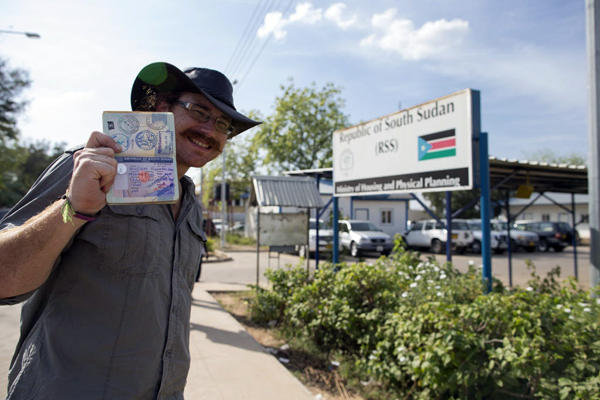
A British adventurer has become the first person to travel to all 201 sovereign states in the world without flying, ending his four-year odyssey early Monday when he arrived in South Sudan, the world’s newest nation.

Graham Hughes has used buses, boats, taxis, trains, and his own two feet – but never an airplane – to travel 160,000 miles in exactly 1,426 days, spending an average of less than $100 a week.

“I love travel, and I guess my reason for doing it was I wanted to see if this could be done, by one person traveling on a shoestring,” Mr. Hughes tells the Monitor Monday by telephone from Juba, South Sudan’s capital. “I think I also wanted to show that the world is not some big, scary place, but in fact is full of people who want to help you even if you are a stranger.”

Hughes, 33, set out from his home in Liverpool in northern England on New Year’s Day 2009.

Since then, he has visited all 193 United Nations member states plus Taiwan, Vatican City, Palestine, Kosovo, Western Sahara, and the four home nations of the United Kingdom.

Guinness World Records have confirmed that Hughes, who has been filming the trip for a documentary and raising money for a charity called Water Aid, is the first person to achieve this feat without flying.

“The main feeling today is just one of intense gratitude to every person around the world who helped me get here, by giving me a lift, letting me stay on their couch, or pointing me in the right direction,” Hughes said Monday. “There were times, sitting in a bus station in Cambodia at one in the morning, riding some awful truck over bad roads, when I thought, why am I doing this? But there was always a reason to keep going.”

Highlights were swimming in a lake of jellyfish in the Pacific archipelago of Palau, watching one of NASA’s last Space Shuttle launches, and dancing with the jungle tribes of Papua New Guinea.

“People asked me how I was going to get to Afghanistan or Iraq or North Korea, but they were the easy ones, you don’t even need a visa for Iraq, you just walk across the border from Turkey,” he says.

“The really tough ones were places like Nauru, and the Maldives and the Seychelles, island countries where there were also sometimes pirate threats.”

To cross oceans, Hughes hitched lifts with cargo ships. He spent four days in an open fishing canoe from Senegal to Cape Verde, and was then arrested when he arrived.

Later, officials in the Democratic Republic of Congo jailed him for six days believing he was a spy.

“None of this put me off, it just made me more bloody-minded to succeed,” he says.

The hardest point, “when I just wanted to give up,” he remembers, was after his older sister, Nicola, died from cancer two years ago at the age of 39. Hughes rushed home to see her before she died.

“She told me not to stop the trip, but I was at a real low point. I’d done 184 countries and had only 17 to go and I thought why not leave it there,” he says. The memory of his sister spurred him on, as did the people that he met as he traveled and the money he was raising for Water Aid, which works to bring clean water to people in the developing world.

“If you take everything that you know of the world from the news, it’s all the bad stuff and you get very paranoid that everyone is out to get you,” he says. “But the most amazing thing to me is that everyone I met looked after me and I didn’t even know them.”

Hughes plans to stay in South Sudan only until Wednesday. But he will not then be flying home.

He says to “keep in the spirit of the adventure” he will continue through Africa and across Europe by bus and boat, aiming to return home to Liverpool by ferry from Ireland in time for Christmas.

“Someone wrote to me and pointed out that this would be the trip of a lifetime for most people, but for me it’s essentially just the bus home,” he says. After a long rest, he says he will then begin exploring options to continue with a career in film-making.

http://news.yahoo.com/global-first-brit-visits-201-states-without-flying-183243870.html

Thanks to Kebmodee for bringing this to the attention of the It’s Interesting community.

The mannequin that spies on you

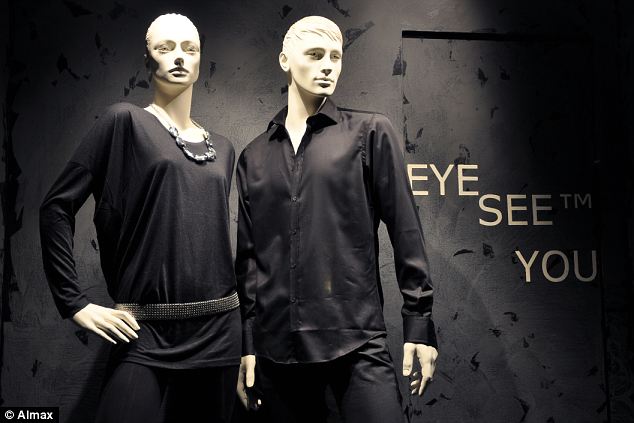
Mannequins in fashion boutiques are now being fitted with secret cameras to ‘spy’ on shoppers’ buying habits.

Benetton is among the High Street fashion chains to have deployed the dummies equipped with technology adapted from security systems used to identify criminals at airports.

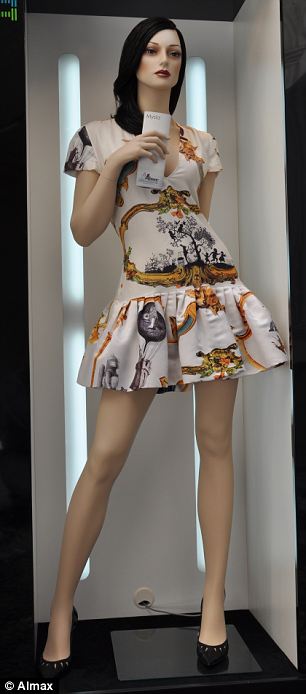
From the outside, the $3,200 (£2,009) EyeSee dummy looks like any other mannequin, but behind its blank gaze it hides a camera feeding images into facial recognition software that logs the age, gender and race of shoppers.

This information is fed into a computer and is ‘aggregated’ to offer retailers using the system statistical and contextual information they can use to develop their marketing strategies.

Its makers boast: ‘From now on you can know how many people enter the store, record what time there is a greater influx of customers (and which type) and see if some areas risk to be overcrowded.

However, privacy campaigners have denounced the system as ‘creepy’ and said that such surveillance is an instance of profit trumping privacy.

The device is marketed by Italian mannequin maker Almax and has already spurred shops into adjusting window displays, floor layours and promotions, Bloomberg reported.

With growth slowing in the luxury goods industry, the technology taps into retailers’ desperation to personalise their offers to reach increasingly picky customers.

Although video profiling of customers is not new, Almax claims its offering is better at providing data because it stands at eye level with customers, who are more likely to look directly at the mannequins.

The video surveillance mannequins have been on sale for almost a year, and are already being used in three European countries and in the U.S.

Almax claims information from the devices led one outlet to adjust window displays after they found that men shopping in the first two days of a sale spent more than women, while another introduced a children’s line after the dummy showed youngsters made up more than half its afternoon traffic.

A third retailer placed Chinese-speaking staff by a particular entrance after it found a third of visitors using that door after 4pm were Asian.

Almax chief executive Max Catanese refused to name which retailers were using the new technology, telling Bloomberg that confidentiality agreements meant he could not disclose the names of clients.

But he did reveal that five companies – among them leading fashion brands – are using ‘a few dozen’ of the mannequins, with orders for at least that many more.

Almax is now hoping to update the technology to allow the mannequins – and by extension the retailers who operate them – to listen in on what customers are saying about the clothes on display.

Mr Catanese told Bloomberg the company also plans to add screens next to the dummies to prompt passers-by about products that fit their profile, similar to the way online retailers use cookies to personalise web browsing.

Almax insists that its system does not invade the privacy of shoppers since the camera inside the mannequin is ‘blind’, meaning that it does not record the images of passers-by, instead merely collecting data about them.

In an emailed statement, Mr Catanese told MailOnline: ‘Let’s say I pass in front of the mannequin. Nobody will know that “Max Catanese” passed in front of it.

‘The retailer will have the information that a male adult Caucasian passed in front of the mannequin at 6:25pm and spent 3 minutes in front of it. No sensible/private data, nor image is collected.

‘Different is the case if a place (shop, department store, etc.) is already covered by security cameras (by the way, basically almost every retailer in the world today).

‘In those cases we could even provide the regular camera as the data and customers images are already collected in the store which are authorised to do so.

‘In any case, just to avoid questions, so far we only offer the version with blind camera.’

Nevertheless, privacy groups are concerned about the roll-out of the technology. Emma Carr, deputy director of civil liberties campaign group Big Brother Watch, said: ‘Keeping cameras hidden in a mannequin is nothing short of creepy.

‘The use of covert surveillance technology by shops, in order to provide a personalised service, seems totally disproportionate.

‘The fact that the cameras are hidden suggests that shops are fully aware that many customers would object to this kind of monitoring.

‘It is not only essential that customers are fully informed that they are being watched, but that they also have real choice of service and on what terms it is offered.

‘Without this transparency, shops cannot be completely sure that their customers even want this level of personalised service.

‘This is another example of how the public are increasingly being monitored by retailers without ever being asked for their permission. Profit trumps privacy yet again.’

Read more: http://www.dailymail.co.uk/sciencetech/article-2235848/The-creepy-mannequin-stares-Fashion-retailers-adapt-airport-security-technology-profile-customers.html#ixzz2CsSISqiB

Thanks to Kebmodee for bringing this to the attention of the It’s Interesting community.

Stanford scientists advance thought-control computer cursor movement


Stanford researchers have designed the fastest, most accurate mathematical algorithm yet for brain-implantable prosthetic systems that can help disabled people maneuver computer cursors with their thoughts. The algorithm’s speed, accuracy and natural movement approach those of a real arm.


On each side of the screen, a monkey moves a cursor with its thoughts, using the cursor to make contact with the colored ball. On the left, the monkey’s thoughts are decoded with the use of a mathematical algorithm known as Velocity. On the right, the monkey’s thoughts are decoded with a new algorithm known as ReFITT, with better results. The ReFIT system helps the monkey to click on 21 targets in 21 seconds, as opposed to just 10 clicks with the older system.


When a paralyzed person imagines moving a limb, cells in the part of the brain that controls movement activate, as if trying to make the immobile limb work again.

Despite a neurological injury or disease that has severed the pathway between brain and muscle, the region where the signals originate remains intact and functional.

In recent years, neuroscientists and neuroengineers working in prosthetics have begun to develop brain-implantable sensors that can measure signals from individual neurons.

After those signals have been decoded through a mathematical algorithm, they can be used to control the movement of a cursor on a computer screen – in essence, the cursor is controlled by thoughts.

The work is part of a field known as neural prosthetics.

A team of Stanford researchers have now developed a new algorithm, known as ReFIT, that vastly improves the speed and accuracy of neural prosthetics that control computer cursors. The results were published Nov. 18 in the journal Nature Neuroscience in a paper by Krishna Shenoy, a professor of electrical engineering, bioengineering and neurobiology at Stanford, and a team led by research associate Dr. Vikash Gilja and bioengineering doctoral candidate Paul Nuyujukian.

In side-by-side demonstrations with rhesus monkeys, cursors controlled by the new algorithm doubled the performance of existing systems and approached performance of the monkey’s actual arm in controlling the cursor. Better yet, more than four years after implantation, the new system is still going strong, while previous systems have seen a steady decline in performance over time.

“These findings could lead to greatly improved prosthetic system performance and robustness in paralyzed people, which we are actively pursuing as part of the FDA Phase-I BrainGate2 clinical trial here at Stanford,” said Shenoy.

The system relies on a sensor implanted into the brain, which records “action potentials” in neural activity from an array of electrode sensors and sends data to a computer. The frequency with which action potentials are generated provides the computer important information about the direction and speed of the user’s intended movement.

The ReFIT algorithm that decodes these signals represents a departure from earlier models. In most neural prosthetics research, scientists have recorded brain activity while the subject moves or imagines moving an arm, analyzing the data after the fact. “Quite a bit of the work in neural prosthetics has focused on this sort of offline reconstruction,” said Gilja, the first author of the paper.

The Stanford team wanted to understand how the system worked “online,” under closed-loop control conditions in which the computer analyzes and implements visual feedback gathered in real time as the monkey neurally controls the cursor toward an onscreen target.

The system is able to make adjustments on the fly when guiding the cursor to a target, just as a hand and eye would work in tandem to move a mouse-cursor onto an icon on a computer desktop.

If the cursor were straying too far to the left, for instance, the user likely adjusts the imagined movements to redirect the cursor to the right. The team designed the system to learn from the user’s corrective movements, allowing the cursor to move more precisely than it could in earlier prosthetics.

To test the new system, the team gave monkeys the task of mentally directing a cursor to a target – an onscreen dot – and holding the cursor there for half a second. ReFIT performed vastly better than previous technology in terms of both speed and accuracy.

The path of the cursor from the starting point to the target was straighter and it reached the target twice as quickly as earlier systems, achieving 75 to 85 percent of the speed of the monkey’s arm.

“This paper reports very exciting innovations in closed-loop decoding for brain-machine interfaces. These innovations should lead to a significant boost in the control of neuroprosthetic devices and increase the clinical viability of this technology,” said Jose Carmena, an associate professor of electrical engineering and neuroscience at the University of California-Berkeley.

Critical to ReFIT’s time-to-target improvement was its superior ability to stop the cursor. While the old model’s cursor reached the target almost as fast as ReFIT, it often overshot the destination, requiring additional time and multiple passes to hold the target.

The key to this efficiency was in the step-by-step calculation that transforms electrical signals from the brain into movements of the cursor onscreen. The team had a unique way of “training” the algorithm about movement. When the monkey used his arm to move the cursor, the computer used signals from the implant to match the arm movements with neural activity.

Next, the monkey simply thought about moving the cursor, and the computer translated that neural activity into onscreen movement of the cursor. The team then used the monkey’s brain activity to refine their algorithm, increasing its accuracy.

The team introduced a second innovation in the way ReFIT encodes information about the position and velocity of the cursor. Gilja said that previous algorithms could interpret neural signals about either the cursor’s position or its velocity, but not both at once. ReFIT can do both, resulting in faster, cleaner movements of the cursor.

Early research in neural prosthetics had the goal of understanding the brain and its systems more thoroughly, Gilja said, but he and his team wanted to build on this approach by taking a more pragmatic engineering perspective. “The core engineering goal is to achieve highest possible performance and robustness for a potential clinical device,” he said.

To create such a responsive system, the team decided to abandon one of the traditional methods in neural prosthetics.

Much of the existing research in this field has focused on differentiating among individual neurons in the brain. Importantly, such a detailed approach has allowed neuroscientists to create a detailed understanding of the individual neurons that control arm movement.

But the individual neuron approach has its drawbacks, Gilja said. “From an engineering perspective, the process of isolating single neurons is difficult, due to minute physical movements between the electrode and nearby neurons, making it error prone,” he said. ReFIT focuses on small groups of neurons instead of single neurons.

By abandoning the single-neuron approach, the team also reaped a surprising benefit: performance longevity. Neural implant systems that are fine-tuned to specific neurons degrade over time. It is a common belief in the field that after six months to a year they can no longer accurately interpret the brain’s intended movement. Gilja said the Stanford system is working very well more than four years later.

“Despite great progress in brain-computer interfaces to control the movement of devices such as prosthetic limbs, we’ve been left so far with halting, jerky, Etch-a-Sketch-like movements. Dr. Shenoy’s study is a big step toward clinically useful brain-machine technology that has faster, smoother, more natural movements,” said James Gnadt, a program director in Systems and Cognitive Neuroscience at the National Institute of Neurological Disorders and Stroke, part of the National Institutes of Health.

For the time being, the team has been focused on improving cursor movement rather than the creation of robotic limbs, but that is not out of the question, Gilja said. Near term, precise, accurate control of a cursor is a simplified task with enormous value for people with paralysis.

“We think we have a good chance of giving them something very useful,” he said. The team is now translating these innovations to people with paralysis as part of a clinical trial.

This research was funded by the Christopher and Dana Reeve Paralysis Foundation, the National Science Foundation, National Defense Science and Engineering Graduate Fellowships, Stanford Graduate Fellowships, Defense Advanced Research Projects Agency (“Revolutionizing Prosthetics” and “REPAIR”) and the National Institutes of Health (NINDS-CRCNS and Director’s Pioneer Award).

Other contributing researchers include Cynthia Chestek, John Cunningham, Byron Yu, Joline Fan, Mark Churchland, Matthew Kaufman, Jonathan Kao and Stephen Ryu.

http://news.stanford.edu/news/2012/november/thought-control-cursor-111812.html

Thanks to Kebmodee for bringing this to the attention of the It’s Interesting community

Deepika Kurup, 14, is America’s Top Young Scientist: Her Solar-Powered Jug Cleans Water


A 14-year-old New York student was named “America’s Top Young Scientist” for inventing a solar-powered water jug that changes dirty water into purified drinking water.

Deepika Kurup not only surpassed 9 finalists with her science and math skills to win $25,000 from Discovery Education and 3M, she persuaded the judges with a dynamic five-minute LIVE presentation about the plight of a billion poor people who have no access to clean drinking water.

Watch her presentation below.

The cost effective and sustainable water-purification system, which harnesses solar energy to disinfect contaminated water uses her own innovative process designed to overcome current problems with portable purification. Her process can kill many types of bacteria in a fraction of the time of other methods.

Kurup, a ninth grader at Nashua High School, won the prize last week following a live competition at the 3M Innovation Center in St. Paul, Minn.

During the past three months, Kurup and the other finalists had the exclusive opportunity to work directly with a 3M scientist as they created their personal innovations as part of a summer mentorship program. The 3M Scientists provided guidance to the finalists as they developed their ideas from a theoretical concept into an actual prototype that would help solve a problem in everyday life.

The second, third and fourth place winners each received a $1,000 cash prize and a trip from Discovery Student Adventures to Costa Rica. These extraordinary students are:

  • Carolyn Jons, from Eden Prairie High School in Eden Prairie, Minn., received second place for her innovative packaging method that inhibits mold growth and helps keep food fresh longer.
  • Anin Sayana from Bellarmine College Preparatory in Cupertino, Calif., received third place for his innovation that selectively targets chemotherapy-resistant cancer stem cells.
  • Anishaa Sivakumar from Franklin Regional High School in Murrysville, Pa., received fourth place for her innovation that would help treat patients suffering from macular degeneration.

The six other finalists each received a $1,000 cash prize.

http://www.goodnewsnetwork.org/most-popular/americas-top-young-scientist-2012.html

Thanks to Kebmodee for bringing this to the attention of the It’s Interesting community.

Pioneering self-contained ‘smart village’ offers world model for rural poverty relief


An innovative, high-tech “smart village” built in Malaysia provides a potential global template for addressing rural poverty in a sustainable environment, say international experts meeting in California’s Silicon Valley.

Rimbunan Kaseh, a model community built north-east of Kuala Lumpur, consists of 100 affordable homes, high-tech educational, training and recreational facilities, and a creative, closed-loop agricultural system designed to provide both food and supplementary income for villagers.

Malaysian Dato’ Tan Say Jim detailed the project Monday at a special meeting in San Jose of the Global Science and Innovation Advisory Council (GSIAC) — a unique assembly of all-star international and Malaysian experts and leaders created to guide sustainable Malaysian development.

The “smart village,” located on 12 hectares in the Malaysian state of Pahang, includes a four-level aquaculture system whereby water cascades through a series of tanks to raise, first, fish sensitive to water quality, then tilapia (“the world’s answer to affordable protein,” says Mr. Tan), then guppies and finally algae. The latter two products are used to feed the larger fish.

Filtered fish tank wastewater is then used to irrigate trees, grain fields and crops such as flowers and fresh produce, the plants grown individually in novel hydroponic devices. The “auto-pot” is a three-piece plastic container that automatically detects soil moisture levels and waters plants precisely as required, reducing needs for costly fertilizers and pesticides as well as water.

Organic waste is composted to encourage worms and other organisms on which free-range chickens feed together with the home-grown grains.

In addition to access to reliable food supplies, villagers augment their monthly income by an estimated $400 to $650.

“It is a complete loop; a modern farm — one that could even exist on the rooftop of a building,” says Mr. Tan of IRIS Corporation Berhad, which spearheads the public-private partnership.

The energy-efficient homes (roughly 100 square meters – 1,000 square feet) require 10 days to construct, in part from post-consumer materials, and cost between 50,000 to 60,000 Malaysian Ringgit ($16,000 to $20,000).

The village’s solar-generated power is complemented by biomass energy and mini-hydro electricity.

Rounding out the design: a community hall, resource centre, places of worship, playgrounds and educational facilities equipped with 4G Internet service supporting both e-learning and e-health services.

Photos of the “smart village” are available for download online at https://dl.dropbox.com/u/3960397/smart%20village%20photos.zipA video depicting home construction is online here: http://www.youtube.com/watch?v=OvXaWmlB6Wg

“With this project we stimulate rural growth with modern agriculture activities, we balance development and economic activities between the urban and rural areas, we provide income and we improve living standards,” says Mr. Tan.

Malaysia is looking to scale up the smart village initiative, replicating the Rimbunan Kaseh model at as many as 12 sites in the short to medium term.

“This model offers a great opportunity to create holistic change for people in the worse circumstances in Malaysia and other nations as well,” says Ellis Rubinstein, President and Chief Executive Officer of the New York Academy of Sciences (NYAS), which co-chairs the GSIAC Secretariat with the Malaysian Industry-Government Group on High Technology (MIGHT).

Says Mr. Rubinstein: “Integrated smart communities could transform services available to Malaysia’s citizenry while creating thousands of jobs, complementing GSIAC’s unprecedented alliance to improve education in that country at every level from ‘Cradle to Career’.

Says Dato’ Zakri Abdul Hamid (Dr. A.H. Zakri), Science Advisor to Prime Minister of Malaysia and co-chair of of MIGHT: “GSIAC has provided us with an unprecedented opportunity to advance our local capacities in both scale and effectiveness. Thanks to the New York Academy of Sciences, we have a chance to work with a partnership of many of the world’s leading multinational companies – usually competitors but, for us, coming together – and experts from universities around the world.

“This alliance gives us confidence we can take up in Malaysia the best practices so far demonstrated anywhere in the world. It opens the door to major foreign investment. And it gives us a chance that no other government – either regional or national – has anywhere else in the world: to develop a staged, integrated solution to our citizen’s needs that will dramatically increase efficiencies of scale as well as metrics of performance and impact just by virtue of being an integrated, fully thought out plan from the outset.”

Assembled last year, GSIAC is composed of leading education, economics, business, science and technology experts from Malaysia, China, India, Russia, Japan, Korea, The Netherlands, the UK and the USA, including two Nobel laureates, each volunteering to help the Asian country achieve an environmentally-sustainable, high-income economy driven by knowledge and innovation.

http://www.eurekalert.org/pub_releases/2012-07/migf-ps071212.php

Thanks to Kebmodee for bringing this to the attention of the It’s Interesting community.

Methone: Smooth Egg Moon of Saturn


The robotic Cassini spacecraft completed the first flyby ever of Saturn’s small moon Methone in May and discovered that the moon has no obvious craters. Craters, usually caused by impacts, have been seen on every moon, asteroid, and comet nucleus ever imaged in detail — until now. Even the Earth and Titan have craters. The smoothness and egg-like shape of the 3-kilometer diameter moon might be caused by Methone‘s surface being able to shift — something that might occur were the moon coated by a deep pile of sub-visual rubble. If so, the most similar objects in our Solar System would include Saturn’s moons Telesto, Pandora, Calypso, as well as asteroid Itokawa, all of which show sections that are unusually smooth. Methone is not entirely featureless, though, as some surface sections appears darker than others. Although flybys of Methone are difficult, interest in the nature and history of this unusual moon is sure to continue.

http://apod.nasa.gov/apod/ap121106.html

Thanks to Kebmodee for bringing this to the attention of the It’s Interesting community.

WWII Carrier Pigeon Delivers Message

Secrets from World War II may have been found in a coded message attached to the skeleton of a carrier pigeon found in an English chimney.

The bird was found when David Martin in Bletchingly, Surrey, was renovating his fireplace.

Martin told the BBC that he began “pulling it down, pulling it down…then the pigeon bones began appearing one by one by one. Down came the leg with the red capsule on with a message inside.”

Martin called the discovery unbelievable and his wife was so delighted with the 70-year-old surprise she said it was like “Christmas.”

Theories suggest the bird was making its way from behind enemy lines, perhaps from Nazi occupied France during the D Day invasions heading toward Bletchley Park which was Britain’s main decryption establishment during World War II.

Others say the bird likely got lost, disorientated in bad weather or was simply exhausted after its trip across the English Channel and landed in the Martin’s chimney.

More than 250,000 carrier pigeons were used in World War II. They were called the National Pigeon Service and were relied on heavily to transport secret messages.

During the war the Dickin Medal, which is the highest possible animal’s decoration for valor, was awarded to 32 pigeons, including the United States Army Pigeon Service’s G.I. Joe and the Irish pigeon Paddy.

Government code breakers are working to read the message found in Martin’s chimney.

Colin Hill from the Bletchley Park pigeon exhibition told BBC, “I thought no way on earth can I work this one out.”

They have determined so far that the message is from a Sgt. W. Stott and that it was written 70 years ago.

http://news.yahoo.com/blogs/abc-blogs/wwii-carrier-pigeon-finally-delivers-secret-message-161220880–abc-news-topstories.html

Thanks to Kebmodee for bringing this to the attention of the It’s Interesting community.

Black Mamba venom discovered to be a better painkiller than morphine


A painkiller as powerful as morphine, but without most of the side-effects, has been found in the deadly venom of the black mamba, say French scientists.

The predator, which uses neurotoxins to paralyse and kill small animals, is one of the fastest and most dangerous snakes in Africa.

However, tests on mice, reported in the journal Nature, showed its venom also contained a potent painkiller.

They admit to being completely baffled about why the mamba would produce it.

The researchers looked at venom from 50 species before they found the black mamba’s pain-killing proteins – called mambalgins.

Dr Eric Lingueglia, from the Institute of Molecular and Cellular Pharmacology near Nice, told the BBC: “When it was tested in mice, the analgesia was as strong as morphine, but you don’t have most of the side-effects.”

Morphine acts on the opioid pathway in the brain. It can cut pain, but it is also addictive and causes headaches, difficulty thinking, vomiting and muscle twitching. The researchers say mambalgins tackle pain through a completely different route, which should produce few side-effects.

He said the way pain worked was very similar in mice and people, so he hoped to develop painkillers that could be used in the clinic. Tests on human cells in the laboratory have also showed the mambalgins have similar chemical effects in people.

But he added: “It is the very first stage, of course, and it is difficult to tell if it will be a painkiller in humans or not. A lot more work still needs to be done in animals.”

Dr Nicholas Casewell, an expert in snake venom at the Liverpool School of Tropical Medicine, has recently highlighted the potential of venom as a drug source.

Commenting on this study he said: “It’s very exciting, it’s a really great example of drugs from venom, we’re talking about an entirely new class of analgesics.”

Dr Lingueglia said it was “really surprising” that black mamba venom would contain such a powerful painkiller.

Dr Casewell agreed that it was “really, really odd”. He suggested the analgesic effect may work in combination “with other toxins that prevent the prey from getting away” or may just affect different animals, such as birds, differently to mice.

The Royal Pharmaceutical Society’s Dr Roger Knaggs said: “We are witnessing the discovery of a novel mechanism of action which is not a feature of any existing painkillers.”

He cautioned that the mambalgins worked by injections into the spine so would need “significant development” before they could be used in people.

http://www.bbc.co.uk/news/health-19812064

Thanks to Kebmodee for bringing this to the It’s Interesting community.