Norway Begins Four Year Test Of Thorium Nuclear Reactor

image2A

image1A2

A Norwegian company is breaking with convention and switching to an alternative energy it hopes will be safer, cleaner and more efficient. But this isn’t about ditching fossil fuels, but rather about making the switch from uranium to thorium. Oslo based Thor Energy is pairing up with the Norwegian government and US-based (but Japanese/Toshiba owned) Westinghouse to begin a four year test that they hope will dispel doubts and make thorium the rule rather than the exception. The thorium will run at a government reactor in Halden.

Thorium was discovered in 1828 by the Swedish chemist Jons Jakob Berzelius who named it after the Norse god of thunder, Thor. Found in trace amounts in rocks and soil, thorium is actually about three times more abundant than uranium.

The attractiveness of thorium has led others in the past to build their own thorium reactors. A reactor operated in Germany between 1983 and 1989, and three operated in the US between the late sixties and early eighties. These plants were abandoned, some think, because the plutonium produced at uranium reactors was deemed indispensable to many in a Cold War world.

Thorium is ‘fertile,’ unlike ‘fissile’ uranium, which means it can’t be used as is but must first be converted to uranium-233. A good deal of research has been conducted to determine if fuel production, processing and waste management for thorium is safe and cost effective. For decades many have argued that thorium is superior to the uranium in nearly all of the world’s nuclear reactors, providing 14 percent of the world’s electricity. Proponents argue that thorium reacts more efficiently than uranium does, that the waste thorium produces is shorter lived than waste from uranium, and that, because of its much higher melting point, is meltdown proof. An added plus is the fact that thorium reactors do not produce plutonium and thus reduce the risk of nuclear weapons proliferation.

Some experts maintain that the benefits of thorium would be maximized in molten salt reactors or pebble bed reactors. The reactor at Halden is not ideal for thorium as it is a ‘heavy water’ reactor, built for running uranium. But it is also a reactor that has already received regulatory approval. Many thorium supporters argue that, rather than wait for ideal molten salt or pebble bed reactors tests should be performed in approved reactors so that their benefits can be more quickly demonstrated to the world.

But is thorium really cheaper, cleaner and more efficient than uranium? And if so, do the added benefits really warrant the cost and effort to make the switch? Data is still pretty scarce, but at least one report is urging us to not believe the hype.

Through their National Nuclear Laboratory the UK’s Department of Energy & Climate Change released a report in September that stated: “thorium has theoretical advantages regarding sustainability, reducing radiotoxicity and reducing proliferation risk. While there is some justification for these benefits, they are often overstated.” The report goes on to acknowledge that worldwide interest in thorium is likely to remain high and they recommend that the UK maintain a “low level” of research and development into thorium fuel.

The place where thorium is proven either way could be China. The country is serious about weaning itself off of fossil fuels and making nuclear power their primary energy source. Fourteen nuclear power reactors are in operation in China today, another 25 under construction, and there are plans to build more. And in 2011 they announced plans to build a thorium, molten salt reactor. So whether it be Norway, the UK, China, or some other forward-thinking countries, we’ll soon find out if thorium reactors are better than uranium ones, at which point more countries may want to join the thorium chain reaction.

Norway Begins Four Year Test Of Thorium Nuclear Reactor

Thanks to Kebmodee for bringing this to the attention of the It’s Interesting community.

Doctor’s remove nine inch long sex toy from Chinese man’s colon

colon

A Chinese man was forced to seek medical help when a nine-inch long dildo got stuck in his intestines for five days. Doctors at Zhongshan Hospital in the Xuhui District said that they removed the dildo from the 30-year-old man on Saturday.

According to The Huffington Post, the dildo (“butt plug”) measured roughly nine inches and three inches wide. Shanghai Daily reports that doctors say it got stuck in his anus and slipped into his intestine after he inserted it to “enhance sexual pleasure with his wife.”

According to Shanghai Daily, the man reported at the hospital on Friday after he began experiencing pain. Doctors failed to remove the object at the first attempt, The Inquisitr reports. He returned the next day after visiting another hospital. The doctors made a second attempt and removed the dildo on Saturday.

Shanghai Daily reports Dr. Yao Liqing said: “If we did not remove the dildo in time, the man could have gone into critical condition.” He added: “Doctors were astonished to see such a big item taken out of the patient’s body.”

Liqing said the dildo blocked the man’s large intestine and caused tissue damage. AFP reports that a hospital spokesman said surgeons removed the dildo from the man’s intestines using an endoscope. The Inquistr reports Liqing said: “We had decided to operate if we failed to take it out with the help of an endoscope. In the end we removed it and avoided having to do surgery.”

According to AFP, the Chinese state media reported that accidents involving sex toys are on the rise “amid loosening attitudes towards sex.”

The sex toy industry in China is booming. China is the world’s top producer of sex toys with 70% of the world’s sex toys produced in the country. The industry is estimated at $2 billion. The Huffington Post reports that as the younger generation of Chinese with increasing standards of living adopt more sexually permissive lifestyles, shops selling sex toys and contraceptives have become commonplace in Chinese cities.

According to the Shanghai Daily, medical professionals observing the increasing incidence of accidents involving sex toys have warned people to carefully follow manufacturer’s instructions and not to use the toys in “unintended” ways.
Shanghaiist comments: “Doctors reminded the public that it’s not the size but what you do with it that counts.”

Dr. Yao Liqing said: “People must use sex toys properly and avoid ones that are too big as they can hurt people. There have been three similar cases so far this year. In the previous two or three years, we only had one such case. These patients were in deep pain when they arrived at the hospital.”

Read more: http://www.digitaljournal.com/article/335143#ixzz2F2reaUuP

Thanks To Mrs. Lindley for bringing this to the attention of the It’s Interesting community.

Controversial surgical treatment for addiction burns away the brain’s pleasure center


How far should doctors go in attempting to cure addiction? In China, some physicians are taking the most extreme measures. By destroying parts of the brain’s “pleasure centers” in heroin addicts and alcoholics, these neurosurgeons hope to stop drug cravings. But damaging the brain region involved in addictive desires risks permanently ending the entire spectrum of natural longings and emotions, including the ability to feel joy.

In 2004, the Ministry of Health in China banned this procedure due to lack of data on long term outcomes and growing outrage in Western media over ethical issues about whether the patients were fully aware of the risks.

However, some doctors were allowed to continue to perform it for research purposes—and recently, a Western medical journal even published a new study of the results. In 2007, The Wall Street Journal detailed the practice of a physician who claimed he performed 1000 such procedures to treat mental illnesses such as depression, schizophrenia and epilepsy, after the ban in 2004; the surgery for addiction has also since been done on at least that many people.

The November publication has generated a passionate debate in the scientific community over whether such research should be published or kept outside the pages of reputable scientific journals, where it may find undeserved legitimacy and only encourage further questionable science to flourish.

The latest study is the third published since 2003 in Stereotactic and Functional Neurosurgery, which isn’t the only journal chronicling results from the procedure, which is known as ablation of the nucleus accumbens. In October, the journal World Neurosurgery also published results from the same researchers, who are based at Tangdu Hospital in Xi’an.

The authors, led by Guodong Gao, claim that the surgery is “a feasible method for alleviating psychological dependence on opiate drugs.” At the same time, they report that more than half of the 60 patients had lasting side effects, including memory problems and loss of motivation. Within five years, 53% had relapsed and were addicted again to opiates, leaving 47% drug free.

(MORE: Addicted: Why We Get Hooked)

Conventional treatment only results in significant recovery in about 30-40% of cases, so the procedure apparently improves on that, but experts do not believe that such a small increase in benefit is worth the tremendous risk the surgery poses.  Even the most successful brain surgeries carry risk of infection, disability and death since opening the skull and cutting brain tissue for any reason is both dangerous and unpredictable. And the Chinese researchers report that 21% of the patients they studied experienced memory deficits after the surgery and 18% had “weakened motivation,” including at least one report of lack of sexual desire. The authors claim, however, that “all of these patients reported that their [adverse results] were tolerable.” In addition, 53% of patients had a change in personality, but the authors describe the majority of these changes as “mildness oriented,” presumably meaning that they became more compliant. Around 7%, however, became more impulsive.

The surgery is actually performed while patients are awake in order to minimize the chances of destroying regions necessary for sensation, consciousness or movement.  Surgeons use heat to kill cells in small sections of both sides of the brain’s nucleus accumbens.  That region is saturated with neurons containing dopamine and endogenous opioids, which are involved in pleasure and desire related both to drugs and to ordinary experiences like eating, love and sex.

(MORE: A Drug to End Drug Addiction)

In the U.S. and the U.K., reports the Wall Street Journal, around two dozen stereotactic ablations are performed each year, but only in the most intractable cases of depression and obsessive-compulsive disorder and after extensive review by institutional review boards and intensive discussions with the patient, who must acknowledge the risks. Often, a different brain region is targeted, not the nucleus accumbens. Given the unpredictable and potentially harmful consequences of the procedure, experts are united in their condemnation of using the technique to treat addictions. “To lesion this region that is thought to be involved in all types of motivation and pleasure risks crippling a human being,” says Dr. Charles O’Brien, head of the Center for Studies of Addiction at the University of Pennsylvania.

David Linden, professor of neuroscience at Johns Hopkins and author of a recent book about the brain’s pleasure systems calls the surgery “horribly misguided.”  He says “This treatment will almost certainly render the subjects unable to feel pleasure from a wide range of experiences, not just drugs of abuse.”

But some neurosurgeons see it differently. Dr. John Adler, professor emeritus of neurosurgery at Stanford University, collaborated with the Chinese researchers on the publication and is listed as a co-author.  While he does not advocate the surgery and did not perform it, he believes it can provide valuable information about how the nucleus accumbens works, and how best to attempt to manipulate it. “I do think it’s worth learning from,” he says. ” As far as I’m concerned, ablation of the nucleus accumbens makes no sense for anyone.  There’s a very high complication rate. [But] reporting it doesn’t mean endorsing it. While we should have legitimate ethical concerns about anything like this, it is a bigger travesty to put our heads in the sand and not be willing to publish it,” he says.

(MORE: Anesthesia Study Opens Window Into Consciousness)

Dr. Casey Halpern, a neurosurgery resident at the University of Pennsylvania makes a similar case. He notes that German surgeons have performed experimental surgery involving placing electrodes in the same region to treat the extreme lack of pleasure and motivation associated with otherwise intractable depression.  “That had a 60% success rate, much better than [drugs like Prozac],” he says. Along with colleagues from the University of Magdeburg in Germany, Halpern has just published a paper in the Proceedings of the New York Academy of Sciences calling for careful experimental use of DBS in the nucleus accumbens to treat addictions, which have failed repeatedly to respond to other approaches. The paper cites the Chinese surgery data and notes that addiction itself carries a high mortality risk.

DBS, however, is quite different from ablation.  Although it involves the risk of any brain surgery, the stimulation itself can be turned off if there are negative side effects, while surgical destruction of brain tissue is irreversible. That permanence—along with several other major concerns — has ethicists and addiction researchers calling for a stop to the ablation surgeries, and for journals to refuse to publish related studies.

Harriet Washington, author of Medical Apartheid:  The Dark History of Medical Experimentation on Black Americans from Colonial Times to the Present, argues that by publishing the results of unethical studies, scientists are condoning the questionable conditions under which the trials are conducted. “When medical journals publish research that violates the profession’sethical guidelines, this serves not only to sanction such abuses, but to encourage them,” she says. “In doing so, this practice encourages a relaxing of moral standards that threatens all patients and subjects, but especially  the medically vulnerable.”

(MORE: Real-Time Video: First Look at a Brain Losing Consciousness Under Anesthesia)

Shi-Min Fang, a Chinese biochemist who became a freelance journalist and recently won the journal Nature‘s Maddox prize for his exposes of widespread fraud in Chinese research, has revealed some of the subpar scientific practices behind research conducted in China, facing death threats and, as the New York Times reported, a beating with a hammer. He agrees that publishing such research only perpetuates the unethical practices. Asked by TIME to comment on the addiction surgery studies, Fang writes that publishing the research, particularly in western journals, “would encourage further unethical research, particularly in China where rewards for publication in international journals are high.”

While he doesn’t have the expertise to comment specifically on the ablation data, he says “the results of clinical research in China are very often fabricated. I suspect that the approvals by Ethics Committee mentioned in these papers were made up to meet publication requirement. I also doubt if the patients were really informed in detail about the nature of the study.” Fang also notes that two of the co-authors of the paper are advertising on the internet in Chinese, offering the surgery at a cost of 35,000 renminbi, about $5,600.  That’s more than the average annual income in China, which is about $5,000.

Given the available evidence, in fact, it’s hard to find a scientific justification for even studying the technique in people at all. Carl Hart, associate professor of psychology at Columbia University and author of the leading college textbook on psychoactive drugs, says animal studies suggest the approach may ultimately fail as an effective treatment for addiction; a 1984 experiment, for example, showed that destroying the nucleus accumbens in rats does not permanently stop them from taking opioids like heroin and later research found that it similarly doesn’t work for curbing cocaine cravings. Those results alone should discourage further work in humans. “These data are clear,” he says, “If you are going to take this drastic step, you damn well better know all of the animal literature.” [Disclosure:  Hart and I have worked on a book project together].

(MORE: Top 10 Medical Breakthroughs of 2012)

Moreover, in China, where addiction is so demonized that execution has been seen as an appropriate punishment and where the most effective known treatment for heroin addiction— methadone or buprenorphine maintenance— is illegal, it’s highly unlikely that addicted people could give genuinely informed consent for any brain surgery, let alone one that risks losing the ability to feel pleasure. And even if all of the relevant research suggested that ablating the nucleus accumbens prevented animals from seeking drugs, it would be hard to tell from rats or even primates whether the change was due to an overall reduction in motivation and pleasure or to a beneficial reduction in desiring just the drug itself.

There is no question that addiction can be difficult to treat, and in the most severe cases, where patients have suffered decades of relapses and failed all available treatments multiple times, it may make sense to consider treatments that carry significant risks, just as such dangers are accepted in fighting suicidal depression or cancer.  But in the ablation surgery studies, some of the participants were reportedly as young as 19 years old and had only been addicted for three years.  Addiction research strongly suggests that such patients are likely to recover even without treatment, making the risk-benefit ratio clearly unacceptable.

The controversy highlights the tension between the push for innovation and the reality of risk. Rules on informed consent didn’t arise from fears about theoretical abuses:  they were a response to the real scientific horrors of the Holocaust. And ethical considerations become especially important when treating a condition like addiction, which is still seen by many not as an illness but as a moral problem to be solved by punishment.  Scientific innovation is the goal, but at what price?
Read more: http://healthland.time.com/2012/12/13/controversial-surgery-for-addiction-burns-away-brains-pleasure-center/#ixzz2ExzobWQq

Thanks to Dr. Lutter for bringing this to the attention of the It’s Interesting community.

 

National Intelligence Council’s Possible World Scenarios for 2030

2030


By 2030, for the first time in human history, a majority of the world’s population will not be impoverished and a politically powerful global middle class could total 3 billion people, up from 1 billion today.

These people, many from what are now developing countries, will be healthier, better educated and connected to the Internet. They will be the critical social and economic sector in most countries.

And they will be urbanites; 60 percent of the world’s population of 8.3 billion in 2030 will live in metropolitan regions, some of which will sprawl across three national borders.

These are among the findings of a quadrennial report, “Global Trends 2030: Alternative Worlds,” by the National Intelligence Council, which reports to the U.S. director of national intelligence. The report advises incoming or returning presidential administrations on multiple — sometimes contradictory — prospective scenarios so policymakers can attempt to shape the future.

“We do not seek to predict,” said Christopher A. Kojm, the chairman of the National Intelligence Council. “Instead we provide a framework to think about possible futures.”

The world the council foresees is one in which the United States is no longer a uniquely dominant global power but remains preeminent because of its legacy strengths, its ability to form coalitions and the reluctance of China to assume a global role.

“No other power would be likely to achieve the same panoply of power in this time frame under any plausible scenario,” the report concluded, despite the fact that China is expected to surpass the United States as the largest economic power in the 2020s.

The report noted that the way in which the United States evolves, and whether it can exploit potential energy independence and solve its fiscal problems, is “a big uncertainty.”

“An economically restored U.S. would be a ‘plus’ in terms of the capability of the international system to deal with major global crises during this long transitional period,” the report said, comparing the current period to seminal moments such as the end of the Napoleonic wars and the fall of the Berlin Wall.

The world envisioned by the report is one in which Islamist terrorism, following the trajectory of earlier waves of violence from 19th-century anarchists to the New Left in the 1970s, will exhaust itself and ebb. But the tactics of terrorism will persist. And new actors, whatever their motivation, could shift their focus from mass casualties to massive economic disruptions through cyberattacks.

Moreover, the overall risk of conflict is rising because the most sophisticated weapons of war — including precision-strike capabilities and biological weaponry — are spreading to more and more governments and even non-state actors.

The world of 2030 will be one in which the greatest strain within and between countries could be the struggle for resources — food, water and energy — and climate change could severely affect the ability to produce sufficient quantities of each.

“Demand for food, water and energy will grow by approximately 35, 40 and 50 percent respectively owing to an increase in the global population and the consumption patterns of an expanding middle class,” the report said.

For these levels of growth to be sustainable, new technologies will have to be married to the careful shepherding of resources. “Water management will become critical to long-term food security,” the report concluded.

Food security has already been affected by climate change, particularly in poorer regions of the world, because droughts and other severe weather events have degraded agricultural productivity. Accelerating global warming could deepen shortages.

“We are not necessarily headed into a world of scarcities but policymakers and their private sector partners will need to be proactive to avoid such a future,” the report said. “Many countries probably won’t have the wherewithal to avoid food and water shortages without massive help from outside.”

Among the countries at high risk of failure by 2030 are some familiar names — Somalia, Burundi, Rwanda, Yemen, Uganda and Afghanistan.

If overall trend lines prove benign, and internal governance improves, countries that have the potential to become significant regional economic powers include Turkey, Vietnam, Egypt, Colombia and Nigeria.

Overall, the report said the rise of Asia, and particularly China, will continue, and there will be “a shift in the technological center of gravity from West to East and South” as “companies, ideas, entrepreneurs and capital” flow from the developed to the developing world.

The ability of the United States and China to manage their relationship will be critical to the stability of the global system.

Under its most optimistic scenario of a strong international partnership, the report finds that “the global economy nearly doubles by 2030 to $132 trillion annually,” benefiting the United States and Europe as well as China and the developing world.

But any number of game-changers could undermine that rosy scenario — economic crises, pandemics, regional conflicts and more rapid climate change. The intelligence analysts, however, said they do not see a “full-scale conflagration” along the lines of world war.

http://www.washingtonpost.com/world/national-security/report-sees-middle-class-growing-islamist-terrorism-subsiding-by-2030/2012/12/10/a4f7137c-42d5-11e2-8061-253bccfc7532_story.html

Thanks to Dr. Lutter for bringing this to the attention of the It’s Interesting community.

Mayan apocalypse: panic spreads as December 21 nears

CUBA-MAYAN_CEREMON_2421941b

Cubans participate in a Mayan ritual at Bacuranao beach in eastern Havana.

Fears that the end of the world is nigh have spread across the world with only days until the end of the Mayan calendar, with doomsday-mongers predicting a cataclysmic end to the history of Earth.

Ahead of December 21, which marks the conclusion of the 5,125-year “Long Count” Mayan calendar, panic buying of candles and essentials has been reported in China and Russia, along with an explosion in sales of survival shelters in America. In France believers were preparing to converge on a mountain where they believe aliens will rescue them.

The precise manner of Armageddon remains vague, ranging from a catastrophic celestial collision between Earth and the mythical planet Nibiru, also known as Planet X, a disastrous crash with a comet, or the annihilation of civilisation by a giant solar storm.

In America Ron Hubbard, a manufacturer of hi-tech underground survival shelters, has seen his business explode.

“We’ve gone from one a month to one a day,” he said. “I don’t have an opinion on the Mayan calendar but, when astrophysicists come to me, buy my shelters and tell me to be prepared for solar flares, radiation, EMPs (electromagnetic pulses) … I’m going underground on the 19th and coming out on the 23rd. It’s just in case anybody’s right.”

In the French Pyrenees the mayor of Bugarach, population 179, has attempted to prevent pandemonium by banning UFO watchers and light aircraft from the flat topped mount Pic de Bugarach.

According to New Age lore it as an “alien garage” where extraterrestrials are waiting to abandon Earth, taking a lucky few humans with them.

Russia saw people in Omutninsk, in Kirov region, rushing to buy kerosene and supplies after a newspaper article, supposedly written by a Tibetan monk, confirmed the end of the world.

The city of Novokuznetsk faced a run on salt. In Barnaul, close to the Altai Mountains, panic-buyers snapped up all the torches and Thermos flasks.

Dmitry Medvedev, the Russian prime minister, even addressed the situation.

“I don’t believe in the end of the world,” before adding somewhat disconcertingly: “At least, not this year.”

In China, which has no history of preoccupation with the end of the world, a wave of paranoia about the apocalypse can be traced to the 2009 Hollywood blockbuster “2012”.

The film, starring John Cusack, was a smash hit in China, as viewers were seduced by a plot that saw the Chinese military building arks to save humanity.

Some in China are taking the prospect of Armageddon seriously with panic buying of candles reported in Sichuan province.

The source of the panic was traced to a post on Sina Weibo, China’s version of Twitter, predicting that there will be three days of darkness when the apocalypse arrives.

One grocery store owner said: “At first, we had no idea why. But then we heard someone muttering about the continuous darkness.”

Shanghai police said scam artists had been convincing pensioners to hand over savings in a last act of charity.

Meanwhile in Mexico, where the ancient Mayan civilisation flourished, the end time has been seen as an opportunity. The country has organised hundreds of Maya-themed events, and tourism is expected to have doubled this year.

Nasa has been aggressively seeking to dispel doomsday fears. It says there is no evidence Nibiru exists, and rumours it could be hiding behind the sun are unfounded.

“It can’t hide behind the sun forever, and we would’ve seen it years ago,” a Nasa scientist said.

The space agency also rejected apocalyptic theories about unusual alignments of the planets, or that the Earth’s magnetic poles could suddenly “flip.”

Conspiracy theorists contend that the space agency is involved in an elaborate cover up to prevent panic.

But David Morrison, an astronomer at Nasa, said: “At least once a week I get a message from a young person, as young as 11, who says they are ill and/or contemplating suicide because of the coming doomsday. I think it’s evil for people to propagate rumours on the internet to frighten children.”

Mayans themselves reject any notion that the world will end. Pedro Celestino Yac Noj, a Mayan sage, burned seeds and fruits to mark the end of the old calender at a ceremony in Cuba. He said: “The 21st is for giving thanks and gratitude and the 22nd welcomes the new cycle, a new dawn.”

http://www.telegraph.co.uk/news/worldnews/northamerica/usa/9730618/Mayan-apocalypse-panic-spreads-as-December-21-nears.html

Chinese scientists turn human urine into brain cells

NPGs_from_urine


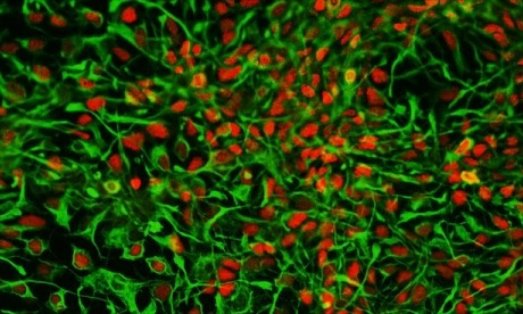
Chinese researchers have developed a new technique for isolating kidney cells from urine and turning them into neural progenitors — –immature brain cells that can develop into various types of glial cells and neurons. Reprogramming cells has been done before, of course, but not with cells gleaned from urine and not via a method this direct. The technique could prove extremely helpful to those pursuing treatments for neurodegenerative disorders like Parkinson’s and Alzheimer’s.

The innovation here is in the source and the method. We know that embryonic stem cells offer potential treatments for neurodegenerative disorders. And we know that we can turn adult human cells–that is, non-embryonic cells gathered from adult humans–into pluripotent cells (those that can become a different type of cell) by reprogramming them, usually with genetically engineered viruses that tamper with the cells’ genetic codes.

But embryonic stem cell treatments are fraught with ethical issues and non-embryonic methods are complicated–and complexity introduces a greater chance of something going wrong (in this case that means mutations and genetic defects). The new method, which taps skin-like cells from the linings of the kidney tubes that are present in urine, converts its source cells into neurons and glia cells via a more direct route, making the process more efficient while narrowing the margin of error.

In their study, the researchers harvested kidney cells from the urine samples of three human donors and converted the cells directly to neural progenitors. Rather than using a genetically engineered virus to reprogram the cells, they used a small piece of bacterial DNA that can replicate in the cellular cytoplasm, a technique that eliminates the need to tamper directly with the chromosome (in theory, at least, this should reduce mutations) while also speeding up the entire process. After growing their progenitors into mature neurons and glial cells, the researchers transplanted the progenitors into the brains of newborn rats. A month later, the cells were still alive in the rats’ brains, though it is not yet clear that they can survive for extended periods or mesh with the brain’s wiring to become functioning parts of the neural machine.

There’s still a lot of research to be done on this method of course, but the researchers think it may provide a way to take cells gathered non-invasively and quickly and efficiently convert them into neural cells while reducing the likelihood of genetic mutations.

http://www.guardian.co.uk/science/neurophilosophy/2012/dec/09/turning-urine-into-brain-cells


Gardening On The Moon


Gardening in space! Chinese astronauts may grow fresh vegetables in extraterrestrial bases on Moon or Mars in the future to provide food and oxygen supplies to astronauts, an official said after a successful lab experiment.

Deng Yibing, deputy director of the Beijing-based Chinese Astronaut Research and Training Center, said that the recent experiment focused on a dynamic balanced mechanism of oxygen, carbon dioxide, and water between people and plants in a closed system.

According to Deng, a cabin of 300 cubic metres was established to provide sustainable supplies of air, water and food for two participants during the experiment, the official Xinhua news agency reported.

Four kinds of vegetables were grown, taking in carbon dioxide and providing oxygen for the two people living in the cabin. They could also harvest fresh vegetables for meals, Deng said.

The experiment, the first of its kind in China, is extremely important for the long-term development of the country’s manned space programme, Deng added.

The cabin, a controlled ecological life support system (CELSS) built in 2011, is a model of China’s third generation of astronauts’ life support systems, which is expected to be used in extraterrestrial bases on the Moon or Mars.

The introduction of a CELSS seeks to provide sustainable supplies of air, water and food for astronauts with the help of plants and algae, instead of relying on stocks of such basics deposited on board at the outset of the mission.

Advance forms of CELSS also involve the breeding of animals for meat and using microbes to recycle wastes.

Scientists from Germany also participated in the experiments.

http://www.phenomenica.com/2012/12/chinese-astronauts-plan-to-grow-vegetables-on-moon.html

Chinese cross-dressing grandfather finds internet fame


A 72-year-old Chinese man has become an internet sensation after his granddaughter used him as a cross-dressing model to promote her clothing store.

Lu Qing, who lives in southern China’s Guangdong province, posted pictures of her grandfather dressed in an array of pink skirts, red tights and fur-lined women’s jackets to promote her online fashion outlet Yuekou.

The images of Liu Xianping have since gone viral and seen him branded the “world’s coolest” grandfather by internet users for his slender legs and modelling poise. They have also boosted his granddaughter’s bottom line.

“Since the pictures came out, we’ve had a huge number of website visitors, and are selling five times as many clothes as before,” Lu said.

“Previously, we sometimes sold less than 10 items a day, and were feeling depressed about the business.”

Lu said her grandfather was “surprised” by the reaction to the photos and at least three other stores had asked him to pose for them, but he was unlikely to accept.

“He doesn’t see modelling as a way of making money, its just about having fun with his relatives,” she said, adding she hopes to use his services again.

Liu “had a young heart”, she said, and enjoys visits to parks and zoos, as well as playing games on his mobile phone. “He thinks bringing people’s attention to the elderly is great, so he’s been very happy recently.”

The Offbeat China website, which tracks internet developments in the country, said Liu’s modelling illustrates the transformation it has undergone.

“It is stories like this when one can get a sense of what a diversified society China has changed into in the past 40 years, especially for someone like Liu who has lived through one of the most rigid times in China’s history,” said a post on the site.

Liu, who has worked as a teacher and a farmer, did not need prompting to take up modelling, Lu said.

“My grandfather saw some new stock one day and thought some of the colours were pretty… he wasn’t embarrassed to model because we’re all very close to him,” she said, adding that his favourite item was a red women’s coat.

Read more: http://www.theage.com.au/digital-life/digital-life-news/crossdressing-grandfather-finds-internet-fame-20121126-2a24l.html#ixzz2DXGgpoYN

Chinese Communist Newspaper Falls For The Onion Naming North Korea’s Leader The “Sexiest Man Alive”


‘The Onion’ report named North Korean dictator Kim Jong Un as the “Sexiest Man Alive” for 2012, and ‘The People’s Daily’ in China took it as real news and ran a 55-page photo spread on its website as a tribute to Kim.

The Chinese paper even quoted ‘The Onion’s’ story, writing “With his devastatingly handsome, round face, his boyish charm, and his strong, sturdy frame, this Pyongyang-bred heartthrob is every woman’s dream come true.”

And it didn’t end there. The story went on to say “Blessed with an air of power that masks an unmistakable cute, cuddly side, Kim made this newspaper’s editorial board swoon with his impeccable fashion sense, chic short hairstyle, and, of course, that famous smile.”

As for the photos, ‘The People’s Daily’ selected Kim on horseback and waving toward a military parade.

In other photos, he’s wearing sunglasses and smiling, or on an official government tour with his wife.

‘The Korea Times’, a South Korean daily, also reported ‘The Onion’ story as real news.

This isn’t the first time a state-run Chinese newspaper has fallen for a satirical report by ‘The Onion’.

Several years ago, ‘The Beijing Evening News’, ran an ‘Onion’ story that the U.S. Congress wanted a new building and was threatening to leave Washington (like sports teams do).

Two months ago, Iran’s ‘Fars’ news agency got duped by ‘The Onion’ as well. It printed a story about a “survey” that showed most rural white Americans would rather vote for Iran’s President Mahmoud Ahmadinejad than Barack Obama.

It included a quote from a phony resident of West Virginia saying he’d rather go to a baseball game with Ahmadinejad because “he takes national defense seriously.”

Of course, it’s not just news organizations that fall for some of ‘The Onion’s’ stories. Ordinary folks get duped too. For a round-up, check out LiterallyUnbelievable.org.

http://www.cbc.ca/strombo/alt-news/chinese-communist-newspaper-falls-for-the-onion-naming-north-koreas-leader-kim-jong-un-the-sexiest-m.html?p=home&s=home

Research from Asia is overturning long-held notions about the factors that drive people to commit suicide


SHANGHAI, CHINA—Mrs. Y’s death would have stumped many experts. A young mother and loyal wife, the rural Chinese woman showed none of the standard risk factors for suicide. She was not apparently depressed or mentally ill. Villagers said she exuded happiness and voiced few complaints. But when a neighbor publicly accused Mrs. Y of stealing eggs from her henhouse, the shame was unbearable. Mrs. Y rushed home and downed a bottle of pesticide. “A person cannot live without face,” she cried before she died. “I will die to prove that I did not steal her eggs.”

Decades of research in Western countries have positioned mental illness as an overwhelming predictor of suicide, figuring in more than 90% of such deaths. Another big risk factor is gender: Men commit suicide at much higher rates than women, by a ratio of nearly 4 to 1 in the United States, according to the U.S. Centers for Disease Control and Prevention. Other common correlates include city life and divorce. But in China, says Jie Zhang, a sociologist at the State University of New York, Buffalo State, the case of Mrs. Y is “a very typical scenario.”

Zhang oversaw interviews with Mrs. Y’s family and acquaintances while researching the prevalence of mental illness among suicide victims aged 15 to 34 in rural China. Through psychological autopsies—detailed assessments after death—Zhang and coauthors found that only 48% of 392 victims had a mental illness, they reported in the July 2010 issue of the American Journal of Psychiatry. An earlier study of Chinese suicide victims put the prevalence of mental disorders at 63%—still nowhere near as high as accepted models of suicide prevention would predict. Meanwhile, other standard risk factors simply don’t hold true, or are even reversed, in China. Chinese women commit suicide at unusually high rates; rural residents kill themselves more frequently than city dwellers do; and marriage may make a person more, rather than less, volatile.

Such differences matter because China accounts for an estimated 22% of global suicides, or roughly 200,000 deaths every year. In India, meanwhile, some 187,000 people took their own lives in 2010—twice as many as died from HIV/AIDS. By comparison, the World Health Organization (WHO) estimates that suicides in high-income countries total only 140,000 a year. Suicide rates in Japan and South Korea, however, are similar to China’s (see p. 1026), suggesting that this is a regional public health issue. And yet suicide in Asia is poorly understood. “Suicide has not gotten the attention it deserves vis-à-vis its disease burden,” says Prabhat Jha, director of the Centre for Global Health Research in Toronto, Canada.

Emerging research from developing countries like China and India is now filling that gap—and overturning prevailing notions. “The focus of the study of suicide in the West is psychiatry,” Zhang says. While mental illness remains an important correlate in Asia, he says, researchers may learn more from a victim’s family, religion, education, and personality. New findings, Zhang says, suggest that some researchers may have misread correlation as causation: In both the East and the West, “mental illness might not be the real cause of suicide.”

Distressing data

Reliable data on suicide across Asia were once maddeningly scarce. In Thailand until 2003, there was no requirement that the reported cause of death be medically validated—a flaw that rendered the country’s suicide data inaccurate. In India, suicide is a crime, which means it often goes unreported. But the Thai government now has a more accurate reporting system for mortality figures, while Indian researchers are benefiting from the Million Death Study, an effort to catalog causes of death for 1 million Indians in a 16-year survey relying on interviews with family members (Science, 15 June, p. 1372). The study has already produced a disturbing revelation about reported suicide rates. “When we compare our data with police reports, you find undercounts of at least 25% in men and 36% in women,” says Jha, the study’s lead investigator.

New insights from China are particularly instructive. Because suicide carries a stigma, the Chinese government withheld data on the topic until the late 1980s. When information finally came out, it quickly became clear that the country had a serious problem. In 1990, for example, the World Bank’s Global Burden of Disease Study estimated there were 343,000 suicides in China—or 30 per 100,000 people. The U.S. rate for the same year was 12 per 100,000.

But other reports gave different figures, prompting a debate on sources. WHO’s extrapolated total was based on data that China had reported from stations covering only 10% of the population, skewed toward urban residents. As researchers focused on the problem, they arrived at more reliable figures—but also unearthed more mysteries. In an analysis in The Lancet in 2002, a group led by Michael Phillips of Shanghai Mental Health Center and Emory University School of Medicine in Atlanta estimated that from 1995 to 1999, Chinese women killed themselves more frequently than men—by a ratio of 5 to 4. “There was originally disbelief about the very different gender ratio in China,” Phillips says, although later it was accepted.

Today, the suicide sex ratio in China is roughly 1 to 1, still a significant departure from the overall U.S. male-to-female ratio of 4 to 1. In India, the male-to-female suicide ratio is 1.5 to 1, although in the 15 to 29 age group it is close to equal. And yet, WHO estimates the global sex ratio at three men to one woman. (With colleague Cheng Hui, Phillips recently used Chinese and Indian figures to lower that estimate to 1.67 to 1.) Among young adults in India, suicide is second only to maternal mortality as a cause of death for women, according to the Million Death Survey.

In both China and India, cases like Mrs. Y’s involving no apparent mental illness are common. In India, suicide is most prevalent among teenagers and young adults—the cohort that is entering the workforce, marrying, and facing new life stresses. This contrasts with the Western pattern of high suicide rates among the middle-aged, suggesting that although “there might well be some underlying psychiatric conditions, the main drivers of [suicide in India] are probably chiefly social conditions,” Jha says. While cautioning that detailed psychological autopsies are still needed in India, he says, “it’s a reasonable assumption that many of these young folks are not mentally ill.”

Convincing researchers outside Asia may prove an uphill battle. Matthew Miller, a suicide researcher at the Harvard Injury Control Research Center in Boston, says that mental illness may be underdiagnosed in Asia for reasons that aren’t fully understood. That could throw off correlation studies. Phillips, who has worked in China for over 20 years, agrees that underdiagnosis is a problem, and that “many Western researchers still believe that we are just missing cases.” But he rejects that explanation. Even accounting for underdiagnosis, he says, the finding of a lower rate of mental illness among suicide victims has held up in multiple studies. Many Chinese suicide victims, he adds, are “most certainly severely distressed, but they don’t meet the criteria of a formal mental illness.”

Lethal weapons

Assuming that suicide risk is shaped by different factors in Asia, researchers are striving to uncover the roots. One clue may lie in the high proportion of unplanned Chinese suicides. In a 2002 survey of 306 Chinese patients who had been hospitalized for at least 6 hours following a suicide attempt, Phillips and colleagues found that 35% had contemplated suicide for less than 10 minutes—and 54% for less than 2 hours. Impulsiveness among suicide victims in Asia “tends to be higher than in the West,” says Paul Yip, director of the Hong Kong Jockey Club Centre for Suicide Research and Prevention at the University of Hong Kong and one of the authors of a recent WHO report on suicide in Asia. Although impulsive personality traits are sometimes linked to illnesses like bipolar disorder, studies in China have not uncovered full-fledged personality disorders in impulsive suicide victims.

In a tragic twist, impulsive victims in Asia tend to favor highly fatal methods. After interviewing family members and friends of 505 Chinese suicide victims, Kenneth Conner, a psychiatric researcher at the University of Rochester Medical Center in New York, and colleagues reported in 2005 that those who had ingested pesticides were more likely to have acted rashly than were those who used other methods such as hanging or drowning. Pesticides are a leading cause of suicide death in China and India, and the cause of roughly half of suicides worldwide. Pesticides may also explain Asia’s unusual suicide sex ratio, Jha says. In the West, women attempt suicide just as frequently as men do, but they tend to down sleeping pills—and often survive.

The trends in Asia point to a need for innovative prevention strategies. Zhang believes efforts should focus less on mental illness and more on “educating people to have realistic goals in life and teaching them to cope with crisis.” Front and center should be universities and rural women’s organizations, both of which already have active suicide prevention programs in China, he says. Such community-based approaches appear to have been effective in Hong Kong, Yip says. Over the past decade, the territory has rolled out programs for schoolchildren on dealing with stress and outreach groups for older adults. Its suicide rate has fallen 27% since 2003.

But resources in many Asian countries are limited. The vast majority of cities in China and India still do not have 24-hour suicide prevention hotlines. That may make what scholars call means restriction—reducing access to tools commonly used in suicide—a better goal. In Sri Lanka, pesticides once accounted for two-thirds of suicide deaths. Then in 1995, the government took steps to ban the most toxic pesticides. The suicide rate plummeted by 50% in the following decade.

The varying degrees to which mental illness and suicide correlate in East and West may ultimately be beside the point, argues Zhang, who believes a third factor may be the trigger in both regions. Strain theory, which posits that societal pressures, rather than inborn traits, contribute to crime, can help explain suicide, he believes. “Psychological strains usually precede a suicidal behavior, and they also happen before an individual becomes mentally ill.”

When a person is pulled by two or more conflicting pressures, Zhang says, as with “a girl who receives Confucian values at home and then goes to school and learns about modern values and gender equality,” she may be more prone to suicide. Other situational stresses may include a sudden crisis faced by a rural woman lacking coping mechanisms—such as the case of Mrs. Y—or an incident that forces a young man to confront a gap between his aspirations and reality. Zhang found that strain theory held up for his study subjects in rural China. He plans to probe whether it also applies to older Chinese.

Ultimately, Zhang hopes to test strain theory on Americans. The U.S. National Institutes of Health “spends millions and millions of dollars every year on treating mental illness to prevent suicide,” he says. “But no matter how much money we spend, how many psychiatrists we train, or how much work we do in psychiatric clinics, the U.S. suicide rate doesn’t decrease.” It has hovered around 10 to 12 suicides per 100,000 people since 1960.

Such research may be the tip of the iceberg when it comes to debunking long-held ideas about behavior disorders. Alcoholism is another area ripe for exploration, Cheng says: The profile of alcoholics in China contrasts sharply with that in the West. Because of social pressure to drink, Chinese alcoholics are far more likely to be working and married than American counterparts, who are often unemployed and divorced, she says. Suicide, Cheng muses, “is just another example of how environment can change behavior.”

http://www.sciencemag.org/content/338/6110/1025.full