Childhood Trauma, Not Impulsivity, Linked With Suicide Attempts

by Tori Rodriguez, MA, LPC

While the top risk factor for completed suicide is a history of previous attempts, childhood trauma and impulsivity have also been found to increase the risk of suicidality in adults (1,2). However, there have been few investigations into whether these 2 variables influence each other in their association with suicidal ideation and attempts.

Prior research has linked childhood trauma with increased frequency of a range of psychiatric disorders, such as depression, posttraumatic stress disorder, eating disorders, panic disorder, and substance abuse.1 Additionally, a correlation between impulsivity and risky behaviors — including suicidality — has been found, and research published in 2014 discovered higher levels of impulsivity among patients with a self-reported history of at least 1 suicide attempt, compared to those with no reported previous attempts (3).

“People with histories of childhood trauma often develop difficulties with managing negative emotion, coping with stress, and maintaining optimism in the face of life stressors,” Lisa Cohen, PhD, a professor of psychiatry at Icahn School of Medicine at Mount Sinai Beth Israel in New York, told Psychiatry Advisor. “Impulsivity is a risk factor for all types of reckless behavior, including suicidal behavior,” she added.

Dr Cohen and others, including lead author Laura DeRubeis, a doctoral student at Adelphi University in New York, recently sought to determine whether impulsivity mediates the relationship between childhood trauma and suicidality in a sample of 113 adult inpatients (4). They hypothesized that after impulsivity was controlled for, childhood trauma would no longer predict suicidality at a statistically significant level.

As part of a larger investigation, participants were administered several questionnaires: the Childhood Trauma Questionnaire (CTQ), a Likert-type scale that measures emotional, physical, and sexual abuse, as well as emotional and physical neglect; the Barratt Impulsiveness Scale (BIS-11) and the Behavioral Activation Scale (BAS) of the Behavioral Inhibition and Activation Scales (collectively known as BIS/BAS, not to be confused with the BIS-11); and select items from the Columbia Suicide Severity Rating Scale (C-SSRS) to assess ideation and attempts.

According to the results, which were presented at the 2016 Annual Meeting of the American Psychiatric (APA) in Atlanta, Georgia, both childhood trauma and impulsivity had independent effects on suicidal ideation. However, childhood trauma was found to have an independent association with suicide attempts, while impulsivity was not. “We expected childhood trauma to influence suicidal ideation and attempts through a pathway of impulsivity, so that trauma leads to impulsivity which then leads to suicidal ideation and attempts,” explains Dr Cohen. Instead, they found that impulsivity was only related to suicidal ideation, and when childhood trauma was controlled for, impulsivity no longer predicted attempts.

Though these findings are in line with previous data on the correlation between childhood trauma, impulsivity, and suicidal ideation, they contradict the hypothesis of the current study as well as results of other studies suggesting that impulsivity is a risk factor for suicide attempts. “Childhood trauma seems to have a potent independent effect on both suicidal ideation and suicidal attempts,” the authors concluded in their paper.

References

1. O’Brien BS, Sher L. Child sexual abuse and the pathophysiology of suicide in adolescents and adults. Int J Adolesc Med Health. 2013;25(3):201-205.

2. Wedig MM, Silverman MH, Frankenburg FR, Reich DB, Fitzmaurice G, Zanarini MC. Predictors of suicide attempts in patients with borderline personality disorder over 16 years of prospective follow-up. Psychol Med. 2012;42(11):2395-2404.

3. Mccullumsmith CB, Williamson DJ, May RS, A, Bruer EH, Sheehan DV, Alphs LD. Simple measures of hopelessness and impulsivity are associated with acute suicidal ideation and attempts in patients in psychiatric crisis. Innov Clin Neurosci. 2014;11(9-10): 47-53.

4. DeRubeis L, Kim KHS, Ardalan F, Tanis T, Galynker I, Cohen L. The relationship between childhood trauma, impulsivity, and suicidality in an inpatient sample. Poster presentation at: 2016 Annual Meeting of the American Psychiatric Association; May 14-18, 2016; Atlanta, GA. Young Investigators’ New Research 1–017.

http://www.psychiatryadvisor.com/apa-2016-coverage/apa-2016-research-found-impulsivity-without-childhood-trauma-did-not-predict-suicide-attempts/article/497331/

French teenager broadcasts her suicide on Periscope

by Erin Zaleski

A young French woman broadcast her last moments in a haunting livestream video.

More than 1,000 people are believed to have watched the young woman kill herself.

They watched her calmly discuss her decision to die, just as they watched her slip on her sneakers before heading to a nearby station and throwing herself in front of an oncoming suburban RER C train.

No one watching was able to approach the platform, or yell for her to stop, or to do anything else that may have prevented her from carrying out her desperate act, because no one could. The hundreds of people who witnessed her last moments watched the drama unfold behind their phone screens.

At the Egly train station south of Paris on Tuesday, a French teenager broadcast her suicide on Periscope, a smartphone app that allows users to stream live videos. The video has reportedly been removed from Periscope, but footage of the minutes leading up to her death has been posted on YouTube.

While suicide, and even public suicide, is nothing new, the age of social media makes such acts of despair accessible in a way they have never been previously. Indeed, Tuesday’s tragedy near Paris is not the first time a young person has broadcast a suicide on social media. In 2010, a 21-year-old Swedish man hanged himself on a live webcam broadcast. And a young woman in Shanghai documented the events leading up to her suicide on Instagram in 2014, uploading a series of disturbing images, including one in which her legs are dangling out of the window of a high-rise apartment.

“I will haunt you day and night after I’m dead,” she reportedly posted on the photo-sharing app in a message to her ex-boyfriend before jumping to her death.

In its guidelines, Periscope, which is owned by Twitter, prohibits what it deems “explicitly graphic content or media that is intended to incite violent, illegal or dangerous activities.” However, with some 10 million active users, monitoring every account 24/7 would be daunting, if not impossible.

“Why do you say you love me, you don’t even know me?” asks the pretty young woman seated on a red couch in her apartment and facing the camera. She is pale with long brown hair and piercings, one in her left nostril and two just beneath her lower lip. A prospective suitor has messaged her, but she calmly and firmly rebuffs his advances.

“Yes, I am single, but I am not looking for that. Really.”

She rolls a cigarette before continuing.

“What is about to happen is very shocking, so those who are underage should leave.”

She takes a long drag and continues to field questions from users. She tells them that she is 19 and works at a retirement home. Her determined, unemotional demeanor is a bit unsettling to watch. As is the way she calmly answers questions, sometimes even cracking a smile or unleashing a soft giggle.

“Why are you asking me who I am?” she asks with a chuckle before taking another drag. “I am no one.”

At one point she stops speaking and continues to smoke while scrolling through messages other Periscope users are sending her—mostly lame pick-up lines and other typical online inanities. Footage of her final act has been replaced with a black screen, but the faint voices of emergency personnel can be heard on the audio track, and messages from fellow users shift from playful banter to disbelief to concern.

“Stop messing around,” one of them reads.

“Where did she go? Call the cops!” reads another.

Indeed, it was a fellow Periscope user who alerted emergency services, but by the time they arrived at the station yesterday afternoon it was too late. French police have reportedly launched an investigation into her death.

Before she died, the young French woman reportedly claimed to be a victim of a sexual assault and named her alleged attacker. Whether it was the trauma of rape or another reason that drove her to violently end her life is not known. More unnerving is her decision to broadcast her death to hundreds of strangers. It’s not clear whether it’s a cry for help, since in the video she refuses to divulge any personal details, including her name and location. Had she wanted to feel less alone? Was she seeking empathy? Or in today’s digital world, where we joke that an event never really happened unless it’s posted, tweeted, or streamed, was she merely seeking to document, and thus, validate, the last moments of her life?

“What I want to make clear is that I am not doing this for the hype, but to send a message, to open minds,” she explains in the video.

The precise nature of the message she was hoping to send may never be understood. Instead, we are left a troubling glimpse of a young woman in pain, whom no one could help in time.

http://www.thedailybeast.com/articles/2016/05/11/french-teen-periscopes-her-suicide.html

Aokigahara: Japan’s Suicide Forest

by Kristy Puchko

Northwest of the majestic Mount Fuji is the sprawling 13.5 square miles of Aokigahara, a forest so thick with foliage that it’s known as the Sea of Trees. But it’s the Japanese landmark’s horrific history that made the woods a fitting location for the spooky horror film The Forest. Untold visitors have chosen this place, notoriously called The Suicide Forest, as the setting for their final moments, walking in with no intention of ever walking back out. Here are a few of the terrible truths and scary stories that forged Aokigahara’s morbid reputation.

1. AOKIGAHARA IS ONE OF THE MOST POPULAR SUICIDE DESTINATIONS IN THE WORLD.

Statistics on Aokigahara’s suicide rates vary, in part because the forest is so lush that some corpses can go undiscovered for years or might be forever lost. However, some estimates claim as many as 100 people a year have successfully killed themselves there.


2. JAPAN HAS A LONG TRADITION OF SUICIDE.

Self-inflicted death doesn’t carry the same stigma in this nation as it does in others. Seppuku—a samurai’s ritual suicide thought to be honorable—dates back to Japan’s feudal era. And while the practice is no longer the norm, it has left a mark. “Vestiges of the seppuku culture can be seen today in the way suicide is viewed as a way of taking responsibility,” said Yoshinori Cho, author of Why do People Commit Suicide? and director of the psychiatry department at Teikyo University in Kawasaki, Kanagawa.

3. JAPAN HAS ONE OF THE HIGHEST SUICIDE RATES IN THE WORLD.

The global financial crisis of 2008 made matters worse, resulting in 2,645 recorded suicides in January 2009, a 15 percent increase from the previous year. The numbers reached their peak in March, the end of Japan’s financial year. In 2011, the executive director of a suicide prevention hotline told Japan Times, “Callers most frequently cite mental health and family problems as the reason for contemplating suicide. But behind that are other issues, such as financial problems or losing their job.”

4. SUICIDE PREVENTION ATTEMPTS INCLUDE SURVEILLANCE AND POSITIVE POSTS.

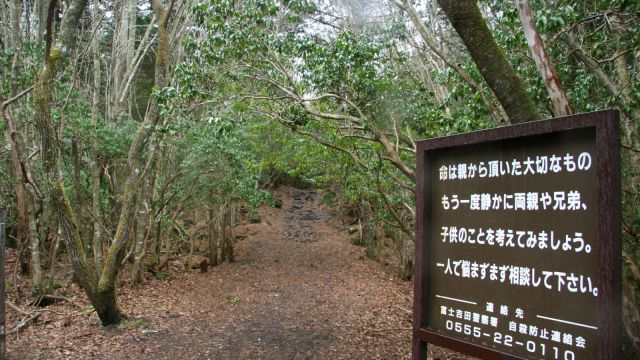
Because of the high suicide rate, Japan’s government enacted a plan of action that aims to reduce such rates by 20 percent within the next seven years. Part of these measures included posting security cameras at the entrance of the Suicide Forest and increasing patrols. Suicide counselors and police have also posted signs on various paths throughout the forest that offer messages like “Think carefully about your children, your family” and “Your life is a precious gift from your parents.”

5. IT’S NATURALLY EERIE.

Bad reputation aside, this is no place for a leisurely stroll. The forest’s trees organically twist and turn, their roots winding across the forest floor in treacherous threads. Because of its location at the base of a mountain, the ground is uneven, rocky, and perforated with hundreds of caves. But more jarring than its tricky terrain is the feeling of isolation created from the stillness; the trees are too tightly packed for winds to whip through and the wildlife is sparse. One visitor described the silence as “chasms of emptiness.” She added, “I cannot emphasize enough the absence of sound. My breath sounded like a roar.”

6. DEATH BY HANGING IS THE MOST POPULAR METHOD OF SUICIDE AMONG THE SEA OF TREES.

The second is said to be poisoning, often by drug overdose.

7. A NOVEL POPULARIZED THIS DARK TRADITION. . .

In 1960, Japanese writer Seichō Matsumoto released the tragic novel Kuroi Jukai, in which a heartbroken lover retreats to the Sea of Trees to end her life. This romantic imagery has proved a seminal and sinister influence on Japanese culture. Also, looped into this lore: The Complete Suicide Manual, which dubs Aokigahara “the perfect place to die.” The book has been found among the abandoned possessions of various Suicide Forest visitors.

8. BUT IT WAS NOT THE START OF THE FOREST’S DARK LEGACY.

Ubasute is a brutal form of euthanasia that translates roughly to “abandoning the old woman.” An uncommon practice—only resorted to in desperate times of famine—where a family would lessen the amount of mouths to feed by leading an elderly relative to a mountain or similarly remote and rough environment to die, not by means of suicide but by dehydration, starvation, or exposure. Some insist this was not a real occurrence, but rather grim folklore. Regardless, stories of the Sea of Trees being a site for such abandonment have long been a part of its mythos.

9. THE SUICIDE FOREST MAY BE HAUNTED.

Some believe the ghosts—or yurei—of those abandoned by ubasute and the mournful spirits of the suicidal linger in the woods. Folklore claims they are vengeful, dedicated to tormenting visitors and luring those that are sad and lost off the path.

10. ANNUAL SEARCHES HAVE BEEN HELD THERE SINCE 1970.

There are volunteers who do patrol the area, making interventional efforts. However, these annual endeavors are not intended to rescue people, but to recover their remains. Police and volunteers trek through the Sea of Trees to bring bodies back to civilization for a proper burial. In recent years, the Japanese government has declined to release the numbers of corpses recovered from these gruesome searches. But in the early 2000s, 70 to 100 were uncovered each year.

11. BRINGING A TENT INTO THE FOREST SUGGESTS DOUBT.

Camping is allowed in the area but visitors who bring a tent with them are believed to be undecided on their suicide attempt. Some will camp for days, debating their fates. People on prevention patrol will gently speak with such campers, entreating them to leave the forest.

12. THE SUICIDE FOREST IS SO THICK THAT SOME VISITORS USE TAPE TO AVOID GETTING LOST.

Volunteers who search the area for bodies and those considering suicide typically mark their way with plastic ribbon that they’ll loop around trees in this leafy labyrinth. Otherwise, one could easily lose their bearings after leaving the path and become fatally lost.

13. YOU MAY NOT BE ABLE TO CALL FOR HELP.

Rich with magnetic iron, the soil of the Suicide Forest plays havoc on cellphone service, GPS systems, and even compasses. This is why tape can be so crucial. But some believe this feature is proof of demons in the dark.

14. NOT EVERYONE WHO GOES THERE HAS DEATH ON THEIR AGENDA.

Locals lament that this natural wonder is known first and foremost for its lethal allure. Still, tourists can take in gorgeous views of Mount Fuji and visit highlights like the distinctive lava plateau, 300-year-old trees, and the enchanting Narusawa Ice Cave.

15. GOING OFF THE PATH CAN LEAD TO GHASTLY DISCOVERIES.

The Internet is littered with disturbing images from the Suicide Forest, from abandoned personal effects snared in the undergrowth to human bones and even more grisly remains strewn across the forest floor or dangling from branches. So if you dare to venture into this forbidding forest, do as the signs suggest and stay on the path.

http://mentalfloss.com/article/73288/15-eerie-things-about-japans-suicide-forest

Risk of suicide increases 3X after a concussion

New research published in the Canadian Medical Association Journal shows that even mild concussions sustained in ordinary community settings might be more detrimental than anyone anticipated; the long-term risk of suicide increases threefold in adults if they have experienced even one concussion. That risk increases by a third if the concussion is sustained on a weekend instead of a weekday—suggesting recreational concussions are riskier long-term than those sustained on the job.

“The typical patient I see is a middle-aged adult, not an elite athlete,” says Donald Redelmeier, a senior scientist at the University of Toronto and one of the study’s lead authors. “And the usual circumstances for acquiring a concussion are not while playing football; it is when driving in traffic and getting into a crash, when missing a step and falling down a staircase, when getting overly ambitious about home repairs—the everyday activities of life.”

Redelmeier and his team wanted to examine the risks of the concussions acquired under those circumstances. They identified nearly a quarter of a million adults in Ontario who were diagnosed with a mild concussion over a timespan of 20 years—severe cases that resulted in hospital admission were excluded from the study—and tracked them for subsequent mortality due to suicide. It turned out that more than 660 suicides occurred among these patients, equivalent to 31 deaths per 100,000 patients annually—three times the population norm. On average, suicide occurred almost six years after the concussion. This risk was found to be independent of demographics or previous psychiatric conditions, and it increased with additional concussions.

For weekend concussions, the later suicide risk increased to four times the norm. Redelmeier and his fellow researchers had wondered whether the risk would differ between occupational and recreational concussions. They did not have information about how the concussions happened, so they used day of the week as a proxy. Although they do not know why weekend risk is indeed higher, they suspect it may be because on weekends medical staff may not be as available or accessible or people may not seek immediate care.

Although the underlying causes of the connection between concussion and suicide are not yet known, Redelmeier says that there were at least three potential explanations. A concussion may be a marker but not necessarily a mechanism of subsequent troubles—or, in other words, people who sustain concussions may already have baseline life imbalances that increase their risks for depression and suicide. “But we also looked at the subgroup of patients who had no past psychiatric history, no past problems, and we still found a significant increase in risk. So I don’t think that’s the entire story,” he notes. One of the more likely explanations, he says, is that concussion causes brain injury such as inflammation (as has been found in some studies) from which the patient may never fully recover. Indeed, a study conducted in 2014 found that sustaining a head injury leads to a greater risk of mental illness later in life. The other possibility is that some patients may not give themselves enough time to get better before returning to an ordinary schedule, leading to strain, frustration and disappointment—which, in turn, may result in depression and ultimately even suicide.

Lea Alhilali, a physician and researcher at the Barrow Neurological Institute who did not participate in this study, uses diffusion tensor imaging (an MRI technique) to measure the integrity of white matter in the brain. Her team has found similarities between white matter degeneration patterns in patients with concussion-related depression and noninjured patients with major depressive disorder—particularly in the nucleus accumbens, or the “reward center” of the brain. “It can be difficult to tease out what’s related to an injury and what’s related to the circumstances surrounding the trauma,” Alhilali says. “There could be PTSD, loss of job, orthopedic injuries that can all influence depression. But I do believe there’s probably an organic brain injury.”

Alhilali points to recent studies on chronic traumatic encephalopathy (CTE), a progressive degenerative brain disease associated with repeated head traumas. Often linked to dementia, depression, loss of impulse control and suicide, CTE was recently diagnosed in 87 of 91 deceased NFL players. Why, then, she says, should we not suspect that concussion causes other brain damage as well?

This new study may only represent the tip of the iceberg. “We’re only looking at the most extreme outcomes, at taking your own life,” Redelmeier says. “But for every person who dies from suicide, there are many others who attempt suicide, and hundreds more who think about it and thousands more who suffer from depression.”

More research needs to be done; this study was unable to take into account the exact circumstances under which the concussions were sustained. Redelmeier’s research examined only the records of adults who sought medical attention, it did not include more severe head injuries that required hospitalization or extensive emergency care. To that extent, his findings may have underestimated the magnitude of the absolute risks at hand.

Yet many people are not aware of these risks.

Redelmeier is adamant that people should take concussions seriously. “We need to do more research about prevention and recovery,” he says. “But let me at least articulate three things to do: One, give yourself permission to get some rest. Two, when you start to feel better, don’t try to come back with a vengeance. And three, even after you’re feeling better, after you’ve rested properly, don’t forget about it entirely. If you had an allergic reaction to penicillin 15 years ago, you’d want to mention that to your doctor and have it as a permanent part of your medical record. So, too, if you’ve had a concussion 15 years ago.”

http://www.scientificamerican.com/article/a-single-concussion-may-triple-the-long-term-risk-of-suicide1/

Why do older white men have higher risk of suicide?

Older men of European descent (white men) have significantly higher suicide rates than any other demographic group in the United States, including older women across ethnicities and older men of African, Latino, or Indigenous decent, according to research published in Men and Masculinities.

In her latest addition to suicide research, Silvia Sara Canetto, PhD, professor in the Department of Psychology at Colorado State University, has found that older white men have higher suicide rates yet fewer burdens associated with aging. They are less likely to experience widowhood, have better physical health and fewer disabilities than older women, and have more economic resources than older women across ethnicities and ethnic minority older men.

Rather than being due to physical aging adversities, therefore, increased suicide rates among older white men in the United States may be because they are less psychologically equipped to deal with the normal challenges of aging; likely because of their privilege until late adulthood, Dr Canetto asserted.
Another important factor in white men’s vulnerability to suicide once they reach late life may be dominant cultural scripts of masculinity, aging, and suicide, Dr Canetto said. A particularly damaging cultural script may be the belief that suicide is a masculine response to “the indignities of aging.” This idea implies that suicide is justified or even glorified among men.

To illustrate these cultural scripts, Dr Canetto examined two famous suicide cases and their accompanying media coverage. The founder of Kodak, George Eastman, died of suicide at age 77. His biographer said that Eastman was “unprepared and unwilling to face the indignities of old age.”

American journalist and author Hunter S. Thompson died of suicide in 2005 at age 67, and was described by friends as having triumphed over “the indignities of aging.” Both of these suicides were covered in the press through scripts of conventional “white” masculinity, Dr Canetto stated. “The dominant story was that their suicide was a rational, courageous, powerful choice,” she said in a statement.

Canetto’s research challenges the idea that high suicide rates are inevitable among older white men. Canetto notes that older men are not the most suicide-prone group everywhere in the world; in China, for example, women at reproductive age are the demographic with the highest rate of suicide. This is additional evidence that suicide in older white men is culturally determined and thus preventable.

Dr Canetto’s research shows that cultural scripts may offer a new way of understanding and preventing suicide. The “indignities of aging” suicide script and the belief that suicide is a masculine, powerful response to aging can and should be challenged, Dr Canetto said.

Canetto SS. Suicide: Why Are Older Men So Vulnerable? Men Masc. 2015; doi:10.1177/1097184X15613832.

The employees shut inside coffins

South Korea has one of the highest suicide rates in the world, and workers often report feeling stressed. So in order to make people appreciate life, some companies are making employees take part in their own pretend funerals.

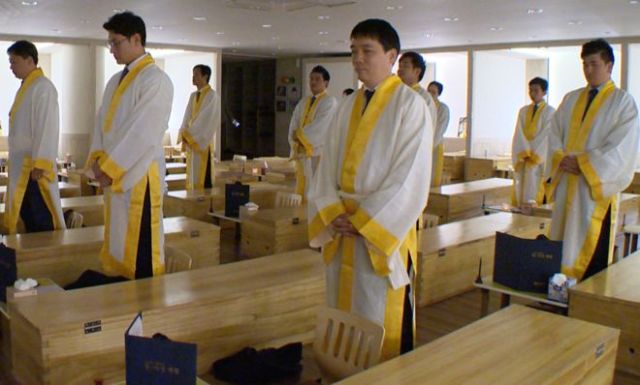
In a large room in a nondescript modern office block in Seoul, staff from a recruitment company are staging their own funerals. Dressed in white robes, they sit at desks and write final letters to their loved ones. Tearful sniffling becomes open weeping, barely stifled by the copious use of tissues.

And then, the climax: they rise and stand over the wooden coffins laid out beside them. They pause, get in and lie down. They each hug a picture of themselves, draped in black ribbon.

As they look up, the boxes are banged shut by a man dressed in black with a tall hat. He represents the Angel of Death. Enclosed in darkness, the employees reflect on the meaning of life.

The macabre ritual is a bonding exercise designed to teach them to value life. Before they get into the casket, they are shown videos of people in adversity – a cancer sufferer making the most of her final days, someone born without all her limbs who learned to swim.

All this is designed to help people come to terms with their own problems, which must be accepted as part of life, says Jeong Yong-mun who runs the Hyowon Healing Centre – his previous job was with a funeral company.

The participants at this session were sent by their employer, human resources firm Staffs. “Our company has always encouraged employees to change their old ways of thinking, but it was hard to bring about any real difference,” says its president, Park Chun-woong. “I thought going inside a coffin would be such a shocking experience it would completely reset their minds for a completely fresh start in their attitudes.”

“After the coffin experience, I realised I should try to live a new style of life,” says Cho Yong-tae as he emerges from the casket. “I’ve realised I’ve made lots of mistakes. I hope to be more passionate in all the work I do and spend more time with my family.”

As the company’s president, Park Chun-woong believes an employer’s responsibility extends beyond the office. For example, he sends flowers to the parents of his employees simply to thank them for bringing his workers up.

He also insists that his staff engage in another ritual every morning when they get to work – they must do stretching exercises together culminating in loud, joint outbursts of forced laughter. They bray uproariously, like laughing asses together. It is odd to see.

“At first, laughing together felt really awkward and I wondered what good it could do,” says one woman. “But once you start laughing, you can’t help but look at the faces of your colleagues around you and you end up laughing together.

“I think it really does have a positive influence. There’s so little to laugh about in a normal office atmosphere, I think this kind of laughter helps.”

Certainly, some laughter is needed in the South Korean workplace. The country has the highest rate of suicide in the industrialised world. There is a constant complaint of “presenteeism” – having to get to the office before the boss and stay until he – invariably he – has gone.

The Korean Neuropsychiatric Association found that a quarter of those it questioned suffered from high stress levels, with problems at work cited as a prime cause.

http://www.bbc.com/news/magazine-34797017

New study identifies potential new class of more rapidly acting antidepressant medications

A new study by researchers at University of Maryland School of Medicine has identified promising compounds that could successfully treat depression in less than 24 hours while minimizing side effects. Although they have not yet been tested in people, the compounds could offer significant advantages over current antidepressant medications.

The research, led by Scott Thompson, PhD, Professor and Chair of the Department of Physiology at the University of Maryland School of Medicine (UM SOM), was published this month in the journal Neuropsychopharmacology.

“Our results open up a whole new class of potential antidepressant medications,” said Dr. Thompson. “We have evidence that these compounds can relieve the devastating symptoms of depression in less than one day, and can do so in a way that limits some of the key disadvantages of current approaches.”

Currently, most people with depression take medications that increase levels of the neurochemical serotonin in the brain. The most common of these drugs, such as Prozac and Lexapro, are selective serotonin reuptake inhibitors, or SSRIs. Unfortunately, SSRIs are effective in only a third of patients with depression. In addition, even when these drugs work, they typically take between three and eight weeks to relieve symptoms. As a result, patients often suffer for months before finding a medicine that makes them feel better. This is not only emotionally excruciating; in the case of patients who are suicidal, it can be deadly. Better treatments for depression are clearly needed.

Dr. Thompson and his team focused on another neurotransmitter besides serotonin, an inhibitory compound called GABA. Brain activity is determined by a balance of opposing excitatory and inhibitory communication between brain cells. Dr. Thompson and his team argue that in depression, excitatory messages in some brain regions are not strong enough. Because there is no safe way to directly strengthen excitatory communication, they examined a class of compounds that reduce the inhibitory messages sent via GABA. They predicted that these compounds would restore excitatory strength. These compounds, called GABA-NAMs, minimize unwanted side effects because they are precise: they work only in the parts of the brain that are essential for mood.

The researchers tested the compounds in rats that were subjected to chronic mild stress that caused the animals to act in ways that resemble human depression. Giving stressed rats GABA-NAMs successfully reversed experimental signs of a key symptom of depression, anhedonia, or the inability to feel pleasure. Remarkably, the beneficial effects of the compounds appeared within 24 hours – much faster than the multiple weeks needed for SSRIs to produce the same effects.

“These compounds produced the most dramatic effects in animal studies that we could have hoped for,” Dr. Thompson said. “It will now be tremendously exciting to find out whether they produce similar effects in depressed patients. If these compounds can quickly provide relief of the symptoms of human depression, such as suicidal thinking, it could revolutionize the way patients are treated.”

In tests on the rats’ brains, the researchers found that the compounds rapidly increased the strength of excitatory communication in regions that were weakened by stress and are thought to be weakened in human depression. No effects of the compound were detected in unstressed animals, raising hopes that they will not produce side effects in human patients.

“This work underscores the importance of basic research to our clinical future,” said Dean E. Albert Reece, MD, PhD, MBA, who is also the vice president for Medical Affairs, University of Maryland, and the John Z. and Akiko K. Bowers Distinguished Professor and Dean of the School of Medicine. “Dr. Thompson’s work lays the crucial groundwork to transform the treatment of depression and reduce the tragic loss of lives to suicide.”

http://www.news-medical.net/news/20150714/New-study-identifies-potential-antidepressant-medications-with-few-side-effects.aspx

Meet the Man Trying to Use Ayahuasca to Treat PTSD

Deep in the Amazon rainforest, a group of veterans chokes down a gritty, gut-wrenching shot of liquid absolution. They try to drink away their severe mental disturbances, but not the way you drink away your ex-girlfriend with a bottle of whiskey. They’re looking for a cure. Their leader: 27-year-old retired infantryman Ryan LeCompte. Their goal: to hallucinate away their terrible memories.

From a few fringe psychiatrists to veterans like LeCompte, there is a budding belief that extreme hallucination can save our brains from themselves. Several organizations, including the Multidisciplinary Association for Psychedelic Studies (MAPS), and adventurous doctors around the world test out psychedelics such as MDMA, psilocybin and ayahuasca for possible medical uses.

Ayahuasca is a devilish brew. It’s made of vines and roots found in the Amazon; drinking it equals a heavy psychedelic experience and profuse vomiting. “As the shapes and colors continued to move about, they sometimes converged to create the face of a woman, who of course I immediately labeled as Aya,” says an ayahuasca user on the underground drug website Erowid. Aya is known as the spirit or soul of the ayahuasca world. LeCompte described having kaleidoscope vision during his ayahuasca trip, and he even began to dance and went to look at leaves and other pieces of the nature around him at points.

Ryan LeCompte is a scruffy former Marine who, today, is studying at the eccentric Naropa University in Boulder. The school was founded by Tibetan Buddhist teacher and Oxford University scholar Chögyam Trungpa and includes schools such as the Jack Kerouac School of Disembodied Poetics. The beat poets used to flock to there. It’s a Buddhist-inspired school infamous for attracting people who are looking for an alternative education in an attractive location.

For his part, LeCompte didn’t ever face a PTSD diagnosis during his time in service. But he’s lucky, because many of his peers did. What he did experience still shook him. In 2008, while stationed in 8th and I Marine Barracks in Washington, D.C., LeCompte walked into the room of a good friend in his barracks one morning to find Sgt. Jorge Leon-Alcivar dead—a suicide. He was not the only Marine LeCompte encountered who would take his own life. At least 22 veterans kill themselves every day. Leon-Alcivar’s death was the final straw, and three years later LeCompte retired from the Marines to start fighting PTSD. He received his End of Active Service honorable discharge after four years in the Marines and didn’t look back.

LeCompte began traveling to the VA hospital in Birmingham, Alabama, where he was living, to learn what was ailing disturbed veterans and soldiers. He hung around in waiting rooms, cautiously approaching the soldiers, wheedling their stories out. But it didn’t take much persuasion; the men were “so beat,” he recalls, that they opened up to him instantly. This took course over several years, during his free time, while he did contract work building helicopters.

Soon, LeCompte had amassed the information from about 100 cases in Birmingham; Veterans spilled almost everything to him: their meds, their dosages, their choice of therapy. It all added up. Over and over again, he discovered his peers were taking the same types of medicines such Zoloft and Paxil, in the same dosages, 50 to 200mg of Zoloft a day or 20 to 60mg of Paxil a day were common, and with the same form of EMDR therapy. EMDR is a somatic therapy that follows eye movements and dream states.

LeCompte didn’t see anything wrong with the therapy. How about the drugs? Yeah, it’s probably the drugs. LeCompte’s complaints ring of an old story these days in American psychiatry: we’re too drugged up, we’re overdosed and overdiagnosed. It’s a complaint plenty of professionals agree with, but only a handful of psychiatrists are taking alternate routes. “There are some veterans who actually do respond to those meds, but it’s rare,” Dr. Sue Sisley, an expert on PTSD in veterans who has studied treating the illness with marijuana, told ATTN:. “The vets who respond to the standard FDA approved meds like Zoloft or Paxil is probably less than 10 percent. The rest come in looking like zombies.”

LeCompte had tried almost all the drugs they were offering, from “highly addictive anxiolytics like Klonopin, and … Prozac as an anti-depressant and Ambien for a sleep aid,” he said. “These different drugs sort of mixed together in a cocktail just as a recipe for disaster,” he said. He never tried to contact U.S. Veteran’s Affairs to inform them of these problems, because he didn’t think they would do anything about it. VA psychiatrists like Dr. Basimah Khulusi of Missouri have been fired for simply refusing to increase medication dosages that they didn’t think their patients needed shows the kind of system LeCompte was dealing with.

LeCompte looked into how these drugs work and found they’re just mind blockers, they’re not helping you deal with your problems. “Medications do not entirely eliminate symptoms but provide a symptom reduction and are sometimes more effective when used in conjunction with an ongoing program of trauma specific psychotherapy,” according to the VA website.

LeCompte looked at research from people like Julie D. Megler, watched videos of the academic conferences focusing on psychedelics called Psychedemia from Penn State and went on websites like Erowid to look at ayahuasca experiences people had posted to the site. What did he learn? “Something like ayahuasca or MDMA is used to bridge severed connections in the brain that trauma plays a big part in creating,” he said.

“Ayahuasca opens the limbic pathways of the brain to affect the emotional core of the trauma in a way similar to affective psychotherapy for trauma, and also impacts higher cortical areas … to allow the patient to assign a new context to their trauma,” wrote brain experts J. L. Nielson and J. D. Megler, in the book The Therapeutic Use of Ayahuasca.

Soon, LeCompte started having conversations with veterans and began informing people of the possible benefits of ayahuasca, wondering if anyone else was daring enough to start considering the idea of drinking a shot of psychedelics for their PTSD. LeCompte had never tried ayahuasca, but he was willing to try anything to help his comrades. Eventually he heard of an ayahuasca retreat, the Phoenix Ayahuasca retreat in Peru, where he could test out his medicine.

It took him six months to do what any sane person would do before planning a group outing to South America to hallucinate in a forest together… he started a nonprofit. Its name? The Veterans for Entheogenic Therapy. Other vets started to find him; some were suicidal, exhausted by the daily challenge of deciding whether or not they wanted to be alive. He didn’t know them, but he felt he intimately understood – or at least sympathized with – their minds. He rounded up a trip: five other vets, and him. MAPS helped pay for two of the trips for veterans who couldn’t afford it, and the rest paid for themselves.

The prep was strangely regimented: LeCompte had to ensure the veterans were off their medication for a month leading up to the trip; anti-depressants plus ayahuasca equal a lethal mix. That task amounted to phone therapy and keeping a close eye on everyone: He called the guys every day, even their friends and family, to make sure the men had quit their pills, he said. But he made it work. The families may have thought the idea was strange, but LeCompte says none of them tried to stop their family members because of their knowledge that the drugs weren’t helping treat the PTSD symptoms, and they just wanted to help their family.

The veterans flew into Iquitos, Peru, from Lima – from Iquitos, they sat in a van all the way to the Amazon, winding past motorbikes and rickshaws “on back roads in the middle of bum fuck,” LeCompte says.

Then their lives collided and things got weird.

They were stationed for 10 days at Phoenix Ayahuasca. The camp was little more than a set of huts in the jungle, made from wood and leaves. They would drink the ayahuasca on ceremony nights and be led through their experience by the shaman, and they would stay in their personal huts on days off to reflect on their experiences alone.

LeCompte said the ayahuasca drink “tastes like shit.” The shaman leading the experience dressed in all white scrub-like clothes, like a nurse lost in the jungle. After you drink the brew, the shaman’s job is simply to observe. He diagnoses: Is anyone losing it? Some people have been known to begin convulsing. Is this the moment they need to hear a song that will send them burrowing into a different dimension? “I don’t know how he does it. It’s beyond my rational mind,” LeCompte said. “It” amounts to singing, blowing smoke on trippers’ faces and using instruments like a rattler to change their state of mind.

For his part, LeCompte only wanted two out of the four drink ceremonies, since they were so powerful. It certainly wasn’t about the PTSD for LeCompte; he was trying to get past his experiences of fallen friends and broken relationships. He says just returning home to family and friends from military service or an ayahuasca trip is a difficult experience of its own. “You’re a changed person and there’s no doubting or denying that.”

“Most people get a cut, and they put a bandaid on it,” he said. “These people have had these wounds for so long that they’ve become infected. The infection can’t be fought off with a bandaid.” LeCompte sees ayahuasca as an antibiotic, not a bandaid.

LeCompte is now planning to do an official study to look at how ayahuasca could treat PTSD, which will serve as his thesis for Naropa University. It is being sponsored by MAPS, and it will focus on 12 veterans with treatment resistant PTSD who will try using ayahuasca to treat it. The plan is to conduct the study over 10 days in early 2016. LeCompte is currently running an Indiegogo campaign to fund research and education around the medicinal use of ayahuasca.

http://www.stumbleupon.com/su/2KDuBh/:1EfXhqlsu:Y+0NYw4t/www.attn.com/stories/2301/semicolon-tattoo-mental-health

Bullying by peers has even more severe effects on adulthood mental health than mistreatment by adults in childhood

By Ashley Strickland

Bullying can be defined by many things. It’s teasing, name-calling, stereotyping, fighting, exclusion, spreading rumors, public shaming and aggressive intimidation. It can be in person and online. But it can no longer be considered a rite of passage that strengthens character, new research suggests.

Adolescents who are bullied by their peers actually suffer from worse long-term mental health effects than children who are maltreated by adults, based on a study published last week in The Lancet Psychiatry.

The findings were a surprise to Dr. Dieter Wolke and his team that led the study, who expected the two groups to be similarly affected. However, because children tend to spend more time with their peers, it stands to reason that if they have negative relationships with one another, the effects could be severe and long-lasting, he said. They also found that children maltreated by adults were more likely to be bullied.

The researchers discovered that children who were bullied are more likely to suffer anxiety, depression and consider self-harm and suicide later in life.

While all children face conflict, disagreements between friends can usually be resolved in some way. But the repetitive nature of bullying is what can cause such harm, Wolke said.

“Bullying is comparable to a scenario for a caged animal,” he said. “The classroom is a place where you’re with people you didn’t choose to be with, and you can’t escape them if something negative happens.”

Children can internalize the harmful effects of bullying, which creates stress-related issues such as anxiety and depression, or they can externalize it by turning from a victim to a bully themselves. Either way, the result has a painful impact.

The study also concluded with a call to action, suggesting that while the government has justifiably focused on addressing maltreatment and abuse in the home, they should also consider bullying as a serious problem that requires schools, health services and communities to prevent, respond to or stop this abusive culture from forming.

“It’s a community problem,” Wolke said. “Physicians don’t ask about bullying. Health professionals, educators and legislation could provide parents with medical and social resources. We all need to be trained to ask about peer relationships.”

Stopping bullying in schools

Division and misunderstanding are some of the motivations behind bullying because they highlight differences. If children don’t understand those differences, they can form negative associations, said Johanna Eager, director for the Human Rights Campaign Foundation’s Welcoming Schools program.

Programs such as Welcoming Schools, for kindergarten through fifth grade, and Not in Our School, a movement for kindergarten through high school, want to help teachers, parents and children to stop a culture of bullying from taking hold in a school or community.

They offer lesson plans, staff training and speakers for schools, as well as events for parents.

Welcoming Schools is focused on helping children embrace diversity and overcome stereotypes at a young age. It’s the best place to start to prevent damaging habits that could turn into bullying by middle school or high school.

The lesson plans aim to help teachers and students by encouraging that our differences are positive aspects rather than negatives, whether it be in appearance, gender or religion, Eager said. They are also designed to help teachers lead discussions and answer tough questions that might come up.

Teachable moments present themselves in these classrooms daily, and Welcoming Schools offers resources to navigate those difficult moments. If they are prepared, teachers can address it and following up with a question.

They cover questions from “Why do you think it’s wrong for a boy to wear pink?” and “What does it mean to be gay or lesbian?” to “Would you be an ally or a bystander if someone was picking on your friend?” and “Why does it hurt when someone says this?”

Welcoming Schools is present in more than 30 states, working with about 500 schools and 115 districts.

Not in Our School has the same mission to create identity-safe school climates that encourage acceptance. They want to help build empathy in students and encourage them to become “upstanders” rather than bystanders.

Their lesson plans and videos, viewed by schools across the country, include teaching students about how to safely intervene in a situation, reach out to a trusted adult, befriend a bullied child or be an activist against bullying. While the role of teachers, counselors and resource officers will always be important, peer-to-peer relationships make a big difference, said Becki Cohn-Vargas, director of Not in Our Schools.

These positive practices can help build self-esteem and don’t focus on punishing bullies because the emphasis is on restorative justice: repairing harm and helping children and teens to change their aggressive behavior.

But it can’t be up to the schools alone.

“What’s really important is getting the public and the medical world to recognize bullying for what it is — a serious issue,” Cohn-Vargas said.

A global problem

Bullying, the study suggests, is a global issue. It is particularly prevalent in countries where there are rigid class divisions between higher and lower income families, Wolke said.

Dr. Tracy Vaillancourt, a University of Ottawa professor and Canada Research Chair for Children’s Mental Health and Violence Prevention, believes that defining bullying can help in how we address it. Look at it as a behavior that causes harm, rather than normal adolescent behavior, she said.

Role models should also keep a close eye on their own behavior, she said. Sometimes, adults can say or do things in front of their children that mimic aggressive behavior, such gossiping, demeaning others, encouraging their children to hit back or allowing sibling rivalry to escalate into something more harmful.

“We tend to admire power,” Vaillancourt said. “But we also tend to abuse power, because we don’t talk about achieving power in an appropriate way. Bullying is part of the human condition, but that doesn’t make it right. We should be taking care of each other. ”

The study compared young adults in the United States and the United Kingdom who were maltreated and bullied in childhood. Data was collected from two separate studies, comparing 4,026 participants from the Avon Longitudinal Study of Parents and Children in the UK and 1,273 participants from the Great Smoky Mountain Study in the U.S.

The UK data looked at maltreatment from the ages of 8 weeks to 8.6 years, bullying at ages 8, 10 and 13 and the mental health effects at age 18. The U.S. study presented data on bullying and maltreatment between the ages of 9 and 16, and the mental health effects from ages 19 to 25.

http://www.thelancet.com/journals/lanpsy/article/PIIS2215-0366(15)00165-0/abstract

New study shows that use of psychedelic drugs does not increase risk of mental illness

An analysis of data provided by 135,000 randomly selected participants – including 19,000 people who had used drugs such as LSD and magic mushrooms – finds that use of psychedelics does not increase risk of developing mental health problems. The results are published in the Journal of Psychopharmacology.

Previously, the researchers behind the study – from the Norwegian University of Science and Technology in Trondheim – had conducted a population study investigating associations between mental health and psychedelic use. However, that study, which looked at data from 2001-04, was unable to find a link between use of these drugs and mental health problems.

“Over 30 million US adults have tried psychedelics and there just is not much evidence of health problems,” says author and clinical psychologist Pål-Ørjan Johansen.

“Drug experts consistently rank LSD and psilocybin mushrooms as much less harmful to the individual user and to society compared to alcohol and other controlled substances,” concurs co-author and neuroscientist Teri Krebs.

For their study, they analyzed a data set from the US National Health Survey (2008-2011) consisting of 135,095 randomly selected adults from the US, including 19,299 users of psychedelic drugs.

Krebs and Johansen report that they found no evidence for a link between use of psychedelic drugs and psychological distress, depression, anxiety or suicidal thoughts, plans and attempts.

In fact, on a number of factors, the study found a correlation between use of psychedelic drugs and decreased risk for mental health problems.

“Many people report deeply meaningful experiences and lasting beneficial effects from using psychedelics,” says Krebs.

However, Johansen acknowledges that – given the design of the study – the researchers cannot “exclude the possibility that use of psychedelics might have a negative effect on mental health for some individuals or groups, perhaps counterbalanced at a population level by a positive effect on mental health in others.”

Despite this, Johansen believes that the findings of the study are robust enough to draw the conclusion that prohibition of psychedelic drugs cannot be justified as a public health measure.

Krebs says:

“Concerns have been raised that the ban on use of psychedelics is a violation of the human rights to belief and spiritual practice, full development of the personality, and free-time and play.”

Commenting on the research in a piece for the journal Nature, Charles Grob, a paediatric psychiatrist at the University of California-Los Angeles, says the study “assures us that there were not widespread ‘acid casualties’ in the 1960s.” However, he urges caution when interpreting the results, as individual cases of adverse effects can and do occur as a consequence of psychedelic use.

For instance, Grob describes hallucinogen persisting perception disorder, sometimes referred to as “a never-ending trip.” Patients with this disorder experience “incessant distortions” in their vision, such as shimmering lights and colored dots. “I’ve seen a number of people with these symptoms following a psychedelic experience, and it can be a very serious condition,” says Grob.

http://www.medicalnewstoday.com/articles/290461.php