Hoarders horror: Woman has nearly 100 dead cats in refrigerator

imagesizer

After so many tragic tales of waste-filled homes, animal deaths and human suffering on A&E’s “Hoarders,” it’s hard to imagine finding anything on the show truly shocking anymore. Well, it was hard to imagine that before Monday night’s episode, which featured a woman whose cat obsession went beyond anything viewers of the docu-series had seen before.

As the episode opened, hoarder Terry explained what inspired her feline fascination.

“I really feel like the reason I collect cats is that I have this feeling in me that I’m helping save something,” she said.

A glance around her living space soon proved that Terry wasn’t saving cats or herself the way she was living. Floors and counters were covered in excrement and sick animals crawled over the scene.

“The complete number is probably about 50 cats,” she guessed.

But that low-estimate only included the living cats, and the dead ones outnumbered them by far.

“I probably have, in frozen and refrigerated cats, between 75 and 100 — if not more,” Terry said.

Terry had hoped to have them all cremated, but finances didn’t allow for that, so over time, she “saved” them all in the appliance, which wasn’t up to the task of preserving the cats. In fact, once the cleanup was underway, the “Hoarders” crew discovered that many of the cats had liquefied.

The removal process was difficult for Terry who broke down many times and finally seemed to see her hoarding problem as others viewed it.

“I can’t even say anymore that I love animals ’cause I treated them so horrible,” she said through tears.

By the end of the show, most of the mess and all of the cats were out of the home.

If you want to see the episode for yourself — and be forewarned, the feline footage gets far more graphic than the photos above — it’s available to view online at the A&E website.

http://theclicker.today.com/_news/2012/12/04/15676370-hoarders-horror-woman-has-nearly-100-dead-cats-in-refrigerator?lite

Star Wars fans rise up in Britain: Jedi Knights top census in alternative faith

star-wars-episode-7_jpeg1-1280x960

Jedi Knights are the most popular alternative faith in Britain, new census  figures reveal.
In 2001 there was a campaign to urge people to answer “Jedi Knights” when  asked what religion they were on the census. And that year a whopping 330,000  did so.
That number was down to 176,632 in 2011 census figures released Tuesday,  but characters made famous in the six “Star Wars” movies are still on top when it comes to the  “other” religions category.
In comparison, only 29,000 put down that they were “Atheist.”
And just 2,418 people chose Scientology. At least Tom Cruise’s favorite  belief system beat “Witchcraft,” which 1,276 people selected.
Other notable numbers from the census release, published by The Guardian:
– More than 23,000 said they were “Mixed Religion”
– 6,242 said they believed in “Heavy Metal.”
– Almost 3,000 “Believe in God.”
In contrast 33.2 million people, or 59 percent of the people of England  and Wales, marked down Christianity as their religion.

Read more: http://www.nydailynews.com/news/world/jedi-knights-top-british-census-alternative-faith-article-1.1218422#ixzz2Eu3XS09T

Mayan apocalypse: panic spreads as December 21 nears

CUBA-MAYAN_CEREMON_2421941b

Cubans participate in a Mayan ritual at Bacuranao beach in eastern Havana.

Fears that the end of the world is nigh have spread across the world with only days until the end of the Mayan calendar, with doomsday-mongers predicting a cataclysmic end to the history of Earth.

Ahead of December 21, which marks the conclusion of the 5,125-year “Long Count” Mayan calendar, panic buying of candles and essentials has been reported in China and Russia, along with an explosion in sales of survival shelters in America. In France believers were preparing to converge on a mountain where they believe aliens will rescue them.

The precise manner of Armageddon remains vague, ranging from a catastrophic celestial collision between Earth and the mythical planet Nibiru, also known as Planet X, a disastrous crash with a comet, or the annihilation of civilisation by a giant solar storm.

In America Ron Hubbard, a manufacturer of hi-tech underground survival shelters, has seen his business explode.

“We’ve gone from one a month to one a day,” he said. “I don’t have an opinion on the Mayan calendar but, when astrophysicists come to me, buy my shelters and tell me to be prepared for solar flares, radiation, EMPs (electromagnetic pulses) … I’m going underground on the 19th and coming out on the 23rd. It’s just in case anybody’s right.”

In the French Pyrenees the mayor of Bugarach, population 179, has attempted to prevent pandemonium by banning UFO watchers and light aircraft from the flat topped mount Pic de Bugarach.

According to New Age lore it as an “alien garage” where extraterrestrials are waiting to abandon Earth, taking a lucky few humans with them.

Russia saw people in Omutninsk, in Kirov region, rushing to buy kerosene and supplies after a newspaper article, supposedly written by a Tibetan monk, confirmed the end of the world.

The city of Novokuznetsk faced a run on salt. In Barnaul, close to the Altai Mountains, panic-buyers snapped up all the torches and Thermos flasks.

Dmitry Medvedev, the Russian prime minister, even addressed the situation.

“I don’t believe in the end of the world,” before adding somewhat disconcertingly: “At least, not this year.”

In China, which has no history of preoccupation with the end of the world, a wave of paranoia about the apocalypse can be traced to the 2009 Hollywood blockbuster “2012”.

The film, starring John Cusack, was a smash hit in China, as viewers were seduced by a plot that saw the Chinese military building arks to save humanity.

Some in China are taking the prospect of Armageddon seriously with panic buying of candles reported in Sichuan province.

The source of the panic was traced to a post on Sina Weibo, China’s version of Twitter, predicting that there will be three days of darkness when the apocalypse arrives.

One grocery store owner said: “At first, we had no idea why. But then we heard someone muttering about the continuous darkness.”

Shanghai police said scam artists had been convincing pensioners to hand over savings in a last act of charity.

Meanwhile in Mexico, where the ancient Mayan civilisation flourished, the end time has been seen as an opportunity. The country has organised hundreds of Maya-themed events, and tourism is expected to have doubled this year.

Nasa has been aggressively seeking to dispel doomsday fears. It says there is no evidence Nibiru exists, and rumours it could be hiding behind the sun are unfounded.

“It can’t hide behind the sun forever, and we would’ve seen it years ago,” a Nasa scientist said.

The space agency also rejected apocalyptic theories about unusual alignments of the planets, or that the Earth’s magnetic poles could suddenly “flip.”

Conspiracy theorists contend that the space agency is involved in an elaborate cover up to prevent panic.

But David Morrison, an astronomer at Nasa, said: “At least once a week I get a message from a young person, as young as 11, who says they are ill and/or contemplating suicide because of the coming doomsday. I think it’s evil for people to propagate rumours on the internet to frighten children.”

Mayans themselves reject any notion that the world will end. Pedro Celestino Yac Noj, a Mayan sage, burned seeds and fruits to mark the end of the old calender at a ceremony in Cuba. He said: “The 21st is for giving thanks and gratitude and the 22nd welcomes the new cycle, a new dawn.”

http://www.telegraph.co.uk/news/worldnews/northamerica/usa/9730618/Mayan-apocalypse-panic-spreads-as-December-21-nears.html

Do we live in a computer simulation? UW researchers say idea can be tested

universesimulation

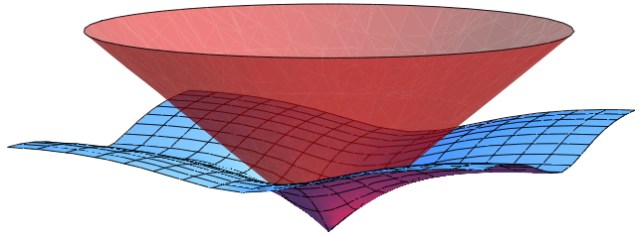
The conical (red) surface shows the relationship between energy and momentum in special relativity, a fundamental theory concerning space and time developed by Albert Einstein, and is the expected result if our universe is not a simulation. The flat (blue) surface illustrates the relationship between energy and momentum that would be expected if the universe is a simulation with an underlying cubic lattice.

A decade ago, a British philosopher put forth the notion that the universe we live in might in fact be a computer simulation run by our descendants. While that seems far-fetched, perhaps even incomprehensible, a team of physicists at the University of Washington has come up with a potential test to see if the idea holds water.

The concept that current humanity could possibly be living in a computer simulation comes from a 2003 paper published in Philosophical Quarterly by Nick Bostrom, a philosophy professor at the University of Oxford. In the paper, he argued that at least one of three possibilities is true:

  • The human species is likely to go extinct before reaching a “posthuman” stage.
  • Any posthuman civilization is very unlikely to run a significant number of simulations of its evolutionary history.
  • We are almost certainly living in a computer simulation.

He also held that “the belief that there is a significant chance that we will one day become posthumans who run ancestor simulations is false, unless we are currently living in a simulation.”

With current limitations and trends in computing, it will be decades before researchers will be able to run even primitive simulations of the universe. But the UW team has suggested tests that can be performed now, or in the near future, that are sensitive to constraints imposed on future simulations by limited resources.

Currently, supercomputers using a technique called lattice quantum chromodynamics and starting from the fundamental physical laws that govern the universe can simulate only a very small portion of the universe, on the scale of one 100-trillionth of a meter, a little larger than the nucleus of an atom, said Martin Savage, a UW physics professor.

Eventually, more powerful simulations will be able to model on the scale of a molecule, then a cell and even a human being. But it will take many generations of growth in computing power to be able to simulate a large enough chunk of the universe to understand the constraints on physical processes that would indicate we are living in a computer model.

However, Savage said, there are signatures of resource constraints in present-day simulations that are likely to exist as well in simulations in the distant future, including the imprint of an underlying lattice if one is used to model the space-time continuum.

The supercomputers performing lattice quantum chromodynamics calculations essentially divide space-time into a four-dimensional grid. That allows researchers to examine what is called the strong force, one of the four fundamental forces of nature and the one that binds subatomic particles called quarks and gluons together into neutrons and protons at the core of atoms.

“If you make the simulations big enough, something like our universe should emerge,” Savage said. Then it would be a matter of looking for a “signature” in our universe that has an analog in the current small-scale simulations.

Savage and colleagues Silas Beane of the University of New Hampshire, who collaborated while at the UW’s Institute for Nuclear Theory, and Zohreh Davoudi, a UW physics graduate student, suggest that the signature could show up as a limitation in the energy of cosmic rays.

In a paper they have posted on arXiv, an online archive for preprints of scientific papers in a number of fields, including physics, they say that the highest-energy cosmic rays would not travel along the edges of the lattice in the model but would travel diagonally, and they would not interact equally in all directions as they otherwise would be expected to do.

“This is the first testable signature of such an idea,” Savage said.

If such a concept turned out to be reality, it would raise other possibilities as well. For example, Davoudi suggests that if our universe is a simulation, then those running it could be running other simulations as well, essentially creating other universes parallel to our own.

“Then the question is, ‘Can you communicate with those other universes if they are running on the same platform?’” she said.

http://www.washington.edu/news/2012/12/10/do-we-live-in-a-computer-simulation-uw-researchers-say-idea-can-be-tested/


Stranded humpback whale on Dutch coast currently struggling to free itself

humpback


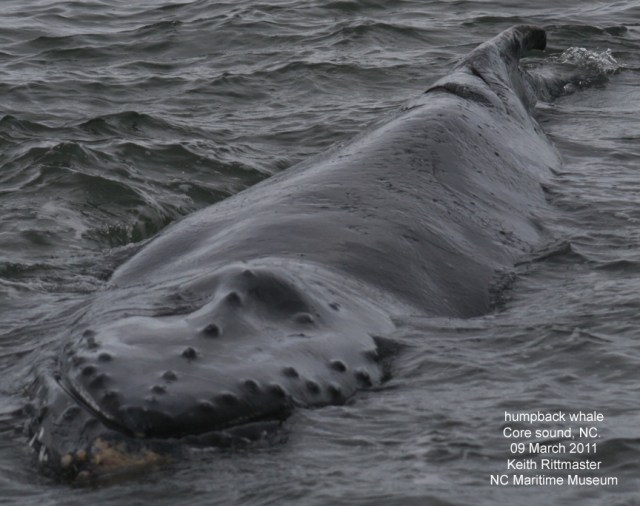
Rescuers say a humpback whale has stranded on a sandbank near the northern Dutch coast and is trying to free itself as the tide rises.

Henriette de Waal, a spokeswoman for the Ecomare wildlife and nature center, says the whale was spotted early Wednesday stuck in a gully on a sandbank off the coast of Den Helder, 90 kilometers (55 miles) north of Amsterdam.

She says boats from the Dutch coast guard and navy are at the scene but keeping their distance as the 12-meter (40-foot) animal, which is partially submerged, struggles to get into deeper water.

It is unusual for humpback whales to strand off the Dutch coast, though De Waal says an increasing number of the marine mammals have been spotted in the North Sea in recent years.

http://www.nbc12.com/story/20324655/stranded-humpback-whale-struggles-to-free-itself

Chinese scientists turn human urine into brain cells

NPGs_from_urine


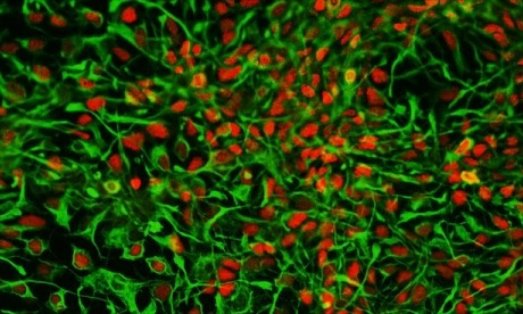
Chinese researchers have developed a new technique for isolating kidney cells from urine and turning them into neural progenitors — –immature brain cells that can develop into various types of glial cells and neurons. Reprogramming cells has been done before, of course, but not with cells gleaned from urine and not via a method this direct. The technique could prove extremely helpful to those pursuing treatments for neurodegenerative disorders like Parkinson’s and Alzheimer’s.

The innovation here is in the source and the method. We know that embryonic stem cells offer potential treatments for neurodegenerative disorders. And we know that we can turn adult human cells–that is, non-embryonic cells gathered from adult humans–into pluripotent cells (those that can become a different type of cell) by reprogramming them, usually with genetically engineered viruses that tamper with the cells’ genetic codes.

But embryonic stem cell treatments are fraught with ethical issues and non-embryonic methods are complicated–and complexity introduces a greater chance of something going wrong (in this case that means mutations and genetic defects). The new method, which taps skin-like cells from the linings of the kidney tubes that are present in urine, converts its source cells into neurons and glia cells via a more direct route, making the process more efficient while narrowing the margin of error.

In their study, the researchers harvested kidney cells from the urine samples of three human donors and converted the cells directly to neural progenitors. Rather than using a genetically engineered virus to reprogram the cells, they used a small piece of bacterial DNA that can replicate in the cellular cytoplasm, a technique that eliminates the need to tamper directly with the chromosome (in theory, at least, this should reduce mutations) while also speeding up the entire process. After growing their progenitors into mature neurons and glial cells, the researchers transplanted the progenitors into the brains of newborn rats. A month later, the cells were still alive in the rats’ brains, though it is not yet clear that they can survive for extended periods or mesh with the brain’s wiring to become functioning parts of the neural machine.

There’s still a lot of research to be done on this method of course, but the researchers think it may provide a way to take cells gathered non-invasively and quickly and efficiently convert them into neural cells while reducing the likelihood of genetic mutations.

http://www.guardian.co.uk/science/neurophilosophy/2012/dec/09/turning-urine-into-brain-cells


Maori stones hold magnetic clues

_64421877_64421876

Scientists are studying the Earth’s magnetic field using the stones that line Maori steam ovens.

The cooking process generates so much heat that the magnetic minerals in these stones will realign themselves with the current field direction.

An archaeological search is under way in New Zealand to find sites containing old ovens, or hangi as they are known.

Abandoned stones at these locations could shed light on Earth’s magnetic behaviour going back hundreds of years.

“We have very good palaeomagnetic data from across the world recording field strength and direction – especially in the Northern Hemisphere,” said Gillian Turner from Victoria University, Wellington, New Zealand.

“The southwest Pacific is the gap, and in order to complete global models, we’re rather desperate for good, high-resolved data from our part of the world,” she told BBC News.

Dr Turner was speaking here at the American Geophysical Union (AGU) Fall meeting, the world’s largest annual gathering of Earth scientists.

The NZ researcher is working on a project to retrieve information about changes in the Earth’s magnetic field stretching back over the past 10,000 years.

For data on the last few centuries, she would ordinarily have turned to pottery.

When these objects are fired, the minerals in their clay are heated above the Curie temperature and are demagnetised.

Then, as the pots cool down, those minerals become magnetised again in the direction of the prevalent field. And the strength of the magnetisation is directly related to the strength of that field.

Unfortunately for Dr Turner, the first settlers on New Zealand 700-800 years ago – the Maori – did not use pottery. However, the researcher has hit upon a fascinating alternative.

She is now exploiting the Maori cooking tradition of the steam oven.

These were pits in the ground into which were placed very hot stones, covered with baskets of food and layers of fern fronds soaked in water.

The whole construction was then topped with soil and left to cook for several hours.

Dr Turner and colleagues experimented with a modern-day hangi to see if the stones at the base of the pit could achieve the necessary Curie temperatures to reset their magnetisation – to prove they could be used as an alternative data source for their study.

“The Maori legend is that the stones achieve white hot heat,” she explained.

“Well, red hot is about 700 degrees and so white hot would be a good deal more than that. But by putting some thermocouples in the stones we were able to show they got as high as 1,100C, which of itself is quite surprising. At that temperature, rock-forming minerals start to become plastic if not melt.”

By placing a compass on top of the cooled hangi stones Dr Turner’s team was able to establish that a re-magnetisation had indeed taken place.

It turns out that hangi stones were carefully chosen, and one of the most popular types was an andesite boulder found in Central North Island.

“The Maori prefer these volcanic boulders because they don’t crack and shatter in the fire, and from our point of view they’re the best because magnetically they behave better – they’re formed with a high concentration of magnetite,” the Wellington scientist said. “But there are some sedimentary rocks which we can use also.”

Dr Turner’s team is now scouring New Zealand for archaeological digs that have uncovered hangi ovens. It is crucial that a date is recovered with the stones. This can be provided by a radiocarbon analysis of the charcoal left from the firewood used to light the oven.

Hangi stones are only likely to take Dr Turner back to the 1200s. For magnetic data deeper in time, she needs to go to other sources.

“We’re also studying volcanic rocks because they’re erupted above the Curie temperature. And the other source of information is lake sediments. Long-core sediments can give us a continuous record at specific places.”

http://www.bbc.co.uk/news/science-environment-20520454

Thanks to Kebmodee for bringing this to the attention of the It’s Interesting community.

Is there a squadron of Spitfires buried in Birmingham?

spitfire-3_2412152b

Matt Queenan, 83, believes there could be well-preserved Spitfires lying in crates dug deep into the ground, potentially underneath houses.

He claims he is one of a team of workmen who buried them in 1950, greasing them up and encasing them in boxes under instructions from the War Office.

He has now spoken of the secret mission for the first time in public, after 36 of the iconic planes were found in Burma. The aircraft, discovered by aviation enthusiast David Cundall, are expected to soon be repatriated 67 years after being “lost”.

One of the Spitfires is due to go on display in Birmingham shortly.

Mr Queenan, a former bareknuckle boxer, said: “You don’t need to go all the way to Burma to find Spitfires. There are plenty buried here in Birmingham.”

He claims the operation was carried out in a hangar in Castle Bromwich, near to where the aircraft were built during the Second World War.

After being told to bury them by War Office official Harry Bramwell, the labourers “covered them in greased” before they were “boxed up”, he alleges.

A spokesman for the RAF museum conceded the claims could not be ruled out, while the Ministry of Defence said it was “highly improbable”.

Mr Queenan said: “It was December. We got picked up by Harry Bramwell from outside the Labour Exchange in the city centre.

“We covered the planes in grease and they were boxed up. We were told they were going to be buried.

“I think they were buried nearby, close to the Chester Road, but I don’t know where.

“There could be houses over them or anything now because it was all fields in them days.”

A spokeswoman for the RAF Museum, in London, said Mr Queenan’s claims could not be ruled out.

“It is possible, but we just do not know,” she said. “Many of them would have been disposed of in the local area through scrapyards. The RAF didn’t keep records once they had been handed over to someone else to take care of.

“It’s unlikely, but it could have happened.”

A spokesman for the Ministry of Defence said: “It is highly improbable Spitfires were buried in Birmingham in the 1950s. We have no evidence of it.”

Earlier this year, 62-year-old David Cundall found 36 Spitfires in Burma, after spending 15 years and more than £10,000 searching.

“They were just buried there in transport crates,” Mr Cundall said. “They were waxed, wrapped in greased paper and their joints tarred. They will be in near perfect condition.”

The aircraft will be returned to Britain after Prime Minister David Cameron intervened in favour of their repatriation.

http://www.telegraph.co.uk/history/world-war-two/9732585/Is-there-a-squadron-of-Spitfires-buried-in-Birmingham.html

Diuretic Drug Offers Latest Hope for Autism Treatment

sn-autism


A drug used for decades to treat high blood pressure and other conditions has shown promise in a small clinical trial for autism. The drug, bumetanide, reduced the overall severity of behavioral symptoms after 3 months of daily treatment. The researchers say that many parents of children who received the drug reported that their children were more “present” and engaged in social interactions after taking it. The new findings are among several recent signs that treatments to address the social deficits at the core of autism may be on the horizon.

Several lines of evidence suggest that autism interferes with the neurotransmitter GABA, which typically puts a damper on neural activity. Bumetanide may enhance the inhibitory effects of GABA, and the drug has been used safely as a diuretic to treat a wide range of heart, lung, and kidney conditions. In the new study, researchers led by Yehezkel Ben-Ari at the Mediterranean Institute of Neurobiology in Marseille, France, recruited 60 autistic children between the ages of 3 and 11 and randomly assigned them to receive either a daily pill of bumetanide or a placebo. (Neither the children’s parents nor the researchers who assessed the children knew who received the actual drug.)

As a group, those who got bumetanide improved by 5.6 points on a 60-point scale that’s often used to assess behaviors related to autism, the researchers report today in Translational Psychiatry. That was enough to nudge the group average just under the cutoff for severe autism and into the mild to medium category. The study did not look directly at whether the drug improved all symptoms equally or some more than others. “We have some indications that the symptoms particularly ameliorated with bumetanide are the genuine core symptoms of autism, namely communication and social interactions,” Ben-Ari says. More work will be needed to verify that impression. Ben-Ari says his team is now preparing for a larger, multicenter trial in Europe.

The current study already looks interesting to some. “It’s enough to make me think about trying it in a few of my autism patients who haven’t responded to other interventions,” says Randi Hagerman, a pediatrician who studies neurodevelopmental disorders at the University of California, Davis. Social interactions tend to be reinforcing, Hagerman adds, so getting an autistic child to start interacting more can have a positive effect on subsequent brain development.

Other drugs have recently shown promise for autism. In September, Hagerman and colleagues reported that arbaclofen, a drug that stimulates a type of GABA receptor, reduced social avoidance in people with fragile X syndrome, a genetic disorder that shares many features with autism. Many researchers are also hopeful about clinical trials under way with drugs that block certain receptors for glutamate, the main neurotransmitter in the brain that excites neural activity. Results from those trials should come out next year.

All of this work, including the new study, suggests that drugs that reduce neural excitation by blocking glutamate or enhance inhibition by boosting GABA may be helpful for treating autism, says Elizabeth Berry-Kravis, a pediatric neurologist at Rush University in Chicago, Illinois, and a collaborator on the recent arbaclofen study. “There seems to be this imbalance between excitation and inhibition in people with autism.”

That’s a potentially game-changing insight. Now doctors can only prescribe drugs that treat individual symptoms of autism rather than the underlying cause of the disorder, Berry-Kravis says. Doctors often prescribe antipsychotic drugs to reduce irritability, for example, but those drugs don’t address the social and communication problems at the heart of the disorder. “It’s exciting that now we’re thinking about the underlying mechanisms and treating those.”

http://news.sciencemag.org/sciencenow/2012/12/diuretic-drug-offers-latest-hope.html

Researchers claim NIH grant process is ‘totally broken’

conform and be funded


John Ioannidis, a researcher at Stanford University has, along with graduate student Joshua Nicholson, published a commentary piece in the journal Nature, taking the National Institutes of Health (NIH) to task for maintaining a system that they say rewards conformity while ignoring innovation.

NIH is an agency within the US Department of Health and Human Services, and is the primary federal vehicle involved in offering money in the form of grants to researchers working to make in the biosciences. The agency reportedly has a budget of approximately $30 billion a year.

In their commentary piece, Ioannidis and Nicholson suggest that the process used by those in charge at NIH favors those who wish to work on incremental increases in current fields rather than rewarding those seeking funds for innovative, but more risky ventures. To back up their claims, they ran a search on research papers published in major journals over the past decade and found 700 papers that had been cited by authors in other papers at least 1,000 times. Of those papers, they say, just 40 percent of those listed as primary authors were working under an NIH grant.

To determine who to give grants to, NIH uses what are known as Study Sections. Their job is to read proposals sent to them by prospective researchers and then to decide whether to offer a grant to carry out the things discussed in the proposal. The Study Sections are in reality a group of people – a panel made up of scientists in the . And that’s part of a big problem at NIH, Ioannidis and Nicholson write, because people that serve on the panels tend to get more of the grant money. They note that just 0.8 percent of the 700 oft cited papers listed NIH panel members as a primary author. They contend that being highly cited is a credible measure of the degree of innovation of work.

The result the two say, is a system that systemically encourages incremental studies while discouraging those that are looking for big breakthroughs. And that they say, has led to both conformity and mediocrity. This they add goes against NIH’s mandate, which is to “fund the best science.” They recommend that NIH change its grant review process to encourage more innovation even if it means taking more risks.

More information: Research grants: Conform and be funded, Nature, 492, 34–36 (06 December 2012) doi:10.1038/492034a