Facial morphology associated with brown eyes make people be perceived as more trustworthy

IMG_0240-Version-2

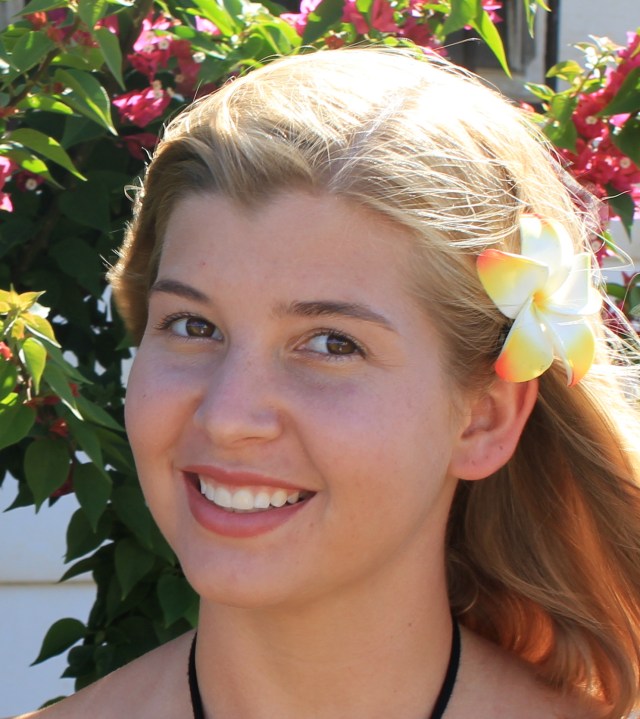
In a study recently published in PLoS ONE, researchers from from Charles University in the Czech Republic had 238 participants rate the faces of 80 students for trustworthiness, attractiveness, and dominance. Not surprisingly, they found that the three measures correlated well with each other, with faces rating high on one scale rating high on the other two. Female faces were generally more trustworthy than male ones. But that’s wasn’t all. A much more peculiar correlation was discovered as they looked at the data: brown-eyed faces were deemed more trustworthy than blue-eyed ones.

It didn’t matter if the judge was male or female, blue-eyed or brown-eyed. Even accounting for attractiveness and dominance, the result was the same: brown-eyed people’s faces were rated more trustworthy. There was some evidence of in-group bias, with blue-eyed female faces receiving lower ratings from brown-eyed women than from blue or green-eyed ones, but this difference didn’t drive the phenomenon. All the participants, no matter what eye color they had or how good-looking they thought the face was agreed that brown-eyed people just appear to look more reliable.

The real question is why? Is there a cultural bias towards brown eyes? Or does eye color really correlate somehow with personality traits like accountability and honesty? Does eye color really matter that much?

To find out, the scientists used computer manipulation to take the same faces but change their eye colors. Without changing traits other than hue of the iris, the researchers swapped the eye colors of the test faces from blue to brown and vice versa. This time, the opposite effect was found. Despite the strange correlation to eye color, the team found that eye color didn’t affect a photo’s trustworthiness rating. So it isn’t the eye color itself that really matters—something else about brown-eyed faces makes them seem more dependable.

To get at what’s really going on, the researchers took the faces and analyzed their shape. They looked at the distances between 72 facial landmarks, creating a grid-like representation of each face. For men, the answer was clear: differences in face shape explained the appeal of brown eyes.

Shape changes associated with eye color and perceived trustworthiness, from the grid-based facial shape analysis done by the researchers. Note the similarities between the shapes of brown-eyed faces and trustworthy ones.

“Brown-eyed individuals tend to be perceived as more trustworthy than blue-eyed ones,” explain the authors. “But it is not brown eyes that cause this perception. It is the facial morphology linked to brown eyes.”

Brown-eyed men, on average, have bigger mouths, broader chins, bigger noses, and more prominent eyebrows positioned closer to each other, while their blue-eyed brethren are characterized by more angular and prominent lower faces, longer chins, narrower mouths with downward pointing corners, smaller eyes, and more distant eyebrows. The differences associated with trustworthiness are also how our faces naturally express happiness—an upturned mouth, for example—which may explain why we trust people who innately have these traits.

Although the trend was the same for female faces, researchers didn’t find the same correlation between trustworthiness and face shape in women. This result is puzzling, but female faces were overall much less variable than male faces, so it’s possible the statistical analyses used to test for correlation were hampered by this. Or, it’s possible that something else is in play when it comes to the trustworthiness of female faces. The researchers hope that further research can shed light on this conundrum.

Given the importance of trust in human interactions, from friendships to business partnerships or even romance, these findings pose some interesting evolutionary questions. Why would certain face shapes seem more dangerous? Why would blue-eyed face shapes persist, even when they are not deemed as trustworthy? Are our behaviors linked to our bodies in ways we have yet to understand? There are no easy answers. Face shape and other morphological traits are partially based in genetics, but also partially to environmental factors like hormone levels in the womb during development. In seeking to understand how we perceive trust, we can learn more about the interplay between physiology and behavior as well as our own evolutionary history.

http://blogs.scientificamerican.com/science-sushi/2013/01/09/brown-eyes-deemed-more-trustworthy-but-thats-not-the-whole-story/

Cat outperforms professionals and students in stock picking

Orlando the ginger cat

The Observer’s panel of stock-picking professionals has been undone in our 2012 investment challenge by a ginger feline called Orlando who spent time paw-ing over the FT.

The Observer portfolio challenge pitted professionals Justin Urquhart Stewart of wealth managers Seven Investment Management, Paul Kavanagh of stockbrokers Killick & Co, and Schroders fund manager Andy Brough against students from John Warner School in Hoddesdon, Hertfordshire – and Orlando.

Each team invested a notional £5,000 in five companies from the FTSE All-Share index at the start of the year. After every three months, they could exchange any stocks, replacing them with others from the index.

By the end of September the professionals had generated £497 of profit compared with £292 managed by Orlando. But an unexpected turnaround in the final quarter has resulted in the cat’s portfolio increasing by an average of 4.2% to end the year at £5,542.60, compared with the professionals’ £5,176.60.

While the professionals used their decades of investment knowledge and traditional stock-picking methods, the cat selected stocks by throwing his favourite toy mouse on a grid of numbers allocated to different companies.

The challenge raised the question of whether the professionals, with their decades of knowledge, could outperform novice students of finance – or whether a random selection of stocks chosen by Orlando could perform just as well as experienced investors.

The result indicates that the “random walk hypothesis”, popularised in economist Burton Malkiel’s book A Random Walk Down Wall Street, is perhaps truer than we thought. Burkiel’s book explores the idea that share prices move completely at random, making stock markets entirely unpredictable.

“It’s time to crack open the Whiskas,” said a good-humoured Justin Urquhart-Stewart. “The cat’s got talent.” To celebrate his success, Orlando’s owner, former Cash editor Jill Insley, has bought him a red collar in the style of Urquhart-Stewart’s omnipresent red braces.

All but one of Orlando’s stocks (Morrisons) rose during the last three months of the year, including specialist plastics and foam company Filtrona, which Orlando had hastily swapped for under-performing Scottish American Investment Trust in September.

By contrast, the professionals refused to swap any stocks at the end of the third quarter and paid the price. British Gas fell by 19% and Imagination Technologies dropped by 16.8%, dragging their portfolio down by an average 7.1%.

The students may have finished last, but displayed the best performance of all the teams in the final quarter, their portfolio increasing by an average 5.4%, including a fantastic performance of 17.4% for property company Savills.

Their trading decisions were key: at the end of the final quarter they swapped Mulberry for Aviva and Betfair for Tesco. In the final quarter, Aviva’s share price increased by 17% (compared with a rise of only 6.6% for Mulberry during that time) and Tesco rose by 1.2% (far superior to a fall in the Betfair share price of 5.4%).

Nigel Cook, deputy headteacher at John Hoddesdon School, said: “The mistakes we made earlier in the year were based on selecting companies in risky areas. But while our final position was disappointing, we are happy with our progress in terms of the ground we gained at the end and how our stock-picking skills have improved.”

A spokeswoman for Orlando said he was not available to give an interview because of a claws in his contract.

http://www.guardian.co.uk/money/2013/jan/13/investments-stock-picking

Daily aspirin may increase risk for age-related blindness

ctm_0321_ASPIRIN_620x350

Many people take aspirin to prevent heart attacks, but new research suggests the added benefits may be coming at the expense of pill-takers’ eyesight.

A 15-year-study published Jan. 22 in JAMA Internal Medicine showed that people taking regular aspirin faced a higher risk for age-related macular degeneration (AMD), one of the leading causes of blindness in older adults. The research also suggests the risk may worsen over time.

AMD commonly affects adults 50 and older, gradually destroying their “macula,” which is a part of the eye that provides sharp, central vision that’s required to see objects clearly. There are two types of the disease: “Dry” AMD is most common and occurs when the light-sensitive cells in the macula slowly break down, gradually blurring central vision while “wet” or neovascular AMD occurs when blood vessels under the macula leak blood and fluid, causing damage. Wet AMD is often more severe but also more rare, affecting about 10 percent of patients with AMD.

People at a high risk for having a heart attack — such as those who have heart disease — are encouraged by the American Heart Association and other medical groups to take a daily low-dose of aspirin.

For the study, Australian researchers tracked nearly 2,400 adults who were given four exams during the 15 year study. More than 250 of these individuals took aspirin regularly because aspirin is thought to prevent clots from forming by “thinning” the blood.

The researchers found an increased risk for wet AMD among aspirin takers, with 1.9 percent of patients having the condition at five years, 7 percent at 10 years and 9.3 percent at 15 years. That compares with 0.8 percent of non-aspirin takers at five years, 1.6 percent at 10 years and 3.7 percent at 15 years.

“Regular aspirin use was significantly associated with an increased incidence of neovascular AMD,” concluded the authors, led by Dr. Gerald Liew of the University of Sydney in Australia.

In December, a study published in JAMA also found that people who used aspirin regularly for 10 years were more likely to have wet AMD, but the overall reported risk was still low.

Liew wrote that the decision to stop taking aspirin is a “complex” one and should be decided on an individual basis. For example, those at a higher risk for AMD such as people with a family history or smokers — who are two times more likely to develop AMD than non-smokers — may want to consider changing their aspirin regimen.

In an accompanying editorial published in the same issue, Dr. Sanjay Kaul and Dr. George A. Diamond, cardiologists at Cedars-Sinai Medical Center, Los Angeles, wrote that the study was observational, and could not prove cause and effect. Therefore, it may be too soon to recommend people curb their aspirin intake.

“In the absence of definitive evidence regarding whether limiting aspirin exposure mitigates AMD risk, one obvious course of action is to maintain the status quo,” they wrote.

Dr. Gregg Fonarow, a spokesman for the American Heart Association and professor of cardiology at the University of California, Los Angeles, added to HealthDay that more rigorous randomized controlled trials have yet to demonstrate any increased risk of blindness from people taking aspirin.

“Individuals prescribed aspirin for high-risk primary prevention or secondary cardiovascular prevention should not be concerned or discontinue this beneficial therapy,” he said.

To reduce your risk for AMD, the National Eye Institute recommends exercising, eating a healthy diet rich in leafy greens and fish, maintaining normal blood pressure and cholesterol, and avoiding smoking.

http://www.cbsnews.com/8301-204_162-57565181/daily-aspirin-may-increase-risk-for-age-related-blindness/

Donald Trump demands $5 million from Bill Maher following Maher’s ‘sex with orangutan’ challenge

trump

Donald Trump sent a letter to Bill Maher Tuesday demanding $5 million in regards to a request Maher made recently on air that Trump complied with.

On Monday’s “Tonight Show with Jay Leno,” Maher said he would donate $5 million to the charity of Trump’s choice (Maher suggested Hair Club for Men) if the “Celebrity Apprentice” host and real estate mogul could prove he is not the “spawn of his mother having sex with an orangutan.” The comment, which Maher said jokingly, was a nod to Trump’s publicized announcement in October that he would donate $5 million to charity if President Barack Obama would release his college records.

On Tuesday, Trump’s lawyer sent the letter to Maher at CBS studios with the birth certificate attached, asking the “Real Time” host keep his word. Yahoo! News obtained the letter and accompanied birth certificate:

“I write on his behalf to accept your offer (made during the Jay Leno Show on January 7, 2013) that Mr. Trump prove he is not the ‘spawn of his mother having sex with an orangutan.’ ”

Attached hereto is a copy of Mr. Trump’s birth certificate, demonstrating that he is the son of Fred Trump, not an orangutan. Please remit the $5 million to Mr. Trump immediately and he will ensure that the money be donated to the following five charities in equal amounts: Hurricane Sandy Victims, The Police Athletic League, The American Cancer Society, The March of Dimes, and The Dana-Farber Cancer Institute.”

In October 2012, Trump announced he had “something very,very big concerning the president of the United States” to announce, something that could “possibly” change the election. In a YouTube video, Trump offered a check of $5 million to a charity of Obama’s choice if he would only give up his college records and applications, and his passport applications and records. Obama did not turn over the asked papers.

Read more at http://www.enstarz.com/articles/11468/20130110/trump-demands-5-million-bill-maher-following-sex-orangutan-comment.htm#Th0KLWM8fTsuWQAW.99

Baby Wasps Disinfect Cockroaches Before Eating Them

wasp-and-roach

If cockroaches had nightmares, the emerald cockroach wasp surely would deserve a prominent place therein.

These colorful, tiny parasitic wasps sting American cockroaches twice, once in the midsection to prevent them from running away, and a second time directly in the brain, to make the insects sluggish and zombielike. The wasps then drag the roaches by their antenna, akin to a human pulling a dog on a leash, into a protected nook and lay an egg on the roach. The egg ultimately hatches into larvae that devour the roach from the inside out.

About six weeks later, a young adult wasp emerges after spinning a cocoon inside the shell of the roach. But there’s a catch: What’s to prevent the cockroach “meat” from spoiling? Cockroaches are notoriously dirty animals, covered in bacteria that begin to spoil their flesh — and threaten to harm larval wasps — during this long incubation period.

A study published January 7 in the journal the Proceedings of the National Academy of Sciences found that these larval wasps secrete a surprising amount of potent antimicrobial compounds to prevent their cockroach bounty from spoiling.

“They virtually soak their cockroach host with the secretion to inhibit the growth of competitive microbes that would degrade their food and of pathogenic microbes that threaten their lives,” said study co-author Gudrun Herzner, a researcher at Germany’s University of Regensburg.

The study found that Ampulex compressa larvae secrete several types of antibiotics, specifically the chemicals mellein and micromolide, which inhibit the growth of bacteria, fungi and viruses, Herzner told LiveScience.

“On the one hand, the finding is surprising, because such a simple, little insect larva uses such a sophisticated strategy to ward off detrimental bacteria,” Herzner said. “The larvae are like little chemical plants that produce large amounts of different antimicrobial substances.”

However, she continued, it was not really a surprise to find that these parasitic wasps would have evolved to secrete some antimicrobial substances, given that the cockroach is the young wasp’s only food source, which would by itself spoil if not somehow preserved. The wasps live throughout the tropical regions of Africa, Asia and the Pacific.

Micromolide is considered a promising compound to treat Mycobacterium tuberculosis, the microbe that causes tuberculosis, Herzner said.

This is not the only example of insects producing antimicrobial compounds. The European beewolf wasp hunts honeybees, and coats their bodies in an oily substance that inhibits microbes from growing. Certain types of burying beetles also disinfect the carrion they use as larval food. But in both of these cases, the adult animal secretes the antimicrobial chemicals; the emerald cockroach wasp is a rare example of a larval insect making antibiotics, Herzner said.

http://www.livescience.com/26035-wasps-disinfect-cockroaches.html

Dutch council executive recommends urinating in shower to save water

pee-in-shower

A council official in the Drenthe municipality of Aa en Hunze is recommending people pee while having a shower in order to save water and cash.

The council has launched a project in 2013 to increase sustainability and saving water is an integral part of the mission, the AD reports on Wednesday.

Urinating while under the show ‘saves lots of clean water and is good for the environment,’ Bert Wassink is quoted as saying. ‘If you combine showers and peeing, you save a lot of water and money, so why not?’

According to the AD, the average Dutch person uses 39 litres a day on showers and 36 litres flushing the toilet.

Wassink, who represents the left-wing green party GroenLinks, told the paper he already practises what he preaches.

http://www.dutchnews.nl/news/archives/2013/01/pee_under_the_shower_to_save_w.php

A Cat’s 200-Mile Trek Home Leaves Scientists Guessing

20well-cat-tmagArticle

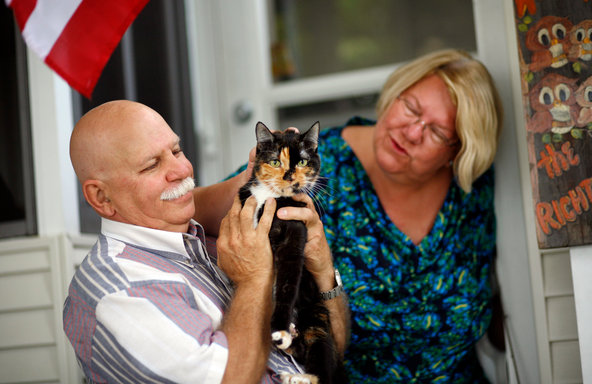
Nobody knows how it happened: an indoor housecat who got lost on a family excursion managing, after two months and about 200 miles, to return to her hometown.

Even scientists are baffled by how Holly, a 4-year-old tortoiseshell who in early November became separated from Jacob and Bonnie Richter at an R.V. rally in Daytona Beach, Fla., appeared on New Year’s Eve — staggering, weak and emaciated — in a backyard about a mile from the Richters’ house in West Palm Beach.

“Are you sure it’s the same cat?” wondered John Bradshaw, director of the University of Bristol’s Anthrozoology Institute. In other cases, he has suspected, “the cats are just strays, and the people have got kind of a mental justification for expecting it to be the same cat.”

But Holly not only had distinctive black-and-brown harlequin patterns on her fur, but also an implanted microchip to identify her.

“I really believe these stories, but they’re just hard to explain,” said Marc Bekoff, a behavioral ecologist at the University of Colorado. “Maybe being street-smart, maybe reading animal cues, maybe being able to read cars, maybe being a good hunter. I have no data for this.”

There is, in fact, little scientific dogma on cat navigation. Migratory animals like birds, turtles and insects have been studied more closely, and use magnetic fields, olfactory cues, or orientation by the sun.

Scientists say it is more common, although still rare, to hear of dogs returning home, perhaps suggesting, Dr. Bradshaw said, that they have inherited wolves’ ability to navigate using magnetic clues. But it’s also possible that dogs get taken on more family trips, and that lost dogs are more easily noticed or helped by people along the way.

Cats navigate well around familiar landscapes, memorizing locations by sight and smell, and easily figuring out shortcuts, Dr. Bradshaw said.

Strange, faraway locations would seem problematic, although he and Patrick Bateson, a behavioral biologist at Cambridge University, say that cats can sense smells across long distances. “Let’s say they associate the smell of pine with wind coming from the north, so they move in a southerly direction,” Dr. Bateson said.

Peter Borchelt, a New York animal behaviorist, wondered if Holly followed the Florida coast by sight or sound, tracking Interstate 95 and deciding to “keep that to the right and keep the ocean to the left.”

But, he said, “nobody’s going to do an experiment and take a bunch of cats in different directions and see which ones get home.”

The closest, said Roger Tabor, a British cat biologist, may have been a 1954 study in Germany which cats placed in a covered circular maze with exits every 15 degrees most often exited in the direction of their homes, but more reliably if their homes were less than five kilometers away.

New research by the National Geographic and University of Georgia’s Kitty Cams Project, using video footage from 55 pet cats wearing video cameras on their collars, suggests cat behavior is exceedingly complex.

For example, the Kitty Cams study found that four of the cats were two-timing their owners, visiting other homes for food and affection. Not every cat, it seems, shares Holly’s loyalty.

KittyCams also showed most of the cats engaging in risky behavior, including crossing roads and “eating and drinking substances away from home,” risks Holly undoubtedly experienced and seems lucky to have survived.

But there have been other cats who made unexpected comebacks.

“It’s actually happened to me,” said Jackson Galaxy, a cat behaviorist who hosts “My Cat From Hell” on Animal Planet. While living in Boulder, Colo., he moved across town, whereupon his indoor cat, Rabbi, fled and appeared 10 days later at the previous house, “walking five miles through an area he had never been before,” Mr. Galaxy said.

Professor Tabor cited longer-distance reports he considered credible: Murka, a tortoiseshell in Russia, traveling about 325 miles home to Moscow from her owner’s mother’s house in Voronezh in 1989; Ninja, who returned to Farmington, Utah, in 1997, a year after her family moved from there to Mill Creek, Wash.; and Howie, an indoor Persian cat in Australia who in 1978 ran away from relatives his vacationing family left him with and eventually traveled 1,000 miles to his family’s home.

Professor Tabor also said a Siamese in the English village of Black Notley repeatedly hopped a train, disembarked at White Notley, and walked several miles back to Black Notley.

Still, explaining such journeys is not black and white.

In the Florida case, one glimpse through the factual fog comes on the little cat’s feet. While Dr. Bradshaw speculated Holly might have gotten a lift, perhaps sneaking under the hood of a truck heading down I-95, her paws suggest she was not driven all the way, nor did Holly go lightly.

“Her pads on her feet were bleeding,” Ms. Richter said. “Her claws are worn weird. The front ones are really sharp, the back ones worn down to nothing.”

Scientists say that is consistent with a long walk, since back feet provide propulsion, while front claws engage in activities like tearing. The Richters also said Holly had gone from 13.5 to 7 pounds.

Holly hardly seemed an adventurous wanderer, though her background might have given her a genetic advantage. Her mother was a feral cat roaming the Richters’ mobile home park, and Holly was born inside somebody’s air-conditioner, Ms. Richter said. When, at about six weeks old, Holly padded into their carport and jumped into the lap of Mr. Richter’s mother, there were “scars on her belly from when the air conditioner was turned on,” Ms. Richter said.

Scientists say that such early experience was too brief to explain how Holly might have been comfortable in the wild — after all, she spent most of her life as an indoor cat, except for occasionally running outside to chase lizards. But it might imply innate personality traits like nimbleness or toughness.

“You’ve got these real variations in temperament,” Dr. Bekoff said. “Fish can by shy or bold; there seem to be shy and bold spiders. This cat, it could be she has the personality of a survivor.”

He said being an indoor cat would not extinguish survivalist behaviors, like hunting mice or being aware of the sun’s orientation.

The Richters — Bonnie, 63, a retired nurse, and Jacob, 70, a retired airline mechanics’ supervisor and accomplished bowler — began traveling with Holly only last year, and she easily tolerated a hotel, a cabin or the R.V.

But during the Good Sam R.V. Rally in Daytona, when they were camping near the speedway with 3,000 other motor homes, Holly bolted when Ms. Richter’s mother opened the door one night. Fireworks the next day may have further spooked her, and, after searching for days, alerting animal agencies and posting fliers, the Richters returned home catless.

Two weeks later, an animal rescue worker called the Richters to say a cat resembling Holly had been spotted eating behind the Daytona franchise of Hooters, where employees put out food for feral cats.

Then, on New Year’s Eve, Barb Mazzola, a 52-year-old university executive assistant, noticed a cat “barely standing” in her backyard in West Palm Beach, struggling even to meow. Over six days, Ms. Mazzola and her children cared for the cat, putting out food, including special milk for cats, and eventually the cat came inside.

They named her Cosette after the orphan in Les Misérables, and took her to a veterinarian, Dr. Sara Beg at Paws2Help. Dr. Beg said the cat was underweight and dehydrated, had “back claws and nail beds worn down, probably from all that walking on pavement,” but was “bright and alert” and had no parasites, heartworm or viruses. “She was hesitant and scared around people she didn’t know, so I don’t think she went up to people and got a lift,” Dr. Beg said. “I think she made the journey on her own.”

At Paws2Help, Ms. Mazzola said, “I almost didn’t want to ask, because I wanted to keep her, but I said, ‘Just check and make sure she doesn’t have a microchip.’” When told the cat did, “I just cried.”

The Richters cried, too upon seeing Holly, who instantly relaxed when placed on Mr. Richter’s shoulder. Re-entry is proceeding well, but the mystery persists.

“We haven’t the slightest idea how they do this,” Mr. Galaxy said. “Anybody who says they do is lying, and, if you find it, please God, tell me what it is.”

Coca-Cola Recommended to Treat Stomach Blockages

soda-cans-100928-02

Coca-Cola might rot your teeth and load your body with sugar and calories, but it’s actually an effective and safe first line of treatment for some stomach blockages, researchers say.

Yes, the same corrosive elements in the soft drink that wear down tooth enamel also seem to be quite good at dissolving stubborn, indigestible material that can build up in the stomach, studies show.

Researchers reviewed studies on the unconventional treatment that have been published over the past 10 years. In total, they looked at 24 papers covering 46 cases of patients with gastric phytobezoars, which are hard masses made up of indigestible parts of fruits and vegetables, like cellulose. These build-ups can cause pain and they tend to develop in people who have trouble moving food through their digestive tract, either because of a previous gastric surgery or some other condition.

For exactly half of those patients who tried using Coca-Cola to relieve their stomach woes, the soft drink was all that was needed to break down the blockage. And for 19, the beverage worked in combination with another endoscopic technique (such as mechanical lithotripsy). In just four cases, patients needed surgery to have the obstruction removed. Those numbers mean Coca-Cola has 91.3 percent success rate, the researchers said.

Scientists have not yet thoroughly explained how the soft drink dissolves bezoars, but it likely has something to do with its high acidity. Coca-Cola, due to its carbonic and phosphoric acid, has a pH of 2.6 and resembles the natural gastric acid that’s thought to be important for fiber digestion, the researchers said. In addition, the sodium bicarbonate and carbon dioxide bubbles in the beverage might enhance the dissolving effect.

“Coca-Cola ingestion should be the treatment of choice considering that less endoscopies and accessories are needed and patients stay less at the hospital,” the researchers wrote. “Moreover, availability, low cost, rapid way of action, simplicity in administration and safety renders Coca-Cola a cost-effective therapy for gastric phytobezoars.”

And for diabetics or those worried about their calorie-intake, the researchers noted that diet soda or Coca-Cola Zero could be used to the same effect.

The review of the studies was detailed online last month in the journal Alimentary Pharmacology and Therapeutics.

http://www.livescience.com/26124-coca-cola-stomach-blockages.html

Train enthusiast Jason Shron builds perfect replica of a 1980 Via Rail car in his basement

Jason Shron is The Guy with the Train in his Basement

The train-obsessed fanatic spent four and a half years or 2,500 hours and roughly $10,000 to reconstruct an actual Via Rail passenger coach in the basement of his Vaughan home.

“I love VIA trains so much I built one in my house,” Shron said. “This is where I feel most comfortable, I have been collecting Via stuff for years. The details make it so real to me.”

After learning a former Via coach was going to be scrapped, Shron purchased the mothballed car, gathered a group of railfan friends and tore apart the coach to rebuild in his basement.

“We each have a favorite place. A place where we feel completely at home where the stresses and headaches of daily life seem to melt away and we can just chill and regroup. My favorite place is on board the Via train, especially on board the VIA trains of my youth, riding the Rapido between Toronto and Montreal. Now I have this special place in my house,” said Shron, who doesn’t like to fly.

Shron owns Rapido Trains Inc., a model train company, and works from home using the train car as an office.

One of Rapido’s first ventures into the world of miniature was an incredible replication of the United Aircraft TurboTrain. Shron masterfully crafted an HO-scale version of the iconic speedster, which first hit Canadian rails in 1968.

The Turbo, which still holds the Canadian rail speed record of 140.6 mph, was inexplicably removed from service by Via Rail in October 1982, despite its popularity and reliability. The Turbo was scrapped and, pathetically, none of the Turbo sets were preserved for museums. No VIA train today can match the Turbo for style and speed.

The cover of a Via brochure on the Turbo takes up residence on one wall of the basement railcar.

“My home is my office. My kids play (inside the train car) and I have friends over for drinks,” he said. “My friends know me and know I have been obsessed by trains since I was two-years-old.”

Everything in the train car is authentic.

Shron had Via napkins and stirs sticks made in China, and he has replica train tickets.

The kitchen has actual Via tea cups and plates and the luggage storage area has become a bar.

The washroom has been turned into a music room where Shron also stores his vintage records and stereo, which can also play train sounds on demand.

Because the train car was decommissioned in the 1980s, Shron kept the smoking permitted sign because lighting up was allowed at the time.

The eight-seat cabin chairs are also the real deal and can swivel in their position.

“I love how these seats have been across Canada,” Shron said. “This is a warm comfortable place. To do this you have to be completely insane and have a wonderful wife.”

And Shron and his family have no plans to move.

“I want to live here forever,” he said. “Besides the house is only worth a dollar with a train in the basement.”

Shron has a very large basement and plans to build a model railroad, something he says will take about 30 years.

“It is essentially a massive passenger switching layout. The vast majority of operation will take place between Spadina Yard and Union Station. Union Station and Spadina will be on the lower deck, while the upper two decks will be Guildwood-Oshawa and Kingston-Brockville,” Shron said.

“Have I gone too far? My answer is no,” he said. “We each only get one kick at the can — there are no second chances.”

http://www.torontosun.com/2013/01/12/via-rail-passenger-car-is-home-for-vaughan-man

Christmas tree throwing world championships, ‘Knut-Fest,’ held in Germany

Now that the festive period is over and the decorations have come down, most households have opted to recycle their old Christmas trees.

But people in the town of Weidenthal in southern Germany have come up with a much more imaginative way of getting rid of them – by holding the world Christmas tree throwing championships.

The idea behind “Knut-Fest,'” as it is known to locals, is to dispense with the Christmas festivities whilst welcoming in the New Year.

Competitors are asked to bring along their old trees, stripped of lights and other decorations, and see how far they can throw them.

There are three disciplines in the competition; Weitwurf (javelin-style), Hammerwurf (hammer-style) and Hochwurf (high jump-style) throwing.

The overall winner is decided by the total distance achieved over the course of the day.

Frank Schwender, 48, from the nearby town of Frankeneck won the tournament for an unprecedented third consecutive year.

He retained his title with a total distance of 22.45 metres over the three throwing disciplines.

http://www.telegraph.co.uk/news/newsvideo/weirdnewsvideo/9788401/Christmas-tree-throwing-world-championships-held-in-Germany.html