First Evidence That Magnetism Helps Salmon Find Home

salmon

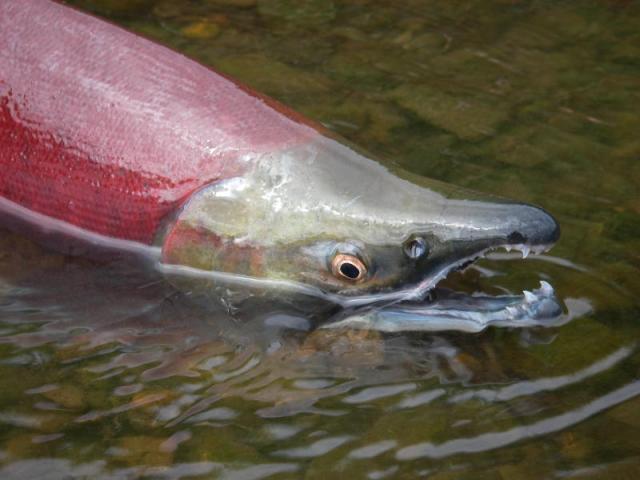
When migrating, sockeye salmon typically swim up to 4,000 miles into the ocean and then, years later, navigate back to the upstream reaches of the rivers in which they were born to spawn their young. Scientists, the fishing community and lay people have long wondered how salmon find their way to their home rivers over such epic distances.

A new study, published in this week’s issue of Current Biology and partly funded by the National Science Foundation, suggests that salmon find their home rivers by sensing the rivers’ unique magnetic signature.

As part of the study, the research team used data from more than 56 years of catches in salmon fisheries to identify the routes that salmon had taken from their most northerly destinations, which were probably near Alaska or the Aleutian Islands in the Pacific Ocean, to the mouth of their home river–the Fraser River in British Columbia, Canada. This data was compared to the intensity of Earth’s magnetic field at pivotal locations in the salmon’s migratory route.

Earth has a magnetic field that weakens with proximity to the equator and distance from the poles and gradually changes on a yearly basis. Therefore, the intensity of the magnetosphere in any particular location is unique and differs slightly from year to year.

Because Vancouver Island is located directly in front of the Fraser River’s mouth, it blocks direct access to the river’s mouth from the Pacific Ocean. However, salmon may slip behind Vancouver Island and reach the river’s mouth from the north via the Queen Charlotte Strait or from the south via the Juan De Fuca Strait.

Results from this study showed that the intensity of the magnetic field largely predicted which route the salmon used to detour around Vancouver Island; in any given year, the salmon were more likely to take whichever route had a magnetic signature that most closely matched that of the Fraser River years before, when the salmon initially swam from the river into the Pacific Ocean.

“These results are consistent with the idea that juvenile salmon imprint on (i.e. learn and remember) the magnetic signature of their home river, and then seek that same magnetic signature during their spawning migration,” said Nathan Putman, a post-doctoral researcher at Oregon State University and the lead author of the study.

It has long been known that some animals use Earth’s magnetic field to generally orient themselves and to follow a straight course. However, scientists have never before documented an animal’s ability to “learn” the magnetic field rather than to simply inherit information about it or to use the magnetic field to find a specific location.

This study provides the first empirical evidence of magnetic imprinting in animals and represents the discovery of a major new phenomenon in behavioral biology.

In addition, this study suggests that it would be possible to forecast salmon movements using geomagnetic models–a development that has important implications for fisheries management.

Putman says scientists don’t know exactly how early and how often salmon check Earth’s magnetic field in order to identify their geographic locations during their trip back home. “But,” he says, “for the salmon to be able to go from some location out in the middle of the Pacific 4,000 miles away, they need to make a correct migratory choice early–and they need to know which direction to start going in. For that, they would presumably use the magnetic field.”

Putman continues, “As the salmon travel that route, ocean currents and other forces might blow them off course. So they would probably need to check their magnetic position several times during this migration to stay on track. Once they get close to the coastline, they would need to hone in on their target, and so would presumably check in more continuously during this stage of their migration.”

Putman says that once the salmon reach their home river, they probably use their sense of smell to find the particular tributary in which they were born. However, over long distances, magnetism would be a more useful cue to salmon than odors because magnetism–unlike odors–can be detected across thousands of miles of open ocean.

Like other Pacific Salmon, sockeye salmon spawn in the gravel beds of rivers and streams. After the newly hatched salmon emerge from these beds, they spend one to three years in fresh water, and then they migrate downstream to the ocean.

Next, the salmon travel thousands of miles from their home river to forage in the North Pacific for about two more years, and then, as well-fed adults, they migrate back to the same gravel beds in which they were born.

When migrating, salmon must transition from fresh water to sea water, and then back again. During each transition, the salmon undergo a metamorphosis that Putman says is almost as dramatic as the metamorphosis of a caterpillar into a butterfly. Each such salmon metamorphosis involves a replacement of gill tissues that enables the fish to maintain the correct salt balance in its environment: the salmon retains salt when in fresh water and pumps out excess salt when in salt water.

Salmon usually undertake their taxing, round-trip migration, which may total up to 8,000 miles, only once in their lives; they typically die soon after spawning.

http://www.sciencedaily.com/releases/2013/02/130207131713.htm
New map predicts timing of cities to avoid as sea levels rise

mg21729034_900-2_300

As the world warms, ice melts and water expands, sea level will rise – but faster in some places than others. These simulations, which assume warming in the middle of the range indicated by climate models, provide the best view yet of probable regional variation in sea level rise over the coming decades. Use the play button or slider to control the animations.

Click the link below to view projections for high or low emissions scenarios.

http://sealevel.newscientistapps.com/

SYDNEY, Tokyo and Buenos Aires watch out. These cities will experience some of the greatest sea level rises by 2100, according to one of the most comprehensive predictions to date.

Sea levels have been rising for over 100 years – not evenly, though. Several processes are at work, says Mahé Perrette of the Potsdam Institute for Climate Impact Research in Germany. Some land is sinking, some is rising. Stronger currents create slopes in sea surface, and since all things with mass exert a gravitation pull, disappearing ice sheets lead to a fall in sea levels in their surrounding areas.

Perrette has modelled all of these effects and calculated local sea level rises in 2100 for the entire planet. While the global average rise is predicted to be between 30 and 106 centimetres, he says tropical seas will rise 10 or 20 per cent more, while polar seas will see a below-average rise. Coasts around the Indian Ocean will be hard hit, as will Japan, south-east Australia and Argentina (Earth System Dynamics, doi.org/kbf).

New York’s position may be less perilous than previously thought. A weakening of the Atlantic Gulf Stream will cause water to slop westwards, triggering a rapid rise on the eastern seaboard, but this will be counteracted by Greenland’s weaker gravitational pull. The city is not out of the woods, though, warns Aimée Slangen of Utrecht University in the Netherlands, whose own model suggests that Antarctica could lose a lot of ice, which would produce an above-average rise throughout the northern hemisphere.

For now, Perrette offers a warning to tropical countries. “You may have 120 centimetres of sea level rise on your coastline,” he says. “Build defences.”

This article appeared in print under the headline “Where not to be when seas rise up to meet us”

http://www.newscientist.com/article/mg21729034.900-new-map-pinpoints-cities-to-avoid-as-sea-levels-rise.html

Delftia acidovorans protects itself by turning its environment into gold

gold

Mythical King Midas was ultimately doomed because everything he touched turned to gold. Now, the reverse has been found in bacteria that owe their survival to a natural Midas touch.

Delftia acidovorans lives in sticky biofilms that form on top of gold deposits, but exposure to dissolved gold ions can kill it. That’s because although metallic gold is unreactive, the ions are toxic.

To protect itself, the bacterium has evolved a chemical that detoxifies gold ions by turning them into harmless gold nanoparticles. These accumulate safely outside the bacterial cells.

“This could have potential for gold extraction,” says Nathan Magarvey of McMaster University in Hamilton, Ontario, who led the team that uncovered the bugs’ protective trick. “You could use the bug, or the molecules they secrete.”

He says the discovery could be used to dissolve gold out of water carrying it, or to design sensors that would identify gold-rich streams and rivers.

The protective chemical is a protein dubbed delftibactin A. The bugs secrete it into the surroundings when they sense gold ions, and it chemically changes the ions into particles of gold 25 to 50 nanometres across. The particles accumulate wherever the bugs grow, creating patches of gold.

But don’t go scanning streams for golden shimmers: the nanoparticle patches do not reflect light in the same way as bigger chunks of the metal – giving them a deep purple colour.

When Magarvey deliberately snipped out the gene that makes delftibactin A, the bacteria died or struggled to survive exposure to gold chloride. Adding the protein to the petri dish rescued them.

The bacterium Magarvey investigated is one of two species that thrive on gold, both identified a decade or so ago by Frank Reith of the University of Adelaide in Australia. In 2009 Reith discovered that the other species, Cupriavidus metallidurans, survives using the slightly riskier strategy of changing gold ions into gold inside its cells.

“If delftibactin is selective for gold, it might be useful for gold recovery or as a biosensor,” says Reith. “But how much dissolved gold is out there is difficult to say.”

Journal reference: Nature Chemical Biology, DOI: 10.1038/NCHEMBIO.1179

http://www.newscientist.com/article/dn23129-bug-protects-itself-by-turning-its-environment-to-gold.html?cmpid=RSS|NSNS|2012-GLOBAL|online-news

Parkland Memorial Hospital Psychiatry Department bringing in private operator to oversee operations

Parkland_HORIZ
Parkland police were summoned to the ninth-floor room of a woman who complained that a doctor grabbed one of her breasts and squeezed her neck “to the point that she had trouble breathing,” according to a police report. He asked “if she liked being choked.”green_oaks

Early yesterday afternoon, Parkland Memorial Hospital officials announced that they will place their troubled psychiatric services under the management of privately owned Green Oaks Hospital in Dallas.

News of the $1.1 million annual deal, posted on the hospital’s web site, is the culmination of confidential talks since November between the two parties. It marks a potentially significant shift for Parkland amid ongoing warnings from federal safety monitors that it needs to find a solution to persistent threats to psych patients.

The media statement said Parkland’s board of managers approved the deal — with member Dr. Winfred Parnell abstaining — during a Wednesday night meeting. Prior to the meeting, the hospital didn’t follow its usual practice of posting an advance meeting agenda and information packet on its website alerting the public.

Green Oaks, owned by Nashville, Tenn.-based HCA, provides a range of mental-health care from inpatient to ER services at its site near the Medical City Dallas Hospital campus. It also runs outpatient clinics or other facilities in Dallas, McKinney, Plano and Irving.

At Parkland, Green Oaks will provide an administrative director, nursing director, performance improvement director and a community liaison for psychiatric services, the statement said. Joe Householder, a spokesman for Parkland, told me that the deal “in no way alters the relationship/contract with” UT Southwestern Medical Center. UTSW, Parkland’s academic affiliate, is paid to supply faculty physicians to provide clinical care.

“The objective of this agreement is to capitalize on the improvements we’ve already made, leverage the expertise of the leadership team we will place under contract, and continue moving behavioral health services at Parkland forward,” board chairwoman Debbie Branson said in the statement.

Robert Smith, Parkland’s interim CEO, said “behavioral health management is a core competency for Green Oaks,” adding it will help Parkland meet critical safety mandates imposed by the U.S. Centers for Medicare & Medicaid Services.

Our investigation into Parkland’s dangerous psychiatric operations — the scene of numerous patient-rights violations and a string of questionable deaths in recent years — triggered rare federal action in late 2011, placing the public safety-net hospital in its existing onsite monitoring program.

Since then problems have kept surfacing, however, despite efforts at reform by Parkland officials, including renovations to psych units and an overhaul of the staff. Onsite safety monitors recently said that the mental-health system “continues to be challenged with potential or actual patient safety events and issues,” as well as the “lack of a well-coordinated management team, particularly in the [psych ER].”

Last month, regulators told The News that major changes were in store for mental-health services but did not provide details. The hospital has until the end of April to prove to CMS that it can comply with federal safety regulations or lose hundreds of millions in federal health care funding.

Green Oaks’ corporate parent, HCA, also owns Medical City Dallas, and Parkland board member Parnell is a member of its staff. HCA calls itself “the nation’s leading provider of healthcare services.” Its website says the company has “approximately 163 hospitals and 109 freestanding surgery centers in 20 states and England.”

Green Oaks opened in 1983 “with the goal of becoming the premier psychiatric treatment facility in North Texas,” its website says. It provides mental health and chemical dependency treatment for adolescents, adults and seniors.

It’s unclear why Wednesday’s meeting agenda wasn’t posted on Parkland’s website. Householder, Parkland’s spokesperson, said the meeting was “publicly advertised” through postings at the Dallas County administration building and at the hospital. ”The board met in public session and reviewed the contract,” he said.

http://www.dallasnews.com/news/local-news/20130207-parkland-to-bring-in-private-operator-to-oversee-troubled-psych-services.ece

GIMPS discovers new largest prime number

prime number

The largest prime number yet has been discovered — and it’s 17,425,170 digits long. The new prime number crushes the last one discovered in 2008, which was a paltry 12,978,189 digits long.

The number — 2 raised to the 57,885,161 power minus 1 — was discovered by University of Central Missouri mathematician Curtis Cooper as part of a giant network of volunteer computers devoted to finding primes, similar to projects like SETI@Home, which downloads and analyzes radio telescope data in the Search for Extraterrestrial Intelligence (SETI). The network, called the Great Internet Mersenne Prime Search (GIMPS) harnesses about 360,000 processors operating at 150 trillion calculations per second. This is the third prime number discovered by Cooper.

“It’s analogous to climbing Mt. Everest,” said George Woltman, the retired, Orlando, Fla.-based computer scientist who created GIMPS. “People enjoy it for the challenge of the discovery of finding something that’s never been known before.”

In addition, the number is the 48th example of a rare class of primes called Mersenne Primes. Mersenne primes take the form of 2 raised to the power of a prime number minus 1. Since they were first described by French monk Marin Mersenne 350 years ago, only 48 of these elusive numbers have been found, including the most recent discovery.

After the prime was discovered, it was double-checked by several other researchers using other computers.

While the intuitive way to search for primes would be to divide every potential candidate by ever single number smaller than itself, that would be extremely time-consuming, Woltman told LiveScience.

“If you were to do it that way it would take longer than the age of the universe,” he said.

Instead, mathematicians have devised a much cleverer strategy, that dramatically reduces the time to find primes. That method uses a formula to check much fewer numbers.

The new discovery makes Cooper elligible for a $3,000 GIMPS research discovery award.

http://www.livescience.com/26866-largest-prime-number-discovered.html

Intoxicating ability of alcohol varies by whether it’s mized with diet or regular soda

soda-glass-120207

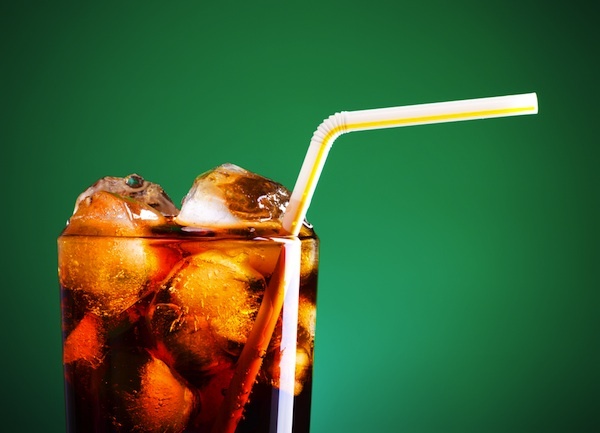
The simple choice of whether or not to mix liquor with a diet or regular soda may affect how intoxicated you get, a new study suggests.

In the study, men and women ages 21 to 33 who drank vodka mixed with diet soda had breath alcohol concentrations that were 18 percent higher after 40 minutes compared with people who drank the same dose of vodka mixed with regular soda.

In fact, after three to four drinks, people who used diet soda as a mixer had a breath alcohol level that exceeded the legal limit for an adult operating a motor vehicle. People who used regular soda in their drink did not.

What’s more, people who used diet mixers scored more poorly on a test of reaction time that people who used regular mixers, although both groups reported feeling similar levels of intoxication.

The study was small — just eight men and eight women participated — so more research is needed to confirm the findings. And although results from breath alcohol tests are usually consistent with those from tests of blood alcohol, there can sometimes be a discrepancy between the two methods, so the study should be replicated using blood alcohol tests, the researchers said.

But the findings suggest that diet mixers, although lower in calories, may have insidious effects, said study researcher Cecile Marczinski, an assistant professor of psychology at Northern Kentucky University.

People “think they’re saving some calories by drinking their alcohol with a diet drink, [but] it’s much more harmful to the body to have a high blood alcohol concentration,” Marczinski said.

During the study, the 16 participants came into the laboratory three times, and received either vodka mixed with Squirt, vodka mixed with diet Squirt, or a placebo (Squirt containing a very small dose of alcohol to mimic the appearance and smell of an alcoholic beverage.) Besides the placebo, each drink contained equal amounts of alcohol and mixer. The dose of alcohol in each individual drink was based on the participant’s body weight.

Regular mixers may slow down the time it takes a person to become intoxicated from drinking, the researchers said. Alcohol is absorbed by the body when it reaches the small intestine. But the stomach may treat the sugar in regular mixers as if it were food. As a result, the alcohol doesn’t reach the small intestine as quickly, Marczinski said. The artificial sweeteners in diet soda, on the other hand, may not delay stomach emptying, so the alcohol travels straight through to the small intestine, Marczinski added. An earlier study found that men who drank vodka mixed with a diet beverage had higher blood alcohol levels than men who drank vodka mixed with a regular beverage. Using an ultrasound, the researchers showed that the regular drink delayed stomach emptying, but the diet drink did not.

The new finding “helps people to make an informed decision” about the mixer they chose for their alcohol, said Emma Childs, an assistant professor in the University of Chicago’s Department of Psychiatry, who has researched the effects of alcohol on physiology and behavior, and was not involved in the study.

http://www.livescience.com/26885-diet-soda-alcohol-mixers-intoxication.html

New dress becomes transparent when wearer is aroused

Dress1

Dress2

A Netherlands-based fashion designer has created a high-tech dress line that turns clear when you get excited. How’s that for being transparent on a date?

Called Intimacy — from designer Daan Roosegaarde, founder of Studio Roosegaarde — the project aims to explore the relationship between technology and the body’s interactions. The dresses, which are called ‘Intimacy White’ and ‘Intimacy Black,’ are made out of opaque smart e-foils. When the body gets excited and the heart races, the coils turn clear.

The smart foils have a blend of wireless technology, LED lights, cooper and other materials. “Social interactions determine the garmentsʼ level of transparency, creating a sensual play of disclosure,” the company says on its site.

Although the concept isn’t entirely new — the company has been working on prototypes since 2010 — its new 2.0 line has been making its rounds online in advance of Valentine’s Day. The dresses are currently on display privately in Hong Kong and Paris and will be shown at Kent State University in Ohio in September.

Studio Roosegaarde also has other high-tech garments in mind: “We’re currently working on a suit for men which becomes transparent when they lie.”

http://mashable.com/2013/02/06/transparent-dress/

Brazilian woman laced vagina with poison to kill husband

poison-310113

A Brazilian woman has confessed to trying to kill her husband by putting poison in her vagina and urging him to have oral sex with her, a news agency claims.

The bizarre murder plot, dubbed “cunning cunnilingus” by one commentator, took place in the city of Sao de Jose Rio Preto.

The intended victim, a 43-year-old man who has not been named, says his wife tried to lure him into bed and encouraged him to perform oral sex on her. His suspicions were aroused when he noticed an unusual odour emanating from her private parts and, fearing she was unwell, took her to hospital, Brazil’s Tvi24 reports. Medical tests revealed she had doused her vagina with enough of the unspecified toxin to kill both her husband and herself.

Confronted with the test results the woman reportedly confessed to her crime. It is believed she hatched the bizarre plot after asking her husband for a divorce, a request he now seems rather more likely to acquiesce to. Tvi24 says the woman has received medical treatment and sources claim her husband plans to sue her for attempted murder.

Vagina homicide is, needless to say, a highly unusual crime and a local police officer called Walter Coacino Junior has reportedly ordered “further investigation” due to the “nature” of the case. The woman may still face murder charges, he said.

The Jezebel website points out that “poisoning someone through your vagina is not that good of an idea” because “your vagina is fairly absorbent and shoving a bunch of poison in it will probably hurt you as much as it hurts the person you’re trying to kill.”

But Salon’s Katie McDonough says the fact the man rushed his wife to hospital despite her death-by-vagina plotting suggests “chivalry is not dead”.

Read more: http://www.theweek.co.uk/crime/51287/brazilian-woman-laced-vagina-poison-kill-husband#ixzz2K49Hbo72

Origin of the myth that we only use 10% of our brains

ten-percent-brain

The human brain is complex. Along with performing millions of mundane acts, it composes concertos, issues manifestos and comes up with elegant solutions to equations. It’s the wellspring of all human feelings, behaviors, experiences as well as the repository of memory and self-awareness. So it’s no surprise that the brain remains a mystery unto itself.

Adding to that mystery is the contention that humans “only” employ 10 percent of their brain. If only regular folk could tap that other 90 percent, they too could become savants who remember π to the twenty-thousandth decimal place or perhaps even have telekinetic powers.

Though an alluring idea, the “10 percent myth” is so wrong it is almost laughable, says neurologist Barry Gordon at Johns Hopkins School of Medicine in Baltimore. Although there’s no definitive culprit to pin the blame on for starting this legend, the notion has been linked to the American psychologist and author William James, who argued in The Energies of Men that “We are making use of only a small part of our possible mental and physical resources.” It’s also been associated with to Albert Einstein, who supposedly used it to explain his cosmic towering intellect.

The myth’s durability, Gordon says, stems from people’s conceptions about their own brains: they see their own shortcomings as evidence of the existence of untapped gray matter. This is a false assumption. What is correct, however, is that at certain moments in anyone’s life, such as when we are simply at rest and thinking, we may be using only 10 percent of our brains.

“It turns out though, that we use virtually every part of the brain, and that [most of] the brain is active almost all the time,” Gordon adds. “Let’s put it this way: the brain represents three percent of the body’s weight and uses 20 percent of the body’s energy.”

The average human brain weighs about three pounds and comprises the hefty cerebrum, which is the largest portion and performs all higher cognitive functions; the cerebellum, responsible for motor functions, such as the coordination of movement and balance; and the brain stem, dedicated to involuntary functions like breathing. The majority of the energy consumed by the brain powers the rapid firing of millions of neurons communicating with each other. Scientists think it is such neuronal firing and connecting that gives rise to all of the brain’s higher functions. The rest of its energy is used for controlling other activities—both unconscious activities, such as heart rate, and conscious ones, such as driving a car.

Although it’s true that at any given moment all of the brain’s regions are not concurrently firing, brain researchers using imaging technology have shown that, like the body’s muscles, most are continually active over a 24-hour period. “Evidence would show over a day you use 100 percent of the brain,” says John Henley, a neurologist at the Mayo Clinic in Rochester, Minn. Even in sleep, areas such as the frontal cortex, which controls things like higher level thinking and self-awareness, or the somatosensory areas, which help people sense their surroundings, are active, Henley explains.

Take the simple act of pouring coffee in the morning: In walking toward the coffeepot, reaching for it, pouring the brew into the mug, even leaving extra room for cream, the occipital and parietal lobes, motor sensory and sensory motor cortices, basal ganglia, cerebellum and frontal lobes all activate. A lightning storm of neuronal activity occurs almost across the entire brain in the time span of a few seconds.

“This isn’t to say that if the brain were damaged that you wouldn’t be able to perform daily duties,” Henley continues. “There are people who have injured their brains or had parts of it removed who still live fairly normal lives, but that is because the brain has a way of compensating and making sure that what’s left takes over the activity.”

Being able to map the brain’s various regions and functions is part and parcel of understanding the possible side effects should a given region begin to fail. Experts know that neurons that perform similar functions tend to cluster together. For example, neurons that control the thumb’s movement are arranged next to those that control the forefinger. Thus, when undertaking brain surgery, neurosurgeons carefully avoid neural clusters related to vision, hearing and movement, enabling the brain to retain as many of its functions as possible.

What’s not understood is how clusters of neurons from the diverse regions of the brain collaborate to form consciousness. So far, there’s no evidence that there is one site for consciousness, which leads experts to believe that it is truly a collective neural effort. Another mystery hidden within our crinkled cortices is that out of all the brain’s cells, only 10 percent are neurons; the other 90 percent are glial cells, which encapsulate and support neurons, but whose function remains largely unknown. Ultimately, it’s not that we use 10 percent of our brains, merely that we only understand about 10 percent of how it functions.

http://www.scientificamerican.com/article.cfm?id=people-only-use-10-percent-of-brain&page=2

Thanks to SRW for bringing this to the attention of the It’s Interesting community.

Drugs to enhance massage

massage

Nerves dedicated to creating these feelings have been identified and artificially stimulated in mice, leading to hope that the work could aid the development of drugs that relieve pain or stress.

Some nerves rapidly transmit sensations of touch or pain to the brain, but others work much more slowly. These C-tactile fibres, as they are known in humans, are found under hairy skin and respond to stroking.

David Anderson at the California Institute of Technology in Pasadena and colleagues used calcium imaging to identify similar bundles of nerves in mice.

When the mice were in a special chamber, the team injected them with a chemical that activated these nerves. Afterwards, the mice visited the chamber almost twice as often as they had before, suggesting that they enjoyed the experience and wanted more (Nature, DOI: 10.1038/nature11810).

A drug that evokes a similar response in humans could boost the beneficial effects of skin-to-skin contact such as massage in rehabilitation or for psychiatric conditions, says Johan Wessberg at the University of Gothenburg in Sweden.

Interactions involving stroking are common among many mammals, particularly in nurturing, and removing this contact can impair development. “For the first time we are getting a neurological basis for these phenomena,” says Francis McGlone at Liverpool John Moores University in the UK.

http://www.newscientist.com/article/mg21729025.200-think-that-massage-feels-good-try-adding-drugs.html