Thriving bacteria discovered at the deepest point in the ocean

dn23277-1_300

Hollywood director James Cameron found little evidence of life when he descended nearly 11,000 metres to the deepest point in the world’s oceans last year. If only he had taken a microscope and looked just a few centimetres deeper.

Ronnie Glud at the University of Southern Denmark in Odense, and his colleagues, have discovered unusually high levels of microbial activity in the sediments at the site of Cameron’s dive – Challenger Deep at the bottom of the western Pacific’s Mariana Trench.

Glud’s team dispatched autonomous sensors and sample collectors into the trench to measure microbial activity in the top 20 centimetres of sediment on the sea bed. The pressure there is almost 1100 times greater than at the surface. Finding food, however, is an even greater challenge than surviving high pressures for anything calling the trench home.

Any nourishment must come in the form of detritus falling from the surface ocean, most of which is consumed by other organisms on the way down. Only 1 per cent of the organic matter generated at the surface reaches the sea floor’s abyssal plains, 3000 to 6000 metres below sea level. So what are the chances of organic matter making it even deeper, into the trenches that form when one tectonic plate ploughs beneath another?

Surprisingly, the odds seem high. Glud’s team compared sediment samples taken from Challenger Deep and a reference site on the nearby abyssal plain. The bacteria at Challenger Deep were around 10 times as abundant as those on the abyssal plain, with every cubic centimetre of sediment containing 10 million microbes. The deep microbes were also twice as active as their shallower kin.

These figures make sense, says Glud, because ocean trenches are particularly good at capturing sediment. They are broad as well as deep, with a steep slope down to the deepest point, so any sediment falling on their flanks quickly cascades down to the bottom in muddy avalanches. Although the sediment may contain no more than 1 per cent organic matter, so much of it ends up at Challenger Deep that the level of microbial activity shoots up.

“There is much more than meets the eye at the bottom of the sea,” says Hans Røy, at Aarhus University in Denmark. Last year, he studied seafloor sediments below the north Pacific gyre – an area that, unlike Challenger Deep, is almost devoid of nutrients. Remarkably, though, even here Røy found living microbes.

“With the exception of temperatures much above boiling, bacteria seem to cope with everything this planet can throw at them,” he says.

Journal reference: Nature Geoscience, DOI: 10.1038/ngeo1773

http://www.newscientist.com/article/dn23277-deepest-point-in-the-ocean-is-teeming-with-life.html?cmpid=RSS|NSNS|2012-GLOBAL|online-news
Water in faults vaporizes during an earthquake, depositing gold

gold-ed
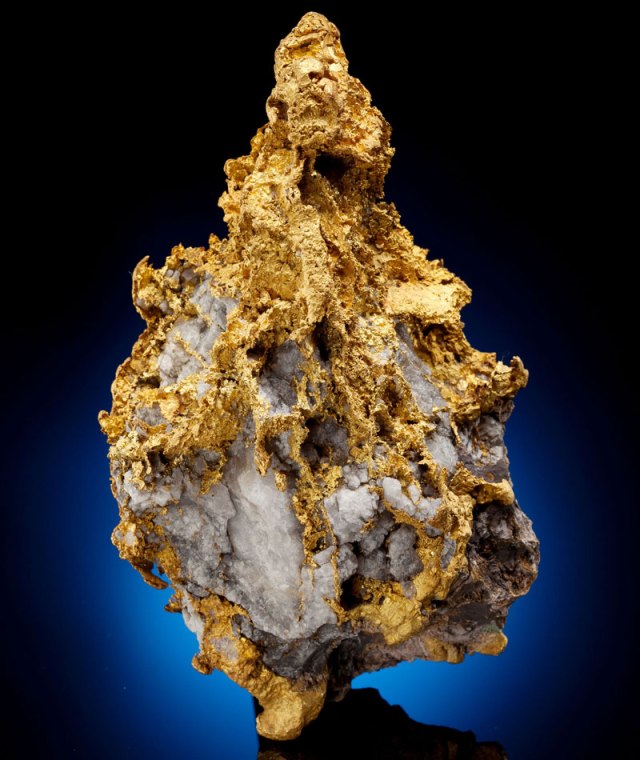
The tyrannosaur of the minerals, this gold nugget in quartz weighs more than 70 ounces (2 kilograms).

Earthquakes have the Midas touch, a new study claims.

Water in faults vaporizes during an earthquake, depositing gold, according to a model published in the March 17 issue of the journal Nature Geoscience. The model provides a quantitative mechanism for the link between gold and quartz seen in many of the world’s gold deposits, said Dion Weatherley, a geophysicist at the University of Queensland in Australia and lead author of the study.

When an earthquake strikes, it moves along a rupture in the ground — a fracture called a fault. Big faults can have many small fractures along their length, connected by jogs that appear as rectangular voids. Water often lubricates faults, filling in fractures and jogs.

About 6 miles (10 kilometers) below the surface, under incredible temperatures and pressures, the water carries high concentrations of carbon dioxide, silica and economically attractive elements like gold.

During an earthquake, the fault jog suddenly opens wider. It’s like pulling the lid off a pressure cooker: The water inside the void instantly vaporizes, flashing to steam and forcing silica, which forms the mineral quartz, and gold out of the fluids and onto nearby surfaces, suggest Weatherley and co-author Richard Henley, of the Australian National University in Canberra.

While scientists have long suspected that sudden pressure drops could account for the link between giant gold deposits and ancient faults, the study takes this idea to the extreme, said Jamie Wilkinson, a geochemist at Imperial College London in the United Kingdom, who was not involved in the study.

“To me, it seems pretty plausible. It’s something that people would probably want to model either experimentally or numerically in a bit more detail to see if it would actually work,” Wilkinson told OurAmazingPlanet.

Previously, scientists suspected fluids would effervesce, bubbling like an opened soda bottle, during earthquakes or other pressure changes. This would line underground pockets with gold. Others suggested minerals would simply accumulate slowly over time.

Weatherley said the amount of gold left behind after an earthquake is tiny, because underground fluids carry at most only one part per million of the precious element. But an earthquake zone like New Zealand’s Alpine Fault, one of the world’s fastest, could build a mineable deposit in 100,000 years, he said.

Surprisingly, the quartz doesn’t even have time to crystallize, the study indicates. Instead, the mineral comes out of the fluid in the form of nanoparticles, perhaps even making a gel-like substance on the fracture walls. The quartz nanoparticles then crystallize over time.

Even earthquakes smaller than magnitude 4.0, which may rattle nerves but rarely cause damage, can trigger flash vaporization, the study finds.

“Given that small-magnitude earthquakes are exceptionally frequent in fault systems, this process may be the primary driver for the formation of economic gold deposits,” Weatherley told OurAmazingPlanet.

Quartz-linked gold has sourced some famous deposits, such as the placer gold that sparked the 19th-century California and Klondike gold rushes. Both deposits had eroded from quartz veins upstream. Placer gold consists of particles, flakes and nuggets mixed in with sand and gravel in stream and river beds. Prospectors traced the gravels back to their sources, where hard-rock mining continues today.

But earthquakes aren’t the only cataclysmic source of gold. Volcanoes and their underground plumbing are just as prolific, if not more so, at producing the precious metal. While Weatherley and Henley suggest that a similar process could take place under volcanoes, Wilkinson, who studies volcano-linked gold, said that’s not the case.

“Beneath volcanoes, most of the gold is not precipitated in faults that are active during earthquakes,” Wilkinson said. “It’s a very different mechanism.”

Understanding how gold forms helps companies prospect for new mines. “This new knowledge on gold-deposit formation mechanisms may assist future gold exploration efforts,” Weatherley said.

In their quest for gold, humans have pulled more than 188,000 tons (171,000 metric tons) of the metal from the ground, exhausting easily accessed sources, according to the World Gold Council, an industry group.

http://www.livescience.com/27953-earthquakes-make-gold.html

24 Hours of World Air Traffic in 1 Minute

Check out this time-lapse view from space of all the large aircraft flights around the world during a 24-hour period

This video tracks (in yellow) all the major airplane activity occurring around the world over 24 hours, in just over one minute. Note how crazy-busy the air space over the United States and all of Europe is both night and day (see how the shadow of night crosses the map).

Thanks to Jody for contributing this to the It’s Interesting community.

Irish farmer has revived a potato not seen since the Great Famine

irish-famine-potatoes-brought-back-taters_65301_600x450

by Catherine Zuckerman
National Geographic News

“It struck down the growing plants like frost in summer. It spread faster than the cholera amongst men.”

That description of Ireland’s historic potato blight—from English writer E.C. Large’s book The Advance of the Fungi—may sound extreme, but it’s not. The devastating disease nearly wiped out many Irish potato varieties, igniting the country’s Great Famine in the mid-19th century.

But now, one of those blighted potatoes is making a comeback. Meet the Lumper.

As its name implies, this potato is not especially beautiful. It’s large, knobby, and, well, lumpy, with pale brown skin and yellow flesh. Still, it was widely grown in Ireland before the famine because it did well in poor soil and could feed a lot of mouths.

According to University College Dublin’s Cormac O’Grada, an expert on the history of famines, the blight (Phytophtora infestans) destroyed about one-third of Ireland’s potato crop in 1845 and almost all of it in 1846. Because so many people were poor and relied on potatoes for sustenance, the blight had catastrophic consequences, including food riots and mass death from starvation.

Spuds are faring much better today thanks to modern farming techniques and technology, although potato blight is still an ongoing concern for Irish farmers.

The Lumper was a thing of the mashed, roasted, and baked potato past until about five years ago, when farmer Michael McKillop—a grower and packer for Northern Ireland’s Glens of Antrim potato suppliers—became interested in the antique tuber. He got his hands on some heirloom seeds and cultivated them.

Why revive this particular potato? “I chose the Lumper because of its history and its unusual look and feel,” he said. “The history books said the taste wasn’t particularly nice, so I was fascinated to find out what it was really like myself.”

So how does it taste? Descriptions range from “good” and “pleasing” to “not bad” and “soapy.” The Daily Spud blog calls the Lumper’s texture “waxy,” rather than floury like other potatoes—not necessarily a compliment.

Dermot Carey, the head grower at Ireland’s Lissadell/Langford Potato Collection, which contains more than 200 varieties, has tasted his fair share of different potatoes. He’s not a huge fan of the Lumper: “It’s edible, but it wouldn’t be my favorite.”

The debate over the Lumper’s flavor appeal may never be settled, but one thing is clearly established: The Irish love their spuds. The Irish Potato Federation lists several popular varieties on its website, including the widely grown, red-skinned Rooster, the traditional, floury Golden Wonder, and the newly developed, highly blight-resistant Orla.

Chef and native Dubliner Cathal Armstrong, who owns several Washington, D.C.-area restaurants, has mixed feelings about the return of the Lumper: “I think it’s both exciting and a little frightening, to bring back this species of potato that is related to so much devastation. But I would still love to get my hands on some and see how they taste. I guess it would be similar to bumping into the ghost of a long-lost relative in a dark alley.”

Too bad it’s not available in the U.S. But in Ireland, McKillop’s Lumpers—which he grew to be a bit smaller than those of the 1800s—can be purchased at the retail chain Marks & Spencer through the end of March. As for the future, McKillop has plans to plant ten new acres of Lumpers—enough to yield 150 metric tons for 2014.

Whether or not the public will embrace the somewhat homely spud remains to be seen. For now, said gardener Carey, “it’s pure nostalgia.”

http://news.nationalgeographic.com/news/2013/03/130315-irish-famine-potato-lumper-food-science-culture-ireland/#

Putting the Clock in ‘Cock-A-Doodle-Doo’

130318132625-large
Of course, roosters crow with the dawn. But are they simply reacting to the environment, or do they really know what time of day it is? Researchers reporting on March 18 in Current Biology, a Cell Press publication, have evidence that puts the clock in “cock-a-doodle-doo”

“‘Cock-a-doodle-doo’ symbolizes the break of dawn in many countries,” says Takashi Yoshimura of Nagoya University. “But it wasn’t clear whether crowing is under the control of a biological clock or is simply a response to external stimuli.”

That’s because other things — a car’s headlights, for instance — will set a rooster off, too, at any time of day. To find out whether the roosters’ crowing is driven by an internal biological clock, Yoshimura and his colleague Tsuyoshi Shimmura placed birds under constant light conditions and turned on recorders to listen and watch.

Under round-the-clock dim lighting, the roosters kept right on crowing each morning just before dawn, proof that the behavior is entrained to a circadian rhythm. The roosters’ reactions to external events also varied over the course of the day.

In other words, predawn crowing and the crowing that roosters do in response to other cues both depend on a circadian clock.

The findings are just the start of the team’s efforts to unravel the roosters’ innate vocalizations, which aren’t learned like songbird songs or human speech, the researchers say.

“We still do not know why a dog says ‘bow-wow’ and a cat says ‘meow,’ Yoshimura says. “We are interested in the mechanism of this genetically controlled behavior and believe that chickens provide an excellent model.”

Tsuyoshi Shimmura, Takashi Yoshimura. Circadian clock determines the timing of rooster crowing. Current Biology, 2013; 23 (6): R231 DOI: 10.1016/j.cub.2013.02.015

http://www.sciencedaily.com/releases/2013/03/130318132625.htm

Snow sculpture car gets parking ticket

snow_sculpture__europics

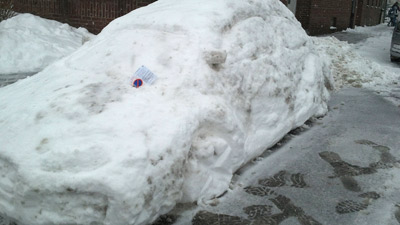
Traffic wardens slipped up in Germany when they left a parking ticket – on a full-sized snow sculpture of a Volkswagen Beetle. Pranksters had built the car overnight in a no-parking zone in Aachen, complete with outlines for its headlights, windscreens and even the distinctive VW badge on the bonnet.

“It was incredibly realistic looking. It looked like you could get into it and drive away once you’d swept the snow off,” said one local.

“The wardens eventually realised they’d been had when they tried to scrape the snow off the number plate and found there was no plate, just snow,” they added.

But the prank has received a frosty reception from local police. A spokesman said: “We can take a joke as well as the next person and it was a very convincing prank. But whether it was made of metal or snow it was still obstructing a road that should have been clear.”

http://web.orange.co.uk/article/quirkies/Snow_sculpture_car_gets_parking_ticket

Rare brain condition makes woman see everything upside down

bojana2_150313_blic_630bojana_150313_blic_630

Bojana Danilovic has what you might call a unique worldview. Due to a rare condition, she sees everything upside down, all the time.

The 28-year-old Serbian council employee uses an upside down monitor at work and relaxes at home in front of an upside down television stacked on top of the normal one that the rest of her family watches.

“It may look incredible to other people but to me it’s completely normal,” Danilovic told local newspaper Blic.

“I was born that way. It’s just the way I see the world.”

Experts from Harvard University and the Massachusetts Institute of Technology have been consulted after local doctors were flummoxed by the extremely unusual condition.

They say she is suffering from a neurological syndrome called “spatial orientation phenomenon,” Blic reports.

“They say my eyes see the images the right way up but my brain changes them,” Danilovic said.

“But they don’t really seem to know exactly how it happens, just that it does and where it happens in my brain.

“They told me they’ve seen the case histories of some people who write the way I see, but never someone quite like me.”

http://au.news.yahoo.com/thewest/a/-/world/16375095/rare-brain-condition-leaves-woman-seeing-world-upside-down/

Pluto may have 10 more undiscovered moons

pluto

Pluto’s orbit may host a formation of 10 or more tiny undiscovered moons, which would each measure just 1 to 3 kilometres across, astronomers say.

This preliminary finding could make life even more difficult for the team planning NASA’s New Horizons mission, which is slated to take the first-ever up-close look at the Pluto system in July 2015.

After Pluto’s fifth known moon, a small satellite known as P5, was discovered last year, officials said they may need to redraw the spacecraft’s path to avoid such obstacles.

In the new study, astronomers led by Scott Kenyon of the Harvard-Smithsonian Center for Astrophysics used computer simulations that treat smaller particles statistically.

Once objects get above a certain size, roughly 1 km across, then the programme renders them individually – and this is when the satellites pop up.

It’s hard to say how many there are, the researchers said, as it’s difficult to simulate collisions among these tiny satellites. There could be anywhere from one to more than 10 objects lurking beyond Hydra’s orbit.

While the team can simulate these satellites, they said it’s unlikely they could be spotted, if they exist, from Earth.

The brightness of the potential objects dance with the edge of the Hubble Space Telescope’s capabilities, Kenyon said, and they are likely beyond the reach of even the most sensitive ground-based telescopes, such as the Keck Observatory in Hawaii.

New Horizons might be able to spot smaller satellites before it gets there, but Kenyon said he wasn’t sure when the objects would appear big enough for the spacecraft to detect.

The satellites would be “easily visible” during the spacecraft’s closest approach to Pluto in 2015, researchers said.

The study was submitted for publication in The Astronomical Journal.

http://www.phenomenica.com/2013/03/pluto-may-have-10-more-undiscovered-moons.html

600 year old Chinese coin discovered on Kenyan island shows trade existed between China and East Africa much earlier than previously thought

130313131900-large
Scientists have unearthed a 600-year-old Chinese coin on the Kenyan island of Manda that shows trade existed between China and east Africa decades before European explorers set sail and changed the map of the world.

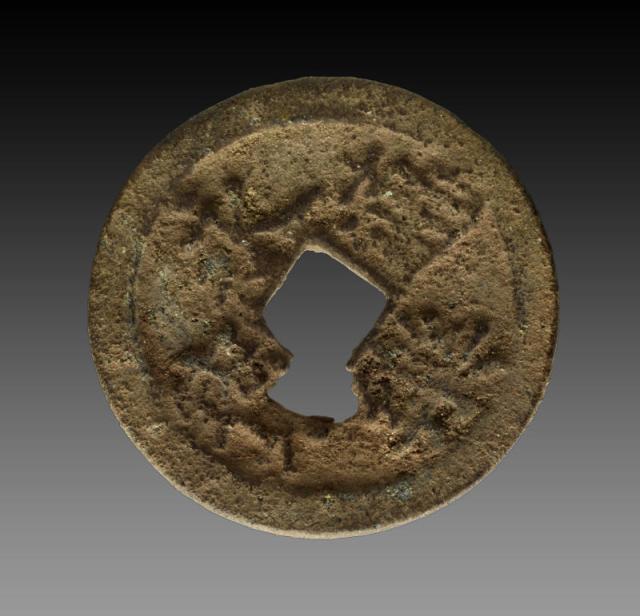
A joint expedition of scientists led by Chapurukha M. Kusimba of The Field Museum and Sloan R. Williams of the University of Illinois at Chicago has unearthed a 600-year-old Chinese coin on the Kenyan island of Manda that shows trade existed between China and east Africa decades before European explorers set sail and changed the map of the world.

The coin, a small disk of copper and silver with a square hole in the center so it could be worn on a belt, is called “Yongle Tongbao” and was issued by Emperor Yongle who reigned from 1403-1425AD during the Ming Dynasty. The emperor’s name is written on the coin, making it easy to date. Emperor Yongle, who started construction of China’s Forbidden City, was interested in political and trade missions to the lands that ring the Indian Ocean and sent Admiral Zheng He, also known as Cheng Ho, to explore those shores.

“Zheng He was, in many ways, the Christopher Columbus of China,” said Dr. Kusimba, curator of African Anthropology at The Field Museum. “It’s wonderful to have a coin that may ultimately prove he came to Kenya,” he added.

Dr. Kusimba continued, “This finding is significant. We know Africa has always been connected to the rest of the world, but this coin opens a discussion about the relationship between China and Indian Ocean nations.”

That relationship stopped soon after Emperor Yongle’s death when later Chinese rulers banned foreign expeditions, allowing European explorers to dominate the Age of Discovery and expand their countries’ empires.

The island of Manda, off the northern coast of Kenya, was home to an advanced civilization from about 200AD to 1430AD, when it was abandoned and never inhabited again. Trade played an important role in the development of Manda, and this coin may show trade’s importance on the island dating back to much earlier than previously thought.

“We hope this and future expeditions to Manda will play a crucial role in showing how market-based exchange and urban-centered political economies arise and how they can be studied through biological, linguistic, and historical methodologies,” Dr. Kusimba said.

http://www.sciencedaily.com/releases/2013/03/130313131900.htm

Ancient urine provides clues to Africa’s past

sn-hyrax

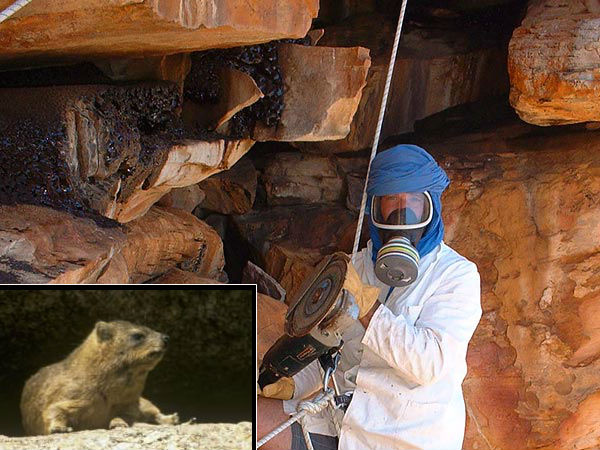
When it comes to peering into Africa’s climate past, the ancient homes of hyraxes are number one. Paleoclimatologists typically dig up muddy core samples and analyze their pollen content for clues to long-ago weather, but parts of southern and central Africa are too dry to preserve such evidence. Enter the rock hyrax (Procavia capensis) (inset), a furry mammal that looks like a large groundhog but is actually a distant cousin of the elephant. Brian Chase, a geographical scientist at the University of Montpellier in France, turned to urine accretions left by the animals thousands of years ago; hyrax colonies use the same rock shelters for generation after generation, depositing pollen, calcium remnants, charcoal particles, stable isotopes, and other detritus in their urine (black splotches on rock in main image). Most climate models predict arid conditions in southern Africa 12,000 years ago, but the pollen content of hyrax urine from that period indicates that they ate grasses, which flourish in wetter conditions Chase, who reported his findings here today at the annual meeting of the American Association for the Advancement of Science (which publishes ScienceNOW), believes his method can be used to give researchers a wealth of data to improve their models of Africa’s paleohistory. “You can turn a 2-meter pile of pee into a very nice section which you can bring back to the lab,” he told the audience. “These are very high-resolution records.”

http://news.sciencemag.org/sciencenow/2013/02/scienceshot-ancient-pee-provides.html?ref=hp

Thanks to Dr. Rajadhyaksha for bringing this to the attention of the It’s Intereting community.