Brazilian woman almost killed by train while trying to retrieve her dropped cell phone

This video shows a woman trapped on the tracks below a commuter rail platform in Brazil escape within an inch of her life from an oncoming train. Two men pulled the woman to safety less than a second before the train speeds by at the Corinthians-Itaquera station in Sao Paulo.

Bystanders said she jumped onto the tracks to retrieve her dropped cellphone, but couldn’t climb back out.

http://cnews.canoe.ca/CNEWS/WeirdNews/2013/04/02/20704421.html

Samoa airline introduces pay-by-weight pricing

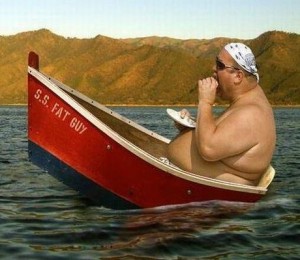
Fat-Guy-300x260

A tiny Samoa airline is giving passengers a big reason to lose weight: Tickets sold not by the seat, but by the kilogram. Samoa Air is pricing its first international flights based on the weight of its passengers and their bags. Depending on the flight, each kilogram (2.2 pounds) costs 93 cents to $1.06. That means the average American man weighing 195 pounds with a 35-pound bag would pay $97 to go one-way between Apia, Samoa, and Pago Pago, American Samoa. Competitors typically charge $130 to $140 roundtrip for similar routes.

The weight-based pricing is not new to the airline, which launched in June. It has been using the pricing model since November, but in January the U.S. Department of Transportation approved its international route between American Samoa and Samoa. The airline’s chief executive, Chris Langton, said that “planes are run by weight and not by seat, and travelers should be educated on this important issue. The plane can only carry a certain amount of weight and that weight needs to be paid. There is no other way.”

Langton, a pilot himself, said when he flew for other airlines, he brought up the idea to his bosses to charge by weight, but they considered weight as too sensitive an issue to address. “It’s always been the fairest way, but the industry has been trying to pack square pegs into round holes for many years,” he said.

Travelers in the region already are weighed before they fly because the planes used between the islands are small, said David Vaeafe, executive director of the American Samoa Visitors Bureau. Samoa Air’s fleet includes two nine-passenger planes for commercial routes and a three-passenger plane for an air taxi service. Langton said passengers who need more room will be given one row on the plane to ensure comfort.

The new pricing system would make Samoa Air the first to charge strictly by weight, a change that Vaeafe said is, “in many ways… a fair concept for passengers. For example, a 12- or 13-year-old passenger, who is small in size and weight, won’t have to pay an adult fare, based on airline fares that anyone 12 years and older does pay the adult fare,” he said.

Vaeafe said the pricing system has worked in Samoa but it’s not clear whether it will be embraced by travelers in the U.S. territory. Langton said the airline has received mixed responses since it began promoting the pricing on its website and Facebook. Langton said some passengers have been surprised, but no one has refused to be weighed yet. He said he’s given away a few free flights to some regular customers who lost weight, and that health officials in American Samoa were among the first to contact the airline when the pricing structure was announced.

“They want to ride on the awareness this is raising and use it as a medium to address obesity issues,” he said.

Islands in the Pacific have the highest rates of obesity in the world. According to a 2011 report by the World Health Organization, 86 percent of Samoans are overweight, the fourth worst among all nations. Only Samoa’s Pacific neighbors Nauru, the Cook Islands and Tonga rank worse. In comparison, the same study found that 69 percent of Americans are overweight, 61 percent of Australians, and 22 percent of Japanese. Samoa ranked just as poorly in statistics measuring those who are obese, or severely overweight.

Samoa’s Director General of Health, Palanitina Toelupe, said the airline’s plans could be a good way to promote weight loss and healthy eating. “It’s a very brave idea on their part,” she said. She added that flying on the airline may become too expensive for some large people and that the charging system could only ever be a small part of a larger strategy on weight issues. She said she’d be interested in meeting with the airline to discuss working together.

Ana Faapouli, an American Samoa resident who frequently travels to Samoa, said the pricing scheme will likely be profitable for Samoa Air. “Samoa Air is smart enough to find ways to benefit from this service as they will be competing against two other airlines,” Faapouli said.

http://www.cbsnews.com/8301-505145_162-57577683/samoa-airline-introduces-pay-by-weight-pricing/

Naked man risks croc death for booze

naked-man-braves-crocodile-infested-waters-for-bet_582_389
The croc-infested Daly River was up to 9m deep when this man was tackling the flow on a log.

A fisherman risked his life for what he considered a good cause – a bet. He won two cases of bourbon for jumping on to a log racing down a flooded, crocodile-infested river in the nude, riding the makeshift raft for about three minutes before clambering back into a boat.

“I’d enjoyed a few beers and it seemed a good idea at the time,” he said. “We weren’t catching any fish – because the river was flowing too fast – so I thought, ‘Why not?’ “But when I woke up the next morning, it didn’t seem so clever.”

Witness Billy Innes said his friend thought nothing of the dangers of drowning or being eaten by a crocodile. “It was hilarious,” he said.

The daredevil, who asked not to be named, was camping at the Daly River on Sunday when he accepted the bet.

“Huge trees were hammering down the river,” Mr Innes said. “It was quite a sight. Someone dared him to get on to one of the logs and row across the river. We went out in a boat and he jumped overboard on to a tree. He managed to stay on for quite a while before getting back into the boat. He got two cases of Jack Daniels for it – and thought that made it all worthwhile.”

The Daly is one of the Territory big “croc rivers”.

Keith Parry, 20, was killed while swimming across the Daly River in April 2009. He was crossing the river because he wanted more beer.

http://www.ntnews.com.au/article/2013/04/04/319219_ntnews.html

Alexander Mandon buried alive in Columbia as cure after being struck by lightning 4 times

The saying lightning never strikes the same place twice apparently does not apply in Alexander Mandón’s case. The 20-year-old Colombian has been struck by lightning four times since September. So to “cure” his electrical attraction, a local indigenous doctor recommended that Mandón be buried alive in an upright position, Spanish-language publication “Noticias Uno” reports.

Burying Mandón allows the surrounding dirt to absorb any inappropriate electrical charges in his body, according to the indigenous healer. The first attempt was unsuccessful, since Mandón was not positioned the correct way. So, residents of Mandón’s native town Sampués, a community more than 300 miles north of Bogotá, tried again. In a video of the burial, several people work to cover Mandón in dirt. Ultimately, the group entombs Mandón’s entire body, except for his head.

Mandón’s faulty “electrical charge” has been a heavy burden on the 20-year-old. He was struck by lightning for the third time while serving in the Colombian military. His commander became concerned about the risk and discharged Mandón, “Colombia Reports” notes. However, the lightning strikes did not stop there. Following his return home to Sampués in northern Colombia, Mandón was struck by a bolt, yet again, outside a cantina where he once worked. Mandón’s fourth lightning strike left him trembling and struggling to walk, leading Mandón to seek out the traditional medicine doctor.

While it would be difficult to determine whether the treatment worked, Mandón plans to stay inside for the foreseeable future.

Lightning strikes, which can contain as many as 100 million electrical volts, can cause cardiac arrest or serious injury, including severe burns and brain damage, National Geographic reports. Though the electrical discharges do kill (in 10 percent of cases), surviving a strike remains more likely.

In 2011, South Carolina resident Melvin Roberts survived his sixth lightning strike.

http://www.huffingtonpost.com/2013/03/27/alexander-mandon-buried-lightning-strikes_n_2965574.html?ref=topbar

Rare Chinese bowl bought for $3 is sold for more than $2.2 million

chinese bowl

A Chinese bowl that a New York family picked up for $3 at a garage sale turned out to be a 1,000-year-old treasure and has sold at auction for $2.2 million. The bowl — ceramic, 5 inches in diameter and with a saw-tooth pattern etched around the outside — went to a London dealer, Giuseppe Eskenazi, at Sotheby’s auction house in New York on Tuesday. Sotheby’s said the bowl was from the Northern Song Dynasty, which ruled China from 960 to 1127 and is known for its cultural and artistic advances. The auction house said the only other known bowl of similar size and design has been in the collection of the British Museum for more than 60 years. The house had estimated that this one would sell for $200,000 to $300,000. Sotheby’s did not identify the sellers, but said they put the bowl up for auction after consulting with experts. The family bought the bowl in 2007 and had kept it on a mantel in the years since. There weren’t any additional details made public about the garage sale where they had purchased the item.

http://usnews.nbcnews.com/_news/2013/03/20/17385541-picked-up-for-3-bucks-chinese-bowl-goes-for-22-million-at-auction?lite

Researchers explore connecting the brain to machines

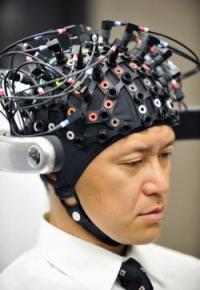
brain

Behind a locked door in a white-walled basement in a research building in Tempe, Ariz., a monkey sits stone-still in a chair, eyes locked on a computer screen. From his head protrudes a bundle of wires; from his mouth, a plastic tube. As he stares, a picture of a green cursor on the black screen floats toward the corner of a cube. The monkey is moving it with his mind.

The monkey, a rhesus macaque named Oscar, has electrodes implanted in his motor cortex, detecting electrical impulses that indicate mental activity and translating them to the movement of the ball on the screen. The computer isn’t reading his mind, exactly — Oscar’s own brain is doing a lot of the lifting, adapting itself by trial and error to the delicate task of accurately communicating its intentions to the machine. (When Oscar succeeds in controlling the ball as instructed, the tube in his mouth rewards him with a sip of his favorite beverage, Crystal Light.) It’s not technically telekinesis, either, since that would imply that there’s something paranormal about the process. It’s called a “brain-computer interface” (BCI). And it just might represent the future of the relationship between human and machine.

Stephen Helms Tillery’s laboratory at Arizona State University is one of a growing number where researchers are racing to explore the breathtaking potential of BCIs and a related technology, neuroprosthetics. The promise is irresistible: from restoring sight to the blind, to helping the paralyzed walk again, to allowing people suffering from locked-in syndrome to communicate with the outside world. In the past few years, the pace of progress has been accelerating, delivering dazzling headlines seemingly by the week.

At Duke University in 2008, a monkey named Idoya walked on a treadmill, causing a robot in Japan to do the same. Then Miguel Nicolelis stopped the monkey’s treadmill — and the robotic legs kept walking, controlled by Idoya’s brain. At Andrew Schwartz’s lab at the University of Pittsburgh in December 2012, a quadriplegic woman named Jan Scheuermann learned to feed herself chocolate by mentally manipulating a robotic arm. Just last month, Nicolelis’ lab set up what it billed as the first brain-to-brain interface, allowing a rat in North Carolina to make a decision based on sensory data beamed via Internet from the brain of a rat in Brazil.

So far the focus has been on medical applications — restoring standard-issue human functions to people with disabilities. But it’s not hard to imagine the same technologies someday augmenting capacities. If you can make robotic legs walk with your mind, there’s no reason you can’t also make them run faster than any sprinter. If you can control a robotic arm, you can control a robotic crane. If you can play a computer game with your mind, you can, theoretically at least, fly a drone with your mind.

It’s tempting and a bit frightening to imagine that all of this is right around the corner, given how far the field has already come in a short time. Indeed, Nicolelis — the media-savvy scientist behind the “rat telepathy” experiment — is aiming to build a robotic bodysuit that would allow a paralyzed teen to take the first kick of the 2014 World Cup. Yet the same factor that has made the explosion of progress in neuroprosthetics possible could also make future advances harder to come by: the almost unfathomable complexity of the human brain.

From I, Robot to Skynet, we’ve tended to assume that the machines of the future would be guided by artificial intelligence — that our robots would have minds of their own. Over the decades, researchers have made enormous leaps in artificial intelligence (AI), and we may be entering an age of “smart objects” that can learn, adapt to, and even shape our habits and preferences. We have planes that fly themselves, and we’ll soon have cars that do the same. Google has some of the world’s top AI minds working on making our smartphones even smarter, to the point that they can anticipate our needs. But “smart” is not the same as “sentient.” We can train devices to learn specific behaviors, and even out-think humans in certain constrained settings, like a game of Jeopardy. But we’re still nowhere close to building a machine that can pass the Turing test, the benchmark for human-like intelligence. Some experts doubt we ever will.

Philosophy aside, for the time being the smartest machines of all are those that humans can control. The challenge lies in how best to control them. From vacuum tubes to the DOS command line to the Mac to the iPhone, the history of computing has been a progression from lower to higher levels of abstraction. In other words, we’ve been moving from machines that require us to understand and directly manipulate their inner workings to machines that understand how we work and respond readily to our commands. The next step after smartphones may be voice-controlled smart glasses, which can intuit our intentions all the more readily because they see what we see and hear what we hear.

The logical endpoint of this progression would be computers that read our minds, computers we can control without any physical action on our part at all. That sounds impossible. After all, if the human brain is so hard to compute, how can a computer understand what’s going on inside it?

It can’t. But as it turns out, it doesn’t have to — not fully, anyway. What makes brain-computer interfaces possible is an amazing property of the brain called neuroplasticity: the ability of neurons to form new connections in response to fresh stimuli. Our brains are constantly rewiring themselves to allow us to adapt to our environment. So when researchers implant electrodes in a part of the brain that they expect to be active in moving, say, the right arm, it’s not essential that they know in advance exactly which neurons will fire at what rate. When the subject attempts to move the robotic arm and sees that it isn’t quite working as expected, the person — or rat or monkey — will try different configurations of brain activity. Eventually, with time and feedback and training, the brain will hit on a solution that makes use of the electrodes to move the arm.

That’s the principle behind such rapid progress in brain-computer interface and neuroprosthetics. Researchers began looking into the possibility of reading signals directly from the brain in the 1970s, and testing on rats began in the early 1990s. The first big breakthrough for humans came in Georgia in 1997, when a scientist named Philip Kennedy used brain implants to allow a “locked in” stroke victim named Johnny Ray to spell out words by moving a cursor with his thoughts. (It took him six exhausting months of training to master the process.) In 2008, when Nicolelis got his monkey at Duke to make robotic legs run a treadmill in Japan, it might have seemed like mind-controlled exoskeletons for humans were just another step or two away. If he succeeds in his plan to have a paralyzed youngster kick a soccer ball at next year’s World Cup, some will pronounce the cyborg revolution in full swing.

Schwartz, the Pittsburgh researcher who helped Jan Scheuermann feed herself chocolate in December, is optimistic that neuroprosthetics will eventually allow paralyzed people to regain some mobility. But he says that full control over an exoskeleton would require a more sophisticated way to extract nuanced information from the brain. Getting a pair of robotic legs to walk is one thing. Getting robotic limbs to do everything human limbs can do may be exponentially more complicated. “The challenge of maintaining balance and staying upright on two feet is a difficult problem, but it can be handled by robotics without a brain. But if you need to move gracefully and with skill, turn and step over obstacles, decide if it’s slippery outside — that does require a brain. If you see someone go up and kick a soccer ball, the essential thing to ask is, ‘OK, what would happen if I moved the soccer ball two inches to the right?'” The idea that simple electrodes could detect things as complex as memory or cognition, which involve the firing of billions of neurons in patterns that scientists can’t yet comprehend, is far-fetched, Schwartz adds.

That’s not the only reason that companies like Apple and Google aren’t yet working on devices that read our minds (as far as we know). Another one is that the devices aren’t portable. And then there’s the little fact that they require brain surgery.

A different class of brain-scanning technology is being touted on the consumer market and in the media as a way for computers to read people’s minds without drilling into their skulls. It’s called electroencephalography, or EEG, and it involves headsets that press electrodes against the scalp. In an impressive 2010 TED Talk, Tan Le of the consumer EEG-headset company Emotiv Lifescience showed how someone can use her company’s EPOC headset to move objects on a computer screen.

Skeptics point out that these devices can detect only the crudest electrical signals from the brain itself, which is well-insulated by the skull and scalp. In many cases, consumer devices that claim to read people’s thoughts are in fact relying largely on physical signals like skin conductivity and tension of the scalp or eyebrow muscles.

Robert Oschler, a robotics enthusiast who develops apps for EEG headsets, believes the more sophisticated consumer headsets like the Emotiv EPOC may be the real deal in terms of filtering out the noise to detect brain waves. Still, he says, there are limits to what even the most advanced, medical-grade EEG devices can divine about our cognition. He’s fond of an analogy that he attributes to Gerwin Schalk, a pioneer in the field of invasive brain implants. The best EEG devices, he says, are “like going to a stadium with a bunch of microphones: You can’t hear what any individual is saying, but maybe you can tell if they’re doing the wave.” With some of the more basic consumer headsets, at this point, “it’s like being in a party in the parking lot outside the same game.”

It’s fairly safe to say that EEG headsets won’t be turning us into cyborgs anytime soon. But it would be a mistake to assume that we can predict today how brain-computer interface technology will evolve. Just last month, a team at Brown University unveiled a prototype of a low-power, wireless neural implant that can transmit signals to a computer over broadband. That could be a major step forward in someday making BCIs practical for everyday use. Meanwhile, researchers at Cornell last week revealed that they were able to use fMRI, a measure of brain activity, to detect which of four people a research subject was thinking about at a given time. Machines today can read our minds in only the most rudimentary ways. But such advances hint that they may be able to detect and respond to more abstract types of mental activity in the always-changing future.

http://www.ydr.com/living/ci_22800493/researchers-explore-connecting-brain-machines

Retired Porn Star to Become First Adult Actress in Space

cocp2cocp

Coco Brown, who hasn’t made an adult film in a decade, has been training for her flight.

By Jason Koebler

Yuri Gagarin was the first man in space. Sally Ride was the first woman in space. Dennis Tito was the first tourist in space. And sometime next year, the human race will eclipse another benchmark, with Coco Brown possibly becoming the first porn star in space.

Brown made headlines earlier this year when Space Expedition Corporation, a German company, announced that the retired porn star had signed up to be on one of its first sub-orbital spaceflights in March 2014. Brown, who hasn’t starred in an adult film since 2003, says she’s quit the industry and is entirely focused on her mission.

“Performing in space isn’t something I ever thought about when I was deciding to do this. I just thought, ‘Oh my gosh, this is something really cool.’ I didn’t think ‘I’m going to try to have sex in space or perform in space,'” she says.

Brown says the opportunity arose when she was invited to a “space lunch” in Berlin, but she quickly discovered that the meeting was being held to discuss the possibility of space tourism.

“I thought they were going to be talking about the universe or something with astronomy or whatever, but then they started talking about flights to space,” she says. “I spent four months deciding whether or not I wanted to do this. The company called me a few times and finally I decided to do it.”

Brown has already completed a zero gravity flight and has begun training in Cape Canaveral. She has several more training missions coming up over the next few weeks. Since agreeing to take the trip, which costs $100,000, Brown says she may be in for more than she bargained for.

“I’m not worried about the fact of actually going to space, but when we come back, NASA wants to do a lot of observations and studies and things,” she says. “We’re some of the first people who are going to space without a specific job to do, so they were telling us all these [emergency contingency plans] and things like that, that made me wonder, ‘Why are they telling us this stuff?’ That kind of thing makes me worry.”

A spokesperson with NASA says they have not worked with Brown and have no plans to train her or conduct experiments on her when she returns.

“NASA does not fly space tourists and does not train them. Nor is NASA involved in postflight studies and observations,” the agency says.

Because she hasn’t performed in a decade, Brown says she wasn’t ready for the media blitz that has followed the announcement. Perhaps predictably, a lot of media focus has been put on whether she’ll make the world’s first porno movie filmed in space. That, she says, depends on what type of space suit she’s given. “They’re always giving us a new suit—I assume the one we use to go to space will be different. I haven’t asked about a special suit,” she says.

Despite the attention, she says she’s focused on being the best astronaut she can be.

“I haven’t done a movie since 2003, so when I decided to do this, the thought of performing in space didn’t even cross my mind. I have nothing against performing and would do it if the right offer comes along,” she says. “But now, my job is to train to be an astronaut.”

http://www.usnews.com/news/articles/2013/02/14/retired-porn-star-to-become-first-adult-actress-in-space

Thanks to Dr. Lutter for bringing this to the attention of the It’s Interesting community.

Mike the Headless Chicken

No, it’s not the latest eye-popping item from the always entertaining Weekly World News. Instead, it’s an actual headline from the October 22, 1945, issue of LIFE magazine, above an article about … well, a headless chicken: “Beheaded Chicken Lives Normally After Freak Decapitation by Ax.”

“Ever since Sept. 10,” LIFE informed its readers, “a rangy Wyandotte rooster named Mike has been living a normal chicken’s life though he has no head.” Mike, it seems, “lost his head in the usual rooster way. Mrs. L.A. Olson, wife of a farmer in Fruita, Colo., 200 miles west of Denver, decided to have chicken for dinner. Mrs. Olson took Mike to the chopping block and axed off his head. Thereupon Mike got up and soon began to strut around…. What Mrs. Olson’s ax had done was to clip off most of the skull but leave intact one ear, the jugular vein and the base of the brain, which controls motor function.”

The rest is poultry history. Mike lived for 18 months after losing his head, finally succumbing at a motel in the Arizona desert in 1946 during one of his many appearances as a sideshow attraction in the American southwest.

Here, LIFE.com presents Mike’s unlikely story, as well as the utterly unsettling pictures that ran (and some that never ran) in LIFE.

chicken2<
Mike the headless chicken “dances” in 1945.

chicken3
Mike the headless chicken in his Colorado barnyard, with fellow chickens, 1945.

chicken4
A picture of the suitcase containing the tools for feeding Mike the headless chicken, including an eye dropper that was used to provide sustenance through the hole atop his torso where his head used to be.

chicken5
Mike the headless chicken is fed through an eye dropper, directly into his esophagus, in 1945.

chicken6
Promoter Hope Wade holds Mike the headless chicken’s formerly useful noggin, as if attempting to reintroduce the bird to its lost self, in 1945. (Some reports, however, claim that the Olsons’ cat ate Mike’s head, and that another rooster’s head stood in for Mike’s during his brief brush with fame.)

Thanks to Ray Gaudette for bringing this to the attention of the It’s Interesting community.

Read more: http://life.time.com/curiosities/photos-mike-the-headless-chicken-beyond-belief/#ixzz2OZ1jpmWC

Bart Simpson on trial with Mr. Burns as judge in Birmingham court

bartbartbama

A defendant called Bart Simpson stood trial in front of a judge – called MR BURNS.

Company Director Barton Simpson, 56, denied possessing a prohibited firearm at Birmingham airport on May 31 last year. Simpson, of Eccleshall, Staffs., stood trial in front of Mr Recorder Burns at Warwick Crown Court this week. He was found to have been carrying a .38 Smith and Wesson revolver in his luggage – a scrape not too dissimilar to something fictional cartoon character Bart Simpson would find himself in.

Bart Simpson is the fictional yellow star in the hit sitcom The Simpsons while Charles Montgomery Burns is his frequent nemesis and nuclear power plant owner who employs Bart’s dad, Homer.

Simpson, a director of a letting agency, was sentenced to a 12-month community order with 140 hours of unpaid work and was ordered to pay #800. Mr. Burns told Simpson: “It was a very stupid thing you did. You must be punished for it, but I think you can be dealt with by way of a community order.”

Simpson had the weapon in a bag which went through an X-ray machine ahead of a flight to Croatia on May 31 last year. He told police the gun, passed down by his scrap dealer father, was a “curio” which he forgot was in the holdall.

Simpson, of Eccleshall, Staffs., initially denied a charge of possessing a prohibited firearm. But on the day he was due to stand trial he admitted an alternative offence of possessing a dangerous article in an airport.

Andrew Wilkins, prosecuting, said Simpson normally kept the revolver at his home and realised his mistake almost immediately. He said: “He put his hands to his face and hesitated before he then went through the personal metal detector. The reason he said he had it with him, and there is no reason to disagree, was that he was having work done on his flat while he was travelling and did not want it to come into the hands of the decorator.”

Mr Wilkins said his intention had been to leave it locked in his car, but he was distracted because of circumstances including the death of a friend and of his son, a serving soldier. Talbir Singh, defending, said it appeared the gun had never been discharged until it was fired by experts who tested it for the court case. He said Simpson would have to relinquish his company directorship to two others, impacting on his income.

A court worker said: “It’s a bizarre coincidence that Bart Simpson is actually on trial in front of Mr Burns but it’ll proceed as any other criminal case would.

“There were some eyebrows raised when the court list was published.”

http://swns.com/news/bart-simpson-trial-front-judge-called-burns-32830/

Thailand to Remove Squat Toilets To Reduce Arthritis Cases

The Thai government has decided to discard the squat toilets prevalent in the country to mitigate the number of people suffering from squat-related arthritis.

The move comes after the government realised that people were suffering from arthritis due to squat toilets, which are present in 85 per cent of households and public facilities in the country.

The Public Health Ministry revealed that around six million natives, including expats, were suffering from osteoarthritis of the knee due to the bog-standard toilets. The ministry plans to replace them these with sit-downs, which are far easier on the knees.

The Deputy Minister of the concerned department, Cholanan Srikaew, suggested that the scrapping of the squat toilets will not merely help control arthritis cases in the country but will also generate more money via the tourism industry. The tourism industry accounts for seven percent of the country’s gross domestic product (GDP).

An unnamed source said, “Prolonged periods of squatting have been found to cause arthritis. It is hoped the new toilets will save a few more knees and boost tourism.”

With regards to Thailand’s tourism, the Tourism Authority of Thailand (TAT) expects tourism revenue from the European segment to increase by five to six percent this year.

Thailand receives 22 million tourists last year, according to a Ministry of Sports and Tourism report- a substantial hike of 16 percent over 2011. The European market saw an increase of 10 per cent in the same time period.

Squat loos are common in Asia and made headlines during Beijing 2008 when 500,000 foreign Olympic visitors and athletes complained that venues only had squat toilets.

http://www.ibtimes.co.uk/articles/447234/20130318/squat-loo-thailand-arthritis-tourism-toilet-remove.htm