How the Whale Became the Whale

whale

About 54 million years ago, a semiaquatic deerlike creature headed into the water for good, giving rise to whales and their relatives. The newly sequenced genome of the minke whale, a baleen whale found worldwide, tells the story of how stressful this move to live underwater was. An international team has decoded the genomes of four minke whales, a fin whale, a bottlenose dolphin, and a finless porpoise, comparing these cetaceans’ genes to the equivalent genes in other mammals. It found whale-specific mutations in genes important for the regulation of salt and of blood pressure and for antioxidants that get rid of charged oxygen molecules that can harm cells. These molecules increase in number as the whale uses up its oxygen supply during dives. Whales also had larger numbers of related genes, called gene families, for dealing with sustained dives, the team reports online today in Nature Genetics. Overall, 1156 gene families had expanded, and several increased the number of enzymes that help the whale cope with low-to-no oxygen conditions. A few of those expanded families are also expanded in naked mole rats, which live underground where oxygen is scarce. But the numbers of genes for body hair and for taste and smell had decreased. And of course, there were genes and gene families that help explain why whales look the way they do.

http://news.sciencemag.org/biology/2013/11/scienceshot-how-whale-became-whale

Thanks to Dr. Rajadhyaksha for bringing this to the attention of the It’s Interesting community.

Billionaire Dennis Tito plans trip around Mars and back with possible 2017 launch

MARS
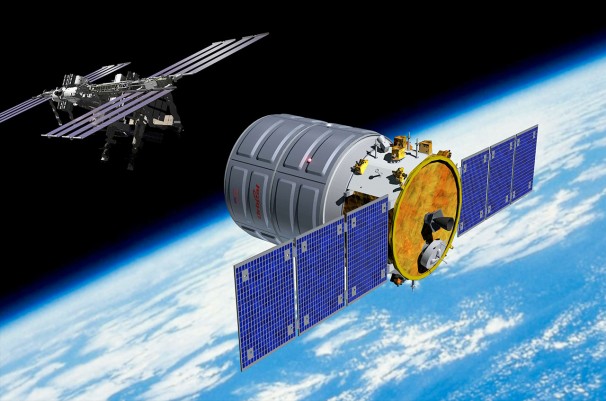
Orbital Sciences Corp. – Dennis Tito says U.S. should exploit rare alignment of planets to send astronauts to Mars. His organization would use the Orbital Sciences Corporation’s new Cygnus capsule, which recently made a successful trip to the international space station.

By Joel Achenbach

Billionaire Dennis Tito, tired of being told that we can’t send humans to Mars just yet, on Wednesday revealed his scheme for launching two astronauts to the red planet as early as December 2017.

Dubbed “Inspiration Mars,” the flyby mission would exploit a rare alignment of Earth and Mars that minimizes the time and the fuel it would take to get to Mars and back home again. The astronauts would come within 100 miles of the Martian surface before being slung back to Earth.

“It would be a voyage of around 800 million miles around the sun in 501 days,” Tito testified Wednesday at a hearing of the House subcommittee on space. “No longer is a Mars flyby mission just one more theoretical idea. It can be done. Not in a matter of decades, but in a few years.”

Tito is a former engineer who made a fortune in investment management and, in 2001, became the first person to pay his way into space, buying a seat on a Russian rocket. Now he’s pitching Inspiration Mars as a national priority for the United States. Grab this rare chance to go to Mars quickly or risk seeing China or Russia get there first, he told members of Congress.

Tito mentioned a backup plan that would offer Inspiration Mars four more years of development time. Another alignment of planets in 2021 offers a second chance to go to Mars fairly quickly, but the journey would last 80 days longer and require that the astronauts fly much closer to the sun, within the orbit of Venus, in one portion of the trip. That would add to the already considerable radiation hazards.

When Tito broached the idea of Inspiration Mars early this year, he thought he could use primarily private rockets and minimize the need for NASA involvement. But the feasibility study led Tito back to NASA. NASA is building a jumbo rocket, the Space Launch System, that is supposed to be ready for its inaugural, uncrewed test flight in 2017. The second launch, carrying a crew in NASA’s new Orion capsule for the first time, isn’t scheduled until 2021.

Tito’s plan would essentially borrow the SLS for the Mars mission, if NASA agreed. And NASA would have to pay for a lot of this. Tito described Inspiration Mars as a “philanthropic partnership with government.” He said private donors would probably give about $300 million for the mission, and the government would need to provide about $700 million — in addition to the money NASA is already spending, under current programs, on rocket and spacecraft development.

NASA reacted coolly to Tito’s proposal.

“Inspiration Mars’s proposed schedule is a significant challenge due to life support systems, space radiation response, habitats and the human psychology of being in a small spacecraft for over 500 days,” spokesman David Weaver said in a statement. “The agency is willing to share technical and programmatic expertise with Inspiration Mars but is unable to commit to sharing expenses with them. However, we remain open to further collaboration as their proposal and plans for a later mission develop.”

Tito’s Inspiration Mars Foundation released a feasibility study Wednesday that described the proposed mission architecture, which includes using the new Cygnus spacecraft developed by Dulles, Va.,-based Orbital Sciences.

The technological challenges of sending people to Mars, keeping them alive and returning them safely to Earth are considerable, but perhaps the greatest challenge in this case is the timing. There’s virtually no wiggle room for this mission. The Tito plan would require that NASA and the private partners adopt the project immediately and speed up work on certain key components.

The ideal planetary alignment of Mars and Earth happens once every 15 years, and it presents a narrow launch window. The mission would have to begin between Christmas Day 2017 and Jan. 5, 2018, to take advantage of the orbital dynamics of the planets.

“I think it’s totally implausible for 2017,” said John Logsdon, professor emeritus at George Washington University’s Space Policy Institute. He said there’s a slight chance that the 2021 backup mission could happen “if the stars align.”

Two launches would be required for the Mars flyby mission, according to the Inspiration Mars feasibility study. First, the big SLS rocket would launch into low-Earth orbit the empty Cygnus spacecraft, plus other hardware needed for the mission. Then, the two astronauts would blast into orbit on a commercial rocket and spacecraft that have yet to be identified (there is a competition underway among private companies to develop rockets and capsules to ferry NASA astronauts to the international space station).

The astronauts in their commercial capsule would rendezvous with the Inspiration Mars vehicle and climb inside the Cygnus spacecraft. The upper stage of the SLS would then ignite and rocket the Inspiration Mars vehicle to Mars. At the end of the mission, more than a year later, the crew would reenter the Earth’s atmosphere in a “pod” designed to survive the extreme speed and heat of reentry.

“We fully recognize what we’re asking is incredibly challenging. An in­cred­ibly hard thing to do,” Tito said in a conference call with reporters. He repeatedly mentioned the possibility that another country could beat the United States to Mars, saying that would be akin to the Soviet Union’s 1957 launch of the first satellite, Sputnik. “We firmly believe that Inspiration Mars is our last chance to be first in space and stay first in space,” Tito said.

“This will be one of the great historical events of the last 500 years,” he said. “This will, in my view, rock the world.”

http://www.washingtonpost.com/national/health-science/going-to-mars-billionaire-dennis-tito-plans-manned-mission-with-possible-2017-launch/2013/11/20/b859bc76-51e8-11e3-9fe0-fd2ca728e67c_story.html?hpid=z4

Thanks to Kebmodee for bringing this to the attention of the It’s Interesting community.

R.I.P. Frederick Sanger, Two-Time Nobel-Winning Scientist, died yesterday at age of 95

sanger

By DENISE GELLENE

Frederick Sanger, a British biochemist whose discoveries about the chemistry of life led to the decoding of the human genome and to the development of new drugs like human growth hormone and earned him two Nobel Prizes, a distinction held by only three other scientists, died on Tuesday in Cambridge, England. He was 95.

His death was confirmed by Adrian Penrose, communications manager at the Medical Research Council in Cambridge. Dr. Sanger, who died at Addenbrooke’s Hospital in Cambridge, had lived in a nearby village called Swaffham Bulbeck.

Dr. Sanger won his first Nobel Prize, in chemistry, in 1958 for showing how amino acids link together to form insulin, a discovery that gave scientists the tools to analyze any protein in the body.

In 1980 he received his second Nobel, also in chemistry, for inventing a method of “reading” the molecular letters that make up the genetic code. This discovery was crucial to the development of biotechnology drugs and provided the basic tool kit for decoding the entire human genome two decades later.

Dr. Sanger spent his entire career working in a laboratory, which is unusual for someone of his stature. Long after receiving his first Nobel, he continued to perform many experiments himself instead of assigning them to a junior researcher, as is typical in modern science labs. But Dr. Sanger said he was not particularly adept at coming up with experiments for others to do, and had little aptitude for administration or teaching.

“I was in a position to do more or less what I liked, and that was doing research,” he said.

Frederick Sanger was born on Aug. 3, 1918, in Rendcomb, England, where his father was a physician. He expected to follow his father into medicine, but after studying biochemistry at Cambridge University, he decided to become a scientist. His father, he said in a 1988 interview, “led a scrappy sort of life” in which he was “always going from one patient to another.”

“I felt I would be much more interested in and much better at something where I could really work on a problem,” he said.

He received his bachelor’s degree in 1939. Raised as a Quaker, he was a conscientious objector during World War II and remained at Cambridge to work on his doctorate, which he received in 1943.

However, later in life, lacking hard evidence to support his religious beliefs, he became an agnostic.

“In science, you have to be so careful about truth,” he said. “You are studying truth and have to prove everything. I found that it was difficult to believe all the things associated with religion.”

Dr. Sanger stayed on at Cambridge and soon became immersed in the study of proteins. When he started his work, scientists knew that proteins were chains of amino acids, fitted together like a child’s colorful snap-bead toy. But there are 22 different amino acids, and scientists had no way of determining the sequence of these amino acid “beads” along the chains.
In 1962, Dr. Sanger moved to the British Medical Research Council Laboratory of Molecular Biology, where he was surrounded by scientists studying deoxyribonucleic acid, or DNA, the master chemical of heredity.

Scientists knew that DNA, like proteins, had a chainlike structure. The challenge was to determine the order of adenine, thymine, guanine and cytosine — the chemical bases from which DNA is made. These bases, which are represented by the letters A, T, G and C, spell out the genetic code for all living things.

Dr. Sanger decided to study insulin, a protein that was readily available in a purified form since it is used to treat diabetes. His choice of insulin turned out to be a lucky one — with 51 amino acids, insulin has a relatively simple structure. Nonetheless, it took him 10 years to unlock its chemical sequence.

His approach, which he called the “jigsaw puzzle method,” involved breaking insulin into manageable chunks for analysis and then using his knowledge of chemical bonds to fit the pieces back together. Using this technique, scientists went on to determine the sequences of other proteins. Dr. Sanger received the Nobel just four years after he published his results in 1954.

Dr. Sanger quickly discovered that his jigsaw method was too cumbersome for large pieces of DNA, which contain many thousands of letters. “For a while I didn’t see any hope of doing it, though I knew it was an important problem,” he said.

But he persisted, developing a more efficient approach that allowed stretches of 500 to 800 letters to be read at a time. His technique, known as the Sanger method, increased by a thousand times the rate at which scientists could sequence DNA.

In 1977, Dr. Sanger decoded the complete genome of a virus that had more than 5,000 letters. It was the first time the DNA of an entire organism had been sequenced. He went on to decode the 16,000 letters of mitochondria, the energy factories in cells.

Because the Sanger method lends itself to computer automation, it has allowed scientists to unravel ever more complicated genomes — including, in 2003, the three billion letters of the human genetic code, giving scientists greater ability to distinguish between normal and abnormal genes.

In addition, Dr. Sanger’s discoveries were critical to the development of biotechnology drugs, like human growth hormone and clotting factors for hemophilia, which are produced by tiny, genetically modified organisms.

Dr. Sanger shared the 1980 chemistry Nobel with two other scientists: Paul Berg, who determined how to transfer genetic material from one organism to another, and Walter Gilbert, who, independently of Dr. Sanger, also developed a technique to sequence DNA. Because of its relative simplicity, the Sanger method became the dominant approach.

Other scientists who have received two Nobels are John Bardeen for physics (1956 and 1972), Marie Curie for physics (1903) and chemistry (1911), and Linus Pauling for chemistry (1954) and peace (1962).

Dr. Sanger received the Albert Lasker Basic Medical Research Award, often a forerunner to the Nobel, in 1979 for his work on DNA. He retired from the British Medical Research Council in 1983.

Survivors include two sons, Robin and Peter, and a daughter, Sally.

In a 2001 interview, Dr. Sanger spoke about the challenge of winning two Nobel Prizes.

“It’s much more difficult to get the first prize than to get the second one,” he said, “because if you’ve already got a prize, then you can get facilities for work and you can get collaborators, and everything is much easier.”

Isao Hashimoto time lapse video of every nuclear explosion on Earth between 1945 – 1998

Japanese artist Isao Hashimoto has created a beautiful, undeniably scary time-lapse map of the 2053 nuclear explosions which have taken place between 1945 and 1998, beginning with the Manhattan Project’s “Trinity” test near Los Alamos and concluding with Pakistan’s nuclear tests in May of 1998. This leaves out North Korea’s two alleged nuclear tests in this past decade (the legitimacy of both of which is not 100% clear).

Each nation gets a blip and a flashing dot on the map whenever they detonate a nuclear weapon, with a running tally kept on the top and bottom bars of the screen. Hashimoto, who began the project in 2003, says that he created it with the goal of showing”the fear and folly of nuclear weapons.” It starts really slow — if you want to see real action, skip ahead to 1962 or so — but the buildup becomes overwhelming.

http://memolition.com/2013/10/16/time-lapse-map-of-every-nuclear-explosion-ever-on-earth/

Thanks to Jody Troupe for bringing this to the attention of the It’s Interesting community.

Desert Farming Experiment Yields First Results

desert farming

A project to “green” desert areas with an innovative mix of technologies—producing food, biofuel, clean water, energy, and salt—reached a milestone this week in the Gulf state of Qatar. A pilot plant built by the Sahara Forest Project (SFP) produced 75 kilograms of vegetables per square meter in three crops annually, comparable to commercial farms in Europe, while consuming only sunlight and seawater. The heart of the SFP concept is a specially designed greenhouse. At one end, salt water is trickled over a gridlike curtain so that the prevailing wind blows the resulting cool, moist air over the plants inside. This cooling effect allowed the Qatar facility to grow three crops per year, even in the scorching summer. At the other end of the greenhouse is a network of pipes with cold seawater running through them. Some of the moisture in the air condenses on the pipes and is collected, providing a source of fresh water.

One of the surprising side effects of such a seawater greenhouse, seen during early experiments, is that cool moist air leaking out of it encourages other plants to grow spontaneously outside. The Qatar plant took advantage of that effect to grow crops around the greenhouse, including barley and salad rocket (arugula), as well as useful desert plants. The pilot plant accentuated this exterior cooling with more “evaporative hedges” that reduced air temperatures by up to 10°C. “It was surprising how little encouragement the external crops needed,” says SFP chief Joakim Hauge.

The third key element of the SFP facility is a concentrated solar power plant. This uses mirrors in the shape of a parabolic trough to heat a fluid flowing through a pipe at its focus. The heated fluid then boils water, and the steam drives a turbine to generate power. Hence, the plant has electricity to run its control systems and pumps and can use any excess to desalinate water for irrigating the plants.

The Qatar plant has also experimented with other possibilities such as culturing heat-tolerant algae, growing salt-tolerant grasses for fodder or biofuel, and evaporating the concentrated saline the plant emits to produce salt.

The Qatar plant—which is supported by Qatari fertilizer companies Yara International and Qafco—is just 1 hectare in extent with 600 square meters of growing area in the greenhouse. The fact that this small greenhouse produced such good yields, Hauge says, suggests that a commercial plant—with possibly four crops a year—could do even better. SFP researchers estimate that a facility with 60 hectares of growing area under greenhouses could provide all the cucumbers, tomatoes, peppers, and egglants now imported into Qatar. The results “reveal the potential for enabling restorative growth and value creation in arid land,” Hauge says. “I personally think that it is very important that people promote and invest in these ideas. Protected agriculture (I call it “indoor food production”) is an important option for the desert areas, particularly in the Middle East,” says Richard Tutwiler, director of the Desert Development Center at the American University in Cairo. “The big question is economic feasibility. How much did it cost to produce 75 kg of cucumbers per square meter?”

SFP is now engaged in studies aimed at building a 20-hectare test facility near Aqaba in Jordan. “This will be a considerable scaling up from the 1 hectare in Qatar,” Hauge says, and big enough to demonstrate commercial operation.

http://news.sciencemag.org/asiapacific/2013/11/desert-farming-experiment-yields-first-results

Thanks to Kebmodee for bringing this to the attention of the It’s Interesting community.

Lego-Man Travels To Space And Brings Back Photos And Videos

legoman3

legoman2

legoman 1

A Lego man has successfully gone where no Lego man has gone before – the edge of space and back down.

It’s all thanks to two friends, teacher Jon Chippindall, 31 and entrepreneur Ian Cunningham, 29, who met while studying aerospace engineering at Manchester University. Together, they created a homemade probe called The Meteor, that was attached to a balloon and sent into the stratosphere (or to the edge of it) with Lego Man and camera equipment all together.

The craft was launched from Mold in North Wales on Wednesday.

Within two hours it had reached 90,000ft above the Earth – three times the height of Mount Everest – where the balloon burst and the camera plunged back down.

It’s an exciting feat for both men.“It was really exhilarating to know that this thing had been to the edge of space and come back down, and that the technology had worked as it was supposed to,” Chippindall enthusiastically told media. Cunningham added, ““We knew we would get some pictures back from space, but didn’t expect anything as good as those.”

But it seem it’s Chippindall who’s looking at ways to use the homemade probe, which cost about 250gbp ($400) to make, to inspire youth to want to study sciences more.“I’m really, really keen on extra curricular activities in schools and think this could really inspire kids to study physics and other sciences,” he says and is already working on way to make that happen.

Lego-Man Travels To Space And Brings Back Photos And Videos

http://www.mirror.co.uk/news/weird-news/lego-man-space-pictures-video-2672869

CO2 causing oceans to acidify at ‘unprecedented’ rate, scientists warn

<> on June 9, 2010 in Houma, Louisiana.

By Susannah Cullinane, CNN

The world’s oceans have become 26% more acidic since the start of the Industrial Revolution and continue to acidify at an “unprecedented rate,” threatening marine ecosystems, aquaculture and the societies that rely on them, scientists say.

In a report released Thursday, researchers say that carbon dioxide emissions from human activities such as fossil fuel burning are the primary cause of ocean acidification.

They say the rate of change may be faster than at any time in the last 300 million years, predicting that by 2100 there will have been a 170% increase in ocean acidity, compared to pre-industrial times.

The report is based on the findings from a September 2012 Symposium on the Ocean, at which 540 experts from 37 countries discussed research on ocean acidification, and has been updated with more recent research.

Unless carbon dioxide emissions are reduced, marine ecosystems will be damaged and the impact of climate change will be worsened, the scientists warn. “The only known realistic mitigation option on a global scale is to limit future atmospheric CO2 levels.”

The report says oceans currently act as a CO2 “sinkhole” absorbing approximately a quarter of emissions.

“As ocean acidity increases, its capacity to absorb CO2 from the atmosphere decreases. This decreases the ocean’s role in moderating climate change,” they write.

The increased acidity will also change the ocean environment, with evidence suggesting that some organisms will be less able to survive, while others, such as seagrass, may thrive.

Acidification is faster in Arctic waters because cold water is richer in CO2, while melting sea ice worsens the problem, they say.

“Within decades, large parts of the polar oceans will become corrosive to the unprotected shells of calcareous marine organisms,” the report says, while in the tropics the growth of coral reefs may be hampered.

“People who rely on the ocean’s ecosystem services are especially vulnerable and may need to adapt or cope with ocean acidification impacts within decades,” it says. “Tropical coral reef loss will affect tourism, food security and shoreline protection for many of the world’s poorest people.”

“Very aggressive reductions in CO2 emissions are required to maintain a majority of tropical coral reefs in waters favorable for growth,” the report says.

One of the report’s authors is Daniela Schmidt, from the University of Bristol, in the UK.

Schmidt said the research highlighted the impact acidification would have on biodiversity and aquaculture and the societies that rely on them for their food and economic well-being.

“We’re talking about countries that strongly depend on this, in warmer countries where there are complex problems with climate change as it is,” Schmidt said.

“What I’m hoping is that people realize that CO2 is not just a question of global warming. That we are acidifying the ocean at a rate that has been unprecedented — for millions and millions of years,” she said.

“The more CO2 emissions, the more acidification,” Schmidt said. “The ocean is in direct interchange with the atmosphere.”

If acidification continued to increase at its current rate, “you will definitely see damage,” she said. “The first signs we can already see today, in oyster farms off the West Coast of the United States.”

Schmidt said while 90% of the world’s ocean was in equilibrium with the atmosphere, some oyster hatcheries in this area were located in the 10% that wasn’t.

Oysters in the larval stage were much more vulnerable to damage, she said. “When (more acidic) water comes up and hits the hatchery, they close the whole thing.”

While tanks could be closed off to more acidic seawater, Schmidt said that by 2100 the issue would be there every day. “So we can’t just switch off that tap anymore.”

She said the report would be presented in Warsaw, Poland, on November 18, during the U.N. Conference of the Parties climate change meeting.

Schmidt said while she hoped the research would lead to stricter emissions limits, “the realist in me thinks that we’ve been discussing this for decades. This isn’t a problem that is just going to go away. It’s simple. The consequences are frightening.”

The 2012 symposium that led to the report was sponsored by the Scientific Committee on Oceanic Research, the Intergovernmental Oceanographic Commission of UNESCO, and the International Geosphere-Biosphere Programme.

http://www.cnn.com/2013/11/14/world/ocean-acidification-report/index.html?hpt=hp_t3

Professional Cuddler

cuddle1

cuddle+two

A really good hug can be priceless. Or, if you’re Sam Hess, it can be $60. She has the kind of job that is the envy of any cocktail party.

“I tell them I’m a professional cuddler and they immediately say, ‘Professional what?’” Hess said.

The former personal trainer has also worked in restaurants and most recently a nine-to-five office job. But none of those positions involved so many, well, positions that she says she’s naturally gifted to give.

“Absolutely I am a huge touchy person, I’ve always been that away I’m just touchy,” Hess told Newschannel 8.

Her cuddle career started 6 months ago after she heard of a similar business in New York. “And I thought, ‘That is such a good idea. If anyone can do this I can.’”

She’s had dozens of clients so far. They are mostly male, mostly 30 and over and often divorced or in-between relationships. She also attracts clients who suffer from depression.

“It’s nice to have something pick you back up a little,” she said.

What’s the difference between what she does and what anyone can do at home?

“I keep logs of each client to ensure they are having the most personalized experience possible,” Hess said.

The professional cuddler has ground rules. She meets all of her new clients at a neutral location to make sure they understand this is a platonic session.

“It’s not about the adult side of touch at all,” she said. She says clients can only touch her in ways that would be deemed appropriate for touching a child. Sam Hess says she’s getting a lot out of her new career.

“It’s a lot of fun I get to make people happy every day.” Now all that’s missing: more cuddle clients. “I’m definitely not surviving off of this but I hope to at some point.”

http://www.kgw.com/news/Portland-woman-is-professional-cuddler-231696421.html

Super typhoon Haiyan just broke all scientific intensity scales

With sustained winds of 190mph (305km/h) and staggering gusts of 230mph (370km/h), its “intensity has actually ticked slightly above the maximum to 8.1 on an 8.0 scale.” Update: It broke 235mph.

Holthaus says that Yolanda—its Filipino name—beats “Wilma (2005) in intensity by 5mph—that was the strongest storm ever in the Atlantic,” which makes it a member of the select club of Worst Storms Ever in the Planet. Only three other storms since 1969 have reached this intensity.

Thanks to Jody Troupe for bringing this to the attention of the It’s Interesting community.