Four decades later, workers enter site of “Atomic Man” accident

Workers have entered one of the most dangerous rooms at the Hanford Nuclear Reservation.

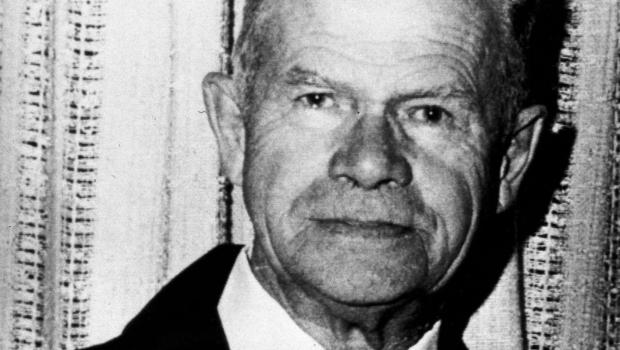
The so-called McCluskey Room in the Plutonium Finishing Plant is named after worker Harold McCluskey.

He was covered with radioactive material in 1976 when a glove box exploded. McCluskey, who was 64 at the time, lived for 11 more years and died from causes not related to the accident. He became known as the Atomic Man.

The room has largely been closed since the accident because of radioactivity. But workers are now proceeding with the final cleanup of the room as they get the Plutonium Finishing Plant ready for demolition.

Hanford, located near Richland, Washington, for decades made plutonium for nuclear weapons. The site is now engaged in cleaning up the resulting radioactive mess.

Cleaning up the McCluskey Room is expected to take a year.

A crew with contractor CH2M HILL Plateau Remediation Co. donned specially designed radiation suits before entering the McCluskey Room earlier this week. One of their first tasks was improving ventilation to better protect workers from airborne contamination as they clean out its equipment.

“This was the first of multiple entries workers will make to clean out processing equipment and get the McCluskey Room ready for demolition along with the rest of the plant,” said Bryan Foley, project director for the Department of Energy. “It has taken a year to prepare for this first entry.”

The room was used to recover americium – a plutonium byproduct – during the Cold War.

McCluskey was working in the room when a chemical reaction caused a glass glove box to explode. He was exposed to the highest dose of radiation from americium ever recorded – 500 times the occupational standard.

Covered with blood, McCluskey was dragged from the room and put into an ambulance headed for the decontamination center. Because he was too hot to handle, he was removed by remote control and transported to a steel-and-concrete isolation tank.

During the next five months, doctors extracted tiny bits of glass and razor-sharp pieces of metal embedded in his skin.

Nurses scrubbed him down three times a day and shaved every inch of his body every day. The radioactive bathwater and thousands of towels became nuclear waste.

McCluskey also received about 600 shots of zinc DTPA, an experimental drug that helped him excrete the radioactive material.

He was placed in isolation in a decontamination facility for five months. Within a year, his body’s radiation count had fallen by about 80 percent and he was allowed to return home.

http://www.cbsnews.com/news/four-decades-later-workers-enter-site-of-atomic-man-accident/?ftag=ACQb72972c

Thanks to B.P. for bringing this to the attention of the It’s Interesting community.

Wake Forest scientists are growing penises in the lab.

Penises grown in laboratories could soon be tested on men by scientists developing technology to help people with congenital abnormalities, or who have undergone surgery for aggressive cancer or suffered traumatic injury.

Researchers at the Wake Forest Institute for Regenerative Medicine in Winston-Salem, North Carolina, are assessing engineered penises for safety, function and durability. They hope to receive approval from the US Food and Drug Administration and to move to human testing within five years.

Professor Anthony Atala, director of the institute, oversaw the team’s successful engineering of penises for rabbits in 2008. “The rabbit studies were very encouraging,” he said, “but to get approval for humans we need all the safety and quality assurance data, we need to show that the materials aren’t toxic, and we have to spell out the manufacturing process, step by step.”

The penises would be grown using a patient’s own cells to avoid the high risk of immunological rejection after organ transplantation from another individual. Cells taken from the remainder of the patient’s penis would be grown in culture for four to six weeks.

For the structure, they wash a donor penis in a mild detergent to remove all donor cells. After two weeks a collagen scaffold of the penis is left, on to which they seed the patient’s cultured cells – smooth muscle cells first, then endothelial cells, which line the blood vessels. Because the method uses a patient’s own penis-specific cells, the technology will not be suitable for female-to-male sex reassignment surgery.

“Our target is to get the organs into patients with injuries or congenital abnormalities,” said Atala, whose work is funded by the US Armed Forces Institute of Regenerative Medicine, which hopes to use the technology to help soldiers who sustain battlefield injuries.

As a paediatric urological surgeon, Atala began his work in 1992 to help children born with genital abnormalities. Because of a lack of available tissue for reconstructive surgery, baby boys with ambiguous genitalia are often given a sex-change at birth, leading to much psychological anguish in later life. “Imagine being genetically male but living as a woman,” he said. “It’s a firmly devastating problem that we hope to help with.”

Asif Muneer, a consultant urological surgeon and andrologist at University College hospital, London, said the technology, if successful, would offer a huge advance over current treatment strategies for men with penile cancer and traumatic injuries. At present, men can have a penis reconstructed using a flap from their forearm or thigh, with a penile prosthetic implanted to simulate an erection.

“My concern is that they might struggle to recreate a natural erection,” he said. “Erectile function is a coordinated neurophysiological process starting in the brain, so I wonder if they can reproduce that function or whether this is just an aesthetic improvement. That will be their challenge.”

Atala’s team are working on 30 different types of tissues and organs, including the kidney and heart. They bioengineered and transplanted the first human bladder in 1999, the first urethra in 2004 and the first vagina in 2005.

Professor James Yoo, a collaborator of Atala’s at Wake Forest Institute, is working on bioengineering and replacing parts of the penis to help treat erectile dysfunction. His focus is on the spongy erectile tissue that fills with blood during an erection, causing the penis to lengthen and stiffen. Disorders such as high blood pressure and diabetes can damage this tissue, and the resulting scar tissue is less elastic, meaning the penis cannot fill fully with blood.

“If we can engineer and replace this tissue, these men can have erections again,” said Yoo, acknowledging the many difficulties. “As a scientist and clinician, it’s this possibility of pushing forward current treatment practice that really keeps you awake at night.”

http://www.theguardian.com/science/2014/oct/05/laboratory-penises-test-on-men

Ebola treatment in Nebraska

Freelance journalist Ashoka Mukpo, who contracted Ebola in Liberia, arrived at the University of Nebraska Medical Center today, becoming the second patient with the deadly disease to be treated there.

Why is he being sent to Nebraska instead of some other facility? Because the hospital is home to the largest of four high-level biocontainment patient care units in the U.S.

The Nebraska Medical Center says the unit was commissioned in 2005 as a joint project with Nebraska Health and Human Services and the University of Nebraska Medical Center.

“It was designed to provide the first line of treatment for people affected by bio terrorism or extremely infectious naturally occurring diseases,” the center’s website says.

“The Ebola virus is very difficult to contract,” says Dr. Phil Smith, medical director of the unit, on its website. “The risk it would pose to people outside the unit would be zero, and this is something that can be very safely treated without infecting health care workers.”

The three other high-level biocontainment facilities in the U.S. are at Rocky Mountain Laboratories (RML) in Hamilton, Mont., the National Institutes of Health in Maryland and Emory University Hospital in Atlanta, where two infected patients were treated this summer.
Dr. Rick Sacra, 51, was treated last month at Nebraska Medical Center. He has since recovered.

In an interview with NPR in August, Bruce Ribner, director of Emory’s Serious Communicable Disease Unit, says caregivers use “personal protective equipment designed to prevent … staff from coming into contact with blood, body fluids and large respiratory droplets.”

Ribner said that the doors at the facility don’t need to be sealed “because all airflow goes into the patient room since the rooms are under negative pressure.”

Gizmodo writes:
“[The] isolation unit in Nebraska is isolated from the rest of the general hospital. It runs on its own air circulation system, and the air is passed through a high-efficiency particulate air (HEPA) filter before it is vented outside of the building. That’s the same kind of precautions that you would see in a biosafety level 4 lab (the highest) that works with deadly or highly contagious diseases.

“In addition, the biocontainment unit has negative air pressure, which means that air pressure inside the isolation rooms is slightly lower than that outside. Essentially, air is gently sucked into the room, so particles from inside the room can’t float out when you open a door. As another line of protection, ultraviolet lights zap any viruses or bacteria in the air or on surfaces.”

Wired says: “[Hospital] staff volunteers at Nebraska Medical Center run twice yearly drills with decontamination at their hospital’s 10-bed biocontainment unit. It’s the country’s largest, opened in 2005 with $1 million in federal and state funding. ‘It’s built like a concrete box,’ says Angela Hewlett, the unit’s associate medical director. ‘We want to keep our germs inside.’ But like Missoula, Nebraska hasn’t seen a single infectious disease patient. Sometimes they use it as overflow for the emergency room.”

http://www.npr.org/blogs/thetwo-way/2014/10/06/354083214/why-ebola-patients-are-getting-treatment-in-nebraska?utm_source=facebook.com&utm_medium=social&utm_campaign=npr&utm_term=nprnews&utm_content=202406

New research may help explain why curiosity promotes better memory

Everyone knows it’s easier to learn about a topic you’re curious about. Now, a new study reveals what’s going on in the brain during that process, revealing that such curiosity may give a person a memory boost.

When participants in the study were feeling curious, they were better at remembering information even about unrelated topics, and brain scans showed activity in areas linked to reward and memory.

The results, detailed October 2 in the journal Neuron, hint at ways to improve learning and memory in both healthy people and those with neurological disorders, the researchers said.

“Curiosity may put the brain in a state that allows it to learn and retain any kind of information, like a vortex that sucks in what you are motivated to learn, and also everything around it,” Matthias Gruber, a memory researcher at the University of California, Davis, said in a statement. “These findings suggest ways to enhance learning in the classroom and other settings.”

Gruber and his colleagues put people in a magnetic resonance imaging (MRI) scanner and showed them a series of trivia questions, asking them to rate their curiosity about the answers to those questions. Later, the participants were shown selected trivia questions, then a picture of a neutral face during a 14-second delay, followed by the answer. Afterward, the participants were given a surprise memory test of the faces, and then a memory test of the trivia answers.

Not surprisingly, the study researchers found that people remembered more information about the trivia when they were curious about the trivia answers. But unexpectedly, when the participants were curious, they were also better at remembering the faces, an entirely unrelated task. Participants who were curious were also more likley than others to remember both the trivia information and unrelated faces a day later, the researchers found.

The brain scans showed that, compared with when their curiosity wasn’t piqued, when people were curious, they showed more activation of brain circuits in the nucleus accumbens, an area involved in reward. These same circuits, mediated by the neurochemical messenger dopamine, are involved in forms of external motivation, such as food, sex or drug addiction.

Finally, being curious while learning seemed to produce a spike of activity in the hippocampus, an area involved in forming new memories, and strengthened the link between memory and reward brain circuits.

The study’s findings not only highlight the importance of curiosity for learning in healthy people, but could also give insight into neurological conditions. For example, as people age, their dopamine circuits tend to deteriorate, so understanding how curiosity affects these circuits could help scientists develop treatments for patients with memory disorders, the researchers said.

http://www.livescience.com/48121-curiosity-boosts-memory-learning.html

Could Ebola be used as an ISIS bio-weapon?

Ebola_Virus_Imaging_Wide

ISIS may already be thinking of using Ebola as a low-tech weapon of bio-terror, says a national security expert, who notes that the “Islamic State of Iraq and Syria” and terror groups like it wouldn’t even have to weaponize the virus to attempt to wreak strategic global infection.

Such groups could simply use human carriers to intentionally infect themselves in West Africa, then disseminate the deadly virus via the world’s air transportation system. Or so says Capt. Al Shimkus, Ret., a Professor of National Security Affairs at the U.S. Naval War College.

“The individual exposed to the Ebola Virus would be the carrier,” Shimkus told Forbes. “In the context of terrorist activity, it doesn’t take much sophistication to go to that next step to use a human being as a carrier.”

And with a significant portion of West Africa now in an open epidemic, it arguably wouldn’t be difficult for a terrorist group to simply waltz in and make off with some infected bodily fluids for use at a later time elsewhere.

They wouldn’t even have to “isolate” it, says Shimkus, who teaches a course in chemical and biological warfare. He says that if ISIS wanted to send half a dozen of its operatives into an Ebola outbreak region and intentionally expose themselves to the virus, they very well could. The idea is then once they had intentionally infected themselves, they would try to interact with as many people in their target city or country of choice.

The average fatality rate from Ebola, classified as a hemorrhagic fever, is 50 percent; but without medical treatment, that figure can range as high as 90 percent, reports the U.N. World Health Organization (WHO). The WHO also notes that although there are two potential vaccines undergoing “evaluation,” at present none are licensed.

The virus was first documented in humans in 1976 during two simultaneous outbreaks, one in Sudan and the other in the Congo, in a village near the Ebola River. The WHO reports that a type of fruit bat is thought to act as the virus’ natural host.

The virus apparently spreads into the human population via direct contact with infected animals — ranging from chimpanzees, gorillas, monkeys, forest antelope and porcupines; as well as the fruit bat itself — be they found ill or dead in the rain forest. According to the WHO, Ebola can then be spread via contact with the infected’s bodily fluids; even bedding and clothing “contaminated” with such fluids.

The idea of using human carriers to intentionally spread deadly pathogens has been around for centuries. As Shimkus points out, in the Middle Ages, adversaries threw infected corpses over their enemy’s city walls in order to spread the deadly Bubonic Plague.

If ISIS or another terrorist actor were to use Ebola in a similar manner today, Shimkus says the possibility of identifying those infected as they enter and leave the country is excellent but not 100 percent.

Even in the event of terrorists using carriers to spread Ebola in western countries like the U.S., Shimkus doesn’t think the virus would spread exponentially simply because, in theory, advanced health care systems would be equipped to identify, isolate and stop the virus.

In the May 2013 issue of the journal Global Policy, however, Amanda Teckman, author of the paper “The Bioterrorist Threat of Ebola in East Africa and Implications for Global Health and Security” concluded that “the threat of an Ebola bioterrorist attack in East Africa is a global health and security concern, and should not be ignored.”

Teckman, who holds a master’s in diplomacy and international relations at Seton Hall University, told Forbes that because ISIS’ recent beheadings are aimed at garnering attention for their self-proclaimed goal of creating an Islamic state under Sharia Law, the group is unlikely to go through the trouble of using Ebola as a weapon of terror.

“They already have our attention,” said Teckman. “But just because this is not probable for ISIS, I do believe others will at least contemplate using such suicide infectors.”

http://www.forbes.com/sites/brucedorminey/2014/10/05/ebola-as-isis-bio-weapon/

Physicists discover the Majorna Particle, originally predicted in 1937, which is simultaneously matter and anti-matter

Since the 1930s scientists have been searching for particles that are simultaneously matter and antimatter. Now physicists have found strong evidence for one such entity inside a superconducting material. The discovery could represent the first so-called Majorana particle, and may help researchers encode information for quantum computers.

Physicists think that every particle of matter has an antimatter counterpart with equal mass but opposite charge. When matter meets its antimatter equivalent, the two annihilate one another. But some particles might be their own antimatter partners, according to a 1937 prediction by Italian physicist Ettore Majorana. For the first time researchers say they have imaged one of these Majorana particles, and report their findings in the October 3 Science.

The new Majorana particle showed up inside a superconductor, a material in which the free movement of electrons allows electricity to flow without resistance. The research team, led by Ali Yazdani of Princeton University, placed a long chain of iron atoms, which are magnetic, on top of a superconductor made of lead. Normally, magnetism disrupts superconductors, which depend on a lack of magnetic fields for their electrons to flow unimpeded. But in this case the magnetic chain turned into a special type of superconductor in which electrons next to one another in the chain coordinated their spins to simultaneously satisfy the requirements of magnetism and superconductivity. Each of these pairs can be thought of as an electron and an antielectron, with a negative and a positive charge, respectively. That arrangement, however, leaves one electron at each end of the chain without a neighbor to pair with, causing them to take on the properties of both electrons and antielectrons—in other words, Majorana particles.

As opposed to particles found in a vacuum, unattached to other matter, these Majoranas are what’s called “emergent particles.” They emerge from the collective properties of the surrounding matter and could not exist outside the superconductor.

The new study shows a convincing signature of Majorana particles, says Leo Kouwenhoven of the Delft University of Technology in the Netherlands who was not involved in the research but previously found signs of Majorana particles in a different superconductor arrangement. “But to really speak of full proof, unambiguous evidence, I think you have to do a DNA test.” Such a test, he says, must show the particles do not obey the normal laws of the two known classes of particles in nature—fermions (protons, electrons and most other particles we are familiar with) and bosons (photons and other force-carrying particles, including the Higgs boson). “The great thing about Majoranas is that they are potentially a new class of particle,” Kouwenhoven adds. “If you find a new class of particles, that really would add a new chapter to physics.”

Physicist Jason Alicea of California Institute of Technology, who also did not participate in the research, said the study offers “compelling evidence” for Majorana particles but that “we should keep in mind possible alternative explanations—even if there are no immediately obvious candidates.” He praised the experimental setup for its apparent ability to easily produce the elusive Majoranas. “One of the great virtues of their platform relative to earlier works is that it allowed the researchers to apply a new type of microscope to probe the detailed anatomy of the physics.”

The discovery could have implications for searches for free Majorana particles outside of superconducting materials. Many physicists suspect neutrinos—very lightweight particles with the strange ability to alter their identities, or flavors—are Majorana particles, and experiments are ongoing to investigate whether this is the case. Now that we know Majorana particles can exist inside superconductors, it might not be surprising to find them in nature, Yazdani says. “Once you find the concept to be correct, it’s very likely that it shows up in another layer of physics. That’s what’s exciting.”

The finding could also be useful for constructing quantum computers that harness the laws of quantum mechanics to make calculations many times faster than conventional computers. One of the main issues in building a quantum computer is the susceptibility of quantum properties such as entanglement (a connection between two particles such that an action on one affects the other) to collapse due to outside interference. A particle chain with Majoranas capping each end would be somewhat immune to this danger, because damage would have to be done to both ends simultaneously to destroy any information encoded there. “You could build a quantum bit based on these Majoranas,” Yazdani says. ”The idea is that such a bit would be much more robust to the environment than the types of bits people have tried to make so far.”

http://www.scientificamerican.com/article/majorana-particle-matter-and-antimatter/

Archaeologists Believe They Found Dracula’s Dungeon in Turkey

castle


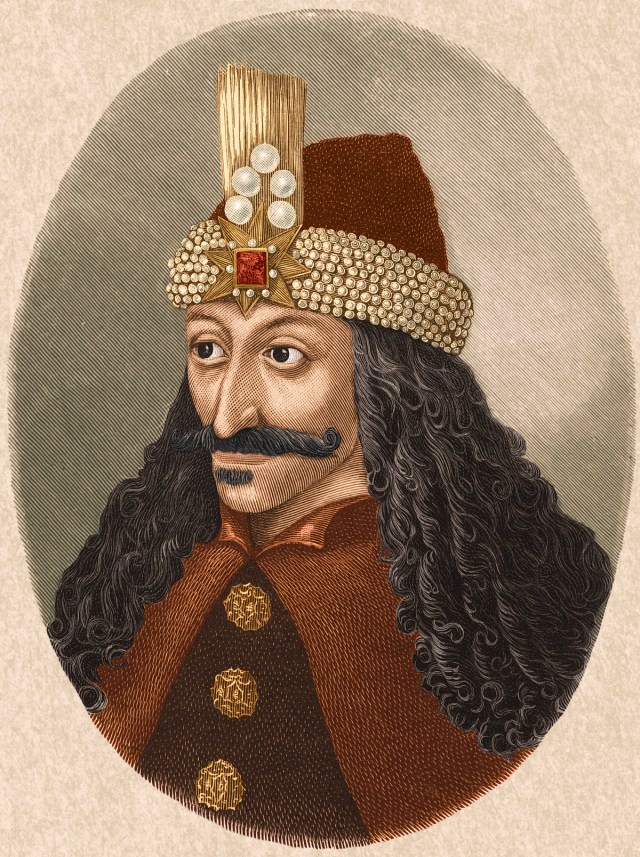
The dungeon believed to have held Vlad the Impaler, the inspiration for the blood-thirsty character, was recently discovered in Turkey

Archeologists in Turkey have reportedly discovered the dungeon where the real-life basis for Count Dracula was held.

The cell where history’s Dracula, the Romanian prince Vlad III (nicknamed Vlad the Impaler for his gruesome tendency to impale his foes), was recently discovered during a restoration project, the Turkey-based Hurriyet Daily News reports.

Restoration works in the Tokat Castle have discovered a secret tunnel leading to the Pervane Bath and a military shelter. Two dungeons have also been discovered in the castle, where Wallachian Prince Vlad III the Impaler, who was also known as Dracula, is said to have been held captive in the early 15th century.

The ongoing restoration works, which have continued for 10 weeks, have also restored and reinforced its bastions, which were used as defense in the Seljuk and Ottoman era.

“We try to shed light on history with the structure layers we unearth,” said archaeologist İbrahim Çetin, who works on the excavations. He said that the team has found food cubes and an open terrace, as well as the military shelter and dungeons that were “built like a prison.”

Çetin noted the presence of many tunnels surrounding the site. “The castle is completely surrounded by secret tunnels. It is very mysterious,” he said.

Çetin said that Dracula had been kept captive in one of these uncovered dungeons. “It is hard to estimate in which room Dracula was kept, but he was around here,” he said.

The Turkish archaeologist did not elaborate. Vlad III lived between 1431 and 1476. Most historians say he was kept in captivity in Romania. The exact length of his period of captivity is open to debate, though indications are that it was from 1462 to 1474.

http://time.com/3453948/archaeologists-believe-they-found-draculas-dungeon/#3453948/archaeologists-believe-they-found-draculas-dungeon/

New research projects that climate change may increase female:male ratio

Climate change could affect the ratio of human males to human females that are born in some countries, a new study from Japan suggests. The researchers found that male fetuses may be particularly vulnerable to the effects of climate change.

Since the 1970s, temperature fluctuations from the norm have become more common in Japan, and at the same time there has been an increase in the deaths of male fetuses, relative to the number of deaths of female fetuses in that country, according to the study.

Over this period, the ratio of male to female babies born in the country has been decreasing, meaning there have been fewer and fewer male babies born relative to the number of female babies born.

http://www.livescience.com/48070-male-fetus-climate-change.html

Cowbells make cows miserable

A field of cowbell-equipped-cows may create a soothing soundscape of wind and chimes, but what’s soothing to us doesn’t translate to the cows. Though Christopher Walken and internet humor from over 14 years ago require more cowbell, it turns out the actual bovine after which the bells are named really hate the things.

A study was performed as part of a doctoral dissertation for the Swiss Federal Institute of Technology in Zurich where agricultural scientist Julia Johns and a colleague measured the decibel levels of cowbells. The team attached 12-pound cowbells to over 100 cows across 25 locations around the country, and it turns out the cowbells can reach decibel levels of 113 — far above the legal limit of 85. The cowbells aren’t just over the legal limit, but reach a level of noise equivalent to a jackhammer or a chainsaw.

The team studied the cows reactions, and found that the cows exposed to the cowbells chew their food for significantly less time than the cows without the bells, and some cows have even proven to have their hearing severely impaired.

The team does admit that the weight of the bells could also negatively affect the cows, but a slightly heavy cowbell necklace likely wouldn’t cause hearing impairment.

Farmers use the bells to locate cows grazing in pasture, but researchers have suggested replacing them with GPS trackers. However, the farmers claim that poor reception in the mountainous areas would make that solution difficult.

http://www.geek.com/geek-cetera/it-turns-out-that-cowbells-make-cows-miserable-1605552/

New invisibility technology


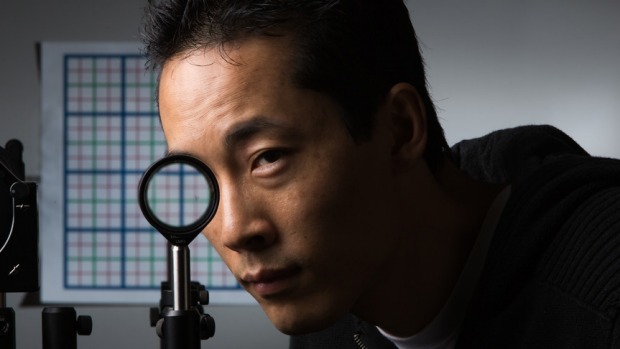
Doctoral student Joseph Choi demonstrates a multidirectional ‘perfect paraxial’ cloak using 4 lenses.


Choi uses his hand to further demonstrate his device.


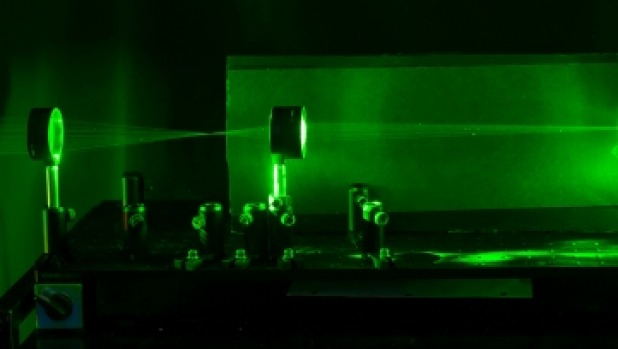
A laser shows the paths that light rays travel through the system, showing regions that can be used for cloaking an object.

Scientists at the University of Rochester have discovered a way to hide large objects from sight using inexpensive and readily available lenses.

Cloaking is the process by which an object becomes hidden from view, while everything else around the cloaked object appears undisturbed.

“A lot of people have worked on a lot of different aspects of optical cloaking for years,” John Howell, a professor of physics at the upstate New York school, said on Friday.

The so-called Rochester Cloak is not really a tangible cloak at all. Rather the device looks like equipment used by an optometrist. When an object is placed behind the layered lenses it seems to disappear.

Previous cloaking methods have been complicated, expensive, and not able to hide objects in three dimensions when viewed at varying angles, they say.

“From what, we know this is the first cloaking device that provides three-dimensional, continuously multidirectional cloaking,” said Joseph Choi, a graduate student who helped develop the method at Rochester, which is renowned for its optical research.

In their tests, the researchers have cloaked a hand, a face, and a ruler – making each object appear “invisible” while the image behind the hidden object remains in view. The implications for the discovery are endless, they say.

“I imagine this could be used to cloak a trailer on the back of a semi-truck so the driver can see directly behind him,” Choi said. “It can be used for surgery, in the military, in interior design, art.”

Howell said the Rochester Cloak, like the fictitious cloak described in the pages of the Harry Potter series, causes no distortion of the background object.

Building the device does not break the bank either. It cost Howell and Choi a little over $US1000 ($1140) in materials to create it and they believe it can be done even cheaper.

Although a patent is pending, they have released simple instructions on how to create a Rochester Cloak at home for under $US100 (114).

There is also a one-minute video about the project on YouTube.

http://www.smh.com.au/technology/sci-tech/scientists-unveil-invisibility-cloak-to-rival-harry-potters-20140927-10n1dp.html