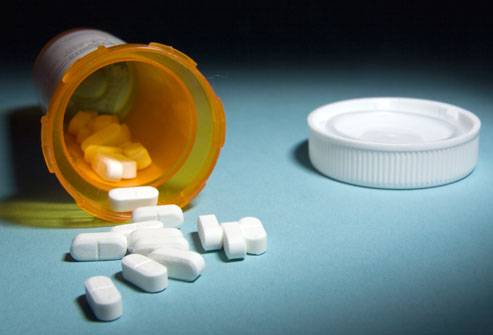
More People ‘Microdosing’ on Psychedelic Drugs

by Tia Ghose

For Martijn Schirp, it’s a way to make an ordinary day just a little bit better.

A former poker player and recent graduate in interdisciplinary science in Amsterdam, Schirp has been experimenting with a new way to take psychedelic drugs: Called microdosing, it involves routinely taking a small fraction of a normal dose of lysergic acid diethylamide (LSD) or magic mushrooms.

Microdosing has gained a cult following amongst a small group of hallucinogen enthusiasts like Schirp, who now writes at HighExistence.com. Proponents report improvements in perception, mood and focus, minus the trippy tangerine trees and marmalade skies normally associated with psychedelics.

Schirp said he prefers to microdose when he’s immersed in creative or contemplative activities, such as writing, painting, meditating or doing yoga.

“It’s like the coffee to wake up the mind-body connection. When I notice it is working, depending on the dosage, time seems to be slowing down a bit, everything seems covered with a layer of extra significance,” Schirp told Live Science in an email.

Given his positive experiences with higher doses of psychedelics, “microdosing offered a way to get a taste of this without [the experience] completely overwhelming me,” Schirp said.

But while the effects Schirp and others describe are plausible from a physiological perspective, microdosing is uncharted territory, said Matt Johnson, a psychologist at Johns Hopkins University in Baltimore, Maryland, who has studied the behavioral effects of psychedelic drugs. Scientists have yet to run a clinical trial to assess the effects (or lack thereof) of microdosing. Johnson added that taking a smaller dose of a psychedelic is safer than taking a large dose, but the way people tend to do it — regularly taking small doses every several days — could have long-term side effects.

Just a little bit

The idea of taking small doses of psychedelics has been around for a while. The inventor of LSD, Albert Hofmann, was known to microdose in his old age and told a friend that microdosing was an under-researched area. But microdosing gained greater visibility when James Fadiman, a psychologist and researcher at Sofia University in Palo Alto, California, described it in his book “The Psychedelic Explorer’s Guide” (Park Street Press, 2011).

Since then, Fadiman has received about 50 anecdotal reports from microdosers around the world. Most report positive, barely perceptible shifts while microdosing, Fadiman said.

“What people say is that whatever they’re doing, they seem to be doing it a little better,” Fadiman told Live Science. “They’re a little kinder, a little bit nicer with their kids.”

People with creative jobs report improved focus and an ability to enter the state of flow more easily. Some report a desire to eat healthier or start meditating, Fadiman said.

“It’s like they tend to live a little better,” Fadiman said.

Still others report taking the teeny doses of psychedelics for psychiatric conditions, said Brad Burge, the director of marketing and communications at Multidisciplinary Association for Psychedelic Studies in Santa Cruz, California, where scientists study the effect of psychedelics on medical conditions such as PTSD.

“I’ve heard anecdotally of people using it for depression, seasonal affective disorder, anxiety, OCD [obsessive compulsive disorder],” Burge told Live Science. “With microdoses, the point would be to create subtle changes in people’s psychopharmacology or experience, in much the same way as most traditional pharmaceuticals are used now.”

Plausible mechanism, no evidence

The effects people report with microdoses of LSD, psilocybin, DMT or other “classic” psychedelics aren’t completely implausible, Johnson said. All of these drugs work by activating a particular receptor in the brain known as the serotonin 5HT-2A receptor. This receptor fuels the release of the “feel-good” brain chemical, serotonin, which creates a domino effect in the brain that leads to many other brain changes.

At high doses, these drugs temporarily, but radically, reshape brain networks; for instance, one study found that magic mushrooms create a hyperconnected brain. But antidepressants like Prozac also target serotonin receptors, so it’s possible that a low, constant dose of a psychedelic might work in a similar manner, Johnson said.

Still, there’s absolutely no evidence to suggest microdosing works as people claim it does, Johnson said. The effects described are so subtle — on par with having the caffeine in a cup of coffee — that they “fall within that category of barely perceptible, and it’s right in the range where people can so easily fool themselves,” Johnson told Live Science. That means microdosing is particularly susceptible to the placebo effect, in which people taking a sugar pill who believe they’re taking a drug report perceptible effects, he said.

To prove that microdosing has an effect, psychedelics researchers would need to do a double-blind study, in which neither the people administering the drug nor the recipients know whether a particular participant is getting a microdose of a psychedelic or something inert, like a little sugar dissolved in water, Johnson said. Some groups of people are allegedly doing these trials — but because LSD is illegal, and is only approved for research use in a few small trials in a few locations, all of these people are off the grid and not publicizing their efforts, Fadiman said.

Unknown side effects

What’s more, microdosing could have side effects, Johnson said. The few microscopic grains of LSD — just 10 micrograms — typically used to microdose are too tiny to measure even on a professional laboratory scale, Johnson said. To get around this, people who microdose typically take a blotter paper laced with one hit of LSD, soak it in water and then drink some of the water. But since LSD is an illegal substance procured on the black market, there’s really no way to know exactly what you’re getting, Johnson said.

Even in the lab, with carefully measured doses of drugs administered in a controlled environment, Johnson has found substantial variation in the way that people react to the same dose. Combined, those two uncertainties mean people may not be able to reliably microdose, he said.

“Someone might be expecting a kind of sparkly day, just a really productive day at work — and next thing you know, they’re grasping hold to their office chair wondering why the world is dissolving,” Johnson said.

Schirp, for instance, has occasionally had negative microdosing experiences.

“At times, the experience was still too overwhelming to be productive — I just wanted to lay down or take a walk,” Schirp said.

Beyond that possible experience, the long-term risks of the drug are unknown. The risk of taking a single, tiny dose of LSD or psilocybin is going to be smaller than the risk of taking one big hit, Johnson said. But even the most dedicated psychonauts don’t typically trip daily or even weekly, Johnson said. By contrast, people who are microdosing report using the drugs every three or four days, he said.

Such frequent use could have unknown, long-term side effects, he said.

“You’re tinkering with the system that is involved with depressive systems, but in unexplored ways,” Johnson said.

http://www.livescience.com/51482-more-people-microdosing-psychedelic-drugs.html

Welsh government responds in Klingon to UFO airport query


Klingon was the chosen language for the Welsh government in its response to queries about UFO sightings at Cardiff Airport.

While English and Welsh are the usual forms of communications in the Senedd, it opted for the native tongue of the enemies of Star Trek’s Captain Kirk.

Shadow Health Minister Darren Millar had asked for details of UFOs sightings and asked if research would be funded.

A Welsh government spokesman responded with: “jang vIDa je due luq.”

The Welsh government statement continued: “‘ach ghotvam’e’ QI’yaH devolve qaS.”

In full it said it translated as: “The minister will reply in due course. However this is a non-devolved matter.”

It is believed to be the first time the Welsh government has chosen to communicate in Klingon.

Mr Millar, shadow health minister and AM for Clwyd West, submitted three questions to economy, science and transport minister Edwina Hart about UFO reports around the airport and across the rest of Wales.

Responding to the government’s unusual diversion into trilingualism, Mr Millar said: “I’ve always suspected that Labour ministers came from another planet. This response confirms it.”

Mr Millar asked:

1) Will the minister make a statement on how many reports of unidentified flying objects there have been at Cardiff Airport since its acquisition by the Welsh government?

2) What discussions has the Welsh government had with the Ministry of Defence regarding sightings of unidentified flying objects in Wales in each of the past five years?

3) What consideration has the Welsh government given to the funding of research into sightings of unidentified flying objects in Wales?

http://www.bbc.com/news/uk-wales-33479808

Meet the Man Trying to Use Ayahuasca to Treat PTSD

Deep in the Amazon rainforest, a group of veterans chokes down a gritty, gut-wrenching shot of liquid absolution. They try to drink away their severe mental disturbances, but not the way you drink away your ex-girlfriend with a bottle of whiskey. They’re looking for a cure. Their leader: 27-year-old retired infantryman Ryan LeCompte. Their goal: to hallucinate away their terrible memories.

From a few fringe psychiatrists to veterans like LeCompte, there is a budding belief that extreme hallucination can save our brains from themselves. Several organizations, including the Multidisciplinary Association for Psychedelic Studies (MAPS), and adventurous doctors around the world test out psychedelics such as MDMA, psilocybin and ayahuasca for possible medical uses.

Ayahuasca is a devilish brew. It’s made of vines and roots found in the Amazon; drinking it equals a heavy psychedelic experience and profuse vomiting. “As the shapes and colors continued to move about, they sometimes converged to create the face of a woman, who of course I immediately labeled as Aya,” says an ayahuasca user on the underground drug website Erowid. Aya is known as the spirit or soul of the ayahuasca world. LeCompte described having kaleidoscope vision during his ayahuasca trip, and he even began to dance and went to look at leaves and other pieces of the nature around him at points.

Ryan LeCompte is a scruffy former Marine who, today, is studying at the eccentric Naropa University in Boulder. The school was founded by Tibetan Buddhist teacher and Oxford University scholar Chögyam Trungpa and includes schools such as the Jack Kerouac School of Disembodied Poetics. The beat poets used to flock to there. It’s a Buddhist-inspired school infamous for attracting people who are looking for an alternative education in an attractive location.

For his part, LeCompte didn’t ever face a PTSD diagnosis during his time in service. But he’s lucky, because many of his peers did. What he did experience still shook him. In 2008, while stationed in 8th and I Marine Barracks in Washington, D.C., LeCompte walked into the room of a good friend in his barracks one morning to find Sgt. Jorge Leon-Alcivar dead—a suicide. He was not the only Marine LeCompte encountered who would take his own life. At least 22 veterans kill themselves every day. Leon-Alcivar’s death was the final straw, and three years later LeCompte retired from the Marines to start fighting PTSD. He received his End of Active Service honorable discharge after four years in the Marines and didn’t look back.

LeCompte began traveling to the VA hospital in Birmingham, Alabama, where he was living, to learn what was ailing disturbed veterans and soldiers. He hung around in waiting rooms, cautiously approaching the soldiers, wheedling their stories out. But it didn’t take much persuasion; the men were “so beat,” he recalls, that they opened up to him instantly. This took course over several years, during his free time, while he did contract work building helicopters.

Soon, LeCompte had amassed the information from about 100 cases in Birmingham; Veterans spilled almost everything to him: their meds, their dosages, their choice of therapy. It all added up. Over and over again, he discovered his peers were taking the same types of medicines such Zoloft and Paxil, in the same dosages, 50 to 200mg of Zoloft a day or 20 to 60mg of Paxil a day were common, and with the same form of EMDR therapy. EMDR is a somatic therapy that follows eye movements and dream states.

LeCompte didn’t see anything wrong with the therapy. How about the drugs? Yeah, it’s probably the drugs. LeCompte’s complaints ring of an old story these days in American psychiatry: we’re too drugged up, we’re overdosed and overdiagnosed. It’s a complaint plenty of professionals agree with, but only a handful of psychiatrists are taking alternate routes. “There are some veterans who actually do respond to those meds, but it’s rare,” Dr. Sue Sisley, an expert on PTSD in veterans who has studied treating the illness with marijuana, told ATTN:. “The vets who respond to the standard FDA approved meds like Zoloft or Paxil is probably less than 10 percent. The rest come in looking like zombies.”

LeCompte had tried almost all the drugs they were offering, from “highly addictive anxiolytics like Klonopin, and … Prozac as an anti-depressant and Ambien for a sleep aid,” he said. “These different drugs sort of mixed together in a cocktail just as a recipe for disaster,” he said. He never tried to contact U.S. Veteran’s Affairs to inform them of these problems, because he didn’t think they would do anything about it. VA psychiatrists like Dr. Basimah Khulusi of Missouri have been fired for simply refusing to increase medication dosages that they didn’t think their patients needed shows the kind of system LeCompte was dealing with.

LeCompte looked into how these drugs work and found they’re just mind blockers, they’re not helping you deal with your problems. “Medications do not entirely eliminate symptoms but provide a symptom reduction and are sometimes more effective when used in conjunction with an ongoing program of trauma specific psychotherapy,” according to the VA website.

LeCompte looked at research from people like Julie D. Megler, watched videos of the academic conferences focusing on psychedelics called Psychedemia from Penn State and went on websites like Erowid to look at ayahuasca experiences people had posted to the site. What did he learn? “Something like ayahuasca or MDMA is used to bridge severed connections in the brain that trauma plays a big part in creating,” he said.

“Ayahuasca opens the limbic pathways of the brain to affect the emotional core of the trauma in a way similar to affective psychotherapy for trauma, and also impacts higher cortical areas … to allow the patient to assign a new context to their trauma,” wrote brain experts J. L. Nielson and J. D. Megler, in the book The Therapeutic Use of Ayahuasca.

Soon, LeCompte started having conversations with veterans and began informing people of the possible benefits of ayahuasca, wondering if anyone else was daring enough to start considering the idea of drinking a shot of psychedelics for their PTSD. LeCompte had never tried ayahuasca, but he was willing to try anything to help his comrades. Eventually he heard of an ayahuasca retreat, the Phoenix Ayahuasca retreat in Peru, where he could test out his medicine.

It took him six months to do what any sane person would do before planning a group outing to South America to hallucinate in a forest together… he started a nonprofit. Its name? The Veterans for Entheogenic Therapy. Other vets started to find him; some were suicidal, exhausted by the daily challenge of deciding whether or not they wanted to be alive. He didn’t know them, but he felt he intimately understood – or at least sympathized with – their minds. He rounded up a trip: five other vets, and him. MAPS helped pay for two of the trips for veterans who couldn’t afford it, and the rest paid for themselves.

The prep was strangely regimented: LeCompte had to ensure the veterans were off their medication for a month leading up to the trip; anti-depressants plus ayahuasca equal a lethal mix. That task amounted to phone therapy and keeping a close eye on everyone: He called the guys every day, even their friends and family, to make sure the men had quit their pills, he said. But he made it work. The families may have thought the idea was strange, but LeCompte says none of them tried to stop their family members because of their knowledge that the drugs weren’t helping treat the PTSD symptoms, and they just wanted to help their family.

The veterans flew into Iquitos, Peru, from Lima – from Iquitos, they sat in a van all the way to the Amazon, winding past motorbikes and rickshaws “on back roads in the middle of bum fuck,” LeCompte says.

Then their lives collided and things got weird.

They were stationed for 10 days at Phoenix Ayahuasca. The camp was little more than a set of huts in the jungle, made from wood and leaves. They would drink the ayahuasca on ceremony nights and be led through their experience by the shaman, and they would stay in their personal huts on days off to reflect on their experiences alone.

LeCompte said the ayahuasca drink “tastes like shit.” The shaman leading the experience dressed in all white scrub-like clothes, like a nurse lost in the jungle. After you drink the brew, the shaman’s job is simply to observe. He diagnoses: Is anyone losing it? Some people have been known to begin convulsing. Is this the moment they need to hear a song that will send them burrowing into a different dimension? “I don’t know how he does it. It’s beyond my rational mind,” LeCompte said. “It” amounts to singing, blowing smoke on trippers’ faces and using instruments like a rattler to change their state of mind.

For his part, LeCompte only wanted two out of the four drink ceremonies, since they were so powerful. It certainly wasn’t about the PTSD for LeCompte; he was trying to get past his experiences of fallen friends and broken relationships. He says just returning home to family and friends from military service or an ayahuasca trip is a difficult experience of its own. “You’re a changed person and there’s no doubting or denying that.”

“Most people get a cut, and they put a bandaid on it,” he said. “These people have had these wounds for so long that they’ve become infected. The infection can’t be fought off with a bandaid.” LeCompte sees ayahuasca as an antibiotic, not a bandaid.

LeCompte is now planning to do an official study to look at how ayahuasca could treat PTSD, which will serve as his thesis for Naropa University. It is being sponsored by MAPS, and it will focus on 12 veterans with treatment resistant PTSD who will try using ayahuasca to treat it. The plan is to conduct the study over 10 days in early 2016. LeCompte is currently running an Indiegogo campaign to fund research and education around the medicinal use of ayahuasca.

http://www.stumbleupon.com/su/2KDuBh/:1EfXhqlsu:Y+0NYw4t/www.attn.com/stories/2301/semicolon-tattoo-mental-health

Pupil Response Predicts Depression Risk in Kids

Emerging research suggests pupil dilation in children of depressed mothers when seeing an emotional image can help predict his or her risk of depression over the next two years.

Dr. Brandon Gibb, a professor of psychology at Binghamton University in New York, said the new findings suggest physiological reactivity to sad stimuli can be a potential biomarker of depression risk for some kids.

An important aspect of this finding is that pupillometry is an inexpensive tool that could be administered in family practice or pediatricians’ offices.

The simple test can help identify which children of depressed mothers are at highest risk for developing depression themselves.

“We think this line of research could eventually lead to universal screenings in pediatricians’ offices to assess future depression risk in kids,” said Gibb.

Gibb recruited children whose mothers had a history of major depressive disorder and measured their pupil dilation as they viewed angry, happy, and sad faces.

Follow-up assessments occurred over the next two years, during which structured interviews were used to assess for the children’s level of depressive symptoms, as well as the onset of depressive diagnoses.

Researchers found that a child’s reaction to faces can help predict the risk of developing short-term depression.

Specifically, children exhibiting relatively greater pupil dilation to sad faces experienced higher levels of depressive symptoms during the follow-up period. They also displayed a shorter time to the onset of a clinically significant depressive episode.

Interestingly, the type of emotions displayed by faces were a significant predictor of future depression. That is, the findings were specific to children’s pupil responses to sad faces and were not observed for children’s pupillary reactivity to angry or happy faces.

http://psychcentral.com/news/2015/07/09/new-predictive-test-for-childhood-depression/86632.html

Bullying by peers has even more severe effects on adulthood mental health than mistreatment by adults in childhood

By Ashley Strickland

Bullying can be defined by many things. It’s teasing, name-calling, stereotyping, fighting, exclusion, spreading rumors, public shaming and aggressive intimidation. It can be in person and online. But it can no longer be considered a rite of passage that strengthens character, new research suggests.

Adolescents who are bullied by their peers actually suffer from worse long-term mental health effects than children who are maltreated by adults, based on a study published last week in The Lancet Psychiatry.

The findings were a surprise to Dr. Dieter Wolke and his team that led the study, who expected the two groups to be similarly affected. However, because children tend to spend more time with their peers, it stands to reason that if they have negative relationships with one another, the effects could be severe and long-lasting, he said. They also found that children maltreated by adults were more likely to be bullied.

The researchers discovered that children who were bullied are more likely to suffer anxiety, depression and consider self-harm and suicide later in life.

While all children face conflict, disagreements between friends can usually be resolved in some way. But the repetitive nature of bullying is what can cause such harm, Wolke said.

“Bullying is comparable to a scenario for a caged animal,” he said. “The classroom is a place where you’re with people you didn’t choose to be with, and you can’t escape them if something negative happens.”

Children can internalize the harmful effects of bullying, which creates stress-related issues such as anxiety and depression, or they can externalize it by turning from a victim to a bully themselves. Either way, the result has a painful impact.

The study also concluded with a call to action, suggesting that while the government has justifiably focused on addressing maltreatment and abuse in the home, they should also consider bullying as a serious problem that requires schools, health services and communities to prevent, respond to or stop this abusive culture from forming.

“It’s a community problem,” Wolke said. “Physicians don’t ask about bullying. Health professionals, educators and legislation could provide parents with medical and social resources. We all need to be trained to ask about peer relationships.”

Stopping bullying in schools

Division and misunderstanding are some of the motivations behind bullying because they highlight differences. If children don’t understand those differences, they can form negative associations, said Johanna Eager, director for the Human Rights Campaign Foundation’s Welcoming Schools program.

Programs such as Welcoming Schools, for kindergarten through fifth grade, and Not in Our School, a movement for kindergarten through high school, want to help teachers, parents and children to stop a culture of bullying from taking hold in a school or community.

They offer lesson plans, staff training and speakers for schools, as well as events for parents.

Welcoming Schools is focused on helping children embrace diversity and overcome stereotypes at a young age. It’s the best place to start to prevent damaging habits that could turn into bullying by middle school or high school.

The lesson plans aim to help teachers and students by encouraging that our differences are positive aspects rather than negatives, whether it be in appearance, gender or religion, Eager said. They are also designed to help teachers lead discussions and answer tough questions that might come up.

Teachable moments present themselves in these classrooms daily, and Welcoming Schools offers resources to navigate those difficult moments. If they are prepared, teachers can address it and following up with a question.

They cover questions from “Why do you think it’s wrong for a boy to wear pink?” and “What does it mean to be gay or lesbian?” to “Would you be an ally or a bystander if someone was picking on your friend?” and “Why does it hurt when someone says this?”

Welcoming Schools is present in more than 30 states, working with about 500 schools and 115 districts.

Not in Our School has the same mission to create identity-safe school climates that encourage acceptance. They want to help build empathy in students and encourage them to become “upstanders” rather than bystanders.

Their lesson plans and videos, viewed by schools across the country, include teaching students about how to safely intervene in a situation, reach out to a trusted adult, befriend a bullied child or be an activist against bullying. While the role of teachers, counselors and resource officers will always be important, peer-to-peer relationships make a big difference, said Becki Cohn-Vargas, director of Not in Our Schools.

These positive practices can help build self-esteem and don’t focus on punishing bullies because the emphasis is on restorative justice: repairing harm and helping children and teens to change their aggressive behavior.

But it can’t be up to the schools alone.

“What’s really important is getting the public and the medical world to recognize bullying for what it is — a serious issue,” Cohn-Vargas said.

A global problem

Bullying, the study suggests, is a global issue. It is particularly prevalent in countries where there are rigid class divisions between higher and lower income families, Wolke said.

Dr. Tracy Vaillancourt, a University of Ottawa professor and Canada Research Chair for Children’s Mental Health and Violence Prevention, believes that defining bullying can help in how we address it. Look at it as a behavior that causes harm, rather than normal adolescent behavior, she said.

Role models should also keep a close eye on their own behavior, she said. Sometimes, adults can say or do things in front of their children that mimic aggressive behavior, such gossiping, demeaning others, encouraging their children to hit back or allowing sibling rivalry to escalate into something more harmful.

“We tend to admire power,” Vaillancourt said. “But we also tend to abuse power, because we don’t talk about achieving power in an appropriate way. Bullying is part of the human condition, but that doesn’t make it right. We should be taking care of each other. ”

The study compared young adults in the United States and the United Kingdom who were maltreated and bullied in childhood. Data was collected from two separate studies, comparing 4,026 participants from the Avon Longitudinal Study of Parents and Children in the UK and 1,273 participants from the Great Smoky Mountain Study in the U.S.

The UK data looked at maltreatment from the ages of 8 weeks to 8.6 years, bullying at ages 8, 10 and 13 and the mental health effects at age 18. The U.S. study presented data on bullying and maltreatment between the ages of 9 and 16, and the mental health effects from ages 19 to 25.

http://www.thelancet.com/journals/lanpsy/article/PIIS2215-0366(15)00165-0/abstract

Adidas makes shoes out of trash pulled from the ocean

Adidas has just made a pair of sneakers using ocean-recovered garbage.

If you didn’t already know it, the oceans are indeed teeming with trash. Everything from consumer plastics to paper to discarded fishing gear litters the seas, polluting the water and threatening wildlife.

Adidas is hoping that its new kicks, unveiled earlier this month, will help to highlight the ocean-based environmental issue and promote efforts to get on top of it.

The concept shoe is the result of a collaboration between the German sportswear company and Parley for the Oceans, a New York-based ocean conservation group.

According to Adidas, the unique shoe upper is made “entirely of yarns and filaments reclaimed and recycled from ocean waste.” It’s actually knitted using a method Adidas has been developing for a while and that’s already led to a range of lightweight Primeknit footwear from the company.

Adidas board member Eric Liedtke said, “Knitting in general eliminates waste, because you don’t have to cut out the patterns like on traditional footwear,” adding, “We use what we need for the shoe and waste nothing.”

Read more: http://www.digitaltrends.com/cool-tech/adidas-ocean-trash/#ixzz3fcBROu00
Follow us: @digitaltrends on Twitter | digitaltrendsftw on Facebook

UP! Calgary man flies lawn chair attached to helium balloons.

In an UP-inspired stunt, 26-year-old Daniel Boria soared above Alberta, Canada, Sunday on a lawn chair tethered to 110 helium balloons.

The Calgary resident reached an altitude between 8,000 and 10,000 feet, according to the Calgary International Airport’s estimates, before jumping with a parachute. He hoped to draw attention to his cleaning business by flying above crowds at the Calgary Stampede.

“The chair was shaking and I was looking down at my feet dangling through the clouds at a 747 flight taking off,” Boria told CBC News.

He did not suffer any serious injuries, but was arrested shortly after landing, charged with one count of mischief causing danger to life.

Boria had been planning his stunt for two months, after plane and helicopter services refused to bring him into the no-fly zone above the rodeo to advertise his company.

CBC News reports that Boria spent upwards of $20,000 on the stunt. However, the total cost will increase if he’s hit with fines. Boria could also face additional charges for endangering flights.

“I think he’ll end up out of pocket quite a bit,” Calgary Police acting Insp. Kyle Grant told CBC News. “It probably would have been cheaper to get a billboard,” he said.

“It’s disappointing that they’re perusing it that heavily …” Boria told CBC News. “I thought it was quite creative.”

Read more at http://www.flyingmag.com/news/man-balloon-chair-lands-jail-after-stunt#9JcIF1Dek9f34WWh.99

Medication for Parkinson’s disease shown to lower morality and increase willingness to harm others


Healthy people who are given commonly prescribed mood-altering drugs see significant changes in the degree to which they are willing to tolerate harm against themselves and others, according to a study published Thursday. The research has implications for understanding human morality and decision-making.

A team of scientists from the University College London (UCL) and Oxford University found that healthy people who were given the serotonin-boosting antidepressant citalopram were willing to pay twice as much to prevent harm to themselves or others, compared to those given a placebo. By contrast, those who were given a dose of the dopamine-enhancing Parkinson’s drug levodopa made more selfish decisions, overcoming an existing tendency to prefer harming themselves over others.

The researchers said their findings, published in the journal Current Biology, provided clues to the neurological and chemical roots of common clinical disorders like psychopathy, which causes people to disregard the emotions of others.

The researchers compared how much pain subjects were willing to anonymously inflict on themselves or other people in exchange for money. Out of 175 subjects, 89 were given citalopram or a placebo and 86 were given levodopa or a placebo.

They were anonymously paired up into decision-makers and receivers, and all subjects were given shocks at their pain threshold. The decision-makers were then allowed to choose a different amount of money in exchange for a different amount of shocks, either to themselves or the receivers.

On average, people who were given a placebo were willing to pay about 35p per shock to prevent harm to themselves and 44p per shock to prevent harm to others. Those who were given citalopram became more averse to harm, paying an average of 60p to avoid harm to themselves and 73p per shock to avoid harm to others. This meant that citalopram users, on average, delivered 30 fewer shocks to themselves and 35 fewer shocks to others.

However, those who were given levodopa became more selfish, showing no difference in the amount they were willing to pay to prevent shocks to themselves or others. On average, they were willing to pay about 35p per shock to prevent harm to themselves or others, meaning that they delivered on average about 10 more shocks to others during the trial than those who took a placebo. They also showed less hesitation about shocking others than those given the placebo.

Similar research conducted by the same team in November found that subjects were willing to spare the stranger pain twice as often as they spared themselves, indicating that they preferred harming themselves over others for profit, a behavior known as “hyper-altruism.”

“Our findings have implications for potential lines of treatment for antisocial behavior, as they help us to understand how serotonin and dopamine affect people’s willingness to harm others for personal gain,” Molly Crockett of UCL, the study’s lead author, said in a press release. “We have shown that commonly-prescribed psychiatric drugs influence moral decisions in healthy people, raising important ethical questions about the use of such drugs.

“It is important to stress, however, that these drugs may have different effects in psychiatric patients compared to healthy people. More research is needed to determine whether these drugs affect moral decisions in people who take them for medical reasons.”

http://www.ibtimes.com/antidepressants-affect-morality-decision-making-new-study-finds-1995363

Can a smell test be used to diagnose early autism?


An image depicting the measurement of nasal airflow while a child is presented with pleasant and unpleasant odors. Throughout the 10-minute study the children were seated comfortably in front of a computer monitor while viewing a cartoon. The nasal airflow measurement and the presentation of odorants were done using a modified pediatric nasal cannula and a custom built olfactometer.

Imagine the way you might smell a rose. You’d take a nice big sniff to breathe in the sweet but subtle floral scent. Upon walking into a public restroom, you’d likely do just the opposite–abruptly limiting the flow of air through your nose. Now, researchers reporting in the Cell Press journal Current Biology on July 2 have found that people with autism spectrum disorder (ASD) don’t make this natural adjustment like other people do. Autistic children go right on sniffing in the same way, no matter how pleasant or awful the scent.

The findings suggest that non-verbal tests related to smell might serve as useful early indicators of ASD, the researchers say.

“The difference in sniffing pattern between the typically developing children and children with autism was simply overwhelming,” says Noam Sobel of the Weizmann Institute of Science in Israel.

Earlier evidence had indicated that people with autism have impairments in “internal action models,” the brain templates we rely on to seamlessly coordinate our senses and actions. It wasn’t clear if this impairment would show up in a test of the sniff response, however.

To find out, Sobel, along with Liron Rozenkrantz and their colleagues, presented 18 children with ASD and 18 normally developing children (17 boys and 1 girl in each group) with pleasant and unpleasant odors and measured their sniff responses. The average age of children in the study was 7. While typical children adjusted their sniffing within 305 milliseconds of smelling an odor, the researchers report, children on the autism spectrum showed no such response.

That difference in sniff response between the two groups of kids was enough to correctly classify them as children with or without a diagnosis of ASD 81% of the time. Moreover, the researchers report that increasingly aberrant sniffing was associated with increasingly severe autism symptoms, based on social but not motor impairments.

The findings suggest that a sniff test could be quite useful in the clinic, although the researchers emphasize that their test is in no way ready for that yet.

“We can identify autism and its severity with meaningful accuracy within less than 10 minutes using a test that is completely non-verbal and entails no task to follow,” Sobel says. “This raises the hope that these findings could form the base for development of a diagnostic tool that can be applied very early on, such as in toddlers only a few months old. Such early diagnosis would allow for more effective intervention.”

The researchers now plan to test whether the sniff-response pattern they’ve observed is specific to autism or whether it might show up also in people with other neurodevelopmental conditions. They also want to find out how early in life such a test might be used. But the most immediate question for Sobel is “whether an olfactory impairment is at the heart of the social impairment in autism.”

Current Biology, Rozenkrantz et al.: “A Mechanistic Link between Olfaction and Autism Spectrum Disorder” http://dx.​doi.​org/​10.​1016/​j.​cub.​2015.​05.​048