The Super Supercapacitor: Graphene super capacitor could make batteries obsolete

A Feb. 21, 2013 article in Rewire reports on a breakthrough in power storage that hold the promise to change the world. Researchers at UCLA have found a way to create what is in effect a super capacitor that can be charged quickly and will hold more electricity than standard batteries. What’s more, it is made with Graphene, a simply carbon polymer that, unlike batteries that have toxic metals in them, is environmentally benign and is not only biodegradable but compostable.

The researchers expect that the manufacturing process for the Graphene super capacitor can be refined for mass production.

The real world applications of an energy storage device that can be charged quickly and can hold as much if not more electricity as batteries is mind blowing.

For instance, electronic devices such as cell phones and tablet computers can be charged in seconds and not for hours and would hold a charge for longer than devices with standard batteries. This will diminish those annoying instances when one’s device suddenly goes dead for lack of energy.

Eventually the technology can be scaled up for electric cars or storage devices for wind turbines and solar collectors. Currently it takes hours to charge up an electric car. Such vehicles would become more viable if one can “refuel” them as quickly as one can a gasoline powered car.

This is all predicated on the notion that the technology lives up to its promise and doesn’t have a flaw, as yet uncovered, that will undermine it. In the meantime the UCLA researchers are looking for an industrial partner to build their super capacitor units on an industrial scale.

http://www.examiner.com/article/graphene-super-capacitor-could-make-batteries-obsolete

New bionic hand allows person to feel what they are touching

2-bionic-handsBionic-handv1

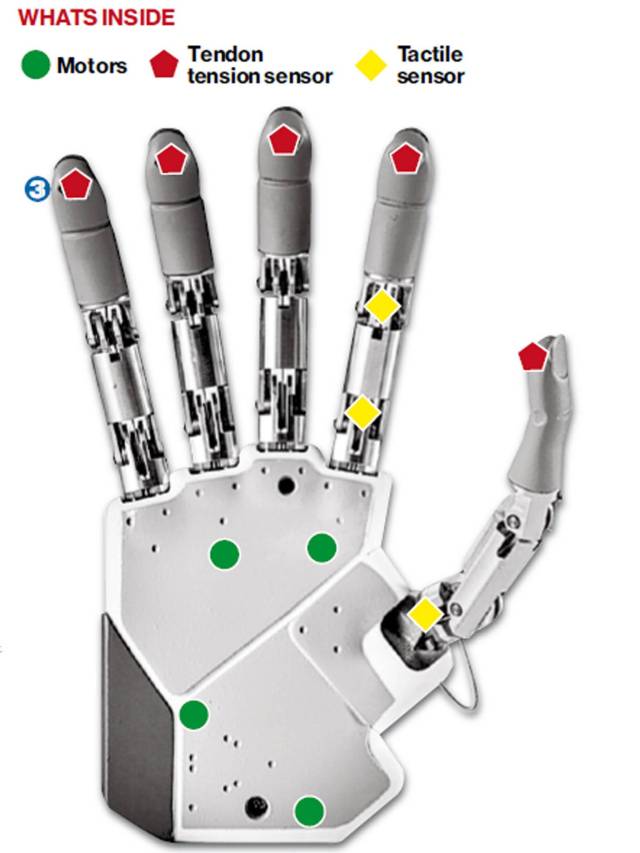
The first bionic hand that allows an amputee to feel what they are touching will be transplanted later this year in a pioneering operation that could introduce a new generation of artificial limbs with sensory perception.

The patient is an unnamed man in his 20s living in Rome who lost the lower part of his arm following an accident, said Silvestro Micera of the Ecole Polytechnique Federale de Lausanne in Switzerland.

The wiring of his new bionic hand will be connected to the patient’s nervous system with the hope that the man will be able to control the movements of the hand as well as receiving touch signals from the hand’s skin sensors.

Dr Micera said that the hand will be attached directly to the patient’s nervous system via electrodes clipped onto two of the arm’s main nerves, the median and the ulnar nerves.

This should allow the man to control the hand by his thoughts, as well as receiving sensory signals to his brain from the hand’s sensors. It will effectively provide a fast, bidirectional flow of information between the man’s nervous system and the prosthetic hand.

“This is real progress, real hope for amputees. It will be the first prosthetic that will provide real-time sensory feedback for grasping,” Dr Micera said.

“It is clear that the more sensory feeling an amputee has, the more likely you will get full acceptance of that limb,” he told the American Association for the Advancement of Science meeting in Boston.

“We could be on the cusp of providing new and more effective clinical solutions to amputees in the next year,” he said.

An earlier, portable model of the hand was temporarily attached to Pierpaolo Petruzziello in 2009, who lost half his arm in a car accident. He was able to move the bionic hand’s fingers, clench them into a fist and hold objects. He said that he could feel the sensation of needles pricked into the hand’s palm.

However, this earlier version of the hand had only two sensory zones whereas the latest prototype will send sensory signals back from all the fingertips, as well as the palm and the wrists to give a near life-like feeling in the limb, Dr Micera said.

“The idea would be that it could deliver two or more sensations. You could have a pinch and receive information from three fingers, or feel movement in the hand and wrist,” Dr Micera said.

“We have refined the interface [connecting the hand to the patient], so we hope to see much more detailed movement and control of the hand,” he told the meeting.

The plan is for the patient to wear the bionic hand for a month to see how he adapts to the artificial limb. If all goes well, a full working model will be ready for testing within two years, Dr Micera said.

One of the unresolved issues is whether patients will be able to tolerate having such a limb attached to them all the time, or whether they would need to remove it periodically to give them a rest.

Another problem is how to conceal the wiring under the patient’s skin to make them less obtrusive. The electrodes of the prototype hand to be fitted later this year will be inserted through the skin rather than underneath it but there are plans under development to place the wiring subcutaneously, Dr Micera said.

http://www.independent.co.uk/life-style/gadgets-and-tech/news/a-sensational-breakthrough-the-first-bionic-hand-that-can-feel-8498622.html

Thanks to Kebmodee for bringing this to the attention of the It’s Interesting community.

Lab rats given a 6th sense through a brain-machine interface

_65888650_65886269

Duke University researchers have effectively given laboratory rats a “sixth sense” using an implant in their brains.

An experimental device allowed the rats to “touch” infrared light – which is normally invisible to them.

The team at Duke University fitted the rats with an infrared detector wired up to microscopic electrodes that were implanted in the part of their brains that processes tactile information.

The results of the study were published in Nature Communications journal.

The researchers say that, in theory at least, a human with a damaged visual cortex might be able to regain sight through a device implanted in another part of the brain.

Lead author Miguel Nicolelis said this was the first time a brain-machine interface has augmented a sense in adult animals.

The experiment also shows that a new sensory input can be interpreted by a region of the brain that normally does something else (without having to “hijack” the function of that brain region).

“We could create devices sensitive to any physical energy,” said Prof Nicolelis, from the Duke University Medical Center in Durham, North Carolina.

“It could be magnetic fields, radio waves, or ultrasound. We chose infrared initially because it didn’t interfere with our electrophysiological recordings.”

His colleague Eric Thomson commented: “The philosophy of the field of brain-machine interfaces has until now been to attempt to restore a motor function lost to lesion or damage of the central nervous system.

“This is the first paper in which a neuroprosthetic device was used to augment function – literally enabling a normal animal to acquire a sixth sense.”
In their experiments, the researchers used a test chamber with three light sources that could be switched on randomly.

They taught the rats to choose the active light source by poking their noses into a port to receive a sip of water as a reward. They then implanted the microelectrodes, each about a tenth the diameter of a human hair, into the animals’ brains. These electrodes were attached to the infrared detectors.

The scientists then returned the animals to the test chamber. At first, the rats scratched at their faces, indicating that they were interpreting the lights as touch. But after a month the animals learned to associate the signal in their brains with the infrared source.

They began to search actively for the signal, eventually achieving perfect scores in tracking and identifying the correct location of the invisible light source.

One key finding was that enlisting the touch cortex to detect infrared light did not reduce its ability to process touch signals.

http://www.bbc.co.uk/news/science-environment-21459745

Thanks to Kebmodee for bringing this to the attention of the It’s Interesting community.

New map predicts timing of cities to avoid as sea levels rise

mg21729034_900-2_300

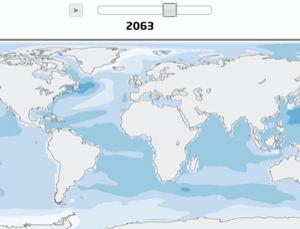
As the world warms, ice melts and water expands, sea level will rise – but faster in some places than others. These simulations, which assume warming in the middle of the range indicated by climate models, provide the best view yet of probable regional variation in sea level rise over the coming decades. Use the play button or slider to control the animations.

Click the link below to view projections for high or low emissions scenarios.

http://sealevel.newscientistapps.com/

SYDNEY, Tokyo and Buenos Aires watch out. These cities will experience some of the greatest sea level rises by 2100, according to one of the most comprehensive predictions to date.

Sea levels have been rising for over 100 years – not evenly, though. Several processes are at work, says Mahé Perrette of the Potsdam Institute for Climate Impact Research in Germany. Some land is sinking, some is rising. Stronger currents create slopes in sea surface, and since all things with mass exert a gravitation pull, disappearing ice sheets lead to a fall in sea levels in their surrounding areas.

Perrette has modelled all of these effects and calculated local sea level rises in 2100 for the entire planet. While the global average rise is predicted to be between 30 and 106 centimetres, he says tropical seas will rise 10 or 20 per cent more, while polar seas will see a below-average rise. Coasts around the Indian Ocean will be hard hit, as will Japan, south-east Australia and Argentina (Earth System Dynamics, doi.org/kbf).

New York’s position may be less perilous than previously thought. A weakening of the Atlantic Gulf Stream will cause water to slop westwards, triggering a rapid rise on the eastern seaboard, but this will be counteracted by Greenland’s weaker gravitational pull. The city is not out of the woods, though, warns Aimée Slangen of Utrecht University in the Netherlands, whose own model suggests that Antarctica could lose a lot of ice, which would produce an above-average rise throughout the northern hemisphere.

For now, Perrette offers a warning to tropical countries. “You may have 120 centimetres of sea level rise on your coastline,” he says. “Build defences.”

This article appeared in print under the headline “Where not to be when seas rise up to meet us”

http://www.newscientist.com/article/mg21729034.900-new-map-pinpoints-cities-to-avoid-as-sea-levels-rise.html

Mind-meld brain power is best for steering spaceships

piggy

Two people have successfully steered a virtual spacecraft by combining the power of their thoughts – and their efforts were far more accurate than one person acting alone. One day groups of people hooked up to brain-computer interfaces (BCIs) might work together to control complex robotic and telepresence systems, maybe even in space.

A BCI system records the brain’s electrical activity using EEG signals, which are detected with electrodes attached to the scalp. Machine-learning software learns to recognise the patterns generated by each user as they think of a certain concept, such as “left” or “right”. BCIs have helped people with disabilities to steer a wheelchair, for example.

Researchers are discovering, however, that they get better results in some tasks by combining the signals from multiple BCI users. Until now, this “collaborative BCI” technique has been used in simple pattern-recognition tasks, but a team at the University of Essex in the UK wanted to test it more rigorously.

So they developed a simulator in which pairs of BCI users had to steer a craft towards the dead centre of a planet by thinking about one of eight directions that they could fly in, like using compass points. Brain signals representing the users’ chosen direction, as interpreted by the machine-learning system, were merged in real time and the spacecraft followed that path.

The results, to be presented at an Intelligent User Interfaces conference in California in March, strongly favoured two-brain navigation. Simulation flights were 67 per cent accurate for a single user, but 90 per cent on target for two users. And when coping with sudden changes in the simulated planet’s position, reaction times were halved, too. Combining signals eradicates the random noise that dogs EEG signals. “When you average signals from two people’s brains, the noise cancels out a bit,” says team member Riccardo Poli.

The technique can also compensate for a lapse in attention. “It is difficult to stay focused on the task at all times. So when a single user has momentary attention lapses, it matters. But when there are two users, a lapse by one will not have much effect, so you stay on target,” Poli says.

NASA’s Jet Propulsion Lab in Pasadena, California, has been observing the work while itself investigating BCI’s potential for controlling planetary rovers, for example. But don’t hold your breath, says JPL senior research scientist Adrian Stoica. “While potential uses for space applications exist, in terms of uses for planetary rover remote control, this is still a speculative idea,” he says.

http://www.newscientist.com/article/mg21729025.600-mindmeld-brain-power-is-best-for-steering-spaceships.html

Human Immortality in 33 Years Claims Dmitry Itskov’s 2045 Initiative

IMAGE634795077231612631

Although James Cameron’s “Avatar” took place more than 140 years into the future, a Russian billionaire has teamed with dozens of scientists to lay out a plan that would use avatars to transfer human consciousness into an artificial form. The goal: human immortality by 2045.

The 2045 Initiative, a life-extension project founded by 31-year-old Russian billionaire Dmitry Itskov in February 2011, offers a timeline for immortality over the next 33 years. Beginning with remotely controlled robotic avatars and re-creating the human brain through computer models, the end result would be human immortality in the form of holographic avatars.

The 2045 Initiative, which has had a major social media blitz, brought together 30 top Russian scientists to develop the “imortal” technology, laying out the plan for human immortality on its website.

“The first phase is to create a humanoid robot dubbed ‘avatar,’ and a state-of-the-art brain-computer interface system. The next phase consists of creating a life-support system for the human brain and connect it to the ‘avatar.’ The final phase … is to create an artificial brain in which to transfer the original individual consciousness into,” reads the plan.

Here’s the 2045 Initiative’s timeline:

2015 – 2020: A robotic copy of a human body remotely controlled by a brain-computer interface

2020 – 2025: An avatar is created in which a human brain can be transplanted at the end of life

2030 – 2035: An avatar that can now contain an artificial brain in which a human personality can be transferred at the end of life

2040 – 2045: A holographic avatar emerges

In addition to taking the Internet by storm, the 2045 Initiative has also launched its own political party, called Evolution 2045, pushing a new strategy for human development. The Russia-based party takes a global approach, encouraging other countries to follow in its footsteps “not in the arms race, but in the race for building a bright future for mankind.”

Last month Itskov appealed to members of the Forbes World’s Billionaires List, urging them to take heed of the “vital importance of funding scientific development in the field of cybernetic immortality and the artificial body.

“Contributing to cutting-edge innovations in the fields of neuroscience, nanotechnology and android robotics is more than building a brighter future for human civilization. [It’s also] a wise and profitable business strategy that will create a new and vibrant industry of immortality — limitless in its importance and scale. This kind of investment will change every aspect of business as we know it,” read Itskov’s open letter.

Itskov plans to host a Global Future Congress meeting next year in New York. A previous event was held last February in Moscow.

This massive hypothetical technology would give the “new” mankind amazing survival abilities, according to the Initiative.

“The new human being will receive a huge range of abilities and will be capable of withstanding extreme external conditions easily: high temperatures, pressure, radiation, lack of oxygen,” claims the Initiative on its website.

And according to a slick video produced by the 2045 Initiative, once the hologram-like avatar reinvents mankind’s scientific and social structure, war and violence will go by the wayside as “spiritual self-improvement” becomes mankind’s primary goal.

But what about the average Joe who just wants to live forever?

The cost of these avatars should be on par with that of an automobile, the Initiative’s website assures, as soon as mass production begins.

http://abcnews.go.com/blogs/technology/2012/08/human-immortality-in-33-years-claims-dmitry-itskovs-2045-initiative/#.UOcJvQYxrPo.email

Thanks to H.M. for bringing this to the attention of the It’s Interesting community.

10 Million-Year Hard Disk

sn-radwaste

It seems these days that no data storage medium lasts long before becoming obsolete—does anyone remember Sony’s Memory Stick? So have pity for the builders of nuclear waste repositories, who are trying to preserve records of what they’ve buried and where, not for a few years but for tens of thousands of years.

Today, Patrick Charton of the French nuclear waste management agency ANDRA presented one possible solution to the problem: a sapphire disk inside which information is engraved using platinum. The prototype shown costs €25,000 to make, but Charton says it will survive for a million years. The aim, Charton told the Euroscience Open Forum here, is to provide “information for future archaeologists.” But, he concedes: “We have no idea what language to write it in.”

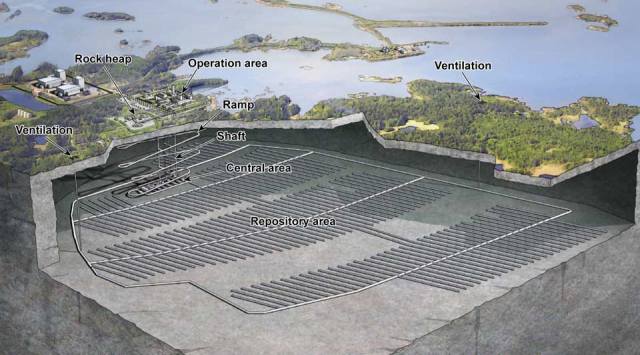
Most countries with nuclear power stations agree that the solution for dealing with long-lived nuclear waste is to store it deep inside the earth, about 500 meters below the surface. Finland, France, and Sweden are the furthest advanced in the complicated process of finding a geologically suitable site, persuading local communities to accept it, and getting regulatory approval. Sweden’s waste management company, SKB, for example, spent 30 years finding the right site and is now waiting for the government’s green light to begin excavation. It plans to start loading in waste a decade from now, and will be filling its underground pits for up to 50 years.

While the designers of such repositories say they are confident that the waste will be safely incarcerated, the most uncontrollable factor is future archaeologists or others with a penchant for digging. Archaeologist Cornelius Holtorf of Linnaeus University in Sweden showed meeting participants an early attempt at warning future generations: a roughly 1-meter-wide stone block with the words “Caution – Do Not Dig” written in English with some smaller text explaining that there is nuclear waste below. But who knows what language its discoverers will understand in thousands or hundreds of thousands of years—or even if they will be human beings? Holtorf points out that a much earlier attempt to warn off future excavations, the Egyptian pyramids, were looted within a generation. “The future will be radically different from today,” says archaeologist Anders Högberg, who is also from Linnaeus University. “We have no idea how humans will think.”

In 2010, ANDRA began a project to address these issues, says Charton. It brings together specialists from as wide a selection of fields as possible, including materials scientists, archivists, archaeologists, anthropologists, linguists, and even artists—”to see if they have some answers to our questions.” The initial goal is to identify all the approaches possible; in 2014 or 2015, the group hopes to narrow down the possibilities.

The sapphire disk is one product of that effort. It’s made from two thin disks, about 20 centimeters across, of industrial sapphire. On one side, text or images are etched in platinum—Charton says a single disk can store 40,000 miniaturized pages—and then the two disks are molecularly fused together. All a future archaeologist would need to read them is a microscope. The disks have been immersed in acid to test their durability and to simulate ageing. Charton says they hope to demonstrate a lifetime of 10 million years.

Researchers have some time to work on the problem because the repositories will probably not be filled and sealed up until the end of this century. “Each country has its own ideas, but we need to get a common approach,” says SKB’s Erik Setzman. “We technical people can’t solve this problem ourselves. We need help from other parts of society.”

http://news.sciencemag.org/sciencenow/2012/07/a-million-year-hard-disk.html

Thanks to Dr. Rajadhyaksha for bringing this to the attention of the It’s Interesting community.

Patented Book Writing System Creates, Sells Hundreds Of Thousands Of Books On Amazon

bookracks

Philip M. Parker, Professor of Marketing at INSEAD Business School, has had a side project for over 10 years. He’s created a computer system that can write books about specific subjects in about 20 minutes. The patented algorithm has so far generated hundreds of thousands of books. In fact, Amazon lists over 100,000 books attributed to Parker, and over 700,000 works listed for his company, ICON Group International, Inc. This doesn’t include the private works, such as internal reports, created for companies or licensing of the system itself through a separate entity called EdgeMaven Media.

Parker is not so much an author as a compiler, but the end result is the same: boatloads of written works.

Now these books aren’t your typical reading material. Common categories include specialized technical and business reports, language dictionaries bearing the “Webster’s” moniker (which is in the public domain), rare disease overviews, and even crossword puzzle books for learning foreign languages, but they all have the same thing in common: they are automatically generated by software.

The system automates this process by building databases of information to source from, providing an interface to customize a query about a topic, and creating templates for information to be packaged. Because digital ebooks and print-on-demand services have become commonplace, topics can be listed in Amazon without even being “written” yet.

The abstract for the U.S. patent issued in 2007 describes the system:

The present invention provides for the automatic authoring, marketing, and or distributing of title material. A computer automatically authors material. The material is automatically formatted into a desired format, resulting in a title material. The title material may also be automatically distributed to a recipient. Meta material, marketing material, and control material are automatically authored and if desired, distributed to a recipient. Further, the title may be authored on demand, such that it may be in any desired language and with the latest version and content.

To be clear, this isn’t just software alone but a computer system designated to write for a specific genre. The system’s database is filled with genre-relevant content and specific templates coded to reflect domain knowledge, that is, to be written according to an expert in that particular field/genre. To avoid copyright infringement, the system is designed to avoid plagiarism, but the patent aims to create original but not necessarily creative works. In other words, if any kind of content can be broken down into a formula, then the system could package related, but different content in that same formula repeatedly ad infinitum.

The success (and brilliance) of this system is that Parker designed the algorithms to mimic the thought process that an expert would necessarily go through in writing about a topic. It merely involves deconstructing content within a genre. He has some experience in this, as he has written at least three books the old fashioned way. It’s the recognition of how algorithmic content creation is (for the most part) that allows it to be coded as artificial intelligence.

A sampling of the list of books attributed to Parker is instructive:

– Webster’s Slovak – English Thesaurus Dictionary for $28.95
– The 2007-2012 World Outlook for Wood Toilet Seats for $795
– The World Market for Rubber Sheath Contraceptives (Condoms): A 2007 Global Trade Perspective for $325
– Ellis-van Creveld Syndrome – A Bibliography and Dictionary for Physicians, Patients, and Genome Researchers for $28.95
– Webster’s English to Haitian Creole Crossword Puzzles: Level 1 for $14.95

Considering that a single book costs somewhere between $0.20 to $0.50 to produce (the cost of electricity and hardware), the prices shown are considerably profit, even if very few of them are sold.

In truth, many nonfiction books — like news articles — often fall into formulas that cover the who, what, where, when, and why of a topic, perhaps the history or projected future, and some insight. Regardless of how topical information is presented or what comes with it, the core data must be present, even for incredibly obscure topics. And Parker is not alone in automating content either. The Chicago-based Narrative Science has been producing sport news and financial articles for Forbes for a while.

So, what’s the next book genre Parker is targeting to have software produce? Romance novels.

Although a novel is a work of fiction, it’s no secret that certain genres lend themselves to formulas, such as romance novels. That may not make these works rank high for their literary value, but they certainly do well for their entertainment value. Somewhat suprisingly, romance fiction has the largest share of the consumer book market with revenue of nearly $1.37 billion in 2011.

But can artificial intelligence produce creative works on par with what a human can produce? Yes…eventually. Perhaps the better questions are how soon will it happen and how relevant will they be? The answers may be right on the horizon if Parker can churn out romance novels that are read by the masses. Frankly, any creative work produced by artificial intelligence will be “successful” if it reads like a human being wrote it, or more precisely, like a human intelligence is behind the work.

But books may be just the beginning.

As Parker notes in his video, the software doesn’t have to be limited to written works. Using 3D animation and avatars, a variety of audio and video formats can be generated, and Parker indicates that these are being explored. Avatars that read compiled news stories might become preferred, especially if viewers were allowed to customize who reads the news to them and how in-depth those stories need to be.

Content creation technology could converge with other developments such as automated video transcription to expand the content that can be pulled from. Language translators would aid not only in content previously produced all over the world, but audio and video in real-time as well. Additionally, with lifeblogging allowing people to capture everything they say or is said to them, those could be packaged into personal biographies. If you add big data and analytics into the mix, you could have some serious content creation capabilities, all performed by designated computers.

The future of content is increasingly becoming the stuff of science fiction, but we still have some years before content creation is entirely in the hands of software. But if you have any doubts about where we are headed, consider this: the first novel written by a computer has already been published four years ago.

Patented Book Writing System Creates, Sells Hundreds Of Thousands Of Books On Amazon

IBM predicts computers will have the five human senses within five years

s

Every year, IBM releases its “5 in 5″ — five technologies that it predicts will change the world in the next five years. This year, IBM is taking on the five senses and how we can make our computers work more like a human being. Touch, sight, hearing, taste, and smell are all on the table, and IBM has five profiles of its employees researching how computers will use these senses going forward.

Robyn Schwartz, an Associate Director at IBM, explains sense of touch, and how vibrations on handheld devices like smartphones can be used to convey texture. Simply by having a predefined and widely understood conversion of real-life touch to vibration patterns, we can simulate touch digitally.

These technologies aren’t just for fun, though — they can save lives. The sight technology focuses on computers being able to distinguish important information in images. During a disaster or tragedy, people posting smartphone pictures to services like Twitter could actually be used to help emergency agencies analyze the problem, and work out better solutions. The sound technology could analyze the creaking of buildings and bridges, and predict failure before anyone is harmed. Based on the odors your body creates, your doctor could use the smelling technology to diagnose a whole range of diseases before traditional methods could detect them. These are important technologies, and these researchers are absolutely changing the world.

The sense of taste technology is perhaps the most interesting out of the five. The developed world has an obesity issue, and the taste research is being used to fight this. Instead of just expecting people to eat healthily and reject junk food, this research is examining how humans taste and experience food on a personal level. Genetics and environment drastically alter how individuals taste different types of food. When we completely understand what drives humans to want certain foods while rejecting others, we can tailor our meals in ways that satisfy our individual cravings while providing balanced nutrition. Using this technology, and introducing it to children at a grade school level, could help solve our severe obesity problem. Adults are often difficult to influence, but the next generation can truly benefit from computer-optimized meals.

IBM does make a compelling case, but if you’re skeptical about these predictions, you can view the current progress of IBM’s previous ones. Even last year’s predictions are well on their way to becoming reality.

For more information, check out IBM’s list of the five technologies, which has an article and video available with details for each one.

http://www.extremetech.com/extreme/143478-ibm-predicts-computers-will-have-the-five-human-senses-within-five-years

Amasia: the Next Supercontinent

sn-amasia

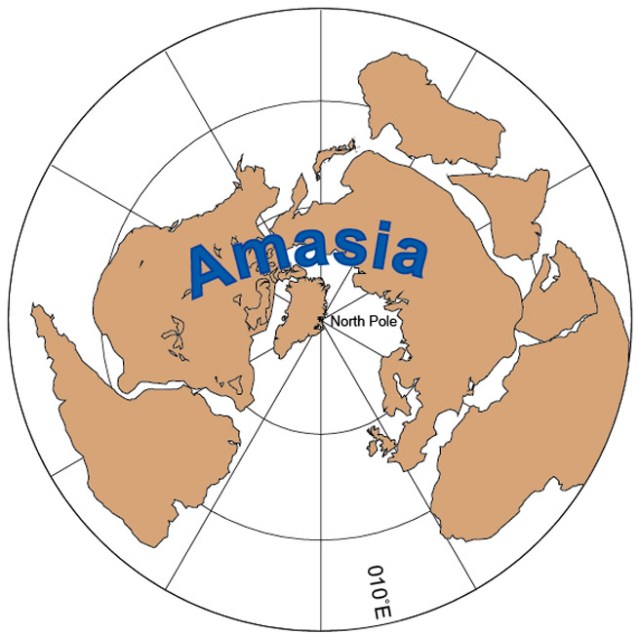
Over the next few hundred million years, the Arctic Ocean and the Caribbean Sea will disappear, and Asia will crash into the Americas forming a supercontinent that will stretch across much of the Northern Hemisphere. That’s the conclusion of a new analysis of the movements of these giant landmasses.

Unlike in today’s world, where a variety of tectonic plates move across Earth’s surface carrying the bits of crust that we recognize as continents, ancient Earth was home to supercontinents, which combined most if not all major landmasses into one. Previous studies suggest that supercontinents last about 100 million years or so before they break apart, setting the pieces adrift to start another cycle.

The geological record reveals that in the past 2 billion years or so, there have been three supercontinents, says Ross Mitchell, a geophysicist at Yale University. The oldest known supercontinent, Nuna, came together about 1.8 billion years ago. The next, Rodinia, existed about 1 billion years ago, and the most recent, Pangaea, came together about 300 million years ago. In the lengthy intervals between supercontinents, continent-sized-and-smaller landmasses drifted individually via plate tectonics, as they do today.

Scientists can track the comings and goings of those landmasses by analyzing the iron-bearing magnetic minerals in various types of rock deposits. That’s because the iron atoms, and sometimes even tiny magnetized bits of iron-bearing rock, line up with Earth’s magnetic field when they’re free to rotate, as they are when the material that contains them is molten. Once the rocks have solidified—and if they aren’t heated above the temperature at which their magnetic information is wiped clean—careful analyses can reveal where on Earth those rocks were when they first cooled, even if the rocks are hundreds of millions of years old. In particular, the rocks retain a record of their paleolatitude, or how far they were from Earth’s magnetic pole.

Although supercontinents before Nuna may have existed, rocks more than 2 billion years old that still preserve evidence of ancient magnetic fields are scarce, Mitchell says. And although scientists have generally agreed that Nuna, Rodinia, and Pangaea existed, exactly where on Earth each came together has been a matter of strong debate. Some geophysical models have suggested that drifting landmasses have come together in the same spot on Earth’s surface each cycle. Other teams have proposed that the wandering pieces reassembled on the opposite side of the planet, 180° away from where the previous supercontinent broke apart.

Now, Mitchell and his colleagues suggest an intermediate answer—that each supercontinent has come together about 90° away from its predecessor. The team’s analyses, reported online today in Nature, use techniques that determine the paleolatitude of ancient landmasses but also, for the first time, estimate their paleolongitude by taking into account how the locations of Earth’s magnetic poles changed through time. Together, these data suggest that the geographic center of Rodinia was located about 88° away from the center of Nuna, and the center of Pangaea—which was located near present-day Africa—sat about 87° from Rodinia’s center.

These angles are no accident, the researchers suggest: The drifting pieces of crust eventually come together along the former edge of the fractured supercontinent—an area approximately 90° away from the former supercontinent’s center. That’s where relatively dense ocean crust was being shoved beneath the lighter continental crust, causing a downward flow in the underlying mantle that in turn attracted the drifting bits like water running down a drain.

According to this model, the next supercontinent—a sprawling landmass dubbed Amasia, which in its earliest stages will merge Asia with the Americas—will stretch across much of the Northern Hemisphere, the researchers suggest. Over the next few hundred million years, Mitchell says, the motions of tectonic plates will cause the Arctic Ocean and the Caribbean Sea to disappear, the western edge of South America to crowd up against the eastern seaboard, and Australia to slam into southeastern Asia. It’s unclear whether Antarctica will join the party or be stranded at the South Pole.

“This is a beautiful piece of work,” says Joseph Kirschvink, a geophysicist at California Institute of Technology in Pasadena. Most of the high-quality paleomagnetic data available today has been collected in the past 20 years or so, he notes. “And the more data we have, the more we can recognize the patterns of where chunks of Earth’s crust must have been.”

The team’s ideas about how and where supercontinents form are “reasonable but far from proven,” says Bernhard Steinberger, a geodynamicist at the German Research Centre for Geosciences in Potsdam. Although Mitchell and his colleagues have identified statistical trends in their paleomagnetic analyses, he notes, “the data still just look like clouds of points to me.”

The team’s results “are very impressive,” says Brendan Murphy, a geologist at St. Francis Xavier University in Antigonish, Canada. Because the breakup and assembly of supercontinents is arguably one of the most important cycles in Earth’s biological and geological evolution, the findings will undoubtedly stimulate further research and analyses, he notes. “And even if the new model is wrong,” he adds, “we’ll learn a lot by testing it.”

http://news.sciencemag.org/sciencenow/2012/02/meet-amasia-the-next-supercontin.html

Thanks to Dr. Rajadhyaksha for bringing this to the attention of the It’s Interesting community.