NASA unveils model of warp-drive starship, which is currently impossible.

NASA’s Harold White has been working since 2010 to develop a warp drive that will allow spacecraft to travel at speeds faster than light — 186,000 miles per second.

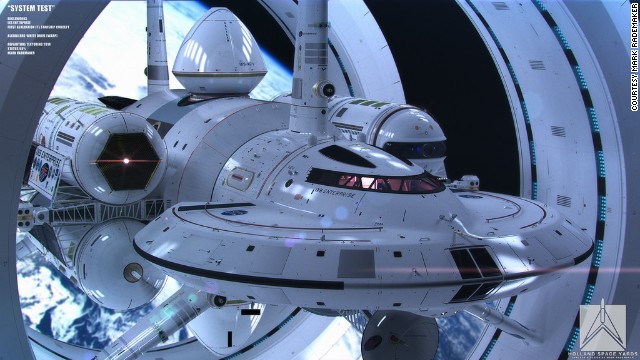
White, who heads NASA’s Advanced Propulsion Team, spoke about his conceptual starship at a conference last fall. But interest in his project reached a new level this week when he unveiled images of what the craft might look like.

Created by artist Mark Rademaker, who based them on White’s designs, the images show a technologically detailed spacecraft that wouldn’t look out of place in a “Star Trek” movie. Rademaker says creating them took more than 1,600 hours.

For now, warp speed is only possible in TV and movies, with both “Star Trek” and “Star Wars” referencing an idea that was completely speculative at the time. White has fittingly named the concept spacecraft IXS Enterprise, for the starship famously piloted by Captain James T. Kirk in the “Star Trek” TV series and movies.

At the SpaceVision 2013 Space Conference last November in Phoenix, White talked about his design, the concepts behind it and the progress that’s been made in warp-drive development over the decades. He discussed the idea of a “space warp,” a loophole in the theory of general relativity that would allow for massive distances to be traveled very quickly, reducing travel times from thousands of years to days.

In his speech, White described space warps as faraway galaxies that can bend light around them. They work on the principle of bending space both in front of and behind a spacecraft. This would essentially allow for the empty space behind the craft to expand, both pushing and pulling it forward at the same time. The concept is similar to that of an escalator or moving walkway.

“There’s no speed limit on the expansion and contraction of space,” White said at the conference. “You can actually find a way to get around what I like to call the 11th commandment: Thou shall not exceed the speed of light.”

It’s the idea of space warps that inspired physicist Miguel Alcubierre in 1994 to first theorize a mathematical model of a warp drive that would be able to bend space and time. While studying Alcubierre’s equations, White decided to design his own retooled version of the Alcubierre Drive. His recently unveiled design has much less empty space than the first concept model, increasing its efficiency.

The warp drive that White’s team has been working on would literally transcend space, shortening the distance between two points and allowing the craft to break the speed of light. This would be a spaceship with no speed limit.

Because travel into space has been extremely limited due to existing means of propulsion, such a technology could blow open the possibilities of space exploration. It could allow for study of the farthest reaches of space, parts that scientists once considered unimaginable.

Although the technology to create the spacecraft or the warp drive doesn’t yet exist, the artistic renderings Rademaker created could potentially be a model of what’s to come — the first spacecraft to break the speed-of-light barrier and journey beyond our solar system.

In his design, White says he drew from Matthew Jeffries’ 1965 sketches of the Enterprise from “Star Trek,” saying parts of that ship were mathematically correct. He worked with Rademaker and graphic designer Mike Okuda to update the math and produce what he believes to be a viable spacecraft.

According to NASA, there hasn’t been any proof that a warp drive can exist, but the agency is experimenting nonetheless. Although the concept doesn’t violate the laws of physics, that doesn’t guarantee that it will work.

“We’re starting to talk about what the next chapter for human space exploration going to be,” White said at SpaceVision.

http://www.cnn.com/2014/06/12/tech/innovation/warp-speed-spaceship/index.html

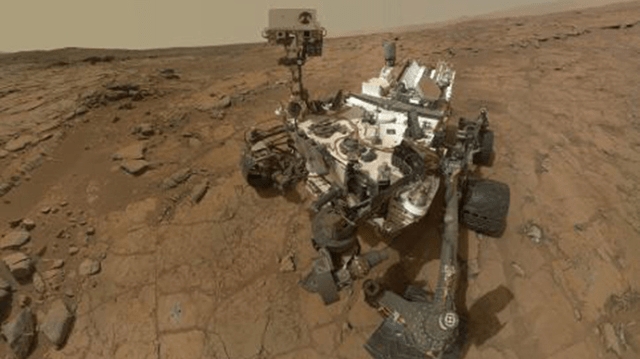
Mars Curiosity rover may have transported Earth bacteria to Mars

The NASA Curiosity rover that was thought to bring only cameras, sensors, and scientific equipment when it traveled to Mars in August 2012 may have brought along dozens of species of bacteria that originated on Earth, according to a new study.

A study conducted by the American Society for Microbiology and published in the Nature science journal revealed that 377 strains of bacteria may have survived the sterilization process that the Curiosity rover endured before it was launched in an attempt to avoid contaminating the red planet.

It was less of a surprise for scientists that the bacteria survived the cleaning process than the revelation about the conditions they went through. The microbes in question endured near-freezing temperatures and intense damage caused by ultra-C radiation, thought to be the most harmful type of radiation.

“Although studies are constantly expanding our knowledge about life in extreme environments, it is still unclear whether organisms from Earth can survive and grow in a Martian environment where there is intense radiation, high oxidation potential, extreme desiccation, and limited nutrients,” microbiologist Stephanie Smith of the University of Idaho in Moscow and lead author of the study wrote in the study’s abstract.

“Knowing if microorganisms survive in conditions simulating those on the Martian surface is paramount to addressing whether these microorganisms could pose a risk to future challenging planetary protection missions.”

Whether the bacteria spread to the Mars surface is unknown, although the very possibility has already made scientists concerned about unnaturally spreading life from earth to Mars.

There is already a United Nations Outer Space Treaty that aims to regulate how the increasingly advanced space programs from the international community explore the unknown. The parameters were first agreed upon in 1966 and they include, among others, the stipulation that “States shall be liable for damage caused by their space objects; and shall avoid harmful contamination of space and celestial bodies.”

The limits vary depending on where the spacecraft lands. Mars, Europa, and other bodies that could potentially nurture life have a relatively strict standard of 300 bacterial spores per square meter. The goal is to keep the odds of contamination Mars (and others) at less than 1 in 10,000.

“Up to 300,000 spores are allowed on the exposed surfaces of the landed spacecraft. That many spores would fit on the head of a large pin,” said Laura Newlin, an engineer at NASA’s Jet Propulsion Laboratory in California. “Currently our total spore count on the surface…is comfortably under 200,000, so we’re below the allowable level.”

The announcement comes at a time when another team of researchers published an unrelated study revealing that methanogens, the oldest organisms on earth, could be the perfect candidate to foster Martian life. The University of Arkansas Fayetteville study determined that, because methanogens are non-photosynthetic and capable of living without oxygen, they are capable of living underground on Mars.

“The surface temperature of Mars varies widely, often ranging between minus 90 degrees Celsius and 27 degrees Celsius over one Martian day,” Rebecca Mickol, a doctoral student of space and planetary sciences, told Science Daily. “If any life were to exist on Mars right now, it would have to at least survive that temperature range. The survival of these two methanogen species, exposed to long-term freeze thaw cycles, suggests methanogens could potentially inhabit the future of Mars.”

http://rt.com/usa/160636-mars-curiosity-rover-bacteria/

Japanese soft drink manufacturer will deliver a can of ‘Pocari Sweat’ to the lunar surface in 2015

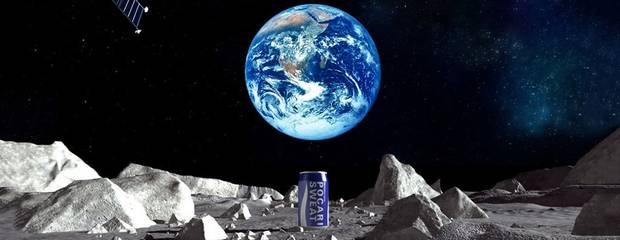
The Tokyo-based Otsuka Pharmaceutical (their drinks are sold for their health benefits, but they also develop their own drugs) says it wants to use private space companies to deliver a 1kg ‘Dream Capsule’ in the shape of a can of their most popular soft drink, Pocari Sweat, to the lunar surface.

As well as a small amount of Pocari Sweat in powdered form, the titanium can will also contain numerous disks with “messages by children from all over Asia” etched into their surfaces. “The time capsule contains the childrens’ dreams,” claims the company.

Children who submit their messages to the company will also be given a ‘dream ring’ – a special ring pull that opens up the can. Otsuka say that they hope this will inspire the young people to become astronauts and travel back to the Moon to one day re-read their dreams (and drink some tasty Pocari Sweat as well).

Despite the overt or even extreme commercialism of the project it also has a serious scientific goal, and in addition to delivering Pocari Sweat, Otsuka will be hoping to place the first privately-launched lander on the Moon.

The company will be working with a Pittsburgh-based firm named Astrobotic Technology to send their capsule on the 236,121 mile trip to the Earth’s satellite, with the mission planned to take place in October 2015. Astrobotic will use a Falcon 9 rocket to make the trip – the hopefully-reusable launcher under development by Elon Musk’s private space company, SpaceX.

If Astrobotic and Otsuka manage to complete the mission they’ll also be able to claim the multi-million dollar bounty offered by Google’s Lunar X competition. The search giant announced the prize back in 2007 as a spur for private space companies, offering $20 million to the first team to “land a robot on the surface of the Moon, travel 500 meters over the lunar surface, and send images and data back to the Earth.”

Astrobotic’s involvement in the project is particularly ironic as the company, which reportedly charges upwards of half a million dollars to send items to the Moon, is mainly interested in developing technologies designed to clean up debris in space – instead they’ll be dumping what some will view as trash on the lunar surface.

Although Otsuka’s ambitions sound like the extreme end of the PR stunt spectrum (althoughm how does it compare to projecting a loaf of bread onto a beloved public sculpture?) space advertising has a storied – if controversial – history.

In 1993, an American company named Space ­Marketing Inc proposed launching a 1 kilometre squared illuminated billboard into low orbit, which would have appeared as big and as bright as the Moon in the night’s sky. Public outcry scuppered the plans and the US government subsequently introduced a ban on advertising in space.

However, the legislation was later amended to allow “unobtrusive” sponsorships, a change that meant Pizza Hut was ablle to pull off an advertising coup in 2001 by delivering a vacuum-sealed pizza (it was salami flavour – pepperoni didn’t have the necessary shelf life) to astronauts aboard the International Space Station (ISS).

Otsuka and Pocari Sweat have also tried this sort of stunt before, and in the same year as Pizza Hut made the ultimate home delivery, the Japanese company created the first high-definition commercial in space, filming two Russian cosmonauts drinking Pocari Sweat and gazing pensively out of the window at the surface of the Earth below. In this context, delivering a can to the Moon’s surface seems like a small step for advertising, rather than a giant leap.

http://www.independent.co.uk/life-style/gadgets-and-tech/the-first-advert-on-the-moon-japanese-soft-drink-manufacturer-will-deliver-a-can-of-pocari-sweat-to-the-lunar-surface-in-2015-9382535.html

New research shows that women who never sunbathe are twice as likely to die than those who do so regularly

Researchers at the Karolinska Institute, Sweden, say guidelines that advise people to stay out of the sun unless wearing sunscreen may be harmful, particularly in northern countries which have long, cold winters.

Exposure to ultraviolet radiation from sunlight is often cited as a cause of skin melanoma (malignant tumour of melanocytes) and avoiding overexposure to the sun to prevent all types of skin cancer is recommended by health authorities.

But the new study, which followed nearly 30000 women over 20 years, suggests that women who stay out of the sun are at increased risk of melanomas and are twice as likely to die from any cause, including cancer.

It is thought that a lack of vitamin D may be to blame. Vitamin D is created in the body through exposure to sunshine and a deficiency is known to increase the risk of diabetes, TB, multiple sclerosis and rickets.

Previous studies showed that vitamin D can increase survival rates for women with breast cancer while deficiencies can signal prostate cancer in men.

The study looked at 29518 Swedish women who were recruited from 1990 to 1992 and asked to monitor their sunbathing habits.

After 20 years there had been 2545 deaths and it was found that women who never sunbathed were twice as likely to have died from any cause.

Women who sunbathed in the mild Swedish summer were also 10% less likely to die from skin cancer, although those who sunbathed abroad in sunnier countries were twice as likely to die from melanoma.

Yinka Ebo, senior health information officer at Cancer Research UK, said striking a balance was important.

“The reasons behind higher death rates in women with lower sun exposure are unexplained . overexposure to UV radiation from the sun or sunbeds is the main cause of skin cancer.”

http://www.timeslive.co.za/thetimes/2014/05/09/avoiding-sunshine-could-kill-you-study-finds

Thanks to Kebmodee for bringing this to the attention of the It’s Interesting community.

NASA Space Assets Detect Ocean inside Saturn Moon

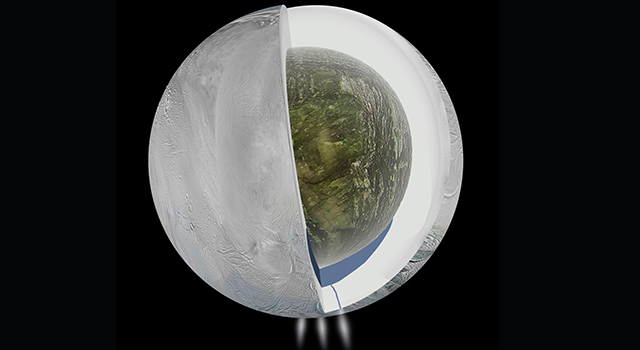
NASA’s Cassini spacecraft and Deep Space Network have uncovered evidence Saturn’s moon Enceladus harbors a large underground ocean of liquid water, furthering scientific interest in the moon as a potential home to extraterrestrial microbes.

Researchers theorized the presence of an interior reservoir of water in 2005 when Cassini discovered water vapor and ice spewing from vents near the moon’s south pole. The new data provide the first geophysical measurements of the internal structure of Enceladus, consistent with the existence of a hidden ocean inside the moon. Findings from the gravity measurements are in the Friday, April 4 edition of the journal Science.

“The way we deduce gravity variations is a concept in physics called the Doppler Effect, the same principle used with a speed-measuring radar gun,” said Sami Asmar of NASA’s Jet Propulsion Laboratory in Pasadena, Calif., a coauthor of the paper. “As the spacecraft flies by Enceladus, its velocity is perturbed by an amount that depends on variations in the gravity field that we’re trying to measure. We see the change in velocity as a change in radio frequency, received at our ground stations here all the way across the solar system.”

The gravity measurements suggest a large, possibly regional, ocean about 6 miles (10 kilometers) deep, beneath an ice shell about 19 to 25 miles (30 to 40 kilometers) thick. The subsurface ocean evidence supports the inclusion of Enceladus among the most likely places in our solar system to host microbial life. Before Cassini reached Saturn in July 2004, no version of that short list included this icy moon, barely 300 miles (500 kilometers) in diameter.

“This then provides one possible story to explain why water is gushing out of these fractures we see at the south pole,” said David Stevenson of the California Institute of Technology, Pasadena, one of the paper’s co-authors.

Cassini has flown near Enceladus 19 times. Three flybys, from 2010 to 2012, yielded precise trajectory measurements. The gravitational tug of a planetary body, such as Enceladus, alters a spacecraft’s flight path. Variations in the gravity field, such as those caused by mountains on the surface or differences in underground composition, can be detected as changes in the spacecraft’s velocity, measured from Earth.

The technique of analyzing a radio signal between Cassini and the Deep Space Network can detect changes in velocity as small as less than one foot per hour (90 microns per second). With this precision, the flyby data yielded evidence of a zone inside the southern end of the moon with higher density than other portions of the interior.

The south pole area has a surface depression that causes a dip in the local tug of gravity. However, the magnitude of the dip is less than expected given the size of the depression, leading researchers to conclude the depression’s effect is partially offset by a high-density feature in the region, beneath the surface.

“The Cassini gravity measurements show a negative gravity anomaly at the south pole that however is not as large as expected from the deep depression detected by the onboard camera,” said the paper’s lead author, Luciano Iess of Sapienza University of Rome. “Hence the conclusion that there must be a denser material at depth that compensates the missing mass: very likely liquid water, which is seven percent denser than ice. The magnitude of the anomaly gave us the size of the water reservoir.”

There is no certainty the subsurface ocean supplies the water plume spraying out of surface fractures near the south pole of Enceladus, however, scientists reason it is a real possibility. The fractures may lead down to a part of the moon that is tidally heated by the moon’s repeated flexing, as it follows an eccentric orbit around Saturn.

Much of the excitement about the Cassini mission’s discovery of the Enceladus water plume stems from the possibility that it originates from a wet environment that could be a favorable environment for microbial life.

“Material from Enceladus’ south polar jets contains salty water and organic molecules, the basic chemical ingredients for life,” said Linda Spilker, Cassini’s project scientist at JPL. “Their discovery expanded our view of the ‘habitable zone’ within our solar system and in planetary systems of other stars. This new validation that an ocean of water underlies the jets furthers understanding about this intriguing environment.”

The Cassini-Huygens mission is a cooperative project of NASA, the European Space Agency and the Italian Space Agency. JPL manages the mission for NASA’s Science Mission Directorate in Washington. For more information about Cassini, visit:

http://www.nasa.gov/cassini

and

http://saturn.jpl.nasa.gov

http://www.jpl.nasa.gov/news/news.php?release=2014-103&utm_source=iContact&utm_medium=email&utm_campaign=NASAJPL&utm_content=cassini20140403

Thanks to Kebmodee for bringing this to the attention of the It’s Interesting community.

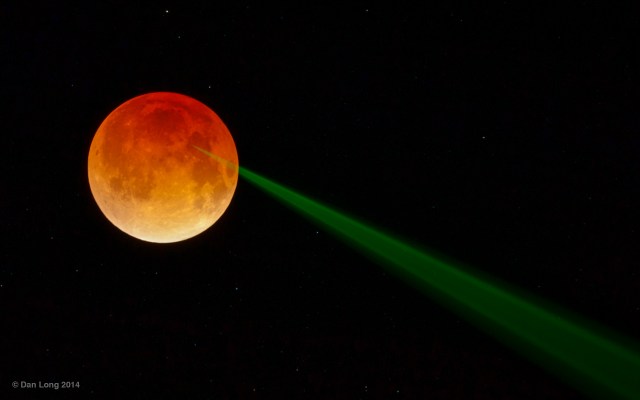
Red Moon, Green Light

This is not a scene from a sci-fi special effects movie. The green beam of light and red lunar disk are real enough, captured in the early morning hours of April 15. Of course, the reddened lunar disk is easy to explain as the image was taken during this week’s total lunar eclipse. Immersed in shadow, the eclipsed Moon reflects the dimmed reddened light of all the sunsets and sunrises filtering around the edges of planet Earth, seen in silhouette from a lunar perspective. But the green beam of light really is a laser. Shot from the 3.5-meter telescope at Apache Point Observatory in southern New Mexico, the beam’s path is revealed as Earth’s atmosphere scatters some of the intense laser light. The laser’s target is the Apollo 15 retroreflector, left on the Moon by the astronauts in 1971. By determining the light travel time delay of the returning laser pulse, the experimental team from UC San Diego is able to measure the Earth-Moon distance to millimeter precision and provide a test of General Relativity, Einstein’s theory of gravity. Conducting the lunar laser ranging experiment during a total eclipse uses the Earth like a cosmic light switch. With direct sunlight blocked, the reflector’s performance is improved over performance when illuminated by sunlight during a normal Full Moon, an effect fondly known as The Full Moon Curse.

http://apod.nasa.gov/apod/ap140418.html

Thanks to Kebmodee for bringing this to the attention of the It’s Interesting community.

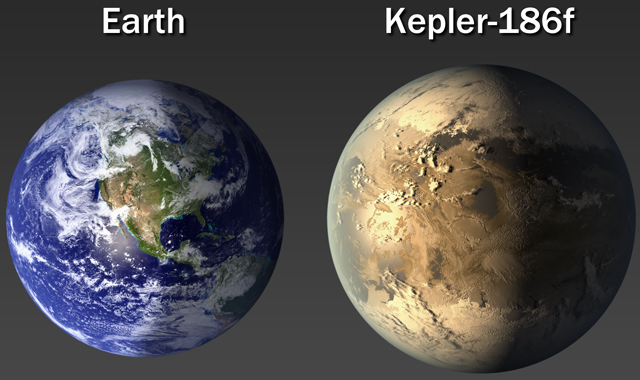
NASA discovers Kepler-186f, Earth-sized world in orbit that could support life

For the first time, scientists have found an Earth-sized world orbiting in a life-friendly zone around a distant star.

The discovery, announced on Thursday, is the closest scientists have come so far to finding a true Earth twin. The star, known as Kepler-186 and located about 500 light years away in the constellation Cygnus, is smaller and redder than the sun.

The star’s outermost planet, designated Kepler-186f, receives about one-third the radiation from its parent star as Earth gets from the sun, meaning that high noon on this world would be roughly akin to Earth an hour before sunset, said astronomer Thomas Barclay, with NASA’s Ames Research Center in Moffett Field, California.

The planet is the right distance from its host star for water — if any exists — to be liquid on the surface, a condition that scientists suspect is necessary for life.

“This planet is an Earth cousin, not an Earth twin,” said Barclay, who is among a team of scientists reporting on the discovery in the journal Science this week.

NASA launched its Kepler space telescope in 2009 to search about 150,000 target stars for signs of any planets passing by, or transiting, relative to the telescope’s point of view. Kepler was sidelined by a positioning system failure last year.

Analysis of archived Kepler data continues. From Kepler’s observational perch, a planet about the size and location of Earth orbiting a sun-like star would blot out only about 80 to 100 photons out of every million as it transits.

The pattern is repeated every 365 days and at least three transits would be needed to rule out other possibilities, so the search takes time.

“It’s very challenging to find Earth analogs,” Barclay said. “Most candidates don’t pan out, but things change as we get more measurements.”

Scientists don’t know anything about the atmosphere of Kepler-186f, but it will be a target for future telescopes that can scan for telltale chemicals that may be linked to life.

“This planet is in the habitable zone, but that’s doesn’t mean it is habitable,” Barclay said.

So far, scientists have found nearly 1,800 planets beyond the solar system.

“The past year has seen a lot of progress in the search for Earth-like planets. Kepler-168f is significant because it is the first exoplanet that is the same temperature and is (almost) the same size as Earth,” astronomer David Charbonneau, with the Harvard-Smithsonian Center for Astrophysics, wrote in an email.

“For me the impact is to prove that yes, such planets really do exist,” Charbonneau said. “Now we can point to a star and say, “There lies an Earth-like planet.'”

http://in.mobile.reuters.com/article/idINBREA3G1XI20140417?irpc=932

Thanks to Da Brayn for bringing this to the attention of the It’s Interesting community.

Lunar eclipse and Mars opposition April 15th, with ideal time to view Mars on April 8

April 15th is usually known for one reason only: Tax Day. However, this year citizens of North and South America are in for something a little more special. On the cosmic schedule this April are a full lunar eclipse and a Mars opposition. So how does all that work exactly? And what does it mean?

To begin with, a full lunar eclipse occurs when the Earth is situated directly between the sun and the moon. Hence, the Earth casts its shadow straight on the surface of the usually bright full moon. On April 15th commencing at 1:58am the moon will be shifting into the Earth’s Umbra. Umbra is a word derived from Latin meaning “shade” or “shadow.” At this point the moon will only begin to be covered by the shadow as it assumes a reddish hue. From here on in the moon is in the process of a complete eclipse. The second phase of the eclipse will begin at around 3:07am when the moon will be exactly within the Earth’s Umbra and covered completed. This phase of the eclipse lasts over an hour until 4:25am. Then the third phase begins as the moon exists the Umbra.

The eclipse will be completely over by 5:33am. Lunar eclipses can be seen with the naked eye, binoculars, telescopes and require no special equipment as the solar eclipse does. The lunar eclipse and Mars opposition comprise a valuable and dear experience to star gazers in the Western hemisphere. However, astrologers will not be the only ones appreciate the beauty which these events offer.

What is a Mars opposition? Well, as the planets in the solar system revolve in elliptical patterns they are sometimes closer and further away from other planets. In this case, Mars is closer to Earth than it has been since 2007. Many still remember back in 2003 when Mars was extremely bright and visible to the naked eye for weeks. This event is similar except that the proximity of Mars is smaller at this time. Mars will be a mere 50 million miles away. On April 8th, as the sun is setting in the west, gazers should look directly to the east and there will discover a bright red dot on the celestial fabric. It is said that Mars will appear brighter even than the Sirius- that bright star within Canis Major which philosophers often look up to when deep in thought outside at night.

Mars will appear bright throughout the spring and summer though April 8th is the ideal night to catch a glimpse. Throughout the lunar eclipse it will also be brightly visible along with Saturn, Venus and Jupiter. It seems that the sky will be smiling down for tax day.

Many cultures both ancient and recent have looked up into the sky and deciphered these signs written in the stars. The Moon stands for the feminine, reflective side of people while the Sun is the masculine and active. Mars is the planet not only of war but of motivation and unstoppable force. Jupiter stands for justice, glory and honor, Venus for love and attraction and Saturn is the taskmaster who commands the attention of these aspects and puts them into action. For those who rely on the stars to plan certain events, this may be a very special night to commence.

With a lunar eclipse and Mars opposition, April is turning out to be a very powerful month. Be sure to make the most of it. With Mars in such a strong position, remember to wait for the right moment to make a move. With the lunar eclipse, remember to take time to reflect on thoughts and emotions. All in all, humanity is made of the stars and planets. Perhaps on April 15th the stars will be looking back down at Earth instead of the other way around.

Lunar Eclipse and Mars Opposition

Thanks to Da Brayn for bringing this to the attention of the It’s Interesting community.

10 conspiracy theories about Malaysia Airlines flight 370

While investigators are stumped over the fate of missing Malaysia Airlines Flight MH370, the lack of evidence as to what happened hasn’t stopped speculation as to the fate of the missing jet and its 239 passengers and crew members.

It’s not unusual for mysterious or dramatic aviation accidents to catch the imaginations of the conspiratorially inclined – the Korean Air Lines Flight 007, Pan Am Flight 103, and TWA Flight 800 tragedies spurred all kinds of claims of conspiracy, and last week’s apparent tragedy in the Gulf of Thailand is no different.

Conspiracy theorists took to social media this week to contribute their own ideas as to why Malaysia Airlines Flight MH370 disappeared.

1. Aliens are involved: Alexandra Bruce at ForbiddenKnowledgeTV points to records on the flight mapping website Flightradar24 as evidence of extra-terrestrial meddling. She goes so far as to say the “captured signals” could “only be termed a UFO.”

Her source? YouTube user DAHBOO77, who posted a video that attempts to recreate the plane’s last moments. The clip shows a quick-moving plane and other strange anomalies around the time of the MH370’s disappearance from radar.

Loading the logs directly on the site allows readers to easily click and identify the so-called “UFO,” which is clearly marked as Korean Airlines Flight 672. Its apparent supersonic speed is likely related to a glitch in the system, not alien intervention, according to the site’s CEO Mikael Robertsson.

“[Some] receivers do not provide the same data quality, so sometimes parts of the data can be corrupt [and] generate errors like the one you see on the video,” he explained. “For example if Longitude received is 120 instead of 110, that would generate such error.”

2. The passengers are still alive: Families awaiting news about lost loved ones have told reporters they are able to call the cell phones of their missing relatives, and have said they can also see their instant messaging service accounts remain active online.

The news has fueled all kinds of speculation, but phones that are turned off do not always necessarily go straight to voicemail. Factors such as location, the phone’s network type and its proximity to a cell phone tower can all affect whether a dead phone will still ring on the caller’s end.

You can test this for yourself: turn off your cell phone, remove the battery and call your number on another line – most kinds of phones will still ring before you reach voicemail.

3. There’s a Snowden connection: Reddit user Dark_Spectre posted an unusual theory on the website’s conspiracy boards, related to 20 employees of the Texas-based Freescale Semiconductor who were reportedly on the flight:

“So we have the American IBM Technical Storage Executive for Malaysia, a man working in mass storage aggregation for the company implicated by the Snowden papers for providing their services to assist the National Security Agency in surveilling the Chinese.. And now this bunch of US chip guys working for a global leader in embedded processing solutions (embedded smart phone tech and defense contracting) all together..on a plane..And disappeared.. Coincidence??”

Dark_Spectre goes as far as to suggest those chip experts may have been kidnapped by Chinese or American authorities:

“Perhaps a little fast and furious dive under the radar to a flat water landing to rendezvous with a Chinese ship or sub for transport to a black-site for advanced interrogation, scuttling the plane along with the remaining passengers.(any oceanic trenches in fuel capacity distance?) What would 200 lives be to the Chinese intelligence community for the chance to find out ‘exactly’ the depth and scope of our intrusion.”

“US intelligence got late wind that their flying brain-trust of 21 were going to be arrested/detained and interrogated upon landing in China and the US intelligence community deemed the risk too great to their Asian based espionage programs and took appropriate action to “sanitize” the plane in flight.”

So far, there is no evidence of an explosion.

4. Iranians kidnapped engineers: UFO Digest’s Tony Elliott points to revelations that an Iranian national was responsible for buying plane tickets for two passengers with stolen passports as evidence that the country was involved, possibly to extract technological intelligence from Freescale Semiconductor employees.

“If the plane is not found in the next few days, or ever, we must assume the plane was hijacked and taken to a nearby country where that government wants to keep the disappearance a secret,” he wrote. “If this is the case, the two passengers with stolen passports must be the hijackers.”

Elliott concludes that the plane is in East Timor, due to an apparent u-turn made by the plane in its final moments on radar.

“If the Iranian government wanted to hijack the plane, it would have had its hijackers make an abrupt turn and head to the nearest friendly Muslim country,” he wrote. “In this case, it would be East Timor, the most likely country, located in the opposite direction from the flight path.”

The theory doesn’t address why the plane suddenly disappeared from radar entirely – no passenger plane could drop from 36,000 feet to below radar horizon in mere seconds.

5. Passengers were taken to Pyongyang: This map is slightly deceptive – while the trip to both Beijing and Pyongyang appear equidistant, this theory would require the plane fly at extremely low altitudes to avoid radar detection, which – due to greater air density at lower altitudes – would require more fuel to travel the same distance.

6. The Illuminati is involved: “Was looking at the Wikipedia page for the missing Malaysia Airlines, and noticed that it’s was [sic] the 404th 777 Boeing produced,” Redditor i-am-SHER-locked wrote.

“An HTTP 404 error mean [sic] not found, which in this case is oddly approiate [sic] for the status of the aircraft, or just a concidence [sic]. Coincidence, i think not!”

7. There’s a new Bermuda triangle: Though the Bermuda Triangle’s status as one of the sea’s most mysteriously treacherous zones has been debunked for decades, it doesn’t stop some from seeing triangles in the Gulf of Thailand.

8. The plane is in Vietnam, where it is waiting to be used as a weapon: “Conspiracy and prophecy in the news” blogger ShantiUniverse said she has three possible theories about what happened to Flight MH370: A major mechanical error (OK), a terrorist attack (reasonable) or it was whisked away to a secret Vietnamese airport to be used in a later 9/11 style attack (…).

“Flight 370 was last contacted by another unnamed pilot 10 minutes after losing initial contact,” she writes. “He claims the plane was deep into Vietnam airspace. Its [sic] possible it was hijacked and forced to land at another airport, where passengers are being held hostage. There is a long list of former airports and proposed airports in Vietnam. Its also possible since the plane had no contact, it could of [sic] managed to get to Cambodia to a former or proposed airport…Why would terrorist want a plane intact? Though this is highly unlikely, but not impossible, the only reason I can think of is they would want the plane to use as a weapon of mass destruction like on the September 11 attacks.”

9: There was some kind of miniature hydrogen bomb controlled by an iPhone app and it created a miniature black hole: It’s hard to tell whether @Angela_Stalcup’s account is the work of a completely unhinged lunatic or a genius, masterful troll. Wading through claims that Donald Trump runs a prostitution ring through Trump University or that Russian President Vladimir Putin is one of 92 clones of Adolf Hitler, you may stumble upon this gem of a theory about Flight MH370:

10. Terrorists employed a new electromagnetic pulse weapon: Such a device snuck on board and activated would cause the plane to instantly lose power and fall into the ocean. Had this been a test run, terrorists in possession of such a device would now know that it works, and we could expect to see a multitude of such attacks in the future, perhaps in multiple planes simultaneously. This, of course, has been challenged by conflicting reports of persistent electronic communication from the plane after its disappearance.

So what really happened?: The truth is, no one really knows. The AP now cites a senior Malaysian military official who reports the country has radar data detecting the plane in the Malacca Strait – hundreds of miles from the last position recorded by civilian authorities.

*Armchair conspiracy theorists have also speculated (on Twitter, of course) that the passengers on flight 370 have landed on a remote, impossible-to-find island a la “Lost.”

18 Things Highly Creative People Do Differently

Creativity works in mysterious and often paradoxical ways. Creative thinking is a stable, defining characteristic in some personalities, but it may also change based on situation and context. Inspiration and ideas often arise seemingly out of nowhere and then fail to show up when we most need them, and creative thinking requires complex cognition yet is completely distinct from the thinking process.

Neuroscience paints a complicated picture of creativity. As scientists now understand it, creativity is far more complex than the right-left brain distinction would have us think (the theory being that left brain = rational and analytical, right brain = creative and emotional). In fact, creativity is thought to involve a number of cognitive processes, neural pathways and emotions, and we still don’t have the full picture of how the imaginative mind works.

And psychologically speaking, creative personality types are difficult to pin down, largely because they’re complex, paradoxical and tend to avoid habit or routine. And it’s not just a stereotype of the “tortured artist” — artists really may be more complicated people. Research has suggested that creativity involves the coming together of a multitude of traits, behaviors and social influences in a single person.

“It’s actually hard for creative people to know themselves because the creative self is more complex than the non-creative self,” Scott Barry Kaufman, a psychologist at New York University who has spent years researching creativity, told The Huffington Post. “The things that stand out the most are the paradoxes of the creative self … Imaginative people have messier minds.”

While there’s no “typical” creative type, there are some tell-tale characteristics and behaviors of highly creative people. Here are 18 things they do differently.

They daydream.

Creative types know, despite what their third-grade teachers may have said, that daydreaming is anything but a waste of time.

According to Kaufman and psychologist Rebecca L. McMillan, who co-authored a paper titled “Ode To Positive Constructive Daydreaming,” mind-wandering can aid in the process of “creative incubation.” And of course, many of us know from experience that our best ideas come seemingly out of the blue when our minds are elsewhere.

Although daydreaming may seem mindless, a 2012 study suggested it could actually involve a highly engaged brain state — daydreaming can lead to sudden connections and insights because it’s related to our ability to recall information in the face of distractions. Neuroscientists have also found that daydreaming involves the same brain processes associated with imagination and creativity.

They observe everything.

The world is a creative person’s oyster — they see possibilities everywhere and are constantly taking in information that becomes fodder for creative expression. As Henry James is widely quoted, a writer is someone on whom “nothing is lost.”

The writer Joan Didion kept a notebook with her at all times, and said that she wrote down observations about people and events as, ultimately, a way to better understand the complexities and contradictions of her own mind:

“However dutifully we record what we see around us, the common denominator of all we see is always, transparently, shamelessly, the implacable ‘I,'” Didion wrote in her essay On Keeping A Notebook. “We are talking about something private, about bits of the mind’s string too short to use, an indiscriminate and erratic assemblage with meaning only for its marker.”

They work the hours that work for them.

Many great artists have said that they do their best work either very early in the morning or late at night. Vladimir Nabokov started writing immediately after he woke up at 6 or 7 a.m., and Frank Lloyd Wright made a practice of waking up at 3 or 4 a.m. and working for several hours before heading back to bed. No matter when it is, individuals with high creative output will often figure out what time it is that their minds start firing up, and structure their days accordingly.

They take time for solitude.

In order to be open to creativity, one must have the capacity for constructive use of solitude. One must overcome the fear of being alone,” wrote the American existential psychologist Rollo May.

Artists and creatives are often stereotyped as being loners, and while this may not actually be the case, solitude can be the key to producing their best work. For Kaufman, this links back to daydreaming — we need to give ourselves the time alone to simply allow our minds to wander.

“You need to get in touch with that inner monologue to be able to express it,” he says. “It’s hard to find that inner creative voice if you’re … not getting in touch with yourself and reflecting on yourself.”

They turn life’s obstacles around.

Many of the most iconic stories and songs of all time have been inspired by gut-wrenching pain and heartbreak — and the silver lining of these challenges is that they may have been the catalyst to create great art. An emerging field of psychology called post-traumatic growth is suggesting that many people are able to use their hardships and early-life trauma for substantial creative growth. Specifically, researchers have found that trauma can help people to grow in the areas of interpersonal relationships, spirituality, appreciation of life, personal strength, and — most importantly for creativity — seeing new possibilities in life.

“A lot of people are able to use that as the fuel they need to come up with a different perspective on reality,” says Kaufman. “What’s happened is that their view of the world as a safe place, or as a certain type of place, has been shattered at some point in their life, causing them to go on the periphery and see things in a new, fresh light, and that’s very conducive to creativity.”

They seek out new experiences.

Creative people love to expose themselves to new experiences, sensations and states of mind — and this openness is a significant predictor of creative output.

“Openness to experience is consistently the strongest predictor of creative achievement,” says Kaufman. “This consists of lots of different facets, but they’re all related to each other: Intellectual curiosity, thrill seeking, openness to your emotions, openness to fantasy. The thing that brings them all together is a drive for cognitive and behavioral exploration of the world, your inner world and your outer world.”

They “fail up.”

Resilience is practically a prerequisite for creative success, says Kaufman. Doing creative work is often described as a process of failing repeatedly until you find something that sticks, and creatives — at least the successful ones — learn not to take failure so personally.

“Creatives fail and the really good ones fail often,” Forbes contributor Steven Kotler wrote in a piece on Einstein’s creative genius.

They ask the big questions.
Creative people are insatiably curious — they generally opt to live the examined life, and even as they get older, maintain a sense of curiosity about life. Whether through intense conversation or solitary mind-wandering, creatives look at the world around them and want to know why, and how, it is the way it is.

They people-watch.

Observant by nature and curious about the lives of others, creative types often love to people-watch — and they may generate some of their best ideas from it.

“[Marcel] Proust spent almost his whole life people-watching, and he wrote down his observations, and it eventually came out in his books,” says Kaufman. “For a lot of writers, people-watching is very important … They’re keen observers of human nature.”

They take risks.

Part of doing creative work is taking risks, and many creative types thrive off of taking risks in various aspects of their lives.

“There is a deep and meaningful connection between risk taking and creativity and it’s one that’s often overlooked,” contributor Steven Kotler wrote in Forbes. “Creativity is the act of making something from nothing. It requires making public those bets first placed by imagination. This is not a job for the timid. Time wasted, reputation tarnished, money not well spent — these are all by-products of creativity gone awry.”

They view all of life as an opportunity for self-expression.

Nietzsche believed that one’s life and the world should be viewed as a work of art. Creative types may be more likely to see the world this way, and to constantly seek opportunities for self-expression in everyday life.

“Creative expression is self-expression,” says Kaufman. “Creativity is nothing more than an individual expression of your needs, desires and uniqueness.”

They follow their true passions.

Creative people tend to be intrinsically motivated — meaning that they’re motivated to act from some internal desire, rather than a desire for external reward or recognition. Psychologists have shown that creative people are energized by challenging activities, a sign of intrinsic motivation, and the research suggests that simply thinking of intrinsic reasons to perform an activity may be enough to boost creativity.

“Eminent creators choose and become passionately involved in challenging, risky problems that provide a powerful sense of power from the ability to use their talents,” write M.A. Collins and T.M. Amabile in The Handbook of Creativity.

They get out of their own heads.

Kaufman argues that another purpose of daydreaming is to help us to get out of our own limited perspective and explore other ways of thinking, which can be an important asset to creative work.

“Daydreaming has evolved to allow us to let go of the present,” says Kaufman. “The same brain network associated with daydreaming is the brain network associated with theory of mind — I like calling it the ‘imagination brain network’ — it allows you to imagine your future self, but it also allows you to imagine what someone else is thinking.”

Research has also suggested that inducing “psychological distance” — that is, taking another person’s perspective or thinking about a question as if it was unreal or unfamiliar — can boost creative thinking.

They lose track of the time.
Creative types may find that when they’re writing, dancing, painting or expressing themselves in another way, they get “in the zone,” or what’s known as a flow state, which can help them to create at their highest level. Flow is a mental state when an individual transcends conscious thought to reach a heightened state of effortless concentration and calmness. When someone is in this state, they’re practically immune to any internal or external pressures and distractions that could hinder their performance.

You get into the flow state when you’re performing an activity you enjoy that you’re good at, but that also challenges you — as any good creative project does.

“[Creative people] have found the thing they love, but they’ve also built up the skill in it to be able to get into the flow state,” says Kaufman. “The flow state requires a match between your skill set and the task or activity you’re engaging in.”

They surround themselves with beauty.

Creatives tend to have excellent taste, and as a result, they enjoy being surrounded by beauty.

A study recently published in the journal Psychology of Aesthetics, Creativity, and the Arts showed that musicians — including orchestra musicians, music teachers, and soloists — exhibit a high sensitivity and responsiveness to artistic beauty.

They connect the dots.

If there’s one thing that distinguishes highly creative people from others, it’s the ability to see possibilities where other don’t — or, in other words, vision. Many great artists and writers have said that creativity is simply the ability to connect the dots that others might never think to connect.

In the words of Steve Jobs:

“Creativity is just connecting things. When you ask creative people how they did something, they feel a little guilty because they didn’t really do it, they just saw something. It seemed obvious to them after a while. That’s because they were able to connect experiences they’ve had and synthesize new things.”

They constantly shake things up.

Diversity of experience, more than anything else, is critical to creativity, says Kaufman. Creatives like to shake things up, experience new things, and avoid anything that makes life more monotonous or mundane.

“Creative people have more diversity of experiences, and habit is the killer of diversity of experience,” says Kaufman.

They make time for mindfulness.

Creative types understand the value of a clear and focused mind — because their work depends on it. Many artists, entrepreneurs, writers and other creative workers, such as David Lynch, have turned to meditation as a tool for tapping into their most creative state of mind.

And science backs up the idea that mindfulness really can boost your brain power in a number of ways. A 2012 Dutch study suggested that certain meditation techniques can promote creative thinking. And mindfulness practices have been linked with improved memory and focus, better emotional well-being, reduced stress and anxiety, and improved mental clarity — all of which can lead to better creative thought.

http://www.huffingtonpost.com/2014/03/04/creativity-habits_n_4859769.html