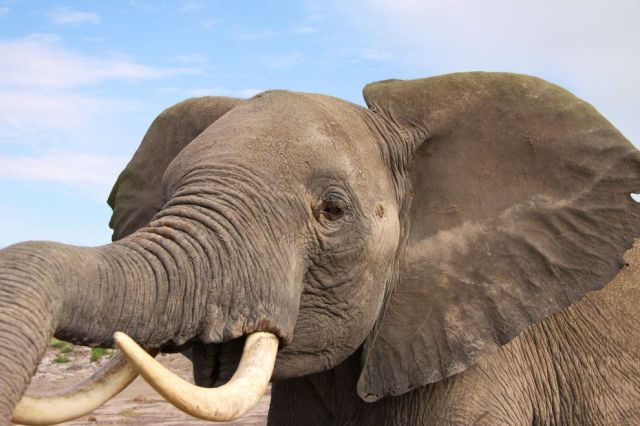
New research shows that elephants know how dangerous people are from how they speak

When an elephant killed a Maasai woman collecting firewood near Kenya’s Amboseli National Park in 2007, a group of young Maasai men retaliated by spearing one of the animals.

“It wasn’t the one that had killed the woman, says Graeme Shannon, a behavioral ecologist at Colorado State University, in Fort Collins. “It was just the first elephant they encountered—a young bull on the edge of a swamp.”

The Maasai spiked him with spears and, their anger spent, returned home. Later, the animal died from his wounds.

Elephants experience those kinds of killings sporadically. Yet the attacks happen often enough that the tuskers have learned that the Maasai—and Maasai men in particular—are dangerous.

The elephants in the Amboseli region are so aware of this that they can even distinguish between Ma, the language of the Maasai, and other languages, says a team of researchers, who report their findings today in the Proceedings of the National Academy of Sciences.

The results add to “our growing knowledge of the discriminatory abilities of the elephant mind, and how elephants make decisions and see their world,” says Joyce Poole, an elephant expert with ElephantVoices in Masai Mara, Kenya.

Indeed, previous studies have shown that the Amboseli elephants can tell the cattle-herding, red-robed Maasai apart from their agricultural and more blandly dressed neighbors, the Kamba people, simply by scent and the color of their dress.

The elephants know too that walking through villages on weekends is dangerous, as is crop raiding during the full moon.

They’re equally aware of their other key predator, lions, and from their roars, know how many lions are in a pride and if a male lion (the bigger threat because he can bring down an elephant calf) is present.

And they know exactly how to respond to lions roaring nearby: run them off with a charge.

Intriguingly, when the Amboseli elephants encounter a red cloth, such as those worn by the Maasai, they also react aggressively. But they employ a different tactic when they catch the scent of a Maasai man: They run away. Smelling the scent of a Kamba man, however, troubles them far less.

“They have very clear behavioral responses in all of these situations,” says Karen McComb, a behavioral ecologist at the University of Sussex, in the United Kingdom. “We wondered if they would react differently to different human voices.”

To find out, she and her colleagues played recordings to elephant families of Maasai and Kamba men, as well as Maasai women and boys, speaking a simple phrase in their language: “Look, look over there, a group of elephants is coming.”

Over a two-year period, they carried out 142 such playbacks with 47 elephant families, each time playing a different human voice through a concealed speaker placed 50 meters (164 feet) from the animals. They video-recorded the elephants’ reactions to the various human voices, including a Maasai man’s voice they altered to sound like a woman’s.

As soon as an elephant family heard an adult Maasai man speak, the matriarch didn’t hesitate, the researchers say. “She instantly retreats,” Shannon says. “But it’s a silent retreat. They sometimes make a low rumble, and may smell for him, too, but they’re already leaving, and bunching up into a defensive formation. It’s a very different response to when they hear lions.”

In contrast, the voices of Kamba men didn’t cause nearly as strong a defensive reaction: The elephants didn’t consider the Kamba a serious threat.

“That subtle discrimination is easy for us to do, but then we speak human language,” says Richard Byrne, a cognitive biologist at the University of St. Andrews, in Scotland. “It’s interesting that elephants can also detect the characteristic differences between the languages.”

The Amboseli elephants were also sufficiently tuned in to the Maasai language that they could tell women’s and boys’ voices from men’s, seldom turning tail in response. “Maasai women and boys don’t kill elephants,” Shannon points out. Nor were the elephants tricked by the man’s altered voice; when they heard it, they left at once.

“The elephants’ decision-making is very precise,” McComb says, “and it illustrates how they’ve adapted where they can to coexist with us. They’d rather run away than tangle with a human predator.”

Why, one wonders, don’t elephants retreat when poachers descend on them?

“Unfortunately, there are going to be things they cannot adapt to, things such as humans’ ability to come after them with automatic weapons or mass poisonings,” McComb says. “And in those situations, we have to protect them—or we will lose them, ultimately.”

http://news.nationalgeographic.com/news/2014/03/140310-elephants-amboseli-national-park-kenya-maasai-kamba-lions-science/?google_editors_picks=true

Thanks to Da Brayn for bringing this to the It’s Interesting community.

New blood test to predict who will develop Alzheimer’s disease

Alzheimers_elderly_1665136c

In a first-of-its-kind study, researchers have developed a blood test for Alzheimer’s disease that predicts with astonishing accuracy whether a healthy person will develop the disease.

Though much work still needs to be done, it is hoped the test will someday be available in doctors’ offices, since the only methods for predicting Alzheimer’s right now, such as PET scans and spinal taps, are expensive, impractical, often unreliable and sometimes risky.

“This is a potential game-changer,” said Dr. Howard Federoff, senior author of the report and a neurologist at Georgetown University Medical Center. “My level of enthusiasm is very high.”

The study was published in Nature Medicine.

In the beginning, the researchers knew they wanted to find a blood test to detect Alzheimer’s but didn’t know what specifically to look for. Should they examine patients’ DNA? Their RNA? Or should they look for the byproducts of DNA and RNA, such as fats and proteins?

They decided to start with fats, since it was the easiest and least expensive. They drew blood from hundreds of healthy people over age 70 living near Rochester, New York, and Irvine, California. Five years later, 28 of the seniors had developed Alzheimer’s disease or the mild cognitive problems that usually precede it.

Scouring more than 100 fats, or lipids, for what might set this group apart, they found that these 28 seniors had low levels of 10 particular lipids, compared with healthy seniors.

To confirm their findings, the researchers then looked at the blood of 54 other patients who had Alzheimer’s or mild cognitive impairment. This group also had low levels of the lipids.

Overall, the blood test predicted who would get Alzheimer’s or mild cognitive impairment with over 90% accuracy.

“We were surprised,” said Mark Mapstone, a neuropsychologist at the University of Rochester Medical Center and lead author of the study. “But it turns out that it appears we were looking in the right place.”

The beauty of this test, Mapstone says, is that it caught Alzheimer’s before the patient even had symptoms, suggesting that the disease process begins long before people’s memories start failing. He says that perhaps the lipid levels started decreasing at the same time as brain cells started dying.

He and his team plan to try out this test in people in their 40s and 50s. If that works, he says, that would be the “holy grail,” because then researchers could try experimental drugs and treatments in a group that’s almost sure to get the disease. That would speed research along immensely.

Plus, people could get a heads up that they were probably destined to get Alzheimer’s. Although some people might not want to know that they’re destined for a horrible disease, others might be grateful for the warning.

Federoff said he would want to know whether he was on his way to getting the disease, even though there’s nothing he could do about it. He might want to take a family trip he’d been thinking about or might want to appoint a successor at work.

“I would make sure that things that are important to me get done,” he said.

But, Federoff added, others might not want to know they were about to get a devastating disease they were powerless to stop.

“I think it’s a very personal decision,” Federoff said. “It would have to be thought through on multiple dimensions. Patients and their families would have to be counseled.”

Other research teams are looking at other possible tests for Alzheimer’s. The need for a screening test of some kind for Alzheimer’s has never been greater: A report released last week says the disease claims the lives of perhaps a half a million Americans, making it nearly as deadly as heart disease and cancer.

If any of these tests work out — and that’s still an if — it would take years to make it to doctors’ offices, since the test would need to be validated by other labs and with larger groups of people. Thee test developed by the Georgetown and Rochester researchers, for example, was used mainly in white people, and it might not work as well with other groups.

Heather Snyder, a spokeswoman for the Alzheimer’s Association, said the study was well done but much work is still needed.

“It’s an interesting paper. It’s an intriguing study. But it is very preliminary,” she said.http://www.cnn.com/2014/03/09/health/alzheimers-blood-test/index.html?hpt=hp_t2

LSD used as drug therapy for the first time in 40 years

Swiss scientists broke a four-decade-long informal ban on LSD research yesterday when they announced the results of a study in which cancer patients received the drug to curb their anxiety about death.

The study, which was published in the Journal of Nervous and Mental Disease, looked at the safety and efficacy of LSD when used in combination with talk therapy. The researchers used the semisynthetic psychedelic drug to facilitate discussions about the cancer patients’ fears of dying. The patients who took LSD, most of whom were terminally ill, experienced 10-hour-long supervised “trips.” One patient described the trips to The New York Times as a “mystical experience,” where “the major part was pure distress at all the memories I had successfully forgotten for decades.”

These periods of distress are regarded as therapeutically valuable because they allow patients to address their memories and the emotions they evoke. The patients underwent 30 such trips over the course of two months.

A year after the sessions ceased, the patients who had received a full dose of LSD — 200 micrograms — experienced a 20 percent improvement in their anxiety levels. That was not the case for the group who received a lower dose, however, as their anxiety symptoms actually increased. They were later allowed to try the full dose after the trial had ended.

Because of the small number of study participants, the researchers are reluctant to make any conclusive statements about the LSD treatment’s effectiveness. Indeed, the results were not statistically significant. But the fact that the study took place at all bodes well for psychedelic drug research, as the drug caused no serious side effects. Rick Doblin, executive director of the Multidisciplinary Association for Psychedelic Studies, a foundation that has funded many of these studies, thinks that revisiting LSD-based treatments is worthwhile. “We want to break these substances out of the mold of the counterculture,” Doblin told The New York Times, “and bring them back to the lab as part of a psychedelic renaissance.”

http://www.theverge.com/2014/3/5/5473828/lsd-drug-therapy-first-time-in-40-years

Thanks to Jody Troupe for bringing this to the attention of the It’s Interesting community.

New study shows that anger outbursts acutely raise risk of heart attack and stroke

Getting really angry might be more dangerous than you think.

A new study found people who experienced severe anger outbursts were more at risk for cardiovascular events in the two hours following the outbursts compared to those who remained calm.

“The relative risk was similar for people who had known pre-existing heart disease and those who didn’t,” says Dr. Murray A. Mittleman, senior study author and an associate professor of medicine at Harvard Medical School.

The study was designed so that each patient was compared to his or her own baseline risk. “A person with pre-existing heart disease or cardiovascular disease, the absolute risk they are incurring is much greater than (that of) a person without cardiovascular disease or risk factors,” Mittleman says.
“If we look at somebody at higher risk for having cardiovascular events, and they get angry multiple times a day, this can lead to 650 extra heart attacks per year out of 10, 000 a year,” he says. “When we look at a person who is relatively low risk, but if they do have these episodes of anger fairly frequently, we estimate there would be about 150 extra heart attacks out of 10,000 a year.”

Smoking, high cholesterol, high blood pressure, being overweight and having diabetes are all risk factors for cardiovascular disease. An estimated 17 million people worldwide die of cardiovascular diseases, particularly heart attacks and strokes, each year, according to the Centers for Disease Control and Prevention.

The study published Monday in the European Heart Journal was a data analysis looking at nine studies where anger and cardiovascular events were self-reported over nearly two decades. The study found a 4.74 times higher risk of MI (myocardial infarction, or heart attack) or ACS (acute coronary syndrome, where the heart muscle doesn’t get enough oxygen-rich blood) following outbursts of anger.

“Anger causes our heart rate to increase through the sympathetic nervous system and causes our stress hormones to become elevated (the fight or flight mechanism),” says Dr. Mariell Jessup, president of the American Heart Association and medical director of the Penn Heart and Vascular Center at the University of Pennsylvania. “We breathe faster, all of which may trigger undesirable reactions in our blood pressure or in our arteries.”

This disruption may mean the heart or the brain doesn’t get the blood and oxygen they need resulting in a heart attack or a stroke, she says.

Researchers suggest more needs to be done to come up with effective interventions to prevent cardiovascular events triggered by anger outbursts. The American Heart Association suggests regular physical activity, finding a way to relax or talking with friends to help reduce stress and anger.

Mittleman suggests the best way to lower your risk for a heart attack or stroke during an angry outburst is to lower your overall baseline level of risk – exercise, eat healthy and don’t smoke – and then find ways to cope with stress and anger.

Angry outbursts may raise heart attack, stroke risk

Video of kangaroo eating penguin: herbivores are not all strict vegetarians

WHILE KANGAROOS ARE known to munch grass, with the addition of fruit, flowers, sap and bark for tree kangaroos, who knew they favour an occasional bite of meat?

Sam Murray, who captured this curious footage, happened upon this western grey kangaroo (Macropus fuliginosus) tucking into a penguin on the beach at Cape Le Grande national park, located east of Esperance, WA in March 2013.

“We were walking down to the beach in the late evening before sunset, and we noticed a group of five or six kangaroos gathered on the beach. We started towards them and all the others were quick to hop away, but not this smaller one,” Sam says.

“He was really quite focussed on what he was doing. Even when we got to within a metre and a half of him, he wouldn’t stop eating.”

Kangaroos sometime eat meat
Professor Graeme Coulson, a zoologist at the University of Melbourne, explains that “All living macropods appear to be gentle herbivores. They [generally] lack the equipment to capture and kill other animals, or the digestive system to handle a meaty diet.”

While penguins aren’t a typical kangaroo snack, Graeme says that “Australia once had carnivorous macropods. The largest of these was Propleopus oscillans, which stood up to 2 m tall and had teeth that were well adapted to eating meat. This ‘killer kangaroo’ went extinct tens of thousands of years ago.”

While this footage may strike many as peculiar, Professor Tim Flannery, an expert mammalogist, says “This is unusual, I admit, but most herbivores will eat some protein if it’s available. Tree kangaroos will eat birds and even cows will chew on a bone.”

Graeme also recognizes that known herbivores are not all strict vegetarians. “White-tailed deer in the USA have been reported stealing trout from a fishing camp and removing nestlings from nests hidden in prairie grassland. Captive macropods are known to eat a wide range of foods, including chicken and lamb chops. This western grey kangaroo was simply taking advantage of an easy meal,” Graeme says.

http://www.australiangeographic.com.au/topics/wildlife/2014/02/video-kangaroo-eats-a-penguin

High resolution satellites revolutionize whale spotting from outer space and give hope for imperiled right whale

CNSPhoto-WHALES
New high resolution satellite image processing technology allows researchers to identify and count right whales at the ocean surface or to depths of up to 15 metres — described as a boon to tracking the health of whale populations.

The very trait that pushed southern right whales close to extinction — lolling near the surface of warm waters — is helping to revolutionize the way whales are counted.

New satellite technology has allowed the use of high-resolution photographs and image processing software to detect the crustaceans at the surface or to a depth of 15 metres in shallow waters off Argentina.

High-res satellites are a cost-effective improvement over the way whale populations are currently calculated — narrowly limited counts from shore, a ship or a plane.

Scientists used the most powerful commercial observation platforms available can see surface features as small as 50 centimetres in black and white.

A test of the satellite’s image-recognition capacity, reported in the journal Plos One, detected about 90% of southern right whales swimming in the Golfo Nuevo on the coast of Argentina compared to a manual search of the imagery.

The accuracy surpasses previous attempts at space-borne assessment and could revolutionize the way whale populations are estimated.

“Our study is a proof of principle,” Peter Fretwell of the British Antarctic Survey told the BBC.

“But as the resolution of the satellites increases and our image analysis improves, we should be able to monitor many more species and in other types of location.

“It should be possible to do total population counts and in the future track the trajectory of those populations.”

For this study, Fretwell and his colleagues purchased a single, massive image taken in September 2012 by the WorldView2 satellite. The image covers 113 square kilometres including Golfo Nuevo, a circular gulf off the Argentine coast and an area where southern right whales are known to breed and raise their young from July through November.

By looking at the same image in different wavelengths, including one able to penetrate 15 metres beneath the ocean, the researchers were able to spot 55 probable whales and 22 possible whales in the gulf as well as 13 whale-shapes underwater.

“Satellite imagery provides much more accurate and wider coverage,” Fretwell told the Los Angeles Times. “If this works, we can take it out to many other species as well.”

These animals were driven to near-extinction in the early 20th century. Recognized as slow, shallow swimmers, they were the “right” whales to hunt.

For this reason, their numbers dropped from a pre-whaling population of 55,000-70,000 to just 300 by the 1920s.

“The same reason they are the right whales to catch makes them the right whales to look for by satellite,” said Fretwell.

Their numbers have seen something of a recovery, but without the means to carry out an accurate census, it is hard to know their precise status.

Scientists already have used satellite imagery to count populations of penguins in Antarctica, and Fretwell said similar work was being done with seals. The key to using satellites to track animals is not the size of the animal but how much it stands out from its environment, he said.

http://news.nationalpost.com/2014/02/14/high-resolution-satellites-revolutionize-whale-spotting-and-give-hope-for-imperiled-right-whale/?utm_source=feedburner&utm_medium=feed&utm_campaign=Feed%3A+NPWorld+%28National+Post+-+World%29

Crazy ants from South America use a secret weapon against fire ant venom to aid their invasion of the southern U.S

CrazyAnts_m_0214

By Tanya Lewis, LiveScience

All over the southern United States, miniature foes are engaging in fierce battle. Invasive “crazy ants” have been displacing fire ants, and a curious defensive strategy may be behind the crazy ants’ bold takeover.

Fire ants pack potent venom that kills most ants that come into contact with it. But when crazy ants get stung, they secrete a substance and rub it all over themselves to neutralize the venom, new research finds.

This detoxifying behavior — the first example of an insect capable of detoxifying another’s venom — may be the reason crazy ants have been able to compete with the venomous fire ants, according to the study detailed online on Feb. 13 in the journal Science.

“As this plays out, unless something new and different happens, crazy ants are going to displace fire ants from much of the southeastern U.S. and become the new ecologically dominant invasive ant species,” study leader Ed LeBrun, a researcher at the University of Texas at Austin, said in a statement.

Fire ants (Solenopsis invicta) invaded the U.S. South in the 1930s, hailing from their native South America home. Another South American species, tawny (or raspberry) crazy ants (Nylanderia fulva) — named for their color and their quick, erratic movements — invaded Texas and Florida in the early 2000s, and have been steamrolling fire ant populations in the South ever since.

When fire ants attack, they dab their enemies with powerful venom that usually kills other insects. But LeBrun’s team noticed that after crazy ants were dabbed with the venom, they would stand on their hind and middle legs, curl their abdomens — which are covered in glands that secrete formic acid — and smear the acid all over their bodies.

To study how the detoxing substance worked, the researchers sealed off the crazy ants’ glands with nail polish and then placed the ants in a container with red fire ants. Only about half of these crazy ants survived after being dabbed with venom by the fire ants, compared with 98 percent of unpainted crazy ants.

The researchers aren’t sure exactly how the formic acid protects crazy ants from the fire ant venom. The acid may protect the crazy ant by destroying venom proteins and preventing them from penetrating the ant’s exoskeleton.
Crazy ants and fire ants are both native to northern Argentina, Paraguay and southern Brazil, where their territories overlap. The crazy ants likely evolved their detoxifying behavior alongside their venomous neighbors, the researchers said.

In contrast to fire ants, crazy ants don’t confine themselves to mounds in the garden. They crawl inside homes and even swarm inside electronic appliances — shorting out phones, air conditioners and other devices.

“When you talk to folks who live in the invaded areas, they tell you they want their fire ants back,” LeBrun told Live Science previously.

Crazy ants don’t have as painful a sting as fire ants, but they multiply more quickly and don’t eat the same ant poison bait, scientists say. Fortunately, the crazy ant invasion moves slowly, advancing only about 600 feet (180 meters) per year, except if transported in potted plants or vehicles. LeBrun recommends that people check plants for ant nests before buying them, and check their cars before traveling if they live in crazy ant-infested areas.

Other than human activities, geology and climate are the only factors standing in the way of these determined insects, which continue their relentless takeover of the South.

http://www.mnn.com/earth-matters/animals/stories/crazy-ants-use-a-secret-weapon-to-aid-their-invasion-of-the-southern

New Imaging Technique Speeds Removal of Non-melanoma Skin Cancers

lab to lcinic
The research team is building a smaller portable version of the laboratory’s cancer detection system. Source: Milind Rajadhyaksha, Ph. D., Memorial Sloan-Kettering Cancer Center, New York, NY.

Residual%20Cancer%20Margins

A common surgery for non-melanoma skin cancer, known as Mohs surgery, typically achieves excellent results but can be a long process, as the surgeon successively removes the area of concern until the surrounding tissue is free of cancer. To determine whether further tissue removal is necessary, the borders of the lesion must be processed in a laboratory to check for residual cancer tissue — a process that takes 20 – 45 minutes and is often repeated numerous times. Now, National Insititute of Biomedical Imaging and Bioengineering (NIBIB)-funded researchers have developed a microscopic technique to analyze removed tissue rapidly right in the clinic — dramatically reducing the length, inefficiency, and expense of this procedure.

With approximately 3.5 million new cases per year in the U.S., Mohs surgery is a fairly common procedure that many people undergo repeatedly as new skin cancers appear. It can take one to three hours, or even longer depending on the size and location of the lesion. The process is lengthy because after a section of tissue is removed, it must be frozen and stained so it can be examined to ensure the borders are clear of residual tumor. Although highly effective, the current practice is labor intensive for surgeons and assisting staff, as well as lengthy and stressful for patients. The time spent by surgical personnel and those analyzing the tissue in the lab increases the expense of the procedure, which has been estimated to cost $ 2-3 billion per year in the U.S.

NIBIB-supported researchers led by Milind Rajadhyaksha, Ph.D. at Memorial Sloan Kettering are using their expertise in optical imaging to improve this common procedure. Optical imaging is a technique that uses visible or near-infrared light to obtain detailed images of organs, tissues, and cells. The investigators developed a new pathological assessment technique called strip mosaicing confocal microscopy — a type of optical imaging — that can provide high resolution images during removal of basal cell and squamous cell carcinomas (non-melanoma skin cancers) and perhaps other tumors of the skin. The new technique uses a focused laser line that performs multiple scans of the tissue to obtain image “strips” that are then combined, like a mosaic, into a complete image of the excised tissue. The process takes only 90 seconds and eliminates the need to freeze and stain the tissue samples for analysis — a process that takes 20 to 45 minutes.

The new imaging technique was tested on 17 patients with 34 tissue samples. The overall image quality was excellent, with high resolution and contrast, providing for good visibility of the epidermis and dermis. Researchers compared the new technique against the Mohs approach with its frozen section processing. The new technique achieved a promising 94% in preliminary measures of sensitivity and specificity for detecting skin cancer margins, which is comparable to the “gold standard” Mohs procedure. These preliminary results demonstrated that the optical technique could potentially detect skin cancer margins with the same accuracy as the conventional frozen section technique.

The results of this study were obtained under laboratory conditions; a clinical trial is now being conducted to demonstrate the feasibility of using this technique in the clinical setting, the ultimate goal of the research group.

Steve Krosnick, M.D., NIBIB director for the Program for Image-Guided Interventions, explains the utility of the optical system: “The technology is particularly well-suited for Mohs-trained surgeons, who are experts at performing excisions and interpreting images of tissue samples removed during the Mohs procedure. Image quality, ability to make accurate interpretations, and time savings will be key parameters for adoption of the system in the clinical setting, and the current results are very encouraging.”

The research was conducted by a team consisting of two laboratories at Memorial Sloan-Kettering Cancer Center, New York, NY, as well as students from Bronx High School of Science, New York and Livingston High School, Livingston New Jersey. The work is published in the October 2013 issue of the British Journal of Dermatology.

http://www.nibib.nih.gov/news-events/newsroom/new-imaging-technique-speeds-removal-non-melanoma-skin-cancers

Thanks to Dr. Rajadhyaksha for bringing this to the attention of the It’s Interesting community.

Dried Meat ‘Resurrects’ Lost Species of Beaked Whale

sn-whales

A gift of dried whale meat—and some clever genetic sleuthing across almost 16,000 kilometers of equatorial waters—has helped scientists identify a long-forgotten animal as a new species of beaked whale. The “resurrection” raises new questions about beaked whales, the most elusive and mysterious of cetaceans.

“Literally nothing is known about most species of beaked whales; they are probably the least known family of large mammals,” says Robin Baird, a cetacean biologist at Cascadia Research Collective in Olympia. “So it’s exciting to have this study.”

The species, Mesoplodon hotaula, is a dark blue, Volkswagen-van-sized cetacean with the prominent snout that gives beaked whales their common name. It first came to scientists’ attention in 1963 when a single adult female stranded on the coast of Sri Lanka in the Indian Ocean. The director of the National Museums of Ceylon, P. E. P. Deraniyagala, decided that it was different from the other Mesoplodon species known at that time, and assigned it the name hotaula, meaning “pointed beak” in the local Sinhala language. But only 2 years later, M. hotaula was eliminated as a species when other researchers decided that it was identical to M. ginkgodens (another beaked whale which scientists know only from stranded carcasses and have never seen alive in the sea).

Forty years later, locals on an atoll in the Gilbert Islands, part of the Republic of Kiribati in the west Pacific, gave a visiting marine biologist dried strips of whale meat left over from a recent festival. The sample was turned over to cetacean geneticists at the University of Auckland in New Zealand who had assembled a database of the DNA of all known beaked whales. “It was a surprise, because the genetic sequences from the meat didn’t match any of the known species,” says Scott Baker, a cetacean geneticist now at Oregon State University’s Marine Mammal Institute in Newport, and one of the authors of the study. “We thought we had a new species.”

Then, in 2005, other co-authors collected some whale bone and teeth on Palmyra Atoll, which lies southeast of the Hawaiian Islands and 2600 kilometers northeast of the Gilbert Islands. The genetic sequences extracted from these specimens matched those of the dried meat. “We knew then we were on to something,” Baker says. Finally, in 2009, the body of a beaked whale was found in the Seychelles, in the western part of the Indian Ocean; its DNA also matched that of the dried meat sample, even though this whale lived tens of thousands of kilometers away from the Gilbert Islands.

That was the clue the researchers needed. “We immediately wondered, ‘Could it be Deraniyagala’s beaked whale?’ ” Baker says. It was. The team recently reported its resurrection of the forgotten M. hotaula in Marine Mammal Science. Counting M. hotaula, there are now 15 known species in this genus, making it by far the most species-rich genus of cetaceans.

Overall, the saga of M. hotaula shows “that there are probably even more species of beaked whales that we don’t know about,” says Phil Clapham, a marine mammalogist at the National Marine Mammal Laboratory in Seattle, Washington. “We don’t see them because they’re very deep-diving and live far from land.” They also live in a poorly surveyed part of the ocean, Baker says, where very few people dwell on remote atolls.

Intriguingly, it is the islanders who seem to know the most about M. hotaula and some other beaked whales. The Gilbert Islands residents who provided the original gift of dried meat reported that it came from one of seven whales they had driven onto the beach and killed. “That was something we didn’t know: that these beaked whales live in groups,” Baker says. “We thought they were solitary” because of the single, stranded individuals that are occasionally found. The scientists also believe that males of M. hotaula fight each other, because this behavior is known in other species of beaked whales, and because the teeth of two adult male specimens were broken. “Other than that, and knowing that Deraniyagala was right, M. hotaula is still pretty mysterious,” says Baker, who hopes to launch an expedition to learn more about them.

http://news.sciencemag.org/biology/2014/02/dried-meat-resurrects-lost-species-whale

Thanks to Dr. Rajadhyaksha for bringing this to the attention of the It’s Interesting community.

Dr. David Nutt trying to make drug policies science-based, and to provide a safe alternative to alcohol

drugs

dr nutt
Nutt says politicians often have a “primitive, childish” way of thinking about drugs.

David Nutt is trying to develop a new recreational drug that he hopes will be taken up by millions of people around the world. No, the 62-year-old scientist isn’t “breaking bad.” In fact, he hopes to do good. His drug would be a substitute for alcohol, to create drinks that are just as intoxicating as beer or whiskey but less toxic. And it would come with an antidote to reverse its effects, allowing people to sober up instantly and drive home safely.

Nutt, a neuropsychopharmacologist at Imperial College London and a former top adviser to the British government on drug policy, says he has already identified a couple of candidates, which he is eager to develop further. “We know people like alcohol, they like the relaxation, they like the sense of inebriation,” Nutt says. “Why don’t we just allow them to do it with a drug that isn’t going to rot their liver or their heart?”

But when he presented the idea on a BBC radio program late last year and made an appeal for funding, many were appalled. A charity working on alcohol issues criticized him for “swapping potentially one addictive substance for another”; a commentator called the broadcast “outrageous.” News-papers likened his synthetic drug to soma, the intoxicating compound in Aldous Huxley’s dystopian novel Brave New World. Some of his colleagues dismissed the idea as scientifically unfeasible.

Nutt wasn’t surprised. As a fierce advocate of what he says are more enlightened, rational drug policies, he has been a lightning rod for a long time. Politicians, in Nutt’s view, make irrational decisions about drugs that help them win votes but cost society dearly. Drug policy is often based on the moral judgment that people should not use drugs, he says. Instead, it should reflect what science knows about the harms of different drugs—notably that many are far less harmful than legal substances such as alcohol, he says. The plan for a synthetic alcohol alternative is his own attempt to reduce the damage that drug use can wreak; he believes it could save millions of lives and billions of dollars.

Such views—and the combative way in which he espouses them—frequently land Nutt in fierce disputes. Newspaper commentators have called him “Professor Nutty” or “the dangerous professor.” In 2009, he was sacked from his position as chair of the United Kingdom’s Advisory Council on the Misuse of Drugs, tasked with giving scientific advice to the home secretary, after he criticized a government decision on cannabis.

But in November 2013, he received the John Maddox Prize for standing up for science. “In circumstances that would have humiliated and silenced most people,” wrote neurobiologist Colin Blakemore, one of the judges, “David Nutt continued to affirm the importance of evidence in understanding the harms of drugs and in developing drug policy.”

Controversial comparisons
David Nutt does not look like a dangerous professor. Short and heavyset, he has a jovial, round face and an old-fashioned mustache; one could mistake him for a London taxi driver. He limps slightly, has a down-to-earth way of speaking, and laughs a lot when he talks. “He is a real personality,” says psychopharmacologist Rainer Spanagel of Heidelberg University in Germany. “You can be in a meeting and almost have a result, then he will come in an hour late, stir everything up, and in the end convince everyone of his position.”

Nutt says he realized at an early age that “understanding how the brain works is the most interesting and challenging question in the universe.” When he was a teenager, his father told him a story of how Albert Hofmann, the discoverer of LSD, took a dose of that drug and felt that the bike ride home took hours instead of minutes. “Isn’t that incredible, that a drug can change time?” he asks. On his first night as an undergraduate in Cambridge, he witnessed the powers of drugs again when he went drinking with fellow students. Two of them couldn’t stop. “I just watched them transform themselves. One of them started wailing and crying and the other became incredibly hostile.”

During his clinical training, Nutt says he treated many alcoholics but failed “to get anyone interested in how to reduce their addiction to the drug that was harming them.” He set out to answer that question, first in the United Kingdom, later as the chief of the Section of Clinical Science at the U.S. National Institute on Alcohol Abuse and Alcoholism, a job he held for 2 years. Today, he runs the department of neuropsychopharmacology at Imperial College, using modern imaging techniques to see what happens in the brain when people take drugs or develop an addiction.

But his biggest contribution to science, he says, was a discovery he made quite early in his career: that some molecules don’t just block receptors in the brain, but actually have the opposite effect of the molecules that normally stimulate them—and in doing so shut down a brain pathway. Nutt called these molecules contragonists, and he has made a second career out of being a bit of a contragonist himself, trying to calm society’s overexcited responses to the steady stream of alarming news about drugs.

Fictional affliction
In 2009, Nutt published an article in the Journal of Psychopharmacology comparing the harms from ecstasy with those caused by horse riding. Every 10,000th ecstasy pill is likely to hurt someone, he calculated, while an average horse enthusiast can expect a serious accident every 350 hours of riding. The sport, he concluded, was more dangerous than the notorious party drug. That “raises the critical question of why society tolerates—indeed encourages—certain forms of potentially harmful behaviour but not others such as drug use,” he added.

Politicians were not amused, and Nutt’s whimsical reference to a fictional affliction he called equine addiction syndrome, or “equasy,” did not help. In his book Drugs – Without the Hot Air, Nutt provided his account of a phone conversation he had with U.K. Home Secretary Jacqui Smith after the paper was published. (Smith calls it an “embroidered version” of their talk.)

Smith: “You can’t compare harms from a legal activity with an illegal one.”

Nutt: “Why not?”

“Because one’s illegal.”

“Why is it illegal?”

“Because it’s harmful.”

“Don’t we need to compare harms to determine if it should be illegal?”

“You can’t compare harms from a legal activity with an illegal one.”

Nutt says this kind of circular logic crops up again and again when he discusses recreational drugs with politicians. “It’s what we would call ‘splitting’ in psychiatric terms: this primitive, childish way of thinking things are either good or bad,” he says.

He’s often that outspoken. He likens the way drug laws are hampering legitimate scientific research, for instance into medical applications for psychedelic compounds, to the church’s actions against Galileo and Copernicus. When the United Kingdom recently banned khat, a plant containing a stimulant that’s popular among people from the Horn of Africa and the Arabian Peninsula, he compared the decision with banning cats. And he accuses the Russian government of deliberately using alcohol to weaken the opposition. “However miserable they are, however much they hate their government and their country, they will just drink until they kill themselves, so they won’t protest,” he says.

But it’s his stance on cannabis that got him sacked. In early 2009, ignoring advice from Nutt’s advisory council, Smith upgraded cannabis from class C to class B, increasing the maximum penalty for possession from 2 to 5 years in prison. A few months later, Nutt criticized the decision in a public lecture, arguing that “overall, cannabis use does not lead to major health problems” and that tobacco and alcohol were more harmful. When media reported the remarks, Alan Johnson, who succeeded Smith as home secretary in mid-2009, asked him to resign. “He was asked to go because he cannot be both a government adviser and a campaigner against government policy,” Johnson wrote in a letter in The Guardian.

Nutt did not go quietly. With financial help from a young hedge fund manager, Toby Jackson, he set up a rival body, the Independent Scientific Committee on Drugs, “to ensure that the public can access clear, evidence based information on drugs without interference from political or commercial interest.” Politics have skewed not just drug laws but research itself, he argues. “If you want to get money from the U.S. government to work on a drug, you have to prove it damages the brain,” he says.

One of his favorite examples is a paper that Science published in September 2002. The study, led by George Ricaurte at Johns Hopkins University, seemed to show that monkeys given just two or three doses of ecstasy, chemically known as MDMA, developed severe brain damage. The finding suggested that “even individuals who use MDMA on one occasion may be at risk for substantial brain injury,” the authors wrote. The paper received massive media attention, but it was retracted a year later after the authors discovered that they had accidentally injected the animals not with MDMA but with methamphetamine, also known as crystal meth, which was already known to have the effects seen in the monkeys. Nutt says the mistake should have been obvious from the start because the data were “clearly wrong” and “scientifically implausible.” “If that result was true, then kids would have been dropping dead from Parkinson’s,” he says.

Some resent this combative style. “He is a polarizing figure and the drug policy area is polarized enough,” says Jonathan Caulkins, a professor of public policy at Carnegie Mellon University in Pittsburgh, Pennsylvania. But Jürgen Rehm, an epidemiologist at the Centre for Addiction and Mental Health in Toronto, Canada, says Nutt has helped stimulate debates that were long overdue. “You don’t get to be on the front page of The Lancet and The New York Times unless you sharpen your arguments a little bit,” Rehm says. “I can live with that.”

Ranking the drugs
In 2010, Nutt sparked a new firestorm when he published another comparison: a Lancet paper ranking drugs according to the harm they cause. Nutt and other experts scored a long list of drugs on 16 criteria, nine related to the user, such as death from an overdose or wrecked relationships, and seven related to society, such as drug-fueled violence and economic costs. In the end, every drug was given a score between 0 and 100 to indicate its overall harm. Alcohol came out on top, ahead of heroin; mushrooms and ecstasy were at the low end.

Critics said the study’s methodology was flawed because it didn’t address drug interactions and the social context of drug use. “For instance, the number of fatalities caused by excessive alcohol use is going to depend in part on gun control laws,” says Caulkins, who calls the whole idea of expressing drug harm as a single number “embarrassing.”

Caulkins adds that even if a perfect ranking of drug harms were possible, it wouldn’t mean that politicians should put the tightest control measures on the most harmful drugs. Suppose drug A is more harmful to the individual and society than drug B, he says, but impurities in drug A, when illegally produced, can lead to potentially fatal organ failure while they just taste bad in drug B. If you were going to prohibit only one of the two drugs, it should be drug B, he says, even though it causes less harm per se, because criminalizing drug A would lead to a more dangerous product and more deaths. Nutt’s ranking of drugs, he says, is “a pseudoscientific exercise which is trying to take control of the policy process from a technocratic perspective in a way that isn’t even sound.”

Other scientists defended the paper. Using Nutt’s harm scales, “flawed and limited as they may be, would constitute a quantum leap of progress towards evidence-based and more rational drug policy in Canada and elsewhere,” two Canadian drug scientists wrote in Addiction. Regardless of its quality, the paper has been hugely influential, Rehm says. “Everyone in the E.U. knows that paper, whether they like it or not. There is a time before that paper and a time after it appeared.”

Nutt says his comparisons are an essential first step on the way to more evidence-based drug policies that seek to reduce harm rather than to moralize. The best option would be a regulated market for alcohol and all substances less harmful to the user than alcohol, he argues.

That scenario, under which only heroin, crack cocaine, and methamphetamine would remain illegal, seems unlikely to become a reality. But Nutt says he can already see more rational policies taking hold. Recently, Uruguay and the U.S. states of Colorado and Washington legalized the sale of recreational cannabis, going a step further than the Netherlands, which stopped enforcing laws on the sale and possession of small amounts of soft drugs decades ago. Nutt was also happy to read President Barack Obama’s recent comment that cannabis is less harmful than alcohol. “At last, a politician telling the truth,” he says. “I’ll warn him though—I was sacked for saying that.”

New Zealand, meanwhile, passed a law in 2013 that paves the way for newly invented recreational drugs to be sold legally if they have a “low risk” of harming the user. Nutt, who has advised the New Zealand government, is delighted by what he calls a “rational revolution in dealing with recreational drugs.” The main problem now, he says, is establishing new drugs’ risks—which is difficult because New Zealand does not allow them to be tested on animals—and deciding what “low risk” actually means. “I told them the threshold should be if it is safer than alcohol,” he says. “They said: ‘Oh my god, that is going to be far too dangerous.'”

Safer substitute
Nutt agrees that alcohol is now one of the most dangerous drugs on the market—which is why he’s trying to invent a safer substitute. The World Health Organization estimates that alcohol—whose harms range from liver cirrhosis, cancer, and fetal alcohol syndrome to drunk driving and domestic violence—kills about 2.5 million people annually. “When I scan the brains of people with chronic alcohol dependence, many have brains which are more damaged than those of people with Alzheimer’s,” Nutt says.

In a paper published this month in the Journal of Psychopharmacology, Nutt and Rehm summarize the top six interventions that governments should consider to reduce the harms of alcohol, such as minimum prices and restrictions on the places that can sell hard liquor. They also argue that governments should support the development of alternatives. Nutt points to e-cigarettes—devices that heat and vaporize a nicotine solution—as a model. “In theory, electronic cigarettes could save 5 million lives a year. That is more than [the death toll from] AIDS, malaria, tuberculosis, and meningitis put together,” he says. “I would argue that the e-cigarette is going to be the greatest health invention since vaccination.”

Can an alcohol alternative do the same? “I think that idea is utopian,” says Spanagel, the German psychopharmacologist. One reason is that researchers have recently developed a much more complex picture of what ethanol, as chemists call it, actually does. Twenty years ago, they thought that once it reached the brain, alcohol elicited its many effects by infiltrating the membranes of neurons there and changing their properties. “Now we know that’s nonsense. You would have to drink 5 liters of schnapps for that to happen,” Spanagel says.

In fact, scientists have learned that alcohol, like other drugs, interacts with the receptors for certain neurotransmitters. But unlike other drugs, it acts on a wide range of them, including receptors for GABA, NMDA, serotonin, and acetylcholine. That will make it hard to find a substance to emulate most of alcohol’s wanted effects while avoiding the unwanted ones, Spanagel predicts.

Nutt is concentrating on the GABA system—the most important inhibitory system in mammalian brains. Alcohol activates GABA receptors, effectively quieting the brain and leading to the state of relaxation many people seek. Nutt has sampled some compounds that target GABA receptors and was pleasantly surprised. “After exploring one possible compound I was quite relaxed and sleepily inebriated for an hour or so, then within minutes of taking the antidote I was up giving a lecture with no impairment whatsoever,” he wrote in a recent article.

But he wants to go one step further. “We know that different subtypes of GABA mimic different effects of alcohol,” he says. Nutt combed the scientific literature and patents for compounds targeting specific GABA receptors, and, in an as-yet unpublished report that he shared with Science, he identifies several molecules that he says fit the bill. Compounds targeting subtypes of the GABAA receptor called alpha2 and alpha3 are particularly promising, he says. Some of these molecules were dropped as therapeutic drug candidates precisely because they had side effects similar to alcohol intoxication.

Gregg Homanics, an alcohol researcher at the University of Pittsburgh, is skeptical that another substance could mimic all the positive effects of alcohol. “You could come up with a drug that might make you feel good. But is it going to be the same good feeling as alcohol? I doubt that.” Such a drug might have downsides of its own, warns Andreas Heinz, an addiction researcher at Charité University Medicine Berlin. It could still turn out to be addictive or to harm a small proportion of the population. “There is an advantage when you have known drugs for hundreds of years and you know exactly what they do,” he says.

Still, Nutt’s appearance on the BBC radio program attracted new investors, ranging “from Ukrainian brewers to American hedge funds,” he says, and Imperial Innovations, a company that provides technology transfer services, is working with him “to consider a range of options for taking the research forward,” a spokesperson says. “We think we have enough funding now to take a substance all the way to the market,” Nutt says—in fact, he hopes to be able to offer the first cocktails for sale in as little as a year from now.

Even a very good alcohol substitute would face obstacles. Many people won’t forsake drinks they have long known and loved—such as beer, wine, and whiskey—for a new chemical, Spanagel says. The idea will also trigger all kinds of political and regulatory debates, Rehm says. “How will such a new drug be seen? Will you be able to buy it in the supermarket? In the pharmacy? Will society accept it?”

Whatever the outcome, Nutt’s quest for a safer drink has already made people think about alcohol in a new way, Rehm adds. “It’s provocative in the best sense of the word.” Much the same could be said of the scientist who thought it up.

http://www.sciencemag.org/content/343/6170/478.full